Skip to content

Patients › Wrist

Pinsala sa Scapholunate Ligament

A tear of the key ligament linking two wrist bones — how it is diagnosed, why it matters, and the repair or reconstruction options.
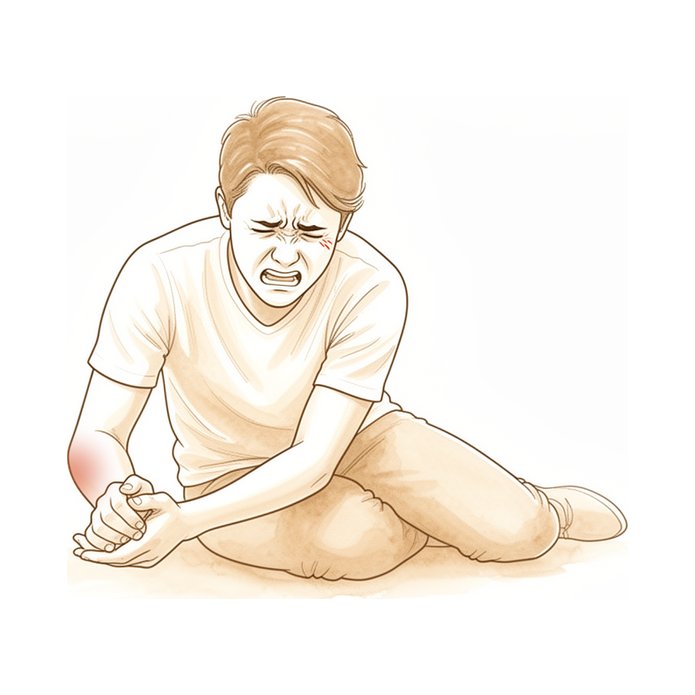
Isang tao na natumba nang nakaunat ang kamay, habang hawak ang likod ng pulso dahil sa sakit.
Ang pinsala sa scapholunate ligament ay karaniwang sumusunod sa pagkahulog nang nakaunat ang kamay, na may kasamang sakit na nararamdaman sa likod ng pulso. Kieran Hirpara 4.0

Ang pahinang ito ay isinalin ng makina at hindi pa nasusuri ng isang doktor. Ang bersyong Ingles ang siyang opisyal.

Ang iyong nararamdaman

Karamihan sa mga tao ay unang napapansin ito pagkatapos ng pagkahulog nang nakaunat ang kamay, ang klasikong pagkahulog kung saan sinusubukang saluhin ang sarili na nagdudulot din ng bali sa pulso. Mayroong sakit sa likod ng pulso, karaniwang bahagyang papunta sa panig ng hinlalaki, at madalas itong lumalala kapag ikaw ay tumutulak, humahawak nang mahigpit, o naglalagay ng bigat sa kamay: tulad ng pag-push-up, pagbangon mula sa upuan, pagbubukas ng mabigat na pinto, o pagbuhat ng takure.

Madalas na pakiramdam ay mahina at hindi maaasahan ang pulso. Inilalarawan ng ilang tao ang isang click, clunk o pakiramdam na may sumasabit kapag iginagalaw ito sa isang partikular na paraan, na tila mayroong isang bagay sa loob na gumagalaw. Maaaring may kaunting pamamaga, at ang bahagi mismo sa likod ng pulso sa pagitan ng dalawa sa maliliit na buto ng pulso ay madalas na masakit kapag pinipindot. Sa simula, madali itong ipagwalang-bahala bilang isang sprain na "hindi lang gumagaling," at iyon mismo ang panganib: ang ligament na sangkot ay hindi gumagaling nang kusa.

Ano ang aktwal na nangyayari

Ang iyong pulso ay isang kumpol ng walong maliliit na buto na pinapanatili sa tumpak na alignment ng maiikli at malalakas na ligament. Isa sa pinakamahalaga ay ang scapholunate ligament, na nag-uugnay sa dalawa sa mga butong iyon (ang scaphoid at ang lunate) sa gitna ng pulso. Gumagana ito gaya ng isang keystone na nagpapanatili sa buong carpus na gumalaw bilang isang coordinated unit.

Kapag napunit ang ligament na iyon, nawawala ang ugnayan ng dalawang buto. Ang scaphoid ay tumatagilid pasulong at ang mga buto ay nagsisimulang lumihis mula sa kanilang normal na alignment. Sa simula, maaaring lumitaw lamang ito kapag ang pulso ay stressed sa isang partikular na posisyon (isang "dynamic" na problema); sa paglipas ng panahon, ang puwang ay maaaring maging permanente (isang "static" na problema). Ang dahilan kung bakit namin ito sineseryoso kahit na katamtaman lamang ang sakit ay ang pangmatagalang epekto: ang isang pulso na ang mga buto ay hindi na nakalinya nang tama ay napupudpod nang hindi pantay, at sa loob ng ilang taon, ang abnormal na loading na iyon ay maaaring gumalos sa cartilage at humantong sa isang partikular na pattern ng wrist arthritis. Ang maagang paggamot sa ligament ay tunay na para maiwasan ito.

Ano ang maaari naming gawin tungkol dito

Si Dr Kieran Hirpara ay isang upper-limb surgeon sa Mater Private Hospital Rockhampton na gumagabay kung paano namin pinamamahalaan ang kondisyong ito sa aming klinika. Ang mga pasyente ay karaniwang nirerefer sa aming klinika ng kanilang GP; kung iminungkahi ng isang physiotherapist na magpatingin sa amin, kakailanganin mo pa rin ng referral mula sa iyong GP upang maging eligible para sa Medicare rebate. Binibigyang-daan kami nito na magsimula sa isang masusing assessment ng iyong history, pagsusuri, at imaging. Dahil ang bagong punit ay madalas na maaaring direktang kumpunihin, sinisikap naming masuri agad ang isang bagong pinsala; ang mga mas lumang pinsala ay pinamamahalaan sa ibang paraan, gaya ng inilalarawan sa ibaba.

Ang tamang gamutan ay nakadepende nang malaki sa kung gaano na katagal nang nangyari ang pinsala at kung nakalinya pa rin ang mga buto, kaya mahalaga ang pagkakaroon ng tumpak na diagnosis. Karaniwan naming pinagsasama ang pagsusuri at X-ray (kung minsan ay mga espesyal na "stress" view na kinukuha habang nakakuyom ang iyong kamao), at madalas ay MRI. Ang pinaka-maaasahang paraan upang makita ang ligament nang direkta ay ang wrist arthroscopy (keyhole camera surgery), na nagsisilbing definitive diagnosis at, sa maraming kaso, ang mismong gamutan.

  • Mga kamakailang pinsala kung saan maaari pang kumpunihin (repair) ang ligament ang pinakamagandang scenario. Ang napunit na ligament ay tinatahi pabalik (pataas na sa pamamagitan ng mga keyhole technique), kung minsan ay pinalalakas gamit ang kalapit na tissue, at ang mga buto ay pinapanatili sa posisyon gamit ang mga pansamantalang wire habang ito ay gumagaling.
  • Mga lumang pinsala kung saan hindi na maaaring kumpunihin nang simple ang ligament, ngunit maaari pang ibalik sa linya ang mga buto, ay karaniwang ginagamot sa pamamagitan ng pagbubuo muli (rebuilding) ng ligament. Gumagamit ang mga surgeon ng strip mula sa isa sa iyong sariling mga tendon, o kalapit na tissue, na hinahabi sa pwesto upang ibalik ang koneksyon at hilahin ang scaphoid pabalik sa pagkakatayo nito.
  • Mga matagal nang pinsala kung saan ang mga buto ay nanigas na sa maling posisyon, o may arthritis na, ay lampas na sa punto ng repair o rebuild. Dito kami lumilipat sa mga salvage operation na naglalayong bigyan ka ng isang malakas at hindi gaanong masakit na wrist, sa pamamagitan ng pag-fuse o pagtanggal ng mga piling maliliit na buto, habang tinatanggap ang ilang pagkawala ng paggalaw kapalit ng pangmatagalang ginhawa.

Ang mga mild at incidental na kaso na hindi nagdudulot ng problema ay maaari minsan na obserbahan na lamang, kasabay ng hand-therapy upang palakasin ang mga kalamnan na tumutulong sa pag-stabilize ng wrist.

Ano ang dapat asahan

Ito ay isang pinsala sa pulso (wrist injury) na nagbibigay ng mas mabuting resulta kapag naagapan. Kapag ang isang bagong punit ay naayos o ang isang reducible tear ay na-rebuild, ang layunin ay isang matatag at komportableng pulso na magpapahintulot sa iyong bumalik sa karamihan ng mga aktibidad, bagaman normal lamang na mawalan ng kaunti sa extreme range of movement, at ang paggaling ay sinusukat sa mga buwan, hindi linggo. Pagkatapos ng operasyon, asahan ang isang panahon na nakalagay sa cast o splint habang naghihilom ang pagkukumpuni, na susundan ng isang structured hand-therapy programme upang maibalik ang paggalaw at lakas. Ang mga wire, kung ginamit, ay karaniwang tinatanggal sa mga clinic room pagkatapos ng ilang linggo.

Ang tapat na bahagi: walang operasyon ang nakagagawa sa pulso na eksaktong katulad ng dati, at ang mga resulta ay karaniwang mas mabuti kapag mas maagang nagamot ang pinsala. Kung narating mo na ang salvage stage, ang trade-off ay totoo ngunit sulit: mas kaunting sakit at isang pulso na maaari mong asahan, kapalit ng ilang paninigas (stiffness). Ang pinakamahalaga ay ang pagtutugma ng operasyon sa iyong partikular na pinsala, na isang pag-uusap na mahalagang gawin nang maayos.

Kailan dapat magpatingin

  • Isang pulso na nananatiling masakit, mahina o "nagki-click" nang higit sa ilang linggo pagkatapos ng isang pagkahulog, lalo na ang sakit sa likod ng pulso kapag nagtutulak o humahawak. Huwag ipagpalagay na ang isang matagal na "sprain" ay walang panganib.
  • Nabali ang iyong pulso (isang distal radius fracture) at ang pulso ay nananatiling masakit o unstable pagkatapos gumaling ng buto. Ang mga pinsala sa ligament na ito ay madalas na magkasabay na nangyayari at maaaring hindi mapansin.
  • Isang paulit-ulit na clunk, catch o pakiramdam na bumibigay ang pulso.
  • Kilalang scapholunate injury na may bago o tumitinding sakit, o pamamaga na hindi nawawala: mahalagang muling masuri bago ito lumala.

Mas malalim na pagtalakay

Advanced reading: the deeper science (optional)

Ang seksyong ito ay higit pa sa kailangan mo para sa iyong sariling mga desisyon sa paggamot. Ang pinsala sa scapholunate ligament ay karapat-dapat sa karagdagang pagbabasa dahil ito ang pinsala sa pulso kung saan ang agwat sa pagitan ng kung gaano kalubha ang problema at kung gaano kahusay ang mga solusyon ay pinakamalawak, at malinaw itong nakasaad sa mga literatura.

Bakit mahalaga ang isang maliit na ligament

Ang scaphoid at lunate ay magkatabi sa unang hanay ng mga buto sa carpal, na pinagbubuklod ng isang maikling interosseous ligament. Ang hugis nila ay may tendensiyang mag-rotate sa magkasalungat na direksyon kapag may load, ang scaphoid ay mag-flex, ang lunate ay mag-extend, at ang ligament ang pumipigil sa kanila laban sa tendensiyang iyon.

Kapag ito ay pumalya, ang dalawang buto ay naghihiwalay at nag-rotate palayo sa isa't isa. Dahil ang buong carpus ay gumagalaw bilang isang linked system, binabago nito kung paano tumatawid ang load sa wrist, at ang nabagong contact ay unti-unting nagsisira sa joint sa isang kinikilalang sequence, ang scapholunate advanced collapse pattern.

Ito ang krusyal na punto para sa isang pasyente: ang isang hindi nagamot na complete tear ay hindi isang stable na sitwasyon na maaaring gumaling o hindi. Ito ang unang yugto ng isang predictable arthritic process, at iyon ang nagbibigay-katwiran sa pagbibigay-pansin sa isang pinsala na maaaring hindi gaanong masakit sa simula.

Ang mga reconstruction ay hindi naihiwalay

Para sa chronic injury, maraming operasyon ang umiiral, na siya mismong nagbibigay ng impormasyon. Sa paghahambing ng mga technique para sa chronic scapholunate interosseous ligament disruption sa 978 na pasyente, ang tenodesis reconstruction ay nagresulta sa signipikanteng pagbuti ng scapholunate gap at angle kumpara sa capsulodesis sa mga radiographic measure, kung saan ang mga umiiral na data ay nagpapakita ng ilang benepisyo para sa tenodesis [1].

Ngunit ang radiographic improvement ay hindi katulad ng clinical superiority, at ang mas malawak na review ay direkta. Para sa chronic non-arthritic scapholunate dissociation sa 342 na pasyente, ang heterogeneity sa data collection, kakulangan ng mga comparative study at maikling follow-up ay nangahulugang walang konklusyon tungkol sa superiority ng anumang iisang technique ang naging posible, kung saan nananawagan ang mga may-akda para sa mas long-term na comparative studies at natural history studies [2].

Ang nawawalang natural history ang tunay na puwang

Ang huling kahilingang iyon ay hindi pangkaraniwan at nararapat pagtuunan ng pansin. Ang paghiling para sa mga pag-aaral sa natural history ay nangangahulugang hindi maaasahan ang kaalaman ng larangan kung ano ang nangyayari sa isang hindi ginamot na scapholunate injury, kung gaano karami ang humahantong sa arthritis, sa loob ng anong timescale, at alin sa mga ito.

Kung wala iyon, ang panig ng benepisyo sa ekwasyon ay hindi maaaring ma-quantify. Alam natin na nangyayari ang arthritic sequence; hindi natin alam ang proporsyon ng mga taong nakakaranas nito, o kung gaano kabilis. Anumang pahayag na ang reconstruction ay "nakakapigil sa arthritis" ay isang extrapolation mula sa mekanismo, at hindi isang napatunayang outcome.

Dalawang bagay ang sumusunod. Mahalaga ang timing, ang ligament na naayos nang maaga, habang ang tissue ay maaari pang kumpunihin at ang mga buto ay maaari pang i-reduce, ay isang magkaibang proposisyon kaysa sa isang reconstruction pagkalipas ng maraming taon. At ang isang rekomendasyon dito ay mas nakabatay sa mga indibidwal na natuklasan kaysa sa ebidensya ng trial, dahil ang ebidensya ng trial na maaaring sanggunian ay hindi pa umiiral.

Kung saan advanced na ang proseso

Kapag nabuo na ang arthritis, nagsasara na ang tanong sa reconstructive at sa halip ay bumubukas ang desisyon para sa salvage, na kadalasang pagpipilian ay sa pagitan ng pagtanggal ng proximal row ng mga carpal bone at pag-fuse ng apat sa mga ito. Ang mga opsyon na iyon, at ang ebidensyang naghahambing sa mga ito, ay tinalakay sa SLAC/SNAC wrist page sa halip na rito.

Mga Sanggunian

[1] Daly LT, Daly MC, Mohamadi A, Chen N. Chronic scapholunate interosseous ligament disruption: a systematic review and meta-analysis of surgical treatments. Hand (N Y). 2018;15(1):27-34. https://doi.org/10.1177/1558944718787289

[2] Naqui Z, Khor WS, Mishra A, Lees V, Muir L. The management of chronic non-arthritic scapholunate dissociation: a systematic review. J Hand Surg Eur Vol. 2017;43(4):394-401. https://doi.org/10.1177/1753193417734990


Creative Commons BY-NC 4.0

CC Creative Commons licence
BY Attribution — you must credit the source
NC NonCommercial — not for commercial use

Attribution-NonCommercial 4.0 International


Creative Commons Corporation ("Creative Commons") is not a law firm and does not provide legal services or legal advice. Distribution of Creative Commons public licenses does not create a lawyer-client or other relationship. Creative Commons makes its licenses and related information available on an "as-is" basis. Creative Commons gives no warranties regarding its licenses, any material licensed under their terms and conditions, or any related information. Creative Commons disclaims all liability for damages resulting from their use to the fullest extent possible.

Using Creative Commons Public Licenses

Creative Commons public licenses provide a standard set of terms and conditions that creators and other rights holders may use to share original works of authorship and other material subject to copyright and certain other rights specified in the public license below. The following considerations are for informational purposes only, are not exhaustive, and do not form part of our licenses.

Considerations for licensors: Our public licenses are intended for use by those authorized to give the public permission to use material in ways otherwise restricted by copyright and certain other rights. Our licenses are irrevocable. Licensors should read and understand the terms and conditions of the license they choose before applying it. Licensors should also secure all rights necessary before applying our licenses so that the public can reuse the material as expected. Licensors should clearly mark any material not subject to the license. This includes other CC- licensed material, or material used under an exception or limitation to copyright. More considerations for licensors: wiki.creativecommons.org/Considerations_for_licensors

Considerations for the public: By using one of our public licenses, a licensor grants the public permission to use the licensed material under specified terms and conditions. If the licensor's permission is not necessary for any reason--for example, because of any applicable exception or limitation to copyright--then that use is not regulated by the license. Our licenses grant only permissions under copyright and certain other rights that a licensor has authority to grant. Use of the licensed material may still be restricted for other reasons, including because others have copyright or other rights in the material. A licensor may make special requests, such as asking that all changes be marked or described. Although not required by our licenses, you are encouraged to respect those requests where reasonable. More considerations for the public: wiki.creativecommons.org/Considerations_for_licensees


Creative Commons Attribution-NonCommercial 4.0 International Public License

By exercising the Licensed Rights (defined below), You accept and agree to be bound by the terms and conditions of this Creative Commons Attribution-NonCommercial 4.0 International Public License ("Public License"). To the extent this Public License may be interpreted as a contract, You are granted the Licensed Rights in consideration of Your acceptance of these terms and conditions, and the Licensor grants You such rights in consideration of benefits the Licensor receives from making the Licensed Material available under these terms and conditions.

Section 1 -- Definitions.

a. Adapted Material means material subject to Copyright and Similar Rights that is derived from or based upon the Licensed Material and in which the Licensed Material is translated, altered, arranged, transformed, or otherwise modified in a manner requiring permission under the Copyright and Similar Rights held by the Licensor. For purposes of this Public License, where the Licensed Material is a musical work, performance, or sound recording, Adapted Material is always produced where the Licensed Material is synched in timed relation with a moving image.

b. Adapter's License means the license You apply to Your Copyright and Similar Rights in Your contributions to Adapted Material in accordance with the terms and conditions of this Public License.

c. Copyright and Similar Rights means copyright and/or similar rights closely related to copyright including, without limitation, performance, broadcast, sound recording, and Sui Generis Database Rights, without regard to how the rights are labeled or categorized. For purposes of this Public License, the rights specified in Section 2(b)(1)-(2) are not Copyright and Similar Rights.

d. Effective Technological Measures means those measures that, in the absence of proper authority, may not be circumvented under laws fulfilling obligations under Article 11 of the WIPO Copyright Treaty adopted on December 20, 1996, and/or similar international agreements.

e. Exceptions and Limitations means fair use, fair dealing, and/or any other exception or limitation to Copyright and Similar Rights that applies to Your use of the Licensed Material.

f. Licensed Material means the artistic or literary work, database, or other material to which the Licensor applied this Public License.

g. Licensed Rights means the rights granted to You subject to the terms and conditions of this Public License, which are limited to all Copyright and Similar Rights that apply to Your use of the Licensed Material and that the Licensor has authority to license.

h. Licensor means the individual(s) or entity(ies) granting rights under this Public License.

i. NonCommercial means not primarily intended for or directed towards commercial advantage or monetary compensation. For purposes of this Public License, the exchange of the Licensed Material for other material subject to Copyright and Similar Rights by digital file-sharing or similar means is NonCommercial provided there is no payment of monetary compensation in connection with the exchange.

j. Share means to provide material to the public by any means or process that requires permission under the Licensed Rights, such as reproduction, public display, public performance, distribution, dissemination, communication, or importation, and to make material available to the public including in ways that members of the public may access the material from a place and at a time individually chosen by them.

k. Sui Generis Database Rights means rights other than copyright resulting from Directive 96/9/EC of the European Parliament and of the Council of 11 March 1996 on the legal protection of databases, as amended and/or succeeded, as well as other essentially equivalent rights anywhere in the world.

l. You means the individual or entity exercising the Licensed Rights under this Public License. Your has a corresponding meaning.

Section 2 -- Scope.

a. License grant.

1. Subject to the terms and conditions of this Public License, the Licensor hereby grants You a worldwide, royalty-free, non-sublicensable, non-exclusive, irrevocable license to exercise the Licensed Rights in the Licensed Material to:

a. reproduce and Share the Licensed Material, in whole or in part, for NonCommercial purposes only; and

b. produce, reproduce, and Share Adapted Material for NonCommercial purposes only.

2. Exceptions and Limitations. For the avoidance of doubt, where Exceptions and Limitations apply to Your use, this Public License does not apply, and You do not need to comply with its terms and conditions.

3. Term. The term of this Public License is specified in Section 6(a).

4. Media and formats; technical modifications allowed. The Licensor authorizes You to exercise the Licensed Rights in all media and formats whether now known or hereafter created, and to make technical modifications necessary to do so. The Licensor waives and/or agrees not to assert any right or authority to forbid You from making technical modifications necessary to exercise the Licensed Rights, including technical modifications necessary to circumvent Effective Technological Measures. For purposes of this Public License, simply making modifications authorized by this Section 2(a) (4) never produces Adapted Material.

5. Downstream recipients.

a. Offer from the Licensor -- Licensed Material. Every recipient of the Licensed Material automatically receives an offer from the Licensor to exercise the Licensed Rights under the terms and conditions of this Public License.

b. No downstream restrictions. You may not offer or impose any additional or different terms or conditions on, or apply any Effective Technological Measures to, the Licensed Material if doing so restricts exercise of the Licensed Rights by any recipient of the Licensed Material.

6. No endorsement. Nothing in this Public License constitutes or may be construed as permission to assert or imply that You are, or that Your use of the Licensed Material is, connected with, or sponsored, endorsed, or granted official status by, the Licensor or others designated to receive attribution as provided in Section 3(a)(1)(A)(i).

b. Other rights.

1. Moral rights, such as the right of integrity, are not licensed under this Public License, nor are publicity, privacy, and/or other similar personality rights; however, to the extent possible, the Licensor waives and/or agrees not to assert any such rights held by the Licensor to the limited extent necessary to allow You to exercise the Licensed Rights, but not otherwise.

2. Patent and trademark rights are not licensed under this Public License.

3. To the extent possible, the Licensor waives any right to collect royalties from You for the exercise of the Licensed Rights, whether directly or through a collecting society under any voluntary or waivable statutory or compulsory licensing scheme. In all other cases the Licensor expressly reserves any right to collect such royalties, including when the Licensed Material is used other than for NonCommercial purposes.

Section 3 -- License Conditions.

Your exercise of the Licensed Rights is expressly made subject to the following conditions.

a. Attribution.

1. If You Share the Licensed Material (including in modified form), You must:

a. retain the following if it is supplied by the Licensor with the Licensed Material:

i. identification of the creator(s) of the Licensed Material and any others designated to receive attribution, in any reasonable manner requested by the Licensor (including by pseudonym if designated);

ii. a copyright notice;

iii. a notice that refers to this Public License;

iv. a notice that refers to the disclaimer of warranties;

v. a URI or hyperlink to the Licensed Material to the extent reasonably practicable;

b. indicate if You modified the Licensed Material and retain an indication of any previous modifications; and

c. indicate the Licensed Material is licensed under this Public License, and include the text of, or the URI or hyperlink to, this Public License.

2. You may satisfy the conditions in Section 3(a)(1) in any reasonable manner based on the medium, means, and context in which You Share the Licensed Material. For example, it may be reasonable to satisfy the conditions by providing a URI or hyperlink to a resource that includes the required information.

3. If requested by the Licensor, You must remove any of the information required by Section 3(a)(1)(A) to the extent reasonably practicable.

4. If You Share Adapted Material You produce, the Adapter's License You apply must not prevent recipients of the Adapted Material from complying with this Public License.

Section 4 -- Sui Generis Database Rights.

Where the Licensed Rights include Sui Generis Database Rights that apply to Your use of the Licensed Material:

a. for the avoidance of doubt, Section 2(a)(1) grants You the right to extract, reuse, reproduce, and Share all or a substantial portion of the contents of the database for NonCommercial purposes only;

b. if You include all or a substantial portion of the database contents in a database in which You have Sui Generis Database Rights, then the database in which You have Sui Generis Database Rights (but not its individual contents) is Adapted Material; and

c. You must comply with the conditions in Section 3(a) if You Share all or a substantial portion of the contents of the database.

For the avoidance of doubt, this Section 4 supplements and does not replace Your obligations under this Public License where the Licensed Rights include other Copyright and Similar Rights.

Section 5 -- Disclaimer of Warranties and Limitation of Liability.

a. UNLESS OTHERWISE SEPARATELY UNDERTAKEN BY THE LICENSOR, TO THE EXTENT POSSIBLE, THE LICENSOR OFFERS THE LICENSED MATERIAL AS-IS AND AS-AVAILABLE, AND MAKES NO REPRESENTATIONS OR WARRANTIES OF ANY KIND CONCERNING THE LICENSED MATERIAL, WHETHER EXPRESS, IMPLIED, STATUTORY, OR OTHER. THIS INCLUDES, WITHOUT LIMITATION, WARRANTIES OF TITLE, MERCHANTABILITY, FITNESS FOR A PARTICULAR PURPOSE, NON-INFRINGEMENT, ABSENCE OF LATENT OR OTHER DEFECTS, ACCURACY, OR THE PRESENCE OR ABSENCE OF ERRORS, WHETHER OR NOT KNOWN OR DISCOVERABLE. WHERE DISCLAIMERS OF WARRANTIES ARE NOT ALLOWED IN FULL OR IN PART, THIS DISCLAIMER MAY NOT APPLY TO YOU.

b. TO THE EXTENT POSSIBLE, IN NO EVENT WILL THE LICENSOR BE LIABLE TO YOU ON ANY LEGAL THEORY (INCLUDING, WITHOUT LIMITATION, NEGLIGENCE) OR OTHERWISE FOR ANY DIRECT, SPECIAL, INDIRECT, INCIDENTAL, CONSEQUENTIAL, PUNITIVE, EXEMPLARY, OR OTHER LOSSES, COSTS, EXPENSES, OR DAMAGES ARISING OUT OF THIS PUBLIC LICENSE OR USE OF THE LICENSED MATERIAL, EVEN IF THE LICENSOR HAS BEEN ADVISED OF THE POSSIBILITY OF SUCH LOSSES, COSTS, EXPENSES, OR DAMAGES. WHERE A LIMITATION OF LIABILITY IS NOT ALLOWED IN FULL OR IN PART, THIS LIMITATION MAY NOT APPLY TO YOU.

c. The disclaimer of warranties and limitation of liability provided above shall be interpreted in a manner that, to the extent possible, most closely approximates an absolute disclaimer and waiver of all liability.

Section 6 -- Term and Termination.

a. This Public License applies for the term of the Copyright and Similar Rights licensed here. However, if You fail to comply with this Public License, then Your rights under this Public License terminate automatically.

b. Where Your right to use the Licensed Material has terminated under Section 6(a), it reinstates:

1. automatically as of the date the violation is cured, provided it is cured within 30 days of Your discovery of the violation; or

2. upon express reinstatement by the Licensor.

For the avoidance of doubt, this Section 6(b) does not affect any right the Licensor may have to seek remedies for Your violations of this Public License.

c. For the avoidance of doubt, the Licensor may also offer the Licensed Material under separate terms or conditions or stop distributing the Licensed Material at any time; however, doing so will not terminate this Public License.

d. Sections 1, 5, 6, 7, and 8 survive termination of this Public License.

Section 7 -- Other Terms and Conditions.

a. The Licensor shall not be bound by any additional or different terms or conditions communicated by You unless expressly agreed.

b. Any arrangements, understandings, or agreements regarding the Licensed Material not stated herein are separate from and independent of the terms and conditions of this Public License.

Section 8 -- Interpretation.

a. For the avoidance of doubt, this Public License does not, and shall not be interpreted to, reduce, limit, restrict, or impose conditions on any use of the Licensed Material that could lawfully be made without permission under this Public License.

b. To the extent possible, if any provision of this Public License is deemed unenforceable, it shall be automatically reformed to the minimum extent necessary to make it enforceable. If the provision cannot be reformed, it shall be severed from this Public License without affecting the enforceability of the remaining terms and conditions.

c. No term or condition of this Public License will be waived and no failure to comply consented to unless expressly agreed to by the Licensor.

d. Nothing in this Public License constitutes or may be interpreted as a limitation upon, or waiver of, any privileges and immunities that apply to the Licensor or You, including from the legal processes of any jurisdiction or authority.


Creative Commons is not a party to its public licenses. Notwithstanding, Creative Commons may elect to apply one of its public licenses to material it publishes and in those instances will be considered the “Licensor.” The text of the Creative Commons public licenses is dedicated to the public domain under the CC0 Public Domain Dedication. Except for the limited purpose of indicating that material is shared under a Creative Commons public license or as otherwise permitted by the Creative Commons policies published at creativecommons.org/policies, Creative Commons does not authorize the use of the trademark "Creative Commons" or any other trademark or logo of Creative Commons without its prior written consent including, without limitation, in connection with any unauthorized modifications to any of its public licenses or any other arrangements, understandings, or agreements concerning use of licensed material. For the avoidance of doubt, this paragraph does not form part of the public licenses.

Creative Commons may be contacted at creativecommons.org.