Patients › Rehabilitation
Eksisyon ng Ganglion sa Flexor Sheath
Isang mabilis at motion-led na recovery plan pagkatapos ng excision ng flexor tendon sheath ganglion (volar retinacular cyst) sa base ng daliri, na nagpoprotekta sa maliit na sugat sa palad habang sinisimulan ang banayad na paggalaw ng daliri sa loob ng ilang araw, pagkatapos ay idaragdag ang scar care at grip habang humihilom ang sugat.
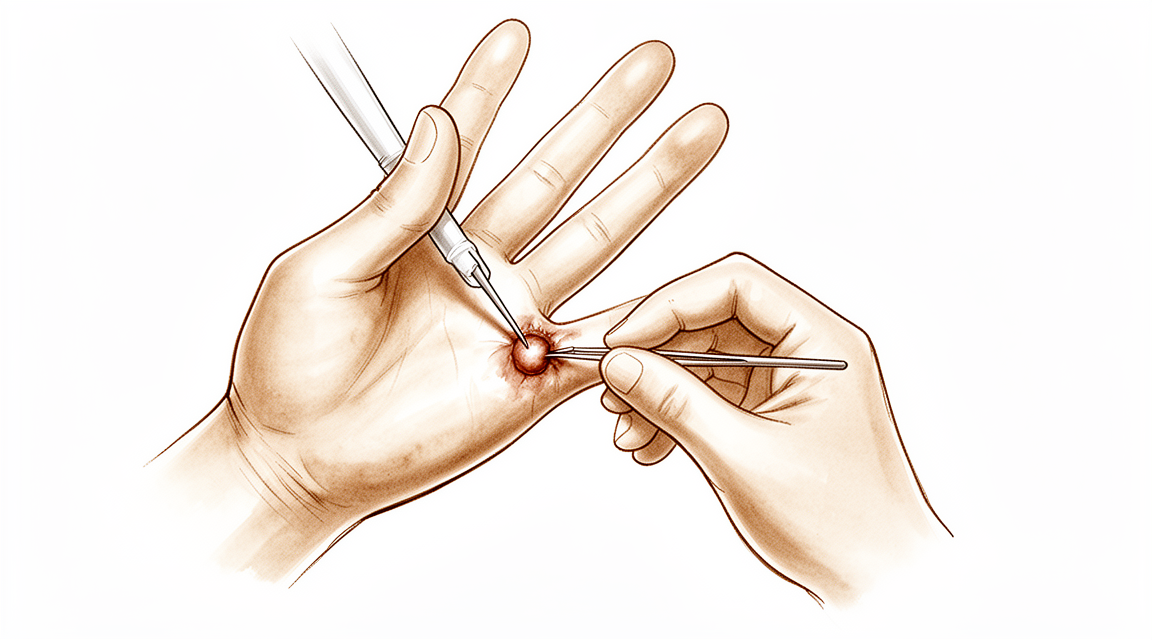
Ang protocol na ito ay nagsisilbing gabay sa iyong paggaling pagkatapos ng isang maliit na operasyon upang tanggalin ang isang flexor sheath ganglion, isang matigas na cyst sa base ng daliri sa bahagi ng palad ng kamay, kasama si Dr Kieran Hirpara sa Mater Private Hospital Rockhampton. Nagsisimula ito sa iyong home exercise program, na sinusundan ng structured clinical protocol na isinulat para sa iyong hand therapist; dalhin ang pahinang ito o ang PDF nito sa iyong unang therapy visit upang manatiling coordinated ang iyong rehabilitasyon. Maaaring i-adjust ng iyong hand therapist ang plano depende sa pag-unlad ng iyong paggaling.
Kung mayroon kang anumang alalahanin tungkol sa iyong sugat pagkatapos ng operasyon, makipag-ugnayan sa mga rooms. Madalas na nakatutulong ang pagkuha ng larawan ng sugat at pag-email nito para masuri.
Ano ang dapat asahan
Ang flexor sheath ganglion (tinatawag ding volar retinacular cyst) ay isang maliit, matigas, at madalas ay masakit na bukol, na karaniwang may laki lamang na ilang milimetro, na tumutubo mula sa sheath kung saan dumadaan ang mga flexor tendon, eksakto sa base ng daliri sa bahagi ng palad (karaniwan ay sa ibabaw ng matigas na band na tinatawag na A1 pulley, sa tupi kung saan nagtatagpo ang daliri at ang palad). Ito ay nakakabit sa sheath at hindi gumagalaw kapag ibinabaluktot ang daliri. Ito ay isang ganap na benign (hindi kanser) na bukol, at isa sa mga mas karaniwang ganglion sa kamay at pulso.
Ang operasyon ay isang maliit na day-case excision. Sa pamamagitan ng isang maikling zig-zag na hiwa sa palad, tatanggalin ni Dr Hirpara ang cyst kasama ang isang maliit na cuff ng tendon sheath kung saan ito tumubo. Ang dalawang maliliit na nerve at blood vessel na dumadaan sa bawat gilid ng daliri ay maingat na pinoprotektahan. Ang sheath mismo ay hindi tinatahi: ang pag-iwan dito na nakabukas ay sinasadya at hindi nagpapahina sa daliri. Ang balat ay isinasara gamit ang mga suture.
Dahil walang kailangang protektahan sa loob ng daliri habang ito ay gumagaling, ito ay isang mabilis na recovery: mga linggo, hindi mga buwan. Simple lang ang plano: protektahan ang maliit na sugat sa palad, kontrolin ang pamamaga, at simulan ang banayad na paggalaw ng daliri sa loob ng ilang araw upang hindi tumigas ang daliri at hindi dumikit ang mga tendon sa naghihilom na peklat. Kapag magaling na ang sugat, ang scar massage at desensitisation ang magpapakalma sa area, at ibabalik ang lakas ng grip. Ang kaunting pangingilig o pagiging sensitibo sa paligid ng sugat ay karaniwan sa simula habang bumabawi ang maliliit na nerve sa balat, at karaniwang nawawala ito sa mga sumunod na linggo.
Mga pag-iingat at limitasyon
- Panatilihing malinis at tuyo ang dressing hanggang sa gumaling ang sugat at matanggal ang mga tahi (karaniwan ay sa ika-10–14 araw). Walang plaster at karaniwang walang splint, soft dressing lamang.
- Gawin ang banayad na paggalaw ng daliri sa loob ng unang ilang araw (pagbaluktot, pagtuwid at tendon glides) upang maiwasan ang paninigas at pagdikit ng tendon.
- Panatilihing nakataas ang kamay at gamitin ito para sa mga magagaan na gawaing pang-araw-araw hangga't komportable.
- HUWAG gumawa ng mabibigat na paghawak, pagbuhat o puwersadong pagkurot hanggang sa kumalma ang sugat (mga dalawa hanggang tatlong linggo).
- HUWAG imasahe ang peklat o ibabad ang kamay hanggang sa ganap nang gumaling ang sugat.
- HUWAG magmaneho habang ang dressing ay nakakahadlang sa ligtas na paghawak sa manibela, karaniwan ay sa unang linggo.
Para sa pamamahala ng sugat, pamamaga at peklat, tingnan ang gabay sa wound care ng klinika.
Iyong mga ehersisyo
Kieran Hirpara 4.0
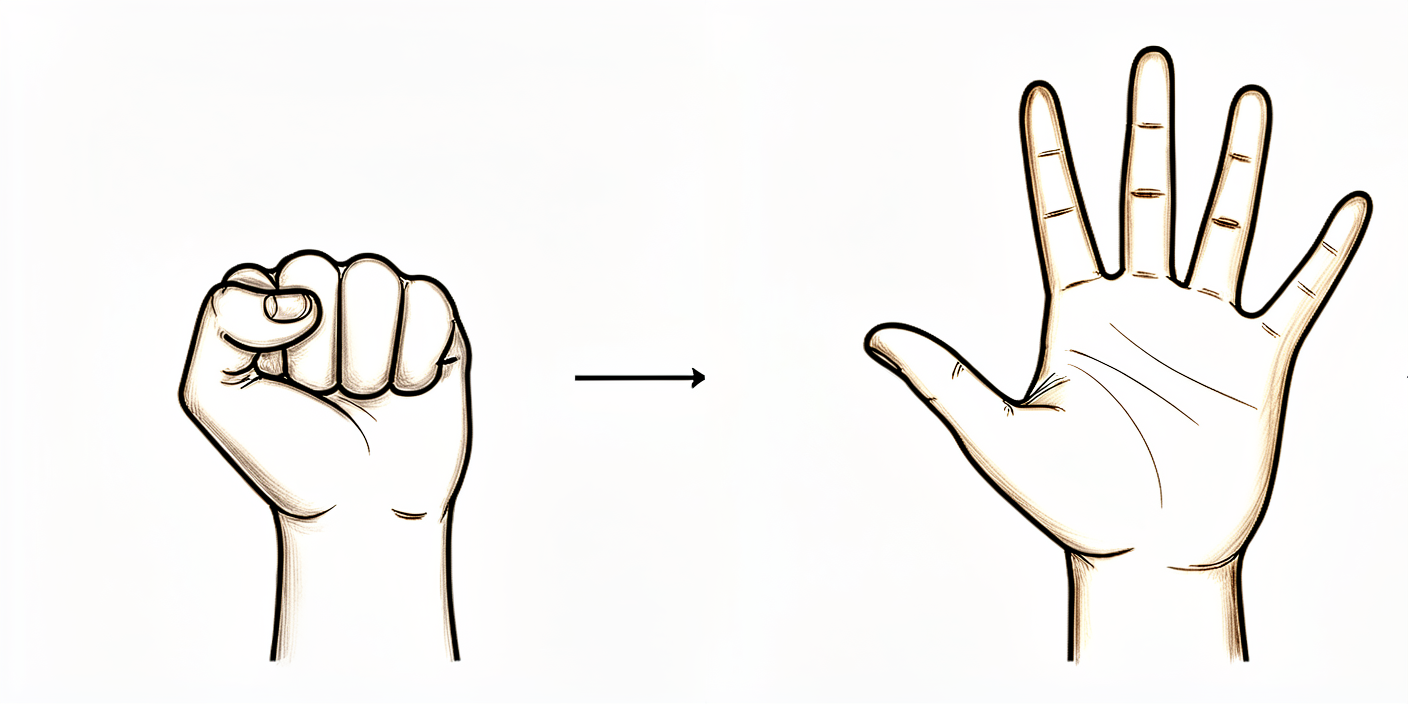
Paggalaw ng daliri (dahan-dahang itikom at ituwid)
Sa loob ng unang ilang araw, dahan-dahang itikom ang kamay nang malambot at pagkatapos ay iunat nang husto ang mga daliri, gumalaw nang mabagal at hanggang sa kung ano lamang ang komportable. Ang maagang paggalaw ay pumipigil sa paninigas ng daliri at humahadlang sa pagkapit ng mga tendon sa naghihilom na sugat. Huwag itong pilitin — hayaang magsilbing gabay ang dressing at ang kaunting discomfort.
10 beses, 3–4 beses sa isang araw, hanggang sa komportable
Kieran Hirpara 4.0
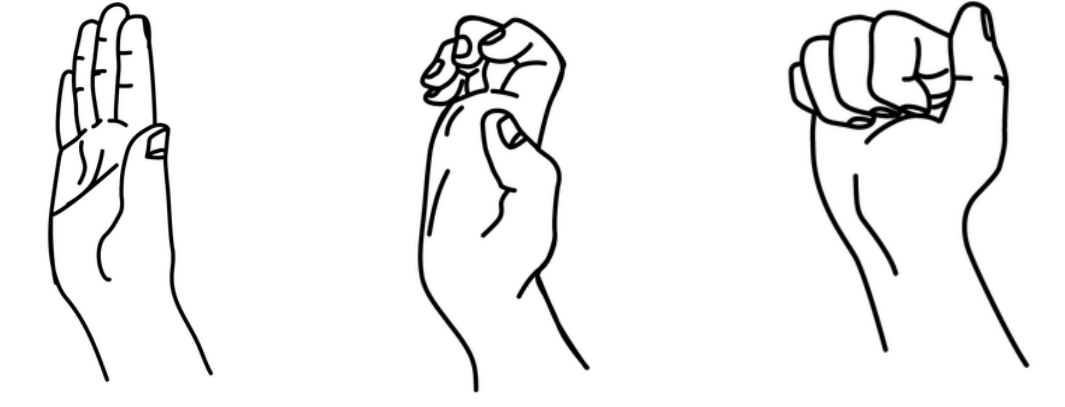
Tendon glides (hook, fist, straight)
Igalaw ang iyong mga daliri sa tatlong hugis: isang hook (itupi ang mga dulo at gitnang kasukasuan ngunit panatilihing diretso ang mga knuckles, gaya ng isang kuko), isang buong kamao, at pagkatapos ay isang patag at direktong kamay. Ang mga posisyong ito ay nagpapausod sa mga flexor tendon sa bahagi ng operasyon upang manatili silang malayang dumudulas sa halip na dumikit. Panatilihing banayad at walang sakit ang bawat isa.
5 ng bawat posisyon, 3–4 beses sa isang araw
Kieran Hirpara 4.0
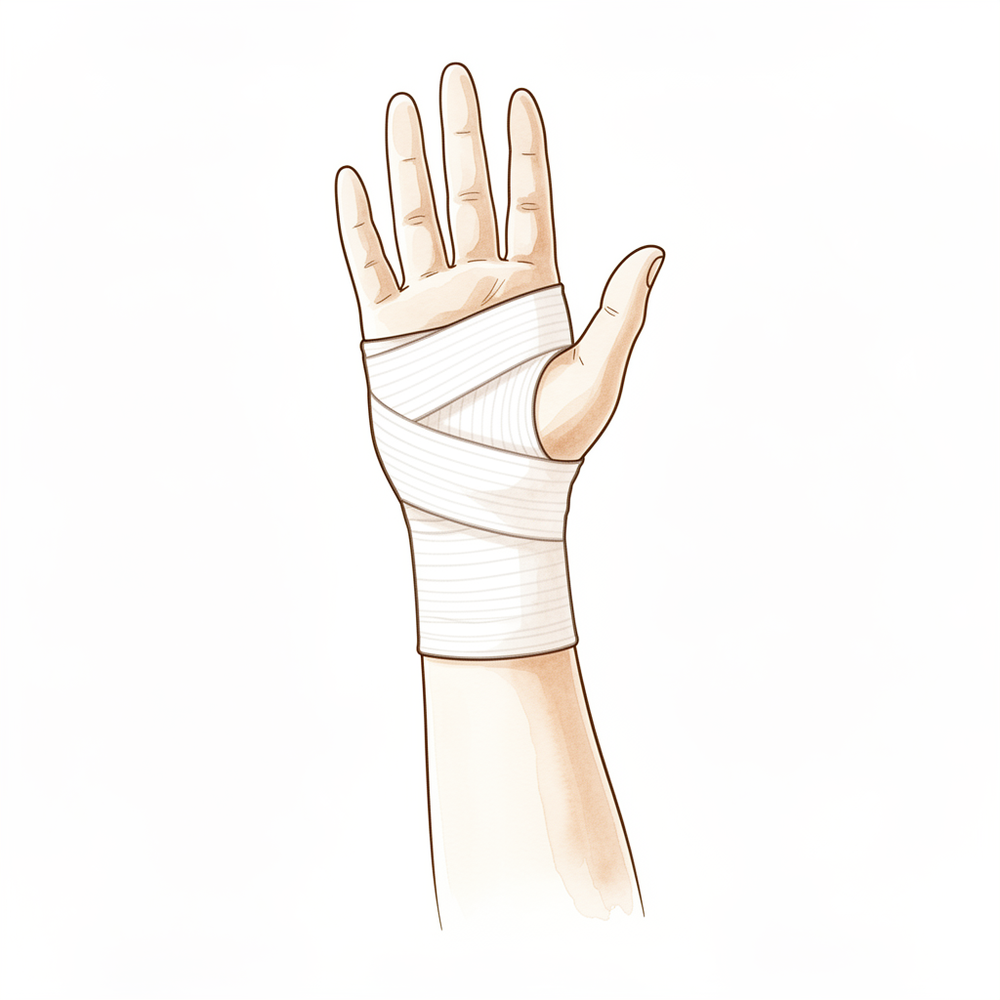
Pagkontrol sa pamamaga
Panatilihing nakataas ang iyong kamay sa itaas ng antas ng iyong puso hangga't maaari sa unang linggo, at dahan-dahang ibukas at isara ang mga daliri upang mailabas ang pamamaga. Ang mas kaunting pamamaga ay nangangahulugan ng mas madali at mas komportableng daliri at mas mabilis na paggaling. Ang kaunting pamamaga sa paligid ng palad ay normal sa simula.
Itaas ito nang madalas sa buong araw; dahan-dahang i-pump ang mga daliri kada oras o higit pa habang gising
Kieran Hirpara 4.0
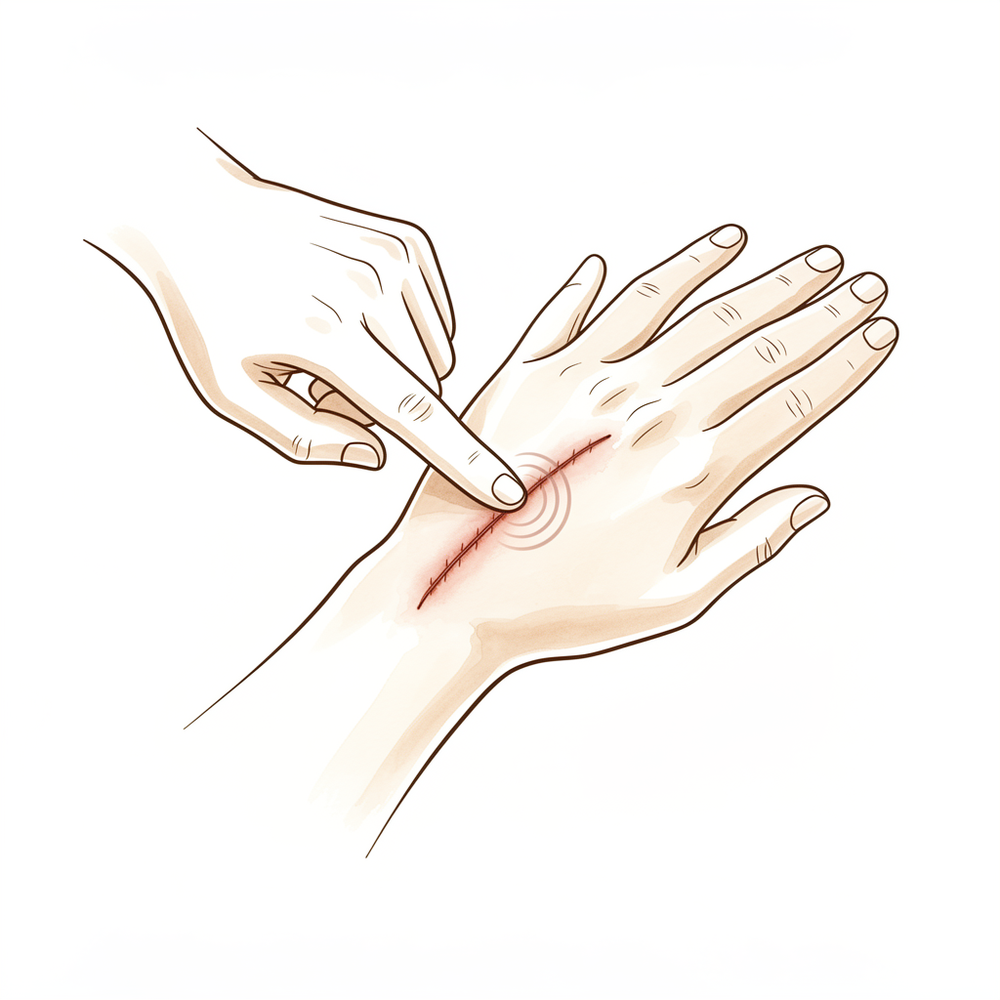
Masahe sa peklat at desensitisation
Kapag ganap nang magaling ang sugat at natanggal na ang mga tahi (karaniwan ay pagkatapos ng mga dalawang linggo), magpahid ng kaunting moisturizer sa peklat gamit ang madiin at maliliit na pabilog na galaw sa loob ng ilang minuto, at haplusin ang bahaging ito gamit ang iba't ibang tekstura (malambot na tela, pagkatapos ay tuwalya). Pinapalambot nito ang peklat at pinapakalma ang pananakit at pangingilig na karaniwan sa simula habang bumabawi ang maliliit na nerve sa balat. HUWAG imasahe ang sugat na bukas o hindi pa magaling.
Ilang minuto, 2–3 beses sa isang araw, kapag ganap nang gumaling
Kieran Hirpara 4.0
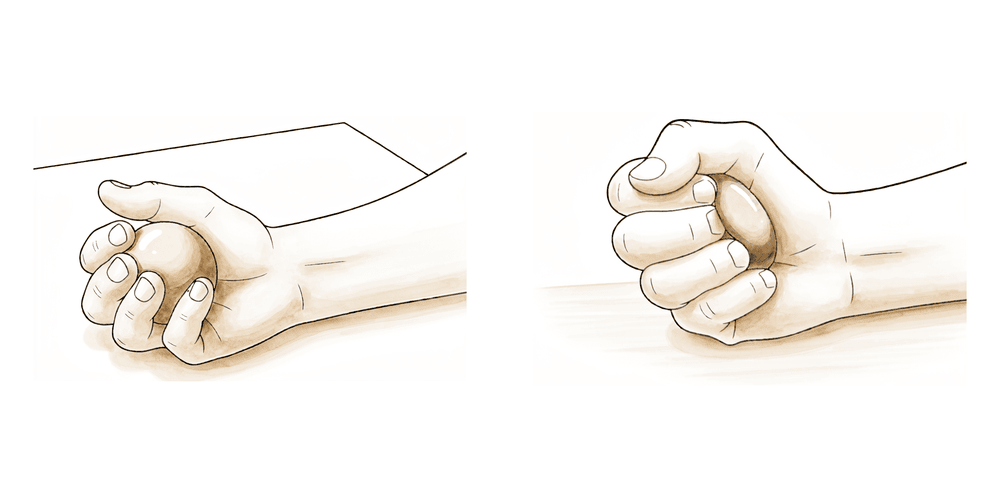
Pagpapalakas ng grip (kapit)
Isang ehersisyo sa PAGHULING bahagi — magsimula mula sa humigit-kumulang dalawa hanggang tatlong linggo, kapag kumalma na ang sugat at kuntento na ang iyong hand therapist. Dahan-dahang pisilin ang isang malambot na bola o therapy putty, hawakan nang ilang segundo, pagkatapos ay i-relax, at unti-unting dagdagan ang puwersa. Binubuo nito muli ang grip para sa ganap na paggamit. Huminto kung may matalas na sakit sa ibabaw ng sugat.
10–15 piga, 2–3 beses sa isang araw (mula ~2–3 linggo)
Ito ang mga ehersisyo mula sa iyong handout. Simulan lamang ang mga ito ayon sa gabay ni Dr Hirpara at ng iyong hand therapist, at manatili sa anumang limitasyong ibinigay sa iyo. Ang mga maagang ehersisyo (banayad na pag-kuyom at pag-unat, tendon glides at pagkontrol sa pamamaga) ay pinapanatiling gumagalaw ang daliri at dumudulas ang mga tendon mula sa unang ilang araw, na siyang pinakamahalagang bagay para sa isang maayos na paggaling. Ang scar massage at desensitisation ay magsisimula kapag ganap nang magaling ang sugat, at ang grip strengthening ay kabilang sa bahagyang mas huling yugto (mula humigit-kumulang dalawa hanggang tatlong linggo). Itigil ang anumang nagdudulot ng matalas na sakit sa ibabaw ng sugat.
Ang iyong clinical protocol
Ang natitirang bahagi ng pahinang ito ay ang staged clinical protocol para sa rehabilitasyon pagkatapos ng excision ng isang flexor sheath ganglion (volar retinacular cyst). Ang seksyong ito ay ibibigay sa iyong hand therapist, at ang bawat phase ay nagsisimula sa isang paliwanag sa simpleng Ingles tungkol sa kung ano ang nangyayari. Ito ay isang excision, hindi isang repair: ang tendon sheath ay hinahayaang bukas at walang construct na kailangang protektahan. Ang programa ay isang early-motion pathway na binuo sa paligid ng proteksyon ng sugat, kontrol sa oedema, tendon gliding upang maiwasan ang adhesion, at scar/desensitisation work, hindi protected immobilisation.
Bago ang paggamot, suriin ang operation report at past medical history, at makipag-ugnayan sa treating surgeon tungkol sa digit na kasangkot, ang lawak ng sheath excision at ang integridad ng digital neurovascular bundles. Ang excision ni Dr Hirpara ay sa pamamagitan ng isang Bruner (zig-zag) palmar incision sa ibabaw ng A1/proximal sheath, na nag-aalis ng cyst kasama ang isang cuff ng sheath; ang sheath ay hindi nire-repair at walang immobilisation maliban sa isang soft dressing. Ang transient digital-nerve paraesthesia ay karaniwan at self-limiting.
Phase I — proteksyon ng sugat at maagang paggalaw (linggo 0 hanggang ~1)
Ang unang linggo ay para protektahan ang maliit na sugat sa palad at mapagalaw nang maaga ang daliri upang hindi ito tumigas o magkaroon ng tendon adhesions. Ang kamay ay pinamamahalaan sa isang bulky soft dressing na walang splint, pinapanatiling nakataas, at sinisimulan ang banayad na active finger motion sa loob ng ilang araw.
Para sa iyong hand therapist:
Edukasyon at mga pag-iingat - Soft bulky dressing lamang, walang splint; panatilihing malinis at tuyo hanggang sa matanggal ang mga tahi (~araw 10–14) - Protektahan ang sugat mula sa mabibigat na karga; magaan at unloaded na paggamit ng kamay ayon sa komportableng pakiramdam - Payuhan na ang transient digital-nerve paraesthesia / hypersensitivity sa paligid ng sugat ay karaniwan at kusang nawawala
Pamamahala - Sugat: surgical dressing ayon sa itinuro; bantayan kung may impeksyon - Oedema: pagtataas sa itaas ng lebel ng puso, banayad na finger pumping, ice kung kinakailangan - Mga ehersisyo: banayad na active finger AROM (banayad na composite fist at full extension) at tendon glides (hook / fist / straight) na sinisimulan sa loob ng ilang araw; active motion ng mga daliring hindi apektado, thumb at wrist; magaan na functional use
Mga kriterya para mag-progress - Paghilom ng sugat, walang impeksyon; komportableng early active arc; handa na para sa full active/gentle passive motion habang pinahihintulutan ng sugat
Phase II — full motion, oedema at scar work (linggo ~1 hanggang 3)
Mula humigit-kumulang isang linggo, ang motion ay itutuloy patungo sa full active at gentle passive range (full fist at full extension) at, kapag ang sugat ay ganap nang magaling at natanggal na ang mga tahi, magsisimula ang scar massage at desensitisation. Magpapatuloy ang oedema control.
Para sa iyong hand therapist:
Assessments - Active at passive finger ROM (layunin ang full fist at full extension); status ng sugat/scar; pamamaga; digital-nerve sensitivity
Education at precautions - Ituloy patungo sa full active at gentle passive finger motion ayon sa kakayahang magtiis ng pasyente - Simulan ang scar massage at desensitisation kapag ang sugat ay ganap nang magaling - Iwasan ang mabigat na paghawak (heavy gripping) at puwersadong pag-pinch hanggang sa kumalma ang sugat
Management - Mga ehersisyo: full composite fist at full extension; patuloy na tendon glides; gentle passive stretch sa anumang natitirang paninigas (tightness) - Scar: scar massage + textured desensitisation kapag magaling na; oedema management kung kinakailangan
Criteria para mag-progress - Full, pain-free active motion; magaling na ang sugat; kumakalmang scar; handa na para sa loading
Phase III — pagpapalakas at pagbabalik (linggo ~3 hanggang 6)
Kapag magaling na ang sugat at buo na ang galaw (mga tatlong linggo), magsisimula ang pagpapalakas ng grip at pinch at unti-unting itataas patungo sa buong walang limitasyong paggamit. Karamihan sa mga pasyente ay bumabalik sa buong aktibidad sa loob ng apat hanggang anim na linggo, na may routine follow-up sa loob ng mga dalawang buwan.
Para sa iyong hand therapist:
Mga Assessment - Grip at pinch kumpara sa kabilang panig; natitirang pananakit o sensitivity ng peklat; mga functional / task-specific na pangangailangan
Edukasyon at mga pag-iingat - Simulan ang pagpapalakas ng grip at pinch mula sa humigit-kumulang 2–3 linggo kapag kumalma na ang sugat; unti-unting dagdagan ang load - Mag-progress patungo sa buong walang limitasyong paggamit ayon sa pinahihintulutan ng comfort at lakas
Pamamahala - Mga ehersisyo: putty / soft-ball grip squeezes, pinch strengthening, progressive functional loading; ituloy ang anumang natitirang scar work at desensitisation - Discharge kapag buo na ang galaw at ang grip ay comfortable at malapit nang maging symmetrical; routine surgical follow-up sa ~2 buwan - I-refer pabalik sa treating doctor kung ang recovery ay nag-plateau, ang peklat ay nananatiling markadong hypersensitive, o may pag-aalala tungkol sa recurrence
Mga kraytirya para sa buong pagbabalik - Buong galaw na walang sakit; comfortable na grip at pinch; kumalmang peklat; kayang tugunan ang mga pangangailangan sa trabaho at aktibidad
Pagbabalik sa trabaho at aktibidad
Hinihikayat ang magaan na pang-araw-araw na paggamit ng kamay (pagkain, pagsusulat, magaan na pag-aalaga sa sarili) mula sa simula, hangga't komportable, basta't hindi ito kinapapalooban ng mabigat na paghawak o pilit na pag-ipit sa sugat. Karamihan sa mga tao ay nakakagawa ng mga pang-araw-araw na gawain sa loob ng ilang araw. Ang pagmamaneho ay karaniwang nairesume mula sa humigit-kumulang isang linggo, kapag kaya mo nang hawakan at kontrolin ang manibela nang komportable at hindi na nalilimitahan ng benda, na kumpirmado kasama si Dr Hirpara sa iyong review.
Ang paghawak at pagpapalakas ay nagsisimula mula sa humigit-kumulang dalawa hanggang tatlong linggo, kapag kumalma na ang sugat, at unti-unting itataas. Ang buo at walang limitasyong aktibidad ay karaniwang naaabot sa loob ng humigit-kumulang apat hanggang anim na linggo. Ang trabaho sa opisina ay madalas na maaaring iresume sa loob ng ilang araw hanggang isang linggo; ang mas mabigat na manwal na trabaho ay sumusunod sa parehong yugto ng pag-unlad habang bumabalik ang iyong grip. Ang isang routine follow-up ay karaniwang itinakda sa loob ng humigit-kumulang dalawang buwan.
Pagkatapos ng iyong protocol
Ang protocol na ito ay kasabay ng pangkalahatang payo sa paggaling ng klinika: tingnan ang pamamahala ng sakit pagkatapos ng operasyon, pag-aalaga ng sugat at pamamahala ng peklat. Dahil ang ganglion na ito ay nasa base ng daliri sa ibabaw ng A1 pulley, ang paggaling ay may maraming pagkakatulad sa iba pang maliliit na pamamaraan sa base ng daliri sa panig ng palad gaya ng trigger finger release. Ang phased plan sa itaas ay sumasalamin sa nailathalang gabay pagkatapos ng ganglion excision, at ang iyong patuloy na paggaling ay ginagabayan nang indibidwal ni Dr Hirpara at ng iyong hand therapist ayon sa pag-unlad ng iyong daliri.
Evidence & references
This is the clinical evidence summary written for health professionals. It is technical, and it lists the research this page was built from. You do not need to read it to understand your treatment or to make a decision about it.
Flexor Sheath Ganglion Excision — Lesion, Procedure Outcomes & Post-operative Rehabilitation (Volar Retinacular Cyst)
Topic scope: post-operative rehabilitation after surgical excision of a flexor tendon sheath ganglion (volar retinacular cyst / "seed" ganglion) at the base of a finger — a small, firm, often tender cyst arising from the flexor sheath, commonly over the A1 pulley at the metacarpophalangeal crease of the middle or ring finger. This is an excision, not a reconstruction: the cyst is removed with a small cuff of sheath, the sheath is not repaired, and there is no construct to protect — so the rehab is a brief early-motion pathway built around wound protection, oedema control, tendon gliding and scar/desensitisation work rather than months of protected healing.
Defining principle of the rehab here: a flexor sheath ganglion is a benign cyst tethered to the tendon sheath; excising it (with a cuff of sheath) removes the lesion without creating anything that needs to heal under protection. The sheath is meant to be left open — partial sheath excision does not weaken the digit or cause bowstringing at this level — so immediate, unrestricted light use and early gentle finger motion are the default. The therapy programme exists to keep the flexor tendons gliding through the healing palm wound so they do not adhere, to settle the transient digital-nerve hypersensitivity that commonly follows dissection between the neurovascular bundles, and to mature the scar — not to immobilise. The single branch point is wound healing: scar massage and grip loading wait until the wound is healed and sutures are out.
A. PROCEDURE OUTCOMES (excision of flexor sheath ganglion)
Excision of a flexor sheath ganglion is a small, reliable day-case hand operation: the great majority of patients are rendered symptom-free with a low recurrence rate, and the principal trade-off is the common but self-limiting transient digital-nerve paraesthesia from dissecting the cyst out from between the digital neurovascular bundles.
- Flexor sheath (volar retinacular) ganglions are a well-defined, common entity. They account for roughly 5–16% of ganglions of the hand and wrist, presenting as a small (typically 3–8 mm), firm, often tender nodule fixed to the flexor sheath at the digit base — classically over the A1/A2 pulley region — that does not move with the tendon [JAAOS 2022; JAAOS 1999; Hand Clin 2004]. Well-established (lesion nature).
- Surgical excision gives reliable symptom relief with low recurrence. Level-IV case series of flexor sheath / volar retinacular ganglion excision report durable resolution and low recurrence after complete excision of the cyst with a cuff of sheath; recurrence is the main long-term concern and is uncommon when the lesion and its sheath origin are fully removed [Hand 2007; J Hand Surg series; PMC surgical series]. Moderate (level-IV case series).
- Transient digital-nerve paraesthesia is the principal complication. Because the cyst sits immediately deep to, and is dissected free from, the digital nerves, temporary numbness or tingling in the finger is the commonest reported post-operative event; it is typically self-limiting and settles over weeks. True nerve injury is rare with careful protection of both bundles [Hand 2007; volar retinacular series; Medscape]. Moderate (case series + expert review).
- Partial excision of the sheath is biomechanically tolerated. Removing the cyst with a small cuff of the flexor sheath at the A1 level does not produce clinically significant bowstringing or weakness, which is the anatomical basis for not repairing the sheath and for an early-motion rehab without protected immobilisation [Hand Clin 2004 (palmar digital ganglia / A1–A2 origin)]. Mechanistic.
B. REHABILITATION / THERAPY EVIDENCE
There are no randomised rehab trials specific to flexor sheath ganglion excision; the post-operative programme is low-level / expert-consensus, but it is strikingly consistent across hand-therapy and surgical sources: dressing only (no splint), early gentle finger motion within days, tendon gliding to prevent adhesion, scar massage and desensitisation once healed, and return to full use by ~4–6 weeks.
- Dressing-only, no routine splinting. Aftercare guidance for ganglion (including flexor sheath) excision describes a soft dressing with no immobilisation, with the patient encouraged to move the finger early — there is no construct to protect, so splinting is not required and would risk stiffness [MSA aftercare; Medscape]. Weak / consensus.
- Early active finger motion and tendon gliding prevent stiffness and adhesion. Starting gentle active fist/extension and tendon glides within the first few days keeps the flexor tendons gliding through the palm wound so they do not adhere to the healing scar — the same adhesion-prevention rationale that underpins early-motion hand rehab generally. The benefit is mechanistic / consensus rather than trial-proven for this lesion [hand-therapy aftercare sources]. Weak (mechanism sound).
- Scar massage and desensitisation, started once healed, settle the wound and digital-nerve hypersensitivity. Palm scars at the digit base are prone to tenderness, and the transient digital-nerve paraesthesia from the dissection responds to graded desensitisation; both begin only after the wound is fully healed and sutures are out (~day 10–14) [MSA aftercare; Medscape]. Weak / consensus.
- Grip loading and full return are early. Because nothing is repaired, gripping and strengthening begin once the wound has settled (~2–3 weeks) and full unrestricted use is typically reached by ~4–6 weeks, with routine follow-up around two months — consistent across aftercare sources [MSA aftercare; PMC series; Medscape]. Weak / consensus.
Recovery trajectory (expected, evidence-anchored)
| Phase | Window | Restraint | Hand use / therapy focus | Strength / load | Notes |
|---|---|---|---|---|---|
| I — Wound protection & early motion | Week 0–1 | Soft dressing, no splint | Elevate above heart; gentle active fist + full extension and tendon glides within a few days; protect wound; light functional use | Light unloaded use only | Transient digital-nerve tingling is expected, not a complication |
| II — Full motion, oedema & scar work | Week ~1–3 | Heavy-grip avoidance | Progress to full active + gentle passive motion (full fist, full extension); scar massage + desensitisation once wound healed; oedema control | No forceful gripping/pinching until wound settled | Sutures out ~day 10–14; scar work only after full healing |
| III — Strengthening & return | Week ~3–6 | Restrictions lifted | Progress grip/pinch loading; task-specific use | Grip/pinch strengthening from ~2–3 wk; full unrestricted use by ~4–6 wk | Routine follow-up ~2 months; driving ~1 wk once gripping the wheel comfortably (surgeon discretion) |
(Phase windows mirror the precautions and return milestones in the patient protocol; they are typical guides, not trial-derived deadlines.)
C. KEY CONTROVERSIES / EVIDENCE QUALITY
- Lesion nature is well-established. The flexor sheath / volar retinacular ganglion is a recognised, characterised entity (firm, sheath-tethered, A1-pulley region, 5–16% of hand/wrist ganglions); its diagnosis and origin are not in dispute. Strong (descriptive).
- Excision outcomes are good but evidenced at level IV. Low recurrence and reliable symptom relief come from case series, not controlled trials — adequate for a small benign lesion, but the evidence tier is modest. Moderate (level-IV).
- Transient digital-nerve paraesthesia vs true nerve injury. Temporary tingling is common and self-limiting; framing it for patients up front avoids alarm, while careful intra-operative protection of both neurovascular bundles keeps true injury rare. Moderate.
- The rehab protocol is consensus, not trial-derived. No RCTs govern post-excision therapy; the dressing-only, early-motion, scar-care, ~4–6-week-return pathway is consistent across sources but rests on expert consensus and the general principles of early-motion hand rehab. Weak / consensus.
- Recurrence is the main long-term failure mode and is uncommon after complete excision of the cyst with its sheath origin; a residual or recurrent lump warrants reassessment rather than prolonged therapy. Moderate.
D. EVIDENCE STRENGTH FLAGS (summary)
- WELL-ESTABLISHED (descriptive): the nature, location and prevalence (5–16% of hand/wrist ganglions) of flexor sheath / volar retinacular ganglions.
- MODERATE (level-IV case series): reliable symptom relief and low recurrence after excision; transient digital-nerve paraesthesia as the principal, self-limiting complication; recurrence as the main long-term failure mode.
- WEAK / CONSENSUS: the dressing-only, early-motion, scar-care rehab programme and its phase timings (consistent across aftercare sources, mechanistically rationalised, but not trial-derived); ~4–6-week full return and ~1-week driving (surgeon discretion).
CITATIONS
RAG corpus (180,000+ Orthopaedic articles)
- Ganglions of the hand and wrist. J Am Acad Orthop Surg. 2022. DOI: 10.5435/jaaos-d-22-00105
- Ganglions of the hand and wrist. J Am Acad Orthop Surg. 1999. DOI: 10.5435/00124635-199907000-00003
- Surgical excision of flexor sheath ganglions of the hand: results and outcomes. Hand (N Y). 2007. DOI: 10.1007/s11552-007-9028-4
- Volar retinacular ganglions of the hand: a clinical series. J Hand Surg Am. 2011. DOI: 10.1016/j.jhsa.2011.05.013
- Palmar digital ganglia and the A1–A2 sheath origin. Hand Clin. 2004. DOI: 10.1016/j.hcl.2004.03.015
Flexor sheath ganglion / rehabilitation literature (URLs)
- Surgical excision of flexor sheath ganglions — case series (full text). PMC. https://pmc.ncbi.nlm.nih.gov/articles/PMC2527143/
- Volar retinacular ganglions of the hand. Journal of Hand Surgery (American). https://www.jhandsurg.org/article/S0363-5023(11)00627-7/abstract
- Ganglion cyst excision — post-operative aftercare (dressing-only, early motion, scar care, ~4–6 week return). Mississippi Sports & Arthritis (MSA) Hand Center. https://msapc.com/hand-center/aftercare/ganglion-cyst-excision/
- Ganglion treatment (surgical excision, recurrence and transient digital-nerve paraesthesia). Medscape. https://emedicine.medscape.com/article/1243525-treatment