Patients › Rehabilitation
Wrist Fusion
Isang plano ng paggaling pagkatapos ng total wrist fusion (arthrodesis), kung saan ang gasgas na wrist ay pinagsasama nang solid gamit ang isang dorsal plate upang hindi na ito gumalaw ayon sa disenyo, habang ang mga daliri, thumb at rotation ng forearm ay pinapanatiling gumagalaw mula sa simula at ang grip ay unti-unting binubuo kapag naghilom na ang buto.
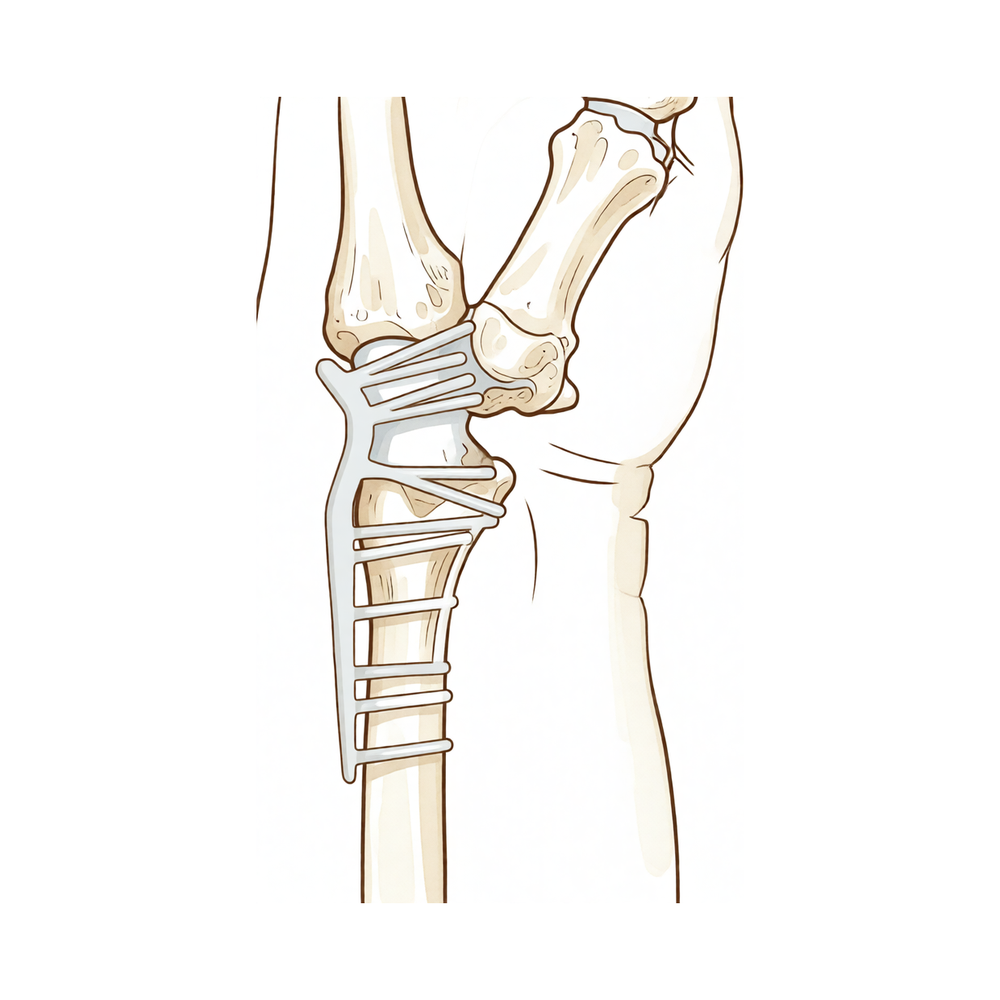
Ang protocol na ito ay nagsisilbing gabay sa iyong paggaling pagkatapos ng isang total wrist fusion (tinatawag ding wrist arthrodesis, isang operasyon na permanenteng pinagsasama ang gasgas na wrist upang ito ay maging solido at hindi na gumalaw) kasama si Dr Kieran Hirpara sa Mater Private Hospital Rockhampton. Nagsisimula ito sa iyong home exercise program, na susundan ng structured clinical protocol na isinulat para sa iyong hand therapist: dalhin ang pahinang ito o ang PDF nito sa iyong unang therapy visit upang manatiling coordinated ang iyong rehabilitasyon. Maaaring i-adjust ng iyong therapist ang plano depende sa pag-unlad ng iyong paggaling.
Kung mayroon kang anumang alalahanin tungkol sa iyong sugat pagkatapos ng operasyon, makipag-ugnayan sa mga rooms. Madalas na nakatutulong ang pagkuha ng larawan ng sugat at pag-email nito para masuri.
Ano ang dapat asahan
Ang total wrist fusion ay ginagawa para sa pulso na pudpod na ang lahat ng mga kasukasuan (end-stage, o "pancarpal", arthritis) at masakit kapag iginagalaw. Sa halip na subukang panatilihing gumagalaw ang isang pudpod na kasukasuan, ang operasyon ay sinasadyang alisin ang paggalaw: ang buto ng forearm (ang radius) ay pinagdurugtong sa mga buto ng kamay (ang mga metacarpal) gamit ang isang dorsal plate na nakalagay sa likod ng pulso, upang gawing matatag ang pulso sa posisyon ng bahagyang pagkiling pabalik (slight extension) na pinakamainam para sa paghawak. Sa mga sumunod na linggo, ang mga buto ay magdidikit (mag-uunite) upang maging isang solidong bloke.
Ang pangunahing ideya ng recovery na ito ay kabaligtaran ng karamihan sa mga operasyon: ang pulso ay dapat tumigil sa paggalaw: iyon ang lunas, hindi isang komplikasyon. Kaya walang layunin na maibalik ang paggalaw ng pulso, at walang mga ehersisyo upang itiklop o ituwid ang pulso. Sa halip, ang buong rehabilitasyon ay pinoprotektahan ang dalawang bagay na hindi naapektuhan ng fusion at napakahalaga para sa function ng kamay:
- Ang iyong mga daliri at thumb ay dapat manatiling ganap na mobile. Ang paninigas ng mga daliri ang pangunahing bagay na nakakasira sa wrist fusion, kaya ang paggalaw ng mga daliri at thumb ay nagsisimula mula sa unang araw.
- Ang rotation ng forearm (pagpihit ng iyong palad pataas at pababa) ay pinapanatili. Ang fusion ay hindi kasama ang paggalaw na ito, at ito ang pumapalit sa marami sa mga dating ginagawa ng pulso (pagpihit ng mga susi, gripo at doorhandle) kaya pinapanatili itong malambot mula sa simula.
Dahil ang dorsal plate ay matatag na humahawak sa mga buto (stable fixation), nagsusuot ng splint sa loob ng humigit-kumulang anim na linggo habang nagdidikit ang buto, at hinihikayat ang maagang paggalaw ng mga daliri at forearm sa halip na pigilan ito. Kapag nakumpirma na ng surgeon ang union, magsisimula na ang grip strengthening. Maraming tao ang gumagana nang maayos pagkatapos ng wrist fusion, at dahil hindi na masakit ang paghawak, madalas na bumubuti ang grip strength kumpara sa masakit na pulso bago ang operasyon.
Mga pag-iingat at limitasyon
- HUWAG subukang igalaw ang mismong pulso: ito ay sadyang pinagdugtong (fused) nang permanente. Walang mga ehersisyo sa pagbaluktot ng pulso, ngayon o kailanman.
- Panatilihing gumagalaw nang husto ang iyong mga daliri, hinlalaki, at pag-ikot ng forearm mula sa unang araw: ito ang pinakamahalagang bagay na maaari mong gawin para sa iyong kamay.
- Isuot ang iyong splint o dressing ayon sa itinuro para sa ginhawa at proteksyon hanggang sa magdugtong na ang buto; panatilihin itong malinis at tuyo.
- HUWAG maglagay ng mabigat na load o humawak nang mahigpit, at iwasang magbuhat ng higit pa sa isang magaan na tasa, hanggang sa magdugtong na ang fusion at ikaw ay cleared na (karaniwan ay mga anim hanggang walong linggo): ang mabigat na loading bago ang union ay may panganib na magdulot ng pagkasira ng plate o ng fusion.
- HUWAG magmaneho habang ikaw ay naka-splint o hindi ligtas na makokontrol ang kotse; maaaring magmaneho muli kapag wala ka na sa splint at kaya mo nang hawakan ang manibela, gaya ng kumpirmasyon sa iyong review.
Para sa pamamahala ng sugat, pamamaga, at peklat, tingnan ang gabay ng practice sa wound care.
Iyong mga ehersisyo
Kieran Hirpara 4.0
Paggalaw ng mga daliri at hinlalaki
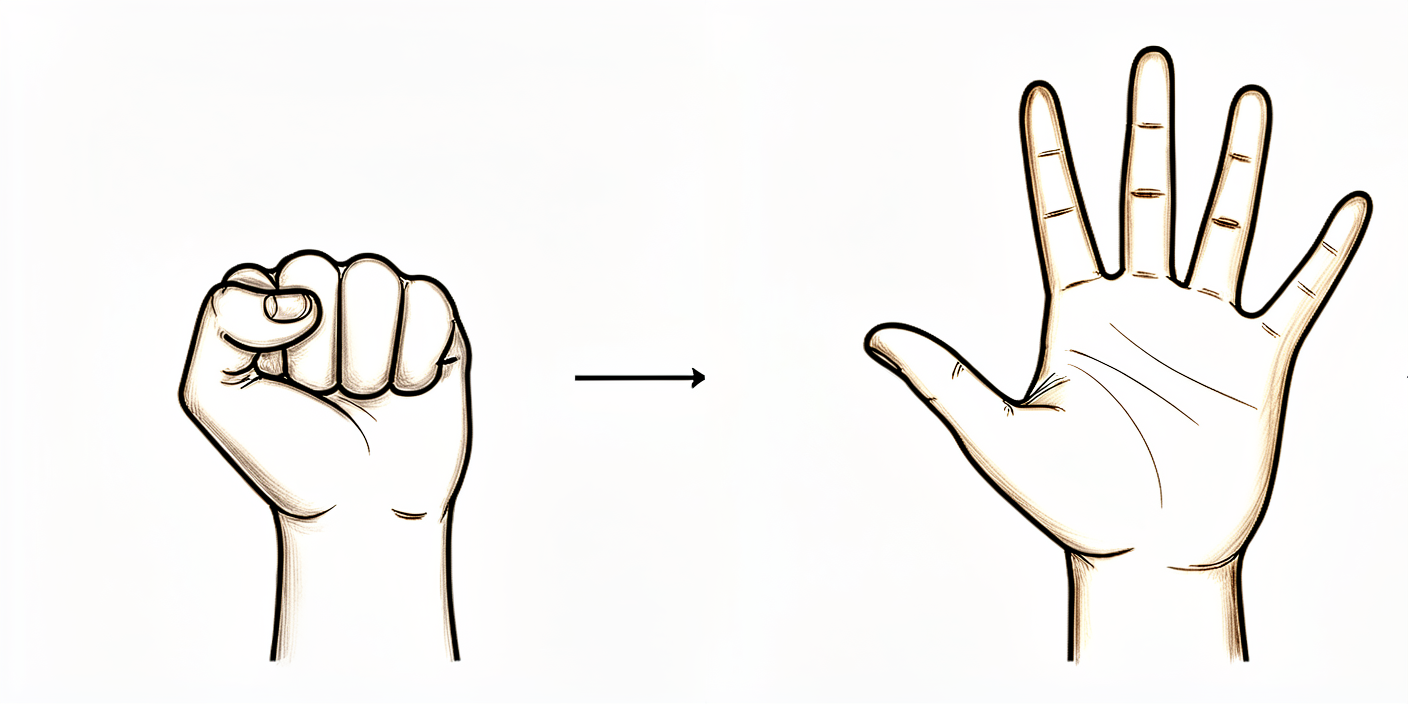
Panatilihing gumagalaw nang husto ang iyong mga daliri at hinlalaki mula pa sa mga unang araw. Gumawa ng kumpletong kamao, pagkatapos ay ibuka nang malapad ang kamay at iunat ang mga daliri nang diretso; pagkatapos ay idikit ang iyong hinlalaki sa dulo ng bawat daliri nang sunod-sunod. Ang iyong pulso ay hindi gumagalaw — ito ay normal at sinasadya — ngunit ang mga daliri at hinlalaki ay dapat manatiling maluwag at ganap na nakakagalaw, dahil ang paninigas dito ang pangunahing bagay na naglilimita sa kamay pagkatapos ng isang wrist fusion.
10 beses bawat isa, ilang beses sa isang araw, mula unang araw
Kieran Hirpara 4.0
Rotasyon ng forearm (palad paitaas / palad paibaba)
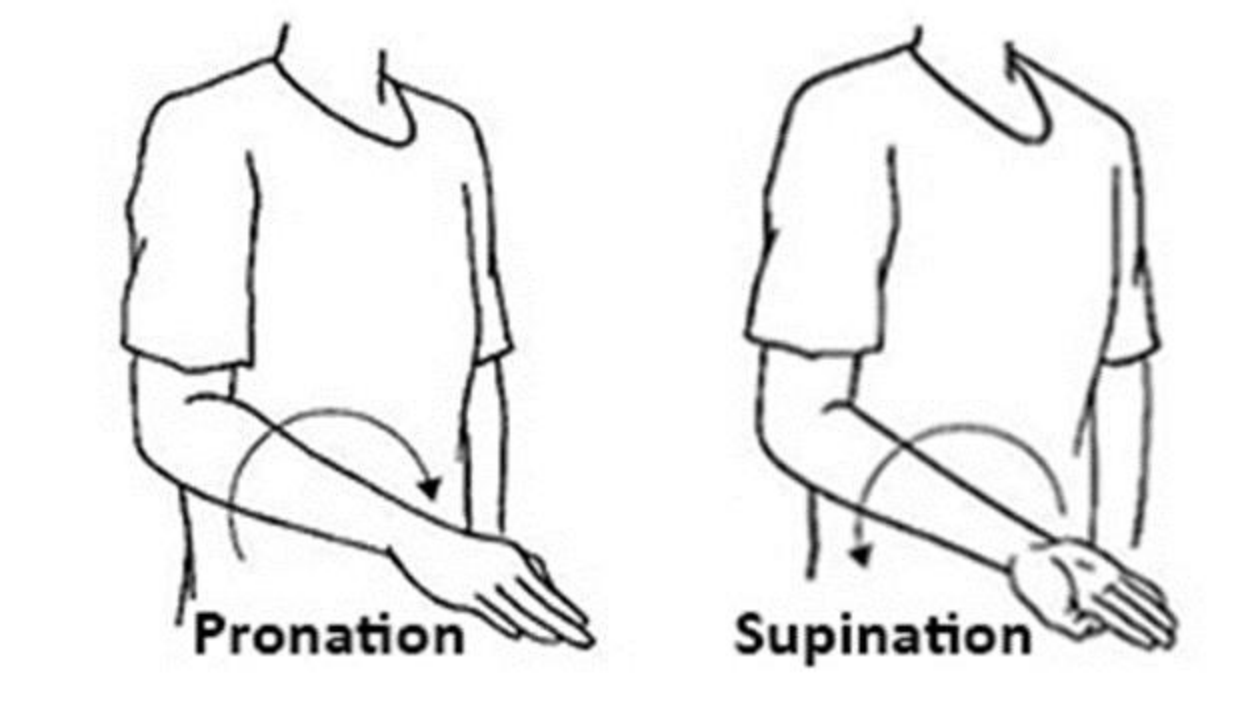
Habang ang iyong siko ay nakadikit sa iyong gilid at nakabaluktot sa isang right angle, dahan-dahang iharap ang iyong palad paitaas patungo sa kisame, pagkatapos ay paibaba patungo sa sahig. Ang fusion ay hindi kasama sa mga pag-ikot na galaw na ito, kaya nananatili itong malaya — mahalagang panatilihin itong supple, dahil ang pag-ikot ng forearm ang gumagawa ng maraming trabaho na dating ginagawa ng wrist (pagpihit ng susi, doorknob, gripo).
10 beses sa bawat direksyon, 2–3 beses sa isang araw
Kieran Hirpara 4.0
Pagkontrol sa pamamaga
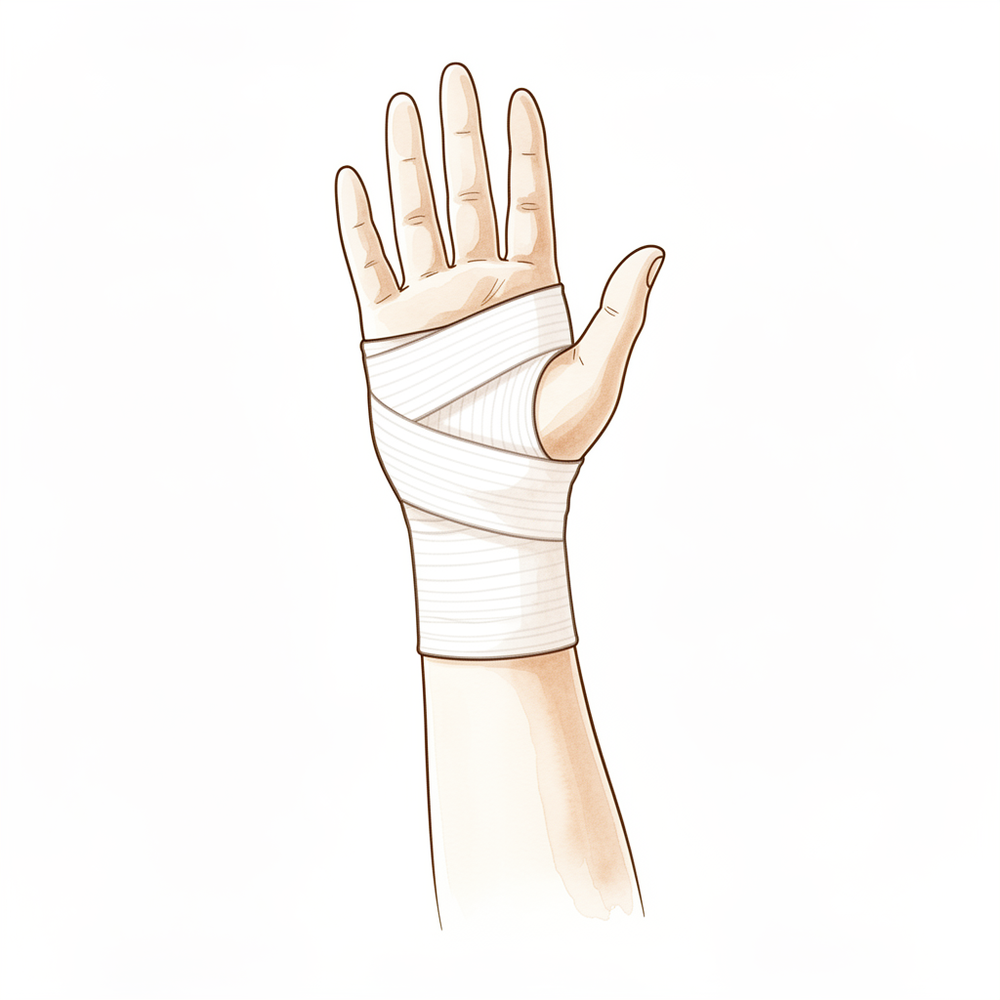
Para sa unang ilang linggo, ipahinga ang iyong kamay na nakataas sa mga unan nang mas mataas sa lebel ng iyong puso tuwing ikaw ay nakaupo o nakahiga, at dahan-dahang i-pump ang iyong mga daliri sa pamamagitan ng pagbubukas at pagsasara. Binabawasan nito ang pamamaga na laging kasunod ng operasyon sa kamay; ang mas kaunting pamamaga ay nangangahulugang mas malayang nakakagalaw ang mga daliri at mas mabilis na gagaling ang sugat.
Itaas tuwing nagpapahinga; finger pumps 10 beses, bawat oras habang gising
Kieran Hirpara 4.0
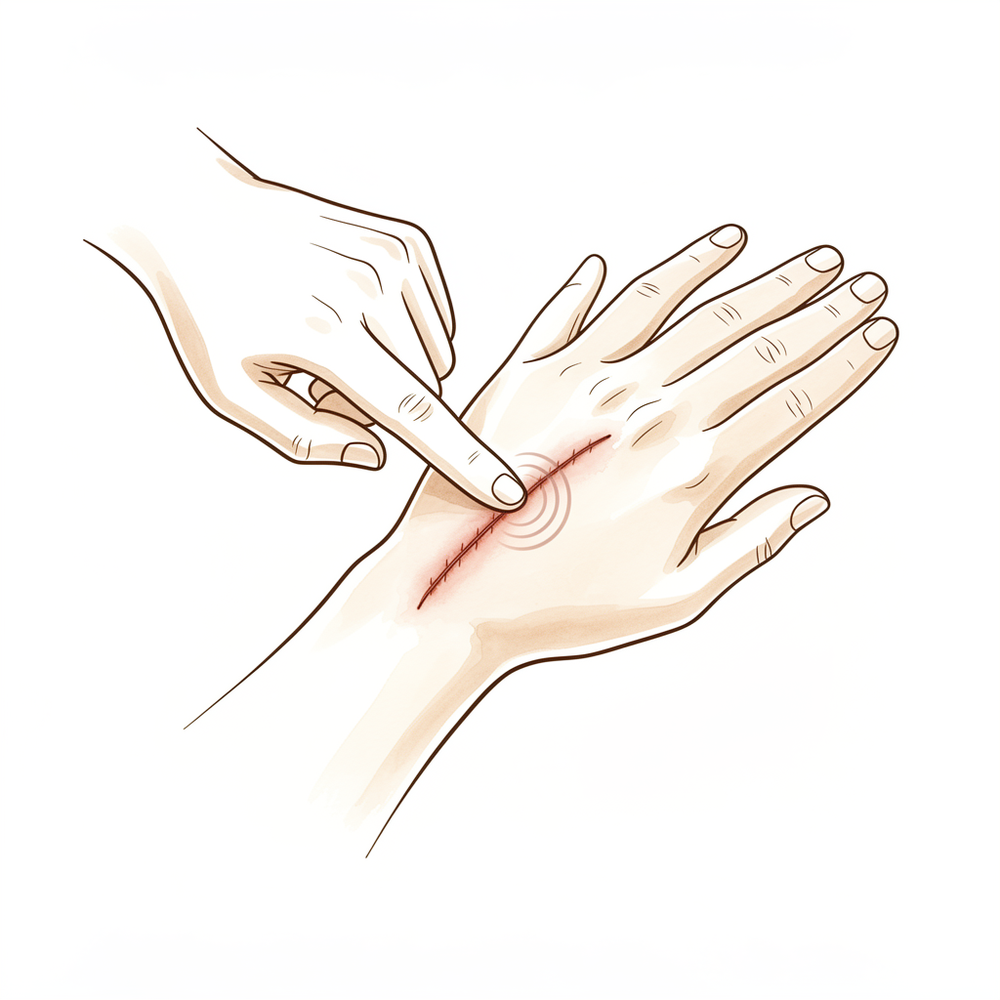
Pag-aalaga sa peklat
Kapag ganap nang gumaling ang sugat at wala na itong langib, imasahe ang peklat sa likod ng iyong pulso gamit ang kaunting moisturizer, sa pamamagitan ng maliliit at madiing pabilog na galaw. Pinapanatili nitong malambot ang peklat at pinipigilan itong dumikit sa plate at mga tendon sa ilalim nito. Sisimulan ito ng iyong hand therapist sa tamang oras.
Ilang minuto, 2–3 beses sa isang araw, kapag magaling na
Kieran Hirpara 4.0
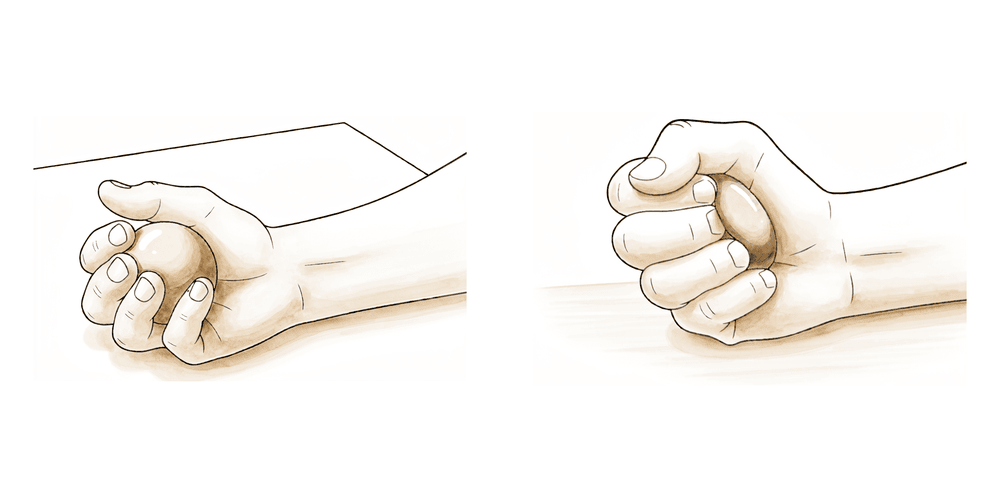
Pagpapalakas ng grip pagkatapos ng union
Isang ehersisyo sa HULING bahagi — kapag naghilom na lamang ang fusion (karaniwan ay mga anim hanggang walong linggo) at binigyan ka na ng clearance. Pumiga ng isang malambot na bola o therapy putty sa iyong palad at hawakan, pagkatapos ay bitawan. Ang fused wrist ay nagbibigay sa kamay ng isang matatag at walang sakit na base para sa paghawak, kaya ang grip strength ay karaniwang bumubuti sa mga sumunod na buwan. Unti-unti itong palakasin.
10–15 na piga, 2–3 beses sa isang araw, kapag pinayagan na pagkatapos ng union
Ito ang mga ehersisyo mula sa iyong handout. Simulan lamang ang mga ito ayon sa gabay ni Dr Hirpara at ng iyong hand therapist. Ang mga maagang ehersisyo ay lahat nagpoprotekta sa mga bahaging nananatiling malaya pagkatapos ng fusion (paggalaw ng mga daliri at thumb, rotasyon ng forearm, at pagkontrol sa pamamaga) at wala sa mga ito ang kinasasangkutan ng wrist, na dapat manatiling solid. Ang grip strengthening ay kabilang sa huling yugto at hindi dapat simulan hanggang sa magsanib na ang fusion at partikular ka nang binigyan ng pahintulot. Itigil ang anumang nagdudulot ng matalas na sakit sa likod ng wrist.
Ang iyong clinical protocol
Ang natitirang bahagi ng pahinang ito ay ang staged clinical protocol para sa rehabilitasyon pagkatapos ng total wrist arthrodesis. Ang seksyong ito ay ibibigay sa iyong hand therapist, at ang bawat phase ay nagsisimula sa isang paliwanag sa simpleng Ingles tungkol sa kung ano ang nangyayari. Walang wrist-ROM goal: ang mga radiocarpal (at karaniwan ay ikatlong carpometacarpal) joints ay pinagsama (fused) gamit ang isang dorsal plate. Ang protocol ay umiiral upang mapanatili ang digital range, forearm rotation at oedema control habang naghihilom ang fusion, at pagkatapos ay bumuo ng grip sa stable construct.
Bago ang paggamot, suriin ang operation report ng pasyente at ang nakaraang medical history, at makipag-ugnayan sa treating surgeon tungkol sa construct (dorsal arthrodesis plate; kung ang ikatlong CMC joint ay kasama o hindi), ang fused wrist position, anumang bone graft na ginamit, at ang union status. Pinagsasama (fuses) ni Dr Hirpara ang wrist sa slight extension gamit ang isang dorsal plate; ang fixation ay stable, kaya isang light splint/dressing para sa comfort ang ginagamit sa halip na prolonged rigid casting, at ang maagang digital at forearm motion ang prayoridad.
Phase I — protektahan ang construct, pakilusin ang mga free joints (linggo 0 hanggang 6)
Ang unang anim na linggo ay para protektahan ang naghihilom na fusion habang pinapanatiling fully mobile ang lahat ng hindi fused. Isang light splint o dressing ang isinusuot para sa comfort. Walang wrist motion (ang construct ay rigid ayon sa disenyo) at ang pokus ay ganap na nasa mga daliri, thumb, forearm at pamamaga.
Para sa iyong hand therapist:
Edukasyon at mga pag-iingat - Splint/dressing para sa comfort at proteksyon hanggang sa clinical at radiographic union; walang rigid prolonged casting na kinakailangan dahil sa stable plate fixation - Walang wrist mobilisation: ang radiocarpal/CMC construct ay fused; walang ROM target - Walang loaded grip o pagbuhat nang higit sa isang light cup hanggang sa makumpirma ang union - Bantayan ang digital stiffness: ang pangunahing banta sa outcome pagkatapos ng wrist fusion
Pamamahala - Sugat: surgical dressings ayon sa itinuro; pagtanggal ng sutures at splint/X-ray review sa humigit-kumulang 10–14 araw; i-monitor para sa impeksyon - Oedema: elevation sa itaas ng lebel ng puso, gentle digital pumping, ice kung kinakailangan - Mga ehersisyo: full active finger and thumb AROM (composite fist → full extension, thumb opposition) mula unang araw; active forearm pronation/supination; active shoulder at elbow ROM; walang wrist motion, walang resisted grip
Mga kraytirya para mag-progress - Hilom na ang sugat; napanatili ang full o near-full digital ROM; maagang radiographic signs ng union sa humigit-kumulang anim na linggo
Phase II — kumpirmahin ang union, simulan ang grip loading (ika-6 hanggang ika-12 linggo)
Mula sa humigit-kumulang anim na linggo, ang fusion ay karaniwang nag-uunite na sa X-ray, at kapag nakumpirma na ito ng surgeon, itatapon na ang splint at magsisimula na ang grip strengthening. Nagpapatuloy ang forearm at finger work; ang wrist ay mananatiling fused at unloaded hanggang sa makumpirma ang union.
Para sa iyong hand therapist:
Mga Assessment - Kumpirmahin ang union status sa treating surgeon bago ang loading; digital ROM; forearm rotation arc; grip baseline; pagsusuri ng sugat/peklat
Edukasyon at mga pag-iingat - Simulan ang grip at light loading pagkatapos lamang kumpirmahin ng surgeon ang union (karaniwang anim hanggang walong linggo) - Ang hardware sa dorsal wrist ay subcutaneous; bantayan ang anumang prominence/irritation at iulat ito - Patuloy na bigyang-priyoridad ang full digital ROM sa lahat ng oras
Pamamahala - Mga Ehersisyo: progressive grip strengthening (soft ball → putty → graded grippers) kapag nakumpirma na ang union; simulan ang scar management kapag hila na ang sugat; ipagpatuloy ang forearm rotation at full digital ROM; ipakilala ang light functional hand use - Edukasyon na ang forearm rotation na ngayon ang pumapalit sa nawalang wrist motion sa mga pang-araw-araw na gawain (susi, gripo, pagpihit)
Mga Kraytirya para mag-progress - Nakumpirmang union; pain-free light grip; full digital ROM; mobile ang peklat
Phase III — pagpapalakas at pagbabalik sa load (ika-12 linggo at higit pa)
Kapag matatag na ang fusion, wala nang mga paghihigpit sa paggalaw na kailangang protektahan; ang kamay ay maaaring lagyan ng load ayon sa kakayahan at unti-unting palakasin. Ang grip at pangkalahatang lakas ng kamay ay patuloy na bumubuti sa loob ng ilang buwan, madalas ay mas mabuti kaysa bago ang operasyon dahil ang pag-grip ay wala na ngayong sakit.
Para sa iyong hand therapist:
Mga Assessment - Grip strength kumpara sa kabilang panig; functional at work-/task-specific na pag-test; hardware tolerance
Edukasyon at mga pag-iingat - Walang mga paghihigpit sa paggalaw kapag nag-unite na; ituloy ang load ayon sa kakayahan - Ang mabigat/manual na loading ay unti-unting pinapalakas; ang full strength gains ay nagpapatuloy hanggang humigit-kumulang labindalawang buwan
Pamamahala - Mga ehersisyo: progressive resisted grip at pagpapalakas ng forearm; graded na pagbabalik sa mga functional at work task; ituloy ang anumang residual digital mobility work - Isaalang-alang ang discharge kapag ang grip ay functional at bumubuti at ang mga pang-araw-araw na gawain ay napapamahalaan na; i-refer muli sa treating doctor kung magkaroon ng digital stiffness, persistent hardware irritation, o hindi magandang outcome
Mga kraytirya para sa pagbabalik sa load - Solid union; functional at bumubuting grip; pain-free task-specific loading
Pagbabalik sa trabaho at aktibidad
Hinihikayat ang magaan na pang-araw-araw na paggamit ng kamay (pagkain, pagsusulat, magaan na pag-aalaga sa sarili) mula sa simula, hangga't komportable, basta't hindi ka humahawak nang mahigpit o nagbubuhat ng higit pa sa isang magaan na tasa bago magsanib ang fusion. Dahil hindi ka dapat magmaneho habang naka-splint o hindi ligtas na nakokontrol ang kotse, magplano para sa tulong sa transportasyon sa mga unang linggo; ang pagmamaneho ay muling sisimulan kapag wala ka na sa splint at kaya mo nang kontrolin ang manibela, gaya ng kumpirmasyon sa iyong review.
Ang mabigat na paghawak, pagbubuhat, at paghila ay hihintayin hanggang sa magsanib ang fusion (karaniwan ay mga anim hanggang walong linggo) at ikaw ay binigyan na ng clearance, at pagkatapos ay unti-unting dadagdagan. Karamihan sa mga tao ay nakakabalik sa opisina o magaan na trabaho sa loob ng humigit-kumulang tatlong buwan, at ang mas mabigat o manwal na trabaho ay sa kalaunan, sa isang criterion-based progression na huhusgahan ni Dr Hirpara at ng iyong hand therapist sa halip na sa kalendaryo lamang. Ang lakas ay patuloy na bumubuti hanggang isang taon, at dahil ang gasgas na wrist ay hindi na masakit, maraming tao ang nakakahawak nang mas mahigpit at nagagamit ang kamay nang mas malaya kaysa sa kaya nila bago ang operasyon.
Pagkatapos ng iyong protocol
Ang protocol na ito ay kasabay ng pangkalahatang payo sa paggaling ng klinika: tingnan ang pamamahala ng sakit pagkatapos ng operasyon, pag-aalaga ng sugat at pamamahala ng peklat. Ang phased plan sa itaas ay sumasalamin sa mga nailathalang kinalabasan at gabay sa rehabilitasyon pagkatapos ng total wrist arthrodesis, at ang iyong patuloy na paggaling ay ginagabayan nang indibidwal ni Dr Hirpara at ng iyong hand therapist ayon sa pag-unlad ng iyong fusion at kamay.
Evidence & references
This is the clinical evidence summary written for health professionals. It is technical, and it lists the research this page was built from. You do not need to read it to understand your treatment or to make a decision about it.
Total Wrist Arthrodesis — Procedure Outcomes & Post-operative Rehabilitation (Radiocarpal Fusion, Dorsal Plate)
Topic scope: post-operative rehabilitation after total wrist arthrodesis — permanent surgical fusion of the radiocarpal (and usually the third carpometacarpal) joints with a dorsal arthrodesis plate, for end-stage pancarpal (panarticular) arthritis of the wrist. This is a salvage reconstruction that deliberately abolishes wrist motion, not a motion-preserving operation, so the rehabilitation has no wrist-ROM goal. It is built around preserving the joints the fusion leaves free — the fingers, thumb and forearm rotation — and controlling oedema while the fusion unites, then progressive grip loading once united.
Defining principle of the rehab here: total wrist fusion trades motion for a stable, pain-free wrist. The whole wrist is set solid (radius → metacarpals) in slight extension; loss of wrist movement is the intended endpoint, not a deficit to be rehabilitated. Modern dorsal locking-plate fixation is rigid enough that prolonged casting is unnecessary — so the deliberate priorities are early digital and forearm-rotation motion (digital stiffness is the principal threat to a good result) and swelling control, with grip strengthening deferred until radiographic union (typically 6–8 weeks). The single branch point is union status: loading is gated on the surgeon confirming the fusion has consolidated, after which there are no motion restrictions to protect.
A. PROCEDURE OUTCOMES (total wrist arthrodesis, dorsal plate)
Total wrist arthrodesis is a reliable, durable salvage for the painful, arthritic wrist that has failed non-operative care: the great majority of patients obtain lasting pain relief and a stable hand, accepting the loss of wrist motion in exchange.
- High union rates and durable pain relief. Plate arthrodesis is a well-established, reproducible operation; published series and the JAAOS review of indications and outcomes report reliable fusion, good pain relief and high patient satisfaction, with most patients willing to undergo it again [Wei & Feldon, JAAOS 2017; Shah et al., J Hand Surg Am 2022 — technique/modifications]. Moderate–strong (review + technique series).
- Grip strength is preserved or improves. Because gripping is no longer painful and the wrist is a stable platform, grip strength after fusion is typically equal to or better than the painful pre-operative wrist. A 2026 systematic review and meta-analysis of long-term grip strength after total wrist fusion (comparing inclusion vs sparing of the third CMC joint) confirms maintained long-term grip with comparable complication profiles between the two constructs [Lawson-Smith et al., J Hand Surg Glob Online 2026]. Moderate (SR/meta-analysis).
- Function is good for daily tasks; forearm rotation compensates for lost wrist motion. Patients adapt well because forearm pronation/supination (unaffected by the fusion) substitutes for much of the lost wrist arc in activities such as turning keys, taps and handles. Carpometacarpal-joint– sparing plate designs aim to retain a small amount of motion and reduce distal hardware issues [Briotti et al., HAND 2022 — Medartis CMC-sparing plate]. Moderate (cohort).
- Complications are defined and manageable. Principal complications are nonunion, hardware prominence/irritation requiring plate removal (the dorsal plate is subcutaneous), wound issues, and adjacent-segment problems (distal radioulnar joint / digital stiffness). These are recognised, generally treatable, and informed-consent staples rather than common catastrophes [Wei & Feldon, JAAOS 2017; Kalb & Prommersberger, Oper Orthop Traumatol 2009 — AO plate technique]. Moderate.
B. REHABILITATION / THERAPY EVIDENCE
The rehab questions after total wrist fusion are different from a motion-preserving operation: there is no wrist arc to recover. The evidence and consensus instead converge on early mobilisation of the unfused joints, oedema control, and union-gated grip loading, exploiting the stability of modern plate fixation.
- Stable plate fixation permits early digital and forearm motion. Rigid dorsal locking-plate constructs are robust enough that prolonged rigid immobilisation is unnecessary; a light splint or dressing for comfort, with immediate finger, thumb and forearm-rotation motion, is the intended default [Shah et al., J Hand Surg Am 2022; Kalb & Prommersberger, Oper Orthop Traumatol 2009]. Moderate (technique consensus).
- Preserving digital range is the priority — stiffness is the main avoidable failure. Because the hand's function after fusion depends entirely on the joints left mobile, full active finger and thumb range from day one, plus preserved forearm rotation, is the core therapeutic aim. This is a mechanistic/consensus position rather than one from comparative rehab trials. Weak–moderate (mechanism strong, dedicated rehab RCTs absent).
- Grip strengthening is deferred to union, then progressed freely. Loaded grip is withheld until the surgeon confirms radiographic union (commonly 6–8 weeks), after which there are no motion restrictions and strengthening is progressed as tolerated; grip continues to improve for several months. Consensus / protocol-based.
- Hand therapy targets the free joints, not the wrist. Published patient-guidance protocols and surgical references describe early referral to a hand therapist for finger and forearm mobility and later putty-based grip strengthening — there is no wrist-ROM component by design [AAOS OrthoInfo — Wrist Fusion; institutional post-op protocols]. Consensus (patient-guidance).
Recovery trajectory (expected, evidence-anchored)
| Phase | Window | Restraint | Hand use / therapy focus | Strength / load | Notes |
|---|---|---|---|---|---|
| I — Protect construct, mobilise free joints | Week 0–6 | Light splint/dressing for comfort; no wrist motion (fused) | Elevate; immediate full finger + thumb AROM; forearm pronation/supination; elbow/shoulder ROM; oedema control | Light functional use only; no loaded grip / lifting > a light cup | Sutures + splint/X-ray review ~10–14 days. Digital stiffness is the chief threat |
| II — Confirm union, begin grip loading | Week 6–12 | Loading gated on surgeon-confirmed union (≈6–8 wk) | Splint discarded at union; progressive grip (ball → putty → grippers); scar massage once healed; continue forearm + digital ROM | Grip introduced light → graded after union | Forearm rotation substitutes for lost wrist motion. Watch dorsal hardware prominence |
| III — Strengthening & return to load | Week 12 → 12 months | None once united | Progressive resisted grip/forearm strengthening; work-/task-specific loading | Full load as tolerated; heavy/manual built up gradually | Office/light work ~3 months; strength improves up to ~12 months, often exceeding pre-op (pain-free grip) |
(Phase windows mirror the precautions and recovery structure in the patient protocol; they are typical guides anchored to union, not trial-derived deadlines.)
C. KEY CONTROVERSIES / EVIDENCE QUALITY
- Fusion vs total wrist arthroplasty. The central modern controversy. Systematic review of total wrist arthroplasty versus arthrodesis (originally in rheumatoid disease) found insufficient evidence to declare either superior, with arthroplasty preserving some motion at the cost of higher revision/implant-related complications, and fusion offering durability at the cost of motion [Cavaliere & Chung, Plast Reconstr Surg 2008]. A cost-utility analysis found arthrodesis and arthroplasty both reasonable, with trade-offs in motion, complications and cost [Cavaliere & Chung, J Hand Surg Am 2010]. The "where are we now" synthesis frames the choice as patient-specific (demand, bilateral disease, expectations) rather than a settled winner [Jump, Trail & Talwalkar, J Hand Surg Eur 2025]. Moderate; genuine equipoise.
- Arthrodesis as salvage for failed arthroplasty. Total wrist fusion reliably salvages a failed total wrist arthroplasty, though such salvage fusions behave somewhat differently (bone loss, grafting) from primary arthrodesis [Zijlker et al., J Hand Surg Eur 2021]. Moderate.
- Include or spare the third CMC joint. Constructs differ in whether the plate crosses the third carpometacarpal joint. Long-term grip and complication outcomes are broadly comparable between inclusion and sparing, with CMC-sparing designs aiming to reduce distal hardware issues and retain a trace of motion [Lawson-Smith et al., J Hand Surg Glob Online 2026; Briotti et al., HAND 2022]. Moderate.
- Hardware prominence and removal. The subcutaneous dorsal plate is a recognised source of irritation and a common reason for elective hardware removal once the fusion is solid — expected, not a failure of the operation [Wei & Feldon, JAAOS 2017]. Moderate.
- Special populations. In spastic/neurological wrists (e.g. cerebral palsy), fusion changes hand function in nuanced ways — improving positioning but with task-specific trade-offs — underlining that the goal is a useful stable position, not motion [Hargreaves, Warwick & Tonkin, J Hand Surg Br 2000]. Moderate (specialised cohort).
D. EVIDENCE STRENGTH FLAGS (summary)
- STRONG (SR / meta-analysis): preserved-to-improved long-term grip strength after total wrist fusion; comparable outcomes between CMC-inclusion and CMC-sparing constructs [Lawson-Smith et al. 2026].
- MODERATE: reliable union, durable pain relief and high satisfaction with plate arthrodesis [Wei & Feldon 2017; Shah et al. 2022]; genuine equipoise between fusion and arthroplasty with motion-vs-durability/complication trade-offs [Cavaliere & Chung 2008, 2010; Jump et al. 2025]; fusion as salvage for failed arthroplasty [Zijlker et al. 2021]; defined complication set (nonunion, hardware removal, DRUJ/digital adjacent issues).
- WEAK / CONSENSUS: the specific early digital/forearm-motion, union-gated grip rehabilitation programme (mechanistically rationalised — stiffness avoidance — with no dedicated rehab RCTs); exact phase timings (typical, anchored to union rather than trial-derived); stable-fixation early-motion default from technique consensus [Shah et al. 2022; Kalb & Prommersberger 2009].
CITATIONS
RAG corpus (180,000+ Orthopaedic articles)
- Total Wrist Arthrodesis: Indications and Clinical Outcomes. J Am Acad Orthop Surg. 2017. DOI: 10.5435/jaaos-d-15-00424
- Radiocarpal Fusion: Indications, Technique, and Modifications. J Hand Surg Am. 2022. DOI: 10.1016/j.jhsa.2022.04.002
- Long-term Grip Strength and Complications After Total Wrist Fusion With and Without Inclusion of the Third Carpometacarpal Joint: A Systematic Review and Meta-analysis. J Hand Surg Glob Online. 2026. DOI: 10.1016/j.jhsg.2026.101022
- Wrist Arthrodesis Using the Medartis Carpometacarpal Joint Sparing Plate. HAND. 2022. DOI: 10.1177/15589447221141474
- A Systematic Review of Total Wrist Arthroplasty Compared with Total Wrist Arthrodesis for Rheumatoid Arthritis. Plast Reconstr Surg. 2008. DOI: 10.1097/prs.0b013e318180ece3
- A Cost-Utility Analysis of Nonsurgical Management, Total Wrist Arthroplasty, and Total Wrist Arthrodesis in Rheumatoid Arthritis. J Hand Surg Am. 2010. DOI: 10.1016/j.jhsa.2009.12.013
- Arthrodesis or arthroplasty, complete or partial: where are we at in the 21st century? J Hand Surg Eur Vol. 2025. DOI: 10.1177/17531934241296758
- Comparative outcomes of total wrist arthrodesis for salvage of failed total wrist arthroplasty and primary wrist arthrodesis. J Hand Surg Eur Vol. 2021. DOI: 10.1177/17531934211057389
- Die vollständige Versteifung des Handgelenks mit der AO-Handgelenk-Arthrodesenplatte (Complete wrist arthrodesis with the AO wrist arthrodesis plate). Oper Orthop Traumatol. 2009. DOI: 10.1007/s00064-009-1905-2
- Changes in Hand Function Following Wrist Arthrodesis in Cerebral Palsy. J Hand Surg Br. 2000. DOI: 10.1054/jhsb.2000.0366
Wrist-fusion rehabilitation / patient-guidance literature (URLs)
- American Academy of Orthopaedic Surgeons — Wrist Fusion (Wrist Arthrodesis), OrthoInfo (recovery timeline; fusion heals ~8–12 weeks; the fused wrist no longer moves; therapy for joints not fused). https://orthoinfo.aaos.org/en/treatment/wrist-fusion-wrist-arthrodesis/
- Wrist Arthrodesis Technique — postoperative care and approach considerations. Medscape eMedicine. https://emedicine.medscape.com/article/1241236-technique
- Total Wrist Arthrodesis (Wrist Fusion) — procedure and rehabilitation overview. Resurgens Orthopaedics. https://www.resurgens.com/hand-wrist/procedures/wrist-fusion-total-wrist-arthrodesis
- Full Wrist Fusion — Post-Operative Rehabilitation Protocol (institutional hand-therapy protocol; early digital/forearm motion, union-gated grip strengthening). Alaska Orthopedic. https://www.akortho.com/wp-content/uploads/Full-Wrist-Fusion.pdf