Patients › Hand
Eksisyon ng Ganglion sa Flexor Tendon Sheath
Excision of a flexor tendon sheath ganglion — when surgery is considered for painful or limiting cysts.
Bakit iminungkahi ang operasyong ito
Si Dr Kieran Hirpara, isang upper-limb surgeon sa Mater Private Hospital Rockhampton, ay nagsisimula sa mga opsyon na hindi gaanong invasive na angkop sa iyong kondisyon. Ang mga pasyente ay karaniwang nirerefer sa aming klinika ng kanilang GP; kung iminungkahi ng isang physiotherapist na magpatingin sa amin, kakailanganin mo pa rin ng referral mula sa iyong GP upang maging eligible para sa Medicare rebate. Sa iyong appointment, kumukuha kami ng history, sinusuri ang iyong kamay, at nagsasaayos ng imaging kung kinakailangan upang kumpirmahin na ang bukol ay isang ganglion.
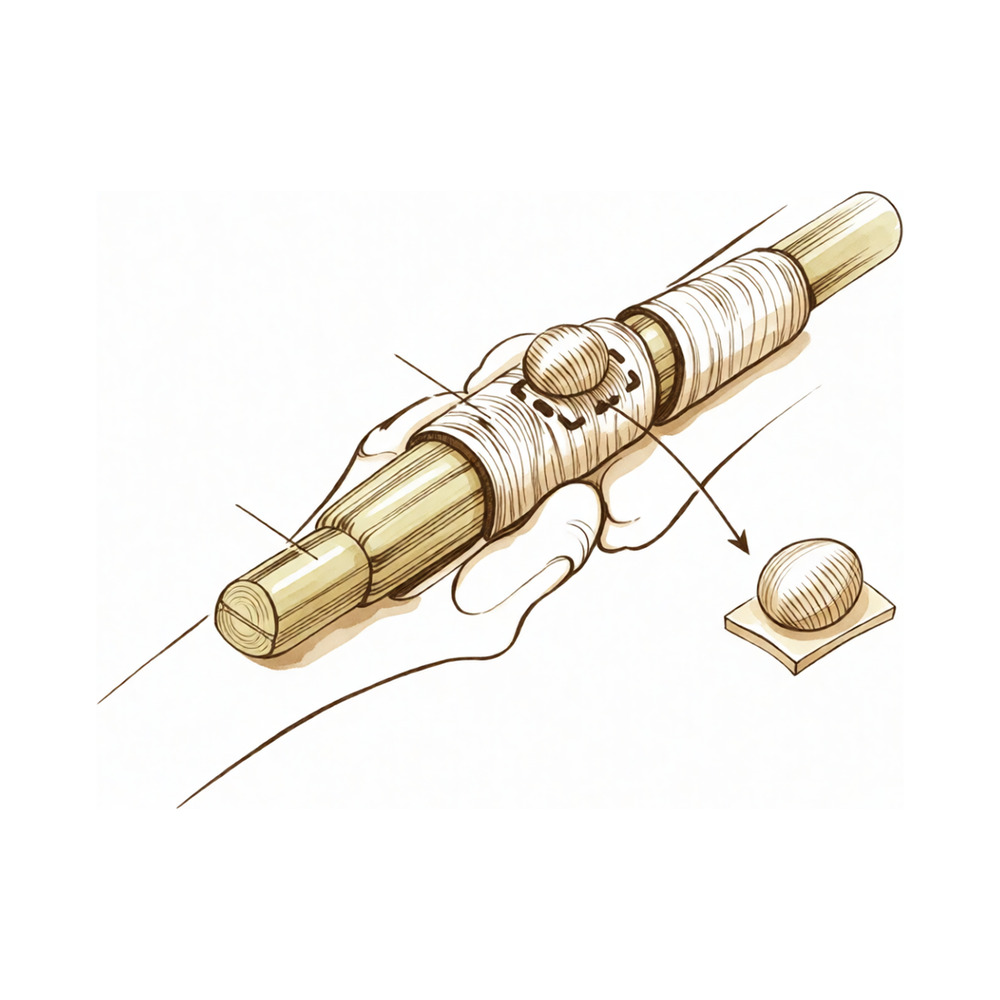
Ang isang flexor tendon sheath ganglion ay isang maliit at hindi nakakapinsalang bukol na puno ng malapot na likido. Matatagpuan ito sa tabi ng tunnel ng tissue kung saan dumudulas ang mga tendon sa iyong daliri. Tinatanggal ng operasyong ito ang bukol na iyon sa pamamagitan ng isang hiwa na ginawa sa ibabaw ng bahaging inooperahan.
Karamihan sa mga ganglion ay ginagamot muna nang walang operasyon. Maaaring gumamit ng karayom upang sipsipin ang likido, at ito ay karaniwang sinusubukan bago imungkahi ang isang operasyon. Ang ilang mga ganglion ay lumiliit din nang kusa, at sa mga bata, ang isang cyst na nawawala ay karaniwang nangyayari sa loob ng 18 buwan.
Inaalok ang operasyon kapag ang bukol ay patuloy na nagdudulot ng problema pagkatapos ng mga simpleng hakbang na ito. Maaaring ito ay sakit, panghihina ng grip, o isang bukol na sumasabit kapag iginagalaw mo ang iyong daliri. Ang pagtanggal sa ganglion ay naglalayong alisin ang sakit na iyon at hayaan ang iyong daliri at kamay na gumana nang tama.
Bago ang operasyon
Kukumpirmahin ng iyong surgeon ang plano sa iyong appointment at sasabihin sa iyo ang mga dapat gawin upang maghanda. Hihilingin sa iyo na huwag kumain o uminom sa loob ng 7 oras bago ang operasyon. Humihiling kami ng 7 oras sa halip na ang karaniwang 6 upang maaari kang mauna kung maagang matapos ang listahan sa theatre. Maaaring kailanganin mong itigil ang ilan sa iyong mga regular na gamot bago ang operasyon. Bibigyan ka ng iyong surgeon ng eksaktong mga tagubilin tungkol dito, kaya magdala ng listahan ng lahat ng iyong iniinom. Mag-ayos ng taong maghahatid sa iyo pauwi pagkatapos, at magsuot ng komportable at maluwag na damit. Ang imaging gaya ng X-ray, ultrasound o MRI scan ay maaaring gamitin upang planuhin ang operasyon. Kung mayroon kang iba pang kondisyong medikal, maaaring kailanganin mo ng mga blood test o pagsusuri kasama ang anaesthetist.
Sa araw ng operasyon
Darating ka sa surgical admissions unit ng ospital, kung saan ka ire-rehistro at ihahanda para sa theatre. Makikilala mo doon ang anaesthetist. Ang operasyong ito ay ginagawa sa ilalim ng general anaesthetic. Ikaw ay tulog nang tuluyan para sa operasyon. Ang ilang pasyente ay maaaring sumailalim din sa regional nerve block para sa pagpapaginhawa ng sakit pagkatapos ng operasyon; ang anaesthetist ang magpapasya sa araw na iyon base sa iyong indibidwal na kalagayan. Pagkatapos ay dadalhin ka sa operating theatre, kung saan isasagawa ang operasyon. Pagkatapos nito, magigising ka sa recovery area, kung saan babantayan ka ng mga nurse habang nawawala ang bisa ng anaesthetic. Kapag ikaw ay stable na, pupunta ka sa ward o uuwi na, depende sa procedure at sa iyong paggaling.
Ano ang kinapapalooban ng operasyon
Tinatanggal ng operasyong ito ang ganglion sa pamamagitan ng isang hiwa na ginawa sa ibabaw ng bukol. Maingat na nagtatrabaho ang iyong surgeon sa paligid ng tunnel ng tissue kung saan dumudulas ang mga tendon ng iyong daliri, at tinatanggal ang ganglion kasama ang maliit na stalk na nag-uugnay dito sa tunnel na iyon. Ang pagtanggal sa buong bukol, kabilang ang base nito, ay nakatutulong upang mabawasan ang pagkakataon na bumalik ito.
Isinasara ang hiwa gamit ang mga tahi. Nilalagyan ng dressing ang sugat bago ka lumabas ng theatre.
Susuriin din ng iyong surgeon ang mga nakapaligid na tissue habang isinasagawa ang operasyon. Kung may anumang bahagi ng tendon na humina dahil sa pagdiin ng ganglion dito, ang tendon na iyon ay pinoprotektahan at pinapanatiling buo.
Pagkatapos ng operasyon
Ito ay karaniwang isang day case, kaya maaari mong asahan na uuwi ka sa araw ring iyon, bagaman paminsan-minsan ay nananatili ang mga pasyente nang magdamag. Magigising ka sa recovery area, kung saan babantayan ka ng mga nars habang nawawala ang bisa ng anaesthetic. Ang iyong kamay ay magkakaroon ng malambot na dressing sa ibabaw ng sugat, at bibigyan ka namin ng pain relief upang mapanatili kang komportable. Maaari ka nang gumalaw sa oras na maramdaman mong matatag ka na. Dapat may kasama ka sa unang 24 oras pagkauwi mo sa bahay. Hinahayaan naming nakalagay ang dressing sa loob ng humigit-kumulang 10 araw; pakiusap huwag itong tatanggalin bago ang panahong iyon maliban kung sinabi namin sa iyo. Papalitan o tatanggalin namin ito kapag nakita ka na namin.
Paggaling
Ang iyong kamay ay magiging masakit at medyo mamamaga sa unang ilang araw. Unti-unti itong huhupa. Ang pagpapanatiling nakataas ng iyong kamay sa isang unan, kahit habang nakaupo o natutulog, ay nakatutulong upang mabawasan ang pamamaga at discomfort. Ang pain relief na ibibigay namin sa iyo ay magpapanatili sa iyong pagiging komportable habang lumilipas ang pinakamahirap na bahagi.
Uuwi ka na may malambot na dressing sa ibabaw ng sugat. Pananatilihin namin itong nakalagay sa loob ng humigit-kumulang 10 araw at papalitan o tatanggalin ito kapag nakita ka namin. Ang iyong daliri at kamay ay maaaring igalaw nang dahan-dahan sa loob ng dressing. Hindi mo kakailanganin ng cast o brace.
Ang hand therapy pagkatapos ng operasyon ay kasama si Ruby Doolan sa Extend Rehabilitation. Si Ruby ay isang hand therapist, kaya gagabayan niya ang iyong mga ehersisyo at gagawa ng anumang splint na maaaring kailanganin mo. Ang mga ehersisyo ay nagpapanatili sa paggalaw ng iyong daliri at pinipigilan ito sa paninigas habang gumagaling ang sugat. Gagawin mo ang mga ito sa bahay, nang paunti-unti ngunit madalas.
Ang mga pang-araw-araw na gawain ay babalik sa mga yugto. Kapag komportable na ang sugat at kaya mo nang humawak at pumihit ng steering wheel nang hindi pinoprotektahan ang iyong kamay, maaari ka nang magmaneho muli. Maaari kang magbasa nang higit pa sa aming pahina tungkol sa pagmamaneho pagkatapos ng upper-limb surgery. Ang pagbabalik sa trabaho ay depende sa kung ano ang kinapapalooban ng iyong trabaho, at papayuhan ka ng iyong therapist kung kailan handa na ang iyong kamay.
Ang paggaling ay nag-iiba sa bawat tao. Maaaring magkaiba ang iyong timeline, at gagabayan ka ng iyong surgeon at hand therapist sa prosesong ito.
Ano ang maaaring maging problema
Karamihan sa mga pasyente ay gumagaling nang maayos, ngunit paminsan-minsan ay maaaring magkaroon ng mga problema. Binabantayan kayo nang maigi ng inyong surgeon at ng team upang maagang matukoy ang anumang isyu.
Minsan ay bumabalik ang bukol sa parehong lugar. Maaari kayong makaramdam o makakita ng maliit at matigas na pamamaga malapit sa lumang peklat. Kung mapansin ninyo ito, banggitin ito sa inyong susunod na review.
May mga nerve na dumadaan malapit sa bahaging inooperahan. Ang isang nerve ay maaaring mapasa o mairita habang nag-oopera. Maaari itong maramdaman bilang pangingilig, parang tinutusok ng karayom, o isang bahagi ng manhid na balat malapit sa hiwa. Karamihan dito ay nawawala, ngunit kung minsan ay may nabubuong maliit at maselang bahagi o nodule kung saan naapektuhan ang nerve. Sabihin sa inyong surgeon sa review kung mayroon kayong pamamanhid o pangingilig na hindi nawawala.
Ang maliliit na nerve at blood vessel na tumatakbo sa gilid ng daliri ay nasa malapit. Hindi karaniwan ang pinsala sa mga ito, ngunit ito ay isang bagay na binabantayan ng inyong surgeon habang nag-oopera.
Maaaring ma-infect ang sugat. Bantayan ang pamumula na kumakalat mula sa hiwa, tumitinding sakit, init, o pagtagas ng likido mula sa sugat. Maaari rin kayong makaramdam ng lagnat. Kung makakita ng alinman sa mga senyales na ito, tumawag agad sa clinic o pumunta sa emergency department kung after hours na.
Maaaring mag-ipon ang dugo sa ilalim ng sugat pagkatapos ng operasyon. Mukha itong matigas at maselang pamamaga na lumilitaw sa unang isa o dalawang araw. Kung ito ay malaki o masakit, maaaring kailanganin itong i-drain sa theatre. Tumawag sa clinic kung mapansin ninyo ito.
Ang peklat ay maaaring tumaas, kumapal, at mamula habang gumagaling. Tinatawag itong hypertrophic scar. Maaari itong maramdamang matigas at kung minsan ay makati. Banggitin ito sa inyong review, dahil maaaring makatulong ang gamutan.
Ang lining ng tendon malapit sa sugat ay maaaring mamaga. Mararamdaman ito bilang paglangitngit o pag-click kapag iginagalaw ang inyong daliri, kasama ang pagiging maselan sa kahabaan ng tendon. Banggitin ito sa inyong susunod na review.
Ang inyong daliri o wrist ay maaari ring makaramdam ng paninigas sa loob ng ilang panahon. Ang banayad na paggalaw at ang inyong mga hand therapy exercise ay nakakatulong upang maiwasan ito. Kung hindi bumubuti ang paninigas, sabihin sa inyong therapist o surgeon.
Ang complications table sa pahinang ito ay naglilista ng mga tipikal na rate kung gusto ninyo ng mga detalye.
Kailan dapat tumawag sa amin
Karamihan sa mga problema ay natutukoy sa panahon ng review, ngunit ang ilan ay nangangailangan ng agarang atensyon. Tumawag sa amin kung ikaw ay may lagnat, kumakalat na pamumula sa paligid ng hiwa, o may likidong lumalabas mula sa sugat. Tumawag sa amin kung ang sakit ay biglang lumala, o kung may lumitaw na matigas at maselang pamamaga malapit sa hiwa sa unang isang o dalawang araw. Pumunta sa emergency kung ikaw ay may pamamaga o sakit sa binti (calf), o kung nahihirapang huminga. Ang mga ito ay maaaring mga palatandaan ng blood clot. Tumawag din sa amin kung ang iyong mga daliri ay namamanhid, lumalamig o namumutla, o kung hindi mo maigalaw ang iyong daliri o kamay sa oras na inaasahan mong magagalaw ito. Kung ito ay lagpas na sa oras ng opisina, pumunta sa emergency department.
Saan maaaring magbasa nang higit pa tungkol sa kondisyon
Ang pahinang ito ay tungkol sa operasyon mismo. Ang kondisyong ginagamot nito, kabilang ang kung ano ang ipinapakita ng ebidensya tungkol sa kung kailan nakatutulong ang operasyon at kung kailan hindi, ay tinalakay nang mas detalyado sa pahinang Flexor Tendon Sheath Ganglion.
Evidence & references
This is the clinical evidence summary written for health professionals. It is technical, and it lists the research this page was built from. You do not need to read it to understand your treatment or to make a decision about it.
Anatomy & Pathophysiology
General Hand Architecture
- The hand is composed of 19 bones, 17 articulations, and 19 muscles situated entirely within the hand [2].
- The hand contains approximately the same number of tendons activated by forearm muscles as it has intrinsic muscles [2].
- The open hand with fingers extended and in contact forms a balanced graceful oval in its longitudinal axis [2].
- The proximal carpometacarpal half of the hand is flattened and presents two faces with unique anatomical and functional significance [2].
- The posterior or dorsal aspect of the hand is convex, while the anterior, palmar, or volar aspect is concave [2].
- The distal half of the hand is separated into five digits that flex toward the palm [2].
- The thumb has a more proximal and lateral position than the four fingers, allowing movement inward and outward from the palm [2].
- The hinges for finger flexion and extension are located at the thenar crease and the transverse distal palmar crease, not at the bases of the digits [2].
- When fingers are extended and separated, their tips lie on the circumference of a circle whose center is the head of the third metacarpal [2].
Cutaneous Units
- The dorsum of the hand contains a cutaneous unit extending from the wrist to the proximal interphalangeal joints of the fingers and the interphalangeal joint of the thumb [3].
- The dorsal covering of the interphalangeal articulations forms a unique cutaneous unit characterized by considerable excess of skin when digits are in extension [3].
- The fine tight skin of the dorsal aspect of the middle phalanx forms a distinct cutaneous unit [3].
- The dorsal integument of the distal phalanx is distinct due to the presence of the nail bed and its matrix [3].
- The palm forms a cutaneous unit extending from the distal transverse crease of the wrist up to the transverse crease at the base of the digits [3].
- The palmar integument is subdivided into two zones by the oppositional crease of the thumb, which constitutes the oblique axis of the hand [3].
- The skin of the radial portion of the palm covers the thenar eminence and external part of the palm and is relatively well vascularized and mobile [3].
- The skin of the ulnar and distal portion covers the hypothenar eminence, where skin mobility is poor [3].
- The central triangular part of the palm has fixed, poorly vascularized skin that covers almost directly the superficial palmar aponeurosis [3].
- The integument of the palmar face of the digits is subdivided into phalangeal units separated by digital flexion folds [3].
- When a digit is completely flexed, the integument of adjacent phalanges comes into contact in the zones of the flexion creases, establishing areas of cutaneous contact in the form of a diamond [3].
- The sides of the diamond-shaped cutaneous contact zones do not undergo variations in length during flexion and extension movements [3].
- Incisions made along the lines of the diamond-shaped cutaneous contact zones present a minimal chance of retraction [3].
- The web spaces are formed from the union of two nonsymmetrical cutaneous surfaces [3].
- The dorsal slope of the web space has a gradual incline and supple skin that is not adherent to the subjacent region [3].
- The palmar surface of the web space is flat, precipitously interrupted, and densely adherent to the commissural skeleton [3].
- The commissural skeleton is formed by the interdigital palmar (natatory) ligament between fingers and by the distal transverse ligament at the level of the thumb web [3].
Intrinsic Muscles
- There are seven interosseous muscles in the hand, consisting of four dorsal and three volar muscles [4].
- The dorsal interossei are abductors [4].
- The volar interossei are adductors [4].
- The middle finger has two dorsal interossei and no volar interossei because the central axis of the hand lies within it [4].
- Each dorsal interosseous muscle, with the exception of the third, has two muscle heads [4].
- The superficial head of the dorsal interosseous muscles arises most dorsally from the shaft of contiguous metacarpals and inserts deeply by a medial tendon onto the lateral tubercle of the base of the proximal phalanx [4].
- The superficial head of the dorsal interosseous muscles abducts and weakly flexes the proximal phalanx [4].
- The deep head of each dorsal interosseous muscle forms a lateral tendon, or lateral band, at the level of the metacarpophalangeal joint [4].
- The deep head of the dorsal interosseous muscles flexes and weakly abducts the proximal phalanx while extending the middle and distal phalanges [4].
- At the level of the middle of the proximal phalanx, transverse fibers arch dorsally from each lateral band to join each other over the dorsum of the finger, flexing the proximal phalanx [4].
- Oblique fibers, or spiral fibers, from the lateral bands sweep over the distal third of the proximal phalanx to insert onto the lateral tubercles at the base of the middle phalanx [4].
- The oblique fibers extend the middle phalanx at the proximal interphalangeal joint [4].
- The lateral bands are joined by the lateral slips of the extensor tendon to form the conjoined lateral band [4].
- The two conjoined lateral bands to each finger unite at the distal third of the middle phalanx to form the terminal tendon [4].
- The terminal tendon inserts at the base of the distal phalanx to extend it [4].
- The flexor digiti quinti brevis is structurally and functionally similar to the deep head of the dorsal interossei, forming the ulnar lateral band of the little finger [4].
- Each volar interosseous muscle has only one muscle head and none insert onto the proximal phalanx [4].
- The volar interossei form the ulnar lateral band of the index finger and the radial lateral band of the ring and little fingers [4].
- The abductor digiti quinti and flexor digiti quinti brevis are similar in structure and function to the superficial and deep heads of the dorsal interossei, respectively [4].
- The abductor digiti quinti arises from the fifth metacarpal and inserts onto the ulnar lateral tubercle at the base of the proximal phalanx of the little finger [4].
- The opponens digiti quinti lies deepest among the hypothenar muscles, arising from the pisohamate ligament and hook of the hamate [4].
- The opponens digiti quinti inserts onto the ulnar side of the diaphysis of the fifth metacarpal, which it flexes and supinates [4].
Arches and Stability
- The metacarpal arch is endowed with a great deal of adaptability because of the mobility of the peripheral metacarpals [7].
- The peripheral metacarpals form the sides of the cup or palmar gutter and can deepen the concavity as they approach each other [7].
- The thumb metacarpal is independent and articulates with the trapezium [7].
- The middle metacarpals are united to the carpus by the intrinsic interlocking encasement of the bones themselves [7].
- The index metacarpal is the most firmly fixed [7].
- The ring metacarpal is a transitional element to the fifth metacarpal and has about 10 degrees of mobility in flexion and extension [7].
- The fifth metacarpal is semi-independent, articulates with the hamate, and is restrained on its radial side by its articulation with the base of the fourth metacarpal [7].
- The fifth metacarpal has a range of flexion–extension of approximately 20 degrees [7].
- The second to fifth metacarpals are bound together by various fibrous structures, the most distal of which is the deep transverse intermetacarpal ligament [7].
- The deep transverse intermetacarpal ligament is better named the interglenoid ligament because it ties together the anterior glenoid ligaments of the metacarpophalangeal articulations, known as the volar plates [7].
- The longitudinal arches are composed of a fixed portion, the carpometacarpal, and a mobile portion, the digits [7].
- The keystones of the longitudinal arches are the metacarpophalangeal articulations [7].
- The thick anterior glenoid capsules, or volar plates, of the metacarpophalangeal joints prevent hyperextension [7].
- The volar plates are interconnected by the transverse interglenoid ligament [7].
- The stability of the metacarpophalangeal joints is essential to the support of the longitudinal arch as well as of the transverse metacarpal arch [7].
Vascular Anatomy
- The arteries of the thumb vary in both size and number, making surgical reconstruction delicate [8].
- The palmar arteries of the thumb can be schematized by dividing the thumb into three segments defined by the metacarpophalangeal and interphalangeal flexion creases [8].
- In the classical layout, the princeps pollicis artery, a terminal branch of the radial artery, crosses the first intermetacarpal space and runs along the ulnar side of the first metacarpal bone [8].
- The princeps pollicis artery runs along the volar surface of the adductor muscle and emerges onto the subcutaneous palmar tissue at the level of the cutaneous flexion crease of the metacarpophalangeal joint [8].
- At the metacarpophalangeal joint level, the princeps pollicis artery divides into two terminal rami, the collateral palmar arteries of the thumb [8].
- The collateral palmar arteries run along the digital tunnel symmetrically and are of equal caliber, heading distally to unite in the pulp arcade [8].
- During transit in the digital tunnel, the collateral palmar arteries break off into numerous collateral branches that are cutaneous, articular, or osseous [8].
- An arcade located deep in the flexor tendon joins the two arteries at the level of the distal metaphysis of the first phalanx [8].
- Vessels originating from the subtendinous arcade enter the vincula and irrigate the flexor tendon [8].
- Only 15% of anatomical dissections of the palmar arteries of the thumb fall into the classical "typical" category [8].
- In the first segment of the thumb (between opposition crease and metacarpophalangeal flexion crease), arteries of surgical interest are rarely found on the volar surface [8].
- In the second segment, the two arteries run alongside the flexor tendon and behind the collateral nerves [8].
- In the second segment, the main artery is the ulnar collateral artery, which is more often easier to dissect than the radial collateral artery [8].
- In the second segment, a subtendinous anastomosis situated at the level of the neck of the first phalanx acts as a moderator between the two arteries [8].
- In the third segment (pulp segment), the two arteries are of similar size and run through thick fatty subcutaneous padding [8].
- In the pulp segment, the arteries cross over and convert into the ends of the digital nerves at the level of the median axis [8].
- The posterior area of the thumb is vascularized by two arteries that originate from palmar arteries at the level of the first metacarpal [8].
- These dorsal arteries run laterally along the metacarpophalangeal joint and continue obliquely from volar to dorsal, heading distally on the side of the two distal phalanges [8].
- At the level of the neck of the first phalanx, an anastomosis originating from palmar arteries can be found for the dorsal supply [8].
- The dorsal arteries are joined by three arcades: one inconstant arcade under the extensor tendon at the neck of the first phalanx, the arcade of the nail matrix, and the arcade of the nailbed [8].
Surgical Anatomy and Incisions
- Distal palmar incisions are transverse, while proximal palmar incisions tend to be more longitudinal with the distal end curving radially to parallel the closest major skin crease [9].
- An incision of any desired length can be made across the palm provided that underlying digital nerves and other vital structures are protected [9].
- After skin and underlying fat are incised, the fat is dissected from the palmar fascia and carried with the skin flaps [9].
- Most vital structures in the palm are deep to the palmar fascia [9].
- In the distal palm, structures lying between the metacarpal heads are not protected by the palmar fascia [9].
- The superficial volar neurovascular arch should be protected when deeper exposure is required [9].
- Incisions in the more proximal palm should parallel the thenar crease [9].
- Incisions extended proximal to the wrist should not cross the flexor wrist creases at a right angle [9].
- The most important structure in the thenar area is the recurrent branch (motor) of the median nerve, which should be exposed and protected if its exact location is in doubt [9].
- Care should be taken to avoid injury to the palmar cutaneous branches of the median and ulnar nerves [9].
- There is no single longitudinal incision in the proximal palm that completely avoids the palmar cutaneous branches of the median and ulnar nerves [9].
- The volar zigzag finger incision does not require mobilizing either neurovascular bundle and directly exposes the volar surface of the flexor tendon sheath [9].
- The volar midoblique incision crosses the flexion creases obliquely in the midline of the finger between the neurovascular bundles [9].
- Midlateral incisions described for fingers are suitable for the thumb, with the radial side being more accessible [9].
- A radial midlateral thumb incision can be extended by curving its proximal end at the midmetacarpal area to create a flap on the palmar surface of the thumb [9].
- Care should be taken to avoid the dorsal branch of the superficial radial nerve to the radial side of the thumb during radial midlateral incisions [9].
Investigations
- Clinical evaluation of the hand and wrist requires combining patient history with a careful physical examination to pinpoint or narrow the scope of possible pathologic processes [1].
- Diagnostic tests such as imaging and serum laboratory studies are useful in determining pathology but can be expensive, time consuming, and often nonspecific [1].
- A careful physical examination is essential to direct care and future testing if indicated [1].
- An 8-MHz Doppler tone assessment may be used to identify superficially displaced neurovascular bundles when Dupuytren cords lie beneath soft fleshy prominences [11].
- False-negatives are possible with 8-MHz Doppler tone assessment for identifying neurovascular bundles [11].
- MRI is probably most useful in identifying additional pathology such as flexor tendon bowstringing [11].
- MRI may be helpful in providing a quantitative noninvasive measure of cellularity of affected areas, which is an index of biologic activity [11].
- The potential of MRI as a staging tool based on cellularity measurement has not been investigated yet on a large scale [11].
References
[1] Orthopaedic Knowledge Update 13 Ebook Without Multimedia. Anatomy, Evaluation, Clinical Examination, and Imaging > Evaluation and Clinical Examination: Current Concepts.
[2] Exam Of The Hand Wrist 2Ed. INTRODUCTION.
[3] Exam Of The Hand Wrist 2Ed. Functional cutaneous units.
[4] Green S Operative Hand Surgery. Interosseous and Hypothenar Muscles.
[7] Exam Of The Hand Wrist 2Ed. The arches of the hand > The metacarpal arch.
[8] Exam Of The Hand Wrist 2Ed. Techniques of investigation of the arterial supply by J P Melki > Vascularization of the thumb > Palmar aspect.
[9] Campbell S Operative Orthopaedics 4 Volume Set. RESULTS OF SUTURE OF THE SCIATIC NERVE > PALMAR INCISIONS.
[11] Dupuytren S Disease And Related Hyperproliferative Disorders. 54. The Future of Dupuytren’s Research and Treatment > 54.4 Mechanical Measurements and Procedures > 54.4.4 Imaging.