Patients › Hand
Trigger Finger Release
Trigger finger release — understanding the condition, conservative treatments, and surgical options for a stuck or clicking finger.
Bakit iminungkahi ang operasyong ito
Si Dr Kieran Hirpara, isang upper-limb surgeon sa Mater Private Hospital Rockhampton, ay nagsisimula sa mga opsyon na hindi gaanong invasive na angkop sa iyong kondisyon. Ang mga pasyente ay karaniwang nirerefer sa aming klinika ng kanilang GP; kung iminungkahi ng isang physiotherapist na magpatingin sa amin, kakailanganin mo pa rin ng referral mula sa iyong GP upang maging eligible para sa Medicare rebate. Sa iyong appointment, kumukuha kami ng history, sinusuri ang iyong kamay, at nag-aayos ng imaging kung kinakailangan. Sinasabi nito sa amin kung ano ang nagiging sanhi ng pag-catch o pag-lock ng iyong daliri o thumb.
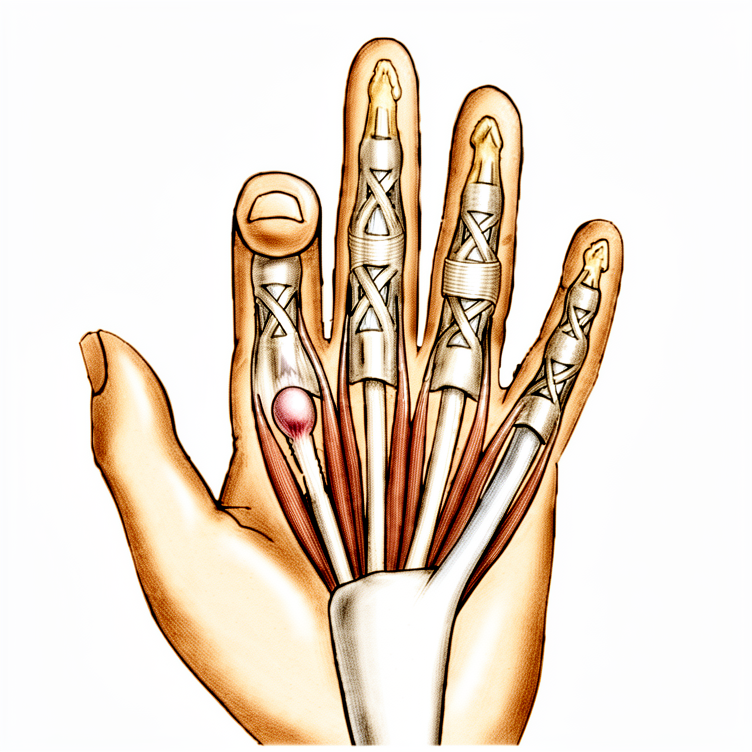
Ang trigger finger ay nangyayari kapag ang isang tendon sa daliri o thumb ay nag-ca-catch habang dumudulas ito sa isang masikip na tunnel sa palad. Karaniwang nauuna ang non-operative care. Maaaring kabilang dito ang splint, hand therapy, o steroid injection (isang gamot na inilalagay malapit sa tendon upang pakalmahin ang inflammation). Isinasaalang-alang namin ang surgery kapag ang mga ito ay hindi nagbigay ng sapat na pagbuti, o kapag ang daliri ay nanatiling nakabaluktot sa posisyon na hindi na maaaring ituwid.
Ang operasyon mismo ay isang release: isang hiwa ang ginagawa sa bahaging inooperahan, at binubuksan ang masikip na bahagi ng tunnel upang ang tendon ay makadulas nang malaya. Humigit-kumulang 97% ng mga tao ang may kumpletong resolusyon ng kanilang triggering pagkatapos ng surgery. Ang layunin ay isang daliri o thumb na gumagalaw nang swabe, nang walang pag-catch, pag-lock, o sakit.
Bago ang operasyon
Karamihan sa mga tao ay nangangailangan ng kaunting paghahanda. Sasabihan kayo na huwag kumain o uminom sa loob ng pitong oras bago ang operasyon. Humihingi kami ng pitong oras sa halip na anim upang maaaring ilipat nang mas maaga ang inyong oras kung maagang matapos ang listahan sa theatre. Sasabihin sa inyo ng inyong surgeon kung aling mga gamot ang dapat itigil at kailan, at dapat kayong magdala ng nakasulat na listahan ng lahat ng iniinom ninyo. Mag-ayos ng taong maghahatid sa inyo pauwi pagkatapos, at magsuot ng maluwag at komportableng damit sa araw na iyon. Ang imaging tulad ng X-ray, MRI o ultrasound ay minsan inaayos bago ang operasyon upang makatulong sa pagpaplano nito. Kung mayroon kayong ibang kondisyong medikal, maaaring kailanganin ninyo ng mga blood test o pagsusuri kasama ang anaesthetist (ang doktor na nagbibigay ng anaesthetic), ngunit karamihan sa mga tao ay hindi nangangailangan ng alinman dito.
Sa araw ng operasyon
Darating ka sa surgical admissions unit ng ospital, kung saan ka ire-rehistro at ihahanda para sa theatre. Makikilala mo ang anaesthetist (ang doktor na nagbibigay ng anaesthetic). Ang operasyong ito ay maaaring gawin sa ilalim ng local anaesthetic (isang injection na nagpapamanhid lamang sa bahagi ng operasyon, habang ikaw ay gising) o sa ilalim ng general anaesthetic (ganap na tulog). Karamihan sa mga tao ay pumipili ng local: mas mabilis ang recovery at maaari kang umuwi agad pagkatapos. Kung mas gusto mong nakatulog, isa rin itong makatwirang pagpipilian; talakayin ito sa iyong surgeon at anaesthetist.
Pagkatapos ay dadalhin ka sa operating theatre, kung saan isasagawa ang operasyon. Pagkatapos nito, magigising ka sa recovery area, kung saan babantayan ka ng mga nurse habang nawawala ang bisa ng anaesthetic. Kapag stable ka na, maaaring pumunta ka sa ward o umuwi na, depende sa procedure at sa iyong recovery. Karamihan sa mga taong sumasailalim sa operasyong ito ay umuuwi sa mismong araw. Isama ang driver na inayos mo sa nakaraang seksyon, at sundin ang anumang mga tagubilin na ibibigay ng mga nurse tungkol sa iyong kamay bago ka umalis.
Ano ang kinapapalooban ng operasyon
Ang operasyon ay tinatawag na trigger finger release. Ang iyong surgeon ay gagawa ng isang hiwa sa bahaging ooperahan, na karaniwang may habang 2 cm. Sa pamamagitan ng hiwang ito, maaabot ng iyong surgeon ang masikip na bahagi ng tunnel sa iyong palad kung saan dumadaloy ang tendon. Ang masikip na band ng tissue ay maingat na bubuksan, mga 1 cm sa bawat pagkakataon, hanggang sa malayang makagalaw ang tendon. Susuriin pagkatapos ng iyong surgeon kung ang daliri o thumb ay nababaluktot at naitutuwid nang maayos nang hindi sumasabit.
Para sa trigger thumb, isang masikip na band lamang ang kailangang i-release. Para sa daliri, maaaring buksan din ang pangalawang kalapit na band. Maingat na nagtatrabaho ang iyong surgeon upang protektahan ang mga kalapit na nerve at upang hindi galawin ang mas malalalim na supporting bands ng tissue sa daliri, dahil pinapanatili ng mga ito ang wastong paggana ng tendon.
Kapag nakumpleto na ang release, ang sugat ay sasara gamit ang mga tahi. Isang compression dressing (isang mahigpit na benda) ang ilalagay sa kamay. Pananatilihin mo ang dressing na ito sa loob ng humigit-kumulang 10 araw, at ang mga tahi ay tatanggalin sa loob ng 10 hanggang 14 na araw. Hinihikayat ang normal na paggamit ng iyong daliri o thumb agad-agad.
Kung ikaw ay may rheumatoid arthritis (isang kondisyon na nagdudulot ng pamamaga ng joint), ang plano ay maaaring bahagyang mag-iba. Sa kasong iyon, maaaring magtanggal ang iyong surgeon ng isang maliit na piraso ng tendon sa halip na i-release ang band, dahil ang pag-release nito ay maaaring magdulot ng paglihis ng daliri patagilid sa paglipas ng panahon. Ipapaliwanag ng iyong surgeon ang eksaktong plano para sa iyong kamay bago ka magbigay ng pahintulot.
Pagkatapos ng operasyon
Magigising ka sa recovery area, kung saan babantayan ka ng mga nurse habang nawawala ang bisa ng anaesthetic. Ito ay isang day case, kaya uuwi ka sa araw ding iyon. Ang iyong kamay ay magkakaroon ng compression dressing (isang mahigpit na benda), at maaari mo nang igalaw agad ang iyong daliri o hinlalaki. Normal ang ilang pananakit sa unang isa o dalawang araw; karaniwang sapat na ang simpleng pain relief mula sa iyong pharmacist o GP. Humingi ng tulong sa isang tao na samahan ka sa unang 24 oras. Pananatilihin namin ang dressing sa loob ng humigit-kumulang 10 araw; pakiusap na huwag itong tanggalin bago ang panahong iyon maliban kung sinabi namin sa iyo. Papalitan o tatanggalin namin ito kapag nakita ka namin. Karamihan sa mga tao ay nakakabalik sa pagmamaneho sa loob ng isa hanggang dalawang linggo, kapag komportable na ang sugat at kaya na nilang humawak at pumihit ng manibela nang hindi kailangang protektahan ang kamay.
Paggaling
Karamihan sa mga tao ay nagugulat kung gaano kabilis bumalik sa normal ang kamay. Ang area sa paligid ng hiwa ay magiging masakit at medyo mamamaga sa unang ilang araw. Ang simpleng pain relief mula sa iyong pharmacist o GP ay karaniwang sapat na upang mapanatili kang komportable, at ang pagpapanatiling nakataas ng iyong kamay sa unan kapag ikaw ay nakaupo o nagpapahinga ay nakakatulong upang mabawasan ang pamamaga. Ang ilang pananakit sa paligid ng peklat ay maaaring tumagal nang mas matagal kaysa sa iba, at ito ay huhupa habang naghihilom ang sugat.
Igagalaw mo agad ang iyong daliri o hinlalaki, at hinihikayat ang normal na pang-araw-araw na paggamit mula sa simula. Walang cast o brace na kailangang isuot, tanging ang dressing lamang, na pananatilihin naming nakalagay sa loob ng mga 10 araw. Kapag nakita ka namin, papalitan o tatanggalin namin ito at aalisin ang mga tahi. Ang hand therapy pagkatapos ng operasyon ay kasama si Ruby Doolan sa Extend Rehabilitation. Gagabayan ka ni Ruby sa mga simpleng ehersisyo upang mapanatiling maayos ang pagbaluktot at pagtuwid ng daliri, at maaari siyang gumawa ng splint kung kinakailangan ng iyong kamay.
Maaari mo nang gawin ang karamihan sa mga bagay sa bahay sa sandaling maramdaman mong kaya mo na: pagkain, pagbibihis, pag-type at mga magagaan na gawain sa loob ng bahay. Iwasan ang mabibigat na paghawak, pagbuhat at mga marumi o basang kapaligiran hanggang sa gumaling ang sugat. Kapag kaya mo nang humawak at pumihit ng steering wheel nang hindi pinoprotektahan ang kamay, karaniwang malapit na ang pagmamaneho; tingnan ang aming pahina sa driving after upper-limb surgery.
Ang paggaling ay nag-iiba depende sa tao, at ang iyong timeline ay maaaring magkaiba. Gagabayan ka ng iyong surgeon at ng iyong therapist sa buong proseso.
Ano ang maaaring maging problema
Karamihan sa mga pasyente ay gumagaling nang maayos, ngunit paminsan-minsan ay maaaring magkaroon ng mga problema. Binabantayan kayo nang maigi ng inyong surgeon at ng team upang maagapan ang anumang isyu.
Ang mga pinakakaraniwang problema ay mga maliliit na isyu sa paligid ng sugat, o daliri na pakiramdam ay naninigas sa loob ng ilang panahon. Maaari kayong makapansin ng patuloy na pananakit, pamamaga, o ang daliri ay hindi nakakabaluktot nang kasing-luwag ng inyong inaasahan sa mga unang linggo. Kung hindi ito nawawala, banggitin ito sa inyong susunod na review.
Ang impeksyon ay hindi karaniwan ngunit mahalagang malaman. Bantayan ang sugat para sa pamumula na kumakalat mula sa hiwa, tumitinding sakit, init, o paglabas ng likido. Ang isang malalim na impeksyon ay maaaring magdulot ng malalim at tumitibok na sakit na hindi nawawala sa mga simpleng painkiller, at maaari kayong makaramdam ng panghihina ng katawan. Kung mapansin ang alinman sa mga palatandaang ito, tumawag agad sa klinika sa halip na maghintay para sa inyong susunod na appointment.
Ang isang nerve malapit sa operasyon ay maaaring mairita paminsan-minsan. Pakiramdam nito ay pamamanhid, pangingilig, o tila tinutusok-tusok ng karayom sa bahagi ng daliri o hinlalaki. Inaasahan ang ilang pamamanhid sa gilid ng sugat sa simula, ngunit kung ito ay nagpapatuloy o kumakalat, banggitin ito sa inyong review.
Ang triggering ay maaaring bumalik sa maliit na bilang ng mga tao. Kung ang pag-catch o pag-lock ay bumalik matapos itong humupa, ipaalam sa amin sa inyong follow-up.
Ang ilang tao ay nagkakaroon ng paninigas sa daliri, kung saan hindi ito ganap na naiaunat o naibabaluktot kahit wala na ang triggering. Ang mga hand therapy exercise ay nakakatulong upang maiwasan ito, kaya ituloy ang mga galaw na ipinakita sa inyo ni Ruby. Kung tila naninigas ang daliri sa halip na lumuluwag, sabihan agad ang inyong therapist o surgeon.
Kung ang inyong daliri ay matagal nang nag-ti-trigger bago ang operasyon, ang joint sa gitna ng daliri ay maaaring manatiling masakit kahit matapos ang release. Ito ay may tendensiyang bumuti nang dahan-dahan sa halip na agad-agad.
Panghuli, ang operasyon para sa trigger finger ay may kaugnayan sa maliit na pagkakataon na magkaroon ng Dupuytren disease, isang kondisyon kung saan nabubuo ang mga matitigas na cord sa palad at hinihila ang mga daliri pababa. Kung mapansin ang pagkapal o mga bukol sa inyong palad sa kalaunan, ipasuri ito.
Ang complications table sa pahinang ito ay naglilista ng mga tipikal na rate kung nais ninyo ang mga detalye.
Kailan dapat tumawag sa amin
Tumawag agad sa klinika kung ikaw ay may lagnat, o kung ang pamumula, init, o paglabas ng likido sa paligid ng sugat ay lumalala. Tumawag sa amin kung ang sakit ay biglang naging matindi, o kung ang pamamanhid o pangingilig ay kumakalat at hindi nawawala. Pumunta sa emergency kung may pamamaga o sakit sa binti (calf), o kung nahihirapang huminga, dahil ang mga ito ay maaaring mga palatandaan ng blood clot. Pumunta sa emergency kung hindi mo na maigalaw ang daliri o hinlalaki, o kung ang kamay ay naging malamig o maputla.
Saan maaaring magbasa nang higit pa tungkol sa kondisyon
Ang pahinang ito ay tungkol sa operasyon mismo. Ang kondisyong ginagamot nito, kabilang ang kung ano ang ipinapakita ng ebidensya tungkol sa kung kailan nakatutulong ang operasyon at kung kailan hindi, ay tinalakay nang mas detalyado sa pahinang Trigger Finger.
Evidence & references
This is the clinical evidence summary written for health professionals. It is technical, and it lists the research this page was built from. You do not need to read it to understand your treatment or to make a decision about it.
Overview
Operative Technique
- Local anesthetic infiltration in the palm proximal to the incision site is preferred for trigger finger release [5].
- A pneumatic arm tourniquet may be helpful, although a high forearm Esmarch wrap usually is sufficient [5].
- For middle, ring, and small trigger finger releases, a transverse incision about 2 cm long is made several millimeters distal to the distal palmar crease [5].
- For index trigger finger releases, a transverse incision about 2 cm long is made several millimeters distal to the proximal palmar crease [5].
- Trigger thumb releases can be performed through incisions either distal or proximal to the metacarpophalangeal joint flexion crease [5].
- Alternative incisions for fingers can be made obliquely or longitudinally between the metacarpophalangeal and distal palmar creases [5].
- Alternative incisions for the thumb can be made obliquely across the thumb metacarpophalangeal flexion crease [5].
- The digital nerves on the thumb are more palmar and closer to the flexor sheath than might be anticipated [5].
- The thumb radial digital nerve is especially vulnerable during trigger thumb release [5].
- Subcutaneous tissues are spread away from the underlying annular pulley system to ensure digital nerves are safely protected [5].
- Trigger thumbs require release of only the A1 pulley [5].
- Trigger digits require division of the A1 and A0, or proximal palmar pulley [5].
- Pulley division is usually accomplished with an initial opening of the pulley with a No. 15 knife blade and a pair of tenotomy scissors [5].
- For trigger thumb release, cutting too far distally should be avoided to prevent disrupting the oblique pulley [5].
- The sheath is incised from proximal to distal, approximately 1 cm, and reassessed for triggering [5].
- Persistent triggering after initial release implies that either the A1 and palmar pulleys are incompletely released or an alternate site of triggering is present [5].
- When the distal A1 pulley edge is released, the divided pulley leaves are parallel rather than ending in a V-shaped pattern [5].
- The distinction between the A1 and A2 pulleys may not be apparent during surgery [5].
- Other fingers can be found to trigger at the same surgical setting and can be managed at the same time [5].
Postoperative Care
- The compression dressing is removed after 48 hours [5].
- Sutures are removed at 10 to 14 days [5].
- Normal use of the finger or thumb is encouraged postoperatively [5].
Anatomy & Pathophysiology
Demographics & Epidemiology
- Trigger finger occurs in 2% to 3% of the general population [9].
- Women are more commonly affected than men [9].
- Women older than 50 years of age are the primary demographic for trigger finger [1, 2].
- Middle and ring finger involvement is most common in adults [1, 2].
- The digits are affected in the following order of decreasing prevalence: thumb, ring, long, little, and index [9].
- Stenosing tenosynovitis is more common in diabetic patients than in nondiabetic patients [4].
- Trigger finger is more common in patients with diabetes mellitus, with a 10% to 20% lifetime incidence [9].
Comorbidities & Etiology
- Trigger finger is associated with diabetes and inflammatory arthropathy [1, 2].
- Trigger finger is seen in patients with hypothyroidism, sarcoidosis, rheumatoid arthritis, and septic tenosynovitis [9].
- The etiology of trigger finger is possibly associated with repetitive grasping activities [1, 2].
- Gout can present as trigger finger due to monosodium urate precipitation eliciting a fulminant inflammatory reaction in the tenosynovium [9].
- Calcific tendinitis can result in triggering due to calcium salt deposition in the tenosynovium [9].
- Pseudogout can cause triggering via calcium pyrophosphate dihydrate crystal deposition [9].
- Amyloidosis, characterized by beta-2-microglobulin deposition, can cause trigger finger in patients with renal failure undergoing dialysis [9].
- Trigger finger is considered an early indication of Dupuytren’s disease by some authors [12].
- The incidence of concurrent trigger finger and Dupuytren’s disease is higher in the middle and ring fingers than expected by statistical coincidence [11].
Histology & Pathology
- Histology of the affected pulley demonstrates fibrocartilaginous metaplasia of the pulley and/or FDS tendon [1, 2].
- Pathologic examination of affected pulleys demonstrates a proliferation of chondrocytes and increased type III collagen [9].
- The flexor digitorum profundus tendon often demonstrates a pathologic nodule, while the flexor digitorum superficialis is often unaffected [9].
- A nodule or fusiform swelling of the flexor tendon just distal to the first annular pulley may be palpable [7].
- The tendon nodule is usually located just proximal to the anulus at the metacarpophalangeal joint level [7].
- In rheumatoid patients, a nodule distal to the metacarpophalangeal joint level may cause triggering [7].
- A volar retinacular ganglion cyst between the A1 and A2 pulleys may be present [9].
- In congenital trigger digits, the pathologic anatomy includes narrowing and thickening of the sheath with occasional formation of a ganglion cyst [10].
- An intratendinous nodule proximal to the first annular pulley, often referred to as Notta’s nodule, may be present in congenital trigger digits [10].
Clinical Presentation
- Patients present with pain and tenderness in the palm at the proximal edge of the digital A1 pulley [4].
- Patients frequently note catching or triggering of the affected finger or thumb after forceful flexion [4].
- In more severe cases, the opposite hand must be used to force the finger or thumb passively into extension [4].
- In the most severe cases, the finger becomes locked in a flexed position [4].
- Triggering is often more pronounced in the morning than later in the day [4].
- A common complaint is referred pain at the dorsal MCP/PIP area [1, 2].
- Patients frequently state that the problem is in the proximal interphalangeal joint with trigger finger or trigger thumb [7].
- Concomitant trigger finger and carpal tunnel syndrome occurs in 40% to 60% of patients [1, 2].
- Local tenderness may be present but is not a prominent complaint [7].
- Pressure accentuates the apparent snapping or triggering of the more distal joints [7].
Anatomical Variations & Specific Structures
- Newer evidence has found a fourth pulley (variable annular pulley) in 75% of patients with thumb trigger finger, which may contribute to stenosis [1, 2].
- The radial digital nerve is at risk of iatrogenic injury during thumb trigger finger release due to its superficial location [1, 2].
- On the thumb, digital nerves are more palmar and closer to the flexor sheath than might be anticipated [5].
- The thumb radial digital nerve is especially vulnerable during surgical release [5].
- Trigger thumbs require release of only the A1 pulley, whereas trigger digits require division of the A1 and A0 (or proximal palmar) pulley [5].
- The distinction between the A1 and A2 pulleys may not be apparent during surgery; however, when the distal A1 pulley edge is released, the divided pulley leaves are parallel rather than ending in a V-shaped pattern [5].
- The fibers of the A2 pulley must be spared to preserve effective digital flexion [4].
- In patients with rheumatoid arthritis, the entire annular pulley system should be preserved to prevent further ulnar drift of the fingers [4].
Classification
- Green Classification Grade I is defined as pain and tenderness at the A1 pulley [1, 2, 9].
- Green Classification Grade II is defined as catching of the finger [1, 2] or mechanical catching of the digit without locking [9].
- Green Classification Grade III is defined as locking of the finger that is passively correctable [1, 2] or mechanical locking of the digit which is passively correctable [9].
- Green Classification Grade IV is defined as a fixed, locked finger [1, 2, 9].
Classification
- The Green classification of trigger finger consists of four grades [1].
- Grade I is defined as pain and tenderness at the A1 pulley [1].
- Grade II is defined as catching of the finger [1].
- Grade III is defined as locking of the finger that is passively correctable [1].
- Grade IV is defined as a fixed, locked finger [1].
Clinical Presentation
Demographics and Epidemiology
- Trigger finger is most common in women older than 50 years of age [1, 2].
- Trigger finger is more common in patients with systemic diseases such as diabetes mellitus, hypothyroidism, sarcoidosis, rheumatoid arthritis, and septic tenosynovitis [9].
- Diabetes mellitus has a 10% to 20% lifetime incidence of trigger finger [9].
- When multiple digits are involved, the possibility of diabetes should be considered [4].
Etiology and Pathology
- Trigger finger is possibly associated with repetitive grasping activities [1, 2].
- Histology of the affected pulleys demonstrates fibrocartilaginous metaplasia of the pulley and/or FDS tendon [1, 2].
- Pathologic examination of the affected pulleys demonstrates a proliferation of chondrocytes and increased type III collagen [9].
- The flexor digitorus profundus tendon often demonstrates a pathologic nodule, while the flexor digitorus superficialis is often unaffected [9].
- A fourth pulley (variable annular pulley) is found in 75% of patients with thumb trigger finger, which may contribute to stenosis [1, 2].
Symptoms and Signs
- Patients present with pain and tenderness in the distal palm [1, 2].
- Pain and tenderness are located at the proximal edge of the digital A1 pulley [4].
- Symptoms progress to mechanical catching or locking of the finger [1, 2].
- In severe cases, the opposite hand must be used to force the finger or thumb passively into extension [4].
- Patients may note a lump or knot in the palm [7].
- The lump may be a thickened area in the first annular pulley or a nodule/fusiform swelling of the flexor tendon just distal to it [7].
- The tendon nodule can be palpated by the examiner’s fingertip and moves with the tendon [7].
- The tendon nodule is usually just proximal to the anulus at the metacarpophalangeal joint level [7].
- In rheumatoid patients, a nodule distal to the MCP joint level may cause triggering [7].
- Patients frequently state that the problem is in the proximal interphalangeal joint [7].
- Concomitant trigger finger and carpal tunnel syndrome occur in 40% to 60% of patients [1, 2].
Physical Examination Findings
- Tenderness to palpation of the flexor tendon at the level of the A1 pulley is a physical examination finding [9].
- Palpable triggering or pain with flexion and extension of the finger is a physical examination finding [9].
- Nodularity of the flexor tendon just proximal to the A1 pulley is a physical examination finding [9].
- Presence of a volar retinacular ganglion cyst between the A1 and A2 pulleys is a physical examination finding [9].
- Presence of a fixed flexion deformity of the proximal interphalangeal (PIP) joint is a physical examination finding [9].
Classification
- Green classification Grade II is defined as catching of the finger [1, 2].
- Green classification Grade II is defined as mechanical catching of the digit without locking [9].
- Green classification Grade III is defined as locking of the finger that is passively correctable [1, 2].
- Green classification Grade III is defined as mechanical locking of the digit which is passively correctable [9].
Differential Diagnosis Considerations
- Intraarticular disorders such as loose bodies, degenerative joint disease, and fractures can cause symptoms similar to trigger finger [7].
- Common extensor tendon subluxation can cause symptoms similar to trigger finger [7].
- Gout can mimic infectious tenosynovitis with marked pain, erythema, swelling, and warmth [9].
- Calcific tendinitis can resemble an infection and result in triggering [9].
- Pseudogout can present with calcium pyrophosphate dihydrate crystal deposition localized to the triangular fibrocartilage or within the carpal tunnel [9].
- Amyloidosis can present with beta-2-microglobulin deposition along flexor tendons, most commonly in patients with renal failure undergoing dialysis [9].
Investigations
Clinical Presentation and History
- Trigger finger is characterized by pain and tenderness in the palm at the proximal edge of the digital A1 pulley [4].
- Pain and tenderness in the distal palm progress to mechanical catching or locking, and may become fixed [1].
- A common complaint is referred pain at the dorsal MCP or PIP area [1].
Physical Examination Findings
- Physical examination may reveal tenderness to palpation of the flexor tendon at the level of the A1 pulley [9].
- Nodularity of the flexor tendon just proximal to the A1 pulley may be present on examination [9].
- A volar retinacular ganglion cyst between the A1 and A2 pulleys may be present on examination [9].
- A fixed flexion deformity of the proximal interphalangeal (PIP) joint may be present on examination [9].
Classification
Associated Conditions and Demographics
- The lifetime incidence of trigger finger in patients with diabetes mellitus is 10% to 20% [9].
- Calcific tendinitis can result in triggering and is affected five times more frequently in males than females [9].
- Pseudogout involves calcium pyrophosphate dihydrate crystal deposition often localized to the triangular fibrocartilage or within the carpal tunnel [9].
- Amyloidosis is characterized by the deposition of beta-2-microglobulin in thick, plaque-like accumulations along the flexor tendons [9].
Imaging and Histology
- MR imaging findings of trigger thumb have been described [3].
Treatment
Nonoperative
- Corticosteroid injection into the flexor tendon sheath is curative in about 60% of patients initially [1].
- Diabetic patients are generally less responsive to corticosteroid injection [1].
- There is no difference between soluble and insoluble corticosteroid preparations for trigger finger injection [1].
- In a study of 292 corticosteroid injections, repeat injections provided symptomatic relief for a year or more in 50% of patients [7].
- Corticosteroid injections may elevate serum glucose levels for 5 days or more in patients with diabetes mellitus [7].
- Patients with unstable diabetes may be better treated without corticosteroid injection [7].
- Preoperative hypoglycemia increases infection risk after trigger finger injection and release [7].
- Immediate surgical release in the clinic was identified as the most cost-effective treatment strategy for trigger finger in diabetic patients [7].
- Nonoperative methods for trigger digits include stretching, night splinting, and combinations of heat and ice [7].
Operative
- Surgical release of the A1 pulley is curative in digits refractory to steroid injection [4].
- Surgical release reliably relieves the problem for most patients, with approximately 97% of patients having complete resolution after operative treatment [7].
- Persistence of triggering is more common than recurrence after surgical release [7].
- Trigger release should be performed with a local block so that the cessation of triggering can be evaluated intraoperatively [7].
- Adjacent finger triggering may become obvious only after a given finger is released and can be managed at the same surgical setting [7].
- In patients with rheumatoid arthritis, the preference is to excise a slip of the FDS tendon rather than to release the A1 pulley to prevent exacerbation of ulnar drift at the MCP joint [1].
- The fibers of the A2 pulley must be spared during surgical release to preserve effective digital flexion [4].
- Minor complications of surgical release include wound dehiscence, scar tenderness, and decreased range of motion [1].
- Incomplete pulley release and damage to the flexor tendons and digital nerves remain concerns, especially in the index finger and thumb with limited exposure techniques [7].
- Percutaneous release of the A1 pulley may be accomplished with a needle on the middle and ring fingers, especially if they actively lock [4].
- The safety and effectiveness of percutaneous trigger finger release using a needle or a push knife have literature support [7].
- For percutaneous release, an 18- or 19-gauge needle may suffice [8].
- During percutaneous release, the bevel of the needle should be oriented longitudinally parallel to the flexor tendons [8].
- Injection of corticosteroid is optional during percutaneous trigger finger release [8].
- Postoperative compression dressing for open trigger finger release is removed after 48 hours [5].
- Sutures for open trigger finger release are removed at 10 to 14 days [5].
- Normal use of the finger or thumb is encouraged after open trigger finger release [5].
- Active hand and finger use with stretching exercises is encouraged after percutaneous trigger finger release [8].
Complications
Operative
- Digital nerves on the thumb are more palmar and closer to the flexor sheath than might be anticipated, making the thumb radial digital nerve especially vulnerable [5].
- Minor complications of trigger finger release are relatively high and include wound dehiscence, scar tenderness, and decreased range of motion [1].
- Incomplete pulley release remains a concern with limited exposure techniques [7].
- Damage to flexor tendons remains a concern with limited exposure techniques, especially in the index finger and thumb [7].
- Damage to digital nerves remains a concern with limited exposure techniques, especially in the index finger and thumb [7].
- Patients may experience triggering after operative release because of catching of the tendon on the palmar aponeurosis transverse fibers [7].
- Triggering caused by catching on palmar aponeurosis transverse fibers usually resolves with time [7].
- A partially lacerated flexor tendon at the metacarpophalangeal joint level may heal with a nodule sufficiently large to cause triggering [7].
- Persistence of triggering is more common than recurrence after operative treatment [7].
- Preoperative hypoglycemia increases infection risk after trigger finger release [3].
- Preoperative hypoglycemia increases infection risk after trigger finger injection [3].
- In patients with rheumatoid arthritis, release of the A1 pulley carries a chance of exacerbating ulnar drift at the MCP joint [1].
Non-Operative
- Corticosteroid injections may elevate serum glucose levels for 5 days or more [7].
References
[1] Miller S Review Of Orthopaedics. SECTION 16 PATELLAR TRACKING IN TOTAL KNEE ARTHROPLASTY > 2. Flexor tendon injury > 3. Stenosing tenosynovitis (trigger finger).
[2] Miller S Review Of Orthopaedics. 2. Flexor tendon injury > 3. Stenosing tenosynovitis (trigger finger).
[3] Campbell S Operative Orthopaedics 4 Volume Set. EXCISION OF NECROTIC MUSCLES COMBINED WITH NEUROLYSIS OF MEDIAN AND ULNAR NERVES FOR SEVERE CONTRACTURE > REFERENCES > TRIGGER THUMB AND TRIGGER FINGER.
[4] A Lange Medical Book Current Diagnosis Treatment In Orthopedics Fifth Edition. 9Hand Surgery > 2. Flexor Tenosynovitis (Trigger Finger and Trigger Thumb).
[5] Campbell S Operative Orthopaedics 4 Volume Set. EXCISION OF NECROTIC MUSCLES COMBINED WITH NEUROLYSIS OF MEDIAN AND ULNAR NERVES FOR SEVERE CONTRACTURE > TRIGGER FINGER AND THUMB > SURGICAL RELEASE OF TRIGGER FINGER.
[7] Campbell S Operative Orthopaedics 4 Volume Set. EXCISION OF NECROTIC MUSCLES COMBINED WITH NEUROLYSIS OF MEDIAN AND ULNAR NERVES FOR SEVERE CONTRACTURE > TRIGGER FINGER AND THUMB.
[8] Campbell S Operative Orthopaedics 4 Volume Set. EXCISION OF NECROTIC MUSCLES COMBINED WITH NEUROLYSIS OF MEDIAN AND ULNAR NERVES FOR SEVERE CONTRACTURE > PERCUTANEOUS RELEASE OF TRIGGER FINGER.
[9] Aaos Comprehensive Orthopaedic Review 3. Tendinopathy of the Hand and Wrist* > II. Trigger Finger.
[10] Campbell S Operative Orthopaedics 4 Volume Set. MULTIPLE Z-PLASTY RELEASE OF A CONGENITAL RING > TRIGGER FINGERS.
[11] Dupuytren S Disease And Related Hyperproliferative Disorders. 31. The Influence of Dupuytren’s Disease on Trigger Fingers and Vice Versa > 31.5 Discussion.
[12] Dupuytren S Disease And Related Hyperproliferative Disorders. 31. The Influence of Dupuytren’s Disease on Trigger Fingers and Vice Versa > 31.5 Discussion > 31.5.1 Why Is DD Concurring with TF?.