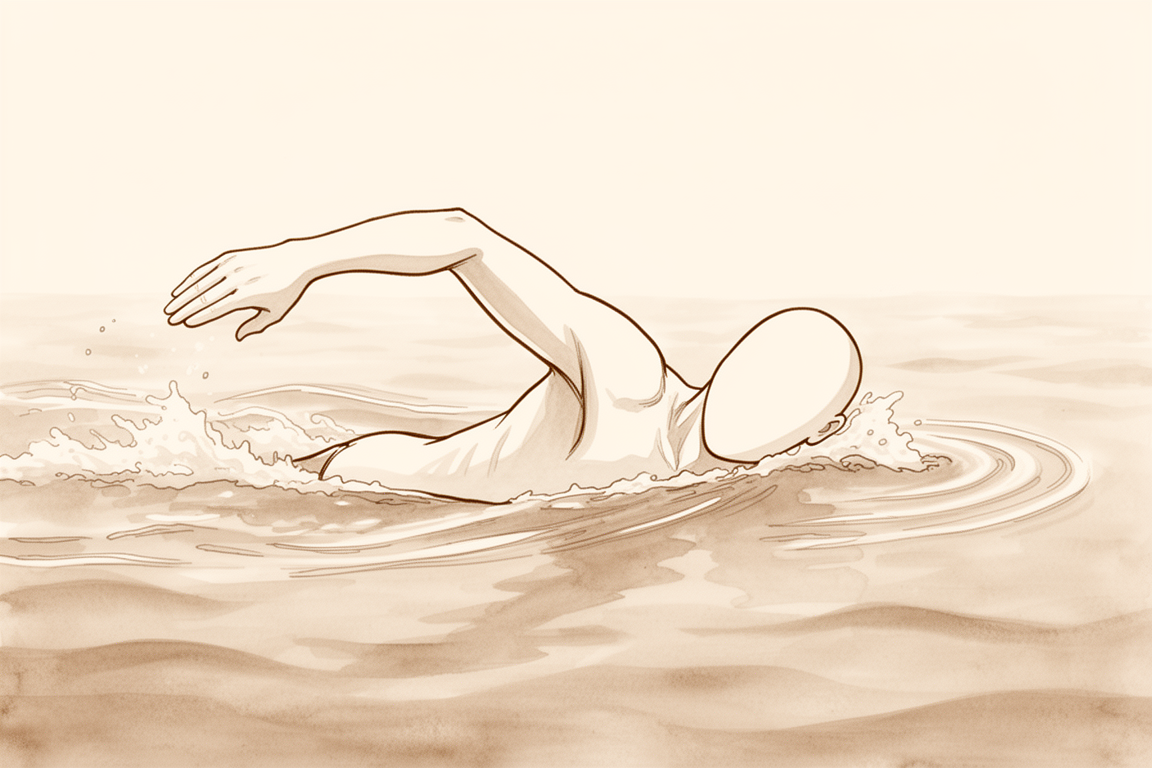
Saklaw ng protocol na ito ang rehabilitasyon pagkatapos ng Comprehensive Arthroscopic Management (CAM) procedure kasama si Dr Kieran Hirpara sa Mater Private Hospital Rockhampton, kapwa ang mga nangyayari sa ospital at sa mga sumunod na linggo at buwan. Dalhin ang pahinang ito o ang PDF nito sa iyong unang pagbisita sa physiotherapy upang manatiling coordinated ang iyong rehabilitasyon. Ang iyong rehabilitasyon ay isinasagawa nang indibidwal ng iyong physiotherapist sa pamamagitan ng mga phase sa ibaba, depende sa kung paano gumagalaw ang iyong balikat at kung ano ang ginawa sa oras ng iyong operasyon.
Kung mayroon kang anumang alalahanin tungkol sa iyong sugat pagkatapos ng operasyon, makipag-ugnayan sa mga rooms. Madalas na nakatutulong ang pagkuha ng larawan ng sugat at pag-email nito para masuri.
Ano ang dapat asahan
Ang CAM procedure ay isang keyhole (arthroscopic) na operasyon para sa gasgas at arthritic na balikat. Sa halip na palitan ang joint, layunin nito na linisin at paluwagin ito upang mas gumalaw at mabawasan ang sakit: pinapakinis ng surgeon ang magaspang na cartilage, tinatanggal ang mga maluwag na fragment at bone spurs, pinaluluwag ang masikip na joint lining upang muling maka-rotate ang balikat, at pinaluluwag ang nerve na dumadaan sa ibaba lamang ng joint (ang axillary nerve). Ang layunin ay bigyan ka ng maraming taon ng mas komportable at mas mobile na balikat at iantala, o iwasan, ang joint replacement.
Ang kombinasyong ito ng mga gawain ang humuhubog sa iyong paggaling. Dahil pinaluwag ng surgeon ang isang masikip at matigas na balikat at nagsikap na ibalik ang iyong rotation, ang pinakamahalagang gawain pagkatapos ay panatilihin ang paggalaw na iyon: ang balikat na gaya nito ay susubukang tumigas muli kung hahayaang hindi gumalaw. Ngunit dahil gumawa rin ang surgeon sa mga gasgas na joint surfaces mismo, ang maagang paggalaw ay ginagawa sa isang sinusukat at graded na paraan: gumagalaw ka nang maaga at madalas, ngunit dahan-dahan ang pagpasok sa mga stretch sa halip na pilitin ang mga ito, upang kumalma ang joint sa halip na lumala ang pamamaga. Samakatuwid, ang paggaling ay pinapatakbo ng paggalaw, gaya ng isang frozen-shoulder release, ngunit ito ay mas banayad at mas unti-unti.
Ang iyong mga ehersisyo ay gumagamit ng tatlong uri ng paggalaw, at mamarkahan ng iyong team kung alin ang naaangkop sa iyo:
- Passive movement ay nangangahulugang ang balikat ay nananatiling lubos na relaxed habang ang iyong kabilang braso, isang stick o isang pulley ang gumagawa ng trabaho.
- Active-assisted movement ay nangangahulugang iginagalaw mo ang braso nang mag-isa nang may tulong mula sa kabilang braso o isang bagay.
- Active movement ay nangangahulugang iginagalaw mo ang braso gamit ang sarili nitong lakas, nang walang tulong.
Tungkol sa iyong sling
Karaniwan kang bibigyan ng sling para sa ginhawa sa unang isang o dalawang linggo. Naroon ito upang ipahinga ang braso at protektahan ito mula sa mabangga habang kumakalma ang joint; hindi nito pinapanatiling magkasama ang isang repair. Ang pangunahing mensahe ay kabaligtaran ng isang tendon o ligament repair: ang sling ay para sa ginhawa lamang, at ang balikat ay hindi dapat hayaang tumigas. Lumabas sa sling para sa iyong mga ehersisyo mula sa unang araw, gamitin ang braso para sa mga magagaan na pang-araw-araw na gawain hangga't kaya ng iyong ginhawa, at huwag nang isuot ang sling hangga't maaari kapag nabawasan na ang unang pananakit.
Kung muling ikinabit ng surgeon ang iyong biceps tendon bilang bahagi ng operasyon (isang biceps tenodesis), hihilingin ng iyong team na iwasan ang pagbubuhat at puwersadong pagbaluktot ng siko sa loob ng humigit-kumulang anim na linggo habang ito ay gumagaling, at sasabihin nila sa iyo kung ito ay naaangkop sa iyo.
Mga pangunahing punto
- Panatilihin itong gumagalaw. Gamitin ang braso para sa mga magagaan na pang-araw-araw na gawain tulad ng paghuhugas, pagbibihis at pagkain mula sa simula. Ang banayad at regular na paggalaw ang pumipigil sa muling paninigas ng balikat.
- Pagtuunan ang rotation. Ang pagpihit ng braso palabas (external rotation) ay isa sa mga pangunahing paggalaw na ibinabalik ng operasyong ito, kaya patuloy itong gawin. Ang pagbawi at pagpapanatili nito ay isang pangunahing layunin.
- Dahan-dahan sa mga stretch, huwag pilitin. Mag-stretch hanggang sa punto ng banayad na hila, hindi matalas na sakit. Ang mga surface ng joint ay ginalaw, kaya ang pagpilit sa mahirap at masakit na mga stretch ay maaaring magdulot ng pamamaga ng balikat at magpabagal sa iyong paggaling. Mas mabuti ang madalas ngunit maikling session kaysa sa matagal at puwersahang session.
- Kontrolin ang sakit upang makagalaw. Inumin ang iyong pain relief bago ang iyong mga ehersisyo at bago ang iyong mga appointment sa physiotherapy. Maraming tao ang nakakahanap na nakatutulong ang init bago ang stretching at yelo pagkatapos nito.
- Pumunta sa physiotherapy nang regular. Layunin ang regular na mga session sa loob ng unang anim na linggo. Dalhin ang pahinang ito sa iyong unang pagbisita.
Sa ospital — ang iyong mga unang ehersisyo
Kieran Hirpara 4.0
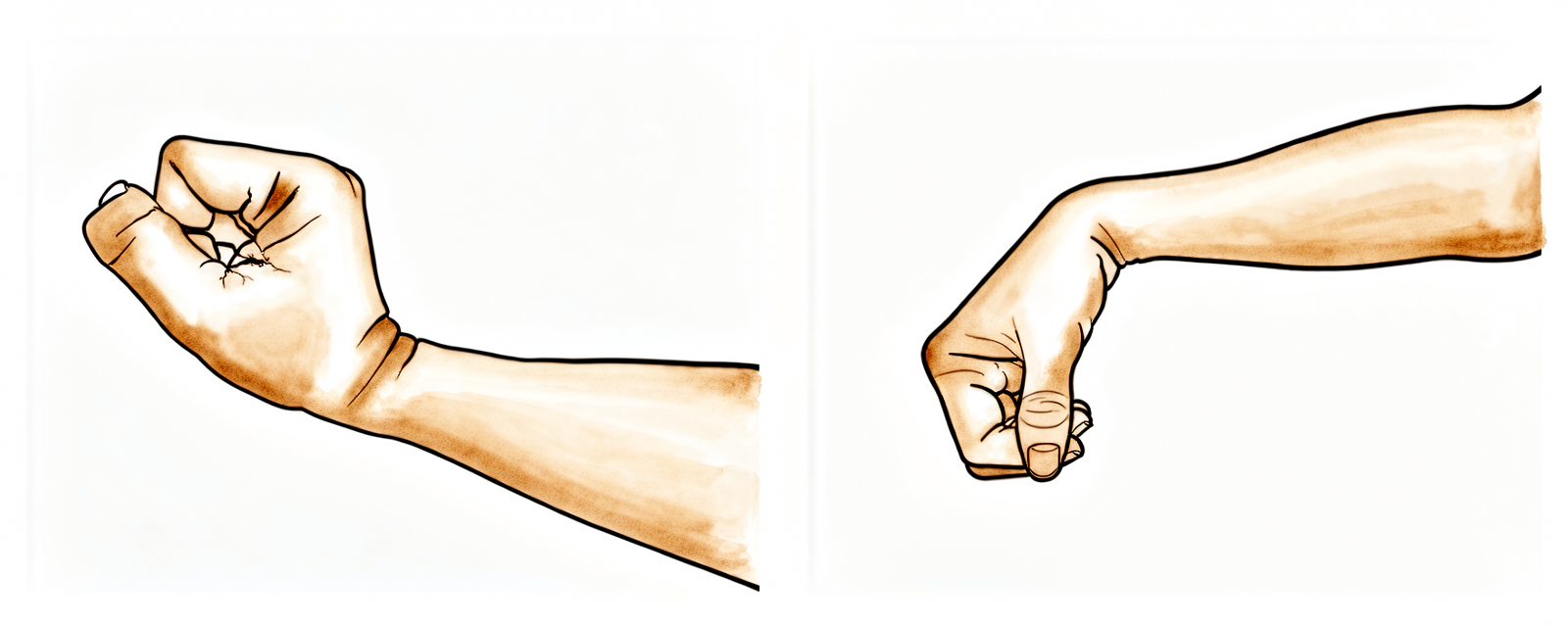
Paggalaw ng pulso
Panatilihing gumagalaw ang iyong kamay sa pamamagitan ng pagbaluktot ng iyong pulso pasulong, pabalik, at sa magkabilang gilid.
10 beses, 3 beses bawat araw
Kieran Hirpara 4.0
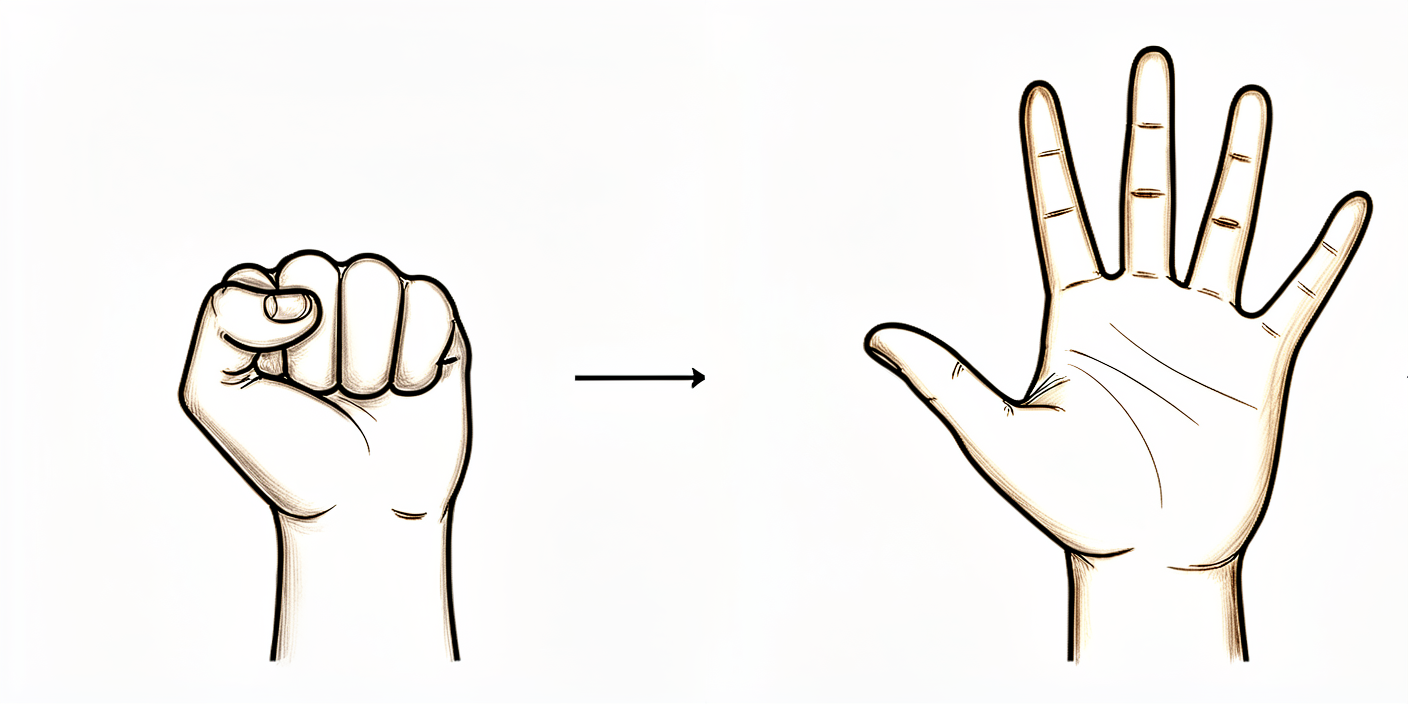
Buksan at isara ang kamay
Panatilihing gumagalaw ang iyong kamay at mga daliri sa pamamagitan ng pagbubukas at pagsasara ng mga ito, o sa pamamagitan ng pagpisil sa isang malambot na bola.
10 beses, 3 beses bawat araw
Kieran Hirpara 4.0
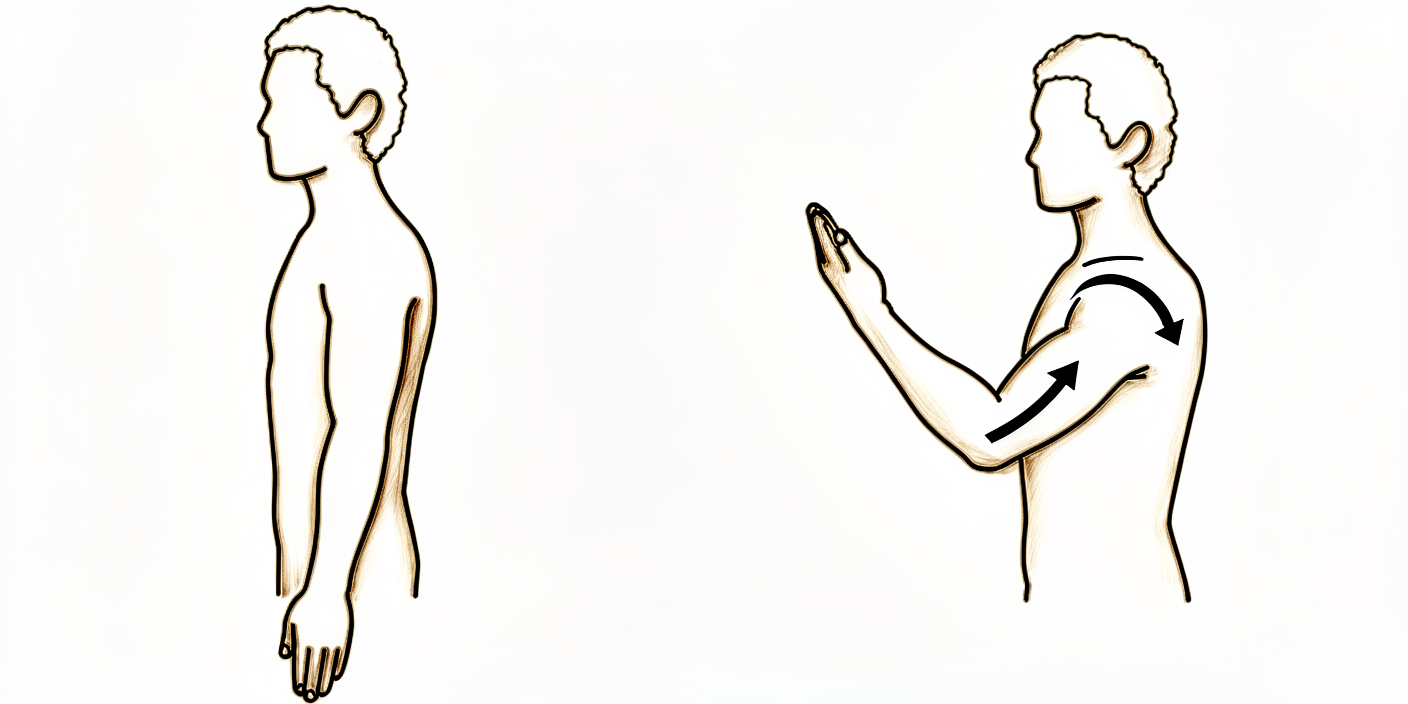
Naititiklop ang siko
Ibaluktot at ituwid ang iyong siko. Kung ang iyong biceps tendon ay muling ikinabit noong operasyon, sasabihan ka ng iyong team na gawin ito nang dahan-dahan at iwasan ang pagbubuhat gamit ang braso sa unang ilang linggo.
10 beses, 3 beses bawat araw
Kieran Hirpara 4.0
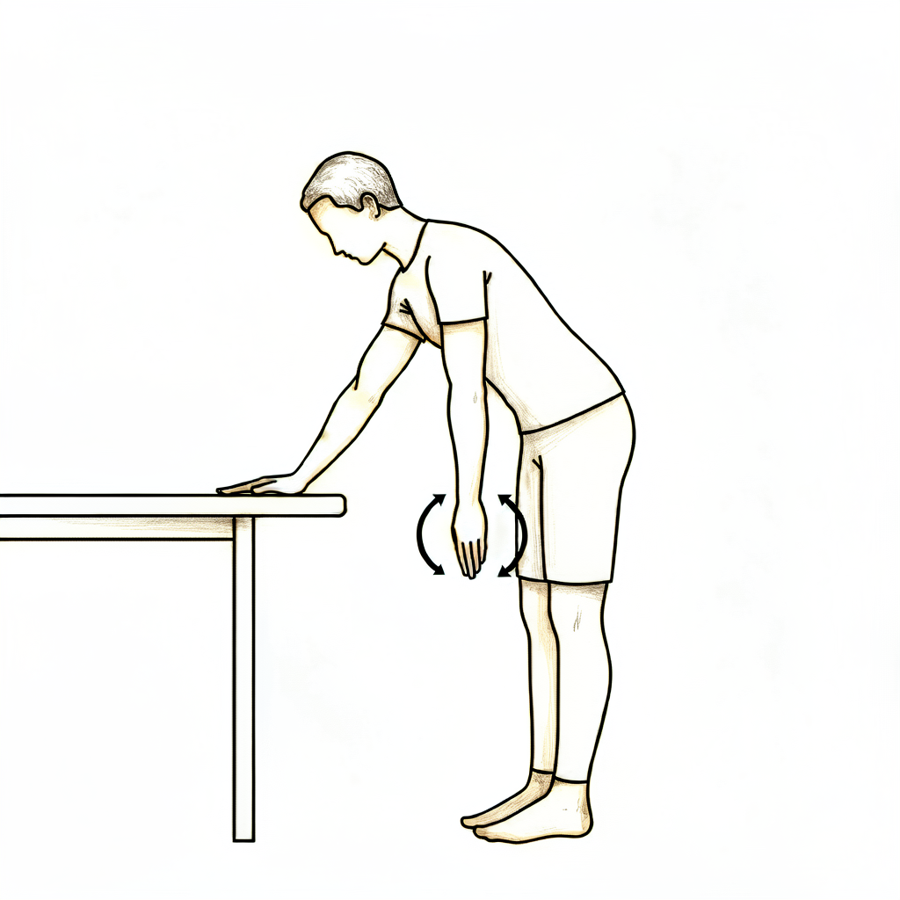
Mga Pendulum
Ito ay isang relaxed, passive exercise. Yumuko nang bahagya at hayaang nakabitin at nakarelaks ang iyong braso pababa. Gamitin ang iyong katawan upang dahan-dahang i-swing ang braso sa maliliit na bilog, clockwise at anti-clockwise, at pabalik-balik. Hayaang ang bigat ng braso ang gumawa ng trabaho, habang nakarelaks ang mga kalamnan ng balikat.
Mga 30 segundo bawat direksyon, 3 beses kada araw
Kieran Hirpara 4.0
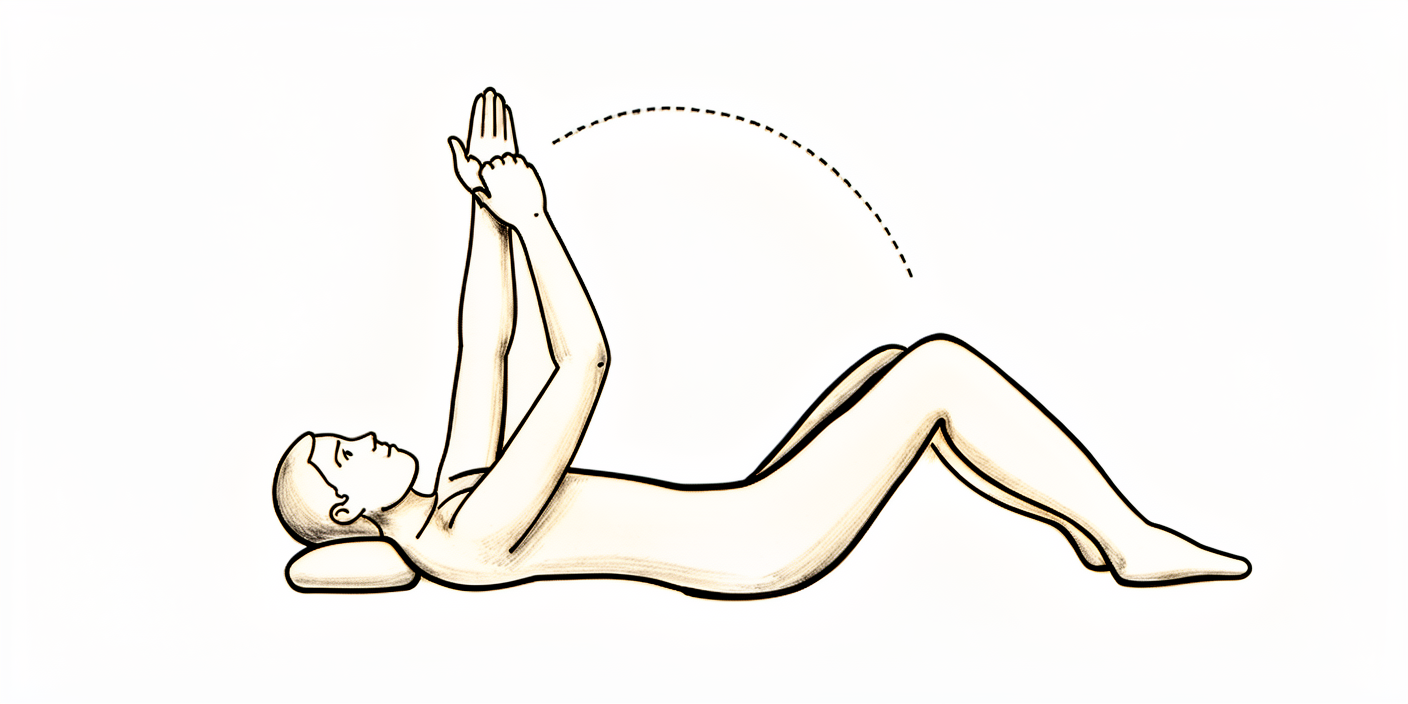
Tinutulungang forward flexion (nakahiga)
Kung mas gusto mo, humiga nang patihaya at humawak ng stick (o nakarolyo na tuwalya) gamit ang magkabilang kamay. Gamitin ang iyong maayos na braso upang gabayan ang inoperahang braso pataas lampas sa iyong ulo, hanggang sa kung saan ito komportableng makakarating, pagkatapos ay dahan-dahan itong ibaba.
10 beses, 3 beses bawat araw
Kieran Hirpara 4.0
Assisted abduction (cradle)
Kargahin ang inoperahang braso gamit ang iyong kabilang braso, suportahan ito sa ilalim ng siko, at dahan-dahang i-ugoy ito palabas sa gilid at pabalik, gaya ng pag-ugoy sa isang sanggol. Dalhin ito sa isang komportableng stretch palabas sa gilid sa bawat pagkakataon.
10 beses, 3 beses bawat araw
Kieran Hirpara 4.0
Assisted external rotation gamit ang stick
Humiga nang patihaya na ang iyong siko ay nakadikit sa iyong gilid at nakabaluktot nang 90 degrees. Humawak ng isang stick sa magkabilang kamay at gamitin ang iyong maayos na braso upang iikot ang kamay ng inoperahang braso palabas, habang iniikot ang balikat. Ang pag-ikot palabas ay isang mahalagang galaw na dapat mabawi pagkatapos ng operasyong ito, kaya ipagpatuloy ang dahan-dahang pag-eehersisyo nito at unti-unting dagdagan ang layo habang lumilipas ang mga linggo.
10 beses, 3 beses bawat araw
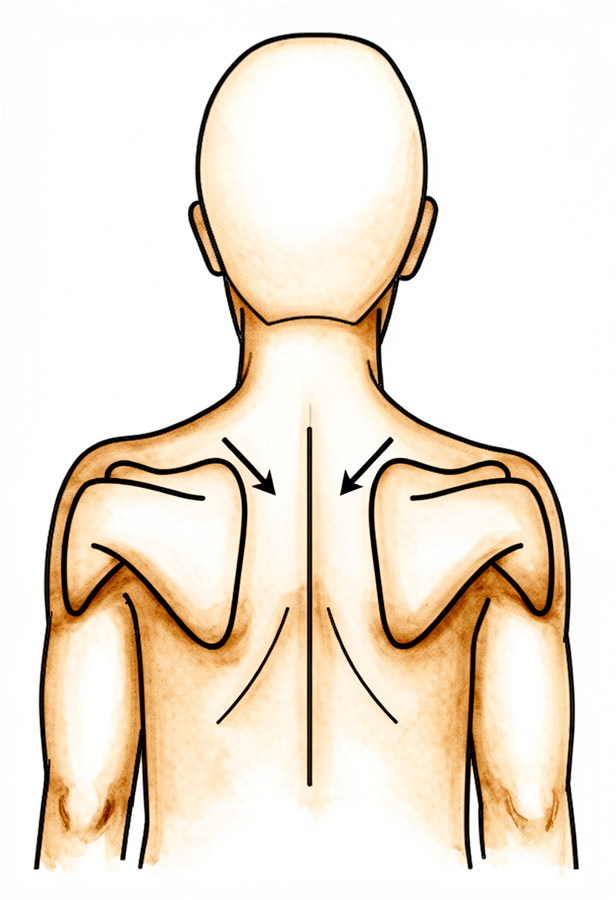
Kieran Hirpara 4.0
Pag-set ng lower trapezius
I-squeeze ang iyong mga shoulder blade pababa at magkasama, i-hold, pagkatapos ay i-relax.
Hawakan nang 5 segundo, 5 beses; ulitin nang 3 beses araw-araw
Isang physiotherapist ang titingin sa iyo sa ospital at pasisimulan ka sa mga ehersisyo sa ibaba bago ka umuwi. Pinapanatili ng mga ito na gumagalaw ang kamay, siko, at balikat at agad na sinisimulan ang pagbabalik ng range of motion ng balikat. Uminom ng iyong pain relief bago ito gawin upang makagalaw ka nang komportable. Gawin ang mga ito ayon sa itinakda ng iyong team, at ipagpatuloy ang mga ito sa bahay.
Ang iyong outpatient rehabilitation
Pagkatapos ng isang CAM procedure, ang rehabilitation ay pinapatakbo ng paggalaw: ang balikat ay nanigas at ngayon ay pinaluwag na, kaya ang unang pagsisikap ay nakatuon sa pagpapanatili at muling pagbuo ng range na iyon bago ito muling humigpit, ngunit sa isang graded na paraan na rumerespeto sa mga joint surface na ginawa. Ang physiotherapy ay nagsisimula nang maaga, nananatiling regular, at nagpapatuloy sa loob ng ilang buwan. Ang mga phase sa ibaba ay sumusunod sa pattern ng nailathalang rehabilitation protocol para sa operasyong ito. Ang mga range ng linggo ay tipikal at hindi fixed: ang iyong physiotherapist ang magpapasulong sa iyo base sa kung paano gumagalaw ang iyong balikat, hindi base sa kalendaryo. Ang clinic review ay karaniwang naka-schedule sa loob ng mga 2 linggo, 6 na linggo, at 3 hanggang 4 na buwan.
Ang paglalakbay sa isang sulyap:
- Phase I — Maagang paggalaw: humigit-kumulang sa unang dalawang linggo
- Phase II — Pagbabalik ng iyong range: linggo 2 hanggang 6
- Phase III — Pagpapalakas: linggo 6 hanggang 12
- Phase IV — Pagbabalik sa buong aktibidad: linggo 12 pataas (mga tatlong buwan)
Karamihan sa mga tao ay nakapapansin ng makabuluhang pagbawas ng sakit at mas madaling paggalaw sa loob ng unang isa hanggang tatlong buwan, at ang pagbuti ay karaniwang patuloy na nadaragdagan sa loob ng anim hanggang labindalawang buwan.
Phase I — Maagang paggalaw (Linggo 0–2)
Ang layunin ng unang dalawang linggong ito ay mapagalaw ang balikat at mapanatili ang range na nakuha sa operasyon, nang hindi naiirita ang joint. Ipagpatuloy ang mga ehersisyo mula sa ospital sa bahay nang ilang beses sa isang araw: passive at active-assisted movements, pendulums, at banayad na stretching sa lahat ng direksyon, kabilang ang pagpihit ng braso palabas. Gamitin ang sling para sa ginhawa lamang, at tanggalin ito para sa iyong mga ehersisyo at magagaan na pang-araw-araw na gawain. Ang maayos na pagkontrol sa sakit ang nagbibigay-daan sa paggalaw, kaya patuloy na uminom ng pain relief bago ang iyong mga ehersisyo, at gumamit ng heat bago at ice pagkatapos kung ito ay nakatutulong. Dahan-dahang gawin ang bawat stretch hanggang sa maramdaman ang banayad na hila, hindi matalas na sakit.
Handa na para sa susunod na phase kapag… nagagawa mo na ang iyong home program nang may kumpiyansa nang ilang beses sa isang araw, humuhupa na ang iyong sakit, at malayang gumagalaw ang balikat sa early range nito.
Phase II — Pagbabalik ng iyong range (Linggo 2–6)
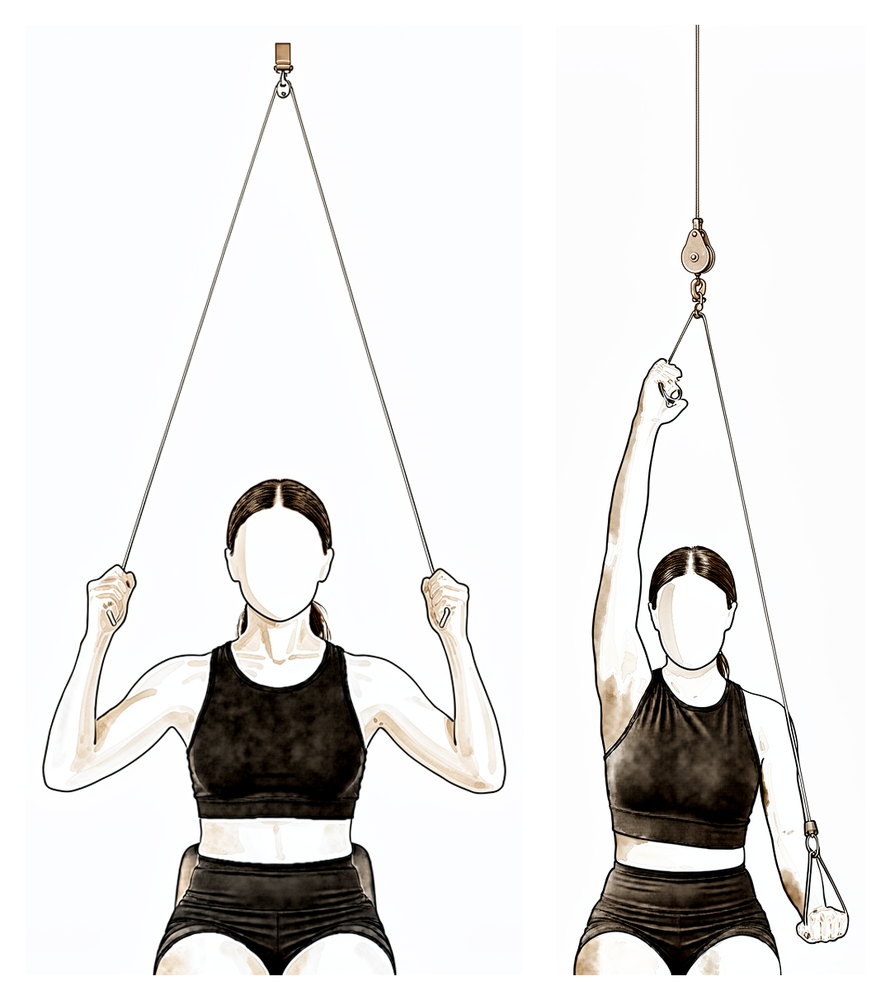
Kieran Hirpara 4.0
Over-door pulley
Umupo sa ilalim ng isang over-door pulley na may hawakan sa bawat kamay. Hilahin pababa gamit ang iyong mabuting braso upang itaas ang inoperahang braso sa itaas ng ulo hanggang sa kung saan ito komportableng makakarating, pagkatapos ay dahan-dahang ibaba. Gawin ito hanggang sa maging banayad na stretch, hindi matalas na sakit.
10 beses, 3 hanggang 4 na beses araw-araw
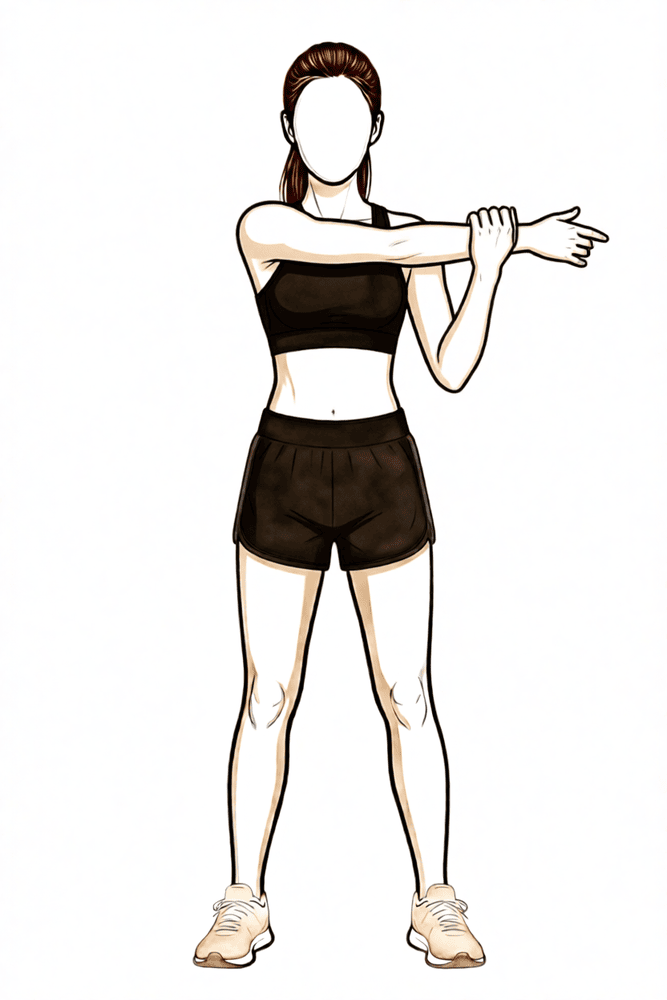
Kieran Hirpara 4.0
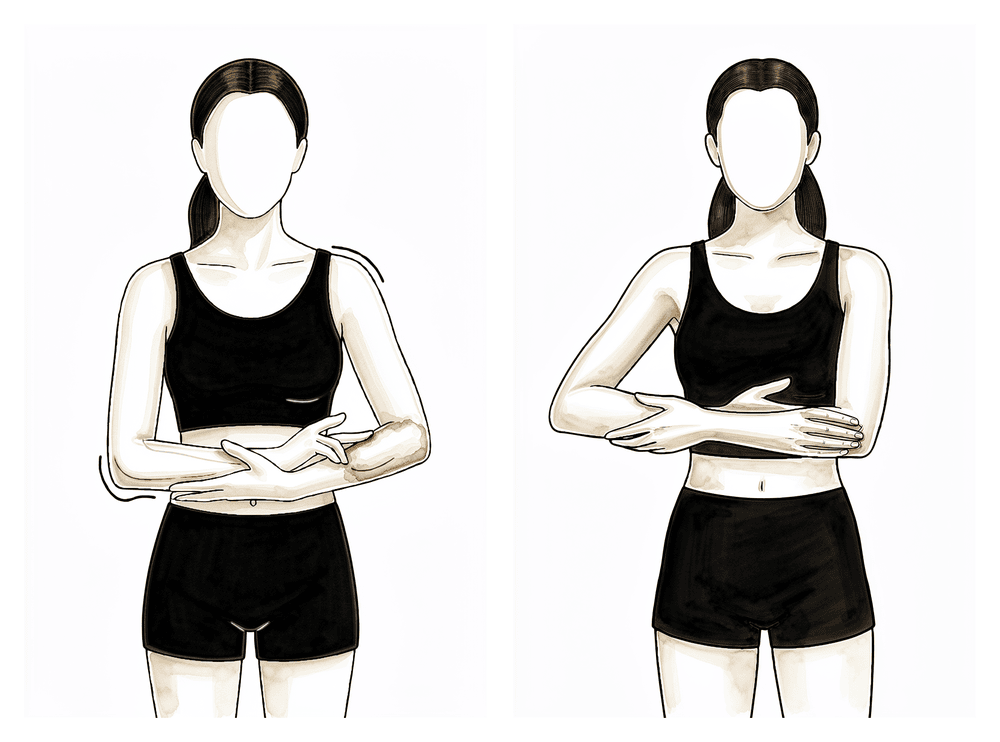
Cross-body stretch
Gamitin ang iyong maayos na kamay upang hilahin ang inoperahang braso patawid sa iyong dibdib hanggang sa makaramdam ka ng banayad na pag-unat sa likod ng balikat, pagkatapos ay bitawan.
10 beses, 3 hanggang 4 na beses araw-araw
Kieran Hirpara 4.0
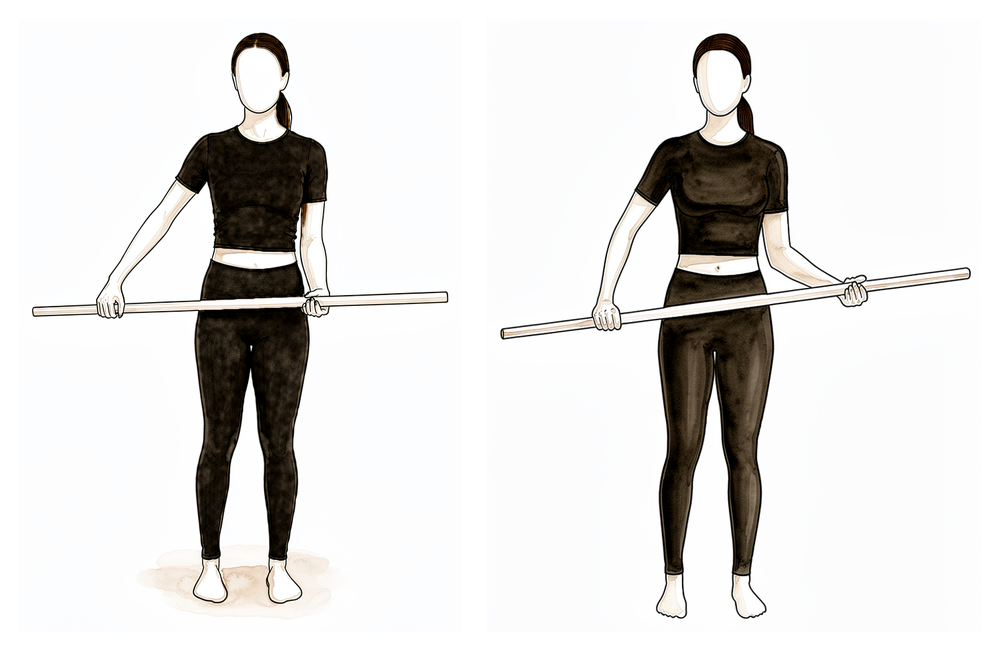
Wand external rotation
Ipagpatuloy ang stick-assisted external rotation mula sa ospital, na unti-unting dinaragdagan habang lumuluwag ang range. Habang ang siko ay nasa iyong tabi, iikot ang forearm palabas hanggang sa kung saan ito komportableng makakarating, pagkatapos ay ibalik.
10 beses, 3 hanggang 4 na beses araw-araw
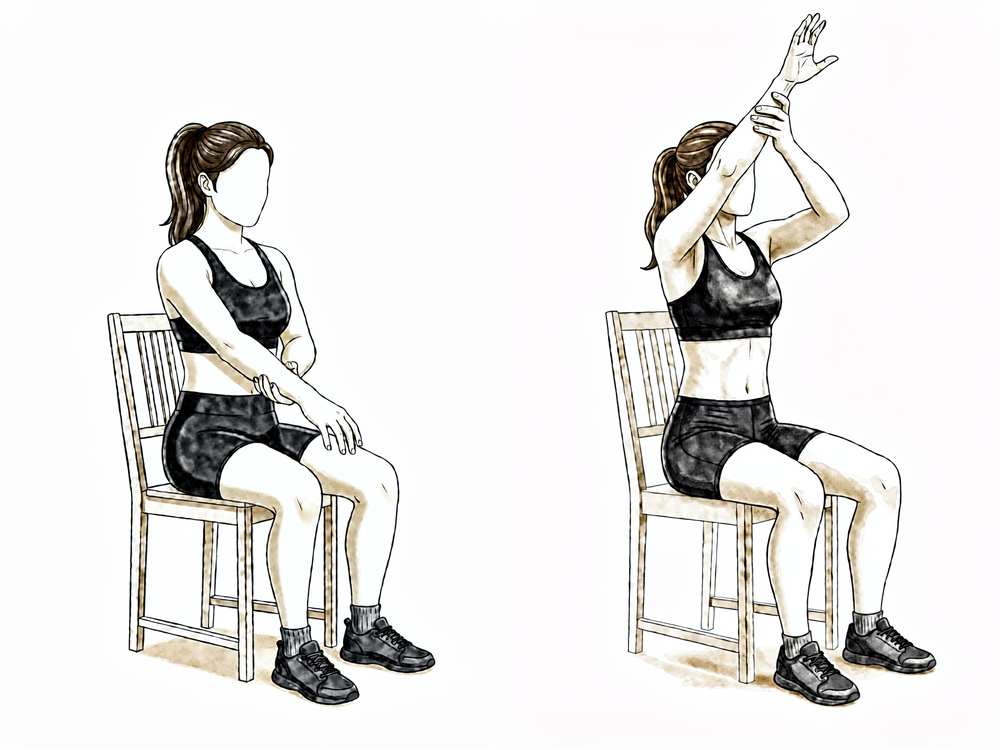
Kieran Hirpara 4.0
Tinutulungang forward elevation (nakaupo)
Habang nakaupo at bahagyang nakayuko pasulong, suportahan ang inoperahang forearm gamit ang iyong malusog na kamay at gamitin ito upang iangat ang inoperahang braso pasulong at pataas sa iyong harapan, hanggang sa kung saan ito komportable, pagkatapos ay dahan-dahan itong ibaba. Hayaan ang malusog na braso ang gumawa ng trabaho upang manatiling relaxed ang inoperahang balikat.
Ayon sa gabay ng iyong physiotherapist
Ipinagpapatuloy ng phase na ito ang regular na physiotherapy at ang home program, na higit pang pinapalawak ang range habang pinahihintulutan ng balikat. Ang iyong mga ehersisyo ay uunlad mula sa mga assisted movement patungo sa aktibong paggalaw ng braso sa lahat ng direksyon, maaaring magdagdag ang iyong physiotherapist ng hands-on joint mobilisation, at patuloy kang babalik sa external rotation. Ang stretching ay mananatiling graded, mas matindi kaysa sa unang linggo, ngunit dahan-dahan pa rin sa halip na pilitin. Karamihan sa mga tao ay wala na sa sling at ginagamit na ang braso nang normal para sa mga magagaan na pang-araw-araw na aktibidad sa phase na ito.
Handa na para sa susunod na phase kapag… ang iyong range ay unti-unting bumubuti, komportable ang paggalaw sa ibaba ng taas ng balikat, at ang iyong sakit ay humupa na nang sapat upang simulan ang gentle resistance work.
Phase III — Pagpapalakas (Linggo 6–12)
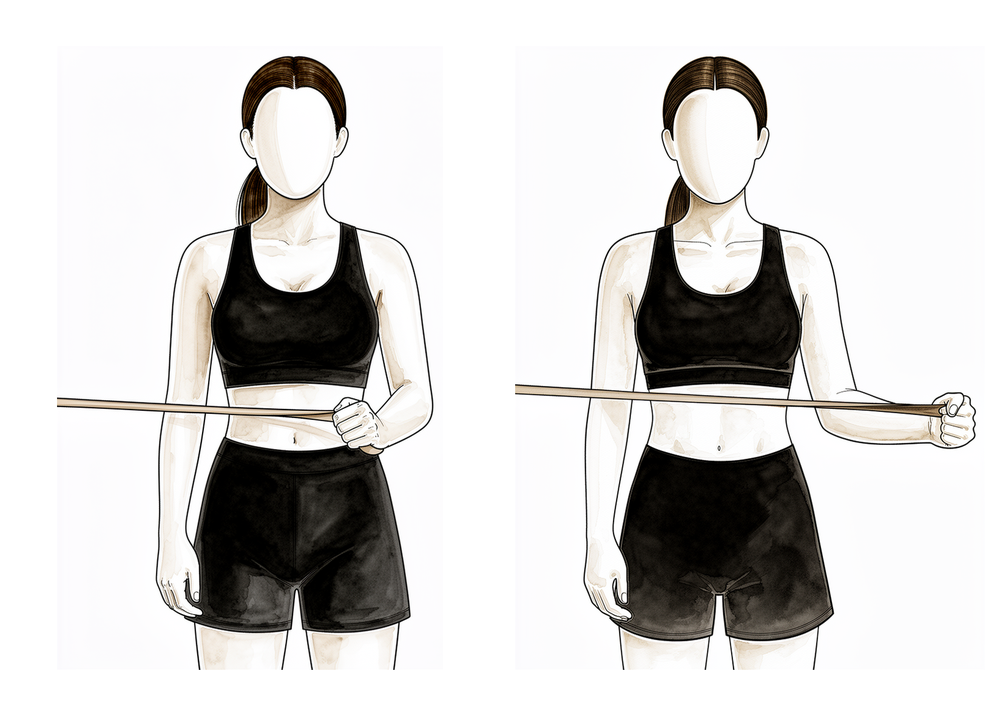
Kieran Hirpara 4.0
Band external rotation
Tumayo nang nakadikit ang iyong siko sa iyong tagiliran at nakabaluktot nang 90 degrees, habang hawak ang isang elastic band na naka-angkla sa taas ng baywang. Panatilihing nakadikit ang siko sa iyong tagiliran, i-rotate ang forearm palabas laban sa band, pagkatapos ay dahan-dahang ibalik.
2 hanggang 3 sets ng 10 hanggang 15, 5 araw bawat linggo
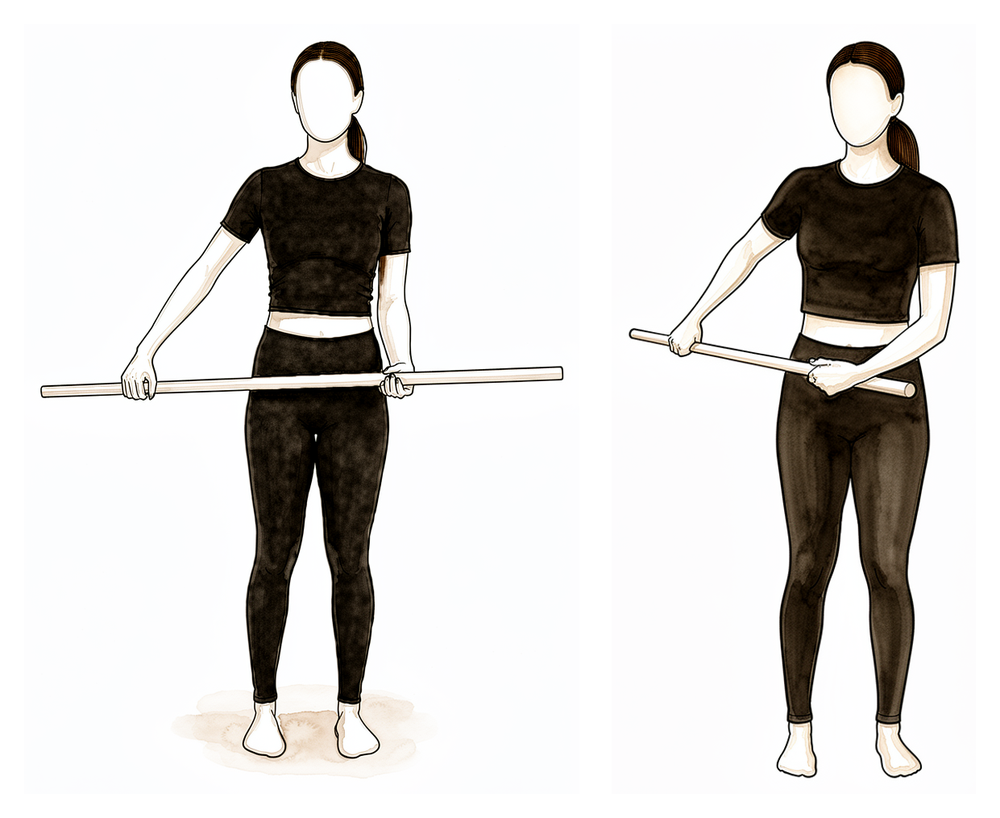
Kieran Hirpara 4.0
Internal rotation ng band
Habang nakadikit ang iyong siko sa iyong tagiliran, hawakan ang isang band na naka-angkla sa isang panig at i-rotate ang forearm papasok sa tapat ng iyong katawan laban sa band, pagkatapos ay dahan-dahang ibalik.
2 hanggang 3 sets ng 10 hanggang 15, 5 araw bawat linggo
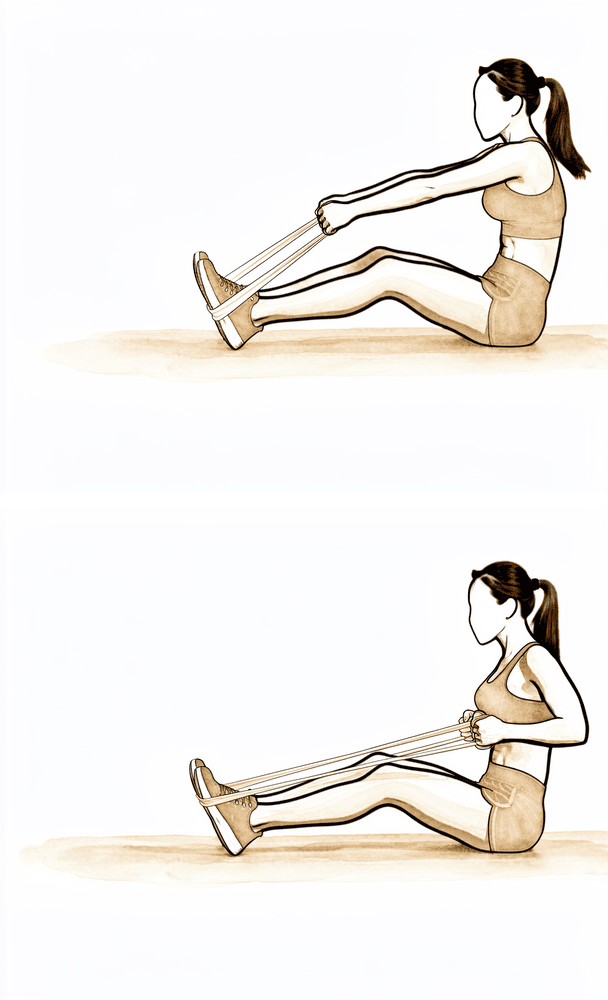
Kieran Hirpara 4.0
Low row
Humawak ng band na naka-angkla sa harap mo sa taas ng iyong baywang. Panatilihing medyo tuwid ang iyong braso, hilahin ito pabalik at pababa patungo sa iyong balakang, pigain ang shoulder blade pababa at pabalik, pagkatapos ay dahan-dahang ibalik.
2 hanggang 3 sets ng 10 hanggang 15, 5 araw bawat linggo
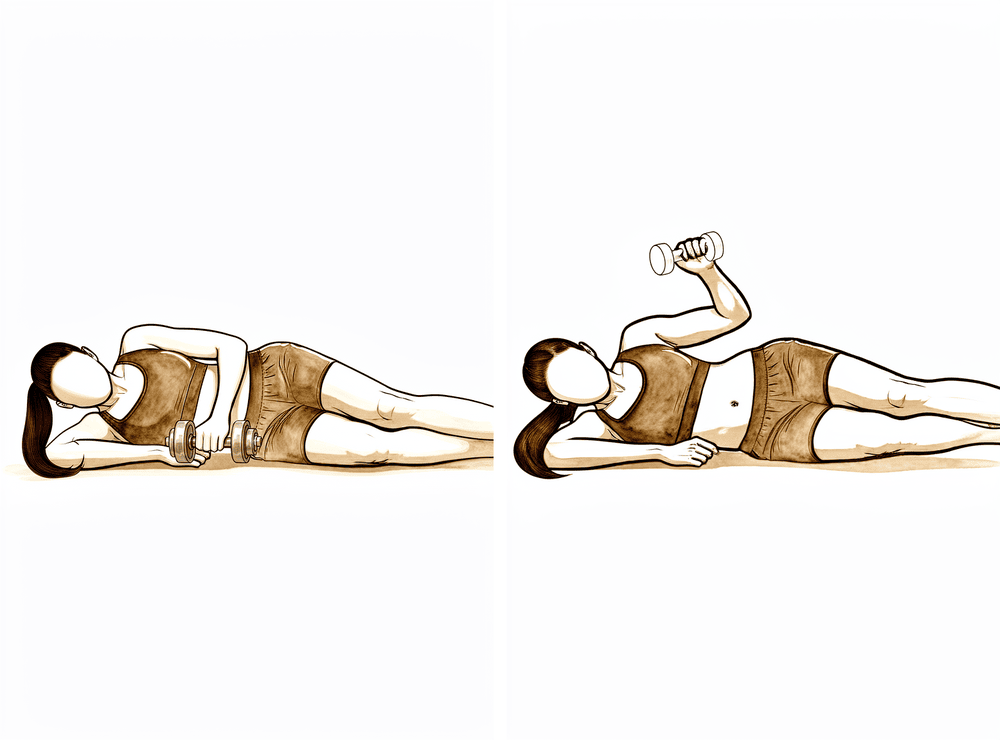
Kieran Hirpara 4.0
Side-lying external rotation (magaang timbang)
Humiga sa iyong maayos na panig na ang inoperahang siko ay nakabaluktot nang 90 degrees at nakadikit sa iyong tagiliran, habang humahawak ng magaan na pabigat (mga 0.5 hanggang 1.5 kg). I-rotate ang forearm pataas, pagkatapos ay dahan-dahang ibaba: ang mabagal na pagbaba ang mahalagang bahagi. Panatilihin ang paggalaw sa ibaba ng taas ng balikat.
2 hanggang 3 sets ng 10 hanggang 15, low load
Habang bumubuti ang iyong range, ang atensyon ay nakatuon na sa muling pagbuo ng lakas. Ipinagpapatuloy ang banayad na stretching upang hindi mawala ang paggalaw na iyong pinagsikapan. Ang resistance work ay nagsisimula nang magaan sa bandang ika-anim na linggo, gamit ang mga elastic band at magagaan na weights para sa rotator cuff at mga kalamnan ng shoulder-blade, na may mababang load at mas mataas na repetitions. Ang mga normal na pang-araw-araw na aktibidad ay dapat na halos bumalik na sa dati, at ang mga mas magagaan na recreational activities ay karaniwang ipinagpapatuloy sa phase na ito, ayon sa gabay ng iyong physiotherapist.
Handa na para sa susunod na phase kapag… mayroon ka nang buo, o halos buong, komportableng paggalaw sa lahat ng direksyon, at kaya mo nang gawin ang mga strengthening exercises nang walang paglala ng sakit.
Phase IV — Pagbabalik sa buong aktibidad (Ika-12 linggo onwards)
Ang huling phase, mula humigit-kumulang tatlong buwan, ay isang unti-unting pagbabalik sa mas mabigat na trabaho, mga gawaing overhead, at sports, kasama ang mas advanced na strengthening. Patuloy na bumubuti ang balikat lampas sa puntong ito: karamihan sa mga tao ay patuloy na nakakaramdam ng ginhawa at kumpiyansa sa loob ng anim hanggang labindalawang buwan. Ang progression ay nananatiling ginagabayan ng iyong nararamdaman: kung nagsisimulang bumalik ang paninigas o pananakit, bawasan ang intensity, ibalik ang range, at pahingahin ang joint sa halip na pilitin ito.
Pagbabalik sa aktibidad
Karamihan sa mga tao ay nakakabalik na sa trabahong pang-opisina at magagaan na pang-araw-araw na aktibidad sa loob ng unang ilang linggo, kapag sila ay komportable na at wala na sa sling. Ang mas mabigat at mas pisikal na trabaho at mga overhead sport ay unti-unting ibinabalik sa mga sumunod na linggo hanggang buwan, karaniwan ay mula sa humigit-kumulang tatlong buwan, habang bumabalik ang iyong lakas. Ang pagmamaneho pagkatapos ng anumang operasyon sa balikat ay sumusunod sa standard policy ng klinika sa halip na isang nakatakdang punto sa protocol na ito: tingnan ang driving after upper-limb surgery at kumpirmahin sa iyong surgeon sa oras ng review.
Iyong mga ehersisyo
Ito ang mga ehersisyo mula sa iyong handout. Simulan ang mga ito ayon sa gabay ni Dr Hirpara at ng iyong physiotherapist. Ang mga maagang ehersisyo — paggalaw ng pulso, pagbubukas at pagsasara ng kamay, pagbaluktot ng siko at mga pendulum — ay pinapanatiling gumagalaw ang natitirang bahagi ng braso habang nagpapagaling ang balikat. Ang mga assisted stretch (lying flexion, cradle abduction, stick external rotation) ay ibinabalik ang range nang hindi binibigatan ang joint, at ang band, low row at side-lying work ay idinaragdag kalaunan kapag komportable na ang paggalaw. Unahin ang pagpapalawak ng range bago ang lakas. Itigil ang anumang nagdudulot ng matalas na sakit sa halip na stretch.
Pagkatapos ng iyong protocol
Ang mga outpatient phase sa itaas ay hango sa nailathalang rehabilitation protocol para sa CAM procedure, kung saan ang mga recovery milestone ay kinuha mula sa parehong mga source. Ang mga range ng linggo ay tipikal at hindi fixed, at ang iyong patuloy na rehabilitation ay ginagabayan nang indibidwal ng iyong physiotherapist, katuwang ang practice, base sa kung paano nagpapagaling ang iyong balikat at kung ano eksakto ang ginawa sa iyong operasyon. Ang pahinang ito ay kasabay ng pangkalahatang payo sa paggaling ng practice: tingnan ang managing post-operative pain at wound care. Para sa mismong operasyon at sa kondisyong ginagamot nito, tingnan ang comprehensive arthroscopic management at shoulder arthritis.
Evidence & references
This is the clinical evidence summary written for health professionals. It is technical, and it lists the research this page was built from. You do not need to read it to understand your treatment or to make a decision about it.
Comprehensive Arthroscopic Management (CAM) of Glenohumeral Osteoarthritis — Post-operative Rehabilitation
Topic scope: Post-operative rehabilitation after the Comprehensive Arthroscopic Management (CAM) procedure — a joint-preserving arthroscopic treatment for advanced glenohumeral osteoarthritis in young, active patients who wish to avoid or defer arthroplasty.
Defining principle of CAM rehab (a hybrid): CAM is not a repair, so — like a capsular release for frozen shoulder — there is no healing construct to protect and the priority is to keep the motion that was restored at surgery, especially external rotation freed by the capsular release and axillary nerve neurolysis. BUT, unlike a pure capsular release, CAM also resurfaces and reshapes the articular surfaces themselves (chondroplasty, microfracture, humeral osteoplasty). So the rehab is motion-led but graded: early and frequent passive/active-assisted ROM, short sling for comfort only, stretching eased to end-range rather than forced — Millett's own protocol instructs the patient to "proceed with caution while stretching to avoid joint inflammation and pain." Re-stiffening is the failure mode to prevent; joint flare from over-aggressive forcing is the one to avoid.
A. THE PROCEDURE (what is being rehabilitated)
CAM is a systematic, inclusive arthroscopic approach to the multiple pathologies of early-to-advanced glenohumeral OA, described by Millett and colleagues. It bundles, in one sitting, as many of the following as the joint requires [Millett 2013; Millett EATS 2015]:
- Debridement, chondroplasty, synovectomy and loose-body removal — smoothing frayed cartilage and clearing mechanical debris.
- Capsular release — to restore range, particularly external rotation, lost to the arthritic contracture.
- Inferior humeral osteoplasty — excision of the inferior humeral "goat's-beard" osteophyte that tethers the axillary nerve and blocks motion.
- Axillary nerve neurolysis — freeing the nerve adjacent to that osteophyte (a defining CAM step; note a validated CAM variant deliberately omits axillary nerve release and subacromial decompression with satisfactory durable results [Mahmoud/KSSTA 2023]).
- Subacromial decompression ± biceps tenodesis ± microfracture of focal chondral defects, where indicated.
Patient selection (drives prognosis, not the rehab itself): best results with > 2 mm of joint space and glenohumeral congruity without significant deformity; less joint space and abnormal posterior glenoid shape (Walch B2/C) predict early failure [Millett 2016 predictors]. Survivorship (freedom from arthroplasty): 76.9% at minimum 5 years, 63.2% at minimum 10 years in suitable candidates [Mitchell 2016; Spiegl/Horan 2020].
B. POST-OPERATIVE PHASED TIMELINE
The published protocol is a 3-phase, individually-tailored program (Millett group; mirrored in clinic patient materials). Mapped here onto the practice's standard 4-phase patient structure. Clinic follow-up at 2 weeks, 6 weeks, and 3–4 months.
| Phase | Window | Sling | ROM | Strengthening | Notes |
|---|---|---|---|---|---|
| I — Early motion | Week 0–2 | Comfort only, ~1–2 wk, off for exercise from day 0 | Passive + active-assisted ROM immediately; pendulums; gentle stretch in all planes incl. external rotation; caution — ease to end-range, do not force | Hand/elbow/scapular setting only | Goal: maintain the motion gained at surgery + prevent scar/re-contracture; pain control to permit motion |
| II — Restoring range | Week 2–6 | Off | Progress AAROM → AROM all planes; keep working external rotation; add joint mobilisation; stretching graded (firmer, still not forced) | Light scapular/cuff activation as pain allows | Most back to light daily activity/work by this window |
| III — Strengthening | Week 6–12 | Off | Maintain full/near-full ROM | Elastic-resistance + light-weight cuff & scapular strengthening from ~6 wk, low load / higher reps; continued stretching | Lighter recreation resumes |
| IV — Return to function/sport | ~3 months + | Off | Full | Advanced strengthening; graduated return to sport/heavy work | Outcomes continue to improve over 6–12 months |
Procedure-specific modifiers (surgeon-dependent): - Biceps tenodesis performed → avoid resisted elbow flexion / lifting ~6 weeks. - Microfracture of a focal chondral defect → early passive motion is beneficial for the marrow-stimulation clot (as in knee microfracture), but avoid heavy axial loading in the early weeks; favour motion over load. - Axillary nerve neurolysis performed → prioritise early external-rotation ROM to hold the gain; transient axillary nerve paraesthesia is recognised and usually settles.
Recovery milestones (from CAM outcome series, not a rehab trial): meaningful pain/function improvement within the first 1–3 months; sustained patient-reported improvement and satisfaction by 6–12 months [Outcomes/Survivorship series].
C. KEY CONTROVERSIES / EVIDENCE QUALITY
- No rehabilitation RCT exists for CAM. The post-operative regimen is expert/consensus from the originating group (Millett), not a tested protocol. Intensity and timing are reasoned from the procedure's components, not from comparative data. Weak/consensus.
- The evidence base for the operation is itself debated. CAM outcome series are predominantly Level IV (case series from a small number of high-volume centres); systematic reviews conclude arthroscopic debridement for GHOA lacks high-quality evidence for routine use, and isolated debridement + capsular release "may not provide substantial benefit" in most patients [Kelly 2014; van der Bracht 2013 critical review]. CAM's value is strongest in carefully selected young, high-demand patients with preserved joint space.
- Motion vs protection balance. The capsular-release component argues for aggressive early motion (re-stiffening is the enemy); the cartilage/microfracture/osteoplasty components argue for graded loading (joint flare is the enemy). The published protocol resolves this as early but cautious motion — the central rehab judgement.
- CAM is a family of procedures, not one operation. Exactly which steps were done (axillary nerve release, microfracture, biceps tenodesis) legitimately shifts the rehab — hence the per-patient modifiers above. A validated variant omits axillary nerve release/SAD entirely [Mahmoud 2023].
D. EVIDENCE STRENGTH FLAGS (summary)
- MODERATE (large/long-term cohorts): CAM mid- and long-term survivorship + PRO improvement (Mitchell 2016 n-series, 76.9% @5 yr; Spiegl/Horan 2020, 63.2% @10 yr); preoperative predictors of failure (Morrison/Millett 2016).
- WEAK / CONSENSUS ONLY: the post-operative rehabilitation protocol itself (no defining RCT; expert protocol from the originating group); debridement-based arthroscopy for GHOA (systematic reviews: low-quality evidence, Kelly 2014; van der Bracht 2013).
- EXTRAPOLATED: early-motion rationale borrowed from arthroscopic capsular-release rehab; microfracture early-motion / load-caution rationale borrowed from marrow-stimulation cartilage literature.
CITATIONS
RAG corpus (180,000+ Orthopaedic articles) — CAM clinical evidence base
- Millett PJ, Gobezie R, Boykin RE. Comprehensive Arthroscopic Management (CAM) procedure for treatment of glenohumeral osteoarthritis. Arthroscopy Techniques. 2015. (technique + post-op rehab description) DOI: 10.1016/j.eats.2015.04.003
- Millett PJ, et al. Comprehensive Arthroscopic Management (CAM) Procedure: clinical results of a joint-preserving arthroscopic treatment for young, active patients with advanced shoulder osteoarthritis. Arthroscopy. 2013. DOI: 10.1016/j.arthro.2012.10.028
- Mitchell JJ, et al. Survivorship and patient-reported outcomes after CAM of glenohumeral osteoarthritis (minimum 5 years; 76.9% survivorship). Am J Sports Med. 2016. DOI: 10.1177/0363546516656372
- Morrison/Millett, et al. CAM of glenohumeral osteoarthritis: preoperative factors predictive of treatment failure. Am J Sports Med. 2016. DOI: 10.1177/0363546516668823
- Survivorship and PROs after CAM, minimum 10-year follow-up (63.2% survivorship). Am J Sports Med. 2020. DOI: 10.1177/0363546520962756 / OJSM 2021. DOI: 10.1177/2325967121s00213
- Comprehensive arthroscopic management without axillary nerve release or subacromial decompression — satisfactory durable results in young patients. Knee Surg Sports Traumatol Arthrosc. 2023. DOI: 10.1007/s00167-023-07377-0
- Arthroscopic Management of Glenohumeral Arthritis: a joint-preservation approach. JAAOS. 2018. DOI: 10.5435/jaaos-d-17-00214
- Outcomes and survivorship after arthroscopic treatment of glenohumeral arthritis: a systematic review (ROM + PRO improvement, minimal complications). Arthroscopy. 2020. DOI: 10.1016/j.arthro.2020.02.036
- Kelly EW, et al. Arthroscopic debridement and capsular release for the treatment of shoulder osteoarthritis (may not justify routine use). Arthroscopy. 2014. DOI: 10.1016/j.arthro.2014.08.025
- van der Bracht H, et al. What is the role of arthroscopic debridement for glenohumeral arthritis? A critical examination of the literature (lacks high-quality evidence). Arthroscopy. 2013. DOI: 10.1016/j.arthro.2013.02.022
- CAM vs total shoulder arthroplasty and hemiarthroplasty in patients < 50 years. EFORT Open Reviews. 2026. DOI: 10.1530/eor-2023-0156
Published rehab protocol (URLs)
- Dr Peter Millett — Comprehensive Arthroscopic Management of Glenohumeral Osteoarthritis (procedure + components incl. inferior humeral osteoplasty, axillary nerve neurolysis, biceps tenodesis, microfracture): https://drmillett.com/wp-content/uploads/2017/02/comprehensive-arthroscopic-management-glenohumeral-osteoarthritis.pdf
- The Upper Limb Clinic — Comprehensive Arthroscopic Management (3-phase rehab description: sling few weeks; Phase 1 passive/active-assisted ROM + cautious stretching; Phase 2 strengthening ~6 wk; Phase 3 advanced/return-to-sport ~3 mo; follow-up 2 wk / 6 wk / 3–4 mo): https://theupperlimbclinic.co.uk/comprehensive-arthroscopic-management-a-joint-preserving-solution-for-shoulder-arthritis/
- Millett PJ, et al. CAM clinical results (open journal record): https://www.arthroscopyjournal.org/article/S0749-8063(12)01801-4/fulltext
- CAM (EATS technique record, PubMed): https://pubmed.ncbi.nlm.nih.gov/26697301/
Note on the rehab evidence: there is no CAM-specific rehabilitation trial in the corpus or the literature. The phased protocol above is the originating group's expert protocol (Millett, mirrored in clinic patient materials), with the early-motion and load-caution rationale extrapolated from arthroscopic-capsular-release and cartilage marrow-stimulation rehab respectively. Treat phase timings as typical, surgeon-adjustable defaults — not as trial-derived prescriptions.