Patients › Rehabilitation
Decompression ng Suprascapular Nerve
Rehabilitation after isolated arthroscopic suprascapular nerve decompression, with honest framing of nerve recovery.
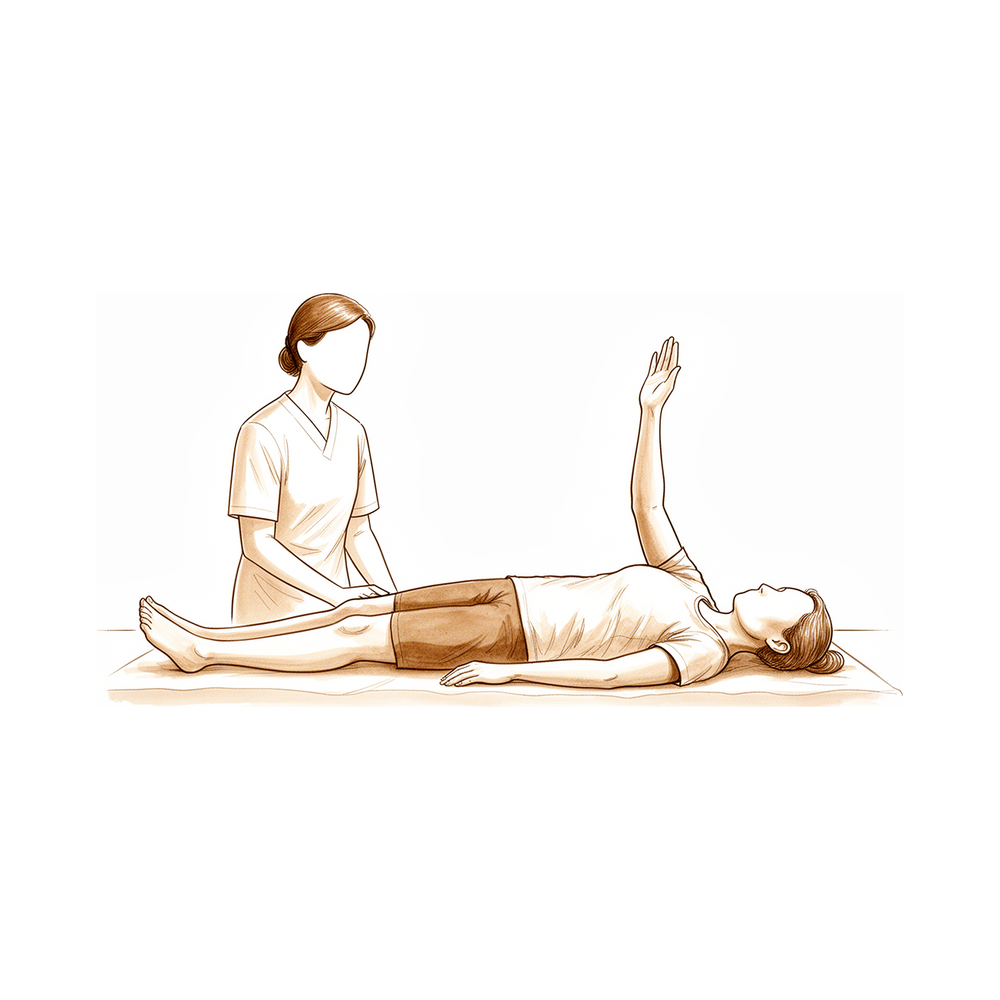
Saklaw ng protocol na ito ang rehabilitasyon pagkatapos ng isang isolated arthroscopic suprascapular nerve decompression kasama si Dr Kieran Hirpara sa Mater Private Hospital Rockhampton: ang pag-release ng nerve sa suprascapular notch at/o sa spinoglenoid notch, nang walang anumang iba pang repair. Dalhin ang pahinang ito o ang PDF nito sa iyong unang physiotherapy visit upang manatiling coordinated ang iyong rehabilitasyon. Ang iyong rehabilitasyon ay isinasagawa nang indibidwal ng iyong physiotherapist sa pamamagitan ng mga phase sa ibaba, depende sa paggaling ng iyong balikat.
Importante: pakibasa muna. Ang suprascapular nerve decompression ay madalas na isinasagawa kasabay ng isang rotator cuff repair. Ang protocol na ito ay para sa isolated decompression lamang. Kung ang iyong operasyon ay kinabilangan din ng rotator cuff repair, sundin ang rotator cuff repair protocol sa halip: ang nirapair na tendon ay nangangailangan ng mas mabagal na pace, at ang protocol na iyon ang mas sinusunod kaysa rito. Kung hindi ka sigurado kung anong operasyon ang iyong ginawa, magtanong sa rooms bago magsimula.
Kung mayroon kang anumang alalahanin tungkol sa iyong sugat pagkatapos ng surgery, makipag-ugnayan sa rooms. Madalas na nakatutulong ang pagkuha ng larawan ng sugat at pag-email nito para masuri.
Ano ang dapat asahan
Kapag ang nerve ay ni-release nang mag-isa, walang tendon repair na kailangang protektahan, kaya maaaring mabilis ang rehabilitasyon. Ang sling ay isinusuot lamang para sa comfort at sa maikling panahon lamang (karaniwan ay sa unang linggo, at hanggang dalawang linggo nang maximum), at tinatanggal ito hangga't maaari kapag kumalma na ang balikat. Ang banayad na paggalaw ay nagsisimula nang maaga, ayon sa kakayahan ng comfort, at karamihan sa mga tao ay nakakabalik sa kanilang normal na pang-araw-araw na aktibidad sa loob ng ilang linggo.
Ang paggaling ng nerve mismo ay sumusunod sa sarili nitong timeline, hiwalay sa paggalaw ng balikat. Ang operasyon ay nag-aalis ng pressure sa nerve; ang sakit mula sa pressure na iyon ay madalas na nababawasan nang relatibong mabilis. Ang pagbawi ng lakas ng muscle at bulk sa mga muscle na sinusupply ng nerve (ang supraspinatus at infraspinatus, na matatagpuan sa shoulder blade) ay mas mabagal at tumatagal ng ilang buwan. Ang antas ng pagbabalik ng lakas at muscle bulk ay nag-iiba depende sa tao: sa ilang tao ang paggaling ay kumpleto, sa iba ito ay partial, at ang isang matagal nang problema sa nerve ay maaaring hindi gumaling nang lubos. Ang iyong physiotherapy ay kinabibilangan ng mga espesipikong gawain upang i-reactivate ang mga muscle na ito habang gumagaling ang nerve. Gagabayan ka ng iyong physiotherapist at ng practice kung ano ang dapat asahan sa iyong kaso.
Phase I — Maagang paggalaw (Linggo 0–2)
Kieran Hirpara 4.0
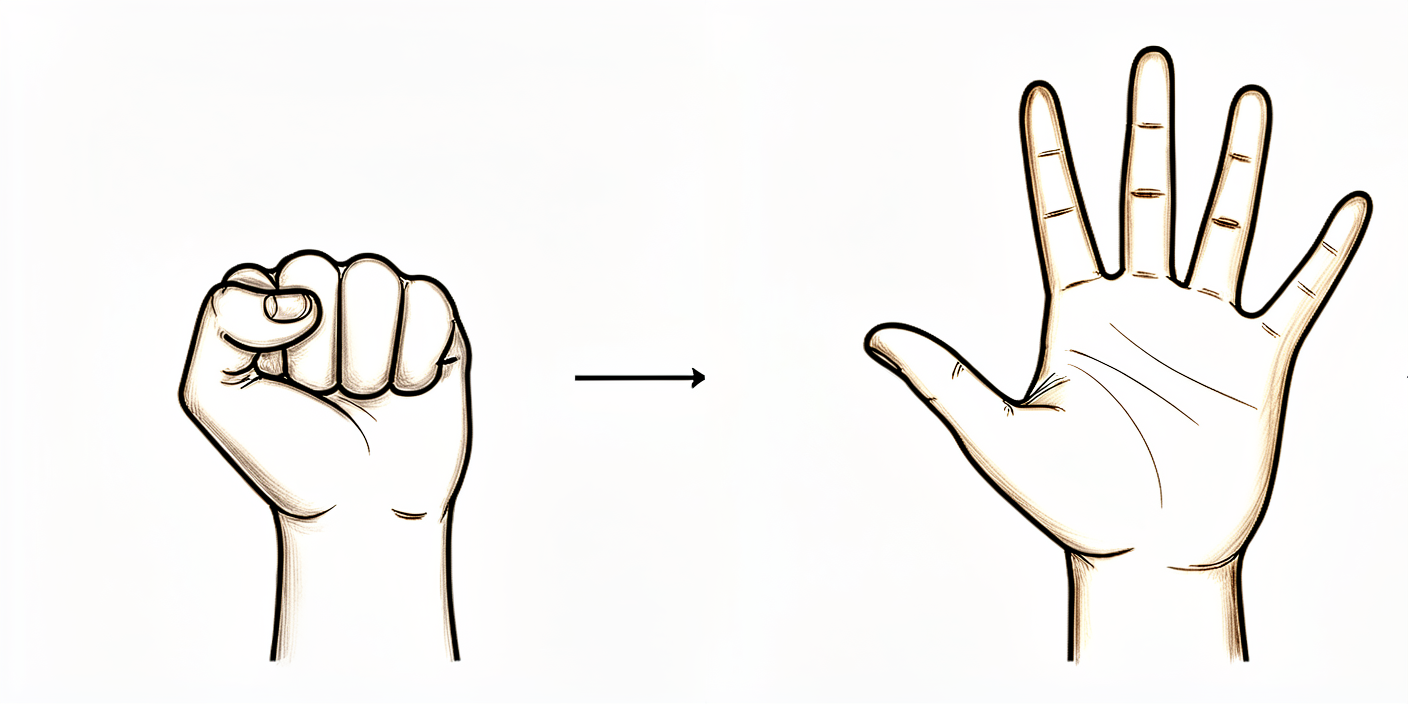
Buksan at isara ang kamay
Panatilihing gumagalaw ang iyong kamay at mga daliri sa pamamagitan ng pagbubukas at pagsasara ng mga ito, o sa pamamagitan ng pagpisil sa isang malambot na bola. Simulan ito agad upang mapanatiling gumagana ang kamay habang kumakalma ang balikat.
Ayon sa gabay ng iyong physiotherapist
Kieran Hirpara 4.0
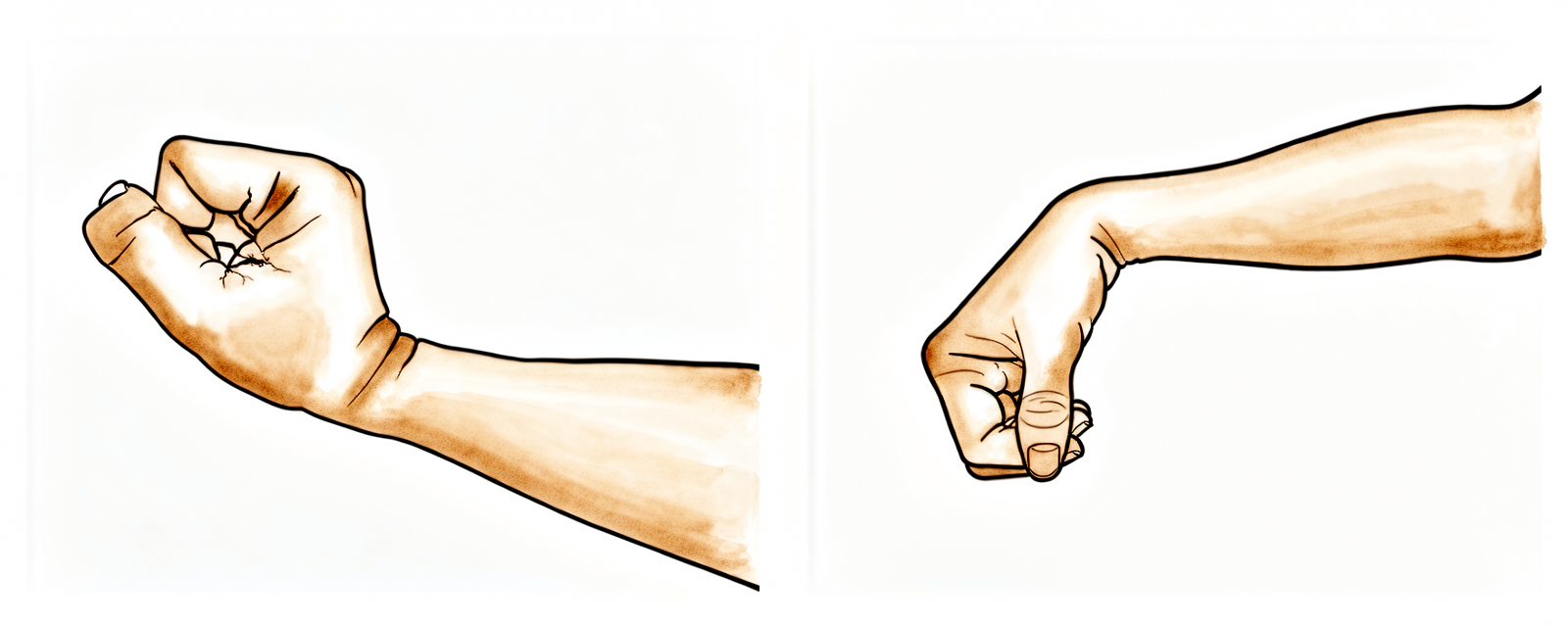
Paggalaw ng pulso
Panatilihing gumagalaw ang iyong pulso sa pamamagitan ng pagbaluktot nito pasulong, pabalik, at sa magkabilang gilid. Gawin ito habang ang braso ay wala sa sling, kasabay ng mga paggalaw ng iyong kamay at siko.
Ayon sa gabay ng iyong physiotherapist
Kieran Hirpara 4.0
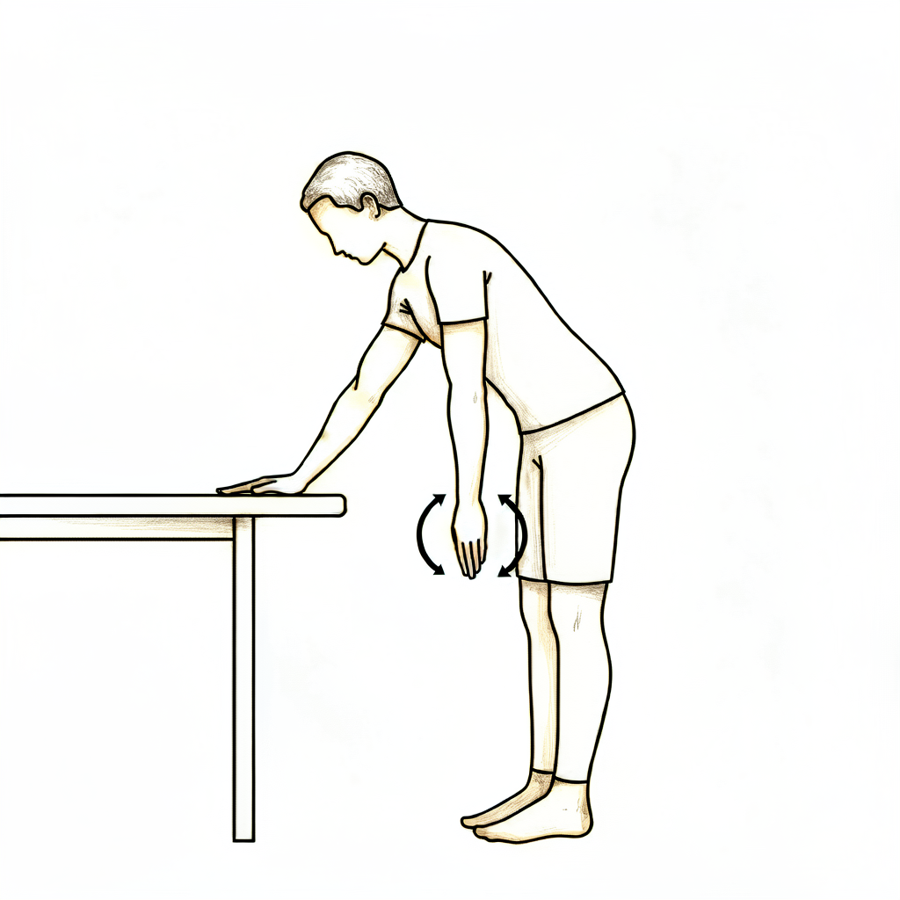
Ehersisyong pendulum
Yumuko pasulong mula sa baywang at hayaang nakabitin nang dahan-dahan ang inoperahang braso palayo sa katawan. Hayaang umugoy ang braso sa maliliit at relax na bilog — ang galaw ay nagmumula sa iyong katawan, hindi sa mga kalamnan ng balikat. Manatili sa isang komportable at walang sakit na range.
Ayon sa gabay ng iyong physiotherapist
Kieran Hirpara 4.0
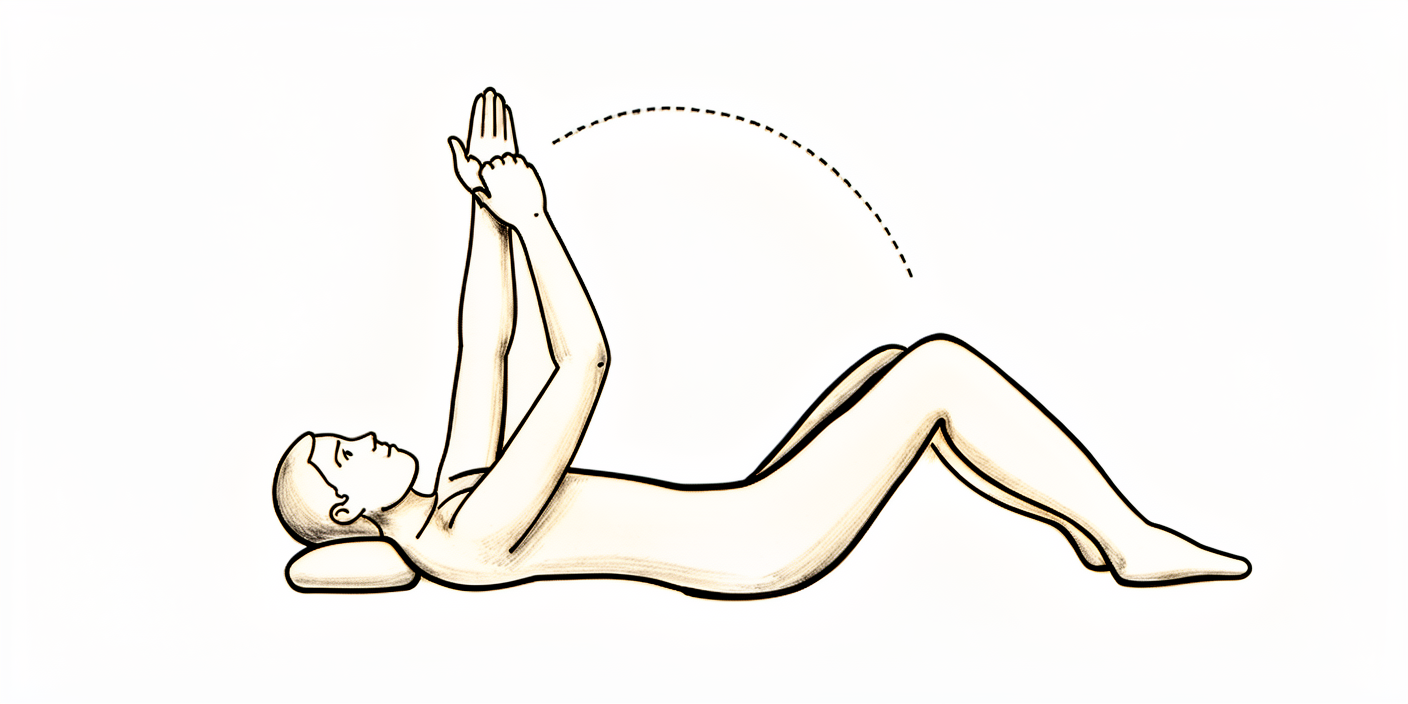
Tinutulungang pag-angat (nakahiga)
Humiga nang patihaya at gamitin ang iyong maayos na braso upang tulungang iangat ang inoperahang braso paitaas, pagkatapos ay ibaba itong muli habang tinutulungan pa rin ng maayos na braso. Gumalaw lamang sa loob ng komportable at walang sakit na range — ang layunin ay banayad at maagang paggalaw, hindi ang pag-abot sa range sa anumang paraan.
Ayon sa gabay ng iyong physiotherapist
Kieran Hirpara 4.0
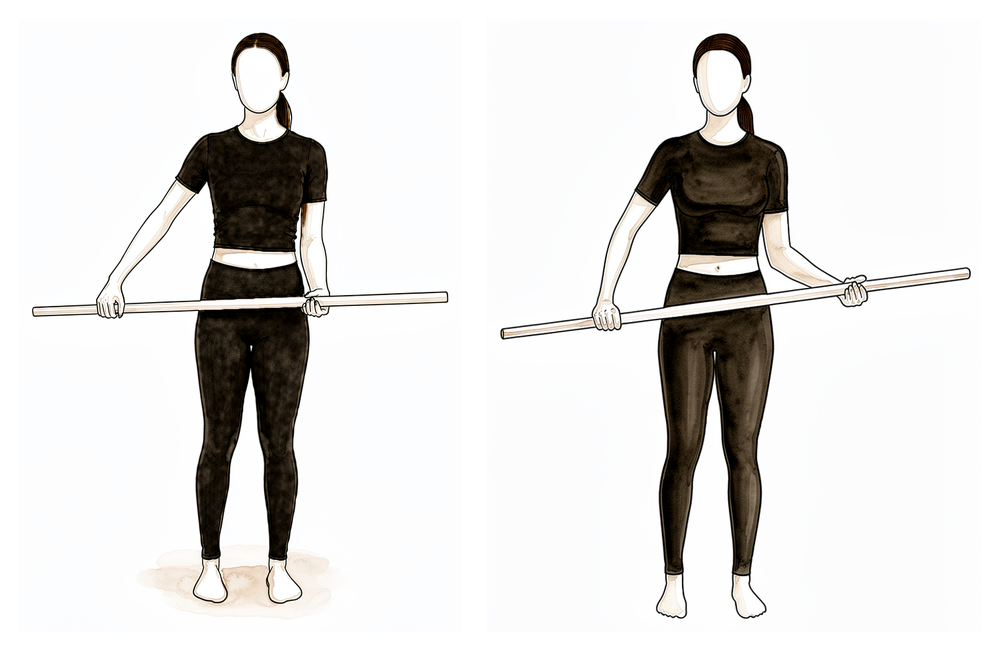
Wand-assisted external rotation
Humiga nang nakatihaya habang hawak ang isang stick o baston sa magkabilang kamay na ang mga siko ay nakabaluktot sa right angle at nakadikit sa iyong mga gilid. Gamitin ang maayos na braso upang dahan-dahang itulak ang forearm na naoperahan palabas, palayo sa katawan, pagkatapos ay ibalik ito. Panatilihing komportable at walang sakit ang paggalaw.
Ayon sa gabay ng iyong physiotherapist
Kieran Hirpara 4.0
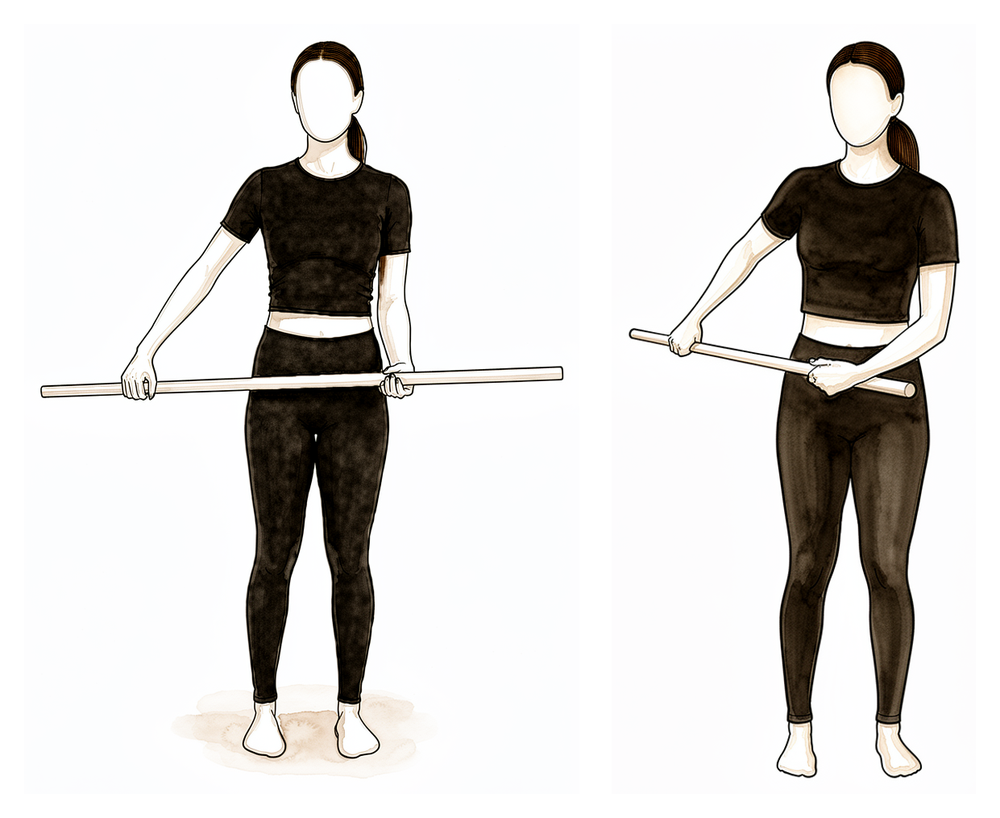
Internal rotation na may tulong ng wand
Humawak ng isang stick sa likod gamit ang dalawang kamay. Gamitin ang iyong maayos na braso upang dahan-dahang i-gabay ang inoperahang kamay pataas sa iyong likod, pagkatapos ay dahan-dahan itong ibaba. Ibabalik nito ang komportableng inward rotation nang maaga — panatilihin ito sa loob ng range na walang sakit.
Ayon sa gabay ng iyong physiotherapist
Kieran Hirpara 4.0
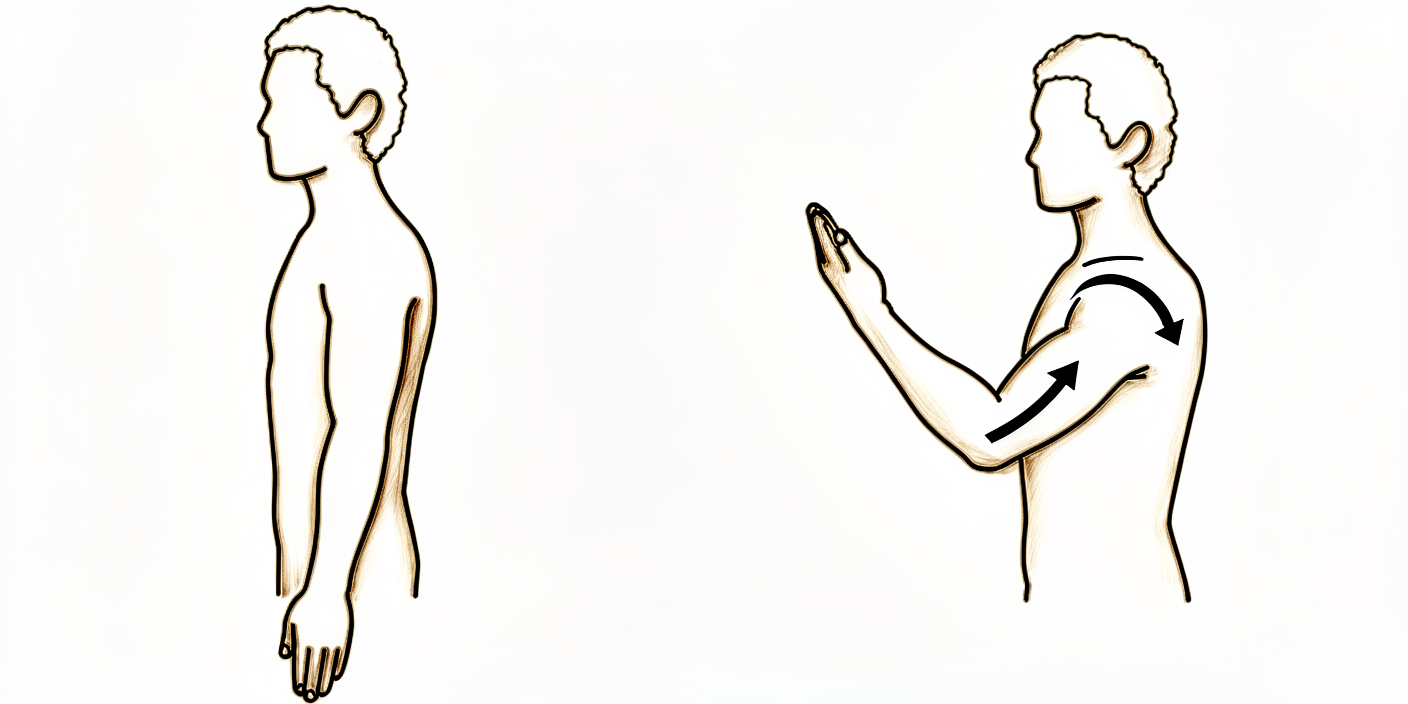
Naititiklop ang siko
I-bend at ituwid ang siko sa buong range nito. Panatilihing gumagalaw ang kamay, pulso, at siko mula sa simula upang manatiling supple ang natitirang bahagi ng braso habang kumakalma ang balikat.
Ayon sa gabay ng iyong physiotherapist
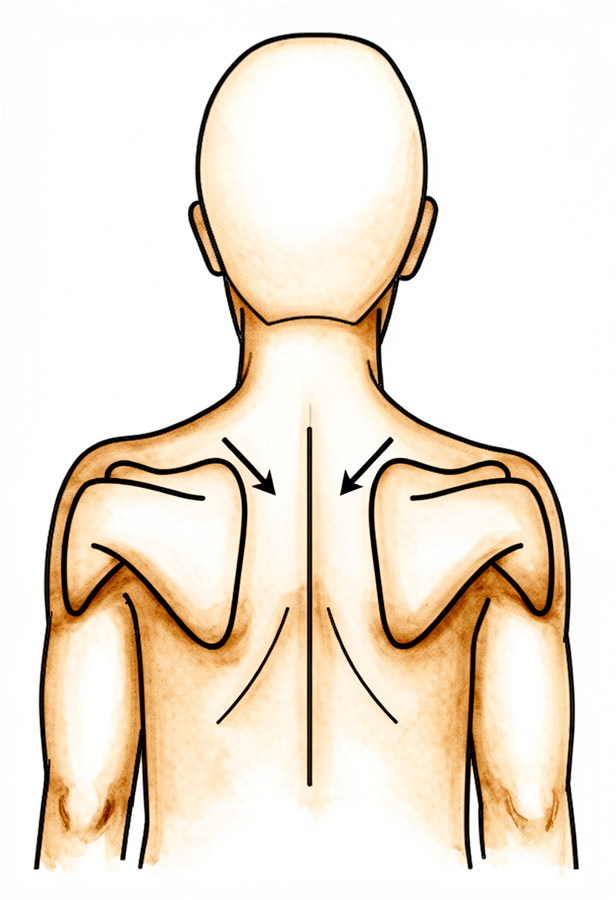
Kieran Hirpara 4.0
Pag-aayos ng scapula (Scapular setting)
Habang nakaupo o nakatayo nang tuwid, dahan-dahang hilahin ang iyong mga shoulder blade pabalik at pababa, palayo sa iyong mga tainga. Manatili sa posisyong ito ng ilang segundo, pagkatapos ay mag-relax. Gawin ito ayon sa iyong kakayahan at ginhawa sa mga unang araw.
Ayon sa gabay ng iyong physiotherapist
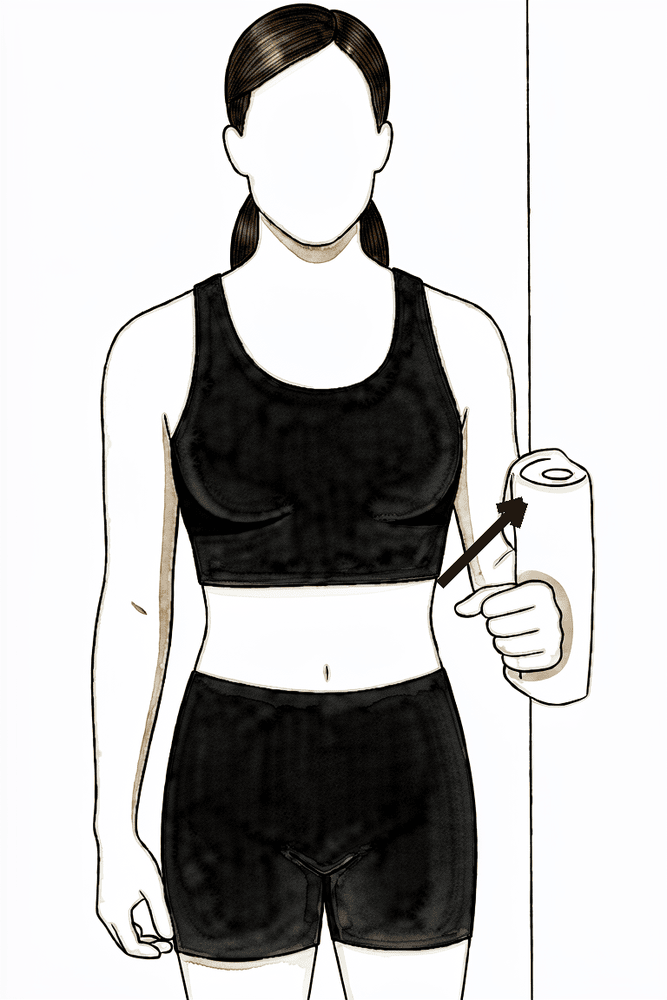
Kieran Hirpara 4.0
Isometric deltoid setting
Tumayo nang patagilid sa isang pader na ang inoperahang siko ay nasa iyong gilid. Dahan-dahang itulak ang labas na bahagi ng iyong braso sa pader na tila itinataas ito palabas sa gilid, nang hindi hinahayaang gumalaw ang braso. Manatili sa posisyong ito ng ilang segundo, pagkatapos ay i-relax. Dahan-dahang ginigising nito ang deltoid nang walang paggalaw, ayon sa iyong komportableng pakiramdam.
Ayon sa gabay ng iyong physiotherapist
Ang unang layunin ay ginhawa at banayad, maagang paggalaw. Ang sling ay para sa ginhawa lamang at dapat alisin hangga't maaari kapag kumalma na ang balikat; hindi mo kailangang matulog nang nakasuot nito. Huwag magmaneho sa loob ng hindi bababa sa anim na linggo pagkatapos ng anumang operasyon sa balikat, kahit wala na ang sling; bibigyan ka ng pahintulot ng iyong surgeon na magmaneho, karaniwan sa review pagkalipas ng anim na linggo. Inumin ang iyong pain relief nang regular sa mga unang araw upang masimulan ang paggalaw ng braso. Panatilihing gumagalaw ang iyong kamay, pulso, at siko mula sa simula, at simulan ang banayad na paggalaw ng balikat sa loob ng komportableng range ayon sa payo.
Para sa iyong physiotherapist:
Mga Layunin
- Ginhawa at proteksyon ng sugat
- Maaga at banayad na range of motion sa loob ng mga limitasyong walang sakit
- Panatilihin ang paggalaw ng kamay, pulso, at siko
Pamamahala
- Sling para sa ginhawa lamang, karaniwan hanggang sa postoperative day 7 (hanggang dalawang linggo kung kailangan para sa ginhawa), unti-unting aalisin habang pinahihintulutan ng mga sintomas
- Maaga at banayad na range of motion ayon sa kakayahang maging komportable: pendulums, passive at active-assisted elevation, external at internal rotation, at elbow flexion/extension
- Isometric deltoid setting at scapular setting hangga't komportable
- Analgesia bago ang ehersisyo; cryotherapy para sa paginhawa ng sakit kung kinakailangan
Mga Pag-iingat
- Panatilihin ang maagang paggalaw sa loob ng komportable at walang sakit na range
- Bawal ang mabigat na pagbuhat, puwersadong pagtulak o paghila
- Bawal magmaneho sa loob ng anim na linggo (nalalapat ito sa anumang operasyon sa balikat)
Mga Pamantayan para sa pag-usad
- Komportable at kumakalmang sakit
- Kasiya-siyang paghilom ng sugat
- Natotolerate ang maagang range of motion
Phase II — Range at reactivation ng kalamnan (Linggo 2–6)
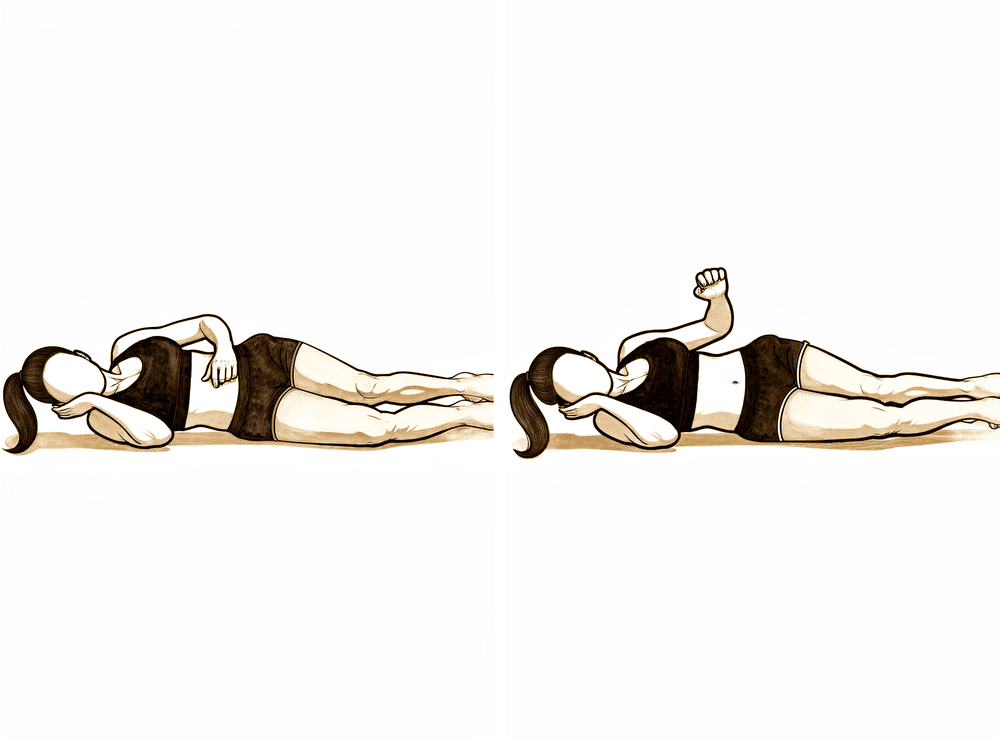
Kieran Hirpara 4.0
Side-lying external rotation
Humiga sa gilid na hindi naoperahan na ang itaas na siko ay nakabaluktot sa right angle at nakadikit sa iyong katawan. Habang pinapanatili ang siko sa iyong gilid, i-rotate ang forearm pataas patungo sa kisame, pagkatapos ay ibaba ito nang may kontrol. Ang external rotation na walang sakit gaya nito ay tumutulong sa pag-reactivate ng mga kalamnang sinusupplyan ng nerve.
Ayon sa gabay ng iyong physiotherapist
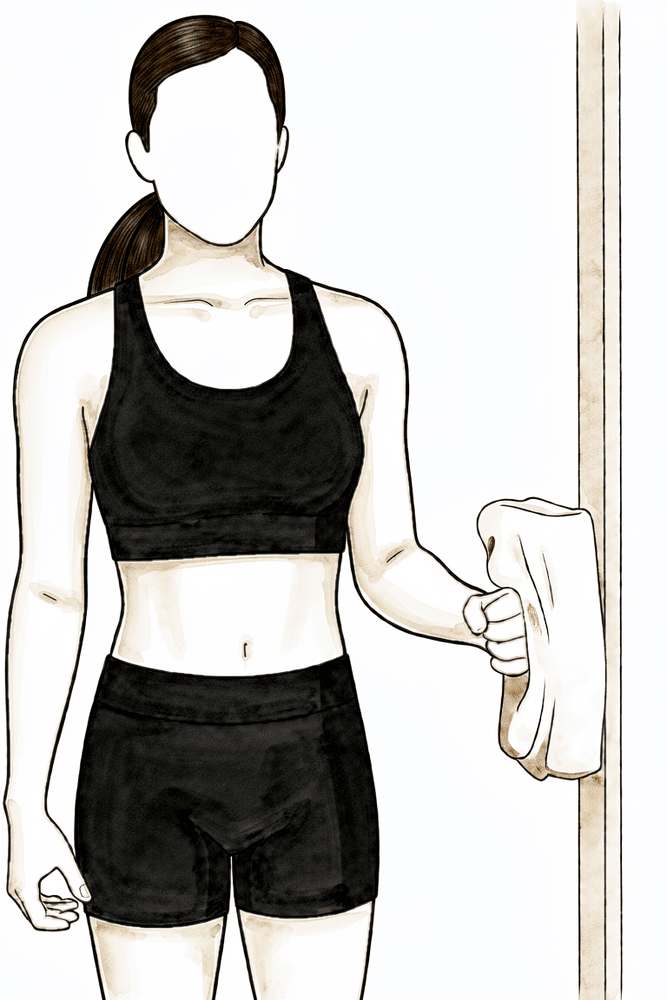
Kieran Hirpara 4.0
Isometric external rotation
Tumayo nang nakadikit ang iyong siko sa iyong gilid at nakabaluktot sa isang right angle, ang likod ng iyong kamay ay nakasandal sa pader o doorframe. Dahan-dahang itulak ito palabas nang hindi pinapagalaw ang braso, manatili sa posisyong ito ng ilang segundo, pagkatapos ay i-relax. Ito ang panimulang punto para muling i-activate ang mga kalamnang sinusupplyan ng nerve, bago magdagdag ng band.
Ayon sa gabay ng iyong physiotherapist
Kieran Hirpara 4.0
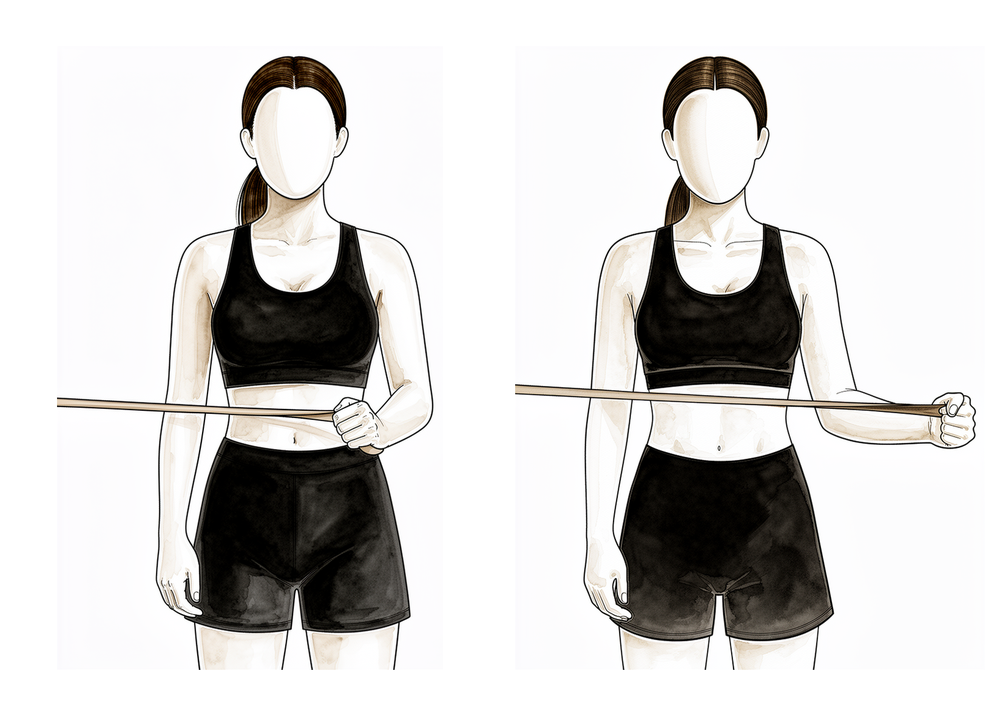
Band external rotation
Tumayo nang nakadikit ang iyong siko sa iyong tagiliran at nakabaluktot sa isang right angle, habang hawak ang isang elastic band na naka-angkla sa taas ng baywang. Panatilihing nakadikit ang siko sa iyong tagiliran, i-rotate ang forearm palabas laban sa band, pagkatapos ay dahan-dahang ibalik. Mababang resistance at mas mataas na repetitions — ito ang pangunahing external-rotation work para sa pag-reactivate ng infraspinatus habang nagpapagaling ang nerve.
Mababang load, mas mataas na repetitions; ayon sa gabay ng iyong physiotherapist
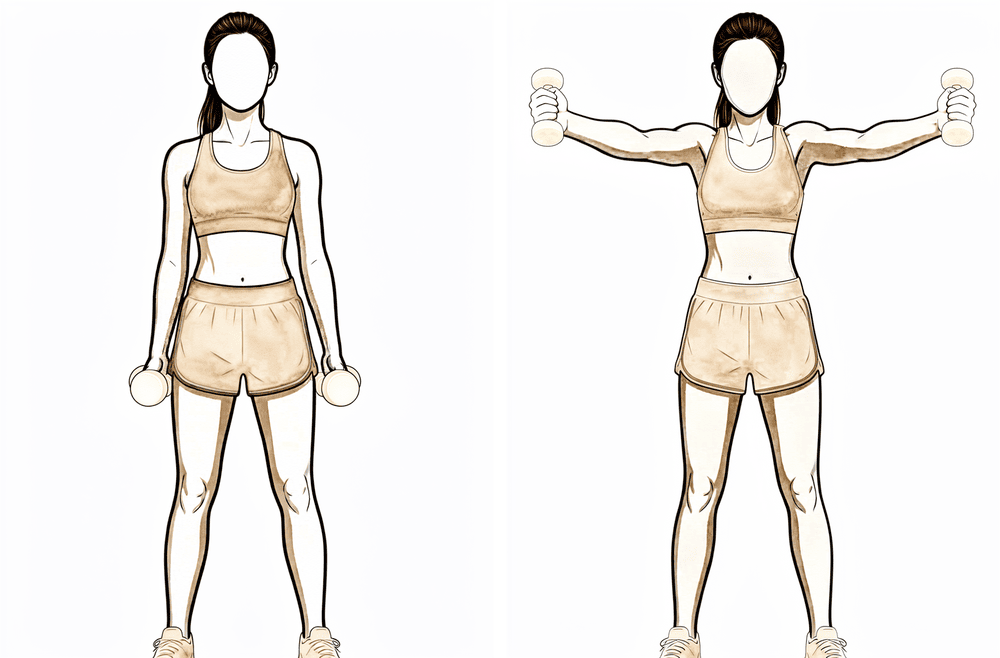
Kieran Hirpara 4.0
Full-can scaption
Tumayo at itaas ang inoperahang braso sa harap at bahagyang sa gilid, ang hinlalaki ay nakaturo pataas na tila may hawak na punong lata, hanggang sa taas ng balikat, pagkatapos ay ibaba ito nang may kontrol. Tinatarget nito ang supraspinatus — isa sa mga kalamnang sinusupplyan ng nerve — at ang bilis nito ay nakabase sa paggaling nito, hindi pinipilit.
Mababang load, mas mataas na repetitions; ayon sa gabay ng iyong physiotherapist
Sa pag-alis ng sling, ibinabalik ng phase na ito ang buong paggalaw at sinisimulan ang light strengthening, kabilang ang mga partikular na gawain upang i-reactivate ang supraspinatus at infraspinatus habang nagpapagaling ang nerve. Karamihan sa mga tao ay bumabalik sa kanilang normal na pang-araw-araw na aktibidad sa phase na ito. Ang pag-unlad ay ginagabayan ng comfort, hindi ng kalendaryo.
Para sa iyong physiotherapist:
Mga Layunin
- Buong active range of motion sa lahat ng planes
- Simulan ang light strengthening at rotator cuff (supraspinatus/infraspinatus) reactivation
- Pagiging independent sa mga activities of daily living
Pamamahala
- Pag-unlad patungo sa buong active range of motion sa lahat ng direksyon
- Simulan ang light strengthening mula bandang linggo 2: isometrics na magiging elastic-band work para sa rotator cuff, deltoid at scapular stabilisers, mababang load at mas mataas na repetitions
- Partikular na atensyon sa pain-free external rotation at sa pag-reactivate ng supraspinatus at infraspinatus habang nagpapagaling ang nerve
- Gradwal na pagbabalik sa normal na pang-araw-araw na aktibidad, karaniwan ay bandang apat na linggo
Mga Pag-iingat
- Ang strengthening ay dapat manatili sa loob ng comfortable range at hindi dapat magdulot ng pananakit na nagtatagal
- Iwasan ang puwersahang pagtulak, paghila at mabigat na pagbuhat habang bumabalik ang lakas
- Inaasahan na ang lakas ay babalik nang gradwal: ang reactivation work ay nakabase sa bilis ng paggaling ng nerve, hindi pinupuwersa
Mga Kraytirya para sa pag-unlad
- Buo, o halos buo, na pain-free active range of motion
- Natotolerate ang light strengthening nang walang flare-up
Phase III — Pagpapalakas at pagbabalik sa aktibidad (Linggo 6–12 at higit pa)
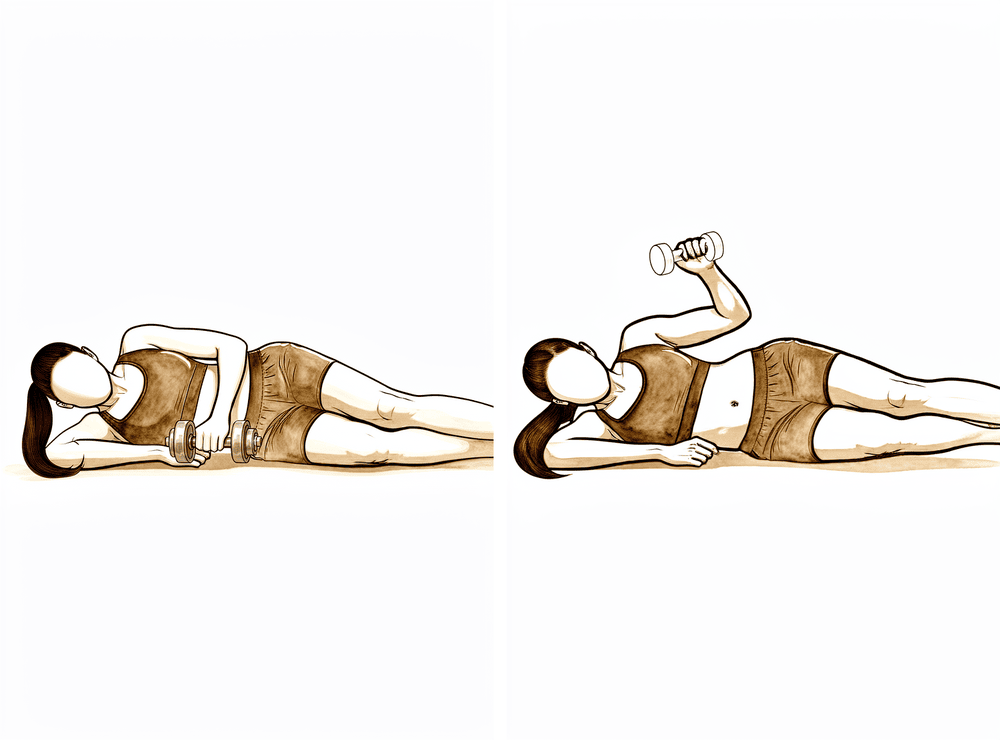
Kieran Hirpara 4.0
Side-lying external rotation na may weight
Mula humigit-kumulang sa ika-12 linggo, ang parehong side-lying rotation ay ginagawa habang humahawak ng magaan na pabigat: ang siko ay nakabaluktot sa isang right angle at nakadikit sa gilid, i-rotate ang forearm pataas patungo sa kisame, pagkatapos ay ibaba nang dahan-dahan. Ini-isolate nito ang mga kalamnang sinusupplyan ng nerve habang ito ay nagpapagaling — ang pag-unlad ay nakabase sa bilis ng nerve, hindi pinipilit.
Ayon sa gabay ng iyong physiotherapist
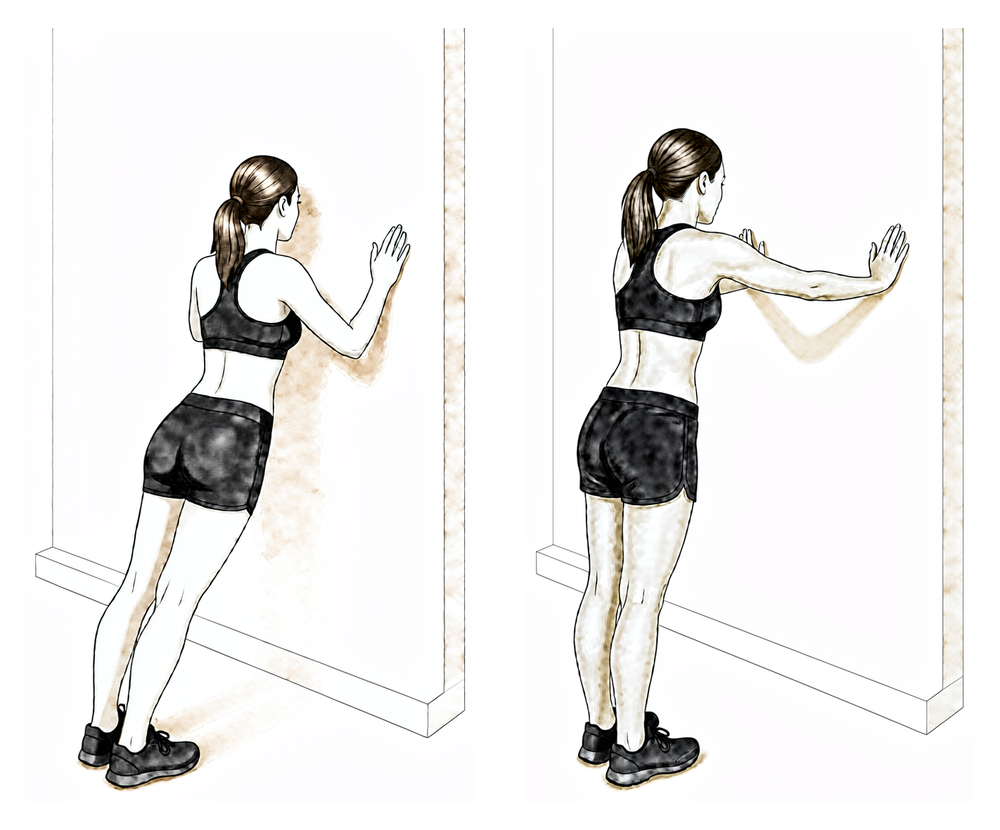
Kieran Hirpara 4.0
Push-up plus
Mula sa humigit-kumulang anim na linggo, sa posisyong push-up laban sa pader, bench, o sa sahig habang lumalakas, itulak nang todo pataas at pagkatapos ay itulak pa nang kaunti upang umarko (bumilog) ang itaas na bahagi ng iyong likod at maghiwalay ang mga shoulder blade. Ito ay isang closed-chain exercise na bumubuo ng kontrol sa shoulder-blade upang suportahan ang cuff.
Ayon sa gabay ng iyong physiotherapist
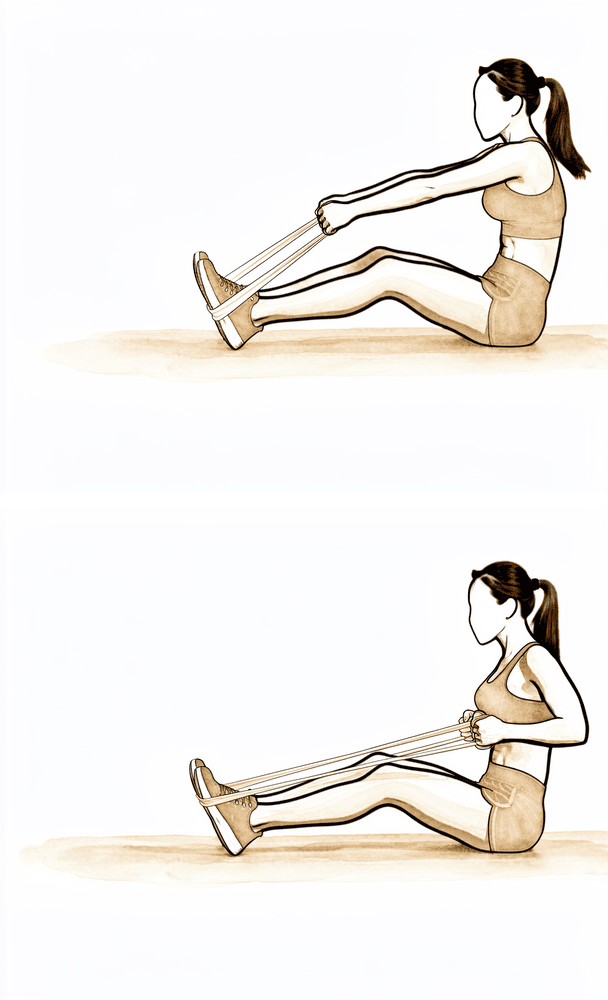
Kieran Hirpara 4.0
Low row
Humawak ng band na naka-angkla sa harap mo sa taas ng iyong baywang. Panatilihing medyo tuwid ang braso, hilahin ito pabalik at pababa patungo sa iyong balakang, pigain ang shoulder blade pababa at pabalik, pagkatapos ay dahan-dahang ibalik. Progressive resistance work na nagpapalakas ng mga kalamnan ng shoulder blade na sumusuporta sa cuff.
Ayon sa gabay ng iyong physiotherapist
Mula humigit-kumulang anim na linggo, ang pagpapalakas ay nagpapatuloy nang walang partikular na restriksyon, patungo sa pagbabalik sa mga gawaing overhead, mas mabigat na trabaho at isport. Ang isolated strengthening ng supraspinatus at infraspinatus ay pinapaunlad habang patuloy na nagpapagaling ang nerve, na karaniwang nagpapatuloy sa loob ng ilang buwan.
Para sa iyong physiotherapist:
Mga Layunin
- Ganap na pagpapalakas nang walang restriksyon
- Gradwadong pagbabalik sa overhead activity, mas mabigat na trabaho at isport
- Patuloy na pagbawi ng lakas ng rotator cuff habang nagpapagaling ang nerve
Pamamahala
- Mula humigit-kumulang linggo 6, magpatuloy sa ganap na pagpapalakas, kabilang ang closed-chain at progressive resistance work
- Mula humigit-kumulang linggo 12, paunlarin ang isolated supraspinatus at infraspinatus strengthening
- I-stage ang pagbabalik sa overhead work at isport; ang mga mas magagaan na gawaing overhead ay karaniwang bumabalik sa yugtong ito, na may gradwadong pagbabalik sa isport sa mga sumunod na linggo hanggang buwan habang pinahihintulutan ng lakas at kapag wala nang sakit
- Ipagpatuloy ang isang maintenance programme habang patuloy na nagpapagaling ang nerve at mga kalamnan
Mga Pag-iingat
- Ang progression ay nananatiling symptom-guided
- Ang lakas at muscle bulk sa mga apektadong kalamnan ay maaaring patuloy na bumawi sa loob ng ilang buwan, at ang pagbawi ay maaaring partial: i-pace ang mga ekspektasyon nang naaayon at iwasan ang overstressing habang hindi pa kumpleto ang lakas
Pagkatapos ng iyong protocol
Ang mga phase sa itaas ay hango sa mga nailathalang technique paper at clinical study tungkol sa arthroscopic suprascapular nerve decompression. Ang mga range ng linggo ay tipikal at hindi fixed, at ang iyong patuloy na rehabilitasyon ay ginagabayan nang indibidwal ng iyong physiotherapist, katuwang ang practice, base sa kung paano nagpapagaling ang iyong balikat at ang nerve. Ang pahinang ito ay kasabay ng pangkalahatang payo sa paggaling ng practice; tingnan ang pamamahala ng post-operative pain at pag-aalaga ng sugat. Para sa mismong operasyon at sa kondisyong ginagamot nito, tingnan ang suprascapular nerve decompression. Ang ebidensya sa likod ng protocol na ito (ang literatura sa pain-relief at strength-recovery sa nerve decompression) ay nakabuod sa evidence section, na available bilang PDF sa itaas ng pahinang ito.
Evidence & references
This is the clinical evidence summary written for health professionals. It is technical, and it lists the research this page was built from. You do not need to read it to understand your treatment or to make a decision about it.
Suprascapular Nerve Decompression — Post-operative Rehabilitation (Arthroscopic Release)
Topic scope: Post-operative rehabilitation after an isolated arthroscopic suprascapular nerve decompression / release — release of the nerve at the suprascapular notch (division of the transverse/superior scapular ligament) and/or the spinoglenoid notch, performed for nerve entrapment, often with excision of an associated paralabral / spinoglenoid ganglion cyst. This page covers the isolated decompression only; when the procedure is combined with a rotator cuff repair the slower, protected rotator-cuff-repair pathway takes precedence.
Defining principle of the rehab here: decompression relieves pressure on a nerve and creates no construct that needs months of protection — there is no tendon repair or capsular reconstruction to safeguard. So (like a debridement/decompression, and unlike a cuff repair or labral repair) this is an early-movement pathway: a short sling for comfort only (about the first week, two at most), early range of motion as comfort allows, and return to daily activities within a few weeks. The crucial separate timeline is the nerve itself: the compression pain often settles relatively quickly, but recovery of strength and bulk in the muscles the nerve supplies (supraspinatus and infraspinatus) is paced over weeks to months and is frequently only partial — functional recovery follows the nerve, not the calendar. The single branch point is whether a rotator cuff repair was also performed — if so, the recovery converts to the protected rotator-cuff-repair pathway.
The procedure
The suprascapular nerve can be entrapped at two fibro-osseous tunnels as it crosses the scapula: the suprascapular notch (under the superior transverse scapular ligament — entrapment here affects both supraspinatus and infraspinatus) and the spinoglenoid notch (under the spinoglenoid ligament — entrapment here is more selective for the infraspinatus). A paralabral ganglion cyst, often arising from a posterosuperior labral tear, is a common space-occupying cause at the spinoglenoid notch.
Arthroscopic decompression releases the offending ligament (and decompresses/excises any cyst); where the cyst arises from a labral tear, the labral source may be addressed at the same sitting. Because the operation removes a compressive lesion rather than creating a repair, there is no healing construct that dictates a protected immobilisation period — the rehab is governed by comfort and by the nerve's own recovery.
Evidence by theme
Pain relief is the most reliable benefit
Across cohorts and a systematic review, decompression gives good pain relief and functional improvement in the majority. In a retrospective series of 112 arthroscopic decompressions, VAS pain fell from a mean of 6.5 to 2.9 (p < 0.0001) at a mean follow-up of ~9 months, with no neurovascular injuries, infections or fractures [112-patient series, PMC6994808]. A 2018 systematic review of decompression outcomes reported broad improvements in patient-reported scores and high rates of return to sport/duty [systematic review, JSES 2018, DOI 10.1016/j.jse.2017.09.025]. A volleyball-player cohort and a spinoglenoid-notch technique series likewise report reliable return of arm function [Brzoska 2023; Plancher 2021]. Moderate (cohorts + SR of level III–IV studies).
Strength recovery follows the nerve — slower, and often incomplete
This is the key counselling point. The same 112-patient series showed measurable strength gains (supraspinatus 3.3 → 4.9; infraspinatus 3.3 → 4.8 on the 0–5 scale) but over months, not weeks [PMC6994808]. A systematic review of motor recovery after notch decompression found that full strength was NOT regained in the majority (~60%) of reported cases, and that established fatty (structural) muscle degeneration generally did not reverse — "patients should be informed about this" [motor-recovery SR, PubMed 32392599]. Open spinoglenoid-notch series report better external- rotation strength figures (e.g. ~66% regaining full ER strength) for cyst-related entrapment, where the lesion is discrete and recovery potential higher [open decompression, PubMed 23664748]. Earlier diagnosis and decompression, and a discrete compressive cause (cyst) rather than chronic idiopathic entrapment, predict more complete muscular recovery. Moderate–weak; consistent direction across studies.
Ganglion-cyst vs idiopathic entrapment
Cyst-related entrapment (a removable, space-occupying cause) tends to do well — decompression removes the cause and electrodiagnostic recovery of the nerve has been documented post- decompression [Feinberg 2019, Muscle Nerve]. Chronic idiopathic entrapment, longstanding denervation, and established fatty infiltration carry a more guarded prognosis for strength return. This distinction underlies the variable, partly-incomplete recovery seen in the pooled literature. Weak (case series / mechanistic).
The rehabilitation protocol itself is consensus/expert
The phased post-op programme below is drawn from published technique papers and patient-guidance protocols, not from a rehabilitation RCT — there is no trial defining the optimal post- decompression regimen. Phase timings are typical, not trial-derived. Weak/consensus.
Phased post-op timeline (isolated decompression — no cuff repair)
| Phase | Window | Sling | ROM / use | Strengthening | Notes |
|---|---|---|---|---|---|
| I — Early movement | Week 0–2 | Comfort only, ~first week (up to 2 wk), off ASAP; not worn to sleep | Early gentle ROM as comfort allows — pendulums, passive/active-assisted elevation, ER/IR, elbow flexion/extension; keep hand/wrist/elbow moving from day 1 | Isometric deltoid + scapular setting as comfortable | Settle post-op flare; no driving while in sling; no heavy lifting/forceful push-pull |
| II — Range & muscle reactivation | Week 2–6 | Off | Progress to full active ROM in all planes | Light strengthening from ~wk 2 (isometric → band), low-load/high-rep cuff, deltoid, scapular stabilisers; particular attention to pain-free ER and to reactivating supraspinatus/infraspinatus as the nerve recovers | Most return to normal daily activities (~wk 4); progress guided by comfort, not calendar |
| III — Strengthening / return | Week 6–12 and beyond | Off | Full ROM maintained | Full strengthening without restriction from ~wk 6; isolated supraspinatus/infraspinatus strengthening advanced from ~wk 12; staged return to overhead work and sport | Strength + muscle bulk may keep recovering over several months and may be only partial — pace expectations to the nerve |
Branch point — if a rotator cuff repair was also performed: recovery converts to the protected rotator-cuff-repair pathway (sling ~6 weeks, ROM restrictions, strengthening deferred). The surgeon confirms which pathway applies.
Key controversies / evidence quality
- Strength recovery is the honest weak point. Decompression reliably relieves pain but does not reliably restore full strength — a systematic review found ~60% of cases fell short of full strength recovery, and fatty muscle degeneration generally did not reverse [PubMed 32392599]. This is the single most important thing to counsel before surgery. Moderate (SR of level III–IV).
- Evidence is small cohorts and case series. The largest single series is ~112 patients; most are < 30; the systematic reviews pool level III–IV studies. There is no RCT for isolated decompression rehab, and no rehab trial at all. Weak overall evidence base — stated honestly.
- Indication / patient selection. When to decompress (especially for asymptomatic or mildly symptomatic cysts, or chronic idiopathic entrapment with established atrophy) remains debated — reflected in editorial commentary in the corpus ("should you have the nerve to do it?", Arthroscopy 2021, DOI 10.1016/j.arthro.2020.12.192). Consensus/expert.
- The rehab protocol is consensus, drawn from technique papers and surgeon patient-guidance documents rather than a rehab trial — phase timings are typical, not trial-derived.
Evidence-strength flags (summary)
- MODERATE (cohorts + SR): decompression relieves pain and improves function in the majority (112-patient series VAS 6.5→2.9; 2018 JSES SR; volleyball-player cohort).
- MODERATE–WEAK (SR of level III–IV): strength recovery is slower and often incomplete (~60% short of full strength; fatty degeneration usually does not reverse — motor-recovery SR).
- WEAK (case series / mechanistic): cyst-related entrapment outperforms chronic idiopathic entrapment; earlier decompression predicts fuller recovery; documented electrodiagnostic nerve recovery post-release.
- WEAK / CONSENSUS: the post-operative rehabilitation protocol itself (technique papers + surgeon patient-guidance; no defining rehab RCT).
Citations
RAG corpus (180,000+ Orthopaedic articles)
- Clinical outcomes of suprascapular nerve decompression. J Shoulder Elbow Surg. 2011. DOI: 10.1016/j.jse.2010.10.032
- Clinical outcomes of suprascapular nerve decompression: a systematic review. J Shoulder Elbow Surg. 2018. DOI: 10.1016/j.jse.2017.09.025
- Arthroscopic Decompression of the Suprascapular Nerve at the Spinoglenoid Notch and Suprascapular Notch Through the Subacromial Space. Arthroscopy. 2009. DOI: 10.1016/j.arthro.2008.10.024
- Arthroscopic suprascapular nerve decompression: indications and surgical technique. J Shoulder Elbow Surg. 2010. DOI: 10.1016/j.jse.2010.01.006
- Suprascapular neuropathy: what does the literature show? J Shoulder Elbow Surg. 2012. DOI: 10.1016/j.jse.2011.11.033
- The Evaluation and Management of Suprascapular Neuropathy. J Am Acad Orthop Surg. 2020. DOI: 10.5435/jaaos-d-19-00526
- Suprascapular Neuropathy. J Bone Joint Surg Am. 2010. DOI: 10.2106/jbjs.i.01743
- Outcomes of Arthroscopic Nerve Release in Patients Treated for Large or Massive Rotator Cuff Tears and Associated Suprascapular Neuropathy: A Prospective, Randomized, Double-Blinded Clinical Trial. Am J Sports Med. 2021. DOI: 10.1177/03635465211021834
- Editorial Commentary: Suprascapular Nerve Decompression Can Be Effective, But Should You Have the Nerve to Do It? Arthroscopy. 2021. DOI: 10.1016/j.arthro.2020.12.192
- Complete Fatty Infiltration of Intact Rotator Cuffs Caused by Suprascapular Neuropathy. Arthroscopy. 2014. DOI: 10.1016/j.arthro.2014.01.010
Literature (URLs)
- A retrospective review of 112 patients undergoing arthroscopic suprascapular nerve decompression (VAS 6.5→2.9; supraspinatus/infraspinatus strength gains; no neurovascular/infective/fracture complications). PMC. https://pmc.ncbi.nlm.nih.gov/articles/PMC6994808/
- Motor Recovery of the Suprascapular Nerve after Arthroscopic Decompression in the Scapular Notch — a Systematic Review (~60% do not regain full strength; fatty degeneration generally not reversed). PubMed. https://pubmed.ncbi.nlm.nih.gov/32392599/
- Suprascapular nerve entrapment isolated to the spinoglenoid notch: surgical technique and results of open decompression (~66% regained full ER strength). PubMed. https://pubmed.ncbi.nlm.nih.gov/23664748/
- Arthroscopic release of suprascapular nerve entrapment at the suprascapular notch: technique and preliminary results. PubMed. https://pubmed.ncbi.nlm.nih.gov/17210425/
- Compression of the suprascapular nerve by a ganglion cyst of the spinoglenoid notch: the arthroscopic solution. PubMed. https://pubmed.ncbi.nlm.nih.gov/14595536/
Published protocols / technique papers (basis for the phase structure)
- Plancher KD, Evely TB, Brite JE, Briggs KK, Petterson SC. Endoscopic/arthroscopic decompression of the suprascapular nerve at the spinoglenoid notch: indications and surgical technique. JSES Rev Rep Tech. 2021;1(3):198-206. https://www.sciencedirect.com/science/article/pii/S2666639121000250
- Harkin WE, Kerzner B, Scanaliato J, et al. Open Suprascapular Nerve Decompression at the Spinoglenoid Notch. Arthrosc Tech. 2024;13(9):103051. https://pmc.ncbi.nlm.nih.gov/articles/PMC11411363/
- Brzoska R, Laprus H, Klaptocz P, et al. Arm Function After Arthroscopic Decompression of the Suprascapular Nerve at the Spinoglenoid Notch and Suprascapular Notch in Volleyball Players. Orthop J Sports Med. 2023;11(2):23259671221147892. https://pmc.ncbi.nlm.nih.gov/articles/PMC9974621/
- Feinberg JH, Mehta P, Gulotta LV, et al. Electrodiagnostic evidence of suprascapular nerve recovery after decompression. Muscle Nerve. 2019;59(2):247-249. https://pubmed.ncbi.nlm.nih.gov/30291636/