Patients › Rehabilitation
Partial Wrist Fusion
Isang protektadong plano ng paggaling pagkatapos ng isang partial wrist fusion (capitolunate fusion, karaniwang may pagtanggal ng scaphoid) para sa isang gasgas na wrist, na naka-immobilise hanggang sa magdugtong ang mga buto sa loob ng humigit-kumulang anim hanggang walong linggo, pagkatapos ay unti-unting ibabalik ang isang kapaki-pakinabang ngunit sadyang binawasang arc ng paggalaw ng wrist at grip strength.
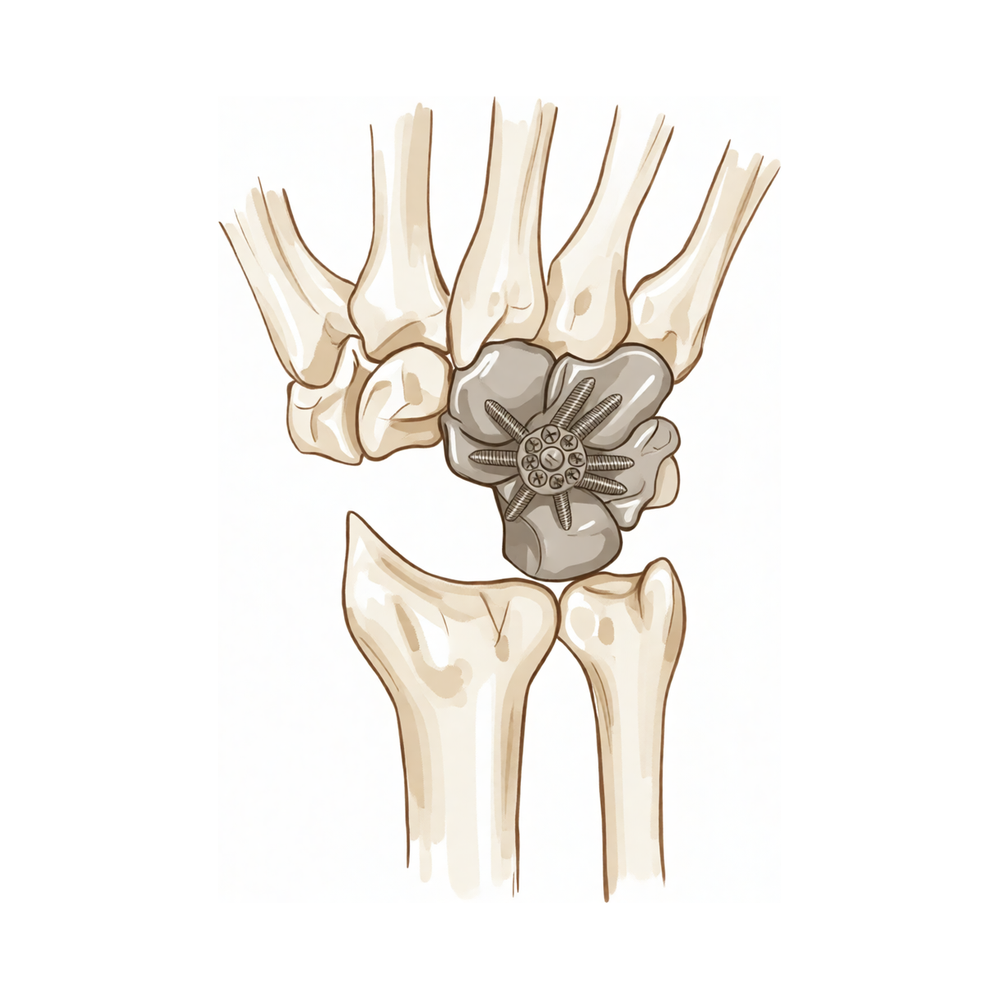
Ang protocol na ito ay nagsisilbing gabay sa iyong paggaling pagkatapos ng isang partial wrist fusion (isang operasyon na nag-aalis ng gasgas na butong scaphoid at pinagsasama ang maliliit na buto sa gitna ng pulso, kadalasan ay ang capitate sa lunate sa isang capitolunate fusion) kasama si Dr Kieran Hirpara sa Mater Private Hospital Rockhampton. Nagsisimula ito sa iyong home exercise program, na sinusundan ng structured clinical protocol na isinulat para sa iyong hand therapist: dalhin ang pahinang ito o ang PDF nito sa iyong unang therapy visit upang manatiling coordinated ang iyong rehabilitasyon. Maaaring i-adjust ng iyong hand therapist ang plano depende sa pag-unlad ng iyong paggaling.
Kung mayroon kang anumang alalahanin tungkol sa iyong sugat pagkatapos ng operasyon, makipag-ugnayan sa mga rooms. Madalas na nakatutulong ang pagkuha ng larawan ng sugat at pag-email nito para masuri.
Ano ang dapat asahan
Ang partial wrist fusion ay ginagamot ang pulso na may pagkapudpod (arthritis) sa landas na sumusunod sa isang lumang problema sa scaphoid: maaaring isang scapholunate ligament injury (isang "SLAC" wrist) o isang lumang scaphoid fracture na hindi kailanman gumaling (isang "SNAC" wrist). Tinatanggal ang sirang scaphoid, at ang mga buto ng mid-wrist ay pinagsasama (fused) upang hindi na sila magkiskisan. Kadalasang pinagsasama ni Dr Hirpara ang capitate sa lunate (isang capitolunate fusion), kung minsan ay kasama ang mga katabing buto; kapag ang lunate, capitate, triquetrum at hamate ay lahat pinagsama, ito ay tinatawag na four-corner fusion, at sumusunod ito sa parehong mga prinsipyo ng paggaling.
Ang pangunahing ideya sa likod ng operasyong ito ay bahagi lamang ng pulso ang pinagsasama, hindi ang lahat. Ang joint sa pagitan ng lunate at buto ng forearm (ang radius) ay sadyang hinahayaan. Ang napreserbang joint na iyon ang nagpapahintulot sa pulso na patuloy na gumalaw:
- Ang pag-fuse sa mga pudpod na surface ay nag-aalis ng sakit: iyon ang pangunahing layunin, at ito ay maaasahang nakakamit.
- Ang pagpapanatili sa radius–lunate joint ay nangangahulugang mapapanatili mo ang kapaki-pakinabang na paggalaw. Ang kapalit nito ay nababawasan ang paggalaw: karamihan sa mga tao ay nagkakaroon ng humigit-kumulang kalahati hanggang dalawang-katlo ng kanilang dating bending range, at grip strength na mga tatlong-kapat ng kabilang panig. Ito ay isang normal at inaasahang resulta (hindi isang komplikasyon) at para sa isang masakit at pudpod na pulso, ito ay karaniwang isang napakahalagang kapalit.
Ang mga pinagsamang buto ay nangangailangan ng oras upang mabuo nang matibay, katulad ng isang fracture. Para sa humigit-kumulang unang anim na linggo, ang pulso ay pinananatiling hindi gumagalaw sa isang splint habang nangyayari ito. Sa panahong iyon, ang mga daliri, thumb at forearm ay pinapanatiling malayang gumagalaw, ngunit ang pulso mismo ay pinapahinga. Kapag nakumpirma na ng surgeon sa X-ray na ang mga buto ay nag-isa (united), ang paggalaw ng pulso at pagkatapos ay ang pagpapalakas ay bubuksan sa mga maingat na yugto. Ang pagtatakda ng iyong mga ekspektasyon nang maaga (isang komportable at kapaki-pakinabang na pulso sa halip na isang ganap na mobile na pulso) ay isang mahalagang bahagi ng paggaling.
Mga pag-iingat at limitasyon
- Panatilihing hindi gumagalaw ang iyong pulso sa loob ng splint hanggang sa kumpirmahin ng iyong surgeon na gumaling na ang fusion (karaniwang mga anim na linggo): kailangang magdugtong muna ang mga buto bago igalaw ang pulso.
- Panatilihing gumagalaw ang iyong mga daliri, hinlalaki, at forearm mula sa unang araw, ngunit HUWAG igalaw ang mismong pulso hanggang sa payagan na.
- HUWAG humawak nang mahigpit, magbuhat, tumulak, humila, o maglagay ng bigat sa pulso hanggang sa makumpirmang matibay na ang fusion: pinoprotektahan nito ang naghihilom na buto at anumang plate, screws, o staples.
- Asahan ang nabawasang huling range of movement: ito ang planadong resulta ng pag-fuse sa bahagi ng pulso, at hindi tanda na may mali.
- Panatilihing malinis at tuyo ang splint at dressing, at HUWAG magmaneho habang nasa splint o kung hindi ligtas na makokontrol ang manibela.
Para sa pamamahala ng sugat, pamamaga, at peklat, tingnan ang gabay ng practice sa wound care.
Iyong mga ehersisyo
Kieran Hirpara 4.0
Paggalaw ng mga daliri at hinlalaki
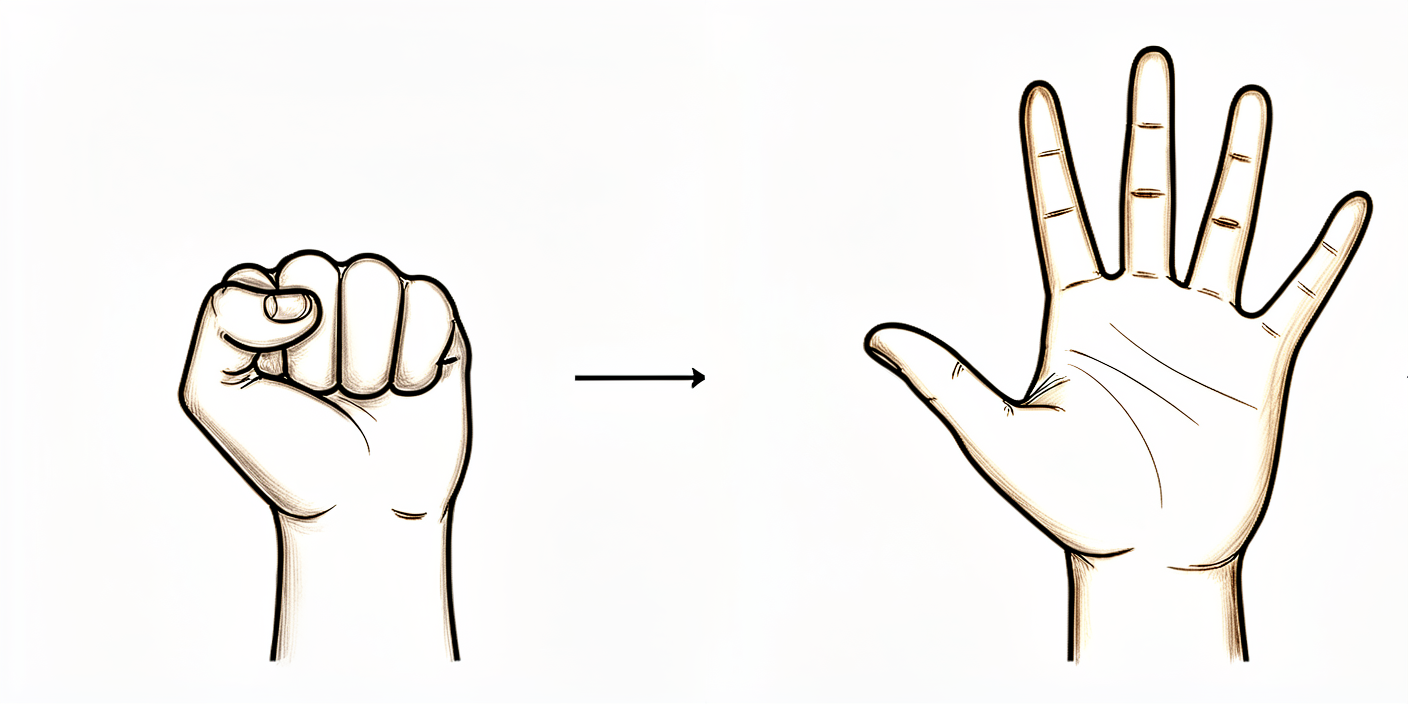
Mula sa araw ng operasyon, panatilihing gumagalaw ang iyong mga daliri at hinlalaki habang ang pulso mismo ay nakapahinga sa cast o splint. Iunat nang husto ang lahat ng iyong mga daliri, pagkatapos ay itikom ito nang buo, at pagkatapos ay idikit ang iyong hinlalaki sa dulo ng bawat daliri nang sunod-sunod. Pinipigilan nito ang paninigas ng kamay at pinapanatiling dumudulas ang mga tendon habang naghihilom ang mga buto sa pulso. Huwag igalaw ang pulso mismo.
10 beses bawat isa, ilang beses sa isang araw, araw-araw mula sa simula
Kieran Hirpara 4.0
Rotasyon ng forearm (palad paitaas / palad paibaba)
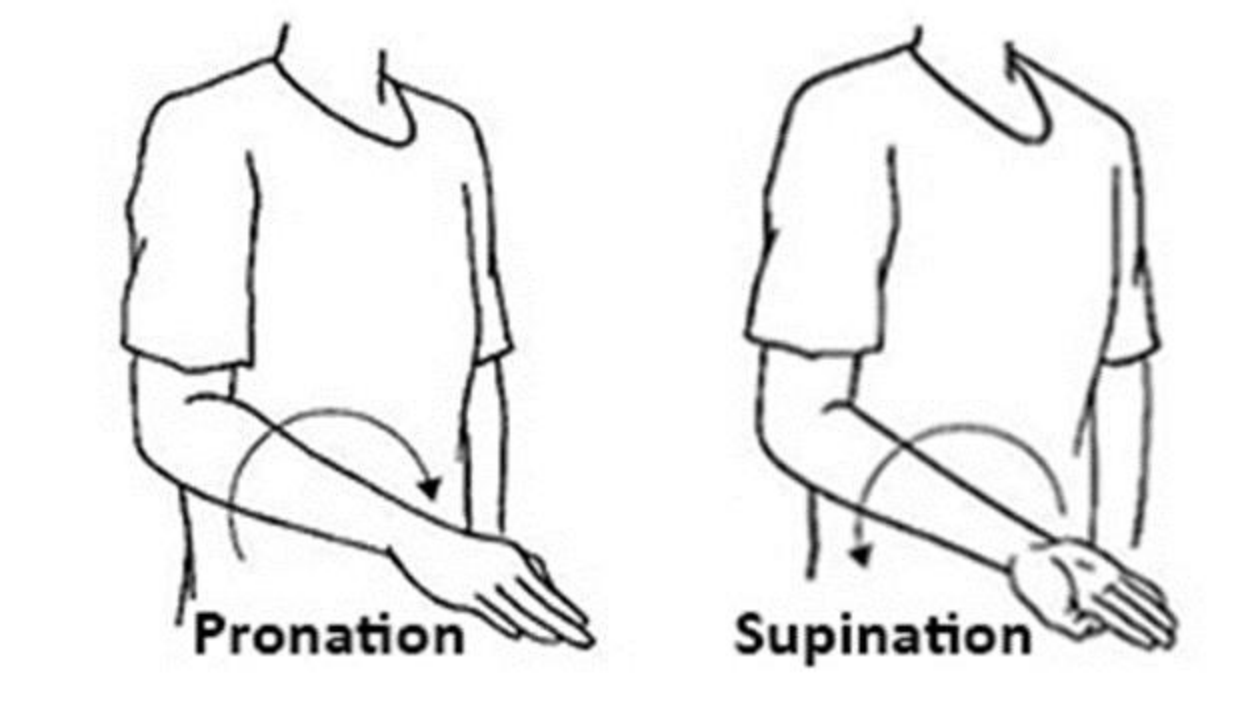
Habang ang iyong siko ay nakadikit sa iyong gilid at nakabaluktot sa isang right angle, dahan-dahang iikot ang iyong palad paitaas upang nakaharap sa kisame, pagkatapos ay paibaba upang nakaharap sa sahig. Panatilihing ang paggalaw ay nagmumula sa forearm, hindi sa pulso. Pinapanatili nito na malambot ang forearm at hindi nakakaabala sa naghihilom na fusion, kaya maaari itong simulan agad.
10 beses sa bawat direksyon, 2–3 beses sa isang araw
Kieran Hirpara 4.0
Paggalaw ng pulso (pagkatapos ng union)
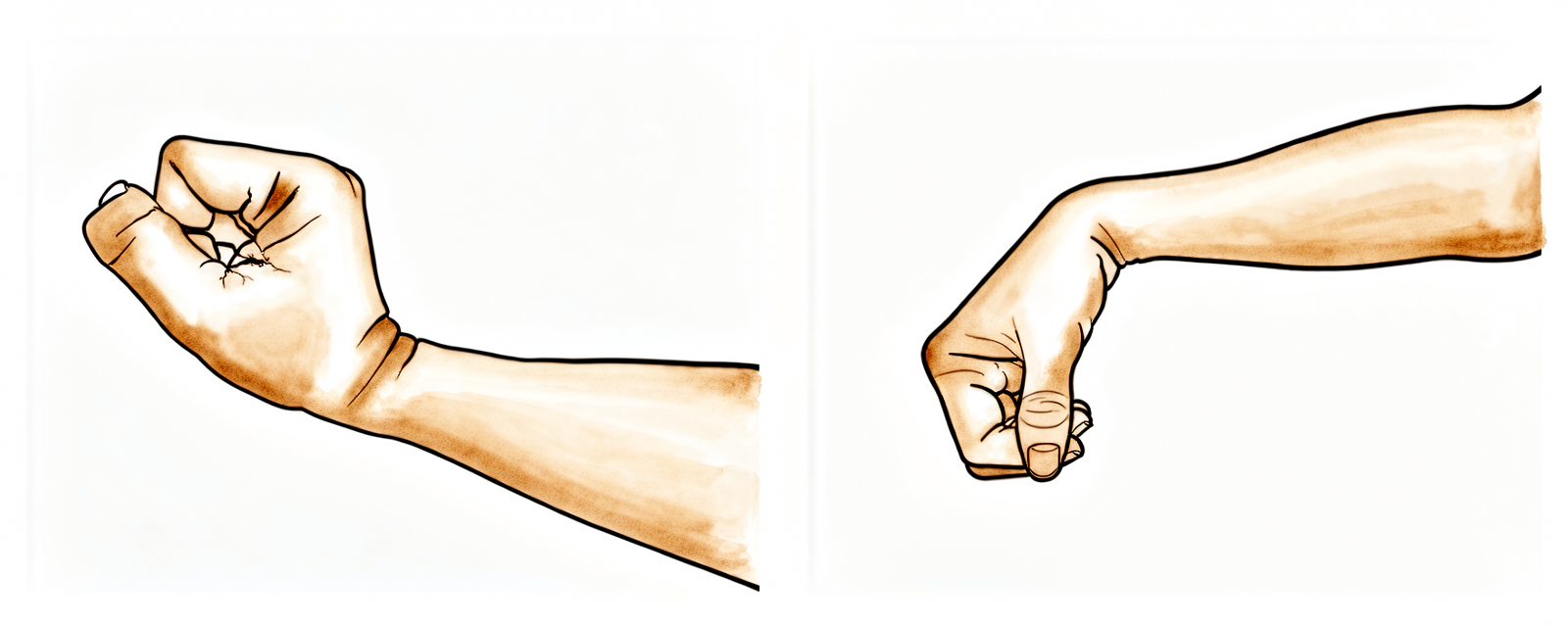
Isang ehersisyo sa HULING bahagi — kapag gumaling na lamang ang fusion at pinayagan na ng iyong surgeon at hand therapist ang paggalaw ng wrist (karaniwan ay pagkatapos ng mga anim hanggang walong linggo). Dahan-dahang itiklop ang wrist pataas (likod) at pababa (harap), pagkatapos ay itagilid ito patungo sa thumb at patungo sa maliit na daliri, igalaw lamang hanggang sa kung ano ang komportable. Tandaan na ang bahagi ng wrist na may fusion ay hindi gagalaw — ibinabalik mo ang paggalaw na nagmumula sa napreserbang joint, kaya ang huling range ay mas maliit kaysa dati, at ito ay inaasahan.
10 beses sa bawat direksyon, 2–3 beses sa isang araw, hanggang sa komportable (pagkatapos ng union)
Kieran Hirpara 4.0
Pag-aalaga sa peklat
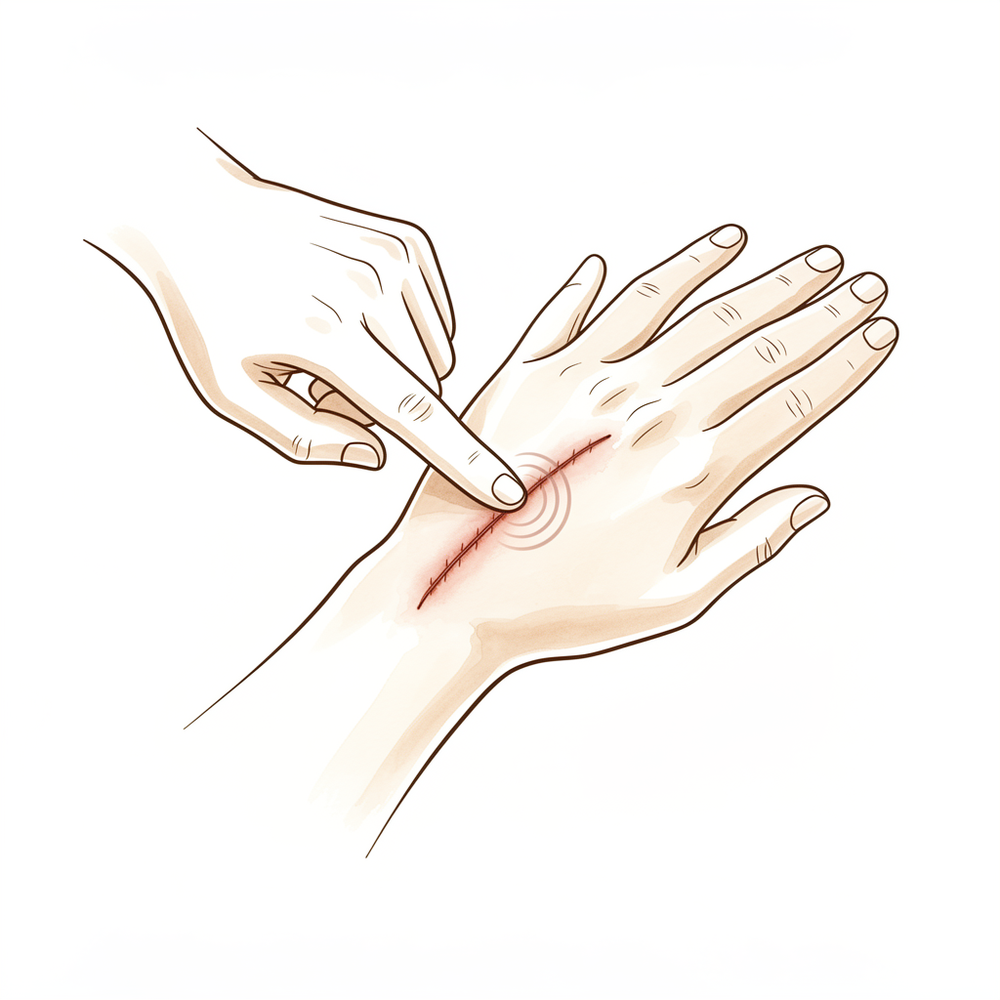
Kapag ang sugat ay ganap nang naghilom at tuyo na, i-massage ang peklat gamit ang kaunting non-perfumed moisturiser, gamit ang maliliit at madiing pabilog na galaw ng kabilang hinlalaki sa loob ng ilang minuto. Pinapalambot nito ang peklat at binabawasan ang pagiging sensitibo nito. Huwag simulan hangga't hindi pa sarado ang sugat at hindi pa pumapayag ang iyong therapist.
2–3 minuto, dalawang beses sa isang araw, kapag magaling na ang sugat
Kieran Hirpara 4.0
Pagpapalakas ng grip (kapit)
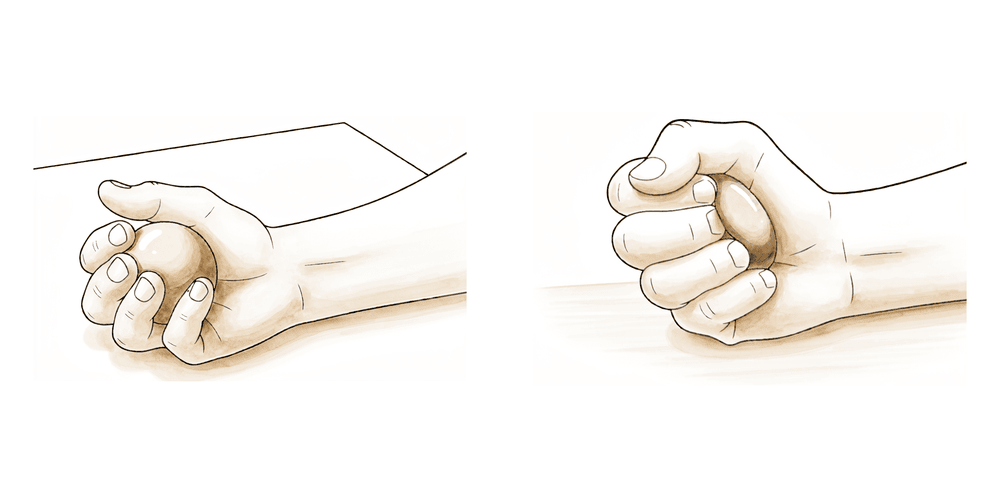
Isang ehersisyo sa HULING bahagi — sinisimulan lamang kapag matibay na ang fusion at pinayagan na ang strengthening (karaniwan mula humigit-kumulang labindalawang linggo). Pisilin ang isang soft ball o therapy putty sa palad, hawakan sandali, pagkatapos ay bitawan. Unti-unting dagdagan ang puwersa sa loob ng ilang linggo. Ipinagpapaliban ang mabigat na pagkapit, pagbubuhat at pagpapabigat sa pulso hanggang sa kumpirmahin ng iyong surgeon na ganap nang nagdugtong ang mga buto.
10–15 na piga, 2–3 beses sa isang araw, unti-unting dinaragdagan (huling yugto)
Ito ang mga ehersisyo mula sa iyong handout. Simulan lamang ang mga ito ayon sa gabay ni Dr Hirpara at ng iyong hand therapist, at manatili sa anumang range at limitasyong ibinigay sa iyo. Ang mga maagang ehersisyo ay pinapanatiling gumagalaw ang mga daliri, hinlalaki, at forearm nang hindi naaabala ang naghihilom na fusion; ang wrist mismo ay nananatiling hindi gumagalaw sa loob ng cast o splint nito. Ang paggalaw ng wrist at pagpapalakas ng grip ay kabilang sa mga huling yugto at hindi dapat simulan hangga't hindi nakukumpirma ng iyong surgeon na nagdugtong na ang mga buto. Itigil ang anumang nagdudulot ng matalas na sakit sa wrist.
Ang iyong clinical protocol
Ang natitirang bahagi ng pahinang ito ay ang staged clinical protocol para sa rehabilitasyon pagkatapos ng isang partial wrist fusion (capitolunate ± scaphoid excision; ang parehong mga prinsipyo ay naaangkop sa four-corner fusion). Ang seksyong ito ay ibibigay sa iyong hand therapist, at ang bawat phase ay nagsisimula sa isang paliwanag sa simpleng Ingles tungkol sa kung ano ang nangyayari. Hindi tulad ng tendon repair, ang construct dito ay bony, at ang progression ay nakadepende sa radiographic union ng fusion, hindi sa isang fixed calendar. Hanggang sa kumpirmahin ng surgeon ang union, ang wrist ay immobilised at ang mga daliri, thumb at forearm lamang ang mobilised; pagkatapos nito, ibabalik ang wrist range at pagkatapos ay ang load, na may realistic ceiling na humigit-kumulang 50–65% ng contralateral flexion–extension at ~70–80% grip.
Bago ang paggamot, suriin ang operation report ng pasyente at kumpirmahin ang fixation na ginamit (circular/dorsal plate, headless compression screws, staples o K-wires) at kung ang scaphoid ay na-excise. HUWAG simulan ang wrist motion hanggang sa kumpirmahin ng treating surgeon ang radiographic union (karaniwang 6–8 weeks, kung minsan ay mas matagal kapag screw o staple fixation). Payuhan ang pasyente mula sa unang bisita na ang layunin ay isang pain-free, functional wrist na may sadyang nabawasang arc, hindi full mobility.
Phase I — protektadong immobilisation hanggang sa magkaroon ng union (linggo 0 hanggang ~6–8)
Ang fusion ay gumagaling gaya ng isang fracture, kaya pinananatiling hindi gumagalaw ang wrist habang naghihilom ang mga buto. Ang kamay at forearm ay pinananatiling fully mobile upang maiwasan ang paninigas at tendon adhesion, ngunit ang wrist ay hindi iginagalaw.
Para sa iyong hand therapist:
Edukasyon at mga pag-iingat - Wrist ay immobilised sa isang cast o splint hanggang sa kumpirmahin ng surgeon ang radiographic union (karaniwang 6–8 linggo) - Walang active o passive wrist motion sa phase na ito - Bawal ang pag-grip, pagbuhat, pagtulak, paghila o weight-bearing gamit ang operated wrist - Ipaalam nang maaga ang expectation: ang final motion ay magiging reduced (ang radiolunate joint ay pinanatili; ang midcarpal joint ay fused)
Pamamahala - Sugat: surgical dressings ayon sa itinuro; bulky dressing/splint sa loob ng ~10–14 araw, pagkatapos ay short-arm cast o thermoplastic splint; i-monitor para sa impeksyon - Oedema: elevation sa itaas ng lebel ng puso, gentle hand pumping, ice kung kinakailangan - Mga ehersisyo: full active finger, thumb at MCP/IP ROM; forearm pronation/supination; gentle shoulder at elbow ROM; walang wrist motion
Mga kraytirya para mag-progress - Radiographic union na kumpirmado ng surgeon (huwag mag-progress base lamang sa kalendaryo); hilom na ang sugat; kontrolado ang pamamaga
Phase II — pagbabalik ng galaw ng pulso (mula sa union, ~weeks 6–8 hanggang 12)
Kapag nakumpirma ng surgeon na matatag na ang fusion, tatanggalin na ang cast sa pulso at magsisimula ang banayad na paggalaw ng pulso. Ang pag-unlad ay unti-unti; ipapaalala sa pasyente na ang bahaging na-fuse ay hindi na gagalaw at ang makakamit na arc ay mas maliit kaysa dati.
Para sa iyong hand therapist:
Mga Assessment - Active at passive ROM ng pulso (flexion/extension, radial/ulnar deviation), rotation ng forearm, baseline ng grip, sakit at pamamaga, pagsusuri ng sugat/peklat
Edukasyon at mga pag-iingat - Simulan ang active at active-assisted wrist ROM sa loob ng limitasyon ng ginhawa; lumipat sa isang removable wrist splint para sa ginhawa/proteksyon sa pagitan ng mga session - Patuloy na iwasan ang mabigat na paghawak (gripping), pagbuhat ng may karga (loaded lifting) at weight-bearing sa pulso hanggang sa payagan na para sa strengthening - Patatagin ang ekspektasyon sa nabawasang galaw (target ~50–65% ng contralateral flexion–extension arc)
Pamamahala - Mga ehersisyo: active/active-assisted wrist flexion, extension, radial at ulnar deviation; simulan ang scar massage at desensitisation kapag ganap nang magaling ang sugat; ituloy ang full finger/thumb ROM at forearm rotation; pamamahala ng oedema kung kinakailangan
Mga kraytirya para mag-progress - Komportable at kontroladong wrist arc sa loob ng inaasahang nabawasang range; humuhupa ang sakit; clearance ng surgeon para sa strengthening
Phase III — pagpapalakas at pagbabalik sa function (mula ~12 linggo)
Kapag matatag na ang fusion at naibalik na ang motion sa kapaki-pakinabang na ceiling nito, magsisimula ang pagpapalakas at graded loading at unti-unting itataas sa loob ng ilang linggo. Ang pagbabalik sa manual work at sport ay base sa criterion.
Para sa iyong hand therapist:
Mga Assessment - Grip at pinch strength kumpara sa kabilang panig; tugon ng pain/swelling sa loading; task- at job-specific functional testing
Edukasyon at mga pag-iingat - Simulan ang progressive grip and wrist strengthening (putty, bola, pagkatapos ay graded resistance) kapag cleared na - Ipakilala ang loaded at weight-bearing tasks nang unti-unti; itayo sa loob ng ilang linggo sa halip na biglaan - Inaasahang end-point: pagbawi ng grip patungo sa ~70–80% ng kabilang panig at isang kapaki-pakinabang, pain-free, at reduced arc
Pamamahala - Mga ehersisyo: progressive gripping at forearm/wrist strengthening; graded functional at work simulation; patuloy na scar management at ROM maintenance - Bantayan at i-refer pabalik sa surgeon kung may persistent dorsal wrist pain sa extension (posibleng dorsal impingement), suspected nonunion, o recovery plateau - Isaalang-alang ang discharge kapag ang lakas at function ay sapat na para sa pang-araw-araw at occupational needs ng pasyente
Mga Criteria para sa pagbabalik sa load / trabaho - Matatag at united na fusion, pain-free sa loob ng restored arc, grip na sapat para sa task; ang mabibigat na manual demands ay ipagpapaliban hanggang ~4–6 buwan at itataas nang graded
Pagbabalik sa trabaho at aktibidad
Hinihikayat ang magaan na pang-araw-araw na paggamit ng kamay (pagkain, pagsusulat, magaan na pag-aalaga sa sarili) mula sa simula, hangga't komportable, basta't hindi nito binibigatan o pinipilipit ang pulso. Dahil hindi ka dapat magmaneho habang ang iyong pulso ay nasa cast o hindi ligtas na nakokontrol ang manibela, magplano para sa tulong sa transportasyon sa mga unang linggo; ang pagmamaneho ay muling sisimulan kapag wala na ang cast at may tiwala ka nang makokontrol ang kotse, gaya ng kumpirmasyon sa iyong review.
Ang paghawak, pagbuhat, at pagdadala ng bigat gamit ang pulso ay hihintayin hanggang sa makumpirmang matigas na ang fusion (karaniwan ay pagkatapos ng mga anim hanggang walong linggo) at pagkatapos ay unti-unting itataas. Ang mga taong may trabahong nakabase sa desk o magaan na trabaho ay madalas na bumabalik sa loob ng humigit-kumulang tatlong buwan; ang mas mabigat na manwal na trabaho ay karaniwang malapit sa apat hanggang anim na buwan at muling ipinapakilala sa mga yugto. Sa kabuuan, tandaan na ang planadong resulta ay isang komportable at kapaki-pakinabang na pulso na may nabawasang range of movement, na hinuhusgahan base sa pakiramdam at function ng pulso, kung saan si Dr Hirpara at ang iyong hand therapist ang gagabay sa bilis, at hindi ang kalendaryo lamang.
Pagkatapos ng iyong protocol
Ang protocol na ito ay kasabay ng pangkalahatang payo sa paggaling ng klinika: tingnan ang pamamahala ng sakit pagkatapos ng operasyon, pag-aalaga ng sugat at pamamahala ng peklat. Ang phased plan sa itaas ay sumasalamin sa nailathalang gabay sa rehabilitasyon pagkatapos ng partial wrist fusion, at ang iyong patuloy na paggaling ay ginagabayan nang indibidwal ni Dr Hirpara at ng iyong hand therapist ayon sa kung paano gumagaling at umuunlad ang iyong pulso.
Evidence & references
This is the clinical evidence summary written for health professionals. It is technical, and it lists the research this page was built from. You do not need to read it to understand your treatment or to make a decision about it.
Partial Wrist Fusion — Procedure Outcomes & Post-operative Rehabilitation (Capitolunate / Four-Corner Arthrodesis with Scaphoid Excision)
Topic scope: post-operative rehabilitation after midcarpal partial wrist arthrodesis for scapholunate advanced collapse (SLAC) or scaphoid nonunion advanced collapse (SNAC). The index procedure here is a capitolunate fusion (the capitate fused to the lunate, usually with excision of the worn scaphoid); the closely related four-corner fusion (lunate–capitate– triquetrum–hamate) follows the same rehabilitation principles. This is a bony arthrodesis, so the rehabilitation is a union-gated pathway: the mid-wrist is immobilised until the fusion consolidates, after which a deliberately reduced wrist arc and grip are restored.
Defining principle of the rehab here: a partial wrist fusion is a motion-preserving salvage. The arthritic midcarpal surfaces are fused to abolish pain, while the radiolunate joint is intentionally preserved to retain movement. The construct that needs protecting is healing bone (plate, headless screws, staples or K-wires across the fusion), not a soft-tissue repair — so progression is gated by radiographic union, not a calendar. Counselling the patient that the planned end-point is a pain-free, functional wrist with a reduced arc (~50–65% of normal flexion–extension, ~70–80% grip) is itself part of the treatment: the reduced motion is the intended trade-off, not a failure. The two principal branch points are the fixation method (which sets the immobilisation window and union risk) and whether scaphoid excision was performed (standard in the SLAC/SNAC setting).
A. PROCEDURE OUTCOMES (capitolunate / four-corner fusion for SLAC–SNAC)
Partial wrist fusion is a well-established, durable salvage for the SLAC/SNAC wrist. The dominant debate is which motion-preserving salvage (four-corner / capitolunate fusion vs proximal row carpectomy), not whether to operate; both reliably relieve pain at the cost of some motion.
- Reliable pain relief with a useful but reduced arc. Across series, midcarpal fusion abolishes the painful midcarpal arthritis while preserving radiolunate motion. Typical results are roughly 50–65% of contralateral flexion–extension and ~70–80% of contralateral grip strength, with high rates of pain relief and return to work — the expected, planned trade-off of a partial fusion [Enna Hand Clin 2005; Strauch J Hand Surg Am 2011; Merrell J Hand Surg Am 2008; long-term series J Wrist Surg 2015]. Moderate (cohort/consensus).
- Capitolunate fusion (± scaphoid excision) performs comparably to full four-corner fusion while fusing fewer joints, simplifying the construct. A systematic review of capitolunate arthrodesis and comparative work report comparable motion, grip and union to four-corner fusion, supporting it as a sound index choice [Dunn J Hand Surg Am 2020 (systematic review); lunocapitate series J Hand Surg Eur 2009; J Chin Med Assoc 2017]. Moderate.
- A meta-analysis of two-, three- and four-corner constructs finds the number of fused columns does not materially change motion, grip, union or complications — biomechanically consistent with the radiolunate joint being the motion-determining segment [Hundepool J Hand Surg Am 2025 (SR/meta-analysis); Hernandez-Soria J Hand Surg Am 2016 (capitate-position biomechanics)]. Moderate (SR) + mechanistic.
- Modern fixation is forgiving but union is not guaranteed. Circular dorsal plates, headless compression screws and nitinol staples all achieve consolidation in the great majority, with nonunion and dorsal impingement the characteristic failures to watch for [Merrell J Hand Surg Am 2008 (circular plate); Ahmady J Hand Surg Glob Online 2025 (nitinol staples)]. Moderate.
B. REHABILITATION / THERAPY EVIDENCE
The rehab questions are (1) how long to immobilise, (2) what gates the start of wrist motion, and (3) how to set the patient's expectation of reduced motion. The evidence and published surgeon protocols converge on a union-gated sequence: immobilise the wrist (mobilise the hand and forearm) for ~6–8 weeks, then restore a reduced arc, then strengthen.
- Immobilise until radiographic union, not by the calendar. Because the construct is bony, wrist motion is withheld until the surgeon confirms consolidation — typically 6–8 weeks, longer with some screw/staple fixations. Published institutional protocols use a bulky dressing/splint for ~10–14 days, a short-arm cast to ~4–6 weeks, then a removable splint as motion begins. Moderate (consensus protocols).
- Keep the hand and forearm fully mobile from day one. Immediate active finger, thumb and forearm rotation prevents stiffness and tendon adhesion without disturbing the fusion — the same glide-preserving logic used across hand rehab. Consensus.
- Restore motion gradually after union, against a realistic ceiling. Once united, active and active-assisted wrist ROM is introduced; patients should be counselled that the fused midcarpal segment will not move and the achievable arc is smaller than pre-operatively (the radiolunate joint alone supplies wrist motion). Consensus + mechanistic (capitate-position biomechanics, Hernandez-Soria 2016).
- Strengthen and load only once the fusion is solid. Grip and loaded/weight-bearing work begins after union and is built up gradually; heavy manual demands are deferred to ~4–6 months. Consensus.
Recovery trajectory (expected, evidence-anchored)
| Phase | Window | Restraint | Hand use / therapy focus | Strength / load | Notes |
|---|---|---|---|---|---|
| I — Immobilisation (union) | Week 0 to ~6–8 | Wrist immobilised (cast/splint) | Full active finger, thumb & forearm motion; oedema control, elevation; no wrist motion | None through the wrist | Fusion knits like a fracture; progress is gated by radiographic union, not the calendar |
| II — Restoring wrist motion | From union (~wk 6–8) to 12 | Heavy-load avoidance; removable splint | Begin active/active-assisted wrist flexion/extension & deviation; scar massage once healed | No loaded grip yet | Counsel the reduced-arc expectation (~50–65% of normal flexion–extension) |
| III — Strengthening & return | From ~12 weeks (post-union) | Restrictions lifted progressively | Progressive grip/wrist strengthening; graded job simulation | Grip recovers toward ~70–80% of the other side | Desk work ~3 months; heavy manual ~4–6 months. Watch for dorsal impingement / nonunion |
(Phase windows mirror the precautions in the patient protocol and published surgeon protocols; they are typical guides anchored to union, not trial-derived deadlines.)
C. KEY CONTROVERSIES / EVIDENCE QUALITY
- Capitolunate vs four-corner vs proximal row carpectomy (PRC). All three are accepted motion-preserving salvages for SLAC/SNAC. PRC tends to give a slightly larger arc and avoids fusion-specific complications (nonunion, dorsal impingement, hardware), while fusion may give marginally better grip and is preferred where capitate-head or proximal-capitate cartilage is compromised. Systematic reviews and a meta-analysis find no consistent superiority of one over the other; choice is individualised [Mulford J Hand Surg Eur 2009; J Hand Surg Am 2024 meta-analysis; Strauch J Hand Surg Am 2011]. Moderate (SR/meta-analysis of mostly observational data).
- Capitolunate vs full four-corner construct. Fusing fewer columns (capitolunate) simplifies the construct without clearly compromising motion, grip or union versus four-corner — consistent with the radiolunate joint being the motion-determining segment [Dunn 2020 SR; Hundepool 2025 meta-analysis; Hernandez-Soria 2016]. Moderate.
- When can wrist motion safely start? Union timing varies with fixation, and protocols differ on exact cast duration. The defensible position is surgeon-confirmed radiographic union gates wrist ROM rather than a fixed week number. Weak–moderate (consensus; protocol variation).
- Reduced motion is the plan, not a complication. The preserved radiolunate joint supplies a smaller arc by design; mislabelling the expected ~50–65% range as a poor result drives unnecessary dissatisfaction. Strong mechanistically; cohort-supported.
- Characteristic failures: nonunion and dorsal impingement. Both are recognised, fixation-related complications; persistent dorsal wrist pain on extension or a non-progressing fusion warrants surgical review rather than more therapy [Merrell 2008; Ahmady 2025; long-term series 2015]. Moderate.
D. EVIDENCE STRENGTH FLAGS (summary)
- STRONG (mechanistic / well-supported): the reduced final arc is the planned consequence of preserving the radiolunate joint while fusing the midcarpal segment (capitate-position biomechanics); reliable pain relief from the fusion.
- MODERATE: typical outcome envelope (~50–65% flexion–extension, ~70–80% grip); equivalence of capitolunate and four-corner constructs; no consistent superiority of fusion vs PRC (SR/meta-analysis of largely observational data); modern fixation achieves high union with defined nonunion / dorsal impingement risk.
- WEAK / CONSENSUS: the specific union-gated immobilise → restore-motion → strengthen therapy sequence and exact phase timings (institutional/surgeon protocols, anchored to radiographic union rather than trial-derived).
CITATIONS
RAG corpus (180,000+ Orthopaedic articles)
- Enna M, Hoepfner P, Weiss AC. Scaphoid excision with four-corner fusion. Hand Clin. 2005. DOI: 10.1016/j.hcl.2005.08.012
- Dunn JC, Polmear MM, Scanaliato JP, et al. Capitolunate arthrodesis: a systematic review. J Hand Surg Am. 2020. DOI: 10.1016/j.jhsa.2019.10.007
- Hundepool CA, Duraku LS, Quanjel TJ, et al. Two-, three-, or four-corner arthrodesis for midcarpal osteoarthritis: a systematic review and meta-analysis. J Hand Surg Am. 2025. DOI: 10.1016/j.jhsa.2023.04.018
- Strauch RJ. Scapholunate advanced collapse and scaphoid nonunion advanced collapse arthritis — update on evaluation and treatment. J Hand Surg Am. 2011. DOI: 10.1016/j.jhsa.2011.01.018
- Merrell GA, McDermott EM, Weiss AC. Four-corner arthrodesis using a circular plate and distal radius bone grafting: a consecutive case series. J Hand Surg Am. 2008. DOI: 10.1016/j.jhsa.2008.02.001
- Hernandez-Soria A, Das De S, Model Z, et al. The effect of capitate position on coronal plane wrist motion after simulated 4-corner arthrodesis. J Hand Surg Am. 2016. DOI: 10.1016/j.jhsa.2016.07.101
- Ahmady AA, Zalzaleh M, Riedel BB. Midterm outcomes of four-corner fusion surgery using nitinol staples. J Hand Surg Glob Online. 2025. DOI: 10.1016/j.jhsg.2025.100805
- Mulford JS, Ceulemans LJ, Nam D, Axelrod TS. Proximal row carpectomy vs four corner fusion for scapholunate (SLAC) or scaphoid nonunion advanced collapse (SNAC) wrists: a systematic review of outcomes. J Hand Surg Eur Vol. 2009. DOI: 10.1177/1753193408100954
- Four-corner fusion versus proximal row carpectomy for scapholunate advanced collapse and scaphoid nonunion advanced collapse wrist: a systematic review and meta-analysis. J Hand Surg Am. 2024. DOI: 10.1016/j.jhsa.2024.01.011
- Long-term results of lunocapitate arthrodesis with scaphoid excision for SLAC and SNAC wrists. J Hand Surg Eur Vol. 2009. DOI: 10.1177/1753193409105683
- Lunocapitate fusion with scaphoid excision for the treatment of scaphoid nonunion advanced collapse or scapholunate advanced collapse wrist. J Chin Med Assoc. 2017. DOI: 10.1016/j.jcma.2016.10.001
- The long-term outcome of four-corner fusion. J Wrist Surg. 2015. DOI: 10.1055/s-0035-1549277
Partial wrist fusion rehabilitation literature (protocols & guidance — basis for the union-gated phase structure)
- University of Virginia Department of Orthopaedic Surgery. Wrist Partial Fusion (4-Corner) Rehabilitation Guidelines. https://med.virginia.edu/orthopaedic-surgery/wp-content/uploads/sites/242/2024/09/Wrist-Partial-Fusion-4-corner.pdf
- Oregon Health & Science University (OHSU). Four-Corner Partial Wrist Fusion — Surgery Guide. https://www.ohsu.edu/sites/default/files/2020-12/Four-Corner%20Partial%20Wrist%20Fusion.pdf
- Alaska Orthopedic Specialists. Four-Corner Fusion with Scaphoid Excision — Post-operative Protocol. https://www.akortho.com/wp-content/uploads/Four-Corner-Fusion-with-Scaphoid-Excision-1.pdf
- Twin Cities Orthopedics (Olson). Scaphoid Excision 4-Corner Fusion Post-operative Protocol. https://www.toportho.com/wp-content/uploads/2024/10/olson-_4-Corner-Fusion-Protocol.pdf
- The long-term outcome of four-corner fusion (open-access full text). PMC. https://pmc.ncbi.nlm.nih.gov/articles/PMC4408128/