Patients › Rehabilitation
Pagpapaluwag ng Matigas na Siko (Arthrolysis)
Isang maaga at agresibong plano para sa pagbawi ng paggalaw pagkatapos ng operasyon upang paluwagin ang isang matigas na siko — ibinabalik ng siruhano ang pagbaluktot at pagtuwid habang nasa operating table, at ang buong tungkulin ng rehabilitasyon ay panatilihin ang range na iyon, simula sa unang araw nang walang sling at walang protection phase.
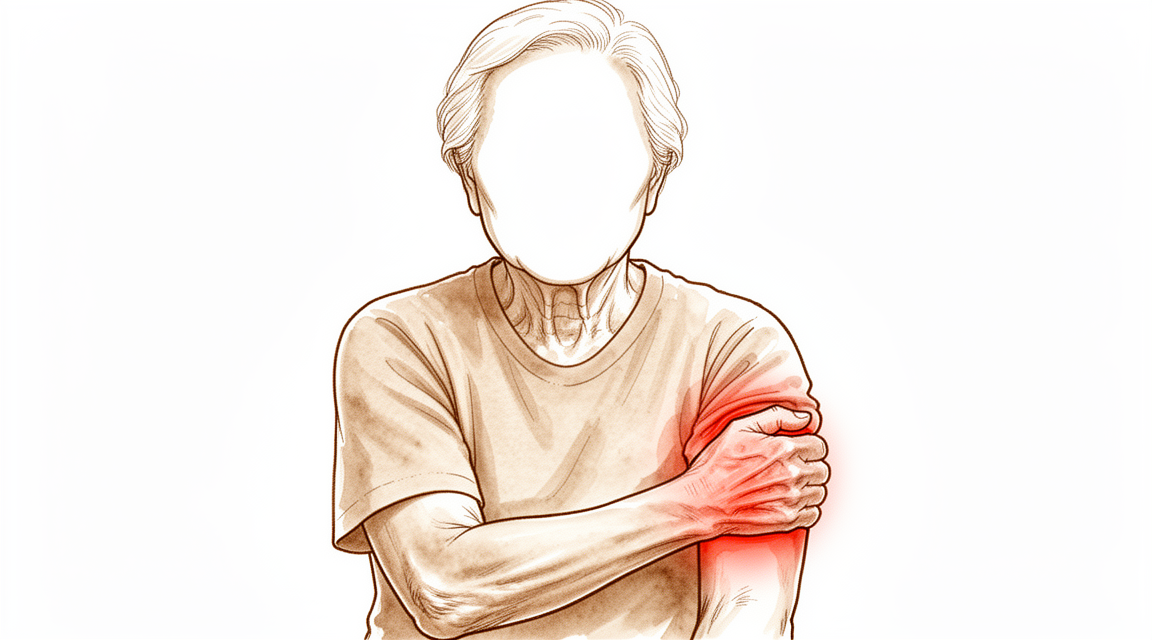
Ang protocol na ito ay nagsisilbing gabay sa iyong paggaling pagkatapos ng operasyon upang paluwagin ang naninigas na siko (isang release, o arthrolysis) kasama si Dr Kieran Hirpara sa Mater Private Hospital Rockhampton. Nagsisimula ito sa iyong home exercise program, na sinusundan ng structured clinical protocol na isinulat para sa iyong physiotherapist o hand therapist; dalhin ang pahinang ito o ang PDF nito sa iyong unang therapy visit upang manatiling coordinated ang iyong rehabilitasyon. Maaaring i-adjust ng iyong therapist ang plano depende sa pag-unlad ng iyong paggaling.
Kung mayroon kang anumang alalahanin tungkol sa iyong sugat pagkatapos ng operasyon, makipag-ugnayan sa mga rooms. Madalas na nakatutulong ang pagkuha ng larawan ng sugat at pag-email nito para masuri.
Ano ang dapat asahan
Ang paninigas ng siko pagkatapos ng isang nakaraang pinsala o operasyon ay nangyayari dahil ang lining (capsule) ng joint ay kumakapal at humihigpit, at kung minsan ay may nabubuong sobrang buto, kaya hindi na maibabaluktot at maiaunat ang siko sa buong arc nito. Sa panahon ng release operation, na ginagawa sa pamamagitan ng keyhole (arthroscopic) surgery o sa pamamagitan ng open incision, tinatanggal ng surgeon ang mahigpit na capsule na iyon (pati na rin ang anumang sobrang buto o nakulong na scar) upang malayang makagalaw muli ang siko sa operating table.
Ang pinakamahalagang bagay na dapat maunawaan ay ang recovery na ito ay kabaligtaran ng isang repair operation. Walang anumang tinahi o inayos na nangangailangan ng ilang linggong pahinga upang gumaling. Sa halip, nagtatatag ang surgeon ng near-full range of movement habang isinasagawa ang operasyon, at ang buong tungkulin ng iyong rehabilitation ay panatilihin ang paggalaw na iyon, dahil ang natural na tendensya ng siko pagkatapos ng surgery ay manigas muli. Ito ang dahilan kung bakit walang sling at walang protection phase: magsisimula kang igalaw ang siko sa unang araw, at igagalaw mo ito nang matatag at madalas. Ang kalaban dito ay ang muling paninigas, hindi ang pagkasira ng tissue.
Para sa pamamahala ng sugat, pamamaga, at scar, tingnan ang gabay ng practice sa wound care. Ang pamamaga at sakit ang mga pangunahing bagay na humahadlang sa paggalaw sa mga unang araw, kaya ang pagkontrol sa mga ito sa pamamagitan ng elevation, ice, at iyong pain relief ay isang mahalagang bahagi ng pagpapanatili ng iyong range.
Karamihan sa iyong paggaling ay nangyayari sa pagitan ng humigit-kumulang 6 na linggo at 3 buwan, at ang siko ay karaniwang naaabot ang pinakamahusay at settled range nito sa loob ng humigit-kumulang 4 na buwan. Upang mapanatili at madagdagan pa ang iyong range, isang splinting program ang ginagamit sa gabi at sa mga oras ng pahinga at ipinagpapatuloy sa loob ng hindi bababa sa 3 buwan.
Mga pag-iingat at limitasyon
- Gawin ang paggalaw ng siko sa unang araw pa lamang, at ipagpatuloy ang paggalaw nito nang bahagya at madalas sa buong araw: ito ang pinaka-sentro ng iyong paggaling.
- Gawin ang dahan-dahang pagtulak sa dulo ng bawat stretch; hindi tulad ng repair, walang construct na kailangang protektahan, kaya ang pag-abot sa range ang layunin.
- Gawin ang pagkontrol sa pamamaga at sakit sa pamamagitan ng elevation, ice, at iyong niresetang pain relief: ang mga ito ang naglilimita sa iyong paggalaw, hindi ang mismong operasyon.
- Gawin ang pag-inom ng anumang anti-inflammatory medication (tulad ng indomethacin) nang eksakto ayon sa reseta kung sinimulan ito ni Dr Hirpara upang pigilan ang pagbuo ng sobrang buto.
- Gawin ang pagsusuot ng iyong night/rest splint ayon sa itinuro, sa loob ng hindi bababa sa 3 buwan, upang mapanatili at mapalawak ang range na iyong nakamit.
- Huwag ipahinga ang siko o "mag-ingat nang husto" upang hayaan itong kumalma: iyan ang dahilan kung bakit bumabalik ang paninigas.
- Huwag mabahala sa pins and needles o pangingilig sa kalingkingan at ring finger; ang nerve sa panloob na bahagi ng siko (ang ulnar nerve) ay maaaring maging mas sensitibo habang bumubuti ang iyong pagbaluktot, kaya ipaalam ito kay Dr Hirpara o sa iyong therapist upang masuri.
Iyong mga ehersisyo
Kieran Hirpara 4.0
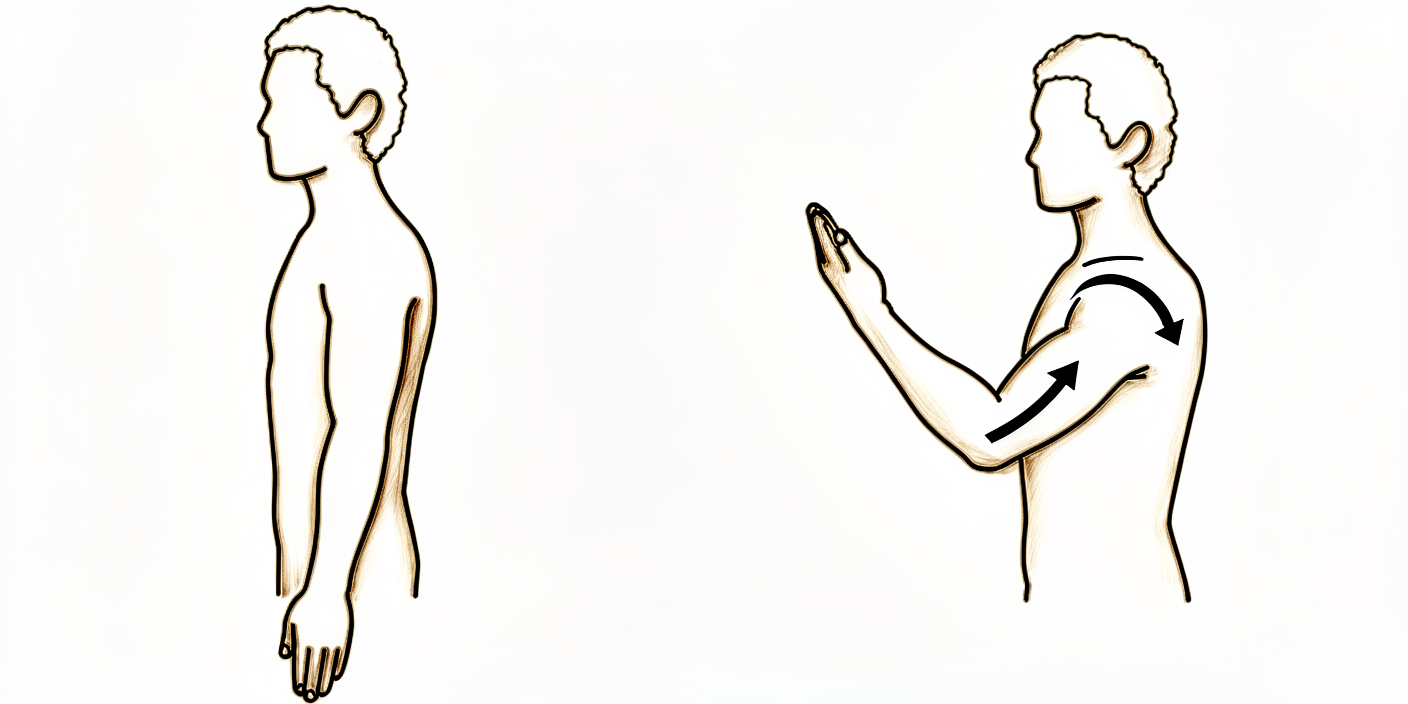
Aktibong pagbaluktot ng siko (pagbaluktot at pagtuwid)
Gamit ang sarili mong mga kalamnan, itiklop ang siko paitaas hangga't kaya nito patungo sa iyong balikat, pagkatapos ay iunat ito hangga't kaya mo. Dahan-dahang itulak sa bawat dulo ng paggalaw at subukang maabot ang parehong range na nakamit ng siruhano noong iyong operasyon. Ito ang pinakamahalagang ehersisyo — mabilis na tumitigas muli ang siko, kaya ito ay ginagawa nang paunti-unti at madalas sa buong araw.
10–15 beses sa bawat direksyon, tuwing 1–2 oras habang gising
Kieran Hirpara 4.0
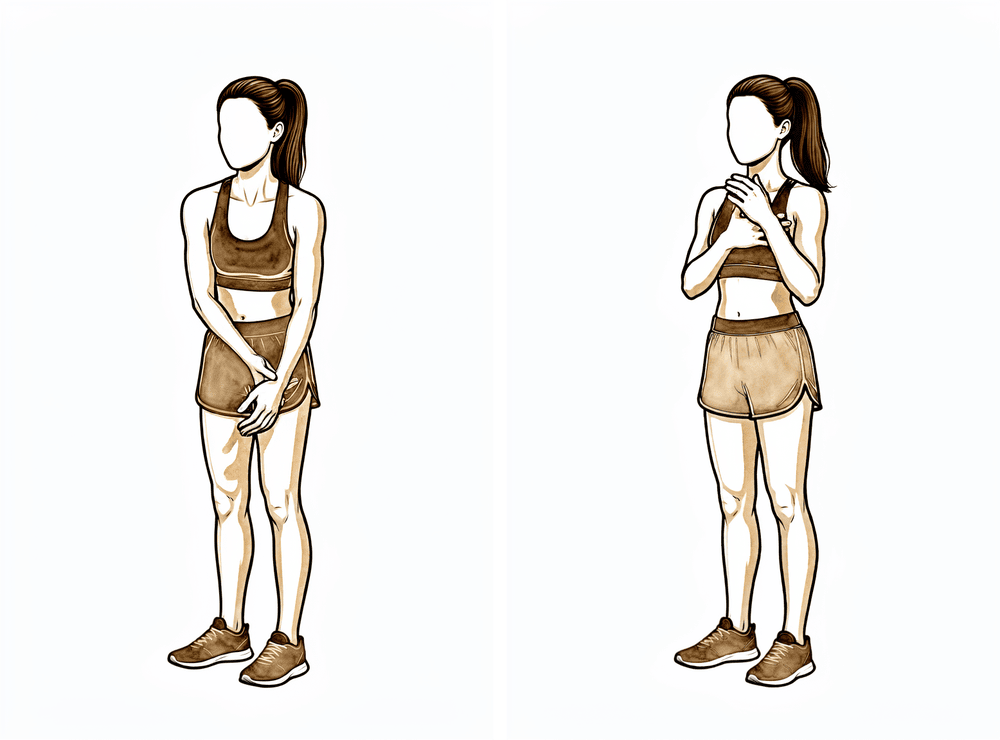
Tinulungang (passive) pagbaluktot ng siko
Habang lubos na nakarelaks ang braso na inoperahan, gamitin ang iyong kabilang kamay upang dahan-dahang itulak ang siko sa mas malalim na pagbaluktot kaysa sa kaya nitong gawin nang mag-isa, at panatilihin ito sa dulo kung saan nakakaramdam ka ng matibay na stretch. Walang repair na kailangang protektahan, kaya hinihikayat kang dahan-dahang itulak ang stretch — panatilihin ito, huminga, at hayaang lumuwag pa nang kaunti ang siko. Huminto bago makaramdam ng matalas na sakit.
Panatilihin ang bawat stretch nang 20–30 segundo, 3–5 beses, nang ilang beses sa isang araw
Kieran Hirpara 4.0
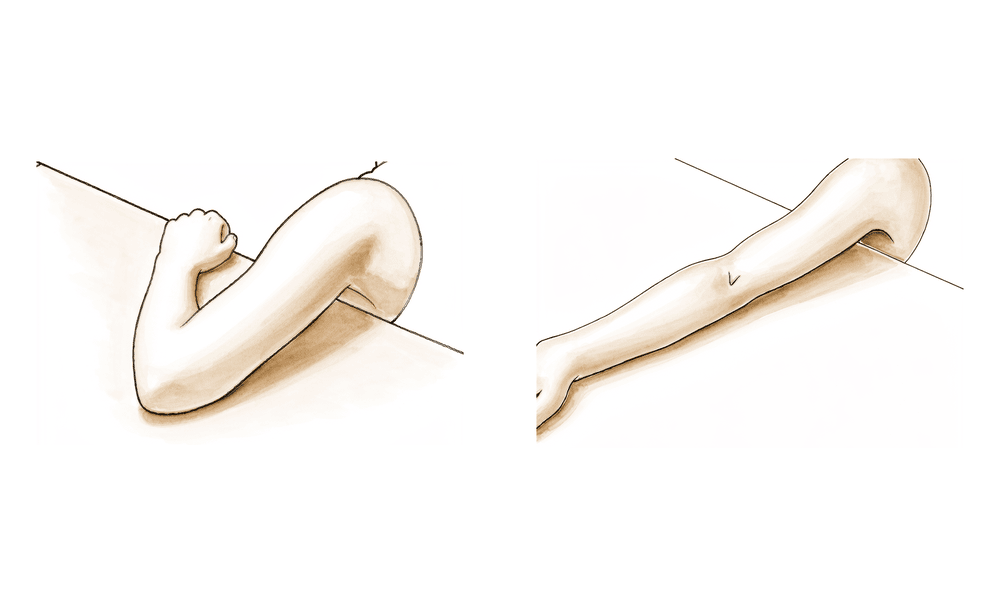
Aktibong pagtuwid ng siko (extension)
Magtrabaho upang maging kasing-tuwid hangga't maaari ang siko — ang pagtutuwid (extension) ang pinakakaraniwang nawawalang galaw, kaya binibigyan ito ng higit na atensyon. Ipatong ang likod ng iyong upper arm sa isang matigas na ibabaw at hayaan ang gravity, pagkatapos ay banayad na tulong mula sa iyong kabilang kamay, upang dahan-dahang ituwid ang siko hanggang sa maging ganap itong tuwid. Manatili sa dulo ng stretch.
Hawakan nang 20–30 segundo, 5 beses, ilang beses sa isang araw
Kieran Hirpara 4.0
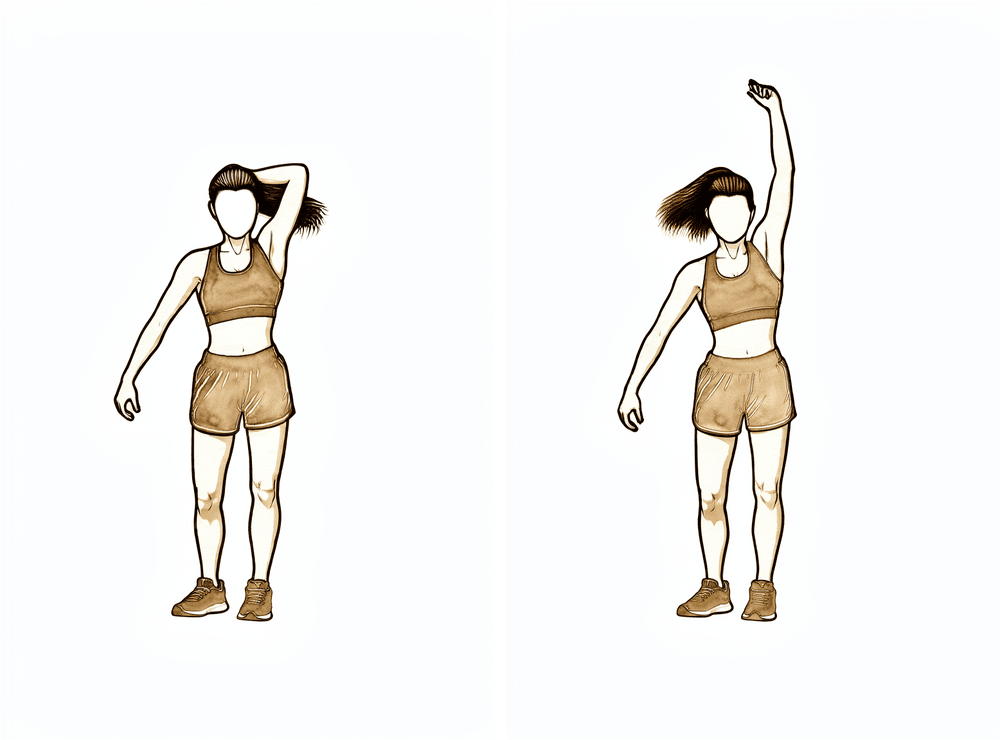
Overhead triceps stretch (end-range straightening)
Itaas ang inoperahang braso sa itaas ng ulo at dahan-dahang gamitin ang kabilang kamay upang itulak ang siko patungo sa pagiging tuwid, habang ini-stretch ang likod ng itaas na bahagi ng braso. Ito ay isang malakas na end-range stretch patungo sa pagtutuwid — panatilihin itong steady sa halip na i-bounce.
Hawakan nang 20–30 segundo, 3–5 beses, ilang beses sa isang araw
Kieran Hirpara 4.0
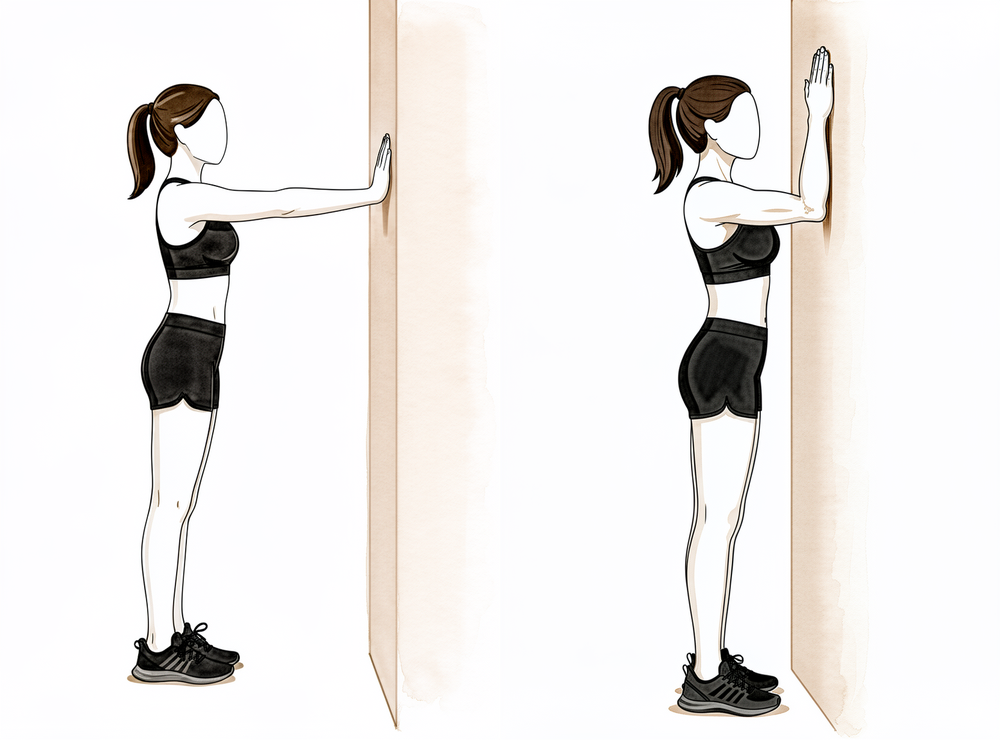
Wall walk patungo sa pagbaluktot (end-range flexion)
Humarap sa pader at i-walk ang iyong mga daliri paitaas dito, hayaang mas bumaluktot ang siko habang umaakyat ang iyong kamay. Mag-walk paitaas hanggang sa makaramdam ng matibay na stretch sa loob ng siko, i-hold, pagkatapos ay mag-walk nang mas mataas pa nang kaunti. Nakakatulong ito upang mabawi ang huling bahagi ng pagbaluktot.
I-hold nang 20–30 segundo sa itaas, 5 beses, ilang beses sa isang araw
Kieran Hirpara 4.0
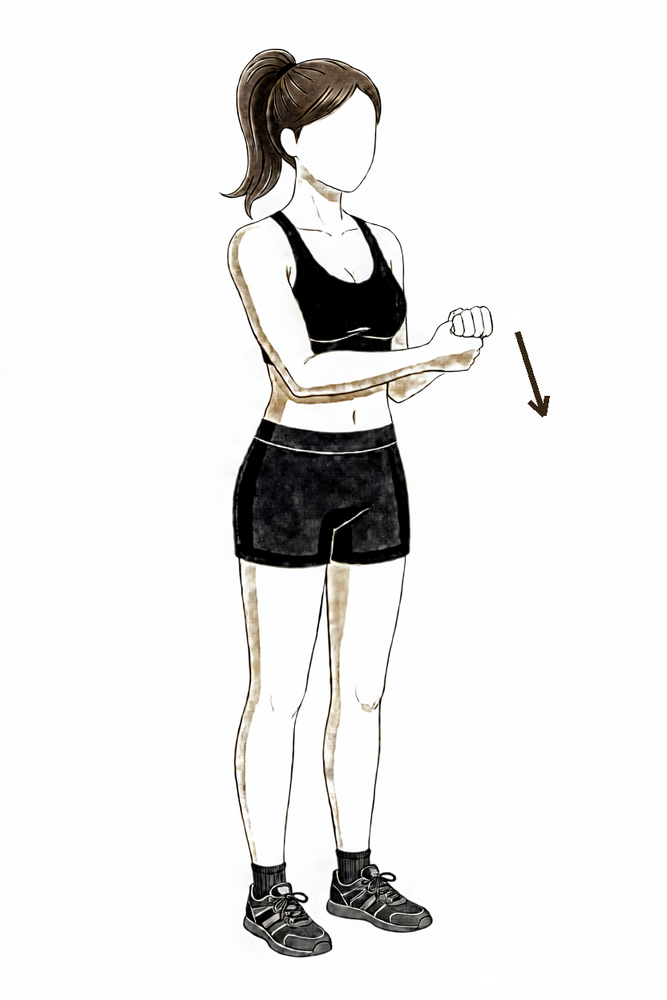
Rotasyon ng forearm (palad paitaas / palad paibaba)
Habang ang iyong siko ay nakadikit sa iyong gilid at nakabaluktot nang mga 90°, itutok ang iyong palad paitaas sa kisame, pagkatapos ay paibaba sa sahig, hanggang sa pinakamalayong kaya mong abutin sa bawat direksyon. Ang isang release operation ay madalas na nagpapalaya sa rotation pati na rin sa pagbaluktot, kaya panatilihin itong gumagalaw nang lubos kasabay ng iyong bend and straighten work. Maaari mong gamitin ang iyong kabilang kamay upang dahan-dahang itulak nang kaunti pa sa bawat dulo.
10–15 beses sa bawat direksyon, ilang beses sa isang araw
Kieran Hirpara 4.0
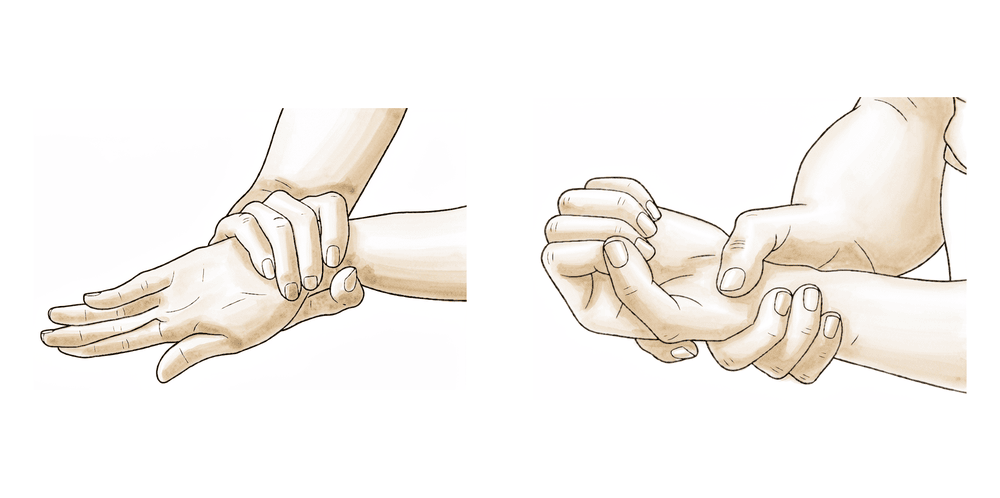
Triceps muscle-set (banayad na pag-hold)
Isang early activation exercise. Habang suportado ang braso, dahan-dahang higpitan ang kalamnan sa LIKOD ng iyong upper arm (ang triceps) na tila ba itutuwid ang siko, upang tumulong sa paghawak at pagpapatibay ng pagtuwid na iyong nakamit. Panatilihin itong dahan-dahan at ayon sa gabay ng iyong physiotherapist.
Hawakan nang ~5 segundo, 5–10 beses, ayon sa gabay
Kieran Hirpara 4.0
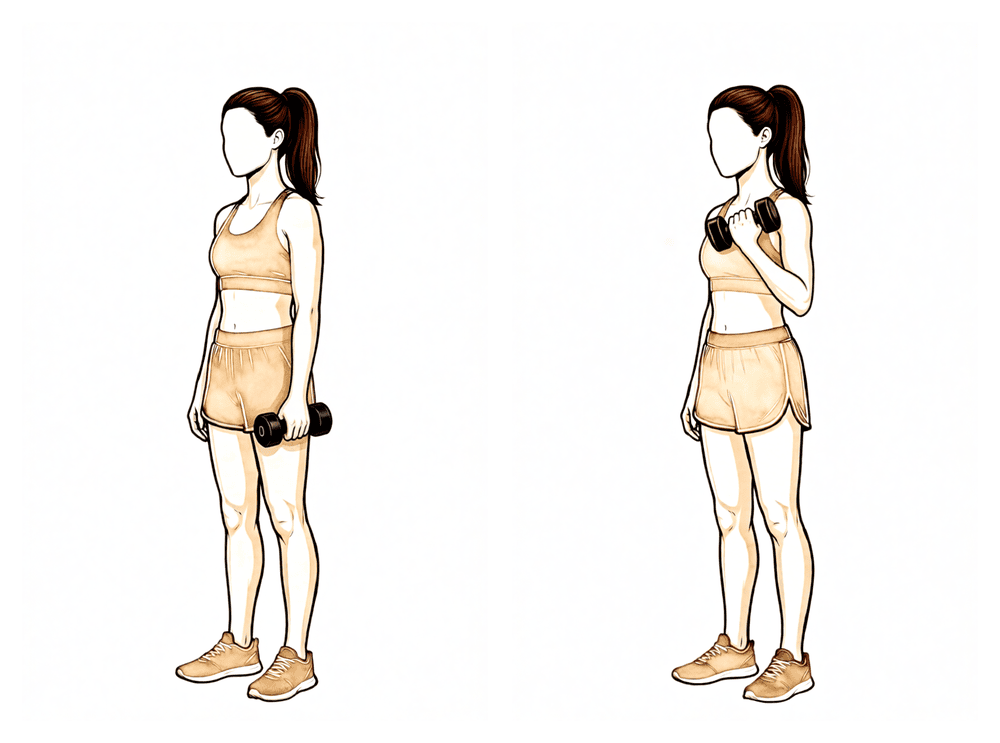
Biceps curl (pagpapalakas sa kalaunan)
Isang ehersisyo sa HULING bahagi — ang pagpapalakas ay magsisimula lamang kapag stable na ang iyong paggalaw, karaniwan ay mula sa ika-6 na linggo. Habang nakaharap pataas ang iyong palad, i-curl ang isang magaan na pabigat patungo sa iyong balikat, pagkatapos ay dahan-dahang ibaba ito nang may kontrol. Unti-unting dagdagan ang bigat ayon sa gabay ng iyong physiotherapist.
Ayon sa gabay ng iyong physiotherapist (mula humigit-kumulang ika-6 na linggo)
Ito ang mga ehersisyo mula sa iyong handout para mabawi at mapanatili ang paggalaw ng iyong siko at forearm. Simulan ang mga ito ayon sa gabay ni Dr Hirpara at ng iyong therapist; sa protocol na ito, magsisimula ang mga ito agad. Ginagawa ang mga ito nang may determinasyon at madalas, dahil ang range na mapapanatili mo ay ang range na ginagamit mo sa pamamagitan ng mga ehersisyong ito araw-araw.
Ang iyong clinical protocol
Ang natitirang bahagi ng pahinang ito ay ang clinical protocol para sa rehabilitasyon pagkatapos ng surgical release (arthrolysis) ng isang matigas na siko. Ang seksyong ito ay ibibigay sa iyong physiotherapist o hand therapist, at ang bawat phase sa ibaba ay nagsisimula sa isang paliwanag sa simpleng wika tungkol sa kung ano ang nangyayari. Ang pangunahing prinsipyo ay itinatatag ng surgeon ang isang near-full arc sa operating table; ang tungkulin ng rehabilitasyon ay huwag itong mawala. Walang fixation na kailangang protektahan at samakatuwid ay walang protection phase: ang kontrol sa sakit at oedema ang mga rate-limiter, hindi ang paghilom ng tissue.
Ika-0 hanggang ika-2 araw pagkatapos ng iyong operasyon
Sa unang isa o dalawang araw, pinapahinga muna ang siko, pinapanatiling nakataas ang braso, at kinokontrol ang pamamaga gamit ang yelo at compression. Ang siko ay madalas na sinusuportahan sa posisyong ganap na tuwid (extension), dahil ang pagtutuwid ang paggalaw na pinakamadalas mawala at ang dapat bigyang-priyoridad. Kung may alalahanin tungkol sa pagbuo ng sobrang buto (halimbawa, pagkatapos ng pagtanggal ng sobrang buto, o isang high-energy original injury), maaaring magsimula si Dr Hirpara ng anti-inflammatory medication ngayon upang pigilan ito.
Para sa iyong physiotherapist:
Bago ang paggamot, suriin ang imaging ng pasyente, operation report at past medical history (PMHx), at makipag-ugnayan sa treating surgeon tungkol sa intra-operative arc na nakamit, anumang ulnar nerve procedure, at kung ang heterotopic ossification (HO) prophylaxis ay nasimulan na.
Posisyon at oedema
- Maikling immobilisation sa full extension sa isang padded splint; nakataas ang braso; cryotherapy/compression para sa oedema
- Ang mga drain ay karaniwang tinatanggal sa POD1
HO prophylaxis (kung kinakailangan)
- Indomethacin (hal. 25 mg TID, o 75–100 mg/day) sa loob ng 3–6 linggo kung kinakailangan, lalo na pagkatapos ng HO excision o high-energy trauma; ± single-dose perioperative radiotherapy sa mga piling high-risk cases (desisyon ng surgeon)
Ika-1 araw pataas — agarang agresibong range of motion
Ito ang sentro ng protocol. Tatanggalin ang splint sa unang araw pagkatapos ng operasyon at magsisimula ang matatag at madalas na paggalaw: active-assisted at passive na pagbaluktot, pagtuwid at pag-ikot ng forearm, na naglalayong mabawi ang buong range na nakamit ng surgeon sa operating table. Walang limitasyon sa range: ang layunin ay ang buong intra-operative arc.
Para sa iyong physiotherapist:
ROM ceiling
- Wala. Bawiin ang buong intra-operative arc. Tanggalin ang splint sa POD1.
Mga ehersisyo
- Active-assisted at passive ROM sa flexion, extension, pronation at supination; bigyang-diin ang stretch patungo sa pinakamahigpit na direksyon (karaniwan ay extension)
- Opsyonal na CPM: kung gagamitin, simulan sa ospital sa POD1–2 sa buong available na range (karaniwang binabanggit na 0–145° na may bolster sa likod ng siko) at ituloy sa bahay hanggang ~4 na linggo, bilang karagdagan sa PT. Ang CPM ay isang adjunct lamang at hindi napatunayang mas superior kaysa sa supervised PT; ang paggamit nito ay nasa diskresyon ng surgeon.
- Cadence: araw-araw na supervised PT sa unang linggo pagkatapos ng operasyon, pagkatapos ay 2–3×/linggo sa loob ng ~6 na linggo
Mga kriterya para mag-progress
- Pagpapanatili ng on-table arc; kontrolado ang oedema at sakit
Ika-2 hanggang ika-6 na linggo — panatilihin ang arc at simulan ang splinting
Nagpapatuloy ang paggalaw nang matatag. Upang mapanatili at mapalawak ang range, isang splinting program ang idinaragdag sa gabi at sa mga oras ng pahinga: isang low-load, prolonged stretch na pinapanatili sa dulo ng range, na nagpapalit-palit sa pagbaluktot at pagtuwid.
Para sa iyong physiotherapist:
Mga ehersisyo at splinting
- Ipagpatuloy ang aggressive active / active-assisted / passive ROM
- Idagdag ang static-progressive (o dynamic / serial-static / turnbuckle) splinting para sa low-load prolonged end-range stretch: isang night/rest program na nagpapalit-palit sa flexion at extension. Ang static-progressive (inelastic, patient-adjusted incremental torque) ang paboritong modality para sa mga elbow flexion contracture.
- Pamamahala ng oedema at peklat
Mga kriterya para mag-progress
- Ang arc ay napanatili o nahigitan; handa na para sa loading sa bandang ika-6 na linggo
Ika-6 hanggang ika-12 na linggo — pagpapalakas at patuloy na pag-splint
Kapag stable na ang paggalaw, karaniwan ay sa ika-6 na linggo, nagsisimula ang pagpapalakas gamit ang progressive resistive exercise ayon sa kakayahan ng pasyente. Nagpapatuloy ang splinting program.
Para sa iyong physiotherapist:
Mga ehersisyo at pag-splint
- Simulan ang progressive resistive strengthening kapag stable na ang paggalaw (karaniwan ay ~6 na linggo)
- Ipagpatuloy ang pag-splint sa loob ng hindi bababa sa ~3 buwan pagkatapos ng operasyon para sa optimal na final ROM
Humigit-kumulang 16 na linggo — plateau
Iniulat ng mga published series na naabot ng mga pasyente ang kanilang maximum arc of motion sa mean na humigit-kumulang 16 na linggo, kung saan ang karamihan ng recovery ay nangyayari sa pagitan ng 6 na linggo at 3 buwan. Ang ekspektasyong ito ay dapat itakda bago ang operasyon (pre-operatively). Ang mga huling napanatiling gains sa bend/straighten at rotation arcs ay karaniwang nananatili sa long term (humigit-kumulang 15-month follow-up sa malalaking cohort).
Para sa iyong physiotherapist:
- Maximum arc na naabot sa mean na ~16 na linggo; payuhan na walang pre-operative range threshold ang maaasahang nakakapag-predict ng recovery trajectory; ilapat ang parehong ~16-week timeline sa lahat ng pasyente
Pagbabalik sa trabaho at aktibidad
Dahil walang fixation na kailangang protektahan, ang pagbabalik sa pang-araw-araw na aktibidad ay nakadepende sa iyong comfort, pamamaga, at ang range na iyong napapanatili sa halip na maghintay na may gumaling. Hinihikayat ang magaan na paggamit ng braso para sa mga pang-araw-araw na gawain mula sa simula; sa katunayan, ang normal na paggamit ng siko sa buong araw ay bahagi ng paggamot.
Ang strengthening, at kasabay nito ang mas mabigat at mas mapanghamong mga gawain, ay nagsisimula mula sa humigit-kumulang 6 na linggo kapag stable na ang iyong paggalaw, at unti-unting dinaragdagan habang pinahihintulutan ng iyong lakas at range. Karamihan sa mga tao ay naaabot ang kanilang settled range at function sa loob ng humigit-kumulang 4 na buwan, at ang mga nakamit na improvement ay karaniwang napapanatili sa long term. Ang pagbabalik sa pagmamaneho, mga tungkulin sa trabaho, at sports ay nakadepende sa pagbawi ng sapat na paggalaw, lakas, at kontrol para sa partikular na gawain; talakayin ang timing para sa iyong sitwasyon kay Dr Hirpara at sa iyong therapist, dahil ito ay nag-iiba depende sa iyong trabaho at sa lawak ng iyong operasyon. Ang pinakamahalagang mensahe ay panatilihin ang iyong movement at night/rest splinting program sa buong panahon, dahil ito ang nagpoprotekta sa range na pinagsikapan mong mabawi.
Pagkatapos ng iyong protocol
Ang protocol na ito ay kasabay ng pangkalahatang payo sa paggaling ng klinika: tingnan ang pamamahala ng sakit pagkatapos ng operasyon at pag-aalaga ng sugat. Para sa katumbas nito sa balikat, kung saan pinaluluwag ang lining ng isang matigas na balikat, tingnan ang capsular release. Ang phased plan sa itaas ay naaayon sa nailathalang ebidensya sa rehabilitasyon pagkatapos ng elbow contracture release, at ang iyong patuloy na paggaling ay ginagabayan nang indibidwal ng iyong physiotherapist o hand therapist ayon sa pag-unlad ng iyong siko.
Evidence & references
This is the clinical evidence summary written for health professionals. It is technical, and it lists the research this page was built from. You do not need to read it to understand your treatment or to make a decision about it.
Stiff Elbow — Arthrolysis / Capsular Release (Open or Arthroscopic) — Rehabilitation Evidence
Topic scope: rehabilitation after surgical release of the post-traumatic / post-surgical stiff elbow — open or arthroscopic arthrolysis, anterior + posterior capsulectomy, ± heterotopic ossification (HO) excision, ± ulnar nerve decompression. The focus here is the post-operative rehabilitation philosophy and timeline, not the indications for or technique of the release itself.
Defining principle: the surgeon establishes a near-full arc of motion on the operating table; rehabilitation's single job is to not lose it. There is no fixation to protect, so — unlike a fracture fixation or a tendon repair — there is no protection phase. Motion starts essentially Day 1 (or even in-hospital CPM from Day 1–2), pushed firmly and often. Pain and oedema control are the rate-limiters, not tissue healing. This is the opposite philosophy to olecranon ORIF or a distal biceps repair. Dr Hirpara's stance: no sling and no immobilisation phase; immediate aggressive active-assisted and passive ROM from POD1; static-progressive (or dynamic) night/rest splinting continued for at least 3 months; HO prophylaxis where indicated; and a frank pre-operative conversation that the elbow reaches its plateau at a mean of ~16 weeks.
Consensus phased timeline (week windows)
| Phase | Window | Immobilisation / "ceiling" | Movement & adjuncts | Strengthening | Criteria to progress |
|---|---|---|---|---|---|
| Immediate | Day 0–2 | Brief splint in full extension; arm elevated, cryotherapy/compression | HO prophylaxis decision made now (see below); drains out POD1 | — | Splint off POD1 |
| Immediate aggressive ROM (core) | Day 1 onward | No ROM ceiling — recover the full intra-operative arc | Active-assisted + passive flexion / extension / pronation / supination; bias toward tightest direction (usually extension). Optional CPM 0–145° with bolster, in-hospital POD1–2, home to ~4 wk. Daily PT first week → 2–3×/wk for ~6 wk | — | On-table arc maintained; oedema/pain controlled |
| Hold the arc + splinting | Weeks 2–6 | None | Continue aggressive A/AAROM/PROM. Add static-progressive (or dynamic / serial-static / turnbuckle) splinting — low-load prolonged end-range stretch, night/rest, alternating flexion/extension | — | Arc maintained or exceeded; ready for loading ~wk 6 |
| Strengthening + continued splinting | Weeks 6–12 | None | Continue splinting | Progressive resistive strengthening once motion stable (~wk 6); continue splinting ≥3 months | Stable, strengthening motion |
| Plateau | ~16 weeks (≈4 months) | None | — | Maintain gains; long-term hold | Maximum arc reached; most recovery occurred 6 wk–3 mo |
Evidence summary by theme
Immediate aggressive motion — the agreed principle (Strong consensus)
Large, consistent retrospective case series and review articles agree that the elbow re-stiffens without immediate motion, and that rehabilitation exists to hold the intra-operative arc. Motion begins POD1; the splint (when used) is removed POD1 and active-assisted + passive ROM is started in all planes, biased toward the tightest direction (usually extension). This is strong consensus across the literature.
Which specific rehab protocol is best (Moderate — genuine equipoise)
The best specific rehab protocol is genuinely unknown. No completed RCT shows superiority of CPM vs PT vs delayed PT — the SET-Study (Stiff Elbow Trial) was designed precisely because this question is unresolved, with three real-world arms (in-hospital CPM + early PT / in-hospital early PT / outpatient PT from POD7–10). CPM is cited in protocols (home use to ~4 weeks) and one arthroscopic- release series reports very good 3-year outcomes with a 4-week CPM rail plus PT, but CPM has never been shown superior to supervised PT alone. So: strong consensus on aggressive early motion; weak/equipoise evidence on which adjunct.
Splinting modality (Moderate — no clear winner)
Static-progressive, dynamic, serial-static and turnbuckle splinting all deliver low-load prolonged end-range stretch. The Lindenhovius RCT found no difference between dynamic orthoses and static-progressive splinting (similar DASH). Static-progressive (inelastic, patient-adjusted incremental torque) is the favoured modality for elbow flexion contractures. Reviews recommend the splinting program run for at least ~3 months post-operatively for optimal final ROM. Bracing alone can rival surgery for non-osseous stiffness with far lower neurovascular risk.
HO prophylaxis (Consensus — extrapolated evidence)
Indomethacin (commonly 25 mg TID, or 75–100 mg/day, for 3–6 weeks) ± single-dose perioperative radiotherapy is widely used after release, especially with HO excision or high-energy trauma. Most HO-prophylaxis RCT evidence is extrapolated from acetabular/hip surgery, not elbow-specific. Recurrent HO / arthrofibrosis responds to repeat excision + release.
Recovery trajectory and plateau (Moderate — cohort data)
Published series report patients reach their maximum arc of motion at a mean of ~16 weeks, with most recovery occurring between 6 weeks and 3 months, and maintained gains at ~15-month follow-up in large cohorts. Growth-mixture modelling found no pre-operative ROM threshold or factor reliably predicted the recovery trajectory — so all patients are counselled on the same ~16-week timeline pre-operatively.
Ulnar nerve (Consensus)
As flexion improves post-release, the ulnar nerve sees increased stress — there should be a low threshold for review, and for concomitant ulnar nerve decompression/transposition at the time of surgery. Tobacco use predicts poorer outcomes and higher complication rates after open arthrolysis.
Evidence strength flags (summary)
- STRONG (consensus across case series/reviews): immediate aggressive active-assisted + passive motion from POD1 to hold the intra-operative arc — no protection phase.
- MODERATE (RCT/cohort, equipoise): which adjunct is best — CPM vs PT vs delayed PT (SET-Study, no completed superiority data); splinting modality (Lindenhovius RCT: no difference dynamic vs static-progressive); ~16-week plateau and maintained gains (growth-mixture-modelling and large open-release cohorts).
- CONSENSUS / EXTRAPOLATED: HO prophylaxis (indomethacin ± single-dose RT; most evidence extrapolated from acetabular/hip surgery); ≥3-month splinting program duration.
Overall topic flag: MODERATE — strong consensus on the principle (aggressive early motion + adjunct splinting + HO prophylaxis), weak/equipoise evidence on the specific adjunct.
CITATIONS
RAG corpus (180,000+ Orthopaedic articles)
- Sun Z, Wang W, Fan C. Tobacco use predicts poorer clinical outcomes and higher post-operative complication rates after open elbow arthrolysis. Arch Orthop Trauma Surg. 2019.
- Open elbow release for post-traumatic stiffness — growth-mixture-modelling cohort: maximum arc of motion at a mean of ~16 weeks, most recovery between 6 weeks and 3 months.
- 103-patient open capsular release series — significant, maintained flexion/extension and supination/pronation arc gains at a mean of 15 months.
- Papatheodorou LK, Sotereanos DG (University of Pittsburgh) — elbow contracture release techniques review.
- Lindenhovius et al. RCT — no difference between dynamic orthoses and static-progressive splinting (cited within a retrieved review).
- Retrieved technique text: indomethacin 25 mg TID for ~6 weeks for HO prophylaxis; CPM continued at home up to 4 weeks, full range 0–145° with a bolster behind the elbow.
- Northwestern series — HO excision + contracture release: ROM gains and complications.
- Arthroscopic release + 4-week CPM rail series — very good ROM, function and quality of life at a mean of 3 years.
Published protocols / reviews (URLs)
- Papadopoulos et al. Elbow contracture release. Annals of Joint (PT from POD1; flexion bias the first 2 weeks then full ROM over 2–3 months; dynamic / static-progressive splinting ≥3 months; CPM optional). https://aoj.amegroups.org/article/view/6083/html
- SET-Study (Stiff Elbow Trial) protocol — CPM vs PT vs delayed PT RCT; documents that the best rehab protocol is unknown. https://www.ncbi.nlm.nih.gov/pmc/articles/PMC5700741/
- Analysis of Long-Term Outcomes Following Surgical Contracture Release of the Elbow — immediate splint in full extension, splint off POD1, AAROM started POD1, OT/PT-guided self-directed program, no CPM. https://www.ncbi.nlm.nih.gov/pmc/articles/PMC8152451/