Skip to content

Patients › Shoulder

Biceps Tendinopathy at Long-Head Rupture

Front-of-shoulder biceps tendon pain and the "Popeye" long-head rupture — and why the rupture usually needs no surgery.
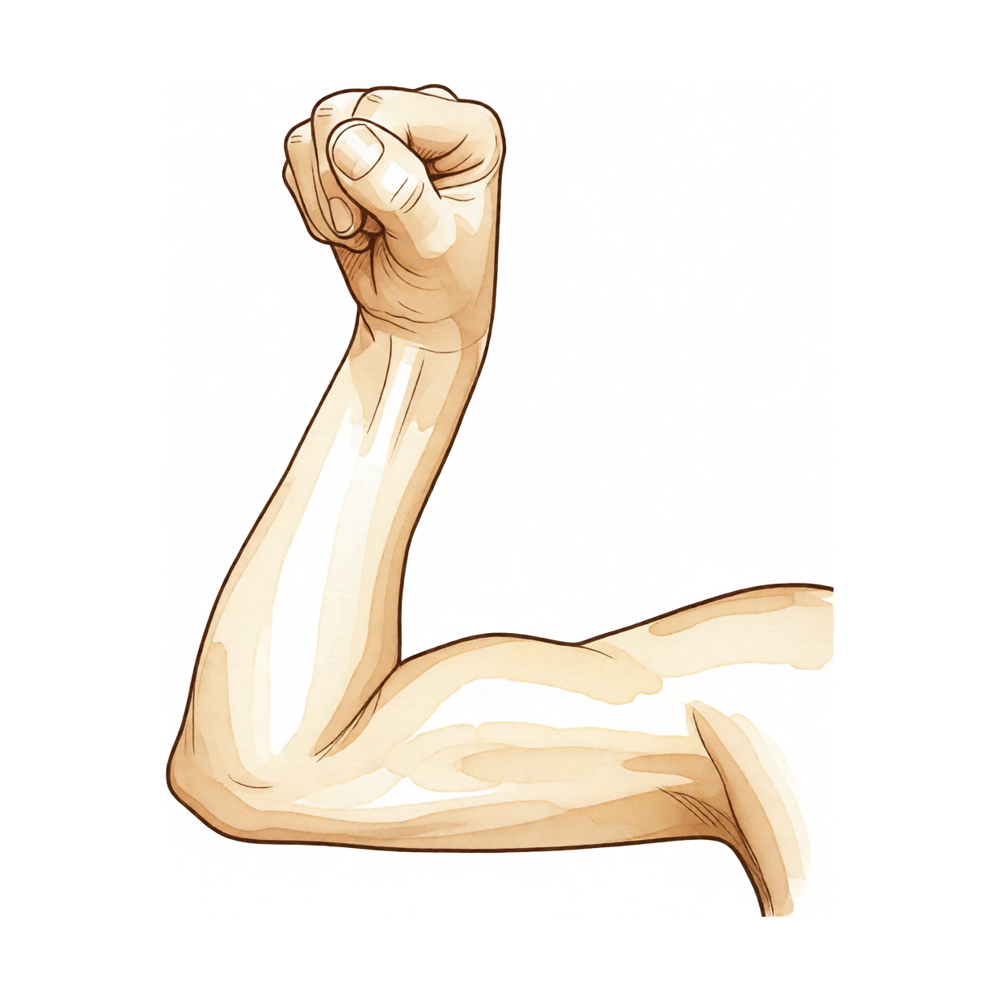
Ang 'Popeye' bulge sa itaas na bahagi ng braso pagkatapos ng rupture ng long head ng biceps.
Ang naputol na long head ng biceps ay maaaring mamuo bilang isang 'Popeye' bulge sa itaas na bahagi ng braso. James Heilman, MD / Wikimedia Commons, CC BY-SA 4.0

Ang pahinang ito ay isinalin ng makina at hindi pa nasusuri ng isang doktor. Ang bersyong Ingles ang siyang opisyal.

Ang iyong nararamdaman

Ang biceps ay ang kalamnan sa harap ng iyong itaas na braso. Ang long head ng tendon nito ay tumatakbo paitaas sa ibabaw ng buto ng braso at papasok sa joint ng balikat, at ito ang bahaging nagdudulot ng problema rito.

Ang pinakakaraniwang reklamo ay isang malalim at pabalik-balik na sakit sa harap ng balikat, madalas ay ilang sentimetro sa ibaba ng dulo nito. Maaari itong kumirot kapag ikaw ay may inaabot sa itaas, nagbubuhat, o nagdadala, at kung minsan ay kumakalat ito pababa sa harap ng itaas na braso. Maraming tao ang nahihirapang ituro ang isang eksaktong spot. Dahil ang biceps tendon ay nasa tabi mismo ng rotator cuff, ang sakit na ito ay madalas na kasabay ng mga problema sa rotator cuff, at ang dalawa ay maaaring mahirap paghiwalayin nang walang pagsusuri.

Minsan ay may mas biglaang pangyayari. Ang gasgas na tendon ay maaaring maputol, karaniwan sa mga nakatatanda at madalas ay may kakaunting sakit lamang. Kapag nangyari ito, ang muscle belly ay bumabagsak sa braso at bumubuo ng isang malambot na bukol na mukhang maliit na bola o isang naka-flex na kalamnan. Ito ang klasikong "Popeye" sign. Maaari itong nakakagulat makita, ngunit sa sarili nito ay bihirang kasing-seryoso ng hitsura nito.

Ano ang aktwal na nangyayari

Ang mga tendon ay matitibay na lubid na nag-uugnay sa kalamnan (muscle) sa buto, at tulad ng anumang lubid na madalas gamitin, maaari itong mapudpod sa paglipas ng panahon. Sa biceps tendinopathy, ang long head tendon ay namamagâ at napupudpod kung saan ito dumadaan sa isang makitid na uka sa itaas ng buto ng braso at patungo sa balikat. Ang pagkapudpod na iyon ang nararamdaman mo bilang pananakit sa harap ng balikat. Dahil ibinabahagi ng tendon ang masikip na espasyong ito sa rotator cuff, madalas na sabay na napupudpod ang dalawa, kaya naman ang pananakit ng biceps at pananakit ng cuff ay madalas na magkasabay.

Kung magpapatuloy ang pagkapudpod na iyon, ang tendon ay maaaring tuluyang maputol. Kapag ang long head ay nag-rupture, ang kalamnan ay hindi na nakatali sa itaas, kaya ito ay dumudulas pababa sa braso at lumilikha ng Popeye bulge. Narito ang nakaka-assure na bahagi: ang biceps ay mayroon talagang dalawang anchor sa balikat (ang long head at ang short head), at ang short head ay nananatiling buo. Kaya kapag naputol ang long head, napananatili ng braso ang karamihan sa lakas nito, at ang pagbabago ay pangunahing nasa hitsura lamang.

Ito ay isang mahalagang pagkakaiba. Ang isang proximal rupture (sa dulo ng balikat) ay karaniwang isang maliit na problema. Ang rupture sa kabilang dulo ng kalamnan, sa siko (isang distal biceps rupture), ay isang napakaibang sitwasyon: ang iyon ay maaaring magdulot ng tunay na pagkawala ng lakas at madalas na nangangailangan ng surgical repair. Ang bulge ay maaaring magmukhang magkatulad, kaya mahalaga kung aling dulo ang aktwal na napunit.

Ano ang maaari naming gawin tungkol dito

Sa aming klinika, ginagabayan ni Dr Kieran Hirpara ang mga pasyente sa isang malinaw na proseso na nagsisimula sa isang masusing pagsusuri upang kumpirmahin ang diagnosis. Karaniwan naming inirerekomenda ang pagsisimula sa non-surgical care para sa mga matagal nang problema, at inilalaan lamang ang operasyon kapag ang mga hakbang na ito ay hindi nagbigay ng sapat na ginhawa.

Para sa biceps tendinopathy, ang mga unang hakbang ay simple at non-surgical, at nakatutulong ito sa karamihan ng mga tao:

  • Pagbabago sa aktibidad: pagbabawas ng mga paggalaw na overhead at mabibigat na pagbuhat na nagpapalala rito, habang pinapanatiling gumagalaw ang balikat.
  • Physiotherapy: mga ginagabayang ehersisyo upang pakalmahin ang tendon at ibalik ang balanse ng balikat, lalo na kapag kasama ring apektado ang rotator cuff.
  • Anti-inflammatory medication: isang tabletas upang mabawasan ang sakit at pamamaga.
  • Isang injection: kung minsan ay gumagamit ng corticosteroid injection sa paligid ng tendon o sa balikat upang pakalmahin ang isang matinding flare.

Ang operasyon ay inilalaan para sa patuloy na sakit na hindi nawala sa pamamagitan ng mga hakbang na ito. Kapag ito ay kinakailangan, mayroong dalawang pangunahing opsyon. Ang tendon ay maaaring putulin upang hindi na ito humila sa masakit na bahagi (isang tenotomy), na madalas nag-iiwan ng Popeye bulge ngunit maaasahang nag-aalis ng sakit. O maaari itong muling i-anchor sa mas mababang bahagi ng buto ng braso (isang tenodesis), na pinapanatili ang normal na hugis ng kalamnan at naiiiwasan ang bulge ngunit nangangailangan ng mas mahabang recovery. Ang mga procedure na ito ay madalas na ginagawa kasabay ng rotator cuff surgery, dahil ang dalawang problemang ito ay madalas na nangyayari nang magkasabay.

Para sa isang proximal long-head rupture, ang karaniwang payo ay walang operasyon na kailangan. Kaunti lamang ang nawawalang lakas, at ang bulge ay pang-cosmetic lamang. Ang ilang mas bata o mas aktibong mga tao, o yaong mga nababagabag sa hitsura o sa muscle cramping, ay maaaring pumili ng re-anchoring procedure, ngunit para sa karamihan ng mga tao, ang pag-iwan dito na lang ay ang tamang desisyon.

Ano ang dapat asahan

Karamihan sa mga biceps tendinopathy ay bumubuti sa pamamagitan ng pasensya at tamang mga ehersisyo. Maaari itong maging mabagal (ilang buwan sa halip na ilang linggo), ngunit maganda ang outlook, at ang nakararami ay naiiiwasan ang operasyon nang lubusan. Kapag ang problema sa biceps ay bahagi ng mas malawak na isyu sa rotator cuff, ang paggaling ay sumusunod sa cuff, at ang paggamot sa dalawa nang magkasama ay nagbibigay ng pinakamagandang resulta.

Kung ikaw ay nagkaroon ng proximal long-head rupture at nagpasyang hindi magpa-opera, maaari mong asahan na ang paunang pananakit ay mawawala sa loob ng ilang linggo, ang iyong lakas ay babalik sa halos normal, at ang Popeye bulge ay mananatili bilang isang permanente ngunit hindi mapanganib na paalala. Hindi ito lumalala sa paglipas ng panahon, at hindi ito kailangang ayusin.

Kailan dapat magpatingin

  • Sakit sa harap ng balikat na hindi nawawala, lalo na kapag may inaabot o binubuhat paitaas: nararapat suriin, dahil madalas itong hudyat ng problema sa biceps o rotator cuff na tumutugon nang maayos sa gamutan.
  • Isang biglaang bukol sa itaas na bahagi ng braso na may kasamang panghihina: kailangang masuri ito upang makumpirma kung ito ay ang hindi mapanganib na long head sa balikat at hindi isang punit sa siko, na isang magkaibang pinsala na maaaring mangailangan ng operasyon.
  • Isang rupture sa isang mas bata o aktibong tao: kahit na ito ay proximal, nararapat itong suriin, kapwa upang makasiguro sa diagnosis at upang talakayin kung ang repair ay kapaki-pakinabang para sa iyo.
  • Paulit-ulit na cramping o pananakit ng biceps pagkatapos ng isang alam na rupture: karaniwang minor, ngunit maaaring gamutin kung ito ay nakakaabala sa iyo.

Higit pang detalye

Advanced reading: the deeper science (optional)

Ang seksyong ito ay lumalampas sa kailangan mo para sa iyong sariling mga desisyon sa paggamot. Ang mga problema sa long head ng biceps ay karapat-dapat sa karagdagang pagbabasa dahil sa isang hindi pangkaraniwang sitwasyon sa operasyon: ang mga standard na paggamot ay kinapapalooban ng pagputol sa isang tendon na ang tungkulin ay hindi kailanman napatunayan nang kapani-paniwala sa isang buhay na balikat, at ayon sa ebidensya ay hindi mo ito kailangang panghinayangan.

Isang tendon na may hindi napatunayang tungkulin

Ang long head ng biceps ay tumatakbo mula sa itaas ng shoulder socket, sa pamamagitan ng joint, pababa sa isang groove sa buto ng upper arm. Dahil dumadaan ito nang direkta sa joint, matagal nang ipinagpapalagay na tumutulong ito upang panatilihing sentro ang ball sa socket.

Ang ebidensya para rito ay mas mahina kaysa sa pagpapalagay. Ipinapakita ng mga biomechanical study na ang tendon ay nag-aambag sa stability ng glenohumeral joint sa lahat ng direksyon, ngunit ang mga in vivo study ay hindi napatunayan ang stabilising effect na ito, at nananatiling hindi alam ang kinakailangang physiological load [1].

Mahalaga ito dahil ipinapaliwanag nito kung bakit gumagana ang mga operasyon. Kung ang tendon ay gumagawa ng mahalagang stabilising work, ang pagputol dito ay magkakaroon ng mga kahihinatnan. Lumalabas na hindi ito nangyayari.

Ang pagputol nito at muling pagkakabit ay nagbibigay ng parehong resulta

Ang dalawang operasyon ay tenotomy, ang pagpapalaya sa tendon at pagpapahintulot na ito ay umurong, at tenodesis, ang pagpapalaya nito at pagkakabit sa buto ng braso sa mas mababang bahagi. Ang tenodesis ay ang mas komplikadong pamamaraan at karaniwang ipiniprisinta bilang mas mabuting opsyon.

Sa pagsasama-sama ng 650 na pasyente, walang pagkakaiba sa post-operative functional outcome sa pagitan ng tenotomy at tenodesis. Ang mga pagkakaibang lumitaw ay limitado sa dalawang bagay: isang Popeye deformity, ang pagbunton ng muscle belly sa itaas na bahagi ng braso, at cramping pain sa bicipital groove, na kapwa mas madalas mangyari pagkatapos ng tenotomy [2]. Isang naunang systematic review ang nakarating sa parehong konklusyon, kung saan nakita ang magkakatulad na paborableng resulta at ang tanging pangunahing pagkakaiba ay ang cosmetic deformity [3].

Samakatuwid, ang desisyon ay hindi talaga tungkol sa kung gaano kahusay gagana ang braso. Ito ay tungkol sa hitsura, cramping, at kung gaano kalawak na operasyon ang gusto mo, na isang mas tapat na pagbalangkas kaysa sa "mas mabuting operasyon".

At sa loob ng tenodesis, ang mga teknikal na argumento ay hindi naghihiwalay

Maraming debate tungkol sa kung saan at paano itatali ang tendon. Tila hindi ito gaanong mahalaga. Sa 707 na pasyente, ang subpectoral at suprapectoral tenodesis ay nagresulta sa magkatulad na pagbuti na walang pagkakaiba sa treatment failure, bagaman ang arthroscopic tenodesis ay nauugnay sa mas maraming stiffness sa simula pagkatapos ng operasyon [4]. Sa paghahambing ng arthroscopic sa open sa 476 na pasyente, parehong nagbigay ng kasiya-siyang resulta na may walang matukoy na mga pagkakaiba [5].

Ang laboratory work ay nagpapakita ng mga tunay na pagkakaiba sa lakas ng construct, ang mga interference screw at mas maraming suture ay nagbubunga ng mas malakas na repair, at ang supra- at subpectoral fixation ay biomechanically equivalent kapag kontrolado na ang mga confounder [6]. Ang lakas na iyon ay hindi nagsasalin sa isang nasusukat na clinical gap, na isang paulit-ulit na pattern sa shoulder surgery at dapat kilalanin kapag ang isang teknik ay inilalarawan bilang mas malakas.

Ang diagnosis ang tunay na mahirap na bahagi

Dahil ang mga opsyon sa paggamot ay may magkakatulad na resulta, ang karamihan ng kawalan ng katiyakan ay nasa mas maagang bahagi, sa pagpapasya kung ang biceps tendon nga ba ang pinagmumulan ng sakit. Nakaposisyon ito kasama ng rotator cuff, at nag-o-overlap ang mga sintomas.

Ang pisikal na pagsusuri ay sinubukan laban sa kung ano ang aktwal na nakikita sa arthroscopy. Ang pagsasagawa ng uppercut test kasama ang tenderness sa ibabaw ng bicipital groove ay may pinakamataas na pinagsamang sensitivity at specificity sa mga kilalang manoeuvres [7]. Kapaki-pakinabang ito dahil ito ay isang kombinasyon; walang iisang pagsusuri ang nagpapatibay sa diagnosis.

Ang praktikal na kahihinatnan ay ang problema sa biceps ay pinaka-siguradong natutukoy kapag ang mga resulta ng pagsusuri, imaging, at pattern ng mga sintomas ay nagtutugma. Kung hindi sila nagtutugma, ang tendon ay maaaring isang bystander lamang, at ang operasyon dito ay malabong makalutas sa problema.

Mga Sanggunian

[1] Elser F, Braun S, Dewing CB, Giphart JE, Millett PJ. Anatomy, function, injuries, and treatment of the long head of the biceps brachii tendon. Arthroscopy. 2011;27(4):581-92. https://doi.org/10.1016/j.arthro.2010.10.014

[2] Gurnani N, van Deurzen DFP, Janmaat VT, van den Bekerom MPJ. Tenotomy or tenodesis for pathology of the long head of the biceps brachii: a systematic review and meta-analysis. Knee Surg Sports Traumatol Arthrosc. 2015;24(12):3765-71. https://doi.org/10.1007/s00167-015-3640-6

[3] Slenker NR, Lawson K, Ciccotti MG, Dodson CC, Cohen SB. Biceps tenotomy versus tenodesis: clinical outcomes. Arthroscopy. 2012;28(4):576-82. https://doi.org/10.1016/j.arthro.2011.10.017

[4] Belk JW, Thon SG, Hart J, McCarty EC. Subpectoral versus suprapectoral biceps tenodesis yields similar clinical outcomes: a systematic review. J ISAKOS. 2021;6(6):356-62. https://doi.org/10.1136/jisakos-2020-000543

[5] Abraham VT, Tan BH, Kumar VP. Systematic review of biceps tenodesis: arthroscopic versus open. Arthroscopy. 2015;32(2):365-71. https://doi.org/10.1016/j.arthro.2015.07.028

[6] Aida HF, Shi BY, Huish EG, McFarland EG, Srikumaran U. Are implant choice and surgical approach associated with biceps tenodesis construct strength? A systematic review and meta-regression. Am J Sports Med. 2019;48(5):1273-80. https://doi.org/10.1177/0363546519876107

[7] Rosas S, Krill MK, Amoo-Achampong K, Kwon K, Nwachukwu BU, McCormick F. A practical, evidence-based, comprehensive (PEC) physical examination for diagnosing pathology of the long head of the biceps. J Shoulder Elbow Surg. 2017;26(8):1484-92. https://doi.org/10.1016/j.jse.2017.03.002


Creative Commons BY-NC 4.0

CC Creative Commons licence
BY Attribution — you must credit the source
NC NonCommercial — not for commercial use

Attribution-NonCommercial 4.0 International


Creative Commons Corporation ("Creative Commons") is not a law firm and does not provide legal services or legal advice. Distribution of Creative Commons public licenses does not create a lawyer-client or other relationship. Creative Commons makes its licenses and related information available on an "as-is" basis. Creative Commons gives no warranties regarding its licenses, any material licensed under their terms and conditions, or any related information. Creative Commons disclaims all liability for damages resulting from their use to the fullest extent possible.

Using Creative Commons Public Licenses

Creative Commons public licenses provide a standard set of terms and conditions that creators and other rights holders may use to share original works of authorship and other material subject to copyright and certain other rights specified in the public license below. The following considerations are for informational purposes only, are not exhaustive, and do not form part of our licenses.

Considerations for licensors: Our public licenses are intended for use by those authorized to give the public permission to use material in ways otherwise restricted by copyright and certain other rights. Our licenses are irrevocable. Licensors should read and understand the terms and conditions of the license they choose before applying it. Licensors should also secure all rights necessary before applying our licenses so that the public can reuse the material as expected. Licensors should clearly mark any material not subject to the license. This includes other CC- licensed material, or material used under an exception or limitation to copyright. More considerations for licensors: wiki.creativecommons.org/Considerations_for_licensors

Considerations for the public: By using one of our public licenses, a licensor grants the public permission to use the licensed material under specified terms and conditions. If the licensor's permission is not necessary for any reason--for example, because of any applicable exception or limitation to copyright--then that use is not regulated by the license. Our licenses grant only permissions under copyright and certain other rights that a licensor has authority to grant. Use of the licensed material may still be restricted for other reasons, including because others have copyright or other rights in the material. A licensor may make special requests, such as asking that all changes be marked or described. Although not required by our licenses, you are encouraged to respect those requests where reasonable. More considerations for the public: wiki.creativecommons.org/Considerations_for_licensees


Creative Commons Attribution-NonCommercial 4.0 International Public License

By exercising the Licensed Rights (defined below), You accept and agree to be bound by the terms and conditions of this Creative Commons Attribution-NonCommercial 4.0 International Public License ("Public License"). To the extent this Public License may be interpreted as a contract, You are granted the Licensed Rights in consideration of Your acceptance of these terms and conditions, and the Licensor grants You such rights in consideration of benefits the Licensor receives from making the Licensed Material available under these terms and conditions.

Section 1 -- Definitions.

a. Adapted Material means material subject to Copyright and Similar Rights that is derived from or based upon the Licensed Material and in which the Licensed Material is translated, altered, arranged, transformed, or otherwise modified in a manner requiring permission under the Copyright and Similar Rights held by the Licensor. For purposes of this Public License, where the Licensed Material is a musical work, performance, or sound recording, Adapted Material is always produced where the Licensed Material is synched in timed relation with a moving image.

b. Adapter's License means the license You apply to Your Copyright and Similar Rights in Your contributions to Adapted Material in accordance with the terms and conditions of this Public License.

c. Copyright and Similar Rights means copyright and/or similar rights closely related to copyright including, without limitation, performance, broadcast, sound recording, and Sui Generis Database Rights, without regard to how the rights are labeled or categorized. For purposes of this Public License, the rights specified in Section 2(b)(1)-(2) are not Copyright and Similar Rights.

d. Effective Technological Measures means those measures that, in the absence of proper authority, may not be circumvented under laws fulfilling obligations under Article 11 of the WIPO Copyright Treaty adopted on December 20, 1996, and/or similar international agreements.

e. Exceptions and Limitations means fair use, fair dealing, and/or any other exception or limitation to Copyright and Similar Rights that applies to Your use of the Licensed Material.

f. Licensed Material means the artistic or literary work, database, or other material to which the Licensor applied this Public License.

g. Licensed Rights means the rights granted to You subject to the terms and conditions of this Public License, which are limited to all Copyright and Similar Rights that apply to Your use of the Licensed Material and that the Licensor has authority to license.

h. Licensor means the individual(s) or entity(ies) granting rights under this Public License.

i. NonCommercial means not primarily intended for or directed towards commercial advantage or monetary compensation. For purposes of this Public License, the exchange of the Licensed Material for other material subject to Copyright and Similar Rights by digital file-sharing or similar means is NonCommercial provided there is no payment of monetary compensation in connection with the exchange.

j. Share means to provide material to the public by any means or process that requires permission under the Licensed Rights, such as reproduction, public display, public performance, distribution, dissemination, communication, or importation, and to make material available to the public including in ways that members of the public may access the material from a place and at a time individually chosen by them.

k. Sui Generis Database Rights means rights other than copyright resulting from Directive 96/9/EC of the European Parliament and of the Council of 11 March 1996 on the legal protection of databases, as amended and/or succeeded, as well as other essentially equivalent rights anywhere in the world.

l. You means the individual or entity exercising the Licensed Rights under this Public License. Your has a corresponding meaning.

Section 2 -- Scope.

a. License grant.

1. Subject to the terms and conditions of this Public License, the Licensor hereby grants You a worldwide, royalty-free, non-sublicensable, non-exclusive, irrevocable license to exercise the Licensed Rights in the Licensed Material to:

a. reproduce and Share the Licensed Material, in whole or in part, for NonCommercial purposes only; and

b. produce, reproduce, and Share Adapted Material for NonCommercial purposes only.

2. Exceptions and Limitations. For the avoidance of doubt, where Exceptions and Limitations apply to Your use, this Public License does not apply, and You do not need to comply with its terms and conditions.

3. Term. The term of this Public License is specified in Section 6(a).

4. Media and formats; technical modifications allowed. The Licensor authorizes You to exercise the Licensed Rights in all media and formats whether now known or hereafter created, and to make technical modifications necessary to do so. The Licensor waives and/or agrees not to assert any right or authority to forbid You from making technical modifications necessary to exercise the Licensed Rights, including technical modifications necessary to circumvent Effective Technological Measures. For purposes of this Public License, simply making modifications authorized by this Section 2(a) (4) never produces Adapted Material.

5. Downstream recipients.

a. Offer from the Licensor -- Licensed Material. Every recipient of the Licensed Material automatically receives an offer from the Licensor to exercise the Licensed Rights under the terms and conditions of this Public License.

b. No downstream restrictions. You may not offer or impose any additional or different terms or conditions on, or apply any Effective Technological Measures to, the Licensed Material if doing so restricts exercise of the Licensed Rights by any recipient of the Licensed Material.

6. No endorsement. Nothing in this Public License constitutes or may be construed as permission to assert or imply that You are, or that Your use of the Licensed Material is, connected with, or sponsored, endorsed, or granted official status by, the Licensor or others designated to receive attribution as provided in Section 3(a)(1)(A)(i).

b. Other rights.

1. Moral rights, such as the right of integrity, are not licensed under this Public License, nor are publicity, privacy, and/or other similar personality rights; however, to the extent possible, the Licensor waives and/or agrees not to assert any such rights held by the Licensor to the limited extent necessary to allow You to exercise the Licensed Rights, but not otherwise.

2. Patent and trademark rights are not licensed under this Public License.

3. To the extent possible, the Licensor waives any right to collect royalties from You for the exercise of the Licensed Rights, whether directly or through a collecting society under any voluntary or waivable statutory or compulsory licensing scheme. In all other cases the Licensor expressly reserves any right to collect such royalties, including when the Licensed Material is used other than for NonCommercial purposes.

Section 3 -- License Conditions.

Your exercise of the Licensed Rights is expressly made subject to the following conditions.

a. Attribution.

1. If You Share the Licensed Material (including in modified form), You must:

a. retain the following if it is supplied by the Licensor with the Licensed Material:

i. identification of the creator(s) of the Licensed Material and any others designated to receive attribution, in any reasonable manner requested by the Licensor (including by pseudonym if designated);

ii. a copyright notice;

iii. a notice that refers to this Public License;

iv. a notice that refers to the disclaimer of warranties;

v. a URI or hyperlink to the Licensed Material to the extent reasonably practicable;

b. indicate if You modified the Licensed Material and retain an indication of any previous modifications; and

c. indicate the Licensed Material is licensed under this Public License, and include the text of, or the URI or hyperlink to, this Public License.

2. You may satisfy the conditions in Section 3(a)(1) in any reasonable manner based on the medium, means, and context in which You Share the Licensed Material. For example, it may be reasonable to satisfy the conditions by providing a URI or hyperlink to a resource that includes the required information.

3. If requested by the Licensor, You must remove any of the information required by Section 3(a)(1)(A) to the extent reasonably practicable.

4. If You Share Adapted Material You produce, the Adapter's License You apply must not prevent recipients of the Adapted Material from complying with this Public License.

Section 4 -- Sui Generis Database Rights.

Where the Licensed Rights include Sui Generis Database Rights that apply to Your use of the Licensed Material:

a. for the avoidance of doubt, Section 2(a)(1) grants You the right to extract, reuse, reproduce, and Share all or a substantial portion of the contents of the database for NonCommercial purposes only;

b. if You include all or a substantial portion of the database contents in a database in which You have Sui Generis Database Rights, then the database in which You have Sui Generis Database Rights (but not its individual contents) is Adapted Material; and

c. You must comply with the conditions in Section 3(a) if You Share all or a substantial portion of the contents of the database.

For the avoidance of doubt, this Section 4 supplements and does not replace Your obligations under this Public License where the Licensed Rights include other Copyright and Similar Rights.

Section 5 -- Disclaimer of Warranties and Limitation of Liability.

a. UNLESS OTHERWISE SEPARATELY UNDERTAKEN BY THE LICENSOR, TO THE EXTENT POSSIBLE, THE LICENSOR OFFERS THE LICENSED MATERIAL AS-IS AND AS-AVAILABLE, AND MAKES NO REPRESENTATIONS OR WARRANTIES OF ANY KIND CONCERNING THE LICENSED MATERIAL, WHETHER EXPRESS, IMPLIED, STATUTORY, OR OTHER. THIS INCLUDES, WITHOUT LIMITATION, WARRANTIES OF TITLE, MERCHANTABILITY, FITNESS FOR A PARTICULAR PURPOSE, NON-INFRINGEMENT, ABSENCE OF LATENT OR OTHER DEFECTS, ACCURACY, OR THE PRESENCE OR ABSENCE OF ERRORS, WHETHER OR NOT KNOWN OR DISCOVERABLE. WHERE DISCLAIMERS OF WARRANTIES ARE NOT ALLOWED IN FULL OR IN PART, THIS DISCLAIMER MAY NOT APPLY TO YOU.

b. TO THE EXTENT POSSIBLE, IN NO EVENT WILL THE LICENSOR BE LIABLE TO YOU ON ANY LEGAL THEORY (INCLUDING, WITHOUT LIMITATION, NEGLIGENCE) OR OTHERWISE FOR ANY DIRECT, SPECIAL, INDIRECT, INCIDENTAL, CONSEQUENTIAL, PUNITIVE, EXEMPLARY, OR OTHER LOSSES, COSTS, EXPENSES, OR DAMAGES ARISING OUT OF THIS PUBLIC LICENSE OR USE OF THE LICENSED MATERIAL, EVEN IF THE LICENSOR HAS BEEN ADVISED OF THE POSSIBILITY OF SUCH LOSSES, COSTS, EXPENSES, OR DAMAGES. WHERE A LIMITATION OF LIABILITY IS NOT ALLOWED IN FULL OR IN PART, THIS LIMITATION MAY NOT APPLY TO YOU.

c. The disclaimer of warranties and limitation of liability provided above shall be interpreted in a manner that, to the extent possible, most closely approximates an absolute disclaimer and waiver of all liability.

Section 6 -- Term and Termination.

a. This Public License applies for the term of the Copyright and Similar Rights licensed here. However, if You fail to comply with this Public License, then Your rights under this Public License terminate automatically.

b. Where Your right to use the Licensed Material has terminated under Section 6(a), it reinstates:

1. automatically as of the date the violation is cured, provided it is cured within 30 days of Your discovery of the violation; or

2. upon express reinstatement by the Licensor.

For the avoidance of doubt, this Section 6(b) does not affect any right the Licensor may have to seek remedies for Your violations of this Public License.

c. For the avoidance of doubt, the Licensor may also offer the Licensed Material under separate terms or conditions or stop distributing the Licensed Material at any time; however, doing so will not terminate this Public License.

d. Sections 1, 5, 6, 7, and 8 survive termination of this Public License.

Section 7 -- Other Terms and Conditions.

a. The Licensor shall not be bound by any additional or different terms or conditions communicated by You unless expressly agreed.

b. Any arrangements, understandings, or agreements regarding the Licensed Material not stated herein are separate from and independent of the terms and conditions of this Public License.

Section 8 -- Interpretation.

a. For the avoidance of doubt, this Public License does not, and shall not be interpreted to, reduce, limit, restrict, or impose conditions on any use of the Licensed Material that could lawfully be made without permission under this Public License.

b. To the extent possible, if any provision of this Public License is deemed unenforceable, it shall be automatically reformed to the minimum extent necessary to make it enforceable. If the provision cannot be reformed, it shall be severed from this Public License without affecting the enforceability of the remaining terms and conditions.

c. No term or condition of this Public License will be waived and no failure to comply consented to unless expressly agreed to by the Licensor.

d. Nothing in this Public License constitutes or may be interpreted as a limitation upon, or waiver of, any privileges and immunities that apply to the Licensor or You, including from the legal processes of any jurisdiction or authority.


Creative Commons is not a party to its public licenses. Notwithstanding, Creative Commons may elect to apply one of its public licenses to material it publishes and in those instances will be considered the “Licensor.” The text of the Creative Commons public licenses is dedicated to the public domain under the CC0 Public Domain Dedication. Except for the limited purpose of indicating that material is shared under a Creative Commons public license or as otherwise permitted by the Creative Commons policies published at creativecommons.org/policies, Creative Commons does not authorize the use of the trademark "Creative Commons" or any other trademark or logo of Creative Commons without its prior written consent including, without limitation, in connection with any unauthorized modifications to any of its public licenses or any other arrangements, understandings, or agreements concerning use of licensed material. For the avoidance of doubt, this paragraph does not form part of the public licenses.

Creative Commons may be contacted at creativecommons.org.