Patients › Rehabilitation
Fusion ng PIP Joint
Isang protected recovery plan pagkatapos ng fusion (arthrodesis) ng gitnang joint ng daliri, pinapanatiling hindi gumagalaw ang fused joint sa loob ng isang splint habang pinapanatiling gumagalaw ang lahat ng iba pang joint mula unang araw, pagkatapos ay ibabalik ang grip at pinch kapag naghilom na ang buto.
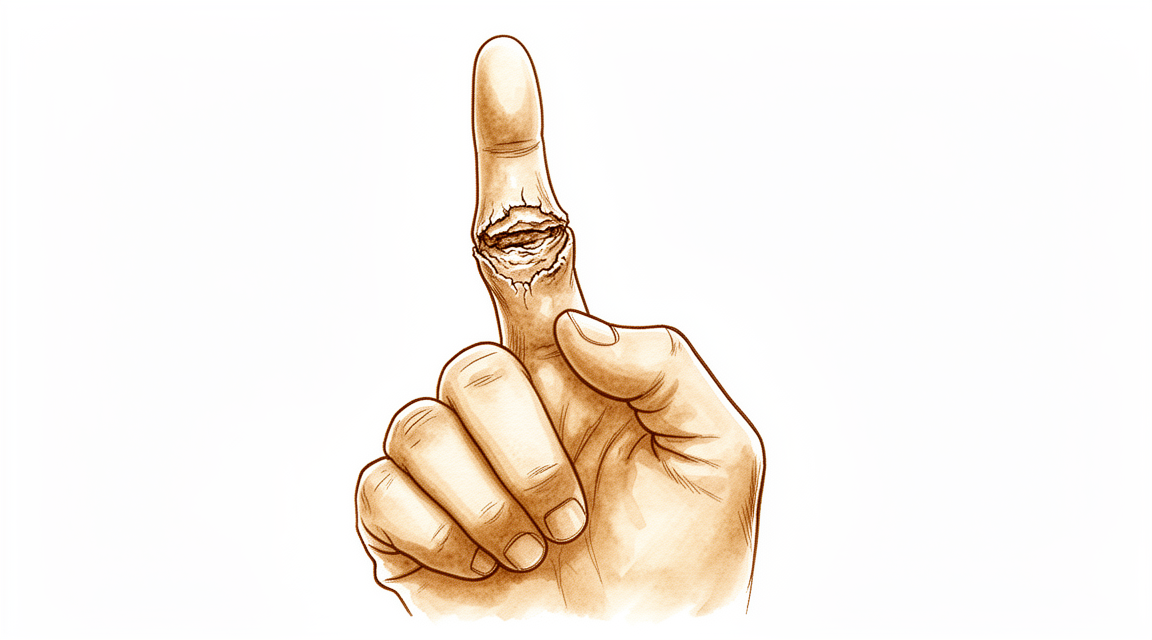
Ang protocol na ito ay nagsisilbing gabay sa iyong paggaling pagkatapos ng fusion (arthrodesis) ng PIP joint (ang gitnang joint ng daliri) kasama si Dr Kieran Hirpara sa Mater Private Hospital Rockhampton. Nagsisimula ito sa iyong home exercise program, na sinusundan ng structured clinical protocol na isinulat para sa iyong hand therapist: dalhin ang pahinang ito o ang PDF nito sa iyong unang therapy visit upang manatiling coordinated ang iyong rehabilitasyon. Maaaring i-adjust ng iyong hand therapist ang plano depende sa pag-unlad ng iyong paggaling.
Kung mayroon kang anumang alalahanin tungkol sa iyong sugat pagkatapos ng operasyon, makipag-ugnayan sa mga rooms. Madalas na nakatutulong ang pagkuha ng larawan ng sugat at pag-email nito para masuri.
Ano ang dapat asahan
Ang PIP joint fusion ay ginagawa sa isang gasgas o hindi stable na gitnang kasukasuan ng daliri at pinagsasama ito nang permanente, upang hindi na ito gumalaw. Ang kasukasuan ay inilalagay sa isang functional, bahagyang nakabaluktot na posisyon sa halip na tuwid na tuwid: ang baluktot ay banayad sa hintuturo at gitnang daliri (mga 15–20°) at tumataas patungo sa panig ng kalingkingan ng kamay (mga 25–40° sa ring finger at kalingkingan), sinusunod ang natural na cascade na nabubuo ng iyong mga daliri kapag ibinabaluktot mo ang mga ito. Ang pinagsamang kasukasuan ay pinapanatili sa posisyon gamit ang isang maliit na implant (isang tension-band wire, isang headless screw, K-wires, o isang maliit na plate) na nagpapanatili sa anggulong iyon hanggang sa magdugtong ang buto sa fusion.
Ang operasyong ito ay madalas na pinipili para sa hintuturo at gitnang daliri, kung saan ang isang stable na kasukasuan para sa pinch ay mas mahalaga kaysa sa paggalaw sa gitnang kasukasuan. Ang PIP joint ay dapat na matigas pagkatapos: iyon ang layunin ng operasyon. Kaya hindi tulad ng tendon o ligament repair, ang recovery ay hindi tungkol sa pagbawi ng paggalaw sa kasukasuang iyon; ito ay tungkol sa pagprotekta sa fusion hanggang sa magdugtong ang buto, habang pinapanatiling malayang gumagalaw ang bawat iba pang kasukasuan ng kamay.
Ang plano ay nakabase sa apat na ideya:
- Protektahan ang fusion hanggang sa magsanib ang buto. Ang bony union ay karaniwang tumatagal ng mga anim na linggo, at kung minsan ay hanggang siyam hanggang labindalawang linggo. Hanggang sa panahong iyon, ang pinagsamang kasukasuan ay sinusuportahan ng isang splint.
- Panatilihing gumagalaw ang lahat ng iba pa mula sa unang araw: ang kasukasuan ng dulo ng daliri, ang knuckle, ang mga katabing daliri, ang hinlalaki at ang pulso, upang ang mga tendon ay hindi dumikit at ang natitirang bahagi ng kamay ay hindi tumigas.
- Pamahalaan ang pamamaga at ang peklat sa mga unang linggo.
- Ibalik ang grip at pinch kapag ang fusion ay nagdugtong na. Huwag manigarilyo: alam na ang paninigarilyo ay nagpapabagal sa paghilom ng buto at nagpapatagal sa pagsasanib ng fusion.
Mga pag-iingat at limitasyon
- HUWAG magbuhat, humawak, o kumurot nang malakas gamit ang inoperahang daliri hanggang sa magsanib ang fusion (karaniwang mga anim na linggo, kung minsan ay mas matagal): ang paglalagay ng bigat bago magsanib ang buto ay may panganib na hindi magtagumpay ang fusion.
- Panatilihing hindi gumagalaw ang fused joint sa loob ng splint ayon sa itinuro; huwag subukang "i-test" o itiklop ito.
- Panatilihing gumagalaw ang lahat ng iba pang joint mula sa mga unang araw: fingertip joint, knuckle, iba pang mga daliri, hinlalaki, at pulso.
- Panatilihing malinis at tuyo ang splint, isuot ito ayon sa itinuro, at alagaan ang sugat at anumang pin sites.
- HUWAG magmaneho habang hindi mo ligtas na makokontrol ang manibela, karaniwan ay hanggang sa matanggal ang splint sa loob ng apat hanggang anim na linggo.
- Huwag manigarilyo: pinababagal nito ang pagsasanib ng buto.
Para sa pamamahala ng sugat, pamamaga, at peklat, tingnan ang gabay ng practice sa wound care.
Iyong mga ehersisyo
Kieran Hirpara 4.0
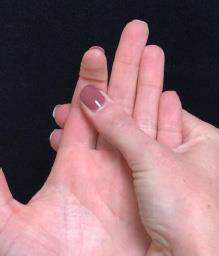
Paggalaw ng DIP ng daliring inoperahan
Sa pahintulot ng iyong hand therapist, dahan-dahang itiklop at ituwid ang pinakahuling joint (fingertip) ng inoperahang daliri. Hawakan nang matatag ang gitna ng daliri gamit ang iyong kabilang kamay upang ang dulo lamang ng daliri ang gumalaw. Ang fused joint ay dapat manatiling hindi gumagalaw — ang dulo lamang ang ititiklop. Ang pagpapanatiling gumagalaw ng joint na ito ay pumipigil sa pagdidikit ng mga tendon habang gumagaling ang fusion.
10 beses, 3 beses sa isang araw, sa joint ng dulo ng daliri lamang
Kieran Hirpara 4.0
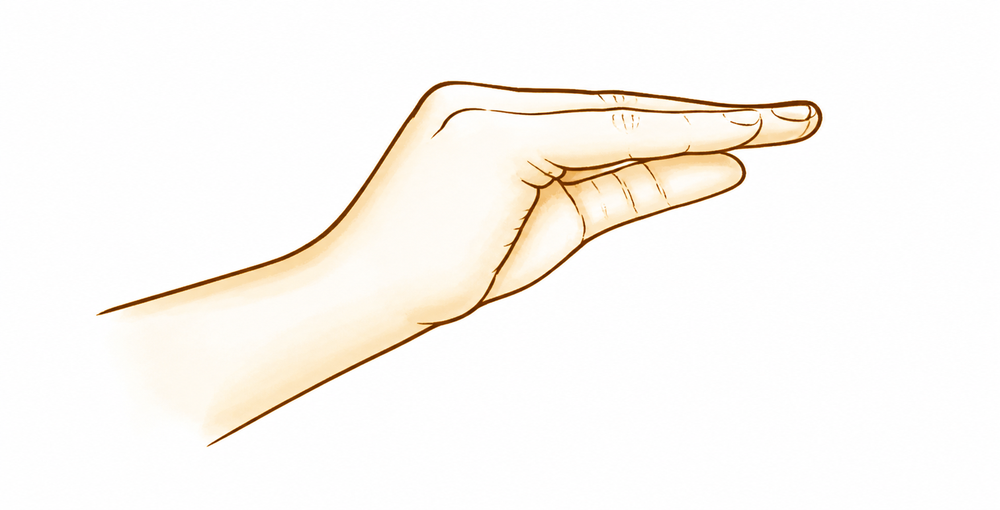
Paggalaw ng MCP knuckle ng daliring inoperahan
Dahan-dahang itiklop at ituwid ang malaking knuckle (kung saan ang daliri ay nakakabit sa kamay) ng inoperahang daliri. Ang pinagsamang (fused) gitnang joint ay nananatiling hindi gumagalaw sa buong proseso — ang knuckle lamang ang gumagalaw. Pinapanatili nito ang pagiging supple ng knuckle at pinipigilan ang paninigas ng daliri habang naghihilom ang fusion.
10 beses, 3 beses sa isang araw, knuckle joint lamang
Kieran Hirpara 4.0
Igalaw ang lahat ng iyong iba pang mga daliri, hinlalaki, at pulso
Mula sa mga unang araw, panatilihing malayang gumagalaw ang bawat kasukasuan na HINDI naoperahan — itikom nang husto ang kamao at ibuka nang lubos gamit ang iyong ibang mga daliri, igalaw ang iyong hinlalaki sa lahat ng direksyon, at itiklop, ituwid, at i-ikot ang iyong pulso. Ito ang pinakamahalagang bagay na maaari mong gawin upang mapanatiling malambot ang iyong kamay at maiwasan ang paninigas habang pinoprotektahan ang pinagdugtong na kasukasuan.
10 beses bawat isa, ilang beses sa isang araw
Kieran Hirpara 4.0
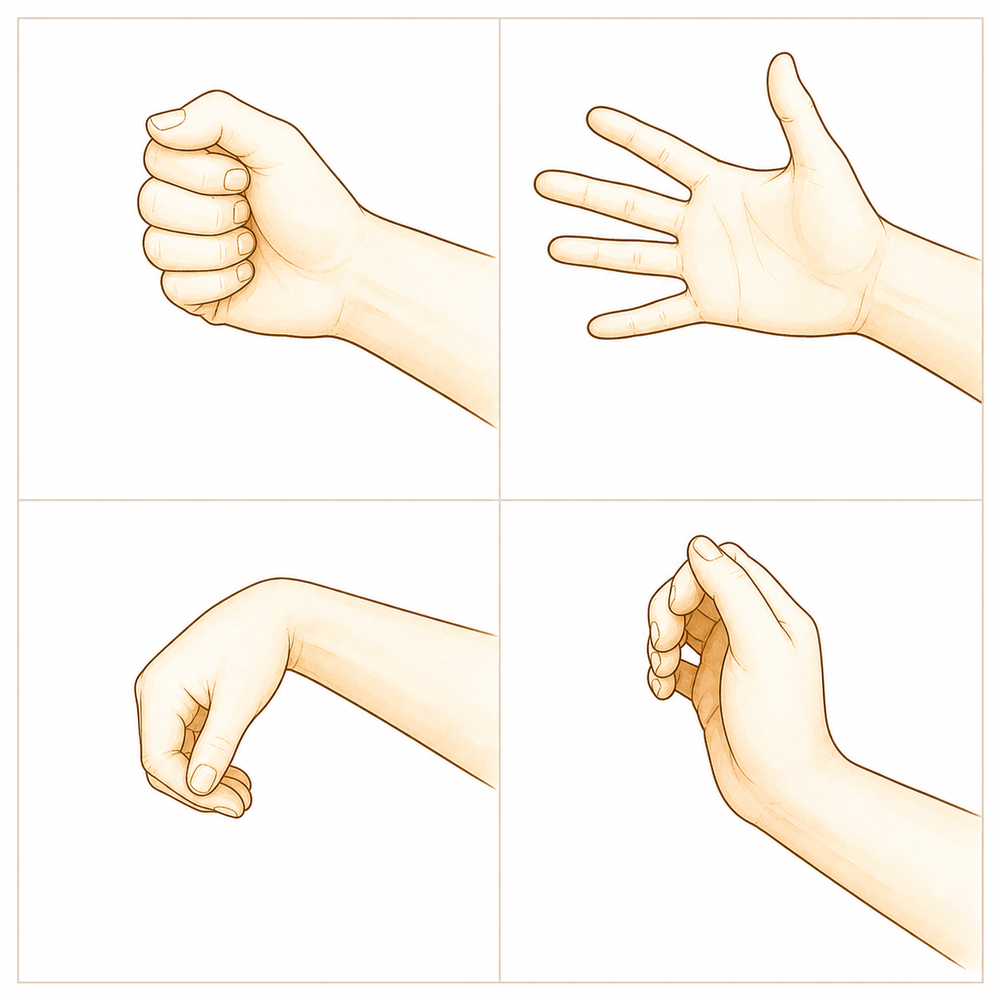
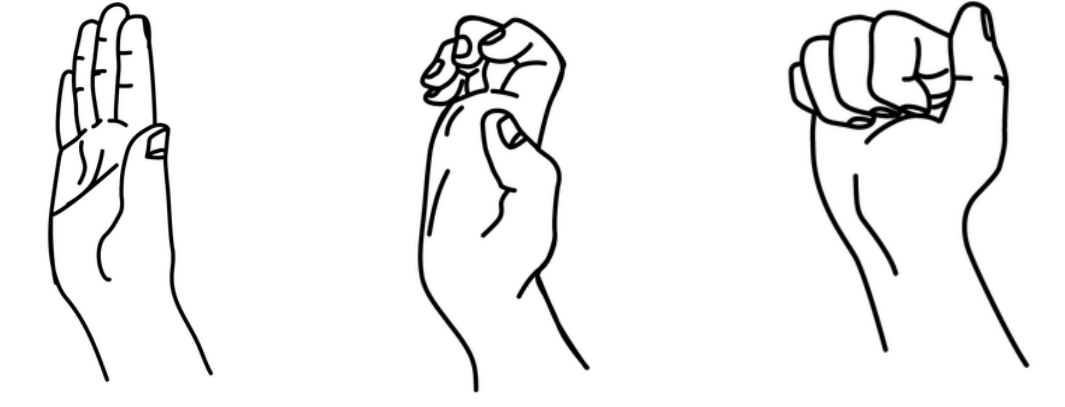
Tendon glides (hook, fist, straight)
Igalaw ang iyong kamay nang dahan-dahan sa tatlong hugis upang mapanatiling dumudulas ang mga tendon: isang hook (itiklop ang dulo at gitnang mga joint, panatilihing diretso ang mga knuckles), isang buong kamao, at pagkatapos ay isang patag at direktong kamay. Gawin ito nang lubos sa iyong mga daliring hindi naoperahan, at hayaang gumalaw lamang ang naoperahang daliri hanggang sa kung saan pinapayagan ng mga malayang (hindi fused) na joint. Pinapanatili nito ang maayos na pagdaloy ng mga tendon at pinipigilan ang mga ito sa pagdidikit malapit sa pinag-operahan.
5 ng bawat hugis, 3 beses sa isang araw
Kieran Hirpara 4.0
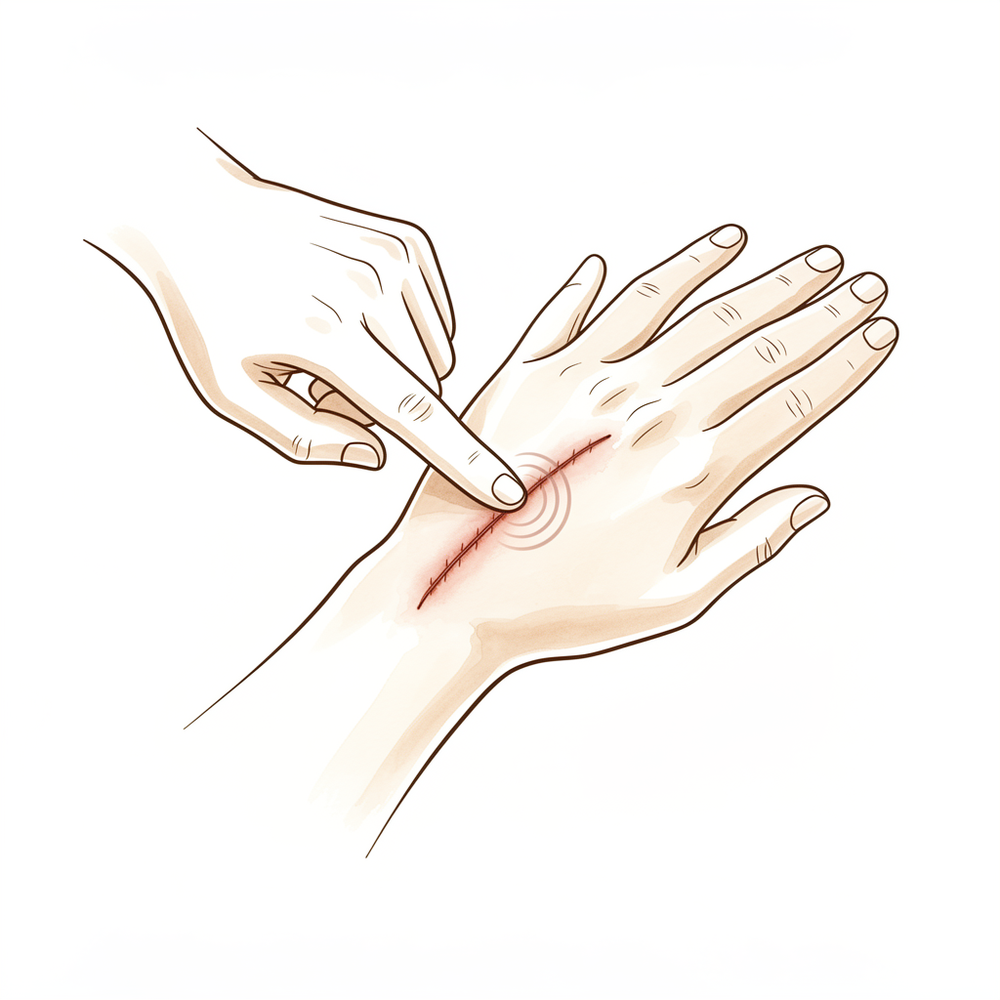
Masahe sa peklat
Kapag ganap nang magaling ang sugat at nasuri na ito ng iyong hand therapist, magpahid ng kaunting moisturizer sa peklat gamit ang madiin at maliliit na pabilog na galaw sa loob ng ilang minuto. Pinapalambot nito ang peklat, binabawasan ang hapdi, at pinipigilan itong kumapit sa mga tisyu sa ilalim nito. Huwag simulan ito hangga't hindi ganap na sarado ang balat.
2–3 minuto, 2–3 beses sa isang araw (pagkatapos gumaling ng sugat)
Kieran Hirpara 4.0
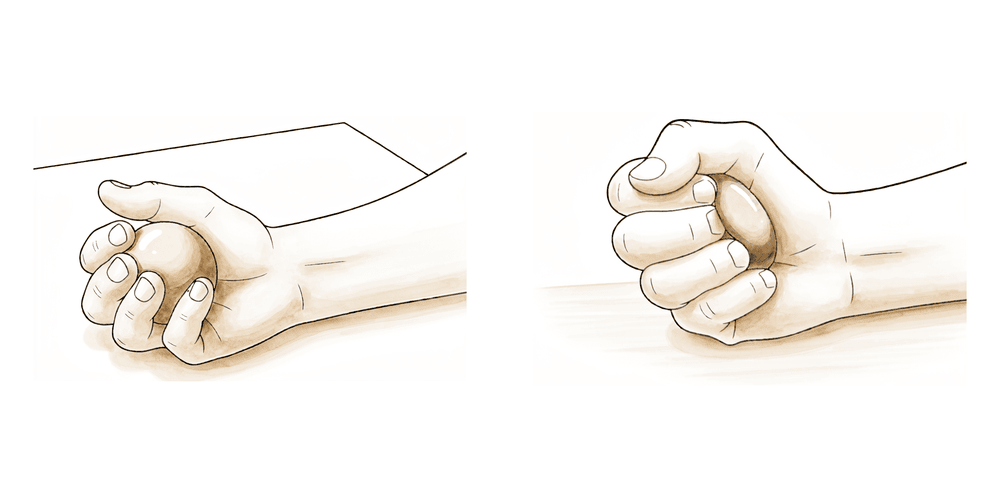
Pagpapalakas ng pinch at grip (pagkatapos ng union)
Isang exercise sa HULING bahagi — kapag naghilom na lamang ang fusion at pinasimulan ka na ng iyong hand therapist sa strengthening (karaniwan ay pagkatapos ng mga anim na linggo). Pumiga ng malambot na bola o putty para sa grip, at kurot sa isang maliit na bagay sa pagitan ng iyong hinlalaki at ng inoperahang daliri upang mabuo ang lateral pinch na ginawang stable ng fusion. Unti-unting dagdagan ang puwersa. HUWAG gumawa ng anumang resisted gripping o pinching bago ka payagan — binibigatan nito ang fusion bago pa magdugtong ang buto.
10 beses, 2–3 beses sa isang araw, ayon sa gabay (pagkatapos lamang ng union)
Ito ang mga ehersisyo mula sa iyong handout. Simulan lamang ang mga ito ayon sa gabay ni Dr Hirpara at ng iyong hand therapist, at manatili sa anumang limitasyong ibinigay sa iyo. Ang mga maagang ehersisyo ay pinapanatiling gumagalaw ang fingertip joint, ang knuckle, at lahat ng iyong iba pang mga daliri, hinlalaki at pulso, nang hindi ginagalaw o binibigatan ang fused joint mismo, na nananatiling hindi gumagalaw sa loob ng splint nito. Ang scar massage ay magsisimula kapag magaling na ang sugat. Ang pagpapalakas ng pinch at grip ay kabilang sa huling bahagi at hindi dapat simulan hanggang sa ang fusion ay nag-unite na at ikaw ay partikular na binigyan ng clearance. Itigil ang anumang nagdudulot ng matalas na sakit sa ibabaw ng fused joint.
Ang iyong clinical protocol
Ang natitirang bahagi ng pahinang ito ay ang staged clinical protocol para sa rehabilitasyon pagkatapos ng PIP joint arthrodesis. Ang seksyong ito ay ibibigay sa iyong hand therapist, at ang bawat phase ay nagsisimula sa isang paliwanag sa simpleng Ingles tungkol sa kung ano ang nangyayari. Ang fusion ay dapat protektahan mula sa load hanggang sa magkaroon ng bony union (karaniwang ~6 na linggo, hanggang 9–12 linggo); ang pangunahing prinsipyo ay "protektahan ang fused joint, igalaw ang lahat ng iba pa": ang DIP, MCP, mga katabing daliri, thumb at wrist ay iginagalaw mula sa unang araw upang maiwasan ang tendon adhesion at paninigas, habang ang oedema at scar ay pinamamahalaan nang maaga at ang grip/pinch ay ibinabalik lamang pagkatapos ng union.
Bago ang paggamot, suriin ang operation report ng pasyente at ang nakaraang medical history, at makipag-ugnayan sa treating surgeon tungkol sa fixation na ginamit (tension-band wire, headless intramedullary screw, K-wires, o plate), ang itinakdang fusion angle, at kung ang mga K-wire ay nakabaon o kailangang tanggalin. I-fu-fuse ni Dr Hirpara ang PIP sa isang functional flexed position na tumataas ulnar-ward sa buong kamay (index/middle ≈ 15–20°, ring/little ≈ 25–40°), kadalasan para sa index/middle finger kung saan mas mahalaga ang lateral pinch stability kaysa sa PIP motion. Ang fused joint ay pinapanatili sa isang splint hanggang sa radiographic union; ang evidence base ay low-level (level-4 case series at expert consensus), kaya ang mga timing ay individualised, hindi graded thresholds.
Phase I — proteksyon at pagpapahupa (linggo 0 hanggang 2)
Ang unang dalawang linggo ay para protektahan ang fusion at papahupain ang pamamaga at ang sugat, habang ang lahat ng iba pang kasukasuan ng kamay ay magsisimulang igalaw agad.
Para sa iyong hand therapist:
Immobilisation - Acute volar finger splint o cast na sumasaklaw sa MCP at PIP, ngunit iniiwang malaya ang DIP - Panatilihing hindi gumagalaw ang fused PIP; elevation para sa oedema
Edukasyon at mga pag-iingat - Bawal ang grip, pinch o loading gamit ang inoperahang daliri - Panatilihing malinis at tuyo ang splint; protektahan ang sugat at anumang pin sites
Pamamahala - Sugat: surgical dressings ayon sa itinuro; i-monitor para sa impeksyon at pin sites kung gumamit ng K-wires - Oedema: elevation, banayad na pumping ng mga malayang kasukasuan, ice kung kinakailangan - Mga ehersisyo: mula unang araw, active motion ng lahat ng non-fused na kasukasuan: mga katabing daliri (full fist/extension), thumb, wrist; simulan ang active motion ng DIP ng inoperahang daliri sa loob ng ilang araw; tendon glides ng mga katabing daliri; walang paggalaw o loading ng fused PIP
Mga kraytirya para mag-progress - Pagpapahupa ng sugat; kontrolado ang pamamaga; handa na para sa isang definitive custom splint sa humigit-kumulang 2 linggo
Phase II — custom thermoplastic splint at active motion ng mga free joint (linggo 2 hanggang 6)
Mula sa humigit-kumulang dalawang linggo, isang custom thermoplastic splint ang sumusuporta sa fused joint habang pinapalaya ang mga katabing joint para sa active motion. Ang DIP at MCP ng operated finger ay ine-ehersisyo nang wala sa splint; ang fused PIP ay nananatiling protektado. Wala pang resisted grip, pinch o loading.
Para sa iyong hand therapist:
Mga Assessment - ROM ng katabing joint, oedema, pagsusuri ng sugat/peklat; kumpirmahin na stable ang fixation base sa clinical grounds at ayon sa surgeon
Immobilisation - Paglipat sa isang custom thermoplastic splint na sumusuporta sa fused PIP habang pinapalaya ang mga katabing joint; tuloy-tuloy na protective splinting hanggang ~6 na linggo
Edukasyon at mga pag-iingat - Walang resisted grip, pinch o loading ng operated finger hanggang sa magkaroon ng union - Alisin sa splint para sa mga ehersisyo lamang
Pamamahala - Mga Ehersisyo: active DIP at MCP motion ng operated finger nang wala sa splint (ang DIP ay sinimulan sa loob ng ilang araw, ang MCP ay idinagdag dito); tendon glides ng mga katabing daliri; pagpapatuloy ng motion ng thumb/wrist/katabing daliri; simulan ang scar at oedema management kapag magaling na ang sugat - Walang resisted grip/pinch/loading
Mga kraytirya para mag-progress - Radiographic union (karaniwan ay humigit-kumulang 6 na linggo, hanggang 9–12); ang fused joint ay clinically at radiologically stable bago ang anumang loading
Phase III — pagbabawas sa paggamit ng splint at pag-usad sa light use (mula ~6 na linggo, kapag nag-fuse na)
Kapag ang fusion ay nag-unite na (karaniwan ay bandang anim na linggo), ang splint ay unti-unting binabawasan at pinuputol, ipinapakilala ang light functional use, at unti-unting ibinabalik ang pinch, opposition at gripping. Ang mga K-wire, kung ginamit, ay karaniwang tinatanggal bandang anim na linggo.
Para sa iyong hand therapist:
Mga Assessment - Kumpirmahin ang radiographic union kasama ang surgeon; grip/pinch strength kumpara sa kabilang kamay; ROM ng mga free joints; scar
Edukasyon at mga pag-iingat - Bawasan at putulin ang splint kapag nakumpirma na ang union; tanggalin ang K-wire ~6 na linggo kung ginamit - Unti-unting itaas ang loading: light use muna, pagkatapos ay graded pinch/grip
Pamamahala - Mga Ehersisyo: pag-usad sa light functional use → pinch, opposition at gripping; simulan ang grip/pinch strengthening (ball/putty, lateral pinch) at unti-unting itaas; ituloy ang scar work - Ang splint ay binabawasan pagkatapos ng radiographic union
Mga kraytirya para sa pag-usad - United fusion na nakakayanan ang light load nang walang sakit; itinigil na ang splint; handa na para sa progressive strengthening
Phase IV — progresibong pagpapalakas at pagbabalik (mula ~8–12 linggo)
Kapag naghilom na ang fusion at naibalik na ang magaan na paggamit, isinasagawa ang progresibong pagpapalakas at paglalagay ng load, at unti-unting ibinabalik ang pakikilahok sa sport, mabibigat, o manwal na aktibidad. Ang pinal at settled na resulta ay nakakamit sa loob ng siyam hanggang labindalawang buwan.
Para sa iyong hand therapist:
Mga Assessment - Grip at pinch strength kumpara sa kabilang panig; functional at work-/sport-specific na testing kung naaangkop
Edukasyon at mga pag-iingat - Unti-unting itaas ang resisted loading; ang fused joint ay permanenteng matigas ayon sa disenyo; ituon ang lakas sa grip at lateral pinch
Pamamahala - Mga ehersisyo: progresibong pagpapalakas at paglalagay ng load sa grip at pinch; graded na pagbabalik sa sport, mabibigat at manwal na gawain - Isaalang-alang ang discharge kapag ang lakas ay functional na at malapit nang maging symmetrical; i-refer muli sa treating doctor kung ang recovery ay nag-plateau
Mga kraytirya para sa pagbabalik - Pain-free, stable na fused joint sa ilalim ng load; sapat na grip/pinch strength para sa gawain, hinuhusgahan nang klinikal at hindi base sa kalendaryo; pinal at settled na resulta sa 9–12 buwan
Pagbabalik sa trabaho at aktibidad
Hinihikayat ang magaan na pang-araw-araw na paggamit ng kamay kasama ang ibang bahagi ng kamay mula sa simula, hangga't komportable; ang pangunahing pagbabawal ay walang paghawak nang mahigpit (gripping), pag-pinch, o paglalagay ng bigat (loading) sa operadong daliri hanggang sa magdugtong na ang fusion. Dahil hindi ka dapat magmaneho habang hindi mo pa ligtas na nakokontrol ang manibela, magplano ng tulong sa transportasyon sa mga unang linggo; karaniwang nagpapatuloy ang pagmamaneho sa loob ng apat hanggang anim na linggo, kapag wala na ang splint at ligtas mo nang nakokontrol ang kotse.
Pagkatapos ng union (mga anim na linggo), maaari ka nang magsimula ng magaang paggamit at dahan-dahang paghawak. Ang pagbuhat, paghawak nang mahigpit, at pag-pinch ay unti-unting itataas mula sa humigit-kumulang walong linggo, at ang buong aktibidad o sports mula sa humigit-kumulang labindalawang linggo. Ang fusion ay patuloy na nag-aadjust sa loob ng ilang buwan, kaya ang pinal at ganap na settled na resulta ay sa loob ng humigit-kumulang siyam hanggang labindalawang buwan. Ang mga timing na ito ay mga expert-consensus single-clinic guides (tipikal at indibidwalisado, hindi graded thresholds) at ang iyong pag-unlad ay huhusgahan ni Dr Hirpara at ng iyong hand therapist ayon sa kung paano gumagaling ang fusion, hindi base sa kalendaryo lamang.
Pagkatapos ng iyong protocol
Ang protocol na ito ay kasabay ng pangkalahatang payo sa paggaling ng klinika; tingnan din ang pamamahala ng sakit pagkatapos ng operasyon, pag-aalaga ng sugat at pamamahala ng peklat. Ang phased plan sa itaas ay sumasalamin sa nailathalang gabay sa rehabilitasyon pagkatapos ng PIP joint arthrodesis, at ang iyong patuloy na paggaling ay ginagabayan nang indibidwal ni Dr Hirpara at ng iyong hand therapist ayon sa kung paano gumagaling ang iyong daliri.
Evidence & references
This is the clinical evidence summary written for health professionals. It is technical, and it lists the research this page was built from. You do not need to read it to understand your treatment or to make a decision about it.
PIP Joint Fusion — Procedure Outcomes & Post-operative Rehabilitation (Proximal Interphalangeal Arthrodesis)
Topic scope: post-operative rehabilitation after arthrodesis (fusion) of the proximal interphalangeal (PIP) joint of a finger — a worn, painful or unstable PIP joint is fused solid in a functional flexed position. This is a fusion, not a reconstruction or a motion- preserving procedure: the PIP is deliberately made stiff to trade motion for a stable, pain-free, load-bearing digit. The rehab is therefore not about regaining PIP motion but about protecting the construct until bony union while keeping every other joint of the hand moving, then restoring grip and pinch.
Defining principle of the rehab here: PIP arthrodesis eliminates motion at one joint by design to gain stability for pinch and grip. The fused joint is set in a functional flexed position that increases ulnar-ward across the hand (index/middle ≈ 15–20°, ring/little ≈ 25–40°, following the digital cascade) and held by internal fixation (tension-band wire, headless intramedullary screw, K-wires, or plate) until union. Because nothing here needs to move to heal — it needs to unite — the single governing rule is "protect the fused joint, mobilise everything else." DIP, MCP, adjacent digits, thumb and wrist move from day one to prevent tendon adhesion and stiffness; oedema and scar are managed early; grip and pinch are restored only after radiographic union (~6 weeks, up to 9–12). The branch point is the indication — primary degenerative/post-traumatic fusion versus salvage of a failed PIP arthroplasty, where union is slower and the construct more demanding.
A. PROCEDURE OUTCOMES (PIP arthrodesis)
PIP arthrodesis is a reliable, well-established salvage and reconstructive operation, but its evidence base is uniformly low-level — predominantly retrospective level-4 case series and expert opinion, with no randomised controlled trials. Outcomes are reported as union, complication and reoperation rates rather than from comparative trials.
- The evidence base is low-level and consensus-driven. A systematic review of PIP arthrodesis found the literature is overwhelmingly level-4 (~94%) with no RCTs; conclusions on fixation choice and outcomes rest on case series and expert consensus [EFORT Open Rev 2021, DOI 10.1530/eor-21-0102]. Low (level-4 SR, no RCTs).
- Fixation holds the angle to union; nonunion and reoperation are the principal concerns. Series reporting nonunion and reoperation identify patient factors (including smoking and comorbidity) as drivers of failure, underscoring that the rehab job is to protect the construct until the bone joins [HAND 2020, DOI 10.1177/1558944720939196]. Low–moderate (case series).
- The fusion angle is chosen for function, especially pinch. A biomechanical/kinematic study of index PIP fusion (simulated 30–50°) shows the set angle is a functional trade-off: fusing the index/middle PIP stabilises lateral (key) pinch at the cost of PIP motion, which is why these digits are common fusion sites [J Hand Surg Am 2011, DOI 10.1016/j.jhsa.2011.09.010]. Mechanistic / cadaveric.
- Arthrodesis is a dependable salvage for failed PIP arthroplasty, but union is slow. A series of arthrodesis for failed PIP joint replacement reported a mean time to union of 5.8 months, illustrating that salvage fusions unite more slowly than primary fusions and need correspondingly extended protection [J Hand Surg Am 2011, DOI 10.1016/j.jhsa.2010.10.030]. Low (case series).
- The biomechanics of digital loss/fusion frame the functional cost. Reviews of the biomechanics of digital amputation and fusion describe how eliminating an IP joint redistributes grip and pinch mechanics — the rationale for accepting a stiff joint when it buys stability [Hand Clin 2016, DOI 10.1016/j.hcl.2016.07.003]. Mechanistic / narrative.
B. REHABILITATION / THERAPY EVIDENCE
There are no trials of rehab regimens after PIP arthrodesis; the programme is built on sound surgical principle and expert consensus. The two evidence-anchored levers are the union timeline (which sets when load may be applied) and the modifiable risk factor of smoking (which delays union).
- Protect-until-union, mobilise-everything-else is the consensus regimen. The fused PIP is splinted continuously until radiographic union (~6 weeks, up to 9–12); from day one the DIP, MCP, adjacent digits, thumb and wrist are actively moved to prevent tendon adhesion and global hand stiffness. This is stable across sources (surgeon protocols, hand-therapy guidance and patient-education material) even though it is not trial-tested [Melbourne Arm Clinic protocol; OrthOracle PIPJ arthrodesis; OrthoInfo finger IP fusion]. Consensus / expert.
- Smoking is an evidence-supported delayed-union risk. A study of hand and wrist arthrodesis found smoking delays union, making smoking cessation the one rehab-adjacent intervention with direct supporting evidence in this setting [J Hand Surg Am 2022, DOI 10.1016/j.jhsa.2022.05.016]. Moderate (cohort, modifiable risk factor).
- Union timing governs progression — and is slower in salvage fusions. Primary fusions are typically protected to ~6 weeks; salvage of failed arthroplasty unites far more slowly (mean 5.8 months), so loading must be union-led rather than calendar-led [J Hand Surg Am 2011, DOI 10.1016/j.jhsa.2010.10.030]. Low (case series).
- The set fusion angle is the functional anchor of the rehab goal. Because the index/middle PIP is fused at ~15–20° (and ring/little at ~25–40°) specifically to stabilise lateral pinch, the Phase III–IV strengthening rightly targets pinch and grip rather than any attempt at PIP motion [J Hand Surg Am 2011, DOI 10.1016/j.jhsa.2011.09.010]. Mechanistic.
Recovery trajectory (expected, evidence-anchored)
| Phase | Window | Restraint | Hand use / therapy focus | Strength / load | Notes |
|---|---|---|---|---|---|
| I — Protect & settle | Week 0–2 | Volar finger splint/cast spanning MCP + PIP, DIP left free | Elevation, wound/pin-site care, oedema control; active DIP within days + full motion of all non-fused joints (adjacent digits, thumb, wrist) | No grip / pinch / loading | Fused PIP kept still; everything else mobilised from day one |
| II — Custom splint & free-joint motion | Week 2–6 | Custom thermoplastic splint supporting the fused PIP, freeing adjacent joints; continuous splinting to ~6 wk | Active DIP + MCP of operated finger out of splint; tendon glides of adjacent digits; scar/oedema once healed | No resisted grip / pinch / loading | Union typically at ~6 wk (up to 9–12); load only after radiographic union |
| III — Wean splint & light use | From ~6 wk (united) | Splint weaned/cut down after union; K-wire out ~6 wk if used | Progress light use → pinch, opposition, gripping; begin grip/pinch strengthening | Graded grip/pinch, build gradually | Restraints lifted only once union confirmed |
| IV — Strengthen & return | ~8–12 wk+ | Restrictions lifted | Progressive strengthening/loading; return to sport/heavy/manual work | Build load progressively; target lateral pinch | Final settled result 9–12 months |
(Phase windows mirror the precautions in the patient protocol; they are expert-consensus, single-clinic guides — typical and individualised, not graded or trial-derived thresholds. Return milestones: driving ~6 wk, light use/gentle grip ~6 wk after union, lifting/gripping/pinch ~8 wk, full activity/sport ~12 wk, final result 9–12 months.)
C. KEY CONTROVERSIES / EVIDENCE QUALITY
- Whole topic is low-level evidence. PIP arthrodesis rests on level-4 case series and expert consensus with no RCTs (~94% level-4 in systematic review). All outcome and timing figures should be read as typical guides, not trial-validated thresholds [EFORT 2021]. Low.
- Fixation choice is unsettled. Tension-band wire, headless intramedullary screw, K-wires and plate all achieve union; comparative data are weak and selection is largely surgeon preference and bone/soft-tissue quality [EFORT 2021; HAND 2020]. Low.
- Fusion angle is a functional trade-off, not a fixed number. The ~15–20° (index/middle) to ~25–40° (ring/little) cascade is consensus-stable but individualised to the digit and the demands of pinch [J Hand Surg Am 2011 kinematics]. Mechanistic / consensus.
- Union timing is variable and indication-dependent. Primary fusions ~6 weeks; salvage of failed arthroplasty far slower (mean 5.8 months). Loading must be union-led [J Hand Surg Am 2011 salvage series]. Low.
- Smoking and patient factors drive nonunion/reoperation. Smoking is an evidence-supported delayed-union risk and a modifiable target [J Hand Surg Am 2022; HAND 2020]. Moderate (for the smoking association).
D. EVIDENCE STRENGTH FLAGS (summary)
- STRONG (RCT / SR): none — there are no RCTs in PIP arthrodesis; the best synthesis is a level-4 systematic review (~94% level-4 studies).
- MODERATE: smoking as a delayed-union risk after hand/wrist arthrodesis; patient factors driving nonunion/reoperation; cadaveric/kinematic basis for the functional fusion angle and pinch rationale.
- WEAK / CONSENSUS: the protect-until-union, mobilise-everything-else rehab regimen (mechanistically sound, not trial-tested); the specific fusion angles (consensus-stable); exact timelines (single-clinic, expert-consensus guides — typical, not graded thresholds); fixation choice (surgeon preference).
CITATIONS
RAG corpus (180,000+ Orthopaedic articles)
- Proximal interphalangeal joint arthrodesis: a systematic review (predominantly level-4 evidence; no RCTs). EFORT Open Rev. 2021. DOI: 10.1530/eor-21-0102
- Nonunion and reoperation after proximal interphalangeal joint arthrodesis: patient factors and outcomes. HAND. 2020. DOI: 10.1177/1558944720939196
- Index finger proximal interphalangeal joint arthrodesis and pinch kinematics (simulated 30–50° fusion). J Hand Surg Am. 2011. DOI: 10.1016/j.jhsa.2011.09.010
- Arthrodesis as salvage for failed proximal interphalangeal joint arthroplasty (mean time to union 5.8 months). J Hand Surg Am. 2011. DOI: 10.1016/j.jhsa.2010.10.030
- Smoking delays union after hand and wrist arthrodesis. J Hand Surg Am. 2022. DOI: 10.1016/j.jhsa.2022.05.016
- Biomechanics of digital loss and fusion. Hand Clin. 2016. DOI: 10.1016/j.hcl.2016.07.003
PIP arthrodesis rehabilitation & procedure literature (URLs)
- Melbourne Arm Clinic. PIP / DIP arthrodesis rehabilitation protocol. https://melbournearmclinic.com.au/orthopaedic-rehabilitation/shoulder-rehabilitation/pip-dip-arthrodesis-protocol/
- OrthOracle. Proximal interphalangeal joint (PIPJ) arthrodesis in the hand using the Apex system (Extremity Medical). https://www.orthoracle.com/library/proximal-interphalangeal-joint-pipj-arthrodesis-in-the-hand-using-the-apex-system-extremity-medical/
- EFORT Open Reviews. Proximal interphalangeal joint review (PMC). https://pmc.ncbi.nlm.nih.gov/articles/PMC6598614/
- American Academy of Orthopaedic Surgeons (OrthoInfo). Finger (interphalangeal) joint fusion. https://orthoinfo.aaos.org/en/treatment/finger-ip-joint-fusion/