Patients › Rehabilitation
Fusion ng DIP Joint
Isang protected recovery plan pagkatapos ng fusion (arthrodesis) ng maliit na joint sa dulo ng daliri na pinakamalapit sa kuko, kung saan pananatilihing naka-splint ang dulo ng daliri habang ang lahat ng iba pang joint ay nananatiling gumagalaw at kontrolado ang pamamaga, pagkatapos ay unti-unting ibabalik ang pinch at grip kapag nagdugtong na ang buto.
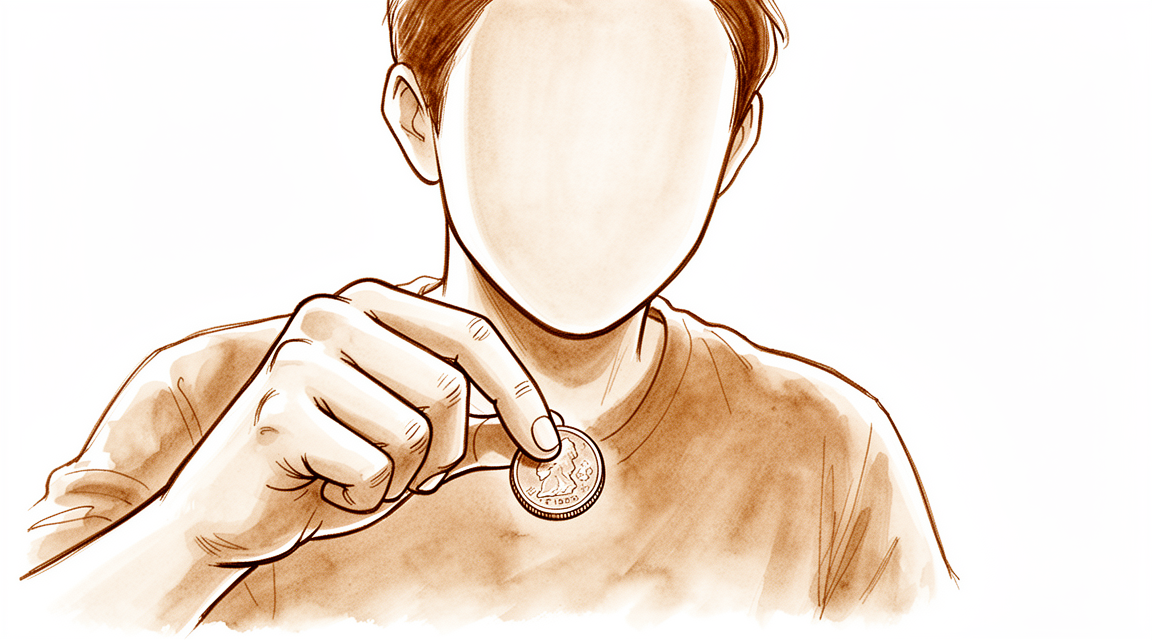
Ang protocol na ito ay nagsisilbing gabay sa iyong paggaling pagkatapos ng isang DIP joint fusion (arthrodesis), na permanenteng pinagsasama ang maliit na joint sa dulo ng iyong daliri, pinakamalapit sa kuko, kasama si Dr Kieran Hirpara sa Mater Private Hospital Rockhampton. Nagsisimula ito sa iyong home exercise program, na sinusundan ng structured clinical protocol na isinulat para sa iyong hand therapist: dalhin ang pahinang ito o ang PDF nito sa iyong unang therapy visit upang manatiling coordinated ang iyong rehabilitasyon. Maaaring i-adjust ng iyong therapist ang plano depende sa pag-unlad ng iyong paggaling.
Kung mayroon kang anumang alalahanin tungkol sa iyong sugat pagkatapos ng operasyon, makipag-ugnayan sa mga rooms. Madalas na nakatutulong ang pagkuha ng larawan ng sugat at pag-email nito para masuri.
Ano ang dapat asahan
Ang DIP joint fusion ay ginagawa kapag ang maliit na kasukasuan na pinakamalapit sa kuko ay pudpod na at masakit, karaniwan dahil sa arthritis (ang mga bukol sa buto na tinatawag na Heberden's nodes), o upang tanggalin ang isang nakakaabalang mucous cyst kasama ang bone spur sa ilalim nito. Sa halip na subukang panatilihing gumagalaw ang isang masakit at sirang kasukasuan, ang operasyon ay pinagsasama ito nang permanente (fuses it solid) sa isang bahagyang nakabaluktot at functional na posisyon (hanggang mga 35°). Sa disenyo nito, ang kasukasuan na iyon ay hindi na muling gagalaw, at kapalit nito ay mawawala ang sakit at ang dulo ng daliri ay magiging matatag at malakas para sa pag-pinch. Ang fixation ay karaniwang isang maliit na buried headless screw na mananatili na doon habambuhay (hindi na kailangang tanggalin), o kung minsan ay isang K-wire na tinatanggal pagkalipas ng humigit-kumulang anim na linggo. Kung may tinanggal na mucous cyst, magkakaroon ka rin ng skin o nail-fold care na dapat gawin habang gumagaling ang bahaging iyon.
Ang kabuuan ng iyong rehabilitasyon ay nakabase sa isang simpleng ideya: protektahan ang fusion hanggang sa magdugtong ang buto, ngunit panatilihing gumagalaw ang lahat ng iba pa. Ang buto ay karaniwang nararamdamang nagdugtong na pagkalipas ng mga anim hanggang walong linggo, at makikita ito sa X-ray pagkalipas ng mga sampung linggo. Hanggang sa panahong iyon:
- Ang fused fingertip ay nilalagyan ng splint at pinoprotektahan upang hindi maabala ang naghihilom na buto.
- Patuloy na pinagagalaw ang bawat iba pang kasukasuan: ang gitnang kasukasuan ng daliri, ang knuckle, ang hinlalaki, ang pulso, at lahat ng iyong iba pang mga daliri, upang hindi tumigas ang kamay.
- Kinokontrol ang pamamaga at pinamamahalaan ang peklat upang manatiling komportable at malambot ang daliri.
- Kapag nagdugtong na ang buto, ang pinch at grip ay unti-unting ibinabalik sa halip na biglaan.
Mga pag-iingat at limitasyon
- Isuot ang iyong fingertip splint ayon sa itinuro. Sa simula, isinusuot ito nang tuloy-tuloy; kalaunan, isinusuot na lamang ito kapag may aktibidad. Pinapanatili nitong hindi gumagalaw ang fused joint ngunit hinahayaang malayang gumalaw ang gitnang joint ng daliri (ang PIP).
- HUWAG gumamit ng power-grip, kurot nang malakas, o magbuhat ng mabibigat gamit ang dinaliri na inoperahan hanggang sa magdugtong na ang fusion at mabigyan ka na ng clearance; limitahan sa humigit-kumulang 1 kg (≈2 lb) sa unang anim na linggo.
- Panatilihing gumagalaw ang bawat iba pang joint mula sa simula: ang gitna at knuckle joints ng daliri, ang hinlalaki, ang pulso, at lahat ng iyong iba pang mga daliri.
- Panatilihing tuyo ang dressing at nakataas ang kamay sa unang 10–14 araw upang humupa ang pamamaga, at sundin ang anumang pangangalaga sa nail-fold o cyst-site kung may tinanggal na mucous cyst.
- Kung ikaw ay may K-wire, protektahan ito at panatilihing malinis ang area hanggang sa matanggal ito sa loob ng humigit-kumulang anim na linggo; ang buried screw ay hindi na kailangang tanggalin.
- HUWAG magmaneho hanggang sa wala ka na sa bulky splint at ligtas nang makahawak at makontrol ang manibela, karaniwan ay sa loob ng anim na linggo, depende sa desisyon ng iyong surgeon.
Para sa pamamahala ng sugat, pamamaga, at peklat, tingnan ang gabay sa wound care ng klinika.
Iyong mga ehersisyo
Kieran Hirpara 4.0
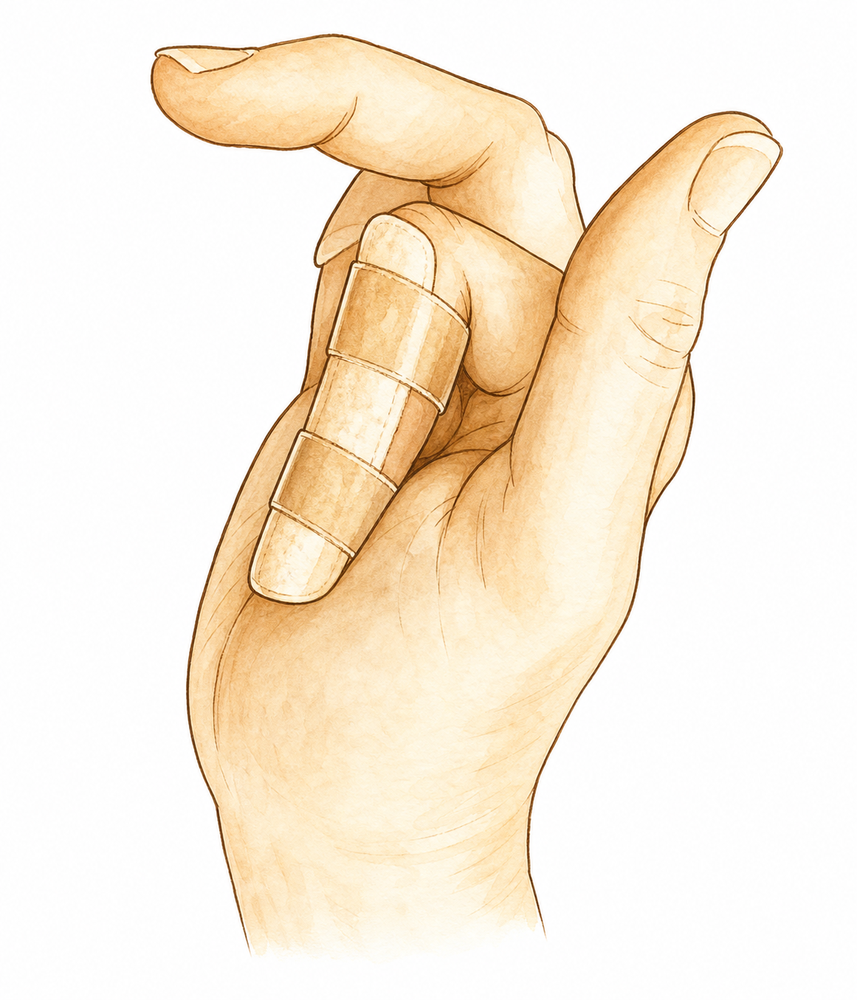
paggalaw ng PIP at MCP (ang mga kasukasuan sa magkabilang panig ng fusion)
Habang suot ang iyong DIP splint (pinapanatili nitong hindi gumagalaw ang joint sa dulo ng daliri lamang), itiklop at ituwid ang GITNANG joint ng daliri at ang malaking knuckle joint sa base nito, sa pamamagitan ng dahan-dahang pag-kuyom at pagbukas nang lubos. Ang fused tip ay hindi dapat gumalaw, ngunit ang mga joint sa magkabilang panig nito ay dapat manatiling maluwag upang hindi tumigas ang daliri. Gumalaw nang swabe at sa antas na komportable.
10 beses, 3–4 beses sa isang araw
Kieran Hirpara 4.0
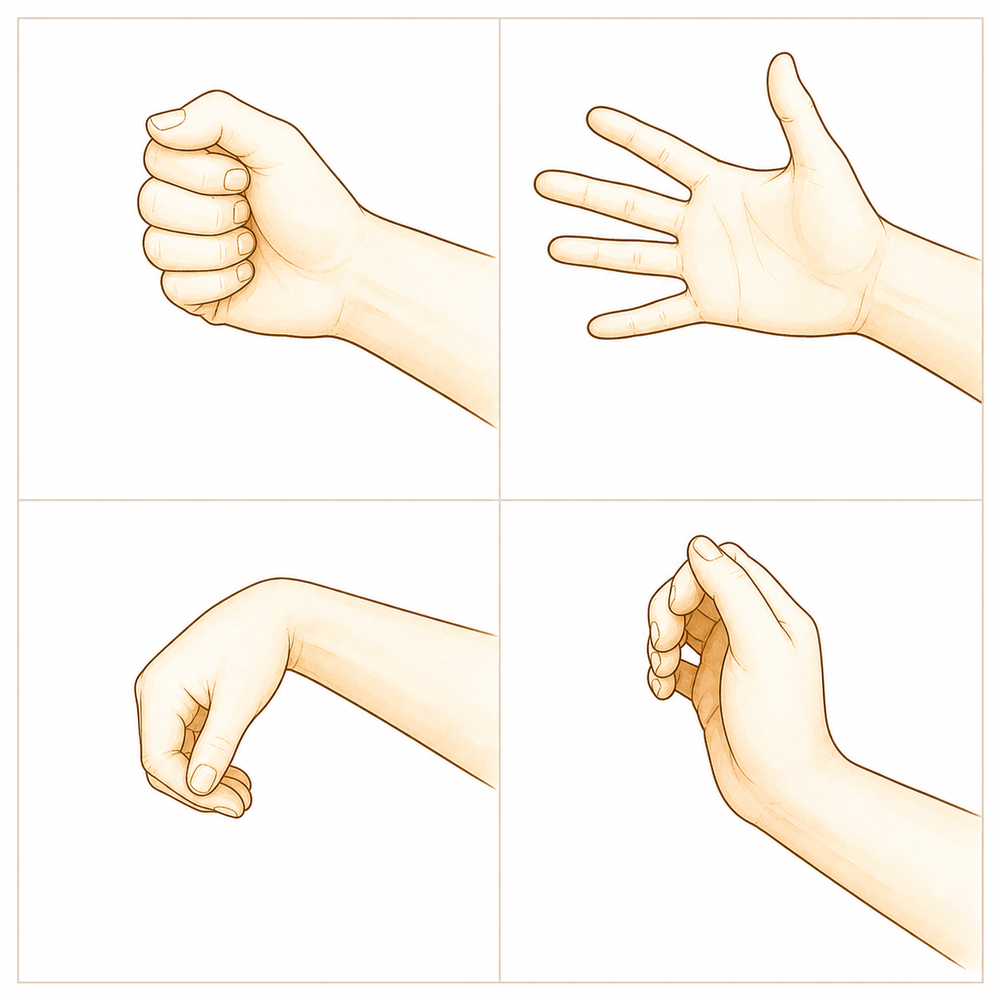
Igalaw ang lahat ng iyong iba pang mga daliri, hinlalaki, at pulso
Panatilihing malayang gumagalaw ang lahat ng bahaging HINDI naoperahan mula sa unang araw: itikom nang husto ang kamao at ibuka ito nang lubos, idikit ang iyong hinlalaki sa bawat dulo ng daliri, at dahan-dahang itiklop ang iyong pulso pataas at pababa. Ang dulo lamang ng daliring pinag-fuse ang limitado ang galaw — ang natitirang bahagi ng kamay ay dapat gumana nang normal hangga't kaya ng iyong komportabilidad upang hindi ito manigas o humina.
10 ng bawat isa, ilang beses sa isang araw
Kieran Hirpara 4.0
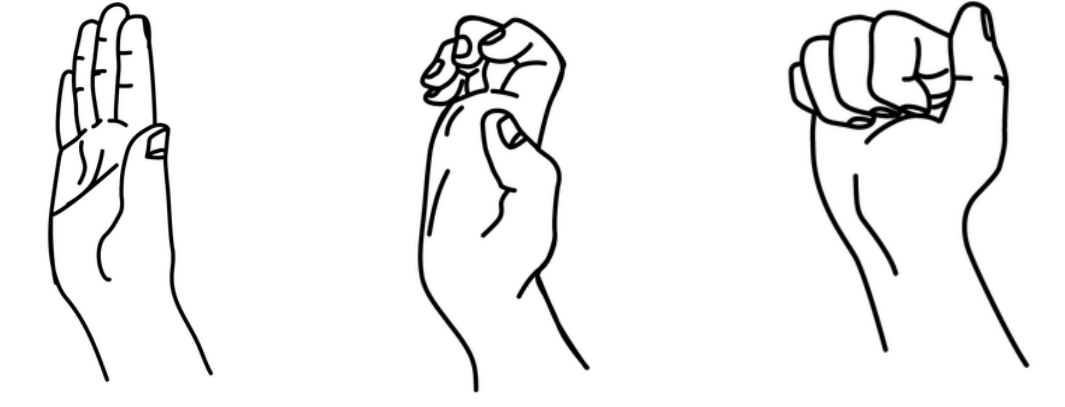
Tendon glides (hook, fist, straight)
Igalaw ang iyong mga daliri sa tatlong hugis — isang hook (itupi ang dulo at gitnang mga kasukasuan, panatilihing diretso ang mga knuckles), isang buong kamao, pagkatapos ay isang patag at direktong kamay — huminto nang sandali sa bawat isa. Pinapanatili nito ang maayos na pagdausdos ng mga tendon sa bahaging nagpapagaling upang hindi sila dumikit. Panatilihing komportable ang naka-splint na dulo ng daliri sa buong proseso; ang pagdausdos ay para sa natitirang bahagi ng daliri.
5–10 ng bawat hugis, 3 beses sa isang araw
Kieran Hirpara 4.0
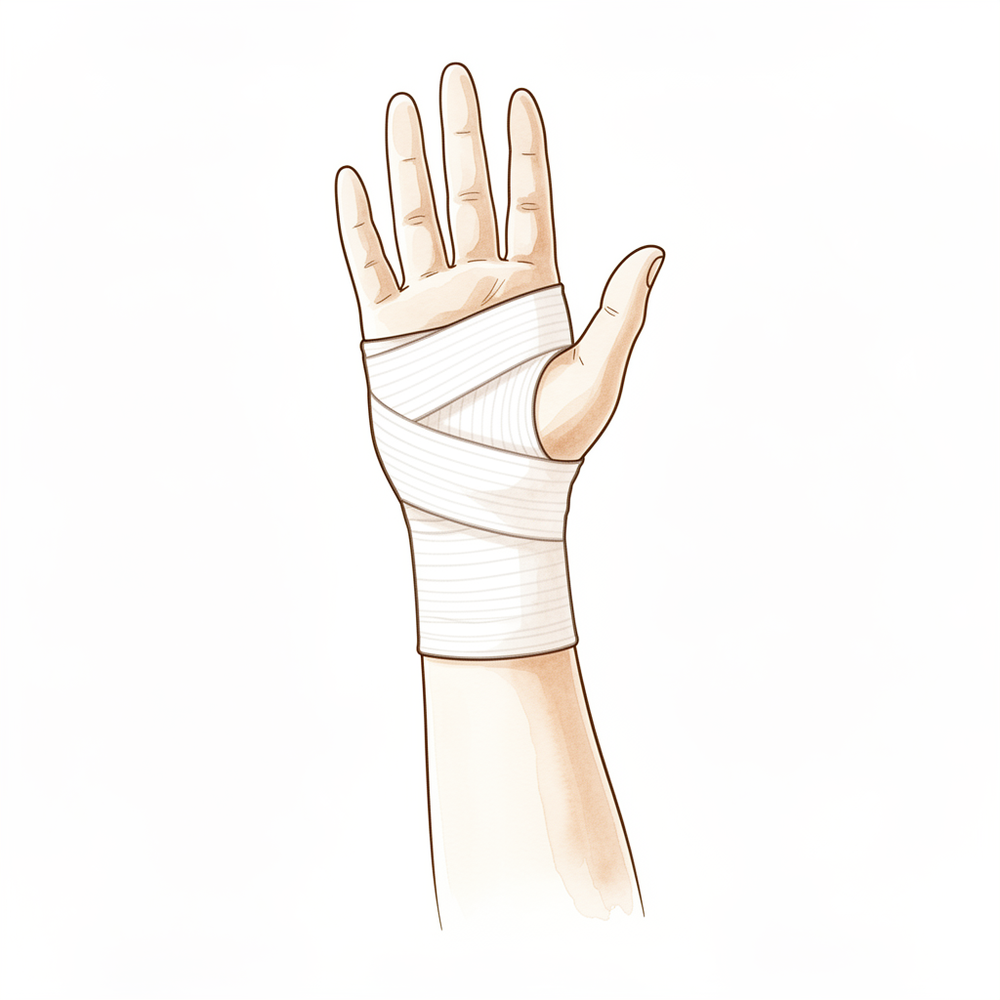
Pagkontrol sa pamamaga (elevation at compression)
Panatilihing nakataas ang iyong kamay sa itaas ng antas ng iyong puso hangga't maaari sa unang dalawang linggo — nakapatong sa unan o cushion. Kapag pinahintulutan na ng sugat, ang isang light compression sleeve o self-adherent (Coban) wrap sa daliri ay nakatutulong upang mabawasan ang pamamaga. Ang mas kaunting pamamaga ay nangangahulugan ng mas madali at mas malayang paggalaw ng kamay.
Itaas ito nang madalas sa buong araw; compression ayon sa inilapat ng iyong hand therapist
Kieran Hirpara 4.0
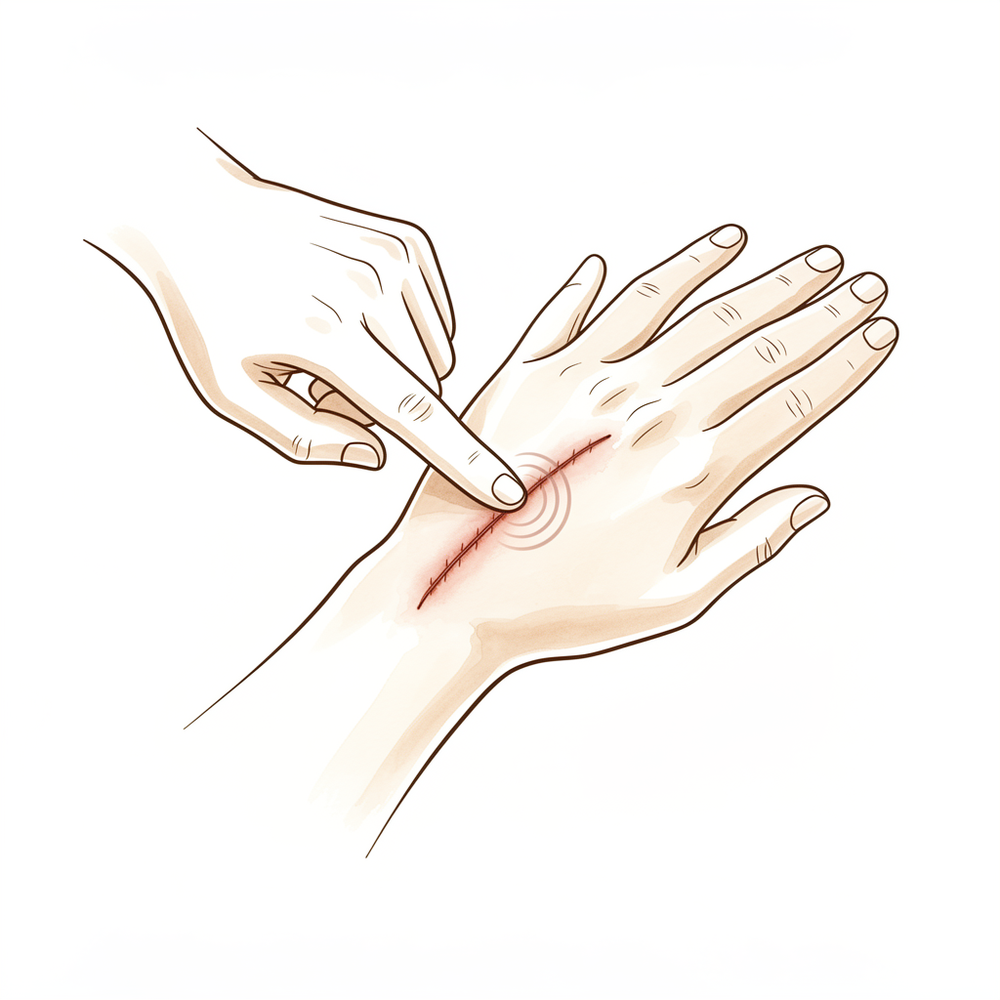
Masahe sa peklat
Kapag ganap nang magaling ang sugat at nagbigay na ng pahintulot ang iyong hand therapist, magpahid ng kaunting plain moisturiser sa peklat gamit ang maliliit at madiing pabilog na galaw sa loob ng isa o dalawang minuto. Kung may tinanggal na mucous cyst, gagabayan din ng iyong therapist ang pag-aalaga sa nail fold at sa nakapalibot na balat. Pinapanatili nito na malambot ang peklat at hindi gaanong sensitibo.
1–2 minuto, 2–3 beses sa isang araw, kapag magaling na ang sugat
Kieran Hirpara 4.0
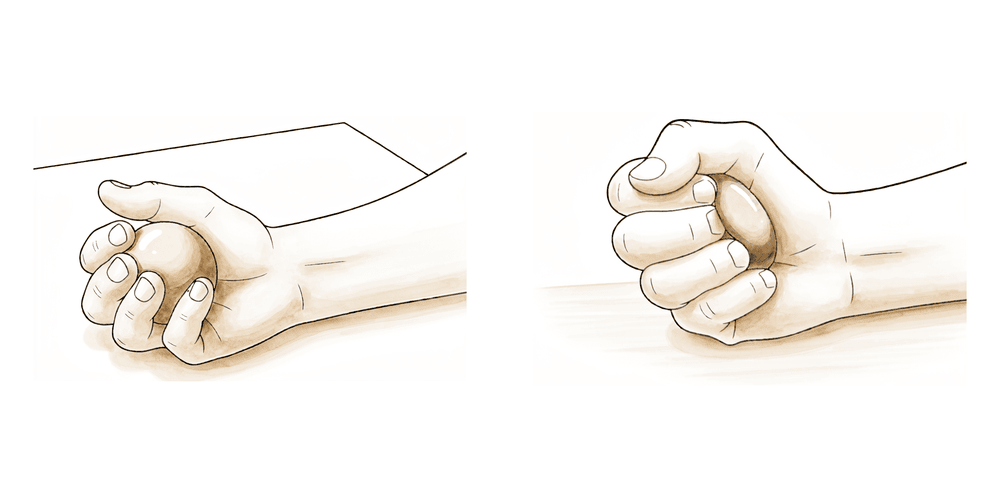
Pagpapalakas ng grip at pinch (pagkatapos ng union)
Isang ehersisyo sa HULING bahagi — kapag nagdugtong na ang fusion sa X-ray at sinimulan na ito ng iyong hand therapist (karaniwan ay mula sa humigit-kumulang 6–8 linggo). Magsimulang dahan-dahang pumiga ng therapy putty at gumawa ng magagaan na pinch sa pagitan ng hinlalaki at dulo ng daliri, pagkatapos ay unti-unting dagdagan ang puwersa sa mga sumunod na linggo. Huwag mag-power-grip o pumiga nang malakas bago ka payagan — ang masyadong maagang paglalagay ng load sa dulo ng daliri ay maaaring makagambala sa naghihilom na buto.
Ayon sa gabay ng iyong hand therapist, unti-unting pagpapalakas (mula ~6–8 linggo)
Ito ang mga ehersisyo mula sa iyong handout. Simulan lamang ang mga ito ayon sa gabay ni Dr Hirpara at ng iyong hand therapist, at manatili sa anumang limitasyong ibinigay sa iyo. Ang mga maagang ehersisyo ay pinapanatiling malayang gumagalaw ang natitirang bahagi ng kamay nang hindi naggagambala sa pinagdikit na dulo ng daliri (fused fingertip): paggalaw ng mga joint sa magkabilang panig ng fusion, lahat ng iyong iba pang mga daliri, hinlalaki at pulso, tendon glides, at pagkontrol sa pamamaga. Ang pagpapalakas ng grip at pinch ay kabilang sa huling yugto at hindi dapat simulan hanggang sa ang fusion ay nagdugtong na sa X-ray at ikaw ay partikular na binigyan ng pahintulot. Itigil ang anumang nagdudulot ng matalas na sakit sa dulo ng daliri.
Ang iyong clinical protocol
Ang natitirang bahagi ng pahinang ito ay ang staged clinical protocol para sa rehabilitasyon pagkatapos ng DIP joint (distal interphalangeal) arthrodesis. Ang seksyong ito ay ibibigay sa iyong hand therapist, at ang bawat phase ay nagsisimula sa isang paliwanag sa simpleng Ingles tungkol sa kung ano ang nangyayari. Ang prinsipyo ay protektahan ang arthrodesis site hanggang sa magkaroon ng bony union habang pinapanatili ang full motion sa bawat iba pang joint: ang DIP ay naka-immobilise sa isang P2–P3 splint na nag-iiwan sa PIP na malaya, pinamamahalaan ang oedema at scar, at ang pinch/grip ay unti-unting ibinabalik lamang pagkatapos ng union.
Bago ang paggamot, suriin ang operation report ng pasyente at ang past medical history, at makipag-ugnayan sa treating surgeon tungkol sa fixation (headless compression screw, buried, no removal, vs K-wire, removed ~6 weeks), ang fusion position (slight flexion, hanggang ~35°), at kung ang isang mucous cyst na may skin/nail-fold excision ay isinagawa. Ang clinical union ay karaniwang inaasahan sa loob ng 6–8 weeks at ang radiographic union ay sa loob ng 10 weeks; ang rehab timeline sa ibaba ay low-level expert consensus at nakadepende sa diskresyon ng surgeon at X-ray confirmation ng union bago ang splint weaning at loading.
Phase 1 — proteksyon at pagpapagaling (linggo 0 hanggang 2)
Ang unang dalawang linggo ay para protektahan ang bagong fixed fusion at paginhawahin ang pamamaga at ang sugat, habang pinapanatiling gumagalaw ang bawat joint na hindi apektado upang walang tumigas.
Para sa iyong hand therapist:
Edukasyon at mga pag-iingat - Makapal na surgical dressing/splint na may elevation para sa unang 10–14 araw; panatilihing tuyo ang dressing - Protektahan ang arthrodesis site; walang loading sa dulo ng daliring inoperahan - Kung may K-wire, protektahan ang pin site; suriin ang nail-fold/cyst-excision wound kung naaangkop
Pamamahala - Sugat: surgical dressings ayon sa itinuro; bantayan kung may impeksyon - Oedema: elevation, gentle hand pumping, ice kung naaangkop - Mga ehersisyo: AROM ng lahat ng hindi apektadong joints: PIP at MCP ng daliring inoperahan, thumb, wrist, at lahat ng iba pang daliri; simulan ang tendon glides ayon sa kakayahang magtiis ng pasyente
Mga kriterya para magpatuloy - Pagpapagaling ng sugat; kontrolado ang pamamaga; handa nang lumipat sa isang custom removable DIP-blocking splint sa loob ng humigit-kumulang dalawang linggo
Phase 2 — DIP-blocking splint na may activity (linggo 2 hanggang 6)
Mula sa humigit-kumulang dalawang linggo, ang bulky dressing ay papalitan ng isang custom removable DIP-blocking splint (isang Stax/mallet-type orthosis na sumasaklaw sa P2–P3) na nag-i-immobilise lamang sa joint ng dulo ng daliri at hinahayaang malaya ang PIP. Isinusuot ito nang tuluy-tuloy sa buong phase na ito. Hinihikayat ang full active motion sa lahat ng iba pang bahagi, pinamamahalaan ang pamamaga at peklat, at nananatiling unloaded ang dulo ng daliri.
Para sa iyong hand therapist:
Edukasyon at mga pag-iingat - Custom removable DIP-blocking splint (P2–P3, PIP free) na isinusuot nang tuluy-tuloy sa buong phase na ito - Bawal ang power grasp o pinch; functional load limit ~2 lb (≈1 kg)
Pamamahala - Mga ehersisyo: active PIP, MCP, thumb at wrist motion kasama ang motion ng lahat ng iba pang daliri; tendon glides (hook, full fist, straight) - Oedema: ipagpatuloy ang elevation at magdagdag ng compression (Coban/light sleeve) ayon sa tolerance - Peklat: simulan ang scar massage kapag ang sugat ay ganap nang hilom; nail-fold care kung saan may excise na mucous cyst
Mga kraytirya para mag-progress - Napanatiling PIP/MCP motion; kontroladong pamamaga; hilom na sugat; clinical union na lumilitaw sa humigit-kumulang anim na linggo (magpatuloy lamang sa weaning kapag may X-ray confirmation ng union)
Phase 3 — pagbabawas sa paggamit ng splint at pagsisimula ng banayad na pagpapalakas (ika-6 hanggang ika-8 linggo)
Kapag ang fusion ay nag-isa na sa X-ray (clinically ~6–8 linggo), babawasan na ang paggamit ng splint (isusuot na lamang para sa aktibidad/proteksyon) at ang K-wire, kung ginamit, ay tatanggalin sa ika-anim na linggo. Magsisimula ang banayad na pagpapalakas ng pinch at grip.
Para sa iyong hand therapist:
Edukasyon at mga pag-iingat - Bawasan ang paggamit ng DIP splint kapag nakumpirma na ang union: patuloy na protektibong pagsuot/para sa aktibidad lamang kung kinakailangan; tatanggalin ang K-wire ~6 na linggo - Unti-unting dagdagan ang loading; functional limit ~5 lb (≈2 kg) mula humigit-kumulang 8 linggo
Pamamahala - Mga ehersisyo: simulan ang banayad na pagpapalakas ng grip at pinch: therapy putty, light pinch at grip work; ipagpatuloy ang full motion sa lahat ng iba pang joints; ipagpatuloy ang scar management - Muling suriin ang anumang natitirang pamamaga o paninigas ng PIP/MCP at tugunan kung kinakailangan
Mga kraytirya para mag-progress - Nakumpirmang radiographic union; komportableng fingertip; nakakayanan ang banayad na loading nang walang sakit sa fusion site
Phase 4 — progresibong pagpapalakas at discharge (linggo 8 hanggang 12)
Kapag matatag na ang fusion, ang pagpapalakas ay itutuloy patungo sa normal na function ng kamay, at ang mga restriksyon ay aalisin sa loob ng humigit-kumulang labindalawang linggo.
Para sa iyong hand therapist:
Edukasyon at mga pag-iingat - Progresibong pagpapalakas ng grip at pinch; functional limit ~10 lb (≈4.5 kg) sa loob ng humigit-kumulang 10 linggo - Walang restriksyon mula sa loob ng humigit-kumulang 12 linggo, depende sa pagsusuri ng surgeon
Pamamahala - Mga ehersisyo: graded resistive grip at pinch (putty → grippers → task-specific loading); ibalik ang buong functional na paggamit ng kamay - Isaalang-alang ang discharge kapag nakamit na ang isang matatag, walang sakit na fingertip na may malapit-sa-normal na function at lakas ng kamay - I-refer muli sa treating surgeon kung may sakit sa ibabaw ng fusion, pag-aalala tungkol sa union, o mahinang functional outcome
Mga kraytirya para sa discharge - United, walang sakit na fusion; buong motion sa lahat ng mga joint na hindi na-fuse; naibalik ang functional na pinch at grip
Pagbabalik sa trabaho at aktibidad
Hinihikayat ang magaan na pang-araw-araw na paggamit ng iyong iba pang mga daliri at ang natitirang bahagi ng kamay mula sa simula, hangga't komportable; ang pinagdikit (fused) na dulo lamang ng daliri ang dapat limitahan. Ang pagmamaneho ay karaniwang nagpapatuloy sa loob ng humigit-kumulang anim na linggo, kapag wala na ang malaking splint at kaya mo nang hawakan at kontrolin ang manibela nang ligtas; ito ay nakadepende sa desisyon ni Dr Hirpara sa iyong review, kaya magplano ng tulong sa transportasyon sa mga unang linggo. Ang banayad na pinch at magaan na grip ay karaniwang nagsisimula sa loob ng anim na linggo at unti-unting pinalalakas mula sa walong linggo, kapag nagdugtong na ang buto. Ang buo, mabigat, o pang-isports na paggamit ng kamay ay karaniwang nakakamit sa loob ng humigit-kumulang labindalawang linggo. Ang mga timeline na ito ay mga expert-consensus guidelines sa halip na mga fixed deadline: ang desisyon ng iyong surgeon at ang iyong X-ray (na nagpapatunay na nagdugtong na ang buto) ang higit na mahalaga.
Pagkatapos ng iyong protocol
Ang protocol na ito ay kasabay ng pangkalahatang payo sa paggaling ng klinika; tingnan din ang pamamahala ng sakit pagkatapos ng operasyon, pag-aalaga ng sugat at pamamahala ng peklat. Ang phased plan sa itaas ay sumasalamin sa nailathalang gabay sa rehabilitasyon pagkatapos ng DIP joint arthrodesis, at ang iyong patuloy na paggaling ay ginagabayan nang indibidwal ni Dr Hirpara at ng iyong hand therapist ayon sa kung paano gumagaling ang iyong daliri.
Evidence & references
This is the clinical evidence summary written for health professionals. It is technical, and it lists the research this page was built from. You do not need to read it to understand your treatment or to make a decision about it.
DIP Joint Fusion — Procedure Outcomes & Post-operative Rehabilitation (Distal Interphalangeal Arthrodesis)
Topic scope: post-operative rehabilitation after arthrodesis (fusion) of the distal interphalangeal (DIP) joint — most often for end-stage osteoarthritis (Heberden's nodes), or to excise a mucous cyst together with its underlying osteophyte. This is a fusion, not a reconstruction: the joint is deliberately and permanently abolished and set in a slightly flexed, functional position, so the rehabilitation is a protect-to-union pathway built around oedema control, scar/nail-fold management, and preservation of motion at every adjacent joint, followed by progressive reloading — not restoration of DIP motion.
Defining principle of the rehab here: a DIP arthrodesis is meant to stop moving. The single therapeutic goal is to deliver a solid, pain-free, well-aligned bony union while keeping the rest of the hand fully mobile. The fingertip is immobilised in a P2–P3 (Stax/mallet-type) orthosis that blocks the DIP but leaves the PIP free; the deliberate restraints are protection of the fixation and avoidance of pinch/grip loading until union. The principal branch points are the fixation method (buried headless compression screw — no removal — versus K-wire, removed at ~6 weeks) and whether a mucous cyst with skin/nail-fold excision was performed, which adds soft-tissue/scar care. Union, not the calendar, gates splint weaning and loading.
A. PROCEDURE OUTCOMES (fusion union, position, fixation)
DIP arthrodesis is a reliable pain-relieving operation; the principal technical debates are over fixation method and fusion position, not whether to fuse a painful, end-stage joint.
- High union rates with headless compression screw fixation. A series of 64 joints fused with a Herbert-type headless compression screw reported reliable bony union with a low complication profile, supporting the buried-screw construct that requires no later removal [Hand 2010, DOI: 10.1007/s11552-010-9295-3]. Moderate (observational case series).
- Radiographic union averages around ten weeks. A review of DIP arthrodesis techniques reports a mean time to radiographic fusion of approximately 10 weeks, with reported union rates such as ~85% in the Brutus cohort, underlining that clinical comfort precedes full radiographic consolidation [J Hand Surg Am 2013, DOI: 10.1016/j.jhsa.2013.06.010]. Moderate (review of case series).
- Fusion position is a consensus, not a controversy. Technique descriptions place the DIP in slight flexion in a functional position for pinch; dorsal-plate and screw techniques are described with attention to setting and holding this position during fixation [J Hand Surg Am 2018, DOI: 10.1016/j.jhsa.2018.03.049]. Mechanistic / consensus.
- Screw fit depends on bony dimensions. Anatomical sizing work shows the headless screw must be matched to the medullary dimensions of the distal phalanx, informing implant selection and reducing fixation-related complications [Hand 2014, DOI: 10.1007/s11552-014-9679-x]. Mechanistic.
- Fixation choice carries differing complication patterns. Comparative data on K-wire versus headless (Herbert) screw fixation describe differences in infection and hardware-related events, relevant to the protective pin care needed when a K-wire is used and removed at ~6 weeks [J Hand Surg Am 2013, DOI: 10.1016/j.jhsa.2013.01.017]. Moderate (comparative series).
- Acute arthrodesis is an established option in trauma. Primary IP-joint arthrodesis for acute injury is a recognised technique, supporting fusion as a durable solution beyond degenerative disease [J Hand Surg / Thieme 2017, DOI: 10.1055/s-0037-1608691]. Moderate (case series).
B. REHABILITATION / THERAPY EVIDENCE
There are no randomised trials of rehabilitation after DIP arthrodesis. The rehab pathway is built from surgical-outcome timing data (union ~6–8 weeks clinical, ~10 weeks radiographic) plus published hand-therapy protocols and standard hand-therapy practice. The therapeutic logic is to immobilise only the fused joint, keep every other joint moving, control swelling and scar, and reload pinch/grip only after union.
- Immobilise the DIP, free the PIP. Published finger-fusion therapy protocols use a custom removable DIP-blocking (Stax/mallet-type) orthosis spanning P2–P3 that holds the fingertip joint while leaving the PIP free for active motion — continual early wear, weaning to activity-only after X-ray union [TCO; Hand Wisconsin; Alaska Ortho; Melbourne Arm Clinic protocols, URLs below]. Weak (consensus / published protocols).
- Preserve motion at all uninvolved joints from day one. Active motion of the PIP, MCP, thumb, wrist and all other digits, plus tendon glides, is standard hand-therapy practice to prevent stiffness while the DIP consolidates [published protocols, URLs below]. Consensus / standard practice.
- Oedema and scar control are routine adjuncts. Elevation and compression for swelling, and scar massage once healed (with nail-fold care after mucous-cyst excision), follow standard hand-therapy practice rather than trial evidence. Consensus / standard practice.
- Loading is gated by union, not by date. Protocols withhold power grasp/pinch until the fusion is radiographically united, then progress strengthening gradually — reflecting the ~10-week mean radiographic union from the outcome literature [J Hand Surg Am 2013, DOI: 10.1016/j.jhsa.2013.06.010]. Weak–moderate (timing anchored to outcome series; rehab schedule consensus).
Recovery trajectory (expected, evidence-anchored)
| Phase | Window | Restraint | Hand use / therapy focus | Strength / load | Notes |
|---|---|---|---|---|---|
| 1 — Protect & settle | Week 0–2 | Bulky dressing/splint; DIP unloaded | Elevation; AROM of all uninvolved joints (PIP, MCP, thumb, wrist, other digits); begin tendon glides | None to the fingertip | Keep dressing dry; review pin/cyst-excision wound |
| 2 — DIP-blocking splint with activity | Week 2–6 | Custom P2–P3 DIP-block, PIP free, worn continually | Active PIP/MCP/thumb/wrist + all-other-digit motion; tendon glides; oedema (Coban/sleeve); scar massage once healed | No power grasp/pinch; ~2 lb (≈1 kg) limit | Clinical union emerging ~6 wk |
| 3 — Wean splint & gentle strengthening | Week 6–8 | Splint weaned once united on X-ray; K-wire out ~6 wk | Begin gentle grip/pinch (putty, light pinch/grip); continue full motion elsewhere; continue scar care | ~5 lb (≈2 kg) from 8 wk | Buried screw needs no removal |
| 4 — Progressive strengthening & discharge | Week 8–12 | Restrictions lifting | Progressive grip/pinch strengthening; restore full hand use | ~10 lb (≈4.5 kg) at 10 wk; no restriction ~12 wk | Discharge when fusion solid + pain-free |
(Phase windows mirror the precautions and recovery-curve structure in the patient protocol; clinical union ~6–8 weeks and radiographic union ~10 weeks are anchored to the outcome series, while the exact phase timings are low-level expert consensus, not trial-derived deadlines, and are subject to surgeon discretion and X-ray confirmation of union.)
C. KEY CONTROVERSIES / EVIDENCE QUALITY
- Fixation method. Buried headless compression screw (no removal) versus K-wire (removed ~6 weeks) — both achieve union; the comparative literature describes differing infection and hardware-event profiles, and the choice drives whether pin-site protection is needed in rehab [DOI: 10.1007/s11552-010-9295-3; DOI: 10.1016/j.jhsa.2013.01.017]. Moderate.
- Fusion position. Slight flexion (up to ~35°) in a functional pinch position is a settled consensus across technique descriptions, not a live controversy [DOI: 10.1016/j.jhsa.2018.03.049]. Consensus.
- Union timing. Clinical comfort (~6–8 weeks) precedes radiographic union (~10 weeks mean), so splint weaning and loading should follow the X-ray rather than the calendar [DOI: 10.1016/j.jhsa.2013.06.010]. Moderate.
- Rehabilitation schedule. No RCTs exist for DIP-fusion rehab; phase timings are derived from published therapy protocols and standard hand-therapy practice anchored to surgical union data. Low-level expert consensus.
- Mucous-cyst cases. Excision of a mucous cyst with its osteophyte adds skin/nail-fold and scar care to the standard fusion rehab; this is a soft-tissue management addition rather than a change to the bony-union pathway. Consensus / standard practice.
D. EVIDENCE STRENGTH FLAGS (summary)
- MODERATE (observational case series / reviews): reliable bony union with headless compression screw fixation; mean radiographic union ~10 weeks (~85% union, Brutus); differing complication profiles by fixation method; acute IP arthrodesis as an established trauma option.
- CONSENSUS / MECHANISTIC: slight-flexion functional fusion position; screw sizing to phalangeal dimensions; immobilise-the-DIP / free-the-PIP splinting principle.
- WEAK / LOW-LEVEL CONSENSUS: the specific phased rehabilitation schedule (no RCTs; derived from published therapy protocols + standard hand-therapy practice, anchored to union timing); exact phase timings and load limits (typical guides, not trial-derived); oedema/scar adjuncts (standard practice).
CITATIONS
RAG corpus (180,000+ Orthopaedic articles)
- Distal interphalangeal joint arthrodesis using a dorsal plate: technique and fusion position. J Hand Surg Am. 2018. DOI: 10.1016/j.jhsa.2018.03.049
- Distal interphalangeal joint arthrodesis with the Herbert headless compression screw: union and complications in 64 joints. Hand (N Y). 2010. DOI: 10.1007/s11552-010-9295-3
- Distal interphalangeal joint arthrodesis: review of techniques and outcomes (mean ~10-week radiographic fusion; Brutus ~85% union). J Hand Surg Am. 2013. DOI: 10.1016/j.jhsa.2013.06.010
- K-wire versus Herbert screw fixation for distal interphalangeal joint arthrodesis: infection and hardware events. J Hand Surg Am. 2013. DOI: 10.1016/j.jhsa.2013.01.017
- Anatomical sizing of headless compression screws for distal phalangeal fixation. Hand (N Y). 2014. DOI: 10.1007/s11552-014-9679-x
- Acute interphalangeal joint arthrodesis in trauma. J Hand Surg / Thieme. 2017. DOI: 10.1055/s-0037-1608691
DIP-fusion rehabilitation literature (URLs)
- Twin Cities Orthopedics — Distal Interphalangeal (DIP) Joint Fusion post-op protocol. https://www.tcomn.com/wp-content/uploads/2016/06/Distal-Interphalangeal-DIP-Joint-Fusion.pdf
- Hand Wisconsin — Finger-joint fusion therapy protocol. https://handwisconsin.com/wp-content/uploads/2016/09/fusion-finger-joint-therapy-protocol.pdf
- Alaska Orthopaedics — Arthrodesis (DIP / PIP or MCP) joint fusion protocol. https://www.akortho.com/wp-content/uploads/Arthrodesis-DIP-PIP-or-MCP-Joint-Fusion.pdf
- Melbourne Arm Clinic — PIP / DIP arthrodesis rehabilitation protocol. https://melbournearmclinic.com.au/orthopaedic-rehabilitation/shoulder-rehabilitation/pip-dip-arthrodesis-protocol/