Patients › Rehabilitation
Pag-aayos ng Distal Biceps Tendon
Isang protected early-motion recovery plan pagkatapos ng surgical repair ng isang ruptured distal biceps tendon, na nagpapahintulot ng komportableng paggalaw mula sa unang araw habang pinoprotektahan ang repair mula sa resisted lifting hanggang sa maibalik ang lakas sa pamamagitan ng mga yugto.
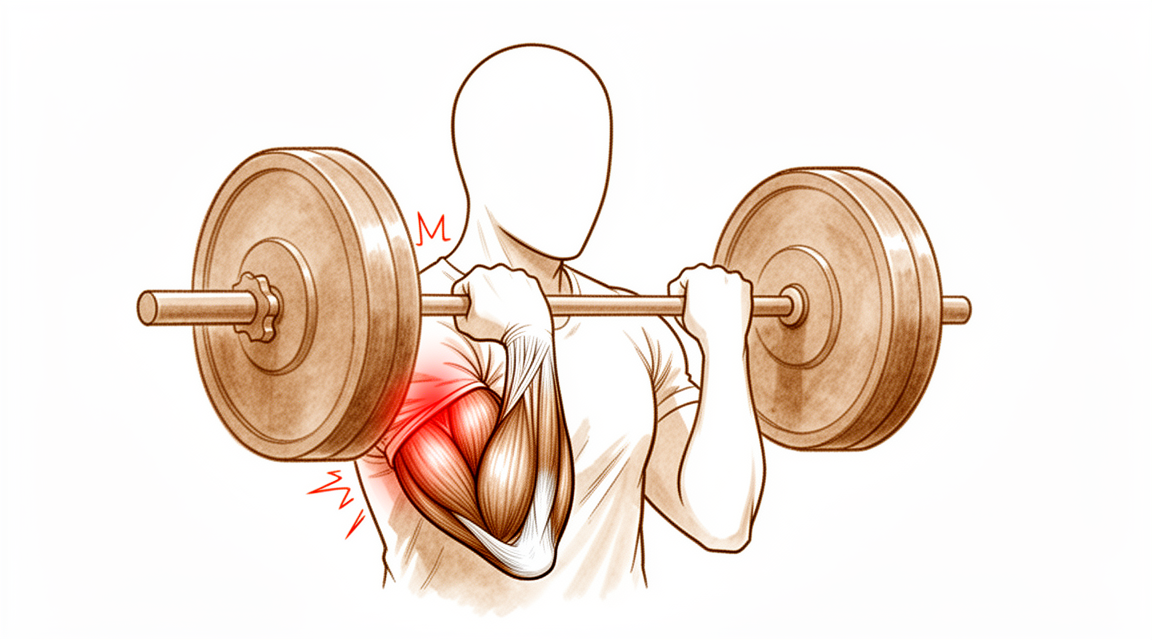
Ang protocol na ito ay nagsisilbing gabay sa iyong paggaling pagkatapos ng surgical repair ng isang ruptured distal biceps tendon kasama si Dr Kieran Hirpara sa Mater Private Hospital Rockhampton. Nagsisimula ito sa iyong home exercise program, na sinusundan ng structured clinical protocol na isinulat para sa iyong physiotherapist o hand therapist. Dalhin ang pahinang ito o ang PDF nito sa iyong unang therapy visit upang manatiling coordinated ang iyong rehabilitasyon. Maaaring i-adjust ng iyong therapist ang plano depende sa pag-unlad ng iyong paggaling.
Kung mayroon kang anumang alalahanin tungkol sa iyong sugat pagkatapos ng operasyon, makipag-ugnayan sa mga rooms. Madalas na nakatutulong ang pagkuha ng larawan ng sugat at pag-email nito para sa review.
Ano ang dapat asahan
Ang distal biceps tendon ay ang litid na nag-uugnay sa iyong biceps muscle sa radius bone sa ibaba lamang ng harap ng siko. Kapag ito ay naputol (rupture), muli itong ikinakabit sa bony footprint nito sa radius. Kinukumpuni ito ni Dr Hirpara gamit ang isang cortical button, isang maliit at matibay na fixation na humahawak nang mahigpit sa tendon laban sa buto habang ito ay naghihilom.
Dahil ito ay isang matibay na kumpuni, ang paggaling ay nakabase sa komportableng maagang paggalaw sa halip na mahigpit na immobilisation. Magsuot ka ng simpleng sling sa loob ng humigit-kumulang 6 na linggo (hindi hinged elbow brace) at hinihikayat kang igalaw ang siko sa buong komportableng range nito mula sa unang araw, kabilang ang pagtuwid nito. Ang maagang paggalaw ay pumipigil sa siko na tumigas, na isa sa mga pangunahing problema pagkatapos ng operasyong ito.
Ang tibay ng kumpuni ay sadyang ginamit upang payagan ang maagang paggalaw na ito. Hindi ito pahintulot upang magbuhat nang maaga. Ang tendon ay kailangan pa ring magdugtong nang biyolohikal pabalik sa buto, at ang paghihilom na iyon ang nagpoprotekta sa iyo mula sa muling pagkaputol (re-rupture). Dahil dito, ang paglalagay ng bigat sa braso (pagbuhat, mahigpit na paghawak, at resisted strengthening) ay ipinagpapaliban hanggang sa humigit-kumulang 4 na buwan, pagkatapos ay unti-unting ipapakilala nang magaan at dahan-dahang dadagdagan. Ang sling ay pangunahing para sa komportable at bilang paalala na huwag gamitin nang mabigat ang braso; tinatanggal ito para sa iyong mga ehersisyo at para sa paghuhugas.
Para sa pamamahala ng sugat, pamamaga, at peklat, tingnan ang gabay ng practice sa wound care.
Mga pag-iingat at limitasyon
Gawin
- Igalaw ang iyong siko, forearm, pulso at kamay sa kanilang buong komportableng range mula sa unang araw: pagbaluktot, pagtuwid at pag-ikot ng forearm.
- Alisin ang sling para sa iyong mga ehersisyo at para sa kalinisan; isuot ito para sa komportable at proteksyon sa natitirang oras sa loob ng humigit-kumulang 6 na linggo.
- Gamitin ang braso para sa napakagaang pang-araw-araw na gawain (pagkain, light self-care) sa loob ng limitasyon ng iyong komportable.
Huwag gawin
- Huwag magbuhat, magbitbit, humawak nang mahigpit o gumawa ng anumang resisted strengthening gamit ang inoperahang braso hanggang sa mabigyan ka ng clearance sa loob ng humigit-kumulang 4 na buwan. Ito ang pinakamahalagang pag-iingat.
- Huwag pilitin ang bigla at mabilis na pagtuwid ng siko laban sa isang load, at iwasan ang mga pilit o biglaang paggalaw.
- Huwag i-stretch ang iyong balikat pabalik sa hyperextension nang maaga, dahil hinihila nito ang naghihilom na sugat sa harap ng siko.
Iyong mga ehersisyo
Kieran Hirpara 4.0
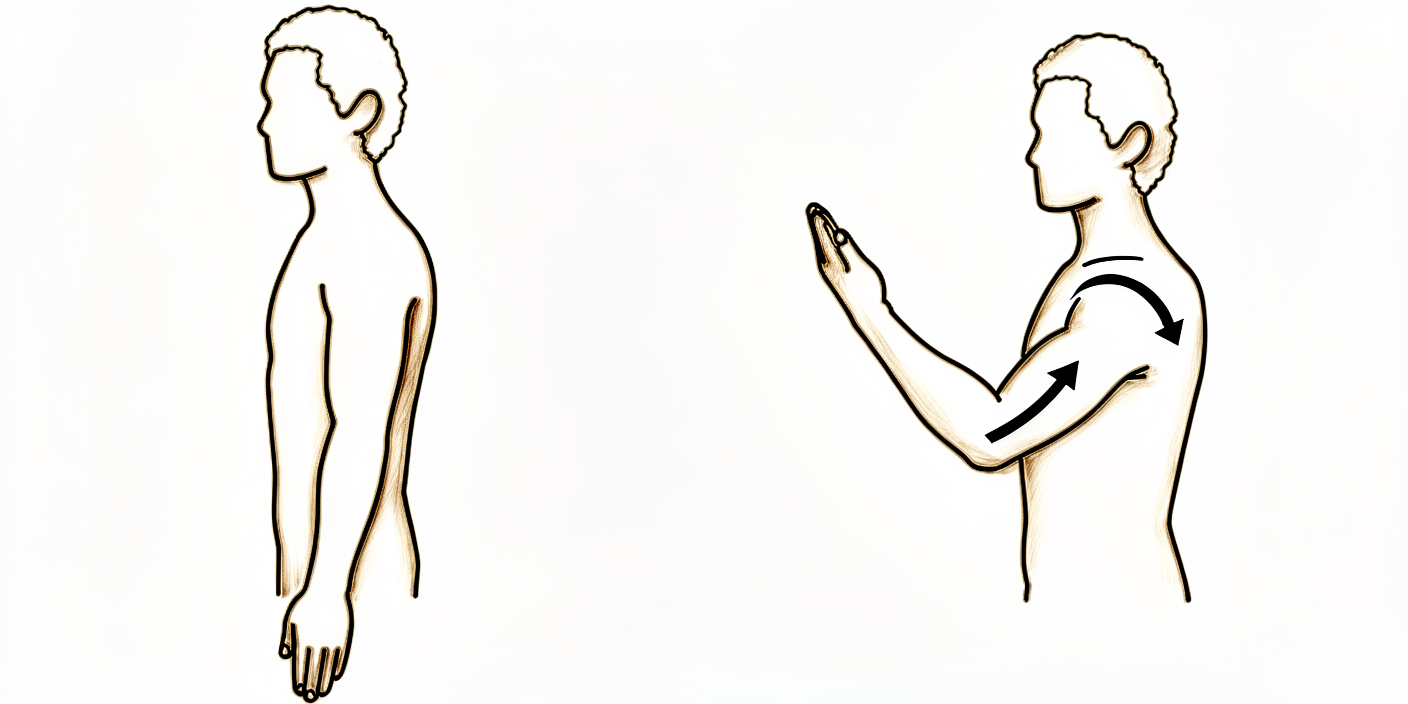
Pagbaluktot at pagtuwid ng siko (hanggang sa komportable)
Habang nakaharap pataas ang iyong palad, dahan-dahang itiklop ang iyong siko pataas patungo sa iyong balikat hanggang sa kung saan ito komportable, pagkatapos ay dahan-dahang ituwid ito pabalik pababa hanggang sa kung saan ito komportable. Walang limitasyon kung gaano kalayo ang iyong igagalaw — hayaang ang iyong komportable ang magsilbing gabay at igalaw ito nang swabe. Panatilihing nakapahinga ang iyong upper arm sa iyong gilid.
10 beses, 3–4 beses sa isang araw
Kieran Hirpara 4.0
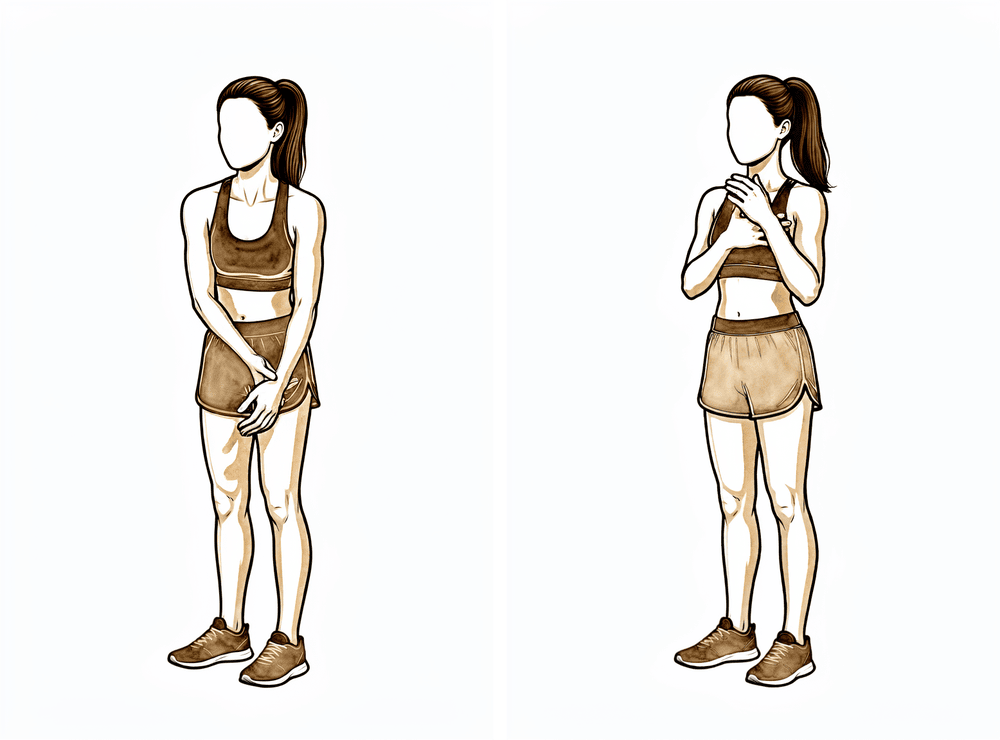
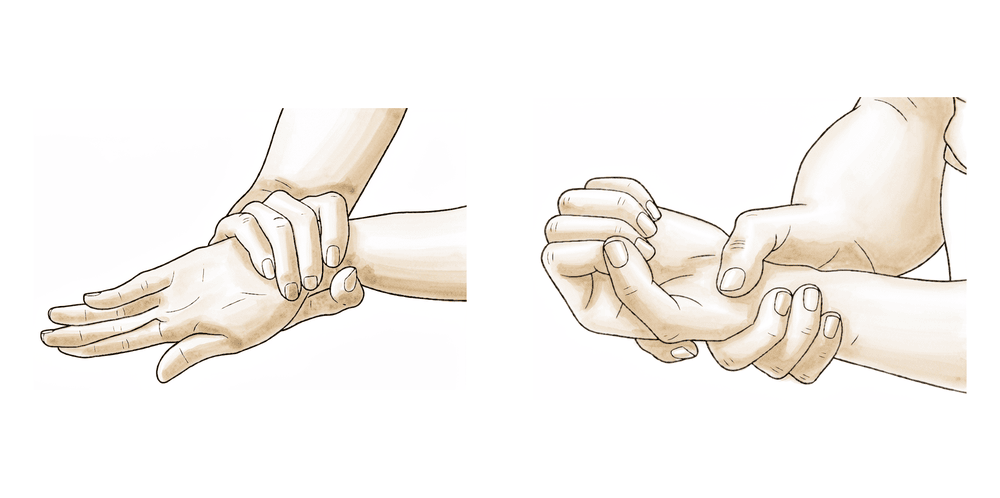
Tinutulungang pagbaluktot ng siko
Hayaang mag-relax nang lubos ang braso na inoperahan, pagkatapos ay gamitin ang iyong kabilang kamay upang dahan-dahang itiklop ang siko paitaas patungo sa iyong balikat. Hindi ka humihila gamit ang braso na inoperahan — ang kabilang kamay ang gumagawa ng trabaho. Pinapanatili nito na malambot ang siko sa mga unang linggo.
10 beses, 3–4 beses sa isang araw
Kieran Hirpara 4.0
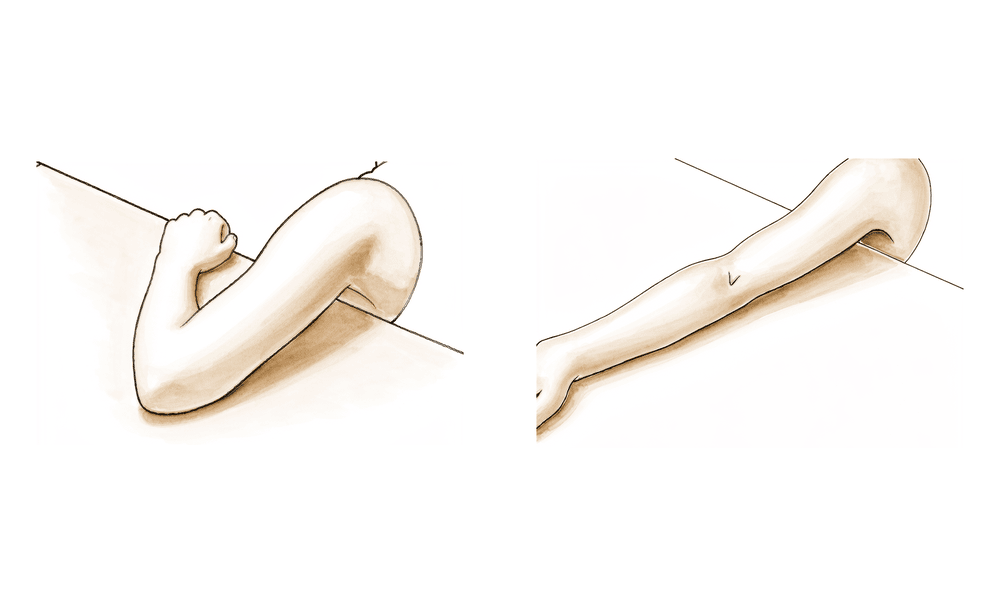
Pagtuwid ng siko (hanggang sa maging komportable)
Dahan-dahang ituwid ang iyong siko pababa hanggang sa isang komportableng posisyon at pagkatapos ay itiklop itong pabalik sa itaas. Pinapayagan ang ganap na pagtuwid hangga't kaya ng iyong komportable — hindi kailangang harangan o pigilan ang direksyon ng pagtuwid. Gumalaw nang dahan-dahan at iwasan ang anumang bigla o pilit na paggalaw.
10 beses, 3–4 beses sa isang araw
Kieran Hirpara 4.0
Rotasyon ng forearm (palad paitaas / palad paibaba)
Idikit ang iyong siko sa iyong tagiliran at itiklop ito nang halos kasing-anggulo ng isang right angle. Dahan-dahang iharap ang iyong palad pataas sa kisame, manatili sa posisyong ito nang sandali, pagkatapos ay iharap ito pababa sa sahig. Panatilihing nakadikit ang siko upang ang paggalaw ay magmula sa forearm, hindi sa balikat.
10 beses sa bawat direksyon, 3–4 beses sa isang araw
Kieran Hirpara 4.0
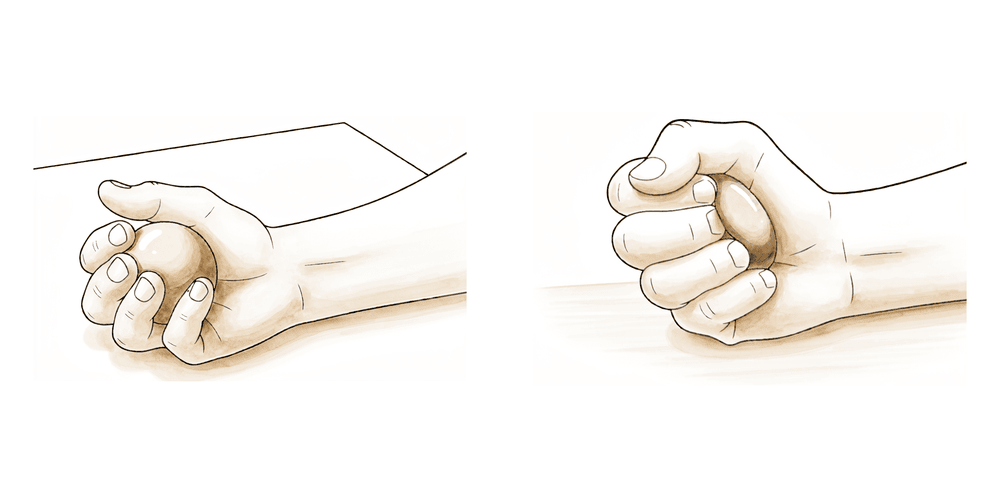
Paggalaw ng kamay, pulso, at pagkapit (grip)
Panatilihing gumagalaw ang iyong kamay at mga daliri mula sa simula. Ibukas nang malapad ang iyong kamay, pagkatapos ay dahan-dahang itikom ito at i-release. Igalaw din ang iyong pulso pataas at pababa. Pinapanatili nito na malambot ang kamay at pinipigilan ang paninigas at pamamaga habang gumagaling ang siko.
10–15 beses, ilang beses sa isang araw
Kieran Hirpara 4.0
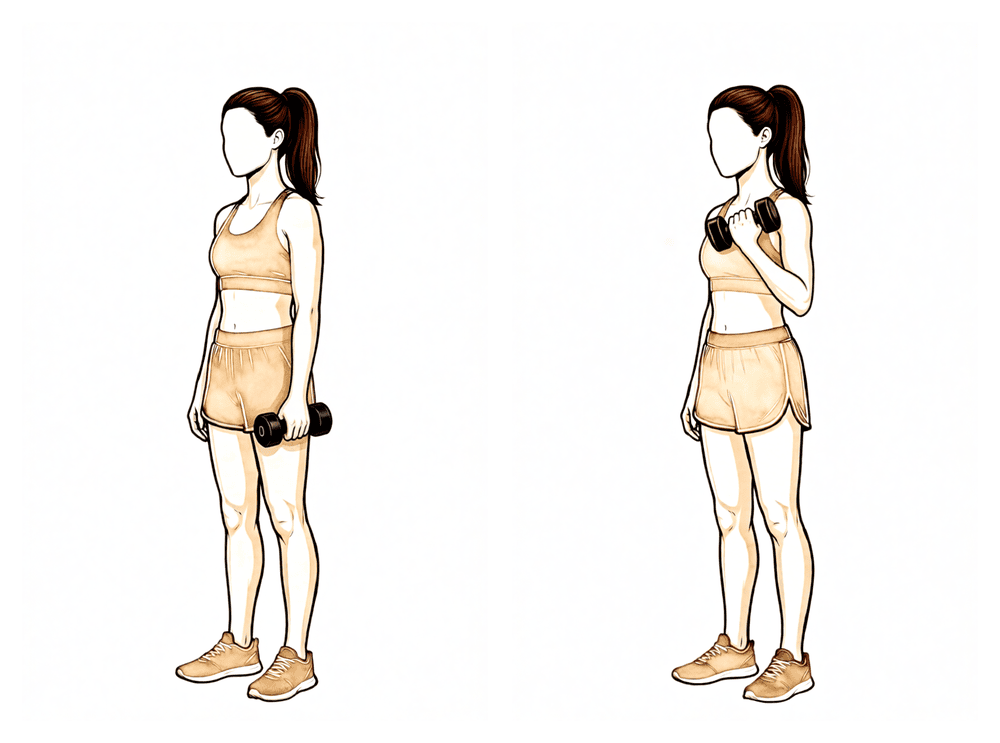
Resisted biceps curl (mula sa humigit-kumulang 4 na buwan)
Magsimula LAMANG kapag binigyan ka na ng clearance ni Dr Hirpara o ng iyong therapist na magsimulang mag-load (mula sa humigit-kumulang 4 na buwan). Habang nakaharap pataas ang iyong palad, humawak ng magaan na pabigat at dahan-dahang i-curl ito pataas patungo sa iyong balikat, pagkatapos ay ibaba ito nang may kontrol. Magsimula sa napakagaan at unti-unting dagdagan ang resistance sa mga sumunod na linggo.
10–15 beses, unti-unting dadagdagan kapag nakakuha na ng clearance
Kieran Hirpara 4.0
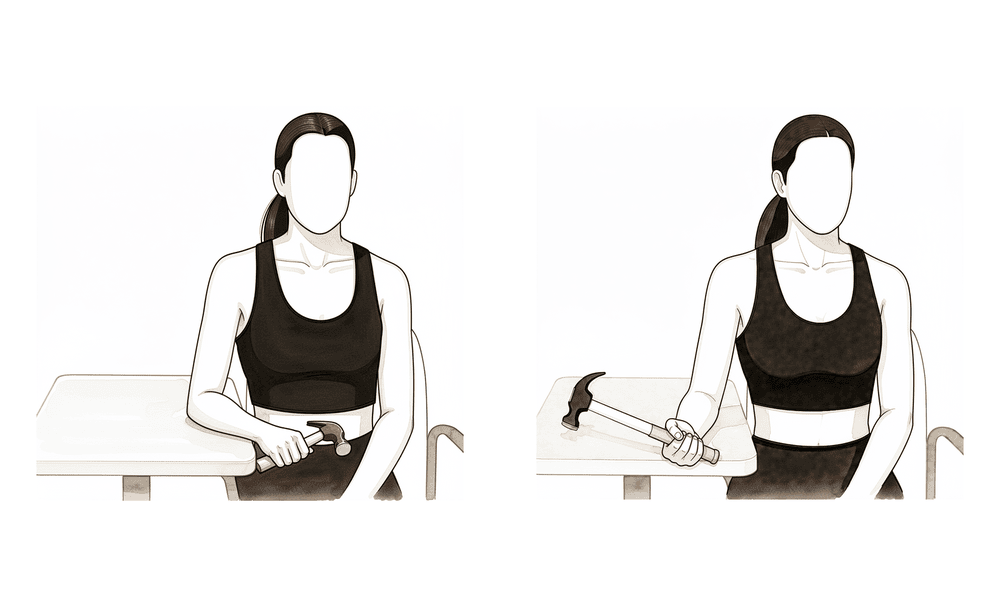
Resisted forearm rotation (mula sa humigit-kumulang 4 na buwan)
Magsimula LAMANG kapag nabigyan ka na ng pahintulot na magsimulang mag-load (mula sa humigit-kumulang 4 na buwan). Habang nakadikit ang iyong siko sa iyong katawan, iikot ang iyong palad pataas laban sa magaan na resistance ng isang band o magaan na pabigat na hawak sa isang dulo, pagkatapos ay ibalik ito nang may kontrol. Binubuo nito muli ang lakas sa pag-ikot (supination) na ibinibigay ng biceps. Magsimula sa magaan at unti-unting dagdagan.
10–15 beses, unti-unting dadagdagan kapag nakakuha na ng clearance
Ito ang mga ehersisyo mula sa iyong handout para mapanatiling gumagalaw ang iyong siko, forearm at kamay sa mga unang linggo. Alisin ang sling upang gawin ang mga ito. Gumalaw lamang hanggang sa kung ano ang komportable, at simulan ang mga ito ayon sa gabay ni Dr Hirpara at ng iyong therapist. Ang dalawang ehersisyo para sa pagpapalakas ay ipapakilala sa huling bahagi: kapag nabigyan ka na lamang ng pahintulot na magsimulang mag-load sa bandang ika-4 na buwan.
Ang iyong clinical protocol
Ang natitirang bahagi ng pahinang ito ay ang clinical protocol para sa rehabilitasyon pagkatapos ng isang cortical-button distal biceps tendon repair. Ang seksyong ito ay ibibigay sa iyong physiotherapist o hand therapist, at ang bawat phase sa ibaba ay nagsisimula sa isang paliwanag sa simpleng Ingles tungkol sa kung ano ang nangyayari.
Ang gabay na prinsipyo ay maagang komportableng paggalaw na may naantalang loading: ang cortical-button construct ay sapat ang lakas upang payagan ang walang limitasyong paggalaw mula sa unang araw, kaya walang hinged brace at walang extension block. Ang lakas ng construct ay ginagamit upang maiwasan ang paninigas, hindi upang bigyang-katwiran ang maagang loading; ang resisted strengthening at pagbubuhat ay sadyang ipinagpaliban upang protektahan ang tendon-to-bone healing at mabawasan ang re-rupture.
Phase I — Protected comfort motion (Linggo 0 → 6)
Isang simpleng sling ang isusuot para sa ginhawa at bilang paalala laban sa mabigat na paggamit; tinatanggal ito para sa mga ehersisyo at kalinisan. Ang layunin ay mapanatili ang komportable at halos kumpletong range of motion habang pinoprotektahan ang repair mula sa anumang load.
Para sa iyong physiotherapist:
- Immobilisation: Simpleng sling sa loob ng 6 na linggo, tinatanggal para sa mga ehersisyo at kalinisan. Walang hinged brace; walang extension block.
- Range of motion: Lahat ng galaw ayon sa ginhawa simula sa unang araw: active at passive elbow flexion, extension at forearm rotation. Walang arc restriction at walang extension block.
- Mga Layunin: Panatilihin ang komportableng full range of motion; protektahan ang repair mula sa load; panatilihing mobile ang kamay, wrist at balikat.
- Mga Ehersisyo: Active elbow flexion/extension hanggang sa komportable; assisted (passive) elbow flexion; forearm pronation/supination active range habang ang siko ay nakadikit sa gilid; paggalaw ng kamay, wrist at grip; scapular at shoulder range of motion. Walang resisted biceps o supination loading.
- Mga Pag-iingat: Bawal ang pagbuhat, pagkapit (gripping) o resisted strengthening; iwasan ang biglaang forced eccentric extension laban sa load; iwasan ang shoulder hyperextension.
- Pamantayan para mag-progress: Hilom na ang sugat, komportableng halos kumpletong range of motion, tanggal na sa sling sa ika-6 na linggo.
Phase II — Full motion, unloaded (Week 6 → ~4 months)
Ititigil na ang paggamit ng sling. Malayang magagamit ang braso para sa mga magagaan na gawaing pang-araw-araw, ngunit nang walang resisted loading o pagbubuhat: ang tendon ay kasalukuyan pa ring naghihilom sa buto, at ito ang panahon kung kailan pinakamahalaga ang pag-iingat laban sa load kahit na ligtas na ang paggalaw.
Para sa iyong physiotherapist:
- Mga Layunin: Full symmetric pain-free range of motion; normal na magaan na functional use ng kamay at braso.
- Range of motion / paggamit: Full motion ayon sa kakayahan at ginhawa; pang-araw-araw na magaan na paggamit nang walang resisted loading o pagbubuhat.
- Mga Ehersisyo: Ipagpatuloy ang range-of-motion work; kamay, wrist at grip; scapular at shoulder conditioning. Wala pang resisted biceps o supination loading.
- Pamantayan para mag-progress: Full painless range of motion; ang sugat at repair ay settled na → simulan ang graded loading sa loob ng humigit-kumulang 4 na buwan.
Phase III — Pagpapalakas at graded loading (~4 → 6 buwan)
Magsisimula na ang loading. Ipakikilala ang light resisted strengthening para sa elbow flexion at forearm supination at unti-unting itataas patungo sa functional, pagkatapos ay sa mga demand na partikular sa trabaho o sport.
Para sa iyong physiotherapist:
- Mga Layunin: Muling buuin ang lakas ng flexion at supination; pagbabalik sa trabaho at sport.
- Mga Ehersisyo: Simulan ang light resisted strengthening at pagbubuhat sa ika-4 na buwan; unti-unting itaas (isotonic curls at resisted supination → functional patterns → job- at sport-specific loading).
- Pamantayan para sa pag-unlad: Pain-free resisted flexion at supination; lakas na papalapit na sa kabilang panig.
Pagbabalik sa trabaho at aktibidad
Sa unang 6 na linggo, asahan na gamitin ang braso para lamang sa magaan at komportableng pang-araw-araw na gawain habang nakasuot ang sling para sa proteksyon. Ang mga magagaan na gawaing pang-opisina o mga tungkuling isang-kamay lamang ang kailangan ay madalas na posible nang maaga; ang mas mabigat o mga manwal na trabahong nangangailangan ng dalawang kamay ay hihintayin hanggang sa magsimula at mapalakas na ang loading.
Ang mga pangunahing milestone ay:
- Walang pagbubuhat at walang resisted loading sa mga unang buwan: ito ay sinasadya, upang hayaang gumaling ang tendon sa buto.
- Magaang pagbubuhat at pagpapalakas mula sa ika-4 na buwan, sisimulan nang dahan-dahan at uunlad linggo-linggo.
- Pagbabalik sa non-contact sport mula sa ika-4 na buwan; walang limitasyong (contact) sport sa ika-6 na buwan, kapag nakamit na ang mga criteria: kumpletong range of motion na walang sakit, lakas na hindi bababa sa 90–100% ng kabilang panig, at kakayahang kayanin ang mga partikular na demand ng iyong trabaho o sport.
Hindi ka dapat magmaneho habang nakasuot ng sling. Maaari nang magmaneho muli kapag wala na sa sling at kaya nang kontrolin ang sasakyan nang komportable at ligtas, gaya ng kumpirmasyon sa iyong review. Laging sundin ang partikular na payo ni Dr Hirpara, dahil ang mga timing ay maaaring mag-iba depende sa mga demand ng iyong trabaho at sport.
Pagkatapos ng iyong protocol
Ang protocol na ito ay kasabay ng pangkalahatang payo sa paggaling ng klinika; tingnan ang pamamahala ng sakit pagkatapos ng operasyon at pag-aalaga ng sugat. Ang phased plan sa itaas ay naaayon sa nailathalang ebidensya sa rehabilitasyon pagkatapos ng distal biceps tendon repair, at ang iyong patuloy na paggaling ay ginagabayan nang indibidwal ng iyong physiotherapist o hand therapist ayon sa pag-unlad ng iyong siko.
Evidence & references
This is the clinical evidence summary written for health professionals. It is technical, and it lists the research this page was built from. You do not need to read it to understand your treatment or to make a decision about it.
Distal Biceps Tendon Repair — Post-operative Rehabilitation (Evidence)
Topic scope: Post-operative rehabilitation after surgical repair of a ruptured distal biceps tendon reattached to the radial tuberosity with cortical-button fixation. The protocol here reflects Dr Hirpara's practice — a sling-only, early-comfort-motion approach with deliberately delayed loading — set against the published spectrum of distal-biceps rehabilitation protocols.
Defining principle: Cortical-button fixation is the strongest available construct, and biomechanical and clinical evidence show it tolerates immediate motion safely. Dr Hirpara's stance is to spend that strength on early movement, not early loading: a simple sling for 6 weeks (no hinged brace, no extension block) with all motion to comfort from day 1 including extension, but with resisted strengthening and lifting held back until ~4 months to protect tendon-to-bone healing and minimise re-rupture, and unrestricted activity / return to sport at ~6 months on criterion-based clearance. This sits at the protective end of loading while matching the most current thinking on early motion for stiffness prevention.
Where this protocol sits in the evidence
Published distal-biceps protocols span a wide range, from rigid hinged-brace extension-block schemes to immediate unrestricted motion. Dr Hirpara's plan diverges from the "traditional" template in two deliberate ways:
- Immobilisation: A simple sling for comfort, not a hinged ROM brace, and no extension block. Motion is unrestricted to comfort from day 1. The mainstream BWH/MGB protocols instead use a posterior splint at 90° for 5–7 days, then a hinged brace with a 45°→30° extension block opened ~10°/week to full extension by ~6 weeks (or ~3 weeks in the accelerated variant). Dr Hirpara's approach is at the early-motion end and is justified by the strength of the cortical-button construct.
- Loading: Resisted strengthening and lifting are deferred to ~4 months. This is more conservative than the published loading timelines (accelerated resisted work at week 6; standard/MGB at weeks 8–10–12; light weights weeks 12–14). Crucially, this conservatism is a choice made despite having the construct that would permit earlier loading.
The endpoint — unrestricted activity / return to sport at ~6 months, criterion-based — is the single most commonly cited endpoint across protocols and matches the mainstream consensus.
Key evidence and controversies
-
Early/immediate motion is safe with modern fixation. (Moderate) Biomechanical work supports immediate motion: Bisson et al (AJSM 2007) found aggressive rehabilitation safe after the modified 2-incision approach, and Rose et al (KSSTA 2010) showed single-incision EndoButton/FiberWire repairs survive 2,000 immediate-motion cycles. Several series report no increased re-rupture with immediate post-operative motion. This underpins the sling-only, motion-to-comfort approach.
-
Cortical-button strength enables early motion. (Moderate) Cortical-button (± interference screw) fixation has the highest load-to-failure of the available constructs (Olsen JSES 2014; Spang JSES 2006; Lang OTSR 2018 — comparable functional outcomes across constructs but higher load-to-failure for cortical button). Spencer/Edwin (HAND 2008) argued EndoButton fixation strength may allow earlier ROM. This fixation strength is the explicit rationale for permitting immediate movement.
-
Mobilisation timing may not change outcome. (Moderate) A retrospective comparison found no clinically significant difference in failure, complications, ROM or patient-reported outcomes for early versus delayed mobilisation after primary distal biceps repair. This undercuts the urgency of accelerating loading and supports a measured progression.
-
Conservative rehab may lower re-rupture. (Consensus / survey) Rosenthal/Ting/Sher (JSES 2023), a survey of fellowship-trained elbow surgeons, suggests more conservative post-operative rehab may be associated with lower re-rupture risk — a direct counterweight to the accelerated-loading trend and the rationale for deferring loading to ~4 months. Phelps et al (JSES Int 2025, Level IV systematic review) found no consensus on the optimal return-to-sport protocol, with protocols ranging from immobilisation to immediate motion.
-
Tendon elongation in the mid window. (Moderate) Marshall et al (OJSM 2016, radiostereometric) showed the repaired tendon elongates mostly at 4–8 weeks post-op with minimal change at 8–16 weeks — a biomechanical argument for caution against aggressive loading in that mid window even when motion itself is safe.
-
Incision and complications. (Moderate) Grewal et al RCT (JHS 2010): no overall functional difference single vs double incision (flexion strength slightly greater with two-incision, more minor complications with single-incision). Amarasooriya systematic review (AJSM 2020): synostosis occurred only with double incision; fixation technique did not significantly affect re-rupture. Incision choice mainly drives complication-avoidance precautions, not the ROM timeline. Re-rupture rates overall are low (0–5.6%; Garon & Greenberg 2016).
Phased rehabilitation timeline (this protocol)
| Phase | Window | Sling / brace | ROM / use | Strengthening / loading | Criteria to progress |
|---|---|---|---|---|---|
| I — Protected comfort motion | Week 0 → 6 | Simple sling 6 wk, off for exercises/hygiene. No hinged brace, no extension block | All motion to comfort from day 1 — active + passive flexion, extension and forearm rotation. No arc restriction | None. No resisted biceps/supination loading; hand/wrist/grip and scapular/shoulder ROM maintained | Wound healed; comfortable near-full ROM; out of sling at 6 wk |
| II — Full motion, unloaded | Week 6 → ~4 mo | Sling off | Full symmetric pain-free ROM; light everyday use | None yet — light functional use without resisted loading or lifting | Full painless ROM; wound/repair settled → begin loading ~4 mo |
| III — Strengthening & graded loading | ~4 → 6 mo | — | Full ROM maintained | Start LIGHT resisted strengthening / lifting at ~4 mo; progress gradually (isotonic curls + resisted supination → functional → job/sport-specific) | Pain-free resisted flexion/supination; strength approaching the other side |
| Return to activity | ~6 mo | — | Unrestricted | Unrestricted activity / return to sport, criterion-based | Full painless ROM; strength ≥90–100% of the other side; tolerance of job/sport-specific demands |
One-line summary: simple sling 6 weeks with all motion to comfort from day 1 (no brace, no extension block) → full unloaded motion to ~4 months → light resisted loading from ~4 months → unrestricted activity / sport at ~6 months, criterion-based.
Evidence strength flags
- MODERATE (biomechanical + cohort): safety of immediate/early motion with cortical-button fixation (Bisson 2007; Rose 2010; Olsen 2014; Spang 2006; Lang 2018); no clinically significant difference early vs delayed mobilisation; low overall re-rupture rates.
- MODERATE (biomechanical): tendon elongation concentrated 4–8 weeks (Marshall 2016) — supports caution on mid-window loading.
- CONSENSUS / survey-level: more conservative rehab may lower re-rupture (Rosenthal 2023); no consensus on optimal return-to-sport protocol (Phelps 2025, Level IV). The specific phase timings of this protocol are expert/consensus-derived, not trial-derived.
Overall evidence strength: Moderate. Phased timelines rest on consistent institutional protocol consensus reinforced by biomechanical studies and retrospective cohorts; few prospective RCTs of the rehabilitation progression itself, and no consensus on the optimal return-to-sport protocol.
CITATIONS
RAG corpus (180,000+ Orthopaedic articles)
- Grewal R, Athwal GS, MacDermid JC, et al. Single vs. double incision technique for the repair of distal biceps tendon ruptures: a randomized clinical trial. J Hand Surg Am. 2010.
- Amarasooriya M, Bain GI, Roper T, et al. Complications after distal biceps tendon repair: a systematic review. Am J Sports Med. 2020.
- Keener JD. Controversies in the surgical treatment of distal biceps tendon ruptures: single versus double-incision repairs. J Shoulder Elbow Surg. 2011;20(2):S113–S125.
- Dunphy TR, Hudson J, Batech M, et al. Surgical treatment of distal biceps tendon ruptures: an analysis of complications in 784 surgical repairs. Am J Sports Med. 2017;45(13):3020–3029.
- Bisson LJ, Gurske-de Perio J, Weber AE, et al. Is it safe to perform aggressive rehabilitation after distal biceps tendon repair using the modified 2-incision approach? A biomechanical study. Am J Sports Med. 2007.
- Rose DM, Archibald JD, Sutter EG, et al. Biomechanical analysis suggests early rehabilitation is possible after single-incision EndoButton distal biceps repair with FiberWire. Knee Surg Sports Traumatol Arthrosc. 2010;19(6).
- Marshall NE, Keller RA, Okoroha K, et al. Radiostereometric evaluation of tendon elongation after distal biceps repair. Orthop J Sports Med. 2016.
- Phelps BM, Birnbrich A, Singer W, et al. Postoperative rehabilitation and return to sport criteria following distal biceps tendon rupture surgery. JSES Int. 2025. (Level IV systematic review: no consensus on optimal RTS rehabilitation.)
- Rosenthal R, Ting RS, Sher D. Management of distal biceps tendon ruptures: a survey of fellowship-trained subspecialist elbow surgeons. J Shoulder Elbow Surg. 2023;32(10).
- Olsen JR, Shields E, Williams RB, et al. A comparison of cortical button with interference screw versus suture anchor techniques for distal biceps brachii tendon repairs. J Shoulder Elbow Surg. 2014;23(11):1607–1611.
- Spang JT, Weinhold PS, Karas SG. A biomechanical comparison of EndoButton versus suture anchor repair of distal biceps tendon injuries. J Shoulder Elbow Surg. 2006.
- Lang NW, Bukaty A, Sturz GD, et al. Treatment of primary total distal biceps tendon rupture using cortical button, transosseous fixation and suture anchor: a single center experience. Orthop Traumatol Surg Res. 2018.
- Edwin ES (Spencer EE Jr), Tisdale A, Kostka K, Ivy RE. Is therapy necessary after distal biceps tendon repair? HAND. 2008;3(4).
- Rubinger L, Solow M, Johal H, et al. Return to work following a distal biceps repair: a systematic review of the literature. J Shoulder Elbow Surg. 2020;29(5):1002–1009.
- Ford SE, Andersen JS, Macknet DM, et al. Major complications after distal biceps tendon repairs: retrospective cohort analysis of 970 cases. J Shoulder Elbow Surg. 2018;27(10):1898–1906.
- Cuzzolin M, Secco D, Guerra E, et al. Operative versus nonoperative management for distal biceps brachii tendon lesions: a systematic review and meta-analysis. Orthop J Sports Med. 2021.
- Garon MT, Greenberg JA. Complications of distal biceps repair. Orthop Clin North Am. 2016. (Re-rupture 0–5.6%.)
Published rehabilitation protocols (web)
- Brigham & Women's Hospital — Distal Biceps Tendon Repair Rehabilitation Protocol (standard). https://www.brighamandwomens.org/assets/BWH/patients-and-families/pdfs/elbow---distal-biceps-repair-protocol.pdf
- Brigham & Women's Hospital — Distal Biceps Tendon Repair Accelerated Protocol. https://www.brighamandwomens.org/assets/BWH/patients-and-families/rehabilitation-services/pdfs/elbow-accelerated-distal-biceps-repair-protocol-bwh.pdf
- Mass General Brigham Sports Medicine — Rehabilitation Protocol for Distal Biceps Tendon Repair (rev. 10/2021). https://www.massgeneral.org/assets/mgh/pdf/orthopaedics/sports-medicine/physical-therapy/rehabilitation-protocol-for-distal-biceps-repair.pdf