Patients › Rehabilitation
Pagpapalit ng Balikat para sa Bali (Fracture)
Rehabilitation after hemiarthroplasty or reverse shoulder replacement for a proximal humerus fracture — slower than elective replacement while the tuberosities heal.
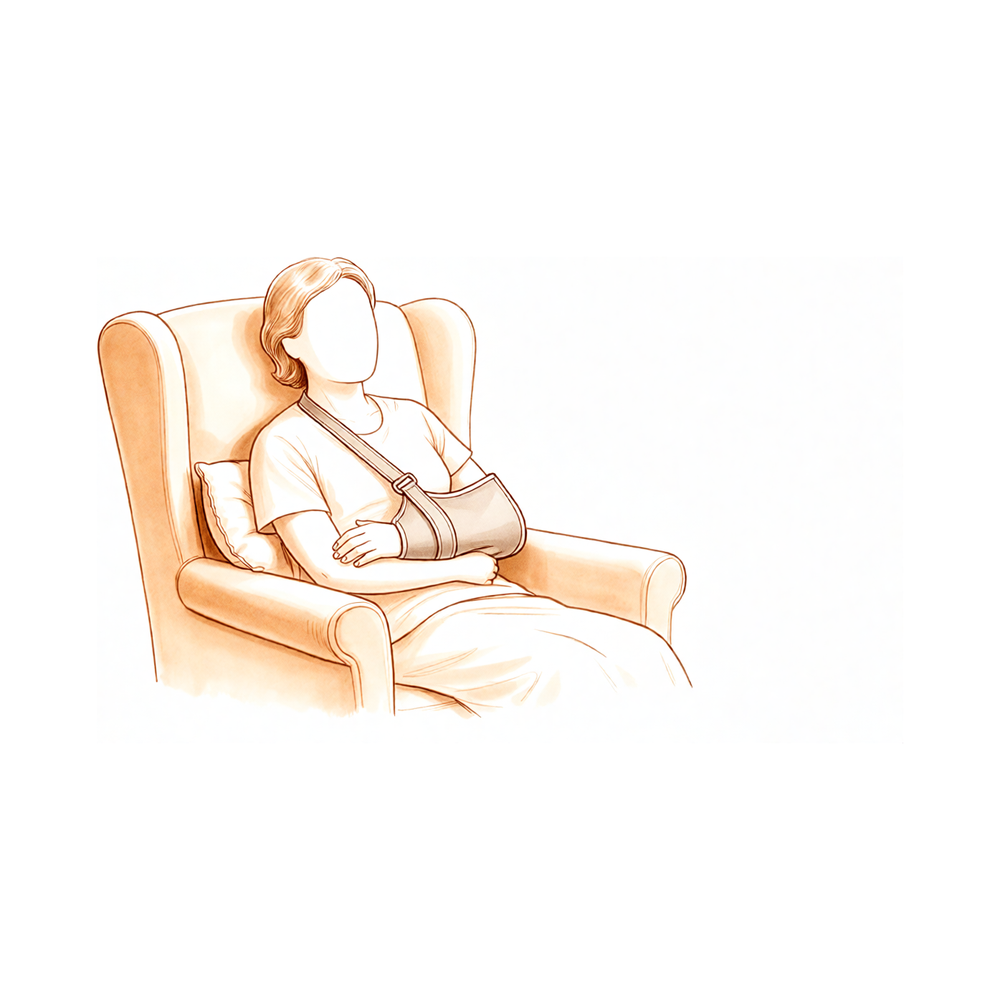
Ang protocol na ito ay nagsisilbing gabay sa iyong paggaling pagkatapos ng shoulder replacement na isinagawa para sa bali sa balikat (isang proximal humerus fracture) kasama si Dr Kieran Hirpara sa Mater Private Hospital Rockhampton. Depende sa bali, ang replacement ay maaaring isang reverse shoulder replacement o isang hemiarthroplasty (pagpapalit lamang ng ball ng joint). Ang proseso ng rehabilitasyon ay magkatulad para sa dalawa, dahil ang nagtatakda ng bilis ay ang paghilom ng mga fragment ng buto, hindi ang uri ng implant. Ang bawat phase sa ibaba ay nagsisimula sa isang paliwanag sa simpleng Ingles tungkol sa kung ano ang nangyayari at kung ano ang pinakamahalaga, na sinusundan ng structured protocol na isinulat para sa iyong physiotherapist: dalhin ang pahinang ito o ang PDF nito sa iyong unang pagbisita sa physiotherapy upang manatiling coordinated ang iyong rehabilitasyon. Maaaring i-adjust ng iyong physiotherapist ang plano depende sa pag-unlad ng iyong paggaling.
Kung mayroon kang anumang alalahanin tungkol sa iyong sugat pagkatapos ng operasyon, makipag-ugnayan sa mga clinic. Madalas na nakatutulong ang pagkuha ng larawan ng sugat at pag-email nito para masuri.
Bakit mas mabagal ang paggaling pagkatapos ng isang fracture
Kapag ang balikat ay pinalitan nang elective dahil sa arthritis o gasgas na rotator cuff, ang buto sa paligid ng bagong joint ay buo, at ang rehabilitasyon ay maaaring sumabay sa bilis ng paggaling ng soft-tissue. Pagkatapos ng isang fracture, ito ay naiiba. Ang dalawang bony knobs sa itaas ng buto ng braso (ang greater at lesser tuberosities, kung saan nakakabit ang mga kalamnan ng rotator cuff) ay karaniwang nahiwalay, at habang isinasagawa ang iyong operasyon, ang mga ito ay tinatahi pabalik sa posisyon sa paligid ng bagong prosthesis. Ang mga fragment na iyon ay dapat munang gumaling sa buto at sa implant, gaya ng anumang fracture, at karaniwang nangangailangan ito ng ilang linggo hanggang buwan.
Ang mga nailathalang rehabilitation protocol para sa shoulder replacement na isinagawa para sa fracture ay pare-pareho sa puntong ito: kung gaano kahusay gagana ang balikat pagkatapos ay nakadepende nang malaki sa kung ang mga tuberosity ay gumaling sa tamang posisyon, at ang maaga o puwersadong paggalaw (kahit passive movement) ay maaaring humila sa repair at ilagay ang paggaling na iyon sa panganib. Samakatuwid, ang protocol ay sumusunod sa parehong landas gaya ng elective reverse shoulder replacement protocol. Pagkatapos ng isang fracture, ang parehong proseso ay tumatakbo nang mas mabagal dahil kailangang gumaling muna ang mga fragment ng buto. Ang bawat hakbang pataas sa iyong rehabilitasyon ay nakadepende sa dalawang bagay nang magkasama: ang paglipas ng sapat na oras, at ang mga X-ray na nagpapakita na ang buto ay gumagaling, gaya ng kinumpirma sa iyong review kay Dr Hirpara.
Ano ang dapat asahan
Mananatiling manhid ang iyong braso paggising mo, at karaniwang bumabalik ang pakiramdam sa loob ng 6 hanggang 12 oras. Bihira, ang ilang pamamanhid o panghihina ay maaaring magpatuloy sa loob ng 2 hanggang 3 araw.
Pagkagising mo mula sa iyong operasyon, ikaw ay nasa isang sling, na may malaking pad sa ibabaw ng iyong balikat. Ang pad na ito ay tatanggalin bago ang discharge. Sa ilalim nito ay may waterproof dressing na tumatakip sa isang surgical glue strip, na maaaring hayaan lamang sa loob ng 2 linggo. Ang iyong mga tahi ay dissolvable at hindi kailangang tanggalin, ngunit maaaring may ilang dulo ng tahi sa bawat dulo ng sugat na maaaring gupitin nang pantay sa balat pagkatapos ng 2 linggo. Ikaw ay itatakda para makipagkita sa aming nurse para sa wound check 1–2 linggo pagkatapos ng iyong operasyon. Kung hindi ka makakadalo sa dressing check, maaari mong tanggalin ang iyong dressing nang mag-isa pagkatapos ng 2 linggo.
Humigit-kumulang na timeframe para sa pagbabalik sa mga aktibidad (mas mabagal kaysa pagkatapos ng isang elective replacement, at laging nakadepende sa kung paano gumagaling ang iyong buto):
- Pagmamaneho: hindi sa loob ng hindi bababa sa anim na linggo (nalalapat ito sa anumang operasyon sa balikat), at hindi rin habang suot mo ang sling. Karamihan sa mga tao ay bumabalik sa pagmamaneho sa pagitan ng 6 at 12 linggo, kapag bumalik na ang paggalaw at kontrol; talakayin ito sa iyong review.
- Paglangoy: breaststroke mula mga 4 na buwan; freestyle nang mas huli, ayon sa gabay sa iyong review.
- Pagbubuhat: walang anumang mas mabigat kaysa sa isang tasa ng kape hanggang mga 12 linggo; ang magaan na pagbubuhat ay unti-unting itataas mula 12 linggo; iwasan ang pagbubuhat ng mabibigat na gamit sa loob ng 6 na buwan.
- Trabaho: sedentary job: mula mga 6 na linggo, ayon sa kakayanang maging komportable; manual job: gagabayan ni Dr Hirpara.
Mahalaga ring magtakda ng mga ekspektasyon nang maaga: pagkatapos ng replacement para sa fracture, ang balikat ay karaniwang hindi na nababalik sa buong range ng isang balikat na hindi napinsala. Ang mga nailathalang resulta ay naglalarawan ng komportable at kontroladong sakit sa paggamit ng braso sa taas ng baywang at balikat (at madalas ay overhead) bilang karaniwang resulta, kung saan ang paggalaw at lakas ay patuloy na bumubuti sa loob ng 12–24 buwan pagkatapos ng operasyon.
Pagsusuot ng iyong sling
Ang iyong sling (shoulder immobiliser) ay sumusuporta sa iyong balikat habang naghihilom ang mga fragment ng buto. Simple lamang ang mga panuntunan:
- Isuot ito sa loob ng 6 na linggo, kabilang na kapag natutulog.
- Hubarin lamang ito para sa pagligo, para sa iyong mga ehersisyo kapag naipakita na sa iyo kung paano, at habang nagpapahinga sa bahay nang nakasuporta ang iyong braso sa isang unan; sa tuwing wala ang sling, panatilihing nasa gilid ang iyong braso.
- Huwag magmaneho sa loob ng anim na linggo, at hindi rin habang nagsusuot ng sling.
- Gumamit ng ice kung ang balikat ay namamagâ o masakit, lalo na pagkatapos ng ehersisyo.
Tutulungan ka ng iyong physiotherapist sa unang pagsusuot ng sling, at tuturuan ka kung paano ito pamahalaan nang mag-isa bago ka umuwi. Mahalaga ang tamang pagkakasuot nito: ang maluwag na sling ay hindi nagbibigay ng wastong suporta.
- Laging tiyakin na kapag isinusuot ang sling, ang iyong siko ay nakaposisyon sa kanto ng sling at suportado nang maigi.
- Ang dulo ng isang tamang sukat na sling ay dapat nakapatong nang komportable sa knuckle ng iyong kalingkingan. Kung ang iyong kamay ay masyadong nakalabas sa sling, hindi ito magbibigay sa iyo ng sapat na suporta.
- Ang iyong sling ay may dalawang Velcro strap: isa ay ikinakabit sa paligid ng iyong leeg at isa sa paligid ng iyong baywang.
- Kapag nailagay mo na nang tama ang iyong siko at forearm, gamitin ang iyong braso na hindi naoperahan upang iikot ang upper strap sa iyong leeg patungo sa harap at ikabit ito sa upper loop ng sling.
- Gamitin ang parehong paraan upang ikabit ang lower strap sa paligid ng iyong baywang, at i-secure ito sa lower loop ng sling.
Habang nagsusuot ng sling, maging malay sa iyong postura sa lahat ng oras at iwasang hayaang nakakuba ang iyong mga balikat. Upang makamit ang isang mabuting postural position, subukang panatilihing magkahanay ang iyong mga tainga, balikat, at balakang. Ang mabuting postura ay mahalaga para sa iyong likod at makakatulong upang maiwasan ang paninigas sa iyong shoulder joint. Ang isang nakarolyong tuwalya na nakalagay sa ibabang bahagi ng iyong likod (small of your back) kapag nakaupo ay maaaring magsilbing paalala.
Ang iyong mga unang araw sa ospital
Bago ka umuwi, sisimulan ka ng mga physiotherapist ng ospital sa isang simpleng programa. Makakatulong ang pag-unawa sa tatlong terminong gagamitin nila. Ang Active range of motion ay nangangahulugang paggalaw na ikaw mismo ang gumagawa, nang walang tulong. Ang Active-assisted range of motion ay nangangahulugang paggamit ng iyong kabilang braso (o isang bagay, gaya ng tungkod) upang tulungang igalaw ang braso. Ang Passive range of motion ay nangangahulugang ang braso ay nananatiling lubos na relax habang ang iyong kabilang braso (o ibang tao) ang gumagawa ng 100% ng trabaho. Pagkatapos ng replacement para sa fracture, ang inoperahang balikat ay iginagalaw lamang nang passively, at sa loob lamang ng banayad na limitasyon, sa unang anim na linggo; ang mga joint na iginagalaw mo nang actively ay ang iyong siko, pulso, at kamay.
Ilang praktikal na punto para sa mga unang araw na ito:
- Kailangan mong matulog nang naka-sling.
- Gumamit ng ice para sa pagpapaginhawa ng sakit kung kinakailangan.
- Kapag suot ang iyong sling, i-relax ang iyong balikat at hayaang dalhin ng sling ang bigat ng iyong braso.
- Inumin ang iyong mga painkiller bago gawin ang iyong mga ehersisyo, at bago ang iyong mga appointment sa physiotherapy.
- Pinapayagan kang ilabas ang iyong braso mula sa sling para sa iyong mga ehersisyo at pagliligo.
- Kailangan mong isuot ang iyong sling sa loob ng 6 na linggo, lalo na kapag wala sa bahay.
- Panatilihing bahagyang abala ang iyong kamay sa panig na inoperahan: ang pagsusulat, pagkain, at paggamit ng telepono habang ang braso ay nakapahinga sa sling ay hinihikayat.
- Maliban kung pinili mong ayusin ang iyong sariling physiotherapy, may nakatakda nang appointment para sa iyo at nakadetalye ito sa iyong discharge pack.
- Kung mayroon kang anumang problema, makipag-ugnayan sa opisina o ipaalam sa iyong physiotherapist.
Phase I — Proteksyon habang gumagaling ang buto (Weeks 0–6)
Kieran Hirpara 4.0
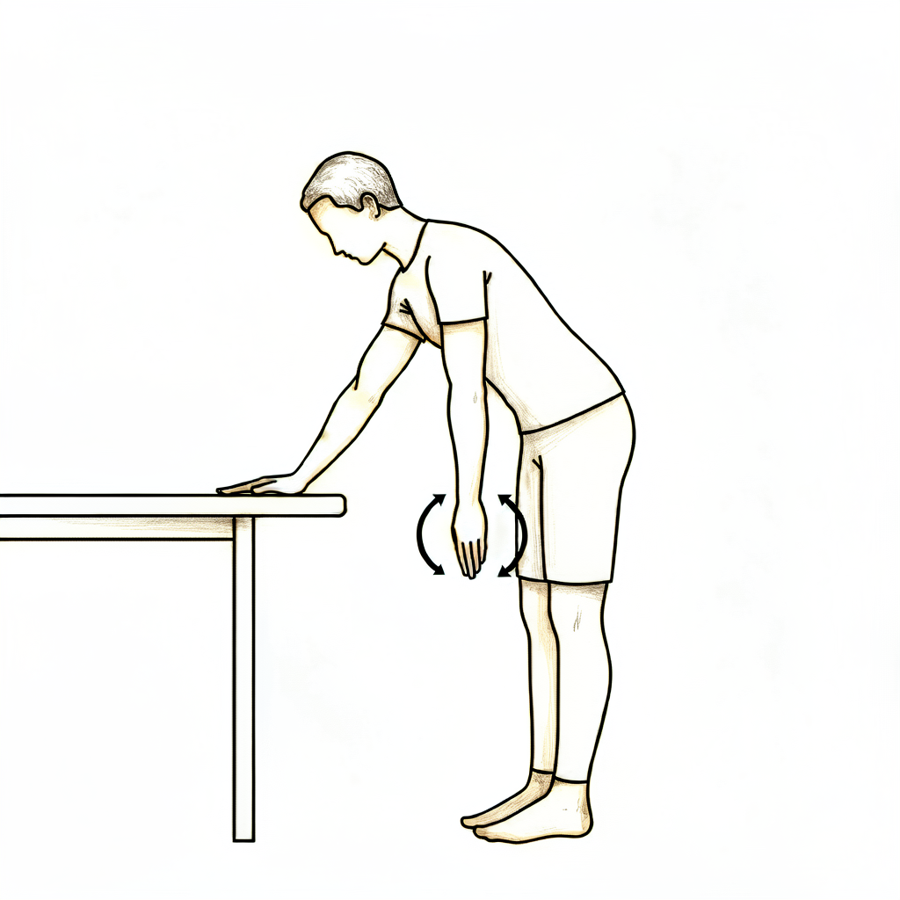
Mga ehersisyong pendulum (ganap na nakarelaks)
Yumuko nang bahagya pasulong, nakasandal sa isang mesa gamit ang iyong kabilang kamay, at hayaang nakabitin nang lubos na relax ang operadong braso. Gumawa ng maliliit na bilog sa pamamagitan ng dahan-dahang pag-ugoy ng iyong katawan — ang braso ay kusang uugoy at ang mga kalamnan ng balikat ay hindi gagana kahit kaunti. Kung ang braso ay hindi nananatiling relax, huminto at hilingin sa iyong physiotherapist na suriin ang iyong technique.
Ayon sa gabay ng iyong physiotherapist
Kieran Hirpara 4.0
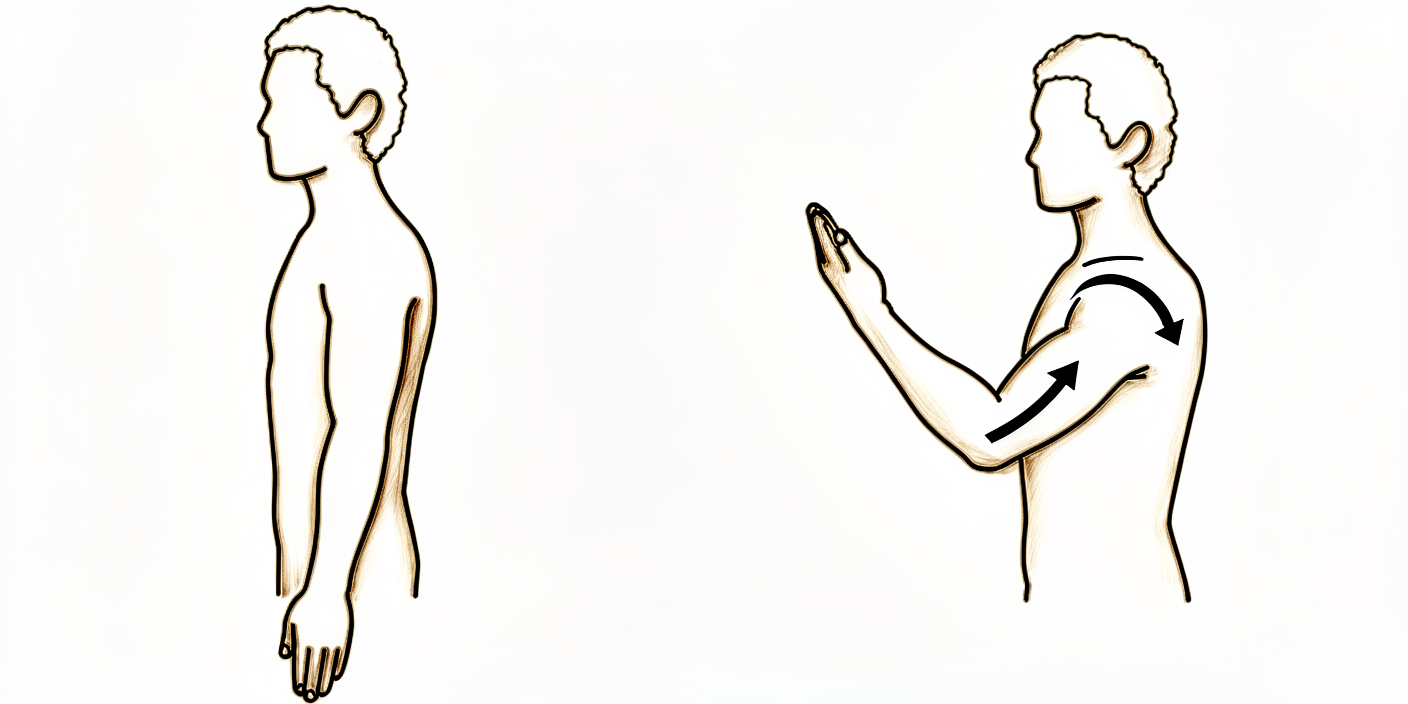
Aktibong pagbaluktot ng siko
Habang wala ang braso sa sling at nakapahinga ang itaas na bahagi ng braso sa iyong tabi, itiklop ang siko hangga't kaya nito nang komportable, pagkatapos ay ituwid ito nang lubos. Siko lamang ang gumagalaw — panatilihing hindi gumagalaw ang balikat at ang braso ay nasa iyong tabi.
Ayon sa gabay ng iyong physiotherapist
Kieran Hirpara 4.0
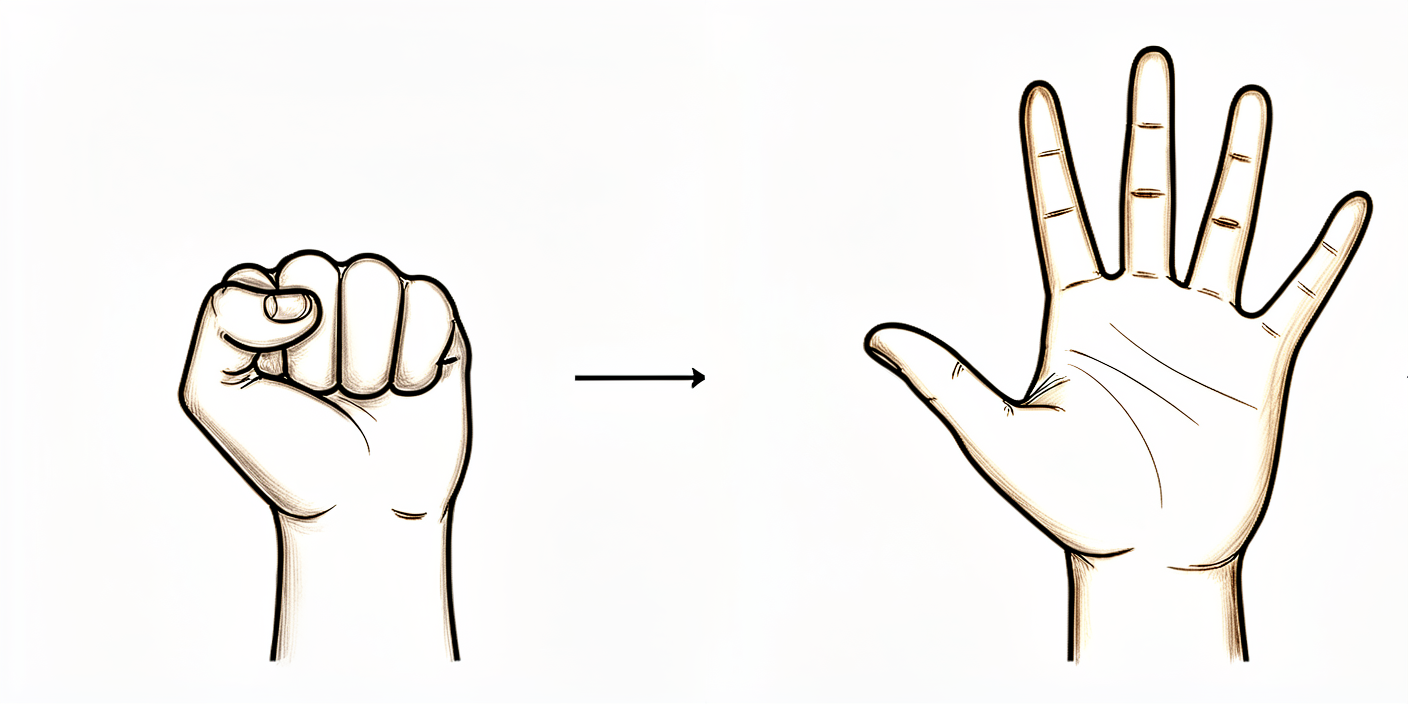
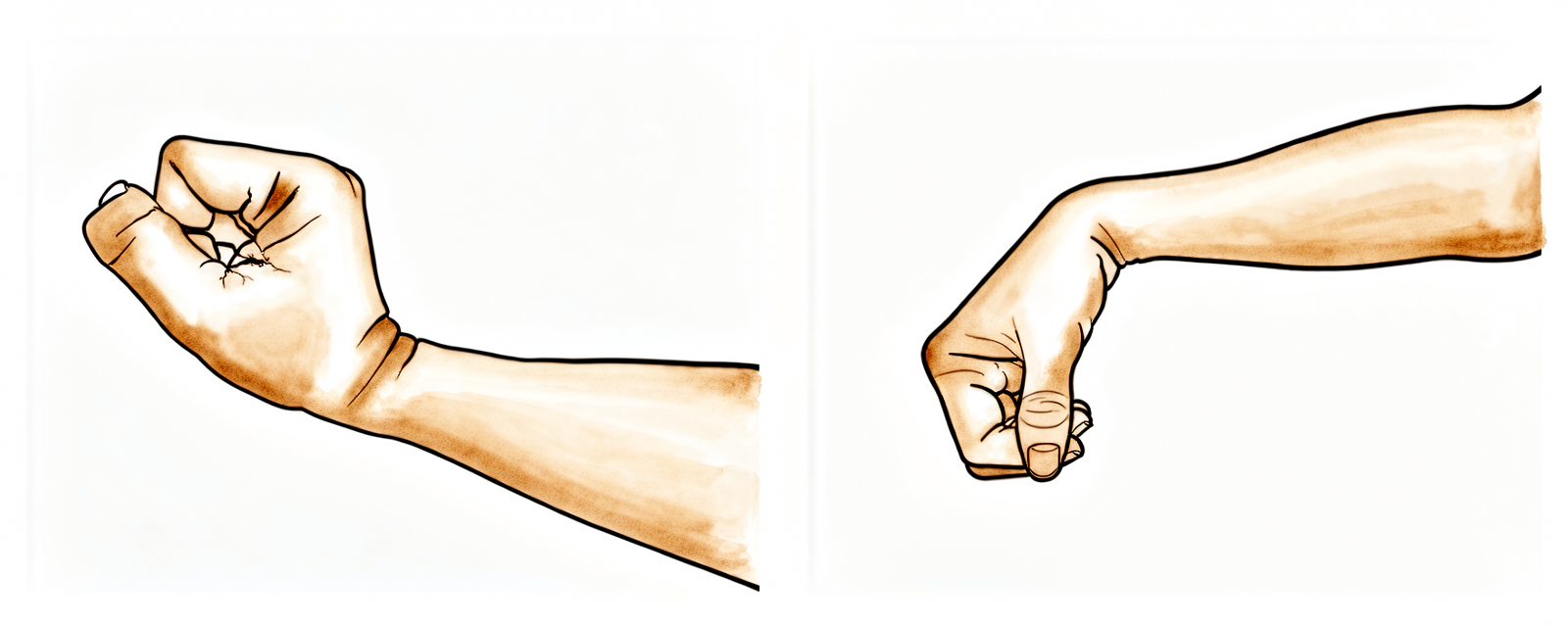
Buksan at isara ang kamay
Gumawa ng mahigpit na kamao, pagkatapos ay buksan ang kamay at iunat nang husto ang mga daliri. Panatilihing bahagyang aktibo ang kamay sa buong araw — hinihikayat ang pagsusulat, pagkain, at paggamit ng telepono habang ang braso ay nakapahinga sa sling.
Ayon sa gabay ng iyong physiotherapist
Kieran Hirpara 4.0
Paggalaw ng pulso
Habang ang braso ay wala sa sling at nakapahinga sa iyong tabi, panatilihing gumagalaw ang pulso sa pamamagitan ng pagbaluktot nito pasulong, pabalik, at dahan-dahang patagilid. Tulad ng mga ehersisyo sa siko at kamay, pinapanatili nitong malambot ang ibabang bahagi ng braso habang protektado ang balikat.
Ayon sa gabay ng iyong physiotherapist
Kieran Hirpara 4.0
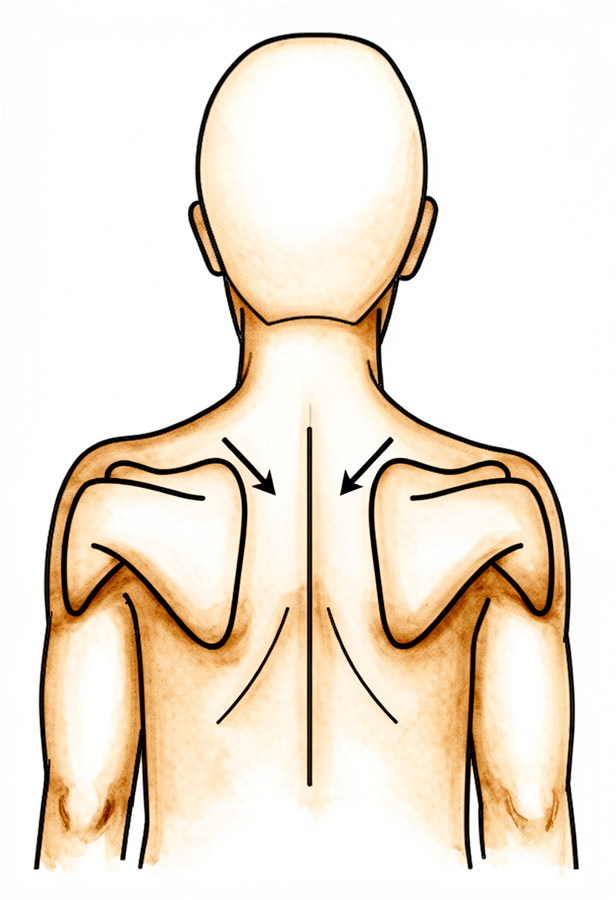
Pag-aayos ng scapula at shrugs
Habang nakaupo o nakatayo nang tuwid, dahan-dahang pisilin ang iyong mga shoulder blade pababa at magkasama nang hindi ibinabaluktot ang iyong likod, panatilihin ito ng ilang segundo, pagkatapos ay i-relax. Magdagdag ng dahan-dahang shoulder shrugs — itaas ang mga balikat patungo sa mga tainga at hayaan itong bumaba. Panatilihing tama ang iyong postura sa buong araw: ang mga tainga, balikat, at balakang ay dapat na naka-linya.
Ayon sa gabay ng iyong physiotherapist
Ang unang anim na linggo ay nakatuon sa isang bagay: hayaang gumaling ang mga tuberosity fragment sa buto at sa prosthesis, nang walang istorbo. Mananatili ka sa sling araw at gabi, panatilihing gumagalaw ang iyong siko, pulso at kamay, at hayaang ang balikat mismo ay igalaw lamang nang passive (dahan-dahan, ng iyong physiotherapist o habang ang braso ay lubos na relax) sa loob ng mga limitasyong nasa ibaba. Ang mga panuntunang pinakamahalaga: huwag igalaw ang balikat nang active, huwag i-rotate ang braso palabas lampas sa mga limitasyon, huwag abutin ang likod, huwag magbuhat ng anuman, at huwag itulak ang sarili pataas gamit ang mga kamay. Kung ikaw ay may reverse replacement, pinoprotektahan din ng mga panuntunang ito ang bagong joint laban sa dislocation habang gumagaling ang mga soft tissue. Kapag nakahiga nang patihaya, maglagay ng maliit na unan o ni-roll na tuwalya sa ilalim ng iyong siko upang ang balikat ay hindi mabanat pabalik.
Para sa iyong physiotherapist:
Mga Layunin
- Protektahan ang tuberosity repair at prosthesis
- Bawasan ang pamamaga, minimisahin ang sakit
- Panatilihin ang active range of motion (ROM) sa siko, pulso at kamay
- Dahan-dahang protective shoulder passive range of motion (PROM) sa loob ng safe zone
- Panatilihin ang scapular at postural awareness
- Edukasyon ng pasyente
Sling
- 6 na linggo, kabilang ang oras ng pagtulog
- Tinatanggal lamang para sa paghuhugas at mga ehersisyo; ang braso ay nananatili sa gilid kapag wala sa sling
Pamamahala
- Pamamahala sa pamamaga: ice, compression
- Range of motion / mobility:
- PROM lamang, sa loob ng safe zone: elevation sa scapular plane ≤ 90 degrees; external rotation (ER) hanggang neutral (0 degrees) para sa unang 4 na linggo, pagkatapos ay ≤ 30 degrees; walang internal rotation (IR) sa likod
- Pendulums, isinasagawa nang lubos na relax bilang isang passive exercise
- Active-assisted range of motion (AAROM): wala para sa balikat
- Active range of motion (AROM): siko, pulso, kamay at mga daliri; cervical spine
- Scapular setting, shoulder shrugs at postural correction
- Hikayatin ang magaang paggamit ng kamay habang nasa sling (pagsusulat, pagkain, telepono)
- Analgesia bago ang mga ehersisyo at physiotherapy sessions
Mga Pag-iingat
- Walang shoulder AROM o AAROM
- Walang passive o active ER lampas sa mga limitasyong nasa itaas (ang greater tuberosity repair ay nabibigatan ng external rotation)
- Walang resisted internal rotation (ang lesser tuberosity/subscapularis repair ay nabibigatan ng internal rotation)
- Huwag abutin ang likod; walang combined adduction, internal rotation at extension (reverse replacement dislocation position)
- Walang pagbuhat ng mga bagay; walang pagsuporta ng body weight gamit ang mga kamay (halimbawa, pagtulak pataas mula sa upuan o kama)
- Maglagay ng maliit na unan o towel roll sa ilalim ng siko habang nakahiga nang patihaya, upang ang balikat ay hindi mahulog sa extension
- Huwag pilitin ang anumang paggalaw na nagdudulot ng sakit
Mga Kraytirya para sa pag-usad
- Lumipas na ang 6 na linggo AT ipinapakita ng mga X-ray na ang mga tuberosity ay gumagaling sa tamang posisyon, gaya ng kinumpirma sa iyong review kay Dr Hirpara
- Ang sakit ay kontrolado ng oral analgesia
- Walang mga alalahanin sa sugat at walang mga palatandaan ng instability
Phase II — Pagbabalik ng paggalaw (Weeks 6–12)
Kieran Hirpara 4.0
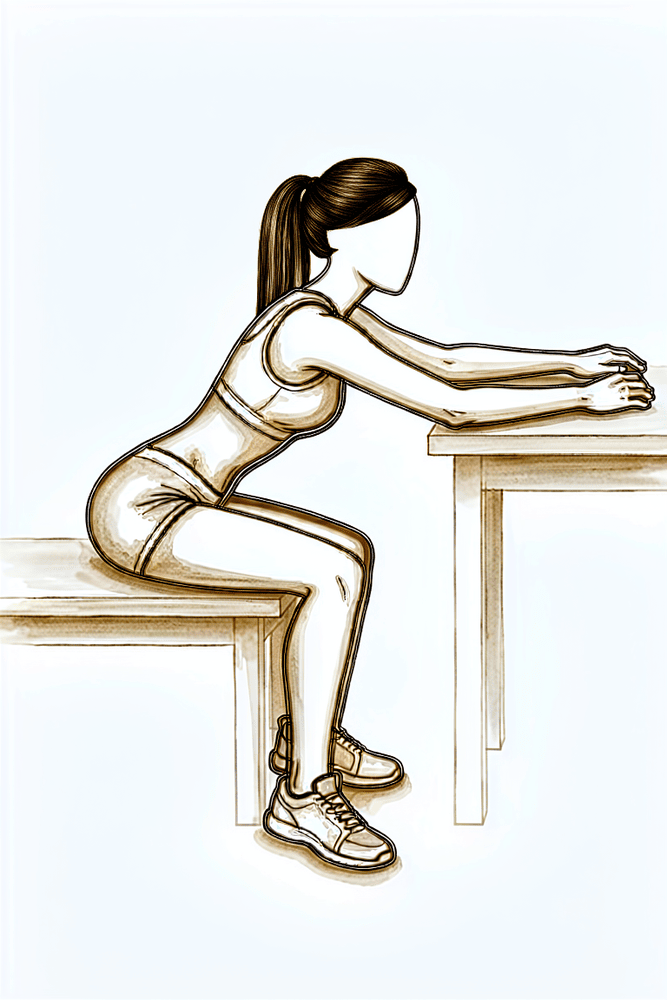
Mga slide ng table
Umupo sa isang mesa na nakapatong dito ang iyong forearm. Dahan-dahang humilig pasulong upang dumulas ang iyong kamay sa mesa, hayaang suportahan ng mesa ang bigat ng braso, pagkatapos ay umupo nang tuwid. Magpatuloy ayon sa iyong komportableng kapasidad — huwag pilitin kung may nararamdamang sakit.
Ayon sa gabay ng iyong physiotherapist
Kieran Hirpara 4.0
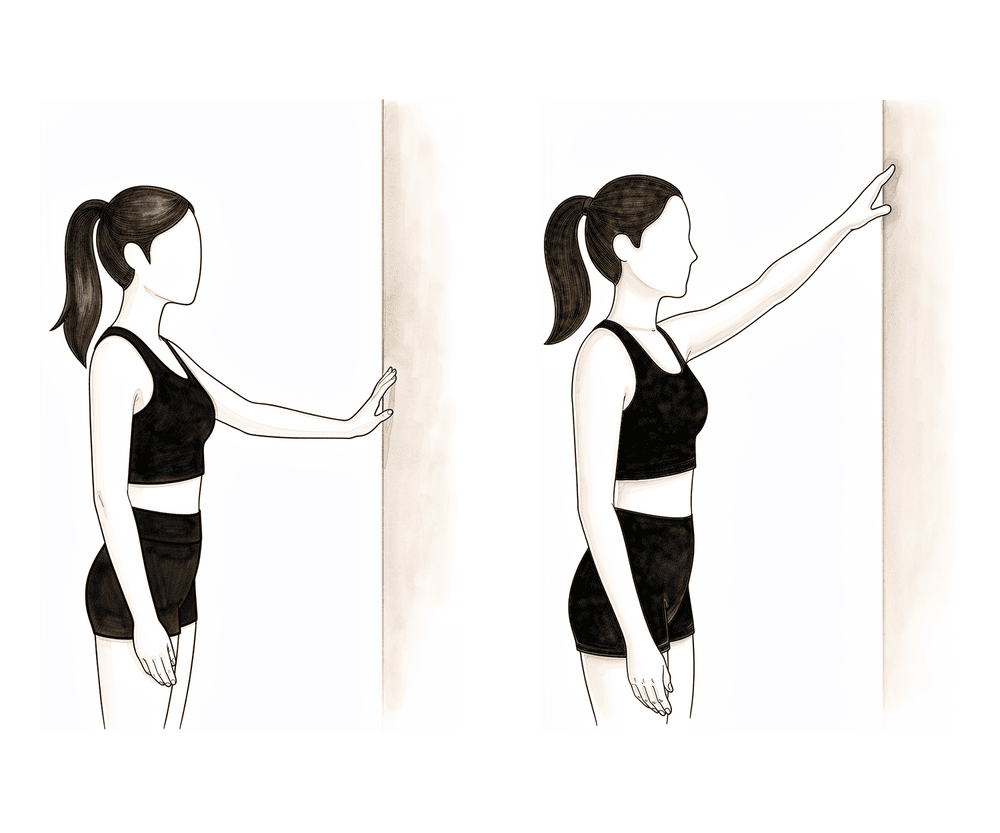
Wall climbs (finger walk)
Tumayo nang nakaharap sa pader at dahan-dahang iakyat ang iyong mga daliri dito, hayaang ang pader ang pumasan sa bigat ng braso, pagkatapos ay dahan-dahang ibaba ang mga ito nang may kontrol. Pumunta lamang sa taas na komportable para sa iyo, nang hindi itinataas ang balikat o iniliyad ang likod.
Ayon sa gabay ng iyong physiotherapist
Kieran Hirpara 4.0
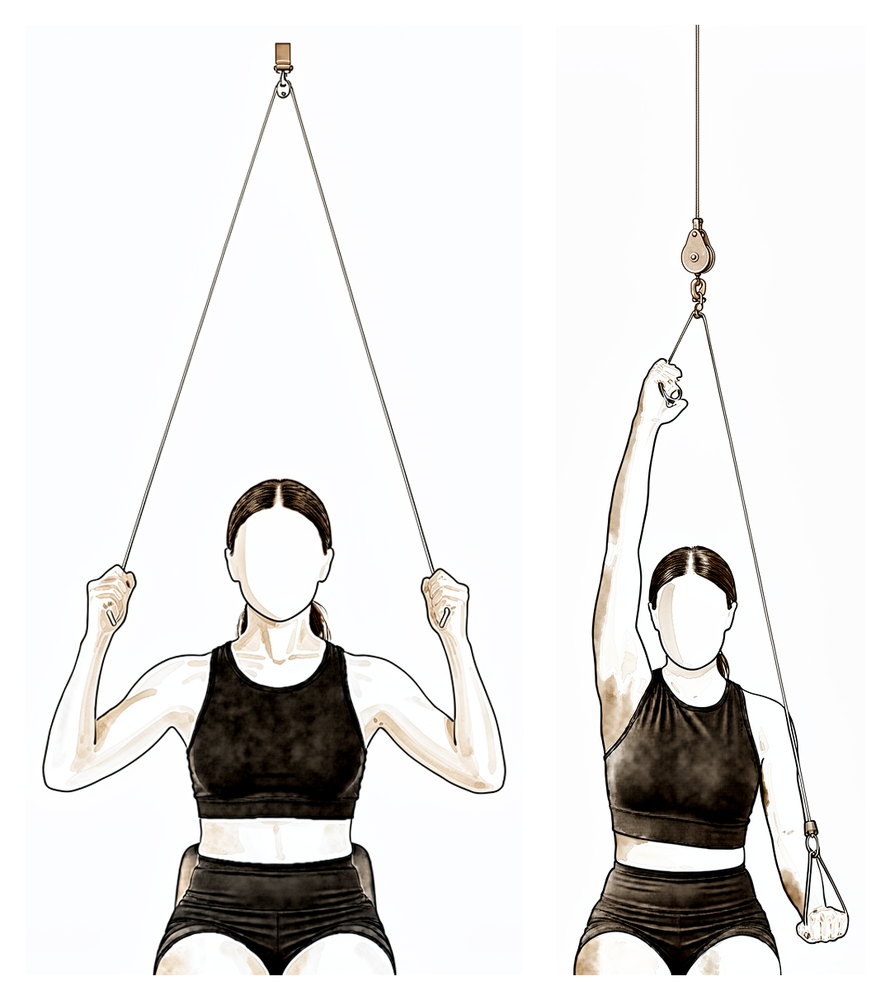
Flexion na may tulong ng pulley
Umupo sa ilalim ng isang over-door pulley. Habang nakarelaks ang operadong braso, hilahin pababa gamit ang iyong kabilang kamay upang dahan-dahang iangat ng lubid ang operadong braso sa iyong harapan, pagkatapos ay dahan-dahan itong ibaba. Ang maayos na braso ang gagawa ng trabaho — huwag pilitin ang range.
Ayon sa gabay ng iyong physiotherapist
Kieran Hirpara 4.0
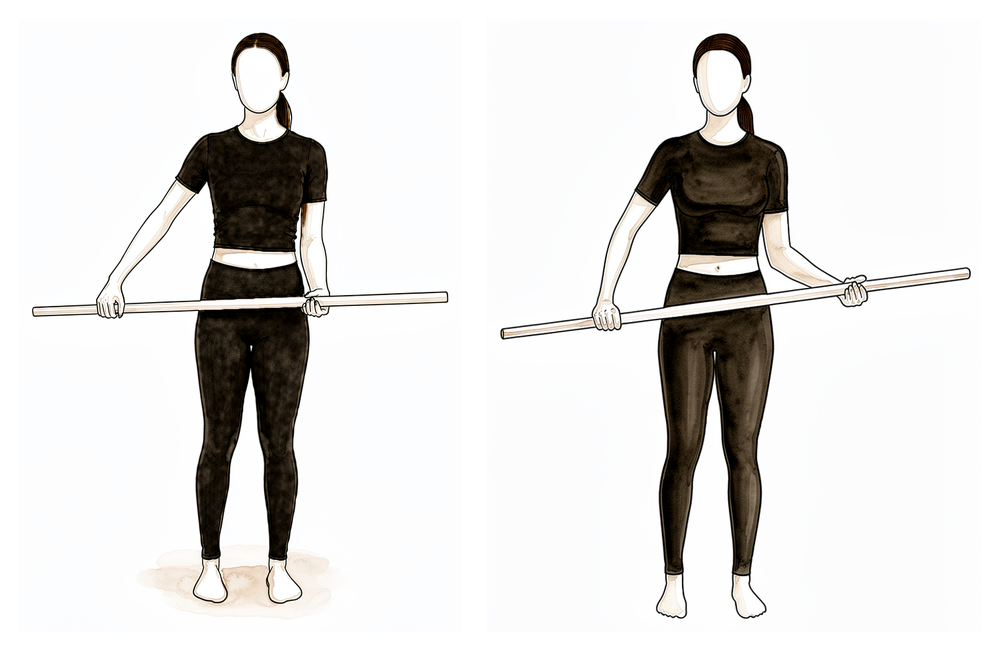
External rotation na may tulong ng stick
Humiga nang patihaya habang hawak ang isang stick sa magkabilang kamay, ang mga siko ay nakabaluktot nang 90 degrees at nakadikit sa iyong mga gilid. Itulak gamit ang mabuting braso upang ang inoperahang forearm ay umikot palabas, manatili sa loob ng limitasyong napagkasunduan sa iyong review, pagkatapos ay ibalik ito. Panatilihing relax ang inoperahang braso — huwag kailanman pilitin ang paggalaw.
Ayon sa gabay ng iyong physiotherapist
Kieran Hirpara 4.0
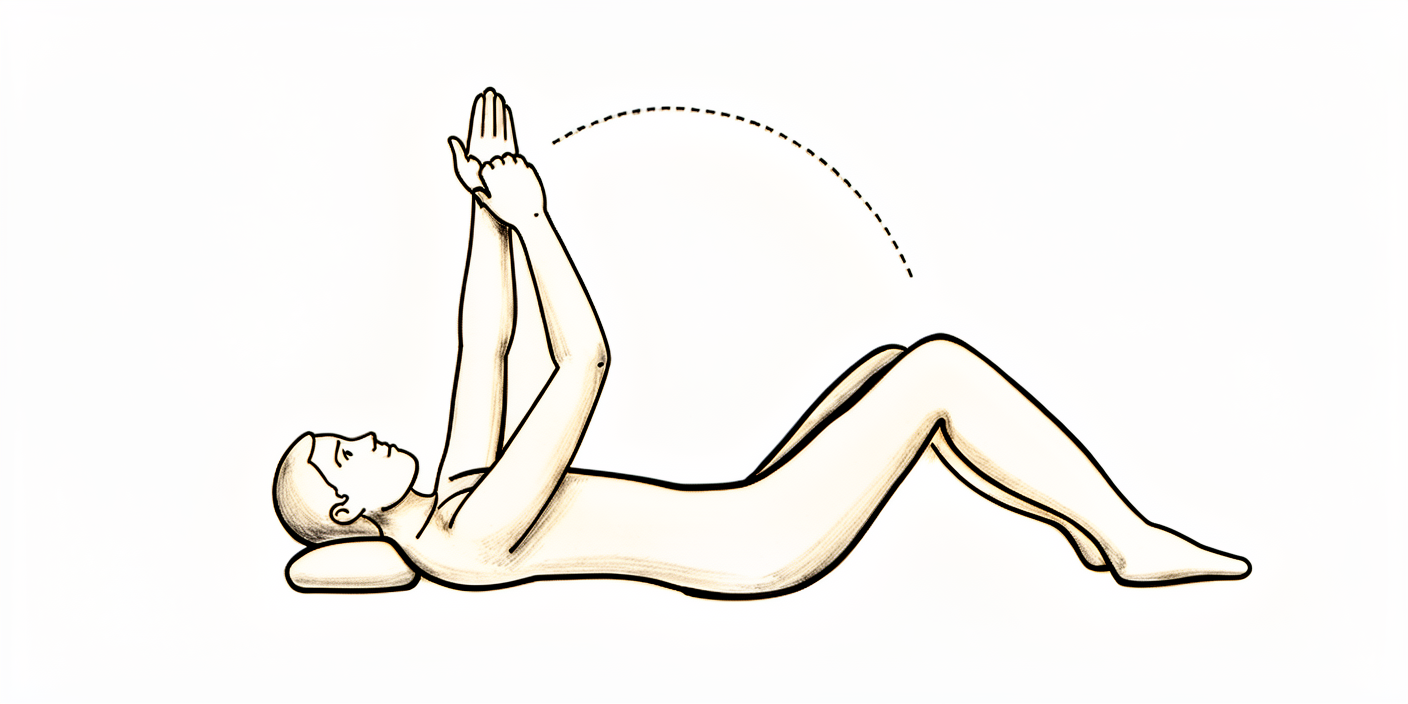
Tinutulungang flexion (nakahiga)
Humiga nang nakatihaya at gamitin ang iyong maayos na braso — o isang tungkod na hawak ng dalawang kamay — upang tumulong sa pag-angat ng inoperahang braso sa iyong harapan, hanggang sa hangganan ng iyong komportableng nararamdaman, pagkatapos ay ibaba ito muli habang tinutulungan pa rin ng maayos na braso. Panatilihing relax ang inoperahang balikat at ang maayos na braso ang gagawa ng trabaho, upang matulungan ang pagbabalik ng range of motion nang hindi binibigatan ang naghihilom na repair.
Ayon sa gabay ng iyong physiotherapist
Kieran Hirpara 4.0
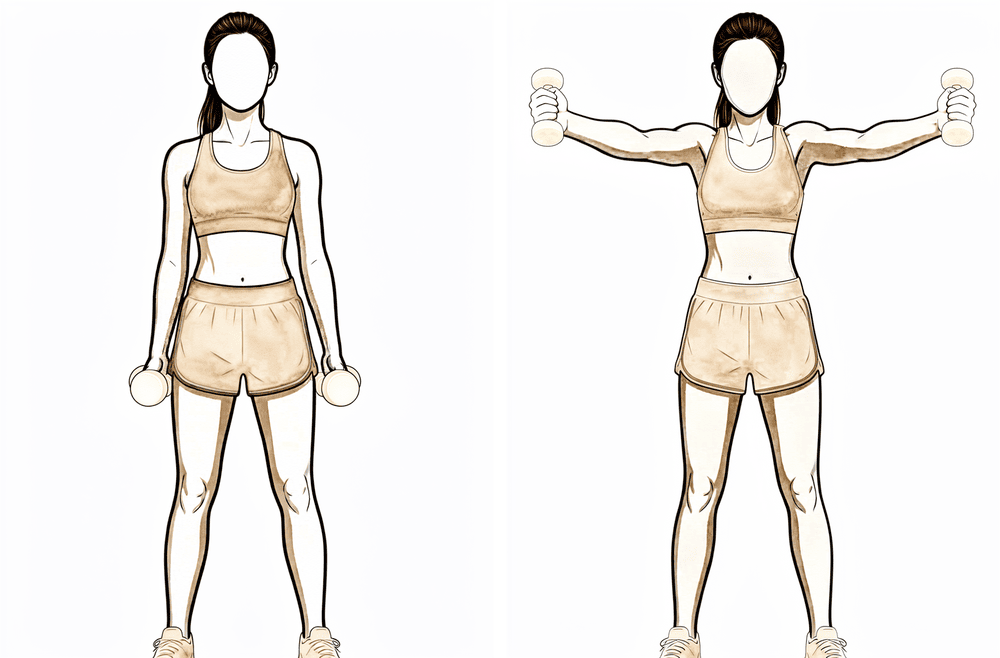
Aktibong scaption (full can)
Kapag pinayagan na ng iyong physiotherapist ang active movement, itaas ang braso sa anggulong humigit-kumulang 45 degrees sa pagitan ng harap at gilid, na ang hinlalaki ay nakaturo pataas na tila may hawak na punong lata. Itaas lamang hanggang sa antas na mayroon kang maayos na kontrol, pagkatapos ay ibaba ito nang dahan-dahan. Sinisimulan nito ang active elevation kapag nagsimula nang gumaling ang mga tuberosity — huwag itong simulan nang mas maaga.
Ayon sa gabay ng iyong physiotherapist
Kieran Hirpara 4.0
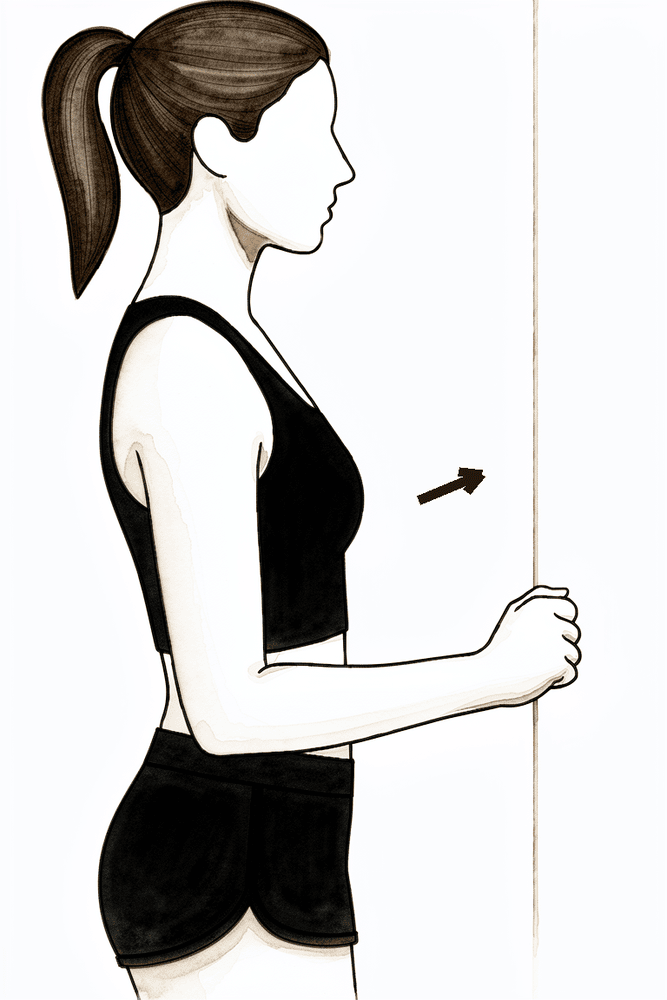
Isometric forward press (deltoid)
Tumayo nang nakaharap sa pader na nakabaluktot ang siko at may nakatuping tuwalya sa pagitan ng iyong kamao at ng pader. Dahan-dahang itulak ang kamao pasulong sa pader nang hindi pinapagalaw ang braso, panatilihin ito nang ilang segundo, pagkatapos ay i-relax. Ginigising nito ang deltoid nang walang paggalaw — simulan lamang ito sa huling bahagi ng phase na ito, nang dahan-dahan at walang sakit.
Ayon sa gabay ng iyong physiotherapist
Kieran Hirpara 4.0
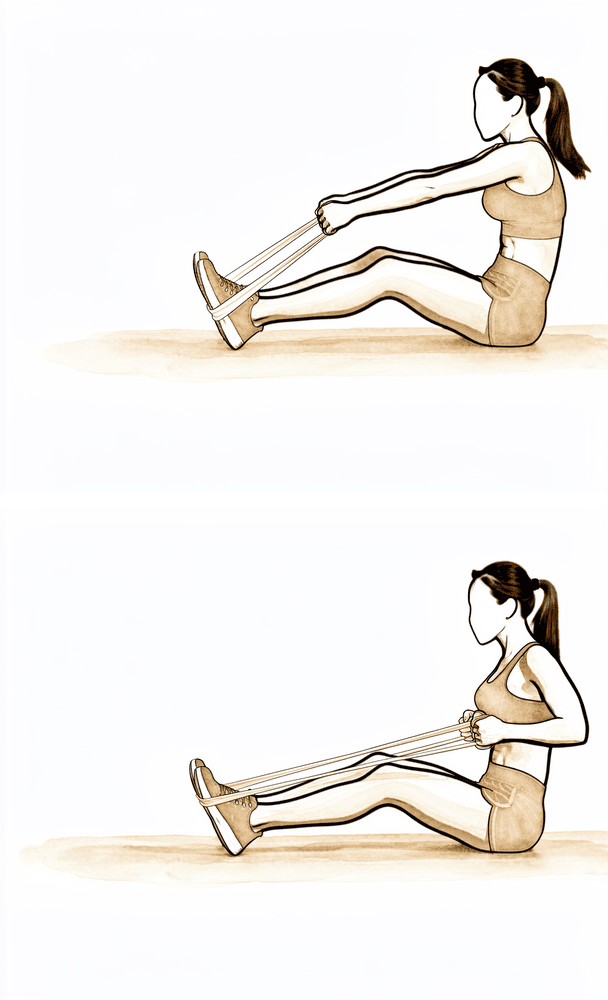
Low row
Habang nakaupo o nakatayo nang tuwid, hilahin ang siko pabalik at pababa patungo sa iyong balakang, pigain ang shoulder blade pababa at pabalik, manatili sa posisyong ito nang sandali, pagkatapos ay bitawan. Inihahanda nito ang mga kalamnan ng shoulder blade na sumusuporta sa balikat — panatilihin itong magaan at dahan-dahan sa yugtong ito.
Ayon sa gabay ng iyong physiotherapist
Kieran Hirpara 4.0
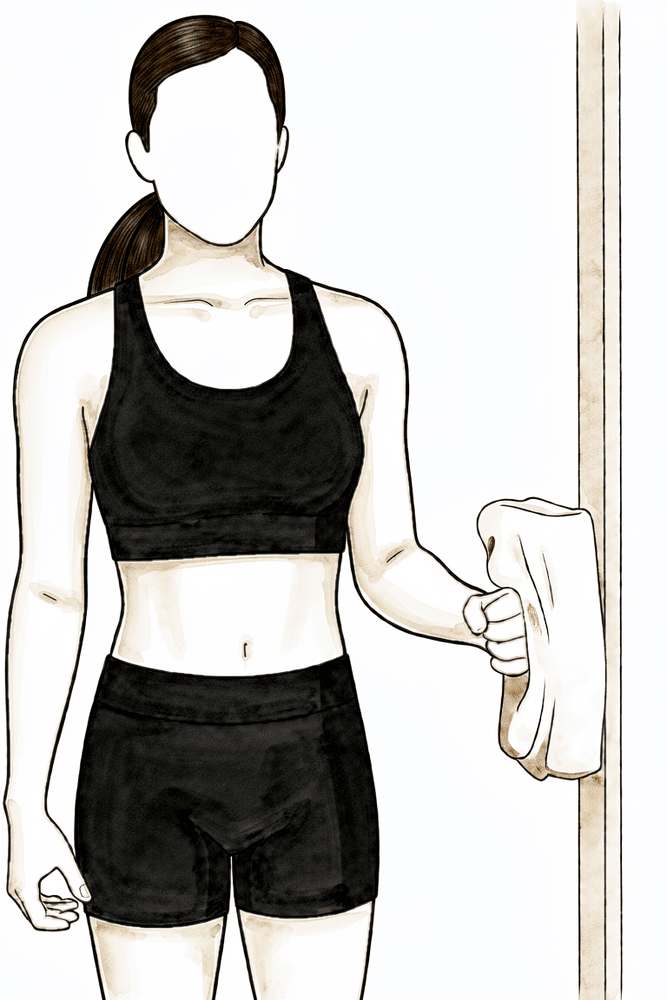
Isometric external rotation
Tumayo nang nakadikit ang iyong siko sa iyong gilid at nakabaluktot sa isang right angle, ang likod ng iyong kamay ay nakasandal sa pader o doorframe. Dahan-dahang itulak ito palabas nang hindi pinapagalaw ang braso, manatili sa posisyong ito ng ilang segundo, pagkatapos ay i-relax. Ipakilala lamang ito sa huling bahagi ng phase na ito, nang dahan-dahan at walang sakit, ayon sa pinahihintulutan ng rotator cuff repair.
Ayon sa gabay ng iyong physiotherapist
Kieran Hirpara 4.0
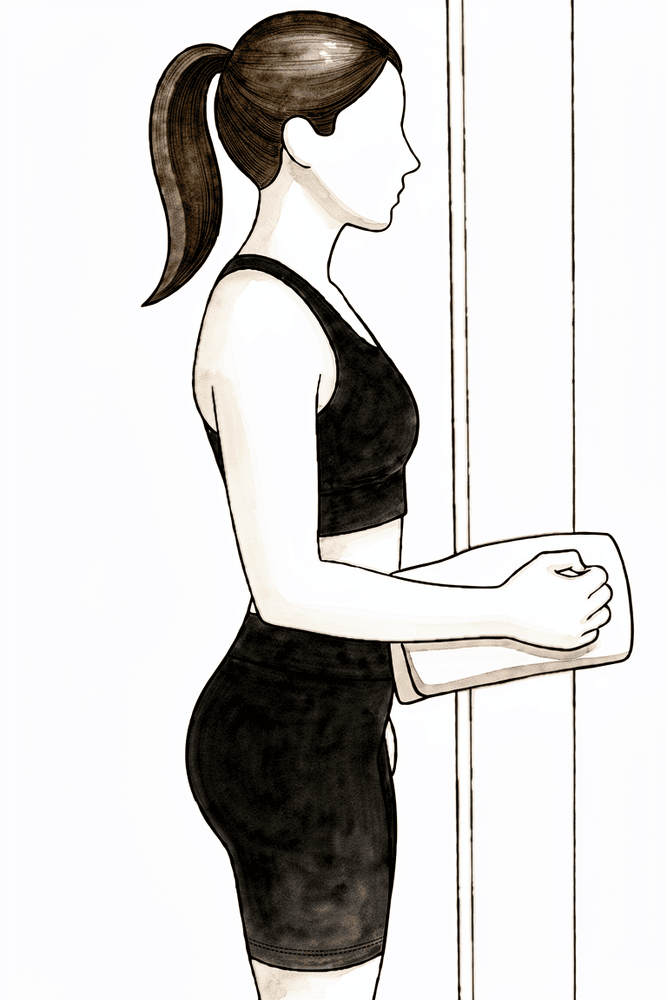
Isometric internal rotation
Tumayo nang nakadikit ang siko sa iyong gilid at nakabaluktot sa isang right angle, ang palad ay nakasandal sa hamba ng pinto. Dahan-dahang itulak ito papasok nang hindi pinapagalaw ang braso, manatili sa posisyong ito ng ilang segundo, pagkatapos ay i-relax. Simulan lamang ito kapag pinayagan na sa iyong review — ang lesser tuberosity repair ay nabibigyan ng load sa pamamagitan ng internal rotation, kaya ito ang huling ginagawa.
Ayon sa gabay ng iyong physiotherapist
Kieran Hirpara 4.0
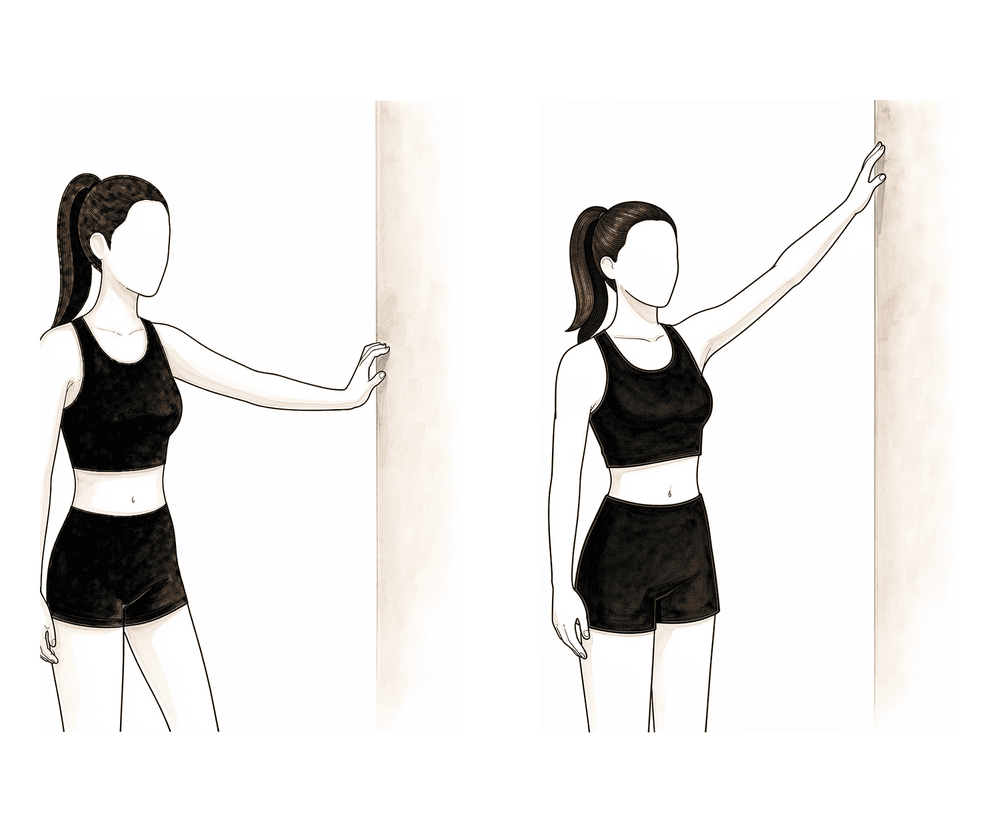
Wall walk palabas sa gilid
Tumayo nang patagilid sa isang pader na ang iyong mga dulo ng daliri ay nakapatong dito. I-lakad ang iyong mga daliri pataas sa pader palabas sa gilid, itaas ang braso hanggang sa komportable, pagkatapos ay dahan-dahang i-lakad ang mga ito pabalik pababa nang may kontrol. Sinusuportahan ng pader ang braso habang binabawi mo ang paggalaw palabas sa gilid.
Ayon sa gabay ng iyong physiotherapist
Sa iyong six-week review, susuriin ng mga X-ray kung ang mga fragment ng buto ay naghihilom sa tamang posisyon. Kung oo, tatanggalin na ang sling at magsisimulang gumalaw ang balikat nang kusa, na sa simula ay tutulungan ng iyong kabilang braso, tungkod o pulley, at pagkatapos ay aktibo na. Ang passive range ay unti-unting tutungo sa pagiging full sa mga linggong ito, at luluwag ang mga limitasyon sa rotation. Magsisimula ang unang banayad na muscle-activation work para sa deltoid at sa mga kalamnan ng shoulder-blade (periscapular). Ang hindi pa magsisimula ay ang strengthening: ang repair ay kasalukuyan pang nag-consolidate, kaya ang lifting rule ay mananatili na walang bubuhatin na mas mabigat pa sa isang tasa ng kape, at wala pa ring pagtulak paitaas gamit ang mga kamay.
Para sa iyong physiotherapist:
Mga Layunin
- Unti-unting pag-alis sa sling pagkatapos ng six-week review
- Pag-usad ng shoulder PROM tungo sa full range ayon sa kakayanang magtiis ng pasyente (comfort)
- Pagsisimula ng shoulder AAROM, na mag-uunlad tungo sa AROM
- Pagsisimula ng banayad na deltoid at periscapular activation
- Pagbabalik ng paggamit ng braso para sa mga light activities of daily living sa taas ng baywang at dibdib
- Edukasyon ng pasyente
Sling
- Itigil pagkatapos ng six-week review; maaaring isuot sa labas ng bahay para sa proteksyon sa mga mataong lugar sa unang isang o dalawang linggo ng weaning
Pamamahala
- Ipagpatuloy ang mga interbensyon ng Phase I kung kinakailangan
- Range of motion / mobility:
- PROM: pag-usad tungo sa full range sa lahat ng planes sa bandang weeks 8–10, habang isinasaalang-alang ang sakit
- AAROM: table slides, wall climbs, pulleys, cane-assisted flexion at external rotation, supine na mag-uunlad tungo sa sitting
- AROM: simulan kapag ang AAROM ay komportable na at mabuti na ang kalidad ng paggalaw, magsisimula sa supine flexion na mag-uunlad tungo sa upright flexion at scaption
- ER: pag-usad lampas sa 30 degrees ayon sa comfort kapag nakumpirma na ang paghihilom
- Ang banayad na functional hand-behind-back at extension ay ipapakilala sa huling bahagi ng phase na ito, kapag pinayagan na. Huwag i-stretch sa mga posisyong ito.
- Strengthening:
- Pain-free sub-maximal isometrics lamang: deltoid sa scapular plane, periscapular setting, low row, scapular retraction
- Banayad na pain-free rotator cuff isometrics sa huling bahagi ng phase na ito; ipakilala ang resisted internal rotation kapag pinayagan na lamang sa review
- Motor control: bigyang-diin ang scapular control at iwasan ang hitching o iba pang compensatory patterns
Mga Pag-iingat
- Bawal magbuhat ng mga bagay na mas mabigat pa sa isang tasa ng kape
- Bawal suportahan ang bigat ng katawan gamit ang mga kamay
- Bawal ang resistance o strengthening work lampas sa banayad na isometrics
- Iwasan ang pagpuwersa ng range: i-stretch hanggang sa firm discomfort lamang, hinding-hindi hanggang sa matalas na sakit (sharp pain)
Mga Kraytirya para sa pag-usad
- Komportableng active movement sa ibaba ng taas ng balikat na may mabuting scapular control at minimal na compensation
- Patuloy na paghihilom ng mga tuberosities sa X-ray, gaya ng kinumpirma sa iyong review kay Dr Hirpara
- Ang sakit ay sapat nang humupa upang simulan ang resistance work
Phase III — Pagpapalakas (Weeks 12–24)
Kieran Hirpara 4.0
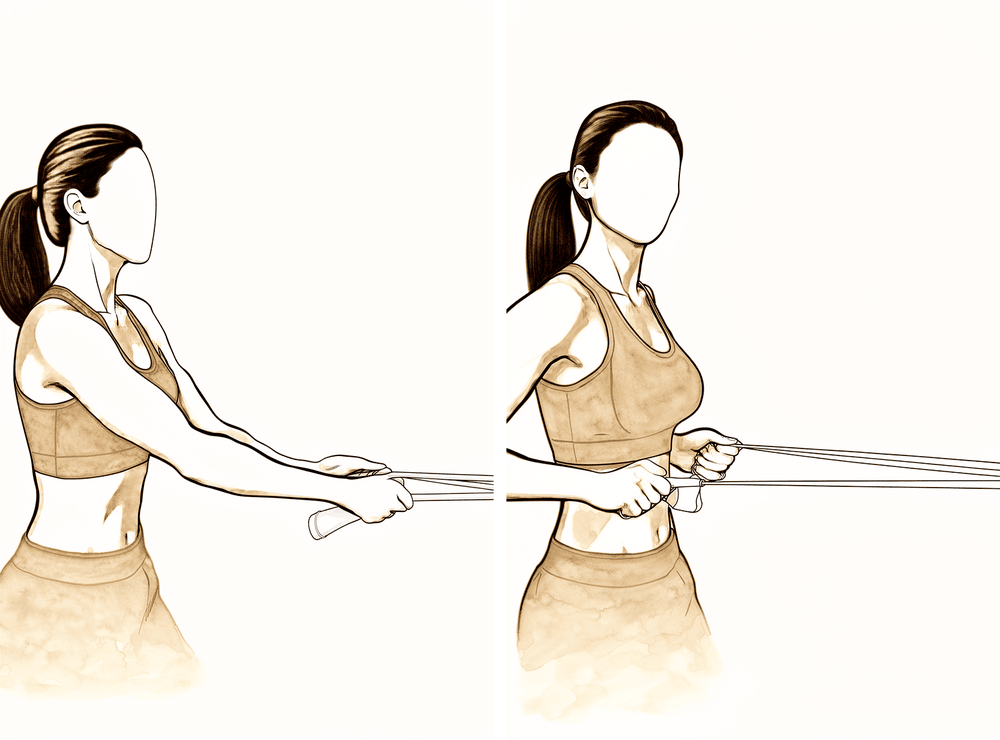
Rows gamit ang elastic band
I-angkla ang isang elastic band sa iyong harapan sa taas ng baywang. Habang nakatayo nang tuwid, hilahin ang band patungo sa iyo, ibaba at iurong ang shoulder blade, pagkatapos ay dahan-dahang bitawan nang may kontrol. Magsimula sa light resistance — mababang load at mas mataas na repetitions, at mag-progress ayon sa gabay.
Ayon sa gabay ng iyong physiotherapist
Kieran Hirpara 4.0
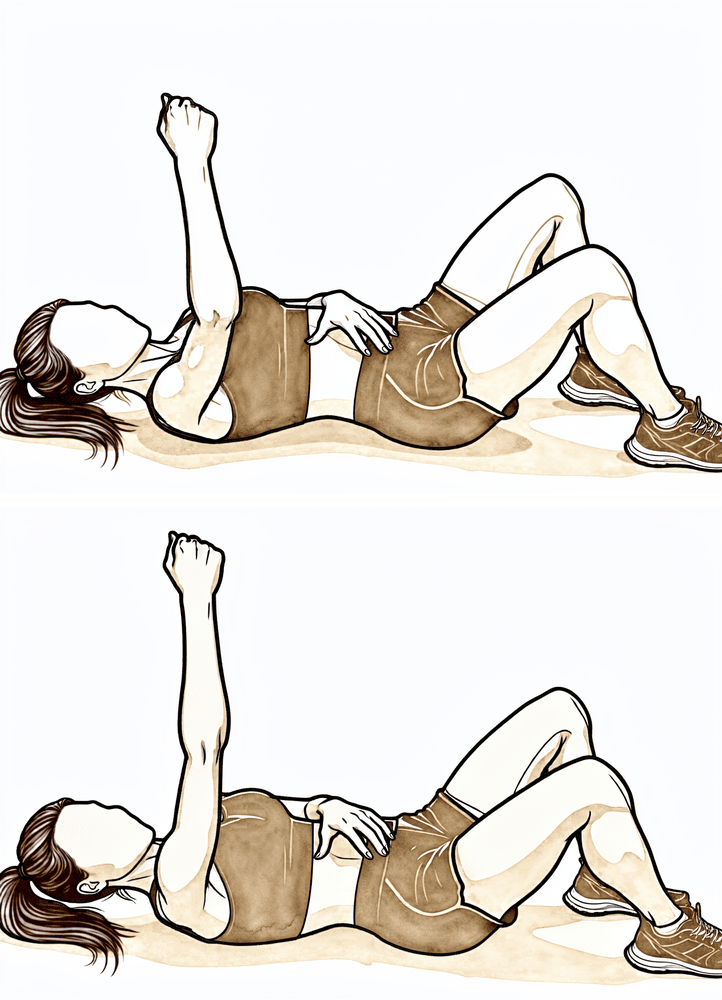
Serratus punch
Humiga nang patihaya na ang inoperahang braso ay nakaturo nang diretso paitaas sa kisame. Nang hindi ibinabaluktot ang siko, itulak nang bahagya paitaas ang kamay upang ang shoulder blade ay umangat mula sa sahig, pagkatapos ay ibaba itong muli. Pinapalakas nito ang kalamnan na nag-aangkla sa shoulder blade sa mga ribs.
Mababang load, mas mataas na repetitions
Kieran Hirpara 4.0
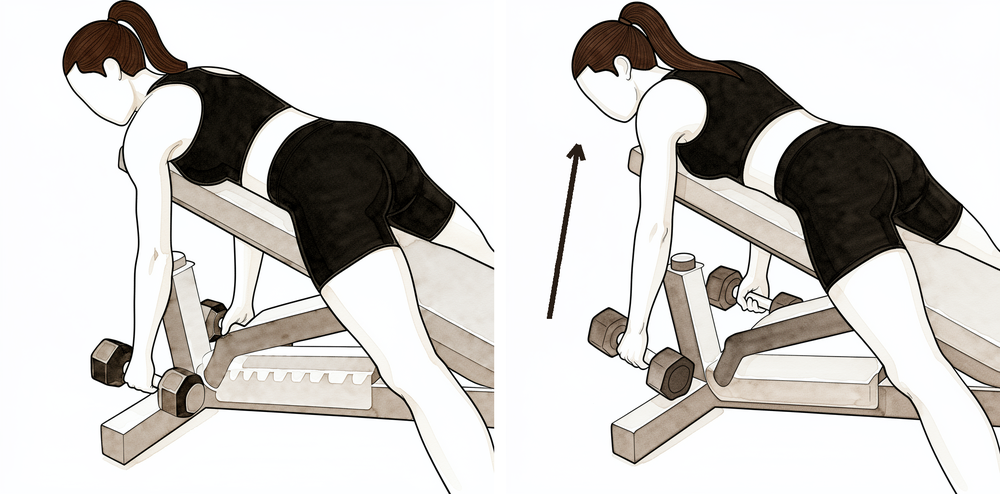
Scapular retraction na may pabigat
Yumuko pasulong mula sa mga balakang habang may hawak na magaan na pabigat sa bawat kamay, hilahin ang mga siko pabalik at pagdikitin ang mga shoulder blade, pagkatapos ay ibaba ito nang may kontrol. Binubuo nito ang mga kalamnan ng shoulder blade laban sa resistance — panatilihing magaan ang load at swabe ang paggalaw.
Mababang load, mas mataas na repetitions
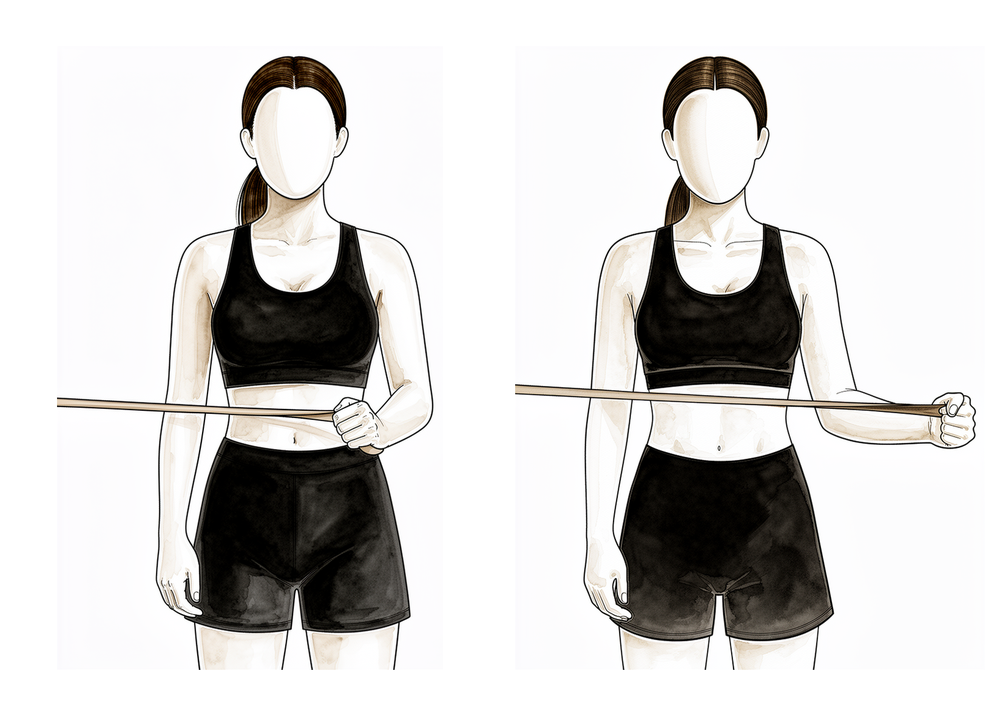
Kieran Hirpara 4.0
External rotation gamit ang band
Tumayo nang nakadikit ang iyong siko sa iyong tagiliran at nakabaluktot sa isang right angle, habang hawak ang isang elastic band na naka-angkla sa taas ng baywang. Panatilihing nakadikit ang siko sa iyong tagiliran, i-rotate ang forearm palabas laban sa band, pagkatapos ay dahan-dahang ibalik. Palakasin ang rotator cuff nang progresibo, ayon sa pinahihintulutan ng mga naghilom na tuberosity.
Mababang load, mas mataas na repetitions
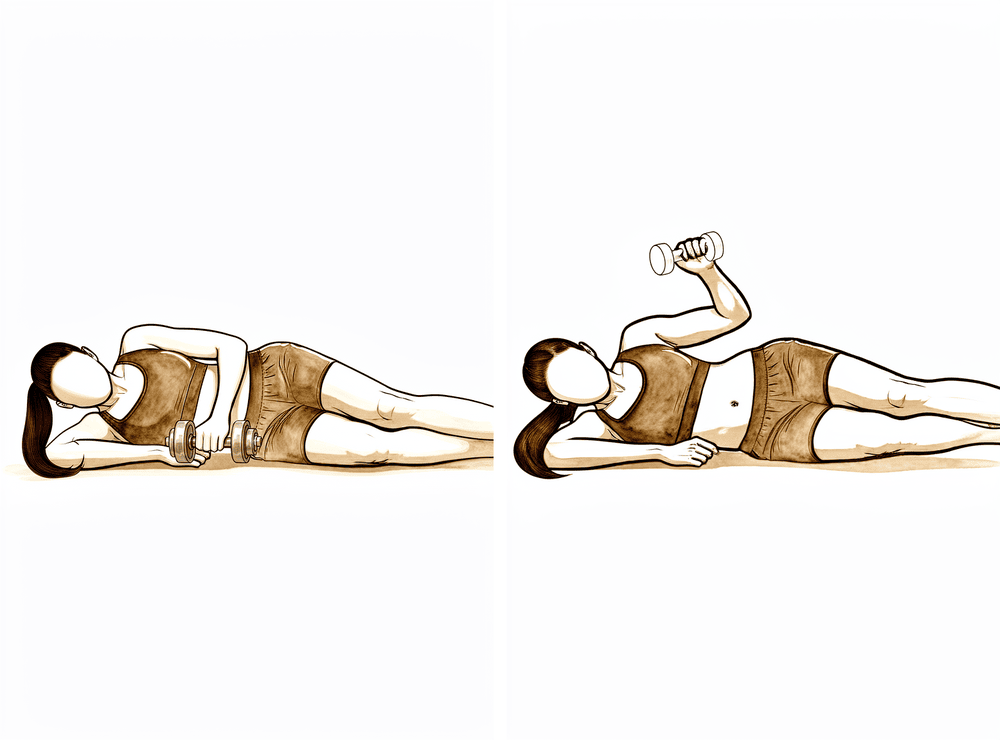
Kieran Hirpara 4.0
Side-lying external rotation na may weight
Humiga sa gilid na hindi naoperahan habang ang siko na naoperahan ay nakabaluktot sa right angle at nakadikit sa iyong katawan. Habang humahawak ng magaan na pabigat, i-rotate ang forearm pataas patungo sa kisame, pagkatapos ay dahan-dahang ibaba. Bahagi ito ng graduated rotator cuff strengthening — ipagpatuloy ang mobility work kasabay nito.
Mababang load, mas mataas na repetitions
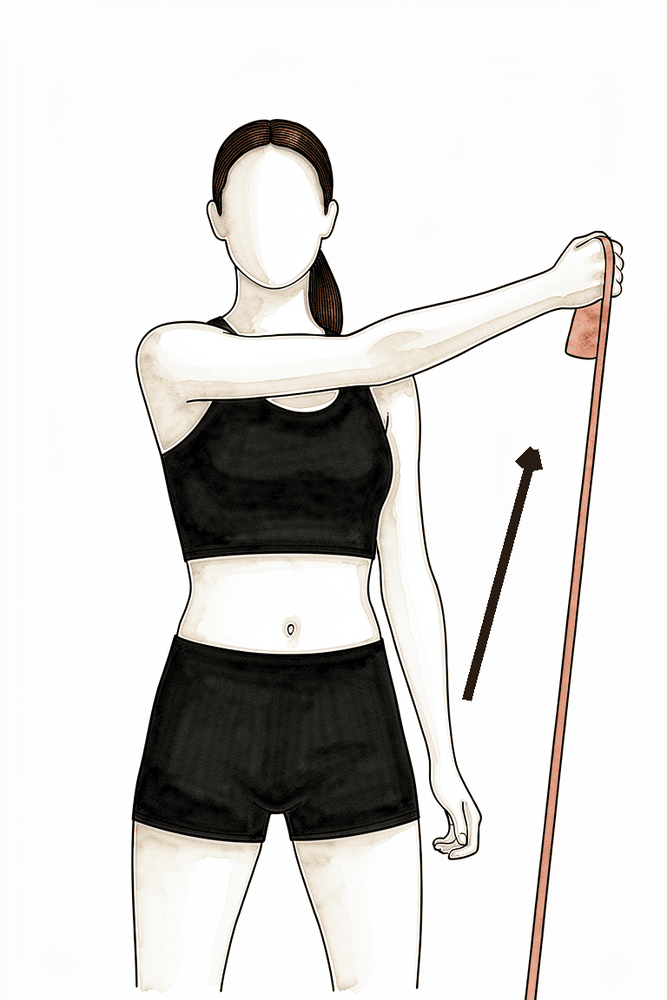
Kieran Hirpara 4.0
PNF diagonal gamit ang band (lift)
I-angkla ang isang elastic band sa mababa at sa gilid ng iyong inoperahang braso. Hilahin ang kamay nang pahilis paitaas at patawid sa katawan, mula malapit sa kabilang balakang patungo sa balikat, pagkatapos ay dahan-dahang ibalik. Ang mga pahilis na pattern na ito ay nagsasanay sa balikat na gumalaw sa mga direksyong ginagamit sa pang-araw-araw na buhay.
Ayon sa gabay ng iyong physiotherapist
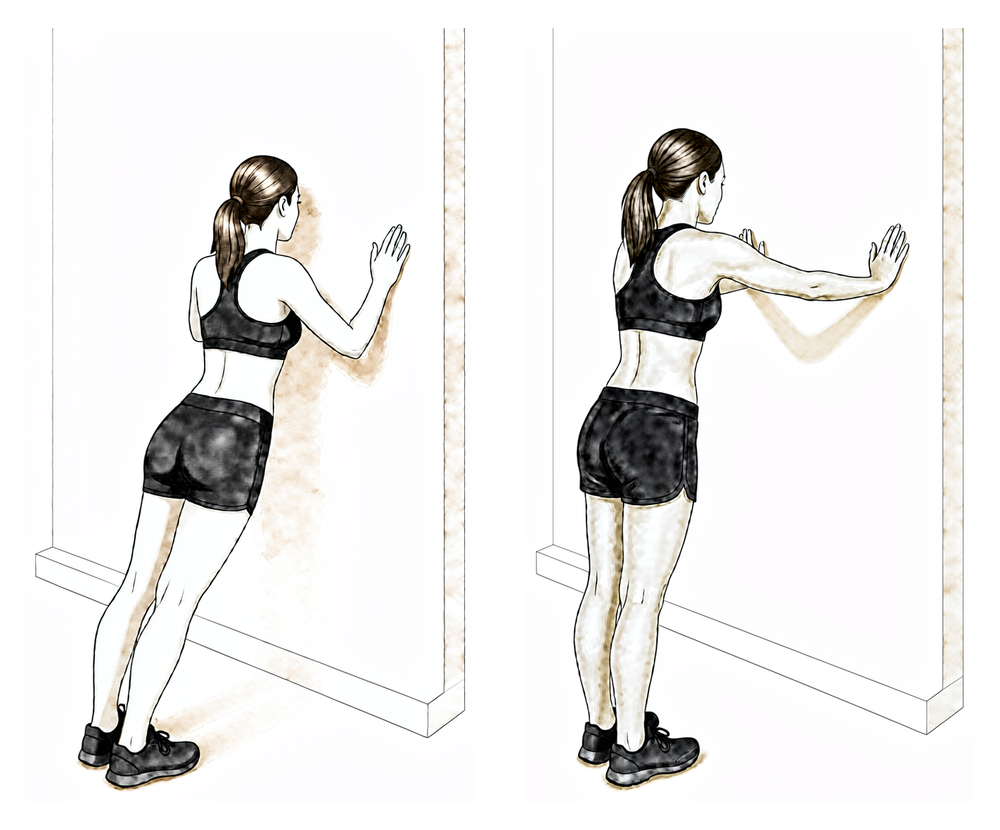
Kieran Hirpara 4.0
Pagdadala ng bigat gamit ang braso
Ipatong ang iyong mga kamay sa isang pader o matibay na bench at dahan-dahang itulak ang iyong itaas na bahagi ng likod palayo upang ang mga shoulder blade ay bumukol pasulong, pagkatapos ay ibalik ito. Muli nitong ipinapakilala ang pagdadala ng bigat gamit ang braso — gawin lamang ito kapag pinayagan na sa phase na ito, at unti-unting dagdagan.
Ayon sa gabay ng iyong physiotherapist
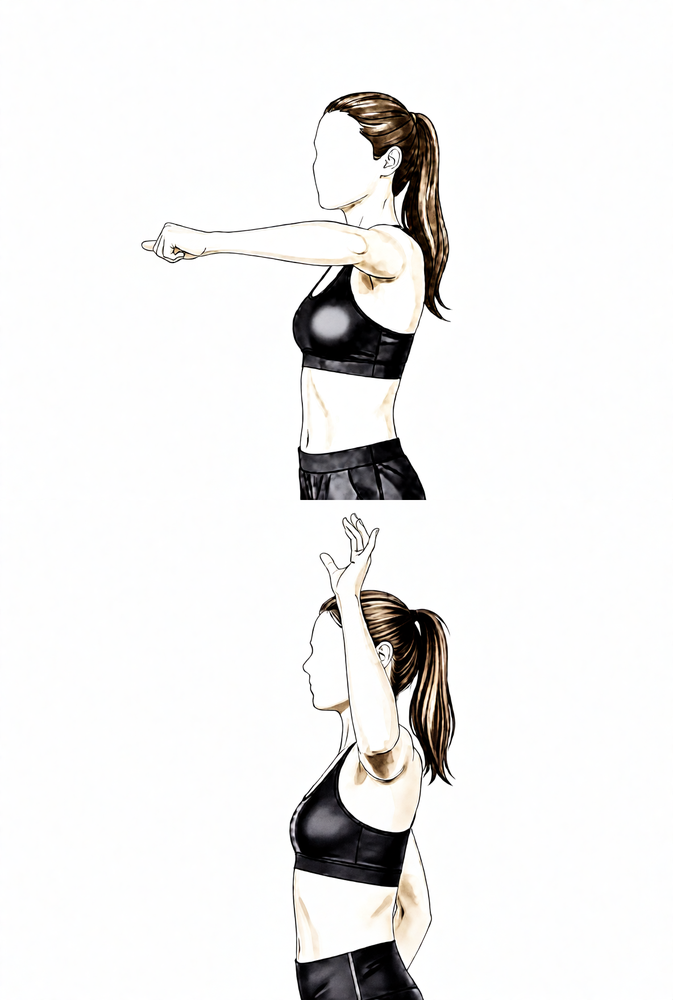
Kieran Hirpara 4.0
External rotation habang nakataas ang braso
Habang ang iyong braso ay nakalabas sa gilid sa taas ng balikat at ang iyong siko ay nakabaluktot nang 90°, i-rotate ang iyong forearm pataas at pabalik, pagkatapos ay ibalik ito nang may kontrol. Panatilihing swabe ang paggalaw at sa loob ng komportableng range. Sinasanay nito ang outward rotation sa nakataas na posisyon.
Gaya ng ginagabayan ng iyong physiotherapist — magaan at kontrolado
Sa loob ng humigit-kumulang labindalawang linggo, ang mga tuberosity ay karaniwang nasa proseso na ng paghihilom (union), at ang iyong review kasama si Dr Hirpara ang magkukumpirma kung handa na ang balikat na lagyan ng load. Ang pagpapalakas ay magsisimula nang dahan-dahan, gamit ang mga elastic band at magagaan na weights, at magpopokus sa deltoid at mga kalamnan ng shoulder-blade na nagpapatakbo sa balikat (pagkatapos ng isang reverse replacement, ang deltoid ang gumagawa ng malaking bahagi ng trabaho na dating ginagawa ng rotator cuff). Ang rotator cuff mismo ay palalakasin habang pinahihintulutan ng mga naghilom na tuberosity. Ang magaan na pagbubuhat ay unti-unting itataas sa phase na ito, ang mga pang-araw-araw na aktibidad ay dapat na pakiramdam na malapit na sa normal sa taas ng baywang at balikat, at ang pagmamaneho ay karaniwang naibabalik na sa phase na ito kung hindi pa ito nagagawa.
Para sa iyong physiotherapist:
Mga Layunin
- Panatilihin ang pain-free PROM at isulong ang AROM sa lahat ng planes
- Gradwal na pagbabalik ng lakas at endurance: deltoid, mga periscapular muscle, pagkatapos ay rotator cuff
- Pagbutihin ang dynamic stability, motor control at proprioception
- Pagbabalik sa karamihan ng mga pang-araw-araw na aktibidad, kabilang ang magaan na pagbubuhat
Pamamahala
- Ipagpatuloy ang range-of-motion at mobility work sa lahat ng planes
- Pagpapalakas, na magsisimula mula isometrics patungo sa elastic bands at pagkatapos ay magagaan na weights (mababang load, mas mataas na repetitions):
- Periscapular: rows, serratus punches, scapular retraction na may resistance
- Deltoid: resisted flexion at scaption sa mga functional position, na may controlled eccentric lowering
- Rotator cuff: ER at IR gamit ang elastic resistance, side-lying ER, na magpapatuloy habang pinahihintulutan ng mga naghilom na tuberosity
- Motor control: rhythmic stabilisation, proprioceptive neuromuscular facilitation (PNF) diagonal patterns, ball stabilisation work
- Gradwal na pagbubuhat: mula sa humigit-kumulang 2 kg sa simula ng phase patungo sa humigit-kumulang 5 kg sa dulo, habang pinahihintulutan ng control
- Gradwal na muling pagpapakilala ng weight bearing sa pamamagitan ng braso (halimbawa, pagtulak paitaas mula sa upuan) sa phase na ito, kapag pinayagan na
Mga Pag-iingat
- Bawal ang mabigat na pagbubuhat; panatilihin ang mga load sa ibaba ng humigit-kumulang 5 kg sa phase na ito
- Iwasan ang puwersahang end-range stretching, at iwasan ang loaded combined abduction at external rotation
- Ang progression ay nananatiling symptom-guided: kung magkaroon ng paglala ng sakit o pamamaga, bumalik sa nakaraang level
Mga Pamantayan para sa Progression
- Tuberosity union na nakumpirma sa review kasama si Dr Hirpara
- Pain-free na mga aktibidad sa pang-araw-araw na pamumuhay, kung saan ang pagpapalakas ay natatanggap nang walang flare-up
- Mabuting kalidad ng paggalaw sa available na range
Phase IV — Pagbabalik sa buong aktibidad (6 na buwan pataas)
Ang huling phase ay ang unti-unting pagbabalik sa mas mabibigat na gawain, manwal na trabaho at rekreasyon, na ginagabayan ng iyong lakas at kontrol sa halip na ng kalendaryo. Ang mas mabibigat na gawaing bahay at hardin ay unti-unting ibinabalik; ang manwal na trabaho ay ginagabayan ni Dr Hirpara; ang paglangoy at golf ay karaniwang ipinagpapatuloy sa pagitan ng ika-apat hanggang ika-anim na buwan. Pinakamainam na iwasan ang napakabigat na pagbubuhat sa pangmatagalan pagkatapos ng shoulder replacement; iminumungkahi ng mga nailathalang protocol na panatilihin ang regular na pagbubuhat sa ibaba ng humigit-kumulang 10 kg. Patuloy na bumubuti ang balikat lampas sa phase na ito: karamihan sa mga tao ay patuloy na nakakakuha ng paggalaw, lakas at kumpyansa hanggang 12–24 buwan pagkatapos ng operasyon, kaya mahalagang ipagpatuloy ang iyong home exercise program kahit tapos na ang pormal na physiotherapy.
Para sa iyong physiotherapist:
Mga Layunin
- I-optimise ang functional strength at endurance para sa pang-araw-araw na pangangailangan ng pasyente
- Unti-unting pagbabalik sa trabaho, rekreasyon at isport
- Pangmatagalang edukasyon sa proteksyon ng joint at isang independent home exercise program
Pamamahala
- Ipagpatuloy ang progressive resistance work sa magaan na timbang at mas mataas na repetitions, na binibigyang-diin ang pagpapalakas ng rotator cuff at periscapular
- Neuromuscular at proprioceptive training; functional at work-specific tasks kung kinakailangan
- I-stage ang pagbabalik sa paglangoy, golf at iba pang rekreasyon sa pagitan ng ika-apat hanggang ika-anim na buwan, kapag pinayagan na sa review
- Customised home exercise program na ipagpapatuloy kapag nakumpleto na ang pormal na physiotherapy
Mga Pag-iingat
- Iwasan ang mabigat na pagbubuhat sa loob ng 6 na buwan mula sa operasyon; panatilihin ang regular na pagbubuhat sa ibaba ng humigit-kumulang 10 kg sa pangmatagalan
- Manwal na trabaho at contact o load-bearing sport ay maaari lamang kung pinayagan ni Dr Hirpara
Mga Kraytirya upang makumpleto ang protocol
- Clearance sa review kasama si Dr Hirpara, na may kumpirmadong tuberosity union
- Pain-controlled, functional range of motion na tumutugon sa pang-araw-araw na pangangailangan ng pasyente
- Independent sa pangmatagalang home exercise program
Pagkatapos ng iyong protocol
Ang mga phase sa itaas ay hango sa mga nailathalang rehabilitation protocol para sa shoulder replacement na isinagawa para sa proximal humerus fracture (Texas Health Orthopedic Specialists, North Tees and Hartlepool NHS Foundation Trust para sa hemiarthroplasty para sa trauma at reverse shoulder arthroplasty, at ang Robert Jones and Agnes Hunt Orthopaedic Hospital), kung saan ang pagbibigay-diin sa paggaling ng tuberosity ay kinuha mula sa surgical literature. Ang mga range ng linggo ay tipikal at hindi fixed, at ang iyong rehabilitation ay isinasagawa nang indibidwal ng iyong physiotherapist, katuwang ang practice, base sa iyong mga review kasama si Dr Hirpara. Ang pahinang ito ay kasabay ng pangkalahatang payo sa paggaling ng practice; tingnan ang managing post-operative pain at wound care. Para sa operasyon mismo, tingnan ang shoulder replacement for fracture; para sa elective na bersyon ng prosesong ito, tingnan ang reverse shoulder replacement protocol. Ang ebidensya sa likod ng protocol na ito (kung bakit ang paggaling ng tuberosity ang nagtatakda ng bilis, ang paghahambing ng hemiarthroplasty-versus-reverse, at ang mga nailathalang rehabilitation guidelines) ay nakabuod sa evidence section, na available bilang PDF sa itaas ng pahinang ito.
Evidence & references
This is the clinical evidence summary written for health professionals. It is technical, and it lists the research this page was built from. You do not need to read it to understand your treatment or to make a decision about it.
Shoulder Replacement for Proximal Humerus Fracture — Evidence Behind the Rehabilitation Protocol
Topic scope: The evidence underpinning rehabilitation after shoulder arthroplasty performed for an acute proximal humerus fracture — covering both the implant options used in this setting: reverse total shoulder arthroplasty (rTSA) for fracture and stemmed hemiarthroplasty for fracture. The defining feature of both, and the reason this is a slow, protected pathway, is that the greater and lesser tuberosities are broken free and stitched back around the prosthesis at operation — they must heal as fractures before the shoulder can be actively moved or loaded. This contrasts with elective arthroplasty (for arthritis or cuff arthropathy), where the bone is intact and rehabilitation can move at the pace of soft-tissue healing.
Defining principle of this rehab: Replacement-for-fracture is a PROTECT pathway driven by TUBEROSITY HEALING, not by implant type. At operation the greater tuberosity (with supraspinatus/infraspinatus) and lesser tuberosity (with subscapularis) are reattached around the stem. Until those bone fragments unite — typically the first 6 weeks, confirmed on X-ray — the shoulder is moved passively only and within a restricted arc: forward elevation kept low, external rotation limited (it loads the greater-tuberosity repair), resisted/active internal rotation avoided (it loads the lesser-tuberosity/subscapularis repair), and no reaching behind the back. Active range and strengthening are deferred, not just reduced. This is the opposite of an early-motion pathway such as capsular release (where immediate aggressive motion is the treatment) or calcific excision (early movement below shoulder height from day 1). The whole pace is set by the fractured tuberosities, not the new joint surface.
The operation, and why the tuberosities matter
A displaced three- or four-part proximal humerus fracture in an older patient may be unreconstructable with plate-and-screw fixation, and arthroplasty is then offered. Two implants are used:
- Hemiarthroplasty (HA) — replaces the ball (humeral head) only. It relies on the surgeon reconstructing the head–tuberosity–shaft relationship and, critically, on the tuberosities healing back in anatomical position so the rotator cuff can pull on them. Where the tuberosities fail to heal, function is poor.
- Reverse total shoulder arthroplasty (rTSA) — reverses the ball-and-socket so the deltoid, not the rotator cuff, drives elevation. This makes rTSA less dependent on tuberosity healing than HA, which is the main reason it has largely supplanted hemiarthroplasty for fracture in the elderly. Tuberosity healing still improves the result (it adds rotation), but a workable shoulder is achievable even when the greater tuberosity does not unite.
In both operations the surgeon repairs the tuberosities, and in both the rehabilitation protects that repair. That shared dependence — not the choice of implant — is why the protocol has one shape for both.
Evidence by theme
1. Tuberosity healing drives the functional result (the rationale for protection)
This is the best-supported principle in the topic, and the reason rehabilitation protects the repair for ~6 weeks.
- A large systematic review and meta-analysis of 21 studies (1,616 reverse arthroplasties) found a pooled greater-tuberosity non-healing rate of ~32% (anatomic healing in roughly two-thirds). Healed tuberosities had significantly better active abduction, anterior elevation and external rotation, and better functional scores, without any increase in pain — confirming that attempting and protecting the repair is worthwhile [meta-analysis, 2025; Schmalzl 2020].
- In the corpus, a dedicated study asked "can a healed tuberosity improve the functional outcomes?" after reverse arthroplasty for four-part fracture and answered yes — healing was associated with better rotation and outcome scores. DOI: 10.1016/j.jse.2016.11.034.
- For hemiarthroplasty, the dependence is even stronger: reported greater-tuberosity healing rates range widely (~30–91%), and tuberosity malunion/nonunion/migration is the dominant cause of a poor result. This is precisely why HA is now reserved and rTSA preferred in older patients [web review literature].
Strength: MODERATE–STRONG for "healing predicts outcome" (large pooled cohorts/meta-analysis); the link is consistent and direction-of-effect is not in dispute. It is observational, not randomised.
2. Hemiarthroplasty vs reverse arthroplasty for fracture
- A corpus multicentre randomised controlled trial (the SHeRPA trial) found superior functional outcome with reverse arthroplasty compared with hemiarthroplasty for displaced three- and four-part fractures in patients 65 and older. DOI: 10.1016/j.jse.2024.05.016.
- An earlier corpus comparative study (JBJS) likewise compared HA and rTSA for elderly proximal humeral fractures. DOI: 10.2106/jbjs.l.01637.
- Reverse-for-fracture does carry a caveat: one corpus study asked whether rTSA for fracture does worse than rTSA for elective indications, reflecting that the fracture setting (broken tuberosities, frailer patients) is more demanding than an elective replacement — the same reason this rehab runs more slowly than the elective pathway. DOI: 10.1016/j.jse.2020.03.053.
Strength: MODERATE–STRONG (an RCT plus comparative cohorts) that rTSA generally outperforms HA for fracture in the elderly. This is a surgeon's intra-operative decision, made per patient and per fracture pattern.
3. Early vs delayed motion, and the rehabilitation protocol itself
This is where the evidence is thinnest and least standardised — honestly, the phase timings below are consensus and protocol-derived, not RCT-derived.
- A JOSPT systematic review of proposed rehabilitation guidelines after anatomic and reverse arthroplasty found substantial heterogeneity between published protocols — sling use ranged from "comfort only" to a full 6 weeks; permitted motion ranged from none to precautionary limits; early external rotation was commonly capped (e.g. to ~30° in the scapular plane) to protect the repair. There is no single agreed regimen.
- A corpus randomised single-blinded trial of early rehabilitation vs immobilisation after reverse arthroplasty exists (DOI: 10.1016/j.jse.2019.10.005), and the 2025 Neer Award SHORT trial compared surgeon-directed home therapy with formal outpatient physiotherapy after rTSA (DOI: 10.1016/j.jse.2025.10.005) — but these are largely elective rTSA populations, where the tuberosities are not broken. They do not licence early active motion in the fracture setting, where the repair must be protected first.
- A corpus network meta-analysis explicitly examined the optimal combination of arthroplasty type, fixation method and post-operative rehabilitation protocol for complex proximal humerus fractures (DOI: 10.1016/j.jse.2024.03.040), and a corpus survey found that trauma and shoulder surgeons differ in their rehabilitation preferences (DOI: 10.1016/j.jse.2021.12.045) — both confirm that the protocol is an area of genuine, unresolved variation rather than settled science.
Strength: WEAK / CONSENSUS for the specific phase structure and week ranges. The principle "protect the tuberosity repair, defer active motion and load until union" is well grounded; the exact timings are typical, not trial-proven.
Phased post-op timeline (consistent with the patient protocol)
| Phase | Window | Sling | Shoulder ROM | Strengthening | What's healing / why |
|---|---|---|---|---|---|
| I — Protection | Weeks 0–6 | Full-time, including sleep | Passive only, within a safe zone: scapular-plane elevation ≤ 90°; external rotation to neutral (0°) for ~4 weeks then ≤ 30°; no internal rotation behind the back; pendulums (fully relaxed). Active elbow/wrist/hand. | None for the shoulder | Tuberosity fragments uniting onto bone + prosthesis; ER loads the greater-tuberosity repair, resisted IR loads the lesser-tuberosity (subscapularis) repair. In rTSA this window also protects against early dislocation. |
| II — Restoring movement | Weeks 6–12 | Wean after the 6-week X-ray review | Progress passive → active-assisted → active; ease the rotation limits as healing is confirmed | Gentle sub-maximal isometrics (deltoid, periscapular) late in phase; resisted IR only once cleared | Tuberosities consolidating; lifting still limited to ~a cup of coffee; no weight-bearing through the hands |
| III — Strengthening | Weeks 12–24 | Off | Maintain/progress active range in all planes | Banded → light weights; deltoid + periscapular first, rotator cuff as the healed tuberosities allow | Tuberosity union usually well advanced and confirmed at review before loading begins |
| IV — Return to activity | 6 months onwards | Off | Functional range for daily demands | Progressive, guided by control not the calendar; lifting kept moderate long-term | Strength/movement keep improving for 12–24 months; full uninjured-shoulder range is not expected |
The pacing is gated on two things together at each step: enough time, AND X-rays showing the tuberosities healing, confirmed at review with Dr Hirpara. Approximate functional milestones (subject to healing): driving ~6–12 weeks (never in the sling); breaststroke swimming ~4 months; nothing heavier than a cup of coffee until ~12 weeks; heavy lifting avoided for 6 months.
Key controversies / evidence quality
- Implant choice (HA vs reverse). An RCT and comparative cohorts favour reverse over hemiarthroplasty for displaced fractures in older patients, chiefly because rTSA is less hostage to tuberosity healing. This is a per-patient surgical decision — and either way the rehabilitation protects the tuberosity repair. Moderate–strong.
- Does the tuberosity actually need to heal? For hemiarthroplasty, effectively yes — non-union/malunion is the main failure mode. For reverse, healing is beneficial but not essential (the deltoid drives elevation), though healed tuberosities add rotation and reduce complications. The protection strategy is justified for both because attempting healing is worthwhile and forced early motion can disrupt it. Moderate.
- Early vs delayed motion / the protocol itself. The single weakest area. Published protocols vary widely (JOSPT review), the trials that test early motion are mostly in elective reverse populations, and surgeons genuinely disagree on the optimum. The conservative, tuberosity-led timeline used here reflects the fracture-specific protocols and the healing biology rather than a defining RCT. Weak / consensus.
Evidence-strength flags (summary)
- MODERATE–STRONG: tuberosity healing predicts better range/function after reverse arthroplasty for fracture (21-study meta-analysis, 1,616 cases; ~32% non-healing); reverse > hemiarthroplasty for elderly displaced fractures (SHeRPA RCT + comparative cohorts).
- MODERATE: hemiarthroplasty outcome is strongly tuberosity-dependent (healing ~30–91%; malunion the dominant failure mode); reverse-for-fracture more demanding than elective reverse.
- WEAK / CONSENSUS: the specific phased rehabilitation protocol and its week ranges — published guidelines are heterogeneous (JOSPT review); early-motion trials are mostly elective populations; the tuberosity-protective timeline is derived from fracture-specific protocols and healing biology, not a defining rehab RCT.
Citations
RAG corpus (180,000+ Orthopaedic articles) — real DOIs, returned by search
- Reverse shoulder arthroplasty for four-part proximal humerus fracture in elderly patients: can a healed tuberosity improve the functional outcomes? J Shoulder Elbow Surg. DOI: 10.1016/j.jse.2016.11.034
- Superior functional outcome following reverse shoulder arthroplasty compared to hemiarthroplasty for displaced three- and four-part fractures in patients 65 and older — the SHeRPA randomized controlled trial. J Shoulder Elbow Surg. 2024. DOI: 10.1016/j.jse.2024.05.016
- Comparison of Hemiarthroplasty and Reverse Shoulder Arthroplasty for the Treatment of Proximal Humeral Fractures in Elderly Patients. J Bone Joint Surg Am. DOI: 10.2106/jbjs.l.01637
- Does reverse total shoulder arthroplasty for proximal humeral fracture portend poorer outcomes than for elective indications? J Shoulder Elbow Surg. DOI: 10.1016/j.jse.2020.03.053
- A randomized single-blinded trial of early rehabilitation versus immobilization after reverse total shoulder arthroplasty. J Shoulder Elbow Surg. 2019. DOI: 10.1016/j.jse.2019.10.005
- Optimal combination of arthroplasty type, fixation method, and postoperative rehabilitation protocol for complex proximal humerus fractures in the elderly: a network meta-analysis. J Shoulder Elbow Surg. 2024. DOI: 10.1016/j.jse.2024.03.040
- Understanding postoperative rehabilitation preferences in operatively managed proximal humerus fractures: do trauma and shoulder surgeons differ? J Shoulder Elbow Surg. DOI: 10.1016/j.jse.2021.12.045
- 2025 Neer Award Part 1: The SHORT trial — surgeon-directed home therapy vs. outpatient rehabilitation after reverse total shoulder arthroplasty. J Shoulder Elbow Surg. 2025. DOI: 10.1016/j.jse.2025.10.005
- Acute versus delayed reverse total shoulder arthroplasty for proximal humeral fractures in the elderly: a systematic review and meta-analysis. J Shoulder Elbow Surg. DOI: 10.1016/j.jse.2018.10.004
- Ten-year follow-up of stemmed hemiarthroplasty for acute proximal humeral fractures. Bone Joint J. DOI: 10.1302/0301-620x.103b6.bjj-2020-1753.r1
Literature (URLs)
- Anatomic healing of greater tuberosity improves range of motion and functional outcomes after reverse total shoulder arthroplasty for proximal humerus fractures: an updated systematic review and meta-analysis on 21 studies (1,616 rTSAs; ~32% GT non-healing). PubMed. https://pubmed.ncbi.nlm.nih.gov/39914739/
- Schmalzl J, et al. Tuberosity healing improves functional outcome following primary reverse shoulder arthroplasty for proximal humeral fractures with a 135° prosthesis. Eur J Orthop Surg Traumatol. 2020. https://pubmed.ncbi.nlm.nih.gov/32162048/
- Tuberosity healing after reverse shoulder arthroplasty for proximal humerus fractures: is there clinical improvement? PubMed. https://pubmed.ncbi.nlm.nih.gov/33364654/
- Prosthesis designs and tuberosity fixation techniques in reverse total shoulder arthroplasty: influence on tuberosity healing in proximal humerus fractures. PMC. https://pmc.ncbi.nlm.nih.gov/articles/PMC8468418/
- A Systematic Review of Proposed Rehabilitation Guidelines Following Anatomic and Reverse Shoulder Arthroplasty. JOSPT 2019. https://www.jospt.org/doi/10.2519/jospt.2019.8616
Published rehab protocols (patient-guidance — basis for the phase structure)
- Frantz T. Proximal Humerus Fracture Rehabilitation Protocol (reverse shoulder arthroplasty). Texas Health Orthopedic Specialists. https://www.frantzorthopedics.com/pdf/proximal-humerus-fracture-reverse-shoulder-arthroplasty-updnew.pdf
- North Tees and Hartlepool NHS Foundation Trust. Shoulder Hemi-Arthroplasty (trauma) — post-operative protocol. Reviewed April 2023. https://www.nth.nhs.uk/resources/shoulder-hemi-arthroplasty-trauma/
- North Tees and Hartlepool NHS Foundation Trust. Reverse shoulder arthroplasty — post-operative protocol. Reviewed April 2023. https://www.nth.nhs.uk/resources/reverse-shoulder-arthroplasty/
- Maddocks C, Lloyd Evans J. Rehabilitation guide following reverse total shoulder replacement. Robert Jones and Agnes Hunt Orthopaedic Hospital NHS Foundation Trust. February 2024. https://www.rjah.nhs.uk/media/qctjsd1w/reverse-shoulder-replacement-guideline-2024.pdf