Patients › Shoulder
Reverse Shoulder Arthroplasty
Reverse shoulder replacement for severe rotator cuff tears and arthritis—when a traditional replacement isn’t ideal.
Bakit iminungkahi ang operasyong ito
Si Dr Kieran Hirpara, isang upper-limb surgeon sa Mater Private Hospital Rockhampton, ay nagsisimula sa mga opsyon na hindi gaanong invasive na angkop sa iyong kondisyon. Ang mga pasyente ay karaniwang nirerefer sa aming klinika ng kanilang GP; kung iminungkahi ng isang physiotherapist na magpatingin sa amin, kakailanganin mo pa rin ng referral mula sa iyong GP upang maging eligible para sa Medicare rebate. Sinusuri ka namin sa pamamagitan ng pagtalakay sa iyong history, pagsusuri sa iyong balikat, at pag-aayos ng imaging kung saan ito kinakailangan.
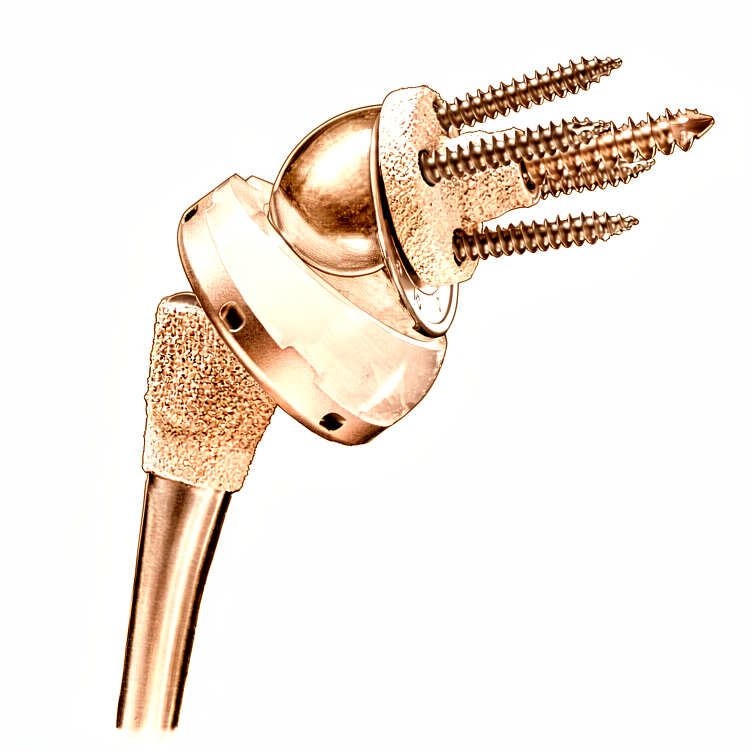
Ang reverse shoulder replacement ay isang joint replacement na pinagpapalit ang karaniwang ball-and-socket arrangement ng balikat, kung saan ang ball ay nakapwesto kung nasaan ang socket at ang socket ay nakapwesto kung nasaan ang ball. Karaniwan namin itong iminumungkahi kapag ang rotator cuff, ang grupo ng mga tendon na nagpapatatag sa balikat, ay malubhang gasgas o punit, o kapag ang ibang mga problema sa balikat ay hindi gumaling sa non-operative care gaya ng pagbabago sa aktibidad, physiotherapy, splinting o mga injection. Para sa ilang mga pinsala, maaaring irekomenda agad ang operasyon. Layunin ng operasyon na maibsan ang sakit at mapabuti ang paggalaw at paggana ng iyong balikat. Ang mga clinical benefit ay nananatili hanggang 10 taon. Tatalakayin namin sa iyo ang mga benepisyo at panganib, at ang desisyon ay gagawin mo kasama namin.
Bago ang operasyon
Kapag nagkasundo na kayo ng iyong surgeon sa isang reverse shoulder replacement, iaayos namin ang mga pagsusuring kailangan upang planuhin ang iyong operasyon. Karaniwan itong nangangahulugan ng mga X-ray ng iyong balikat, at kung minsan ay CT scan, na isang detalyadong scan na bumubuo ng three-dimensional na larawan ng buto. Ang mga imaheng ito ay tumutulong sa amin na planuhin ang posisyon ng mga bagong bahagi ng joint at sukatin nang maigi ang iyong balikat bago ang araw ng operasyon. Tatanungin ka rin tungkol sa iyong pangkalahatang kalusugan, kabilang ang anumang mga nakaraang operasyon sa iyong balikat, mga gamot tulad ng steroids, at mga kondisyon gaya ng osteoporosis, na ang pagnipis ng mga buto. Mangyaring magdala ng listahan ng iyong mga kasalukuyang gamot sa iyong appointment. Kung ikaw ay umiinom ng ilang partikular na gamot, maaaring hilingin ng iyong surgeon na itigil muna ang mga ito nang panandalian bago ang operasyon. Kakailanganin mong mag-fasting nang pitong oras bago ang operasyon; humihiling kami ng mas matagal kaysa sa karaniwan upang maaari kang mauna kung maagang matapos ang theatre list. Mag-ayos ng taong maghahatid sa iyo pauwi pagkatapos, at magsuot ng maluwag at komportableng damit. Kung mayroon kang iba pang mga kondisyong medikal, maaaring kailanganin mo ng mga blood test o pagsusuri kasama ang anaesthetist, ang doktor na nagbibigay ng anaesthetic.
Sa araw ng operasyon
Sa araw ng operasyon, pumunta sa surgical admissions unit ng ospital. Doon ka mag-che-check in at ihahanda para sa theatre. Hindi ka muna dadalhin sa ward.
Ang operasyong ito ay ginagawa sa ilalim ng general anaesthetic na pinagsama sa isang regional nerve block. Makikipagkita sa iyo ang anaesthetist bago ang operasyon at ipapaliwanag sa iyo ang dalawang bahaging ito.
Pagkatapos ay dadalhin ka sa operating theatre, kung saan isasagawa ang operasyon. Kapag natapos na ito, magigising ka sa recovery area. Babantayan ka ng mga nurse doon habang nawawala ang bisa ng anaesthetic. Kapag stable ka na, ililipat ka sa ward.
Ano ang kinapapalooban ng operasyon
Ang iyong siruhano ay gagawa ng isang hiwa sa ibabaw ng bahaging ooperahan upang marating ang kasukasuan ng balikat (shoulder joint). Ang mga gasgas o pudpod na ibabaw ng kasukasuan ay tatanggalin at papalitan ng mga bagong bahaging gawa sa metal at plastik. Ang karaniwang ayos ng ball-and-socket ay pagbabaligtarin, kaya ang ball ay ilalagay kung nasaan ang socket at ang socket naman ay ilalagay kung nasaan ang ball. Ito ang dahilan kung bakit ito tinatawag na "reverse" replacement. Ang mga bagong bahagi ay idinisenyo upang ang malakas na kalamnan na bumabalot sa iyong balikat, ang deltoid, ang mag-angat ng braso sa halip na ang mga pudpod o punit na rotator cuff tendons.
Habang isinasagawa ang operasyon, maingat na magtatrabaho ang iyong siruhano sa paligid ng mga tendon at iba pang soft tissues ng balikat. Kung ang ilan sa mga tissue na ito ay nasa mabuting kondisyon, itatahi ang mga ito pabalik sa bagong implant kapag nailagay na ito. Ang mga bagong bahagi ay ipoposisyon at susukatin gamit ang planong ginawa mula sa iyong mga X-ray at scan bago ang araw ng operasyon.
Kapag nailagay na ang bagong kasukasuan, isasara ang sugat. Isang manipis na self-adhesive mesh ang ilalagay muna sa ibabaw ng isinarang sugat upang pagdikitin ang mga gilid ng balat. Pagkatapos ay papahiran ng liquid skin adhesive ang mesh, kung saan ito titigas upang selyuhan ang lahat. Mananatili ito nang humigit-kumulang isa hanggang dalawang linggo at pagkatapos ay kusa itong aangat at mababakbak, kaya wala nang kailangang tanggalin.
Pagkatapos ng operasyon
Magigising ka sa recovery area, at kapag stable ka na ay ililipat ka sa ward. Babantayan ka ng mga nurse doon at bibigyan ka ng gamot upang mapanatili kang komportable. Ang iyong braso ay nakalagay sa isang simpleng sling para sa suporta; tinatanggal ito para sa mga ehersisyo at paghuhugas. Karamihan sa mga pasyente ay nananatili ng isa o dalawang gabi sa ospital pagkatapos ng operasyong ito. Hahayaan naming nakalagay ang dressing sa loob ng humigit-kumulang 10 araw; pakiusap na huwag itong tanggalin bago ang panahong iyon maliban kung sinabi namin sa iyo. Papalitan o tatanggalin namin ito kapag nakita ka na namin. Karaniwang makikipagkita sa iyo ang isang physiotherapist bago ka umuwi upang simulan ang mga banayad na paggalaw. Pakiayos na may kasama ka sa bahay sa unang 24 oras pagkatapos mong makauwi.
Paggaling
Ang mga unang araw sa bahay ay nakatuon sa pahinga at ginhawa. Ang iyong balikat ay magiging masakit at mamamaga, at ang sling ay naroon upang suportahan ang braso sa pagitan ng mga oras ng ehersisyo. Ang mga simpleng gamot sa sakit, na iniinom ayon sa itinagubilin, ay karaniwang nagpapanatili nito na madaling kontrolin. Ang discomfort ay may tendensiyang unti-unting mabawasan habang lumilipas ang mga linggo, at karamihan sa mga tao ay napapansin na ang pamamaga ay humuhupa bago ang paninigas.
Gagabayan ka ng iyong physiotherapist sa iyong mga ehersisyo, simula sa mga banayad na paggalaw at unti-unting dadagdagan habang pinahihintulutan ng iyong balikat. Tinatanggal ang sling para sa mga session na ito at para sa paglilinis. Magagawa mo ang mga magagaan na gawain sa bahay gamit ang iyong kabilang kamay habang nagpapagaling ang inoperahang braso. Ang pagtulog ay maaaring maging mahirap sa simula; maraming tao ang nakakahanap na mas madali ang pagpapahinga nang nakasandal sa isang upuan o may mga unan hanggang sa maging komportable na muli ang paghiga.
Ang mga milestone ay dumarating bilang mga kaganapan sa halip na mga petsa. Kapag binigyan ka na ng clearance ng iyong surgeon na magmaneho, karaniwan sa six-week review, maaari ka nang bumalik sa kalsada; ang aming hiwalay na gabay ay sumasaklaw sa pagmamaneho pagkatapos ng upper-limb surgery. Habang bumabalik ang paggalaw, ang mga pang-araw-araw na gawain tulad ng pagbibihis at pag-abot ay nagiging mas madali. Kapag nasiyahan na ang iyong physiotherapist sa iyong lakas, maaari ka nang bumalik sa mga aktibidad na iyong kinagigiliwan noon, at karamihan sa mga taong aktibo bago ang operasyong ito ay nakakabalik sa mga aktibidad na iyon pagkatapos.
Ang paggaling ay nag-iiba sa bawat tao. Maaaring magkaiba ang iyong timeline, at gagabayan ka ng iyong surgeon at physiotherapist sa buong proseso.
Ano ang maaaring maging problema
Karamihan sa mga pasyente ay nagiging maayos, ngunit paminsan-minsan ay maaaring magkaroon ng mga problema. Binabantayan kayo nang maigi ng inyong surgeon at ng team upang maagapan ang anumang isyu.
Minsan, ang bagong joint ay maaaring madulas palabas ng puwesto. Maaari kayong makaramdam ng biglaang pag-alog (clunk), na susundan ng sakit at balikat na hindi gumagalaw nang normal. Kung mangyari ito, makipag-ugnayan agad sa klinika o pumunta sa emergency department.
Maaaring magkaroon ng impeksyon sa paligid ng bagong joint. Bantayan ang malalim at pumupulsong sakit na hindi nawawala sa simpleng painkiller, pamumula na kumakalat mula sa sugat, o lagnat. Agad na ipaalam sa klinika kung mapansin ang alinman sa mga senyales na ito. Ang impeksyon ay ginagamot sa mga yugto (in stages), at karamihan sa mga impeksyon sa paligid ng shoulder replacement ay maaaring mawala gamit ang pamamaraang ito.
Ang mga bagong parte ay maaaring lumuwag sa paglipas ng panahon. Karaniwan itong lumalabas bilang sakit na bumabalik o lumalala, kung minsan ay may kasamang pakiramdam na may pumipitik (clicking) o kumikiskis (grinding). Banggitin ito sa inyong susunod na review upang masuri ito gamit ang X-ray.
May mga nerve na dumadaan malapit sa balikat, at maaari itong mapuwersa o mairita habang nag-oopera. Maaari kayong makapansin ng pamamanhid, pangingilig, o panghihina sa braso. Kadalasan ay kusa itong nawawala, ngunit banggitin ito sa inyong review upang mamonitor.
Maaaring magkaroon ng maliliit na bali sa buto sa paligid ng bagong joint, o sa matulis na bahagi ng buto sa itaas ng balikat. Makakaramdam kayo ng matalas na sakit, madalas pagkatapos ng pagkahulog o malakas na pagtulak. Makipag-ugnayan sa klinika kung mangyari ito.
Paminsan-minsan ay maaaring mabuo ang blood clot pagkatapos ng shoulder surgery, na karaniwang nagdudulot ng biglaang pamamaga at pananakit sa binti (calf). Kung mapansin ito, agad na humingi ng medikal na atensyon.
May ilang bagay na nagpapataas ng tsansa ng mga problema. Ang mga kalalakihan ay may mas mataas na tsansa ng mga komplikasyon pagkatapos ng operasyong ito para sa bali sa upper arm. Ang pagkakaroon ng naunang rotator cuff repair ay nagpapataas din ng tsansa ng impeksyon sa paligid ng bagong joint. Ang steroid injection sa balikat ay nangangahulugang kailangang maghintay ng hindi bababa sa 4 na linggo bago ang operasyon, at itatakda namin ang plano base rito.
Ang table ng mga komplikasyon sa pahinang ito ay naglilista ng mga tipikal na rate kung nais ninyo ang mga detalye.
Kailan dapat tumawag sa amin
Karamihan sa mga problema pagkatapos ng operasyong ito ay lumalabas na may mga babalang senyales na maaari mong mapansin sa bahay. Tumawag sa amin kung mapansin ang lagnat, paglala ng pamumula o may lumalabas na likido sa paligid ng sugat, o pananakit na patuloy na lumalala sa halip na humupa. Pumunta sa emergency kung may biglaang matinding sakit, mukhang wala sa porma ang iyong balikat, o hindi mo maigalaw ang braso. Ang pamamaga ng binti na may kasamang tenderness, o pangangapos ng hininga, ay nangangailangan ng agarang emergency care. Tumawag din sa amin kung mawalan ng pakiramdam sa braso o kamay, o mapansin ang bagong pamamanhid at pangingilig na hindi nawawala.
Mas malalim na pagtalakay
Advanced reading: the deeper science (optional)
Ang seksyong ito ay higit pa sa kailangan mo para sa iyong sariling mga desisyon sa paggamot. Ang reverse shoulder replacement ay karapat-dapat sa karagdagang pagbabasa dahil ito ang operasyon na lumutas sa isang problemang dati ay itinuturing na hindi kayang solusyunan, ang balikat na walang gumaganang rotator cuff, at dahil ang katangian nitong komplikasyon ay isa na hindi pa naririnig ng karamihan sa mga pasyente.
Bakit gumagana ang pagbaligtad ng joint
Ang normal na balikat ay may bola sa braso at socket sa shoulder blade, at nakadepende ito sa rotator cuff upang panatilihing sentro ang bola habang nag-aangat ang deltoid. Kapag wala na ang cuff, ang isang conventional replacement ay walang magpapatatag dito at ang bola ay simpleng aakyat paitaas.
Ang reverse design ay pinagpapalit ang mga ito: ang bola ay nakapirmis sa shoulder blade at ang socket ay sa braso. Inililipat nito ang centre of rotation papasok at pababa, na nagpapahaba sa lever arm ng deltoid at hinahayaan itong iangat ang braso nang mag-isa. Ito ay isang mekanikal na solusyon sa halip na biyolohikal, hindi nito kinukumpuni ang anuman, ginagawa nitong sapat ang natitirang kalamnan.
Ipinapaliwanag din nito ang pattern ng kung ano ang naibabalik nito. Ang overhead elevation ay karaniwang bumabalik nang maayos. Ang rotation ay nakadepende sa mga kalamnan na hindi pinapalitan ng operasyon, kaya ang pag-abot sa likod ay madalas na nananatiling limitado, at dapat itong maging bahagi ng expectation na itinakda bago ang surgery sa halip na isang pagkabigo pagkatapos nito.
Kung saan nito pinalitan ang mga lumang operasyon
Para sa mga bali, ang pagbabago ay naging mapagpasya. Sa pagsasama-sama ng 228,523 na pasyente, ang reverse total shoulder arthroplasty ay nagbigay ng mas mabuting functional outcomes at complication rates kaysa sa hemiarthroplasty, at mas paborableng revision profile kaysa sa plate fixation, sa mga matatandang pasyente na may proximal humerus fractures [1].
Isang detalye ng implant na mahalagang malaman, dahil madalas itong itinatanong: ang paghahambing ng mga standard components sa fracture-specific components sa reverse replacement para sa mga baling ito sa 436 na pasyente ay nakakita ng walang makabuluhang pagkakaiba sa clinical outcomes o complication rates [2].
Ang komplikasyong dapat malaman
Ang mahalaga rito ay ang acromial o scapular stress fracture, kung saan ang buto sa itaas ng joint ay nagkakaroon ng lamat dahil sa tumingkad na deltoid tension na sadyang nililikha ng disenyo. Ito ay direktang bunga ng mekanismo na nagpapatakbo sa operasyon.
Isang meta-analysis ang tumukoy sa mga risk factor: ang mga pasyenteng nagkaroon ng mga fracture na ito ay mas matanda na may mas mababang BMI, at ang iba pang mga panganib ay kinabibilangan ng osteoporosis, inflammatory arthritis, pagiging babae at nakaraang rotator cuff repair [3]. Isang hiwalay na review ang nakatuklas na hindi pare-pareho ang pag-uulat ng mga fracture na ito sa literatura, na may mga makabuluhang pagkakaiba sa kung paano sila binibigyang-kahulugan, sinusuri at binibilang [4], kaya ang mga binanggit na rate ay dapat basahin nang may pag-iingat.
Sa kabilang banda, ang panandaliang sitwasyon ay nakakapanatag: ang pangkalahatang rate ng mortality at mga medikal at surgical na komplikasyon ay mababa sa unang 90 araw, kung saan 6% lamang ng mga pasyente ang nangailangan ng readmission [5].
Dalawang bagay na hindi sinusuportahan ng ebidensya
Na dapat kumpunihin ang subscapularis. Sa 267 na pasyente, walang pagkakaiba sa lakas ng abduction, internal rotation o external rotation pagkatapos ng reverse replacement na mayroon o walang subscapularis repair, bagaman binanggit ng mga may-akda na limitado ang literatura tungkol sa mga outcome ng lakas [6].
Na ang indikasyon ay hindi nakakaapekto sa resulta. Nakakaapekto ito. Sa loob ng dalawa o higit pang taon, ang mga Constant score ay signipikanteng mas mataas sa mga pasyenteng sumailalim sa reverse replacement para sa primary osteoarthritis na may intact na cuff kaysa sa primary osteoarthritis na may cuff tears o para sa secondary osteoarthritis [7]. Ang parehong operasyon ay nagbibigay ng magkakaibang resulta depende sa kung bakit mo ito kinailangan, na mahalagang malaman kapag binigyan ka ng average.
Mga Sanggunian
[1] Mekhail J, Mullan R, Cross JL, Jahagirdar O, Luo X, Salameh M. Outcomes of reverse total shoulder arthroplasty vs. other surgical fixation methods for proximal humerus fractures: a systematic review and meta-analysis. JSES Rev Rep Tech. 2026;6(2):100644. https://doi.org/10.1016/j.xrrt.2025.100644
[2] Apivatgaroon A, Kongmalai T, Kongmalai P. Standard compared with fracture-specific components in reverse shoulder arthroplasty for proximal humeral fractures: a systematic review and meta-analysis. Bone Joint J. 2025;107-B(9):931-41. https://doi.org/10.1302/0301-620X.107B9.BJJ-2024-1508.R2
[3] Elmenawi KA, Sperling JW, Sanchez-Sotelo J, Barlow JD. Risk factors for acromial and scapular fractures following reverse shoulder arthroplasty: a meta-analysis. JSES Rev Rep Tech. 2026;6(1):100578. https://doi.org/10.1016/j.xrrt.2025.08.015
[4] Davie RA, Nathan K, Persaud SG, Oladeji LO, Taylor SA, Dines JS, et al. Inconsistent reporting of risk factors for acromial stress fractures following reverse total shoulder arthroplasty: a systematic review. J Shoulder Elbow Surg. 2025;34(11):e975-e984. https://doi.org/10.1016/j.jse.2025.02.032
[5] Kent LM, Hurley ET, Davey MS, Klifto CS, Mullett H. Low complication rate following reverse total shoulder arthroplasty at 90-days follow-up: a systematic review. J ISAKOS. 2024;9(2):205-10. https://doi.org/10.1016/j.jisako.2023.11.006
[6] Preuss FR, Eble SK, Peebles AM, Osuna-Garcia A, Provencher CMT. Shoulder strength outcomes after reverse total shoulder arthroplasty: a systematic review. JSES Rev Rep Tech. 2022;2(2):131-4. https://doi.org/10.1016/j.xrrt.2021.11.004
[7] Nové-Josserand L, Nerot C, Colotte P, Guery J, van Rooij F, Hibon A, et al. Reverse shoulder arthroplasty for primary glenohumeral osteoarthritis: significantly different characteristics and outcomes in shoulders with intact vs. torn rotator cuff. J Shoulder Elbow Surg. 2024;33(4):850-62. https://doi.org/10.1016/j.jse.2023.07.027
Evidence & references
This is the clinical evidence summary written for health professionals. It is technical, and it lists the research this page was built from. You do not need to read it to understand your treatment or to make a decision about it.
Anatomy & Pathophysiology
Glenoid and Scapular Anatomy
- The glenoid is suspended from the body of the scapula by the neck and fixed to the clavicle by the acromioclavicular and coracoclavicular ligaments [3].
- As the face of the glenoid transitions into the neck, the glenoid vault narrows [3].
- The scapular spine is subcutaneous posteriorly and widens gradually as it transitions into the base of the acromion laterally [3].
- The acromion curves anteriorly and meets the clavicle at the acromioclavicular joint and the coracoid via the coracoacromial ligament, which originates under the anterior margin of the acromion [3].
- The suprascapular nerve arises from the C4–C5 nerve roots off of the supraclavicular brachial plexus at “Erb’s point” [3].
- The suprascapular nerve runs just medial to the base of the coracoid, under the transverse scapular ligament within the suprascapular notch, and gives off branches to the supraspinatus within 1 cm of the notch [3].
- The suprascapular nerve continues through the supraspinatus fossa heading laterally and distally on the under surface of the supraspinatus [3].
- The suprascapular nerve runs under the ill-defined spinoglenoid ligament around the lateral base of the scapula within spinoglenoid notch before terminating in posterior capsular sensory branches heading laterally and an infraspinatus motor branch heading medially within 1 cm of the lateral margin of the scapular spine [3].
- Cadaver studies show the suprascapular nerve is present 29 mm (23 to 35 mm) from the superior rim of the glenoid at the suprascapular notch [3].
- Cadaver studies show the suprascapular nerve is present 18 mm (14 to 24 mm) from the posterior rim at the spinoglenoid notch [3].
- Injury to the suprascapular nerve can cause pain and denervation of the supraspinatus and infraspinatus [3].
Biomechanics and Pathophysiology
- Anatomic total shoulder arthroplasties and hemiarthroplasties are dependent on the rotator cuff to center the head in the glenoid and to optimize larger periscapular muscle function [7].
- In the absence of a functional rotator cuff, the deltoid pulls the humerus proximally, shearing along the glenoid and resulting in eccentric glenoid wear, acetabularization of the acromion, and pseudoparalysis [7].
- The reverse shoulder arthroplasty does not require the rotator cuff for function but is dependent on an intact deltoid neuromuscular unit [7].
- The semiconstrained nature of the reverse prosthesis provides a stable fulcrum that allows the deltoid to elevate the shoulder even in the absence of a functional rotator cuff [4].
- In the Grammont reverse prosthesis, the center of rotation is medial to the glenoid component–bone interface to decrease shear stress and provide compressive stress, aiming to decrease the chances of glenoid loosening [4].
- The humeral component in the Grammont design is inset, resting almost completely inside the proximal humerus metaphysis [4].
- The opening angle of the polyethylene in the Grammont design is relatively horizontal at 155 degrees compared with conventional arthroplasty [4].
- Once articulated, the humerus is more medial and more distal than preoperatively, providing a mechanical advantage to the deltoid for active elevation in the absence of a rotator cuff [4].
- The traditional Grammont style decreases shear forces seen by the glenoid and lowers baseplate failure by medializing the center of rotation, but this is associated with the risk of inferior scapular notching in adduction [7].
- Distalization doubles the lever arm of the deltoid and optimizes the length–tension curve of its sarcomeres, increasing its efficiency by 30% at the cost of rotational strength [7].
- Lateralized glenosphere and lateralized humerus designs have gained popularity to improve the rotational profile, deltoid function, implant stability, and decrease impingement such as scapular notching [7].
- Early reverse designs had a high failure rate due to the profound lever arm on the glenoid and baseplate bone [7].
- Recent reverse designs have a better track record but increased forces are seen by the scapula and acromion [7].
Periprosthetic Scapular Fracture Pathophysiology
- Periprosthetic scapular fractures are universally associated with stable glenoid implants [2].
- Fracture is unlikely in the face of dislocation, glenosphere dissociation, or baseplate pullout at the bone–baseplate interface [2].
- Periprosthetic scapular fracture has been noted to result in new glenohumeral instability due to the change of the orientation of the glenosphere and loss of deltoid tension [2].
- Postoperative periprosthetic scapular fracture is a challenge unique to reverse shoulder arthroplasty and occurs more commonly than humeral fractures [7].
- Postoperative periprosthetic scapular fractures are an effect of nonphysiologic forces transferred from the implant to the scapula, often in a suboptimal host [7].
- Fatigue fracture has been found to occur through already weakened acromiums or those with preexisting lesions [7].
- Acromial thinning and eventual fragmentation occur at the final stages of rotator cuff-tear arthropathy as the humeral head acetabularizes [7].
Clinical Presentation
Periprosthetic Scapular Fractures
- The weak point in periprosthetic scapular fracture injuries is the scapular bone [2].
- Periprosthetic scapular fractures are unlikely in the presence of dislocation, glenosphere dissociation, or baseplate pullout at the bone–baseplate interface [2].
- Periprosthetic scapular fractures have been noted to rarely result in new glenohumeral instability [2].
- New glenohumeral instability following periprosthetic scapular fracture is due to a change in the orientation of the glenosphere and loss of deltoid tension [2].
- Diagnosis of periprosthetic fractures is often subtle and requires a high index of suspicion [2].
- Workup for periprosthetic fractures should begin with a complete history and examination [2].
- Past medical history should elucidate the underlying diagnosis for the index surgery and subsequent surgeries [2].
- Complications including infection should be accounted for in the past medical history [2].
- The examiner should understand the patient's shoulder function and level of disability before surgery, after surgery, and at present [2].
- The examiner should understand the time course of changes in shoulder function and disability [2].
- In the case of a stress reaction, new pain at the base of the acromion may be the only finding [2].
- New pain at the base of the acromion in a stress reaction should raise suspicion and spark further imaging or a period of rest [2].
- Stress fractures can be more painful than after they propagate into a displaced fracture [2].
- Patients typically present around their 8th decade of life after a sudden increase in pain or loss of function [2].
- Patients typically present after a sudden increase in pain or loss of function in an otherwise smooth postoperative course [2].
- Presentation for periprosthetic scapular fracture is generally within 1 year but up to 2 years from surgery [2].
- Patients who go on to have periprosthetic scapular fractures initially outperform those who do not [2].
- Past medical history must identify risk factors including a history of steroid use, osteoporosis, subacromial decompression, or rotator cuff tear arthropathy [2].
- Previous operative reports, clinic notes, and imaging can help provide a thorough understanding of any previous surgeries on the shoulder or history of radiation [2].
- Physical examination starts with inspection [2].
- Deformity is concerning for dislocation, hematoma, or displaced fracture [2].
- Erythema or incisional dehiscence is concerning for infection [2].
- Tenderness along the acromion or scapular spine raises suspicion for fracture which should be confirmed with imaging [2].
- A complete neurovascular examination is performed as part of the physical examination [2].
- Assessment of active and passive motion is performed as part of the physical examination [2].
- Fracture can result in motion limited by pain, new weakness, or loss of function [2].
- Infection should be investigated with laboratory tests [2].
- A sudden loss of function or increase in pain is consistent with both scapular fracture and infection [2].
- A sudden loss of function or increase in pain should trigger further workup [2].
Investigations
Periprosthetic Scapular Fracture Diagnosis and Workup
- Diagnosis of periprosthetic scapular fractures is often subtle and requires a high index of suspicion [2].
- The workup for periprosthetic scapular fractures should begin with a complete history and examination [2].
- The examiner should understand the patient's shoulder function and level of disability before surgery, after surgery, and at present, as well as the time course of these changes [2].
- New pain at the base of the acromion may be the only finding in a stress reaction and should raise suspicion for further imaging or a period of rest [2].
- Patients with periprosthetic scapular fractures typically present around their 8th decade of life after a sudden increase in pain or loss of function in an otherwise smooth postoperative course [2].
- Periprosthetic scapular fractures generally occur within 1 year but up to 2 years from surgery [2].
- Inspection for deformity is concerning for dislocation, hematoma, or displaced fracture [2].
- A complete neurovascular examination is performed as well as assessment of active and passive motion [2].
- A sudden loss of function or increase in pain is consistent with both scapular fracture and infection and should trigger further workup [2].
Preoperative Imaging and Planning
- Careful assessment of the preoperative radiographs and CT with three-dimensional reconstruction is extremely useful in preparation for surgery [5].
- The main goals of preoperative imaging include understanding the fracture pattern and anticipating the ideal height of stem implantation [5].
- Radiographs of both humeri (affected and unaffected) with magnifier markers may be used to understand where the stem should be positioned in reference to the fracture line on the humeral shaft [5].
- The glenoid should be assessed in radiographs and CT to plan for component positioning, version, inclination, and rotation, as well as anticipated screw length [5].
- Associated fractures of the rim of the glenoid in anterior or posterior fracture-dislocations are rare [5].
- Most of the times, the size of the fractured glenoid rim is small enough not to interfere with secure baseplate placement [5].
- If the size of the fractured glenoid rim is large enough to interfere with the stability of the glenoid baseplate, fixation with small fragment screws may be performed [5].
- The glenoid should be assessed on CT for glenoid component implantation [5].
- Most surgeons do not use fluoroscopy for this procedure [5].
Treatment
Indications and Rationale
- Reverse shoulder arthroplasty is the replacement procedure of choice when arthroplasty is considered for proximal humeral fractures [4].
- Tuberosity and rotator cuff-related complications are the main reason for poor functional outcome when a humeral head replacement is implanted for management of a proximal humeral fracture [4].
- Shoulder arthroplasty is considered for proximal humeral nonunion in the presence of severe cavitation and bone loss at the humeral head and metaphysis or collapse and degenerative change of the humeral articular surface [6].
- Severe tuberosity malunion in the setting of a proximal humeral nonunion is more reliably compensated for with reverse arthroplasty than with osteotomy and internal fixation [6].
- Reverse shoulder arthroplasty may improve shoulder function in patients with nonunions associated with severe tuberosity malunions [6].
Prosthesis Design and Biomechanics
- The Grammont reverse prosthesis features an articulating glenoid component shaped as a third of a sphere [4].
- In the Grammont design, the center of rotation is medial to the glenoid component–bone interface to decrease shear stress and provide compressive stress, aiming to decrease the chances of glenoid loosening [4].
- The opening angle of the polyethylene in the Grammont design is 155 degrees [4].
- Articulation of the Grammont implants results in the humerus being more medial and more distal than preoperatively, providing a mechanical advantage to the deltoid for active elevation [4].
- The 155-degree opening angle in the Grammont design was selected to decrease the chances of dislocation [4].
- The humeral component in the Grammont design was recommended to be implanted in more anteversion (0 to 10 degrees of retroversion) than conventional arthroplasty [4].
- Subsequent reverse designs with a larger portion of a sphere place the center of rotation more lateral than the Grammont prosthesis [4].
- Subsequent reverse designs with a larger portion of a sphere utilize an opening angle of 135 degrees for the humeral component [4].
- Later reverse designs introduced onlay humeral bearings that lateralize the position of the humerus without changing the center of rotation [4].
- Later reverse designs with onlay humeral bearings utilize a 145-degree opening angle for the bearing [4].
- There is very little published on reverse arthroplasty biomechanics in the setting of a proximal humeral fracture [4].
Surgical Technique and Tuberosity Management
- Some surgeons initially elected to implant a reverse arthroplasty in proximal humeral fractures without repair, or sometimes with excision, of the greater tuberosity and/or lesser tuberosity [4].
- Healing of at least the greater tuberosity in good position provides a higher chance of restoration of active external rotation [4].
- Not performing a tuberosity repair at the time of reverse arthroplasty for proximal humeral nonunion has been correlated with a higher rate of dislocation [4].
- Technical principles for reverse arthroplasty in fracture may need to be modified to enhance tuberosity healing by avoiding translating the humeral shaft too lateral or too distal, allowing the tuberosities to overlap a few millimeters with the shaft [4].
- Use of a stem with fracture-dedicated features, such as a proximal ingrowth surface, small cross section, and holes for suture fixation, may be beneficial [4].
Comparison with Hemiarthroplasty
- Hemiarthroplasty is less commonly considered than reverse arthroplasty for proximal humeral nonunion [6].
- The functional outcome of hemiarthroplasty for nonunion is particularly concerning when tuberosity osteotomies need to be added [6].
- Studies reporting on hemiarthroplasty for nonunion suggest the procedure may be effective in reducing or eliminating pain but is associated with a high rate of complications that often require further surgery and disappointing functional recovery [6].
Complications
- Scapular notching is a complication of reverse shoulder arthroplasty [1].
- The clinical impact of scapular notching on outcomes after reverse total shoulder arthroplasty has been analyzed in a study of 476 shoulders [1].
- Humeral version in reverse shoulder arthroplasty affects impingement during activities of daily living [1].
- Subscapularis tendon integrity impacts shoulder function after reverse shoulder arthroplasty [1].
- Component positioning affects the intrinsic stability of the reverse shoulder arthroplasty [1].
- Humeral component lateralization in reverse shoulder arthroplasty affects rotator cuff torque [1].
References
[1] Campbell S Operative Orthopaedics 4 Volume Set. RECONSTRUCTIVE PROCEDURES OF THE SHOULDER AND ELBOW IN ADULTS > REVERSE SHOULDER ARTHROPLASTY.
[2] Rockwood And Green S Fractures In Adults. 29: Principles of Nonunion and Bone Defect Treatment > Injuries Associated with Periprosthetic Scapular Fractures About Reverse Shoulder Arthroplasty.
[3] Rockwood And Green S Fractures In Adults. 29: Principles of Nonunion and Bone Defect Treatment > Pathoanatomy and Applied Anatomy Related to Periprosthetic Scapular Fractures About Reverse Shoulder Arthroplasty.
[4] Rockwood And Green S Fractures In Adults. 29: Principles of Nonunion and Bone Defect Treatment > Reverse Shoulder Arthroplasty.
[5] Rockwood And Green S Fractures In Adults. 29: Principles of Nonunion and Bone Defect Treatment > Preoperative Planning > Reverse Shoulder Arthroplasty for Fracture: Preoperative Planning Checklist.
[6] Rockwood And Green S Fractures In Adults. 29: Principles of Nonunion and Bone Defect Treatment > Reverse Shoulder Arthroplasty and Hemiarthroplasty.
[7] Rockwood And Green S Fractures In Adults. 29: Principles of Nonunion and Bone Defect Treatment > Periprosthetic Scapular Fractures About Reverse Shoulder Arthroplasty.