Patients › Rehabilitation
Posterior Stabilisation
Rehabilitation protocol after posterior shoulder stabilisation, with posterior-specific precautions and return-to-sport criteria.
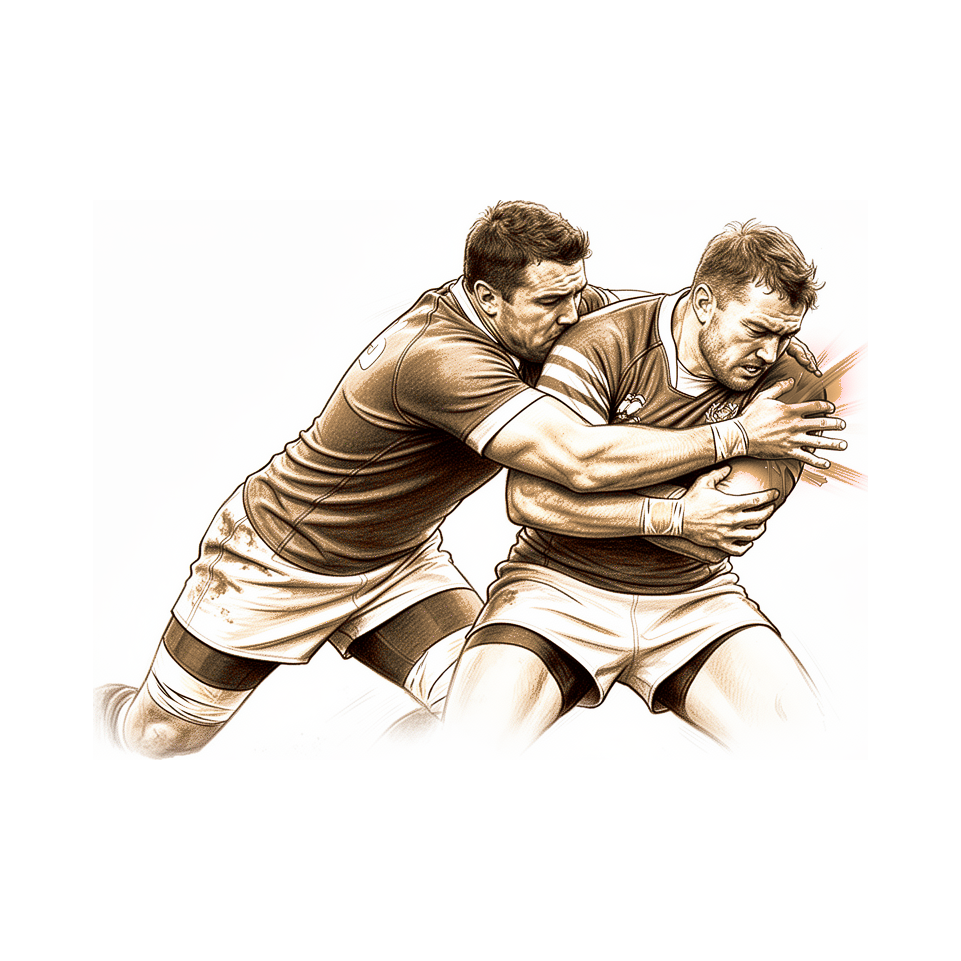
Ang protocol na ito ay nagsisilbing gabay sa iyong paggaling pagkatapos ng posterior stabilisation ng balikat kasama si Dr Kieran Hirpara sa Mater Private Hospital Rockhampton. Ang bawat phase sa ibaba ay nagsisimula sa isang paliwanag sa simpleng Ingles tungkol sa kung ano ang nangyayari at kung ano ang pinakamahalaga, na sinusundan ng structured programme na maaari mong ibahagi sa iyong physiotherapist; dalhin ang pahinang ito o ang PDF nito sa iyong unang pagbisita sa physiotherapy upang manatiling coordinated ang iyong rehabilitasyon. Maaaring i-adjust ng iyong physiotherapist ang plano depende sa pag-unlad ng iyong paggaling.
Kung mayroon kang anumang alalahanin tungkol sa iyong sugat pagkatapos ng operasyon, makipag-ugnayan sa mga rooms. Madalas na nakatutulong ang pagkuha ng larawan ng sugat at pag-email nito para masuri.
Ano ang dapat asahan
Ang posterior stabilisation ay kinukumpuni ang likurang (posterior) bahagi ng balikat, kung saan ang labi ng cartilage (labrum) at ang capsule ay napunit mula sa socket. Dahil ang pagkumpuni ay nasa likod ng joint, ang paggalaw na pinaka-nagbibigay ng load dito ay ang pag-abot pasulong habang pini-pihit ang braso papasok, at tatlong pang-araw-araw na paggalaw ang pinoprotektahan sa simula, dahil ang bawat isa ay itinutulak ang bola ng joint pabalik laban sa bagong pagkumpuni:
- pagpihit ng braso papasok (internal rotation): pag-abot sa likod ng iyong katawan, o pagpihit ng iyong kamay papasok at patawid sa iyong tiyan;
- pag-abot patawid sa iyong katawan patungo sa kabilang balikat (cross-body adduction);
- pag sandal o pagtulak gamit ang inoperahang braso.
Ito ay kabaligtaran ng anterior (harap) stabilisation, kung saan ang pagpihit ng braso palabas ang dapat protektahan. Para sa posterior repair, ang ligtas na direksyon ay ang pagpihit ng braso palabas, at ang inward rotation ang huling ibinabalik: dahan-dahan, at hindi sa full range hanggang sa humigit-kumulang tatlong buwan. Ang mga phase sa ibaba ay nagtatakda nang eksakto kung kailan maaaring ibalik ang bawat protektadong paggalaw.
Laging may tukso na pilitin ang paggalaw nang maaga, ngunit ipinapakita ng ebidensya na anumang dagdag na range na nakuha mula sa pagmamadali ay pansamantala lamang, at ang pagkumpuni ay nasa pinakamahinang estado nito sa unang anim na linggo. Ang isang matatag at staged na programa ay nagbibigay ng pinakaligtas at pinaka-predictable na pagbabalik sa full function. Ang posterior instability ay hindi karaniwan, kaya ang timeline na ito ay binuo batay sa biomechanical reasoning at mga nailathalang fellowship protocol sa halip na malalaking trial; itatama ni Dr Hirpara ang bilis nito para sa iyo.
Magsusuot ka ng simpleng sling, hindi isang espesyal na abduction o "gunslinger" brace. Ang proteksyon ay nagmumula sa mga positional precaution sa itaas (pagpapanatili ng braso sa harap at pag-iwas sa inward rotation at pag-abot patawid), hindi mula sa hugis ng sling.
Ang paglalakbay sa isang sulyap:
- Phase I — Proteksyon, linggo 0–2
- Phase II — Maagang paggalaw, linggo 2–4
- Phase III — Pagdagdag ng paggalaw at pagsisimula ng pagpapalakas, linggo 4–6
- Phase IV — Pag-unlad, linggo 6–8
- Phase V — Pagpapalakas, linggo 8–12
- Phase VI — Full range at weight training, linggo 12–14
- Pagbabalik sa sport: mula linggo 12, at ang contact sport ay hindi bago ang 5 buwan
Pagbabalik sa iyong mga aktibidad:
- Trabaho: sedentary job: ayon sa tolerance; manual job: hindi bababa sa 3 buwan
- Pagmamaneho: kapag wala na sa sling at kontrolado na ang braso, karaniwan ay sa loob ng 6 na linggo
- Pagbuhat: ang magaan na pagbuhat ay maaaring magsimula sa mga unang linggo sa loob ng mga limitasyon; iwasan ang mas mabigat na pagbuhat sa loob ng humigit-kumulang 3 buwan
- Contact sport (football, rugby, martial arts, racket sports, rock climbing, horse riding): mula 5 buwan sa pinakamaaga, at kapag natugunan na lamang ang mga return-to-sport criteria
Ang pamamaraan
Ang iyong posterior stabilisation ay karaniwang ginagawa nang arthroscopically (keyhole), o paminsan-minsan sa pamamagitan ng isang maliit na open incision. Ang napunit na labrum at capsule sa likod ng balikat ay muling ikinakabit at hinihigpitan sa gilid ng socket (kung minsan ay tinatawag na reverse Bankart repair o posterior capsulorrhaphy). Ang layunin ng rehabilitasyon ay panatilihing malayo ang ball ng joint mula sa repair na iyon habang ito ay gumagaling, sa pamamagitan ng paglilimita sa mga paggalaw pasulong, papasok, at patawid sa katawan sa simula, at pagkatapos ay unti-unting ibabalik ang buong paggalaw, lakas, at function sa mga yugto.
Pagsusuot ng iyong sling
Sinuportahan ng iyong sling ang braso at nagsisilbing paalala na panatilihin ito sa ligtas na posisyon habang gumagaling ang repair. Simple lang ang mga panuntunan:
- Magsuot ng simple sling sa loob ng humigit-kumulang 6 na linggo, lalo na kapag ikaw ay nasa labas ng bahay o may kasamang ibang tao. Hindi gumagamit si Dr Hirpara ng abduction pillow, wedge o gunslinger brace; isang simple sling kasama ang mga positional precaution sa ibaba ang nagpoprotekta sa isang posterior repair.
- Huwag matulog nang nakasuot ng sling. Matulog nang wala ito, habang pinapanatili ang iyong braso na wala sa at-risk position: ipahinga ito nang bahagyang nasa harap mo, hindi nakapihit papasok o nakapatong sa iyong katawan. Ang unan sa ilalim ng braso ay nakatutulong upang mapanatili ito doon.
- Hubarin ang sling para sa pagligo at para sa iyong mga ehersisyo (kapag naipakita na sa iyo kung paano). Sa tuwing wala ang sling, panatilihing relax ang iyong braso at nasa harap ng iyong katawan; huwag hayaang mapunta ito sa likod mo o tumawid sa iyong dibdib.
- Gumamit ng ice kung ang balikat ay namamagâ o masakit, lalo na pagkatapos ng ehersisyo.
Bantayan ang iyong postura habang ginagamit ang sling: panatilihing magkahanay ang iyong mga tainga, balikat at balakang at iwasan ang pagkubo. Ang mabuting postura ay nagpoprotekta sa iyong likod at nakatutulong upang maiwasan ang paninigas ng balikat.
Ang iyong physiotherapist ay gagamit ng tatlong uri ng paggalaw: passive range of motion (PROM) (ang iyong braso ay lubos na relax, habang ang kabilang braso o ang physiotherapist ang gumagawa ng lahat ng paggalaw); active-assisted range of motion (AAROM) (ang iyong maayos na braso o isang bagay ang tumutulong sa paggalaw ng inoperahang braso); at active range of motion (AROM) (ikaw ang nagpapagalaw ng braso gamit ang sarili nitong lakas). Sasabihin sa iyo ng iyong treating team kung alin ang naaangkop sa bawat yugto.
Mga pangunahing pag-iingat — HUWAG gawin
Lalo na sa unang anim na linggo, ang mga sumusunod ay nagpoprotekta sa repair sa likod ng balikat:
- HUWAG iikot ang braso papasok lampas sa posisyong nakaharap nang diretso (neutral): huwag abutin ang likod, at huwag iikot ang kamay papasok patawid sa iyong tiyan. Ang inward rotation ang pinakamahalagang galaw na dapat iwasan nang maaga, at ito ang huling ibabalik.
- HUWAG abutin ang tapat ng iyong katawan patungo sa kabilang balikat (walang cross-body movements).
- HUWAG pagsamahin ang pag-abot pasulong at ang pag-ikot ng braso papasok; ito ang eksaktong posisyon na nagbibigay ng load sa repair.
- HUWAG sumandal sa inoperahang braso, huwag itong gamitin upang itulak ang sarili pataas mula sa upuan o kama, o huwag itong gamitin sa pagbuhat ng bigat.
- HUWAG magbuhat, magtulak, o humila ng anumang mabigat gamit ang inoperahang braso nang maaga.
- HUWAG pilitin o i-stretch sa alinman sa mga direksyong ito; hayaang bumalik ang range nang unti-unti sa loob ng mga limitasyong itinakda ng iyong physiotherapist.
- Ang pag-ikot ng braso palabas (outwards) ang ligtas na direksyon pagkatapos ng posterior repair, ngunit manatili pa rin sa loob ng mga limitasyong itinakda ng iyong physiotherapist.
Ang iyong mga unang araw sa ospital
Kieran Hirpara 4.0
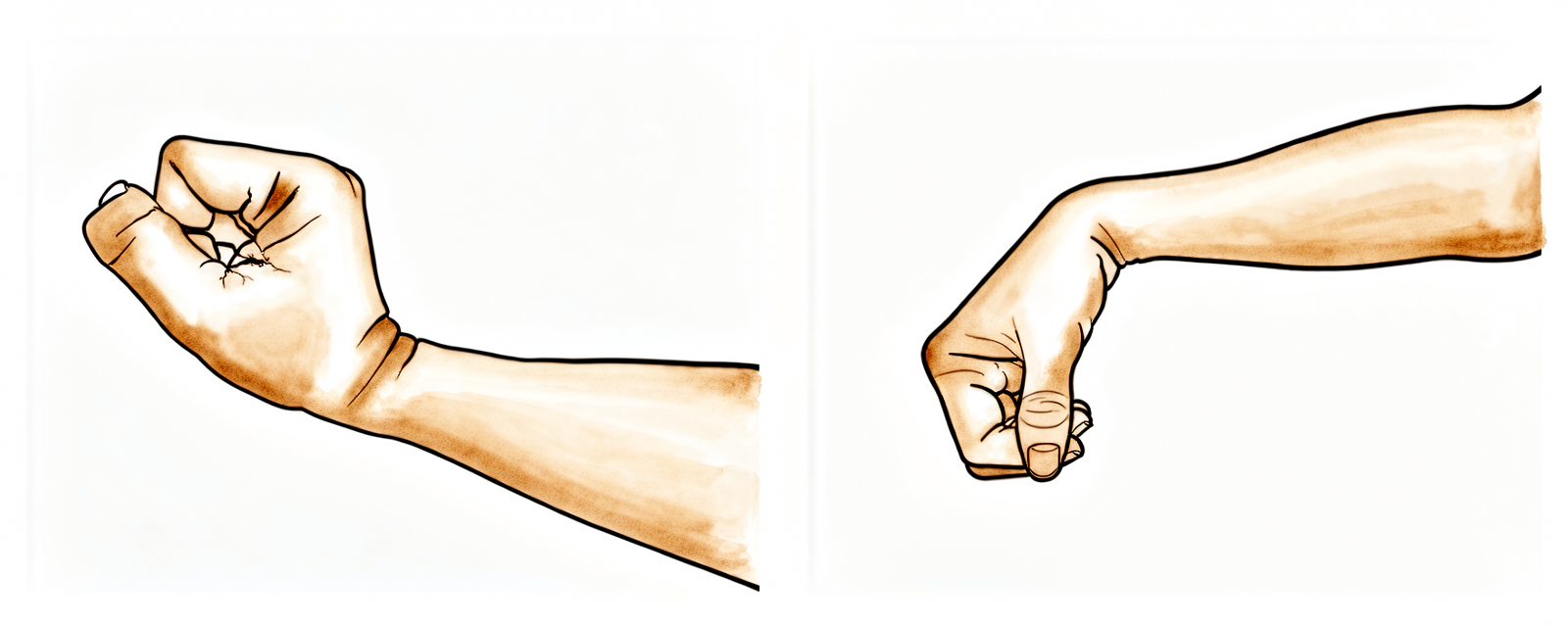
Pulso, kamay at mga daliri
Panatilihing gumagalaw ang iyong kamay sa pamamagitan ng pagbaluktot ng iyong pulso pasulong, pabalik, at sa magkabilang gilid, at sa pamamagitan ng pagbubukas at pagsasara ng iyong mga daliri o pagpisil ng isang malambot na bola. Pinapanatili nito na malambot ang kamay at pulso at tumutulong na mabawasan ang pamamaga — hindi nito binibigatan ang repair.
10 beses, 3 beses sa isang araw
Kieran Hirpara 4.0
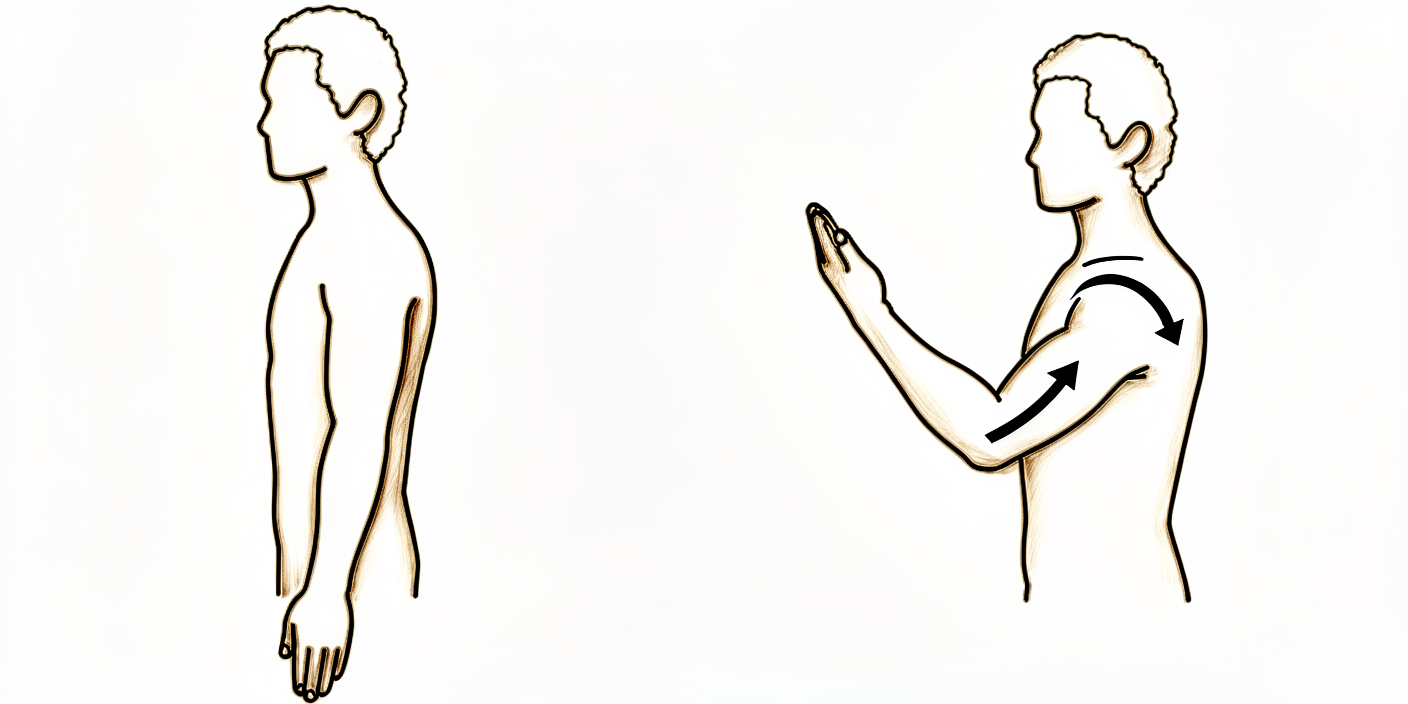
Naititiklop ang siko
Habang ang iyong itaas na braso ay nakaposisyon sa harap ng iyong katawan, dahan-dahang itiklop at iunat ang iyong siko. Panatilihing relaks at hindi gumagalaw ang iyong balikat.
10 beses, 3 beses sa isang araw
Kieran Hirpara 4.0
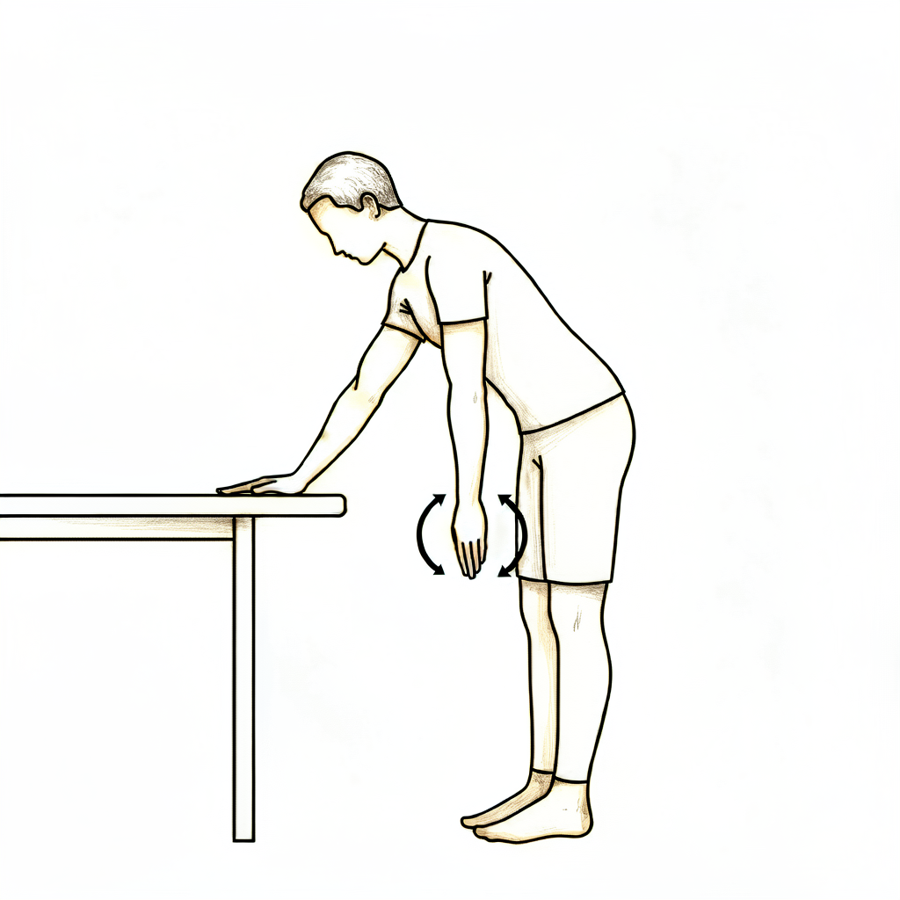
Pendulum swings
Yumuko nang bahagya pasulong at hayaang nakababa ang iyong inoperahang braso, na lubos na nakarelaks. Gamitin ang iyong katawan upang dahan-dahang i-swing ang braso — maliliit na bilog clockwise at anti-clockwise, at dahan-dahang pasulong/pabalik at pabalik-balik sa magkabilang gilid. Walang gagawin ang mga kalamnan ng iyong balikat; ang iyong katawan ang gagawa ng paggalaw. Panatilihing maliit ang swing.
Mga 30 segundo bawat direksyon, 3 beses sa isang araw
Ilang mga panuntunan para sa ward at sa iyong mga unang araw sa bahay:
- Gumamit ng ice para sa pagpapaginhawa ng sakit kung kinakailangan.
- Kapag suot ang iyong sling, i-relax ang iyong balikat at hayaang dalhin ng sling ang bigat ng iyong braso, at panatilihin ang braso sa harap ng iyong katawan.
- Inumin ang iyong mga painkiller bago gawin ang iyong mga ehersisyo at bago ang iyong mga appointment sa physiotherapy.
- Pinapayagan kang ilabas ang iyong braso mula sa sling para sa iyong mga ehersisyo at para sa pagliligo.
- Isuot ang iyong sling sa loob ng humigit-kumulang 6 na linggo, lalo na kapag wala sa bahay.
- Maliban kung nag-ayos ka ng sarili mong physiotherapy, may nakatakda nang appointment para sa iyo at ito ay nasa iyong discharge pack.
- Kung mayroon kang anumang problema, makipag-ugnayan sa opisina o ipaalam ito sa iyong physiotherapist.
Phase I — Proteksyon (weeks 0–2)
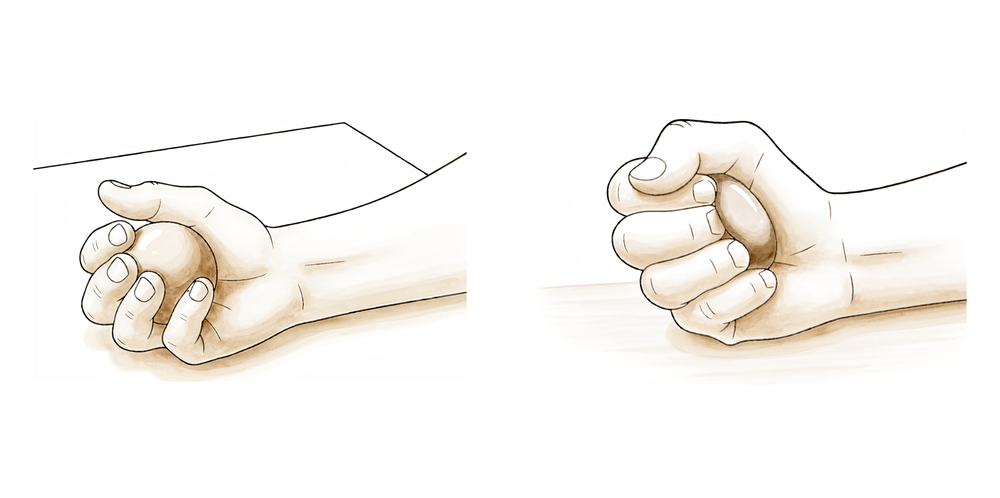
Kieran Hirpara 4.0
Pagpisil ng bola
Habang nakapahinga nang komportable ang iyong braso sa harap mo, pigaan ang isang malambot na bola o nakabilot na medyas, hawakan nang sandali, pagkatapos ay i-relax. Pinapanatili nito na aktibo ang iyong forearm at grip nang hindi ginagalaw ang balikat.
Hawakan nang 5 segundo, 10 beses, 3 beses sa isang araw
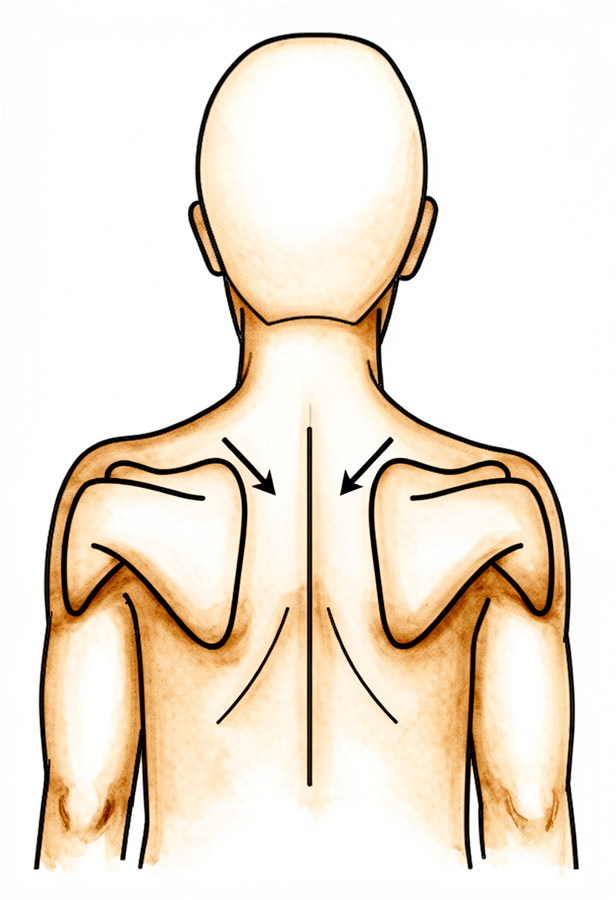
Kieran Hirpara 4.0
Pag-set ng shoulder-blade
Dahan-dahang pisilin ang iyong mga shoulder blade pababa at magkasama, manatili sa posisyong ito, pagkatapos ay i-relax. Hindi gumagalaw ang iyong braso — ito ay isang light muscle-activation drill na nagpapatatag sa shoulder blade.
Hawakan nang 5 segundo, 5 beses, 3 beses sa isang araw
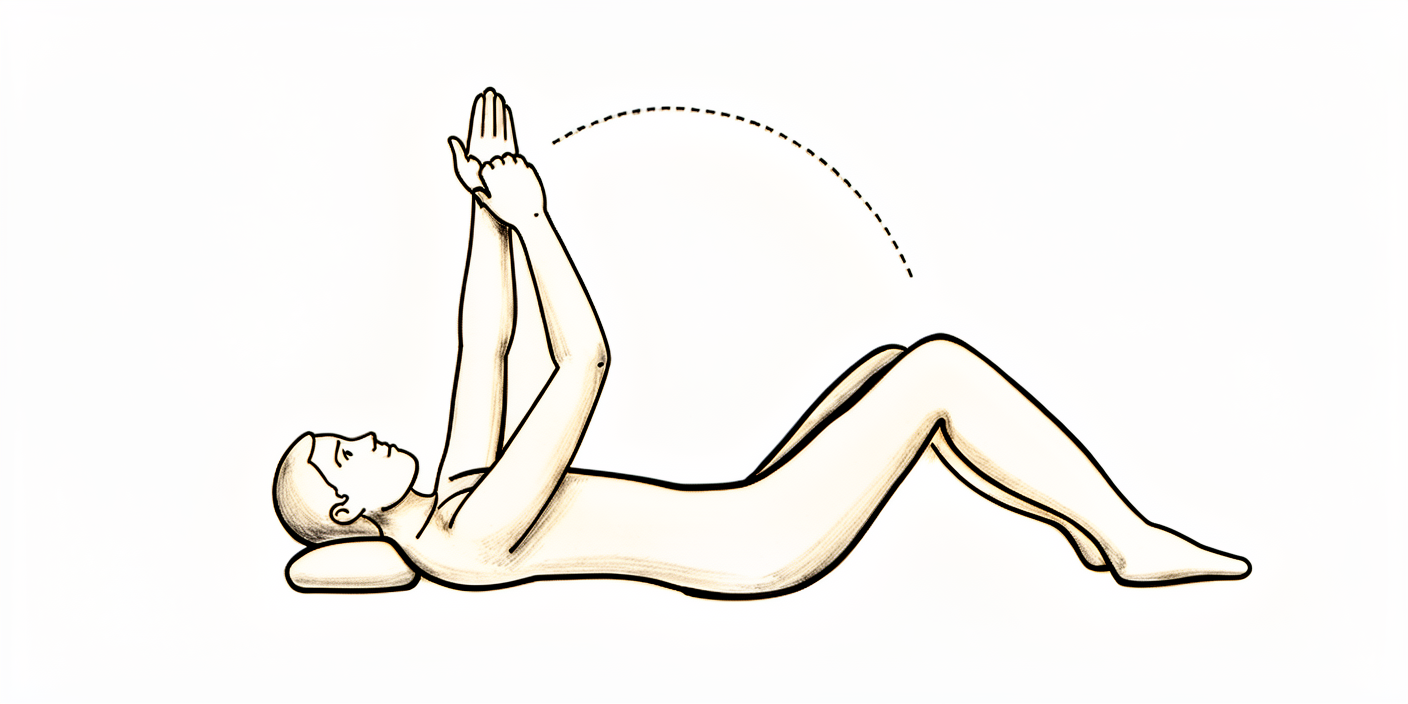
Kieran Hirpara 4.0
Tinutulungang forward lift
Umupo at yumuko nang bahagya pasulong, alalayan ang iyong inoperahang braso gamit ang iyong maayos na braso, at dahan-dahang tulungan itong itaas sa iyong harapan. HUWAG lumampas sa halos kalahati ng taas (humigit-kumulang 60°) sa unang yugtong ito. Ibaba itong muli kung saan ang iyong maayos na braso ang gumagawa ng trabaho. Panatilihin ang braso sa iyong harapan sa buong oras at huwag itong pilitin kailanman.
10 beses, 3 beses sa isang araw, sa loob ng limitasyong itinakda ng iyong physiotherapist
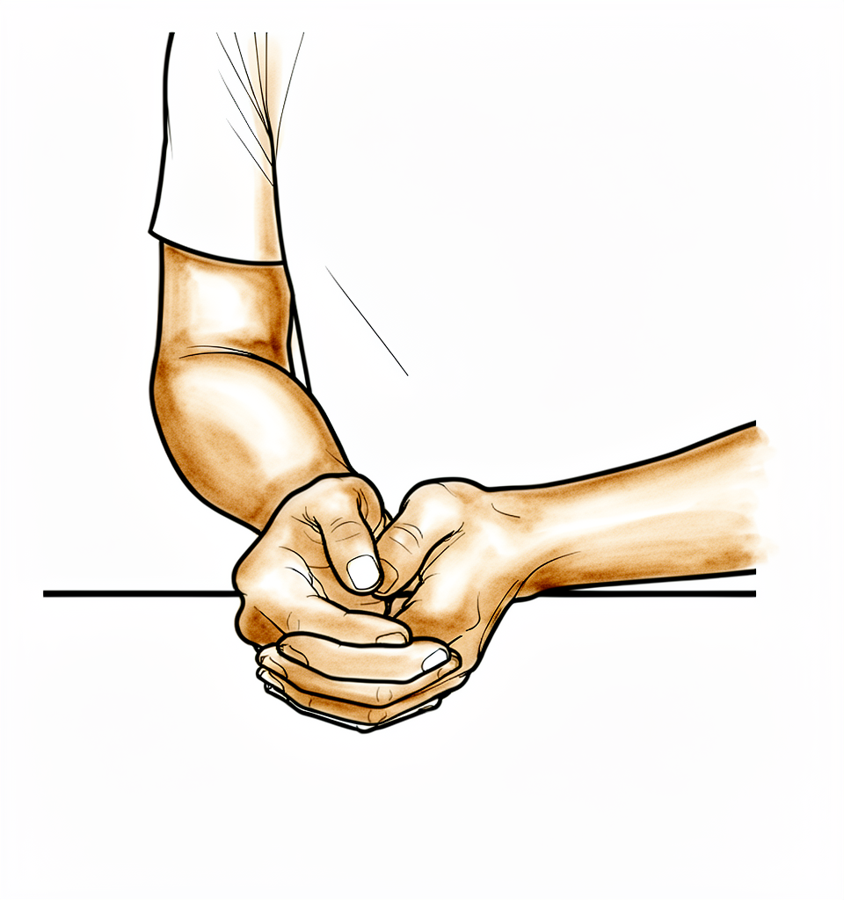
Kieran Hirpara 4.0
Tinulungang outward rotation (hanggang neutral lamang)
Habang nakaupo, panatilihing nakatiklop ang iyong siko sa harap mo at iikot ang iyong forearm palabas hanggang sa nakaturo lamang ito nang diretso sa harap. Ang pag-ikot palabas ay LIGTAS pagkatapos ng posterior repair — ngunit ang direksyong papasok ang dapat mong iwasan, kaya HUWAG hayaang mapunta ang kamay papasok patawid sa iyong katawan.
Dahan-dahan, 10 beses, 3 beses sa isang araw
Ang unang dalawang linggo ay tungkol sa pagprotekta sa repair habang pinapanatili ang banayad na paggalaw. Mananatili ka sa simpleng sling, panatilihin ang braso sa harap ng iyong katawan, at gawin lamang ang mga banayad na drill na nagpapanatili sa paggalaw ng iyong kamay, pulso at siko at simulan ang pag-"set" ng iyong shoulder blade, lahat nang walang load sa likod ng balikat. Dalawang panuntunan ang pinakamahalaga: panatilihin ang braso sa harap at huwag itong kailanman iikot papasok (inwards) patawid sa iyong katawan, at walang anumang puwersahan o pag-stretch. Ang assisted forward movement ay pinapanatili hanggang sa kalahati lamang ng taas, at ang pag-ikot palabas (outwards) ay hanggang sa diretsong harap lamang.
- Sling: simpleng sling, sa araw; matulog nang WALANG sling ngunit panatilihin ang braso sa harap, hindi nakaiikot papasok. Alisin para sa mga ehersisyo at pagligo.
- Pinapayagang paggalaw: assisted at passive movement lamang. Assisted forward lift hanggang sa humigit-kumulang 60° (halos kalahati ng taas); pag-ikot palabas hanggang sa diretsong harap (neutral) na posisyon lamang; walang inward rotation lampas sa neutral, walang pag-abot sa likod, walang paggalaw patawid sa katawan.
- Mga Ehersisyo: pendulum swings; banayad na paggalaw ng kamay, pulso at siko; ball squeeze; shoulder-blade setting; assisted forward lift (hanggang kalahati); assisted outward rotation hanggang neutral.
Handa na para sa susunod na phase kapag: ang iyong sakit ay humuhupa at kontrolado; kaya mong panatilihin nang komportable ang braso sa protected position (sa harap, hindi nakaiikot papasok); ang iyong assisted forward lift ay nakakaabot nang komportable sa halos kalahati; ang iyong sugat ay gumaling na nang walang anumang problema; at may kumpiyansa kang sinusunod ang mga posterior precautions.
Phase II — Maagang paggalaw (weeks 2–4)
Kieran Hirpara 4.0
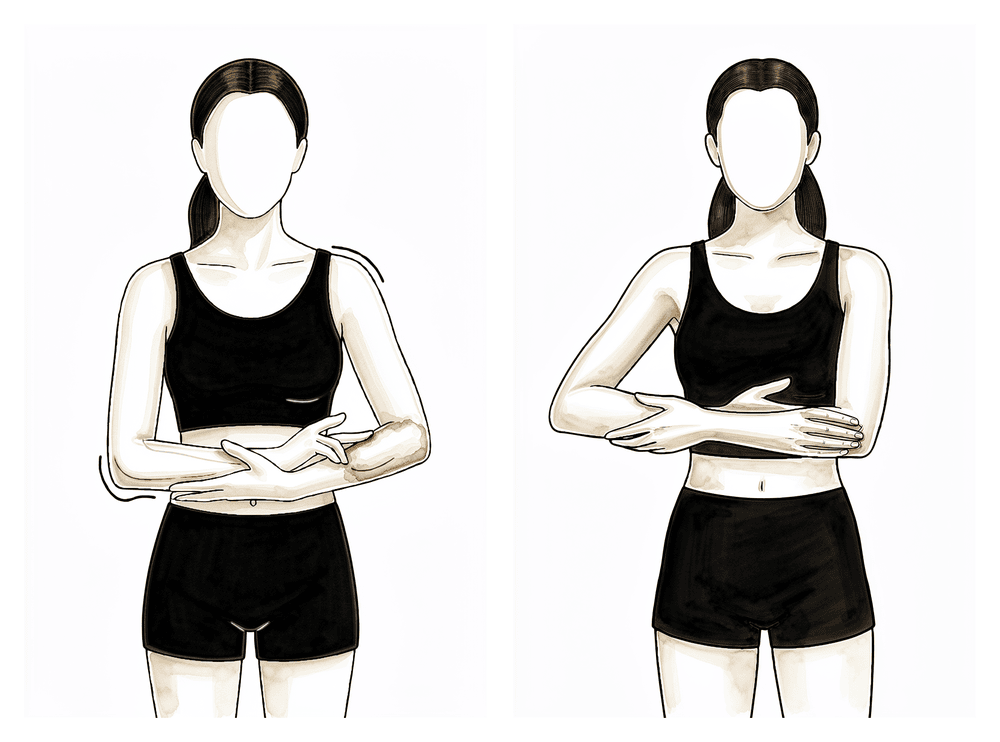
Tinulungang pag-abot ng braso sa gilid
Habang nakaupo at bahagyang nakayuko pasulong, alalayan ang iyong inoperahang braso gamit ang iyong maayos na braso at tulungan itong igalaw palabas sa gilid — gaya ng dahan-dahang pag-ugoy sa isang sanggol. Manatili sa loob ng range na itinakda ng iyong physiotherapist (mga 90° / taas ng balikat) at panatilihin ang braso sa harap ng katawan, hindi sa likod.
10 beses, 3 beses sa isang araw
Kieran Hirpara 4.0
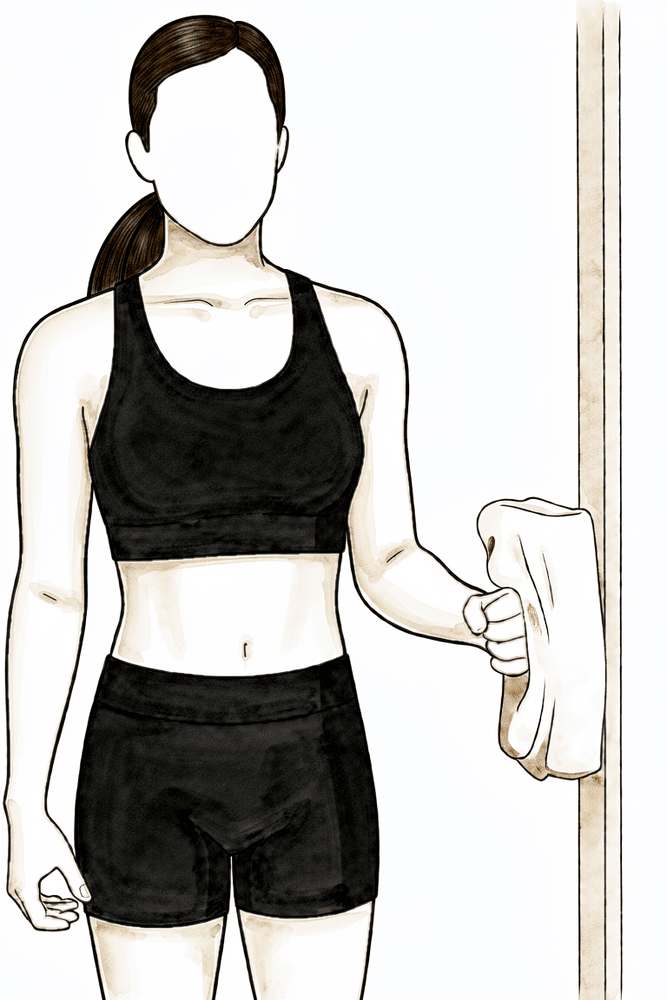
Isometric outward rotation
Tumayo nang nakatiklop ang iyong siko sa harap mo at nakabaluktot nang 90°, ang likod ng iyong kamay ay malapit sa pader o hamba ng pinto. Dahan-dahang itulak ang likod ng iyong kamay palabas sa ibabaw nang HINDI pinapagalaw ang braso — isang banayad na pagsisikap, mga isang kapat ng iyong lakas, at walang sakit. Manatili sa posisyon, pagkatapos ay i-relax.
Hawakan ng ~5 segundo, dahan-dahan (~25% na pagsisikap), 10 beses, ayon sa gabay ng iyong physiotherapist
Kieran Hirpara 4.0
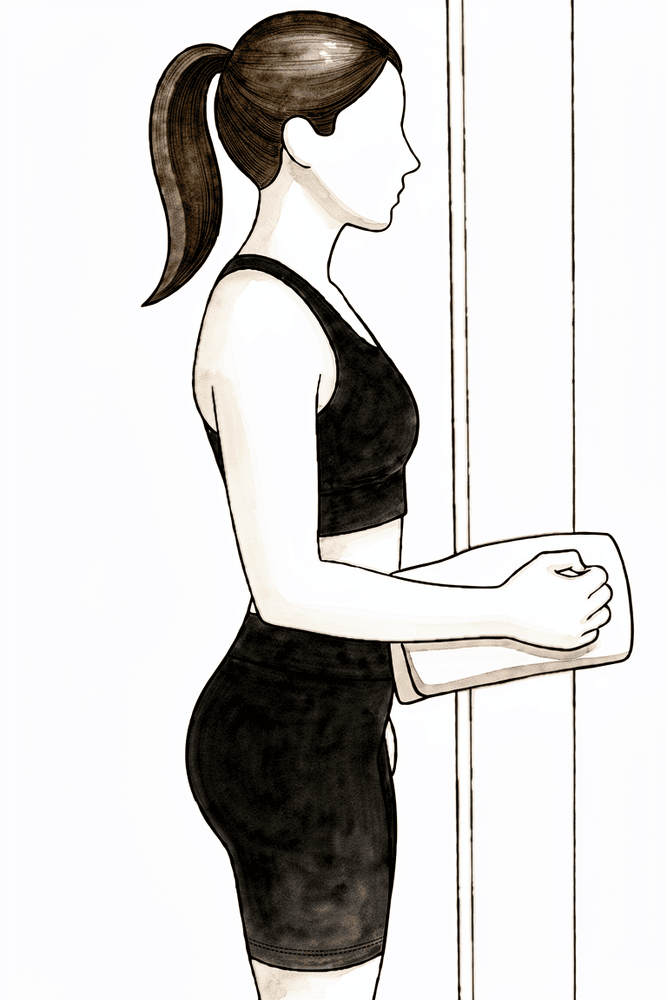
Isometric inward rotation (sa neutral lamang)
Pinapayagan lamang ito habang ang braso ay nasa iyong tabi, ang kamay ay nakaturo nang diretso sa harap (neutral) — HINDI habang ang kamay ay nakapihit papasok sa iyong katawan. Panatilihing nakadikit ang iyong siko at dahan-dahang itulak ang palad papasok laban sa pader NANG HINDI hinahayaang gumalaw ang braso — humigit-kumulang isang kapat na lakas, walang sakit. Hawakan, pagkatapos ay i-relax. Huminto bago tumawid ang iyong kamay patungo sa iyong tiyan.
Hawakan ng ~5 segundo, dahan-dahan (~25% na pagsisikap), 10 beses, ayon sa gabay ng iyong physiotherapist
Kieran Hirpara 4.0
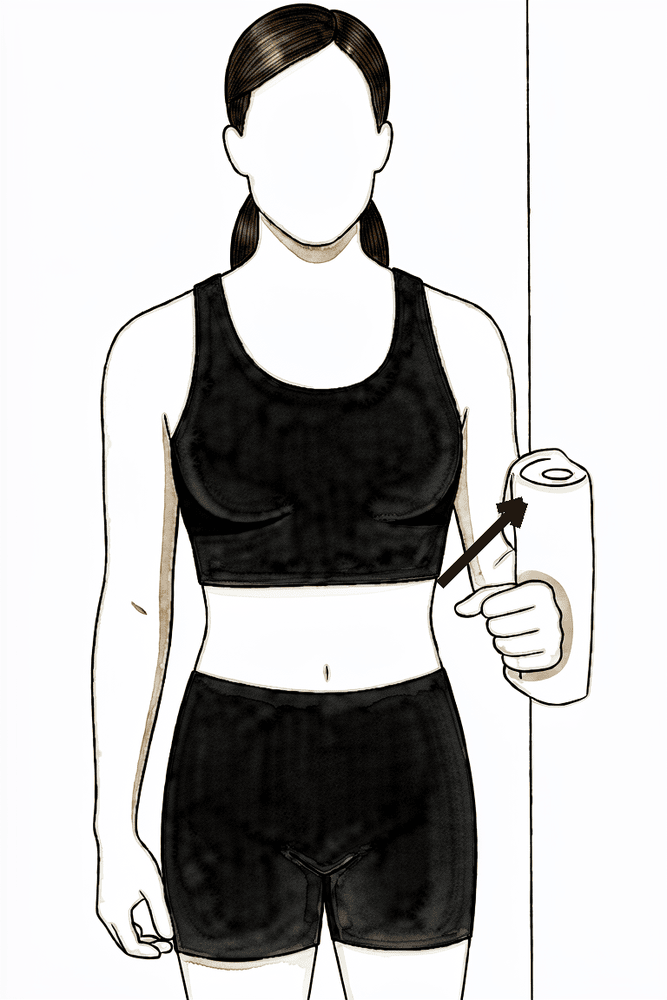
Isometric arm-out-to-the-side
Tumayo nang patagilid na ang labas ng iyong upper arm ay malapit sa pader, at nakatiklop ang siko. Dahan-dahang itulak ang braso palabas patungo sa pader NANG HINDI ito hinahayaang gumalaw — humigit-kumulang isang kapat na lakas, walang sakit. Panatilihin ito, pagkatapos ay i-relax.
Hawakan ng ~5 segundo, dahan-dahan (~25% na pagsisikap), 10 beses, ayon sa gabay ng iyong physiotherapist
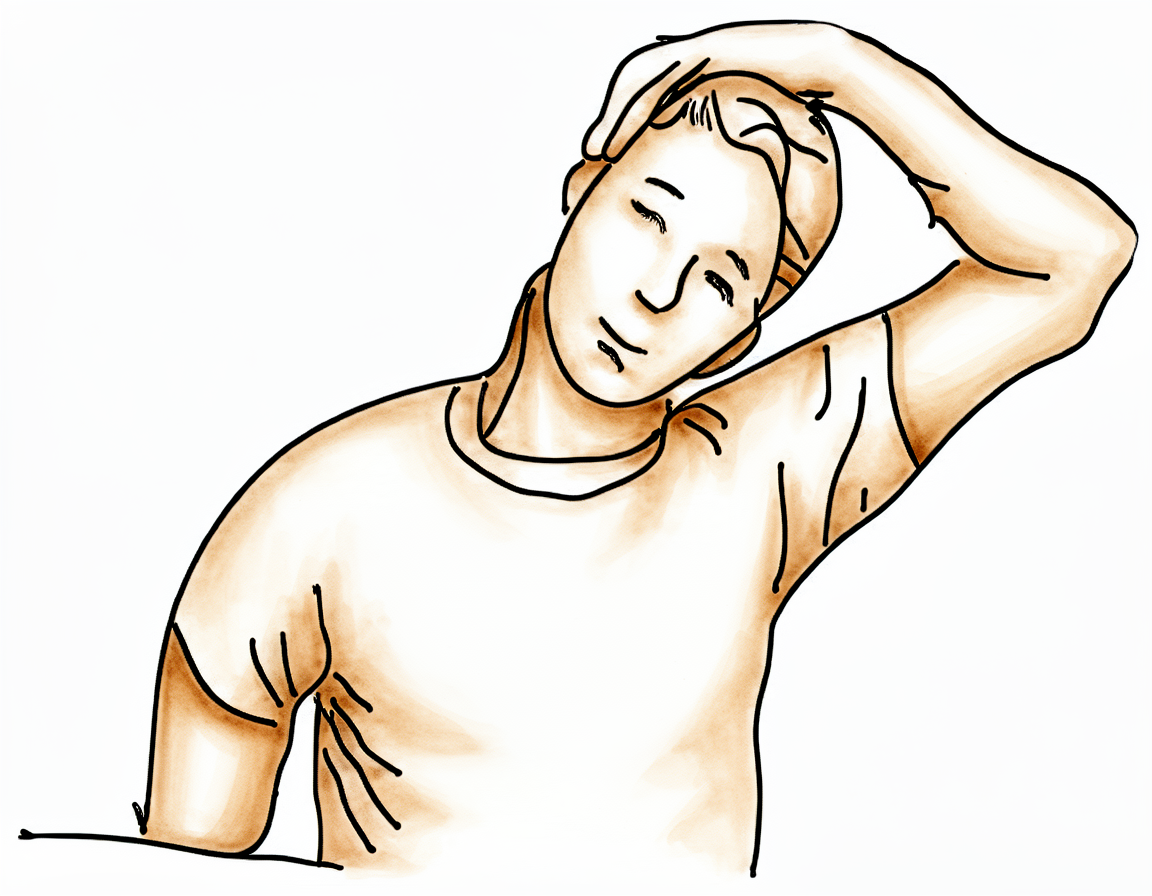
Kieran Hirpara 4.0
Side-stretch ng leeg
Gamitin ang iyong maayos na braso upang dahan-dahang ilapit ang iyong tainga sa iyong maayos na balikat, palayo sa panig na inoperahan, hanggang sa makaramdam ka ng komportableng stretch sa iyong leeg.
Hawakan nang 10 segundo, 3 beses, 3 beses sa isang araw
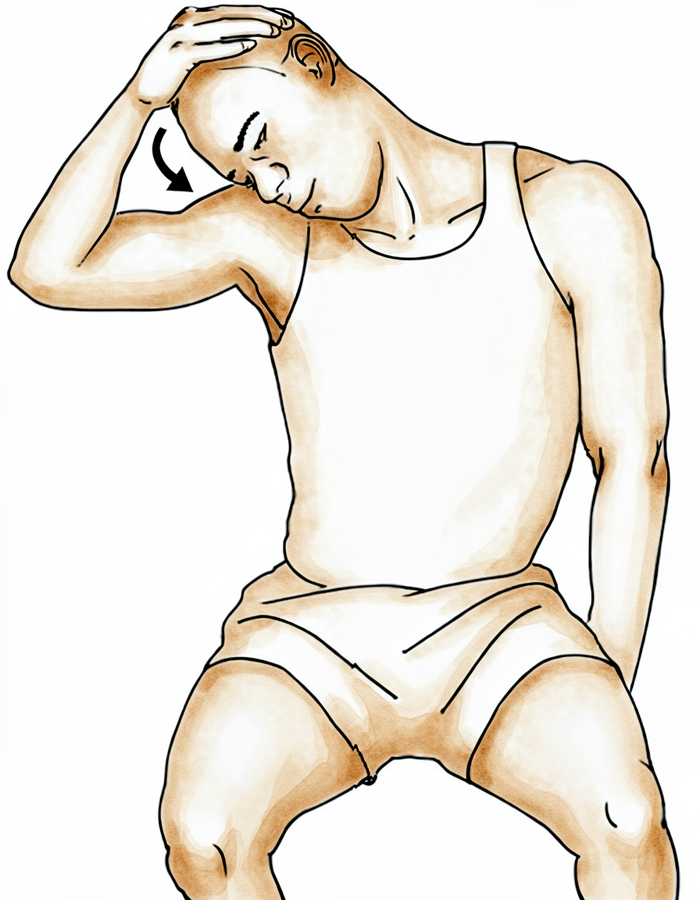
Kieran Hirpara 4.0
Stretch ng leeg papunta sa kili-kili
Gamitin ang iyong maayos na braso upang dahan-dahang ibaba ang iyong ilong patungo sa iyong kili-kili, palayo sa panig na inoperahan, hanggang sa makaramdam ka ng komportableng stretch.
Hawakan nang 10 segundo, 3 beses, 3 beses sa isang araw
Mula sa ikalawang linggo, dahan-dahang pinatataas ang paggalaw, ngunit nananatiling mahigpit sa mga ligtas na direksyon. Gagabayan ka ng iyong physiotherapist sa supervised passive at assisted movement upang itakda ang mga limitasyon, at magdaragdag ka ng light press-and-hold (isometric) drills upang simulan ang paggising sa mga kalamnan habang hindi gumagalaw ang braso. Ang braso ay dapat manatiling sa harap ng katawan: bawal pa ring abutin ang likod at bawal ang paggalaw na tumatawid sa katawan, at ang inward rotation ay dapat manatili sa neutral lamang.
- Sling: ipagpapatuloy; panatilihin ang braso sa harap; huwag abutin ang likod.
- Pinapayagang paggalaw (supervised ng physiotherapist): forward lift hanggang sa humigit-kumulang 60°, pag-ikot palabas (turning outwards) hanggang sa humigit-kumulang 45°, out-to-the-side hanggang sa humigit-kumulang 90°; ang inward rotation ay pinananatili sa neutral (0°) sa gilid. Bawal ang home pulleys.
- Mga Ehersisyo: assisted arm-out-to-the-side; gentle isometric (press-and-hold) outward rotation, inward rotation (sa neutral lamang) at out-to-the-side; shoulder-blade strengthening; neck stretches. Itigil ang anumang nagdudulot ng sakit sa likod ng balikat.
Handa na para sa susunod na phase kapag: naabot mo na ang mga supervised movement limits sa itaas nang walang mga sintomas sa likod ng balikat; kontrolado na ang iyong sakit at anumang pamamaga; at maayos ang iyong shoulder-blade control sa dahan-dahang paggalaw.
Phase III — Pagpapalawak ng paggalaw at pagsisimula ng pagpapalakas (weeks 4–6)
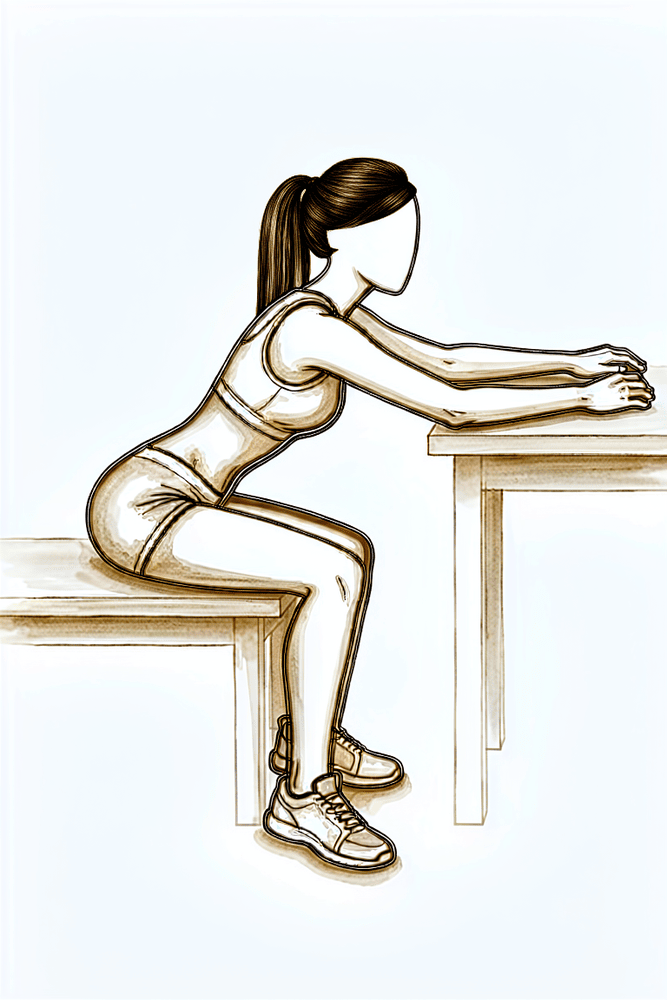
Kieran Hirpara 4.0
Wall walks
Humarap sa pader o maupo sa isang mesa na nakapatong dito ang iyong inoperahang kamay. I-slide ang kamay pasulong at pataas sa ibabaw nito upang ang braso ay umabot sa iyong harapan, hayaang ang pader o mesa ang pumasan ng bigat, pagkatapos ay i-slide pabalik. Panatilihing nasa harap ang braso — huwag itong hayaang gumalaw patawid sa iyong katawan. Binubuo nito ang forward reach habang may suporta ang bigat.
10 beses, 3 beses sa isang araw, sa loob ng limitasyong itinakda ng iyong physiotherapist
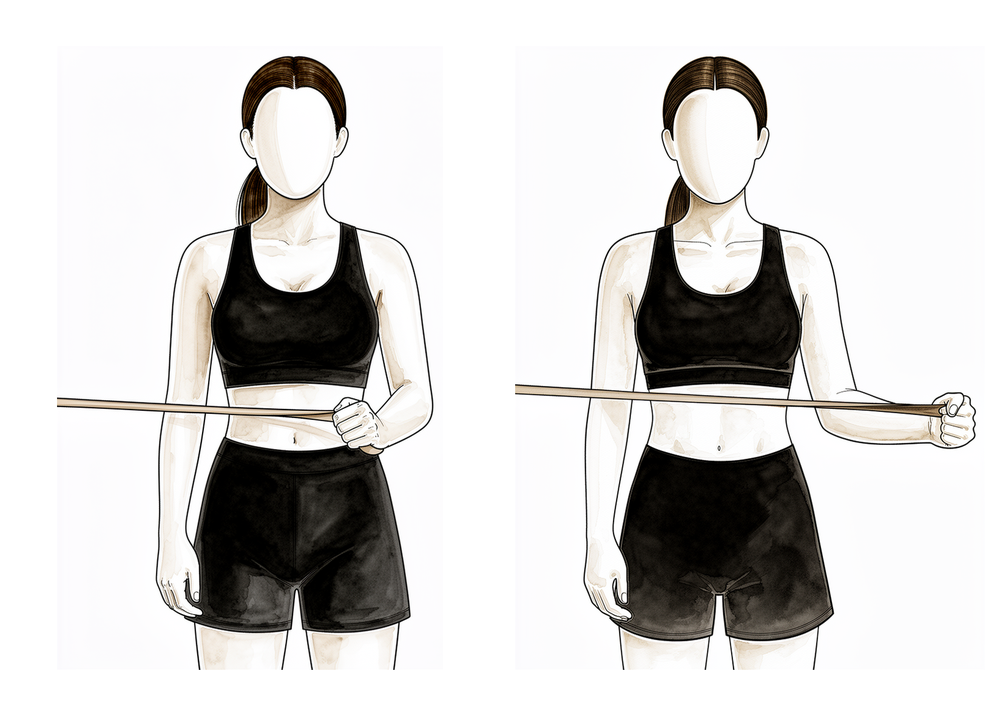
Kieran Hirpara 4.0
Magaang outward-rotation gamit ang band
Mula humigit-kumulang sa ika-4–6 linggo, kung papayag ang iyong physiotherapist. Habang ang iyong siko ay nakadikit sa iyong gilid at nakabaluktot nang 90°, humawak ng isang light band at iikot ang iyong forearm palabas laban dito, pagkatapos ay ibalik ito nang may kontrol. Ang outward rotation ang ligtas na direksyon pagkatapos ng isang posterior repair. Gumamit ng light band at maraming repetitions, hindi mabigat na resistance.
Ayon sa gabay ng iyong physiotherapist
Kieran Hirpara 4.0
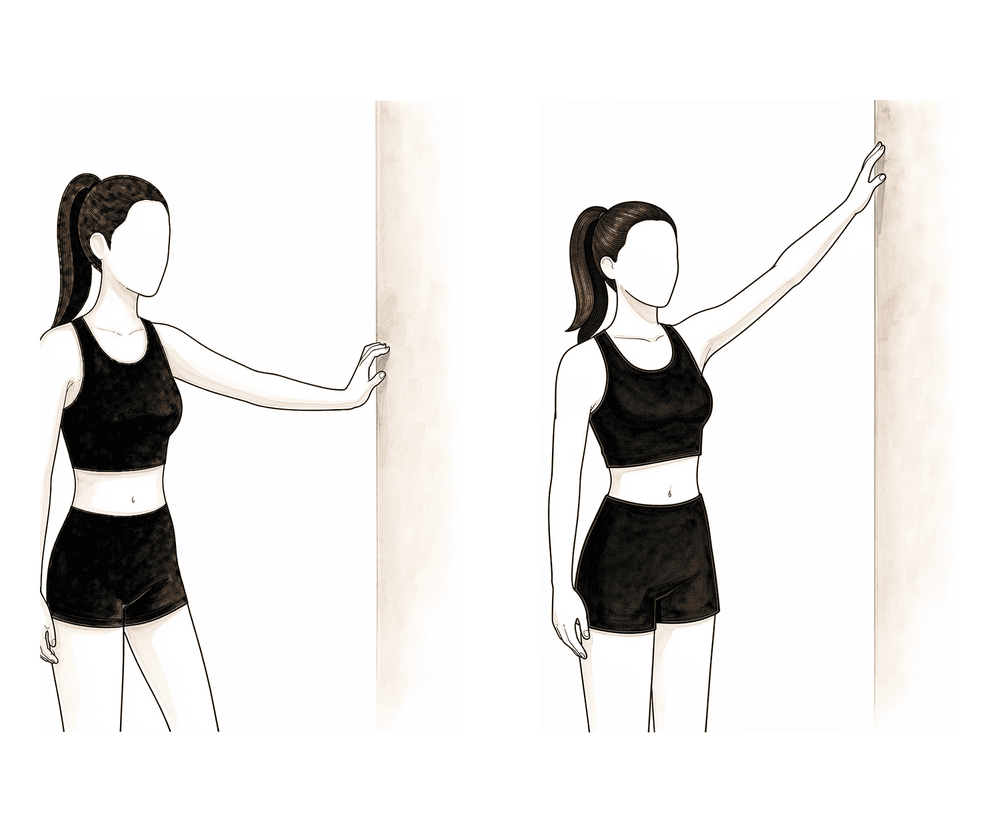
Wall walk palabas sa gilid
Tumayo nang patagilid sa isang pader na ang iyong mga dulo ng daliri ay nakapatong dito. I-lakad ang iyong mga daliri pataas sa pader palabas sa gilid, itaas ang braso hanggang sa komportable, pagkatapos ay dahan-dahang i-lakad ang mga ito pabalik pababa nang may kontrol. Sinusuportahan ng pader ang braso habang binabawi mo ang paggalaw palabas sa gilid.
Ayon sa gabay ng iyong physiotherapist
Mas pinalalawak ang paggalaw, at nagsisimula ang unang light strengthening sa ligtas na direksyon (outward-rotation). Magsisimula ka ng active-assisted reaching, gaya ng wall walks, at banayad na band work para sa mga outward rotator. Ang inward rotation ay pinapayagang pumasok nang kaunti lamang, at sa direksyon lamang ng iyong physiotherapist; nananatili itong pinaka-protektadong paggalaw. Ipagpapatuloy ang paggamit ng sling sa araw hanggang sa ika-anim na linggo.
- Sling: simpleng sling sa araw hanggang mga 6 na linggo. Kung huhubarin ito sa gabi, iwasan pa rin ang pagpihit ng braso papasok (inwards).
- Pinapayagang paggalaw: forward lift hanggang mga 90°, out-to-the-side hangga't komportable, pagpihit palabas (turning outwards) hanggang mga 45° sa taas ng balikat (o full sa gilid); ang inward rotation ay limitado sa mga 30° at sa direksyon lamang ng iyong physiotherapist. Simulan ang active-assisted reaching (wall walks). Bawal ang pagbuhat, pagtulak, o paghila ng mas mabigat sa mga 2 lb, at walang anumang bagay sa itaas ng ulo (overhead).
- Mga Ehersisyo: wall walks; pagpapatuloy ng shoulder-blade work at isometrics; simulan ang light outward-rotation band work sa gilid.
Handa na para sa susunod na phase kapag: mayroon ka nang mabuting active-assisted movement na may smooth at pantay na shoulder-blade control; kontrolado nang mabuti ang iyong sakit; at nag-progres ka sa loob ng mga itinakdang limitasyon nang hindi nagdudulot ng sakit sa likod ng balikat.
Phase IV — Advance (weeks 6–8)
Kieran Hirpara 4.0
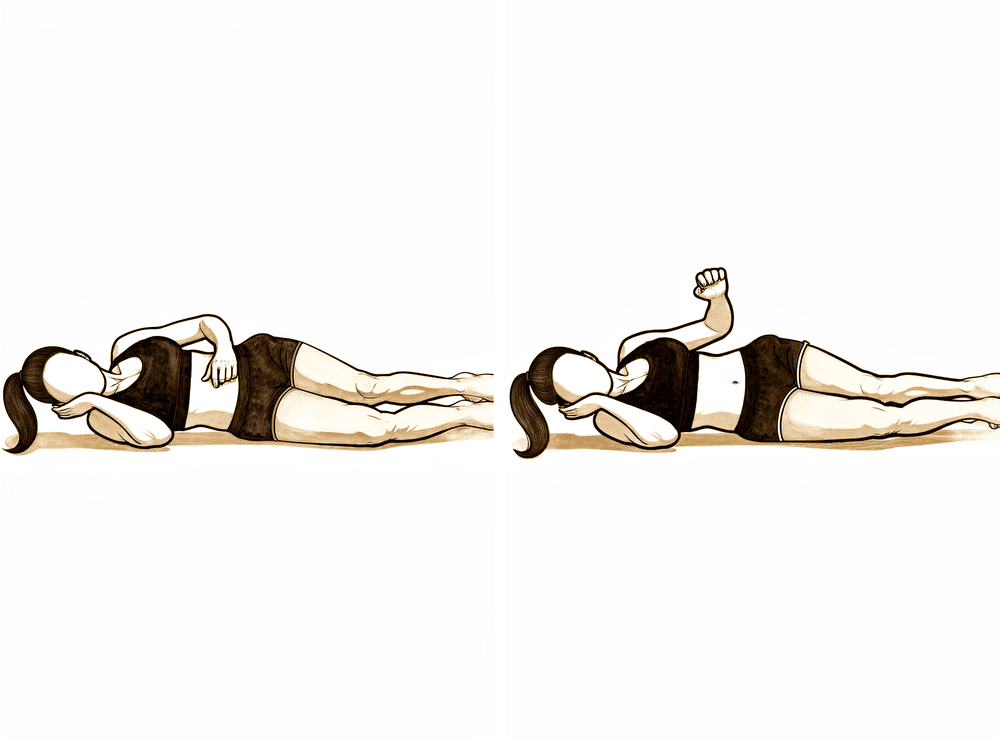
Sidelying outward rotation
Humiga sa iyong maayos na panig na ang inoperahang siko ay nakadikit sa iyong baywang at nakabaluktot nang 90°. I-rotate ang forearm pataas (palabas) upang ang kamay ay maiangat patungo sa kisame, pagkatapos ay ibaba ito nang may kontrol. Pinapalakas nito ang mga outward-rotating cuff muscles — ang ligtas na direksyon sa yugtong ito.
Ayon sa gabay ng iyong physiotherapist
Kieran Hirpara 4.0
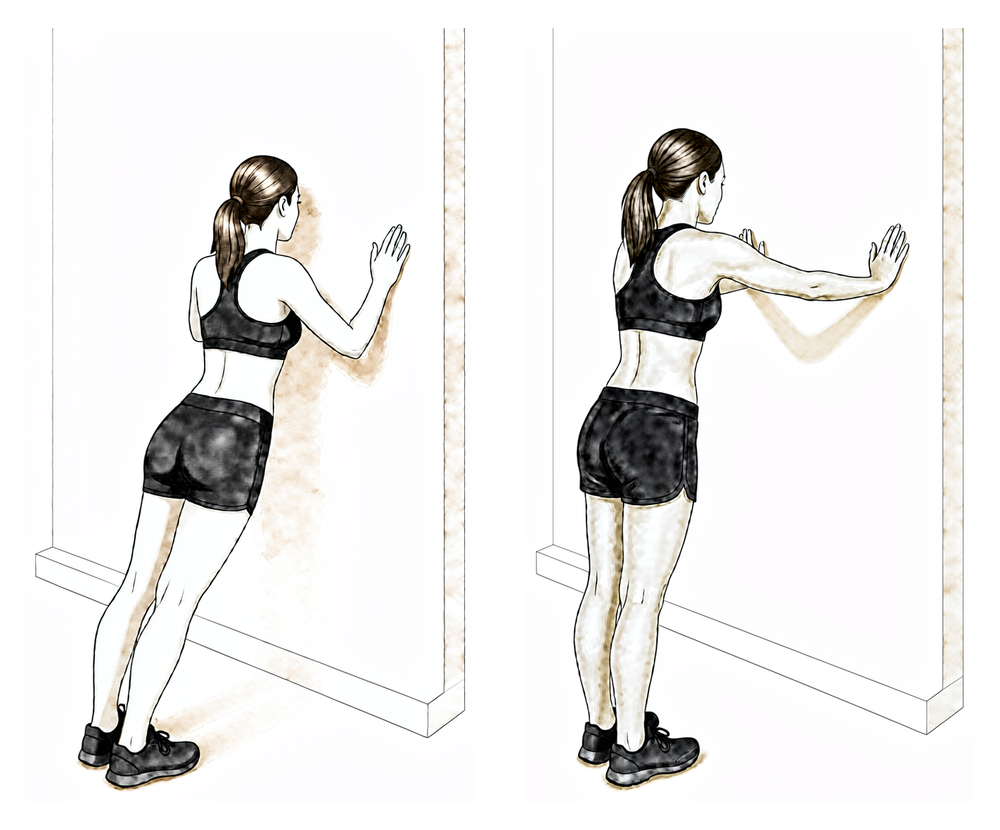
Wall push-up
Tumayo nang nakalapat ang mga kamay sa pader sa taas ng balikat at nakadiretso ang mga braso. Itiklop ang mga siko upang ilapit ang dibdib sa pader, pagkatapos ay itulak pabalik sa simula, habang dahan-dahang itinutulak ang mga shoulder blade palayo sa isa't isa sa itaas. Unti-unting dagdagan ang intensity — direktang binibigatan nito ang likod ng balikat, kaya dapat itong isagawa nang mabagal at mula lamang sa phase na ito.
Ayon sa gabay ng iyong physiotherapist
Kieran Hirpara 4.0
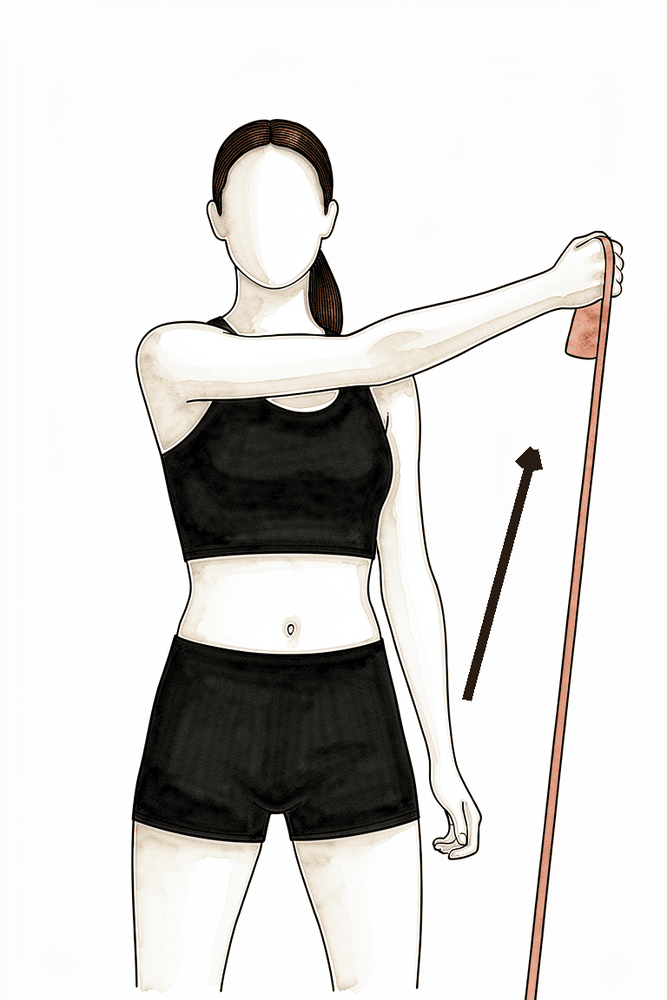
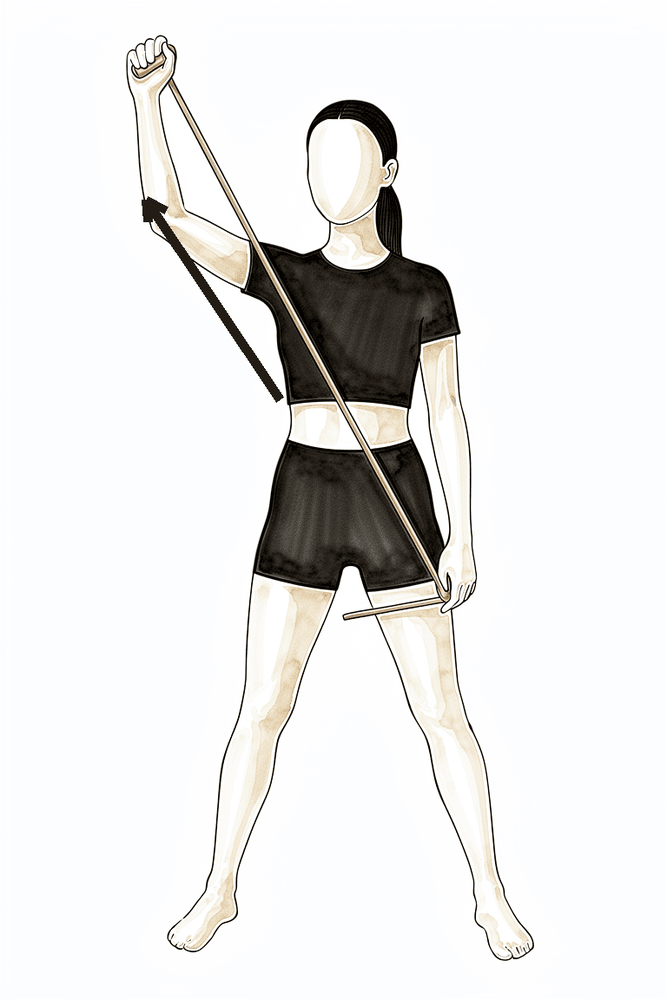
Diagonal band pattern (pag-abot nang palabas at pataas)
Isang diagonal whole-arm strengthening pattern gamit ang light band, magsisimula sa mababa at tatawid sa harap ng iyong katawan at hihilahin palabas at pataas. Panatilihing swabe ang paggalaw at nasa loob ng komportableng range; itatakda ng iyong physiotherapist ang eksaktong pattern at resistance.
Ayon sa gabay ng iyong physiotherapist
Kieran Hirpara 4.0
Pattern ng diagonal band (umaabot nang pahalang at pababa)
Ang kabaligtarang diagonal whole-arm pattern na may light band, mula up-and-out hanggang down-and-across. Panatilihin itong smooth at controlled, sa loob ng range na itinakda ng iyong physiotherapist.
Ayon sa gabay ng iyong physiotherapist
Tatanggalin ang sling sa ika-anim na linggo. Ang paggalaw gamit ang sariling lakas ay unti-unting ibabalik sa buo sa bawat direksyon maliban sa inward rotation, na sadyang pinipigilan pa rin (limitado sa humigit-kumulang 45° hanggang sa ika-labindalawang linggo). Dadagdagan ang strengthening: light cuff at shoulder-blade work, ang mga unang maingat at kontroladong push-ups sa pader, at diagonal whole-arm patterns gamit ang light band.
- Sling: ititigil sa ika-6 na linggo.
- Pinapayagang paggalaw: active movement hanggang sa maging buo ayon sa tolerance MALIBAN sa inward rotation, na mananatiling limitado sa humigit-kumulang 45° hanggang ika-12 linggo (sa gilid at sa taas ng balikat). Light lifting hanggang sa humigit-kumulang 5 lb.
- Mga Ehersisyo: sidelying outward rotation; wall push-ups (unti-unting dadagdagan: direktang binibigatan nito ang likod ng balikat); diagonal band patterns; patuloy na cuff at shoulder-blade strengthening.
Handa na para sa susunod na phase kapag: mayroon ka nang buong paggalaw gamit ang sariling lakas sa bawat direksyon maliban sa inward rotation; ang iyong lakas ay unti-unting bumabalik; at walang sakit o pamamaga pagkatapos ng mga bagong strengthening drills.
Phase V — Pagpapalakas (weeks 8–12)
Kieran Hirpara 4.0
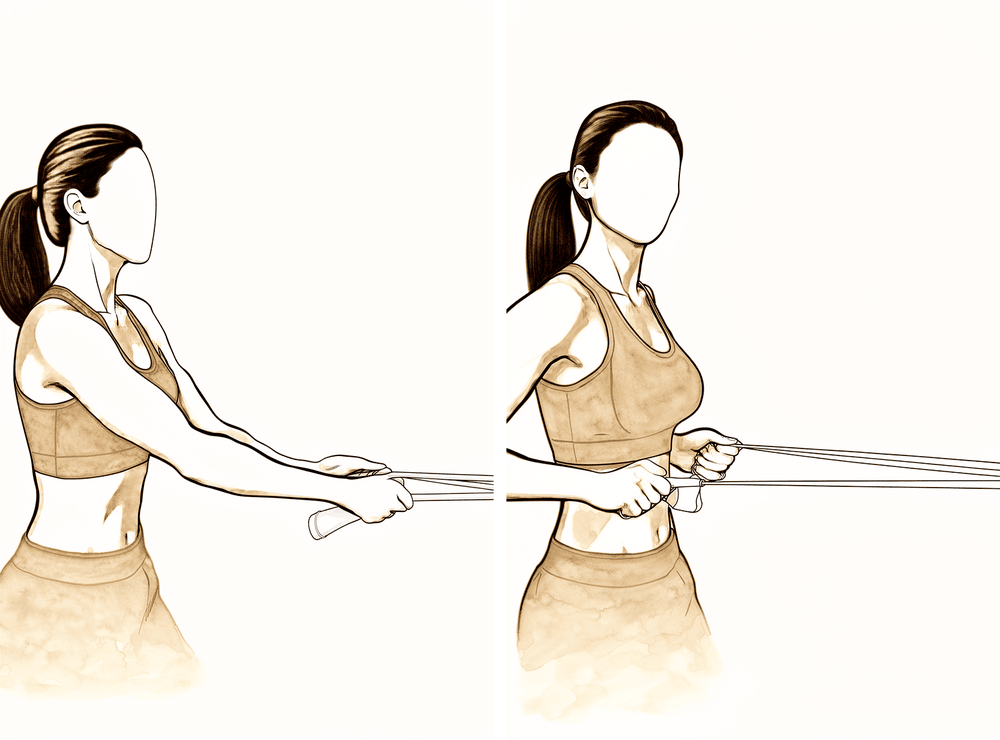
Resistance-band row
Gamit ang isang band na naka-angkla sa iyong harapan, hilahin ang mga handle patungo sa iyo, iurong ang iyong mga siko pabalik at pagdikitin ang iyong mga shoulder blade, pagkatapos ay ibalik ito nang may kontrol. Magaan na band, mataas na repetitions; huminto kung sumakit ang balikat.
Ayon sa gabay ng iyong physiotherapist
Kieran Hirpara 4.0
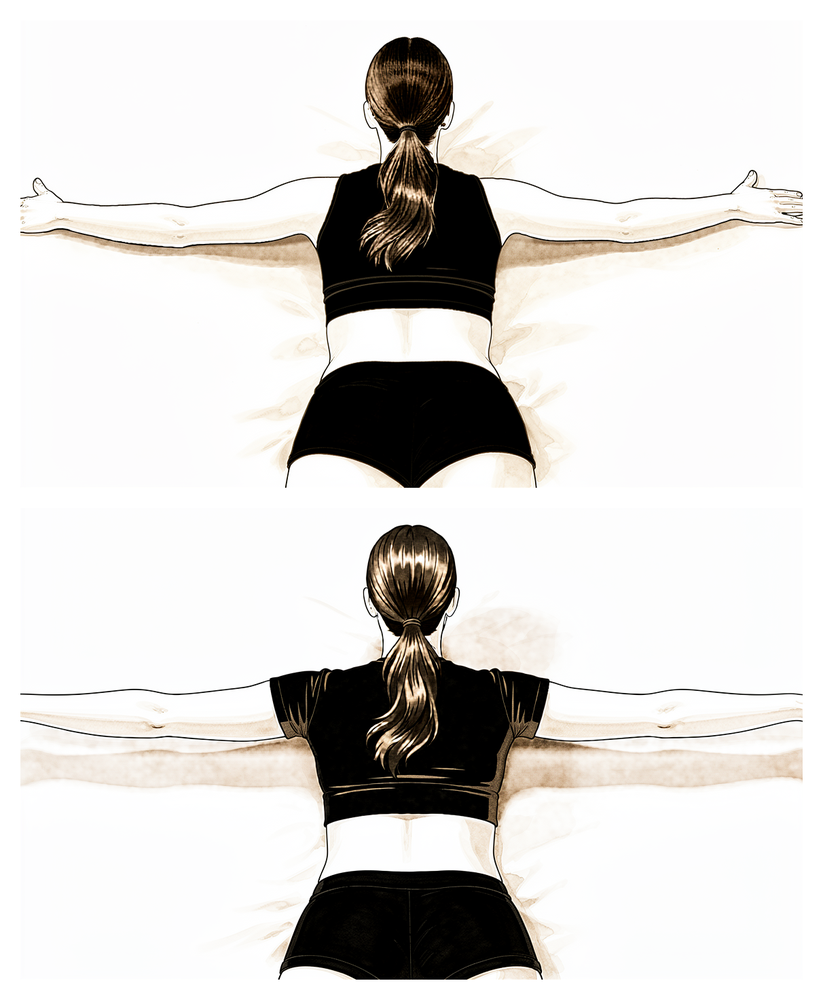
Prone T
Humiga nang nakadapa (o yumuko nang pasulong sa ibabaw ng mesa), na ang mga hinlalaki ay nakataas, itaas ang iyong mga braso palabas sa mga gilid upang bumuo ng hugis T, pigain ang mga shoulder blade nang magkasama, pagkatapos ay ibaba ito nang may kontrol. Magsimula nang walang bigat at magdagdag lamang ng napakagaang bigat ayon sa direktiba ng iyong physiotherapist.
Ayon sa gabay ng iyong physiotherapist
Kieran Hirpara 4.0
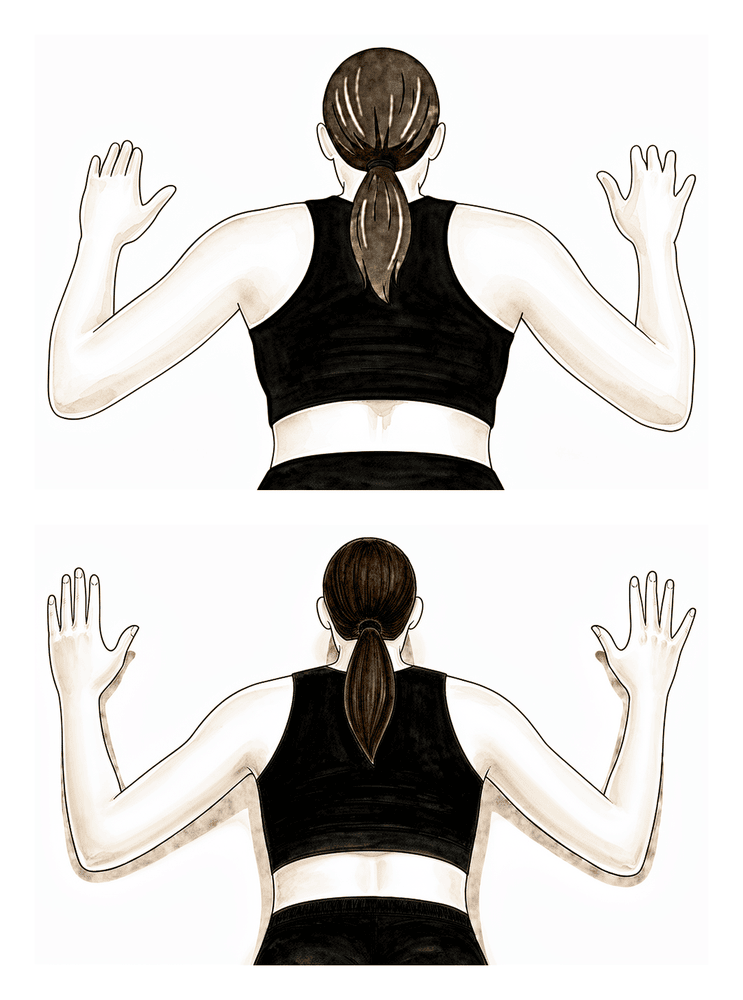
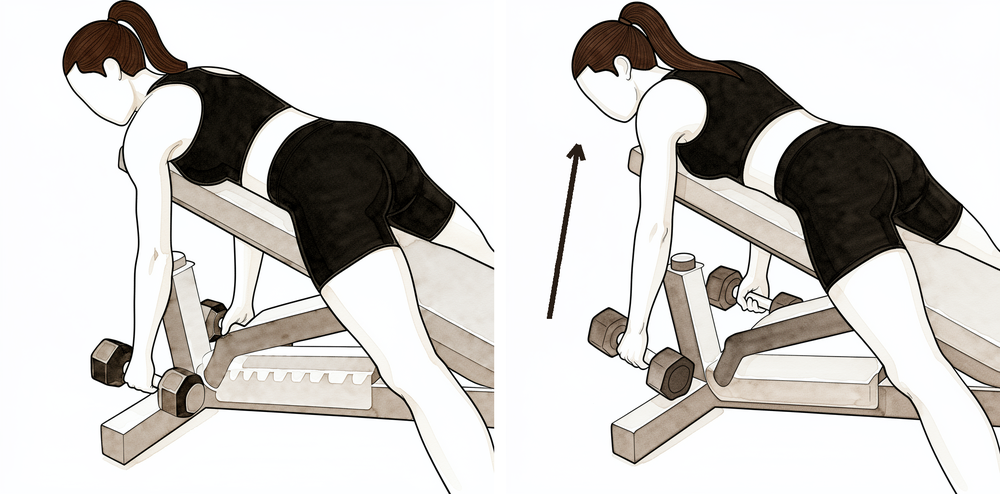
Prone W
Nakahiga nang nakadapa, hilahin ang mga siko pabalik at pababa patungo sa iyong baywang, upang makabuo ng hugis W at pagdikitin ang mga shoulder blade (paypay) pabalik at pababa, pagkatapos ay dahan-dahang pakawalan. Pinapalakas nito ang mga kalamnan sa ibabang bahagi ng shoulder blade.
Ayon sa gabay ng iyong physiotherapist
Kieran Hirpara 4.0
Row para sa pagpapalakas ng shoulder-blade
Hilahin ang shoulder blade pabalik at pababa laban sa isang light weight o band, hawakan nang sandali, pagkatapos ay dahan-dahang pakawalan. Bahagi ito ng isang mas malawak na strengthening programme (maaaring tawagin ito ng iyong physiotherapist na "Thrower's 10") na sabay na nagpapalakas sa cuff at mga kalamnan ng shoulder-blade.
Ayon sa gabay ng iyong physiotherapist
Ang phase na ito ay bumubuo ng lakas, kontrol, at endurance para sa iyong trabaho at sport. Ang inward rotation ay limitado pa rin sa humigit-kumulang 45° hanggang sa ikalabindalawang linggo, ngunit ang lahat ng iba pang plane ay ginagawa nang lubos. Ang programa ay lumalawak tungo sa isang mas kumpletong cuff at shoulder-blade strengthening routine (maaaring tawagin ito ng iyong physiotherapist na "Thrower's 10") kasama ang mga dynamic control drill.
- Sling: wala.
- Pinapayagang paggalaw: full sa lahat ng planes maliban sa inward rotation, na mananatiling limitado sa humigit-kumulang 45° hanggang sa ika-12 linggo.
- Mga Ehersisyo: resistance-band rows; prone T at prone W; shoulder-blade strengthening; dynamic-control at stabilisation drills. Maaaring magdagdag ang iyong physiotherapist ng rhythmic stabilisation (mga gentle hold-steady drill kung saan tinutulak nila nang bahagya ang iyong braso at lalaban ka) upang muling sanayin ang kontrol; ito ay hands-on na trabaho na walang diagram. Ang pagbubuhat ay unti-unting tataas hanggang sa humigit-kumulang 7–10 lb.
Handa na para sa susunod na phase kapag: bumubuti na ang iyong inward-rotation tolerance; ang pagpapalakas ay walang sakit at walang reactive swelling; at ang iyong lakas ay nabubuo nang pantay kumpara sa kabilang panig.
Phase VI — Full range at weight training (weeks 12–14)
Kieran Hirpara 4.0
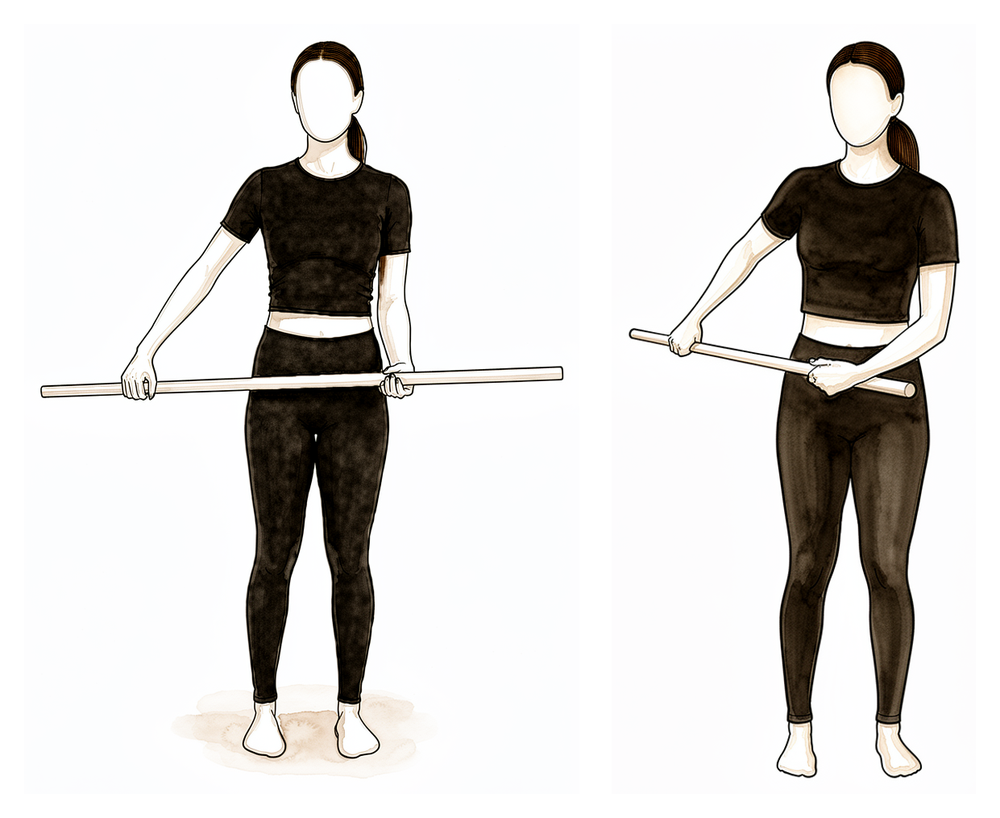
Internal rotation gamit ang stick
Mula linggo 12 — HINDI bago nito. Ang inward rotation ang huling galaw na ibinabalik pagkatapos ng posterior repair, kaya ang pag-abot sa likod ay nagsisimula lamang ngayon. Humawak ng stick sa likod at gamitin ang iyong mabuting kamay upang dahan-dahang hilahin ang inoperahang kamay pataas sa iyong likod, pagkatapos ay ibaba ito nang may kontrol. Magpatuloy nang unti-unti at huwag kailanman pilitin ang dulo ng range.
Ayon sa gabay ng iyong physiotherapist
Kieran Hirpara 4.0
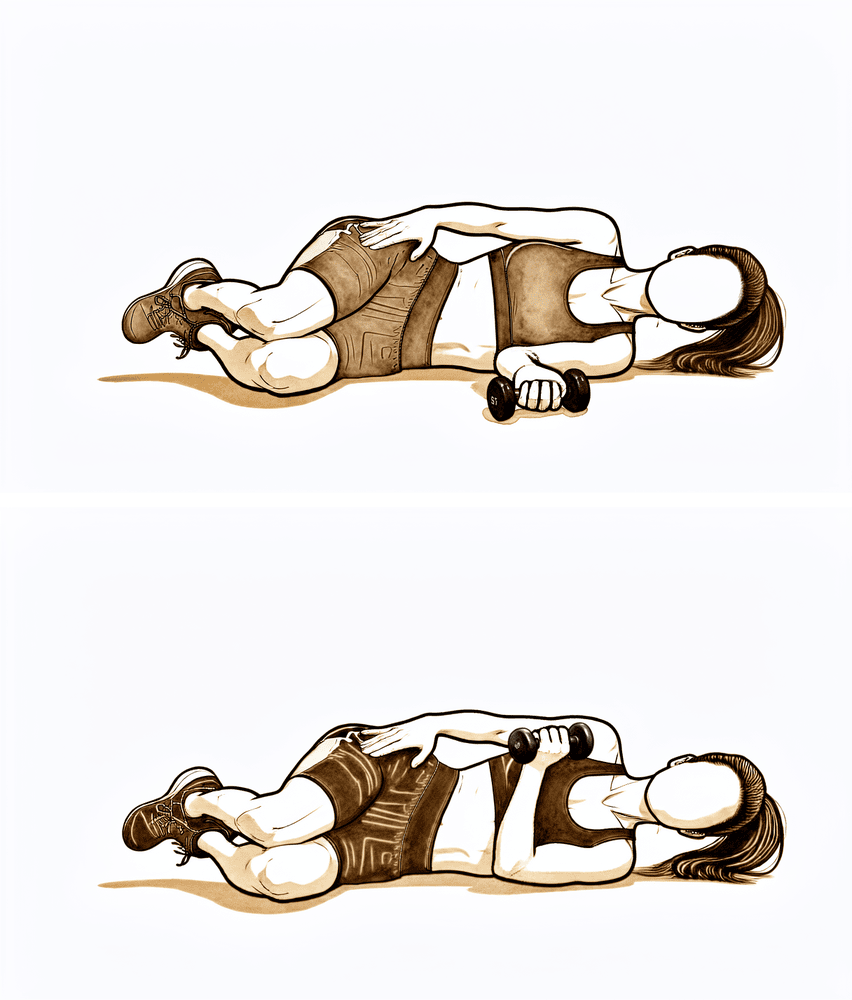
Sidelying inward rotation
Mula sa ika-12 linggo. Humiga sa panig na inoperahan na ang braso ay nakaharap sa harap at ang siko ay nakabaluktot nang 90°. I-rotate ang forearm upang ang kamay ay bumaling pababa (paloob), pagkatapos ay ibalik ito nang may kontrol. Magsimula nang walang bigat at magdagdag lamang ng magaan na bigat ayon sa itinuro — pinapalakas nito ang mga inward rotator, na huling naibabalik pagkatapos ng isang posterior repair.
Ayon sa gabay ng iyong physiotherapist
Kieran Hirpara 4.0
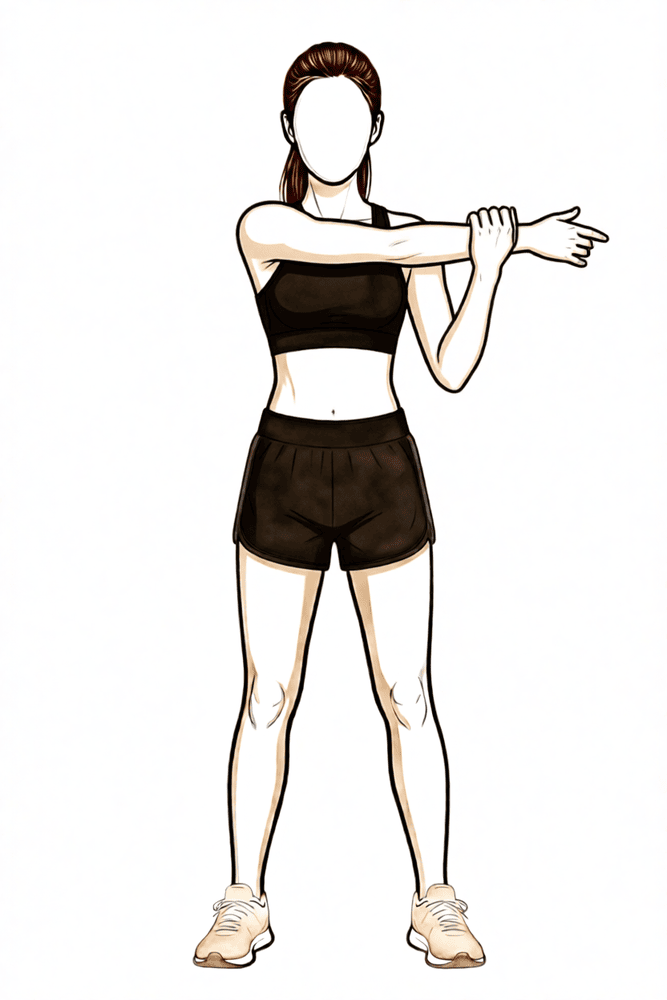
Cross-body stretch
Mula ika-12 linggo — hindi bago nito, dahil binibigatan nito ang likod ng balikat at ang bahaging inoperahan. Gamitin ang iyong maayos na kamay upang dahan-dahang hilahin ang braso na inoperahan patawid sa iyong dibdib hanggang sa makaramdam ka ng komportableng stretch sa likod ng balikat. Unti-unting mag-progress at huwag pilitin.
Ayon sa gabay ng iyong physiotherapist
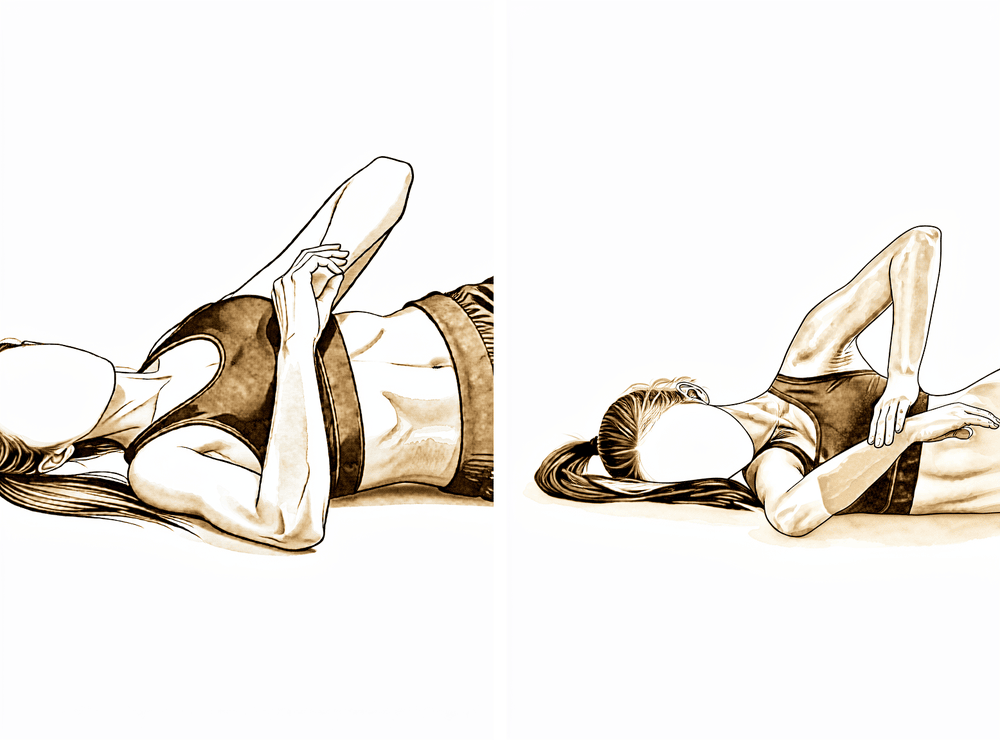
Kieran Hirpara 4.0
Sleeper stretch
Ang end-range inward-rotation stretching ay nagsisimula mula sa ika-12 linggo — hindi bago rito. Humiga sa panig ng iyong inoperahang bahagi na ang braso ay nakalahad sa harap sa taas ng balikat at ang siko ay nakabaluktot nang 90°. Gamitin ang kabilang kamay upang dahan-dahang itulak ang forearm pababa papunta sa kama hanggang sa makaramdam ka ng komportableng stretch. Magpatuloy nang unti-unti at huwag pilitin.
Ayon sa gabay ng iyong physiotherapist
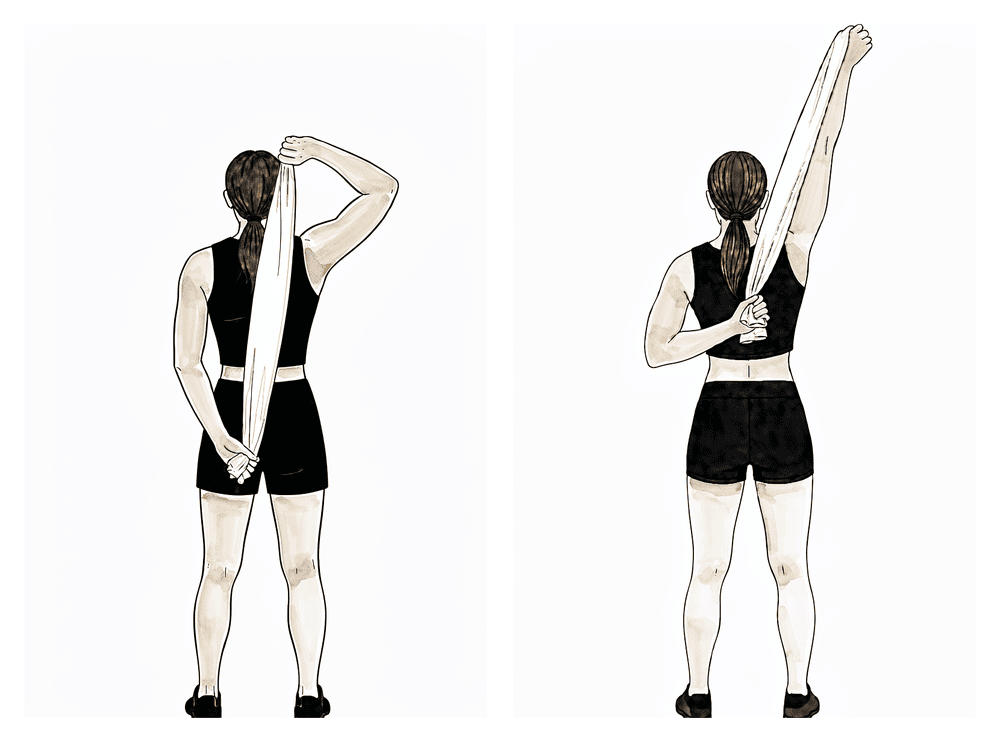
Kieran Hirpara 4.0
Towel stretch (inward rotation sa likuran)
Mula sa ika-12 linggo, unti-unting itaguyod ang full behind-back reach. Humawak ng tuwalya sa likod kung saan ang inoperahang kamay ay nasa ibaba, at gamitin ang nasa itaas na kamay upang dahan-dahang hilahin ang ibabang kamay pataas sa iyong likod. Unti-unting mag-progress at huwag pilitin ang end-range inward rotation.
Ayon sa gabay ng iyong physiotherapist
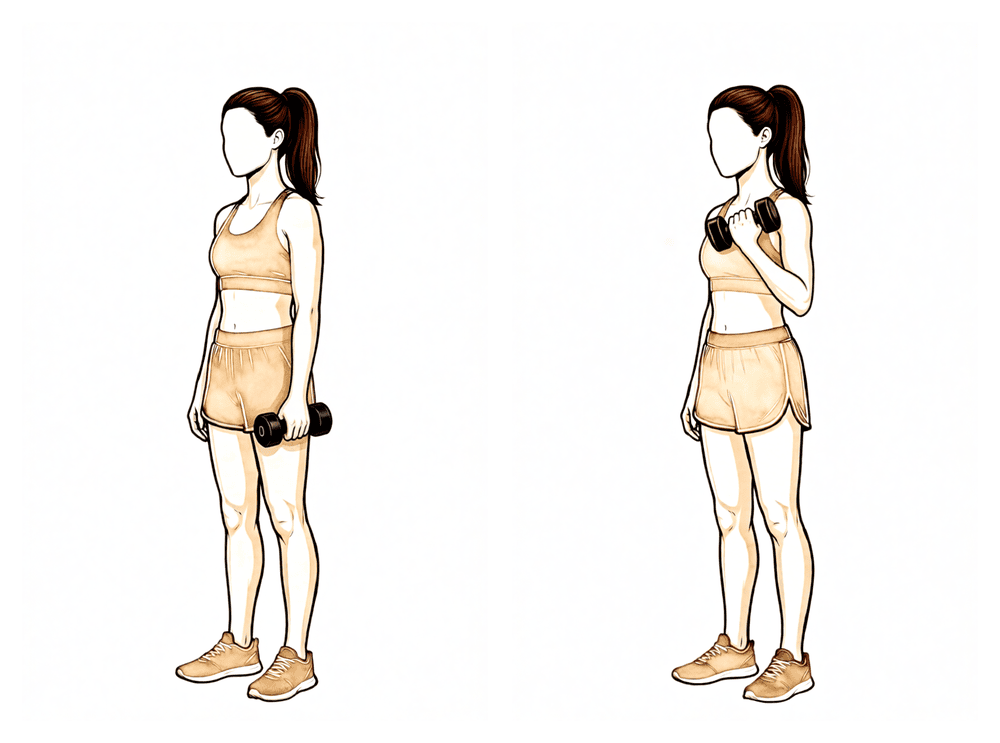
Kieran Hirpara 4.0
Biceps curl
Mula sa ika-12 linggo, habang nagpapatuloy ang pangkalahatang conditioning ng braso. Habang nakadikit ang iyong upper arm sa iyong gilid, i-curl ang isang magaan na weight pataas sa pamamagitan ng pagbaluktot ng siko, pagkatapos ay ibaba ito nang may kontrol. Panatilihing relax at hindi gumagalaw ang balikat.
Ayon sa gabay ng iyong physiotherapist
Sa ikalabindalawang linggo, sa wakas ay naibabalik na sa buo ang inward rotation. Ito ang panahon kung kailan nagsisimula ang mga stretch sa likod at cross-the-body, at ang gym work ay nag-uumpisa mula sa mga machine patungo sa free weights. Ang mga push-up ay unti-unting itataas mula sa pader patungo sa sahig. Ang target sa yugtong ito ay buo at symmetric na inward rotation, na tumutugma sa iyong kabilang panig, dahil ang inward rotation ang paggalaw na pinakamatagal na pinoprotektahan ng isang posterior repair.
- Sling: wala.
- Pinapayagang paggalaw: full range sa lahat ng direksyon, kabilang ang inward rotation, na unti-unting itataas at hindi kailanman pipilitin.
- Mga Ehersisyo: internal rotation gamit ang stick; sidelying inward rotation; cross-body stretch; sleeper stretch; towel stretch para sa pag-abot sa likod; biceps curls at general conditioning. Ipagpatuloy at itaas ang pagpapalakas ng cuff, shoulder-blade, at diagonal mula sa nakaraang phase.
Handa nang mag-progress patungo sa sport kapag: ang iyong inward rotation ay nagiging symmetric na sa kabilang panig; mayroon kang buo at walang sakit na paggalaw sa bawat direksyon; at ang iyong lakas ay bumabalik na sa antas ng kabilang panig nang walang reactive swelling.
Pagbabalik sa isport at trabaho
Ang pagbabalik ay batay sa criteria, hindi pinagdedesisyunan ng kalendaryo lamang, at dapat aprubahan nina Dr Hirpara at ng iyong physiotherapist.
- Mga atleta sa paghahagis at overhead: ang isang graded throwing o interval programme ay magsisimula mula sa humigit-kumulang 14–16 linggo, na unti-unting dinadagdagan ang volume at intensity step by step.
- Contact at collision sport (rugby, football, martial arts, racket sports, rock climbing, horse riding): hindi bago ang 5 buwan, at kapag natugunan na lamang ang mga criteria sa ibaba.
- Trabaho: sedentary work ayon sa kakayahan; manual o mabigat na trabaho nang hindi bababa sa 3 buwan.
Handa ka nang bumalik sa isport kapag:
- mayroon kang full, pain-free range of motion sa lahat ng direksyon, kabilang ang inward rotation na symmetric sa kabilang panig;
- ang iyong outward at inward rotation strength ay malapit sa kabilang panig (para sa iyong physiotherapist: isang limb-symmetry index na humigit-kumulang 90% o higit pa para sa internal at external rotation strength sa isokinetic o hand-held dynamometry; sa isang posterior repair, bigyang-pansin ang symmetric internal-rotation strength, dahil ito ang protected direction);
- nakumpleto mo ang anumang sport-specific programme (tulad ng isang interval throwing programme) nang walang sakit o pangamba; at
- binigyan ka na ng clearance ni Dr Hirpara sa review.
Pagkatapos ng iyong protocol
Ang protocol na ito ay gumagana kasabay ng pangkalahatang payo sa paggaling ng klinika; tingnan ang pamamahala ng sakit pagkatapos ng operasyon at pag-aalaga ng sugat. Para sa mismong kondisyon, tingnan ang shoulder instability.
Ang phased timeline, mga limitasyon sa proteksyon na partikular sa posterior, unti-unting pagbabalik ng inward rotation at mga kriterya sa pagbabalik-sa-isport ay inihanda nang may sanggunian sa mga nailathalang posterior stabilisation protocols mula sa University of Virginia Sports Medicine at University of New Mexico Sports Medicine (Posterior Labral Repair Rehabilitation Protocols), Massachusetts General Brigham Sports Medicine (Posterior Bankart Repair), at ang clinical commentary na "Rehabilitation Following Posterior Shoulder Stabilization" (International Journal of Sports Physical Therapy, 2021), na inangkop sa approach ng klinikang ito ni Dr Hirpara. Ang orihinal na programa sa ehersisyo ay batay sa gawa nina Leonard Funk at ng Wrightington Shoulder Unit (shoulderdoc.co.uk).
Evidence & references
This is the clinical evidence summary written for health professionals. It is technical, and it lists the research this page was built from. You do not need to read it to understand your treatment or to make a decision about it.
Posterior Stabilisation (Posterior Labral / Capsular Repair): Rehabilitation Evidence
Topic: Arthroscopic or open posterior labral repair / posterior capsulorrhaphy (reverse Bankart) for posterior glenohumeral instability. Compiled: 2026-06-16. Sources: local RAG Orthopaedic corpus + published fellowship/PT "standard of care" protocols.
The key difference vs anterior (Bankart/Latarjet): the precaution is REVERSED
Posterior instability and the posterior repair are stressed by the OPPOSITE motions to an anterior repair. The provocative/at-risk position is flexion + adduction + internal rotation (and horizontal adduction) - exactly the position of a posterior load (Itoi/Shoulderology: recurrent posterior instability = PIGHL deficiency failing to resist posterior translation with the arm in flexion and internal rotation). Therefore: - EARLY PRECAUTION = limit flexion, internal rotation, adduction, and horizontal/cross-body adduction; protect against the posteriorly-directed load. (Anterior repairs instead limit ER + abduction.) - Sling/brace is positioned in slight ABDUCTION and NEUTRAL/slight EXTERNAL rotation - often a "gunslinger" brace or abduction pillow - to keep the humeral head off the posterior repair. The arm must be kept in front of the body; do NOT reach behind the back and avoid internal rotation early. - Posterior instability is uncommon (~3-5% of instability) so high-level evidence is sparser; protocols are consensus/biomechanically driven.
Consensus phased timeline (UVA Sports Medicine posterior labral repair standard of care)
| Phase | Week window | Sling/brace | ROM allowed & RESTRICTIONS | AROM / strengthening | RTS |
|---|---|---|---|---|---|
| I - Immediate / protect | 0-2 wk | Sling (all components) at all times incl. sleeping (gunslinger / neutral-to-slight-ER, slight abduction); off only for home ex/PT | Pendulums; elbow/wrist ROM only. No shoulder PROM into the at-risk arc. Keep arm in front of body | Grip/wrist; ball squeezes | None |
| II - Early PROM | 2-4 wk | Continue sling at all times; keep arm IN FRONT - do NOT reach behind back | PROM (PT-supervised), strictly limited: flexion to 60 deg, extension to neutral (0 deg), abduction to 90 deg, ER to 45 deg, IR to neutral (0 deg) at side. No home pulleys | Scapular strengthening; submaximal pain-free isometrics in ALL directions (in sling); cervical ROM | None |
| III - Increase PROM, begin AAROM/strengthening | 4-6 wk | Continue sling by day; may stop sling at night but AVOID internal rotation; keep arm in front | PROM: flexion to 90 deg, extension to 30 deg, abduction full as tolerated, ER 45 deg at 90 deg abd / full at side, IR limited to 30 deg at 90 deg abd. Begin AAROM (wall walks). No reaching behind back | Continue scapular + isometrics; begin light ER Theraband at side. No lift/push/pull >2 lb, no overhead | None |
| IV - Advance | 6-8 wk | Discontinue sling at 6 wk | Advance AROM to full as tolerated EXCEPT IR; limit IR to 45 deg (at side and at 90 deg abd) until 12 wk | Isotonic RC (to 6-8 lb), UBE, wall push-ups, advance scapular, begin D1/D2 PNF (<=3 lb). Lift <=5 lb | None |
| V - Strengthen | 8-12 wk | None | IR still limited to 45 deg until 12 wk; full in all other planes | Advance RC/scapular, dynamic stabilisation, isokinetics with 60 deg block; Thrower's 10 for throwers (from ~10-12 wk). Lift <=7 lb (wk 8-10) -> <=10 lb (wk 10-12) | None |
| VI - Full ROM / weight training | 12-14 wk | None | IR advanced to FULL at 12 wk. Full ROM all directions | Traditional weight training (machines -> free weights), eccentric RC, advance PNF/isokinetics. Begin overhead-work progression | Begin late-stage loading |
| Thrower progression / RTS | 14-24 wk | None | Full | Throwing program from 14-16 wk (60% velocity); isokinetic testing 16-24 wk; interval throwing once passed | No contact sport before 5 months; full RTS on criteria + surgeon clearance |
Active ROM start: AAROM ~4 wk, full AROM (except IR) by ~6-8 wk. Strengthening start: isometrics from ~2-4 wk; isotonic RC ~6 wk. RTS: throwing 14-16 wk; contact sport not before 5 months; criterion-based.
RTS criteria (UVA)
Pass isokinetic test (ER/IR unilateral >=70%, ER bilateral >=98%, IR bilateral >=105%, ER/IR peak-torque/BW ratios); completed throwing program; no pain with activity; surgeon clearance; >=5 months post-op for contact sport.
Posterior-specific precaution summary: sling in slight abduction/neutral-ER (gunslinger); keep arm in front; avoid IR, adduction, horizontal/cross-body adduction, and flexion past limits early; IR is the LAST motion restored (capped 45 deg until 12 wk, full at 12 wk). This is the exact inverse of the anterior protocols, which cap ER.
Key controversies & evidence flags
-
Brace type/position - gunslinger / neutral-to-ER vs simple sling. Biomechanical consensus favours immobilisation in neutral or slight external rotation with slight abduction to unload the posterior capsulolabral repair (reverse of the IR sling used after anterior repair). The Sheean/Kibler current-concepts review and the published PT protocols converge on this, but there is no RCT comparing posterior brace positions. Evidence: consensus / biomechanical (Level V).
-
Throwers / overhead athletes vs traumatic (collision) posterior instability. Posterior labral injury in overhead athletes is often insidious/atraumatic (Sheean 2020), demanding a slower, more conservative throwing return; traumatic posterior instability in collision athletes (Funk 2009 rugby series; Kang "batter's shoulder") may follow a more standard timeline. Savoie (Arthroscopy 2008, 136 shoulders) shows arthroscopic posterior reconstruction is effective after failed conservative care. Evidence: case-series level (Level IV); no RCTs on rehab pace.
-
Sparse high-level evidence overall. Because posterior instability is rare (~3-5%), there are no instability-position RCTs for the posterior repair and protocols are extrapolated/biomechanical. Flag everything here as CONSENSUS / Level IV-V. The "Rehabilitation Following Posterior Shoulder Stabilization" clinical commentary (PMC8168996) is the main synthesising source.
-
Contact-sport return timing. Recent series (e.g., "Favorable Outcomes After Arthroscopic Posterior Bankart Repair for Traumatic Posterior Shoulder Instability in Collision Athletes," PMC12800795) support good RTS, but timing remains criteria-based with a ~5-6 month floor for collision sport. Evidence: cohort (Level IV).
CITATIONS
Published rehabilitation protocols (URLs)
- University of Virginia Sports Medicine - Posterior Labral Repair Rehabilitation Protocol (Arthroscopic or Open): https://med.virginia.edu/orthopaedic-surgery/wp-content/uploads/sites/242/2021/06/Posterior-Labral-Repair.pdf
- St. Louis Orthopedic Specialists - Posterior Labral Repair and Capsulorrhaphy Protocol: https://www.stlorthospecialists.com/wp-content/uploads/2019/05/Posterior-Labral-Repair-and-Capsulorraphy-Rehab-Protocol.pdf
- Dr. Coyner - Posterior Labral Repair Protocol: https://www.drcoyner.com/pdf/posterior-labral-repair-protocol.pdf
- Indianapolis Sports Medicine - Posterior Labral Repair Rehab Protocol: https://www.indysportsdr.com/pdf/posterior-labral-repair-rehab-protocol.pdf
- "Rehabilitation Following Posterior Shoulder Stabilization" (clinical commentary), PMC8168996: https://pmc.ncbi.nlm.nih.gov/articles/PMC8168996/
- "Postsurgical Rehabilitation of Posterior Instability," Musculoskeletal Key: https://musculoskeletalkey.com/postsurgical-rehabilitation-of-posterior-instability/
Local RAG corpus (article / journal / year)
- Eiji Itoi. Shoulderology. 2023. (Posterior instability ~3% of instability; PIGHL deficiency; at-risk position = flexion + internal rotation - the basis for the reversed precaution.) [textbook / mechanism]
- Sheean AJ, Kibler WB, Conway J, et al. Posterior Labral Injury and Glenohumeral Instability in Overhead Athletes: Current Concepts for Diagnosis and Management. Journal of the American Academy of Orthopaedic Surgeons. 2020. [current-concepts review]
- Funk L, Badge R, Tambe A. Arthroscopic isolated posterior labral repair in rugby players. International Journal of Shoulder Surgery. 2009. [case series - traumatic posterior instability, collision athletes]
- Savoie FH, Holt MS, Field LD, Ramsey JR. Arthroscopic Management of Posterior Instability: Evolution of Technique and Results. Arthroscopy. 2008;24(4). (136 shoulders; arthroscopic posterior reconstruction after failed conservative rehab.) [large case series, Level IV]
- Kang RW, Mahony GT, Harris TC, et al. Posterior Instability Caused by Batter's Shoulder. Clinics in Sports Medicine. 2013. [technique / case series]
- Rockwood CA, Fehringer EV. Rockwood and Matsen's The Shoulder. 2016. (Posterior drawer / laxity exam in neutral rotation; diagnostic basis.) [textbook]
Overall evidence grade for the phased protocol itself: CONSENSUS / institutional standard-of-care, weaker than the anterior literature (Level IV-V; no RCTs on posterior brace position or rehab pace). The reversed precaution (limit IR/adduction/flexion; brace in abduction + neutral/ER) is biomechanically well-founded but not RCT-tested.