Patients › Rehabilitation
Cubital Tunnel Release
Paggaling pagkatapos ng surgical decompression ng ulnar nerve sa siko, na sumasaklaw sa parehong in-situ (simple) release at anterior transposition.
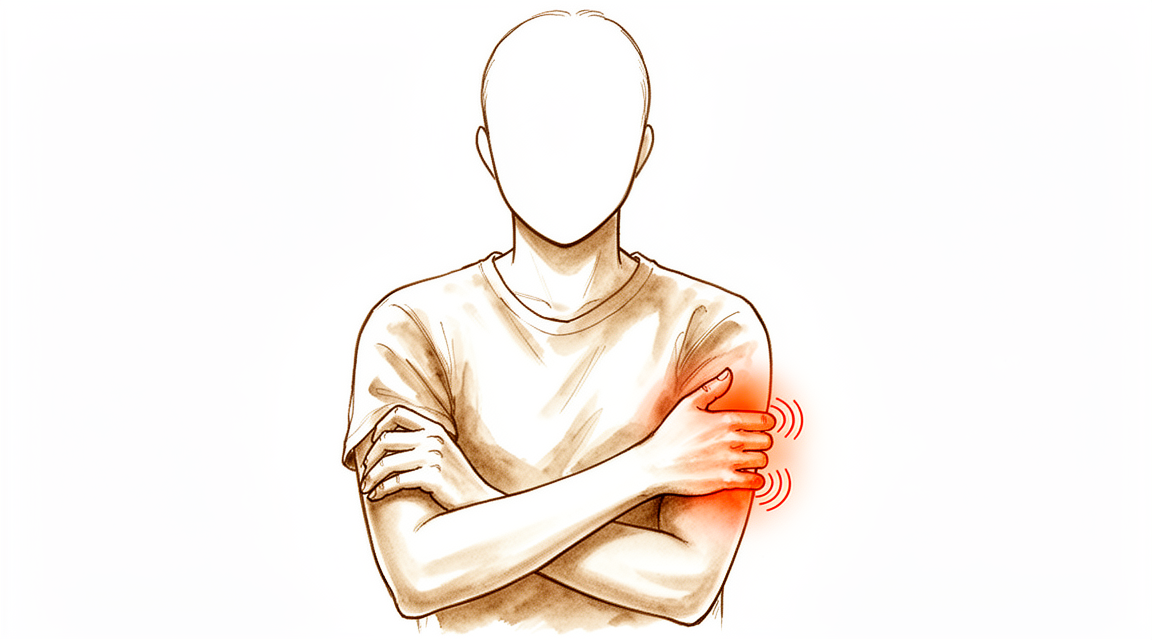
Ang protocol na ito ay nagsisilbing gabay sa iyong paggaling pagkatapos ng surgical release ng ulnar nerve sa siko (cubital tunnel release) kasama si Dr Kieran Hirpara sa Mater Private Hospital Rockhampton. Ipinapaliwanag nito ang mga dapat asahan, ang mga pag-iingat para sa mga unang linggo, at ang mga ehersisyo upang mapanatiling malayang nakaka-glide ang nerve habang naghihilom ang lahat. Dalhin ang pahinang ito o ang PDF nito sa iyong physiotherapist o hand therapist upang manatiling coordinated ang iyong rehabilitasyon. Maaaring i-adjust ng iyong therapist ang plano depende sa pag-unlad ng iyong paggaling.
Kung mayroon kang anumang alalahanin tungkol sa iyong sugat pagkatapos ng operasyon, makipag-ugnayan sa mga rooms. Kadalasang nakakatulong ang pagkuha ng larawan ng sugat at pag-email nito para masuri.
Dalawang magkaibang operasyon, dalawang bahagyang magkaibang paggaling. Ang ulnar nerve ay maaaring palayain sa dalawang pangunahing paraan, at ang paraang ginamit sa iyo ay nagbabago sa iyong mga unang pag-iingat:
- In-situ (simple) decompression: ang nerve ay pinalalaya kung saan ito nakalagay, nang hindi ito ginagalaw. Ito ang standard na operasyon na ginagawa ni Dr Hirpara, at mabilis ang paggaling: nagsisimula nang maaga ang banayad at full movement ng siko. Walang ginagamit na rigid brace.
- Anterior (submuscular) transposition (ang nerve ay itinaas at inilipat sa isang mas protektadong posisyon sa harap ng siko): ginagawa lamang sa hindi gaanong karaniwang sitwasyon kung saan ang nerve ay nag-su-sublux o nadidislokate sa ibabaw ng bony bump (medial epicondyle) kapag ibinabaluktot ang siko. Nangangailangan ito ng mas maingat na early phase, pag-iwas sa end-range na pagbaluktot at pagtuwid ng siko sa unang ilang linggo habang ang nerve at soft tissues ay nananatili sa kanilang bagong posisyon. Maaaring gumamit ng simpleng sling para sa comfort lamang.
Sundin ang gabay sa ibaba para sa operasyong ginawa sa iyo: in-situ sa karamihan ng mga kaso, transposition kung ang iyong nerve ay unstable.
Ano ang dapat asahan
Para sa pamamahala ng sugat, pamamaga, at peklat, tingnan ang gabay ng klinika para sa wound care.
Ang layunin ng operasyon ay alisin ang pressure sa ulnar nerve (ang nerve na nagbibigay ng pakiramdam sa iyong kalingkingan at ring finger at nagpapatakbo sa marami sa maliliit na kalamnan ng kamay). Kapag nawala na ang pressure, magsisimulang bumawi ang nerve, ngunit mabagal gumaling ang mga nerve.
Ang bilis ng pagbuti ng iyong mga sintomas ay nakadepende nang malaki sa kung gaano katagal na-compress ang nerve at kung gaano ito nairita bago ang operasyon. Ang pangingilig (tingling) at pins-and-needles ay madalas na unang nababawasan, kung minsan sa loob ng ilang araw o linggo. Ang pamamanhid (numbness) at lakas ng kamay ay mas matagal (madalas ay mga buwan) at ang pinal na resulta ay maaaring patuloy na bumuti hanggang isang taon o higit pa pagkatapos ng operasyon. Sa mga kaso kung saan ang nerve ay sobrang nairita sa loob ng mahabang panahon bago ang operasyon, ang ilang pamamanhid o panghihina ay maaaring hindi na ganap na bumalik; ang operasyon ay naglalayong pigilan ang paglala ng kondisyon at bigyan ang nerve ng pinakamagandang pagkakataon.
Sa paghahambing ng dalawang operasyon, natuklasan ng malalaking review ng mga nailathalang trial na ang simple in-situ decompression at anterior transposition ay nagbibigay ng magkatulad na pangkalahatang resulta, kung saan ang simple decompression ay may tendensiyang magkaroon ng mas kaunting komplikasyon sa sugat at soft-tissue [1][2]. Ang pagpili sa pagitan ng mga ito ay ginagawa ng iyong surgeon base sa iyong nerve at iyong siko.
Mga pag-iingat at limitasyon
Hinihikayat ang magaan na functional na paggamit ng iyong kamay para sa mga pang-araw-araw na gawain tulad ng pag-aalaga sa sarili, pagkain, pagbibihis, pagsusulat, at pag-type mula sa simula, hangga't komportable.
Ang mga maagang limitasyon ay nakadepende sa operasyong iyong ginawa:
- Pagkatapos ng in-situ (simple) decompression (ang karaniwang operasyon): hinihikayat ang banayad at buong paggalaw ng siko, forearm, pulso, at kamay nang maaga upang mapanatili ang pag-glide ng nerve. Walang brace na ginagamit. Panatilihing magaan ang pagbuhat, paghawak, at pagdadala ng bigat gamit ang braso sa loob ng unang anim na linggo, pagkatapos ay unti-unting dagdagan.
- Pagkatapos ng anterior transposition (kung ang iyong nerve ay unstable lamang): protektado ang siko sa unang ilang linggo; iwasang pilitin itong itiklop nang husto o ituwid nang husto, at iwasang panatilihin itong nakatiklop sa mahabang panahon, habang ang nerve ay nananatili sa bago nitong posisyon. Maaaring gumamit ng simpleng sling para lamang sa komportable. Ang mga nerve glide ay magsisimula nang mas huli kaysa sa simple release (karaniwan ay mga dalawa hanggang tatlong linggo). Tulad ng sa in-situ release, panatilihing magaan ang pagbuhat at resistance sa loob ng unang anim na linggo, pagkatapos ay unti-unting dagdagan.
Bilang pangkalahatang gabay, ang pagbuhat at resistance strengthening ay pinapanatiling magaan hanggang mga anim na linggo, pagkatapos ay unti-unting dadagdagan [3][4].
Ang pagsandal sa siko (pagpapahinga ng iyong siko sa isang matigas na ibabaw) ay nagbibigay ng pressure mismo sa ibabaw ng nerve at dapat iwasan habang ito ay nagpapagaling.
Kapag magaling na ang iyong sugat, ang scar massage ay nakatutulong upang mapanatiling malambot ang balat at mga tissue sa ibabaw ng nerve. Ang pahinang wound care ay may higit pang impormasyon tungkol sa scar management.
Ito ang mga ehersisyo mula sa iyong handout, na isinasagawa ayon sa inilarawan sa bawat card. Simulan ang mga ito ayon sa gabay ni Dr Hirpara at ng iyong therapist: ang petsa ng pagsisimula para sa mga nerve glide, at anumang limitasyon sa range ng siko, ay nakadepende sa operasyong iyong ginawa.
Iyong mga ehersisyo
Kieran Hirpara 4.0
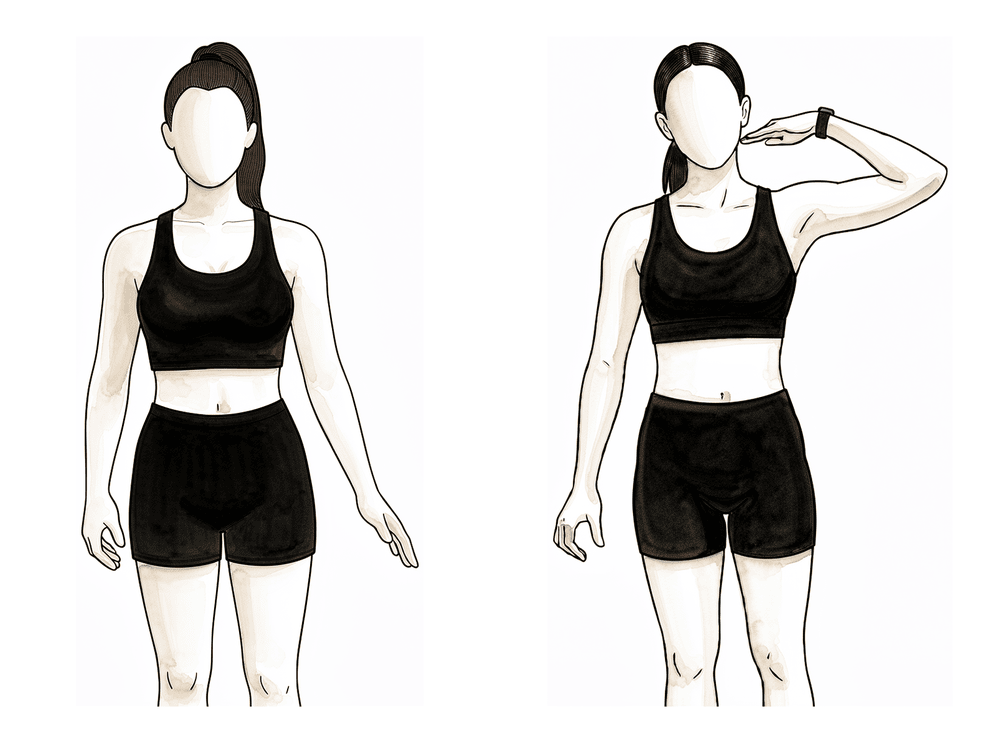
Mga ulnar nerve glide
Ang mga banayad na paggalaw na ito ay pinapanatiling malayang dumudulas ang ulnar nerve upang hindi ito dumikit sa naghihilom na tissue. Gumalaw nang swabe sa bawat posisyon hanggang sa kung ano lamang ang komportable — ang bahagyang paghila o pangingilig ay normal, ngunit huminto bago makaramdam ng anumang matalas o matinding pins-and-needles. Huwag kailanman pilitin ang stretch. Magsimula lamang kapag sinabi ng iyong surgeon o therapist (karaniwang mas huli ito kung ikaw ay sumailalim sa transposition — tingnan ang mga pag-iingat sa ibaba).
5 mabagal na pag-uulit, 2–3 beses araw-araw
Kieran Hirpara 4.0
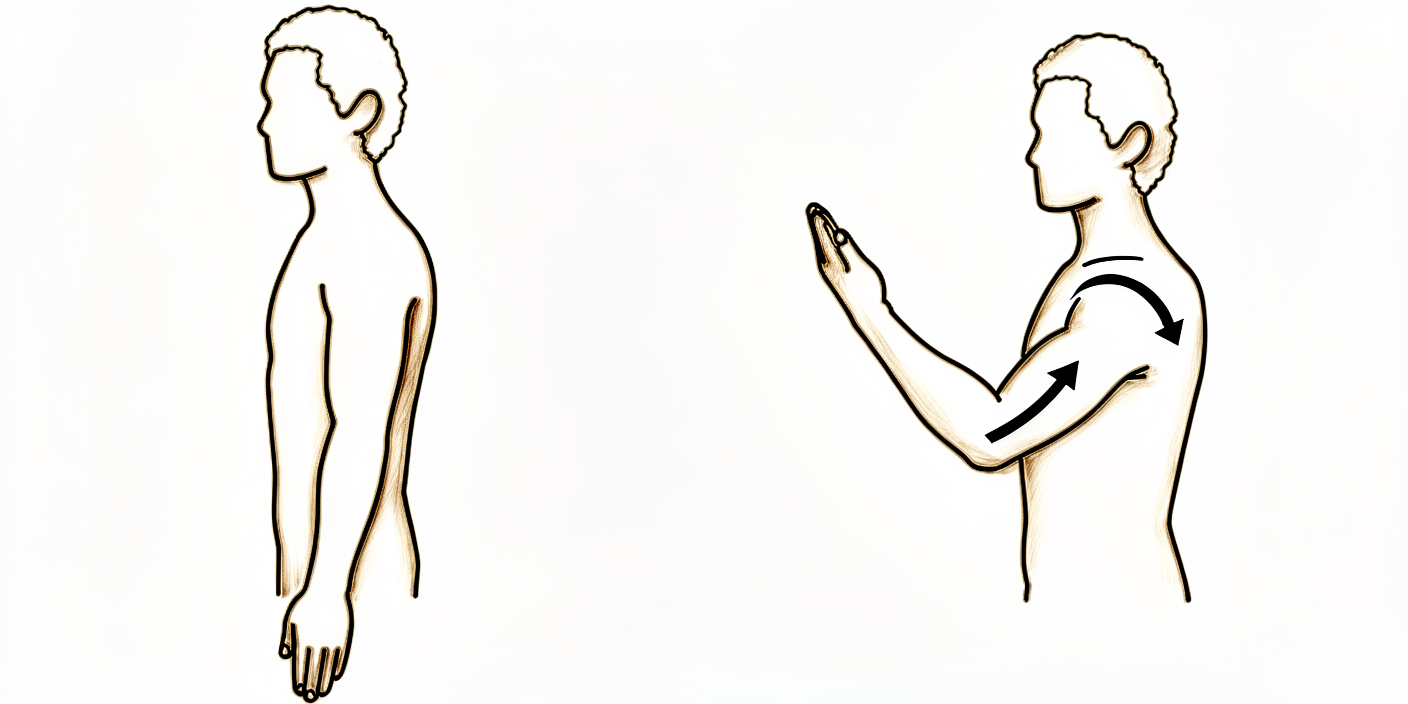
Pagbaluktot ng siko (flexion)
Habang suportado ang iyong itaas na bahagi ng braso, dahan-dahang itiklop ang iyong siko upang ilapit ang iyong kamay sa iyong balikat, pagkatapos ay ibaba itong muli. Gumalaw sa loob ng komportableng range. Kung ikaw ay sumailalim sa isang transposition, maaaring hilingin ng iyong surgeon na iwasan ang pagtiklop ng siko nang sagad sa unang ilang linggo — sundin ang limitasyong ibinigay sa iyo.
10 repetitions, 3–4 beses araw-araw, sa loob ng iyong pinapayagang range
Kieran Hirpara 4.0
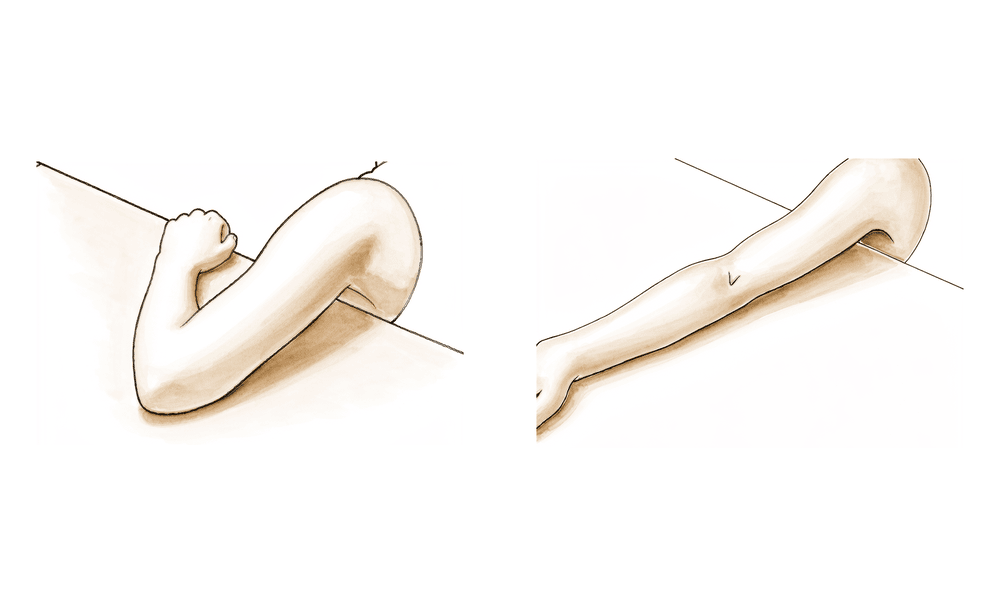
Pagtuwid ng siko (extension)
Mula sa nakabaluktot na posisyon, dahan-dahang ituwid ang iyong siko hanggang sa kung saan ito komportable, pagkatapos ay ibalik ito. Kung ikaw ay sumailalim sa isang transposition, iwasang piliting ituwid nang husto ang siko sa mga unang linggo kung ito ay ipinagbilin sa iyo — manatili sa komportableng range na itinakda ng iyong surgeon.
10 repetitions, 3–4 beses araw-araw, sa loob ng iyong pinapayagang range
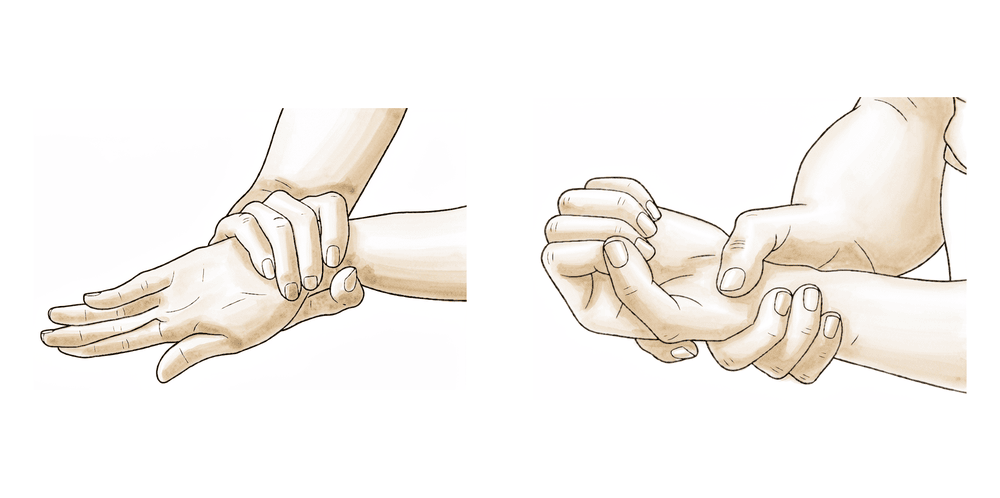
Kieran Hirpara 4.0
Rotasyon ng forearm
Habang ang iyong siko ay nakadikit sa iyong tagiliran at nakabaluktot sa isang right angle, dahan-dahang ituon ang iyong palad paitaas sa kisame, pagkatapos ay paibaba sa sahig. Panatilihing nakadikit ang iyong siko sa iyong katawan sa buong proseso.
10 beses sa bawat direksyon, 3–4 beses araw-araw
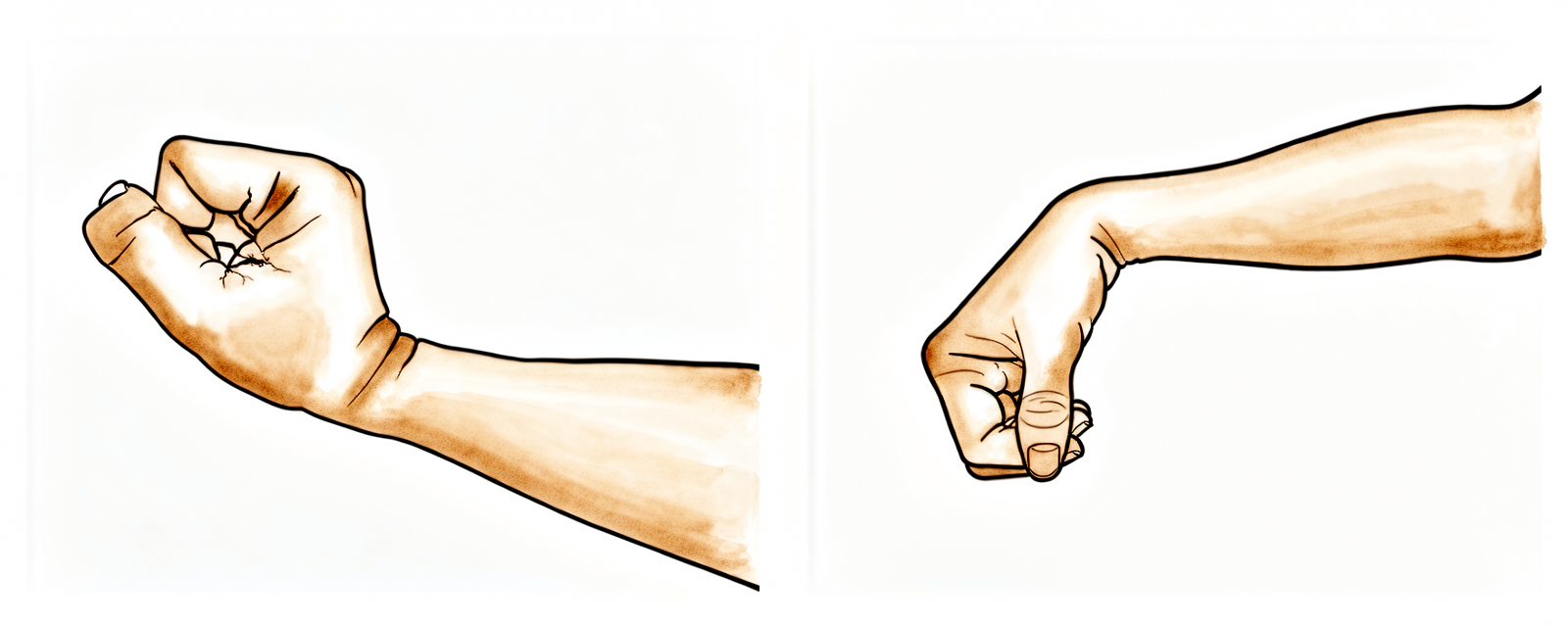
Kieran Hirpara 4.0
Paggalaw ng pulso at daliri
Dahan-dahang itiklop ang iyong pulso pataas at pababa, at buksan at isara nang lubos ang iyong mga daliri, gumawa ng maluwag na kamao at pagkatapos ay iunat ang mga daliri. Pinapanatili nito ang paggalaw ng buong braso at tumutulong na mabawasan ang pamamaga at paninigas habang nagpapagaling ang siko.
10 ng bawat isa, ilang beses sa isang araw
Simulan lamang ang mga ehersisyo sa ibaba ayon sa gabay ni Dr Hirpara at ng iyong hand therapist, at manatili sa anumang range at limitasyong ibinigay sa iyo. Ang mga ulnar nerve glide ang mga mahalaga — pinapanatili ng mga ito ang pagdausdos ng nerve sa bago nitong posisyon sa halip na magkaroon ng scarring, at nagsisimula ang mga ito nang maaga. Ang pagbaluktot, pagtuwid ng siko, at pag-ikot ng forearm ay pumipigil sa paninigas ng siko, at ang mga galaw ng wrist at daliri ay pinapanatili ang paggana ng lahat ng iba pa. Iwasang magpahinga nang matagal na nakabaluktot nang husto ang siko, dahil ito ang nag-iirita sa nerve sa simula pa lamang. Itigil ang anumang nagdudulot ng matalas o parang kuryenteng sakit pababa ng forearm patungo sa kalingkingan at ring finger.
Pagbabalik sa trabaho at aktibidad
Karamihan sa mga tao ay bumabalik sa desk-based o magaan na trabaho sa loob ng isa hanggang dalawang linggo, habang ang mas mabibigat, paulit-ulit, o manwal na mga tungkulin ay karaniwang tumatagal ng apat hanggang walong linggo. Handa ka na para sa isang partikular na gawain kapag ang iyong sugat ay nakakayanan na ang kontak at presyur na kasama nito, at kaya mo itong gawin nang komportable sa loob ng mga pag-iingat sa itaas. Kung ang iyong trabaho ay mabigat, kinapapalooban ng paglean sa siko, o gumagamit ng mga vibrating tool, banggitin ito sa iyong post-operative review upang makagawa ng plano (kabilang ang anumang modified duties).
Ang pagmamaneho ay karaniwang nagpapatuloy sa loob ng dalawa hanggang tatlong linggo, kapag wala ka na sa anumang sling at kaya mo nang kontrolin ang sasakyan at rumesponde sa emergency nang walang sakit. Ang pagbabalik sa sports at overhead activity ay karaniwang nasa anim hanggang labindalawang linggo.
Ang paggaling ng nerve ay may sariling mas mabagal na timeline. Ang pangingilig (tingling) ay madalas na nawawala muna, sa loob ng mga araw hanggang linggo, habang ang pamamanhid (numbness) at lakas ay patuloy na bumubuti sa loob ng maraming buwan at maaaring patuloy na gumaling hanggang sa loob ng halos isang taon. Sa mga bahagi kung saan ang nerve ay matagal na sobrang na-compress, ang ilang pamamanhid o panghihina ay maaaring hindi na lubos na gumaling, at ang operasyon ay naglalayong pigilan ang paglala nito.
Pagkatapos ng iyong protocol
Ang protocol na ito ay kasabay ng pangkalahatang payo sa paggaling ng klinika: tingnan ang pamamahala ng sakit pagkatapos ng operasyon, pag-aalaga ng sugat at mga pangunahing kaalaman sa hand therapy. Ang phased plan sa itaas ay naaayon sa nailathalang ebidensya tungkol sa decompression ng ulnar nerve sa siko, at ang iyong patuloy na paggaling ay ginagabayan nang indibidwal ng iyong physiotherapist o hand therapist ayon sa pag-unlad ng iyong nerve at siko.
Mga Sanggunian
[1] Said J, Van Nest D, Foltz C, et al. Ulnar nerve in situ decompression versus transposition for idiopathic cubital tunnel syndrome: an updated meta-analysis. J Hand Microsurg. 2019;11(1):18–27. https://pmc.ncbi.nlm.nih.gov/articles/PMC6431285/ [2] Macadam SA, Gandhi R, Bezuhly M, Lefaivre KA. Simple decompression versus anterior subcutaneous and submuscular transposition of the ulnar nerve for cubital tunnel syndrome: a meta-analysis. J Hand Surg Am. 2008;33(8):1314.e1–12. https://pubmed.ncbi.nlm.nih.gov/18929194/ [3] Caliandro P, La Torre G, Padua R, Giannini F, Padua L. Treatment for ulnar neuropathy at the elbow. Cochrane Database Syst Rev. 2016;11:CD006839. https://www.cochranelibrary.com/cdsr/doi/10.1002/14651858.CD006839.pub4/full [4] Andrews K, Rowland A, Pranjal A, Ebraheim N. Cubital tunnel syndrome: anatomy, clinical presentation, and management. J Orthop. 2018;15(3):832–836. https://pmc.ncbi.nlm.nih.gov/articles/PMC6082832/
Evidence & references
This is the clinical evidence summary written for health professionals. It is technical, and it lists the research this page was built from. You do not need to read it to understand your treatment or to make a decision about it.
Cubital Tunnel Release — Post-operative Rehabilitation (In-situ Decompression vs Anterior Transposition)
Topic scope: post-operative rehabilitation after surgical decompression of the ulnar nerve at the elbow. The single defining branch point is the operative technique: (A) in-situ (simple) decompression — an early-full-motion pathway; versus (B) anterior transposition (subcutaneous or submuscular) — a protected early phase that avoids end-range elbow flexion/extension for the first few weeks to protect the transposed nerve and its soft-tissue bed.
Defining principle of the rehab here: decompression relieves pressure on a nerve; it does not, by itself, create a load-bearing repair that needs months of protection. So the rehab is fundamentally an early-motion, nerve-glide pathway aimed at preventing perineural adhesion while the nerve recovers on its own (slow) biological timeline. The one variable that changes the early phase is whether the nerve was transposed — a transposed nerve sits in a new bed and end-range elbow excursion is restricted briefly to protect it, so nerve glides start later and elbow ROM is capped for a few weeks. Phase timings below are typical of published surgeon protocols and institutional consensus rather than trial-derived.
A. PROCEDURE CHOICE & OUTCOME EQUIVALENCE
- In-situ decompression and anterior transposition give equivalent clinical outcomes. Multiple meta-analyses of RCTs and comparative series find no significant difference in motor nerve conduction velocity or clinical outcome scores between simple decompression and transposition for idiopathic cubital tunnel syndrome. Strong (multiple SR/meta-analyses).
- Simple decompression carries a lower complication burden (wound, soft-tissue, devascularisation risk), and is often preferred where the nerve is stable and does not subluxate. Moderate–strong.
- Transposition is selected for nerve instability/subluxation, prior failed in-situ release, bony deformity, or a hostile cubital tunnel floor — surgeon's intra-operative judgement. Consensus.
- Endoscopic vs open in-situ decompression show comparable outcomes; choice does not change the rehab pathway (both early-motion). Moderate (SR).
B. POST-OPERATIVE REHABILITATION
Common principles (both pathways)
- Early digital, wrist and shoulder motion from day 1 to prevent stiffness and oedema.
- Ulnar nerve gliding to prevent perineural adhesion — timing differs by pathway (see below).
- No elbow leaning / direct pressure over the nerve during recovery.
- Wound: suture removal ~10–14 days; scar massage and desensitisation once healed.
- Nerve recovery is slow and graded: paraesthesia often improves first (days–weeks); numbness and intrinsic strength lag (months); final outcome continues to ~12 months. DASH, clinical findings and NCV improve postoperatively, with significant early gains by ~1 month in cohort data. Pre-operative severity/chronicity is the dominant predictor of incomplete recovery.
Phased timeline (typical of published surgeon protocols)
| Phase | In-situ (simple) decompression | Anterior transposition (SC / submuscular) |
|---|---|---|
| Week 0–2 | Soft dressing; early active full elbow ROM + digit/wrist/shoulder ROM; light ADLs | Splint/sling for comfort/protection (often elbow ~semi-flexed early); avoid end-range flexion AND extension, and avoid sustained/prolonged elbow flexion; digit/wrist/shoulder ROM |
| Week 2–6 | Progress to full unrestricted active ROM; scar massage + desensitisation once healed; nerve glides as tolerated | Suture out ~10–14d; gradually restore elbow ROM within set limits; scar/desensitisation; introduce nerve glides — typically deferred to this window |
| Week ~6+ | Strengthening / lifting built up as tolerated; return to full activity | Restrictions usually lifted ~6 wk; resistance strengthening from ~6 wk; build up gradually |
Dr Hirpara's practice parameters:
- Default operation = in-situ (simple) decompression; anterior submuscular transposition is reserved for a nerve that subluxates over the medial epicondyle. No rigid brace is used.
- Early elbow ROM: full active elbow motion from day 1 after in-situ decompression. After a transposition the elbow is protected from end-range flexion/extension for the first few weeks (a simple sling for comfort only — no rigid brace).
- Nerve glides: start early/as-tolerated after in-situ; start around 2–3 weeks after a transposition.
- Lifting: kept light (around ≤2 kg) for the first ~6 weeks, then resistance strengthening is built up gradually.
- Nerve recovery: paraesthesia settles first (days–weeks); numbness and intrinsic strength recover over months and can keep improving to ~12 months. Pre-operative severity/chronicity is the dominant predictor — long-standing severe compression may not fully recover, and surgery then aims to halt progression.
C. KEY CONTROVERSIES / EVIDENCE QUALITY
- Procedure equivalence is well supported (multiple meta-analyses); the complication-profile advantage of simple decompression drives the "in-situ first unless unstable" stance. Strong.
- The post-op rehab protocol itself is consensus/expert — drawn from surgeon patient-guidance protocols, not a rehab RCT. Phase timings are typical, not trial-derived. Weak/consensus.
- Nerve-glide evidence is stronger as a non-operative and adhesion-prevention measure than as a proven post-operative outcome-changer; biomechanical and clinical work supports gliding to reduce excursion-related symptoms. Moderate.
D. EVIDENCE STRENGTH FLAGS (summary)
- STRONG (SR / meta-analysis): clinical-outcome equivalence of in-situ decompression vs anterior transposition; lower complication rate with simple decompression.
- MODERATE (cohorts / SR): endoscopic vs open in-situ equivalence; post-op DASH/NCV improvement with early gains by ~1 month; nerve-gliding rationale.
- WEAK / CONSENSUS: the post-operative rehabilitation protocol (surgeon patient-guidance documents; no defining rehab RCT) — including the transposition early-ROM cap, nerve-glide start date, and the ~6-week lifting/strengthening threshold.
CITATIONS
RAG corpus (180,000+ Orthopaedic articles)
- Open vs retractor-endoscopic in-situ decompression of the ulnar nerve in cubital tunnel syndrome. Neurosurgery. DOI: 10.1227/neu.0b013e3182846dbd
- Randomized, prospective study comparing ulnar neurolysis in situ with submuscular transposition. Neurosurgery. DOI: 10.1227/01.neu.0000194847.04143.a1
- Open versus endoscopic in situ decompression in cubital tunnel syndrome: a systematic review. Int J Surg. 2016. DOI: 10.1016/j.ijsu.2016.09.012
- Simple decompression vs. subcutaneous anterior transposition of the ulnar nerve (2025). J Hand Surg Glob Online / XRRT. DOI: 10.1016/j.xrrt.2025.100630
- Cubital tunnel syndrome: current concepts. Curr Rev Musculoskelet Med. 2020. DOI: 10.1007/s12178-020-09650-y
- Predictors of surgical revision after in situ decompression of the ulnar nerve. J Shoulder Elbow Surg. 2015. DOI: 10.1016/j.jse.2014.12.015
- Clinical outcomes of ulnar nerve gliding exercise in the nonoperative treatment of cubital tunnel syndrome. JSES Int. 2025. DOI: 10.1016/j.jseint.2025.02.001
- Biomechanical analysis of ulnar nerve gliding and elongation. Clin Shoulder Elbow. 2024. DOI: 10.5397/cise.2024.00934
- Postoperative improvement in DASH score, clinical findings and nerve conduction velocity in cubital tunnel syndrome. Sci Rep. 2016. DOI: 10.1038/srep27497
Comparative-effectiveness literature (URLs)
- Said J, et al. Ulnar nerve in situ decompression versus transposition for idiopathic cubital tunnel syndrome: an updated meta-analysis. J Hand Microsurg. 2019. https://pmc.ncbi.nlm.nih.gov/articles/PMC6431285/
- Macadam SA, et al. Simple decompression versus anterior subcutaneous and submuscular transposition of the ulnar nerve: a meta-analysis. J Hand Surg Am. 2008. https://pubmed.ncbi.nlm.nih.gov/18929194/
- Caliandro P, et al. Treatment for ulnar neuropathy at the elbow. Cochrane Database Syst Rev. 2016;CD006839. https://www.cochranelibrary.com/cdsr/doi/10.1002/14651858.CD006839.pub4/full
- Andrews K, et al. Cubital tunnel syndrome: anatomy, clinical presentation, and management. J Orthop. 2018. https://pmc.ncbi.nlm.nih.gov/articles/PMC6082832/
Published rehab protocols (patient-guidance — basis for the phase structure)
- University of Virginia Orthopaedics — Cubital Tunnel Release, In-situ Rehabilitation Guidelines. https://med.virginia.edu/orthopaedic-surgery/wp-content/uploads/sites/242/2024/09/Cubital-tunnel-release-in-situ.pdf
- University of Virginia Orthopaedics — Cubital Tunnel Release, Anterior Subcutaneous Transposition. https://med.virginia.edu/orthopaedic-surgery/wp-content/uploads/sites/242/2024/09/Cubital-tunnel-release-anterior-subcutaneous-transposition.pdf
- AAOS OrthoInfo — Cubital Tunnel Release (patient recovery expectations). https://orthoinfo.aaos.org/en/treatment/cubital-tunnel-release/