Clinicians › Wrist
Partial Wrist Fusion (Four-Corner and Capitolunate Arthrodesis)
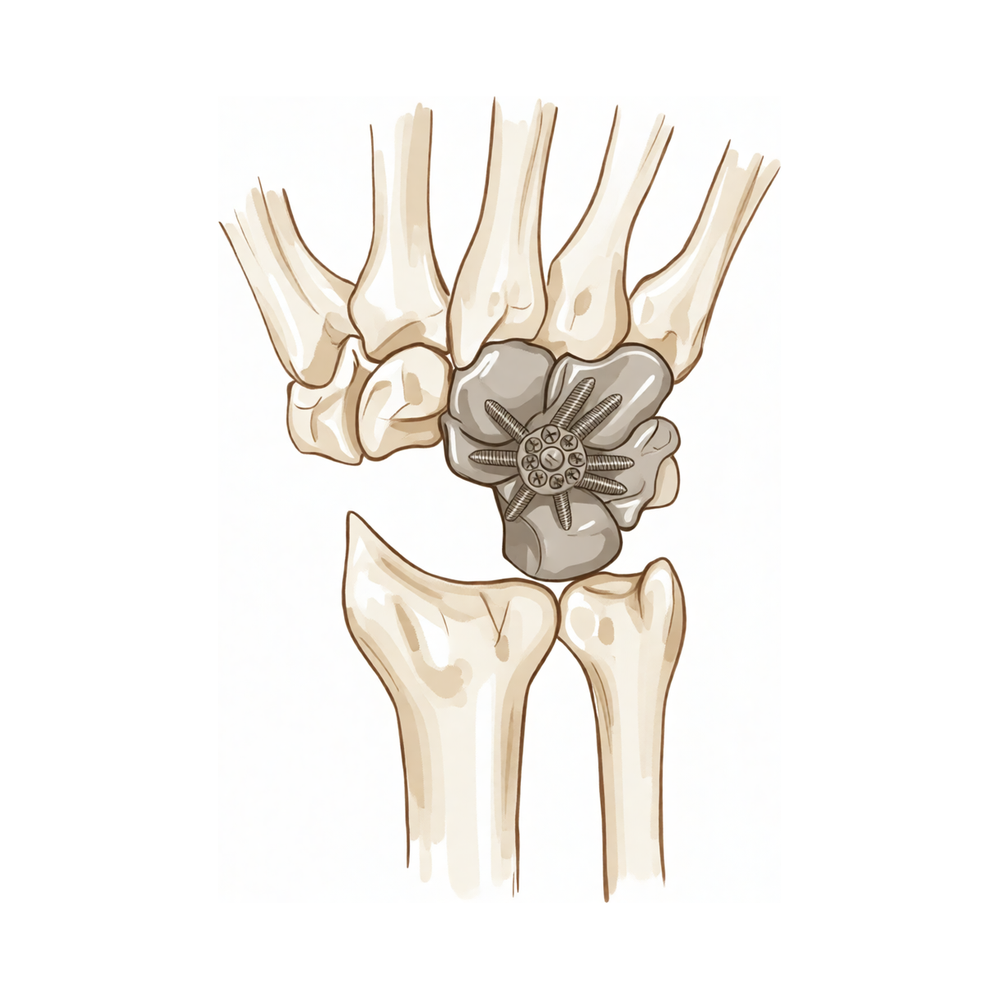
Limited intercarpal arthrodesis options — four-corner fusion (with scaphoid excision) and capitolunate (two-corner) fusion — for SLAC/SNAC wrist; preserves some midcarpal motion vs total wrist fusion.
For patients: a plain-language version of this topic is available. See the patient guide.
Overview
Partial wrist fusion is a salvage operation indicated when clinical and radiographic evidence confirms wrist arthritis [2]. These procedures are effective methods for treating specific carpal disorders, optimizing postoperative wrist motion, strength, and stability while reducing pain [11]. Adherence to the basic principles of limited wrist fusions results in a good outcome [1], and good long-term results can be obtained from motion-preserving procedures if indications are accurately respected and the technique is well performed to prevent complications [3]. Capitolunate arthrodesis is a feasible option for scapholunate advanced collapse and scaphoid nonunion advanced collapse wrists [13], while midcarpal arthrodesis serves as a long-lasting treatment option for advanced carpal collapse with good long-term results [32].
Indications vary by disease stage and joint integrity. Proximal row carpectomy is preferred for stage II SLAC wrist with a preserved capitolunate joint because it is technically less demanding and yields durable results [4, 27]. Conversely, scaphoid excision and four-corner fusion is the choice for stage III SLAC wrist [27], and four-bone fusion with scaphoid excision is preferred when capitolunate arthritis is present [21]. Radioscapholunate arthrodesis with compression screws and local autograft is an effective method for appropriately selected patients with a preserved midcarpal joint [18]. Once Kienböck disease extends outside of the lunate, reconstruction with proximal row carpectomy or partial or total wrist arthrodesis should be considered based on which articular surfaces are affected [19].
Wrist fusion is performed nearly 5 times more frequently than total wrist arthroplasty [6]. While short-term findings suggest that total wrist arthroplasty compares favorably with wrist fusion [6], total wrist fusion should only be used in exceptional circumstances [8]. Total wrist arthrodesis provides reliable pain relief and good functional outcomes with high patient satisfaction, particularly for end-stage arthritis and as a salvage technique [31]. The decision between total wrist arthroplasty and total wrist arthrodesis is based on technical experience with newer implants, the patient's ability to adhere to strict activity limitations, and the willingness to accept the higher complication rate and eventual implant failure of arthroplasty in exchange for maintaining some wrist motion [177]. Both procedures are extremely cost-effective [44]. Arthroscopic resection arthroplasty may serve as a temporary alternative to partial wrist arthrodesis for younger patients or a definitive procedure for less demanding patients, though results may be short-lived [5]. Pyrocarbon capitate resurfacing implant surgery may represent a good alternative to total and partial wrist arthrodesis [9].
Anatomy & Pathophysiology
Bony Anatomy
The wrist comprises eight carpal bones arranged in a proximal row (scaphoid, lunate, triquetrum, pisiform) and a distal row (trapezium, trapezoid, capitate, hamate) [72]. The distal radius articular surface features two concave facets for the scaphoid and lunate, separated by a ridge corresponding to the scapholunate interval [76]. This surface has an average volar tilt of 11 degrees and a radial inclination of 23 degrees [76]. The capitate is the largest carpal bone and articulates with seven other bones [72]. The lunate is broader palmarly than dorsally [82]. The triquetrum articulates with the lunate radially, the triangular fibrocartilage proximally, and the hamate distally [64].
Ligamentous Anatomy
Extrinsic carpal ligaments connect the radius or ulna to the carpus, with volar ligaments generally stronger than dorsal ligaments [77]. The scapholunate interosseous ligament (SLIL) is C-shaped in the sagittal plane, with the dorsal portion being the thickest and strongest [77]. The lunotriquetral interosseous ligament (LTIL) is C-shaped, with the volar portion being the thickest and strongest [77]. The SLIL provides a flexion force on the lunate due to its attachment to the scaphoid [77], while the LTIL provides an extension moment on the lunate due to its attachment to the triquetrum [77]. The dorsal radiocarpal ligament has a trapezoidal shape, passing from the dorsal rim of the distal radius to the lunate and triquetrum [77]. The dorsal intercarpal ligament passes from the dorsal tubercle of the triquetrum to the distal pole of the scaphoid [77]. The space of Poirier is a weak area adjacent to the proximal capitate without ligamentous attachment, situated ulnar to the radioscaphocapitate ligament and radial to the long radiolunate ligament [77].
Vascular Anatomy
The scaphoid's primary vascular supply is a branch of the radial artery at the dorsal ridge, with smaller vessels supplying the distal 30% via the palmar tubercle [82]. The lunate has a dorsal and palmar vascular supply in 80% of wrists, while 20% have only a palmar supply [82]. The capitate head often relies on a retrograde vascular supply [82].
Meniscal Anatomy
The triangular fibrocartilage complex (TFCC) includes the central meniscus homolog, dorsal and volar radioulnar ligaments, the floor of the extensor carpi ulnaris tendon sheath, and volar ulnocarpal ligaments [82]. Only the peripheral 10% to 40% of the volar, ulnar, and dorsal TFCC has a vascular supply [82].
Kinematics and Biomechanics
The wrist functions as a two-joint system linking the hand to the forearm via the mobile proximal carpal row [83]. The proximal carpal row has no muscular or tendinous attachments and functions as an intercalary segment [82]. During wrist flexion, the proximal row translates dorsally, while during wrist extension, it translates palmarly [77]. Approximately 62% of wrist extension occurs through the radiocarpal joint and 62% of wrist flexion occurs through the midcarpal joint [77]. The midcarpal joint is primarily responsible for 20 degrees of radial deviation and 40 degrees of ulnar deviation [77]. More than half the motion of the carpus when the wrist is loaded in extension occurs at the midcarpal joint [101]. The "dart thrower's motion" involves moving from radial extension into ulnar flexion and occurs almost exclusively through the midcarpal joint [83]. This motion defines the transition between flexion and extension of the scaphoid and lunate, during which proximal row motion approaches zero [83].
The radius bears 80% of the axial load transmitted through the radiocarpal joint, while the ulna bears 20% in neutral ulnar variance [77]. With axial loading through the neutral wrist, approximately 60% of forces are transmitted through the scaphoid facet and 40% through the lunate facet of the distal radius [82]. The contact areas between the scaphoid and distal radius are maximized during full extension of the wrist [104]. During forearm rotation, the contact site of the scaphoid and lunate on the distal radial articular surface changes minimally [119].
Pathophysiology
Scapholunate advanced collapse (SLAC) wrist is a pattern of degenerative arthritis initially involving the radioscaphoid junction, progressing to the midcarpal joint while sparing the radiolunate articulation [56]. SLAC wrist may result from chronic pseudogout and can appear bilaterally without a clear history of injury [56]. Scaphoid nonunion advanced collapse (SNAC) is caused by trauma [56]. Scaphoid nonunions have a dramatic impact on carpal kinematics, partially uncoupling the proximal and distal carpal rows [98]. SNAC wrists differ from SLAC wrists by exhibiting a decreased sagittal lunotriquetral angle, indicating a distinct pathomechanism of carpal instability [124].
Scapholunate ligament injury results in a pattern of kinematic changes despite individual variance [109]. The effect of ligament sectioning on producing carpal instability may be moderated by the bone geometry of the radiocarpal joint [120]. There is a relationship between scapholunate kinematics and laxity at the level of the interosseous ligaments [133]. The SLIL counteracts the extension moment imparted by the LTIL by transferring the flexion moment from the scaphoid to the lunate [172]. Partial injuries to the SLIL can lead to attenuation of structures, ultimately culminating in arthritis [172].
Classification
SLAC/SNAC Staging: Scapholunate advanced collapse (SLAC) and scaphoid nonunion advanced collapse (SNAC) arthritis are staged 1–4 [117]. Stage I involves degenerative changes limited to the radial styloid/scaphoid articulation [49], with Stage 1 SNAC specifically characterized by radial styloid arthritis [117]. Stage II involves degenerative changes of the entire radioscaphoid joint with mild or no changes at the capitolunate or radiolunate joint [49]. Stage IIIA is defined by mild or no changes at the capitolunate joint and moderate to severe changes at the radiolunate joint [49]. Stage IIIB is defined by moderate to severe changes at the capitolunate joint and mild or no changes at the radiolunate joint [49]. Stage IV involves moderate to severe changes at both the capitolunate and radiolunate joints [49]. The subdivision of stage III into IIIA and IIIB describes different patterns of degeneration seen by inspection rather than a sequence of degeneration [49].
Operative Indications: Stage IIIA wrists are considered candidates for proximal row carpectomy [49]. Stage IIIB wrists are considered candidates for scaphoid excision and four-corner arthrodesis [49].
Other Considerations: The modified classification of SLAC/SNAC stages is based on intraoperative findings [49]. This modified classification calls into question the validity of the accepted classification of Krakauer et al. [49]. Triquetro-lunate fusions are the commonest type of fusions in the carpal region [167].
Clinical Presentation
A salvage operation, such as a partial wrist fusion, is indicated when clinical and radiographic evidence confirms wrist arthritis [2]. Wrist arthrodesis is no longer the exclusive solution for arthritic wrists [24], and four-corner arthrodesis or proximal row carpectomy should not always serve as standard management for advanced radiocarpal arthritis [26]. The choice of procedure depends on the pattern of wrist destruction and stability [15]. For stage II SLAC wrist with a preserved capitolunate joint, proximal row carpectomy is preferred because it is technically less demanding and yields durable results [4]. Once disease extends outside of the lunate, reconstruction with proximal row carpectomy or partial or total wrist arthrodesis should be considered based on which articular surfaces are affected [19]. When capitolunate arthritis is present, four-bone fusion with scaphoid excision is the preferred option [21].
Indications for Partial Fusion: * Radiolunate Arthrodesis: Effective for unstable wrists with preserved midcarpal joint space [15]. * RSL Fusion: With distal scaphoidectomy and entire triquetrum excision, this serves as a useful alternative to total wrist arthrodesis for patients with an intact midcarpal joint [25]. * Capitolunate Arthrodesis: A feasible option for scapholunate advanced collapse and scaphoid nonunion advanced collapse wrists, with complications similar to those encountered in four-corner arthrodesis [13]. * Lunocapitate Arthrodesis: With scaphoid excision, this provides functional and radiological results comparable to four-corner fusion without the deleterious effect on ulnocarpal and proprioceptive dysfunction associated with including the triquetrum in the fusion site [10].
Long-term Outcomes and Stability: If the basic principles of limited wrist fusions are adhered to, a good outcome can be obtained [1]. Although some may view motion-preserving procedures as a staged full wrist fusion, good long-term results can be obtained if indications are accurately respected and the technique is well performed to prevent complications [3]. Scaphoid excision and four-corner fusion remains a viable option for patients with advanced wrist arthritis, providing reliable, resilient functional results that remain stable over time [65]. The outcome of scaphoid excision and four-corner arthrodesis is favorable at one year and does not deteriorate significantly between one and 10 years [41]. Functional results were good at long-term follow-up despite radiographic changes in the radiolunate joint in 73% of patients [30]. The midcarpal arthrodesis is a long-lasting treatment option for advanced carpal collapse with good long-term results [32]. Despite radiographic progression, radiolunate and radioscapholunate arthrodeses yield good clinical results at long-term follow-up [33]. Good and excellent clinical results in the majority of patients following radiolunate fusion do not depend on the fixation device [14].
Functional Expectations and Counseling: The technique of partial intercarpal fusion relieves pain in all but two instances and restores a strong grip in all but one patient, with wrist immobilization required for only two months [37]. Awareness of complications associated with wrist arthrodesis and how best to avoid them is essential for the treating physician to appropriately counsel patients on different arthrodesis options and to inform them on what to expect from the procedure [68]. Patients are generally satisfied after total wrist arthrodesis, although they are not always pain-free despite limited or absent wrist motion [69]. Bilateral total wrist arthrodesis improved pain while enabling patients with severe carpal arthrosis to maintain a satisfactory level of extremity function and quality of life [40]. Complete or total wrist arthrodesis is a well-established reconstructive surgical procedure that results in predictable pain relief and satisfactory function in patients who have various inflammatory, degenerative, and post-traumatic conditions [162]. Total wrist arthrodesis with Wrist Fusion Rod is expected to provide long-lasting pain relief and stability with severe wrist deterioration and ulnar carpal shift [163].
Alternative Procedures and Comparisons: Conversion to arthrodesis after failed wrist arthroplasty is worthwhile and reliably improves wrist function over failed wrist arthroplasty [7]. The results between the two groups were slightly in favour of patients with a primary wrist arthrodesis [23]. Although wrist fusion is performed nearly 5 times more frequently than total wrist arthroplasty, short-term findings suggest that total wrist arthroplasty compares favorably with wrist fusion [6]. This surgical procedure may represent a good alternative to total and partial wrist arthrodesis [9]. It may serve as a temporary alternative to partial wrist arthrodesis for younger patients or a definitive procedure for less demanding patients, though results may be short-lived [5].
Investigations
Plain radiography: Initial wrist imaging comprises four standard views: posteroanterior with the wrist in ulnar deviation, lateral, semi-pronated oblique, and semi-supinated oblique [96]. An anteroposterior view with the fist clenched is added when scapholunate injury is suspected [96]. On the lateral radiograph, the axes of the radius, lunate, capitate, and third metacarpal are co-linear, while the scaphoid projects at an angle of approximately 45 degrees to this line [96]. Dorsal intercalated segmental instability is identified by the lunate tilting backwards and the axes of the capitate and metacarpals lying dorsal to that of the radius [96]. Conversely, volar intercalated segment instability presents with the lunate and scaphoid tilting volarwards and the capitate and metacarpals lying anterior to the radius [96]. Clinicians must note that 10–15% of scaphoid fractures are not visible on initial X-rays [96].
MRI: MRI is the modality of choice for imaging radiographically occult fractures of the hand and wrist [80]. Its primary advantages over CT and radiography include improved tissue characterization, particularly of soft tissues such as ligamentous structures and synovium, and the absence of ionizing radiation [80]. A static magnetic field strength of at least 1.5 T using a dedicated wrist coil is recommended for analyzing interosseous, intrinsic, and extrinsic ligament insertions [93]. Higher magnetic field strengths yield a higher signal-to-noise ratio with shorter scan times [93]. The volar extrinsic, scapholunate interosseous, dorsal intercarpal, and lunotriquetral ligaments are best visualized using 1 mm slices with no interslice gap in the coronal plane [93]. MRI provides earlier detection of synovitis and erosive bone changes associated with rheumatoid arthritis than radiographs [95]. It is also useful in detecting additional marrow abnormalities in osteonecrosis, as seen in the lunate in Kienböck disease or in the scaphoid after fracture [95]. Asymmetry of marrow signal in proximal and distal fragments of a fractured scaphoid on MRI is suggestive of proximal pole ischemia [95]. Perforations in the triangular fibrocartilage complex appear as linear defects or gaps filled with hyperintense fluid on coronal gradient-echo or T2-weighted pulse sequences [95]. The addition of arthrographic contrast improves the visualization of scapholunate and lunotriquetral ligaments on MR images [95]. Real-time MRI has been used to investigate dynamic instabilities, although its routine use in clinical practice is yet to be further determined [93].
CT: CT scanning enables 3D analysis of carpal dysfunction [93].
Arthroscopy: Arthroscopy is considered by many to be the diagnostic intervention of choice for determining the degree of injury to the wrist [93]. It allows assessment of the condition of the cartilage, including whether it is normal or degenerative [93]. Arthroscopy also assesses the ability to reduce the carpus and any other associated injuries [93]. The degree of intrinsic and extrinsic ligament injury can be identified from arthroscopic evaluation [93]. Geissler grade II scapholunate interosseous ligament injuries tend to be isolated, whereas grade IV injuries often involve complete dorsal extrinsic ligament disruption [93].
Dynamic Fluoroscopy: Dynamic fluoroscopy shows abnormal motion between the scaphoid and lunate and changes in the kinematics of the midcarpal joint [93]. Live fluoroscopic imaging shows whether dorsal intercalated segmental instability is reducible, providing information for treatment planning [93].
Other Considerations: The choice of procedure depends on the pattern of wrist destruction and stability [15].
Treatment
Non-Operative
Partial wrist fusion is considered a salvage operation when clinical and radiographic evidence of wrist arthritis persists after failed non-surgical treatment [2, 178].
Operative
Indications: The ideal surgical treatment for the arthritic wrist balances mobility and pain relief, often prioritizing effective pain relief [164]. Wrist arthrodesis is no longer the only solution, as various techniques can preserve a functional wrist [24]. Specific indications vary by pathology: scaphoid excision and four-corner fusion is the choice for stage III SLAC wrist, whereas proximal row carpectomy is indicated in stage II SLAC where the capitolunate joint is intact [27]. Radiolunate arthrodesis is effective for unstable wrists with preserved midcarpal joint space in the rheumatoid wrist [15]. In Kienböck disease, once disease extends outside of the lunate, reconstruction with proximal row carpectomy or partial or total wrist arthrodesis should be considered based on which articular surfaces are affected [19]. Radiocarpal fusion aims to alleviate pain and improve range of motion in patients with isolated radiolunate or radioscapholunate arthritis who have failed non-surgical treatment [178].
Surgical Approach / Technique: Midcarpal arthrodesis is a long-lasting treatment option for advanced carpal collapse with good long-term results [32]. The technique of radioscapholunate arthrodesis with compression screws and local autograft is effective in appropriately selected patients with a preserved midcarpal joint, achieving a 100% union rate at mean follow-up of 12 months with no complications [18]. A combination of proximal row carpectomy and rigid internal fixation is a highly predictable operation with much less morbidity and fewer complications than older techniques using distant bone graft [153]. Total wrist arthrodesis combined with proximal row carpectomy provides reliable and reproducible benefits [29]. Nonspanning arthrodesis is advocated as an alternative method for total wrist fusion, offering a high union rate and minimal risk of complications at the carpometacarpal joint [38].
Implant Selection: Good and excellent clinical results following radiolunate fusion do not depend on the fixation device [14]. Plate fixation offers little benefit over previous stabilization techniques when performing scaphoid excision and four-corner fusion [157]. Most patients were pleased postoperatively after four-corner fusion and scaphoid excision using headless compression screws, with improvement in wrist pain being the most common finding [174].
Outcomes and Efficacy: Functional results of four-corner fusion were good at long-term follow-up despite radiographic changes in the radiolunate joint in 73% of patients [30]. Clinical scores were markedly improved following radiolunate arthrodesis for rheumatoid arthritis, although there was a decrease in flexion [60]. The senior author did not have to revise or convert any patient into a wrist fusion or a total wrist arthroplasty after scaphocapitolunate arthrodesis and radial styloidectomy, suggesting that a longer survival rate of this procedure may be possible [16].
Comparison with Alternative Procedures: A pyrocarbon capitate resurfacing implant may represent a good alternative to total and partial wrist arthrodesis [9]. Arthroplasty should be used as an alternative to arthrodesis in the treatment of posttraumatic wrist arthritis, given proper patient selection and indications [156].
Other Considerations: Load is preferentially transferred to the radiolunate joint after scaphoid excision with four-corner fusion [67]. The combination of triquetral and distal scaphoid pole excision after RSL fusion improves wrist motion to levels close to normal in the cadaver model [39]. Computed tomography is the most reliable radiographic method of evaluating osseous union in midcarpal fusions, as plain films are unreliable in making a definitive assessment of union [52].
Complications
Nonunion and Hardware Complications
Four-corner arthrodesis carries an increased risk of complications, including nonunion, painful hardware, or implant failure [61]. In a large cohort, seventy-five patients (1.48%) required a secondary procedure for the removal of symptomatic fusion hardware following the index four-corner fusion [134]. Proximal migration of hardware in patients undergoing midcarpal fusion with headless compression screws can necessitate hardware removal and potential conversion to total wrist fusion or proximal row carpectomy [140]. Conversely, no implant-related complications were observed in a comparison of conventional K-wire technique versus a new locking plate for four-corner fusion [132]. The complication rate was low, and hardware did not require removal in most cases following Modified Clayton-Mannerfelt Arthrodesis of the Wrist in Rheumatoid Arthritis [192].
Infection and Wound Complications
Infection following wrist arthroplasty and arthrodesis is relatively uncommon in a nationally representative Medicare database cohort [194]. One patient developed a postoperative wound infection following K-wire fixation for four-corner fusion, which was sufficiently treated conservatively [132]. Perioperative morbidity in open reduction for perilunate injuries included one patient requiring revision surgery for infection [151].
Neurological and Soft Tissue Complications
One patient developed carpal tunnel syndrome following plate fixation for four-corner fusion, which was treated by surgical release [132]. Additionally, one patient required secondary carpal tunnel release for acute median nerve compression after open reduction and internal fixation through a single dorsal approach for perilunate injuries [151]. Lunocapitate arthrodesis with scaphoid excision provides functional and radiological results comparable to four-corner fusion without the deleterious effect on ulnocarpal and proprioceptive dysfunction associated with including the triquetrum in the fusion site [10].
Arthritic Progression and Joint Degeneration
Procedure-specific complications are more common with four-corner arthrodesis, while joint space narrowing is more common after proximal row carpectomy, particularly in patients under 35 years of age [187]. Radiographic follow-up beyond 2 years following proximal row carpectomy revealed joint narrowing and arthritic changes within the radiocapitate joint [53].
Conversion to Total Wrist Arthrodesis
Subsequent total wrist arthrodesis was performed in 135 patients (2.67%) who had a previous four-corner fusion [134]. Subsequent total wrist arthrodesis was performed in 65 patients (1.79%) with a previous proximal row carpectomy [134]. PRC and FCA demonstrated similarly low rates of conversion to total wrist arthrodesis [189]. Twelve patients had undergone a wrist arthrodesis following proximal row carpectomy in a long-term follow-up study [53]. One case in the plate group of a four-corner fusion study had to be converted to a total wrist fusion due to persisting pain without implant-related complications [132]. The results between patients with salvage total wrist arthrodesis for failed total wrist arthroplasty and primary wrist arthrodesis were slightly in favour of patients with a primary wrist arthrodesis [23].
Patient Satisfaction and Functional Outcomes
Forty-six patients (74%) were not satisfied with the results of their proximal row carpectomy surgery due to persistent pain or inability to return to previous occupational activities [53]. Fifty-two patients required daily pain medication for wrist pain following proximal row carpectomy [53]. A high rate of re-operation was observed in patients receiving radioscapholunate arthrodesis, and the expected benefit of preserving the midcarpal joint was not observed [42]. Findings suggest an approximate 10% risk of secondary wrist arthrodesis in patients with persistent or progressive ulnar wrist pain following partial wrist denervation in inflammatory arthritis [43].
Recovery
Rehabilitation protocol: Rehabilitation for capitolunate arthrodesis may be started after only 1 week to decrease wrist stiffness [141]. Wrist immobilization is required for only two months following partial intercarpal fusion [37].
Other Considerations: Patients treated with Ilizarov for scaphoid nonunion had the capacity to continually improve their wrist function beyond 3 years following treatment [152].
Key Evidence
- [L5] If the basic principles of limited wrist fusions are adhered to, a good outcome can be obtained. [1] (10.1055/s-0032-1329548)
- [L5] A salvage operation, such as a partial wrist fusion, should be considered when there is clinical and radiographic evidence of wrist arthritis. [2] (10.1016/j.hcl.2015.04.013)
- [Paper] Although some may see the motion preserving procedures of the wrist as a staged full wrist fusion, if the indications are accurately respected and the technique is well performed to prevent complications, then good long-term results can be obtained. [3] (10.1055/s-0032-1330070)
- [L4] For stage II SLAC wrist with a preserved capitolunate joint, proximal row carpectomy is preferred because it is technically less demanding and yields durable results. [4] (10.5435/00124635-200307000-00007)
- [L4] It may serve as a temporary alternative to partial wrist arthrodesis for younger patients or a definitive procedure for less demanding patients, though results may be short-lived. [5] (10.1016/j.jhsa.2012.08.039)
- [L4] Although wrist fusion is performed nearly 5 times more frequently than total wrist arthroplasty, short-term findings suggest that total wrist arthroplasty compares favorably with wrist fusion. [6] (10.1177/1558944716668846)
- [L4] Conversion to arthrodesis after failed wrist arthroplasty is worthwhile and reliably improves wrist function over failed wrist arthroplasty. [7] (10.1177/1753193416674929)
- [L4] Total wrist fusion should only be used in exceptional circumstances. [8] (10.1097/01.sap.0000194245.94684.54)
- [L4] This surgical procedure may represent a good alternative to total and partial wrist arthrodesis. [9] (10.1177/1753193413501730)
- [L4] When properly executed, lunocapitate arthrodesis with scaphoid excision provides functional and radiological results comparable to four-corner fusion without the deleterious effect on ulnocarpal and proprioceptive dysfunction associated with including the triquetrum in the fusion site. [10] (10.1177/1753193409105683)
- [L4] Partial carpal fusions are effective methods of treating specific carpal disorders, optimizing postoperative wrist motion, strength, and stability while reducing pain. [11] (10.1055/s-0032-1330071)
- [L4] Capitolunate arthrodesis is a feasible option for scapholunate advanced collapse and scaphoid nonunion advanced collapse wrists with complications similar to those encountered in 4-corner arthrodesis. [13] (10.1016/j.jhsa.2019.10.007)
- [L4] Good and excellent clinical results in the majority of the patients following radiolunate fusion do not depend on the fixation device. [14] (10.1177/1753193409342054)
- [L4] The choice of procedure depends on the pattern of wrist destruction and stability, with radiolunate arthrodesis being effective for unstable wrists with preserved midcarpal joint space. [15] (10.1016/j.hcl.2005.08.005)
- [L4] The senior author did not have to revise or convert any patient into a wrist fusion or a total wrist arthroplasty, suggesting that longer survival rate of this procedure may be possible. [16] (10.1055/s-0032-1329592)
- [L4] This technique is an effective method to perform radioscapholunate arthrodesis in appropriately selected patients with a preserved midcarpal joint, achieving a 100% union rate at mean follow-up of 12 months with no complications. [18] (10.1016/j.jhsa.2013.01.026)
- [L4] Once disease extends outside of the lunate, reconstruction with proximal row carpectomy or partial or total wrist arthrodesis should be considered on the basis of which articular surfaces are affected. [19] (10.2106/jbjs.24.01090)
- [L3] Proximal row carpectomy is a motion-preserving salvage procedure with a low rate of conversion to wrist arthrodesis. [20] (10.1016/j.jhsa.2021.09.031)
- [L5] When capitolunate arthritis is present, the author prefers four-bone fusion with scaphoid excision. [21] (10.1016/s0749-0712(21)01451-7)
- [L3] The results between the two groups were slightly in favour of patients with a primary wrist arthrodesis. [23] (10.1177/17531934211057389)
- [L5] Various surgical techniques can preserve a functional wrist, and wrist arthrodesis is no longer the only solution for arthritic wrists. [24] (10.1016/j.otsr.2013.06.015)
- [L5] RSL fusion with distal scaphoidectomy and entire triquetrum excision can be a useful alternative to total wrist arthrodesis for patients with an intact midcarpal joint. [25] (10.1055/s-0033-1364095)
- [L4] Four corner arthrodesis and proximal row carpectomy should not always be standard management for advanced radiocarpal arthritis. [26] (10.1177/1753193420973322)
- [L4] The procedure is the choice for stage III SLAC wrist, whereas proximal row carpectomy is indicated in stage II SLAC where the capitolunate joint is intact. [27] (10.1053/otor.2003.36321)
- [Paper] Total wrist arthrodesis combined with PRC provides reliable and reproducible benefits. [29] (10.1016/j.otsr.2015.09.032)
- [L4] Functional results were good at long-term follow-up despite radiographic changes in the radiolunate joint in 73% of patients. [30] (10.1177/1558944716681949)
- [L4] Total wrist arthrodesis provides reliable pain relief and good functional outcomes with high patient satisfaction, particularly for end-stage arthritis and as a salvage technique. [31] (10.5435/jaaos-d-15-00424)
- [L4] The midcarpal arthrodesis is a long-lasting treatment option for advanced carpal collapse and has good long-term results. [32] (10.1055/s-0032-1329616)
- [L4] Despite radiographic progression, radiolunate and radioscapholunate arthrodeses yield good clinical results at long-term follow-up. [33] (10.1016/j.jhsa.2011.10.012)
- [L4] The technique of partial intercarpal fusion relieves pain in all but two instances and restores a strong grip in all but one patient, with wrist immobilization required for only two months. [37] (10.2106/00004623-196648040-00008)
- [L4] They advocate nonspanning arthrodesis as an alternative method for total wrist fusion with a high union rate and minimal risk of complications at the carpometacarpal joint. [38] (10.1055/s-0037-1606257)
- [L5] The combination of triquetral and distal scaphoid pole excision after RSL fusion improves wrist motion to levels close to normal in the cadaver model. [39] (10.1016/j.jhsa.2009.02.007)
- [L3] Bilateral total wrist arthrodesis improved pain while enabling patients with severe carpal arthrosis to maintain a satisfactory level of extremity function and quality of life. [40] (10.1016/j.jhsa.2014.10.032)
- [L4] The outcome of scaphoid excision and 4-corner arthrodesis is favorable at one year and does not deteriorate significantly between one and 10 years. [41] (10.1016/j.jhsa.2010.01.025)
- [L1] A high rate of re-operation was observed in patients receiving radioscapholunate arthrodesis, and the expected benefit of preserving the midcarpal joint was not observed. [42] (10.1177/1753193418778471)
- [L4] Our findings suggest an approximate 10% risk of secondary wrist arthrodesis in patients with persistent or progressive ulnar wrist pain. [43] (10.1007/s10067-019-04645-8)
- [L2] Total wrist arthroplasty and total wrist arthrodesis are both extremely cost-effective procedures. [44] (10.1016/j.jhsa.2009.12.013)
- [L4] [49] (10.1016/j.jhsa.2014.03.032)
- [Paper] [52] (10.1007/s12593-011-0030-2)
- [L3] [53] (10.1007/s11552-011-9368-y)
- [L5] [56] (10.1016/j.jhsa.2011.01.018)
- [L4] [60] (10.1016/j.jhsa.2013.05.007)
- [L1] [61] (10.1177/1753193414554359)
- [L5] [64] (10.1016/s0749-0712(21)00119-0)
- [L4] Scaphoid excision and four-corner fusion remains a viable option for patients with advanced wrist arthritis with reliable, resilient functional results that remain stable over time. [65] (10.1016/j.jhsa.2014.06.118)
- [L5] Our findings suggest that load is preferentially transferred to the radiolunate joint after scaphoid excision with four-corner fusion. [67] (10.1007/s11552-007-9048-0)
- [L4] Awareness of complications associated with wrist arthrodesis and how best to avoid them is essential for the treating physician to appropriately counsel patients on different arthrodesis options and to inform them on what to expect from the procedure. [68] (10.1016/j.hcl.2009.11.003)
- [L5] Patients are generally satisfied after total wrist arthrodesis, although they are not always pain-free despite limited or absent wrist motion. [69] (10.1177/17531934241295343)
- [L4] Scaphoid nonunions have a dramatic impact on carpal kinematics, partially uncoupling the proximal and distal carpal rows. [98] (10.1016/j.jhsa.2008.03.008)
- [L4] More than half the motion of the carpus when the wrist was loaded in extension occurred at the midcarpal joint. [101] (10.1016/j.jhsa.2012.10.035)
- [L5] The contact areas between the scaphoid and distal radius are maximized during full extension of the wrist, which helps stabilize the radiocarpal joint and potentially reduces the risk of injury to the carpus and the distal radius. [104] (10.1177/1753193413507810)
- [L5] Despite individual variance, a pattern of kinematic changes was established after scapholunate ligament injury. [109] (10.1177/1753193415600669)
- [L5] [117] (10.1016/j.jht.2022.01.001)
- [L5] During forearm rotation, the contact site of the scaphoid and the lunate on the distal radial articular surface changed minimally. [119] (10.1016/j.jhsa.2013.01.021)
- [L5] The effect of ligament sectioning on producing carpal instability may be moderated by the bone geometry of the radiocarpal joint. [120] (10.1016/j.jhsa.2006.10.018)
- [L4] SNAC wrists differ from SLAC wrists in exhibiting a decreased sagittal lunotriquetral angle, indicating a distinct pathomechanism of carpal instability. [124] (10.1186/s12891-025-08652-6)
- [L3] [132] (10.1007/s00402-016-2416-x)
- [L5] Our findings support the theory that there is a relationship between scapholunate kinematics and laxity at the level of the interosseous ligaments. [133] (10.1016/j.jhsa.2019.10.024)
- [L3] [134] (10.1016/j.jhsa.2019.12.010)
- [L4] [140] (10.1055/s-0034-1384750)
- [L4] Rehabilitation may be started after only 1 week to decrease wrist stiffness. 12 of 13 patients achieved capitolunate fusion in an average of 9 weeks, and no radiolunate arthritis was noted. [141] (10.1097/bth.0b013e31802caa87)
- [L4] [151] (10.1016/j.jhsa.2010.06.021)
- [L4] These patients also had the capacity to continually improve their wrist function beyond 3 years following their treatment. [152] (10.1016/j.injury.2013.01.016)
- [L4] This technique of wrist arthrodesis combining proximal row carpectomy and rigid internal fixation has proved to be a highly predictable operation with much less morbidity and fewer complications than with older techniques using distant bone graft. [153] (10.1016/j.jhsa.2012.11.010)
- [L3] Arthroplasty should be used as an alternative to arthrodesis in the treatment of posttraumatic wrist arthritis, given the proper patient selection and indications. [156] (10.1016/j.jhsa.2013.02.013)
- [L3] Plate fixation offers little benefit over previous stabilization techniques when performing scaphoid excision and four-corner fusion. [157] (10.1016/j.jhsa.2005.08.007)
- [L5] Complete or total wrist arthrodesis is a well established reconstructive surgical procedure that results in predictable pain relief and satisfactory function in patients who have various inflammatory, degenerative, and post-traumatic conditions. [162] (10.1016/j.hcl.2005.08.004)
- [L4] Total wrist arthrodesis with Wrist Fusion Rod is expected to provide long-lasting pain relief and stability with severe wrist deterioration and ulnar carpal shift. [163] (10.1016/j.jhsg.2026.101024)
- [L5] The ideal wrist balances mobility and pain relief, with the optimal surgical treatment often prioritizing effective pain relief. [164] (10.1016/j.otsr.2011.03.007)
- [L5] Triquetro-lunate fusions are the commonest type of fusions in the carpal region. [167] (10.1016/0020-1383(95)00192-1)
- [L5] [172] (10.1016/j.eats.2025.103820)
- [L4] Most patients were pleased postoperatively, with improvement in wrist pain being the most common finding. [174] (10.1097/bth.0b013e3181f60fec)
- [L4] The decision between total wrist arthroplasty and total wrist arthrodesis is based on technical experience with newer implants, the patient's ability to adhere to strict activity limitations, and the willingness to accept the higher complication rate and eventual implant failure of arthroplasty in exchange for maintaining some wrist motion. [177] (10.1016/j.jhsa.2011.01.033)
- [L5] The procedure aims to alleviate pain and improve range of motion in patients with isolated radiolunate or radioscapholunate arthritis who have failed non-surgical treatment. [178] (10.1016/j.jhsa.2022.04.002)
- [L4] Procedure-specific complications are more common with four-corner arthrodesis, while joint space narrowing is more common after PRC, particularly in patients under 35 years of age. [187] (10.1016/j.jhsa.2009.06.020)
- [L3] PRC and FCA demonstrated similarly low rates of conversion to total wrist arthrodesis. [189] (10.2106/jbjs.19.00965)
- [L4] The complication rate was low, and the hardware did not have to be removed in most cases. [192] (10.1016/j.jhsa.2013.02.029)
- [L3] Infection following wrist arthroplasty and arthrodesis is relatively uncommon in a nationally representative Medicare database cohort. [194] (10.1177/1558944719890036)
See Also
- Proximal Row Carpectomy
- Total Wrist Fusion
- Scapholunate Ligament Injury
- Carpal Tunnel and Nerve Compression
- Carpal Tunnel Release
References
[1] Decision Making for Partial Carpal Fusions. Journal of Wrist Surgery. 2012. DOI: 10.1055/s-0032-1329548
[2] Chronic Scapholunate Ligament Injury. Hand Clinics. 2015. DOI: 10.1016/j.hcl.2015.04.013
[3] Motion Preserving Procedures of the Wrist. Journal of Wrist Surgery. 2012. DOI: 10.1055/s-0032-1330070
[4] Proximal Row Carpectomy and Intercarpal Arthrodesis for the Management of Wrist Arthritis. Journal of the American Academy of Orthopaedic Surgeons. 2003. DOI: 10.5435/00124635-200307000-00007
[5] Arthroscopic Resection Arthroplasty for Malunited Intra-Articular Distal Radius Fractures. The Journal of Hand Surgery. 2012. DOI: 10.1016/j.jhsa.2012.08.039
[6] Total Wrist Arthroplasty Versus Wrist Fusion: Utilization and Complication Rates as Reported by ABOS Part II Candidates. HAND. 2016. DOI: 10.1177/1558944716668846
[7] Successful conversion of wrist prosthesis to arthrodesis in 11 patients. Journal of Hand Surgery (European Volume). 2016. DOI: 10.1177/1753193416674929
[8] Long-Term Results of Midcarpal Arthrodesis in the Treatment of Scaphoid Nonunion Advanced Collapse (SNAC-Wrist) and Scapholunate Advanced Collapse (SLAC-Wrist). Annals of Plastic Surgery. 2006. DOI: 10.1097/01.sap.0000194245.94684.54
[9] The use of a pyrocarbon capitate resurfacing implant in chronic wrist disorders. Journal of Hand Surgery (European Volume). 2013. DOI: 10.1177/1753193413501730
[10] Long-term results of lunocapitate arthrodesis with scaphoid excision for SLAC and SNAC wrists. Journal of Hand Surgery (European Volume). 2009. DOI: 10.1177/1753193409105683
[11] Radioscapholunate Fusions. Journal of Wrist Surgery. 2012. DOI: 10.1055/s-0032-1330071
[13] Capitolunate Arthrodesis: A Systematic Review. The Journal of Hand Surgery. 2020. DOI: 10.1016/j.jhsa.2019.10.007
[14] Radiolunate fusion in the rheumatoid wrist with Shapiro staples: clinical and radiological results of 22 cases. Journal of Hand Surgery (European Volume). 2009. DOI: 10.1177/1753193409342054
[15] Partial Arthrodesis for the Rheumatoid Wrist. Hand Clinics. 2005. DOI: 10.1016/j.hcl.2005.08.005
[16] Scaphocapitolunate Arthrodesis and Radial Styloidectomy: A Treatment Option for Posttraumatic Degenerative Wrist Disease. Journal of Wrist Surgery. 2012. DOI: 10.1055/s-0032-1329592
[18] Radioscapholunate Arthrodesis With Compression Screws and Local Autograft. The Journal of Hand Surgery. 2013. DOI: 10.1016/j.jhsa.2013.01.026
[19] Kienböck Disease: Recent Advances in Understanding and Management. Journal of Bone and Joint Surgery. 2025. DOI: 10.2106/jbjs.24.01090
[20] Risk of Total Wrist Arthrodesis Following Proximal Row Carpectomy: An Analysis of 1,070 Patients. The Journal of Hand Surgery. 2023. DOI: 10.1016/j.jhsa.2021.09.031
[21] INTERCARPAL FUSION FOR THE TREATMENT OF SCAPHOID NONUNION. Hand Clinics. 2001. DOI: 10.1016/s0749-0712(21)01451-7
[23] Comparative outcomes of total wrist arthrodesis for salvage of failed total wrist arthroplasty and primary wrist arthrodesis. Journal of Hand Surgery (European Volume). 2021. DOI: 10.1177/17531934211057389
[24] Post-traumatic carpal instability. Orthopaedics & Traumatology: Surgery & Research. 2014. DOI: 10.1016/j.otsr.2013.06.015
[25] RSL Fusion with Excision of Distal Scaphoid and Triquetrum: A Cadaveric Study. Journal of Wrist Surgery. 2014. DOI: 10.1055/s-0033-1364095
[26] Management of scapholunate advanced collapse and scaphoid nonunion advanced collapse without proximal row carpectomy or four corner fusion. Journal of Hand Surgery (European Volume). 2020. DOI: 10.1177/1753193420973322
[27] Scaphoid excision and four-corner fusion in the SLAC/SNAC wrist. Operative Techniques in Orthopaedics. 2003. DOI: 10.1053/otor.2003.36321
[29] Proximal row carpectomy in total arthrodesis of the rheumatoid wrist. Orthopaedics & Traumatology: Surgery & Research. 2015. DOI: 10.1016/j.otsr.2015.09.032
[30] Ten-Year Minimum Follow-Up of 4-Corner Fusion for SLAC and SNAC Wrist. HAND. 2016. DOI: 10.1177/1558944716681949
[31] Total Wrist Arthrodesis: Indications and Clinical Outcomes. Journal of the American Academy of Orthopaedic Surgeons. 2017. DOI: 10.5435/jaaos-d-15-00424
[32] Long-Term Results after Midcarpal Arthrodesis. Journal of Wrist Surgery. 2012. DOI: 10.1055/s-0032-1329616
[33] Radiolunate and Radioscapholunate Arthrodeses as Treatments for Rheumatoid and Psoriatic Arthritis: Long-Term Follow-Up. The Journal of Hand Surgery. 2012. DOI: 10.1016/j.jhsa.2011.10.012
[37] Arthrodesis of the Carpal Bones in the Treatment of Kienböckʼs Disease, Painful Ununited Fractures of the Navicular and Lunate Bones with Avascular Necrosis, and Old Fracture-Dislocations of Carpal Bones. The Journal of Bone & Joint Surgery. 1966. DOI: 10.2106/00004623-196648040-00008
[38] Nonspanning Total Wrist Arthrodesis with a Low-Profile Locking Plate. Journal of Wrist Surgery. 2017. DOI: 10.1055/s-0037-1606257
[39] Range of Motion Effects of Distal Pole Scaphoid Excision and Triquetral Excision After Radioscapholunate Fusion: A Cadaver Study. The Journal of Hand Surgery. 2009. DOI: 10.1016/j.jhsa.2009.02.007
[40] Long-Term Functional Outcomes After Bilateral Total Wrist Arthrodesis. The Journal of Hand Surgery. 2015. DOI: 10.1016/j.jhsa.2014.10.032
[41] The Outcome of Scaphoid Excision and Four-Corner Arthrodesis for Advanced Carpal Collapse at a Minimum of Ten Years. The Journal of Hand Surgery. 2010. DOI: 10.1016/j.jhsa.2010.01.025
[42] A blinded, randomized trial comparing bicolumnar arthrodesis to radioscapholunate arthrodesis in scapholunate advanced collapse II arthritis: a pilot study. Journal of Hand Surgery (European Volume). 2018. DOI: 10.1177/1753193418778471
[43] Patient satisfaction and outcomes of partial wrist denervation in inflammatory arthritis. Clinical Rheumatology. 2019. DOI: 10.1007/s10067-019-04645-8
[44] A Cost-Utility Analysis of Nonsurgical Management, Total Wrist Arthroplasty, and Total Wrist Arthrodesis in Rheumatoid Arthritis. The Journal of Hand Surgery. 2010. DOI: 10.1016/j.jhsa.2009.12.013
[49] Proximal Row Carpectomy Versus Scaphoid Excision and Intercarpal Arthrodesis: Intraoperative Assessment and Procedure Selection. The Journal of Hand Surgery. 2014. DOI: 10.1016/j.jhsa.2014.03.032
[52] Reliability of the 8 Week Time Point for Single Assessment of Midcarpal Fusion by CT Scan. Journal of Hand and Microsurgery. 2011. DOI: 10.1007/s12593-011-0030-2
[53] Long-Term Outcomes of Proximal Row Carpectomy: A Minimum of 15-Year Follow-up. HAND. 2011. DOI: 10.1007/s11552-011-9368-y
[56] Scapholunate Advanced Collapse and Scaphoid Nonunion Advanced Collapse Arthritis—Update on Evaluation and Treatment. The Journal of Hand Surgery. 2011. DOI: 10.1016/j.jhsa.2011.01.018
[60] Clinical and Radiological Results of Radiolunate Arthrodesis for Rheumatoid Arthritis: 22 Wrists Followed for an Average of 7 Years. The Journal of Hand Surgery. 2013. DOI: 10.1016/j.jhsa.2013.05.007
[61] Clinical outcomes of proximal row carpectomy versus four-corner arthrodesis for post-traumatic wrist arthropathy: a systematic review. Journal of Hand Surgery (European Volume). 2014. DOI: 10.1177/1753193414554359
[64] FRACTURES OF THE CARPAL BONES. Hand Clinics. 1997. DOI: 10.1016/s0749-0712(21)00119-0
[65] Resilience of SLAC 4-Corner Fusion: Long-Term Follow-Up. The Journal of Hand Surgery. 2014. DOI: 10.1016/j.jhsa.2014.06.118
[67] Scaphoid Excision with Four-Corner Fusion: A Biomechanical Study. HAND. 2007. DOI: 10.1007/s11552-007-9048-0
[68] Complications of Limited and Total Wrist Arthrodesis. Hand Clinics. 2010. DOI: 10.1016/j.hcl.2009.11.003
[69] Total wrist arthrodesis in patients with advanced osteoarthritis: current implants and outcomes. Journal of Hand Surgery (European Volume). 2025. DOI: 10.1177/17531934241295343
[72] Campbell S Operative Orthopaedics 4 Volume Set. NERVE INJURIES AT THE LEVEL OF THE HAND AND WRIST > ANATOMY.
[76] A Lange Medical Book Current Diagnosis Treatment In Orthopedics Fifth Edition. 2Musculoskeletal Trauma Surgery > FRACTURES AND DISLOCATIONS OF THE DISTAL AND MID-FOREARM.
[77] Aaos Comprehensive Orthopaedic Review 3. Carpal Instability* > II. Anatomy and Biomechanics (See Chapter 92).
[80] Orthopaedic Knowledge Update 13 Ebook Without Multimedia. Anatomy, Evaluation, Clinical Examination, and Imaging > Imaging: Advances in Imaging of the Hand and Upper Extremity > Magnetic Resonance Imaging.
[82] Aaos Comprehensive Orthopaedic Review 3. Anatomy of the Hand and Wrist > VII. The Wrist.
[83] Green S Operative Hand Surgery. WRIST BIOMECHANICS > Carpal Kinematics.
[93] Green S Operative Hand Surgery. Advanced Imaging.
[95] Campbell S Operative Orthopaedics 4 Volume Set. WRIST AND ELBOW.
[96] Apley And Solomon S Concise System Of Orthopaedics And Trauma. FRACTURES OF THE DISTAL RADIUS IN CHILDREN > Imaging.
[98] Interfragmentary Motion in Patients With Scaphoid Nonunion. The Journal of Hand Surgery. 2008. DOI: 10.1016/j.jhsa.2008.03.008
[101] In Vivo Kinematics of the Scaphoid, Lunate, Capitate, and Third Metacarpal in Extreme Wrist Flexion and Extension. The Journal of Hand Surgery. 2013. DOI: 10.1016/j.jhsa.2012.10.035
[104] Contact areas of the scaphoid and lunate with the distal radius in neutral and extension: correlation of falling strategies and distal radial anatomy. Journal of Hand Surgery (European Volume). 2013. DOI: 10.1177/1753193413507810
[109] Impact of scapholunate dissociation on human wrist kinematics. Journal of Hand Surgery (European Volume). 2015. DOI: 10.1177/1753193415600669
[117] Surgical management of osteoarthritis of the hand and wrist. Journal of Hand Therapy. 2022. DOI: 10.1016/j.jht.2022.01.001
[119] Changes in Contact Site of the Radiocarpal Joint and Lengths of the Carpal Ligaments in Forearm Rotation: An In Vivo Study. The Journal of Hand Surgery. 2013. DOI: 10.1016/j.jhsa.2013.01.021
[120] Severity of Scapholunate Instability Is Related to Joint Anatomy and Congruency. The Journal of Hand Surgery. 2007. DOI: 10.1016/j.jhsa.2006.10.018
[124] Computer-aided three-dimensional analysis of carpal alignment in scaphoid nonunion advanced collapse wrists: A comparative study with scapholunate advanced collapse and healthy wrists. BMC Musculoskeletal Disorders. 2025. DOI: 10.1186/s12891-025-08652-6
[132] Four-corner fusion: comparison of patient satisfaction and functional outcome of conventional K-wire technique vs. a new locking plate. Archives of Orthopaedic and Trauma Surgery. 2016. DOI: 10.1007/s00402-016-2416-x
[133] The Relationship Between the Tensile and the Torsional Properties of the Native Scapholunate Ligament and Carpal Kinematics. The Journal of Hand Surgery. 2020. DOI: 10.1016/j.jhsa.2019.10.024
[134] Proximal Row Carpectomy Versus 4-Corner Fusion: Incidence, Conversion to Fusion, and Cost. The Journal of Hand Surgery. 2020. DOI: 10.1016/j.jhsa.2019.12.010
[140] Proximal Migration of Hardware in Patients Undergoing Midcarpal Fusion with Headless Compression Screws. Journal of Wrist Surgery. 2014. DOI: 10.1055/s-0034-1384750
[141] Capitolunate Arthrodesis With Compression Screws. Techniques in Hand & Upper Extremity Surgery. 2007. DOI: 10.1097/bth.0b013e31802caa87
[151] Open Reduction for Perilunate Injuries—Clinical Outcome and Patient Satisfaction. The Journal of Hand Surgery. 2010. DOI: 10.1016/j.jhsa.2010.06.021
[152] Ilizarov treatment of scaphoid nonunion. Injury. 2013. DOI: 10.1016/j.injury.2013.01.016
[153] Modified AO Arthrodesis of the Wrist (With Proximal Row Carpectomy). The Journal of Hand Surgery. 2013. DOI: 10.1016/j.jhsa.2012.11.010
[156] Clinical Outcomes of Arthrodesis and Arthroplasty for the Treatment of Posttraumatic Wrist Arthritis. The Journal of Hand Surgery. 2013. DOI: 10.1016/j.jhsa.2013.02.013
[157] Complications and Outcome of Four-Corner Arthrodesis: Circular Plate Fixation Versus Traditional Techniques. The Journal of Hand Surgery. 2005. DOI: 10.1016/j.jhsa.2005.08.007
[162] Wrist Arthrodesis. Hand Clinics. 2005. DOI: 10.1016/j.hcl.2005.08.004
[163] Total Wrist Arthrodesis Using a Wrist Fusion Rod for the Dislocated Rheumatoid Wrist. Journal of Hand Surgery Global Online. 2026. DOI: 10.1016/j.jhsg.2026.101024
[164] The arthritic wrist. II - The degenerative wrist: Indications for different surgical treatments. Orthopaedics & Traumatology: Surgery & Research. 2011. DOI: 10.1016/j.otsr.2011.03.007
[167] An atypical fracture of a triquetral-lunate synostosis. Injury. 1996. DOI: 10.1016/0020-1383(95)00192-1
[172] Arthroscopic Graft Reconstruction for Nonrepairable Scapholunate Ligament Injuries. Arthroscopy Techniques. 2025. DOI: 10.1016/j.eats.2025.103820
[174] Four-Corner Fusion and Scaphoid Excision Using Headless Compression Screws for SLAC and SNAC Wrist Deformities. Techniques in Hand & Upper Extremity Surgery. 2011. DOI: 10.1097/bth.0b013e3181f60fec
[177] Total Wrist Arthroplasty for the Patient with Non-rheumatoid Arthritis. The Journal of Hand Surgery. 2011. DOI: 10.1016/j.jhsa.2011.01.033
[178] Radiocarpal Fusion: Indications, Technique, and Modifications. The Journal of Hand Surgery. 2022. DOI: 10.1016/j.jhsa.2022.04.002
[187] Management of Scapholunate Advanced Collapse Pattern of Degenerative Arthritis of the Wrist. The Journal of Hand Surgery. 2009. DOI: 10.1016/j.jhsa.2009.06.020
[189] Risk of Total Wrist Arthrodesis or Reoperation Following 4-Corner Arthrodesis or Proximal Row Carpectomy for Stage-II SLAC/SNAC Arthritis. Journal of Bone and Joint Surgery. 2020. DOI: 10.2106/jbjs.19.00965
[192] The Modified Clayton-Mannerfelt Arthrodesis of the Wrist in Rheumatoid Arthritis: Operative Technique and Report on 93 Cases. The Journal of Hand Surgery. 2013. DOI: 10.1016/j.jhsa.2013.02.029
[194] Risk Factors for Infection Following Total Wrist Arthroplasty and Arthrodesis: An Analysis of 6641 Patients. HAND. 2019. DOI: 10.1177/1558944719890036