Patients › Rehabilitation
Giải phóng bao khớp
Rehabilitation after arthroscopic capsular release for frozen shoulder — early in-hospital program and the outpatient phases that keep the range won at surgery.
Quy trình này mô tả các bước phục hồi chức năng sau ca phẫu thuật nội soi giải phóng bao khớp do bác sĩ Kieran Hirpara thực hiện tại Bệnh viện tư nhân Mater Rockhampton, bao gồm cả những điều sẽ diễn ra trong bệnh viện và trong những tuần, tháng tiếp theo. Hãy mang theo trang này hoặc bản PDF tương ứng trong lần trị liệu vật lý đầu tiên để quá trình phục hồi được thực hiện một cách đồng bộ. Kỹ thuật viên vật lý trị liệu sẽ điều chỉnh tiến độ phục hồi của bạn theo từng giai đoạn dưới đây, tùy thuộc vào mức độ vận động của vai.
Nếu bạn có bất kỳ thắc mắc nào về vết thương sau phẫu thuật, hãy liên hệ với phòng khám. Việc chụp ảnh vết thương rồi gửi qua email để được đánh giá cũng là một cách hữ
Những điều bạn có thể mong đợi
Phẫu thuật giải phóng màng khớp là thủ thuật dành cho trường hợp vai bị cứng (chứng vai đông cứng), và nó làm thay đổi hoàn toàn cách thức phục hồi chức năng sau mổ. Hầu hết các ca phẫu thuật vai đều nhằm khâu vá lại các thành phần như gân hoặc dây chằng bị rách; nhiệm vụ ban đầu sau mổ là bảo vệ những chỗ vừa được sửa chữa, vì vậy bệnh nhân phải đeo nẹp và hạn chế vận động. Ca phẫu thuật này lại hoàn toàn ngược lại: không có bộ phận nào được khâu lại cần phải bảo vệ. Bác sĩ phẫu thuật đã giải phóng lớp màng khớp bị co cứng và có sẹo, đồng thời vận động vai theo mọi hướng trong lúc bạn đang mê man; kết quả của ca mổ chính là khả năng vận động được phục hồi. Ngay từ lúc tỉnh dậy, nhiệm vụ phục hồi chức năng là giữ vững khả năng vận động này trước khi vai lại bắt đầu bị cứng trở lại.
Điều đó có nghĩa là không có giai đoạn “cần bảo vệ” nào cả; bạn phải bắt đầu vận động vai ngay lập tức, vừa tự mình vận động vừa dùng cánh tay còn lại để đẩy vai, và liên tục mở rộng biên độ vận động theo mọi hướng, nhiều lần mỗi ngày.
Các bài tập phục hồi chức năng gồm ba dạng vận động; đội ngũ y tế sẽ chỉ ra dạng nào phù hợp với bạn:
- Vận động thụ động: Bạn giữ vai hoàn toàn thả lỏng; cánh tay còn lại, một chiếc gậy hoặc hệ thống ròng rọc sẽ thực hiện toàn bộ công việc vận động.
- Vận động chủ động có hỗ trợ: Bạn tự vận động cánh tay, nhưng cần sự hỗ trợ từ cánh tay còn lại hoặc một vật dụng nào đó.
- Vận động chủ động: Bạn vận động cánh tay hoàn toàn bằng sức mình, không cần sự hỗ trợ nào.
Tại sao không cần dùng nẹp cổ tay
Sau khi thực hiện thủ thuật giải phóng bao khớp, không cần dùng nẹp để bảo vệ vùng được phẫu thuật; việc giữ vai yên bất động thậm chí còn gây hại. Nếu để vai nghỉ ngơi, bao khớp vừa được giải phóng sẽ lại cứng lại. Hiện tượng này là nguyên nhân chính khiến ca phẫu thuật không đạt kết quả như mong đợi; tuy nhiên có thể ngăn ngừa bằng cách vận động sớm và thường xuyên.
Khác với các ca phẫu thuật khác, sau ca này bạn không cần đeo nẹp khi ngủ, không cần giữ cánh tay yên bất động, và không có bất kỳ động tác nào bị cấm. Bạn nên sử dụng cánh tay một cách tự do, cố gắng mở rộng biên độ vận động theo mọi hướng, kể cả xoay cánh tay ra ngoài, ngay từ ngày đầu tiên sau phẫu thuật. Loại nẹp đơn giản chỉ được cung cấp nhằm mang lại sự thoải mái tạm thời và ngăn cánh tay va chạm khi bạn ra ngoài; hãy cố gắng tháo nẹp ra càng nhiều càng tốt và đừng để nó khiến bạn giữ vai yên bất động.
Những điểm quan trọng
- Tiếp tục vận động. Ngay từ đầu, hãy sử dụng cánh tay để thực hiện các hoạt động sinh hoạt hàng ngày như rửa mặt, mặc quần áo và ăn uống. Việc vận động giúp duy trì phạm vi chuyển động mà bạn đã đạt được sau phẫu thuật.
- Kéo giãn cánh tay theo mọi hướng. Hãy kéo giãn đến mức cảm thấy hơi khó chịu nhưng không đau dữ dội; đưa vai đến giới hạn chuyển động trong mọi mặt phẳng, kể cả việc xoay cánh tay ra ngoài. Sau ca phẫu thuật này, không có bất kỳ hạn chế nào về phạm vi vận động cả.
- Kéo giãn nhiều lần, mỗi lần ngắn. Việc thực hiện các bài kéo giãn ngắn tại nhà vài lần mỗi ngày sẽ hiệu quả hơn so với một lần kéo giãn dài. Cánh tay có xu hướng cứng lại giữa các lần tập, vì vậy tần suất mới là yếu tố quan trọng.
- Kiểm soát cơn đau để có thể vận động. Hãy uống thuốc giảm đau trước khi tập luyện và trước khi đi vật lý trị liệu. Việc kiểm soát tốt cơn đau là điều kiện tiên quyết để thực hiện các bài kéo giãn. Nhiều người thấy rằng chườm nóng trước khi kéo giãn và chườm lạnh sau đó rất hữu ích.
- Đi vật lý trị liệu thường xuyên. Trong sáu tuần đầu, hãy cố gắng đi vật lý trị liệu ít nhất hai lần mỗi tuần. Hãy mang theo trang này trong lần khám đầu tiên.
- Không lái xe trong sáu tuần. Quy định này áp dụng sau mọi ca phẫu thuật vai; dù bạn sẽ tháo nẹp gần như ngay lập tức, bác sĩ phẫu thuật sẽ cho phép bạn lái xe vào lần tái khám ở tuần thứ sáu.
Thông thường, bác sĩ sẽ tiêm steroid vào khớp trong lúc phẫu thuật nhằm giảm viêm và ngăn ngừa tình trạng khớp bị cứng trở lại.
Tại bệnh viện — các bài tập đầu tiên
Kieran Hirpara 4.0
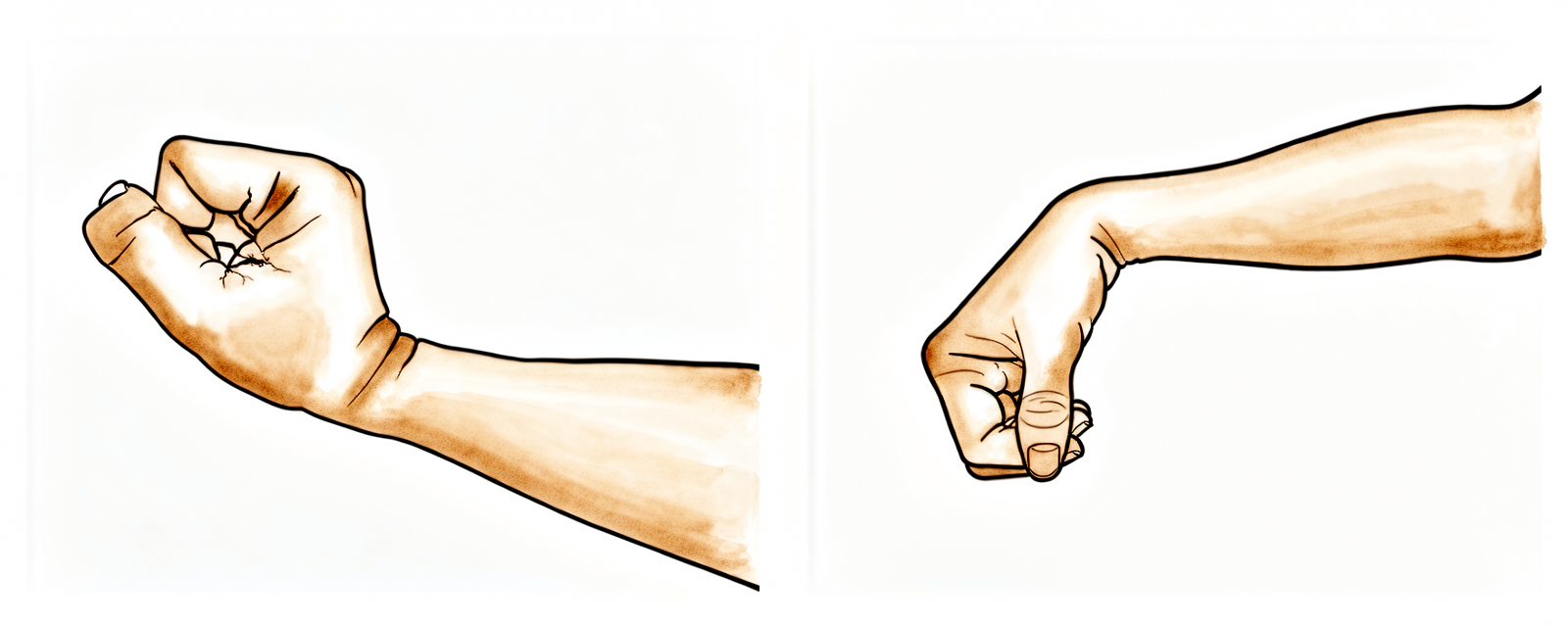
Chuyển động cổ tay
Hãy liên tục cử động tay bằng cách gập cổ tay về phía trước, phía sau và sang hai bên.
10 lần, 3 lần mỗi ngày.
Kieran Hirpara 4.0
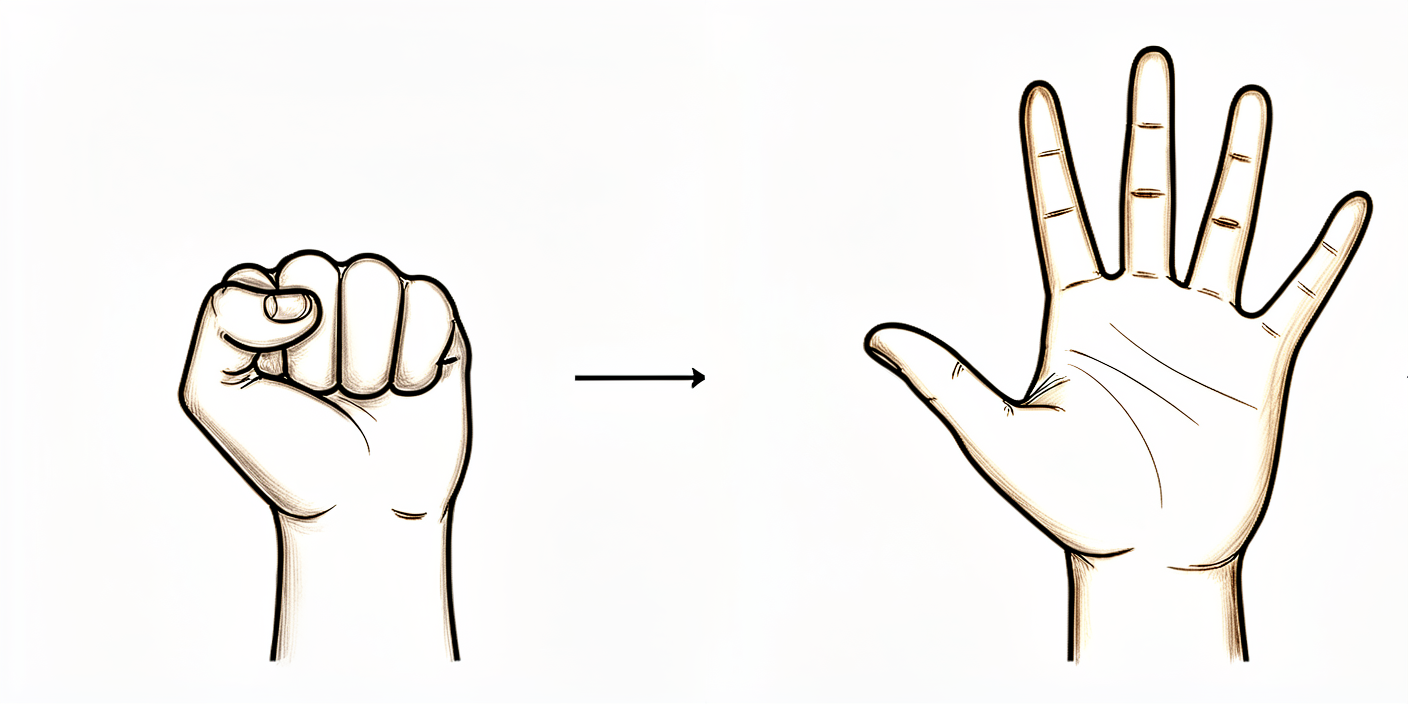
Mở và nắm tay
Hãy cử động tay và các ngón tay bằng cách mở ra, khép lại, hoặc nắm chặt một quả bóng mềm.
10 lần, 3 lần mỗi ngày.
Kieran Hirpara 4.0
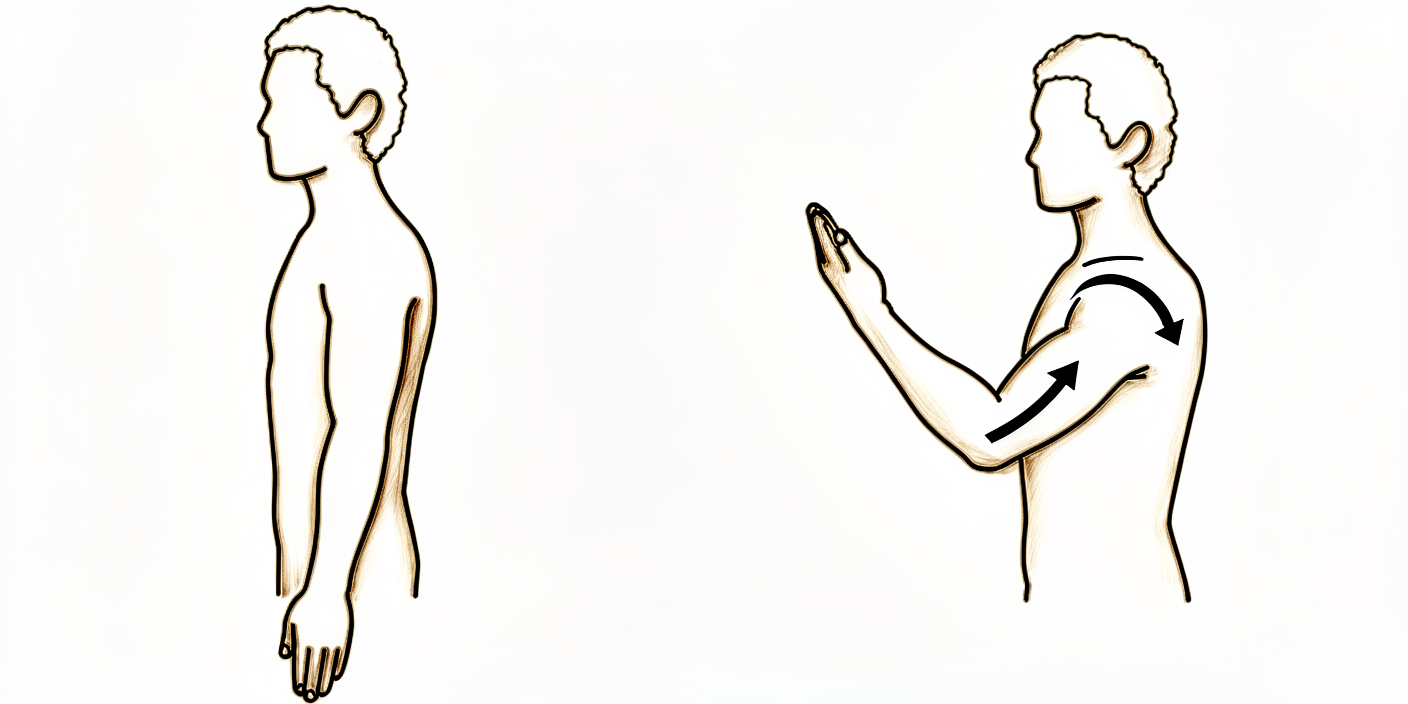
Cử động gập khuỷu tay
Hãy gập và duỗi khuỷu tay của bạn.
10 lần, 3 lần mỗi ngày.
Kieran Hirpara 4.0
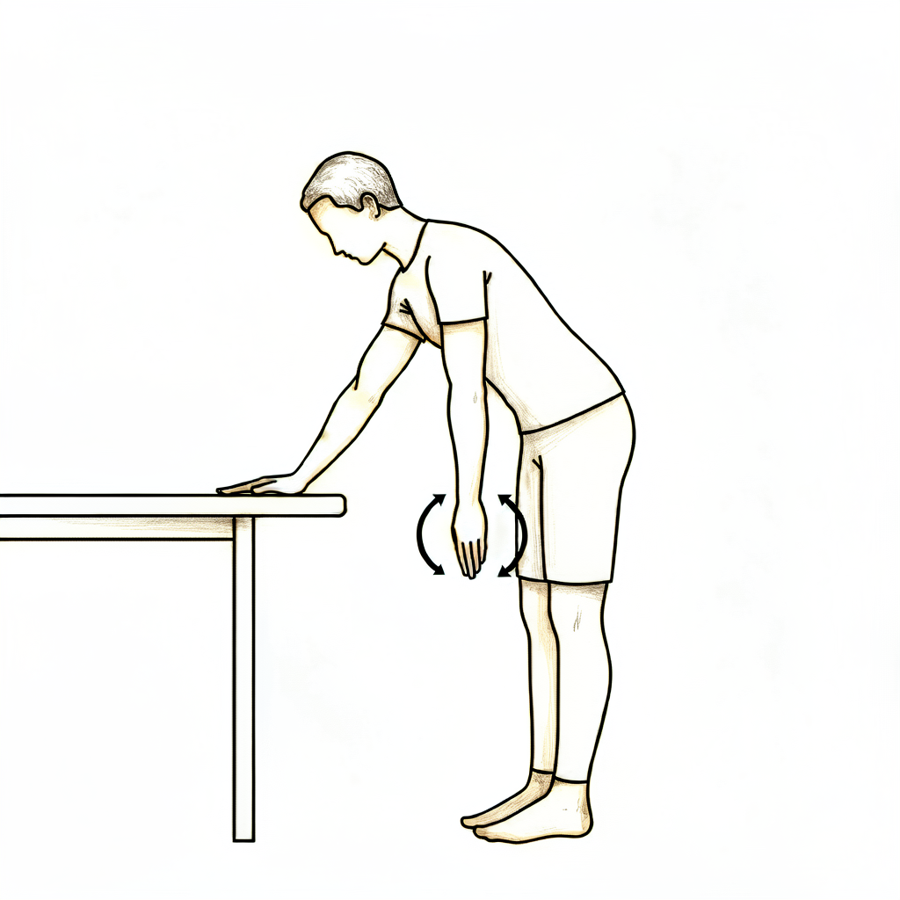
Con lắc
Đây là một bài tập thư giãn, mang tính thụ động. Hãy cúi người về phía trước và để cánh tay buông thõng, thả lỏng. Dùng cơ thể để nhẹ nhàng đưa cánh tay vẽ những vòng tròn nhỏ theo chiều kim đồng hồ, ngược chiều kim đồng hồ và qua lại. Hãy để trọng lượng của cánh tay tự thực hiện chuyển động này, trong khi các cơ vai vẫn giữ trạng thái thư giãn.
Khoảng 30 giây mỗi chiều, 3 lần mỗi ngày.
Kieran Hirpara 4.0
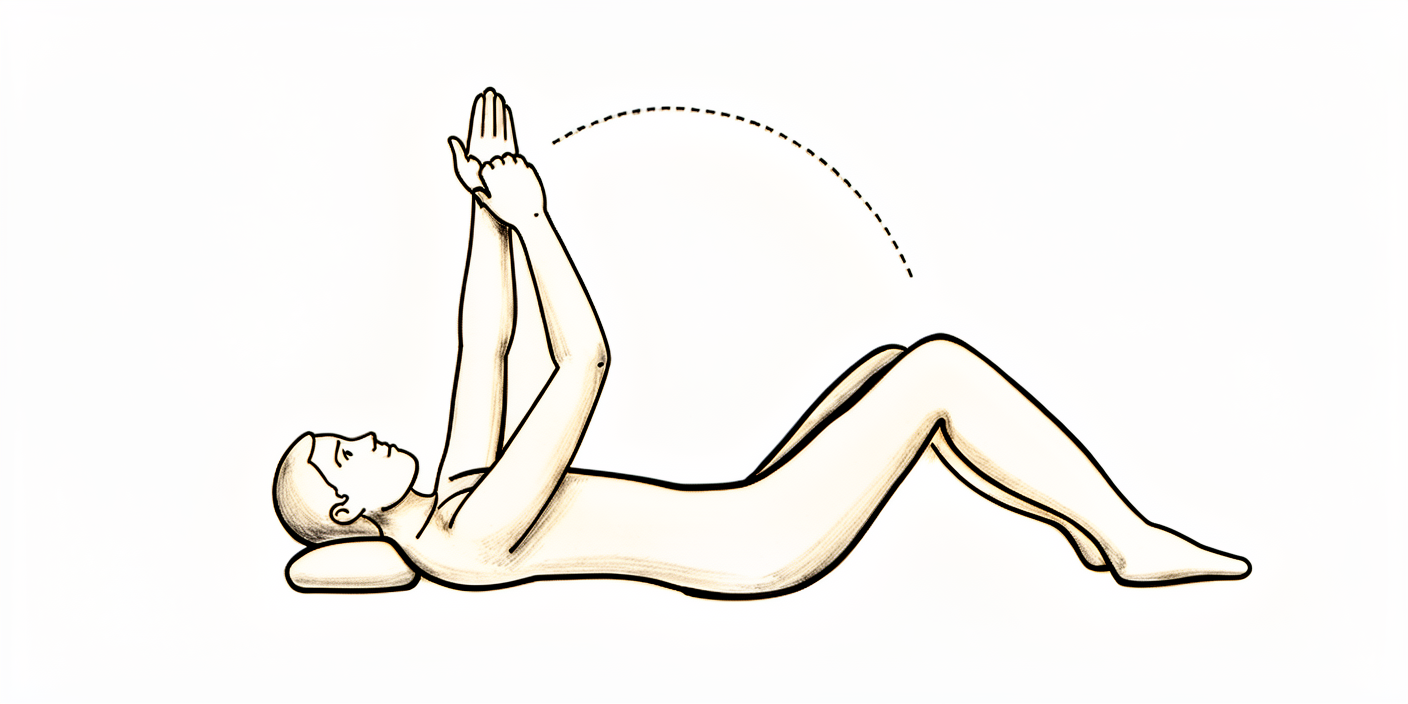
Nâng tay ra trước có hỗ trợ (nằm ngửa)
Nếu thích, bạn có thể nằm ngửa và cầm một cây gậy (hoặc một chiếc khăn cuộn) bằng cả hai tay. Dùng cánh tay lành để đẩy cánh tay vừa được phẫu thuật lên trên đầu, đến mức độ thoải mái nhất có thể, sau đó hạ nó xuống từ từ. Mỗi lần thực hiện, hãy tạo lực kéo căng mạnh mẽ.
10 lần, 3 lần mỗi ngày.
Kieran Hirpara 4.0
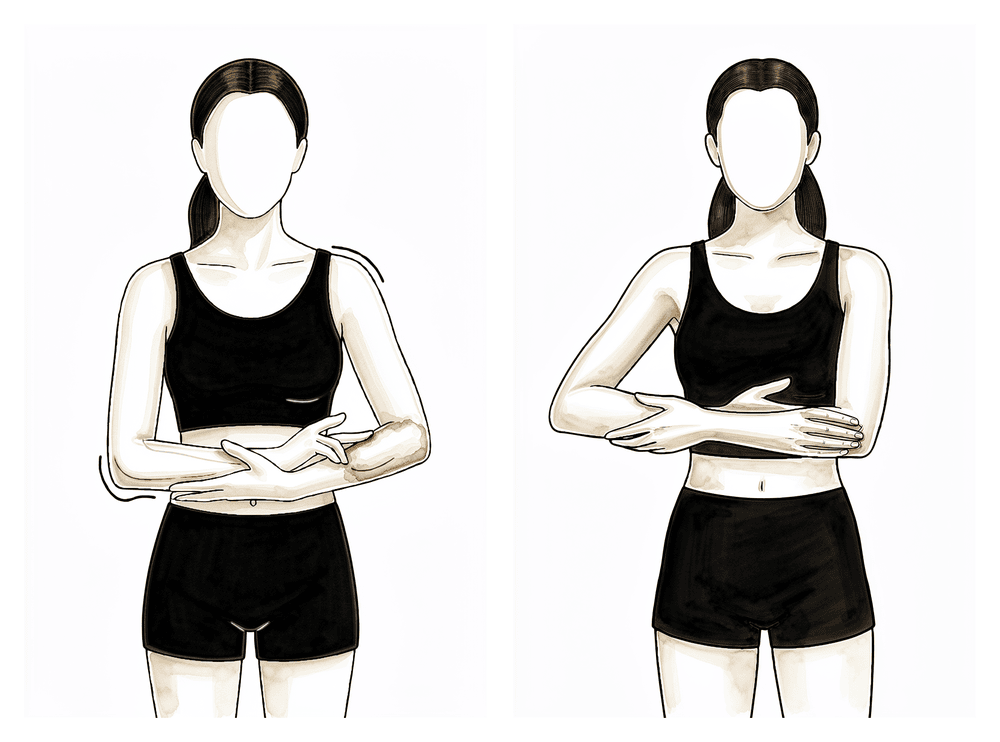
Dạng vai có hỗ trợ (bế đỡ tay)
Hãy dùng cánh tay còn lại ôm lấy cánh tay vừa được phẫu thuật, đỡ dưới khuỷu tay, rồi nhẹ nhàng đưa nó sang bên và trở lại, giống như đang ru em bé. Mỗi lần, hãy đưa cánh tay sang bên đến mức cảm thấy căng rõ.
10 lần, 3 lần mỗi ngày
Kieran Hirpara 4.0
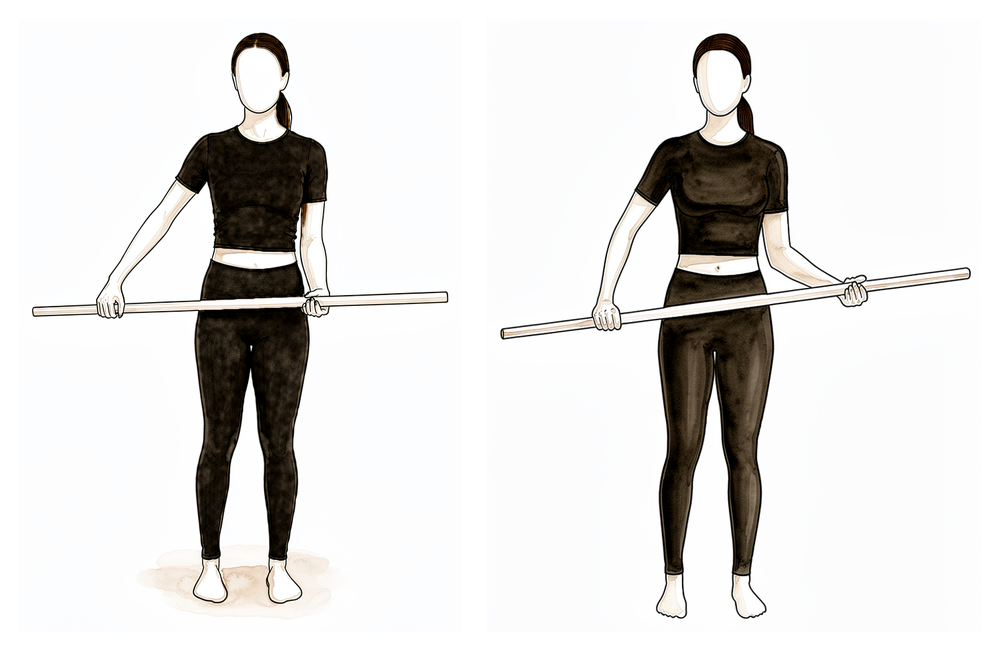
Hỗ trợ xoay ngoài cánh tay bằng cách dùng cây gậy
Nằm ngửa, khuỷu tay áp sát vào thân mình và gập ở góc 90 độ. Cầm một thanh gỗ bằng cả hai tay, dùng cánh tay lành để đẩy bàn tay bên phía đã phẫu thuật ra ngoài, đồng thời xoay vai. Đẩy cho đến khi cảm thấy căng cứng hoàn toàn: sau ca phẫu thuật này không có giới hạn nào về mức độ vận động, vì vậy hãy cố gắng mở rộng phạm vi chuyển động hết mức có thể.
10 lần, 3 lần mỗi ngày
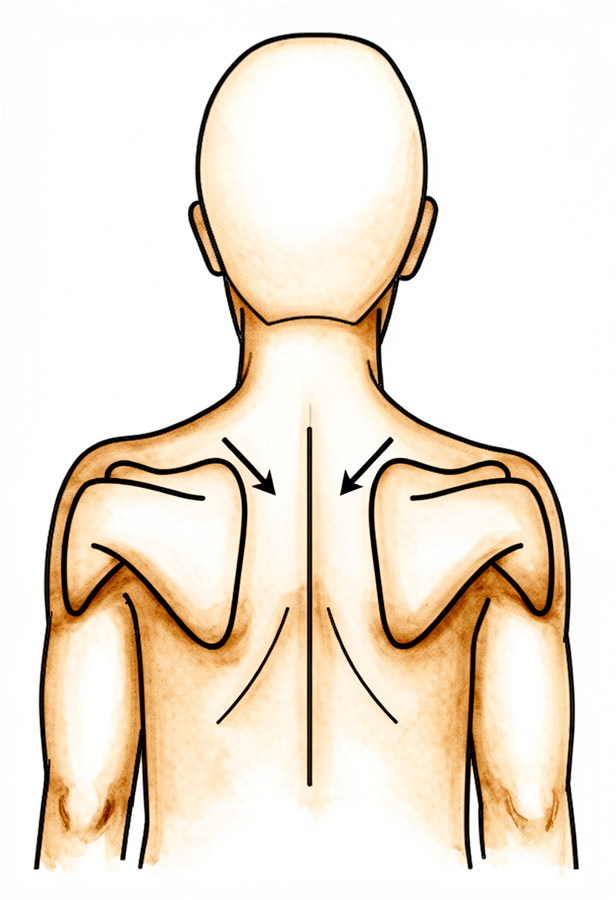
Kieran Hirpara 4.0
Kích hoạt cơ thang dưới
Hãy siết hai xương bả vai xuống dưới và lại gần nhau, giữ nguyên tư thế rồi thả lỏng.
Giữ nguyên trong 5 giây, thực hiện 5 lần; lặp lại 3 lần mỗi ngày.
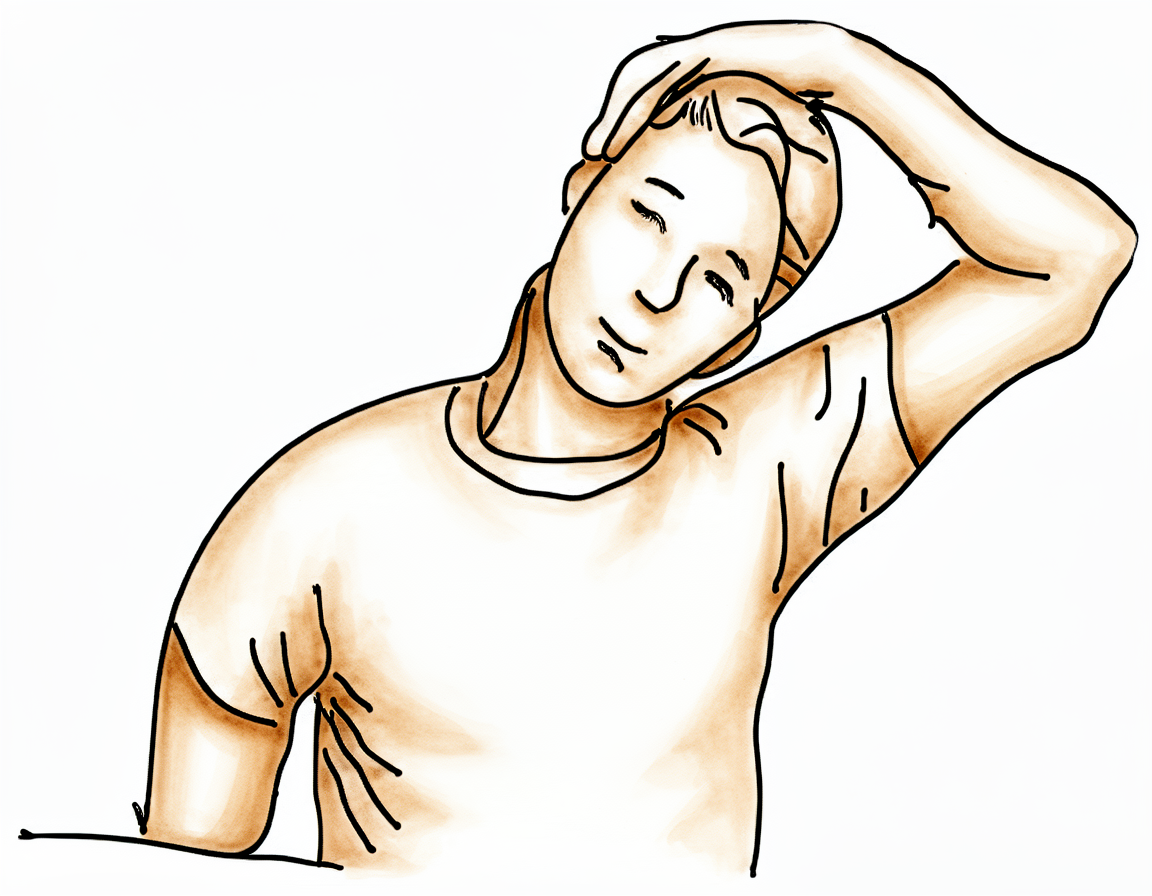
Kieran Hirpara 4.0
Bài tập kéo giãn cơ thang trên
Hãy dùng cánh tay lành để nhẹ nhàng đưa tai về phía vai, hướng ra xa phía bên đã phẫu thuật, cho đến khi bạn cảm nhận được sự căng giãn dọc theo bên cổ.
Giữ nguyên trong 10 giây, thực hiện 3 lần; lặp lại 3 lần mỗi ngày.
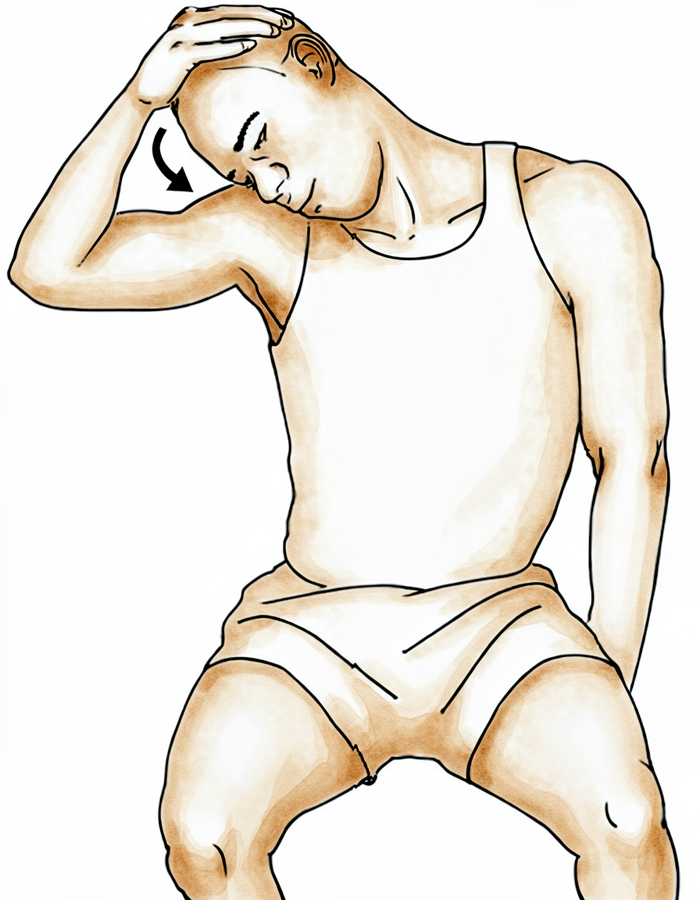
Kieran Hirpara 4.0
Bài tập kéo giãn cơ nâng xương bả vai
Hãy dùng cánh tay khỏe của bạn để đưa mũi về phía nách bên đối diện, cho đến khi bạn cảm nhận được sự căng giãn ở vùng gốc cổ.
Giữ nguyên trong 10 giây, thực hiện 3 lần; lặp lại 3 lần mỗi ngày.
Nhân viên vật lý trị liệu sẽ gặp bạn tại bệnh viện và hướng dẫn bạn thực hiện các bài tập dưới đây trước khi bạn xuất viện. Những bài tập này giúp duy trì sự vận động của bàn tay, khuỷu tay và vai; đồng thời giúp mở rộng phạm vi chuyển động của vai ngay từ đầu. Hãy uống thuốc giảm đau trước khi tập để có thể vận động một cách thoải mái. Hãy thực hiện các bài tập theo hướng dẫn của các chuyên gia và tiếp tục luyện tập tại nhà.
Quá trình phục hồi chức năng ngoại trú của bạn
Sau khi thực hiện thủ thuật giải phóng bao khớp, quá trình phục hồi chức năng diễn ra theo hướng ngược lại so với các ca phẫu thuật sửa chữa gân: vì không còn gì cần bảo vệ, mọi nỗ lực đều hướng vào việc duy trì khả năng vận động của khớp. Trong những tuần đầu, vai rất dễ bị cứng lại; vì vậy vật lý trị liệu sẽ được bắt đầu ngay lập tức, thực hiện thường xuyên và kéo dài vài tháng cho đến khi biên độ vận động của bạn ổn định. Các giai đoạn dưới đây tuân theo mô hình các phác đồ phục hồi chức năng đã được công bố dành cho ca phẫu thuật này. Các khoảng thời gian được nêu chỉ mang tính chất tham khảo; bác sĩ vật lý trị liệu sẽ điều chỉnh tiến độ dựa trên tình trạng vận động thực tế của vai chứ không dựa vào lịch trình cố định.
Tổng quan về các giai đoạn phục hồi:
- Giai đoạn I — Phục hồi sớm: khoảng hai tuần đầu tiên
- Giai đoạn II — Duy trì và khôi phục biên độ vận động: từ tuần thứ 2 đến tuần thứ 6
- Giai đoạn III — Tăng cường sức mạnh: từ tuần thứ 6 đến tuần thứ 12
- Giai đoạn IV — Trở lại các hoạt động bình thường: từ tuần thứ 12 trở đi
Khoảng ba tuần sau phẫu thuật, việc vận động vai ở mức thấp hơn độ cao vai thường trở nên dễ dàng hơn và phần lớn biên độ vận động đã được phục hồi; tuy nhiên việc giơ tay lên cao vẫn có thể gây khó chịu. Đến khoảng ba tháng sau, hầu hết bệnh nhân đều cảm thấy các triệu chứng đã giảm hẳn; quá trình cải thiện tiếp tục diễn ra trong vòng sáu đến chín tháng, đôi khi kéo dài tới một năm.
Giai đoạn I — Phục hồi chức năng sớm (Tuần 0–2)
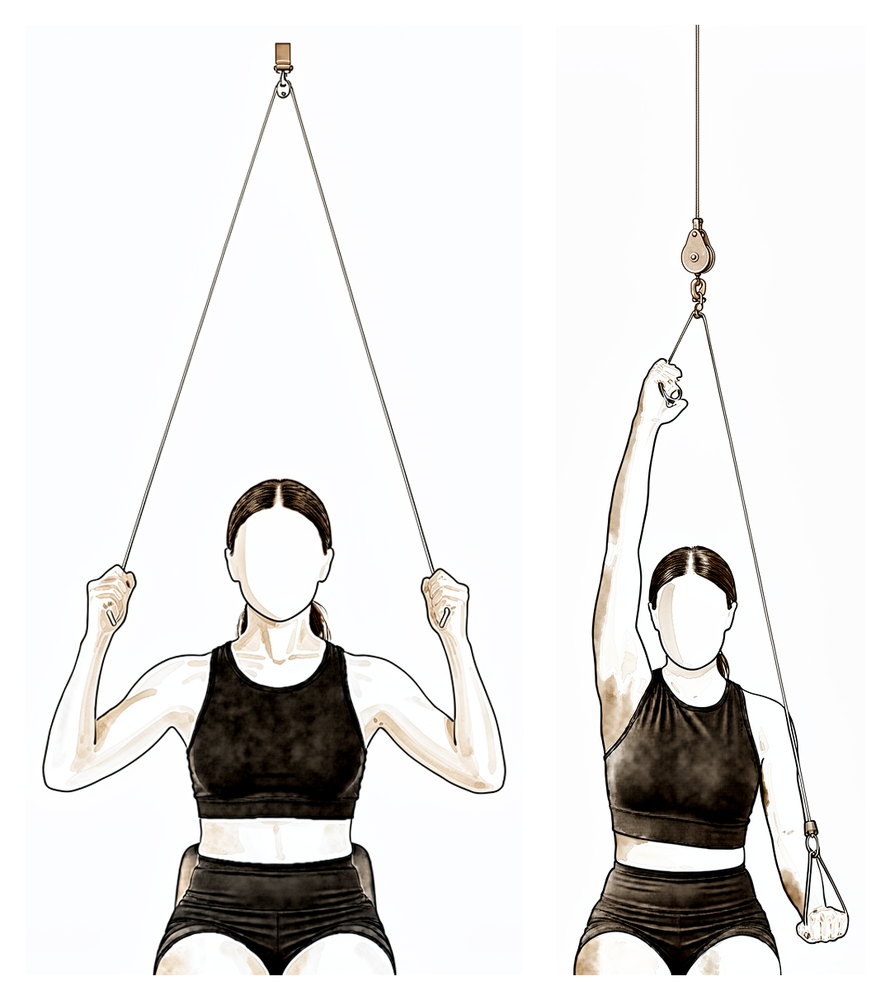
Kieran Hirpara 4.0
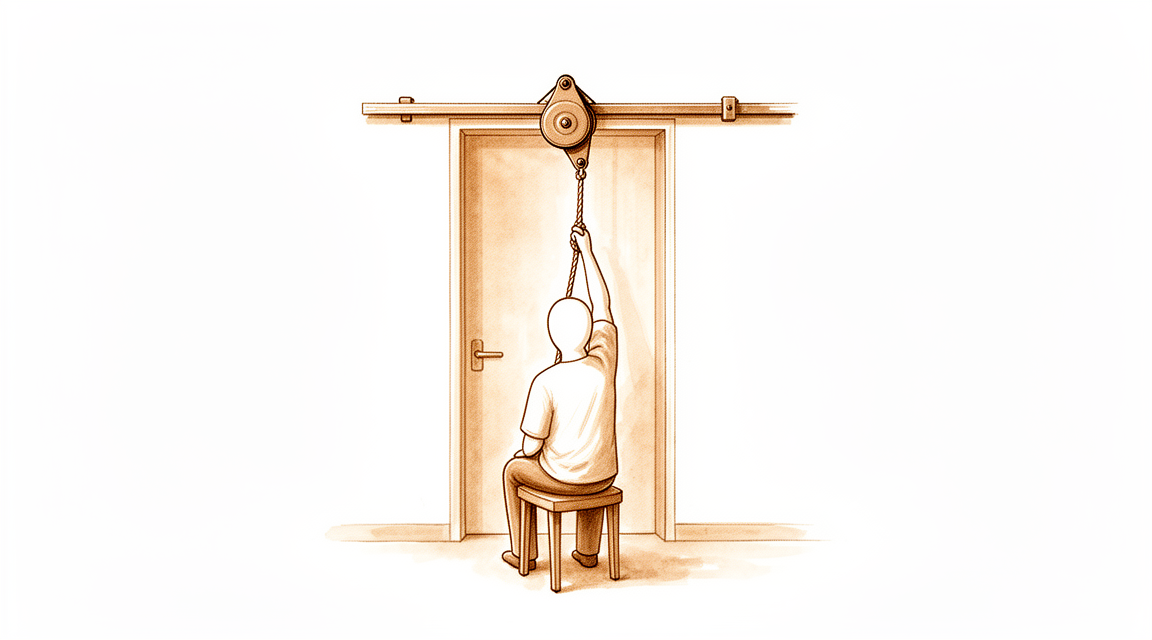
Ròng rọc treo cửa
Ngồi dưới hệ thống ròng rọc gắn trên cửa, hai tay cầm vào các tay cầm. Dùng cánh tay lành để kéo xuống, nhằm nâng cánh tay vừa được phẫu thuật lên cao hết mức có thể, sau đó hạ xuống từ từ. Mỗi lần thực hiện, hãy tạo lực kéo vừa đủ để căng cơ; không nên gây đau đớn dữ dội.
10 lần, 3 đến 4 lần mỗi ngày.
Kieran Hirpara 4.0
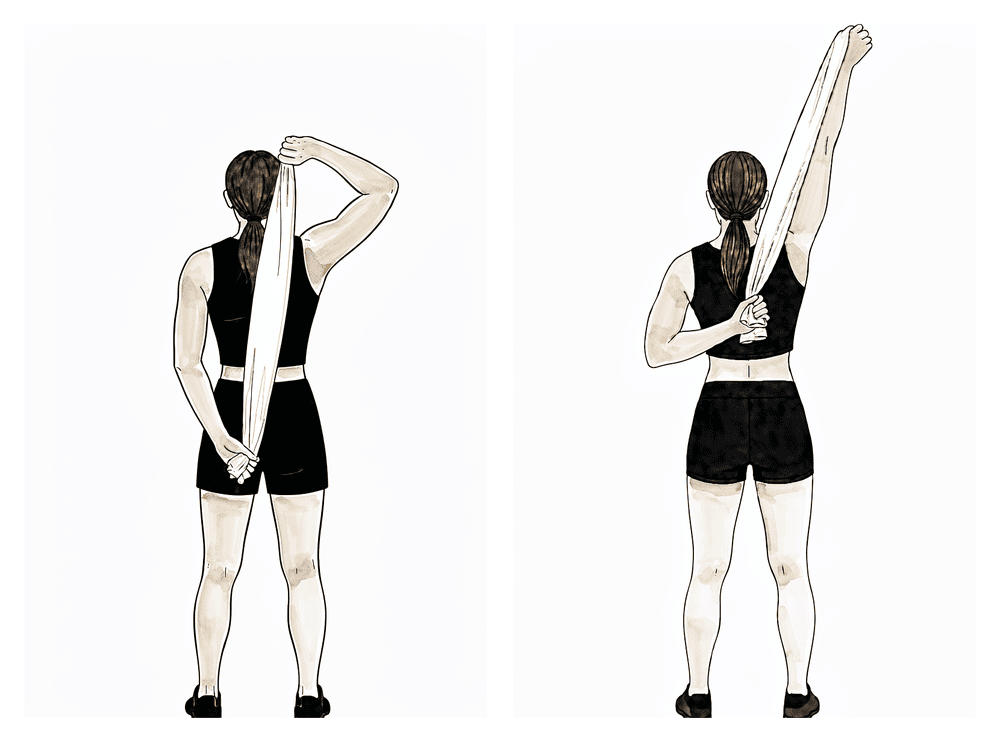
Bài tập kéo giãn phía sau lưng dùng khăn
Giữ một chiếc khăn phía sau lưng, đặt tay vừa phẫu thuật xuống dưới; sau đó dùng tay còn lại kéo tay dưới lên phía sau lưng hết mức có thể. Kéo đến mức cảm thấy căng ra rồi thả ra: cảm giác căng sẽ dần biến mất sau đó.
10 lần, 3 đến 4 lần mỗi ngày.
Kieran Hirpara 4.0
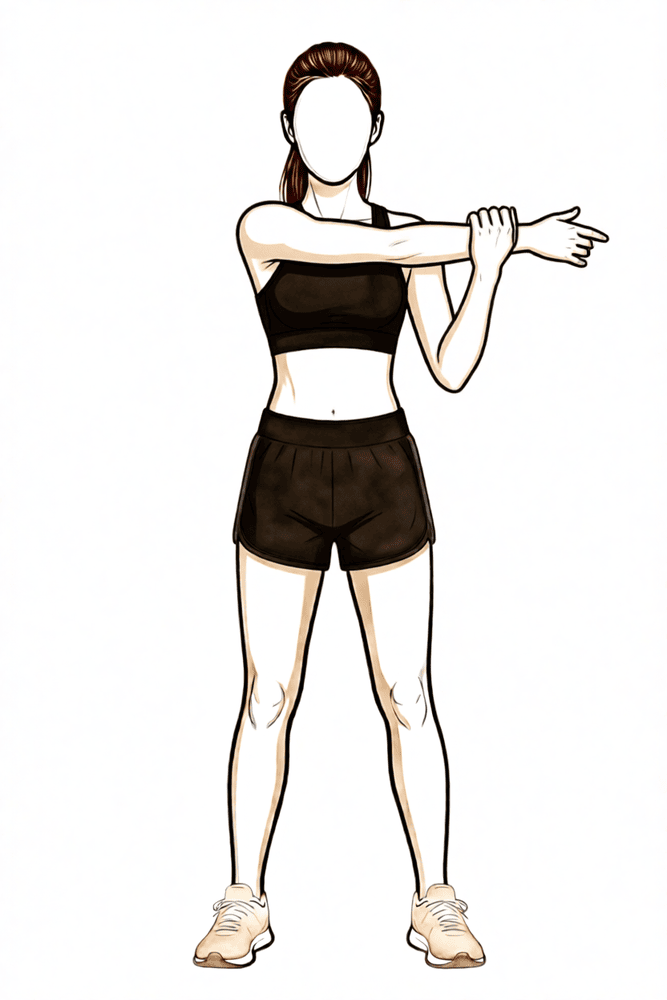
Bài tập kéo giãn chéo cơ thể
Hãy dùng tay lành để đưa cánh tay vừa được phẫu thuật qua ngực cho đến khi bạn cảm nhận được sự căng ra rõ rệt ở phía sau vai, sau đó thả ra.
10 lần, 3 đến 4 lần mỗi ngày.
Kieran Hirpara 4.0
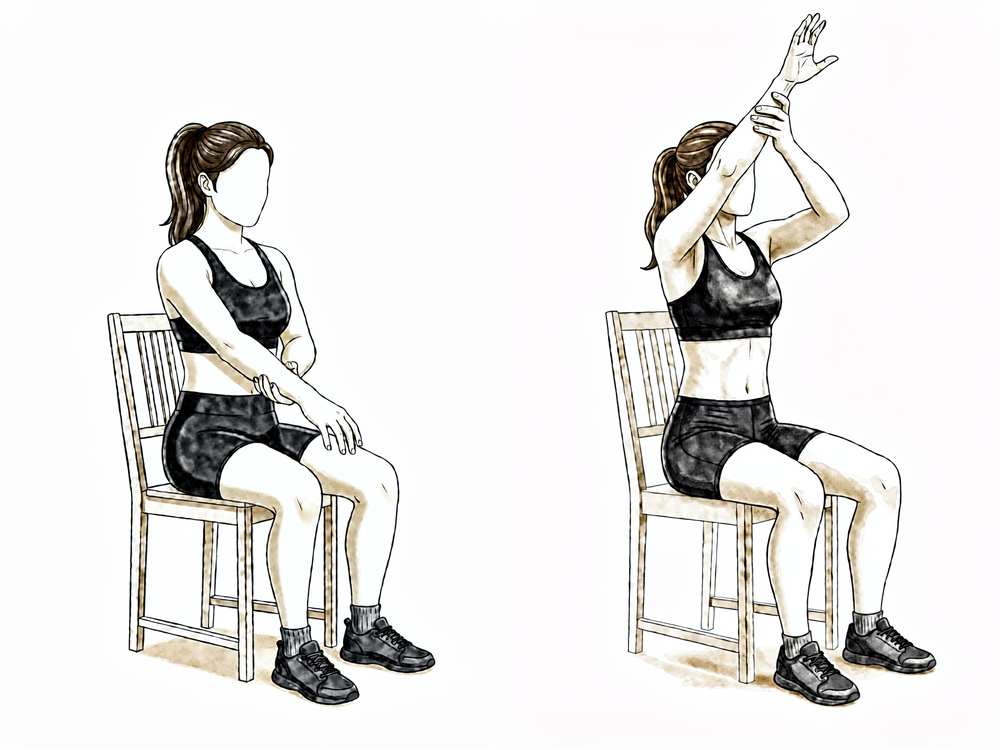
Hỗ trợ nâng tay lên phía trước (khi ngồi)
Ngồi thẳng và hơi nghiêng người về phía trước; dùng tay lành để nâng đỡ cẳng tay vừa được phẫu thuật, rồi dùng tay đó nâng cánh tay vừa mổ ra phía trước và lên trên mức mà bạn cảm thấy thoải mái; sau đó hạ tay xuống từ từ. Hãy để tay lành thực hiện các động tác này nhằm giúp vai vừa mổ luôn được thả lỏng.
Theo hướng dẫn của chuyên viên vật lý trị liệu của bạn.
Mục tiêu trong hai tuần đầu tiên rất đơn giản: đừng để mất đi biên độ vận động mà bạn đã đạt được sau phẫu thuật. Bạn cần tiếp tục thực hiện các bài tập đã được hướng dẫn tại bệnh viện ở nhà, vài lần mỗi ngày; đồng thời bổ sung các động tác kéo giãn nhằm đưa vai đến giới hạn vận động theo mọi hướng. Việc kiểm soát cơn đau tốt là yếu tố then chốt để thực hiện điều này; vì vậy hãy uống thuốc giảm đau trước mỗi buổi tập và trị liệu. Ngoài ra, hãy chườm nóng trước khi kéo giãn và chườm lạnh sau đó nếu cảm thấy có ích. Hãy sử dụng cánh tay cho các hoạt động sinh hoạt hàng ngày nhẹ nhàng như rửa mặt, mặc quần áo và ăn uống. Khi kéo giãn, hãy thực hiện đến mức cảm thấy hơi khó chịu nhưng không đau dữ dội; lưu ý rằng không có hướng vận động nào cần phải tránh.
Bạn sẵn sàng chuyển sang giai đoạn tiếp theo khi… bạn có thể tự tin và độc lập thực hiện các bài tập tại nhà vài lần mỗi ngày, cơn đau đã được kiểm soát đủ để thực hiện các động tác kéo giãn, và bạn vẫn duy trì được biên độ vận động mà vai đã có sau phẫu thuật.
Giai đoạn II — Duy trì và phục hồi biên độ vận động (Tuần 2–6)
Kieran Hirpara 4.0
Xoay ngoài vai với gậy (hết tầm vận động)
Tiếp tục bài tập xoay ngoài có gậy hỗ trợ đã tập từ khi nằm viện, giờ đẩy xa hơn khi biên độ vận động được giải phóng. Giữ khuỷu tay sát bên thân, xoay cẳng tay ra ngoài hết mức có thể. Luôn đưa đến giới hạn tối đa: mở rộng biên độ này chính là toàn bộ mục đích của ca phẫu thuật.
10 lần, 3 đến 4 lần mỗi ngày.
Kieran Hirpara 4.0
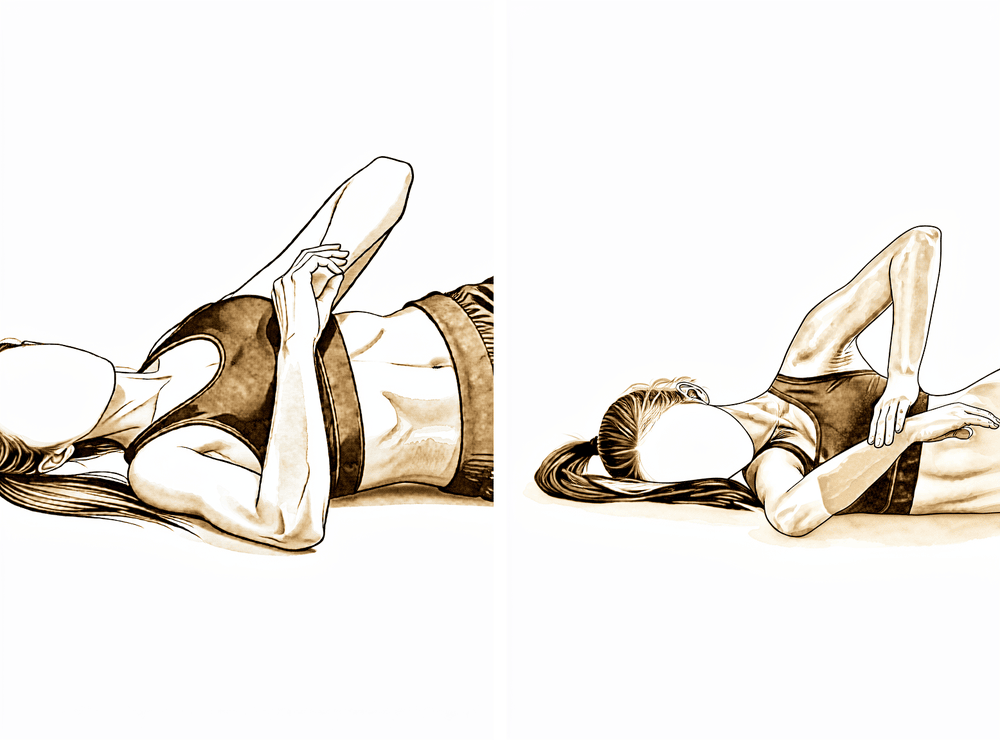
Bài tập kéo giãn ngủ
Nằm nghiêng về phía được phẫu thuật, duỗi tay ra phía trước và gập khuỷu tay lại. Dùng tay lành nhẹ nhàng ấn cẳng tay xuống giường cho đến khi cảm nhận được sự căng giãn sâu trong vùng vai; sau đó thả tay ra.
Giữ nguyên trong 20–30 giây, 3 lần; thực hiện 3–4 lần mỗi ngày.
Trong giai đoạn này, bạn vẫn cần tiếp tục thực hiện các buổi vật lý trị liệu thường xuyên và chương trình vận động giãn cơ tại nhà, mỗi ngày nhiều lần, nhằm đảm bảo biên độ vận động đã đạt được sau phẫu thuật không bị mất đi và tiếp tục được cải thiện. Các bài tập sẽ dần chuyển từ các động tác có hỗ trợ sang việc vận động cánh tay chủ động theo mọi hướng; bác sĩ vật lý trị liệu cũng có thể thực hiện các kỹ thuật vận động khớp trực tiếp để hỗ trợ thêm. Hãy cố gắng mở rộng biên độ vận động trên mọi mặt phẳng, kể cả phía xoay ngoài, đến mức tối đa có thể. Bạn có thể sử dụng cánh tay bình thường cho các hoạt động sinh hoạt nhẹ hàng ngày.
Bạn đã sẵn sàng cho giai đoạn tiếp theo khi… biên độ vận động đạt được sau phẫu thuật vẫn được duy trì hoặc tiếp tục cải thiện, việc vận động cánh tay ở mức thấp hơn độ cao vai diễn ra một cách thoải mái, và cơn đau đã giảm đáng kể để bạn có thể bắt đầu các bài tập chống lực nhẹ.
Giai đoạn III — Tăng cường sức mạnh (Tuần 6–12)
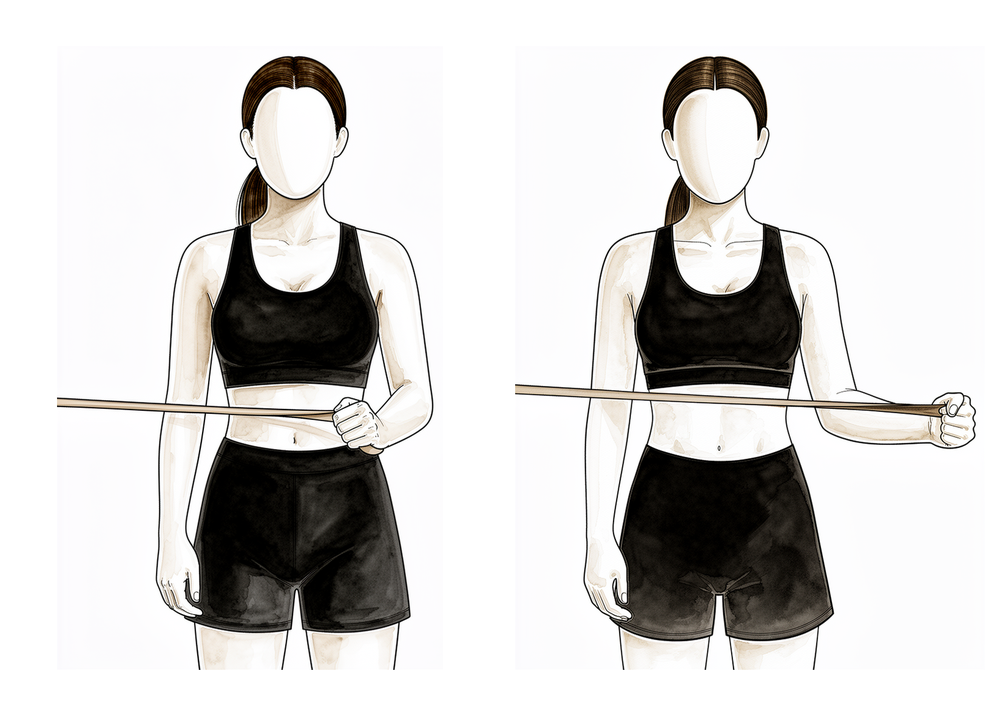
Kieran Hirpara 4.0
Xoay ngoài vai với dây kháng lực
Đứng thẳng, khuỷu tay áp sát vào hông và gập 90 độ; cầm dây đàn hồi được cố định ở độ cao ngang eo. Giữ nguyên khuỷu tay ở vị trí cạnh hông, xoay cẳng tay ra ngoài chống lại lực căng của dây, sau đó từ từ đưa về vị trí ban đầu.
2 đến 3 hiệp, mỗi hiệp 10 đến 15 lần, thực hiện 5 ngày mỗi tuần.
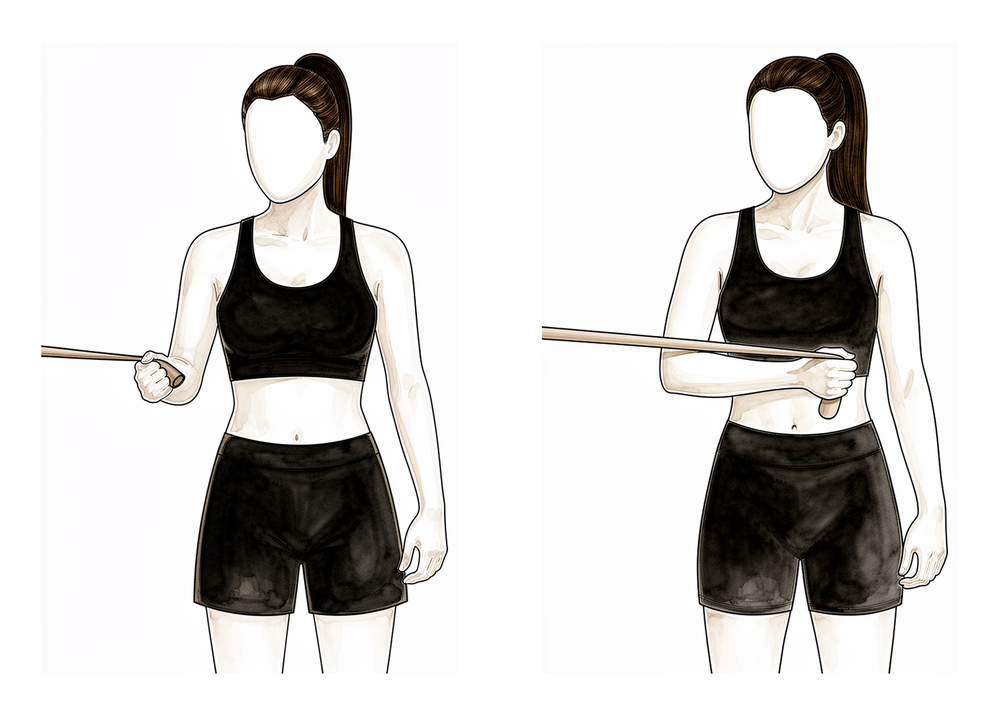
Kieran Hirpara 4.0
Xoay trong vai với dây kháng lực
Với khuỷu tay áp sát vào thân mình, hãy cầm sợi dây chun được cố định ở một phía rồi xoay cẳng tay vào trong, hướng về phía thân mình chống lại lực căng của dây chun; sau đó từ từ trở về vị trí ban đầu.
2 đến 3 hiệp, mỗi hiệp 10 đến 15 lần, thực hiện 5 ngày mỗi tuần.
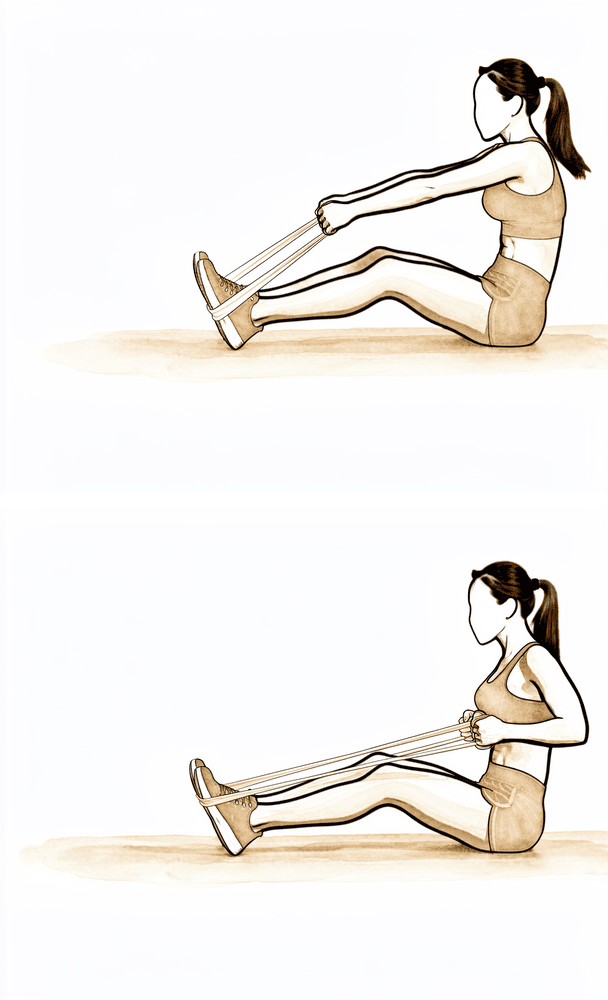
Kieran Hirpara 4.0
Tập kéo dây thấp
Giữ sợi dây đàn hồi ở phía trước người, ngang thắt lưng. Giữ cánh tay gần như thẳng, kéo cánh tay ra sau và xuống phía hông, đồng thời siết chặt bả vai xuống dưới và ra sau; sau đó từ từ đưa cánh tay về vị trí ban đầu.
2 đến 3 hiệp, mỗi hiệp 10 đến 15 lần, thực hiện 5 ngày mỗi tuần.
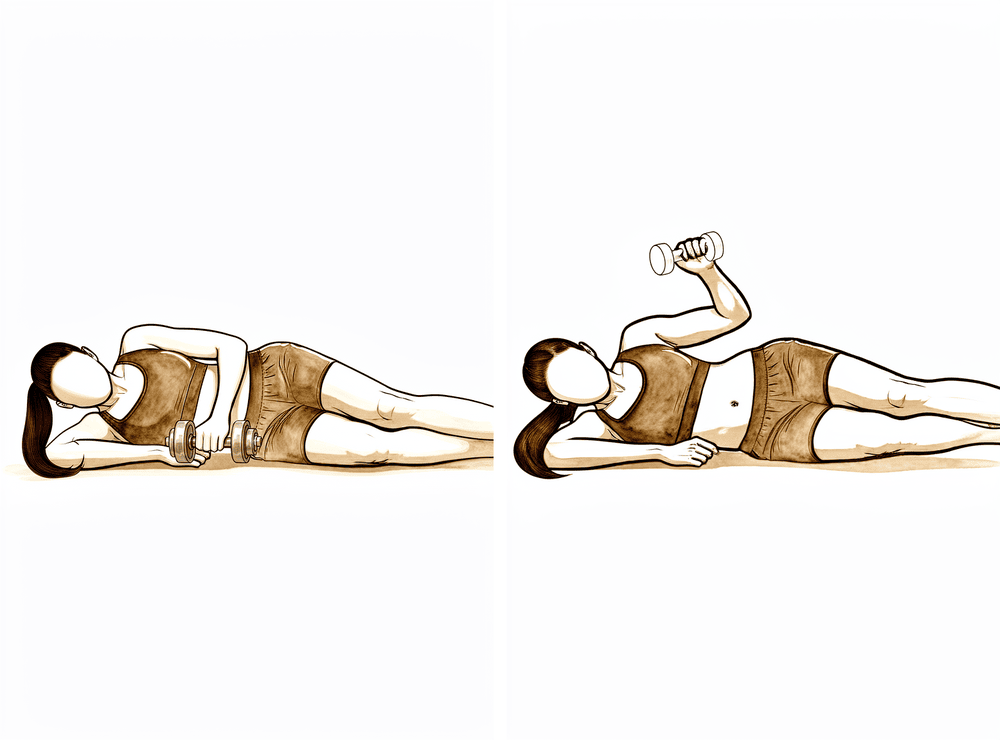
Kieran Hirpara 4.0
Nằm nghiêng, xoay ngoài chi (với tạ nhẹ)
Nằm nghiêng về phía lành, khuỷu tay vừa phẫu thuật gập lại 90 độ và áp sát vào thân mình; đồng thời cầm một vật nặng nhẹ (khoảng 0,5 đến 1,5 kg). Xoay cẳng tay lên phía trên rồi từ từ hạ xuống; việc hạ xuống từ từ mới là bước quan trọng nhất. Hãy đảm bảo rằng vùng vận động luôn nằm dưới mức độ cao của vai.
2 đến 3 hiệp, mỗi hiệp 10 đến 15 lần, tải trọng thấp.
Khi biên độ vận động đã ổn định, chúng ta sẽ tập trung vào việc phục hồi sức mạnh cho vai. Việc kéo giãn hàng ngày vẫn được duy trì trong suốt giai đoạn này, vì việc tăng cường sức mạnh không bao giờ được làm ảnh hưởng đến biên độ vận động mà bạn đã nỗ lực đạt được. Các bài tập chống lực bắt đầu một cách nhẹ nhàng, sử dụng dây thun và tạ nhẹ để rèn luyện cơ vùng vai và cơ bắp vùng xương bả vai; cường độ tải trọng thấp nhưng số lần lặp lại cao. Các hoạt động sinh hoạt hàng ngày hầu như đã trở lại bình thường, và các hoạt động giải trí nhẹ nhàng cũng thường được khởi động lại trong giai đoạn này, theo hướng dẫn của chuyên viên vật lý trị liệu.
Bạn đã sẵn sàng chuyển sang giai đoạn tiếp theo khi… có khả năng vận động không đau ở mọi hướng, gần như đạt mức tối đa; đồng thời có thể thực hiện các bài tập tăng cường sức mạnh mà không gây đau đớn hay làm giảm đi biên độ vận động.
Giai đoạn IV — Trở lại các hoạt động bình thường (từ tuần thứ 12 trở đi)
Giai đoạn cuối cùng là việc dần dần trở lại các công việc nặng nhọc, các nhiệm vụ yêu cầu vươn tay lên cao và các hoạt động thể thao. Quá trình phục hồi chức năng thường kéo dài từ ba đến bốn tháng; tuy nhiên khả năng vận động của vai vẫn tiếp tục cải thiện ngay cả sau đó: hầu hết mọi người vẫn cảm thấy thoải mái và tự tin hơn trong vận động trong khoảng sáu đến chín tháng, đôi khi lên tới một năm. Bạn nên duy trì một vài bài tập giãn cơ ngắn mỗi ngày cho đến khi phạm vi vận động của vai tự ổn định mà không cần thực hiện các bài tập chuyên biệt nữa. Việc tăng dần mức độ hoạt động phải dựa trên cảm nhận của bản thân; nếu cảm thấy cứng khớp hoặc đau trở lại, cách xử lý đúng là giảm dần mức độ vận động để phục hồi phạm vi vận động, chứ không phải nghỉ ngơi hoàn toàn.
Quay trở lại các hoạt động bình thường
Hầu hết mọi người có thể trở lại các hoạt động hàng ngày và nhiều loại công việc khác nhau sau khoảng 4–6 tuần; quá trình hồi phục chủ yếu phụ thuộc vào việc duy trì biên độ vận động thay vì chờ đợi mô cơ thể lành lại. Các công việc nặng nhọc, đòi hỏi nhiều sức lực và các môn thể thao có động tác vung tay lên cao sẽ dần được thực hiện trở lại trong những tuần và tháng tiếp theo, khi sức mạnh cơ thể được phục hồi. Nếu vào bất kỳ thời điểm nào vai bắt đầu cứng lại, hãy coi đó là tín hiệu để tăng cường các bài tập kéo giãn và gặp chuyên viên vật lý trị liệu; đừng nghỉ ngơi.
Các bài tập của bạn
Đây là những bài tập có trong tờ hướng dẫn của bạn. Hãy thực hiện chúng theo hướng dẫn của Bác sĩ Hirpara và chuyên viên vật lý trị liệu. Sau khi thực hiện thủ thuật giải phóng bao khớp, không còn cấu trúc nào cần bảo vệ nữa; vì vậy việc giữ vai yên bất động lại gây tác dụng ngược — khớp vai vừa được giải phóng sẽ lại bị cứng lại giữa các buổi tập. Đó là lý do tại sao danh sách bài tập khá dài, và tại sao việc tập luyện nhiều lần với cường độ thấp lại hiệu quả hơn một buổi tập dài: các động tác vận động cổ tay, bàn tay và khuỷu tay cùng các bài tập đung đưa giúp giữ cho toàn bộ cánh tay được linh hoạt; các bài kéo giãn có hỗ trợ (gập tay nằm, giữ cánh tay ở tư thế abduct, xoay ngoài cánh tay bằng que) giúp duy trì biên độ vận động vừa đạt được sau phẫu thuật; các bài tập dùng dây kháng lực và rèn luyện cơ vùng vai thì được bổ sung sau để tăng khả điều khiển. Tần suất tập quan trọng hơn cường độ. Hãy ngừng ngay bất kỳ bài tập nào gây ra cơn đau dữ dội thay vì cảm giác căng cơ thông thường.
Sau khi thực hiện theo phác đồ
Các giai đoạn điều trị ngoại trú nêu trên được điều chỉnh từ các phác đồ phục hồi chức năng đã được công bố dành cho thủ thuật giải phóng bao khớp nội soi; các mốc phục hồi cũng được lấy từ cùng các nguồn đó. Các khoảng thời gian trong tuần chỉ mang tính chất tham khảo chứ không cố định; quá trình phục hồi của bạn sẽ được điều chỉnh riêng biệt bởi chuyên viên vật lý trị liệu, phối hợp cùng phòng khám, dựa trên mức độ hồi phục vận động của vai. Trang này bổ trợ cho các hướng dẫn phục hồi chung của phòng khám: vui lòng tham khảo mục xử lý cơn đau sau phẫu thuật và chăm sóc vết thương. Để biết thêm thông tin về thủ thuật phẫu thuật cũng như bệnh lý được điều trị, hãy xem mục giải phóng bao khớp và chứng vai đông cứng.
Evidence & references
This is the clinical evidence summary written for health professionals. It is technical, and it lists the research this page was built from. You do not need to read it to understand your treatment or to make a decision about it.
Adhesive Capsulitis (Frozen Shoulder) — Non-operative Staged Management & Post-operative Rehabilitation (Capsular Release)
Topic scope: Both (A) non-operative staged management of primary/secondary adhesive capsulitis (freezing -> frozen -> thawing), including physiotherapy, intra-articular steroid and hydrodilatation; and (B) post-operative rehabilitation after arthroscopic capsular release (ACR).
Defining principle of surgical rehab here (the inversion): Unlike virtually every other shoulder operation -- where a repair (cuff, labrum, pec major, instability) must be protected with a sling and ROM is restricted to avoid disrupting healing tissue -- frozen-shoulder release rehab is the OPPOSITE: the goal is to prevent re-formation of the capsular contracture. So the protocol is immediate, aggressive ROM, usually NO sling, passive + active ROM starting the same day or day 1, with stretching to the end of the freshly gained range. Delay or immobilisation is the enemy (re-stiffening), not the protector. This is the single most important point distinguishing this protocol from the others in this audit.
A. NON-OPERATIVE STAGED MANAGEMENT
Natural history / staging (consensus, weak evidence -- descriptive, no RCT)
Frozen shoulder is self-limiting in most but typically lasts 12-18 months across 3 clinical stages (Reeves' classic model; staging boundaries overlap and are not sharply separable in practice -- flagged as weak/consensus evidence; the original Reeves model was a single prospective cohort of 49 patients, not an RCT) [Brigham SOC; Chan 2017; Reeves 1975 via Willmore 2020]:
| Stage | Name | Typical duration | Clinical picture | Management emphasis |
|---|---|---|---|---|
| 1 | Freezing (painful/inflammatory) | 2-9 months | Diffuse constant pain, worse at night; progressive ROM loss in a capsular pattern (ER > ABD > flexion > IR); loss of passive ER with arm at side is the hallmark | Pain control; intra-articular steroid; gentle ROM within pain limits -- do NOT force end-range while highly inflamed |
| 2 | Frozen (adhesive/stiff) | 4-12 months | Pain subsides to dull ache; stiffness dominant; marked functional loss | Restore motion: stretching, joint mobilisation grades III-IV, hydrodilatation; consider surgery if recalcitrant |
| 3 | Thawing | 6-9 months (Brigham) | Gradual spontaneous return of motion | Progressive ROM + strengthening; PT 2-3x/week |
(Stage durations from Brigham Standard of Care 2010 and Chan 2017: freezing 2-9 mo, frozen 4-12 mo, thawing 6-9 mo.)
Stepped non-operative interventions
- Education / "supervised neglect" + analgesia -- many resolve with reassurance, activity modification and analgesia alone (Codman; Hsu 2011 review). Weak (cohort/expert).
- Physiotherapy -- pendulum, PROM/AAROM/AROM, capsular stretching, joint mobilisation (grades I-II early for pain, III-IV later for tissue extensibility), scapular/posture work. Brigham: PT 1-2x/week in early stages (mainly HEP instruction), 2-3x/week in thawing. PT is best supported as an adjunct to mobilisation/injection/distension, not as a stand-alone cure (Itoi 2016 Current Concepts; Kelley/McClure/Leggin JOSPT 2009 guidance). Moderate; intensity/timing debated. Intensity caveat: end-range/high-intensity stretching is appropriate in the frozen/thawing phase but can be counter-productive in the acutely inflamed freezing phase -- match intensity to irritability (Kelley 2009).
- Intra-articular corticosteroid (glenohumeral) -- superior to placebo and to physiotherapy for short-term (up to 4-12 weeks) pain and function; benefit wanes after ~3 months. Strong for short term (multiple RCTs; Koh 2016 systematic review of 10 RCTs; Cochrane Buchbinder shoulder injection review). BESS pathway: GH steroid recommended for short-term symptom control; long-term (>3 mo) benefit not demonstrated (Rupani/Gwilym BESS 2025). Earlier injection (freezing phase) is the rationale -- steroid targets the inflammatory component.
- Hydrodilatation (distension arthrography) -- distends/ruptures the contracted capsule with saline +/- steroid +/- LA. A controlled, image-guided alternative to surgery. RCT/meta-analytic evidence is mixed: generally produces a transient functional/ROM gain, with no clear superiority over IA steroid alone in several network meta-analyses (Wu 2017 SR/MA of RCTs; Lin 2018 network MA). Some evidence hydrodilatation + steroid > steroid alone in refractory cases (Lee 2017 RCT). Low rate of needing later surgery after distension arthrogram (Nicholson 2020). Moderate; conflicting.
B. POST-OPERATIVE REHABILITATION (the "immediate aggressive ROM" protocols)
Surgery is reserved for cases recalcitrant to >=3-6 months of adequate non-operative care (Struyf 2024; Mullen 2025).
Arthroscopic capsular release (ACR)
- Controlled, direct-vision release of the contracted capsule (rotator interval, CHL, anterior +/- inferior +/- 360 degree capsulotomy; care re axillary nerve inferiorly). Allows graded release with a low risk of iatrogenic fracture or cuff tear (Kanbe 2018, n=255; Jerosch 2001 360 degree release). Achieves reliable gains in final forward elevation and may shorten recovery (most improved by ~4 months -- McAllister/CORR Insights 2025; Saade 2023 MA favoured ACR for AFE). A gentle, controlled manipulation is often performed as part of the arthroscopic release to confirm the gained range.
Consensus POST-OP phased timeline (applies after arthroscopic capsular release)
The hallmark is immediate motion, no protective sling, same-day/day-1 ROM to hold the range just won in theatre.
| Phase | Window | Sling | ROM | Active ROM | Strengthening | Notes |
|---|---|---|---|---|---|---|
| 0 -- Immediate | Day 0-1 (same day) | NO sling (or sling only briefly for comfort/analgesia, discarded fast) | Full passive ROM immediately; PT-assisted forward flexion + ER begun day 1; +/- continuous passive motion (CPM); pendulums; patient does HEP several times/day | AAROM/AROM started day 1 alongside PROM (no protected period) | -- | Intra-articular steroid often injected at time of release to damp post-op inflammatory re-stiffening |
| 1 -- Early | Week 0-2 | None | Aggressive PROM/AAROM to maintain gained range; stretch into end-range daily; hold ER/ABD/flexion | Active motion continued | Light scapular/rotator-cuff activation as pain allows | Pain control critical to allow the patient to move -- adequate analgesia / interscalene block / oral steroid taper |
| 2 -- Strengthening | Week 2-6 | None | Continue to full ROM | Full AROM goal | Rotator cuff + scapular strengthening begins ~week 2 (Kanbe protocol) | Most back to normal daily activity / work by 4-6 weeks |
| 3 -- Return to function | ~6 weeks-3 months | None | Maintain full ROM | Full | Progressive strengthening to full | Recurrence of stiffness is the main failure mode -> continued HEP emphasised |
Representative published protocol (Kanbe 2018, J Orthop Surg Res, n=255, ACR): "passive, assisted-active and stooping (pendulum) exercises for forward flexion and external rotation commenced 1 day after surgery... after 2 weeks of passive exercise, patients began active exercise to strengthen the rotator cuff and scapular stabilisers... after 4-6 weeks patients returned to normal work without limitation." Many ACR series add an intra-articular steroid + controlled manipulation at the index procedure (Filip Struyf 2024; PMC5137660).
Post-surgical physiotherapy is universally agreed to be essential but is under-standardised -- there is no high-level RCT defining the optimal post-release regimen; protocols are consensus/expert and vary widely (Willmore 2020 Shoulder & Elbow, "Post-surgical physiotherapy in frozen shoulder: a review"). Weak/consensus.
KEY CONTROVERSIES
- Evidence base for arthroscopic release. ACR gives a controlled, direct-vision release with a low iatrogenic fracture/cuff-tear risk and reliable gains in final elevation. Systematic reviews show consistently acceptable results, though there is no definitive RCT defining the optimal technique (Saade 2023 MA; McAllister 2025). Weak/moderate evidence (large cohorts).
- Steroid timing. Strong short-term benefit (<12 wk) but no durable >3-month benefit; debate over injecting early (freezing/inflammatory phase) vs reserving for refractory cases (Koh 2016; Rupani/Gwilym BESS 2025; Lin 2018).
- Aggressive vs gentle physiotherapy. High-intensity end-range stretching helps in the frozen/thawing phases but may worsen pain and prolong the condition if applied to the acutely inflamed freezing phase -- "intensity should match irritability" (Kelley/McClure 2009; Itoi 2016). Post-operatively, by contrast, aggressive immediate ROM is mandatory to prevent re-stiffening.
- Hydrodilatation worth it? Transient benefit only and not clearly better than IA steroid alone in pooled RCT data (Wu 2017; Lin 2018), though some refractory-case RCT support (Lee 2017) and a low rate of needing later surgery (Nicholson 2020).
- Does anything change the natural history? No intervention is proven to shorten the overall 12-18 month course in the highest-quality reviews; most accelerate symptom relief rather than alter end-point (Rookmoneea 2010 JBJS Br; Hsu 2011). Strong (negative).
EVIDENCE STRENGTH FLAGS (summary)
- STRONG (RCT / SR-MA): IA corticosteroid short-term benefit (Koh 2016 SR of 10 RCTs; Cochrane); hydrodilatation = transient, not superior to steroid (Wu 2017 SR-MA of RCTs; Lin 2018 network MA).
- MODERATE: end-range/scapular mobilisation (Yang 2012 RCT); ACR clinical outcomes (large cohorts -- Kanbe 2018 n=255; Jerosch 2001).
- WEAK / CONSENSUS ONLY: 3-stage natural-history model & stage durations (Reeves cohort, descriptive); the post-operative rehab protocol itself (no defining RCT; expert/consensus -- Willmore 2020); optimal ACR technique (published series are heterogeneous).
CITATIONS
RAG corpus (180,000+ Orthopaedic articles)
- Guyver P, Bruce D, Rees J. Frozen shoulder -- a stiff problem that requires a flexible approach. Maturitas. 2014.
- Kim J, Gahlot N, Park HB. Frozen shoulder: a narrative review of current treatment concepts and the underlying scientific evidence. Clinics in Shoulder and Elbow. 2025;28(4).
- Hsu JE, Anakwenze OA, Warrender WJ, et al. Current review of adhesive capsulitis. J Shoulder Elbow Surg. 2011;20(3):502-514.
- Koh KH. Corticosteroid injection for adhesive capsulitis in primary care: a systematic review of randomised clinical trials. Singapore Med J. 2016.
- Rupani N, Gwilym SE. British Elbow and Shoulder Society patient care pathway: Frozen shoulder. Shoulder & Elbow. 2025;17(4).
- Sheridan MA, Hannafin JA. Upper Extremity: Emphasis on Frozen Shoulder. Orthop Clin North Am. 2006.
- Chan H, Pua P, How C. Physical therapy in the management of frozen shoulder. Singapore Med J. 2017.
- Willmore EG, Millar NL, van der Windt D. Post-surgical physiotherapy in frozen shoulder: a review. Shoulder & Elbow. 2020;14(4).
- Lamplot JD, Lillegraven O, Brophy RH. Outcomes from conservative treatment of shoulder idiopathic adhesive capsulitis... Orthop J Sports Med. 2018.
- Itoi E, Arce G, Bain GI, et al. Shoulder Stiffness: Current Concepts and Concerns. Arthroscopy. 2016;32(7).
- Kanbe K. Clinical outcome of arthroscopic capsular release for frozen shoulder: essential technical points in 255 patients. J Orthop Surg Res. 2018;13(1). (post-op protocol: day-1 ROM, 4-6 wk RTW)
- Jerosch J. 360 degree arthroscopic capsular release in patients with adhesive capsulitis... Knee Surg Sports Traumatol Arthrosc. 2001;9(3).
- McAllister NB. CORR Insights: Releasing forces in adhesive capsulitis... Clin Orthop Relat Res. 2025.
- Saade F, van Rooij F, Saffarini M, et al. Management of shoulder stiffness following rotator cuff repair: a systematic review and meta-analysis. JSES Rev Rep Tech. 2023.
- Wu W, Chang K, Han D, et al. Effectiveness of glenohumeral joint dilatation for treatment of frozen shoulder: a systematic review and meta-analysis of RCTs. Sci Rep. 2017. (SR-MA of RCTs)
- Lin M, Hsiao M, Tu Y, et al. Comparative efficacy of intra-articular steroid injection and distension... a systematic review and network meta-analysis. Arch Phys Med Rehabil. 2018. (network MA)
- Lee D, Yoon S, Lee MY, et al. Capsule-preserving hydrodilatation with corticosteroid vs corticosteroid alone in refractory adhesive capsulitis: a randomized controlled trial. Arch Phys Med Rehabil. 2017. (RCT)
- Nicholson JA, Slader B, Martindale A, et al. Distension arthrogram in the treatment of adhesive capsulitis has a low rate of repeat intervention. Bone Joint J. 2020;102-B(5).
- Uppal HS. Frozen shoulder: a systematic review of therapeutic options. World J Orthop. 2015.
- Mullen JP, Hauer TM, Lau EN, et al. Adhesive capsulitis of the shoulder. Arthroscopy. 2025;41(7).
- Yang J, Jan M, Chang C, et al. Effectiveness of the end-range mobilization and scapular mobilization approach... a randomized control trial. Manual Therapy. 2012. (RCT)
- Rookmoneea M, et al. The effectiveness of interventions in the management of patients with primary frozen shoulder. J Bone Joint Surg Br. 2010;92-B(9).
- Struyf F. Frozen Shoulder. 2024 (surgical indication & post-op steroid + controlled manipulation).
Published rehab protocols (URLs)
- Brigham & Women's Hospital -- Standard of Care: Shoulder Adhesive Capsulitis (Dept of Rehabilitation Services, 2010): https://www.brighamandwomens.org/assets/BWH/patients-and-families/rehabilitation-services/pdfs/shoulder-adhesive-capsulitis.pdf (source for the 12-18 mo / 3-stage durations, capsular pattern, PT frequency 1-2x/wk early & 2-3x/wk thawing, mobilisation grades, steroid 4-6 wk short-term benefit).
- BESS (British Elbow & Shoulder Society) Frozen Shoulder patient care pathway -- Rupani & Gwilym, Shoulder & Elbow 2025 (GH steroid short-term only, no >3 mo benefit).
- Kanbe 2018 ACR open-access (post-op day-1 ROM protocol): https://pmc.ncbi.nlm.nih.gov/articles/PMC5857121/
- ChoosePT / APTA patient guide to frozen shoulder (lay phased overview): https://www.choosept.com/guide/physical-therapy-guide-frozen-shoulder-adhesive-capsulitis