Patients › Rehabilitation
Thay khớp khuỷu tay toàn phần (Phẫu thuật thay khớp)
Quá trình hồi phục sau phẫu thuật thay khớp khuỷu tay: ngay từ sớm cần thực hiện các động tác nhẹ nhàng có hỗ trợ bằng đai treo đơn giản; mục tiêu là đạt được phạm vi vận động chức năng; đồng thời cần tuân thủ giới hạn nâng vật vĩnh viễn suốt đời nhằm bảo vệ khớp nhân tạo.
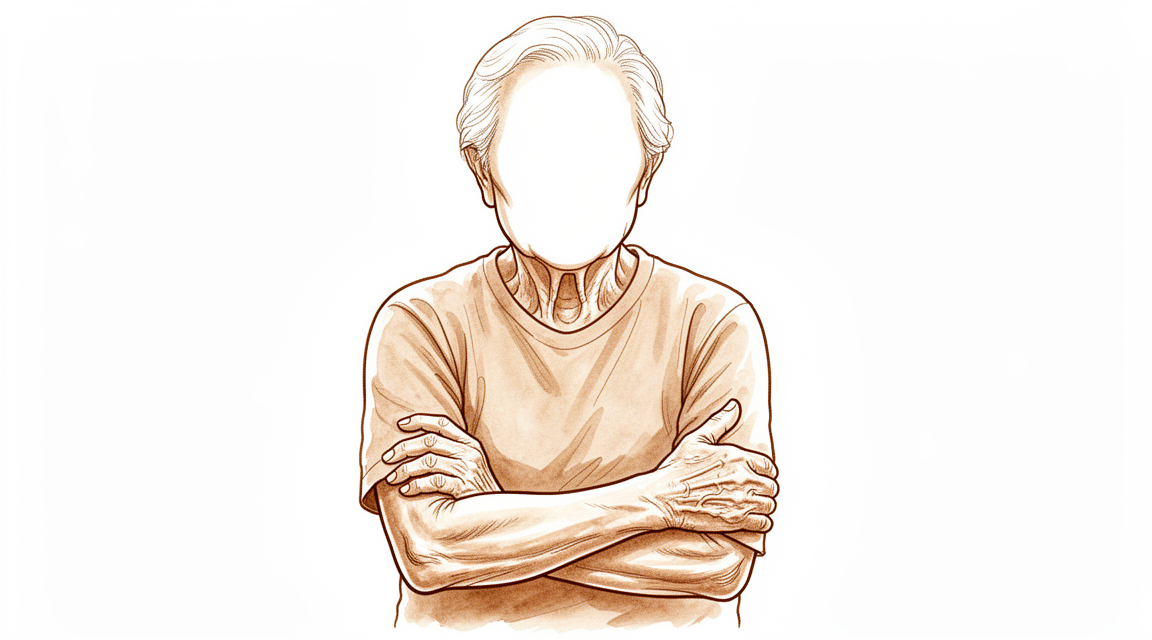
Quy trình này hướng dẫn quá trình hồi phục của bạn sau ca phẫu thuật thay khớp khuỷu tay toàn phần (phẫu thuật thay khớp khuỷu tay) do bác sĩ Kieran Hirpara thực hiện tại Bệnh viện tư nhân Mater Rockhampton. Quy trình bắt đầu với chương trình tập luyện tại nhà, tiếp theo là quy trình điều trị chi tiết được soạn thảo dành riêng cho chuyên viên vật lý trị liệu hoặc chuyên gia trị liệu tay của bạn: hãy mang theo trang này hoặc bản PDF tương ứng đến buổi trị liệu đầu tiên để quá trình phục hồi được thực hiện một cách đồng bộ. Chuyên viên trị liệu có thể điều chỉnh kế hoạch này tùy theo tiến triển hồi phục của bạn.
Nếu bạn có bất kỳ thắc mắc nào về vết mổ sau phẫu thuật, vui lòng liên hệ với phòng khám. Việc chụp ảnh vết mổ rồi gửi qua email để được đánh giá cũng là một cách hữu ích.
Những điều bạn có thể mong đợi
Phẫu thuật thay khớp khuỷu tay toàn phần là việc loại bỏ các bề mặt khớp bị mòn hoặc hư hỏng và thay thế chúng bằng một mảnh ghép gồm kim loại và nhựa. Hai phần của mảnh ghép này (một phần được gắn vào xương cánh tay – xương cánh tay trên – và phần còn lại vào xương cẳng tay – xương trụ) thường được nối với nhau bằng một bản lề nhỏ; vì vậy phương pháp này còn được gọi là phương pháp thay khớp bán hạn chế hay “thay khớp có liên kết”. Phẫu thuật này thường được thực hiện đối với các trường hợp viêm khớp dạng thấp nặng, viêm khớp thoái hóa giai đoạn cuối, hoặc một số chấn thương gãy xương khuỷu tay ở người cao tuổi mà xương không thể phục hồi được.
Mục tiêu trong quá trình hồi phục là giúp khớp khuỷu tay ổn định, bảo vệ các mô đang lành lại, đồng thời khôi phục lại phạm vi vận động thoải mái và không đau (mức độ gập và duỗi đủ để thực hiện các hoạt động hàng ngày như ăn uống, vệ sinh cá nhân và mặc quần áo), chứ không phải là làm cho khớp khuỷu tay trở nên mạnh mẽ nhất có thể. Để quản lý vết thương, tình trạng sưng và sẹo, vui lòng tham khảo hướng dẫn chăm sóc vết thương của phòng khám.
Điều quan trọng nhất cần hiểu là: mảnh ghép này được thiết kế để phục vụ cuộc sống hàng ngày một cách thoải mái, chứ không dành cho các công việc nặng nhọc. Hai yếu tố gây hại lâu dài cho mảnh ghép là sự mòn của lớp nhựa đệm và việc mảnh ghép dần bị lỏng ra khỏi xương; cả hai hiện tượng này đều xuất phát từ việc chịu tải trọng lớn. Vì lý do đó, việc thực hiện các bài tập tăng cường sức mạnh mạnh mẽ là không thích hợp sau phẫu thuật thay khớp khuỷu tay toàn phần, và giới hạn về mức độ nâng tải trọng sẽ áp dụng suốt đời, chứ không chỉ trong giai đoạn hồi phục. Việc tuân thủ giới hạn này là yếu tố quan trọng nhất giúp khớp khuỷu tay mới của bạn bền lâu.
Sau phẫu thuật, bạn sẽ được đeo dây đeo đơn giản nhằm tăng cảm giác thoải mái, chứ không phải nẹp cứng hay máng cố định. Các động tác vận động nhẹ nhàng có sự hỗ trợ sẽ bắt đầu trong tuần đầu tiên, và kế hoạch phục hồi sẽ được triển khai từ từ, cẩn trọng từ đó.
Các lưu ý và hạn chế
Nên làm:
- Đeo dụng cụ treo cánh tay đơn giản để cảm thấy thoải mái, và sử dụng theo hướng dẫn.
- Bắt đầu thực hiện các động tác nhẹ nhàng được hướng dẫn dưới đây trong tuần đầu tiên, theo chỉ dẫn của Bác sĩ Hirpara và chuyên viên trị liệu.
- Tiếp tục vận động tay, cổ tay và vai để tránh tình trạng cứng khớp.
- Tuân thủ giới hạn nâng vật đã được quy định suốt đời sau khi hồi phục.
Không nên làm:
- Trong 6 tuần đầu, không được nâng bất cứ vật gì nặng hơn khoảng một cốc trà (1 pound / 0,45 kg) bằng cánh tay vừa phẫu thuật.
- Không cố gắng gập khuỷu tay một cách mạnh mẽ, cũng không được đẩy thẳng khuỷu tay ra.
- Không dùng cánh tay vừa phẫu thuật để đẩy người dậy khỏi ghế, mang vác, đẩy vật nặng, hoặc chịu trọng lượng cơ thể lên cánh tay đó; cũng không để ai kéo hay xoay cánh tay này.
- Nếu cơ tam đầu tay được nâng lên trong quá trình phẫu thuật, không được chủ động duỗi thẳng khuỷu tay chống lại sức cản cho đến khi bác sĩ phẫu thuật cho phép (thường là 6–12 tuần).
- Các hạn chế vĩnh viễn suốt đời: không được nâng liên tục vật nặng hơn khoảng 2 kg, và mỗi lần nâng không được vượt quá 4.5–5 kg. Những hạn chế này áp dụng suốt đời. Tuyệt đối không được chơi tennis, ném vật hay tham gia các môn thể thao có va chạm.
Các bài tập của bạn
Kieran Hirpara 4.0
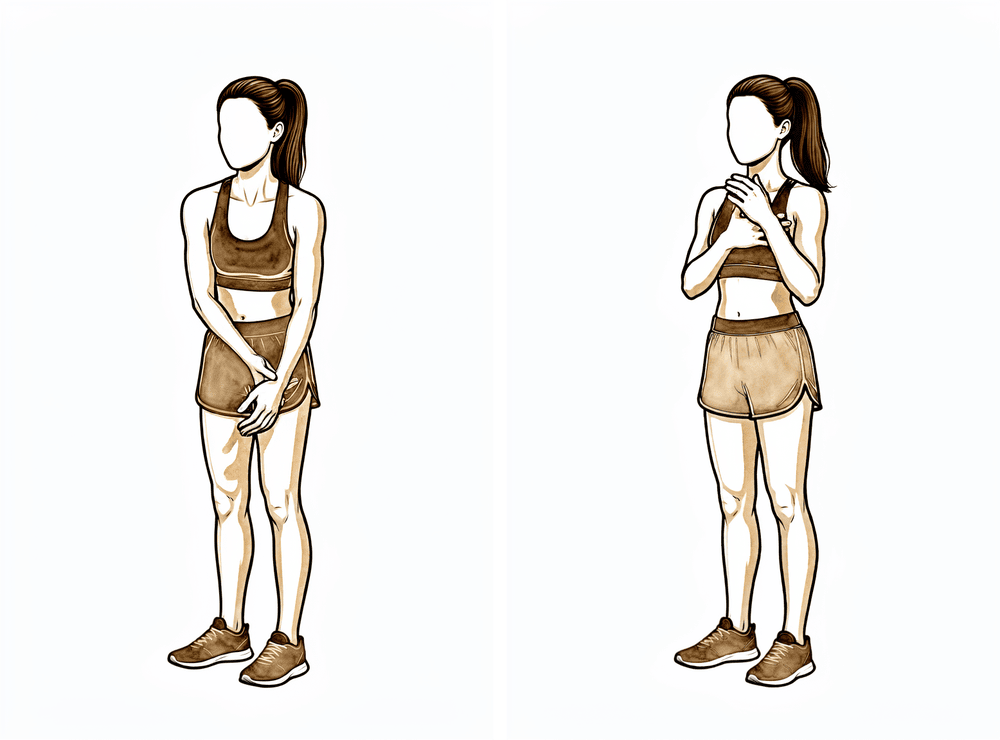
Cử động gập khuỷu tay có hỗ trợ (gập khuỷu thụ động)
Hãy giữ cánh tay trên sát bên thân, sau đó dùng tay còn lại nhẹ nhàng hỗ trợ gập khuỷu tay vừa phẫu thuật lên phía vai, chỉ gập đến mức cảm thấy thoải mái thôi. Đừng cố gắng gập quá mức. Sau đó hạ khuỷu tay xuống từ từ. Nhà trị liệu sẽ hướng dẫn bạn mức độ gập phù hợp.
5–10 lần, vài lần mỗi ngày, khi cảm thấy thoải mái.
Kieran Hirpara 4.0
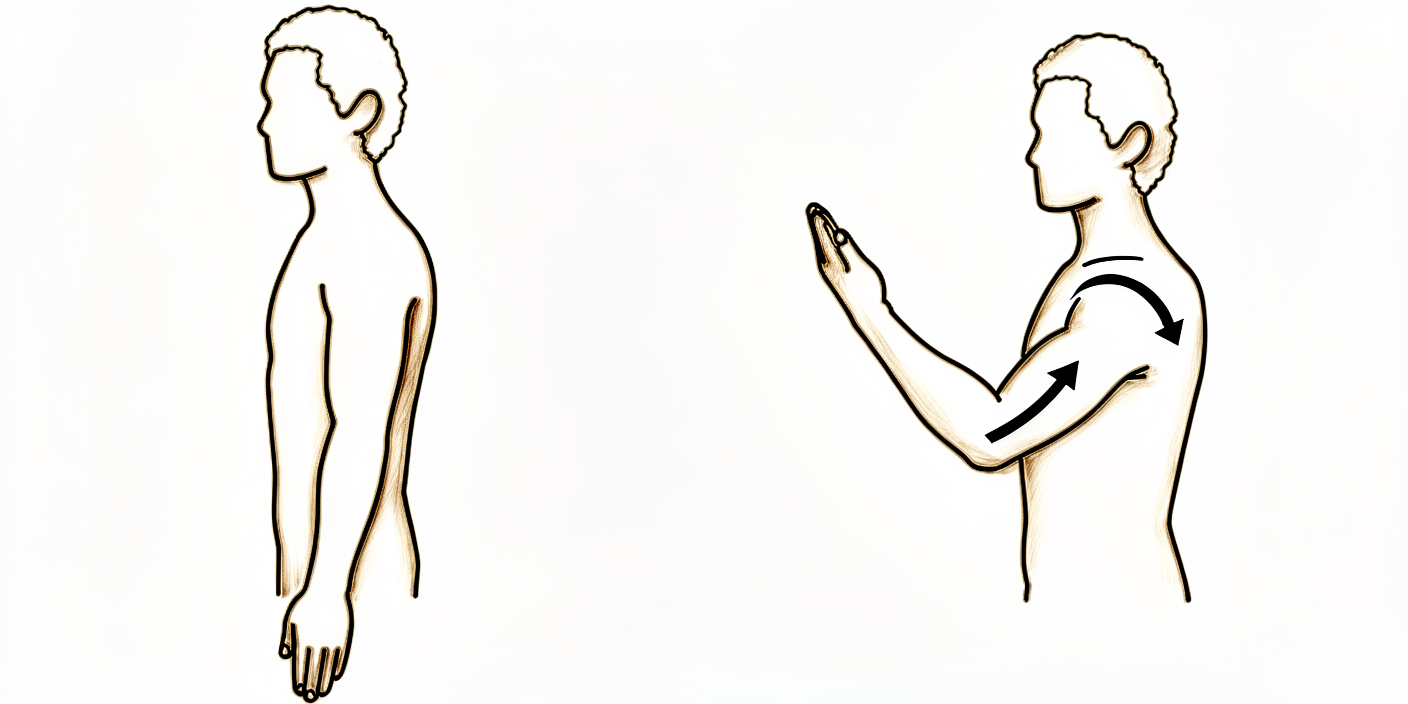
Các động tác gập và duỗi khuỷu tay nhẹ nhàng
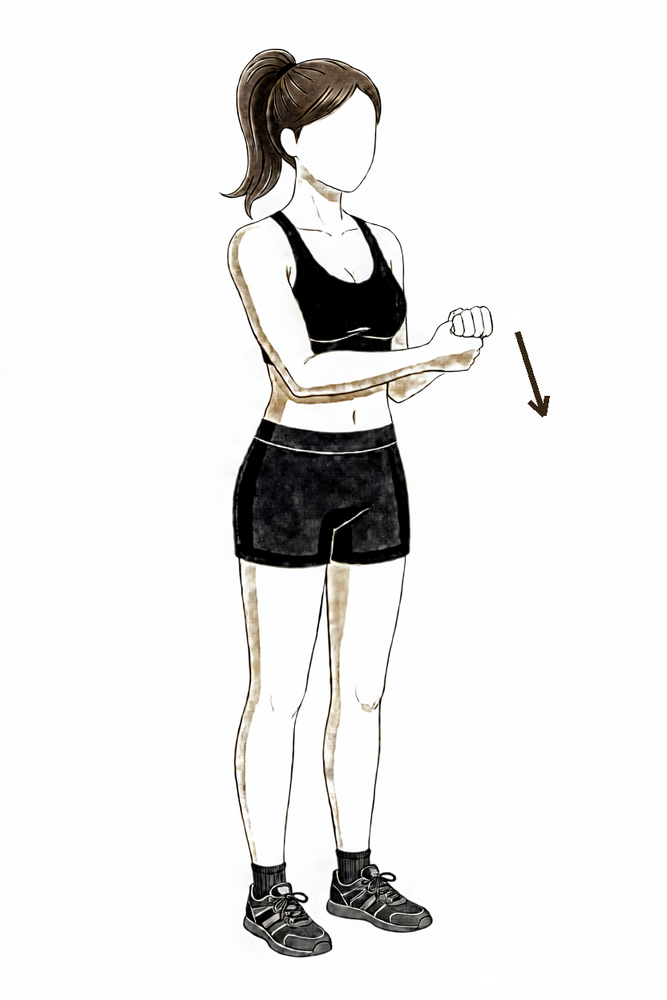
Hãy để lòng bàn tay hướng lên trên và cánh tay áp sát vào thân mình; sau đó từ từ gập khuỷu tay đến mức cảm thấy thoải mái, rồi để nó duỗi thẳng trở lại nhờ trọng lực. Hãy thực hiện chuyển động một cách chậm rãi và tự nhiên — để cánh tay tự vận động, đừng cố gắng dùng sức để đẩy đến các điểm cuối của biên độ chuyển động.
5–10 lần, vài lần mỗi ngày
Kieran Hirpara 4.0
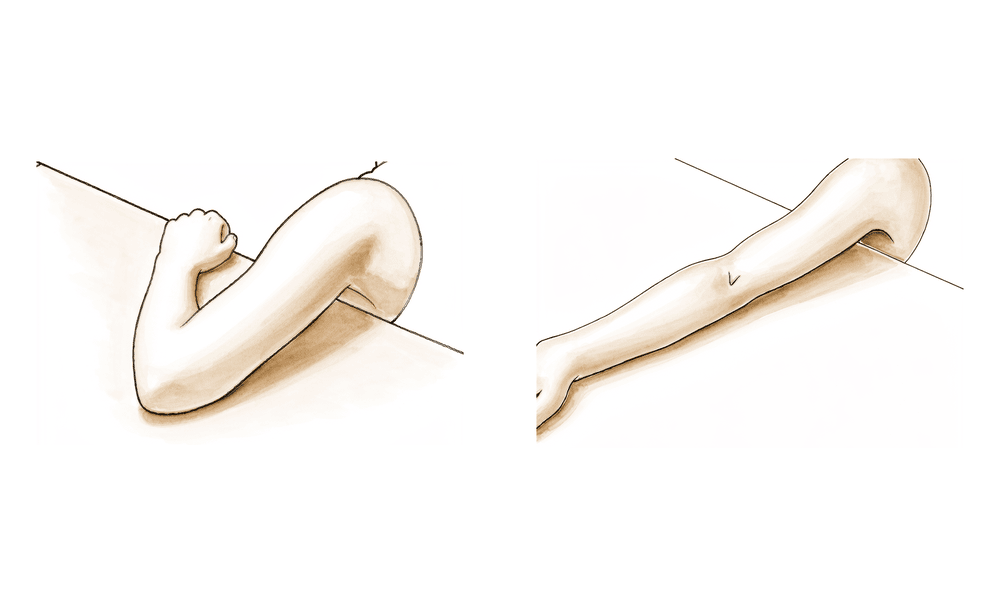
Cử động duỗi khuỷu tay được hỗ trợ bởi trọng lực (duỗi chủ động)
Hãy đặt cánh tay lên một vật đỡ (ví dụ như gối hoặc tay vịn ghế) và để cẳng tay hạ xuống sao cho khuỷu tay từ từ duỗi thẳng nhờ trọng lực. Tuyệt đối không vội vàng hay cố gắng duỗi thẳng khuỷu tay một cách gượng ép. Nếu bác sĩ phẫu thuật đã thông báo rằng cơ tam đầu của bạn đã được nâng lên trong quá trình phẫu thuật, hãy thực hiện động tác này một cách nhẹ nhàng và tránh cố ý duỗi thẳng khuỷu tay cho đến khi được phép.
5–10 lần, vài lần mỗi ngày, khi cảm thấy thoải mái.
Kieran Hirpara 4.0
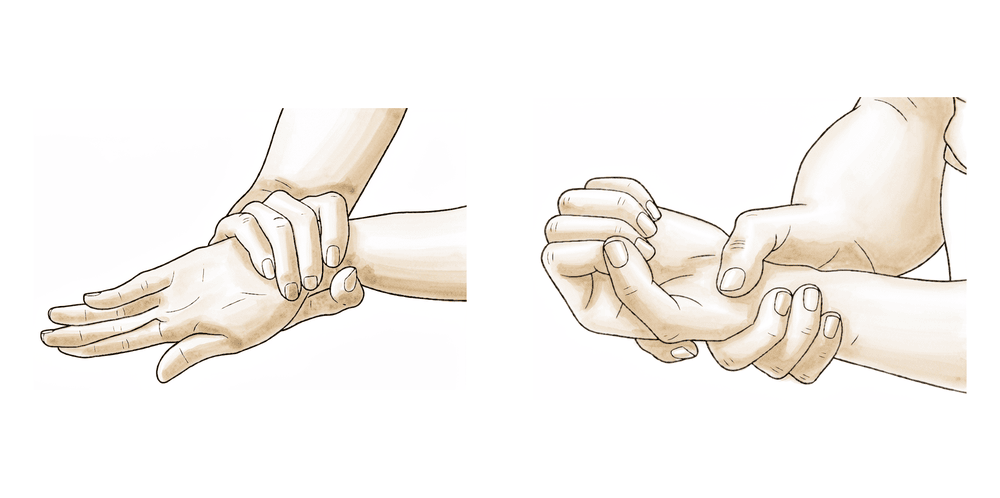
Chuyển động xoay cẳng tay (lòng bàn tay hướng lên / lòng bàn tay hướng xuống)
Khi khuỷu tay gập và áp sát vào thân, hãy nhẹ nhàng hướng lòng bàn tay lên trần nhà, giữ nguyên tư thế trong chốc lát rồi hướng lòng bàn tay xuống sàn nhà. Giữ cánh tay trên yên vị để chuyển động chỉ xảy ra ở vùng cẳng tay.
10 lần theo mỗi hướng, vài lần mỗi ngày.
Kieran Hirpara 4.0
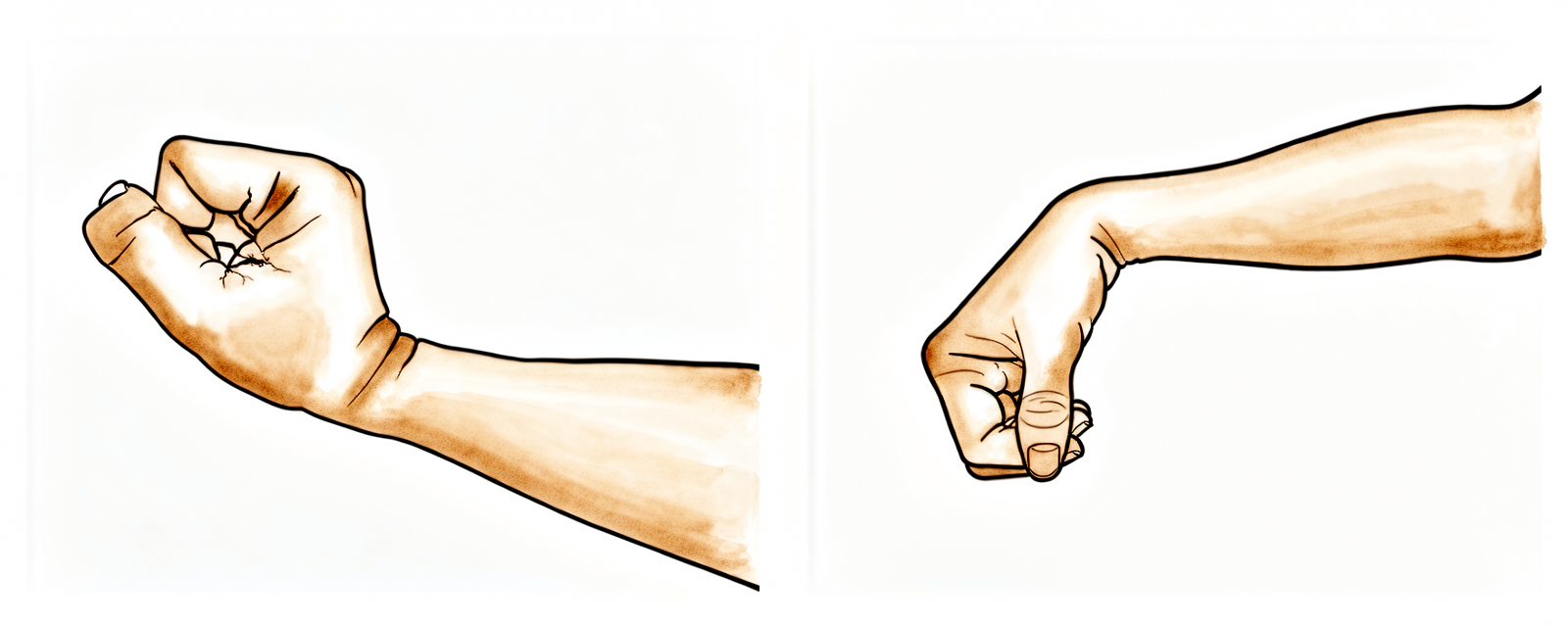
Chuyển động cổ tay
Hãy nhẹ nhàng gập cổ tay về phía trước rồi lại về phía sau, đến mức bạn cảm thấy thoải mái. Việc này giúp cổ tay và bàn tay luôn được vận động, từ đó ngăn ngừa tình trạng cứng khớp và sưng tấy trong quá trình khuỷu tay hồi phục.
10–15 lần, vài lần mỗi ngày
Kieran Hirpara 4.0
Co cứng cơ tam đầu (dạng co cứng tĩnh).
Đây là bài tập dành cho giai đoạn sau — chỉ thực hiện khi bác sĩ phẫu thuật hoặc chuyên viên trị liệu xác nhận rằng cơ tam đầu của bạn đã sẵn sàng, thường là sau khoảng 6 tuần hoặc lâu hơn. Hãy giữ khuỷu tay ở tư thế gập vừa phải, sau đó nhẹ nhàng co cơ ở phía sau cánh tay như thể bạn muốn duỗi thẳng khuỷu tay, nhưng không thực sự di chuyển nó. Giữ nguyên trạng thái đó một lúc rồi thả lỏng.
Giữ trong 5 giây, thực hiện 10 lần, sau khi đã được cho phép.
Đây là những bài tập trong tài liệu hướng dẫn, nhằm giúp phục hồi dần dần khả năng vận động của khuỷu tay, cẳng tay, cổ tay và bàn tay. Hãy thực hiện chúng theo hướng dẫn của Bác sĩ Hirpara và chuyên viên trị liệu. Mọi chuyển động đều cần được thực hiện một cách nhẹ nhàng, không gắng sức; ở giai đoạn đầu, mục tiêu là tạo ra những chuyển động dễ dàng, có sự hỗ trợ, chứ không phải cố gắng hay kéo giãn cơ.
Quy trình điều trị lâm sàng của bạn
Phần còn lại của trang này là quy trình phục hồi chức năng sau phẫu thuật thay khớp khuỷu tay kiểu bán hạn chế (tiếp cận từ phía sau, giả định là cơ tam đầu không bị tổn thương). Phần này cần được cung cấp cho chuyên viên vật lý trị liệu hoặc chuyên gia trị liệu tay của bạn; mỗi giai đoạn dưới đây đều bắt đầu bằng lời giải thích bằng tiếng Việt đơn giản về những gì đang diễn ra.
Trước khi bắt đầu điều trị, hãy kiểm tra báo cáo phẫu thuật và tiền sử bệnh của bệnh nhân; đồng thời trao đổi với bác sĩ phẫu thuật về phương pháp mổ được áp dụng, đặc biệt là việc cơ tam đầu có được bảo tồn, xoay ngược lại hay được khâu nối lại (theo kỹ thuật Bryan–Morrey) hay không. Điều này sẽ quyết định mức độ hạn chế vận động duỗi khuỷu và tư thế nghỉ ngơi thích hợp trong giai đoạn đầu.
Giai đoạn I — Ngay sau phẫu thuật, tuần 0–6
Trong sáu tuần đầu, mục tiêu là bảo vệ các mô mềm đang hồi phục và cơ tam đầu, giúp vết thương lành lại, giảm sưng, đồng thời bắt đầu các chuyển động nhẹ có hỗ trợ để khuỷu tay không bị cứng. Bác sĩ Hirpara sử dụng mảnh đeo tay đơn giản nhằm mang lại sự thoải mái cho bệnh nhân, chứ không dùng nẹp hoặc máng cố định phía sau. Các bài tập uốn cong và duỗi thẳng khuỷu tay nhẹ nhàng có hỗ trợ được bắt đầu từ ngày thứ 1 đến ngày thứ 7; lúc này khuỷu tay được giữ sát thân, cẳng tay ở tư thế trung tính hoặc xoay ra ngoài, đồng thời dùng trọng lực để hỗ trợ việc duỗi thẳng. Bệnh nhân không được nâng vật nặng hơn 1 pound (0,45 kg) bằng tay vừa phẫu thuật, cũng không được chịu tải trọng hay đẩy mạnh bằng tay đó.
Dành cho chuyên viên vật lý trị liệu:
Cách cố định và các lưu ý phòng ngừa
- Sử dụng mảnh đeo tay đơn giản để mang lại sự thoải mái (theo phương pháp của KH: không dùng nẹp hoặc máng cố định phía sau). Nếu bác sĩ phẫu thuật đã chỉ định dùng nẹp/máng do lo ngại về tình trạng mô mềm, hãy tuân theo hướng dẫn đó; nếu không thì mảnh đeo tay này được đeo trong khoảng sáu tuần, tháo ra khi tập luyện hoặc vệ sinh.
- Trường hợp cơ tam đầu bị cắt rời/ráp lại (ví dụ như kỹ thuật Bryan–Morrey): cần cố định khuỷu tay ở tư thế gần như duỗi thẳng, đồng thời tránh các động tác duỗi thẳng khuỷu tay chủ động hoặc có sức cản sớm để bảo vệ vết khâu (tương tự nguyên tắc điều trị trong các ca phục hồi cơ tam đầu vùng xa).
- Không được ép khuỷu tay gập sâu (sẽ gây áp lực lên vết khâu cơ tam đầu) và không được duỗi thẳng đột ngột hoặc mạnh tay.
- Không được để chi trên chịu tải trọng, không được đẩy mạnh chống lại sức cản, không được tạo áp lực xoay vào mặt trong hoặc mặt ngoài của khuỷu tay.
- Không được nâng vật nặng hơn 1 pound (0,45 kg) bằng tay vừa phẫu thuật.
Các bài tập
- Bắt đầu các bài tập vận động chủ động có hỗ trợ (AAROM) uốn cong/duỗi thẳng khuỷu tay từ ngày 1–7; giữ khuỷu tay sát thân, cẳng tay ở tư thế trung tính hoặc xoay ra ngoài; dùng trọng lực để hỗ trợ việc duỗi thẳng.
- Thực hiện các động tác vận động chủ động cho bàn tay, cổ tay và vai nhằm ngăn ngừa tình trạng cứng khớp.
Tiêu chí chuyển sang Giai đoạn II: vết thương đã lành, cơn đau được kiểm soát, và các động tác AAROM nhẹ nhàng đã được thực hiện ổn định. Không được bắt đầu các bài tập tăng cường sức mạnh trước tuần thứ 6.
Giai đoạn II — Hoạt động chức năng, từ tuần thứ 6 (không sớm hơn)
Giai đoạn này bắt đầu bằng việc kích hoạt cơ nhẹ nhàng, sau đó là các bài tập tăng cường sức mạnh rất nhẹ; tuyệt đối không thực hiện các chương trình tập luyện mạnh mẽ. Các chuyển động được dần dần mở rộng theo một phạm vi chức năng nhất định; lực cản cũng được đưa vào một cách thận trọng và chỉ ở mức độ nhẹ. Việc hạn chế nâng vật nặng vẫn được duy trì trong suốt giai đoạn này.
Dành cho chuyên viên vật lý trị liệu:
Lịch trình trong Giai đoạn II
- Tuần thứ 6: Bắt đầu thực hiện các bài tập co cơ cố định ở mức độ dưới tối đa, không gây đau, tại các vị trí trung tính và trên mọi mặt phẳng chuyển động. Nếu cơ tam đầu đã được di chuyển/ghép lại, hãy xác nhận rằng việc tập luyện được phép trước khi thêm các bài tập co cơ cố định dạng duỗi.
- Tuần thứ 8: Tiếp tục nâng dần độ khó bằng các bài tập co cơ cố định ở nhiều góc độ khác nhau, nhưng tránh các vị trí ở biên độ cực đại.
- 10–12 tuần: Bắt đầu các bài tập tăng cường sức mạnh kiểu đồng trương lực ở mức độ nhẹ (không sử dụng tạ hoặc lực cản vượt quá 5 pound/2,3 kg); ban đầu chỉ tập trên một mặt phẳng chuyển động, sau đó mới mở rộng sang các mặt phẳng kết hợp.
Mục tiêu về biên độ chuyển động
- Biên độ chức năng: 30–120 độ gập, kèm theo 60 độ xoay lòng bàn tay xuống và 60 độ xoay lòng bàn tay lên.
- Nếu đến tuần thứ 10–12 mà độ gập vẫn chưa đạt 120 độ, cần cân nhắc sử dụng nẹp tiến triển động hoặc tĩnh.
Những lưu ý cần tránh
- Tiếp tục tránh các hoạt động gây tải trọng nặng, đẩy mạnh hoặc va chạm mạnh.
- Triết lý tập luyện (trích nguyên văn): “Sau phẫu thuật thay khớp khuỷu tay toàn phần, việc thực hiện các chương trình tăng cường sức mạnh mạnh mẽ là không phù hợp.”
Tiêu chí để chuyển sang giai đoạn tiếp theo: Đạt được và duy trì được biên độ chuyển động chức năng mà không gây đau.
Giai đoạn muộn của Phase II và suốt đời, bắt đầu từ tuần thứ 12
Khoảng từ tuần thứ 12 trở đi, bệnh nhân sẽ thực hiện chương trình tập luyện tại nhà nhằm duy trì phạm vi vận động không gây đau. Không bao giờ có việc tập luyện tăng cường sức mạnh mạnh mẽ. Các hạn chế về hoạt động và việc nâng vật nặng được nêu dưới đây sẽ áp dụng vĩnh viễn.
Dành cho chuyên viên vật lý trị liệu:
- Chương trình tập luyện tại nhà nhằm duy trì phạm vi vận động không gây đau.
- Nhắc nhở bệnh nhân về các hạn chế hoạt động vĩnh viễn.
- Cân nhắc cho bệnh nhân xuất viện khi đã đạt được phạm vi vận động ổn định, không gây khó chịu và khả năng thực hiện các hoạt động sinh hoạt hàng ngày đã phục hồi tốt.
Trở lại với công việc và các hoạt động thường ngày
Khớp khuỷu tay mới của bạn được thiết kế để hỗ trợ cuộc sống hàng ngày một cách thoải mái; các giới hạn dưới đây là vĩnh viễn và chính chúng giúp cho bộ phận thay thế này bền lâu.
- Nâng vác (trọn đời): Không nên nâng vác nhiều lần những vật nặng hơn khoảng 2 kg (tương đương vài chiếc cốc đầy), và tuyệt đối không nâng vác quá 4.5–5 kg trong một lần sử dụng cánh tay đã phẫu thuật (khoảng trọng lượng của một ấm nước đầy). Trong 6 tuần đầu, giới hạn này còn nghiêm ngặt hơn: chỉ được nâng những vật nặng không quá 1 pound (0,45 kg).
- Thể thao và các tác động mạnh: Trọn đời không được chơi tennis, ném vật hay tham gia các hoạt động gây tác động mạnh lên khớp khuỷu. Các hoạt động nhẹ nhàng, ít gây áp lực là hoàn toàn được khuyến khích sau khi bác sĩ cho phép; tuy nhiên tuyệt đối không để khớp khuỷu chịu tải trọng lớn hoặc va đập mạnh.
- Lái xe: Chỉ được lái xe khi bạn cảm thấy tự tin, đã tháo nẹp cánh tay và có thể điều khiển vô lăng một cách an toàn. Thời điểm thích hợp cần được xác nhận với bác sĩ Hirpara trong lần tái khám.
- Công việc: Các công việc văn phòng nhẹ nhàng và các hoạt động chăm sóc bản thân có thể bắt đầu sớm nếu bạn cảm thấy thoải mái. Đối với những công việc đòi hỏi việc nâng vác, mang vác, đẩy hoặc lặp đi lặp lại các động tác dùng cánh tay, cần trao đổi riêng với bác sĩ Hirpara vì các giới hạn trọn đời vẫn được áp dụng trong môi trường làm việc.
Việc tuân thủ nghiêm ngặt các giới hạn này là yếu tố quan trọng nhất giúp bảo vệ khớp khuỷu nhân tạo, tránh tình trạng lỏng lẻo hoặc mòn hỏng theo thời gian.
Sau khi thực hiện theo quy trình này
Quy trình này được áp dụng song song với các hướng dẫn phục hồi chung của phòng khám; vui lòng tham khảo mục xử lý cơn đau sau phẫu thuật và chăm sóc vết thương. Quá trình hồi phục của bạn sẽ được điều chỉnh riêng cho từng cá nhân bởi chuyên viên vật lý trị liệu hoặc chuyên gia trị liệu tay, dựa trên tiến triển của khuỷu tay; đồng thời bạn cần luôn ghi nhớ các hạn chế về hoạt động trong suốt cuộc đời khi đi khám định kỳ.
Evidence & references
This is the clinical evidence summary written for health professionals. It is technical, and it lists the research this page was built from. You do not need to read it to understand your treatment or to make a decision about it.
Total Elbow Arthroplasty (TEA) — Rehabilitation Evidence
Topic scope: post-operative rehabilitation after semi-constrained (linked/hinged) total elbow replacement — most commonly for rheumatoid arthritis, end-stage osteoarthritis, or a non-reconstructable distal humerus fracture in an elderly patient. This brief covers the phased rehabilitation timeline, the early triceps-protection rationale, the functional-arc goal, and — critically — the lifelong lifting restriction that exists to protect the implant against polyethylene wear and aseptic loosening.
Defining principle: unlike most joint replacements, the goal of TEA rehabilitation is a pain-free functional arc (~30–130° flexion, 60°/60° rotation), not maximal strength. The implant's long-term enemies are polyethylene wear and aseptic loosening, both driven by load, so heavy loading is restricted permanently, not just during healing — "the need for a vigorous strengthening program is not appropriate following total elbow arthroplasty." Dr Hirpara's practice: a simple sling for comfort (not a posterior splint or brace), gentle active-assisted motion from day 1–7, isometrics from ~6 weeks, light isotonic (≤ 5 lb) from 10–12 weeks, triceps protection where the triceps was reflected or detached, and a lifelong lifting limit (no repetitive lift > ~2.3 kg; no single lift > ~4.5–5 kg; no tennis/throwing/impact ever).
Consensus phased timeline (week windows)
Anchored to the Brigham & Women's Hospital (BWH) Total Elbow Arthroplasty Protocol (Thornhill; semi-constrained, hinged/linked prosthesis; posterior triceps-sparing approach assumed) and cross-checked against the primary literature. Dr Hirpara's practice substitutes a simple sling for comfort in place of BWH's 60° posterior resting splint; the ROM and strengthening cadence and the lifelong limits are retained.
| Phase | Window | Sling / immobilisation | ROM and use | Strengthening | Lifting |
|---|---|---|---|---|---|
| I — Immediate post-surgical | Weeks 0–6 | Simple sling for comfort (KH — no posterior splint/brace); triceps-reflected cases immobilised nearer extension | Gentle AAROM flexion/extension from day 1–7, elbow adducted, forearm neutral-to-pronated, gravity-assisted extension; hand/wrist/shoulder AROM | None | No lifting > 1 lb (0.45 kg); no weight-bearing/pushing |
| II — Functional activity | From 6 weeks (not before) | Sling weaned | 6 wk: submaximal mid-range isometrics, all planes · 8 wk: multi-angle submaximal isometrics (avoid end-range) · target functional arc 30–120/130°, 60°/60° | 10–12 wk: light isotonic, no resistance > 5 lb (2.3 kg), single-plane → composite | Restriction continues |
| Late II / lifelong | 12 weeks onward | — | Maintain pain-free functional arc | No vigorous strengthening — ever | Lifelong limits apply (see below) |
Triceps-protection note. Where the triceps is reflected (Bryan–Morrey) rather than spared, early rehabilitation is stricter — immobilisation nearer extension and delayed/limited active and resisted extension to protect the reattachment (cf. distal-triceps-repair logic). Wiesel keeps the elbow in full extension ~24–36 h then begins active-assisted ROM, and adds no pushing/overhead for 3 months to protect the triceps; Wolfe & Ranawat's osteo-anconeus flap is immobilised ~16 days. Triceps insufficiency is a recognised TEA complication.
CRITICAL — lifelong lifting restriction numbers + sources
| Source | Repetitive limit | Single-event limit | Lifelong? |
|---|---|---|---|
| BWH Standard of Care (Thornhill) | no repetitive lifts > 5 lb | no single lift > 15 lb | yes — "no heavier than 15 lb for life"; "no tennis or throwing for life" |
| Wiesel, Operative Techniques in Orthopaedic Surgery (2011) | > 5 lb (~2.3 kg) | > 10 lb (~4.5 kg) | yes (also no pushing/overhead × 3 months to protect triceps) |
| Toulemonde et al., Int Orthop 2015 (100 semi-constrained TEA) | > 1 kg | 5 kg | yes; all weight-lifting avoided entirely for the first 3 months |
| Kumar & Mahanta, Indian J Orthop 2013 | — | 5 kg | permanent restriction of strenuous activity |
Bottom line / patient-facing range: the canonical teaching is a lifelong restriction of roughly ~5 lb (2.3 kg) repetitive and ~10–15 lb (4.5–5 kg) single event. The exact ceiling varies by source: BWH allows up to 15 lb once; Wiesel caps single lift at 10 lb; the European series (Toulemonde) is most conservative at 1 kg repetitive / 5 kg single. Dr Hirpara quotes the conservative patient-facing range: do not repetitively lift more than ~2 kg, or lift more than ~5 kg in a single event, for life; no tennis/throwing/impact ever.
Key controversies / evidence quality
- Lifting-limit variation. Numbers range from 1 kg / 5 kg (Toulemonde 2015) to 5 lb / 15 lb (BWH). The restriction exists to protect against polyethylene wear and aseptic loosening, the dominant long-term failure mode — hence its permanence.
- Triceps-sparing vs reflected approach. Surgical handling of the triceps dictates early rehab: triceps-sparing (BWH default) permits earlier gentle AAROM; reflected approaches require protecting the reattachment with immobilisation nearer extension and delayed active/resisted extension. Triceps insufficiency/weakness is a recognised complication.
- Longevity and compliance. TEA was historically reserved for elderly low-demand patients owing to implant-longevity concerns (survivorship ~85–96% at 5 y, ~70–92% at 10 y in RA). As indications expand to younger, more active and post-traumatic patients, non-compliance with activity limits drives higher complication and failure rates — which is precisely why the lifelong limit is emphasised to every patient.
Evidence strength flags
- MODERATE–STRONG (published protocol + restriction numbers): the BWH institutional Standard of Care provides an explicit phased timeline with verbatim lifting limits, independently corroborated by multiple peer-reviewed primary sources (JBJS, JHS, JSES, Int Orthop, JAAOS) for the lifelong restriction and the triceps-protection rationale.
- MODERATE (ROM / strengthening cadence): phase timings and the isometric → light-isotonic progression are consensus/expert-driven; no high-level RCT dictates the rehab cadence. The exact lifting ceiling varies by source.
- CONSENSUS: the simple-sling (vs posterior-splint) choice and the precise functional-arc targets reflect surgeon practice and institutional protocols rather than trial data.
CITATIONS
RAG corpus (180,000+ Orthopaedic articles)
- Toulemonde J, Ancelin D, Azoulay V, et al. Complications and revisions after semi-constrained total elbow arthroplasty: a mono-centre analysis of 100 cases. Int Orthop. 2015. (1 kg repetitive / 5 kg single; no weight-lifting first 3 months)
- Kumar S, Mahanta S. Primary total elbow arthroplasty. Indian J Orthop. 2013. (5-kg weight-lifting restriction)
- Schoch B, Wong J, Abboud J, et al. Results of total elbow arthroplasty in patients less than 50 years old. J Hand Surg Am. 2017. (longevity/survivorship driving the restriction)
- Seitz WH, Evans PJ, Bismar H, Peers S. Complications of total elbow arthroplasty in nonrheumatoid patients. J Hand Surg Am. 2014. (active patients, poor compliance → complications)
- Baghdadi YM, Veillette CJ, Malone AA, et al. Total elbow arthroplasty in obese patients. J Bone Joint Surg Am. 2014;96(9). (higher failure with high BMI)
- Barlow JD, Morrey BF, O'Driscoll SW, et al. Activities after total elbow arthroplasty. J Shoulder Elbow Surg. 2013;22(6):787–791.
- You D, King G, Dehghan N, et al. Optimizing outcomes in total elbow arthroplasty. J Am Acad Orthop Surg (JAAOS). 2025. (modern failure-reduction review)
- Burnier M, Nguyen NTV, Morrey ME, et al. Revision elbow arthroplasty using a proximal ulnar allograft with allograft triceps for combined ulnar bone loss and triceps insufficiency. J Bone Joint Surg Am. 2020;102(22). (triceps insufficiency complication)
- Na K, Song S, Lee Y, et al. Modified triceps fascial tongue approach for primary total elbow arthroplasty. J Shoulder Elbow Surg. 2018;27(5):887–893. (triceps weakness after TEA; approach effect)
- Wolfe SW, Ranawat CS. The osteo-anconeus flap: an approach for total elbow arthroplasty. J Bone Joint Surg Am. 1990;72(5). (triceps-continuity-preserving approach; ~16-day immobilisation)
- Ring D. Instability after total elbow arthroplasty. Hand Clin. 2008. (triceps/LCL reattachment and stability)
- Wiesel SW. Operative Techniques in Orthopaedic Surgery. 2011. (5 lb repetitive / 10 lb single; full-extension splint 24–36 h; no pushing/overhead × 3 months to protect triceps)
Published protocol (web)
- Brigham & Women's Hospital, Department of Rehabilitation Services. Total Elbow Arthroplasty Protocol (J. Sayles OTR/L, R.B. Wilcox III PT; reviewer T.S. Thornhill MD; 2010). https://www.brighamandwomens.org/assets/bwh/patients-and-families/rehabilitation-services/pdfs/elbow-total-elbow-arthroplasty-bwh.pdf
- Brigham & Women's Hospital — Physical Therapy Standards of Care index. https://www.brighamandwomens.org/patients-and-families/rehabilitation-services/physical-therapy-protocols