Patients › Rehabilitation
Phẫu thuật thay khớp vai toàn phần
Phase-by-phase rehabilitation protocol after total shoulder replacement, with criteria to progress and the early exercise program.
Quy trình này sẽ hướng dẫn quá trình hồi phục của bạn sau phẫu thuật thay khớp vai toàn phần do bác sĩ Kieran Hirpara thực hiện tại Bệnh viện tư nhân Mater Rockhampton. Mỗi giai đoạn dưới đây đều bắt đầu bằng lời giải thích bằng ngôn ngữ đơn giản về những gì đang diễn ra và những điều quan trọng cần lưu ý; tiếp theo là quy trình chi tiết dành cho chuyên viên vật lý trị liệu của bạn. Vui lòng mang theo trang này hoặc bản PDF tương ứng trong lần trị liệu đầu tiên để quá trình phục hồi được thực hiện một cách nhất quán. Chuyên viên vật lý trị liệu có thể điều chỉnh kế hoạch tùy theo tiến triển hồi phục của bạn.
Nếu bạn có bất kỳ thắc mắc nào về vết thương sau phẫu thuật, hãy liên hệ với phòng khám. Việc chụp ảnh vết thương rồi gửi qua email để được đánh giá cũng là cách hữu ích.
Những điều bạn có thể mong đợi
Sau khi tỉnh dậy, cánh tay của bạn sẽ bị tê; cảm giác thường sẽ trở lại trong vòng 6 đến 12 giờ. Trong những trường hợp hiếm gặp, tình trạng tê hoặc yếu cơ có thể kéo dài 2 đến 3 ngày.
Khi tỉnh dậy sau phẫu thuật, cánh tay của bạn sẽ được đeo nẹp cố định, và có một miếng đệm lớn đặt lên vai. Miếng đệm này sẽ được tháo ra trước khi bạn xuất viện. Bên dưới là lớp băng vô nước che phủ một dải keo phẫu thuật; bạn có thể để nguyên lớp băng này trong 2 tuần. Các mũi khâu là loại tự tiêu nên không cần cắt bỏ; tuy nhiên có thể còn lại một vài sợi chỉ ở hai đầu vết thương, và bạn có thể cắt ngang với bề mặt da sau 2 tuần. Bạn sẽ được hẹn lịch để gặp điều dưỡng của chúng tôi kiểm tra vết thương vào tuần thứ 1–2 sau phẫu thuật. Nếu không thể đến kiểm tra, bạn có thể tự tháo băng sau 2 tuần.
Tóm tắt các giai đoạn phục hồi:
- Giai đoạn bảo vệ: tuần thứ 0–3
- Giai đoạn trung gian: tuần thứ 4–6
- Giai đoạn trung gian tiếp theo: tuần thứ 7–8
- Giai đoạn chuyển tiếp: tuần thứ 9–11
- Giai đoạn tăng cường sức mạnh: tuần thứ 12–16
Thời gian ước tính để trở lại các hoạt động thường ngày:
- Lái xe: 6 tuần
- Bơi lội: bơi ếch sau 8 tuần; bơi tự do sau 12 tuần
- Chơi golf: 4–6 tháng
- Nâng vác: có thể bắt đầu nâng vật nhẹ sau 6 tuần; tránh nâng vật nặng trong 6 tháng
- Làm việc: công việc văn phòng sau 6 tuần; công việc chân tay cần tuân theo hướng dẫn của bác sĩ phẫu thuật
Cách đeo nẹp cố định
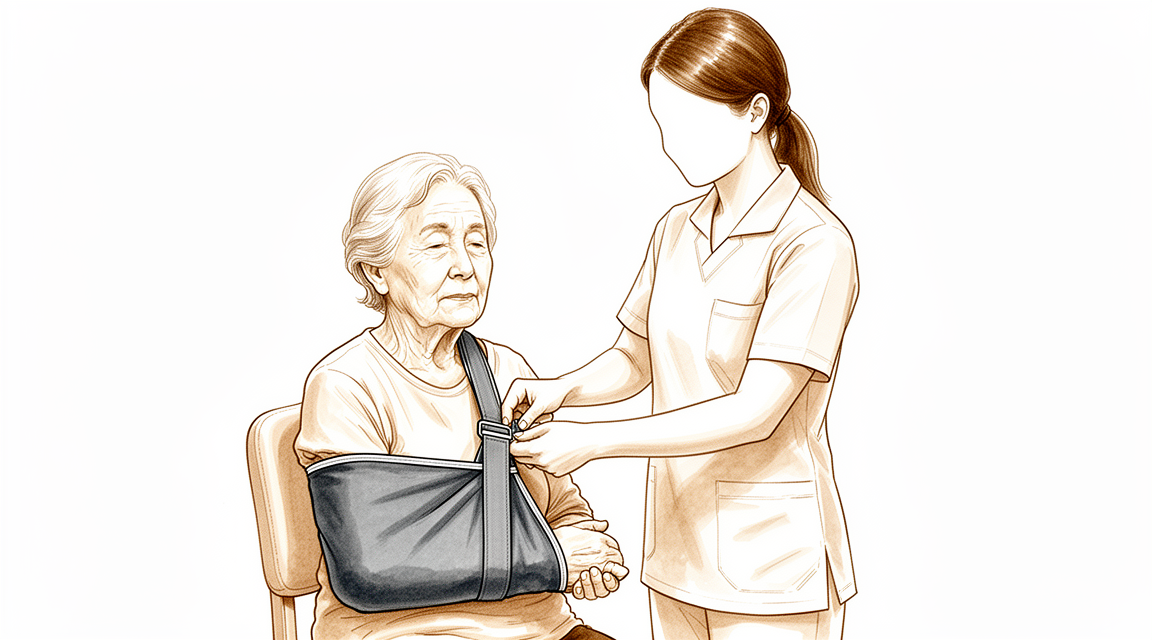
Nẹp cố định vai (thiết bị hỗ trợ vai) giúp nâng đỡ vai trong quá trình hồi phục. Các quy tắc rất đơn giản:
- Đeo nẹp trong 6 tuần, kể cả khi ngủ.
- Chỉ tháo nẹp ra khi tắm hoặc khi tập các bài tập vật lý trị liệu, sau khi đã được hướng dẫn; mỗi khi tháo nẹp, hãy giữ tay sát bên thân.
- Khi nghỉ ngơi tại nhà, bạn có thể tháo nẹp nếu thực hiện đúng cách: đặt tay lên gối hoặc gối ôm khi ngồi.
- Nếu vai bị sưng hoặc đau, hãy chườm đá, đặc biệt là sau khi tập luyện.
Việc đeo nẹp đúng cách rất quan trọng; nẹp lỏng lẻo sẽ không hỗ trợ vai hiệu quả:
- Đặt khuỷu tay vào góc nẹp sao cho được nâng đỡ vững chắc.
- Đầu nẹp phải chạm đến khớp ngón út; nếu tay bạn vươn ra xa hơn, nghĩa là nẹp chưa hỗ trợ đúng cách.
- Nẹp có hai dây Velcro: một dây quanh cổ và một dây quanh eo.
- Sau khi đặt khuỷu tay và cẳng tay vào đúng vị trí, dùng tay còn lại luồn dây trên qua vòng nối phía trên rồi cố định lại.
- Cũng làm tương tự với dây dưới, luồn qua vòng nối phía dưới để cố định quanh eo.
Khi đeo nẹp, hãy chú ý tư thế cơ thể: giữ tai, vai và hông thẳng hàng, tránh để vai chùng xuống; tư thế đúng giúp bảo vệ lưng và ngăn vai bị cứng. Khi ngồi, có thể đặt một chiếc khăn cuộn lại ở vùng thắt lưng để nhắc nhở mình giữ tư thế đúng.
Trước khi xuất viện, chuyên viên vật lý trị liệu sẽ giúp bạn đeo nẹp đúng cách, hướng dẫn cách tự sử dụng và bắt đầu với các bài tập nhẹ sau đây. Trong quá trình phục hồi vai, ba thuật ngữ thường được nhắc đến; việc hiểu rõ sự khác biệt giữa chúng rất hữu ích: Phạm vi vận động chủ động (AROM) là việc tự mình cử động tay mà không cần hỗ trợ; Phạm vi vận động chủ động có hỗ trợ (AAROM) là dùng tay kia hoặc vật thể nào đó để hỗ trợ cử động; Phạm vi vận động thụ động (PROM) là để tay hoàn toàn thả lỏng trong khi tay kia hoặc lực bên ngoài thực hiện toàn bộ chuyển động. Chuyên viên vật lý trị liệu sẽ chỉ rõ loại vận động nào được áp dụng cho từng bài tập.
Các quy tắc phục hồi sớm trong thời gian nằm viện và những tuần đầu tại nhà:
- Bạn phải ngủ trong nẹp cố định.
- Có thể chườm đá để giảm đau khi cần thiết.
- Khi đeo nẹp, hãy thả lỏng vai để nẹp gánh hết trọng lượng của tay.
- Uống thuốc giảm đau trước khi tập luyện và trước mỗi buổi trị liệu.
- Bạn được phép tháo nẹp ra để tập luyện hoặc tắm.
- Bạn phải đeo nẹp trong 6 tuần, đặc biệt là khi ra ngoài.
- Trừ khi bạn tự sắp xếp dịch vụ vật lý trị liệu riêng, chúng tôi đã đặt lịch hẹn cho bạn; thông tin chi tiết có trong hồ sơ xuất viện.
- Nếu gặp bất kỳ vấn đề nào, hãy liên hệ văn phòng hoặc báo cho chuyên viên vật lý trị liệu.
Dưới đây là các bài tập sơ khởi, bắt đầu thực hiện tại viện và tiếp tục tại nhà theo hướng dẫn của chuyên viên vật lý trị liệu:
Những ngày đầu tiên của bạn tại bệnh viện
Kieran Hirpara 4.0
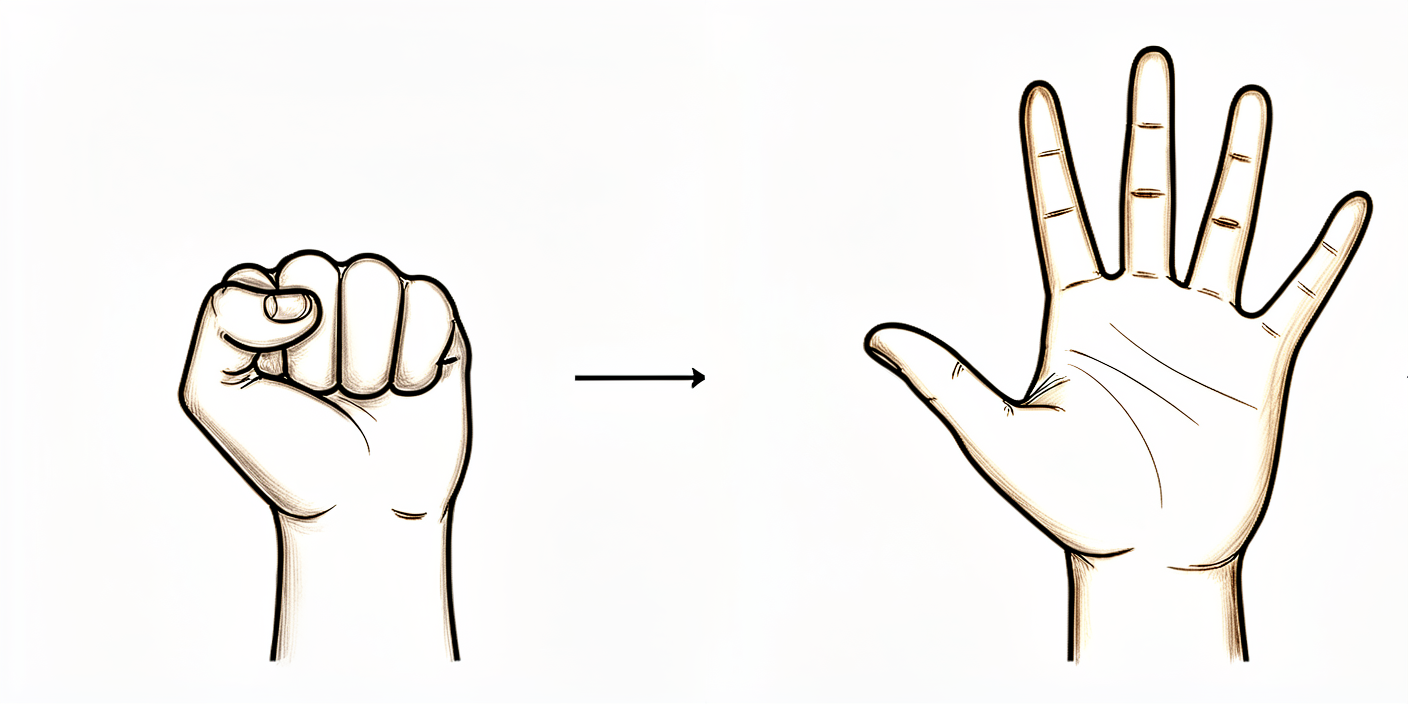
Mở và nắm tay
Hãy cử động tay và các ngón tay bằng cách mở ra, khép lại, hoặc nắm chặt một quả bóng mềm.
10 lần, 3 lần mỗi ngày.
Kieran Hirpara 4.0
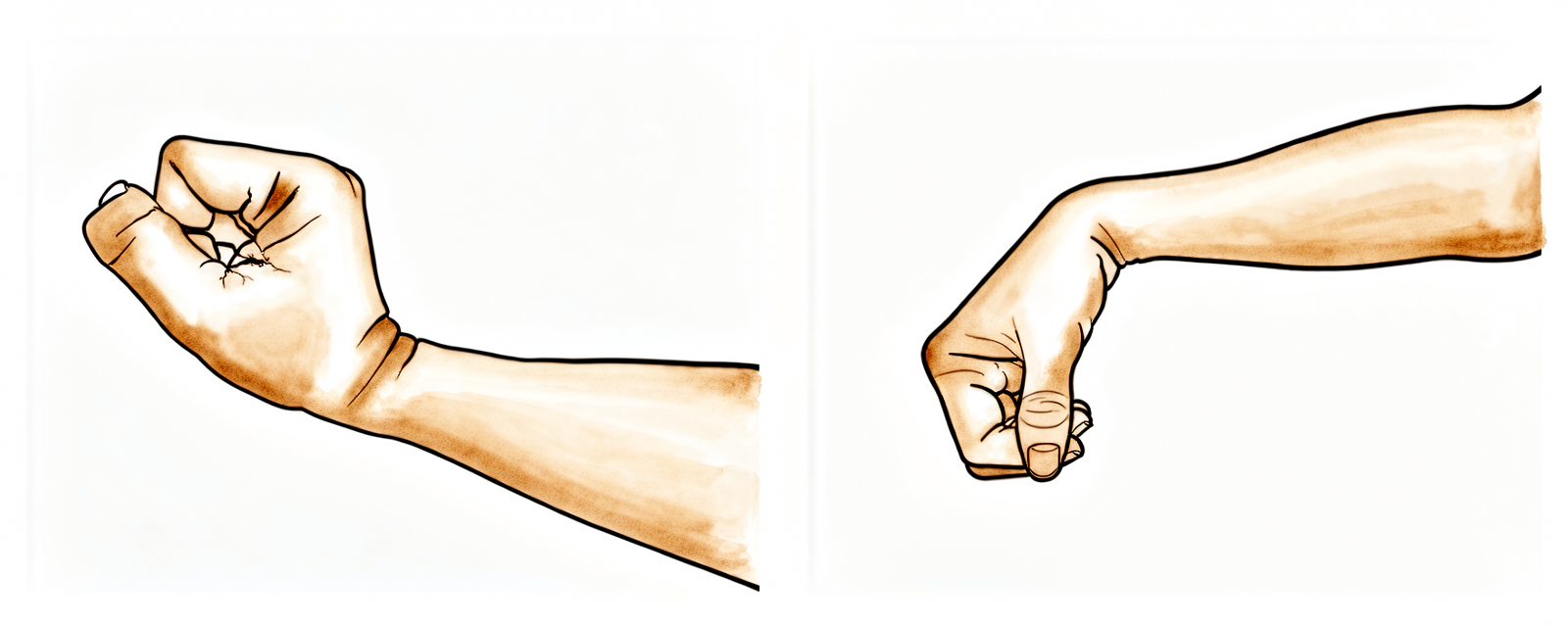
Chuyển động cổ tay
Hãy cử động cổ tay bằng cách gập nó ra trước, ra sau và sang hai bên.
10 lần, 3 lần mỗi ngày
Kieran Hirpara 4.0
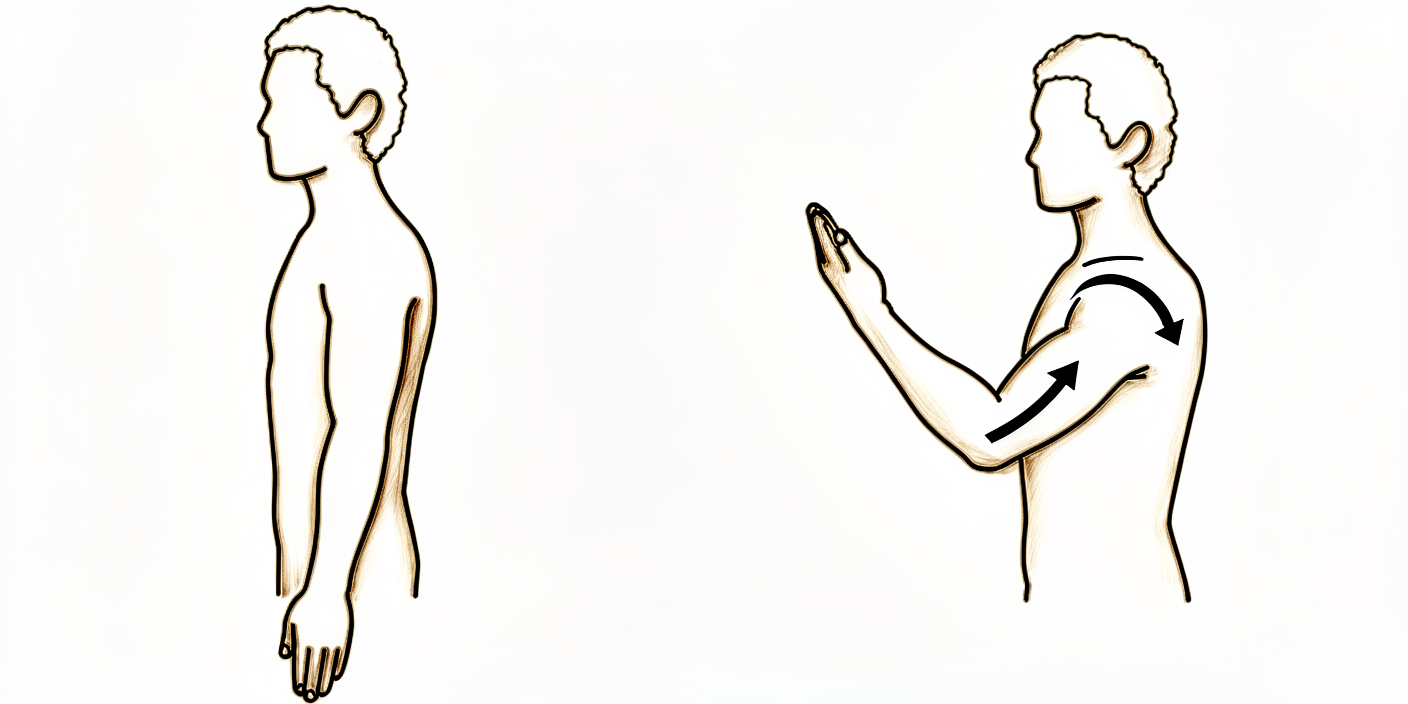
Khớp khuỷu tay
Hãy gập và duỗi khuỷu tay của bạn.
10 lần, 3 lần mỗi ngày.
Kieran Hirpara 4.0
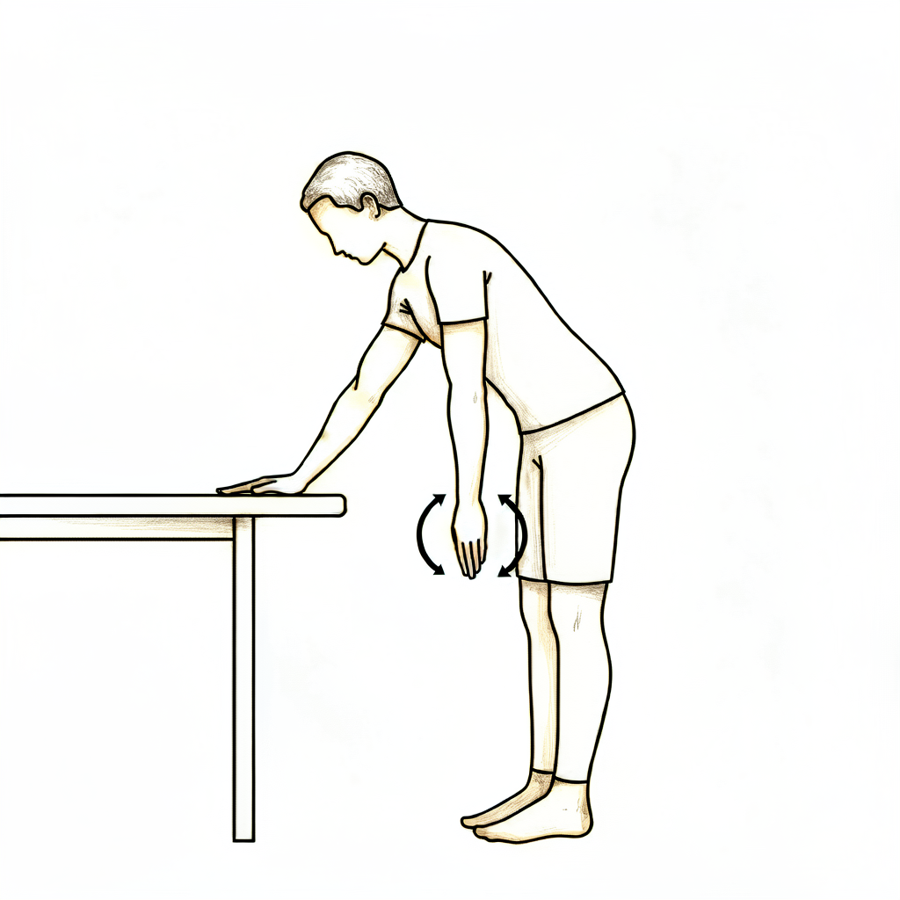
Con lắc
Đây là bài tập thụ động. Hãy cúi người về phía trước và để cánh tay thả lỏng. Dùng cơ thể để nhẹ nhàng di chuyển cánh tay theo chiều kim đồng hồ hoặc ngược chiều kim đồng hồ, đồng thời di chuyển về phía trước, phía sau và sang hai bên.
Khoảng 30 giây cho mỗi hướng, 3 lần mỗi ngày.
Kieran Hirpara 4.0
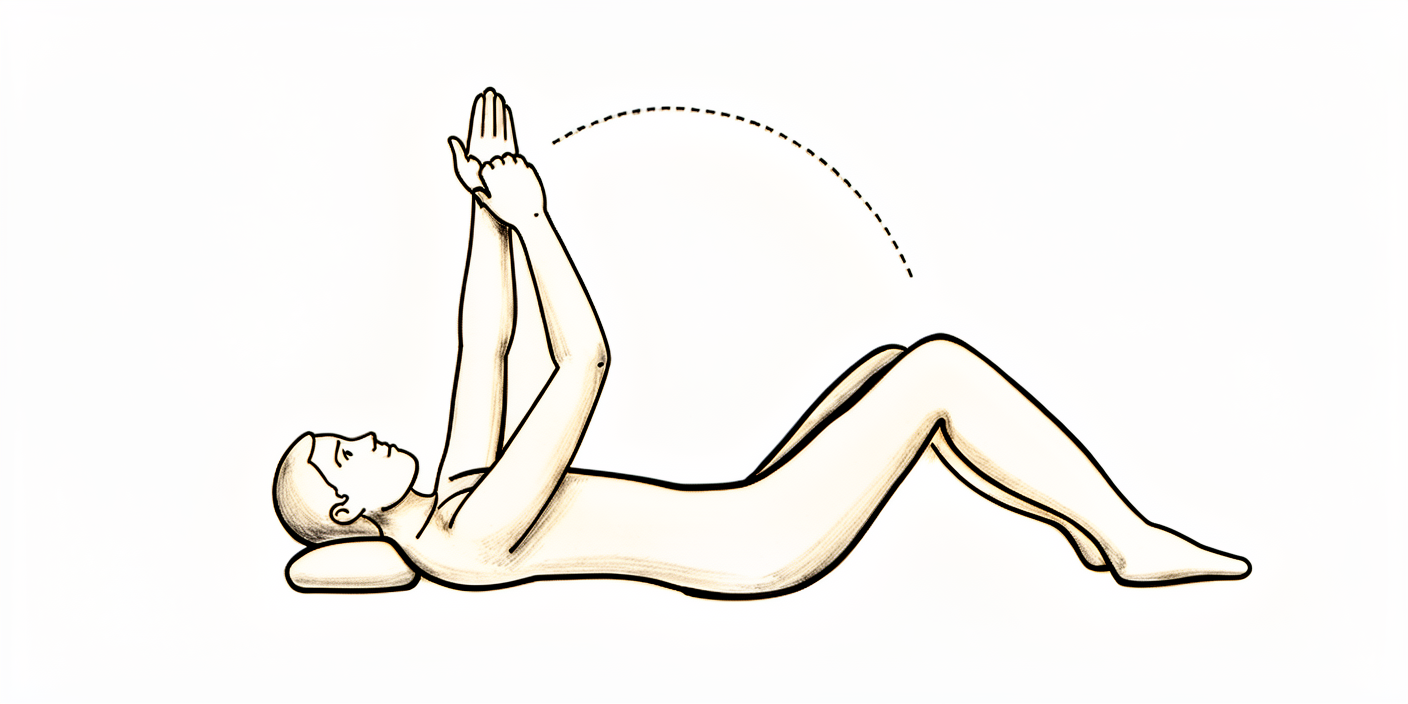
Nâng cánh tay ra trước (có hỗ trợ)
Ngồi trên ghế và hơi cúi người về phía trước; dùng tay còn lại ôm lấy cánh tay vừa được phẫu thuật rồi nhẹ nhàng nâng cánh tay lên phía trước. Sau đó, dùng tay không bị phẫu thuật để hỗ trợ hạ cánh tay xuống. Nếu thích, bạn cũng có thể nằm ngửa trên giường và dùng tay kia để nâng cánh tay lên.
10 lần, 3 lần mỗi ngày
Kieran Hirpara 4.0
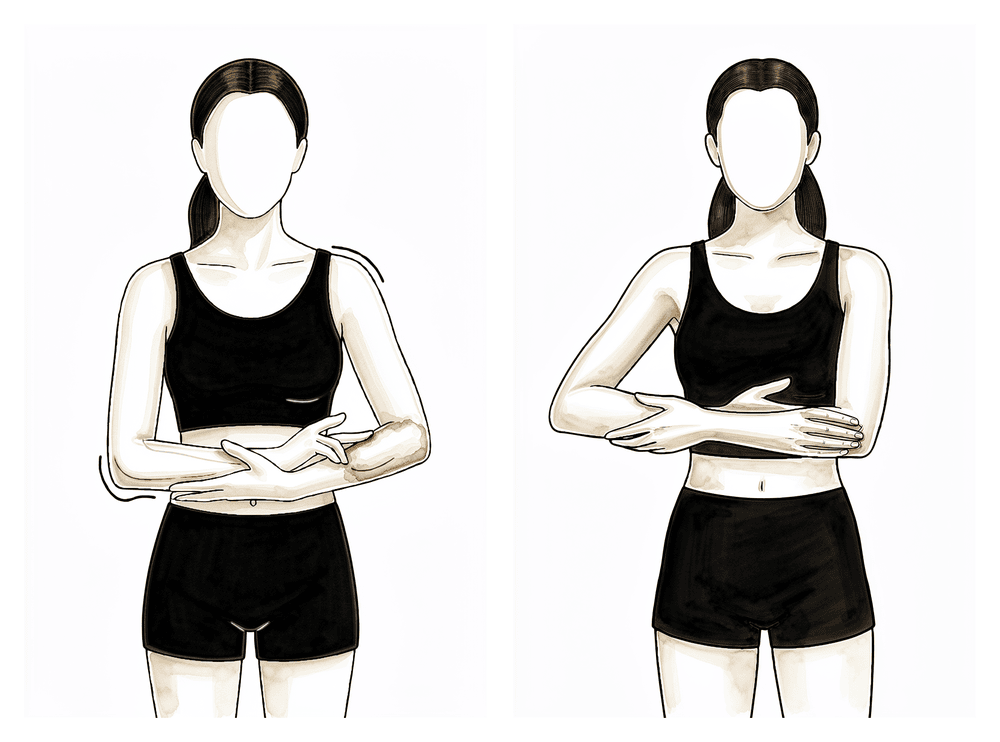
Dạng tay (đưa tay sang ngang, có hỗ trợ)
Ngồi trên ghế và hơi nghiêng người về phía trước; sau đó ôm lấy cánh tay và nhẹ nhàng đưa nó sang bên cạnh (giống như cách ru em bé vậy).
10 lần, 3 lần mỗi ngày
Kieran Hirpara 4.0
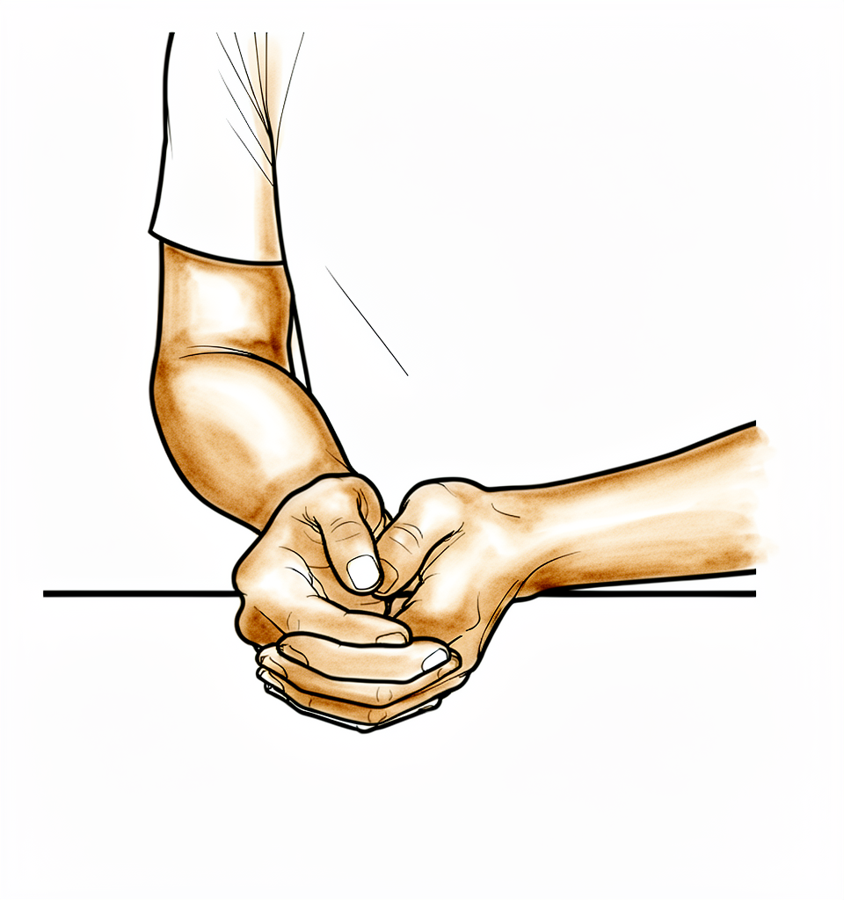
Xoay ngoài
Ngồi trên ghế, chỉ cần di chuyển cánh tay từ vị trí mà nó sẽ nằm trong đai treo sang vị trí duỗi thẳng ra phía trước. Đừng di chuyển cánh tay ra ngoài xa hơn nữa.
Nhẹ nhàng, 10 lần, 3 lần mỗi ngày.
Kieran Hirpara 4.0
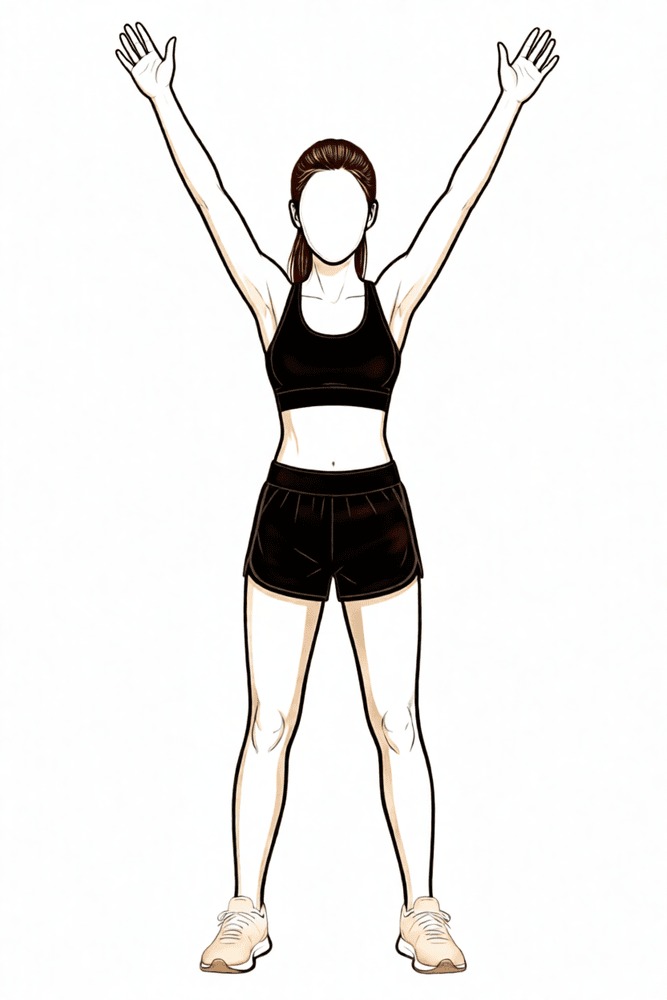
Siết giữ cơ thang dưới
Hãy siết hai xương bả vai xuống dưới và khép lại gần nhau.
Giữ nguyên trong 5 giây, thực hiện 5 lần; lặp lại 3 lần mỗi ngày.
Kieran Hirpara 4.0
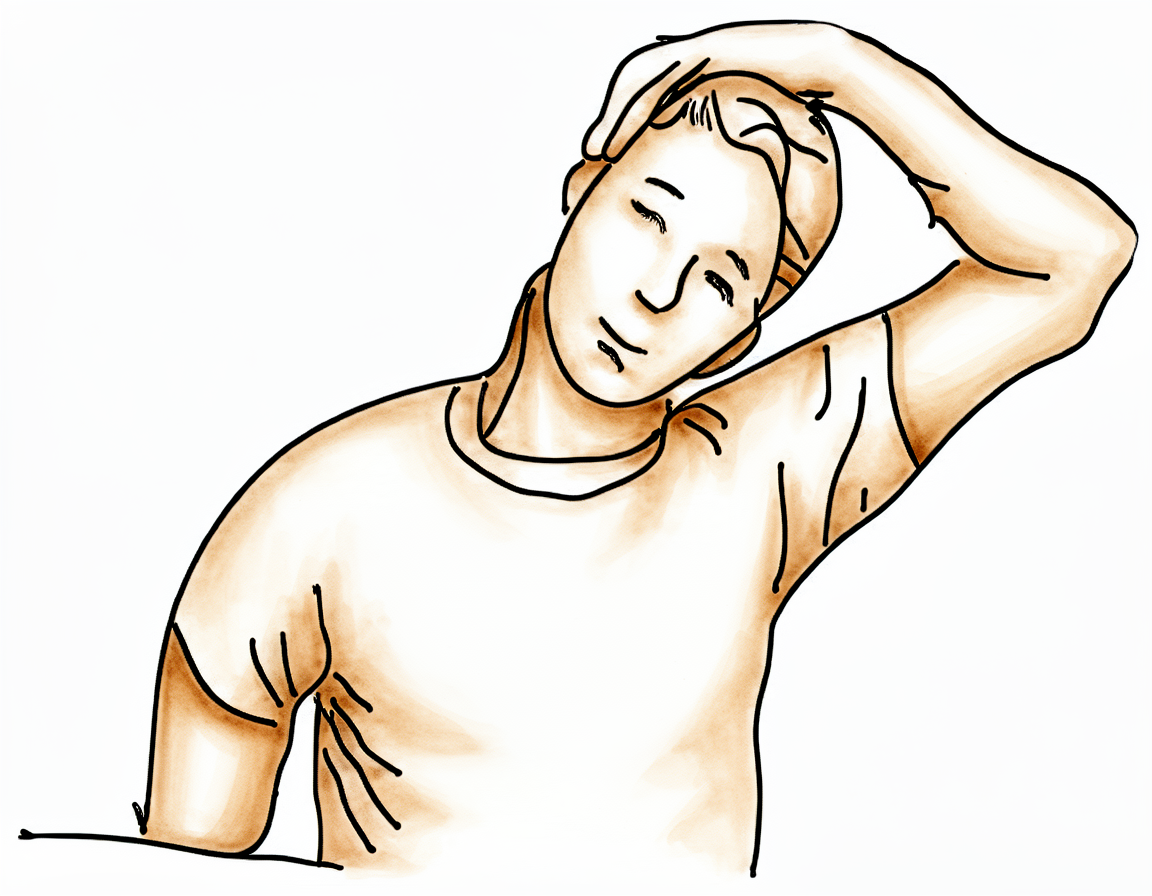
Kéo giãn cơ thang trên
Hãy dùng cánh tay chưa được phẫu thuật để đưa tai về phía vai, hướng ra xa phía cánh tay đã được phẫu thuật.
Giữ nguyên trong 10 giây, thực hiện 3 lần; lặp lại 3 lần mỗi ngày.
Kieran Hirpara 4.0
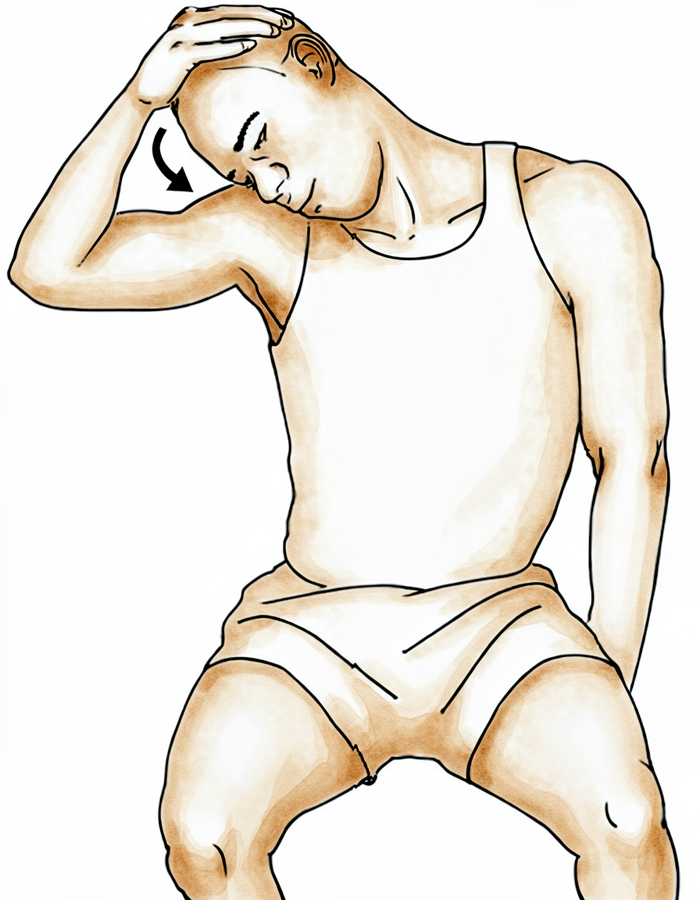
Bài tập kéo giãn cơ nâng xương bả vai
Hãy dùng cánh tay chưa được phẫu thuật để đưa mũi lại gần vùng núm vú hoặc nách của mình.
Giữ nguyên trong 10 giây, thực hiện 3 lần; lặp lại 3 lần mỗi ngày.
Giai đoạn I — Bảo vệ khớp vai (Tuần 0–3)
Kieran Hirpara 4.0
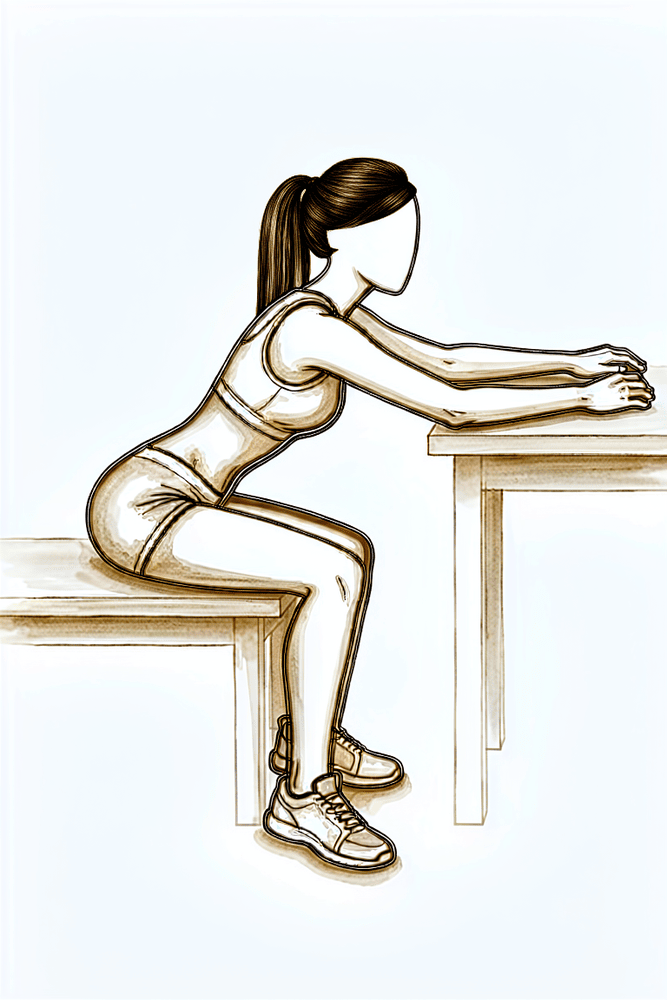
Trượt tay trên mặt bàn khi ngồi
Ngồi xuống bàn sao cho cẳng tay tựa lên mặt bàn. Từ từ nghiêng người về phía trước, để bàn tay trượt dọc theo mặt bàn; đồng thời để vai gập về phía trước mà không dùng sức cơ vai. Sau đó trượt tay trở lại vị trí ban đầu. Hãy thực hiện động tác một cách thư giãn và thoải mái.
Theo hướng dẫn của chuyên viên vật lý trị liệu của bạn.
Ba tuần đầu tiên nhằm bảo vệ khớp vai mới phẫu thuật trong quá trình hồi phục. Bạn sẽ đeo nẹp vai (giữ vai ở tư thế trung tính và đeo vào ban đêm), chườm đá và dùng băng ép để giảm sưng. Trong khi đó, chuyên viên vật lý trị liệu sẽ nhẹ nhàng vận động vai cho bạn trong phạm vi nhất định; bạn cũng cần tự vận động tay, cổ tay và khuỷu tay. Từ tuần thứ 2, bạn bắt đầu thực hiện các bài tập nhẹ cho xương bả vai và bài tập nắm bóng. Những quy tắc quan trọng nhất là: không được vận động chủ động khớp vai, không với tay ra phía sau lưng, không nâng vật nặng, và không dùng tay để đẩy lên.
Dành cho chuyên viên vật lý trị liệu:
Mục tiêu
- Bảo vệ vùng vừa được phẫu thuật
- Giảm sưng, hạn chế đau đớn
- Duy trì biên độ vận động của tay, cổ tay và khuỷu tay
- Tăng dần biên độ vận động thụ động của khớp vai (PROM)
- Giảm tình trạng ức chế cơ
- Giáo dục bệnh nhân
Cách xử lý
- Nẹp vai: giữ vai ở tư thế xoay trung tính; đeo vào ban đêm khi ngủ
- Kiểm soát sưng: chườm đá, băng ép
- Biên độ vận động/mobility:
- PROM: mức xoay ngoài (ER) không vượt quá 30 độ trên mặt phẳng xương bả vai; mức xoay trong (IR) đến mức ngang thắt lưng trên mặt phẳng xương bả vai
- Gập vai/nhấc tay lên mức chịu đựng; mức abduct (ABD) không vượt quá 90 độ; các bài tập kiểu “pendulum”; bài tập trượt trên bàn khi ngồi để gập vai; bài tập trượt ngang trên bàn khi ngồi
- AAROM: vận động gập vai có hỗ trợ
- AROM: vận động tự nhiên của khuỷu tay, tay và cổ tay
- Tăng cường sức mạnh (từ tuần thứ 2):
- Các bài tập vùng xương bả vai: kéo xương bả vai về phía sau, kéo xương bả vai khi nằm sấp, kéo xương bả vai khi đứng, bài tập trượt xương bả vai xuống dưới, bài tập kéo ngược nhẹ
- Bài tập nắm bóng
Lưu ý phòng ngừa
- Không được vận động chủ động khớp vai
- Không với tay ra phía sau lưng, đặc biệt là ở tư thế xoay trong
- Tránh xoay ngoài hoặc abduct vai quá mức
- Không nâng vật nặng
- Không dùng tay để chịu trọng lượng cơ thể
- Khi nằm ngửa, đặt gối nhỏ hoặc cuộn khăn dưới khuỷu tay để tránh tình trạng vai bị duỗi quá mức
Tiêu chí để chuyển sang giai đoạn tiếp theo
- Biên độ gập vai và nhấc tay so với bên đối diện đạt ≥ 50%
- Mức abduct PROM của vai ≤ 90 độ
- Mức xoay ngoài PROM trên mặt phẳng xương bả vai ≤ 30 độ
- Mức xoay trong PROM trên mặt phẳng xương bả vai ≥ 70 độ
- Có thể cảm nhận được sự co cơ ở các nhóm cơ vùng xương bả vai
- Mức độ đau < 4/10
- Không có biến chứng nào trong Giai đoạn I
Giai đoạn II — Trung cấp (Tuần 4–6)
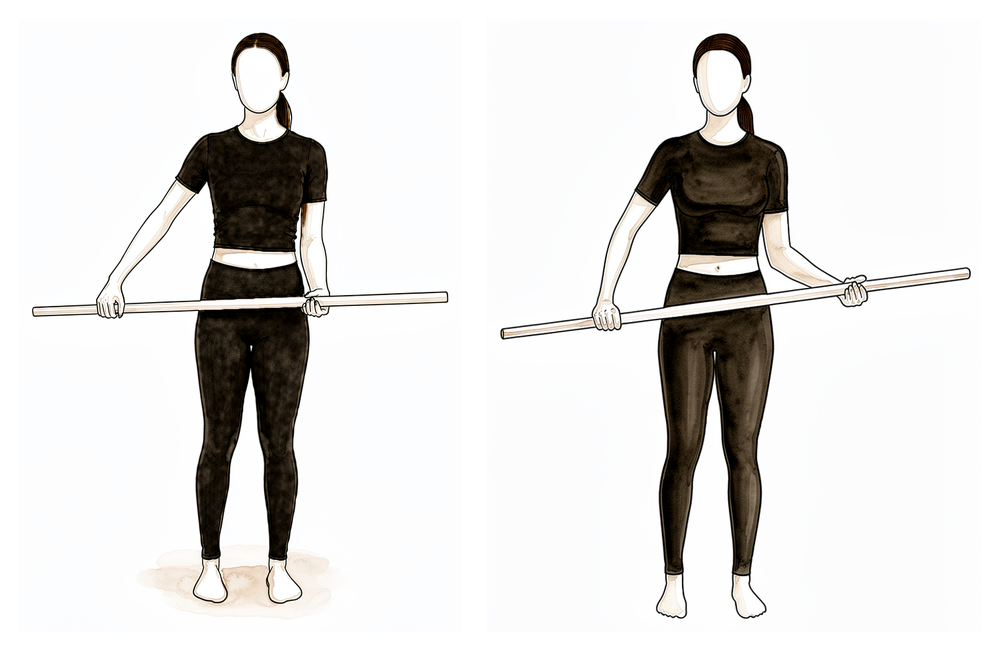
Kieran Hirpara 4.0
Kéo giãn xoay ngoài với gậy
Nằm ngửa, khuỷu tay đặt sát bên thân và gập 90 độ. Cầm một chiếc gậy hoặc cây gỗ bằng cả hai tay; dùng tay không phẫu thuật để nhẹ nhàng đẩy bàn tay vừa phẫu thuật ra ngoài. Hãy thực hiện động tác trong phạm vi giới hạn mà chuyên viên vật lý trị liệu đã đặt ra cho giai đoạn này, và tuyệt đối không được cố gắng mở rộng vượt mức đó.
Theo hướng dẫn của chuyên viên vật lý trị liệu của bạn.
Vai vẫn cần được bảo vệ, nhưng các chuyển động dần được tăng dần theo thời gian. Băng treo vẫn được sử dụng vào ban đêm; trong ngày, việc sử dụng băng treo sẽ được giảm dần trong vòng hai tuần này. Chuyên viên vật lý trị liệu sẽ tăng dần các chuyển động thụ động để đạt phạm vi vận động tối đa (vẫn nằm trong giới hạn xoay ngoài và giạng vai đã được đặt ra), sau đó thêm các chuyển động có hỗ trợ rồi đến các chuyển động chủ động; đồng thời bắt đầu các bài tập kích hoạt nhẹ nhàng cho cơ vùng vai và cơ mỏm quạ. Tuyệt đối không nâng vật gì nặng hơn một cốc cà phê; tránh các chuyển động xoay hoặc vươn tay quá mức.
Dành cho chuyên viên vật lý trị liệu:
Mục tiêu
- Tiếp tục bảo vệ vùng mô được phẫu thuật
- Giảm sưng, hạn chế đau
- Tăng dần phạm vi chuyển động thụ động của vai
- Hạn chế tối đa các chuyển động thay thế trong quá trình thực hiện chuyển động chủ động và có hỗ trợ
- Cải thiện khả năng kích hoạt và sức mạnh của các cơ vùng mỏm quạ
- Bắt đầu các bài tập kích hoạt cơ vùng vai (đặc biệt là nhóm cơ xoay ngoài)
- Giáo dục bệnh nhân
Cách xử lý
- Băng treo: sử dụng vào ban đêm khi ngủ; dần dần giảm việc dùng băng treo vào ban ngày trong hai tuần tới
- Tiếp tục áp dụng các biện pháp điều trị ở Giai đoạn I
- Phạm vi chuyển động/độ linh hoạt:
- Chuyển động thụ động: đầy đủ, trừ trường hợp xoay ngoài ≤ 30 độ trên mặt phẳng mỏm quạ và giạng vai ≤ 90 độ
- Chuyển động có hỗ trợ: gập vai dùng gậy hỗ trợ, kéo giãn xoay ngoài bằng gậy, ấn khăn ướt, nâng vai khi ngồi dùng gậy hỗ trợ
- Chuyển động chủ động: gập vai khi nằm ngửa, động tác chào, đấm tay khi nằm ngửa
- Tăng cường sức mạnh:
- Cơ vùng vai: các bài tập co cứng cơ xoay ngoài
- Cơ vùng mỏm quạ: kéo cáp trên quả bóng vật lý trị liệu, động tác đấm dùng cơ serratus
- Khớp khuỷu: gập khuỷu tay, các bài tập co cứng cơ khuỷu tay dùng dây kháng lực
- Kiểm soát vận động:
- Xoay ngoài khi nâng vai lên và gập vai 90–125 (tập luyện ổn định nhịp nhàng)
- Kéo giãn:
- Kéo giãn nội liệt ngang khi nằm nghiêng
Lưu ý phòng ngừa
- Không thực hiện các chuyển động xoay ngoài hoặc giạng vai quá mức
- Không nâng vật gì nặng hơn một cốc cà phê
- Không dùng tay để chịu đỡ trọng lượng cơ thể
- Khi nằm ngửa, đặt gối nhỏ hoặc cuộn khăn dưới khuỷu tay để tránh tình trạng vai bị duỗi quá mức
Tiêu chí để chuyển sang giai đoạn tiếp theo
- Phạm vi gập vai và nâng vai đạt ≥ 75% so với bên đối diện
- Phạm vi xoay trong vai trên mặt phẳng mỏm quạ đạt ≥ 75% so với bên đối diện
- Phạm vi xoay ngoài vai trên mặt phẳng mỏm quạ đạt 30 độ
- Phạm vi giạng vai đạt 90 độ
- Các chuyển động thay thế trong quá trình thực hiện chuyển động có hỗ trợ là tối thiểu
- Có thể nâng vai lên 100 độ bằng chuyển động chủ động mà không có nhiều chuyển động thay thế
- Mức độ đau < 4/10
- Không có biến chứng nào xảy ra trong Giai đoạn II
Giai đoạn III — Tiếp tục mức độ trung bình (Tuần 7–8)
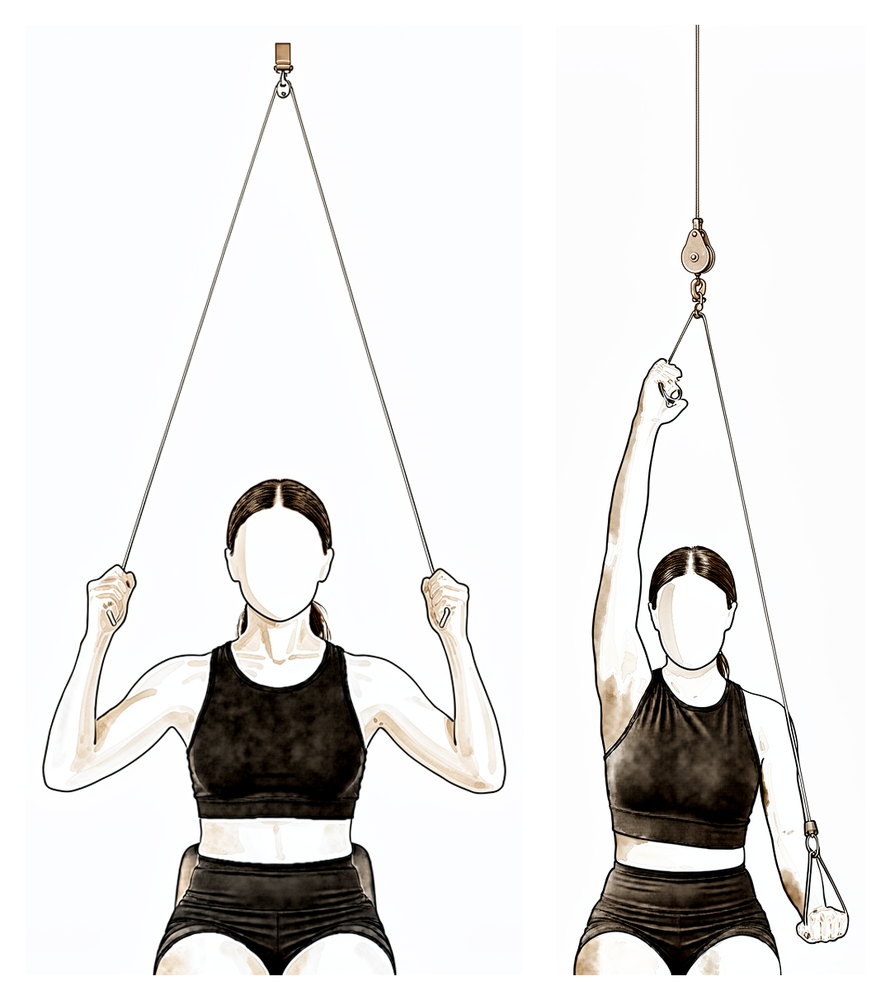
Kieran Hirpara 4.0
Ròng rọc treo cửa
Ngồi dưới hệ thống ròng rọc gắn trên cửa, hai tay cầm vào các tay cầm. Dùng tay không phẫu thuật kéo xuống để nâng cánh tay vừa được phẫu thuật lên, trong khi giữ cho cánh tay đó thả lỏng; sau đó hạ cánh tay xuống một cách chậm rãi và mượt mà.
Theo hướng dẫn của chuyên viên vật lý trị liệu của bạn.
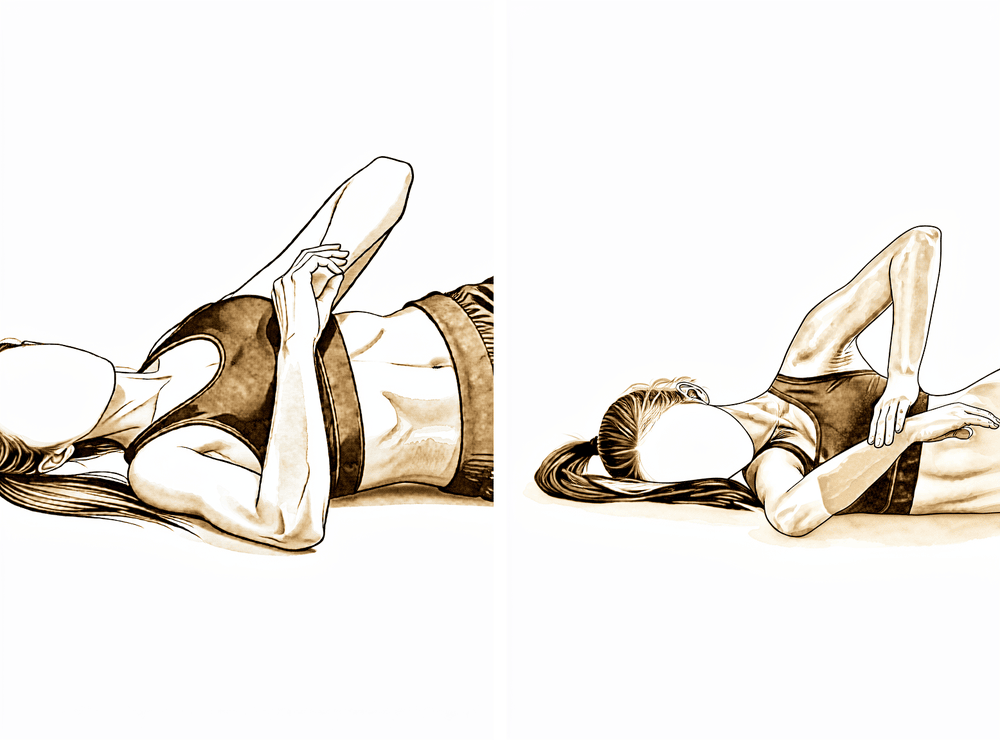
Kieran Hirpara 4.0
Kéo giãn tư thế nằm nghiêng (sleeper stretch)
Nằm nghiêng về phía được phẫu thuật, duỗi tay ra phía trước ngang tầm vai và gập khuỷu tay thành góc 90 độ. Dùng tay còn lại nhẹ nhàng ấn cẳng tay xuống giường cho đến khi bạn cảm nhận được sự giãn căng dễ chịu ở phía sau vai. Tuyệt đối không cố gắng kéo căng quá mức.
Theo hướng dẫn của chuyên viên vật lý trị liệu của bạn.
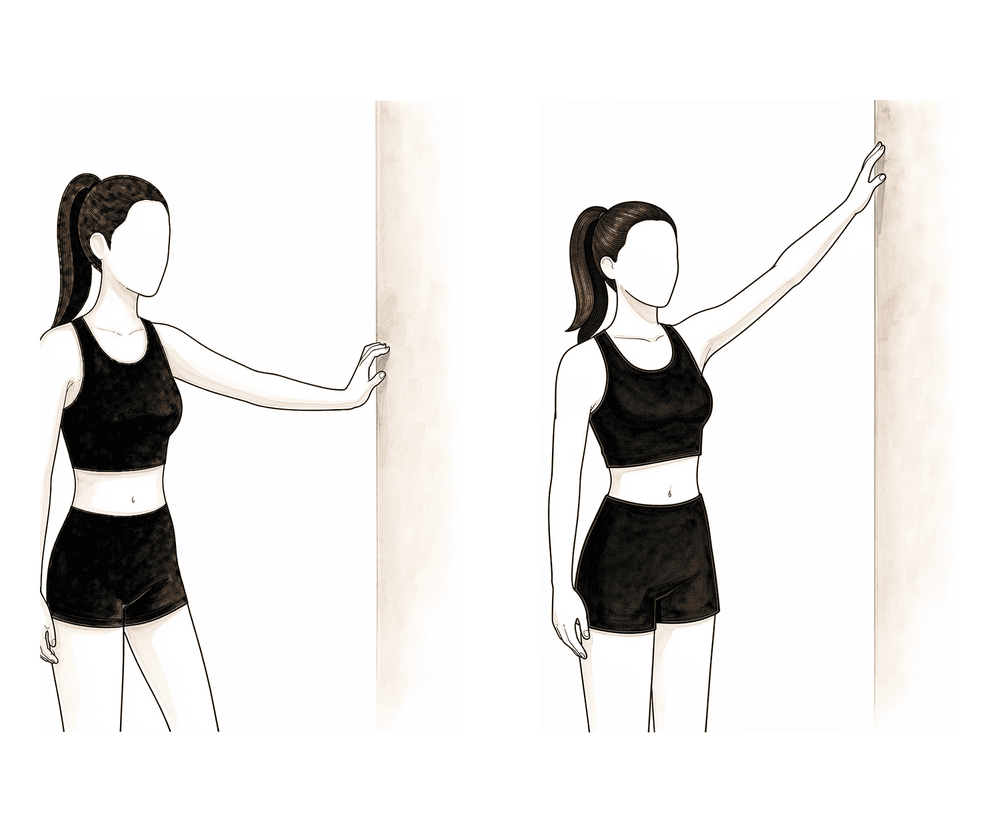
Kieran Hirpara 4.0
Di chuyển dọc theo tường sang phía bên
Đứng hướng ngang về phía tường, đặt đầu ngón tay lên bề mặt tường. Dùng các ngón tay di chuyển dần lên phía trên dọc theo tường sang bên hông, đồng thời nâng cánh tay lên mức thoải mái nhất; sau đó từ từ hạ cánh tay xuống lại một cách có kiểm soát. Bức tường sẽ giúp nâng đỡ cánh tay trong quá trình bạn khôi phục khả năng vận động sang bên hông.
Theo hướng dẫn của chuyên viên vật lý trị liệu của bạn.
Hiện tại, việc sử dụng đai treo đã kết thúc; mục tiêu là khôi phục khả năng vận động đầy đủ theo mọi hướng, với sự hỗ trợ khi cần thiết và dần dần thực hiện hoàn toàn bằng sức của bản thân. Các bài tập tăng cường sức mạnh cũng được tăng cường, bao gồm việc sử dụng dây kháng lực để rèn luyện cơ vùng vai và cơ mỏm vai; bạn có thể quay lại thực hiện mọi hoạt động sinh hoạt hàng ngày. Vẫn còn hai hạn chế cần tuân thủ: không nâng vật nặng hơn 5 kg, và không thực hiện các động tác gây căng thẳng quá mức lên mô mềm đang hồi phục ở phía trước vai.
Dành cho chuyên viên vật lý trị liệu:
Mục tiêu
- Không gây áp lực quá mức lên mô mềm đang hồi phục (đặc biệt là bao khớp vai phía trước)
- Giảm thiểu cơn đau
- Duy trì phạm vi vận động chủ động (PROM)
- Cải thiện phạm vi vận động chủ động có hỗ trợ (AROM)
- Tăng cường sức mạnh cơ vùng mỏm vai và cơ vùng quay vai
- Giúp bệnh nhân trở lại các hoạt động chức năng bình thường
- Giáo dục bệnh nhân
Cách xử lý
- Đai treo: ngừng sử dụng
- Tiếp tục áp dụng các biện pháp can thiệp từ Giai đoạn I và II
- Phạm vi vận động / tính linh hoạt:
- Đạt phạm vi vận động đầy đủ trên mọi mặt phẳng
- AAROM: trượt trên bàn nghiêng, lăn bóng dọc tường, leo tường, sử dụng ròng rọc
- AROM: nâng tay ngang ở tư thế ngồi, gập tay ở tư thế ngồi, nâng tay về phía trước khi nằm ngửa với sức cản từ dây kháng lực đến góc 90 độ
- Tăng cường sức mạnh:
- Cơ vùng quay vai: co cứng cơ xoay trong, xoay ngoài khi nằm nghiêng, xoay ngoài và xoay trong khi đứng dùng dây kháng lực, các động tác xoay trong và xoay ngoài
- Cơ vùng mỏm vai: duỗi vai dùng dây kháng lực, kéo dây ngồi, chèo thuyền, các động tác vung tay như cắt cỏ
- Kiểm soát vận động:
- Xoay trong/xoay ngoài và gập vai 90–125 (ổn định nhịp nhàng)
- Tư thế quỳ bốn chân kết hợp co cứng cơ xen kẽ với việc giữ thăng bằng trên quả bóng dọc tường
- Kích hoạt thần kinh cơ cảm giác (PNF): nâng tay theo kiểu chéo D1, nâng tay theo kiểu chéo D2
- Giãn cơ:
- Xoay trong tay ra phía sau lưng dùng khăn, đưa tay ngang khi nằm nghiêng, các bài tập giãn cơ kiểu “sleeper stretch”, giãn cơ tam đầu và cơ rộng lưng
Lưu ý phòng ngừa
- Không nâng vật nặng (> 5 kg)
Tiêu chí để chuyển sang giai đoạn tiếp theo
- Không hoặc ít xuất hiện các kiểu vận động thay thế khi thực hiện AROM ở vai
- Mức độ đau < 4/10
Giai đoạn IV — Giai đoạn chuyển tiếp (Tuần 9–11)
Kieran Hirpara 4.0
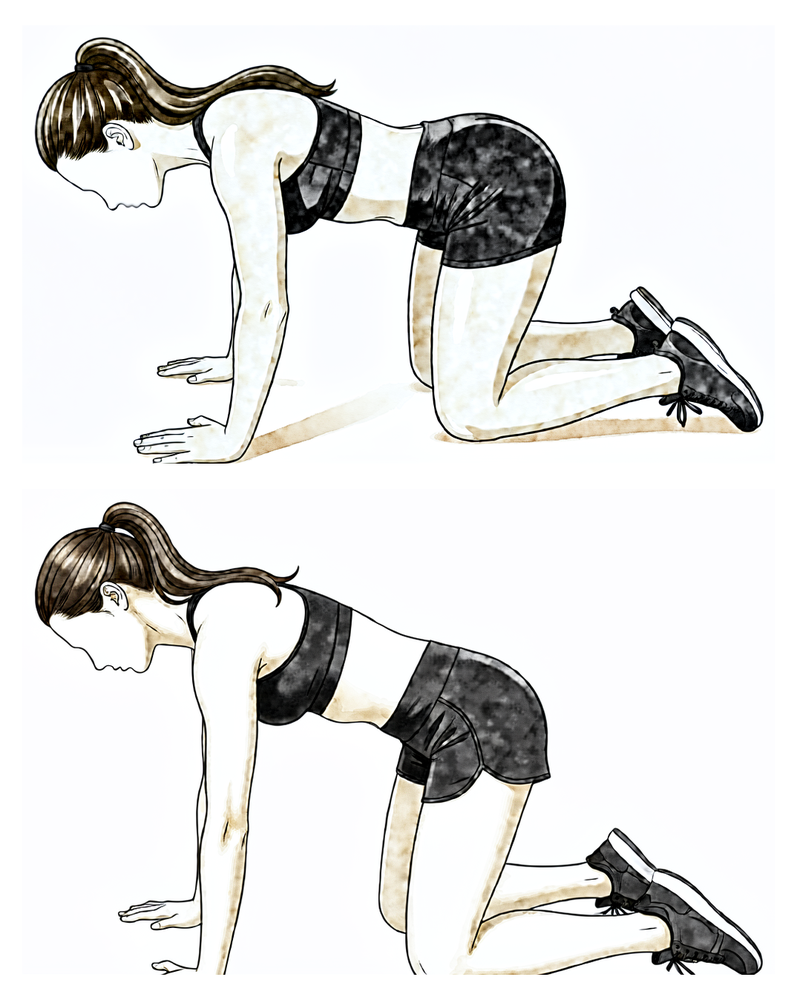
Chống đẩy cộng (push-up plus) trên đầu gối
Từ tư thế hít đất trên đầu gối, hai tay đặt dưới vai; giữ khuỷu tay thẳng và đẩy vùng lưng trên hướng lên trần nhà, để hai bả vai tách rời ra, sau đó hạ người xuống một cách từ từ và kiểm soát được chuyển động.
Theo hướng dẫn của chuyên viên vật lý trị liệu của bạn.
Lúc này, các chuyển động đã trở nên trơn tru và thoải mái; giai đoạn này nhằm giúp khớp vai trở nên vững chắc và ổn định hơn. Mức độ kháng lực trong các bài tập vùng cơ chóp xoay được tăng lên; các bài tập tác động lên vùng xương bả vai cũng được mở rộng; các bài tập kiểm soát vận động giúp thử thách khả năng vận động của vai theo các mẫu hình chéo, mang tính chức năng. Giới hạn nâng vật nặng 5 kg vẫn được áp dụng; các tư thế gây căng thẳng cho mặt trước khớp vai (xoay cánh tay ra ngoài khi nâng tay lên cao hơn 80 độ so với mặt phẳng ngang) vẫn cần tránh.
Dành cho chuyên viên vật lý trị liệu:
Mục tiêu
- Không gây áp lực quá mức lên mô đang hồi phục (đặc biệt là màng bao khớp phía trước)
- Duy trì phạm vi chuyển động chủ động không gây đau
- Tiếp tục cải thiện phạm vi chuyển động chủ động có sự hỗ trợ
- Nâng cao khả năng ổn định động học của khớp vai
- Dần dần phục hồi sức mạnh và sức bền cho khớp vai
Cách thức thực hiện
- Tiếp tục áp dụng các biện pháp điều trị từ Giai đoạn II–III
- Phạm vi chuyển động / tính linh hoạt:
- Đạt phạm vi chuyển động đầy đủ ở mọi mặt phẳng
- Tăng cường sức mạnh:
- Vùng cơ chóp xoay: tăng mức độ kháng lực trong các bài tập vùng này
- Vùng xung quanh xương bả vai: bài tập hít đất kiểu “push-up plus” trên đầu gối, bài tập hình chữ “W”, các bài tập dùng dây kháng lực theo hình chữ “W”, bài tập ôm động, bài tập ôm động dùng dây kháng lực, bài tập duỗi vai nằm sấp, bài tập đấm thẳng về phía trước dùng dây kháng lực, bài tập đấm thẳng, bài tập “tripod”, bài tập “pointer”
- Kiểm soát vận động:
- Các bài tập theo mẫu hình PNF dùng dây kháng lực; các bài tập nâng vật theo mẫu hình chéo D1 có kháng lực; các bài tập trượt tường theo hướng chéo lên và chéo xuống có dùng dây kháng lực
Lưu ý phòng ngừa
- Không nâng các vật nặng (> 5 kg)
- Tránh các bài tập gây áp lực lên màng bao khớp vai phía trước (tức là tránh xoay ngoài vai khi góc nâng tay vượt quá 80 độ so với mặt phẳng ngang)
Tiêu chí để chuyển sang giai đoạn tiếp theo
- Góc gập vai chủ động nằm ngửa ≥ 140 độ
- Góc dạng vai chủ động nằm ngửa ≥ 120 độ
- Góc xoay ngoài vai chủ động nằm ngửa trên mặt phẳng xương bả vai ≥ 60 độ
- Góc xoay trong vai chủ động nằm ngửa trên mặt phẳng xương bả vai ≥ 70 độ
- Có thể nâng tay lên đến 120 độ mà không xuất hiện các chuyển động thay thế không mong muốn
- Thực hiện tốt tất cả các bài tập, thể hiện cơ chế vận động của xương bả vai đối xứng
- Mức độ đau < 2/10
Giai đoạn V — Tăng cường sức mạnh nâng cao (Tuần 12–16)
Kieran Hirpara 4.0
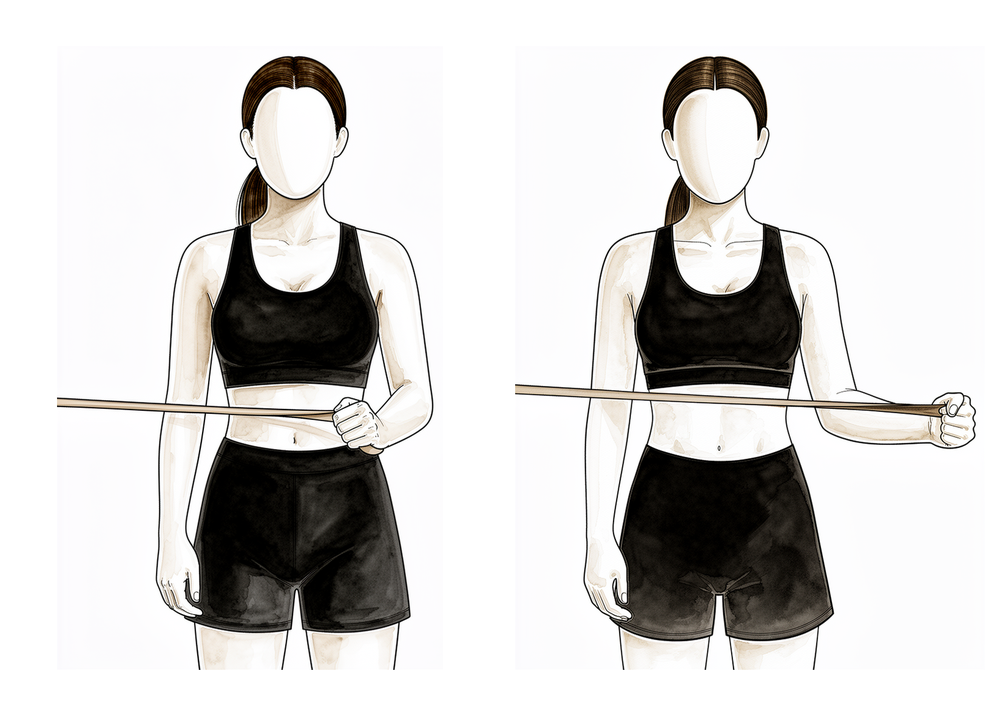
Xoay ngoài ở tư thế đứng, tay dạng 90 độ (dây kháng lực)
Đứng thẳng, giơ tay lên ngang vai về phía bên, khuỷu tay gập 90 độ. Xoay cẳng tay hướng lên trên chống lại lực căng của dây kháng lực nhẹ, sau đó hạ tay trở lại một cách từ từ và kiểm soát được chuyển động.
Theo hướng dẫn của chuyên viên vật lý trị liệu của bạn.
Kieran Hirpara 4.0
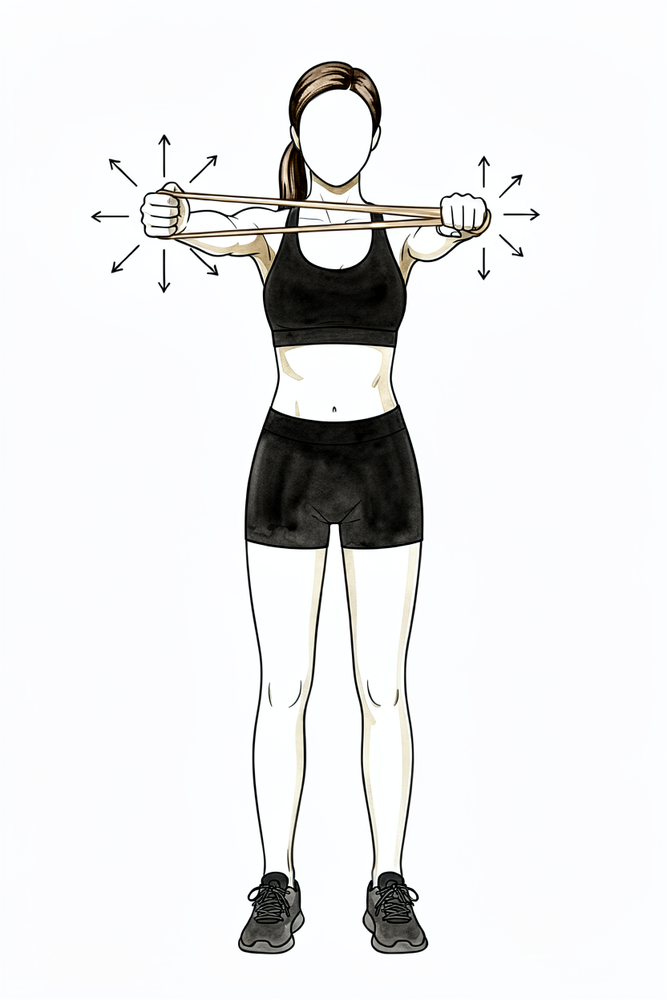
Ổn định theo nhịp điệu
Khi đặt cánh tay lên phía trước ở độ cao ngang vai, hãy nhờ chuyên viên vật lý trị liệu (hoặc tay lành của bạn) thực hiện những lực đẩy nhỏ, nhẹ nhàng từ nhiều hướng khác nhau; trong lúc đó bạn hãy giữ cánh tay cố định, không được để nó di chuyển. Phương pháp này giúp rèn luyện các cơ ổn định vai để chúng phản ứng kịp thời. Hãy đảm bảo mọi lực tác động đều ở mức nhẹ nhàng.
Theo hướng dẫn của chuyên viên vật lý trị liệu của bạn.
Giai đoạn cuối cùng này nhằm chuẩn bị cho vai để thực hiện mọi hoạt động mong muốn: tăng cường sức mạnh và sức bền ở các tư thế cao hơn, bao gồm các bài tập xoay vai khi tay nâm ở góc 90 độ, đồng thời nâng cao khả năng ổn định của vai khi vận động trên cao. Việc vượt qua phác đồ này (kể cả việc trở lại tập luyện thể thao) chỉ được thực hiện sau khi đã đạt đủ mọi mục tiêu đã đề ra và có sự cho phép của bác sĩ phẫu thuật; đối với các vận động viên, quyết định này được đưa ra dựa trên từng cá nhân chứ không dựa vào thời gian cụ thể.
Dành cho chuyên viên vật lý trị liệu:
Mục tiêu
- Duy trì phạm vi vận động không gây đau
- Tăng cường sức mạnh và sức bền của vai
- Nâng cao khả năng vận dụng chi trên trong sinh hoạt hàng ngày
Cách thức thực hiện
- Tiếp tục thực hiện các bài tập thuộc Giai đoạn II–IV
- Tăng cường sức mạnh:
- Cơ vùng quanh khớp vai: xoay ngoài ở góc 90 độ, xoay trong ở góc 90 độ; các bài tập xoay ngoài/xoay trong với dây kháng lực khi đứng ở góc 90 độ
- Cơ vùng quanh xương bả vai: các bài tập dạng chữ T và chữ Y, bài tập “T”, bài tập hít đất với đầu gối duỗi thẳng, bài tập hít đất sát tường
- Kiểm soát vận động:
- Nâng dần độ khó bằng cách thực hiện các bài tập ổn định bóng trên tường, chuyển sang các bài tập giữ nguyên tư thế hoặc ổn định nhịp nhàng khi tay nâm trên cao
Tiêu chí để chuyển sang giai đoạn tiếp theo
- Đã nhận được sự cho phép từ bác sĩ và đạt đủ mọi tiêu chí đã đề ra
- Vẫn duy trì được phạm vi vận động chủ động và thụ động mà không gây đau
- Thực hiện đầy đủ các bài tập với cơ chế vận động của xương bả vai đối xứng
- Điểm số đánh giá theo thang QuickDASH và ASES đạt mức mong muốn
Trở lại tập luyện thể thao
- Đối với vận động viên nghiệp dư hay chuyên nghiệp, việc quyết định khi nào có thể trở lại thi đấu cần được cân nhắc kỹ lưỡng dựa trên nhiều yếu tố như mức độ vận động của chi trên, tính chất môn thể thao (có va chạm hay không), tần suất tham gia, v.v. Cần trao đổi kỹ lưỡng với bác sĩ phẫu thuật trước khi bắt đầu chương trình phục hồi chức năng nhằm trở lại thi đấu.
Sau khi thực hiện theo quy trình
Quy trình này được sử dụng kết hợp với các hướng dẫn phục hồi chung của phòng khám; vui lòng tham khảo mục xử lý cơn đau sau phẫu thuật và chăm sóc vết thương. Đối với nội dung liên quan đến ca phẫu thuật, hãy xem mục thay khớp vai toàn phần. Các bằng chứng khoa học chứng minh hiệu quả của quy trình này, cũng như lý do vì sao giai đoạn đầu hậu phẫu giúp bảo vệ vết khâu cơ dưới mỏm vai, đều được tóm tắt trong mục “Bằng chứng khoa học”. Tài liệu này có sẵn dưới dạng tệp PDF ở đầu trang.
Evidence & references
This is the clinical evidence summary written for health professionals. It is technical, and it lists the research this page was built from. You do not need to read it to understand your treatment or to make a decision about it.
Anatomic Total Shoulder Arthroplasty — Post-operative Rehabilitation
Topic scope: Post-operative rehabilitation after anatomic total shoulder arthroplasty (aTSA) for glenohumeral arthritis. (Reverse total shoulder arthroplasty has a different rehab logic — see the reverse-shoulder-arthroplasty protocol; the early in-hospital phase of either is covered by the inpatient-shoulder-replacement protocol.)
Defining principle of this rehab — PROTECT THE SUBSCAPULARIS: to reach the joint in an anatomic TSA the surgeon usually takes down and then repairs the subscapularis (by tenotomy, peel, or a lesser-tuberosity osteotomy). That repair is the structure rehabilitation must protect. So the early plan is the mirror image of a frozen-shoulder release: external rotation is limited, and active/resisted internal rotation is delayed, to avoid pulling the subscapularis repair apart — while early passive forward elevation is encouraged so the shoulder does not stiffen. This subscapularis-protection logic is the key difference from reverse arthroplasty (which usually has no subscapularis repair to guard) and the reason aTSA rehab is more measured.
A. THE PROCEDURE (what is being protected)
Anatomic TSA resurfaces the arthritic joint with a metal humeral head and a plastic glenoid, restoring the normal ball-and-socket mechanics — which depends on an intact, balanced rotator cuff (the indication that distinguishes it from reverse arthroplasty). The subscapularis management is the rehab-defining variable:
- Subscapularis tenotomy / peel with tendon-to-tendon or transosseous repair, or
- Lesser-tuberosity osteotomy (LTO) — repaired bone-to-bone.
Either way, the repair governs the early external-rotation limit and the delay before active and resisted internal rotation. The specific ER ceiling and the IR-loading timeline are surgeon-set (they depend on repair quality and tissue) — the patient protocol follows the surgeon's chosen limits, and the phase table below reflects them.
B. POST-OPERATIVE PHASED TIMELINE (subscapularis-protective)
Consistent with the protocol's phases (Protection → Intermediate → Transitional → Advanced). Sling supports the arm; passive elevation early; ER capped and active/resisted IR withheld until the subscapularis has healed.
| Phase | Window | Sling | ROM | Strengthening | Notes |
|---|---|---|---|---|---|
| I — Protection | Week 0–3 | Full-time (off for hygiene + exercises) | Passive elevation + gentle ER to the surgeon's limit only; pendulums; hand/elbow free | None | Protect subscapularis repair; no active shoulder motion; no behind-the-back / forced ER |
| II — Intermediate | Week 4–6 | Weaning | Progress passive → active-assisted elevation; ER advanced within limit | Scapular setting / isometrics as allowed | Subscapularis still protected — no resisted internal rotation |
| III — Intermediate continued | Week 7–8 | Off | Active ROM all planes progressing toward full | Begin gentle cuff (incl. graded IR) + scapular work | Subscapularis repair healing — IR loading introduced cautiously |
| IV — Transitional | Week 9–11 | Off | Full active ROM goal | Progressive resistance, low load → higher | — |
| V — Advanced strengthening | Week 12–16 | Off | Full, incl. rotation at 90° abduction | Advanced strength/endurance; overhead stability | Return to sport/heavy use on surgeon clearance, individualised |
C. KEY CONTROVERSIES / EVIDENCE QUALITY
- Subscapularis management — tenotomy vs peel vs lesser-tuberosity osteotomy. Healing and functional-IR recovery drive the ER-restriction and IR-loading timeline; biomechanical and clinical data inform but do not settle the choice. Moderate (biomechanical + cohort).
- Early vs delayed / immobilisation — a single-blind RCT comparing early rehabilitation versus immobilisation after shoulder arthroplasty found broadly comparable outcomes, supporting a measured but not ultra-conservative early plan; subscapularis protection remains the governing constraint. Moderate (RCT).
- The phase timeline itself is consensus/expert (institutional protocols — MGH, BWH — and surgeon practice), not a defining rehab RCT. Phase weeks are typical, surgeon-adjustable. Weak/consensus.
D. EVIDENCE STRENGTH FLAGS (summary)
- MODERATE (RCT / biomechanical / cohort): early-rehab-vs-immobilisation after shoulder arthroplasty (RCT); subscapularis repair-technique biomechanics; durability/outcome of aTSA.
- WEAK / CONSENSUS: the specific subscapularis-protective phase structure and ER/IR restriction timings (institutional protocols + surgeon preference; no defining rehab RCT).
- CONTEXT: the protocol's measured early phase is appropriately keyed to subscapularis healing rather than the calendar.
CITATIONS
RAG corpus (180,000+ Orthopaedic articles)
- A randomized single-blinded trial of early rehabilitation versus immobilization after shoulder arthroplasty. J Shoulder Elbow Surg. 2020. DOI: 10.1016/j.jse.2019.10.005
- A biomechanical evaluation of three surgical techniques for subscapularis repair. J Shoulder Elbow Surg. 2007. DOI: 10.1016/j.jse.2007.04.016
- Deltoid fatigue part 2: a longitudinal assessment of anatomic total shoulder arthroplasty. J Shoulder Elbow Surg. 2021. DOI: 10.1016/j.jse.2021.07.019
Published rehab protocols (basis for the phase structure)
- Massachusetts General Brigham Sports Medicine. Rehabilitation Protocol for Total Shoulder Arthroplasty and Hemiarthroplasty (rev. Dec 2018). https://www.massgeneral.org/assets/MGH/pdf/orthopaedics/sports-medicine/physical-therapy/rehabilitation-protocol-for-total-shoulder-arthroplasty-and-hemi.pdf
- Brigham and Women's Hospital. Total Shoulder Arthroplasty / Hemiarthroplasty Protocol. https://www.brighamandwomens.org/assets/bwh/patients-and-families/pdfs/shoulder---total-shoulder-arthroplasty-protocol.pdf
Note on the rehab evidence: there is no single defining RCT for the anatomic-TSA rehab protocol. The phase structure is the originating-institution / surgeon consensus, and the external-rotation ceiling and internal-rotation loading timeline are deliberately keyed to subscapularis repair healing — a surgeon-set, tissue-dependent decision. Treat phase weeks as typical, surgeon-adjustable defaults.