Patients › Rehabilitation
Viêm lồi cầu trong xương cánh tay (khuỷu tay người chơi golf)
Phục hồi chức năng dựa trên tải lực dành cho khuỷu tay người chơi golf (bệnh lý thoái hóa gân nhóm cơ gấp – sấp), bao gồm sàng lọc dây thần kinh trụ, bài tập tải lệch tâm kiểu xoắn Tyler ngược, cùng một lộ trình hậu phẫu riêng cho số ít người cần phẫu thuật.
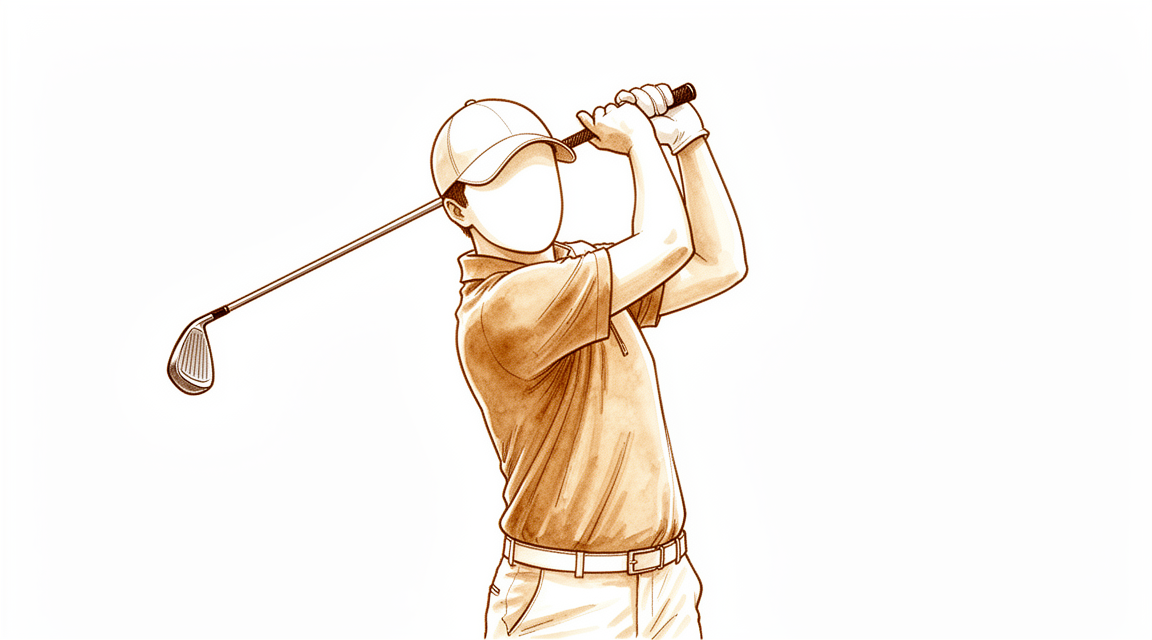
Trang này hướng dẫn quá trình hồi phục của bạn sau viêm lồi cầu trong xương cánh tay (thường được gọi là khuỷu tay người chơi golf) dưới sự chăm sóc của Bác sĩ Kieran Hirpara tại Bệnh viện tư nhân Mater Rockhampton. Hầu hết mọi người đều hồi phục hoàn toàn mà không cần phẫu thuật, và nền tảng của việc điều trị là một chương trình tập luyện đều đặn, dựa trên tải lực, chứ không phải nghỉ ngơi. Trang bắt đầu bằng chương trình bài tập tại nhà của bạn, sau đó là quy trình lâm sàng có cấu trúc được soạn dành cho chuyên viên vật lý trị liệu hoặc chuyên gia trị liệu tay của bạn; hãy mang theo trang này hoặc bản PDF của nó trong buổi trị liệu đầu tiên để quá trình phục hồi được phối hợp nhất quán. Chuyên viên trị liệu có thể điều chỉnh kế hoạch tùy theo tiến triển hồi phục của bạn.
Nếu bạn bị ngứa ran như kim châm, tê hoặc yếu ở ngón út và ngón áp út, hãy báo cho phòng khám hoặc chuyên viên trị liệu; dây thần kinh trụ chạy ngay phía sau mặt trong khuỷu tay và đôi khi cần được chú ý riêng.
Những điều bạn có thể mong đợi
Khuỷu tay người chơi golf là một tình trạng hao mòn (thoái hóa) của các gân ở mặt trong khuỷu tay: các gân nhóm cơ gấp – sấp, có chức năng gập cổ tay và xoay úp lòng bàn tay xuống, tại chỗ chúng bám vào chỗ lồi xương gọi là lồi cầu trong. Mặc dù có tên gọi cũ là “viêm lồi cầu”, thực chất đây không hẳn là tình trạng viêm; gân đã bị suy yếu và mất cấu trúc do quá tải. Vì vậy, phương pháp điều trị hiện đại không phải là nghỉ ngơi và thuốc chống viêm, mà là một chương trình tăng dần, tải nhẹ nhàng lên gân để đưa gân trở lại sức mạnh đầy đủ.
Quá trình hồi phục đòi hỏi sự kiên nhẫn. Khuỷu tay người chơi golf nhìn chung sẽ tự khỏi, nhưng có thể mất từ 6 đến 18 tháng mới hết hẳn. Tin vui là đại đa số mọi người sẽ khỏi nhờ một chương trình điều trị bảo tồn tốt và không bao giờ cần phẫu thuật. Phẫu thuật chỉ được cân nhắc khi đã điều trị trị liệu có chất lượng trong ít nhất sáu tháng mà không thành công.
Một đặc điểm khiến mặt trong khuỷu tay khác với mặt ngoài (khuỷu tay quần vợt) là dây thần kinh trụ (dây thần kinh ở “chỗ tê buốt” của khuỷu tay), chạy trong một rãnh ngay phía sau lồi cầu trong. Khoảng một nửa số người bị khuỷu tay người chơi golf cũng có một mức độ kích thích dây thần kinh này, vì vậy chuyên viên trị liệu sẽ kiểm tra nó trong mỗi buổi và có thể bổ sung các bài tập trượt dây thần kinh chuyên biệt.
Các biện pháp phòng ngừa và hạn chế
Nên làm:
- Tiếp tục sử dụng cánh tay cho các hoạt động sinh hoạt hàng ngày bình thường trong giới hạn thoải mái.
- Điều chỉnh, thay vì ngừng hẳn, các hoạt động làm triệu chứng bùng phát.
- Đeo nẹp chống lực trên khối cơ cẳng tay trong các hoạt động gây nặng triệu chứng nếu thấy có ích.
- Thực hiện các bài kéo giãn và bài tập tải lực đều đặn; sự đều đặn quan trọng hơn cường độ.
Không nên làm:
- Không để khuỷu tay nghỉ hoàn toàn hoặc bó bột; gân cần được tải nhẹ nhàng để lành.
- Tránh các hoạt động gây tải vẹo ngoài (valgus) nặng trong giai đoạn đầu: chơi golf, ném (đặc biệt là pha vung tay chuẩn bị và pha tăng tốc), bơi lội và các môn thể thao dùng vợt, cho đến khi sức mạnh được xây dựng lại.
- Không tập bất kỳ bài nào đến mức đau nhói, và không tập trượt dây thần kinh đến mức gây cảm giác kim châm hoặc tê.
- Nếu các triệu chứng dây thần kinh trụ (ngứa ran hoặc tê ở ngón út và ngón áp út) nặng hơn, hãy giảm bớt và đi khám lại trước khi tăng mức tải.
Các bài tập của bạn
Kieran Hirpara 4.0
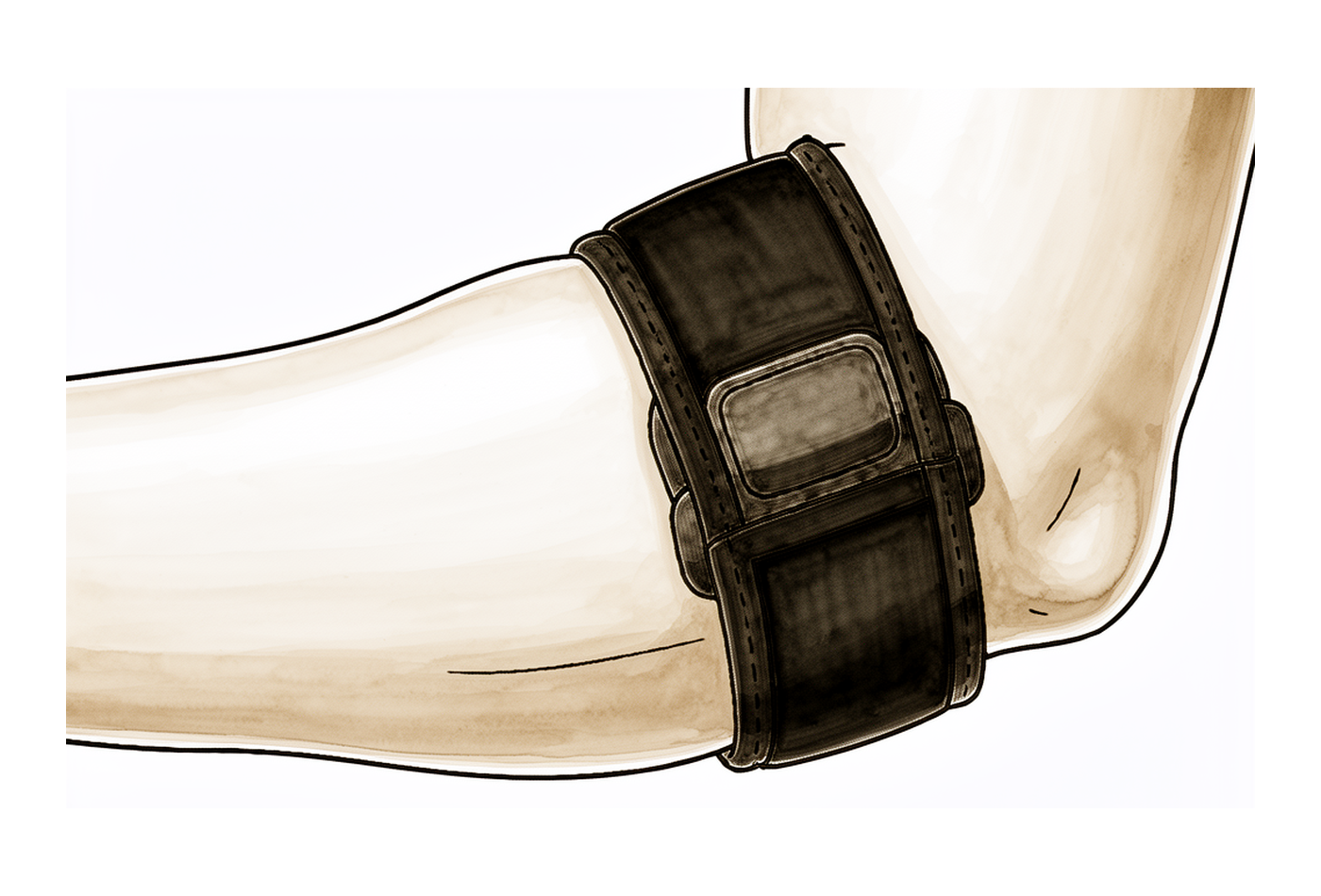
Nẹp chống lực
Đeo nẹp quanh cẳng tay, bên dưới mặt trong khuỷu tay vài centimet, trên khối cơ — chứ không đeo ngay trên chỗ xương nhô ra. Nẹp cần có cảm giác chắc chắn nhưng không chặt đến mức khiến bàn tay bạn ngứa ran hoặc tê. Trong những tuần đầu, hãy dùng nẹp khi thực hiện các hoạt động gây nặng triệu chứng (cầm nắm, nâng vật, chơi thể thao), và giảm dần việc sử dụng khi các triệu chứng thuyên giảm.
Trong các hoạt động gây nặng triệu chứng; giảm dần khi triệu chứng cho phép
Kieran Hirpara 4.0
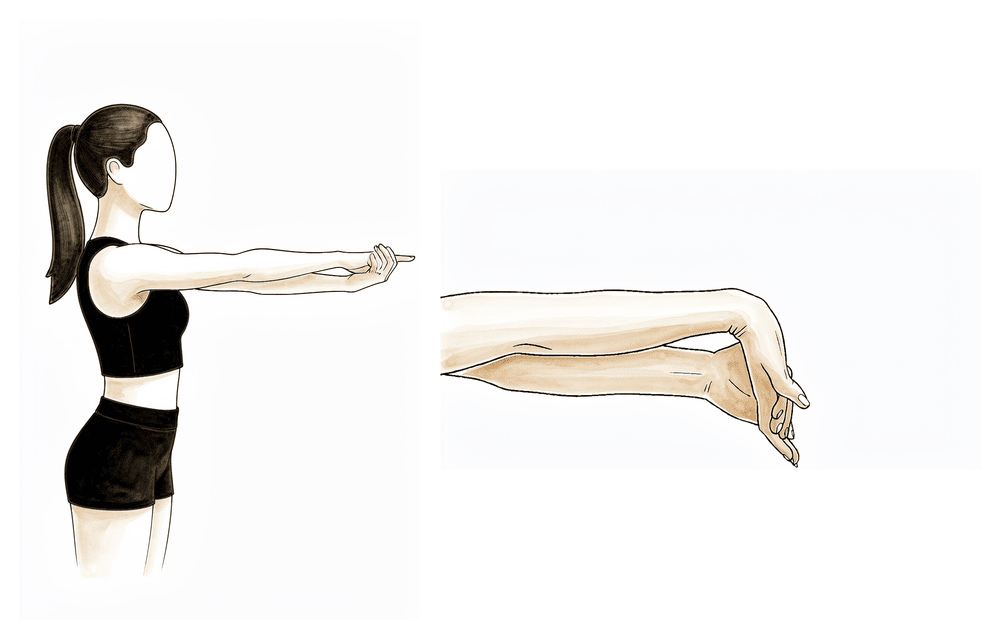
Kéo giãn cơ gấp cổ tay
Duỗi thẳng cánh tay bị ảnh hưởng ra phía trước, lòng bàn tay hướng lên trên. Dùng tay kia nhẹ nhàng kéo các ngón tay và cổ tay xuống về phía sàn cho đến khi cảm nhận được sự căng giãn dễ chịu dọc theo mặt trong cẳng tay. Lúc đầu, hãy giữ khuỷu tay gập khoảng 90°; khi đã tiến bộ, hãy thực hiện động tác này với khuỷu tay duỗi thẳng. Giữ yên, không nhún.
Giữ trong 20–30 giây, 3–5 lần, 2–3 lần mỗi ngày.
Kieran Hirpara 4.0
Kéo giãn cơ sấp
Giữ khuỷu tay sát vào thân mình, xoay lòng bàn tay úp xuống sàn. Dùng tay kia nhẹ nhàng xoay cẳng tay thêm một chút nữa theo hướng úp lòng bàn tay, cho đến khi bạn cảm nhận được sự căng giãn nhẹ ở mặt trong cẳng tay. Thực hiện nhẹ nhàng và không gây đau.
Giữ trong 20–30 giây, 3–5 lần, 2–3 lần mỗi ngày.
Kieran Hirpara 4.0
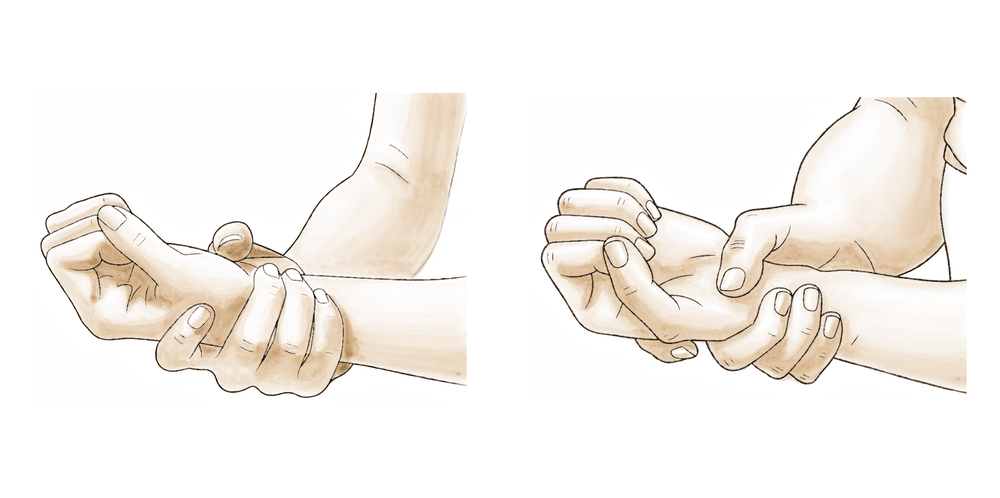
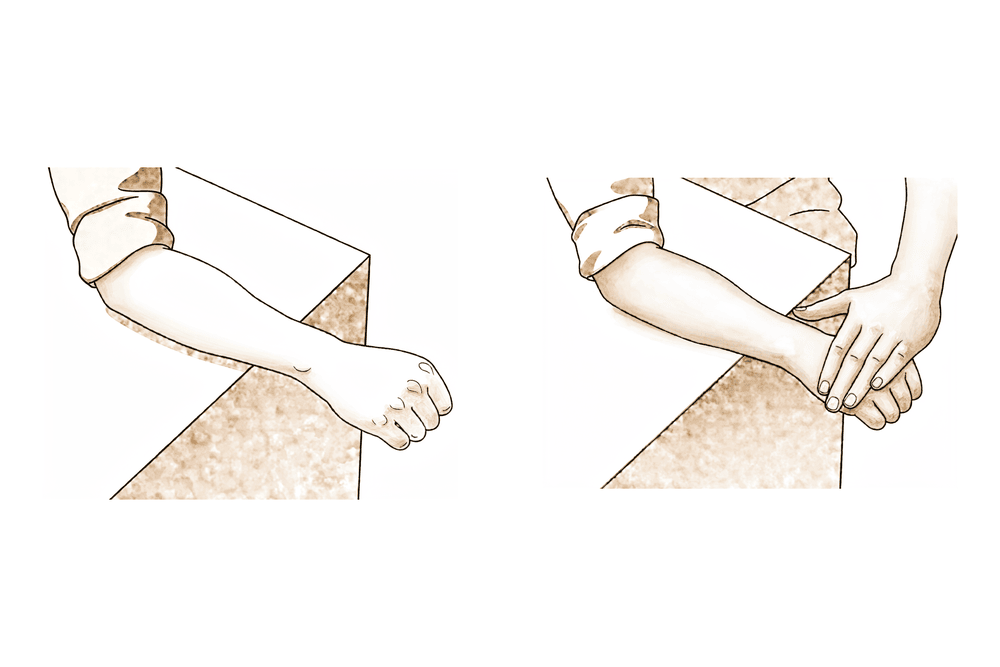
Tải đẳng trường cổ tay (nhóm cơ gấp)
Đặt cẳng tay lên bàn, lòng bàn tay hướng lên trên. Dùng lòng bàn tay còn lại ấn vào các ngón tay và cố gắng gập cổ tay lên, nhưng giữ yên để cổ tay không thực sự di chuyển — một tư thế giữ đều chống lại lực cản. Đây là bài tập giai đoạn đầu nhằm tải nhẹ nhàng lên gân và giảm đau.
Giữ 30–45 giây, 5 lần giữ, 1–2 lần mỗi ngày
Kieran Hirpara 4.0
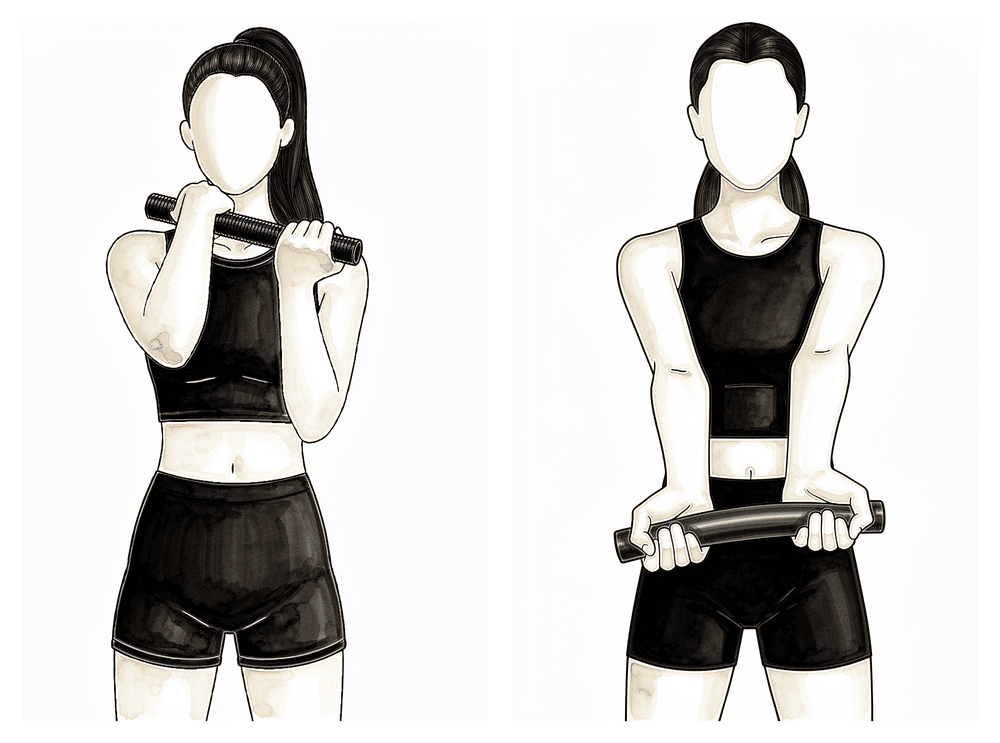
Xoắn Tyler ngược (tải lệch tâm nhóm cơ gấp)
Cầm thanh cao su tập luyện (FlexBar) bằng tay bị ảnh hưởng với cổ tay gập lên (lòng bàn tay hướng về phía bạn), rồi dùng tay lành xoắn thanh. Đưa thanh ra phía trước, sau đó từ từ để cổ tay bị ảnh hưởng duỗi ra một cách có kiểm soát trong 3–4 giây — tay lành thực hiện động tác xoắn, còn cổ tay bị ảnh hưởng thực hiện việc thả ra chậm rãi, có kiểm soát (phần “lệch tâm”). Đây là bài tập tăng cường sức mạnh chủ chốt cho khuỷu tay người chơi golf và được đưa vào khi cơn đau giai đoạn đầu đã lắng xuống (từ khoảng tuần thứ 4).
3 hiệp, mỗi hiệp 15 lần; thực hiện mỗi ngày một lần.
Kieran Hirpara 4.0
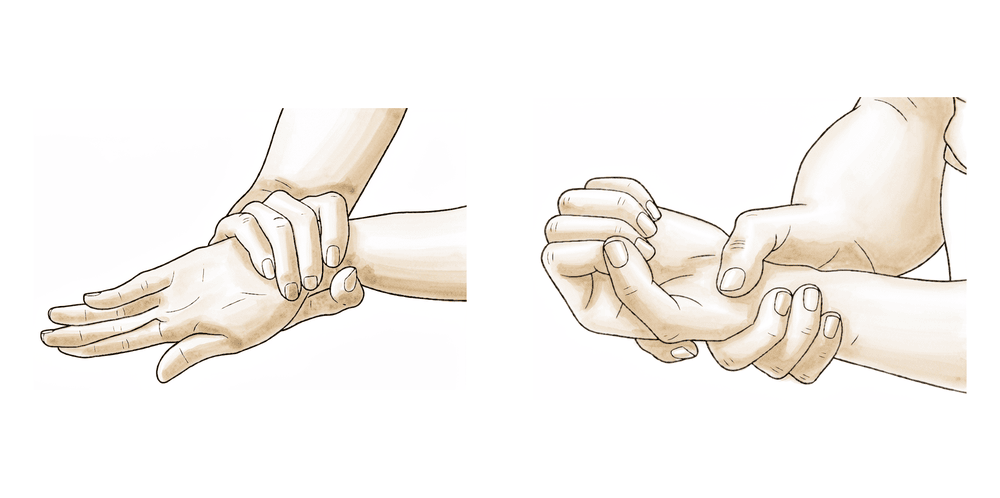
Chuyển động xoay cẳng tay
Giữ khuỷu tay sát bên thân, từ từ xoay lòng bàn tay ngửa lên trần nhà, rồi úp xuống sàn nhà, đồng thời giữ yên khuỷu tay. Bài tập này giúp các cơ xoay cẳng tay tiếp tục vận động và tải nhẹ nhàng lên các cơ sấp khi bạn tiến bộ.
10 lần theo mỗi hướng, 2–3 lần mỗi ngày.
Kieran Hirpara 4.0
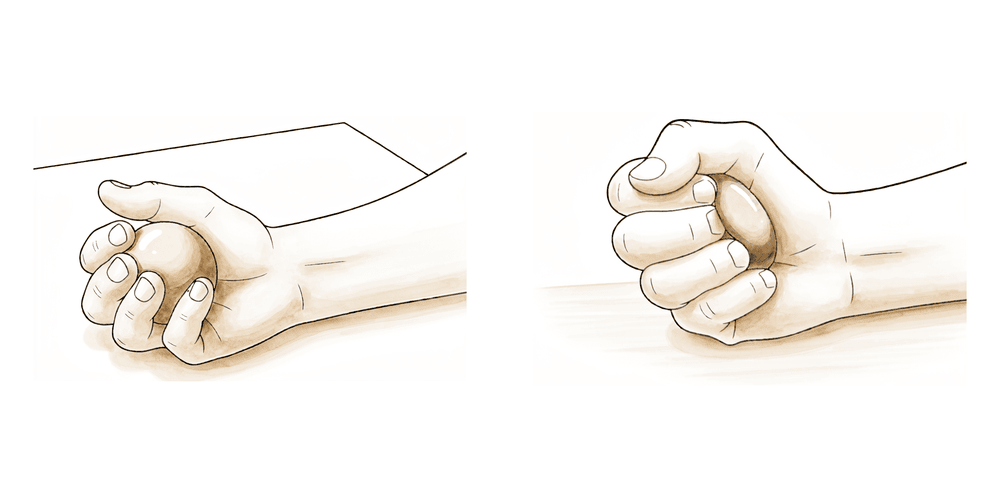
Tăng cường sức mạnh nắm tay
Bóp một quả bóng mềm hoặc đất nặn trị liệu, giữ trong chốc lát rồi thả lỏng. Hãy bắt đầu bài tập này khi các động tác kéo giãn và tải lệch tâm đã thấy thoải mái — nó giúp xây dựng sức mạnh cầm nắm và cơ cẳng tay mà bạn cần cho các hoạt động hàng ngày và thể thao. Dừng lại trước khi xuất hiện cơn đau nhói.
Bóp 10–15 lần, 2–3 lần mỗi ngày
Kieran Hirpara 4.0
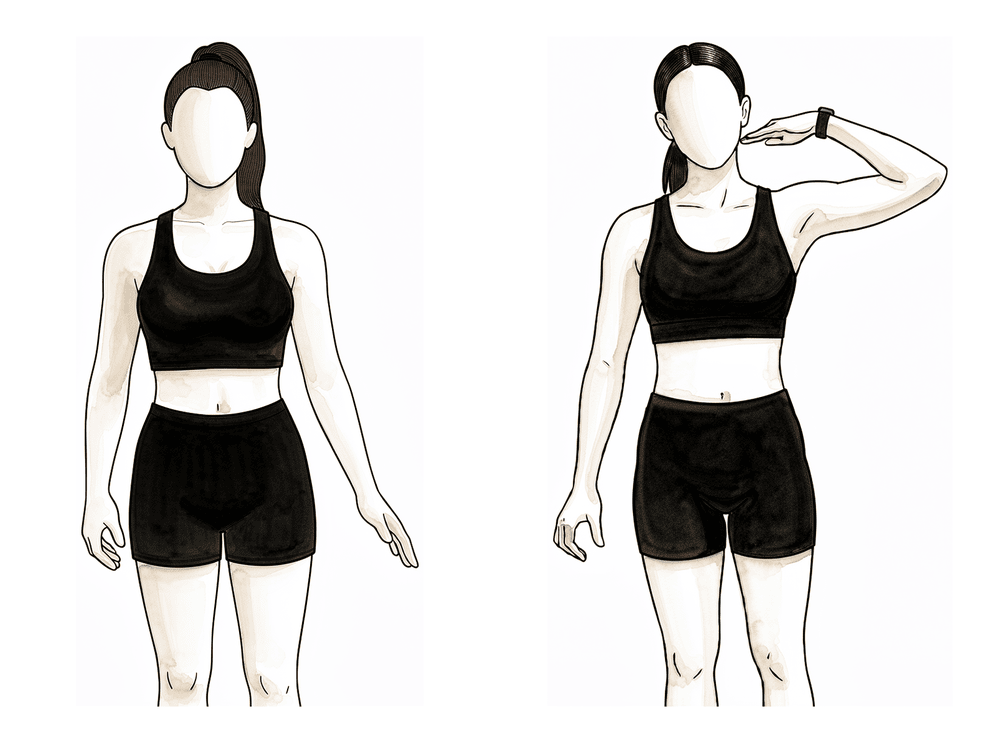
Kỹ thuật trượt dây thần kinh trụ
Dây thần kinh trụ chạy trong một rãnh ngay phía sau chỗ lồi xương ở mặt trong khuỷu tay, và thường dễ bị kích thích ở người bị khuỷu tay người chơi golf. Để giúp dây thần kinh trượt tự do: tạo một vòng “OK” bằng ngón tay cái và ngón trỏ, rồi đưa vòng này lên phía mặt sao cho vòng ôm quanh mắt, khuỷu tay gập và lòng bàn tay hướng về phía bạn. Nhẹ nhàng di chuyển vào và ra khỏi tư thế này. KHÔNG cố gắng đến mức gây cảm giác kim châm hoặc tê — hãy lùi lại nếu ngón út và ngón áp út có cảm giác ngứa ran, và báo cho chuyên viên trị liệu hoặc phòng khám nếu các triệu chứng thần kinh ngày càng nặng hơn.
5–10 lần trượt nhẹ nhàng, 2–3 lần mỗi ngày
Đây là những bài tập trong tờ hướng dẫn của bạn. Hãy bắt đầu theo hướng dẫn của Bác sĩ Hirpara và chuyên viên trị liệu. Trong những tuần đầu, trọng tâm là làm dịu cơn đau, vận động nhẹ nhàng và các bài giữ đẳng trường; bài xoắn Tyler ngược theo kiểu lệch tâm và bài tăng cường sức mạnh cầm nắm được bổ sung khi bạn tiến bộ. Bài trượt dây thần kinh trụ được đưa vào vì dây thần kinh này rất thường bị liên quan ở mặt trong khuỷu tay; hãy tập thật nhẹ nhàng.
Quy trình điều trị lâm sàng của bạn
Phần còn lại của trang này là quy trình phục hồi chức năng lâm sàng. Phần này cần được cung cấp cho chuyên viên vật lý trị liệu hoặc chuyên gia trị liệu tay của bạn. Quy trình dựa trên tiêu chí chứ không thuần túy dựa trên thời gian: việc chuyển giữa các giai đoạn phụ thuộc vào việc đạt được các mục tiêu đã liệt kê, chứ không chỉ dựa vào lịch. Dây thần kinh trụ được sàng lọc ở mọi lần khám (dấu hiệu Tinel, bán trật dây thần kinh), vì khoảng 50–60% các ca ở mặt trong có kèm triệu chứng dây thần kinh trụ, và đây là nguyên nhân hàng đầu khiến điều trị bảo tồn thất bại.
Dưới đây có hai lộ trình: chương trình không phẫu thuật (lựa chọn đầu tay, cho đại đa số) và chương trình sau phẫu thuật (cho số ít người tiến tới phẫu thuật sau khi điều trị bảo tồn thất bại).
Lộ trình không phẫu thuật
Giai đoạn I: Cấp tính / kiểm soát đau (0–2 tuần)
Mục tiêu: làm dịu cơn đau; khôi phục toàn bộ biên độ vận động khi không chịu tải.
- Nghỉ ngơi tương đối và điều chỉnh hoạt động: dùng cơn đau làm giới hạn; tránh bất động. Điều chỉnh golf, ném, bơi lội, các môn thể thao dùng vợt, tập tạ và các động tác cầm nắm lặp đi lặp lại.
- Có thể dùng nẹp chống lực trên khối cơ gấp chung; có thể dùng nẹp cổ tay nếu đau cấp tính.
- Các biện pháp hỗ trợ kiểm soát đau: chườm đá, trị liệu mô mềm / IASTM, vận động chủ động (AROM) nhẹ nhàng không đau, trượt dây thần kinh.
- Sàng lọc dây thần kinh trụ (Tinel, bán trật).
- Tiêu chí chuyển giai đoạn: đủ AROM khi không chịu tải mà không đau; tự thực hiện chương trình tại nhà.
Giai đoạn II: Bán cấp / tải lực sớm (2–4 tuần)
Mục tiêu: bắt đầu tải lên nhóm cơ gấp – sấp; xử lý chuỗi vận động đoạn gần.
- Tải đẳng trường (nhẹ) cho cơ gấp cổ tay và cơ sấp.
- Kéo giãn tăng dần các cơ gấp cổ tay ở tư thế khuỷu gập 90°.
- Chuỗi động học đoạn gần: các cơ ổn định xương bả vai (cơ răng trước, cơ thang giữa/dưới) và chóp xoay, rất quan trọng ở vận động viên ném, nơi quá tải mặt trong khuỷu tay là do lực vẹo ngoài (valgus).
- Tiêu chí chuyển giai đoạn: duy trì đủ ROM; chịu được bài kéo giãn ở 90°; sức mạnh đạt ~70% bên đối diện.
Giai đoạn III: Tăng cường sức mạnh / trở lại (4–6+ tuần)
Mục tiêu: khôi phục khả năng chịu tải và trở lại chức năng, thể thao.
- Tải lệch tâm – đồng tâm cho động tác gập cổ tay và sấp cẳng tay: bài tương đương ở mặt trong của Tyler twist là “reverse Tyler twist” (xoắn Tyler ngược — gập cổ tay lệch tâm trên FlexBar). Ưu tiên kết hợp tải lệch tâm – đồng tâm; các bài đẳng trường vẫn hữu ích để giảm đau giai đoạn sớm.
- Di động khớp kèm vận động (mobilisation-with-movement); tiến dần bài kéo giãn về tư thế khuỷu duỗi thẳng.
- Tăng cường sức mạnh cầm nắm, sau đó tải đặc thù môn thể thao; với vận động viên ném, áp dụng chương trình ném theo khoảng (interval throwing); bài tập plyometric sau cùng.
- Giảm dần nẹp chống lực khi khuỷu tay hết triệu chứng; điều chỉnh dụng cụ và kỹ thuật.
- Tiêu chí trở lại thể thao: sức mạnh ~90% bên đối diện, chức năng không đau, tự quản lý được.
Lộ trình sau phẫu thuật (cắt lọc nhóm gân gấp – sấp ± sửa chữa ± thủ thuật dây thần kinh trụ)
Phẫu thuật dành cho số ít trường hợp thất bại sau ≥6 tháng điều trị bảo tồn. Phẫu thuật mở kiểu Nirschl cắt lọc phần nguyên ủy bệnh lý của nhóm gân gấp – sấp và thường sửa chữa/gắn lại nó; dây thần kinh trụ được đánh giá và bảo vệ, với giải ép hoặc chuyển vị ra trước được thực hiện đồng thời ở một tỷ lệ các ca.
Giai đoạn 1: Bảo vệ (0–2 tuần)
- Nẹp cánh tay dài phía sau (khuỷu + cổ tay) trong 10–14 ngày; đai treo tay khi ra ngoài.
- Kê cao và kiểm soát phù nề; AROM ngón tay / bài trượt gân; ROM chủ động vai; AROM cổ nhẹ nhàng.
- Lưu ý: KHÔNG nâng, đẩy, kéo hay cầm nắm mạnh: bảo vệ phần đã sửa chữa.
Giai đoạn 2: Phục hồi biên độ vận động (2–6 tuần)
- Ở lần khám khoảng tuần thứ 2: cắt chỉ; chuyển sang nẹp cổ tay tư thế trung tính đeo cả ngày (tháo khi vệ sinh); Tubigrip ở khuỷu tay để giảm sưng.
- Bắt đầu AROM khuỷu gập/duỗi (tuần 2–4), sau đó AROM cổ tay 4 hướng + xoay cẳng tay và AROM ngón tay/ngón cái (tuần 4–6).
- Bài trượt dây thần kinh trụ được đưa vào từ tuần 4–6 (phần bổ sung đặc thù cho mặt trong).
- Ổn định xương bả vai (chống trọng lực). Không tập sức mạnh có kháng lực cho đến sau 6 tuần.
Giai đoạn 3: Tăng cường sức mạnh (6–12 tuần)
- Giảm dần nẹp tùy mức dung nạp (có thể tiếp tục đeo ban đêm trong thời gian đầu).
- Tập sức mạnh có kháng lực tăng dần cho cổ tay và cẳng tay. Không tập ngửa/sấp có kháng lực trong giai đoạn sớm; bắt đầu nâng vật ở tư thế ngửa/trung tính, với nâng nhẹ ở tư thế sấp từ khoảng tuần 9.
Giai đoạn 4: Trở lại hoạt động / thể thao (12–16+ tuần)
- Tiến dần việc nâng vật ở mọi tư thế cẳng tay tùy mức dung nạp; trở lại hoạt động hoàn toàn vào khoảng tuần 12–16; chương trình đặc thù môn thể thao / ném theo khoảng cho vận động viên. Hồi phục hoàn toàn thường mất 3–6 tháng.
Lưu ý về dây thần kinh trụ: nếu đã chuyển vị dây thần kinh ra trước, hạn chế gập khuỷu ở cuối biên độ trong giai đoạn sớm và tăng dần độ trượt của dây thần kinh. Triệu chứng dây thần kinh trụ dai dẳng hoặc nặng hơn cần được bác sĩ phẫu thuật đánh giá trước khi tăng tải.
Trở lại làm việc và hoạt động
Tốc độ trở lại phụ thuộc vào lộ trình bạn đang theo và yêu cầu của công việc cũng như môn thể thao của bạn.
Không phẫu thuật. Thông thường bạn có thể tiếp tục làm việc và vận động suốt quá trình, chỉ điều chỉnh những việc làm khuỷu tay bùng phát thay vì ngừng hẳn. Golf, các môn ném, bơi lội và các môn thể thao dùng vợt được đưa trở lại dần trong giai đoạn tăng cường sức mạnh, khi sức mạnh đã đạt khoảng 90% so với bên kia và chức năng không còn đau. Vì khuỷu tay người chơi golf có xu hướng tự khỏi, việc khỏi hẳn có thể mất 6 đến 18 tháng, dù chức năng hàng ngày cải thiện sớm hơn nhiều.
Sau phẫu thuật. Việc sử dụng nhẹ nhàng, có giới hạn được bắt đầu sớm, nhưng các hoạt động nâng vật nặng và cầm nắm mạnh được hoãn lại để bảo vệ phần đã sửa chữa. Hầu hết mọi người trở lại hoạt động hoàn toàn vào khoảng 12 đến 16 tuần, và hồi phục hoàn toàn thường mất 3 đến 6 tháng. Vận động viên các môn ném sẽ theo một chương trình ném theo khoảng tăng dần trước khi trở lại thi đấu.
Lái xe: tránh lái xe khi bạn đang đeo nẹp hoặc đai treo tay, hoặc khi khuỷu tay còn quá đau để điều khiển xe an toàn. Lái xe trở lại khi đã tháo nẹp và có thể cử động cánh tay thoải mái, theo xác nhận tại lần tái khám.
Sau quy trình của bạn
Quy trình này được áp dụng song song với các hướng dẫn hồi phục chung của phòng khám; xem kiểm soát cơn đau sau phẫu thuật, chăm sóc vết thương và những điều cơ bản về trị liệu tay. Khuỷu tay người chơi golf có chung cách tiếp cận dựa trên tải lực với tình trạng tương ứng ở mặt ngoài khuỷu tay là khuỷu tay quần vợt; hãy hỏi chuyên viên trị liệu nếu bạn muốn có hướng dẫn tương đương về viêm lồi cầu ngoài. Quá trình hồi phục tiếp theo của bạn được chuyên viên vật lý trị liệu hoặc chuyên gia trị liệu tay hướng dẫn riêng, tùy theo tiến triển của khuỷu tay.
Evidence & references
This is the clinical evidence summary written for health professionals. It is technical, and it lists the research this page was built from. You do not need to read it to understand your treatment or to make a decision about it.
Medial Epicondylitis (Golfer's Elbow) — Flexor-Pronator Tendinosis: Conservative Loading & Post-operative Rehabilitation
Topic scope: (A) the loading-based non-operative rehabilitation of medial epicondylitis — a degenerative tendinopathy of the flexor-pronator origin (chiefly flexor carpi radialis and pronator teres) at the medial epicondyle — with mandatory ulnar-nerve screening; and (B) post-operative rehabilitation after open flexor-pronator debridement (± repair, ± concurrent ulnar nerve decompression/transposition), reserved for the minority failing ≥6 months of quality conservative care.
Defining principle: medial epicondylitis is not an inflammatory condition but a degenerative tendinosis, so the treatment is graded tendon loading, not rest. The protocol mirrors lateral elbow tendinopathy but with two practice-defining differences Dr Hirpara emphasises: (1) the loaded group is the wrist flexors/pronators (hence the eccentric "reverse Tyler twist" rather than the lateral Tyler twist), and (2) the ulnar nerve lies immediately behind the medial epicondyle, so concomitant ulnar neuritis (~50–60% of cases) is screened at every visit and is the leading reason conservative care fails. Surgery is a last resort after ≥6 months.
Medial epicondylitis is far less studied than its lateral counterpart — it is ~5–10× less common (prevalence ~0.4% vs 1.3%; ~10–20% of all epicondylitis). Most evidence is extrapolated from lateral elbow tendinopathy and from older operative case series; dedicated medial RCTs are sparse. Phase timelines below come from institutional Standard-of-Care protocols (Mass General Brigham combined medial/lateral; UVA medial debridement; Campbell's / Nirschl) plus operative series.
A. NON-OPERATIVE REHABILITATION (phased)
First-line; the majority resolve without surgery. Largely the SAME phased structure as the lateral elbow (Mass General Brigham publishes ONE combined medial/lateral protocol), with the loading target shifted to the flexor-pronator mass. Expected resolution 6–18 months (self-limited).
Phase I — Acute / pain control (~0–2 weeks). Relative rest + activity modification using pain as the limiter (avoid immobilisation). Aggravators to modify: golf, throwing (esp. late-cocking / acceleration valgus load), swimming, bowling, racquet sports, weightlifting, repetitive gripping. Optional counterforce brace over the common flexor mass; wrist splint if acutely painful. Pain-control adjuncts: ice, soft-tissue / IASTM, gentle pain-free AROM, dry needling, nerve glides. Screen the ulnar nerve (Tinel, subluxation). Criterion to progress: full unloaded AROM without pain; independent home program.
Phase II — Sub-acute / early loading (~2–4 weeks). Isometric wrist-flexor and pronator loading (minimal load). Progressive stretching of the wrist flexors at 90° elbow flexion. Proximal kinetic chain: scapular stabilisers and rotator cuff — critical in throwers, where medial elbow overload is valgus-driven. Criteria to progress: full ROM maintained; tolerates the 90° stretch; ~70% contralateral strength.
Phase III — Late / strengthening & return (~4–6+ weeks). Eccentric and concentric loading of wrist flexion and forearm pronation — the medial analogue of the Tyler twist is a "reverse Tyler twist" (eccentric wrist flexion on the FlexBar). Combined eccentric-concentric loading is favoured; isometrics for early analgesia. Mobilisation-with-movement; progress stretching to the elbow-extended position. Grip strengthening, then sport-specific loading; for throwers, an interval throwing program; plyometrics last. Wean counterforce brace as asymptomatic; equipment/technique modification. Return-to-sport criteria: ~90% contralateral strength, pain-free function, self-management.
B. POST-OPERATIVE REHABILITATION (flexor-pronator debridement ± repair, ± ulnar nerve procedure)
Surgery is for the minority failing ≥6 months of conservative care. The open Nirschl-type operation debrides the pathologic flexor-pronator origin (incision posterior to the medial epicondyle to spare the medial antebrachial cutaneous nerve), with repair/reattachment commonly by suture anchor. The ulnar nerve must be assessed and protected: ulnar neuritis is addressed concurrently (decompression or anterior transposition) in roughly 20–50% of operative series. The phase timeline blends the UVA "Golfer's Elbow Debridement (with tendon repair)" protocol and the Verma / Midwest-Orthopaedics-at-Rush medial/lateral debridement protocol.
Phase 1 — Protect / immobilise (Weeks 0–2). Posterior long-arm splint (elbow + wrist) for 10–14 days; sling for community use. Elevation; oedema control; finger/tendon-glide AROM; unaffected-joint motion; active shoulder ROM; gentle cervical AROM. Precautions: NO lifting / pushing / pulling / forceful gripping; protect the repair.
Phase 2 — ROM restoration (Weeks 2–6). At the 2-wk visit: suture removal; transition to a wrist orthosis in neutral full-time (off for hygiene); Tubigrip at the elbow for swelling. Begin AROM elbow flexion/extension (2–4 wk), then 4-way wrist AROM + forearm rotation, finger/thumb AROM (4–6 wk). Ulnar nerve glides introduced ~weeks 4–6 (the explicit medial-specific addition). Scapular stabilisation (gravity-resisted). No resistance strengthening until after 6 weeks.
Phase 3 — Strengthening (Weeks 6–12). Wean the orthosis as tolerated (consider night use early). Progressive resistive strengthening of wrist and forearm; per Verma, no resisted supination/pronation early, lifting begun in supination/neutral, with light pronated lifting from ~week 9.
Phase 4 — Return to activity / sport (Weeks 12–16+). Progress lifting in all forearm positions as tolerated; full return to activity by ~12–16 weeks; sport-specific / interval throwing program for athletes. Full recovery commonly 3–6 months.
Ulnar nerve precautions: if an anterior transposition was performed, limit end-range elbow flexion early and progress nerve excursion gradually; persistent or worsening ulnar symptoms warrant surgeon review before advancing loading.
C. PHASED TIMELINE SUMMARY
| Pathway | Phase | Window | Immobilisation | Loading / key actions | Criteria / milestone |
|---|---|---|---|---|---|
| Non-op | I — Pain control | 0–2 wk | None (avoid casting); optional counterforce brace | Activity modification; pain-free AROM; nerve glides; ulnar screen | Full unloaded AROM, pain-free |
| Non-op | II — Early loading | 2–4 wk | None | Isometric flexor/pronator load; 90° wrist-flexor stretch; scapular/cuff | ~70% contralateral strength |
| Non-op | III — Strengthen / return | 4–6+ wk | Wean brace | Reverse Tyler twist (eccentric); grip; sport-specific; throwers' interval program | ~90% strength, pain-free → RTS |
| Post-op | 1 — Protect | 0–2 wk | Posterior long-arm splint 10–14 d + sling | Finger glides, shoulder ROM; oedema control | No resistance; repair protected |
| Post-op | 2 — ROM restore | 2–6 wk | Neutral wrist orthosis | Elbow AROM → 4-way wrist + forearm rotation; ulnar glides wk 4–6 | No resistance until >6 wk |
| Post-op | 3 — Strengthen | 6–12 wk | Wean orthosis | Progressive resistance; supinated/neutral lifting → light pronated ~wk 9 | Restored strength in safe positions |
| Post-op | 4 — Return | 12–16+ wk | None | Lifting all forearm positions; interval throwing | Full return ~12–16 wk; recovery 3–6 mo |
D. KEY CONTROVERSIES / EVIDENCE QUALITY
- Sparse high-level evidence. Almost no medial-specific RCTs; recommendations are extrapolated from lateral elbow and from retrospective operative series (Kurvers & Verhaar 1995 remains a cornerstone). Strength of evidence is materially weaker than for lateral epicondylitis.
- Ulnar nerve is the dominant modifier. Concomitant ulnar neuropathy (reported 23–60%) worsens prognosis and is the leading reason conservative care fails; whether and how to address it surgically (decompression vs transposition vs medial epicondylectomy) is debated. Outcomes are reliably worse when ulnar symptoms coexist and are untreated.
- PRP may rival surgery for type-1 disease. Bohlen et al (OJSM 2020) found 2 leukocyte-rich PRP injections matched surgery for recalcitrant type-1 medial epicondylitis (29/33 success each) with faster recovery (pain-free ~56 vs ~108 days; full ROM ~42 vs ~96 days) — the surgical delay partly attributed to post-op bracing. Small evidence base.
- Corticosteroid: short-term only. As with the lateral elbow, steroid gives transient relief without durable benefit and risks recurrence; repeated injections show diminishing returns.
- Eccentric vs concentric. Same unsettled debate as the lateral elbow; combined eccentric-concentric flexor-pronator loading is the pragmatic standard, but direct medial trial data are minimal.
- Surgical technique. Open Nirschl debridement with repair is reliable in case series; arthroscopic medial debridement is emerging (claimed ulnar-nerve protection) but is technically demanding and under-evidenced. Debridement alone vs with repair remains unsettled.
E. EVIDENCE STRENGTH FLAGS (summary)
- MODERATE (non-operative rehab): the phased loading program — extrapolated largely from lateral elbow tendinopathy and combined medial/lateral institutional protocols; combined eccentric-concentric flexor-pronator loading is the pragmatic standard.
- LOW–MODERATE (post-operative rehab): phase timelines from institutional debridement protocols (UVA; Verma/Rush) and operative case series; no defining post-op rehab RCT.
- MODERATE (PRP for type-1 disease): single comparative study (Bohlen OJSM 2020) matching surgery with faster recovery; small sample.
- CONSENSUS / EXPERT: ulnar-nerve screening at every visit, ulnar-glide timing (wk 4–6 post-op), and the forearm-position lifting progression — drawn from surgeon-guidance protocols and operative practice rather than trial data.
CITATIONS
RAG corpus (180,000+ Orthopaedic articles)
- Kurvers H, Verhaar J. The results of operative treatment of medial epicondylitis. J Bone Joint Surg Am. 1995. (ulnar neuritis coexistence 23–50%)
- Bohlen HL, et al. Platelet-rich plasma is an equal alternative to surgery in the treatment of type 1 medial epicondylitis. Orthop J Sports Med. 2020. DOI: 10.1177/2325967120908952
- Platelet-rich plasma versus Tenex in the treatment of medial and lateral epicondylitis. J Shoulder Elbow Surg. 2019.
- Ellenbecker TS, Nirschl R, Renstrom P. Current concepts in examination and treatment of elbow tendon injury. Sports Health. 2012.
- Rehabilitation of the thrower's elbow. Clin Sports Med. 2004.
- Nirschl surgical technique for concomitant lateral and medial elbow tendinosis. Am J Sports Med. 2011.
- Imaging of the elbow in the overhead throwing athlete. Am J Sports Med. 2003. (ulnar neuritis in ~60% of throwers with medial epicondylitis)
- Outcome of partial medial epicondylectomy for cubital tunnel syndrome. Clin Orthop Relat Res. 2006.
- Coonrad RW, Hooper WR. Tennis elbow: its course, natural history, conservative and surgical management (includes medial). J Bone Joint Surg Am. 1973.
- Green's Operative Hand Surgery. 2021. (medial vs lateral prevalence; combined treatment chapter; Nirschl technique)
- Campbell's Operative Orthopaedics. 2020. (Box 46.3 Rehabilitation Protocol for Epicondylitis [Wilk/Arrigo/Andrews]; Nirschl medial technique, posterior incision sparing the MABC nerve)
Published protocols (URLs)
- University of Virginia Orthopaedics — Medial Epicondyle (Golfer's Elbow) Debridement (with tendon repair), Rehabilitation Guidelines. https://med.virginia.edu/orthopaedic-surgery/wp-content/uploads/sites/242/2024/09/Medial-Epicondyle-Golfers-Elbow-Debridement-with-tendon-repair.pdf
- Midwest Orthopaedics at Rush (Nikhil Verma, MD) — Post-Operative Rehabilitation Guidelines for Medial/Lateral Epicondyle Debridement. https://www.sportssurgerychicago.com/patient-resources/rehab-manuals/mediallateral-epicondyle-debridement/
- Mass General Brigham Sports Medicine — Rehabilitation Protocol for Medial/Lateral Epicondylalgia (non-operative), rev. April 2021. https://www.massgeneral.org/assets/MGH/pdf/orthopaedics/sports-medicine/physical-therapy/rehabilitation-protocol-for-medial-lateral-epicondylitis.pdf