Patients › Rehabilitation
Phẫu thuật giảm chèn ép dưới mỏm cùng vai
Rehabilitation after isolated arthroscopic subacromial decompression — early movement, staged strengthening and return to activity.
Giao thức này bao gồm quá trình phục hồi chức năng sau phẫu thuật giảm chèn ép dưới mỏm cùng vai nội soi đơn thuần (mổ cắt mỏm cùng vai, có hoặc không cắt bỏ bao hoạt dịch bị viêm) với Bác sĩ Kieran Hirpara tại Bệnh viện tư nhân Mater Private Hospital Rockhampton. Hãy mang theo trang web này hoặc file PDF của nó đến buổi thăm khám vật lý trị liệu đầu tiên để quá trình phục hồi chức năng của bạn được phối hợp nhịp nhàng. Chuyên viên vật lý trị liệu của bạn sẽ tiến hành các giai đoạn phục hồi chức năng dưới đây một cách cá nhân hóa, tùy thuộc vào tiến triển của khớp vai bạn.
Quan trọng: Phẫu thuật giảm chèn ép dưới mỏm cùng vai thường được thực hiện cùng với phẫu thuật sửa chữa gân xoay cuff. Giao thức này dành riêng cho trường hợp giảm chèn ép dưới mỏm cùng vai đơn thuần. Nếu ca phẫu thuật của bạn cũng bao gồm sửa chữa gân xoay cuff, vui lòng tuân theo giao thức sửa chữa gân xoay cuff; gân được sửa chữa sẽ đòi hỏi tiến độ phục hồi chậm hơn.
Nếu bạn có bất kỳ lo ngại nào về vết mổ sau phẫu thuật, hãy liên hệ với phòng khám. Việc chụp ảnh vết mổ và gửi qua email để xem xét thường rất hữu ích.
Những gì cần mong đợi
Phẫu thuật giảm chèn ép dưới mỏm cùng vai tạo thêm không gian cho các gân xoay cuff bằng cách bào mặt dưới của mỏm cùng vai (mái xương của vai) và loại bỏ bao hoạt dịch bị viêm. Không có cấu trúc nào được sửa chữa cần được bảo vệ, do đó giai đoạn phục hồi sớm tập trung vào vận động chứ không phải nghỉ ngơi: vai có thể vận động an toàn từ ngày đầu tiên, và việc vận động sớm giúp ngăn ngừa cứng khớp trong quá trình lành thương.
Nạng bạn thức dậy với chỉ dùng để thoải mái; nó không bảo vệ bất kỳ cấu trúc nào. Cởi nạng ra càng nhiều càng tốt và giảm dần việc sử dụng nạng sớm: hầu hết mọi người bỏ nạng trong vài ngày đầu, và các hướng dẫn được công bố yêu cầu phải bỏ nạng trong vòng tối đa hai tuần. Không lái xe trong ít nhất sáu tuần sau bất kỳ phẫu thuật vai nào, ngay cả khi đã bỏ nạng; bác sĩ phẫu thuật của bạn sẽ cho phép lái xe, thường là tại cuộc hẹn kiểm tra sáu tuần.
Chương trình tập luyện của bạn sử dụng ba loại vận động, và bác sĩ vật lý trị liệu của bạn sẽ hướng dẫn loại nào áp dụng ở mỗi giai đoạn:
- Khả năng vận động chủ động: vận động được thực hiện mà không cần hỗ trợ hoặc trợ giúp.
- Khả năng vận động chủ động hỗ trợ: sử dụng cánh tay kia hoặc một vật thể để hỗ trợ di chuyển cánh tay.
- Khả năng vận động thụ động: hoàn toàn thư giãn, sử dụng cánh tay kia hoặc lực bên ngoài để thực hiện 100% công việc.
Tóm tắt hành trình:
- Giai đoạn I — Vận động sớm — khoảng hai tuần đầu tiên
- Giai đoạn II — Khôi phục tầm vận động và bắt đầu tăng cường sức mạnh — tuần 2–6
- Giai đoạn III — Tăng cường sức mạnh — tuần 6–12
- Giai đoạn IV — Trở lại hoạt động bình thường — từ tuần 12 trở đi
Vai thường đau hơn là dễ tổn thương trong những tuần đầu, và một số người thấy rằng cảm giác khó chịu có thể kéo dài đến sáu tuần. Hướng dẫn được công bố cho thấy hầu hết mọi người cảm thấy cải thiện rõ rệt về đau vào khoảng ba tháng, và các triệu chứng có thể tiếp tục cải thiện trong tối đa một năm. Các khoảng thời gian tuần dưới đây là điển hình chứ không cố định; bác sĩ vật lý trị liệu của bạn sẽ tiến độ dựa trên cách vai của bạn vận động, chứ không dựa trên lịch trình.
Giai đoạn I — Vận động sớm (Tuần 0–2)
Kieran Hirpara 4.0
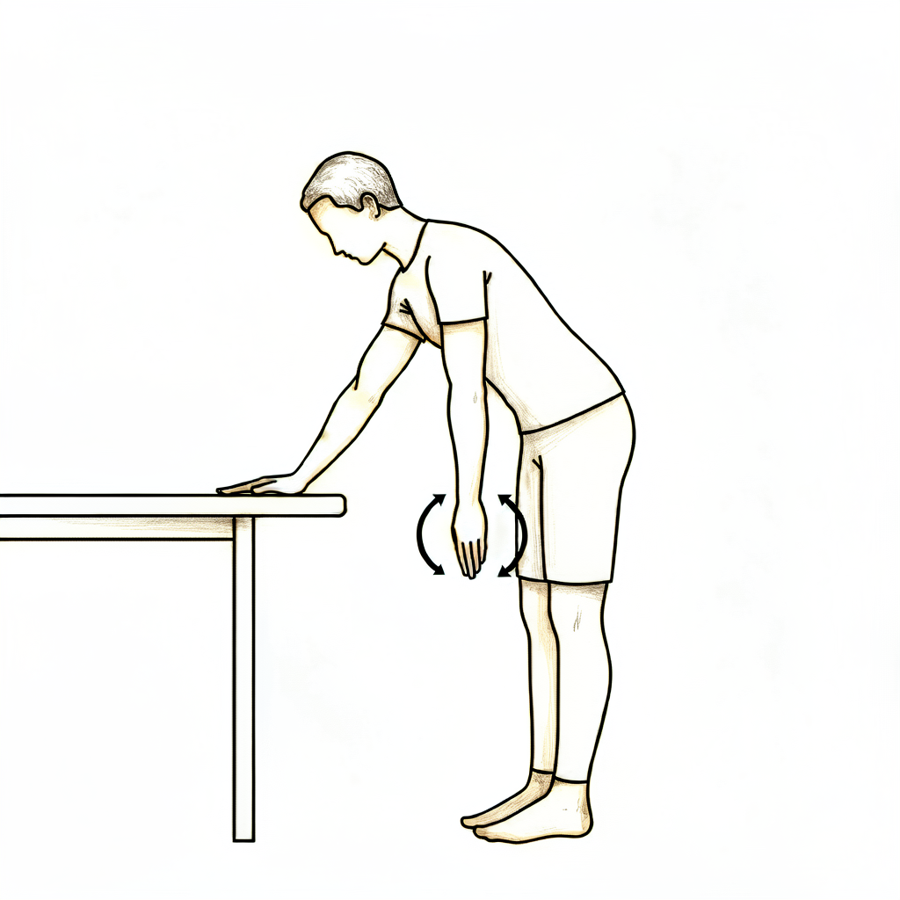
Bài tập con lắc
Cúi người về phía trước ở ngang thắt lưng và để cánh tay đã phẫu thuật thõng xuống nhẹ nhàng, tách khỏi thân. Để cánh tay đung đưa thành những vòng tròn nhỏ, thả lỏng — chuyển động đến từ thân người, không phải từ các cơ vai. Tập trong phạm vi thoải mái; hãy lấy cảm giác đau làm chỉ dẫn.
Theo hướng dẫn của chuyên viên vật lý trị liệu
Kieran Hirpara 4.0
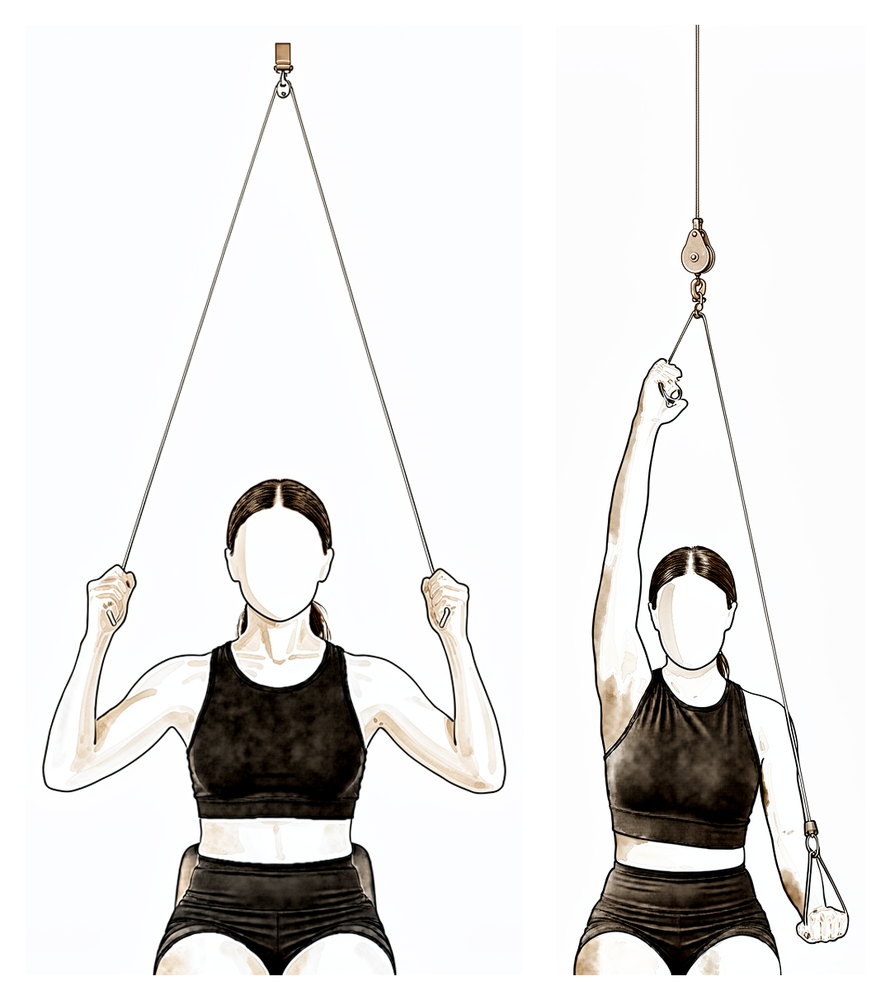
Nâng tay với ròng rọc hỗ trợ
Ngồi dưới một ròng rọc treo trên cửa, mỗi tay cầm một tay nắm. Dùng tay lành kéo xuống để nâng cánh tay đã phẫu thuật lên cao và hơi ra phía trước thân, giữ cho cánh tay này thả lỏng, rồi hạ xuống có kiểm soát. Không gắng ép hoặc kéo giãn quá mức — chỉ tập trong phạm vi thoải mái.
Theo hướng dẫn của chuyên viên vật lý trị liệu
Kieran Hirpara 4.0
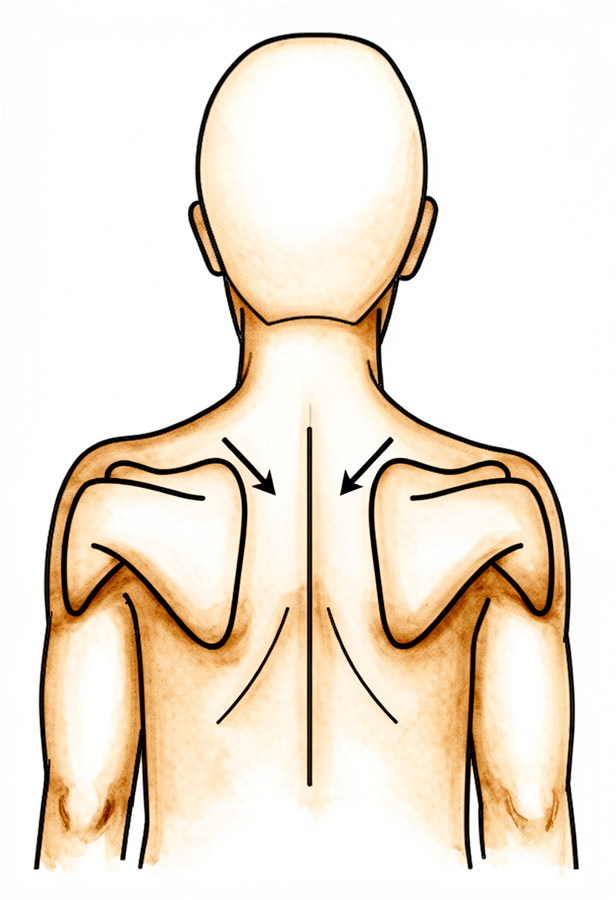
Siết giữ xương bả vai
Ngồi thẳng lưng, nhẹ nhàng kéo hai xương bả vai về phía sau, khép lại và hạ xuống, xa khỏi tai. Giữ vài giây rồi thả lỏng. Kết hợp với việc chú ý tư thế trong suốt cả ngày.
Theo hướng dẫn của chuyên viên vật lý trị liệu
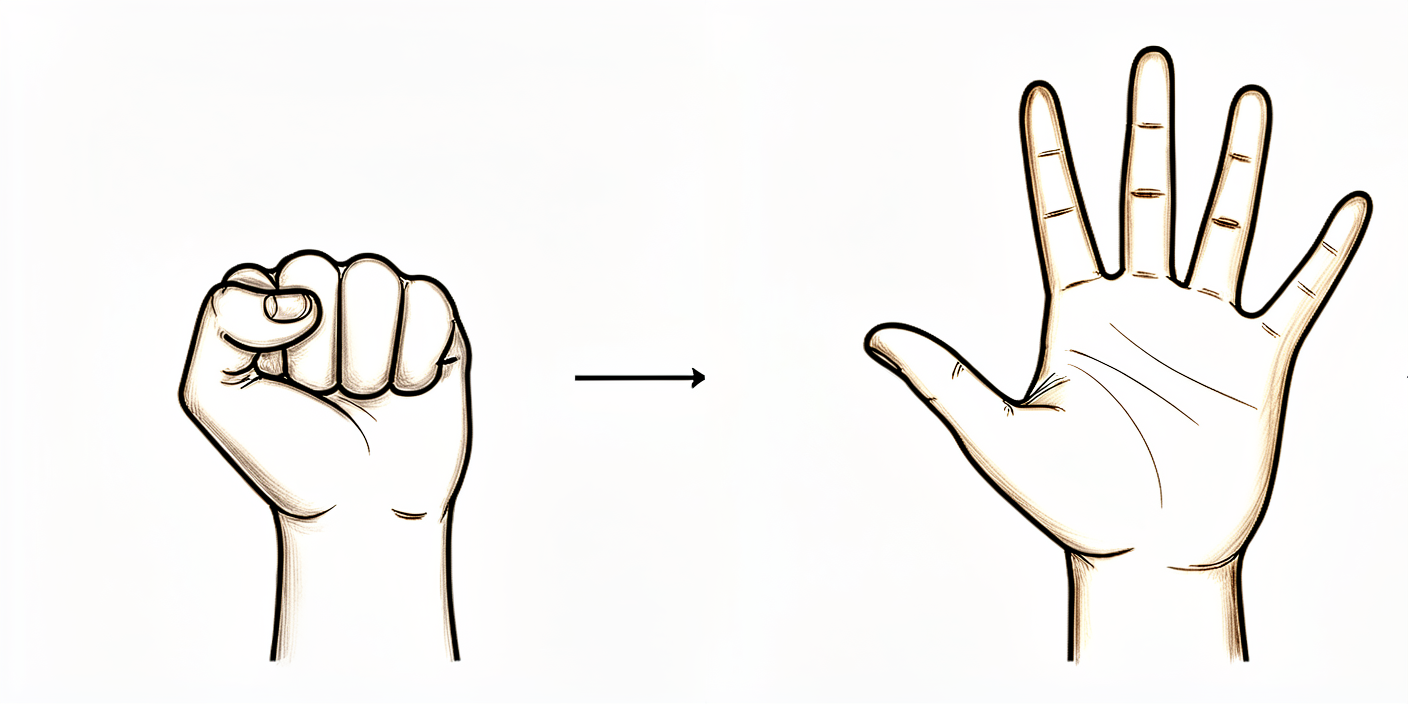
Kieran Hirpara 4.0
Mở và nắm tay
Giữ cho bàn tay và các ngón tay vận động bằng cách mở ra và nắm lại, hoặc bóp một quả bóng mềm. Bắt đầu ngay để bàn tay và cánh tay tiếp tục hoạt động trong lúc vai ổn định dần.
10 lần, ba lần mỗi ngày
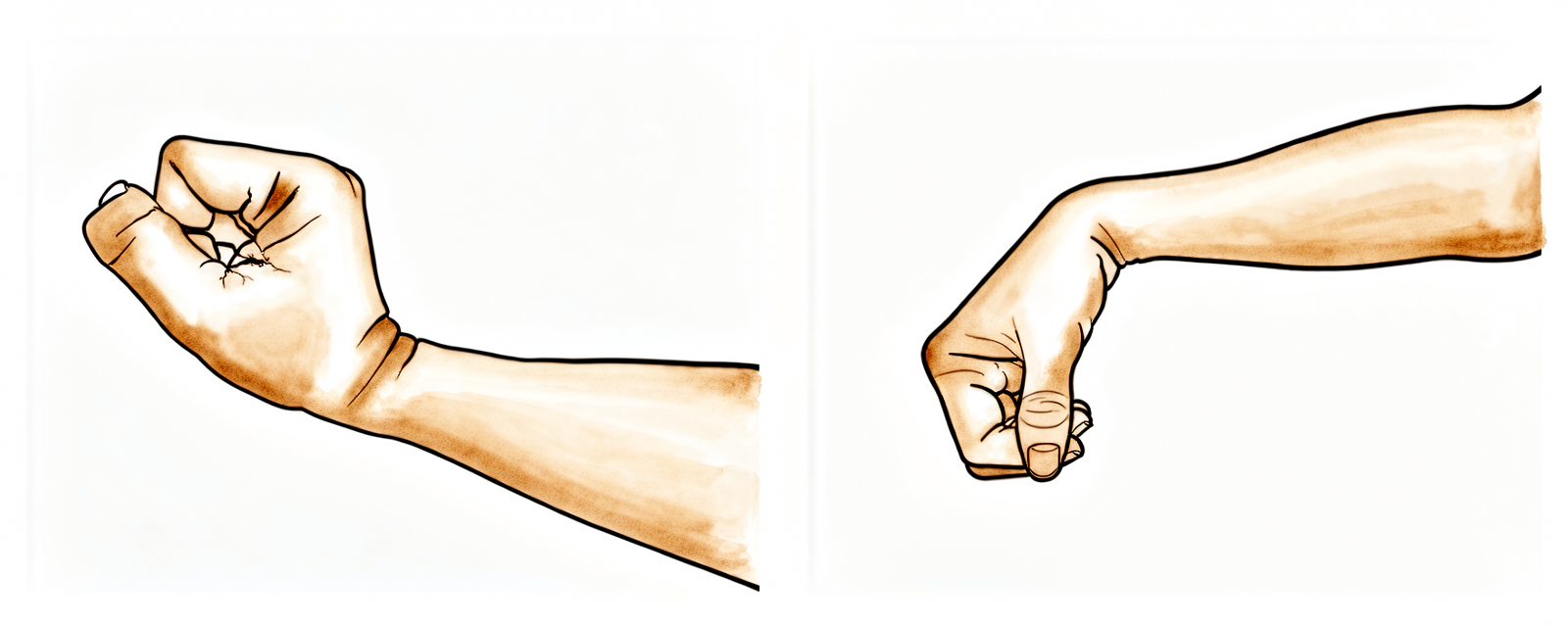
Kieran Hirpara 4.0
Cử động cổ tay
Giữ cho cổ tay vận động bằng cách gập ra trước, ra sau và nghiêng sang hai bên. Tập từ ngày đầu tiên để cánh tay tiếp tục hoạt động trong lúc vai ổn định dần.
10 lần, ba lần mỗi ngày
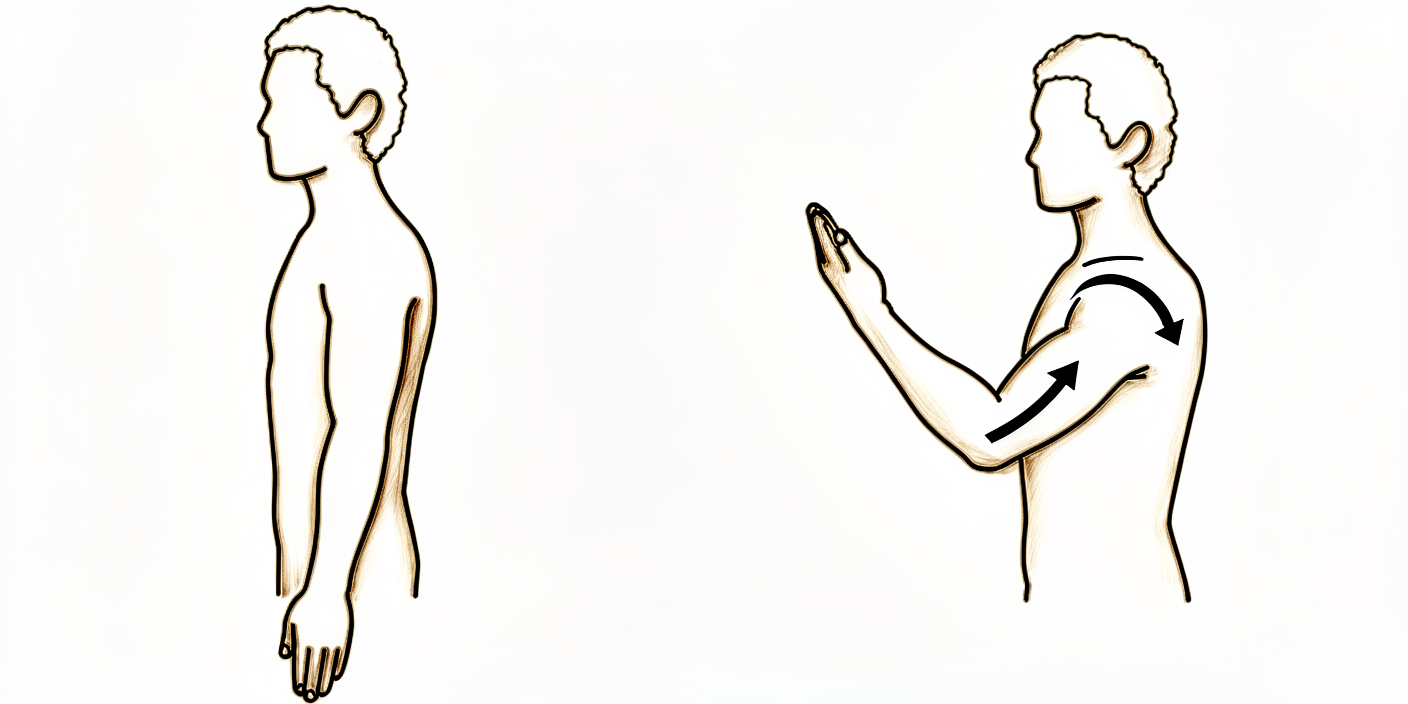
Kieran Hirpara 4.0
Gập duỗi khuỷu tay
Để cánh tay trên nghỉ sát bên thân, gập khuỷu tay đến mức thoải mái nhất, rồi duỗi thẳng hoàn toàn. Chỉ khuỷu tay cử động — giữ vai thả lỏng. Bắt đầu từ ngày đầu tiên.
10 lần, ba lần mỗi ngày
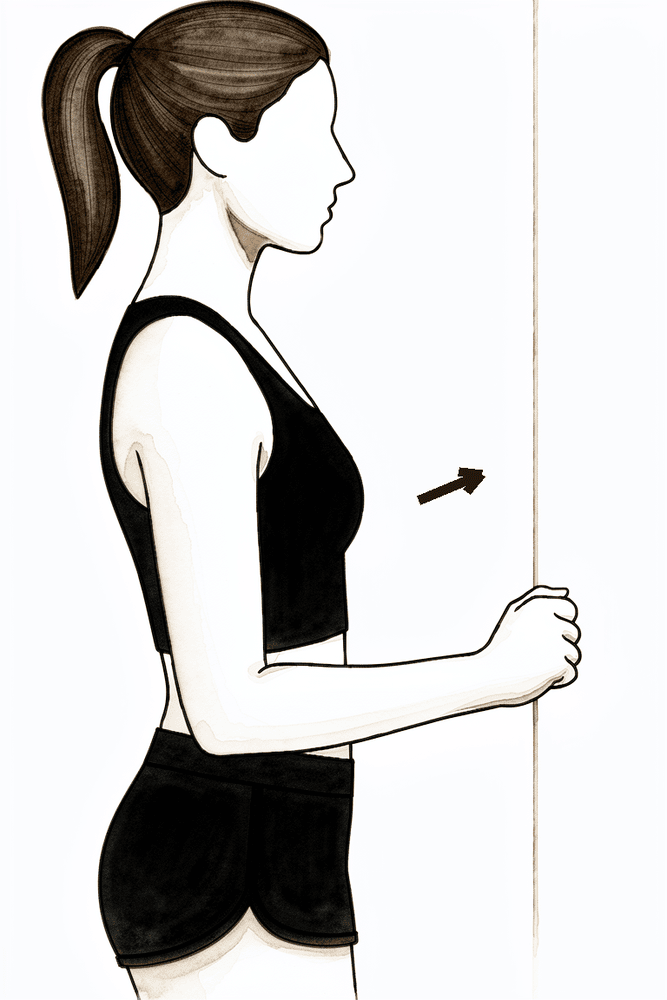
Kieran Hirpara 4.0
Gập vai đẳng trường
Đứng quay mặt vào tường, khuỷu tay gập và áp sát bên thân, mặt trước nắm tay tựa vào tường. Nhẹ nhàng ấn về phía trước vào tường mà không để cánh tay di chuyển, giữ vài giây rồi thả lỏng. Bài tập này giữ cho các cơ hoạt động mà không cần cử động trong lúc vai ổn định dần.
Giữ vài giây, lặp lại vài lần; theo hướng dẫn của chuyên viên vật lý trị liệu
Kieran Hirpara 4.0
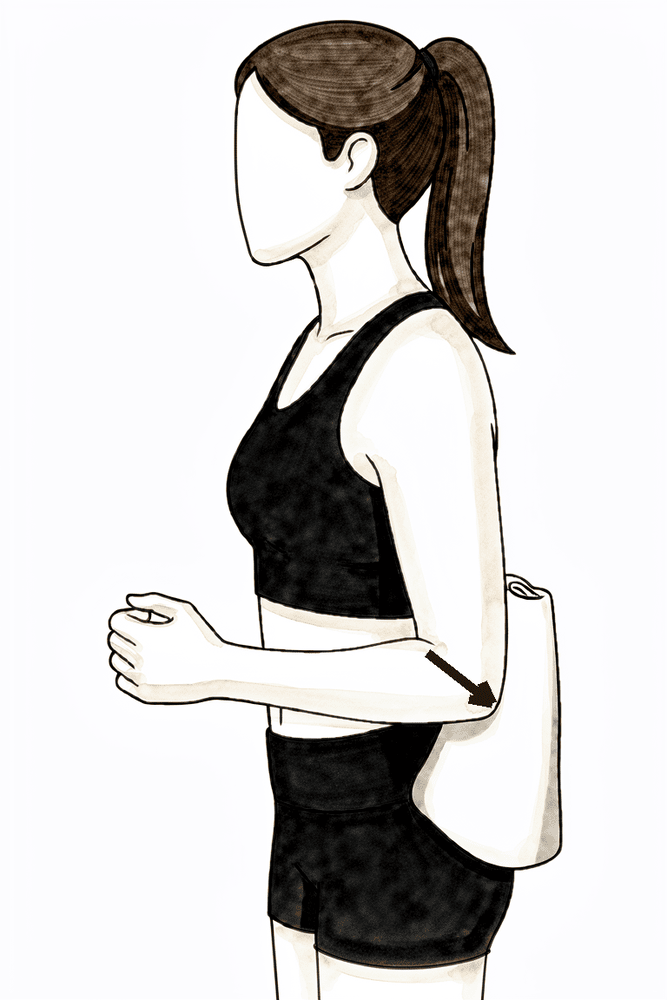
Duỗi vai đẳng trường
Đứng với khuỷu tay sát bên thân và mặt sau cánh tay trên tựa vào tường. Nhẹ nhàng ấn cánh tay ra sau vào tường mà không để cánh tay di chuyển, giữ vài giây rồi thả lỏng. Đây là cách giữ cho các cơ hoạt động từ sớm mà không cần cử động.
Giữ vài giây, lặp lại vài lần; theo hướng dẫn của chuyên viên vật lý trị liệu
Kieran Hirpara 4.0
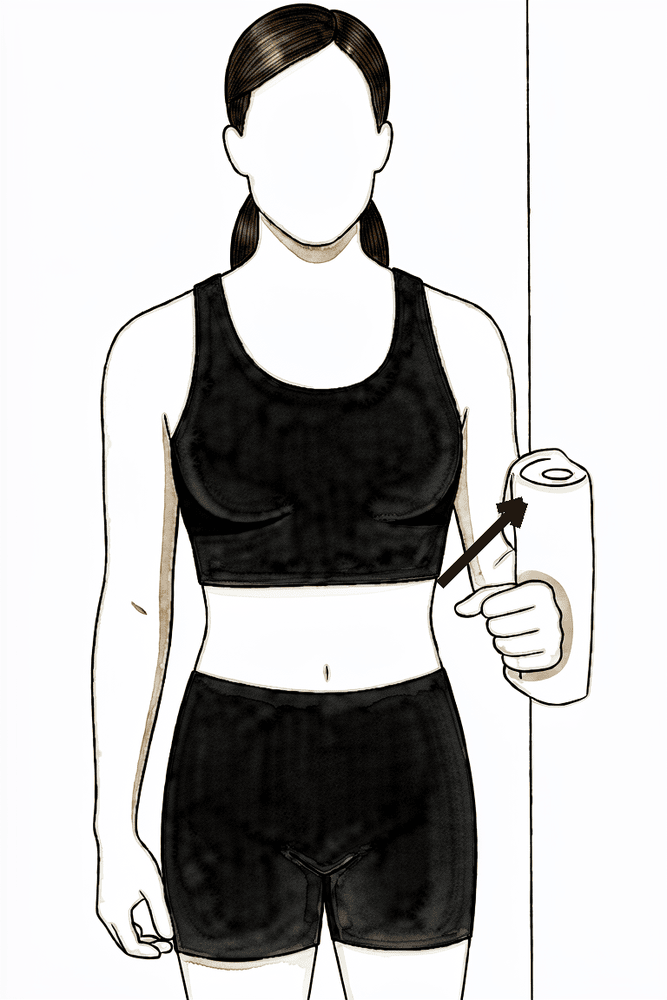
Dạng vai đẳng trường
Đứng nghiêng người, mặt ngoài cánh tay trên ở gần tường, khuỷu tay áp sát bên thân. Nhẹ nhàng ấn cánh tay ra ngoài vào tường mà không để cánh tay di chuyển, giữ vài giây rồi thả lỏng.
Giữ vài giây, lặp lại vài lần; theo hướng dẫn của chuyên viên vật lý trị liệu
Kieran Hirpara 4.0
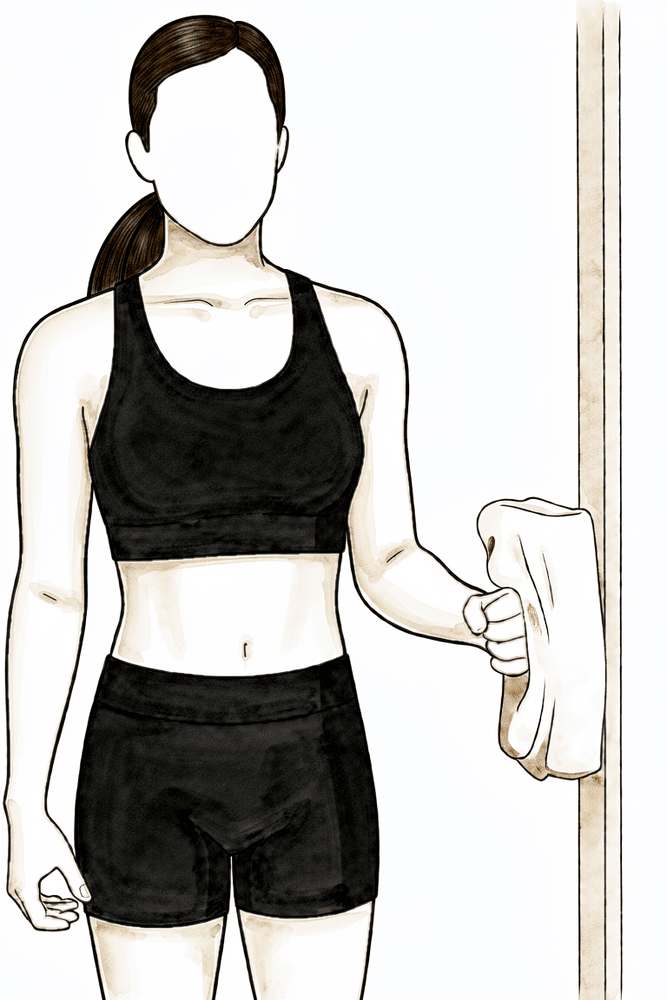
Xoay ngoài đẳng trường
Đứng với khuỷu tay áp sát bên thân và gập vuông góc, mu bàn tay tựa vào tường hoặc khung cửa. Nhẹ nhàng ấn ra ngoài vào đó mà không để cánh tay di chuyển, giữ vài giây rồi thả lỏng. Bài tập này tăng cường chóp xoay mà không cần cử động.
Giữ vài giây, lặp lại vài lần; theo hướng dẫn của chuyên viên vật lý trị liệu
Kieran Hirpara 4.0
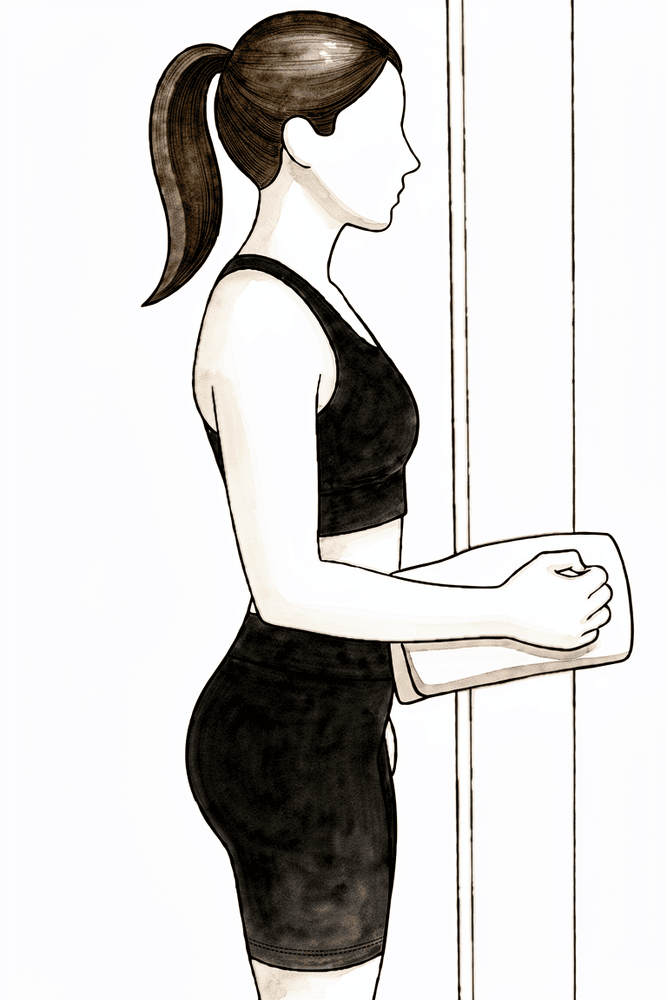
Xoay trong đẳng trường
Đứng với khuỷu tay áp sát bên thân và gập vuông góc, lòng bàn tay tựa vào tường hoặc khung cửa. Nhẹ nhàng ấn vào trong mà không để cánh tay di chuyển, giữ vài giây rồi thả lỏng. Đây là cách nhẹ nhàng để bắt đầu kích hoạt chóp xoay.
Giữ vài giây, lặp lại vài lần; theo hướng dẫn của chuyên viên vật lý trị liệu
Một khối thần kinh thường được sử dụng trong quá trình phẫu thuật, do đó cánh tay có thể bị tê trong vài giờ sau đó; hãy bắt đầu dùng thuốc giảm đau trước khi hiệu quả gây tê hết tác dụng. Trong hai tuần đầu, các mục tiêu rất đơn giản: kiểm soát đau và sưng, và giúp khớp vai vận động trong phạm vi thoải mái. Sử dụng chườm đá thường xuyên để giảm đau. Bắt đầu vận động bàn tay, cổ tay và khuỷu tay ngay lập tức, thêm các bài tập con lắc và các cử động hỗ trợ cánh tay khi cảm thấy thoải mái, và sử dụng cánh tay cho các hoạt động hàng ngày nhẹ nhàng bình thường như rửa mặt, mặc quần áo và ăn uống. Uống thuốc giảm đau trước khi tập và trước các buổi hẹn vật lý trị liệu. Đây là phẫu thuật nội soi, thường thông qua hai hoặc ba vết rạch nhỏ được băng kín nước; bạn có thể tắm vòi sen lên chúng từ ngày thứ 1 (không ngâm hoặc chà xát), và chúng vẫn được giữ nguyên cho đến khi kiểm tra vết mổ vào ngày 10–14. Những người làm công việc văn phòng thường có thể trở lại làm việc trong hai tuần đầu; việc lái xe phải chờ cho đến khi bác sĩ phẫu thuật cho phép, thường là tại buổi kiểm tra sáu tuần.
Dành cho nhà vật lý trị liệu của bạn:
Mục tiêu
- Kiểm soát đau và sưng
- Thiết lập lại phạm vi chuyển động không đau (chủ động hỗ trợ tiến triển sang chủ động)
- Ngăn ngừa teo cơ và bắt đầu thiết lập lại sự ổn định động
- Tự lập trong các hoạt động sinh hoạt hàng ngày nhẹ nhàng
Quản lý điều trị
- Liệu pháp lạnh thường xuyên để giảm đau và sưng; dùng thuốc giảm đau trước khi tập và trước các buổi trị liệu
- Các bài tập vận động phạm vi khuỷu tay, cổ tay, bàn tay, cổ và ngực từ ngày thứ 1
- Bài tập con lắc; nâng chủ động hỗ trợ bằng ròng rọc hoặc gậy trong mặt phẳng xương bả vai; xoay ngoài và xoay trong bắt đầu ở mức 30–45° dạng tay
- Tiến triển sang vận động chủ động khi cảm thấy thoải mái
- Định vị xương bả vai khi ngồi; nhận thức về tư thế
- Đồng cơ cực đại thấp (gập, duỗi, dạng, xoay ngoài và xoay trong) và ổn định nhịp nhàng nhẹ nhàng
- Từ tuần 2: chườm nóng trước khi tập nếu thấy hữu ích; tiến triển các bài tập xoay hướng tới 90° dạng tay; xoay ngoài và xoay trong với dây đàn hồi, cánh tay ở bên hông
Cẩn trọng
- Vận động trong phạm vi thoải mái: không ép hoặc căng quá mức; đau là chỉ dẫn
- Nẹp cố định chỉ để thoải mái; giảm dần trong vài ngày đầu và bỏ hẳn sau hai tuần
- Không lái xe trong sáu tuần (áp dụng cho mọi phẫu thuật khớp vai)
- Không nâng vật nặng, không nâng vật trên đầu, không thực hiện các cử động giật mạnh
- Tránh đẩy cơ thể dậy từ ghế hoặc giường bằng cánh tay đã phẫu thuật trong sáu tuần đầu: mỏm cùng vai đã được làm mỏng và nên tránh tải trọng mạnh trong khi nó tái tạo
Tiêu chí để tiến triển
- Đau được kiểm soát tốt bằng thuốc giảm đau đơn giản
- Sưng giảm và vết mổ đã lành hoặc đang lành mà không có vấn đề gì
- Vận động chủ động hỗ trợ thoải mái, với vận động chủ động trở lại dưới mức chiều cao vai
Giai đoạn II — Khôi phục tầm vận động và bắt đầu tăng cường sức mạnh (Tuần 2–6)
Kieran Hirpara 4.0
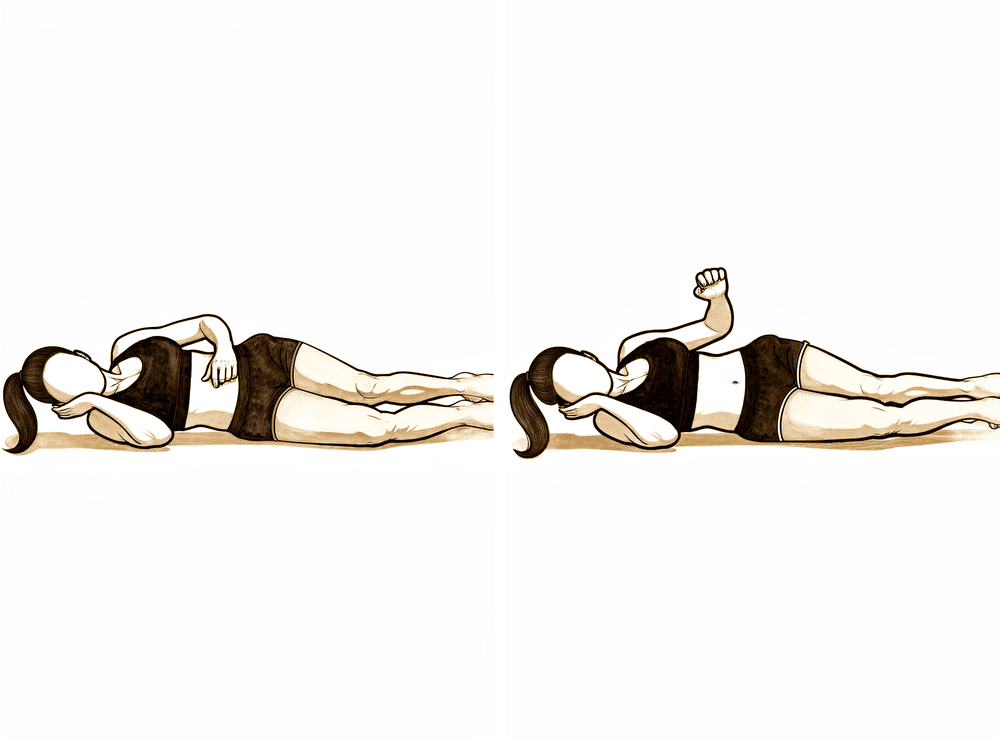
Xoay ngoài ở tư thế nằm nghiêng
Nằm nghiêng về phía bên không phẫu thuật, khuỷu tay phía trên gập vuông góc và áp sát vào thân. Giữ khuỷu tay sát bên thân, xoay cẳng tay lên về phía trần nhà, rồi hạ xuống có kiểm soát. Bắt đầu không dùng tạ.
Thêm tạ nhẹ (0,5–1 kg) sau một tuần tập các lần lặp không đau và được kiểm soát tốt
Kieran Hirpara 4.0
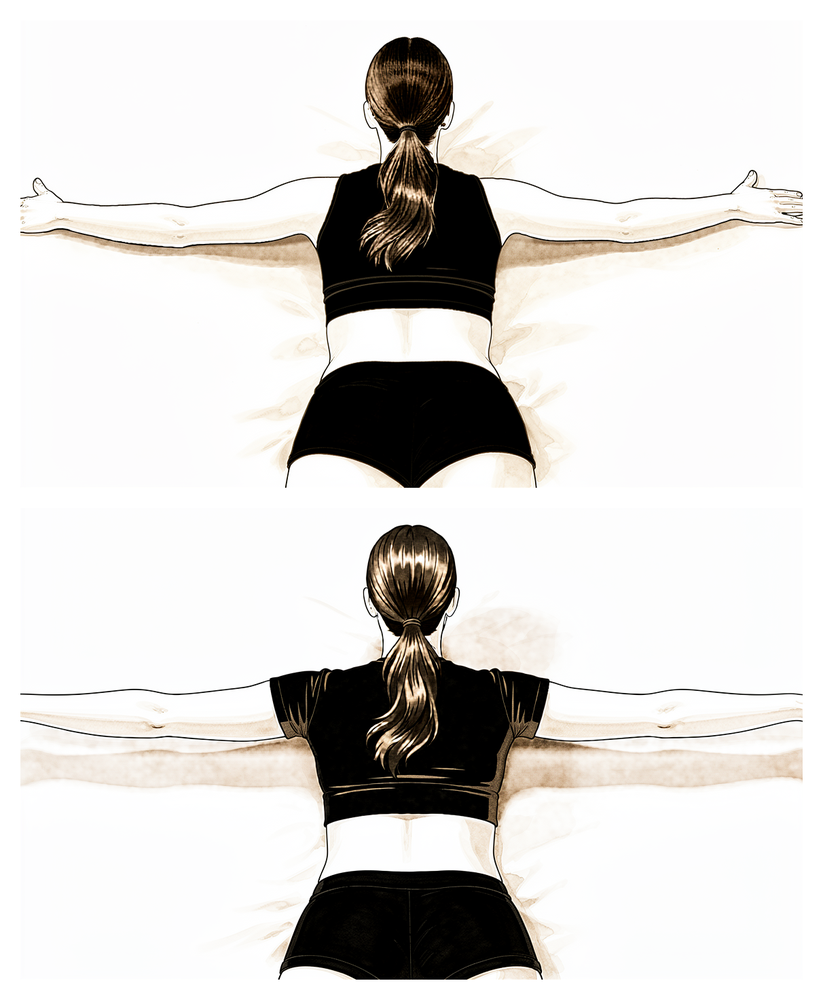
Dạng ngang ở tư thế nằm sấp (chữ 'T' nằm sấp)
Nằm sấp với cánh tay thõng xuống về phía sàn. Siết xương bả vai vào phía cột sống và nâng cánh tay sang ngang đến ngang vai, ngón cái dẫn đầu, rồi hạ xuống từ từ. Bắt đầu không dùng tạ; có thể thêm tạ nhẹ khi các lần lặp không đau và được kiểm soát tốt.
Theo hướng dẫn của chuyên viên vật lý trị liệu
Kieran Hirpara 4.0
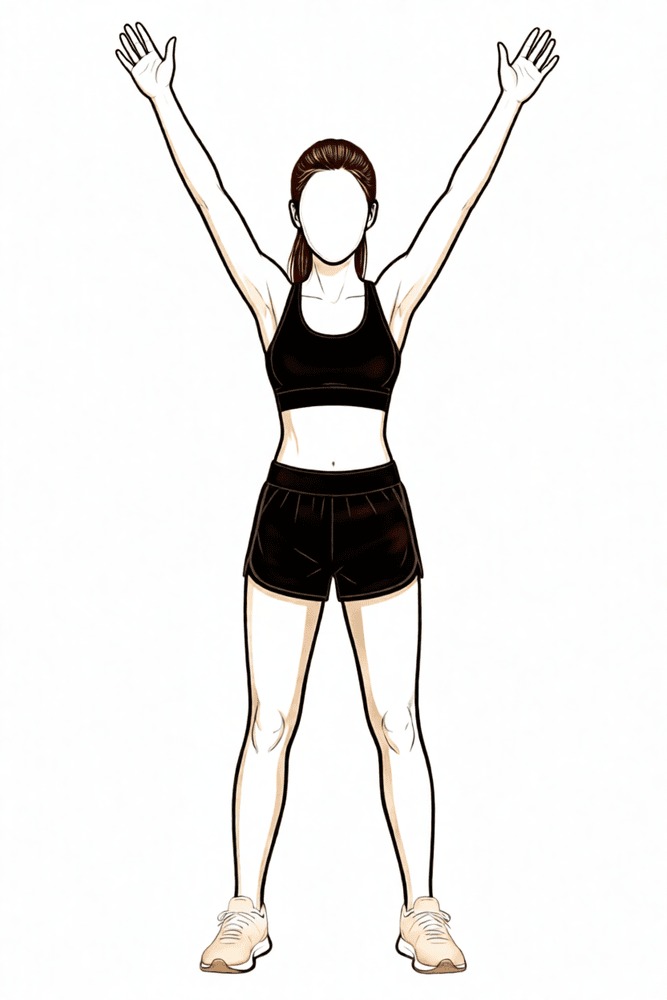
Tập lại cơ thang dưới
Nằm sấp trên giường hoặc bàn, cánh tay thả lỏng qua mép. Kéo xương bả vai xuống dưới và vào phía cột sống, để cánh tay nâng lên theo chuyển động của xương bả vai — lực đến từ phía dưới xương bả vai, không phải từ việc nhún vai. Hạ xuống từ từ và lặp lại.
Theo hướng dẫn của chuyên viên vật lý trị liệu
Kieran Hirpara 4.0
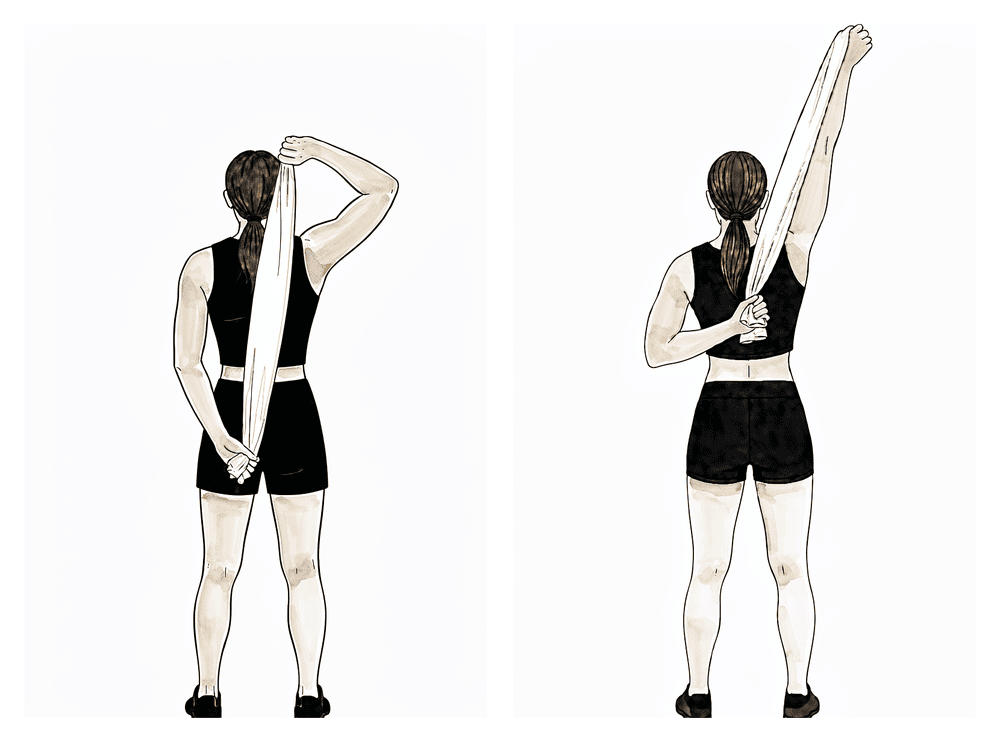
Kéo giãn sau lưng
Cầm một chiếc khăn sau lưng, tay đã phẫu thuật ở dưới và tay lành ở trên. Dùng tay lành nhẹ nhàng kéo tay đã phẫu thuật lên dọc theo lưng cho đến khi cảm thấy căng, giữ một lúc rồi hạ xuống. Mục tiêu là cảm giác căng nhẹ ở phía sau vai — không gắng ép.
Theo hướng dẫn của chuyên viên vật lý trị liệu
Kieran Hirpara 4.0
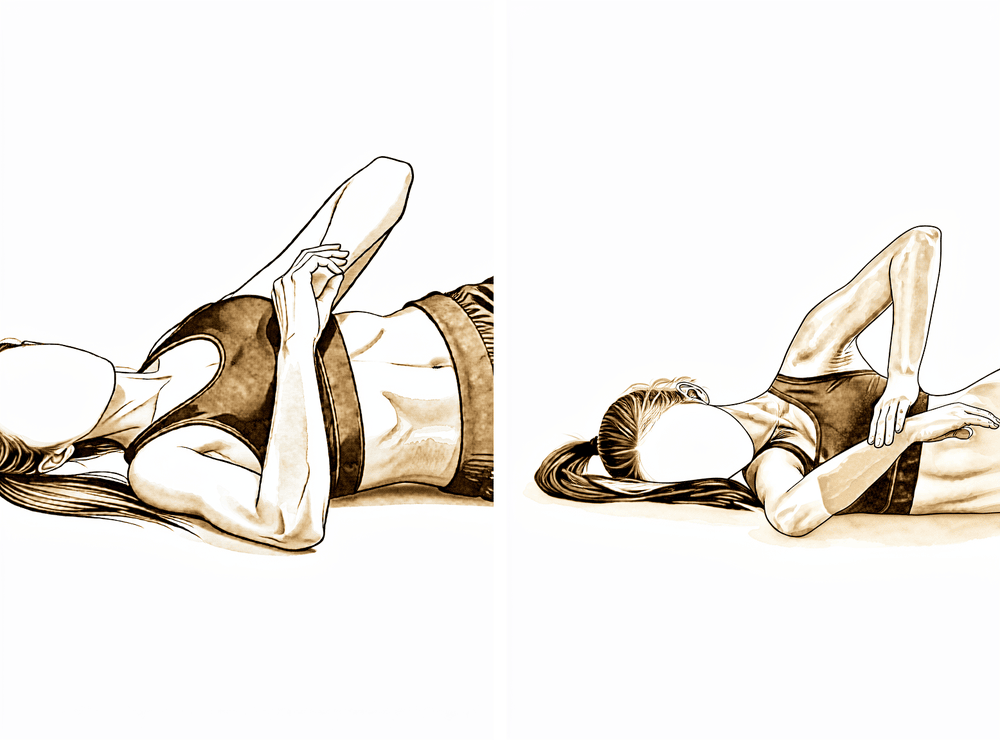
Kéo giãn tư thế nằm nghiêng (sleeper stretch – bao khớp sau)
Nằm nghiêng về phía bên đã phẫu thuật, vai và khuỷu tay đều gập vuông góc. Dùng tay kia nhẹ nhàng ấn cẳng tay xuống về phía giường cho đến khi cảm thấy căng ở phía sau vai, rồi thả lỏng. Đây là bài kéo giãn bao khớp sau mà chuyên viên vật lý trị liệu sẽ dùng để giải phóng động tác xoay — hãy tập nhẹ nhàng, không gây đau nhói.
Giữ 20–30 giây, vài lần; theo hướng dẫn của chuyên viên vật lý trị liệu
Kieran Hirpara 4.0
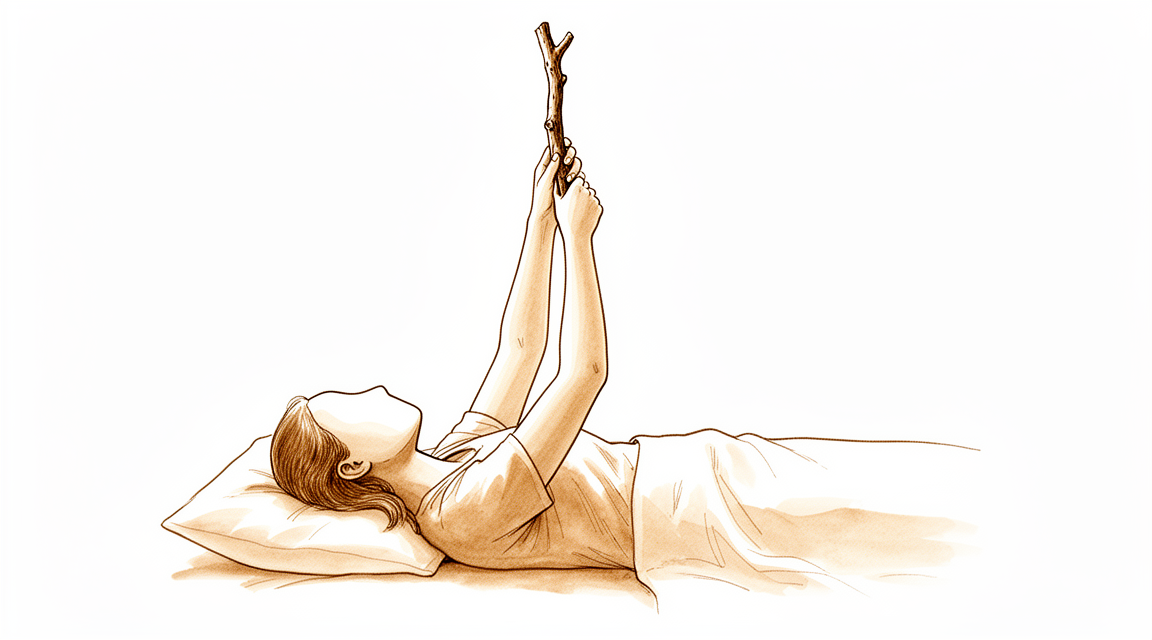
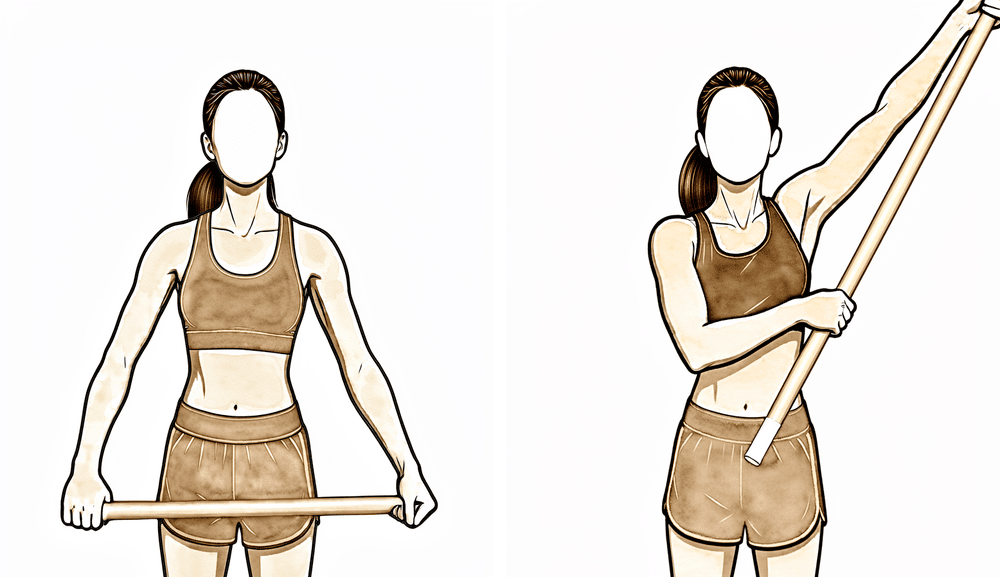
Dạng tay có hỗ trợ bằng gậy
Nằm ngửa và cầm một chiếc gậy bằng cả hai tay. Dùng tay lành dẫn cánh tay đã phẫu thuật sang ngang về phía ngang vai, rồi hạ xuống có kiểm soát. Bài tập này giúp phục hồi động tác dạng tay dần đến 90 độ khi tầm vận động trở lại.
Theo hướng dẫn của chuyên viên vật lý trị liệu
Kieran Hirpara 4.0
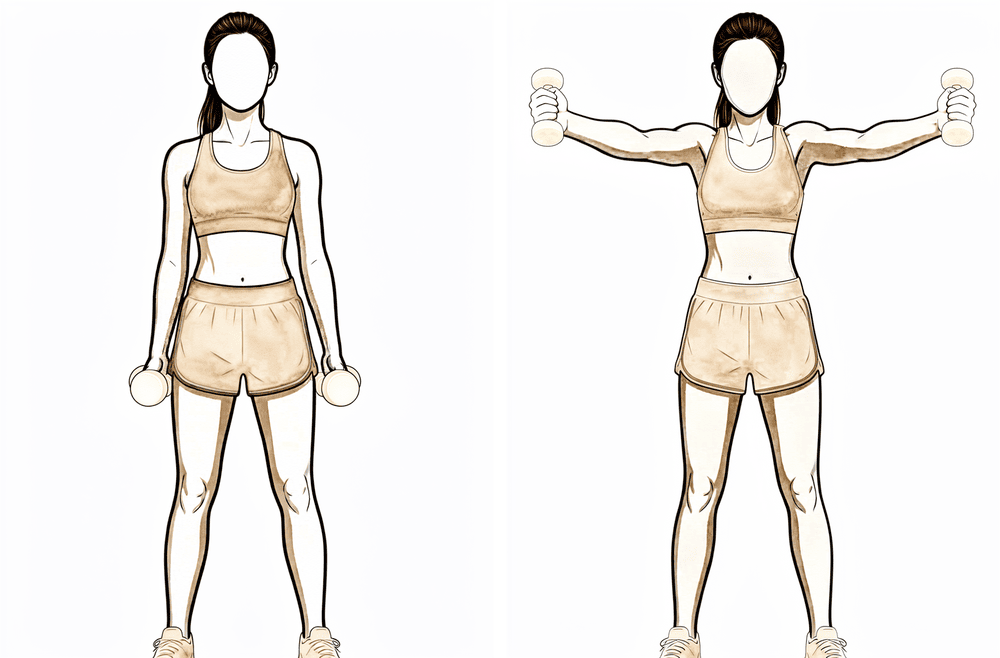
Nâng tay trong mặt phẳng xương bả vai (full-can)
Đứng với cánh tay sát bên thân, ngón cái hướng lên. Nâng cánh tay lên theo một góc chếch ra trước — ở giữa hướng thẳng phía trước và hướng sang ngang — không cao hơn mức thoải mái, rồi hạ xuống từ từ. Bắt đầu không dùng tạ; giữ xương bả vai ổn định và tránh nhún vai.
Bắt đầu không dùng tạ; thêm tạ nhẹ khi các lần lặp không đau và được kiểm soát tốt
Kieran Hirpara 4.0
Kéo khuỷu tay ra sau ở tư thế nằm sấp
Nằm sấp với hai cánh tay thõng xuống về phía sàn. Siết hai xương bả vai lại với nhau và kéo khuỷu tay ra sau và xuống dưới để hai cánh tay tạo thành chữ 'W', rồi hạ xuống từ từ. Bắt đầu không dùng tạ; có thể thêm tạ nhẹ khi các lần lặp không đau và được kiểm soát tốt.
Bắt đầu không dùng tạ; thêm tạ nhẹ (khoảng 0,5–1 kg) sau một tuần tập các lần lặp không đau
Giai đoạn này tập trung vào việc khôi phục phần còn lại của tầm vận động và bắt đầu xây dựng lại sức mạnh. Các bài tập của bạn sẽ tiến triển từ các cử động hỗ trợ sang cử động chủ động của cánh tay theo mọi hướng, với hầu hết các phác đồ được công bố mong đợi đạt được tầm vận động đầy đủ hoặc gần đầy đủ vào khoảng sáu đến tám tuần. Việc tăng cường sức mạnh bắt đầu một cách nhẹ nhàng: đầu tiên không sử dụng trọng lượng, sau đó sử dụng dây thun và các trọng lượng rất nhẹ cho các cơ vòng xoay và cơ bả vai. Nhiều người thấy rằng chườm nóng trước khi tập và chườm lạnh sau khi tập là hữu ích. Các hoạt động ở mức độ trung bình (nâng vật nhẹ dưới tầm vai) thường trở nên khả thi trong giai đoạn này, dưới sự hướng dẫn của nhà vật lý trị liệu của bạn.
Dành cho nhà vật lý trị liệu của bạn:
Mục tiêu
- Đạt được tầm vận động chủ động đầy đủ hoặc gần đầy đủ theo mọi mặt phẳng vào khoảng tuần 6–8
- Khôi phục và cải thiện sức mạnh của các cơ vòng xoay và cơ bả vai
- Chuẩn hóa nhịp điệu bả vai-đùi và kiểm soát thần kinh cơ
- Tiếp tục làm giảm đau
Quản lý
- Tiến triển tầm vận động theo mọi mặt phẳng, bao gồm xoay trong phía sau lưng với kỹ thuật kéo căng bao khớp sau nhẹ nhàng
- Vận động khớp vai-đùi (trượt xuống dưới, trượt ra sau và trượt ra trước) khi có chỉ định
- Chương trình đồng trương bắt đầu không trọng lượng (nâng vai, chèo ngửa, duỗi ngang ngửa, duỗi thẳng đến vị trí trung hòa, xoay ngoài nằm nghiêng, abducci đến 90°), thêm trọng lượng nhẹ (khoảng 0,5–1 kg) sau một tuần thực hiện các lần lặp lại không đau và được kiểm soát tốt
- Xoay ngoài và xoay trong với dây thun; tiến triển tới các bài tập xoay ở các vị trí nâng cao hơn khi cảm thấy thoải mái
- Kiểm soát thần kinh cơ của bả vai và các bài tập cho cơ thang dưới; điều kiện hóa thân, lõi và chi dưới
- Bài tập sức bền cho chi trên; chườm nóng trước và chườm lạnh sau các buổi tập theo sở thích
Cẩn trọng
- Tránh các bài tập có tải trọng trong tầm vận động gây chèn ép đau; các bài tập có thể khó, nhưng không được tái tạo lại cơn đau trước phẫu thuật
- Không nhắm mục tiêu vào việc tải trọng cơ trên gai hoặc cơ delta giữa cho đến khi không còn đau, và tránh nó nếu nó kích hoạt cơn đau khi nghỉ hoặc đau ban đêm
- Tiếp tục tránh đẩy người dậy bằng cánh tay đã phẫu thuật và tránh nâng vật nặng hoặc nâng quá vai cho đến khi đủ sáu tuần
Tiêu chí để tiến triển
- Tầm vận động đầy đủ, không đau với ít cảm giác đau ê ẩm
- Sức mạnh của các cơ vòng xoay khoảng 4/5 trên thăm khám bằng tay, với khả năng kiểm soát bả vai tốt
Giai đoạn III — Tăng cường sức mạnh (Tuần 6–12)
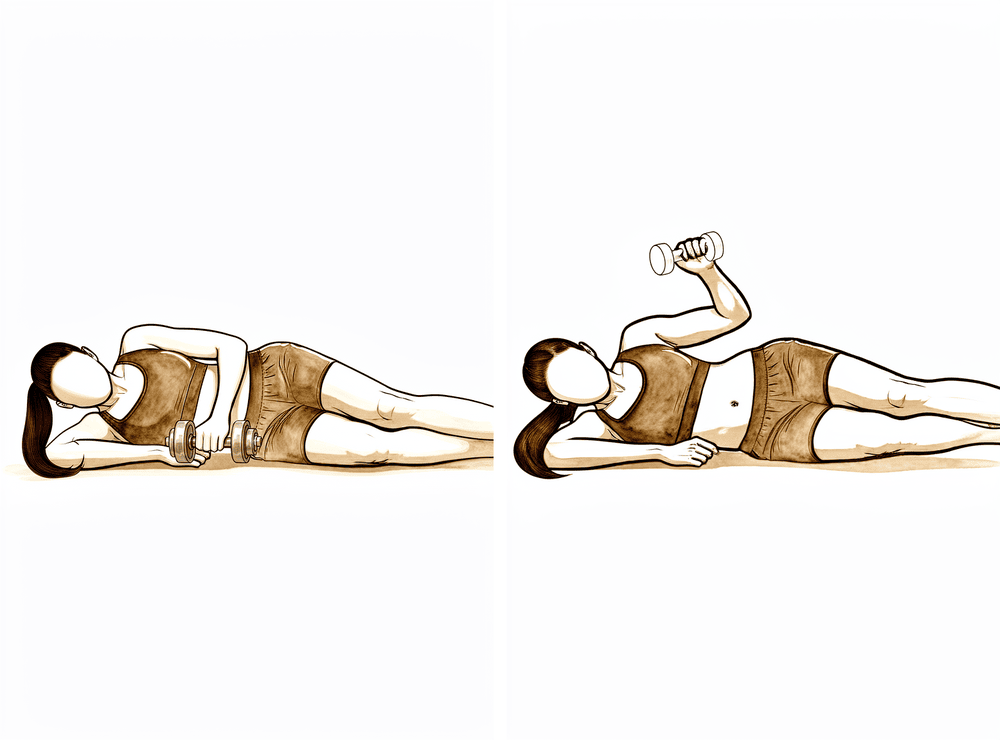
Kieran Hirpara 4.0
Xoay ngoài ở tư thế nằm nghiêng có tạ
Nằm nghiêng về phía bên không phẫu thuật, khuỷu tay phía trên gập vuông góc và áp sát vào thân. Cầm một quả tạ nhẹ, xoay cẳng tay lên về phía trần nhà, rồi hạ xuống từ từ. Bài tập nên có cảm giác gắng sức nhưng về cơ bản không gây đau — hãy giảm bớt bất kỳ bài nào gây đau khi nghỉ hoặc đau về đêm.
2–3 hiệp, mỗi hiệp 8–12 lần
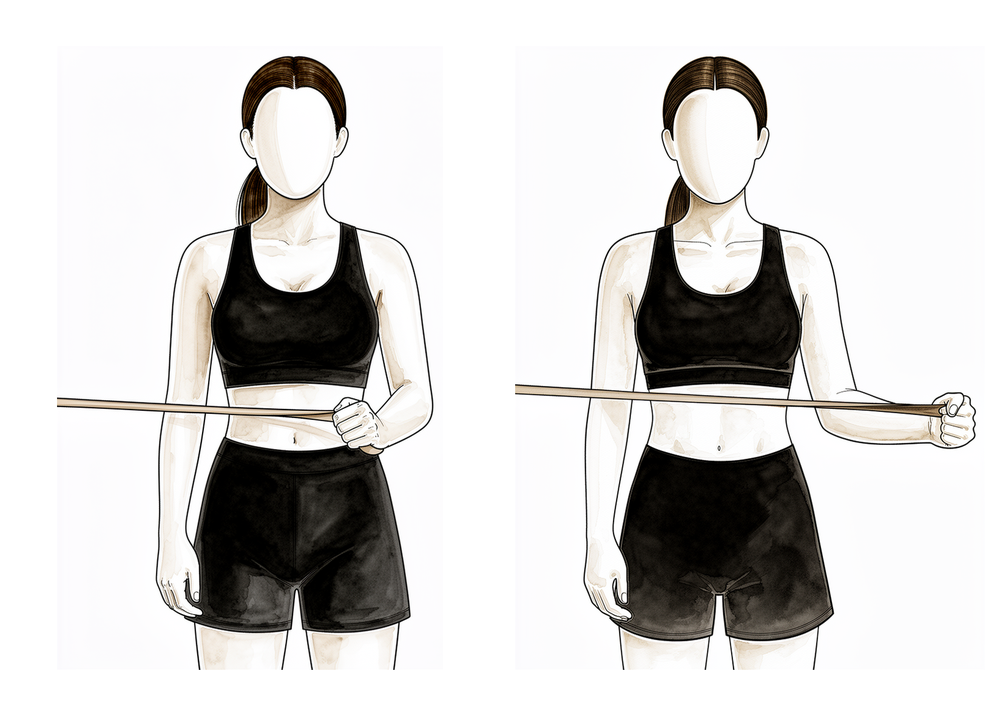
Kieran Hirpara 4.0
Xoay ngoài với dây kháng lực
Đứng với khuỷu tay áp sát bên thân và gập vuông góc, cầm một dây đàn hồi được cố định ngang thắt lưng. Giữ khuỷu tay sát bên thân, xoay cẳng tay ra ngoài chống lại lực của dây, rồi trở về từ từ. Bài tập này nâng cấp việc tập chóp xoay từ các bài đẳng trường và bài không tạ trước đó.
2–3 hiệp, mỗi hiệp 8–12 lần
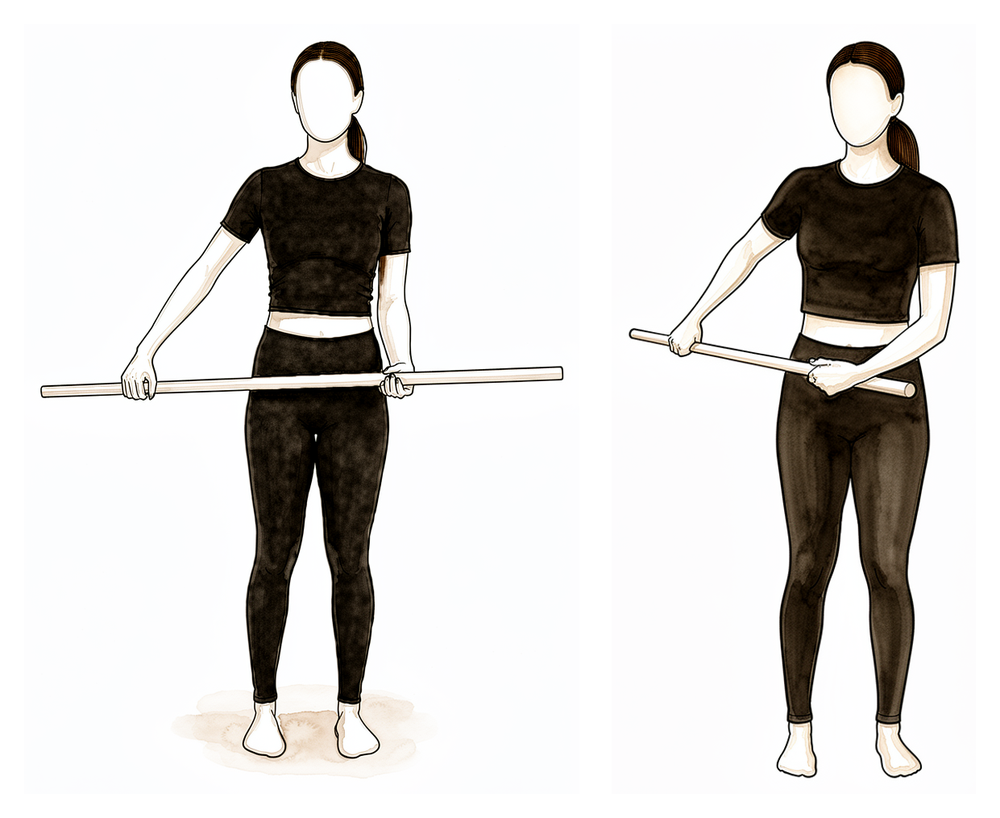
Kieran Hirpara 4.0
Xoay trong với dây kháng lực
Với khuỷu tay áp sát bên thân, cầm một dây được cố định ở một bên và xoay cẳng tay vào trong, ngang qua thân chống lại lực của dây, rồi trở về từ từ. Tăng dần lực cản khi sức mạnh tăng lên.
2–3 hiệp, mỗi hiệp 8–12 lần
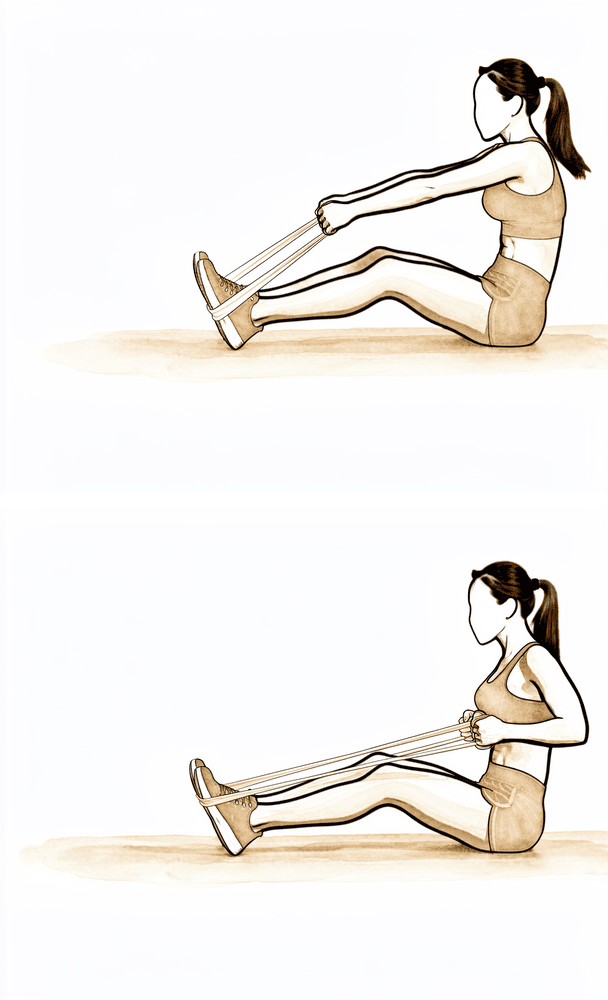
Kieran Hirpara 4.0
Kéo dây ra sau ở tư thế đứng
Cầm một dây được cố định phía trước ngang thắt lưng. Giữ cánh tay tương đối thẳng, kéo ra sau và xuống về phía hông, siết xương bả vai xuống dưới và ra sau, rồi trở về từ từ. Bài tập này tăng cường các cơ quanh xương bả vai vốn hỗ trợ chóp xoay.
2–3 hiệp, mỗi hiệp 8–12 lần
Kieran Hirpara 4.0
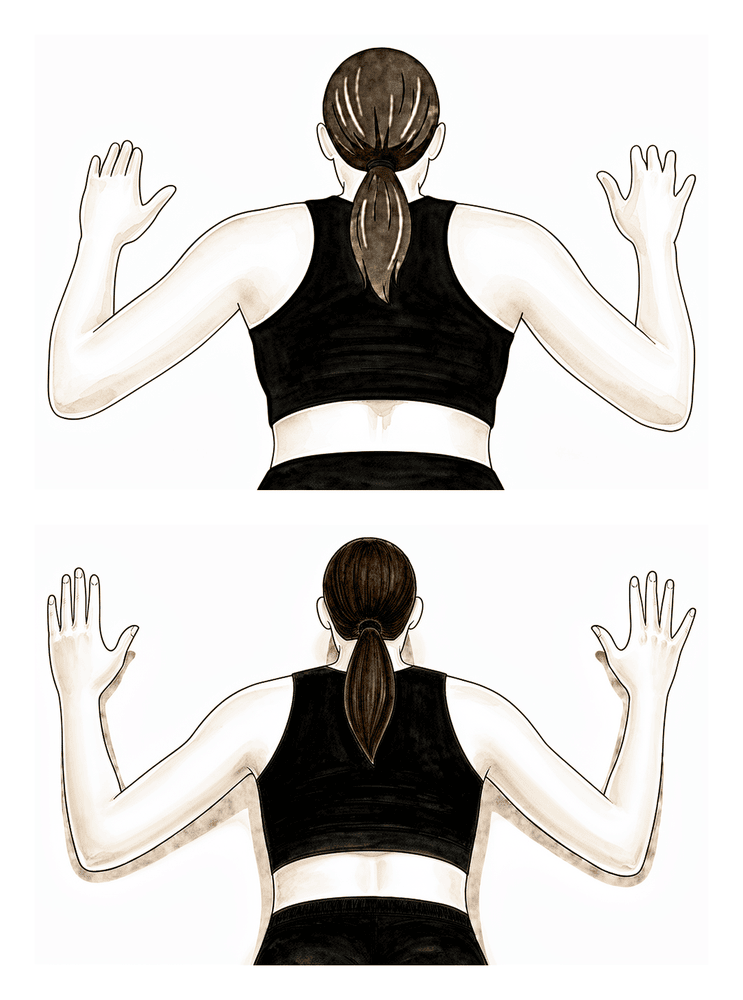
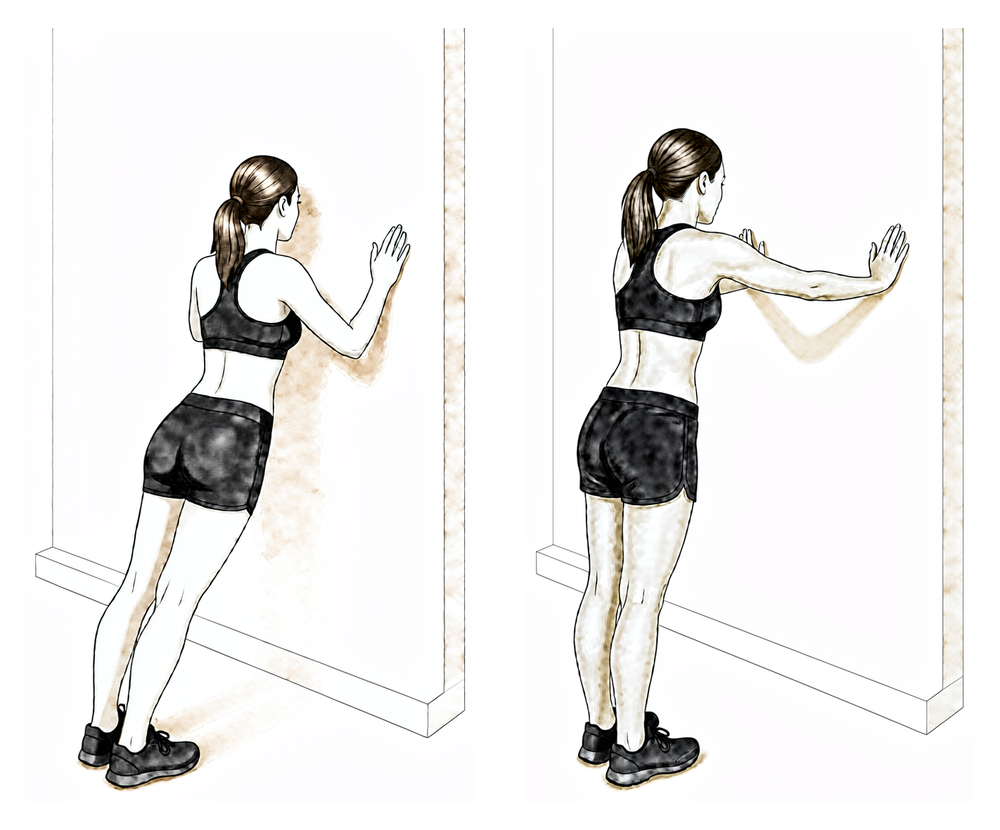
Chống đẩy tường cộng (wall push-up plus)
Đứng quay mặt vào tường, hai bàn tay đặt phẳng lên tường ngang vai. Gập khuỷu tay để nghiêng người về phía tường, rồi đẩy trở lại, thêm một lực đẩy nhẹ qua hai bàn tay ở cuối động tác để tách hai xương bả vai ra. Đây là bài tập chuỗi đóng giúp tăng khả năng kiểm soát — hãy bắt đầu theo hướng dẫn của chuyên viên vật lý trị liệu.
Theo hướng dẫn của chuyên viên vật lý trị liệu
Khi khả năng vận động đã trở lại, trọng tâm chuyển sang sức mạnh, sức bền và kiểm soát. Các bài tập kháng lực được nâng cấp từ dây kháng lực sang tạ, và các bài tập trở nên năng động hơn, bao gồm, đối với những người quay trở lại thi đấu thể thao, việc bắt đầu các bài tập plyometric có kiểm soát và quá trình quay trở lại tập luyện dần dần. Bơi lội thường được phục hồi từ khoảng sáu tuần (bơi ếch trước, bơi sải khi cảm thấy thoải mái), và các công việc trung bình (nâng vật nhẹ dưới vai) thường có thể thực hiện được từ sáu tuần. Chương trình quay trở lại thi đấu thể thao theo từng giai đoạn thường bắt đầu ở tuần 10–12 khi đáp ứng các tiêu chí về sức mạnh.
Dành cho nhà vật lý trị liệu của bạn:
Mục tiêu
- Cải thiện sức mạnh, công suất và sức bền của phức hợp vai
- Tối ưu hóa kiểm soát thần kinh cơ, cảm giác sâu và mô hình vận động (không có hiện tượng nhún vai)
- Chuẩn bị cho quá trình quay trở lại thi đấu thể thao và làm việc nặng nề hơn một cách dần dần
Quản lý điều trị
- Nâng cấp chương trình đẳng trương: đẳng trương tĩnh → dây kháng lực → tạ; cơ xoay vai, cơ delta và các cơ ổn định xương bả vai ở mức 2–3 hiệp, mỗi hiệp 8–12 lần lặp lại
- Giới thiệu các bài tập kháng lực ly tâm, bài tập chuỗi kín và ổn định nhịp nhàng; các bài tập cảm giác sâu bao gồm chịu trọng lượng và tư thế quỳ bốn điểm
- Hoạt động plyometric: các bài tập hai tay (ném bóng từ ngực, ném sang ngang) tiến triển sang các bài tập một tay (bật bóng vào tường, các bài tập ném) về cuối giai đoạn
- Bắt đầu chương trình thể thao theo từng giai đoạn ở tuần 10–12 nếu đáp ứng các tiêu chí
- Tiếp tục các bài tập cốt lõi và rèn luyện thể lực; chườm lạnh khi cần thiết
Các biện pháp phòng ngừa
- Các bài tập nên có độ khó nhưng về cơ bản là không đau; giảm cường độ bất kỳ bài tập nào gây ra đau khi nghỉ hoặc đau về đêm
- Tránh nâng vật nặng và duy trì tải trọng trên đầu cho đến khoảng ba tháng
Tiêu chí để tiến triển
- Phạm vi vận động chủ động đầy đủ, không đau (xấp xỉ bằng bên đối diện)
- Sức mạnh tiến gần đến bên đối diện (các tiêu chí được công bố dao động từ 70% để bắt đầu đào tạo động lực học, tiến tới 90% để quay trở lại thi đấu thể thao)
- Không đau hoặc đau khi ấn với việc tăng tải trọng dần dần
Giai đoạn IV — Trở lại hoạt động bình thường (từ tuần 12 trở đi)
Giai đoạn cuối cùng là quá trình trở lại có kiểm soát với các công việc nặng, các hoạt động trên cao và thể thao. Việc nâng vật nặng hoặc lặp đi lặp lại và làm việc liên tục ở tư thế trên cao hơn vai thường được bắt đầu lại từ khoảng ba tháng. Việc trở lại thi đấu thể thao (đặc biệt là các môn thể thao đòi hỏi động tác trên cao) dựa trên việc đáp ứng các tiêu chí hơn là dựa trên lịch trình: phạm vi vận động không đau hoàn toàn, sức mạnh gần bằng bên đối diện và sự tự tin với các bài tập đặc thù môn thể thao. Vai tiếp tục cải thiện tốt trong thời gian dài sau giai đoạn này; các hướng dẫn được công bố mô tả sự cải thiện có thể kéo dài tới một năm.
Dành cho nhà vật lý trị liệu của bạn:
Mục tiêu
- Trở lại có kiểm soát với công việc nặng, hoạt động trên cao và thể thao
- Duy trì phạm vi vận động, sức mạnh và kiểm soát trong dài hạn
Quản lý
- Tiếp tục chương trình tăng cường sức mạnh, nâng cao các bài tập tại phòng gym và đặc thù môn thể thao khi được dung nạp
- Tiếp tục chương trình thể thao theo từng giai đoạn với việc trở lại có kiểm soát các động tác ném và các môn thể thao trên cao khác
- Tự thực hiện các bài căng giãn bao khớp và các bài tập duy trì khi cần thiết
Các biện pháp phòng ngừa
- Việc tiến triển vẫn dựa trên triệu chứng; nếu đau tái phát, hãy giảm tải, khôi phục phạm vi vận động thoải mái và xây dựng lại sức mạnh
Tiêu chí để tiến triển
- Phạm vi vận động đầy đủ, không đau
- Kết quả kiểm tra sức mạnh và chức năng đạt yêu cầu (khoảng 90% so với bên đối diện theo các tiêu chí trở lại thể thao được công bố)
- Đánh giá lâm sàng đạt yêu cầu
Sau khi hoàn thành phác đồ của bạn
Các giai đoạn trên được điều chỉnh từ các phác đồ phục hồi chức năng đã được công bố và hướng dẫn dành cho bệnh nhân sau phẫu thuật giảm chèn ép dưới mỏm vai nội soi: OrthoIndy, Sports Surgery New York, Gundersen Health System Sports Medicine, Twin Cities Orthopedics, Oxford University Hospitals NHS Foundation Trust và Royal Berkshire NHS Foundation Trust. Các khoảng thời gian theo tuần mang tính chất tham khảo điển hình chứ không cố định, và quá trình phục hồi chức năng tiếp theo của bạn sẽ được vật lý trị liệu viên hướng dẫn cá nhân hóa, phối hợp với phòng khám, dựa trên mức độ hồi phục của khớp vai. Trang này bổ sung cho các lời khuyên chung về quá trình hồi phục của phòng khám; xem quản lý đau sau phẫu thuật và chăm sóc vết mổ. Để biết thêm về ca phẫu thuật và tình trạng bệnh mà nó điều trị, xem giảm chèn ép dưới mỏm vai. Bằng chứng hỗ trợ cho phác đồ này (bao gồm cách nó phù hợp với các bằng chứng thử nghiệm về phẫu thuật dưới mỏm vai) được tóm tắt trong phần bằng chứng, có sẵn dưới dạng PDF từ đầu trang này.
Evidence & references
This is the clinical evidence summary written for health professionals. It is technical, and it lists the research this page was built from. You do not need to read it to understand your treatment or to make a decision about it.
Arthroscopic Subacromial Decompression (Acromioplasty) — Post-operative Rehabilitation
Topic scope: Post-operative rehabilitation after isolated arthroscopic subacromial decompression (ASD / acromioplasty ± bursectomy). When a decompression is performed together with a rotator cuff repair, the repaired tendon sets the (slower) pace and the rotator-cuff-repair protocol takes priority — this page is for the isolated decompression.
Defining principle of this rehab: a subacromial decompression shaves bone and clears bursa — it repairs nothing that needs protecting. So (like a debridement, and unlike a cuff repair or stabilisation) the rehab is an early-movement pathway: a short sling for comfort only, weaned within days, motion and normal light use from day one, and a rapid return of range and function. The aim is to settle the post-operative flare and keep the shoulder moving while it quiets down — rehabilitation, not rest, does the work.
A. THE PROCEDURE & ITS EVIDENCE CONTEXT (important)
Arthroscopic subacromial decompression removes the subacromial bursa and shaves the under-surface of the acromion to "make room" for the rotator cuff, on the impingement model of subacromial pain.
The efficacy of the bony decompression itself is one of the most debated questions in shoulder surgery, and the rehabilitation context cannot be stated honestly without it:
- CSAW (Beard et al, Lancet 2018; n=313, 3-arm) — a placebo-controlled surgical RCT. Decompression gave no clinically important benefit over arthroscopy-only (placebo) surgery, and both surgical arms were only marginally better than no treatment — a difference below the pre-specified minimal clinically important threshold.
- FIMPACT (Paavola et al, BMJ 2018) — a second placebo-controlled RCT: no benefit of ASD over diagnostic arthroscopy, and neither was superior to a structured exercise programme at 2 years.
- Cochrane review (Karjalainen et al, 2019) — high-certainty evidence that subacromial decompression provides little or no clinically important benefit over placebo for pain, function, or quality of life.
The practical consequence is that structured exercise/physiotherapy is first-line for subacromial pain, and ASD is now a selective operation — reserved for patients who have failed an adequate non-operative programme or who have a specific mechanical lesion. This does not make a well-selected decompression valueless, but it explains why the post-operative emphasis is on early movement and rehabilitation, which is what reliably drives recovery.
B. POST-OPERATIVE PHASED TIMELINE (isolated decompression)
A nerve block is commonly used (numb arm for some hours — start analgesia before it wears off). Keyhole wounds; desk-based work commonly resumes within ~2 weeks.
| Phase | Window | Sling | ROM / use | Strengthening | Notes |
|---|---|---|---|---|---|
| I — Early movement | Week 0–2 | Comfort only, off within days (gone by ≤ 2 wk) | Hand/elbow immediately; pendulums + assisted motion as comfort allows; normal light daily use from day 1 | — | Settle pain/swelling; ice; analgesia before exercise. No driving while in sling (typically back ~1–3 wk once out of sling + safe emergency stop) |
| II — Restore range / start strength | Week 2–6 | Off | Progress to full active ROM all planes | Begin gentle cuff + scapular strengthening | Range comfortable below shoulder height; most daily activity resumed |
| III — Strengthening | Week 6–12 | Off | Full | Progressive cuff/scapular loading, band → light weight | Heavier and overhead loading built gradually |
| IV — Return to full activity | Week 12 + | Off | Full | Advanced/sport-specific | Full unrestricted activity typically ~3 months |
There is no construct-protection branch in the isolated decompression — the only branch is if a rotator cuff repair was also done, which converts recovery to the protected cuff-repair pathway.
C. KEY CONTROVERSIES / EVIDENCE QUALITY
- Does the bony decompression add anything? Two placebo-controlled RCTs (CSAW, FIMPACT) and a Cochrane review say it adds little or nothing over placebo or exercise for subacromial pain. Strong (RCT/SR). → exercise-first, selective surgery.
- Decompression added to a cuff repair — multiple RCTs show no added benefit of routine acromioplasty at the time of arthroscopic cuff repair. Moderate–strong.
- The post-operative rehab protocol itself — consensus/expert (institutional protocols), no defining rehab RCT; phase timings are typical, not trial-derived. Weak/consensus.
(Patient-facing note: the efficacy debate belongs in this clinician evidence section, not the patient protocol page — surfaced here for the surgeon's awareness.)
D. EVIDENCE STRENGTH FLAGS (summary)
- STRONG (RCT / SR): ASD provides little/no benefit over placebo surgery or exercise (CSAW Lancet 2018; FIMPACT BMJ 2018; Cochrane Karjalainen 2019); no benefit of added acromioplasty at cuff repair.
- MODERATE: early-motion rehabilitation after isolated decompression (institutional cohorts / consensus protocols, consistent ~3-month recovery).
- WEAK / CONSENSUS: the specific phase/timeline structure of the post-op protocol.
CITATIONS
RAG corpus (180,000+ Orthopaedic articles)
- Is acromioplasty justifiable? Orthop Traumatol Surg Res. 2019. DOI: 10.1016/j.otsr.2019.10.002
- Indications for Arthroscopic Subacromial Decompression: a Level V evidence clinical guideline. Arthroscopy. 2019. DOI: 10.1016/j.arthro.2019.06.012
- The role of subacromial decompression in patients undergoing arthroscopic repair of full-thickness rotator cuff tears. Arthroscopy. 2012. DOI: 10.1016/j.arthro.2011.11.022
- Arthroscopic repair of full-thickness rotator cuff tears with and without acromioplasty (RCT). Am J Sports Med. 2014. DOI: 10.1177/0363546514529091
- A comparative study of arthroscopic débridement versus repair for Ellman grade I partial cuff tears. J Shoulder Elbow Surg. 2020. DOI: 10.1016/j.jse.2020.03.006
Landmark trials / reviews (URLs)
- Beard DJ, et al. Arthroscopic subacromial decompression for subacromial shoulder pain (CSAW): placebo-controlled 3-group RCT. Lancet. 2018. https://www.thelancet.com/journals/lancet/article/PIIS0140-6736(17)32457-1/fulltext
- Paavola M, et al. (FIMPACT) Subacromial decompression versus diagnostic arthroscopy for shoulder impingement: randomised, placebo surgery controlled trial. BMJ. 2018;362:k2860. https://www.bmj.com/content/362/bmj.k2860
- Karjalainen TV, et al. Subacromial decompression surgery for rotator cuff disease. Cochrane Database Syst Rev. 2019. https://www.cochranelibrary.com/cdsr/doi/10.1002/14651858.CD005619.pub3/full
Published rehab protocols (basis for the phase structure)
- Kendall C. Arthroscopic Subacromial Decompression Physical Therapy Protocol. OrthoIndy. https://www.orthoindy.com/wp-content/uploads/Arthroscopic-Subacromial-Decompression.pdf
- Strauss EJ. Rehabilitation Protocol: Arthroscopic Subacromial Decompression / Distal Clavicle Excision. Sports Surgery New York. https://www.sportssurgerynewyork.com/pdf/arthroscopic-subacromial-decompression-distal-clavicle-excision-rehab-protocol.pdf
- Gundersen Health System Sports Medicine. Subacromial Decompression / Acromioplasty Rehabilitation Program. https://www.gundersenhealth.org/sites/default/files/2022-06/Sports-Medicine-Protocol-Subacromial-Decompression-Acromioplasty.pdf
- Meisterling RC. Arthroscopic Subacromial Decompression Rehabilitation. Twin Cities Orthopedics. https://tcomn.com/wp-content/uploads/2016/06/Arthroscopic-Subacromial-Decompression-Rehabilitation.pdf
- Scott-Dempster C, Harper J. Outpatient Post-operative Physiotherapy Guidelines: Sub-Acromial Decompression. Oxford University Hospitals NHS FT. https://www.ouh.nhs.uk/media/zidppie2/sub-acromial-decompression.pdf
- Royal Berkshire NHS FT. Arthroscopic subacromial decompression and/or ACJ excision: discharge advice. https://www.royalberkshire.nhs.uk/media/smegtn3c/arthroscopic-subacromial-decompression-and-or-acromioclavicular-joint-excision-discharge-advice_jul24.pdf