Patients › Hand
Viêm khớp khớp PIP
Osteoarthritis and inflammatory arthritis of the PIP joint — non-operative and surgical options.
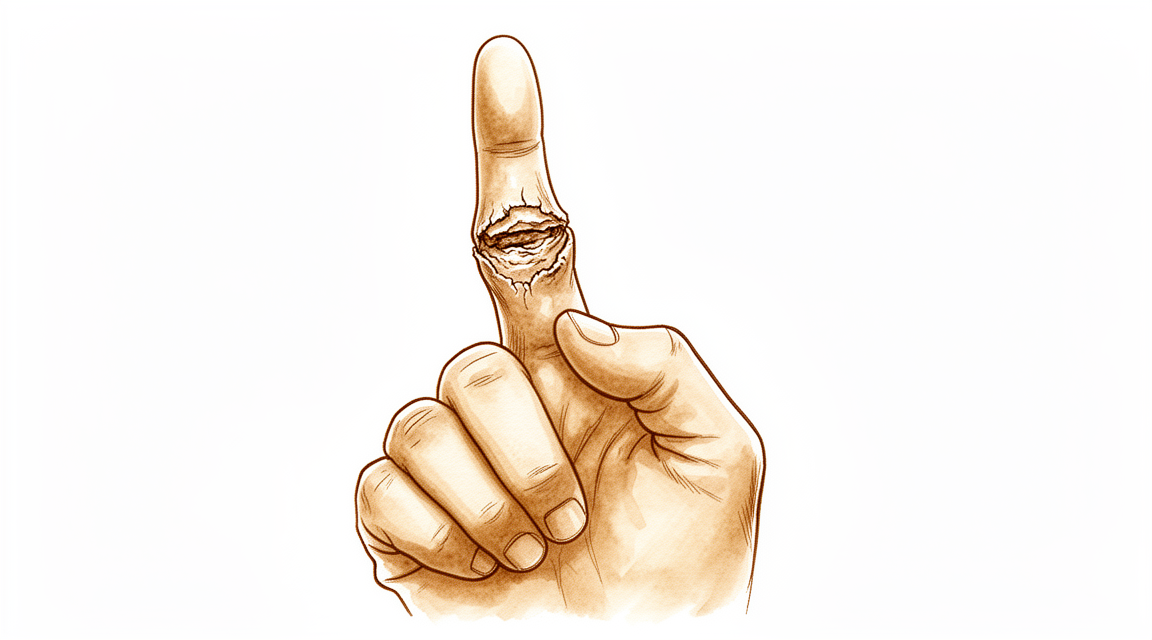
Những triệu chứng mà bạn đang gặp phải
Khớp ở giữa ngón tay (khớp mà bạn gập khi nắm tay lại) trở nên đau, cứng và đôi khi bị sưng. Cơn đau thường âm ỉ, cảm thấy ở cả mặt trước lẫn mặt sau của khớp. Cơn đau thường tăng lên khi bạn cử động ngón tay, đặc biệt là khi duỗi ngón tay trong lúc có lực cản. Đôi khi cơn đau lan lên phía khớp đốt ngón tay. Ấn vào khớp cũng có thể thấy đau.
Những việc hằng ngày cần kẹp hoặc nắm trở nên khó khăn. Động tác kẹp với ngón cái tạo lực ép theo chiều ngang lên khớp của ngón trỏ, vì vậy những việc như cài cúc áo, dùng chìa khóa và nhặt đồ vật nhỏ có thể gây đau. Ngón tay có thể bị lệch hoặc nằm cong vẹo, và có thể không gập hoặc duỗi được hết tầm. Tình trạng sưng và cứng khớp có thể kéo dài rất lâu, đặc biệt nếu trước đây khớp từng bị chấn thương, chẳng hạn như sau khi bị bong gân hoặc trật khớp.
Triệu chứng không phải lúc nào cũng diễn tiến đều đặn. Nhiều người thấy triệu chứng ở giai đoạn cuối của viêm khớp ít hơn so với giai đoạn đầu. Khi cơn đau, tình trạng cứng khớp hoặc ngón tay cong vẹo không dịu đi sau từ ba tháng điều trị đơn giản trở lên, đó là lúc phẫu thuật thường được cân nhắc.
Nếu ngón tay, bàn tay hoặc cánh tay của bạn trở nên nóng, đỏ, sưng và đau, đặc biệt là khi kèm theo sốt, hãy đến phòng cấp cứu ngay trong ngày. Nếu ngón tay chuyển sang nhợt nhạt, lạnh, trắng hoặc xanh tím, hoặc bạn đột ngột mất cảm giác hoặc mất khả năng cử động sau chấn thương, hãy đến phòng cấp cứu ngay trong ngày. Nếu triệu chứng không dịu đi, ngày càng nặng hơn qua nhiều tuần, khiến bạn thức giấc vào ban đêm, hoặc khiến bạn không thể làm việc hay sử dụng bàn tay, hãy đến gặp bác sĩ đa khoa hoặc đề nghị được bác sĩ chuyên khoa khám.
Chuyện gì đang xảy ra thực sự
Ngón tay của bạn có ba xương, và vị trí đau là khớp giữa, gọi là khớp PIP. Đây là một khớp bản lề đơn giản. Nó chỉ gập và duỗi theo một hướng duy nhất, giống như cánh cửa trên bản lề được tra dầu kỹ. Khi khỏe mạnh, hai đầu xương khớp khít vào nhau, giúp khớp vững khi ngón tay ở trạng thái thẳng.
Mỗi đầu xương được phủ một lớp mịn và trơn gọi là sụn. Có thể hình dung lớp này như gai lốp xe, hoặc như bộ giảm xóc giữa hai xương. Khi bị viêm khớp, lớp này dần bị mòn đi. Khi đó các đầu xương cọ xát vào nhau thay vì trượt nhẹ nhàng. Cơ thể phản ứng bằng cách tạo thêm xương quanh rìa khớp, và lớp màng lót khớp dày lên. Chính sự cọ xát và dày lên đó gây ra cảm giác đau âm ỉ, tình trạng sưng và cảm giác lạo xạo mà bạn có thể nhận thấy.
Khớp còn được bao quanh bởi những dải chắc khỏe gọi là dây chằng, giữ cho hai xương thẳng hàng, hơi giống những sợi dây néo của một chiếc lều. Viêm khớp và các chấn thương cũ làm những dải này bị giãn và để lại sẹo. Khi chúng bị lỏng, ngón tay có thể bị lệch hoặc nằm cong vẹo, và khớp có thể có cảm giác không vững. Tiếp theo là tình trạng cứng khớp, vì chính lớp dây chằng và bao khớp bao quanh này co rút lại khi một khớp đau không được cử động.
Một chấn thương cũ có ảnh hưởng quan trọng ở đây. Khớp này dễ gặp vấn đề kéo dài sau khi bị bong gân hoặc trật khớp. Các chấn thương quanh khớp này để lại kết quả kém trong khoảng 30% trường hợp, với tình trạng khớp không vững, đau, cứng khớp kéo dài hoặc ngón tay không duỗi thẳng được hoàn toàn. Tổn thương như vậy cũng có thể khiến viêm khớp xuất hiện sớm hơn so với chỉ do hao mòn.
Có một kiểu biến dạng có tên gọi riêng mà bạn nên biết. Nếu dải gân giúp duỗi thẳng khớp giữa bị yếu đi, ngón tay sẽ gập ở khớp giữa trong khi khớp cuối lại ưỡn ngược theo hướng ngược lại. Các bác sĩ gọi đây là dị dạng boutonnière. Ở giai đoạn đầu, bạn vẫn có thể tự duỗi thẳng ngón tay và chức năng hầu như không bị ảnh hưởng. Về sau, tình trạng co rút hình thành và ngón tay không thể duỗi thẳng được ngay cả khi có người khác cố gắng cử động ngón tay giúp bạn.
Những biện pháp chúng tôi có thể áp dụng
Bác sĩ Kieran Hirpara, bác sĩ phẫu thuật chi trên tại Bệnh viện tư nhân Mater Rockhampton, thường bắt đầu với các phương pháp ít xâm lấn nhất phù hợp với tình trạng của bệnh nhân. Thông thường, bệnh nhân được bác sĩ đa khoa giới thiệu đến phòng khám chúng tôi; nếu nhà vật lý trị liệu khuyên bạn nên đến gặp chúng tôi, bạn vẫn cần có giấy giới thiệu từ bác sĩ đa khoa để được hưởng mức hoàn trả chi phí từ Medicare. Trong lần khám đầu tiên, chúng tôi sẽ hỏi bệnh sử, khám ngón tay và chỉ định chụp X-quang nếu cần thiết. Đối với một vấn đề lâu ngày như thế này, chúng tôi thường thử các phương pháp điều trị không phẫu thuật trước, và cân nhắc phẫu thuật khi các phương pháp đó không mang lại đủ cải thiện.
Những bước đầu tiên là những việc bạn có thể tự thực hiện. Thay đổi cách sử dụng tay, để bạn kẹp và nắm theo cách khác, giúp giảm tải cho khớp đang đau. Trị liệu tay nhằm giữ cho khớp tiếp tục cử động và giữ cho khả năng cầm nắm của bạn hoạt động tốt. Nẹp hoặc bó bột có thể giữ ngón tay thẳng hơn; với một số người, bó bột nối tiếp – trong đó bột được thay theo từng giai đoạn – có thể chỉnh lại một ngón tay đã bị cứng ở tư thế gập. Hãy áp dụng các biện pháp này ít nhất 3 tháng trước khi đánh giá hiệu quả.
Thuốc giảm đau và thuốc chống viêm, dùng theo lời khuyên của bác sĩ đa khoa, có thể làm dịu cơn đau đủ để bạn tiếp tục sử dụng bàn tay. Chúng tôi không tiêm thuốc cho khớp này.
Nếu điều trị đơn giản không hiệu quả sau 3 tháng, và phim X-quang cho thấy viêm khớp kèm theo đau kéo dài, phẫu thuật sẽ trở thành một lựa chọn. Hai phẫu thuật chính là thay khớp bằng khớp nhân tạo, giúp giữ lại phần nào khả năng vận động, hoặc hợp nhất khớp, giúp hết đau bằng cách làm khớp ngừng cử động hoàn toàn. Phương pháp nào phù hợp với bạn phụ thuộc vào chính khớp đó: khớp có vững hay không, đó là ngón tay nào, và bạn cần bàn tay mình làm được những gì. Chúng tôi sẽ cùng bạn trao đổi về lựa chọn đó. Trước bất kỳ ca phẫu thuật nào, chúng tôi kiểm tra để chắc chắn các gân quanh khớp còn nguyên vẹn và khớp vẫn còn một mức độ vững nhất định, vì thay khớp cần cả hai điều kiện này. Một ngón tay bị cong vẹo nhiều, lệch sang một bên hơn 30 độ, rất khó chỉnh lại bằng thay khớp và nhiều khả năng sẽ thất bại.
Những điều bạn có thể trải qua
Viêm khớp ở khớp này thường không tự khỏi. Tình trạng đau âm ỉ và cứng khớp thường kéo dài, và các biện pháp điều trị đơn giản giúp làm dịu chứ không chữa khỏi. Nhiều người thấy triệu chứng dịu bớt qua nhiều năm, nhưng khớp hiếm khi trở lại như trước.
Nếu không điều trị, diễn tiến phụ thuộc vào nguyên nhân gây ra vấn đề. Sau một chấn thương cũ như bong gân hoặc trật khớp, kết quả kém là điều thường gặp: đau kéo dài, cứng khớp, khớp không vững hoặc ngón tay không duỗi thẳng được hoàn toàn. Một ngón tay cứng và cong đôi khi có thể được chỉnh lại bằng nẹp hoặc bó bột nối tiếp, trong đó bột được thay theo từng giai đoạn. Việc giữ cho khớp tiếp tục cử động là rất quan trọng, vì một khớp đau không được sử dụng sẽ càng cứng thêm.
Khi được điều trị, hầu hết mọi người giảm đau đủ để tiếp tục sử dụng bàn tay. Điều trị không phẫu thuật, khi được thử đầy đủ trong ít nhất 3 tháng, giúp làm dịu triệu chứng ở nhiều người. Trong trường hợp cần phẫu thuật, cả hai lựa chọn đều có những kết quả thực tế cần biết. Thay khớp giúp giảm đau và giữ lại phần nào khả năng vận động, nhưng khả năng vận động có thể giảm dần theo thời gian, và việc phải phẫu thuật thêm là điều thường gặp sau khi thay khớp ở khớp này. Hợp nhất khớp giúp hết đau một cách đáng tin cậy, nhưng phải đánh đổi toàn bộ khả năng cử động ở ngón tay đó. Nếu khớp nhân tạo thất bại, phương án cứu vãn thường dùng là hợp nhất khớp.
Quá trình hồi phục diễn ra từ từ chứ không nhanh chóng. Việc lấy lại khả năng cử động thoải mái và sức cầm nắm sau chấn thương hoặc phẫu thuật ở khớp này thực sự khó khăn, và tiến triển được tính bằng tháng. Sau phẫu thuật, bạn sẽ được trị liệu tay với bà Ruby Doolan tại trung tâm Extend Rehabilitation; bà sẽ chỉ đạo quá trình trị liệu và làm bất kỳ chiếc nẹp nào bạn cần. Một số người thấy rằng việc ngón tay duỗi thẳng hơn không mang lại chức năng dễ dàng hơn như họ mong đợi – đây là điều nên biết trước khi bắt đầu điều trị.
Khi nào nên gặp bác sĩ
Hãy đến gặp bác sĩ đa khoa hoặc đề nghị được bác sĩ chuyên khoa khám nếu ngón tay của bạn đau, cứng hoặc cong vẹo và chưa dịu đi sau từ 3 tháng điều trị đơn giản trở lên, như trị liệu tay, đeo nẹp hoặc dùng thuốc. Hãy đi khám sớm hơn nếu triệu chứng ngày càng nặng hơn qua nhiều tuần, khiến bạn thức giấc vào ban đêm, hoặc khiến bạn không thể làm việc hay sử dụng bàn tay. Hãy đi khám sớm sau khi bị bong gân hoặc trật khớp ở khớp này, vì tình trạng sưng, cứng khớp và mất chức năng có thể kéo dài rất lâu, và gãy xương kèm trật khớp có thể nhanh chóng dẫn đến biến dạng cố định. Hãy đến phòng cấp cứu ngay trong ngày nếu ngón tay, bàn tay hoặc cánh tay của bạn trở nên nóng, đỏ, sưng và đau, đặc biệt là khi kèm theo sốt. Hãy đến phòng cấp cứu ngay trong ngày nếu ngón tay chuyển sang nhợt nhạt, lạnh, trắng hoặc xanh tím, hoặc bạn đột ngột mất cảm giác hoặc mất khả năng cử động sau chấn thương.
Phân tích chi tiết hơn
Advanced reading: the deeper science (optional)
Phần này đi sâu hơn mức cần thiết để bạn tự đưa ra quyết định điều trị. Việc viêm khớp khớp ngón giữa đáng để đọc thêm, bởi lựa chọn giữa phương pháp nối cứng khớp và thay khớp phụ thuộc vào một yếu tố mà hầu hết mọi người sẽ không nghĩ đến: mức độ ổn định của khớp. Ngoài ra, việc xác định ngón tay nào bị ảnh hưởng cũng quan trọng không kém so với kết quả chụp X-quang.
Sự ổn định, chứ không phải mức độ nghiêm trọng, là yếu tố quyết định phương pháp phẫu thuật
Hiện có hai phương pháp phẫu thuật. Phương pháp nối xương sẽ cố định khớp ở một vị trí nhất định, giúp loại bỏ cơn đau một cách đáng tin cậy nhưng khiến bệnh nhân mất hoàn toàn khả năng vận động. Phương pháp thay khớp thì vẫn giữ được khả năng vận động này.
Việc so sánh trên 1.868 bệnh nhân đã xác định được trường hợp nào nên áp dụng phương pháp nào. Các mẫu cấy ghép bằng silicon vẫn là lựa chọn hữu ích cho những khớp có độ ổn định tốt, trong khi các mẫu cấy ghép thay thế bề mặt khớp có thể phù hợp hơn với những khớp không ổn định hoặc bị lệch trục; tuy nhiên chúng đi kèm với nguy cơ phải phẫu thuật lại cao hơn [1].
Yếu tố quan trọng ở đây chính là độ ổn định của khớp. Mẫu cấy ghép bằng silicon thực chất là một vật đệm mềm dẻo chứ không phải khớp nối; nó hoạt động bằng cách nằm giữa hai đầu xương, cho phép chúng di chuyển quanh vật đệm này; điều này đòi hỏi các dây chằng xung quanh phải đảm bảo độ ổn định cho khớp. Khi các dây chằng này bị suy yếu và khớp bị lệch sang một bên, vật đệm sẽ không còn điểm tựa nào để hoạt động; vì vậy người ta phải chuyển sang dùng các mẫu cấy ghép thay thế bề mặt khớp, dẫn đến tỷ lệ phải phẫu thuật lại cao hơn do cấu trúc mẫu cấy ghép này có tính hạn chế vận động lớn hơn.
Vị trí của ngón tay quyết định khuyến nghị điều trị
Đây là phần ít được giải thích rõ. Ngón trỏ phải chịu một lực tác động ngang lớn khi thực hiện động tác kẹp, khi nó ép vào ngón cái; chính lực này là thứ mà khớp nhân tạo khó có thể chịu đựng được. Trong khi đó, ngón áp út và ngón út chủ yếu được dùng để nắm chặt, và lực tác động lên chúng chủ yếu đi dọc theo chiều dài ngón chứ không phải ngang qua.
Hệ quả thực tiễn là việc thay khớp thường phù hợp hơn với các ngón nằm về phía ulna; còn đối với ngón trỏ, phương pháp hợp nhất xương lại thường được ưu tiên, vì việc có một điểm tựa vững chắc để kẹp lại quan trọng hơn là khả năng vận động của ngón tay. Do đó, hai khớp có hình dạng giống hệt nhau trên phim X-quang vẫn có thể nhận được những khuyến nghị điều trị khác nhau, chỉ dựa trên vị trí của chúng trong bàn tay.
Phương pháp hợp nhất khớp rất đáng tin cậy; kỹ thuật thực hiện không quan trọng như dự đoán
Khi lựa chọn phương pháp hợp nhất khớp, mức độ tranh luận về kỹ thuật thực hiện là không lớn. Trên 1.923 bệnh nhân, tất cả các kỹ thuật được mô tả đều có thể đạt được mục tiêu hợp nhất khớp bị viêm xương khớp; các tài liệu nghiên cứu gần đây có xu hướng ủng hộ các kỹ thuật nén [2]. Khi so sánh trực tiếp các kỹ thuật trên 286 bệnh nhân, các chỉ số về thời gian hợp nhất khớp, tỷ lệ không hợp nhất và tỷ lệ biến chứng đều tương đương nhau. Phương pháp dùng vít để hợp nhất khớp cho thấy tỷ lệ không hợp nhất thấp hơn so với phương pháp dùng dây kim loại, tuy nhiên dữ liệu nghiên cứu vẫn còn nhiều hạn chế [3].
Trường hợp khớp bị phá hủy do chấn thương chứ không phải do thoái hóa
Gãy xương ở gốc của xương giữa sẽ làm hư hại trực tiếp bề mặt khớp. Khi hơn một nửa bề mặt khớp bị ảnh hưởng, một phương án điều trị là tái tạo lại bề mặt khớp bằng mảnh ghép lấy từ xương móc ở cổ tay – hình dạng của mảnh ghép này tương tự với bề mặt khớp đã mất.
Việc sử dụng mảnh ghép tự thân từ xương móc có thể được coi là phương pháp đáng tin cậy đối với các trường hợp gãy xương kèm trật khớp cấp tính hoặc mãn tính, trong đó diện tích khớp bị tổn thương vượt quá 50%; tuy nhiên cần theo dõi lâu dài, đặc biệt là để xác định tỷ lệ xuất hiện viêm khớp sau này [4]. Một nghiên cứu khác trên 235 bệnh nhân cho thấy phương pháp này giúp giảm triệu chứng và phục hồi chức năng khớp [5].
Vấn đề còn bỏ ngỏ liên quan đến nguy cơ viêm khớp sau này là lưu ý quan trọng cần lưu ý: mảnh ghép giúp khôi phục hình dạng khớp, nhưng liệu bề mặt khớp được tái tạo có bị hao mòn với tốc độ tương đương bề mặt khớp tự nhiên hay không thì vẫn chưa có câu trả lời.
Tài liệu tham khảo
[1] Forster N, Schindele S, Audigé L, Marks M. Các biến chứng, ca phải phẫu thuật lại và sửa chữa sau phẫu thuật thay khớp khớp liên đốt gần: một tổng quan có hệ thống. J Hand Surg Eur Vol. 2018;43(10):1066-75. https://doi.org/10.1177/1753193418770606
[2] Millrose M, Gesslein M, Ittermann T, Kim S, Vonderlind H, Ruettermann M. Phẫu thuật cố định khớp liên đốt gần của ngón tay: tổng quan có hệ thống. EFORT Open Rev. 2022;7(1):49-58. https://doi.org/10.1530/EOR-21-0102
[3] Faulkner H, An V, Lawson RD, Graham DJ, Sivakumar BS. Các kỹ thuật cố định khớp liên đốt gần: tổng quan có hệ thống. Hand (N Y). 2021;18(1):74-9. https://doi.org/10.1177/1558944721998019
[4] Frueh FS, Calcagni M, Lindenblatt N. Phẫu thuật thay khớp bằng mảnh ghép tự thân nửa xương thuyền trong tái tạo khớp liên đốt gần: tổng quan có hệ thống. J Hand Surg Eur Vol. 2014;40(1):24-32. https://doi.org/10.1177/1753193414554356
[5] Faulkner H, Graham DJ, Hile M, Lawson RD, Sivakumar BS. Phẫu thuật thay khớp nửa xương thuyền trong điều trị gãy đáy đốt giữa: tổng quan có hệ thống. Hand (N Y). 2021;18(2):300-6. https://doi.org/10.1177/15589447211014623
Evidence & references
This is the clinical evidence summary written for health professionals. It is technical, and it lists the research this page was built from. You do not need to read it to understand your treatment or to make a decision about it.
Overview
- Reoperations following primary nonconstrained PIP joint arthroplasties are common [1].
- Extensor mechanism dysfunction is the most frequent cause of reoperation following primary nonconstrained PIP joint arthroplasties [1].
- Maintaining motion and function following trauma and/or surgery of the PIP joint remains very challenging [2].
- PIPJ arthrodesis has very few contraindications [3].
- PIPJ arthrodesis has an excellent overall success rate [3].
- PIPJ arthrodesis is an excellent option for surgical management of PIPJ arthritis [3].
- Clinical outcomes for PIP joint replacements with pyrocarbon implants are variable [4].
- PIP joint replacements with pyrocarbon implants have substantially good survivorship [4].
- Complications regularly arise after PIP joint injuries [5].
- Complications after PIP joint injuries can often be prevented through early detection of injury and appropriate initial treatment protocols [5].
- Ultimate salvage for the failed PIP joint arthroplasty may require arthrodesis [6].
- Ultimate salvage for the failed PIP joint arthroplasty may require amputation [6].
- Primary PIPA utilization for patients with OA has increased [7].
- Revision PIPA utilization has decreased [7].
- Surgery performed better than collagenase at early and 2-year follow-up in PIP joints [8].
- Reoperations following primary non-constrained PIP arthroplasties are common [9].
- Initial reports of PIP joint surface replacement implants are encouraging [10].
- Component loosening typical of earlier designs has not been a problem to date for new-generation PIP joint surface replacement implants [10].
- The reoperation rate after pyrocarbon PIP arthroplasty was 30% [11].
- Pyrocarbon PIPJ replacement is a safe and effective treatment for arthritis of the PIPJ [12].
- Pyrocarbon PIPJ replacement provides excellent pain relief [12].
- Pyrocarbon PIPJ replacement increases the arc of motion by more than double the preoperative range [12].
- PIP joint denervation provides durable, effective pain relief [13].
- PIP joint denervation has high patient satisfaction [13].
- PIP joint denervation remains effective despite osteoarthritis progression [13].
- PIP joint denervation supports its consideration as a surgical option for symptomatic PIP joint osteoarthritis [13].
- PIPJ implant arthroplasty is a good and reliable option for symptomatic PIPJ degenerative, post-traumatic or inflammatory arthritis given the proper clinical setting [14].
- It proposes the best surgical approach for a given surgery on the PIP joint based on pearls and pitfalls [15].
- Patients returned to work after a median of 8 weeks following PIP arthroplasty [16].
- Intraoperative fractures occur in about 5% of PIP joint arthroplasties [21].
- Intraoperative fractures do not appear to influence outcomes, including revision surgery, refracture rate, or other early complications [21].
- Periprosthetic joint infection is uncommon after PIP arthroplasties [22].
- The CapFlex-PIP implant demonstrates favourable medium-term results in surface replacing arthroplasty of the proximal interphalangeal joint [23].
- Various techniques for PIP joint arthrodesis can achieve good functional results [24].
- No optimal procedure for PIP joint arthrodesis has yet been found due to the diversity of available methods [24].
- Treatment of the long finger may be a relative contraindication to PIPJ arthroplasty [26].
- The survival of pyrocarbon PIP joint arthroplasty was 85% at 5 years of follow-up [27].
- Pyrocarbon PIP joint arthroplasty has high patient satisfaction [27].
- The available PIPJ arthrodesis techniques have similar fusion time outcomes [61].
- The available PIPJ arthrodesis techniques have similar nonunion rate outcomes [61].
- The available PIPJ arthrodesis techniques have similar complication rate outcomes [61].
Anatomy & Pathophysiology
Joint Mechanics and Stability
- The proximal interphalangeal (PIP) joint is a simple hinge joint that allows for motion in the flexion-extension axis only [35].
- In full extension, PIP joint stability is maintained by the highly congruent bony architecture [35].
- In flexion, the capsuloligamentous structures that envelope the PIP joint maintain stability [35].
- The capsuloligamentous structures of the PIP joint include the dorsal capsule, volar plate, and collateral ligaments [35].
- Unlike the metacarpophalangeal (MCP) joint, the PIP joint's capsuloligamentous structures are essentially isometric throughout the arc of motion [35].
- The PIP joint has unique anatomy that predisposes it to stiffness [35].
- The position of the PIP joint depends on the equilibrium of forces acting at that level, which is subject to the position of the immediately proximal articulation [74].
- The metacarpophalangeal joint affects the position of the proximal interphalangeal joint [74].
- Single articular movements around a fixed perpendicular axis simply do not exist in the hand [74].
- Almost all movements in the hand are around oblique and variable axes, resulting in combined movements permitting optimal orientation of the phalanges at the time of prehension [74].
Soft Tissue Anatomy and Extensor Mechanism
- The principal bony insertion of the extrinsic digital extensors is on the dorsal proximal aspect of the middle phalanx [46].
- Distal interphalangeal joint extension is achieved through the conjoined lateral bands, which are composed of tendinous slips from the extrinsic and intrinsic tendons [46].
- The deep head of each dorsal interosseous muscle forms a lateral tendon, or lateral band, at the level of the MCP joint [66].
- The deep head of the dorsal interosseous muscle flexes and weakly abducts the proximal phalanx while extending the middle and distal phalanges [66].
- Oblique fibers (spiral fibers) from the lateral bands sweep over the distal third of the proximal phalanx to insert onto the lateral tubercles at the base of the middle phalanx [66].
- The oblique fibers extend the middle phalanx at the PIP joint [66].
- The lateral bands are joined by the lateral slips of the extensor tendon to form the conjoined lateral band [66].
- The two conjoined lateral bands to each finger unite at the distal third of the middle phalanx to form the terminal tendon [66].
- The terminal tendon inserts at the base of the distal phalanx to extend it [66].
- The volar interossei form the ulnar lateral band of the index finger and the radial lateral band of the ring and little fingers [66].
- The volar interossei send oblique or spiral fibers that insert onto the base of the middle phalanx at its lateral tubercle [66].
- The flexor digitorum superficialis tendon bifurcates around the flexor digitorum profundus at the beginning of the A2 pulley [73].
- The flexor digitorum superficialis tendon inserts via radial and ulnar slips into the proximal metaphysis of the middle phalanx [73].
- The primary function of the flexor digitorum superficialis is digital flexion at the proximal interphalangeal joint [73].
- The flexor digitorum profundus provides digital flexion at both the proximal and distal interphalangeal joints [73].
- The A3 annular pulley is located over the proximal interphalangeal joint [73].
Pathophysiology of Arthritis and Stiffness
- Proximal interphalangeal joint arthritides are broadly categorized into nonerosive and erosive osteoarthritis (OA), posttraumatic arthritis, and inflammatory arthritis [58].
- Idiopathic or primary OA occurs as a consequence of abnormal mechanical stress that leads to damage of cartilage and subchondral bone, with subsequent cytokine and growth factor activation [58].
- Individual genetics mediate the cellular responses in idiopathic or primary OA [58].
- Erosive OA is described as a separate entity, but this remains controversial, with many suggesting that it is merely a more aggressive form of nonerosive, primary OA [58].
- Inflammatory OA occurs when connective tissues are diseased, allowing for normal use to incite arthritic damage [58].
- The initial phase of PIP joint osteoarthritis is an inflammatory process that comes to a halt at a later stage [18].
- Many patients have fewer symptoms at the end stage of PIP joint osteoarthritis than at the beginning [18].
- Radiographs and symptoms do not correlate in PIP joint osteoarthritis [18].
- The pathogenesis of the PIP joint contracture is attributed to a cycle of edema, immobilization, and tissue adherence of the capsuloligamentous structures [35].
- PIP joint stiffness may be the result of both traumatic and atraumatic conditions, such as Dupuytren disease, infection, and neurological injury [35].
- PIP joint stiffness remains an unsolved problem in hand surgery, with poor prognosis in complex cases even after complete arthrolysis and tenolysis [31].
- Inappropriate management of PIP joint injuries may result in chronic pain, stiffness, deformity, or premature degenerative arthritis [33].
- An extensive review of 96 injuries about the PIP joint found a 30% poor recovery rate, as characterized by joint instability, poor function, pain, or flexion deformities [33].
- Suboptimal treatment of intra-articular fractures typically leads to functional impairment of the hand [51].
- Chronic unreduced dislocations of the proximal interphalangeal joint are uncommon [17].
- Closed reduction of chronic PIP joint dislocations is rarely successful owing to soft tissue contractures [17].
- A functional range of motion with a stable joint can be achieved in chronic PIP dislocations as long as articular cartilage is relatively preserved [17].
- Various injury patterns for PIP joint dislocation have been described from hyperextension to rotational torque injuries [17].
- Different combinations of structures are injured in PIP dislocations based on mechanism, including collateral ligaments, volar plate, and the central slip of the extensor mechanism [17].
- Dorsal dislocations represent almost all PIP joint dislocations [118].
- Dorsal PIP dislocations are characterized by forced hyperextension, axial load, and radial or ulnar deviation [118].
- Dorsal PIP dislocations involve volar plate rupture at its distal attachment [118].
- Dorsal PIP dislocations involve a split between the accessory collateral ligament and proper collateral ligament with detachment of the proper collateral ligament from its proximal attachment [118].
- In dorsal PIP dislocations, the volar plate is maintained beneath the condyle, held by intact attachment to the accessory collateral ligament [118].
- When a torsional mechanism is involved in dorsal PIP dislocations, soft tissue interposition can block reduction [118].
- Lateral PIP dislocations are less common and characterized by direct radial or ulnar stress on the PIP joint with axial load [118].
- In lateral PIP dislocations, the collateral ligament on the side of the force fails under tension, avulsing from its proximal attachment [118].
- Continued force in lateral PIP dislocations causes disruption of the volar plate on the side of the force [118].
- Volar PIP dislocations are the least common and may involve a rotatory component [118].
- Volar PIP dislocation requires force in two vectors: ulnar or radial deviation causing rupture of the collateral ligament and volar plate [118].
- In uncomplicated dorsal PIP dislocations, the central slip of the extensor mechanism ruptures or avulses from the dorsal lip of the middle phalanx [116].
- The intact lateral bands initially can perform joint extension even though the central slip is ruptured in dorsal PIP dislocations [116].
- Failure to immobilize the joint in extension to allow central slip healing can eventually lead to stretching of the triangular ligament holding the lateral bands [116].
- Subluxated lateral bands can no longer extend the PIP joint, and the tightening of the terminal extensor slip leads to hyperextension of the distal interphalangeal (DIP) joint, resulting in the classic boutonniere deformity [116].
- Complex volar PIP dislocations involve rotary displacement with a collateral ligament tear secondary to lateral stress combined with an anteriorly directed force [116].
- In complicated volar PIP dislocations, the central slip, lateral band, or torn collateral ligament may be interposed within the joint, thereby necessitating open reduction [116].
- Open dislocations are predominantly dorsal dislocations of the index and middle fingers [101].
- Restoration of stability allowing early motion and a smooth articular surface are the goals of treatment for dorsal fracture-dislocations of the PIP joint [110].
- Percent articular involvement and relative fragment displacement are objective measurements that can help characterize joint stability and assist with decision-making in PIP joint injuries [25].
- Proper biomechanics of a joint must be restored to achieve full, functional range of motion [80].
- Despite the wealth of knowledge regarding the anatomy of the PIP joint, it remains a subject of ongoing investigation, and evolving understanding of its biomechanical properties will continue to improve treatment and reconstructive designs [81].
Classification
- The diagnosis of PIP joint osteoarthritis is based mainly on the clinical picture and confirmed by radiographs [18].
- Radiographs and symptoms do not correlate, which is the main reason that classifications and staging based on radiographs are rarely used [18].
- Radiographic evaluation of bone quality, specifically defects and cyst formation, plays a crucial role in the indication of possible surgical treatment options [18].
- The presence of stiffness and deformity plays a crucial role in the indication of possible surgical treatment options [18].
- The SCARF classification allows non-hand specialists to specify the type of every PIP joint dislocation and understand each case [50].
- Treatment of PIP joint fracture dislocations is based on joint stability, fracture fragment size, and soft tissue injuries [34].
- Percent articular involvement and relative fragment displacement are objective measurements that can help characterize joint stability and assist with decision-making [25].
- A classification of injuries about the PIP joint has been suggested to provide a practical guide to management [33].
Clinical Presentation
Diagnosis and Radiographic Findings
- The diagnosis of osteoarthritis of the PIP joint is based mainly on the clinical picture and confirmed by radiographs [18].
- The index PIP joint is often deviated to the ulnar side due to mechanical forces in pinching with the thumb [18].
Disease Course and Symptoms
- Many patients have fewer symptoms at the end stage of the disease than at the beginning [18].
- It is common for patients to experience a prolonged duration of swelling, stiffness, and dysfunction following PIP joint sprains [19].
- Proximal interphalangeal joint pain in trigger finger patients results from long symptom duration and consequent joint pathology [28].
- PIP joint pain in trigger finger patients is incompletely resolved after A1 pulley release, leading to worse surgical outcomes than expected [28].
- Patients with pre-existing PIP tenderness should be informed about the possibility of sustaining residual minor pain for up to 3 months after surgery [55].
Functional Impairment and Stiffness
- Arthritis of the PIP joint can lead to considerable hand impairment [58].
- Small perturbations in hand function can have substantial effects on an individual's quality of life, including vocational activities, avocational activities, financial stability, and psychosocial health [58].
- PIP joint stiffness remains an unsolved problem in hand surgery [31].
- The prognosis for PIP joint stiffness is poor in complex cases even after complete arthrolysis and tenolysis [31].
- A review of 96 injuries about the PIP joint found a 30% poor recovery rate, characterized by joint instability, poor function, pain, or flexion deformities [33].
- Clinical results for PIP joint dislocations and fracture-dislocations vary and are often difficult to predict due to the complexity of fracture patterns and potential for sub-acute or chronic presentation [37].
- Fracture dislocations of the PIP joint may rapidly develop fixed deformity, leaving a patient with a poor outlook for complete correction [52].
- The association of persistent subluxation and early arthrosis in dorsal PIP joint fracture dislocations needs further study [57].
Investigations
- A careful physical examination is essential to direct care and future testing if indicated [45].
- Diagnostic tests such as imaging and serum laboratory studies are useful in determining pathology but can be expensive, time consuming, and often nonspecific [45].
- Early recognition of joint instability is essential for adequate treatment of injuries of the PIP joint [29].
- Timely diagnosis is imperative, especially if there is any persistent incongruity of the joint, as fracture dislocations of the PIP joint may rapidly develop fixed deformity [52].
- An 8-MHz Doppler tone assessment may be used to identify superficially displaced neurovascular bundles when Dupuytren cords lie beneath soft fleshy prominences [79].
- MRI is probably most useful in identifying additional pathology such as flexor tendon bowstringing [79].
- MRI may be helpful in providing a quantitative noninvasive measure of cellularity of affected areas, which is an index of biologic activity [79].
Treatment
Arthroplasty
- Reoperations following primary nonconstrained PIP joint arthroplasties are common, with extensor mechanism dysfunction being the most frequent cause [1].
- Clinical outcomes for PIP joint replacements with pyrocarbon implants are variable despite substantially good survivorship [4].
- Pyrocarbon PIPJ replacement provides excellent pain relief and increases the arc of motion by more than double the preoperative range [12].
- The survival of pyrocarbon PIP joint arthroplasty was 85% at 5 years of follow-up, with high patient satisfaction [27].
- The Ascension pyrocarbon PIP joint replacement is an effective and reliable treatment for the painful, mobile arthritic PIP joint, maintaining useful motion and providing effective pain relief [40].
- Implant arthroplasty of the PIP, MCP, and TMC joints predictably produces pain relief and high satisfaction but has historically suffered from high rates of complications [59].
- Patients should be advised that PIPJ ROM deteriorates over time following arthroplasty [20].
- Pre-requisites for PIP joint arthroplasty are intact tendons and at least some residual joint stability [92].
- Corrections of a lateral deviation beyond 30° are difficult and likely to fail in PIP arthroplasty [92].
- The data demonstrate an increased use of primary PIPA utilization for patients with OA, whereas revision PIPA decreased [7].
- Initial reports of PIP and MCP joint surface replacement implants are encouraging, particularly because component loosening typical of earlier designs has not been a problem to date [10].
Arthrodesis
- PIPJ arthrodesis has very few contraindications, with an excellent overall success rate, making it an excellent option for surgical management of PIPJ arthritis [3].
- Ultimate salvage for the failed PIP joint arthroplasty may require arthrodesis or even amputation [6].
- While various techniques for PIP joint arthrodesis can achieve good functional results, no optimal procedure has yet been found due to the diversity of available methods [24].
- The available PIPJ arthrodesis techniques have similar fusion time, nonunion rate, and complication rate outcomes [61].
- Results suggest that the angles suggested by Murray (2016) are too flexed and that most patients prefer a PIPJ arthrodesis in more extension [56].
Denervation
- PIP joint denervation provides durable, effective pain relief with high patient satisfaction, despite osteoarthritis progression, supporting its consideration as a surgical option for symptomatic PIP joint osteoarthritis [13].
Non-Operative and Adjunctive
- The addition of a PIPJ extension orthosis in the presence of traumatic PIPJ fixed flexion deformities is more effective for improving PIPJ extension than hand therapy alone [63].
- Collagenase clostridium histolyticum treatment is effective for isolated or combined PIP joint contractures [104].
- Surgery performed better than collagenase at early and 2-year follow-up in PIP joints and similarly in MCP joints [8].
- Clinical success (0 to 5 of full extension) occurred in 27% of PIP joints after one injection and in 34% after the last injection for collagenase treatment of Dupuytren contracture [43].
- Range of motion for all 644 joints increased from 51 to 71 and 75 after first and last collagenase injections, respectively [43].
- A logical sequential approach to releasing PIP joint contractures in Dupuytren's disease, prioritizing gentle passive manipulation and less aggressive surgeries, yields better results than aggressive interventions [120].
Rehabilitation and Postoperative Care
- The postoperative rehabilitation protocol for PIP arthroplasty includes a dynamic PIP extension-assist splint worn during the day limiting ROM to 0° to 30° of extension-flexion for the first week [53].
- A static resting splint is worn at night and during rest periods, with the MCP joint in 20° of flexion and the PIP and DIP joints maintained in full extension [53].
- All exercises in the dynamic splint should be done hourly with ten repetitions [53].
- When hyperextension of the PIP joint is present, an extension block can be added to block the PIP joint at 30° or more of flexion, with a night static flexion block at 60° to 90° for 3 weeks [53].
- Patients with RA will require individual assessment of preoperative deformity and may require up to 3 weeks of immobilization before initiation of therapy in order to provide for softtissue repair healing to ensure a stable joint [53].
- Complications regularly arise after PIP joint injuries, yet they can often be prevented through early detection of injury and appropriate initial treatment protocols [5].
Complications
Arthroplasty Complications
- Intraoperative fractures in PIP joint arthroplasty do not appear to influence outcomes, including revision surgery, refracture rate, or other early complications [21].
- The revision rate for the LPM PIPJ prosthesis was 29% at a maximum follow-up of 6 years [39].
- An additional 20% rate of adverse clinical and radiological outcomes was observed for the LPM PIPJ prosthesis at a maximum follow-up of 6 years [39].
- Patients should be advised that PIPJ range of motion deteriorates over time following arthroplasty [20].
- Multi-digit PIP joint arthroplasty performed during a single operation resulted in 7% intraoperative fractures, 1% postoperative fractures, and 3% infections [62].
- Multi-digit PIP joint arthroplasty performed on two or more different dates resulted in 12% intraoperative fractures, 2% postoperative fractures, and 4% infections [62].
- Ultimate salvage for a failed PIP joint arthroplasty may require arthrodesis or amputation [6].
Injury and Non-Arthroplasty Complications
- A review of 96 PIP joint injuries found a 30% poor recovery rate characterized by joint instability, poor function, pain, or flexion deformities [33].
- Proximal interphalangeal joint pain in trigger finger patients is incompletely resolved after A1 pulley release [28].
- Incomplete resolution of PIP joint pain after A1 pulley release leads to worse surgical outcomes than expected [28].
Recovery
Postoperative Rehabilitation and Splinting
- Postoperative therapy for PIP joint arthroplasty typically begins 1 week after surgery [53].
- A dynamic PIP extension-assist splint is worn during the day and limits range of motion to 0° to 30° of extension-flexion for the first week [53].
- A static resting splint is worn at night and during rest periods, maintaining the MCP joint in 20° of flexion and the PIP and DIP joints in full extension [53].
- Exercises in the dynamic splint are performed hourly with ten repetitions [53].
- Hyperextension and extension lag must be avoided, with therapy or splinting adjusted immediately if either is present [53].
- If PIP joint hyperextension is present, an extension block can be added to block the joint at 30° or more of flexion [53].
- When hyperextension is managed with an extension block, a night static flexion block at 60° to 90° is applied for 3 weeks [53].
- After the 3-week period of hyperextension management, dynamic extension is reinstituted to zero [53].
- Patients with rheumatoid arthritis may require up to 3 weeks of immobilization before initiating therapy to allow for soft tissue repair healing [53].
Functional Outcomes and Return to Work
- Pyrocarbon PIP joint replacement increases the arc of motion by more than double the preoperative range [12].
- PIP joint range of motion deteriorates over time following pyrolytic carbon hemiarthroplasty [20].
- PIP joint denervation provides durable, effective pain relief with high patient satisfaction despite osteoarthritis progression [13].
Complications and Reoperations
- Ultimate salvage for a failed PIP joint arthroplasty may require arthrodesis or even amputation [6].
- Complications regularly arise after PIP joint injuries but can often be prevented through early detection and appropriate initial treatment protocols [5].
Implant-Specific Recovery Data
- The survival of the MatOrtho proximal interphalangeal joint arthroplasty was 85% at a minimum of 2-years follow-up [94].
- The revision rate of the LPM PIPJ prosthesis was 29% at a maximum follow-up of 6 years [39].
- In a 10-year prospective study of pyrocarbon PIP prostheses, 10 joints in 10 patients required further operations during the follow-up period [44].
- Two patients in the 10-year pyrocarbon PIP cohort had the prosthesis extracted and underwent joint arthrodesis because of persisting pain [44].
- One patient in the 10-year pyrocarbon PIP cohort with rheumatoid arthritis and a previous PIP synovectomy developed skin necrosis and infection, leading to prosthesis extraction after 2 weeks [44].
- Three patients in the 10-year pyrocarbon PIP cohort had limited range of motion and underwent tenolysis and/or arthrolysis [44].
- Two patients in the 10-year pyrocarbon PIP cohort developed hyperextension of the PIP joint with painful snapping and were treated by a Littler tendonplasty [44].
Key Evidence
- [L4] Reoperations following primary nonconstrained PIP joint arthroplasties are common, with extensor mechanism dysfunction being the most frequent cause. [1] (10.1016/j.jhsa.2011.06.002)
- [L5] Maintaining motion and function following trauma and/or surgery of the PIP joint remains very challenging. [2] (10.1016/j.hcl.2017.12.003)
- [L5] PIPJ arthrodesis has very few contraindications, with an excellent overall success rate, making it an excellent option for surgical management of PIPJ arthritis. [3] (10.1016/j.hcl.2017.12.007)
- [L4] Despite substantially good survivorship, clinical outcomes for PIP joint replacements with pyrocarbon implants are variable. [4] (10.1302/2058-5241.2.160041)
- [L5] Complications regularly arise after PIP joint injuries, yet they can often be prevented through early detection of injury and appropriate initial treatment protocols. [5] (10.1016/j.hcl.2017.12.014)
- [L5] Ultimate salvage for the failed PIP joint arthroplasty may require arthrodesis or even amputation. [6] (10.1016/j.hcl.2017.12.011)
- [L4] The data demonstrate an increased use of primary PIPA utilization for patients with OA, whereas revision PIPA decreased. [7] (10.1177/1558944719837009)
- [L3] Surgery performed better than collagenase at early and 2-year follow-up in PIP joints and similarly in MCP joints. [8] (10.1007/s00402-018-3034-6)
- [L4] Reoperations following primary non-constrained PIP arthroplasties are common. [9] (10.1016/s0363-5023(11)60049-x)
- [L5] Initial reports of PIP and MCP joint surface replacement implants are encouraging, particularly because component loosening typical of earlier designs has not been a problem to date. [10] (10.5435/00124635-200309000-00002)
- [Paper] The reoperation rate after pyrocarbon PIP arthroplasty was 30%. [11] (10.1055/s-0040-1709088)
- [L4] Pyrocarbon PIPJ replacement is a safe and effective treatment for arthritis of the PIPJ, providing excellent pain relief and increasing the arc of motion by more than double the preoperative range. [12] (10.1177/1753193411434053)
- [L4] PIP joint denervation provides durable, effective pain relief with high patient satisfaction, despite osteoarthritis progression, supporting its consideration as a surgical option for symptomatic PIP joint osteoarthritis. [13] (10.1016/j.jhsa.2026.01.033)
- [L4] PIPJ implant arthroplasty is a good and reliable option for symptomatic PIPJ degenerative, post-traumatic or inflammatory arthritis given the proper clinical setting. [14] (10.1177/17531934241265837)
- [L5] It proposes the best surgical approach for a given surgery on the PIP joint based on pearls and pitfalls. [15] (10.1016/j.jhsa.2015.11.013)
- [L3] Patients returned to work after a median of 8 weeks following PIP arthroplasty. [16] (10.1177/15589447221141485)
- [L4] [17] (10.1016/j.jhsa.2020.07.002)
- [L5] [18] (10.1016/j.hcl.2017.04.002)
- [L4] It is common for patients to experience a prolonged duration of swelling, stiffness, and dysfunction following PIP joint sprains. [19] (10.1016/j.jhsa.2023.01.025)
- [L4] Patients should be advised that PIPJ ROM deteriorates over time. [20] (10.1016/j.jhsa.2023.11.007)
- [L3] Intraoperative fractures occur in about 5% of PIP joint arthroplasties and do not appear to influence outcomes, including revision surgery, refracture rate, or other early complications. [21] (10.1016/j.jhsa.2015.06.101)
- [L4] PJI is uncommon after MCP or PIP arthroplasties. [22] (10.1016/j.jhsa.2024.12.008)
- [L4] The CapFlex-PIP implant demonstrates favourable medium-term results in surface replacing arthroplasty of the proximal interphalangeal joint. [23] (10.1177/1753193420977244)
- [Paper] The review concludes that while various techniques for PIP joint arthrodesis can achieve good functional results, no optimal procedure has yet been found due to the diversity of available methods. [24] (10.1055/a-0833-8729)
- [L3] Percent articular involvement and relative fragment displacement are objective measurements that can help characterize joint stability and assist with decision-making. [25] (10.1177/1558944719895621)
- [L1] Treatment of the long finger may be a relative contraindication to PIPJ arthroplasty. [26] (10.1177/1558944718791186)
- [L4] The survival of pyrocarbon PIP joint arthroplasty was 85% at 5 years of follow-up, with high patient satisfaction. [27] (10.1016/j.jhsa.2012.02.012)
- [L4] Proximal interphalangeal joint pain in trigger finger patients results from long symptom duration and consequent joint pathology, and is incompletely resolved after A1 pulley release, leading to worse surgical outcomes than expected. [28] (10.1177/1753193418809771)
- [L5] Early recognition of joint instability is essential for adequate treatment of injuries of the PIP joint. [29] (10.5435/00124635-200011000-00006)
- [L5] PIP joint stiffness remains an unsolved problem in hand surgery, with poor prognosis in complex cases even after complete arthrolysis and tenolysis. [31] (10.1177/17531934221143690)
- [L5] [33] (10.1016/j.hcl.2006.05.003)
- [L5] This article serves as a reference for the current understanding and best practices in treating PIP joint fracture dislocations, emphasizing that treatment is based on joint stability, fracture fragment size, and soft tissue injuries. [34] (10.1016/j.hcl.2017.12.005)
- [L5] [35] (10.1016/j.jhsa.2015.06.118)
- [L5] Clinical results for PIP joint dislocations and fracture-dislocations vary and are often difficult to predict due to the complexity of fracture patterns and potential for sub-acute or chronic presentation. [37] (10.1177/17531934231183259)
- [L4] The revision rate of 29% and a further 20% rate of adverse clinical and radiological outcomes for the LPM PIPJ prosthesis at a maximum follow-up of 6 years is unacceptable. [39] (10.1177/1753193408094920)
- [L4] The Ascension pyrocarbon PIP joint replacement is an effective and reliable treatment for the painful, mobile arthritic PIP joint, maintaining useful motion and providing effective pain relief. [40] (10.1177/1753193414566552)
- [L2] [43] (10.1016/j.jhsa.2015.02.018)
- [L4] [44] (10.1177/1753193413479527)
- [L2] Even other than hand specialists can specify the type of every PIP joint dislocation by using the SCARF classification and will have better understanding of each case. [50] (10.1016/j.jos.2019.08.007)
- [L5] Suboptimal treatment of intra-articular fractures typically leads to functional impairment of the hand. [51] (10.1177/1753193414559464)
- [L5] Timely diagnosis is imperative, especially if there is any persistent incongruity of the joint, as fracture dislocations of the PIP joint may rapidly develop fixed deformity, leaving an athlete with a poor outlook for complete correction. [52] (10.1016/j.hcl.2012.05.036)
- [L5] [53] (10.5435/00124635-200703000-00009)
- [L2] Patients with pre-existing PIP tenderness should be informed about the possibility of sustaining residual minor pain for up to 3 months after surgery. [55] (10.1186/s12891-023-06130-5)
- [L4] Results suggest that the angles suggested by Murray (2016) are too flexed and that most patients prefer a PIPJ arthrodesis in more extension. [56] (10.1177/1753193419893202)
- [Paper] The association of persistent subluxation and early arthrosis in dorsal PIP joint fracture dislocations needs further study. [57] (10.1055/s-0039-1697063)
- [L5] [58] (10.1016/j.jhsa.2010.09.002)
- [L4] Implant arthroplasty of the PIP, MCP, and TMC joints predictably produces pain relief and high satisfaction but has historically suffered from high rates of complications. [59] (10.1016/j.jhsa.2017.07.030)
- [L4] The available PIPJ arthrodesis techniques have similar fusion time, nonunion rate, and complication rate outcomes. [61] (10.1177/1558944721998019)
- [L4] [62] (10.1177/1753193418765691)
- [L1] In contrast, the addition of a PIPJ extension orthosis in the presence of traumatic PIPJ fixed flexion deformities is more effective for improving PIPJ extension than hand therapy alone. [63] (10.1016/j.jht.2023.12.018)
- [L5] Proper biomechanics of a joint must be restored to achieve full, functional range of motion. [80] (10.1016/j.hcl.2017.12.008)
- [L5] Despite the wealth of knowledge regarding the anatomy of the PIPJ, it remains a subject of ongoing investigation, and evolving understanding of its biomechanical properties will continue to improve treatment and reconstructive designs. [81] (10.1016/j.hcl.2017.12.002)
- [L5] [92] (10.1302/2058-5241.4.180042)
- [L4] The survival of the MatOrtho proximal interphalangeal joint arthroplasty was 85% at a minimum of 2-years follow-up. [94] (10.1177/1753193415614251)
- [L4] Open dislocations are predominantly dorsal dislocations of the index and middle fingers. [101] (10.1177/17531934251405707)
- [L3] Collagenase clostridium histolyticum treatment is effective for isolated or combined PIP joint contractures. [104] (10.1016/j.jhsg.2024.05.009)
- [L5] Restoration of stability allowing early motion and a smooth articular surface are the goals of treatment. [110] (10.1016/j.jhsa.2015.08.023)
- [L5] [116] (10.1016/j.hcl.2009.05.008)
- [L5] [118] (10.1016/j.hcl.2017.12.004)
- [Textbook] A logical sequential approach to releasing PIP joint contractures in Dupuytren's disease, prioritizing gentle passive manipulation and less aggressive surgeries, yields better results than aggressive interventions. [120] (10.1007/978-3-642-22697-7_30)
References
[1] Reoperations Following Proximal Interphalangeal Joint Nonconstrained Arthroplasties. The Journal of Hand Surgery. 2011. DOI: 10.1016/j.jhsa.2011.06.002
[2] Surgical Exposure of the Proximal Interphalangeal Joint. Hand Clinics. 2018. DOI: 10.1016/j.hcl.2017.12.003
[3] Proximal Interphalangeal Joint Fusion. Hand Clinics. 2018. DOI: 10.1016/j.hcl.2017.12.007
[4] Proximal interphalangeal (PIP) joint replacements with pyrolytic carbon implants in the hand. EFORT Open Reviews. 2017. DOI: 10.1302/2058-5241.2.160041
[5] Complications of Proximal Interphalangeal Joint Injuries. Hand Clinics. 2018. DOI: 10.1016/j.hcl.2017.12.014
[6] Salvaging a Failed Proximal Interphalangeal Joint Implant. Hand Clinics. 2018. DOI: 10.1016/j.hcl.2017.12.011
[7] Trends in Primary Proximal Interphalangeal Joint System and Revisions for Osteoarthritis of the Hand in the Medicare Database. HAND. 2019. DOI: 10.1177/1558944719837009
[8] Range of motion, postoperative rehabilitation and patient satisfaction in MCP and PIP joints affected by Dupuytren Tubiana stage 1–3: collagenase enzymatic fasciotomy or limited fasciectomy? A clinical study in 52 patients. Archives of Orthopaedic and Trauma Surgery. 2018. DOI: 10.1007/s00402-018-3034-6
[9] Reoperations following Proximal Interphalangeal Joint Unconstrained Arthroplasty. The Journal of Hand Surgery. 2011. DOI: 10.1016/s0363-5023(11)60049-x
[10] New-Generation Implant Arthroplasties of the Finger Joints. Journal of the American Academy of Orthopaedic Surgeons. 2003. DOI: 10.5435/00124635-200309000-00002
[11] Factors Associated with Reoperation after Pyrocarbon Proximal Interphalangeal Joint Arthroplasty for the Arthritic Joint: A Retrospective Cohort Study. Journal of Hand and Microsurgery. 2021. DOI: 10.1055/s-0040-1709088
[12] Pyrocarbon proximal interphalangeal joint arthroplasty: outcomes of a cohort study. Journal of Hand Surgery (European Volume). 2011. DOI: 10.1177/1753193411434053
[13] Long-term Survival of Proximal Interphalangeal Joint Denervation of the Hand: Time-to-Event Analysis. The Journal of Hand Surgery. 2026. DOI: 10.1016/j.jhsa.2026.01.033
[14] Proximal interphalangeal joint arthroplasty: current trends and evidence-based practice. Journal of Hand Surgery (European Volume). 2024. DOI: 10.1177/17531934241265837
[15] Surgical Approaches to the Proximal Interphalangeal Joint. The Journal of Hand Surgery. 2016. DOI: 10.1016/j.jhsa.2015.11.013
[16] Type of Work and Preoperative Ability to Perform Work Affect Return to Usual Work Following Proximal Interphalangeal Joint Arthroplasty for Osteoarthritis. HAND. 2022. DOI: 10.1177/15589447221141485
[17] Open Reduction of Neglected Dislocations of the Proximal Interphalangeal Joint. The Journal of Hand Surgery. 2020. DOI: 10.1016/j.jhsa.2020.07.002
[18] Current European Practice in the Treatment of Proximal Interphalangeal Joint Arthritis. Hand Clinics. 2017. DOI: 10.1016/j.hcl.2017.04.002
[19] Swelling, Stiffness, and Dysfunction Following Proximal Interphalangeal Joint Sprains. The Journal of Hand Surgery. 2024. DOI: 10.1016/j.jhsa.2023.01.025
[20] Pyrolytic Carbon Hemiarthroplasty for Proximal Interphalangeal Joint Arthritis, Long-Term Follow-Up. The Journal of Hand Surgery. 2024. DOI: 10.1016/j.jhsa.2023.11.007
[21] Intraoperative Periprosthetic Fractures in Proximal Interphalangeal Joint Arthroplasty. The Journal of Hand Surgery. 2015. DOI: 10.1016/j.jhsa.2015.06.101
[22] Incidence and Presentation of Periprosthetic Joint Infection After Primary Metacarpophalangeal and Proximal Interphalangeal Arthroplasty. The Journal of Hand Surgery. 2025. DOI: 10.1016/j.jhsa.2024.12.008
[23] Surface replacing arthroplasty of the proximal interphalangeal joint using the CapFlex-PIP implant: a prospective study with 5-year outcomes. Journal of Hand Surgery (European Volume). 2020. DOI: 10.1177/1753193420977244
[24] Die Arthrodese des Fingermittelgelenkes: eine Literaturanalyse. Handchirurgie · Mikrochirurgie · Plastische Chirurgie. 2019. DOI: 10.1055/a-0833-8729
[25] Dorsal Subluxation of the Proximal Interphalangeal Joint After Volar Base Fracture of the Middle Phalanx. HAND. 2020. DOI: 10.1177/1558944719895621
[26] Prosthetic Arthroplasty of Proximal Interphalangeal Joints for Treatment of Osteoarthritis and Posttraumatic Arthritis: Systematic Review and Meta-Analysis Comparing the Three Ulnar Digits With the Index Finger. HAND. 2018. DOI: 10.1177/1558944718791186
[27] Pyrocarbon Proximal Interphalangeal Joint Arthroplasty: Minimum Two-Year Follow-Up. The Journal of Hand Surgery. 2012. DOI: 10.1016/j.jhsa.2012.02.012
[28] Clinical significance of proximal interphalangeal joint pain in patients with trigger fingers. Journal of Hand Surgery (European Volume). 2018. DOI: 10.1177/1753193418809771
[29] Fractures of the Proximal Interphalangeal Joint. Journal of the American Academy of Orthopaedic Surgeons. 2000. DOI: 10.5435/00124635-200011000-00006
[31] The stiff proximal interphalangeal joint – an unsolved problem?. Journal of Hand Surgery (European Volume). 2023. DOI: 10.1177/17531934221143690
[33] Management of Proximal Interphalangeal Joint Injuries. Hand Clinics. 2006. DOI: 10.1016/j.hcl.2006.05.003
[34] Management of Proximal Interphalangeal Joint Fracture Dislocations. Hand Clinics. 2018. DOI: 10.1016/j.hcl.2017.12.005
[35] Hand Therapy Modalities for Proximal Interphalangeal Joint Stiffness. The Journal of Hand Surgery. 2015. DOI: 10.1016/j.jhsa.2015.06.118
[37] Proximal interphalangeal joint dislocations and fracture-dislocations. Journal of Hand Surgery (European Volume). 2023. DOI: 10.1177/17531934231183259
[39] A Report on the Early Failure of the LPM Proximal Interphalangeal Joint Replacement. Journal of Hand Surgery (European Volume). 2008. DOI: 10.1177/1753193408094920
[40] Pyrocarbon proximal interphalangeal joint arthroplasty: a medium to long term follow-up of a single surgeon series. Journal of Hand Surgery (European Volume). 2015. DOI: 10.1177/1753193414566552
[43] Efficacy and Safety of Collagenase Clostridium Histolyticum in the Treatment of Proximal Interphalangeal Joints in Dupuytren Contracture: Combined Analysis of 4 Phase 3 Clinical Trials. The Journal of Hand Surgery. 2015. DOI: 10.1016/j.jhsa.2015.02.018
[44] Ten years’ experience with a pyrocarbon prosthesis replacing the proximal interphalangeal joint. A prospective clinical and radiographic follow-up. Journal of Hand Surgery (European Volume). 2013. DOI: 10.1177/1753193413479527
[45] Orthopaedic Knowledge Update 13 Ebook Without Multimedia. Anatomy, Evaluation, Clinical Examination, and Imaging > Evaluation and Clinical Examination: Current Concepts.
[46] A Lange Medical Book Current Diagnosis Treatment In Orthopedics Fifth Edition. 9Hand Surgery > Image DISORDERS OF THE MUSCULATURE OF THE HAND.
[50] Ratio of dislocation types of the proximal interphalangeal joint of the fingers: A new classification system for initial therapy. Journal of Orthopaedic Science. 2019. DOI: 10.1016/j.jos.2019.08.007
[51] Management of difficult intra-articular fractures or fracture dislocations of the proximal interphalangeal joint. Journal of Hand Surgery (European Volume). 2014. DOI: 10.1177/1753193414559464
[52] Proximal Interphalangeal Joint Fracture Dislocations. Hand Clinics. 2012. DOI: 10.1016/j.hcl.2012.05.036
[53] Proximal Interphalangeal Joint Arthroplasty. Journal of the American Academy of Orthopaedic Surgeons. 2007. DOI: 10.5435/00124635-200703000-00009
[55] Dorsal proximal interphalangeal joint tenderness is associated with prolonged postoperative pain after A1 pulley release for trigger fingers. BMC Musculoskeletal Disorders. 2023. DOI: 10.1186/s12891-023-06130-5
[56] Patient satisfaction with the angle of fusion of the proximal interphalangeal joint. Journal of Hand Surgery (European Volume). 2019. DOI: 10.1177/1753193419893202
[57] Postoperative Dorsal Proximal Interphalangeal Joint Subluxation in Volar Base Middle Phalanx Fractures. Journal of Hand and Microsurgery. 2020. DOI: 10.1055/s-0039-1697063
[58] Proximal Interphalangeal Joint Arthritis. The Journal of Hand Surgery. 2010. DOI: 10.1016/j.jhsa.2010.09.002
[59] Implant Arthroplasty for Proximal Interphalangeal, Metacarpophalangeal, and Trapeziometacarpal Joint Degeneration. The Journal of Hand Surgery. 2017. DOI: 10.1016/j.jhsa.2017.07.030
[61] Proximal Interphalangeal Joint Arthrodesis Techniques: A Systematic Review. HAND. 2021. DOI: 10.1177/1558944721998019
[62] Impact of multi- versus single finger proximal interphalangeal joint arthroplasty: analysis of 249 fingers treated in 15 years. Journal of Hand Surgery (European Volume). 2018. DOI: 10.1177/1753193418765691
[63] Orthotic interventions for restoring proximal interphalangeal joint motion for patients with hand injuries or conditions: A systematic review and meta-analysis. Journal of Hand Therapy. 2024. DOI: 10.1016/j.jht.2023.12.018
[66] Green S Operative Hand Surgery. Interosseous and Hypothenar Muscles.
[73] A Lange Medical Book Current Diagnosis Treatment In Orthopedics Fifth Edition. 9Hand Surgery > FLEXOR TENDON INJURY.
[74] Exam Of The Hand Wrist 2Ed. 1.3 MOVEMENTS OF THE HAND AND WRIST > Gliding mechanisms.
[79] Dupuytren S Disease And Related Hyperproliferative Disorders. 54. The Future of Dupuytren’s Research and Treatment > 54.4 Mechanical Measurements and Procedures > 54.4.4 Imaging.
[80] Advances in Proximal Interphalangeal Joint Arthroplasty. Hand Clinics. 2018. DOI: 10.1016/j.hcl.2017.12.008
[81] Anatomy and Biomechanics of the Finger Proximal Interphalangeal Joint. Hand Clinics. 2018. DOI: 10.1016/j.hcl.2017.12.002
[92] The proximal interphalangeal joint: arthritis and deformity. EFORT Open Reviews. 2019. DOI: 10.1302/2058-5241.4.180042
[94] MatOrtho proximal interphalangeal joint arthroplasty: minimum 2-year follow-up. Journal of Hand Surgery (European Volume). 2016. DOI: 10.1177/1753193415614251
[101] Patterns of proximal interphalangeal joint dislocations. Journal of Hand Surgery (European Volume). 2026. DOI: 10.1177/17531934251405707
[104] Clinical Outcomes of Collagenase Injections in Management of Dupuytren Contracture of the Proximal Interphalangeal Joint. Journal of Hand Surgery Global Online. 2024. DOI: 10.1016/j.jhsg.2024.05.009
[110] Dorsal Fracture-Dislocations of the Proximal Interphalangeal Joint. The Journal of Hand Surgery. 2015. DOI: 10.1016/j.jhsa.2015.08.023
[116] Management of Proximal Interphalangeal Joint Dislocations in Athletes. Hand Clinics. 2009. DOI: 10.1016/j.hcl.2009.05.008
[118] Treating Proximal Interphalangeal Joint Dislocations. Hand Clinics. 2018. DOI: 10.1016/j.hcl.2017.12.004
[120] 30. A Logical Approach to Release of the Contracted Proximal Interphalangeal Joint in Dupuytren’s Disease. Dupuytren’s Disease and Related Hyperproliferative Disorders. 2012. DOI: 10.1007/978-3-642-22697-7_30