Patients › Rehabilitation
Gãy xương quay đoạn xa (phẫu thuật mở nối xương)
Staged rehabilitation after plate fixation of a distal radius fracture, from the first days to return to full activity.
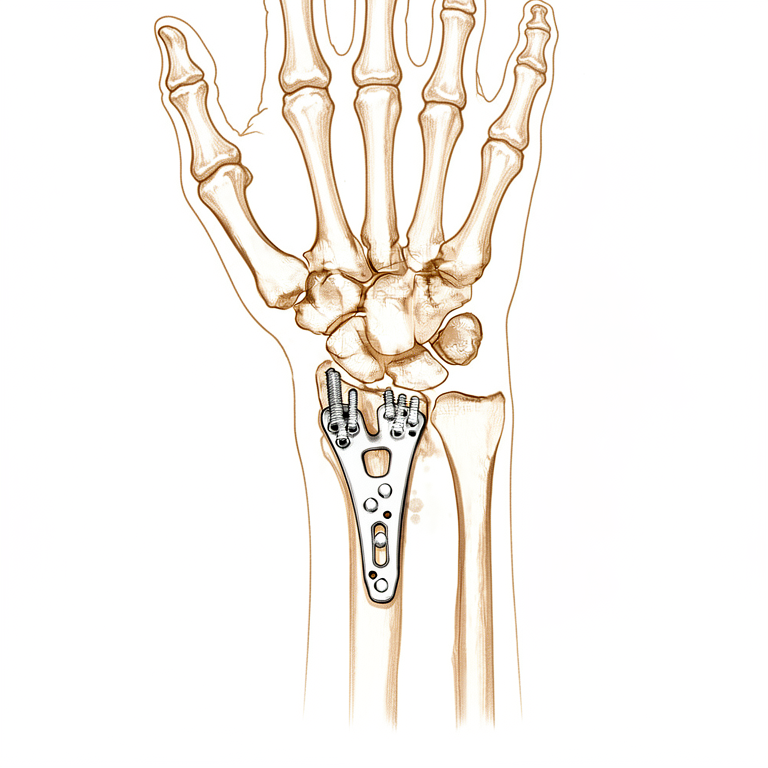
Giao thức này hướng dẫn quá trình hồi phục của bạn sau khi phẫu thuật cố định gãy xương cổ tay (phương pháp chỉnh hình mở và cố định nội bộ – ORIF) do bác sĩ Kieran Hirpara thực hiện tại Bệnh viện tư nhân Mater Rockhampton. Giao thức bắt đầu với chương trình tập luyện tại nhà; tiếp theo là quy trình điều trị chi tiết được soạn thảo dành riêng cho chuyên viên vật lý trị liệu hoặc chuyên gia trị liệu tay của bạn: hãy mang theo trang này hoặc bản PDF tương ứng trong lần trị liệu đầu tiên để quá trình phục hồi được thực hiện một cách nhất quán. Chuyên viên trị liệu có thể điều chỉnh kế hoạch tùy theo tiến độ hồi phục của bạn.
Nếu bạn có bất kỳ thắc mắc nào về vết thương sau phẫu thuật, vui lòng liên hệ với phòng khám. Việc chụp ảnh vết thương rồi gửi qua email để được đánh giá cũng rất hữu ích.
Những điều bạn có thể mong đợi
Đối với việc chăm sóc vết thương, giảm sưng và quản lý sẹo, vui lòng tham khảo hướng dẫn chăm sóc vết thương của phòng khám.
Sau phẫu thuật, bạn có thể được giới thiệu đến chuyên viên trị liệu tay để làm nẹp nhựa nhiệt dẻo. Trong trường hợp này, nẹp sẽ được đeo tạm thời nhằm mang lại sự thoải mái và bảo vệ vùng điều trị; bạn vẫn phải tháo nẹp ra khi thực hiện các bài tập tại nhà. Nếu được chỉ định đeo nẹp, bạn sẽ nhận được thêm thông tin về cách sử dụng và bảo quản nẹp.
Các bài tập dưới đây rất quan trọng để khôi phục biên độ vận động của ngón tay, cổ tay và cẳng tay. Việc sử dụng nhiệt và đá lạnh là những phương pháp hữu ích giúp phục hồi vận động, chức năng và giảm cảm giác khó chịu. Khi vết thương đã lành, bạn có thể dùng nhiệt trước khi tập luyện; sau đó có thể chườm đá để ngăn ngừa hoặc giảm tình trạng viêm.
Việc quản lý sẹo (đặc biệt là xoa bóp) rất quan trọng sau phẫu thuật xương quay xa, nhằm giúp các gân nằm dưới vết mổ vẫn di chuyển trơn tru và không bị dính vào vùng sẹo đang hồi phục.
Nẹp khóa mặt lòng bàn tay được thiết kế để giữ vững vị trí xương gãy, cho phép bắt đầu vận động sớm; các hướng dẫn điều trị cũng dựa trên nguyên tắc này. Các nghiên cứu so sánh việc vận động cổ tay sớm với việc cố định cổ tay trong vài tuần sau khi đặt nẹp cho thấy việc vận động sớm có thể cải thiện biên độ vận động, sức nắm và cảm giác thoải mái trong ngắn hạn mà không làm thay đổi vị trí xương gãy [1][2]. Đồng thời, các thử nghiệm so sánh việc bắt đầu vận động cổ tay vào khoảng tuần thứ hai so với tuần thứ sáu cho thấy kết quả ở cả hai nhóm tương đương nhau sau ba đến sáu tháng [3]. Do đó, dù việc vận động sớm mang lại lợi ích nhất định, bạn không cần vội vàng; việc tiến hành từ từ theo hướng dẫn dưới đây là hoàn toàn hợp lý. Quá trình liền xương diễn ra theo tiến trình riêng, bất kể cảm giác ở cổ tay ra sao; vì vậy các lưu ý sau đây vẫn cần tuân thủ (không chịu tải trọng, không mang vác nặng hoặc tham gia các môn thể thao tiếp xúc cho đến 12 tuần sau chấn thương), ngay cả khi vận động đã trở nên dễ dàng.
Những lưu ý và hạn chế
Bạn nên sử dụng tay một cách nhẹ nhàng cho các hoạt động sinh hoạt hàng ngày như chăm sóc bản thân, ăn uống, mặc quần áo, viết lách và gõ máy tính.
Trong những tuần đầu, bạn cần bảo vệ cổ tay khỏi các động tác nâng vật, nắm chặt và va chạm mạnh; đồng thời tránh chống đỡ trọng lượng cơ thể qua cánh tay, nâng vật nặng và các môn thể thao đối kháng cho đến 12 tuần sau khi gãy xương. Việc tăng cường sức mạnh cơ bắp sẽ được bắt đầu từ tuần thứ 4, ban đầu chỉ là các động tác nhẹ nhàng với các ngón tay và bài tập co cứng cơ cổ tay; các bài tập này sẽ được tăng dần để không làm phá vỡ hiệu quả của giai đoạn bảo vệ ban đầu.
Dưới đây là các bài tập trong tờ hướng dẫn nhằm phục hồi khả năng vận động của các ngón tay, cổ tay và cẳng tay. Nếu bạn đang đeo nẹp, hãy tháo nó ra trước khi tập. Hãy thực hiện các bài tập theo hướng dẫn của Bác sĩ Hirpara và chuyên viên trị liệu.
Các bài tập của bạn
Kieran Hirpara 4.0
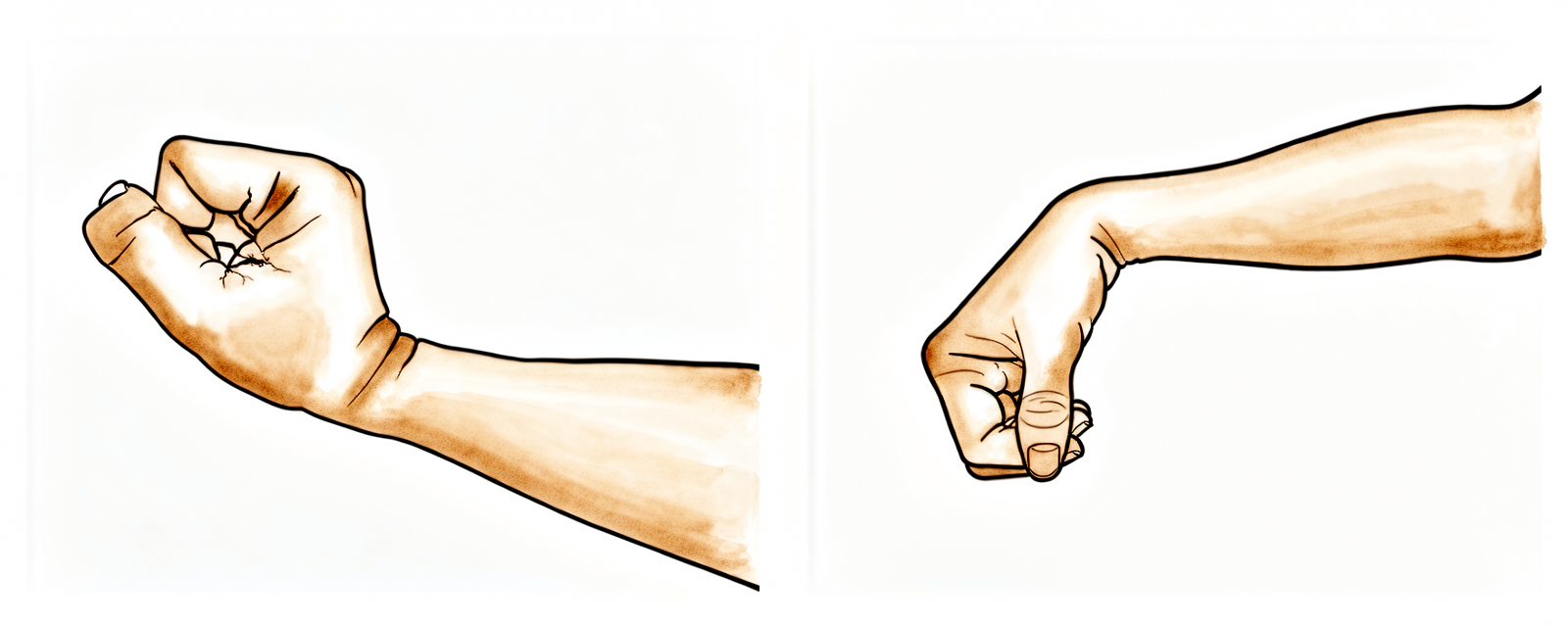
Gập và duỗi cổ tay
Đặt khuỷu tay lên bàn và nhẹ nhàng đung đưa cổ tay qua lại (hoặc đặt cổ tay lên mép bàn hoặc tay vịn ghế như trong hình). Khi đã cảm thấy thoải mái hơn, dùng tay kia đặt lên lòng bàn tay và đẩy cổ tay ra phía sau (các ngón tay hướng lên trần nhà), sau đó làm ngược lại (các ngón tay hướng xuống sàn), đồng thời giữ các ngón tay thả lỏng. Giữ mỗi tư thế kéo giãn trong 15 giây.
10 lần mỗi hướng, 4 lần mỗi ngày.
Kieran Hirpara 4.0
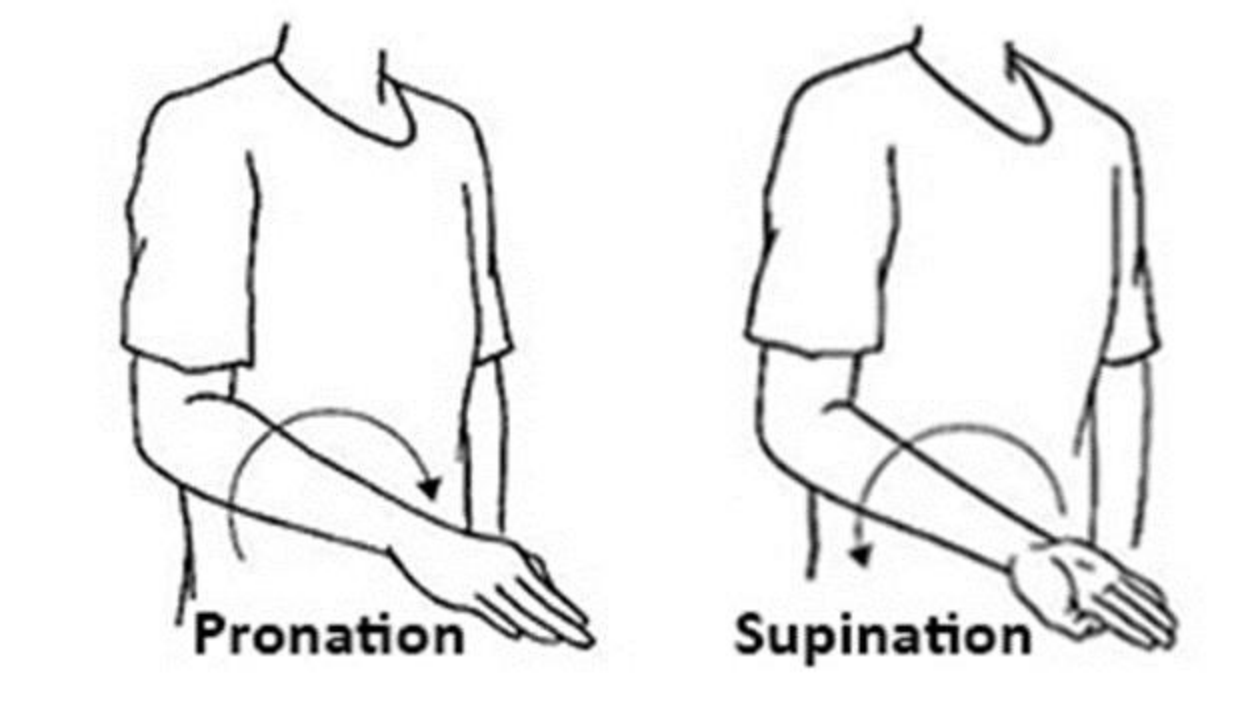
Chuyển động xoay cẳng tay (xoay sấp / xoay ngửa)
Giữ khuỷu tay sát thân mình và cẳng tay ở tư thế trung tính (ngón tay cái hướng lên trên), từ từ xoay lòng bàn tay hướng lên trần nhà (xoay ngửa), giữ nguyên trong 3–5 giây rồi trở về tư thế ban đầu. Sau đó lặp lại động tác xoay lòng bàn tay hướng xuống sàn nhà (xoay sấp). Đảm bảo khuỷu tay không rời khỏi thân mình. Bạn có thể dùng tay kia hỗ trợ động tác bằng cách đặt tay ở vị trí cổ tay.
10 lần theo mỗi hướng, 4 lần mỗi ngày.
Kieran Hirpara 4.0
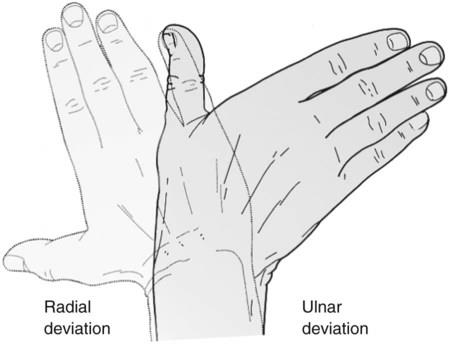
Nghiêng cổ tay về phía xương trụ / xương quay
Đặt tay và cẳng tay lên bề mặt phẳng. Giữ cẳng tay yên, nhẹ nhàng di chuyển cổ tay và bàn tay sang hai bên (như trong hình).
10 lần, 4 lần mỗi ngày
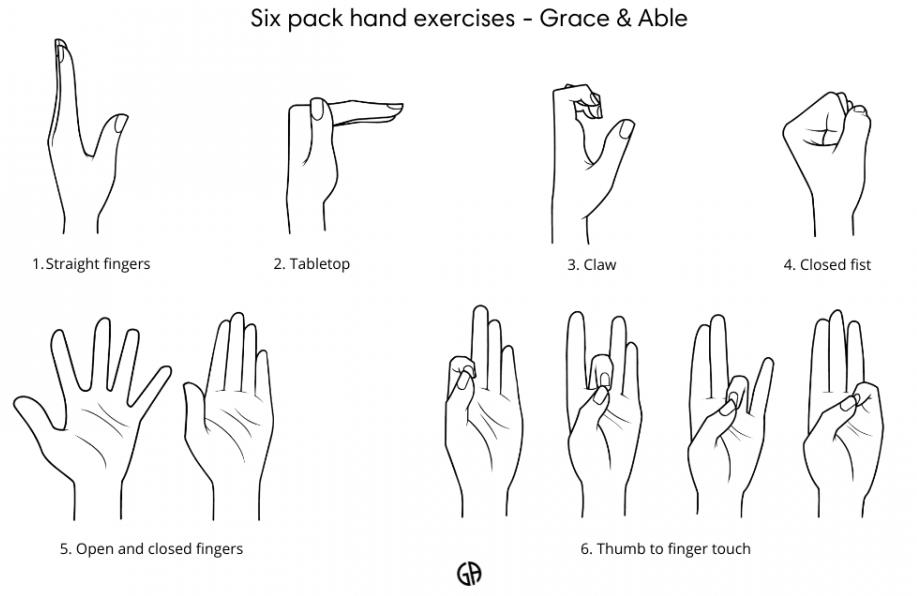
Kieran Hirpara 4.0
Bộ sáu bài tập cho bàn tay
Hãy đặt tay ra trước mặt và giữ cổ tay thẳng, sau đó thực hiện lần lượt sáu tư thế sau: duỗi thẳng các ngón tay; tư thế “mặt bàn” (gập các khớp ngón tay ở phía dưới, giữ các ngón thẳng); tư thế “móc câu” (gập đầu ngón tay, giữ các khớp ngón thẳng); nắm chặt tay với ngón tay cái đặt lên trên các ngón còn lại; dang rộng các ngón tay rồi khép lại; và đưa ngón tay cái chạm vào từng đầu ngón tay còn lại, bắt đầu từ ngón trỏ đến ngón út.
Mỗi động tác 5–10 lần, 2–3 lần mỗi ngày; tăng dần tùy theo khả năng chịu đựng
Hãy thực hiện các bài tập dưới đây chỉ khi có sự hướng dẫn từ Bác sĩ Hirpara và chuyên viên trị liệu vận động, đồng thời tuân thủ mọi phạm vi chuyển động và giới hạn đã được chỉ định. Vì vết gãy xương được cố định bằng tấm nẹp, cổ tay có thể bắt đầu vận động sớm thay vì phải chờ cho xương liền lại. Các động tác gập cổ tay, xoay cẳng tay và di chuyển sang hai bên giúp ngăn ngừa tình trạng khớp bị cứng; còn sáu bài tập dành cho bàn tay giúp các ngón tay, ngón cái và khớp ngón tay luôn được vận động — tình trạng ngón tay cứng lại là vấn đề thường gặp hơn nhiều sau ca phẫu thuật này so với các biến chứng liên quan đến xương. Hãy thực hiện các bài tập này thường xuyên nhưng với cường độ vừa phải. Ngừng ngay mọi động tác gây đau dữ dội tại vùng vết gãy.
Quy trình điều trị lâm sàng của bạn
Phần còn lại của trang này là quy trình điều trị lâm sàng được rút gọn dành cho trường hợp gãy xương quay xa được điều trị bằng phương pháp chỉnh lại xương qua đường mổ và cố định nội bộ bằng tấm cố định mặt gan tay. Phần này cần được cung cấp cho chuyên viên vật lý trị liệu hoặc chuyên gia trị liệu tay của bạn; mỗi giai đoạn dưới đây đều bắt đầu bằng lời giải thích bằng tiếng Việt đơn giản về những gì đang diễn ra.
Những ngày 1–4 sau phẫu thuật
Trong vài ngày đầu, mục tiêu chính là bảo vệ vị trí cố định xương, giảm sưng và giúp các ngón tay, cổ tay, cẳng tay, khuỷu tay và vai vẫn có thể cử động được. Băng gạc phẫu thuật sẽ được giữ nguyên cho đến ngày thứ 3, lúc đó sẽ được nới lỏng và vết thương được băng lại. Khi nghỉ ngơi, hãy giữ tay ở vị trí cao hơn mức tim; có thể sử dụng tay cho các công việc nhẹ nhàng hàng ngày (dưới 1–2 kg) trong phạm vi chịu đựng được; tuyệt đối tránh việc chịu trọng lượng lên cánh tay, nắm chặt vật hoặc nâng vật nặng. Thông thường không cần dùng nẹp, nhưng có thể sử dụng nẹp nếu bệnh nhân phải quay lại làm việc hoặc cổ tay bị đau nhiều hơn.
Dành cho chuyên viên vật lý trị liệu:
Trước khi điều trị, hãy kiểm tra phim X-quang, báo cáo phẫu thuật và tiền sử bệnh của bệnh nhân; đồng thời trao đổi với bác sĩ phẫu thuật về độ ổn định của vị trí cố định xương và tiên lượng hồi phục.
Giáo dục và các biện pháp phòng ngừa
- Tránh chịu trọng lượng lên cánh tay, nắm chặt vật hoặc nâng vật nặng
- Khuyến khích sử dụng tay bị tổn thương cho các hoạt động sinh hoạt hàng ngày nhẹ nhàng (dưới 1–2 kg) trong phạm vi không gây đau và theo các chuyển động bình thường
Cách xử trí
- Nẹp: Thông thường không cần dùng nẹp; tuy nhiên có thể sử dụng nếu bệnh nhân phải quay lại làm việc hoặc cổ tay đau nhiều; nên cân nhắc dùng nẹp nhiệt dẻo hoặc dụng cụ hỗ trợ có sẵn
- Vết thương: Giữ nguyên băng gạc phẫu thuật cho đến ngày thứ 3; từ ngày thứ 3 trở đi, nới lỏng băng gạc và thay băng mới; cần hướng dẫn bệnh nhân cách chăm sóc vết thương
- Phù nề: Hướng dẫn bệnh nhân cách nâng cao tay; có thể áp dụng liệu pháp nén và xoa bóp theo hướng ngược dòng nếu cần
- Các bài tập: Hướng dẫn bệnh nhân thực hiện các bài tập vận động chủ động để duy trì biên độ cử động của các ngón tay; hướng dẫn các bài tập vận động chủ động cho cổ tay, cẳng tay và ngón tay; khuyến khích thực hiện các bài tập vận động chủ động cho khuỷu tay và vai đều đặn
Tuần 2–4 sau phẫu thuật
Chỉ khâu sẽ được cắt vào ngày 10–14; việc massage vết sẹo chỉ bắt đầu khi vết thương đã lành đủ. Chương trình tập luyện vẫn tiếp tục (các bài tập “sáu gói” sẽ ngừng lại khi các ngón tay phục hồi khả năng vận động hoàn toàn), đồng thời bắt đầu các bài tập tăng cường sức mạnh cổ tay dạng co cứng cơ (isometric). Trong giai đoạn này, cổ tay vẫn chỉ nên cử động nhờ sức mạnh cơ bản: không ai, kể cả bạn, được phép kéo giãn hay tác động thụ động lên cổ tay vì xương vẫn đang trong quá trình liền lại. Tiếp tục tránh các hoạt động chịu tải, nắm chặt hay nâng vật nặng; chỉ nên thực hiện các công việc nhẹ dưới 1–2 kg. Bạn không được lái xe khi cổ tay vẫn đeo nẹp; việc lái xe chỉ được phép sau khi tháo nẹp, theo xác nhận của bác sĩ tại buổi tái khám.
Dành cho chuyên viên vật lý trị liệu:
Các phương pháp đánh giá
- Đánh giá tự báo cáo: Thang đánh giá chức năng cổ tay do bệnh nhân tự đánh giá (PRWE), Thang đánh giá khuyết tật vùng cánh tay, vai và tay (DASH)
- Đo chu vi vùng bị phù nề
- Thang đánh giá mức độ đau theo hình ảnh trực quan (VAS) hoặc thang đánh giá số học
- Đo góc vận động chủ động (AROM) bằng goniometer: vùng bàn tay và cổ tay
- Đánh giá chủ quan: mức độ tuân thủ chế độ điều trị của bệnh nhân, khả năng sử dụng tay trong các hoạt động sinh hoạt hàng ngày, cũng như các vấn đề/lo lắng của bệnh nhân
Giáo dục và các lưu ý phòng ngừa
- Tránh các hoạt động chịu tải lên cánh tay, nắm chặt hay nâng vật nặng
- Không thực hiện các động tác cổ tay thụ động
- Khuyến khích bệnh nhân sử dụng tay bị tổn thương cho các công việc nhẹ (dưới 1–2 kg) trong phạm vi chịu đựng được về đau và theo các mẫu vận động bình thường
- Không được lái xe khi đeo nẹp; việc lái xe chỉ được phép sau khi tháo nẹp, theo xác nhận của bác sĩ tại buổi tái khám
Các biện pháp xử lý
- Vết thương/vết sẹo: cắt chỉ vào ngày 10–14; tiến hành các biện pháp chăm sóc vết sẹo phù hợp tùy theo tiến độ lành vết thương
- Phù nề: cân nhắc sử dụng băng ép, massage ngược chiều dòng máu, kỹ thuật di chuyển dịch phù bằng tay (MEM), ngâm nước nóng/lạnh và/hoặc nâng cao chi nếu cần thiết
- Tập luyện: ngừng các bài tập “sáu gói” khi các ngón tay đã phục hồi khả năng vận động hoàn toàn; cân nhắc các bài tập thụ động cho ngón tay và ngón cái (bao gồm các động tác đặt và giữ) nếu vận động chủ động vẫn chưa đầy đủ; tiếp tục các bài tập vận động chủ động cho cổ tay; khuyến khích bệnh nhân thực hiện đều đặn các bài tập vận động chủ động cho khuỷu tay và vai; bắt đầu các bài tập tăng cường sức mạnh cổ tay dạng co cứng cơ
Xử lý các vấn đề phát sinh
- Theo dõi các dấu hiệu nhiễm trùng vết thương, thay đổi cảm giác ở tay, hoặc các dấu hiệu sớm của hội chứng đau vùng chi phức tạp (CRPS)
- Phát hiện các kiểu vận động bất thường và can thiệp kịp thời nếu cần thiết
Tuần 4–6 sau phẫu thuật
Trong giai đoạn này, việc tăng cường sức mạnh cơ thể được thực hiện một cách nhẹ nhàng: từ tuần thứ 4 có thể bắt đầu các bài tập tăng cường sức mạnh ngón tay với lực cản thấp; đồng thời các bài tập căng cơ cổ tay theo kiểu isometric vẫn tiếp tục và dần được nâng mức độ khó. Nếu kết quả chụp X-quang đạt yêu cầu và việc cố định xương ổn định, từ tuần 4–6 có thể bắt đầu các bài tập kéo giãn cổ tay thụ động (khi cổ tay được di chuyển nhờ sự hỗ trợ của tay còn lại hoặc chuyên viên trị liệu). Việc khôi phục khả năng vận động vẫn được ưu tiên hơn so với việc tăng cường sức mạnh cơ. Bạn cần tiếp tục tránh việc chịu trọng lượng qua cánh tay và tránh nâng vật nặng; đồng thời vẫn sử dụng tay bị tổn thương cho các công việc sinh hoạt hàng ngày nhẹ nhàng.
Dành cho chuyên viên trị liệu:
Các đánh giá
- Đo mức độ phù nề quanh vùng tổn thương
- Sử dụng thang đo đau dạng trực quan hoặc thang đánh giá số học
- Đo góc vận động chủ động (AROM) và đánh giá mẫu chuyển động
- Đánh giá chủ quan: mức độ tuân thủ phác đồ điều trị của bệnh nhân, khả năng sử dụng tay trong các hoạt động sinh hoạt hàng ngày, cũng như các vấn đề hoặc lo ngại của bệnh nhân
- Đo lực nắm tay bằng máy đo lực (mỗi chi thực hiện 3 lần)
Giáo dục và các lưu ý cần tránh
- Tránh chịu trọng lượng qua cánh tay hoặc nâng vật nặng
- Khuyến khích bệnh nhân sử dụng tay bị tổn thương cho các công việc sinh hoạt hàng ngày nhẹ nhàng (dưới 1–2 kg), trong giới hạn không gây đau và đảm bảo các chuyển động bình thường
Cách quản lý
- Vết sẹo: tiếp tục chăm sóc vết sẹo theo chỉ định
- Phù nề: tiếp tục áp dụng liệu pháp nén, massage theo hướng ngược dòng, sử dụng thiết bị MEM và nâng cao chi khi cần; ngừng phương pháp ngâm nước nóng – lạnh xen kẽ
- Các bài tập: tiếp tục các bài tập kéo giãn ngón tay và ngón cái thụ động nếu phạm vi vận động chưa đầy đủ; tiếp tục các bài tập tăng cường vận động cổ tay chủ động; từ tuần thứ 4 bắt đầu các bài tập tăng cường sức mạnh ngón tay với lực cản thấp; từ tuần 4–6, nếu kết quả ORIF ổn định và X-quang đạt yêu cầu, có thể bắt đầu các bài tập kéo giãn cổ tay thụ động nhẹ nhàng; khuyến khích bệnh nhân thực hiện đều đặn các bài tập tăng cường vận động khuỷu tay và vai; tiếp tục hoặc nâng mức độ các bài tập căng cơ cổ tay theo kiểu isometric
Xử lý các vấn đề phát sinh
- Theo dõi các dấu hiệu của hội chứng CRPS và đau vai
- Cân nhắc khối lượng các bài tập trong chương trình tại nhà; ưu tiên phạm vi vận động hơn là sức mạnh cơ
- Nếu phạm vi vận động cổ tay bị hạn chế đáng kể, có thể bắt đầu các bài tập kéo giãn thụ động cổ tay nhẹ nhàng khi mức độ đau dưới 4/10 theo thang VAS, sau khi có sự chấp thuận của bác sĩ phẫu thuật
Tuần 6–8 sau phẫu thuật
Giai đoạn này đánh dấu việc dần dần trở lại các hoạt động bình thường trong vòng 3 tuần tới. Các bài tập tăng cường sức mạnh cho cổ tay sẽ sử dụng các vật nặng nhẹ (0.5–1.0 kg) hoặc dây kháng lực có độ cản thấp; đồng thời mức độ cản trở trong các bài tập tăng cường sức mạnh cho ngón tay cũng sẽ được nâng lên. Hai hạn chế quan trọng vẫn cần tuân thủ: không được chịu trọng tải, nâng vật nặng hay tham gia các môn thể thao tiếp xúc cho đến 12 tuần sau khi gãy xương. Khi bệnh nhân đã có phạm vi vận động đầy đủ và chức năng tay phục hồi tương đối tốt, chuyên viên vật lý trị liệu sẽ xem xét cho phép bệnh nhân ngừng điều trị.
Dành cho chuyên viên vật lý trị liệu:
Các phương pháp đánh giá
- Đo mức độ phù nề xung quanh vùng điều trị theo yêu cầu
- Sử dụng thang đo đau theo hình ảnh trực quan hoặc thang điểm số để đánh giá mức độ đau
- Đo góc vận động chủ động (AROM) bằng goniometer
- Đo lực nắm tay
- Đánh giá chủ quan từ bệnh nhân
Giáo dục và các lưu ý cần tránh
- Dần dần trở lại các hoạt động bình thường trong vòng 3 tuần tới
- Tránh chịu trọng tải, nâng vật nặng và tham gia các môn thể thao tiếp xúc cho đến 12 tuần sau khi gãy xương
Các biện pháp xử lý
- Vết sẹo: tiếp tục chăm sóc vết sẹo theo hướng dẫn
- Phù nề: tiếp tục các biện pháp giảm phù nề nếu cần thiết
- Các bài tập: tiếp tục các bài tập thụ động cho ngón tay và ngón cái nếu phạm vi vận động vẫn chưa đầy đủ; tiếp tục các bài tập vận động chủ động và thụ động cho cổ tay nếu cần; tăng mức độ cản trở trong các bài tập tăng cường sức mạnh cho ngón tay; bắt đầu các bài tập tăng cường sức mạnh cho cổ tay bằng cách sử dụng vật nặng 0.5–1.0 kg hoặc dây kháng lực có độ cản thấp; dần tăng trọng lượng và mức độ cản trở trong chương trình tập luyện cho cổ tay tùy theo khả năng chịu đựng của bệnh nhân
Xử lý các vấn đề phát sinh
- Nếu phạm vi vận động cải thiện chậm, nên cân nhắc/ bắt đầu sử dụng nẹp đêm có khả năng điều chỉnh dần dần, nẹp kiểu găng tay quyền anh hoặc nẹp động lực học
- Theo dõi các dấu hiệu bất ổn định ở cổ tay và điều trị kịp thời nếu có
- Cân nhắc cho phép bệnh nhân ngừng điều trị khi đã có phạm vi vận động đầy đủ và chức năng tay phục hồi tốt
- Nếu tiến triển điều trị bị trì trệ hoặc kết quả không như mong đợi, nên cân nhắc chuyển bệnh nhân trở lại gặp bác sĩ điều trị
Giao thức này được soạn thảo với sự hợp tác của Sarah Farrell, BOccThy AHT và Kristy Gerlach, BOccThy AHT.
Sau khi thực hiện theo phác đồ
Phác đồ này được áp dụng song song với các hướng dẫn phục hồi chung của phòng khám; vui lòng tham khảo mục xử lý cơn đau sau phẫu thuật, chăm sóc vết thương và những kiến thức cơ bản về vật lý trị liệu tay. Đối với chính ca phẫu thuật cũng như chấn thương cần điều trị, hãy xem thêm mục cố định xương quay đoạn xa bằng phương pháp ORIF và gãy xương quay đoạn xa. Kế hoạch phục hồi theo từng giai đoạn nêu trên phù hợp với các bằng chứng khoa học đã được công bố về việc phục hồi sau khi cố định xương bằng nẹp khóa mặt lòng; quá trình hồi phục của bạn sẽ được điều chỉnh riêng biệt bởi chuyên viên vật lý trị liệu hoặc chuyên gia trị liệu tay dựa trên tiến triển của cổ tay.
Tài liệu tham khảo
[1] Quadlbauer S, Pezzei C, Jurkowitsch J và cộng sự. Việc vận động sớm sau khi cố định gãy xương cổ tay bằng nẹp khóa mặt gan tay mang lại kết quả ngắn hạn tốt hơn so với việc cố định trong 5 tuần: một nghiên cứu ngẫu nhiên có đối chứng. Arch Orthop Trauma Surg. 2022;142(5):1–11. https://pubmed.ncbi.nlm.nih.gov/34852677/ [2] Gutiérrez-Espinoza H, Araya-Quintanilla F, Olguín-Huerta C và cộng sự. Hiệu quả của việc vận động sớm so với vận động muộn ở bệnh nhân gãy xương cổ tay được điều trị bằng nẹp khóa mặt gan tay: một tổng quan có hệ thống và phân tích tổng hợp. Hand Surg Rehabil. 2020;39(4):261–271. https://www.sciencedirect.com/science/article/abs/pii/S2468122920302231 [3] Lozano-Calderón SA, Souer S, Mudgal C, Jupiter JB, Ring D. Việc vận động cổ tay sau khi cố định gãy xương cổ tay bằng nẹp mặt gan tay. J Bone Joint Surg Am. 2008;90(6):1297–1304. https://pubmed.ncbi.nlm.nih.gov/18519324/ [4] Miller LK, Jerosch-Herold C, Shepstone L. Hiệu quả của các kỹ thuật kiểm soát phù nề đối với tình trạng phù nề bàn tay ở giai đoạn hậu cấp: một tổng quan có hệ thống. J Hand Ther. 2017;30(4):432–446. https://pubmed.ncbi.nlm.nih.gov/28807598/
Evidence & references
This is the clinical evidence summary written for health professionals. It is technical, and it lists the research this page was built from. You do not need to read it to understand your treatment or to make a decision about it.
Distal Radius Fracture (ORIF) — Post-operative Rehabilitation Evidence Brief
Topic scope: post-operative rehabilitation after open reduction and internal fixation (ORIF) of a distal radius fracture with a volar locking plate. This brief backs an early-motion-but-protected hand/wrist pathway delivered with hand therapy, where wrist motion begins early while bone-dependent loading (weight-bearing, heavy lifting, contact sport) is deferred until ~12 weeks. It does not cover the indications for surgery vs casting, nor fragment-specific/dorsal/bridge-plate constructs (which carry their own loading rules).
Defining principle of the rehab here: a volar locking plate is a fixed-angle construct stable enough to permit immediate wrist motion — the screws lock to the plate and hold the articular reduction independent of the cast. So (unlike a cast-treated fracture, and unlike a tendon or ligament repair) the wrist does not need weeks of immobilisation to protect the reduction: the rehab is an early-movement pathway — finger/forearm/wrist active motion and oedema control from day one, splint for comfort only, isometric then progressive strengthening from ~weeks 4–6. The one timeline that is not negotiable is bone healing: union takes ~6–12 weeks regardless of how the wrist feels, which is why weight-bearing, heavy lifting and impact are held to 12 weeks even once motion is comfortable.
A. PROCEDURE & CONSTRUCT — what the rehab is protecting
Volar locking plate fixation is the dominant operative construct for displaced distal radius fractures and is the reference standard against which other techniques are compared. Key surgical-outcome facts that shape the rehab:
- Volar locking plates restore and hold articular reduction reliably, and across randomised comparisons give equivalent or better functional outcomes than non-operative care and competing fixation methods (dorsal plating, intramedullary nailing, fragment-specific), with most differences favouring early function rather than final endpoint [JAAOS controversies review 2014; Hand Clinics plate-fixation review 2021; IM-nail-vs-volar-plate RCTs].
- The fixed-angle construct is the rationale for early motion. Because the locking screws hold the subchondral fragments rigidly, the plate — not a cast — maintains the reduction, so wrist motion can start before union without displacing the fracture [Hand Clinics 2021; accelerated-rehab RCT, JBJS 2014].
- In older patients the operative-vs-conservative outcome gap is small. A 3-year RCT in patients >70 found volar plating and non-operative care converged on similar patient-reported function — context that keeps post-operative rehab pragmatic and patient-centred rather than aggressive [BMC Musculoskelet Disord 2022; Hand Clinics geriatric review 2021].
- Recovery is gradual. Range, grip and patient-reported scores improve steadily over the first 3–6 months; the construct permits early motion but does not accelerate the biology of healing or the return of grip strength.
B. REHABILITATION / HAND-THERAPY EVIDENCE
The central rehab questions for this construct are (1) when to start wrist motion, (2) how much supervised therapy is needed, and (3) what the strengthening timeline should be. The evidence is clear on the first, nuanced on the second, and consensus-driven on the third.
- Early motion is safe and gives a short-term advantage. Multiple RCTs and a systematic review show that starting wrist motion early after volar plating improves short-term ROM, grip and comfort without compromising the radiographic reduction [accelerated-rehab RCT, JBJS 2014; early-vs-late motion RCT, HAND 2018; Hand Therapy systematic review 2020]. This is the direct warrant for the day-1 finger/forearm/wrist program in this protocol.
- "Early" need not mean "immediate," and the advantage washes out by 3–6 months. The landmark trial comparing wrist mobilisation at ~2 weeks vs ~6 weeks found the two groups equivalent by 3–6 months [Lozano-Calderón / JBJS 2008]. So there is a genuine early benefit but no penalty for a measured, comfort-led progression — which is exactly why this protocol can be unhurried.
- Routine supervised physiotherapy adds little over a coached home program for most patients. Systematic reviews and RCTs repeatedly find that a structured home exercise program preceded by instruction/coaching performs as well as formal supervised therapy for uncomplicated cases, and that prescribed exercise programs add limited benefit over advice for impairment/activity outcomes [HEP-vs-supervised SR, J Hand Ther 2014; J Physiother SR 2017; Hand Clinics "is therapy needed?" 2021; Arch Orthop Trauma Surg 2020]. This supports a home-program-first model with hand-therapy review, escalating supervision for stiffness, oedema or slow progress — the structure of this protocol.
- Oedema control and scar/tendon-glide management are standard therapy elements. Elevation, retrograde massage, manual oedema mobilisation and (early) compression are the evidence-informed oedema toolkit [edema-management SR, J Hand Ther 2017]; scar massage to keep the flexor tendons gliding under the volar incision is consensus hand-therapy practice rather than RCT-derived.
Phased post-op timeline (volar locking plate, early-motion pathway)
Phases match this topic's synthesis.md. Timings are post-operative weeks; the 12-week
loading limit is referenced to the fracture (injury) date.
| Phase | Window | Splint | Motion / use | Strengthening | Notes |
|---|---|---|---|---|---|
| I — Protect & move | Days 1–4 | Comfort only, not routine | Active finger (six-pack), wrist, forearm, elbow & shoulder ROM from day 1; light ADL < 1–2 kg within pain limits | — | Surgical bandage to day 3, then redress. Oedema control + elevation. No weight-bearing, gripping or lifting |
| II — Active range & oedema | Week 2–4 | Comfort/work only (no driving while splinted) | Continue active wrist ROM (no passive yet); six-pack stops once fingers full | Isometric wrist activation begins | Sutures out day 10–14; start scar massage once healed. Watch for CRPS. PRWE/DASH baseline |
| III — Passive range & light load | Week 4–6 | Off | Add gentle passive wrist stretches at 4–6 wk if x-ray satisfactory & fixation stable | Finger strengthening (low resistance) from wk 4; upgrade isometrics | Movement still prioritised over strength |
| IV — Graded strengthening & return | Week 6–8 | Off | Restore/maintain full active & passive ROM | Wrist strengthening with 0.5–1.0 kg / light theraband, progress as tolerated | Graded return over ~3 wk. No weight-bearing, heavy lifting or contact sport until 12 weeks post-fracture. Discharge on full ROM + functional return |
The phase structure mirrors published surgeon/hand-therapy ORIF protocols (early ROM → scar + oedema → passive range + light resistance → progressive strengthening, with heavy load/sport held to ~12–16 weeks) [Physiopedia Colles' ORIF protocol; institutional ORIF rehab guidelines].
C. KEY CONTROVERSIES / EVIDENCE QUALITY
- How early to mobilise. Early motion (immediate–2 wk) gives a real short-term ROM/grip/comfort advantage that equalises by 3–6 months vs starting at ~6 weeks. The evidence therefore supports early motion but does not mandate aggression — a measured progression is fully defensible. Moderate–strong (multiple RCTs + SR).
- Supervised therapy vs coached home program. For uncomplicated fractures the best available evidence finds no consistent benefit of routine formal physiotherapy over a well-instructed home program; supervision is best targeted to stiffness, oedema, CRPS risk or slow progress. Moderate (SRs/RCTs), but heterogeneous.
- Strengthening and return-to-load timing. The week-by-week strengthening ramp and the 12-week loading hold are construct- and biology-based consensus, drawn from surgeon/hand- therapy protocols rather than a strengthening-timing RCT. Weak/consensus.
- Whether the wrist needs any immobilisation at all. Some trials report that omitting post-op immobilisation does not worsen outcomes after volar plating, supporting the "splint for comfort only" stance here. Moderate.
D. EVIDENCE STRENGTH FLAGS (summary)
- STRONG / MODERATE–STRONG (RCT / SR): early wrist motion after volar plating is safe and improves short-term ROM/grip/comfort without loss of reduction (accelerated-rehab RCT JBJS 2014; early-vs-late RCT HAND 2018; Hand Therapy SR 2020); ~2-wk vs ~6-wk mobilisation equivalent by 3–6 months (Lozano-Calderón JBJS 2008).
- MODERATE: volar locking plate is a reliable fixed-angle construct with equivalent/favourable outcomes vs alternatives (JAAOS 2014; Hand Clinics 2021); operative-vs-conservative outcomes converge in the elderly (BMC 2022); coached home program ≈ supervised therapy for uncomplicated cases (J Hand Ther 2014; J Physiother 2017; Hand Clinics 2021); evidence-based oedema management (J Hand Ther 2017).
- WEAK / CONSENSUS: the detailed strengthening ramp and 12-week loading limit (surgeon & hand-therapy protocols; biology- and construct-based, not trial-derived); scar/tendon-glide massage practice.
CITATIONS
RAG corpus (180,000+ Orthopaedic articles)
- Accelerated rehabilitation compared with a standard protocol after distal radial fractures treated with volar open reduction and internal fixation. J Bone Joint Surg Am. 2014. DOI: 10.2106/jbjs.m.00860
- Wrist mobilization following volar plate fixation of fractures of the distal part of the radius. J Bone Joint Surg Am. 2008. DOI: 10.2106/jbjs.g.01368
- Early versus late motion following volar plating of distal radius fractures. HAND. 2018. DOI: 10.1177/1558944718787880
- A systematic review of how daily activities and exercises are recommended following volar plating of distal radius fractures and the efficacy and safety of early versus late mobilisation. Hand Therapy. 2020. DOI: 10.1177/1758998320967032
- AAOS/ASSH Clinical Practice Guideline Summary: Management of Distal Radius Fractures. J Am Acad Orthop Surg. 2022. DOI: 10.5435/jaaos-d-21-00719
- Controversies in the management of distal radius fractures. J Am Acad Orthop Surg. 2014. DOI: 10.5435/jaaos-22-09-566
- Plate fixation of distal radius fractures. Hand Clinics. 2021. DOI: 10.1016/j.hcl.2021.02.008
- Non-operative treatment or volar locking plate fixation for dorsally displaced distal radius fractures in patients over 70 years — a three-year follow-up of a randomized controlled trial. BMC Musculoskelet Disord. 2022. DOI: 10.1186/s12891-022-05394-7
- Distal radius fracture: HEP versus supervised therapy — a systematic review. J Hand Ther.
- DOI: 10.1016/j.jht.2013.08.017
- Prescribed exercise programs may not be effective in reducing impairments and improving activity during upper limb fracture rehabilitation: a systematic review. J Physiother. 2017. DOI: 10.1016/j.jphys.2017.08.009
- Is therapy needed after distal radius fracture treatment — what is the evidence? Hand Clinics.
- DOI: 10.1016/j.hcl.2021.02.012
- Rehabilitation after distal radius fractures: is there a need for immobilization and physiotherapy? Arch Orthop Trauma Surg. 2020. DOI: 10.1007/s00402-020-03367-w
- Management of complications of distal radius fractures. Hand Clinics. 2015. DOI: 10.1016/j.hcl.2014.12.002
- A comparison of the accuracy of two sets of diagnostic criteria in the early detection of complex regional pain syndrome following surgical treatment of distal radial fractures. J Hand Surg Eur Vol. 2012. DOI: 10.1177/1753193412469142
Distal radius / rehabilitation literature (URLs)
- AAOS/ASSH Clinical Practice Guideline Summary: Management of Distal Radius Fractures (full summary). PMC. https://pmc.ncbi.nlm.nih.gov/articles/PMC9196973/
- Practical application of the 2020 distal radius fracture AAOS/ASSH clinical practice guideline: a clinical case. PMC. https://pmc.ncbi.nlm.nih.gov/articles/PMC9035062/
- Rehabilitation for distal radial fractures in adults (Cochrane-style review). PMC. https://pmc.ncbi.nlm.nih.gov/articles/PMC9250132/
- Rehabilitation after distal radius fractures: opportunities for improvement. PMC. https://pmc.ncbi.nlm.nih.gov/articles/PMC10569825/
- Rehabilitation following surgically treated distal radius fractures: do immobilization and physiotherapy affect the outcome? PMC. https://www.ncbi.nlm.nih.gov/pmc/articles/PMC8343619/
Published rehab protocols (surgeon / hand-therapy — basis for the phase structure)
- British Society for Surgery of the Hand / British Association of Hand Therapists — Distal Radius Fractures Working Group rehabilitation guidance (2024). https://www.hand-therapy.co.uk/_userfiles/pages/files/distal_radius_fractures_working_group_2024.pdf
- Colles' Fracture Post-Operative Rehabilitation Protocol. Physiopedia. https://www.physio-pedia.com/Colles%E2%80%99_Fracture_Post_Operative_Rehabilitation_Protocol
- Distal Radius ORIF Rehabilitation Guidelines. University of Virginia Department of Orthopaedic Surgery. https://med.virginia.edu/orthopaedic-surgery/wp-content/uploads/sites/242/2024/09/Distal-radius-ORIF.pdf
- Distal Radius ORIF Rehabilitation. Jared Lee, MD. https://jaredleemd.com/pdf/distal-radius-orif-rehabilitation/