Patients › Rehabilitation
Phục hồi gân cơ nhị đầu cánh tay phần xa
Kế hoạch phục hồi vận động sớm có bảo vệ sau phẫu thuật khâu nối gân cơ nhị đầu cánh tay phần xa bị đứt; cho phép vận động thoải mái ngay từ ngày đầu, đồng thời bảo vệ vùng khâu nối khỏi các động tác nâng có lực cản cho đến khi sức mạnh được xây dựng lại theo từng giai đoạn.
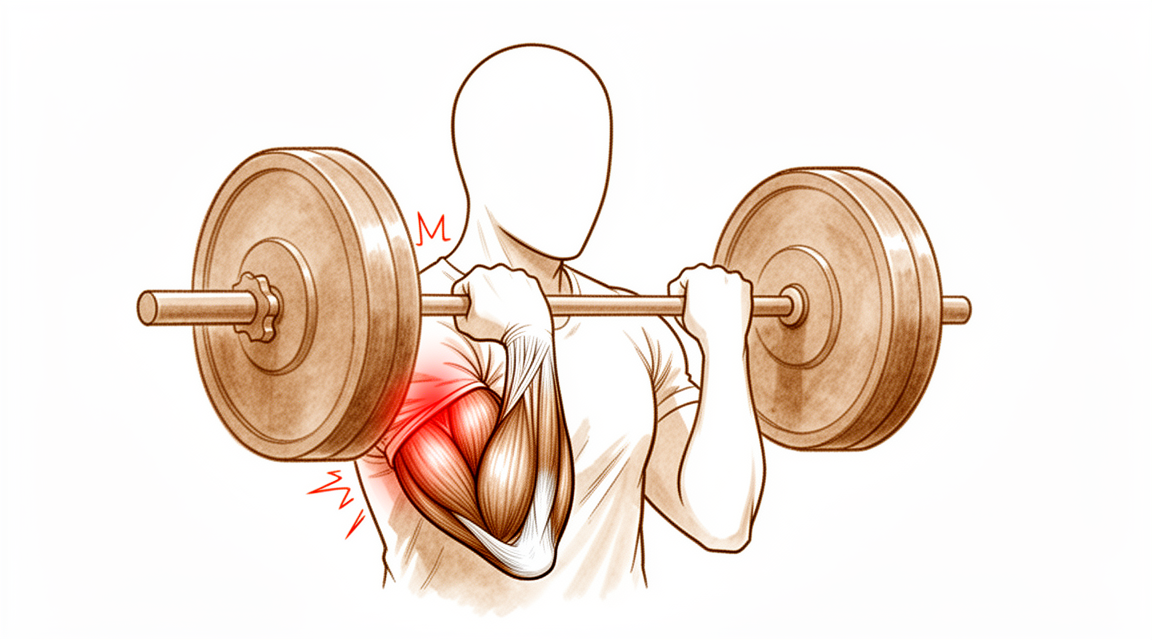
Quy trình này hướng dẫn quá trình hồi phục của bạn sau ca phẫu thuật khâu lại gân cơ nhị đầu cánh tay bị rách, do bác sĩ Kieran Hirpara thực hiện tại Bệnh viện tư nhân Mater Rockhampton. Quy trình bắt đầu với chương trình tập luyện tại nhà dành cho bạn, sau đó là quy trình điều trị chi tiết dành cho chuyên viên vật lý trị liệu hoặc chuyên gia trị liệu tay. Hãy mang theo trang này hoặc bản PDF tương ứng đến buổi trị liệu đầu tiên để quá trình phục hồi được thực hiện một cách đồng bộ. Chuyên viên trị liệu có thể điều chỉnh kế hoạch này tùy theo tiến triển hồi phục của bạn.
Nếu bạn có bất kỳ thắc mắc nào liên quan đến vết thương sau phẫu thuật, hãy liên hệ với phòng khám. Việc chụp ảnh vết thương rồi gửi qua email để được đánh giá cũng là một cách hữu ích.
Những điều bạn có thể mong đợi
Gân cơ nhị đầu cánh tay là sợi dây nối cơ nhị đầu với xương quay, nằm ngay phía dưới mặt trước khuỷu tay. Khi gân này bị rách, bác sĩ sẽ khâu lại vào vị trí gắn liền với xương quay. Bác sĩ Hirpara sử dụng nút vỏ não (cortical button) – một dụng cụ cố định nhỏ nhưng chắc chắn – để giữ gân chặt vào xương trong suốt quá trình lành lại.
Vì kỹ thuật khâu nối này rất vững chắc nên quá trình hồi phục tập trung vào việc vận động sớm một cách thoải mái thay vì cố định cứng nhắc. Bạn sẽ đeo một loại đai treo đơn giản trong khoảng 6 tuần (không phải nẹp khuỷu tay có khớp nối), và được khuyến khích vận động khuỷu tay trong phạm vi thoải mái ngay từ ngày đầu, kể cả việc duỗi thẳng khuỷu tay. Việc vận động sớm giúp tránh tình trạng khuỷu tay bị cứng khớp – một vấn đề thường gặp sau ca phẫu thuật này.
Sức mạnh của mối nối này được thiết kế nhằm hỗ trợ việc vận động sớm, nhưng không có nghĩa là bạn có thể nâng vác mọi thứ ngay lập tức. Gân vẫn cần thời gian để liền lại với xương một cách sinh học; quá trình này mới là yếu tố bảo vệ bạn khỏi nguy cơ gân bị rách lại. Vì vậy, việc chịu tải lên cánh tay (nâng vác, nắm chặt vật thể hoặc tập tăng sức mạnh có sức cản) chỉ được bắt đầu sau khoảng 4 tháng, và phải tiến hành từ từ, với cường độ thấp. Chiếc đai treo chủ yếu giúp bạn cảm thấy thoải mái và nhắc nhở không nên dùng cánh tay quá nhiều; bạn có thể tháo nó ra khi tập luyện hoặc rửa tay.
Để chăm sóc vết mổ, giảm sưng và hình thành sẹo, vui lòng tham khảo hướng dẫn chăm sóc vết thương của phòng khám.
Những lưu ý và hạn chế
Nên làm
- Ngay từ ngày đầu tiên, hãy vận động khuỷu tay, cẳng tay, cổ tay và bàn tay trong phạm vi thoải mái: gập, duỗi thẳng và xoay cẳng tay.
- Tháo dây đeo cánh tay ra khi tập luyện hoặc vệ sinh; hãy đeo lại để giảm đau và bảo vệ tay trong phần thời gian còn lại, trong khoảng 6 tuần.
- Sử dụng tay để thực hiện những công việc hàng ngày rất nhẹ nhàng (ăn uống, các hoạt động chăm sóc bản thân) khi cảm thấy thoải mái.
Không nên làm
- Trong vòng khoảng 4 tháng sau phẫu thuật, không được nâng vật nặng, mang vác, nắm chặt hay thực hiện bất kỳ bài tập tăng cường sức mạnh nào bằng tay đã phẫu thuật. Đây là lưu ý quan trọng nhất cần tuân thủ.
- Không được cố gắng duỗi thẳng khuỷu tay đột ngột và mạnh mẽ khi có tải trọng; tránh các chuyển động gấp gáp hoặc thô bạo.
- Trong giai đoạn đầu, không nên kéo vai ra phía sau quá mức, vì điều này sẽ gây áp lực lên vết thương đang lành ở phía trước khuỷu tay.
Các bài tập dành cho bạn
Kieran Hirpara 4.0
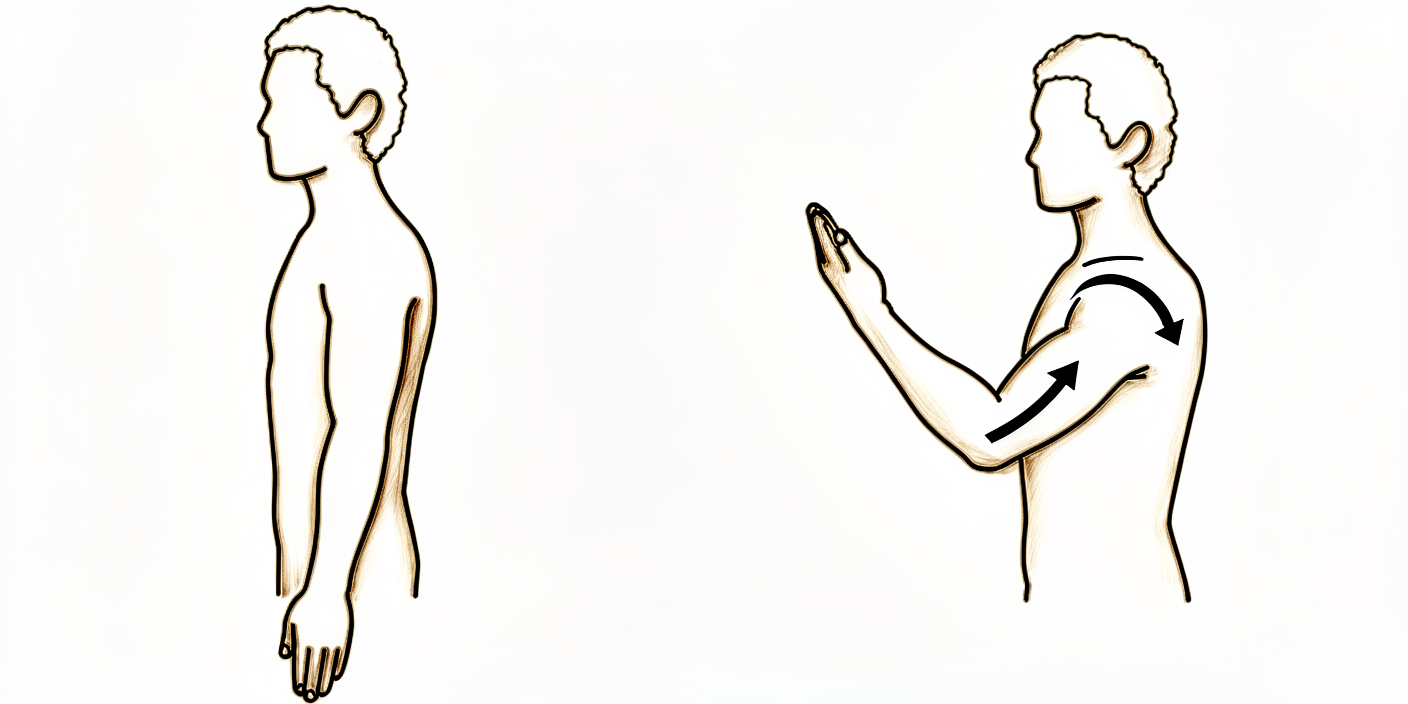
Gập và duỗi khuỷu tay (trong mức thoải mái)
Hãy để lòng bàn tay hướng lên trên, sau đó nhẹ nhàng gập khuỷu tay hướng về phía vai đến mức bạn cảm thấy thoải mái; tiếp theo từ từ duỗi thẳng tay ra đến mức bạn thấy dễ chịu. Bạn có thể di chuyển tay trong phạm vi bao nhiêu cũng được — hãy dựa vào cảm giác thoải mái của bản thân và thực hiện động tác một cách mượt mà. Giữ cánh tay trên vẫn nằm sát bên thân.
10 lần, 3–4 lần mỗi ngày.
Kieran Hirpara 4.0
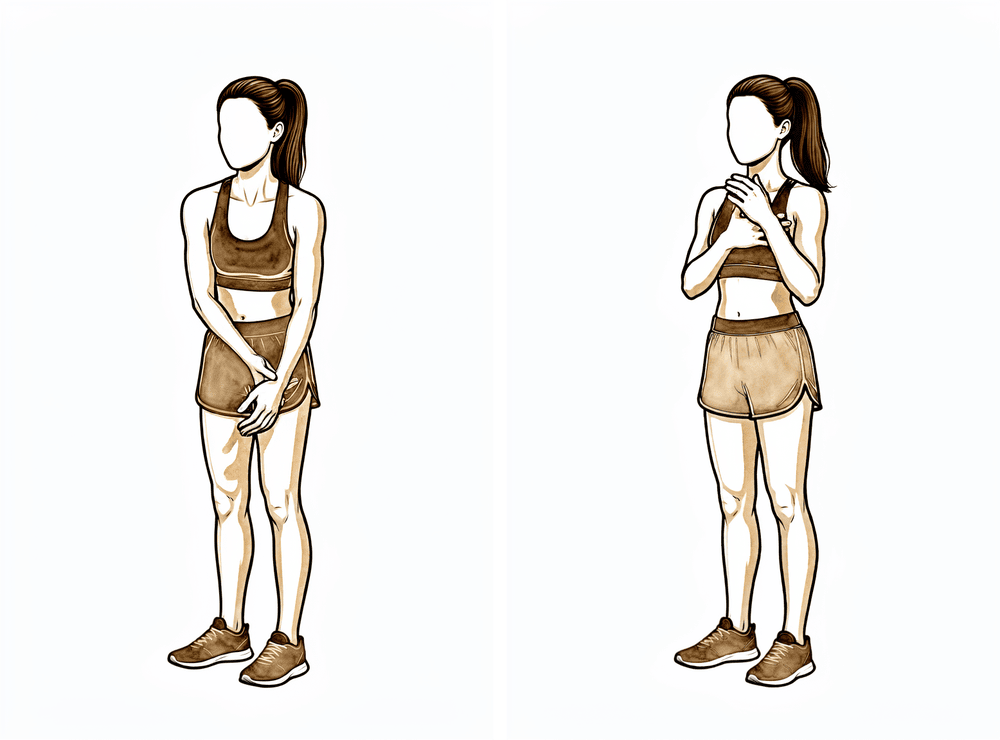
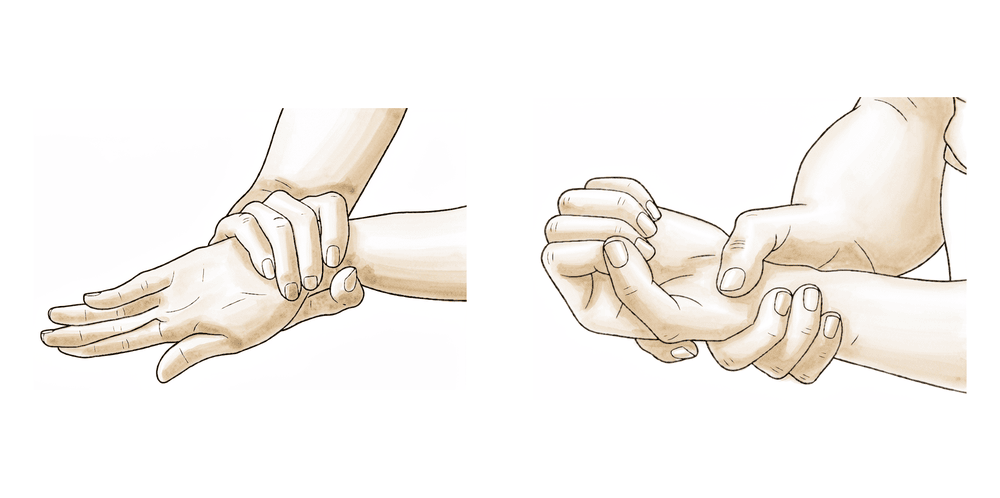
Hỗ trợ gập khuỷu tay
Hãy để cánh tay vừa được phẫu thuật thả lỏng hoàn toàn, sau đó dùng tay kia nhẹ nhàng gập khuỷu tay lên phía vai. Bạn không được dùng lực từ cánh tay vừa phẫu thuật; tay kia mới là tay thực hiện động tác này. Việc làm này giúp duy trì độ linh hoạt của khuỷu tay trong những tuần đầu sau phẫu thuật.
10 lần, 3–4 lần mỗi ngày.
Kieran Hirpara 4.0
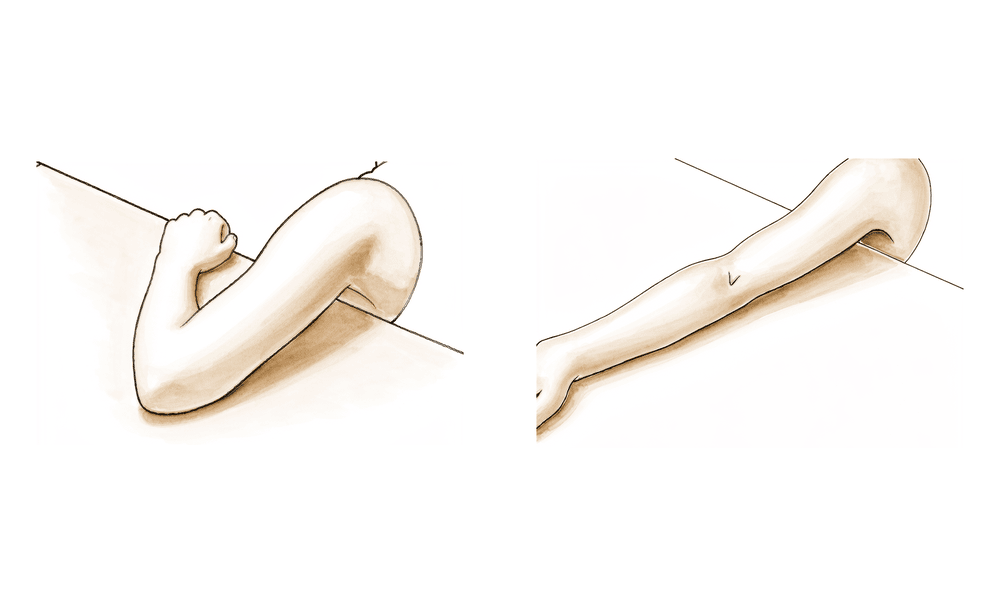
Duỗi thẳng khuỷu tay (trong mức thoải mái)
Từ từ duỗi thẳng khuỷu tay đến mức thoải mái, sau đó lại gập nó lên. Bạn có thể duỗi thẳng hoàn toàn nếu cảm thấy thoải mái; không cần phải ngăn lại hay hạn chế chuyển động duỗi thẳng. Hãy vận động một cách nhẹ nhàng và tránh mọi động tác đột ngột hoặc gắng sức.
10 lần, 3–4 lần mỗi ngày.
Kieran Hirpara 4.0
Chuyển động xoay cẳng tay (lòng bàn tay hướng lên / lòng bàn tay hướng xuống)
Hãy kéo khuỷu tay sát vào hông và gập nó thành khoảng một góc vuông. Nhẹ nhàng xoay lòng bàn tay hướng lên trần nhà, giữ nguyên trong chốc lát rồi xoay xuống hướng sàn nhà. Tiếp tục giữ khuỷu tay sát vào hông để chuyển động chỉ xuất phát từ cẳng tay chứ không phải vai.
10 lần theo mỗi hướng, 3–4 lần mỗi ngày.
Kieran Hirpara 4.0
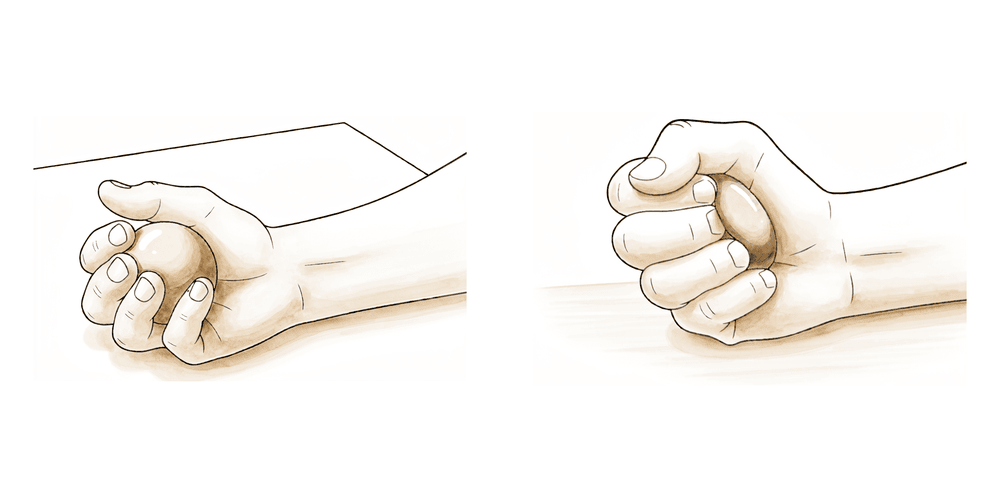
Cử động của bàn tay, cổ tay và khả năng nắm chặt
Hãy cử động tay và các ngón tay ngay từ đầu. Mở bàn tay ra hết mức, sau đó nắm tay nhẹ nhàng rồi lại duỗi ra. Đồng thời hãy cử động cổ tay lên xuống nữa. Những động tác này giúp tay luôn linh hoạt, ngăn ngừa tình trạng cứng khớp và sưng tấy trong quá trình khuỷu tay hồi phục.
10–15 lần, vài lần mỗi ngày
Kieran Hirpara 4.0
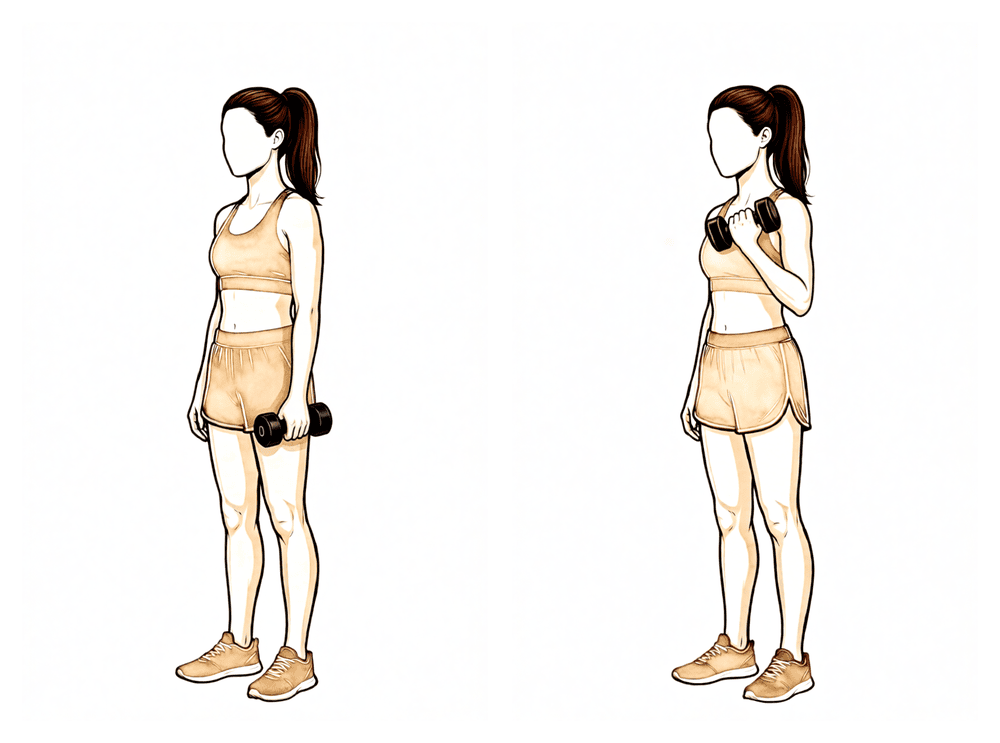
Gập khuỷu tay với lực cản (từ khoảng tháng thứ 4)
Chỉ bắt đầu khi bác sĩ Hirpara hoặc chuyên viên trị liệu cho phép bạn tăng tải trọng (khoảng sau 4 tháng). Hãy đặt lòng bàn tay hướng lên trên, cầm một vật nặng nhẹ rồi từ từ nâng lên gần vai, sau đó hạ xuống một cách chậm rãi và kiểm soát được. Ban đầu hãy dùng vật nặng rất nhẹ, rồi dần dần tăng mức độ kháng lực trong những tuần tiếp theo.
10–15 lần, tăng dần khi đã được phép
Kieran Hirpara 4.0
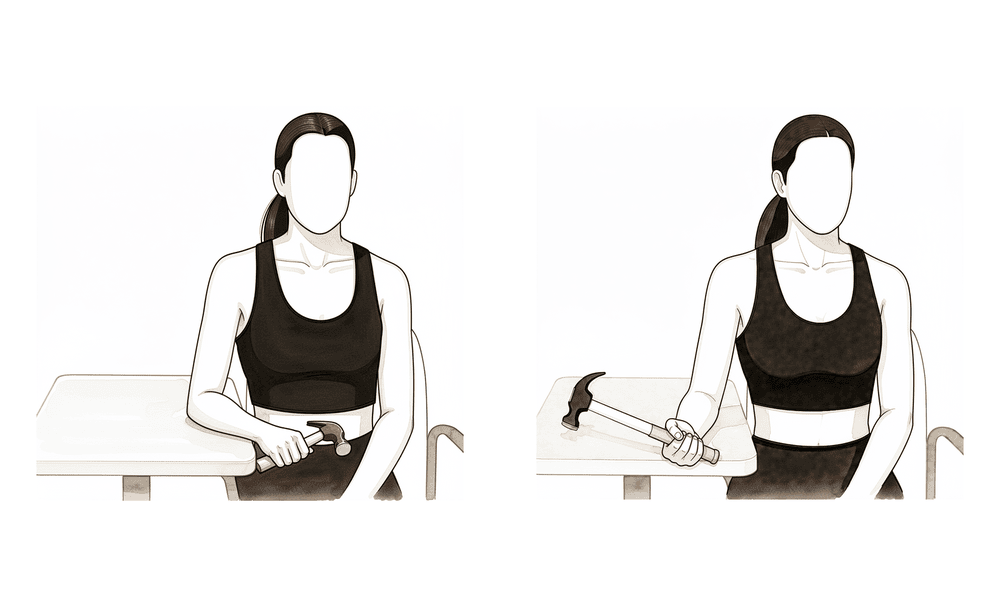
Xoay cẳng tay có lực cản (từ khoảng tháng thứ 4)
Chỉ bắt đầu khi bạn đã được phép tập có tải (từ khoảng tháng thứ 4). Giữ khuỷu tay khép sát vào thân, xoay lòng bàn tay ngửa lên chống lại lực cản nhẹ của dây thun hoặc một vật nặng nhẹ cầm ở một đầu, rồi trở về vị trí ban đầu một cách có kiểm soát. Bài tập này xây dựng lại sức mạnh xoay ngửa (supination) do cơ nhị đầu tạo ra. Hãy bắt đầu nhẹ và tăng dần.
10–15 lần, tăng dần khi đã được phép
Đây là những bài tập trong tài liệu hướng dẫn nhằm giúp cánh tay, khuỷu tay và bàn tay của bạn vận động trong những tuần đầu sau phẫu thuật. Hãy tháo đai đỡ tay ra trước khi thực hiện các bài tập này. Chỉ vận động trong phạm vi mà bạn cảm thấy thoải mái; hãy bắt đầu theo hướng dẫn của Bác sĩ Hirpara và chuyên viên trị liệu. Hai bài tập tăng cường sức mạnh sẽ được giới thiệu sau: chỉ thực hiện khi bác sĩ cho phép bạn bắt đầu vận động tải trọng, vào khoảng tháng thứ 4 sau phẫu thuật.
Quy trình điều trị lâm sàng của bạn
Phần còn lại của trang này là quy trình điều trị phục hồi chức năng sau khi khâu lại gân cơ nhị đầu cánh tay bằng phương pháp sử dụng nút vỏ não. Phần này cần được cung cấp cho chuyên viên vật lý trị liệu hoặc chuyên gia trị liệu tay của bạn; mỗi giai đoạn dưới đây đều bắt đầu bằng lời giải thích bằng ngôn ngữ thông thường về những gì đang diễn ra.
Nguyên tắc chủ đạo là vận động sớm một cách thoải mái nhưng tránh tải trọng quá sớm: cấu trúc nối bằng nút vỏ não đủ vững chắc để cho phép vận động tự do ngay từ ngày đầu, vì vậy không cần đeo nẹp có khớp gập hay thiết bị hạn chế duỗi cánh tay. Sự vững chắc của cấu trúc này được tận dụng nhằm ngăn ngừa tình trạng cứng khớp, chứ không phải để cho phép tải trọng sớm; các bài tập tăng cường sức mạnh chống lại lực cản và các hoạt động nâng vật nặng đều được hoãn lại nhằm bảo vệ quá trình lành thương giữa gân và xương, đồng thời giảm thiểu nguy cơ gân bị đứt trở lại.
Giai đoạn I — Vận động nhẹ nhàng để bảo vệ vết khâu (Tuần 0 → 6)
Người bệnh đeo một loại đai đơn giản nhằm tạo cảm giác thoải mái và nhắc nhở tránh vận động mạnh; đai này sẽ được tháo ra khi tập luyện hoặc vệ sinh. Mục đích là duy trì phạm vi vận động gần như đầy đủ một cách thoải mái, đồng thời bảo vệ vết khâu khỏi bất kỳ lực tác động nào.
Dành cho chuyên viên vật lý trị liệu:
- Cố định: Đeo đai đơn giản trong 6 tuần; tháo ra khi tập luyện hoặc vệ sinh. Không sử dụng nẹp có bản lề; không dùng thiết bị hạn chế duỗi thẳng.
- Phạm vi vận động: Từ ngày đầu tiên, cho phép thực hiện mọi chuyển động khi cảm thấy thoải mái: gập/duỗi khuỷu tay chủ động và thụ động, xoay cẳng tay. Không hạn chế góc vận động và không dùng thiết bị hạn chế duỗi thẳng.
- Mục tiêu: Duy trì phạm vi vận động gần như đầy đủ một cách thoải mái; bảo vệ vết khâu khỏi lực tác động; giữ cho bàn tay, cổ tay và vai vẫn có khả năng vận động.
- Các bài tập: Gập/duỗi khuỷu tay chủ động theo mức độ thoải mái; gập khuỷu tay thụ động có hỗ trợ; xoay cẳng tay chủ động khi khuỷu tay áp sát thân; vận động bàn tay, cổ tay và các động tác nắm; vận động cơ bả vai và vai. Không thực hiện các bài tập chống lại lực cản đối với cơ nhị đầu hoặc các động tác xoay cẳng tay.
- Lưu ý phòng ngừa: Không nâng vật nặng, không nắm chặt hay tập tăng sức mạnh chống lại lực cản; tránh các động tác duỗi thẳng khuỷu tay đột ngột và mạnh dưới tải trọng; tránh tình trạng vai bị duỗi thẳng quá mức.
- Tiêu chí để chuyển sang giai đoạn tiếp theo: Vết thương đã lành, phạm vi vận động gần như đầy đủ và cảm thấy thoải mái; sau 6 tuần có thể tháo đai ra.
Giai đoạn II — Vận động toàn diện, không chịu tải (Tuần 6 → khoảng 4 tháng)
Ngừng sử dụng đai treo tay. Cánh tay có thể được dùng tự do cho các hoạt động sinh hoạt hàng ngày nhẹ nhàng, nhưng không được chịu tải hoặc nâng vật nặng: gân vẫn đang trong quá trình bám chắc vào xương; đây là giai đoạn cần hết sức thận trọng trong việc hạn chế tải trọng, dù việc vận động vẫn an toàn.
Dành cho chuyên viên vật lý trị liệu:
- Mục tiêu: Đạt được biên độ vận động đầy đủ, đối xứng và không đau; khả năng sử dụng tay và cánh tay cho các hoạt động nhẹ nhàng bình thường.
- Biên độ vận động/cách sử dụng: Vận động tự do trong phạm vi mà bệnh nhân cảm thấy thoải mái; sử dụng tay cho các hoạt động hàng ngày nhẹ nhàng mà không chịu tải hoặc nâng vật nặng.
- Các bài tập: Tiếp tục các bài tập tăng biên độ vận động; các bài tập cho tay, cổ tay và sức nắm; các bài tập tăng cường cơ vùng vai và xương bả vai. Chưa được thực hiện các bài tập tăng sức mạnh cơ nhị đầu hoặc các bài tập xoay tay có chịu tải.
- Tiêu chí để chuyển sang giai đoạn tiếp theo: Đạt được biên độ vận động đầy đủ mà không đau; vết thương và vùng phẫu thuật đã lành → bắt đầu tăng dần tải trọng vào khoảng tháng thứ 4.
Giai đoạn III — Tăng cường sức mạnh và tăng dần mức tải trọng (~4 → 6 tháng)
Giai đoạn này bắt đầu việc tăng cường sức mạnh. Các bài tập tăng cường sức mạnh có mức lực nhẹ dành cho động tác gập khuỷu tay và xoay cẳng tay ra ngoài sẽ được áp dụng và dần dần nâng mức độ khó, phù hợp với các hoạt động sinh hoạt hàng ngày, công việc hoặc thể thao cụ thể.
Dành cho chuyên viên vật lý trị liệu:
- Mục tiêu: Phục hồi sức mạnh gập khuỷu tay và xoay cẳng tay ra ngoài; trở lại làm việc và tham gia các hoạt động thể thao.
- Các bài tập: Bắt đầu thực hiện các bài tập tăng cường sức mạnh có mức lực nhẹ vào khoảng tháng thứ 4; sau đó dần dần nâng mức độ khó (từ các động tác gập cánh tay và xoay cẳng tay có lực cản → các động tác mô phỏng hoạt động thực tế → các bài tập phù hợp với yêu cầu công việc hoặc môn thể thao cụ thể).
- Tiêu chí để nâng mức độ khó: Không còn đau khi thực hiện các động tác gập khuỷu tay và xoay cẳng tay có lực cản; sức mạnh của chi này tiến gần bằng với chi còn lại.
Trở lại làm việc và các hoạt động thường ngày
Trong 6 tuần đầu tiên, bạn chỉ nên sử dụng cánh tay để thực hiện những công việc nhẹ nhàng, thoải mái trong sinh hoạt hàng ngày; đồng thời vẫn phải đeo nẹp bảo vệ. Việc thực hiện các công việc văn phòng nhẹ nhàng hoặc những nhiệm vụ chỉ cần dùng một tay thường có thể bắt đầu sớm; còn các công việc nặng nhọc hoặc đòi hỏi dùng cả hai tay thì phải đợi đến khi cơ thể đã bắt đầu chịu tải và tăng dần sức mạnh.
Các mốc quan trọng cần đạt được là:
- Không được nâng vật nặng và không thực hiện các hoạt động gây căng tải trong những tháng đầu: điều này là cần thiết để gân có thể lành lại và bám chắc vào xương.
- Có thể bắt đầu nâng vật nhẹ và tập tăng cường sức mạnh từ khoảng tháng thứ 4, nhưng phải thực hiện một cách từ từ và tăng dần theo từng tuần.
- Có thể trở lại các môn thể thao không tiếp xúc từ khoảng tháng thứ 4; có thể tham gia các môn thể thao có tiếp xúc mà không hạn chế sau khoảng 6 tháng, khi đã đáp ứng đủ các tiêu chí sau: vận động cánh tay hoàn toàn không gây đau, sức mạnh đạt ít nhất 90–100% so với bên kia, và cơ thể có khả năng chịu đựng các yêu cầu đặc thù của công việc hoặc môn thể thao mà bạn tham gia.
Bạn tuyệt đối không được lái xe khi vẫn đang đeo nẹp bảo vệ. Việc lái xe chỉ được phép tiếp tục sau khi đã tháo nẹp và bạn có thể điều khiển phương tiện một cách thoải mái, an toàn; điều này phải được bác sĩ xác nhận trong lần tái khám. Hãy luôn tuân thủ những chỉ dẫn cụ thể từ bác sĩ Hirpara, vì thời điểm thực hiện các bước này có thể thay đổi tùy theo yêu cầu công việc và môn thể thao của từng người.
Sau khi thực hiện theo phác đồ
Phác đồ này được áp dụng song song với các hướng dẫn phục hồi chung của phòng khám; vui lòng tham khảo mục xử lý cơn đau sau phẫu thuật và chăm sóc vết thương. Kế hoạch từng giai đoạn nêu trên phù hợp với các bằng chứng khoa học đã công bố về việc phục hồi chức năng sau phẫu thuật sửa chữa gân cơ nhị đầu cánh tay; quá trình hồi phục của bạn sẽ được điều chỉnh riêng biệt bởi chuyên viên vật lý trị liệu hoặc chuyên gia trị liệu tay dựa trên tiến triển của khớp khuỷu.
Evidence & references
This is the clinical evidence summary written for health professionals. It is technical, and it lists the research this page was built from. You do not need to read it to understand your treatment or to make a decision about it.
Distal Biceps Tendon Repair — Post-operative Rehabilitation (Evidence)
Topic scope: Post-operative rehabilitation after surgical repair of a ruptured distal biceps tendon reattached to the radial tuberosity with cortical-button fixation. The protocol here reflects Dr Hirpara's practice — a sling-only, early-comfort-motion approach with deliberately delayed loading — set against the published spectrum of distal-biceps rehabilitation protocols.
Defining principle: Cortical-button fixation is the strongest available construct, and biomechanical and clinical evidence show it tolerates immediate motion safely. Dr Hirpara's stance is to spend that strength on early movement, not early loading: a simple sling for 6 weeks (no hinged brace, no extension block) with all motion to comfort from day 1 including extension, but with resisted strengthening and lifting held back until ~4 months to protect tendon-to-bone healing and minimise re-rupture, and unrestricted activity / return to sport at ~6 months on criterion-based clearance. This sits at the protective end of loading while matching the most current thinking on early motion for stiffness prevention.
Where this protocol sits in the evidence
Published distal-biceps protocols span a wide range, from rigid hinged-brace extension-block schemes to immediate unrestricted motion. Dr Hirpara's plan diverges from the "traditional" template in two deliberate ways:
- Immobilisation: A simple sling for comfort, not a hinged ROM brace, and no extension block. Motion is unrestricted to comfort from day 1. The mainstream BWH/MGB protocols instead use a posterior splint at 90° for 5–7 days, then a hinged brace with a 45°→30° extension block opened ~10°/week to full extension by ~6 weeks (or ~3 weeks in the accelerated variant). Dr Hirpara's approach is at the early-motion end and is justified by the strength of the cortical-button construct.
- Loading: Resisted strengthening and lifting are deferred to ~4 months. This is more conservative than the published loading timelines (accelerated resisted work at week 6; standard/MGB at weeks 8–10–12; light weights weeks 12–14). Crucially, this conservatism is a choice made despite having the construct that would permit earlier loading.
The endpoint — unrestricted activity / return to sport at ~6 months, criterion-based — is the single most commonly cited endpoint across protocols and matches the mainstream consensus.
Key evidence and controversies
-
Early/immediate motion is safe with modern fixation. (Moderate) Biomechanical work supports immediate motion: Bisson et al (AJSM 2007) found aggressive rehabilitation safe after the modified 2-incision approach, and Rose et al (KSSTA 2010) showed single-incision EndoButton/FiberWire repairs survive 2,000 immediate-motion cycles. Several series report no increased re-rupture with immediate post-operative motion. This underpins the sling-only, motion-to-comfort approach.
-
Cortical-button strength enables early motion. (Moderate) Cortical-button (± interference screw) fixation has the highest load-to-failure of the available constructs (Olsen JSES 2014; Spang JSES 2006; Lang OTSR 2018 — comparable functional outcomes across constructs but higher load-to-failure for cortical button). Spencer/Edwin (HAND 2008) argued EndoButton fixation strength may allow earlier ROM. This fixation strength is the explicit rationale for permitting immediate movement.
-
Mobilisation timing may not change outcome. (Moderate) A retrospective comparison found no clinically significant difference in failure, complications, ROM or patient-reported outcomes for early versus delayed mobilisation after primary distal biceps repair. This undercuts the urgency of accelerating loading and supports a measured progression.
-
Conservative rehab may lower re-rupture. (Consensus / survey) Rosenthal/Ting/Sher (JSES 2023), a survey of fellowship-trained elbow surgeons, suggests more conservative post-operative rehab may be associated with lower re-rupture risk — a direct counterweight to the accelerated-loading trend and the rationale for deferring loading to ~4 months. Phelps et al (JSES Int 2025, Level IV systematic review) found no consensus on the optimal return-to-sport protocol, with protocols ranging from immobilisation to immediate motion.
-
Tendon elongation in the mid window. (Moderate) Marshall et al (OJSM 2016, radiostereometric) showed the repaired tendon elongates mostly at 4–8 weeks post-op with minimal change at 8–16 weeks — a biomechanical argument for caution against aggressive loading in that mid window even when motion itself is safe.
-
Incision and complications. (Moderate) Grewal et al RCT (JHS 2010): no overall functional difference single vs double incision (flexion strength slightly greater with two-incision, more minor complications with single-incision). Amarasooriya systematic review (AJSM 2020): synostosis occurred only with double incision; fixation technique did not significantly affect re-rupture. Incision choice mainly drives complication-avoidance precautions, not the ROM timeline. Re-rupture rates overall are low (0–5.6%; Garon & Greenberg 2016).
Phased rehabilitation timeline (this protocol)
| Phase | Window | Sling / brace | ROM / use | Strengthening / loading | Criteria to progress |
|---|---|---|---|---|---|
| I — Protected comfort motion | Week 0 → 6 | Simple sling 6 wk, off for exercises/hygiene. No hinged brace, no extension block | All motion to comfort from day 1 — active + passive flexion, extension and forearm rotation. No arc restriction | None. No resisted biceps/supination loading; hand/wrist/grip and scapular/shoulder ROM maintained | Wound healed; comfortable near-full ROM; out of sling at 6 wk |
| II — Full motion, unloaded | Week 6 → ~4 mo | Sling off | Full symmetric pain-free ROM; light everyday use | None yet — light functional use without resisted loading or lifting | Full painless ROM; wound/repair settled → begin loading ~4 mo |
| III — Strengthening & graded loading | ~4 → 6 mo | — | Full ROM maintained | Start LIGHT resisted strengthening / lifting at ~4 mo; progress gradually (isotonic curls + resisted supination → functional → job/sport-specific) | Pain-free resisted flexion/supination; strength approaching the other side |
| Return to activity | ~6 mo | — | Unrestricted | Unrestricted activity / return to sport, criterion-based | Full painless ROM; strength ≥90–100% of the other side; tolerance of job/sport-specific demands |
One-line summary: simple sling 6 weeks with all motion to comfort from day 1 (no brace, no extension block) → full unloaded motion to ~4 months → light resisted loading from ~4 months → unrestricted activity / sport at ~6 months, criterion-based.
Evidence strength flags
- MODERATE (biomechanical + cohort): safety of immediate/early motion with cortical-button fixation (Bisson 2007; Rose 2010; Olsen 2014; Spang 2006; Lang 2018); no clinically significant difference early vs delayed mobilisation; low overall re-rupture rates.
- MODERATE (biomechanical): tendon elongation concentrated 4–8 weeks (Marshall 2016) — supports caution on mid-window loading.
- CONSENSUS / survey-level: more conservative rehab may lower re-rupture (Rosenthal 2023); no consensus on optimal return-to-sport protocol (Phelps 2025, Level IV). The specific phase timings of this protocol are expert/consensus-derived, not trial-derived.
Overall evidence strength: Moderate. Phased timelines rest on consistent institutional protocol consensus reinforced by biomechanical studies and retrospective cohorts; few prospective RCTs of the rehabilitation progression itself, and no consensus on the optimal return-to-sport protocol.
CITATIONS
RAG corpus (180,000+ Orthopaedic articles)
- Grewal R, Athwal GS, MacDermid JC, et al. Single vs. double incision technique for the repair of distal biceps tendon ruptures: a randomized clinical trial. J Hand Surg Am. 2010.
- Amarasooriya M, Bain GI, Roper T, et al. Complications after distal biceps tendon repair: a systematic review. Am J Sports Med. 2020.
- Keener JD. Controversies in the surgical treatment of distal biceps tendon ruptures: single versus double-incision repairs. J Shoulder Elbow Surg. 2011;20(2):S113–S125.
- Dunphy TR, Hudson J, Batech M, et al. Surgical treatment of distal biceps tendon ruptures: an analysis of complications in 784 surgical repairs. Am J Sports Med. 2017;45(13):3020–3029.
- Bisson LJ, Gurske-de Perio J, Weber AE, et al. Is it safe to perform aggressive rehabilitation after distal biceps tendon repair using the modified 2-incision approach? A biomechanical study. Am J Sports Med. 2007.
- Rose DM, Archibald JD, Sutter EG, et al. Biomechanical analysis suggests early rehabilitation is possible after single-incision EndoButton distal biceps repair with FiberWire. Knee Surg Sports Traumatol Arthrosc. 2010;19(6).
- Marshall NE, Keller RA, Okoroha K, et al. Radiostereometric evaluation of tendon elongation after distal biceps repair. Orthop J Sports Med. 2016.
- Phelps BM, Birnbrich A, Singer W, et al. Postoperative rehabilitation and return to sport criteria following distal biceps tendon rupture surgery. JSES Int. 2025. (Level IV systematic review: no consensus on optimal RTS rehabilitation.)
- Rosenthal R, Ting RS, Sher D. Management of distal biceps tendon ruptures: a survey of fellowship-trained subspecialist elbow surgeons. J Shoulder Elbow Surg. 2023;32(10).
- Olsen JR, Shields E, Williams RB, et al. A comparison of cortical button with interference screw versus suture anchor techniques for distal biceps brachii tendon repairs. J Shoulder Elbow Surg. 2014;23(11):1607–1611.
- Spang JT, Weinhold PS, Karas SG. A biomechanical comparison of EndoButton versus suture anchor repair of distal biceps tendon injuries. J Shoulder Elbow Surg. 2006.
- Lang NW, Bukaty A, Sturz GD, et al. Treatment of primary total distal biceps tendon rupture using cortical button, transosseous fixation and suture anchor: a single center experience. Orthop Traumatol Surg Res. 2018.
- Edwin ES (Spencer EE Jr), Tisdale A, Kostka K, Ivy RE. Is therapy necessary after distal biceps tendon repair? HAND. 2008;3(4).
- Rubinger L, Solow M, Johal H, et al. Return to work following a distal biceps repair: a systematic review of the literature. J Shoulder Elbow Surg. 2020;29(5):1002–1009.
- Ford SE, Andersen JS, Macknet DM, et al. Major complications after distal biceps tendon repairs: retrospective cohort analysis of 970 cases. J Shoulder Elbow Surg. 2018;27(10):1898–1906.
- Cuzzolin M, Secco D, Guerra E, et al. Operative versus nonoperative management for distal biceps brachii tendon lesions: a systematic review and meta-analysis. Orthop J Sports Med. 2021.
- Garon MT, Greenberg JA. Complications of distal biceps repair. Orthop Clin North Am. 2016. (Re-rupture 0–5.6%.)
Published rehabilitation protocols (web)
- Brigham & Women's Hospital — Distal Biceps Tendon Repair Rehabilitation Protocol (standard). https://www.brighamandwomens.org/assets/BWH/patients-and-families/pdfs/elbow---distal-biceps-repair-protocol.pdf
- Brigham & Women's Hospital — Distal Biceps Tendon Repair Accelerated Protocol. https://www.brighamandwomens.org/assets/BWH/patients-and-families/rehabilitation-services/pdfs/elbow-accelerated-distal-biceps-repair-protocol-bwh.pdf
- Mass General Brigham Sports Medicine — Rehabilitation Protocol for Distal Biceps Tendon Repair (rev. 10/2021). https://www.massgeneral.org/assets/mgh/pdf/orthopaedics/sports-medicine/physical-therapy/rehabilitation-protocol-for-distal-biceps-repair.pdf