Patients › Rehabilitation
Cố định xương cánh tay gần (ORIF)
Rehabilitation after locking-plate fixation of a proximal humerus fracture, gated on radiographic healing at review.
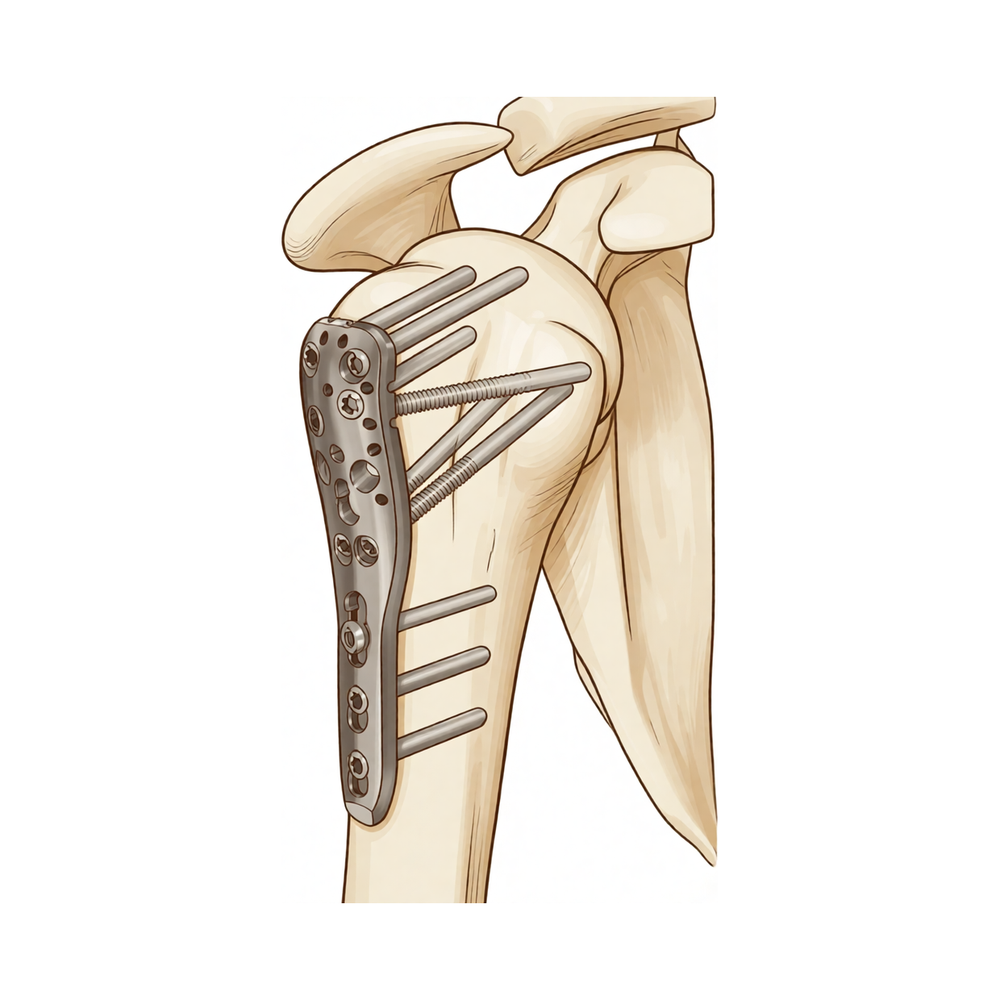
Phác đồ này bao gồm quá trình phục hồi chức năng sau phẫu thuật cố định gãy xương cánh tay trên (một vết gãy của xương cánh tay gần khớp vai, được sửa chữa bằng tấm khóa và ốc vít, nắn mở và cố định bên trong, ORIF) với Bác sĩ Kieran Hirpara tại Bệnh viện tư nhân Mater Rockhampton. Hãy mang theo trang web này hoặc file PDF của nó đến buổi gặp vật lý trị liệu đầu tiên để quá trình phục hồi chức năng của bạn được phối hợp nhịp nhàng. Quá trình phục hồi chức năng của bạn sẽ được tiến triển cá nhân hóa bởi bác sĩ vật lý trị liệu thông qua các giai đoạn dưới đây, tùy thuộc vào mức độ lành vết gãy của bạn.
Nếu bạn có bất kỳ lo ngại nào về vết mổ sau phẫu thuật, hãy liên hệ với phòng khám. Thường thì việc chụp ảnh vết mổ và gửi qua email để xem xét sẽ rất hữu ích.
Những điều cần biết
Quá trình phục hồi chức năng sau cố định gãy xương khác với phục hồi chức năng sau hầu hết các phẫu thuật vai có kế hoạch trước. Tấm kim loại và vít giữ xương gãy ở đúng vị trí, nhưng bản thân xương vẫn cần thời gian để liền, và tốc độ liền xương thay đổi đáng kể tùy từng người. Vì lý do đó, lịch trình dưới đây chỉ là hướng dẫn điển hình chứ không phải lịch trình cố định: mỗi bước tiến trong chương trình của bạn phụ thuộc vào cả số tuần kể từ khi phẫu thuật và vào mức độ liền xương trên phim X-quang, được xác nhận tại các buổi tái khám với Bác sĩ Hirpara. Không tự chuyển sang giai đoạn tiếp theo trong lịch trình; hãy chờ buổi tái khám.
Có một điểm nữa khiến ca phẫu thuật này khác biệt. Các mỏm xương ở đầu trên xương cánh tay (các mỏm) là nơi các gân của nhóm cơ xoay cuff bám vào, và trong nhiều trường hợp gãy xương cánh tay gần, các mảnh xương này là một phần của vết gãy và được cố định lại bằng tấm kim loại hoặc chỉ khâu. Tập quá sức cho các cơ xoay cuff quá sớm có thể kéo các mảnh xương này trước khi chúng liền. Với tấm kim loại khóa hiện đại, sự cố định rất chắc chắn ngay từ ngày đầu, do đó khuyến khích vận động nhẹ nhàng sớm: bạn có thể vận động vai chủ động hỗ trợ và chủ động nhẹ nhàng trong phạm vi chịu đựng được, nâng cánh tay trong phạm vi không đau. Yếu tố thận trọng là tải trọng lên nhóm cơ xoay cuff: nơi các mảnh mỏm không phải là một phần của vết gãy, hoặc được cố định chắc chắn, bác sĩ phẫu thuật có thể cho phép bạn bắt đầu xoay chủ động và tập nhóm cơ xoay cuff sớm hơn; nơi các mỏm tham gia và đang liền xương, việc tập chủ động nhóm cơ xoay cuff và xoay ngoài cưỡng bức sẽ được trì hoãn thêm một chút. Bác sĩ Hirpara sẽ cho bạn biết trường hợp nào áp dụng cho bạn.
Chương trình bài tập của bạn sử dụng ba loại vận động, và nhóm điều trị sẽ đánh dấu những loại áp dụng cho bạn:
- Kháng vận động chủ động (Active range of motion): vận động được thực hiện mà không cần sự hỗ trợ hoặc giúp đỡ.
- Vận động chủ động hỗ trợ (Active-assisted range of motion): sử dụng cánh tay kia hoặc một vật thể để hỗ trợ di chuyển cánh tay.
- Vận động thụ động (Passive range of motion): hoàn toàn thư giãn, sử dụng cánh tay kia hoặc lực bên ngoài để thực hiện 100% công việc.
Bạn sẽ tỉnh dậy sau phẫu thuật với cánh tay trong một chiếc nạng. Đeo nạng liên tục trong khoảng ba tuần đầu, sau đó giảm dần sử dụng nạng trong những tuần tiếp theo tùy theo mức độ thoải mái; các phác đồ công bố trung bình khoảng ba tuần bất động, và bằng chứng ủng hộ việc vận động sớm hơn là thời gian dài đeo nạng. Bạn không cần phải ngủ trong nạng. Tháo nạng ra vài lần mỗi ngày để tập bài tập và để rửa ráy, mặc quần áo, và khi ngồi yên tại nhà, bạn có thể nghỉ ngơi cánh tay ngoài nạng. Không lái xe trong ít nhất sáu tuần sau bất kỳ phẫu thuật vai nào; bác sĩ phẫu thuật sẽ cho phép bạn lái xe, thường là tại buổi tái khám sáu tuần.
Tóm tắt hành trình:
- Giai đoạn I — Bảo vệ và vận động sớm: tuần 0–6
- Giai đoạn II — Khôi phục vận động chủ động: tuần 6–12
- Giai đoạn III — Tăng cường sức mạnh: khoảng tháng 3 đến 4½
- Giai đoạn IV — Trở lại hoạt động bình thường: từ khoảng 4½–6 tháng
Giai đoạn I — Bảo vệ và vận động sớm (Tuần 0–6)
Kieran Hirpara 4.0
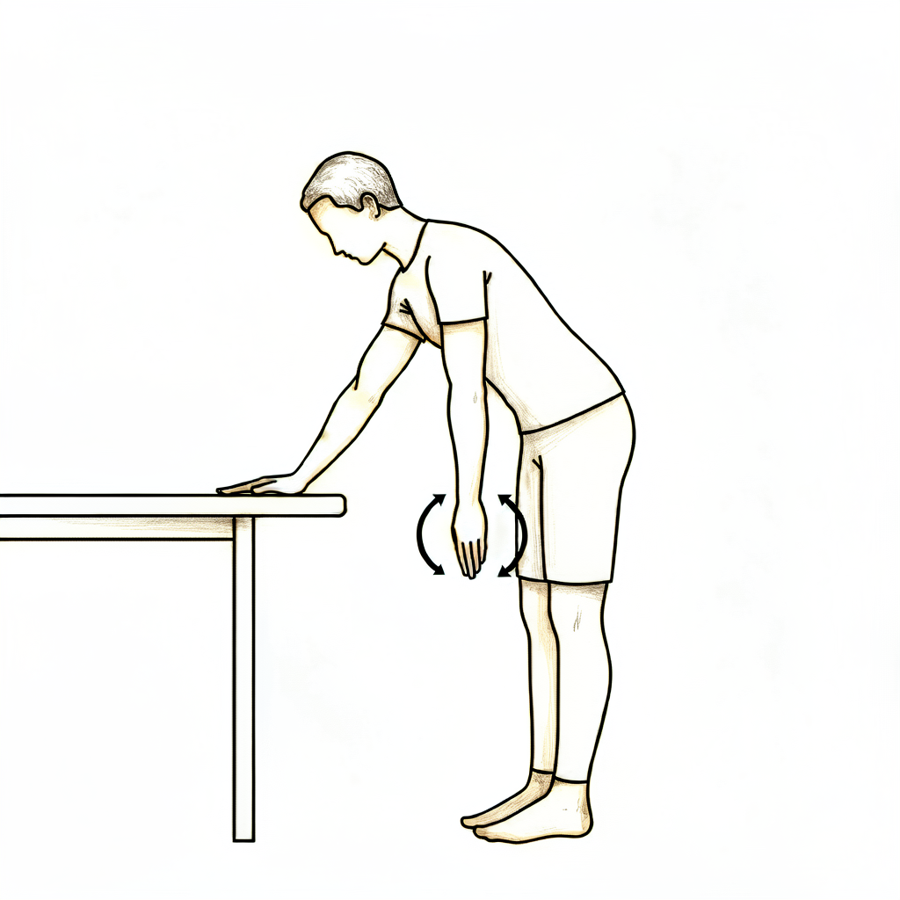
Bài tập con lắc
Cúi người về phía trước, dùng tay còn lại chống lên bàn, và để cánh tay vừa phẫu thuật buông thõng thả lỏng. Nhẹ nhàng đung đưa cơ thể để tạo thành những vòng tròn nhỏ — theo chiều kim đồng hồ, rồi ngược chiều kim đồng hồ. Cánh tay đung đưa một cách thụ động; chuyển động đến từ cơ thể, không phải từ các cơ vai.
Vài lần mỗi ngày
Kieran Hirpara 4.0
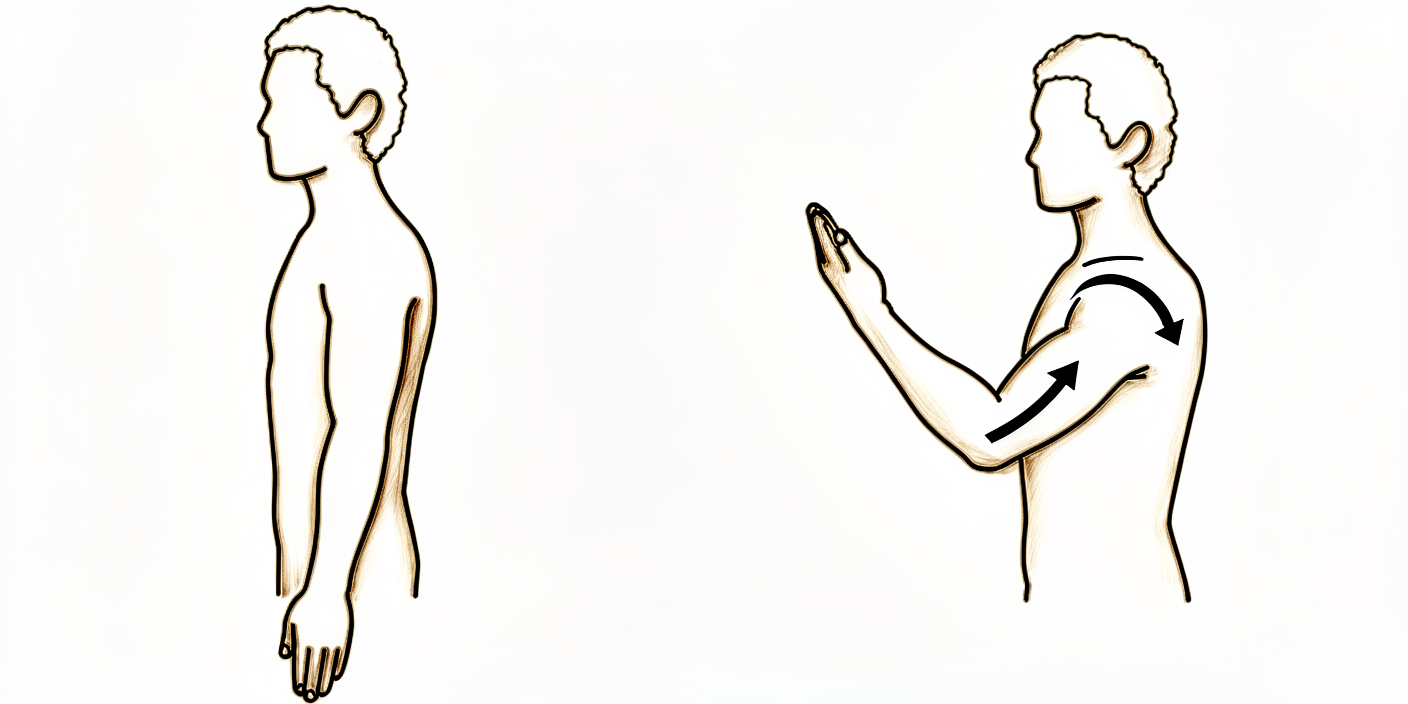
Các động tác gập khuỷu tay chủ động
Tháo cánh tay ra khỏi đai treo, để cánh tay trên đặt sát bên hông, gập khuỷu tay hết mức có thể trong giới hạn thoải mái, rồi duỗi thẳng hoàn toàn. Chỉ có khuỷu tay chuyển động — giữ vai yên và cánh tay sát bên hông.
Vài lần mỗi ngày
Kieran Hirpara 4.0
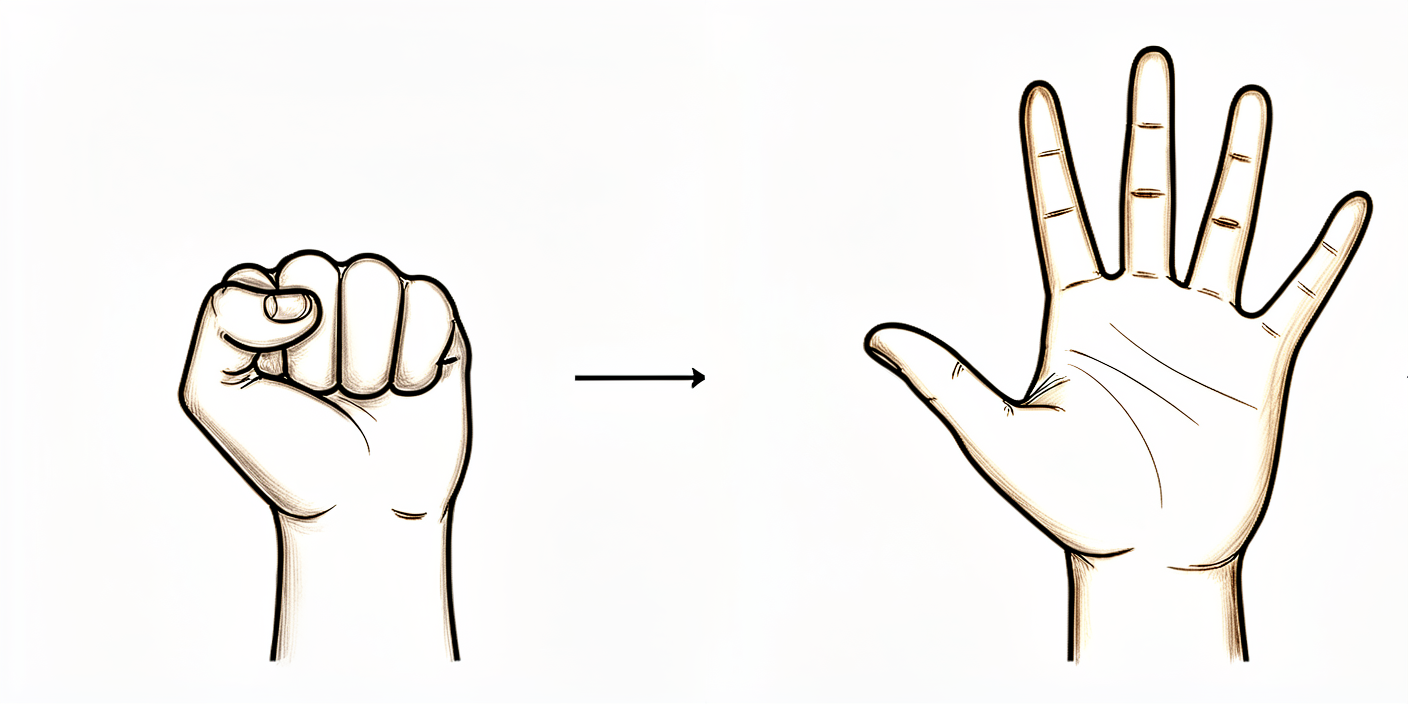
Các bài tập nắm bóp bóng
Khi cánh tay được đỡ, bóp một quả bóng mềm hoặc nắm chặt bàn tay, rồi mở bàn tay ra hoàn toàn. Hãy vận động các ngón tay, cổ tay và bàn tay mỗi khi cánh tay được tháo ra khỏi đai treo.
Vài lần mỗi ngày
Kieran Hirpara 4.0
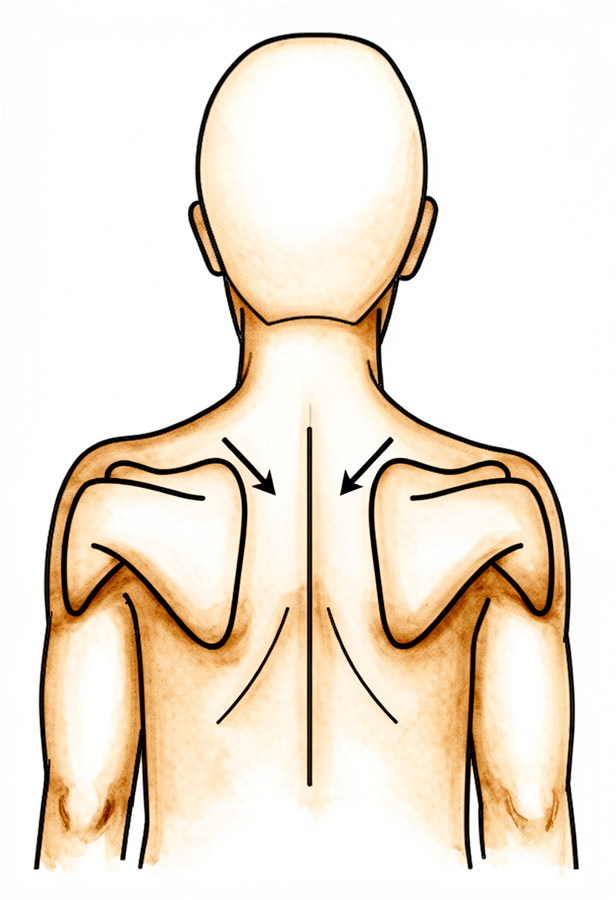
Siết giữ xương bả vai
Khi ngồi hoặc đứng thẳng, hãy nhẹ nhàng kéo hai bả vai xuống dưới và khép lại với nhau mà không di chuyển cánh tay; giữ nguyên tư thế vài giây rồi thả lỏng. Hãy đảm bảo tai, vai và hông nằm trên cùng một đường thẳng.
Theo hướng dẫn của chuyên viên vật lý trị liệu của bạn.
Kieran Hirpara 4.0
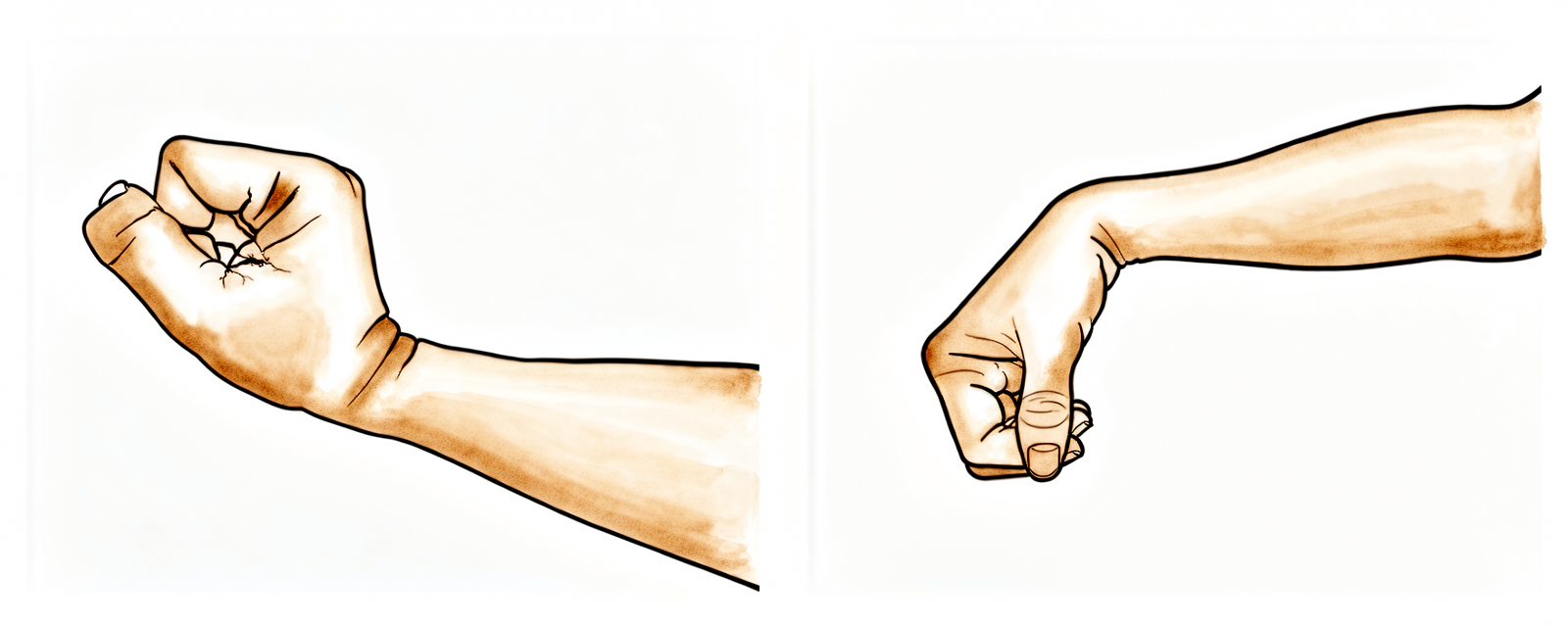
Vận động cổ tay
Khi cánh tay đã được tháo ra khỏi đai treo, giữ cho cổ tay vận động bằng cách gập cổ tay về phía trước, về phía sau và nhẹ nhàng sang hai bên. Động tác này giúp toàn bộ cánh tay tiếp tục hoạt động trong khi vai được bảo vệ.
Vài lần mỗi ngày
Kieran Hirpara 4.0
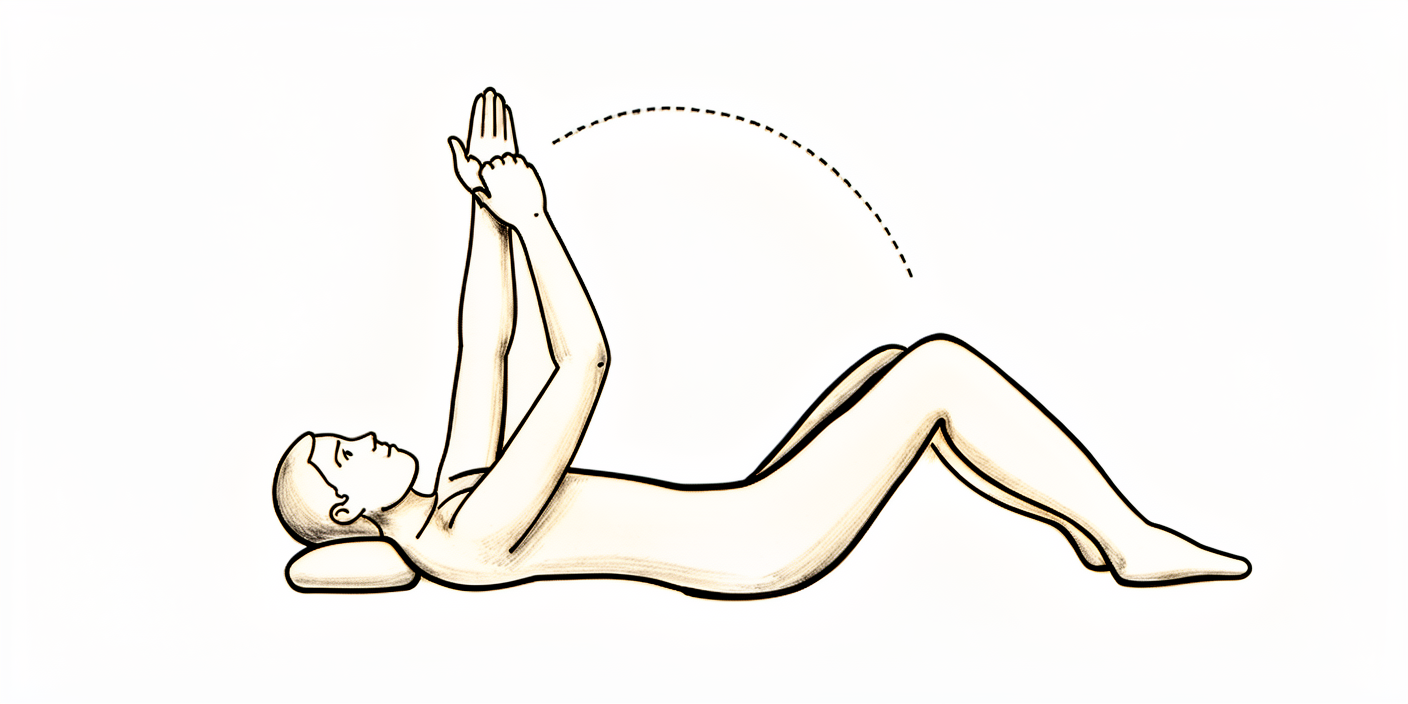
Hỗ trợ nâng tay lên phía trước (khi nằm)
Nằm ngửa và dùng cánh tay lành hỗ trợ nâng cánh tay vừa phẫu thuật lên phía trước, rồi nhẹ nhàng hạ xuống trong khi cánh tay lành vẫn hỗ trợ. Bắt đầu ở tư thế nằm ngửa giúp tận dụng trọng lực và khiến việc nâng tay giai đoạn đầu dễ dàng hơn. Giữ trong phạm vi thoải mái, không gây đau và dừng lại khi bắt đầu thấy căng kéo — không cố ép.
Nhiều lần mỗi ngày, trong phạm vi không gây đau
Kieran Hirpara 4.0
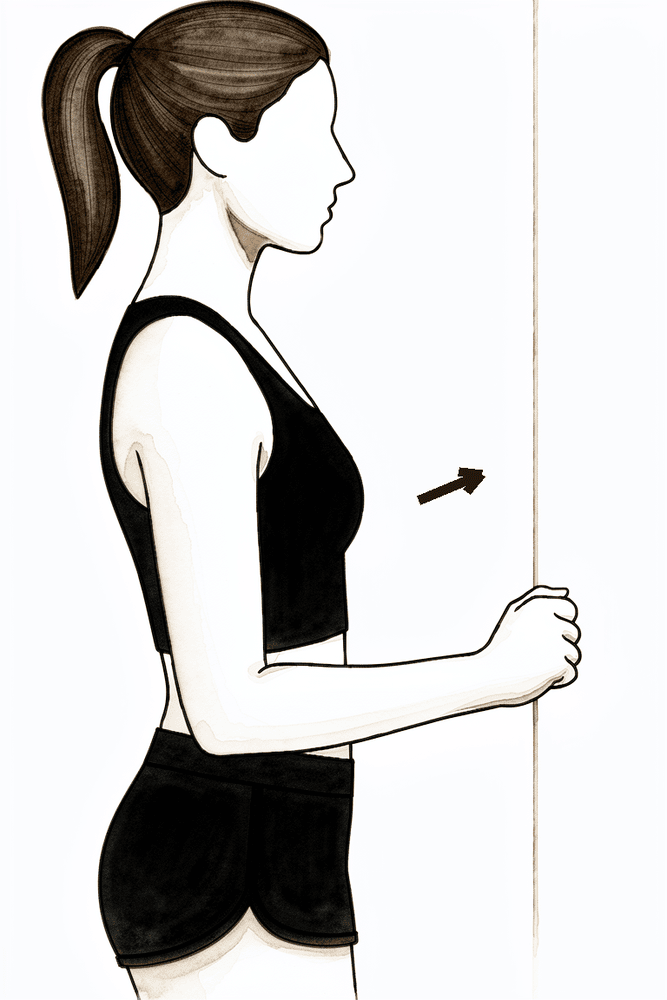
Bài tập tĩnh nâng tay ra trước nhẹ nhàng
Đứng quay mặt vào tường, cánh tay vừa phẫu thuật để bên hông, nắm tay nhẹ đặt vào tường phía trước. Nhẹ nhàng ấn bàn tay về phía trước vào tường mà không để cánh tay di chuyển, giữ vài giây rồi thả lỏng. Bài tập này kích hoạt các cơ nâng vai mà không gây căng cho vết gãy đang lành. Chỉ thực hiện nếu chuyên viên vật lý trị liệu đã cho bạn bắt đầu bài tập này.
Theo hướng dẫn của chuyên viên vật lý trị liệu của bạn.
Sáu tuần đầu tiên tập trung vào việc bảo vệ ổ gãy đã cố định trong khi ngăn ngừa tình trạng cứng khớp ở phần còn lại của cánh tay (và chính khớp vai). Vì tấm khóa vít giữ xương cố định ngay từ đầu, nên khuyến khích vận động nhẹ nhàng sớm thay vì chờ đợi sáu tuần. Chuyên viên vật lý trị liệu sẽ hướng dẫn bạn bắt đầu các bài tập nhẹ nhàng trước khi xuất viện: bài tập con lắc (để cánh tay buông thõng và đung đưa nhẹ nhàng bằng cách lắc cơ thể), và duy trì vận động khuỷu tay, cổ tay và bàn tay ra khỏi nẹp đỡ nhiều lần trong ngày. Ngay từ sớm, và trong phạm vi không đau và thoải mái, bạn có thể bắt đầu di chuyển cánh tay với sự hỗ trợ của tay kia (vận động chủ động hỗ trợ) và nhẹ nhàng bằng chính sức mạnh của nó (vận động chủ động), nâng lên phía trước cơ thể khi cảm thấy thoải mái. Phần thận trọng là tránh tải trọng lên nhóm cơ xoay vai: tránh ép cánh tay xoay ngoài (xoay ngoài) và tránh các bài tập xoay vai có kháng lực cho đến khi các mấu xương (tuberosities) liền, như Bác sĩ Hirpara xác nhận. Sử dụng chườm đá để giảm đau, và uống thuốc giảm đau trước khi thực hiện các bài tập và các buổi vật lý trị liệu.
Dành cho chuyên viên vật lý trị liệu:
Mục tiêu
- Bảo vệ cố định và tối ưu hóa quá trình liền xương
- Giảm đau và sưng
- Thiết lập vận động chủ động hỗ trợ sớm, tiến triển thành vận động chủ động nâng vai trong phạm vi không đau
- Duy trì phạm vi vận động đầy đủ của cổ, khuỷu tay, cổ tay và bàn tay
Quản lý điều trị
- Đeo nẹp đỡ liên tục trong khoảng 3 tuần, sau đó giảm dần khi cảm thấy thoải mái (theo quy ước tài liệu); tháo ra nhiều lần mỗi ngày để tập luyện và vệ sinh; không cần thiết khi nằm trên giường
- Bài tập con lắc / Codman nhiều lần mỗi ngày
- Vận động chủ động hỗ trợ sớm và nâng lên phía trước nhẹ nhàng trong phạm vi thoải mái, không đau ngay từ đầu đối với cố định ổn định; bắt đầu nâng ở tư thế nằm ngửa, tiến triển sang tư thế đứng thẳng khi kiểm soát cho phép; mở rộng phạm vi khi cảm thấy thoải mái
- Phạm vi vận động thụ động khi cần thiết ở những nơi chưa dung nạp được vận động chủ động: nâng lên phía trước trong mặt phẳng xương bả vai đến khoảng 90°, xoay trong đến bụng (không xoay sau lưng)
- Xoay ngoài được giữ ở mức nhẹ nhàng mặc định ban đầu khoảng 30–40° với cánh tay ở bên hông; bác sĩ phẫu thuật có thể mở rộng phạm vi này nếu các mấu xương không bị tổn thương hoặc đã cố định chắc chắn
- Vận động chủ động phạm vi cổ, khuỷu tay, cổ tay và bàn tay ra khỏi nẹp đỡ; bóp bóng để tăng sức nắm
- Bài tập định vị và vận động xương bả vai (nâng lên, hạ xuống, kéo lại, đẩy ra)
- Có thể giới thiệu các bài tập đẳng trương nhẹ nhàng của cơ delta và vùng quanh xương bả vai khi cảm thấy thoải mái
- Liệu pháp lạnh và giảm đau trước các buổi tập; di chuyển sẹo và giảm nhạy cảm khi vết thương đã lành
Cẩn trọng
- Tránh xoay ngoài cưỡng bức hoặc có kháng lực và tải trọng nặng lên nhóm cơ xoay vai cho đến khi liền mấu xương được xác nhận (theo hướng dẫn của bác sĩ phẫu thuật); vận động nâng lên chủ động trong phạm vi không đau được phép
- Không xoay trong sau lưng; tránh abduct (bỏ ngang) trong mặt phẳng trán (coronal plane)
- Duy trì vận động sớm không đau: nhẹ nhàng và trong phạm vi thoải mái, không cưỡng bức
- Không nâng vật nặng hơn khoảng 0,5–1 kg bằng cánh tay phẫu thuật
- Không chịu tải trọng qua cánh tay phẫu thuật (không đẩy người dậy từ ghế hoặc giường)
- Không lái xe trong sáu tuần (quy định này áp dụng cho bất kỳ phẫu thuật vai nào)
- Không thực hiện vận động cưỡng bức hoặc đau ở điểm cuối phạm vi vận động
Tiêu chí để tiến triển giai đoạn
- Bằng chứng hình ảnh học về quá trình liền xương đang tiến triển, được xác nhận tại cuộc tái khám với Bác sĩ Hirpara vào khoảng tuần thứ 6
- Đau được kiểm soát tốt
- Duy trì vận động đầy đủ của khuỷu tay, cổ tay và bàn tay
- Vận động chủ động hỗ trợ đến chủ động nâng lên trong phạm vi không đau một cách thoải mái
Giai đoạn II — Khôi phục vận động chủ động (Tuần 6–12)
Kieran Hirpara 4.0
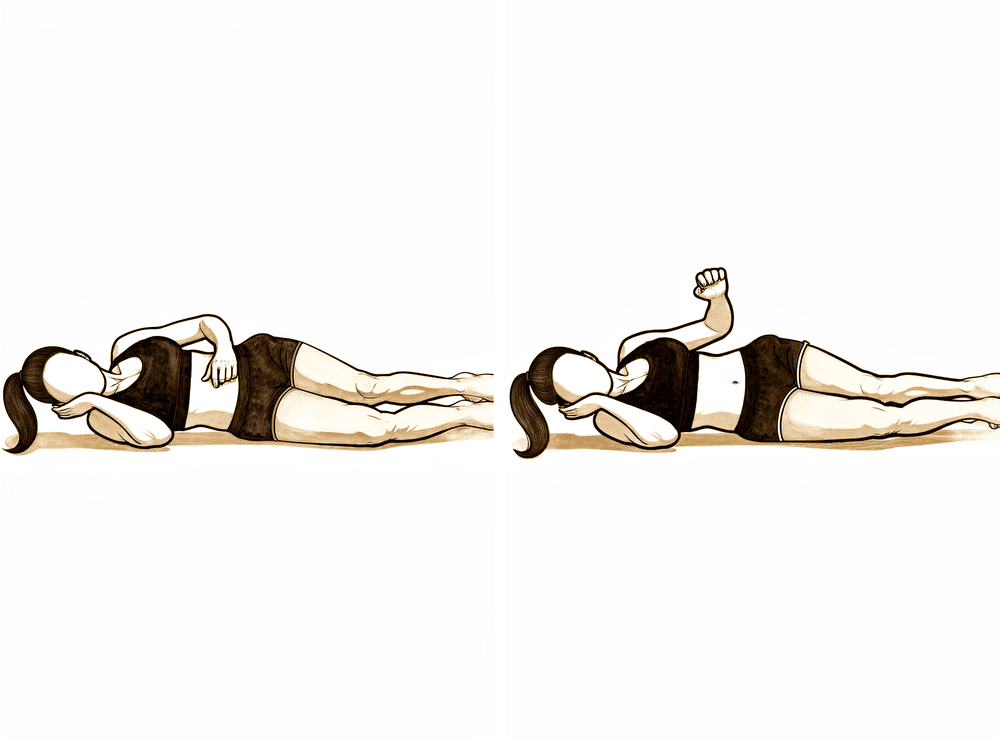
Tư thế nằm nghiêng với xoay ngoài
Nằm nghiêng về phía không phẫu thuật, cánh tay vừa phẫu thuật ở phía trên, khuỷu tay gập 90 độ và áp sát vào thân mình. Giữ khuỷu tay sát người, xoay cẳng tay lên, ra xa khỏi bụng đến mức còn thấy thoải mái, rồi hạ xuống một cách có kiểm soát. Không dùng thêm tạ — cánh tay tự chuyển động bằng sức của chính nó.
Theo hướng dẫn của chuyên viên vật lý trị liệu của bạn.
Kieran Hirpara 4.0
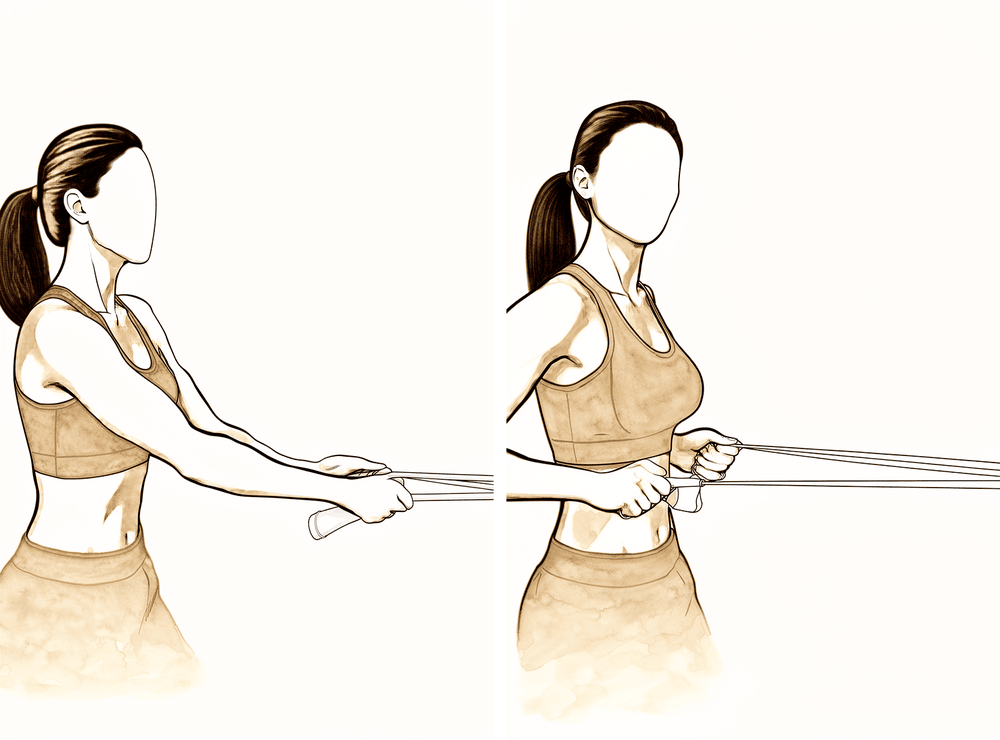
Bài tập kéo dây thấp với dây đàn hồi
Gắn dây đàn hồi ở phía trước người, ngang tầm eo. Đứng thẳng người, kéo dây về phía mình, đồng thời hạ nhẹ và kéo xương bả vai ra phía sau; sau đó thả dây ra một cách từ từ. Hãy giữ lực căng của dây ở mức nhẹ.
Theo hướng dẫn của chuyên viên vật lý trị liệu của bạn.
Kieran Hirpara 4.0
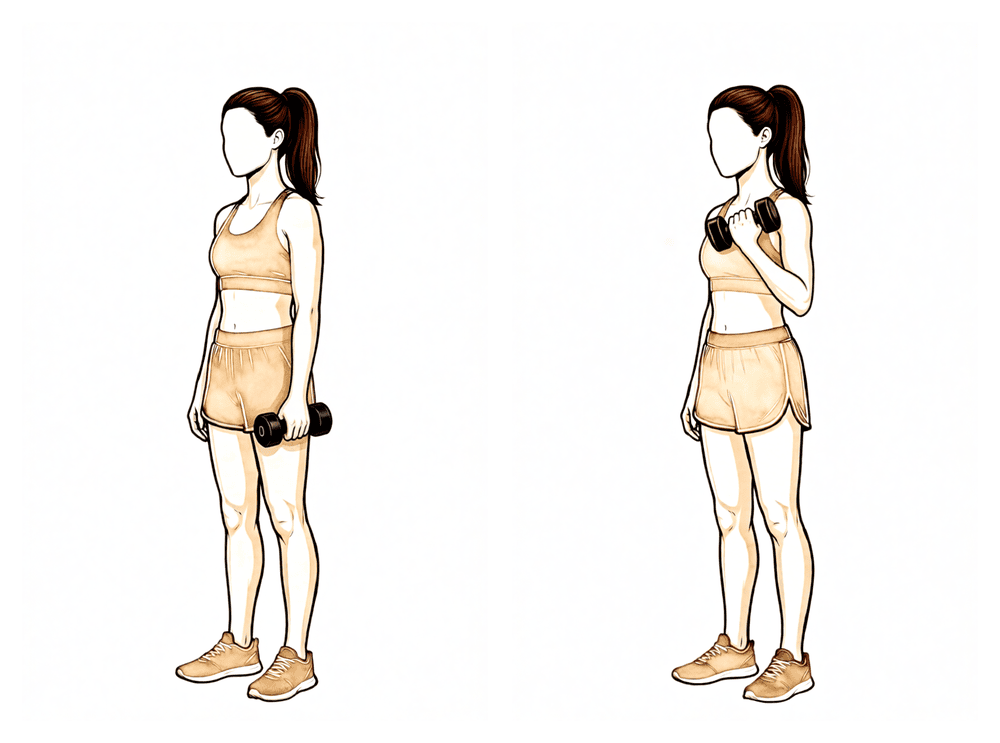
Cuốn tạ tay trước (cơ nhị đầu)
Cầm một quả tạ nhẹ, lòng bàn tay hướng lên, gập khuỷu tay để đưa tạ về phía vai, rồi từ từ hạ xuống. Giữ cánh tay trên yên sát bên hông và dùng tạ nhẹ — không quá khoảng 1–2 kg trong giai đoạn này.
Theo hướng dẫn của chuyên viên vật lý trị liệu của bạn.
Kieran Hirpara 4.0
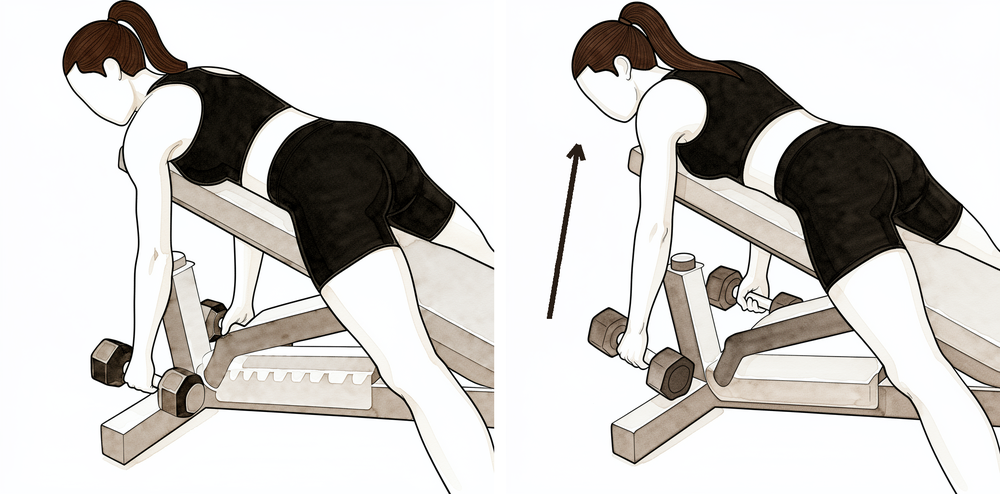
Kéo tạ có tì đỡ
Cúi người về phía trước, cánh tay lành tì lên bàn, để cánh tay vừa phẫu thuật buông xuống cầm một quả tạ nhẹ. Kéo xương bả vai ra sau và kéo tạ lên về phía hông, rồi hạ xuống một cách có kiểm soát. Giữ thân người vững — chuyển động đến từ xương bả vai và cánh tay, không phải từ lưng.
Theo hướng dẫn của chuyên viên vật lý trị liệu của bạn.
Kieran Hirpara 4.0
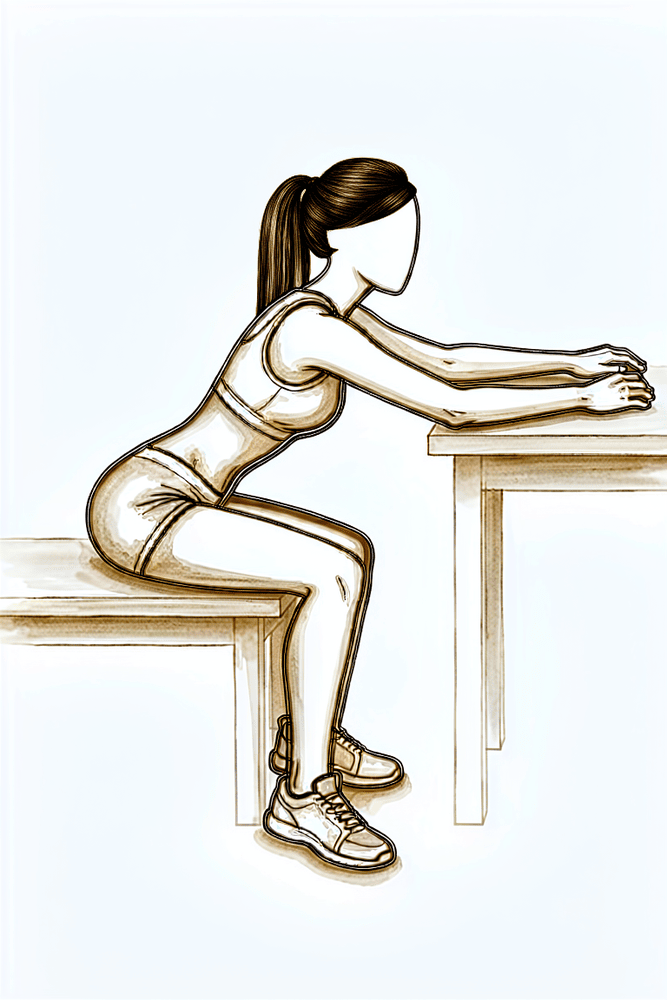
Trượt tay trên bàn
Ngồi cạnh bàn, đặt bàn tay lên một chiếc khăn hoặc miếng vải. Cúi người về phía trước và trượt bàn tay ra xa dọc mặt bàn, để cánh tay vươn xa hơn về phía trước, rồi trượt trở lại. Mặt bàn đỡ trọng lượng của cánh tay, vì vậy đây là cách nhẹ nhàng để lấy lại khả năng đưa tay ra trước.
Theo hướng dẫn của chuyên viên vật lý trị liệu của bạn.
Kieran Hirpara 4.0
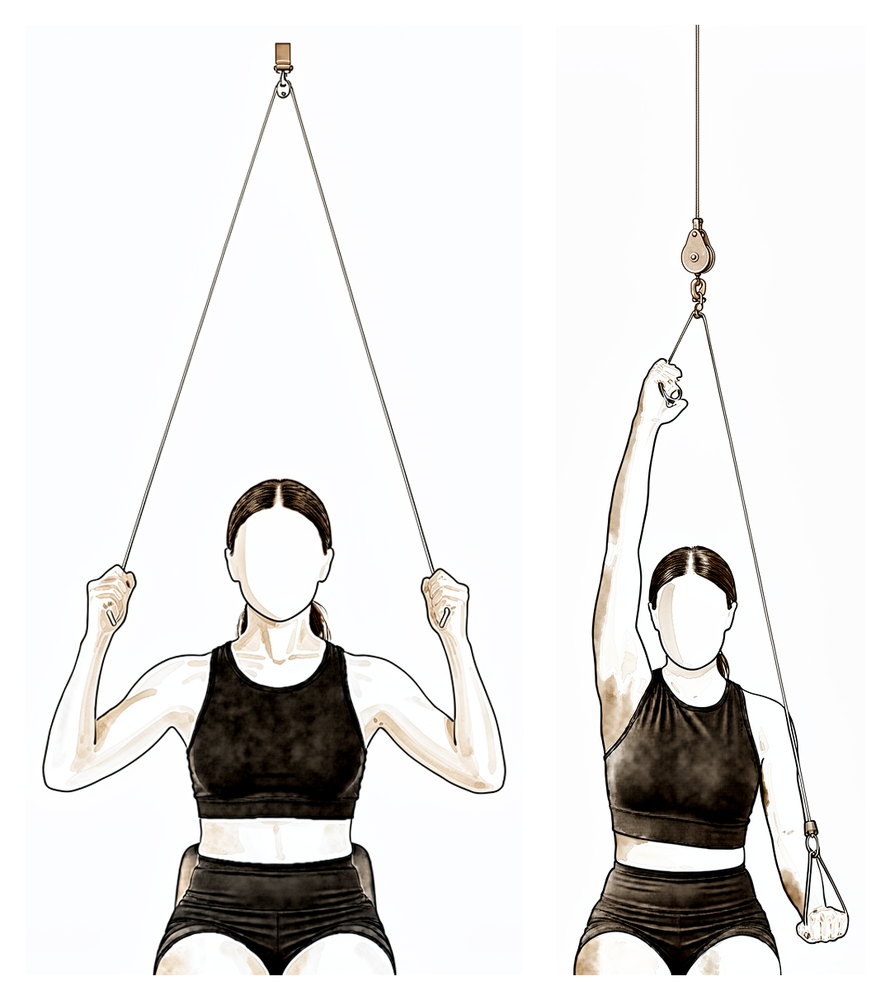
Ròng rọc treo cửa
Ngồi bên dưới một ròng rọc treo trên cửa, mỗi tay cầm một tay nắm. Dùng cánh tay lành kéo xuống để nâng cánh tay vừa phẫu thuật lên đến mức còn thấy thoải mái, rồi từ từ hạ xuống. Để cánh tay lành thực hiện động tác và giữ trong phạm vi thoải mái.
Theo hướng dẫn của chuyên viên vật lý trị liệu của bạn.
Kieran Hirpara 4.0
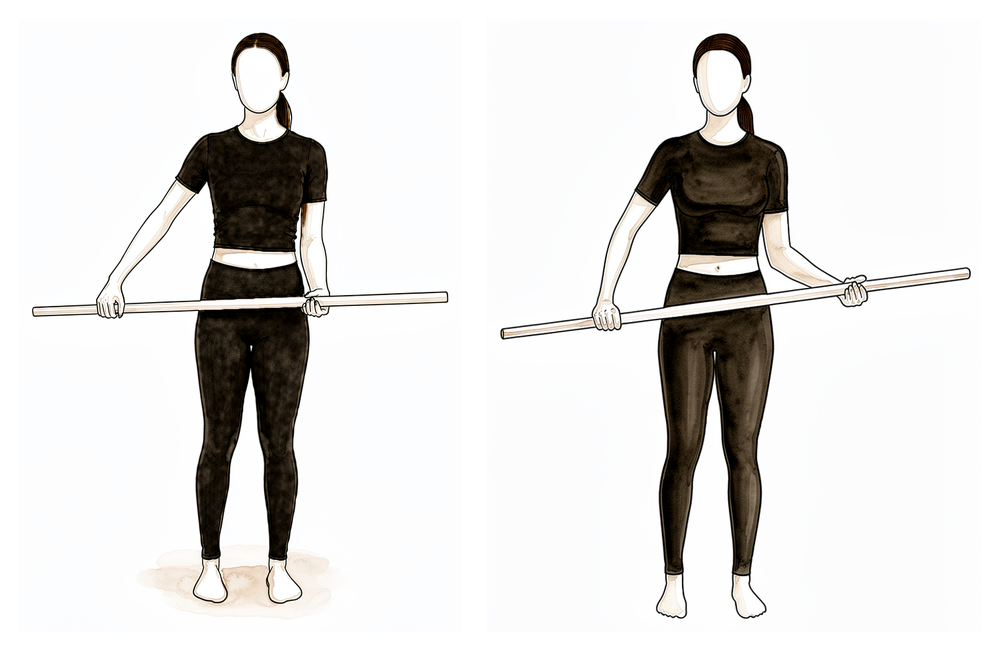
Hỗ trợ xoay ngoài cánh tay bằng cách dùng cây gậy
Nằm ngửa, khuỷu tay áp sát vào thân mình và gập thành góc vuông. Cầm một cây gậy bằng cả hai tay và dùng cánh tay lành xoay bàn tay vừa phẫu thuật ra ngoài. Khi đã xác nhận xương lành, hãy nhẹ nhàng tăng biên độ xoay ra ngoài thêm một chút — nhưng vẫn giữ trong phạm vi mà bác sĩ phẫu thuật và chuyên viên vật lý trị liệu đã đặt ra.
Theo hướng dẫn của chuyên viên vật lý trị liệu của bạn.
Kieran Hirpara 4.0
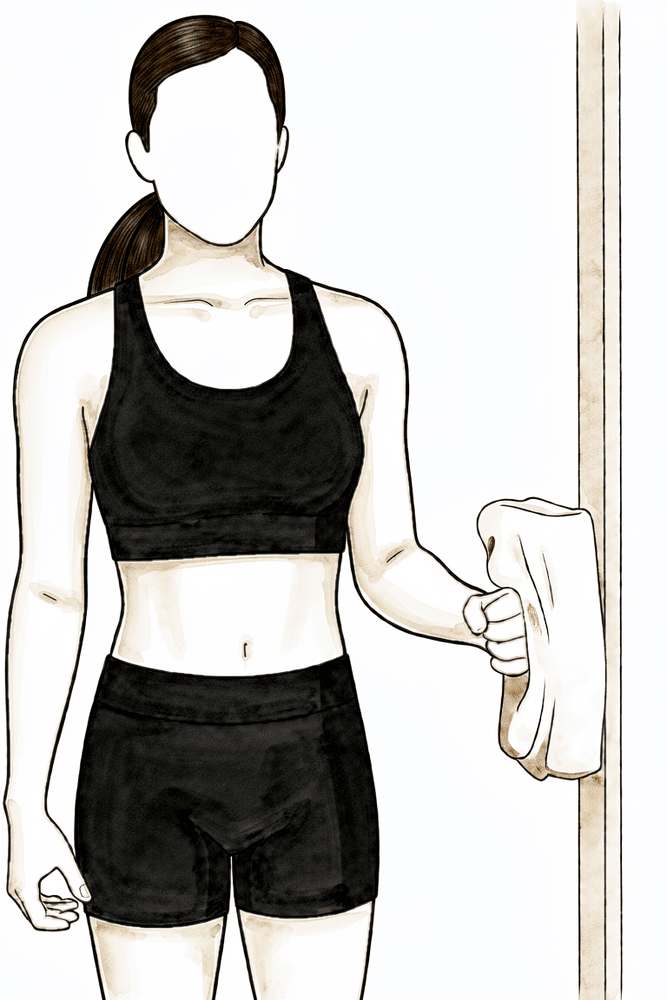
Xoay ngoài đẳng trường
Đứng thẳng, khuỷu tay áp sát vào hông và gập thành góc vuông; mu bàn tay chạm vào tường hoặc khung cửa. Nhẹ nhàng đẩy tay ra ngoài mà không để cánh tay di chuyển, giữ vài giây rồi thả lỏng. Bài tập này bắt đầu kích hoạt chóp xoay mà không cần cử động — chỉ bắt đầu khi bác sĩ Hirpara đã xác nhận xương của bạn đã lành.
Theo hướng dẫn của chuyên viên vật lý trị liệu của bạn.
Kieran Hirpara 4.0
Duỗi tay sau (cơ tam đầu)
Cầm một quả tạ nhẹ, gập rồi duỗi thẳng khuỷu tay để tập cơ ở mặt sau cánh tay trên. Giữ cánh tay trên vững và dùng tạ nhẹ — không quá khoảng 1–2 kg trong giai đoạn này.
Theo hướng dẫn của chuyên viên vật lý trị liệu của bạn.
Kieran Hirpara 4.0
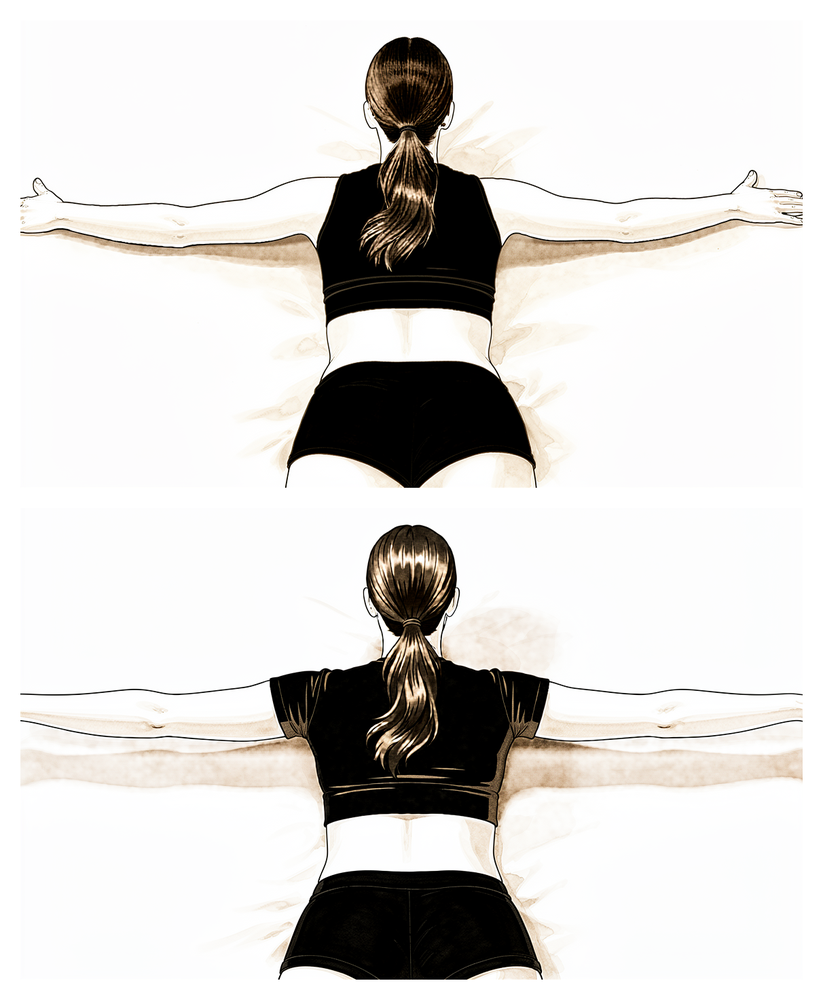
Kéo xương bả vai ở tư thế nằm sấp
Nằm sấp, cánh tay buông thõng qua mép giường hoặc ghế dài. Kéo xương bả vai ra sau và nâng cánh tay sang bên một chút, siết hai xương bả vai lại gần nhau, rồi hạ xuống một cách có kiểm soát. Bài tập này tăng cường các cơ giữ vững xương bả vai.
Theo hướng dẫn của chuyên viên vật lý trị liệu của bạn.
Tại cuộc tái khám vào khoảng sáu tuần, Bác sĩ Hirpara sẽ kiểm tra phim X-quang của bạn. Nếu quá trình lành thương diễn ra như mong đợi, việc sử dụng nẹp treo cánh tay còn lại sẽ được dừng lại và bạn bắt đầu vận động cánh tay bằng chính mình, trước tiên với sự hỗ trợ (sử dụng cánh tay lành, gậy hoặc ròng rọc), sau đó là vận động chủ động. Thông thường, việc bắt đầu nâng cánh tay chủ động khi nằm ngửa sẽ hiệu quả nhất, vì lúc đó trọng lực ít cản trở hơn, và sau đó tiến triển sang tư thế ngồi và đứng khi khả năng kiểm soát cải thiện. Các bài tập co cơ nhẹ nhàng (đẳng trương tĩnh) cho nhóm cơ xoay vai sẽ bắt đầu trong giai đoạn này một khi Bác sĩ Hirpara đã xác nhận quá trình lành thương; các bài tập chống kháng lực sẽ được thực hiện sau đó. Bạn có thể quay trở lại lái xe khi đã bỏ nẹp treo cánh tay, có đủ phạm vi vận động và khả năng kiểm soát cánh tay để lái xe an toàn, và không còn sử dụng các loại thuốc giảm đau mạnh; nếu không chắc chắn, hãy thảo luận vấn đề này tại cuộc tái khám.
Dành cho nhà vật lý trị liệu của bạn:
Mục tiêu
- Khôi phục phạm vi vận động thụ động toàn bộ
- Tiến triển từ phạm vi vận động chủ động hỗ trợ sang phạm vi vận động chủ động trong tất cả các mặt phẳng
- Tái thiết lập nhịp điệu xương bả vai - xương cánh tay bình thường và giảm thiểu các kiểu bù trừ
- Quay trở lại các hoạt động hàng ngày nhẹ nhàng bình thường
Quản lý điều trị
- Nẹp treo cánh tay được loại bỏ hoàn toàn vào buổi tái khám 6 tuần muộn nhất
- Phạm vi vận động chủ động hỗ trợ: tiến triển theo kiểu ghế bành, trượt trên bàn/tường, ròng rọc, bài tập với gậy, tiến triển vượt qua các giới hạn của Giai đoạn I khi cảm thấy thoải mái
- Phạm vi vận động chủ động từ khoảng 6–8 tuần: gập người nằm ngửa tiến triển sang nâng thẳng người; xoay ngoài và gập người nằm nghiêng bên; kéo nhẹ / đấm nhẹ
- Co cơ đẳng trương tĩnh dưới mức tối đa của nhóm cơ xoay vai và cơ delta từ khoảng 6–8 tuần, với cánh tay ở bên cạnh, một khi quá trình lành thương đã được xác nhận
- Bài tập đẳng trương nhẹ cho khuỷu tay (gập cơ nhị đầu, duỗi cơ tam đầu) và tăng cường cơ bả vai (kéo bả vai, kéo người nằm sấp)
- Nắn khớp xương cánh tay - xương bả vai và khớp bả vai - thành ngực khi có chỉ định, tiến triển độ khó cùng với quá trình lành thương
- Chỉnh sửa tư thế; tiếp tục chườm nóng/lạnh và dùng thuốc giảm đau xung quanh các buổi trị liệu theo sở thích
Các biện pháp phòng ngừa
- Không tăng cường sức mạnh nhóm cơ xoay vai bằng kháng lực (đẳng trương) cho đến khi liền xương được xác nhận, thường là không sớm hơn 8–12 tuần
- Không dùng lực ép mạnh ở cuối phạm vi vận động hoặc kéo thụ động quá mức
- Hạn chế nâng vật nặng khoảng 1–2 kg bằng cánh tay đã phẫu thuật
- Theo dõi và điều chỉnh các kiểu bù trừ như nhún vai và nghiêng thân mình khi nâng cánh tay
Tiêu chí để tiến triển
- Phạm vi vận động thụ động toàn bộ, hoặc gần như toàn bộ
- Nâng cánh tay chủ động với cơ học tốt, ít nhất là dưới chiều cao vai
- Co cơ đẳng trương tĩnh được dung nạp tốt mà không gây bùng phát cơn đau
- Quá trình liền xương đang tiến triển trên phim X-quang, như đã được xác nhận tại cuộc tái khám với Bác sĩ Hirpara
Giai đoạn III — Tăng cường sức mạnh (khoảng từ tháng 3 đến tháng 4½)
Kieran Hirpara 4.0
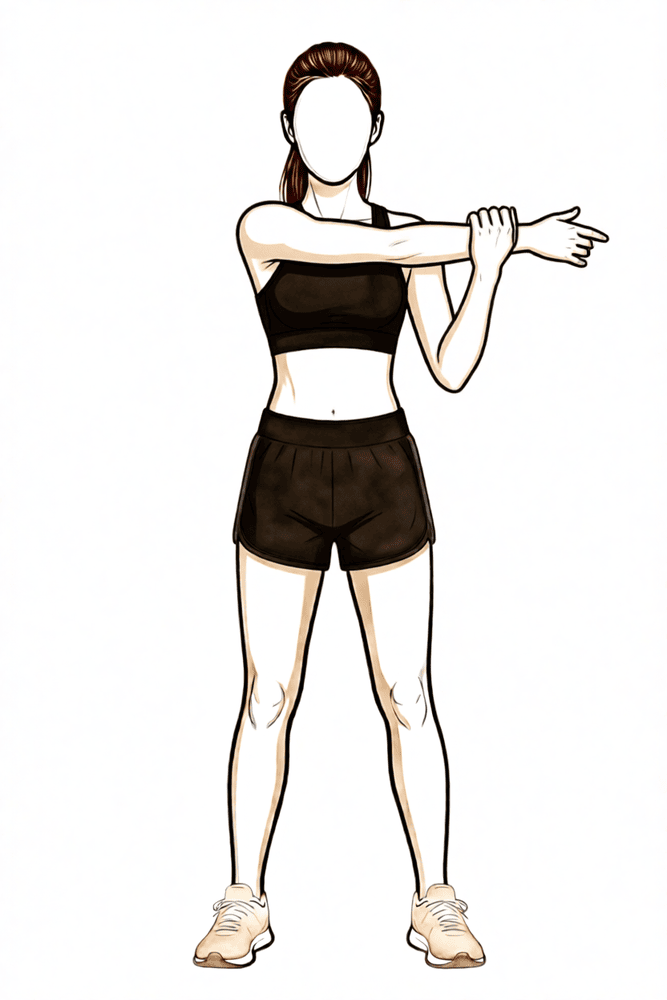
Bài tập kéo giãn chéo cơ thể
Hãy dùng tay còn lại kéo cánh tay vừa được phẫu thuật qua ngực cho đến khi bạn cảm nhận được sự căng giãn ở phía sau vai. Giữ nguyên tư thế trong chốc lát rồi thả ra. Chỉ nên kéo căng đến mức gây cảm giác khó chịu vừa phải; tuyệt đối không kéo đến mức gây đau dữ dội.
Theo hướng dẫn của chuyên viên vật lý trị liệu của bạn.
Kieran Hirpara 4.0
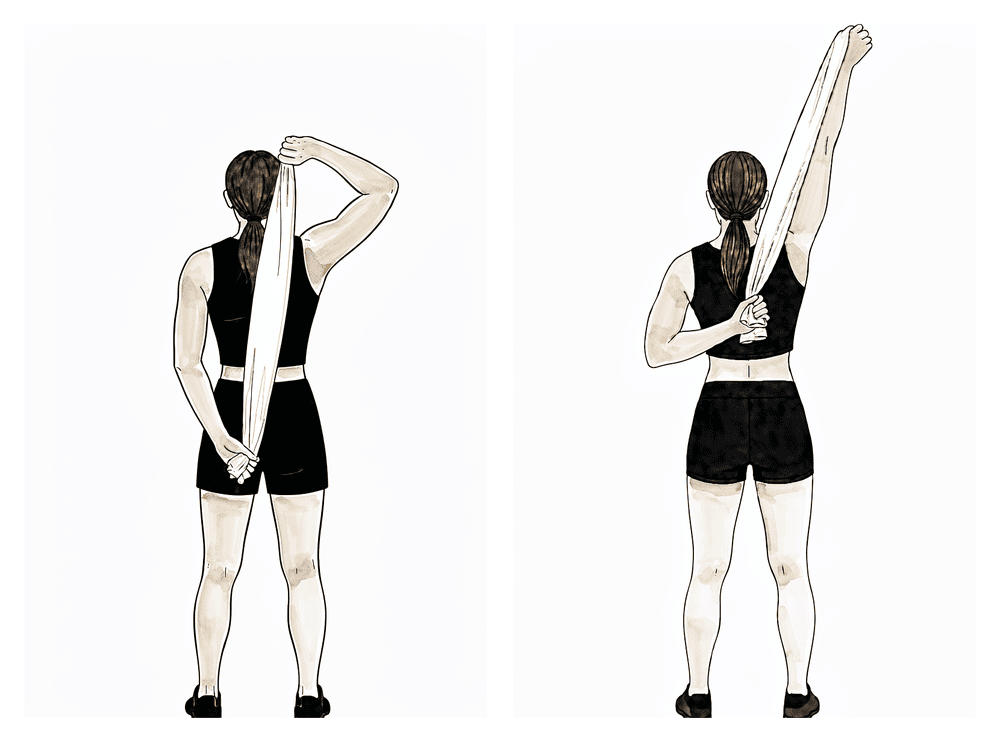
Kéo giãn sau lưng
Cầm một chiếc khăn sau lưng, cánh tay lành ở trên và cánh tay vừa phẫu thuật ở dưới. Dùng tay phía trên nhẹ nhàng kéo tay phía dưới lên dọc lưng cho đến khi cảm thấy căng giãn dễ chịu, giữ lại rồi thả ra. Tăng biên độ dần dần — không bao giờ ép động tác kéo giãn hoặc cố tập khi thấy đau nhói.
Theo hướng dẫn của chuyên viên vật lý trị liệu của bạn.
Kieran Hirpara 4.0
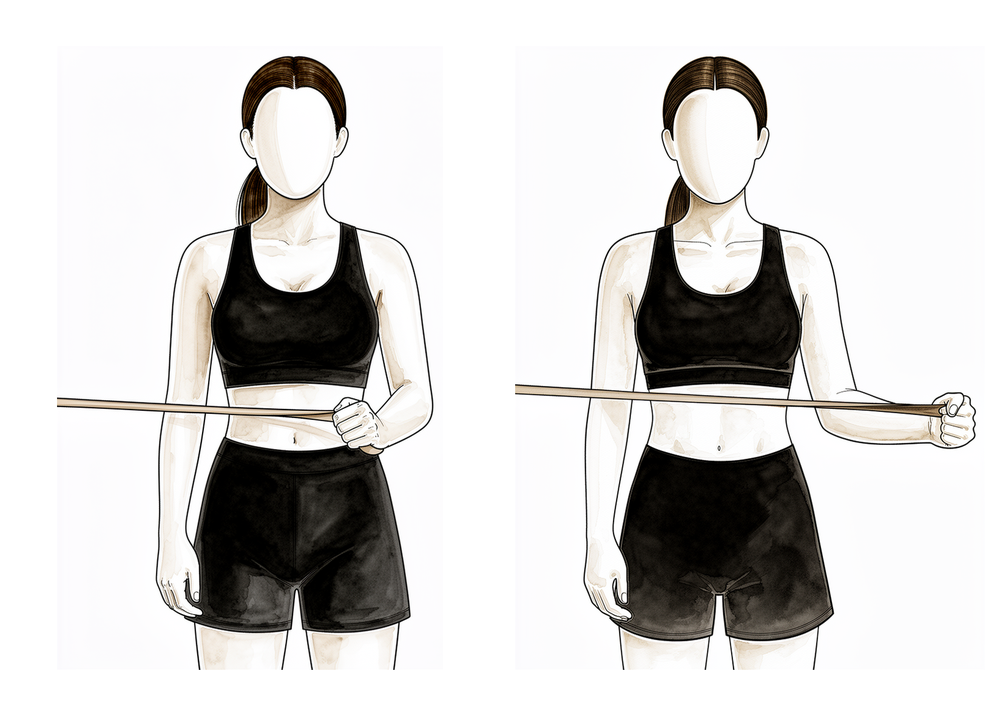
Xoay ngoài với dây đàn hồi
Đứng thẳng, khuỷu tay áp sát vào hông và gập thành góc vuông, cầm một dây thun được cố định ở độ cao ngang eo. Giữ khuỷu tay sát bên hông, xoay cẳng tay ra ngoài chống lại lực căng của dây thun, rồi từ từ đưa về. Bài tập này tăng cường chóp xoay với cánh tay ở bên hông, là điểm khởi đầu cho việc tăng cường sức mạnh xoay.
2 đến 3 hiệp, mỗi hiệp 8 đến 12 lần, lực cản thấp
Kieran Hirpara 4.0
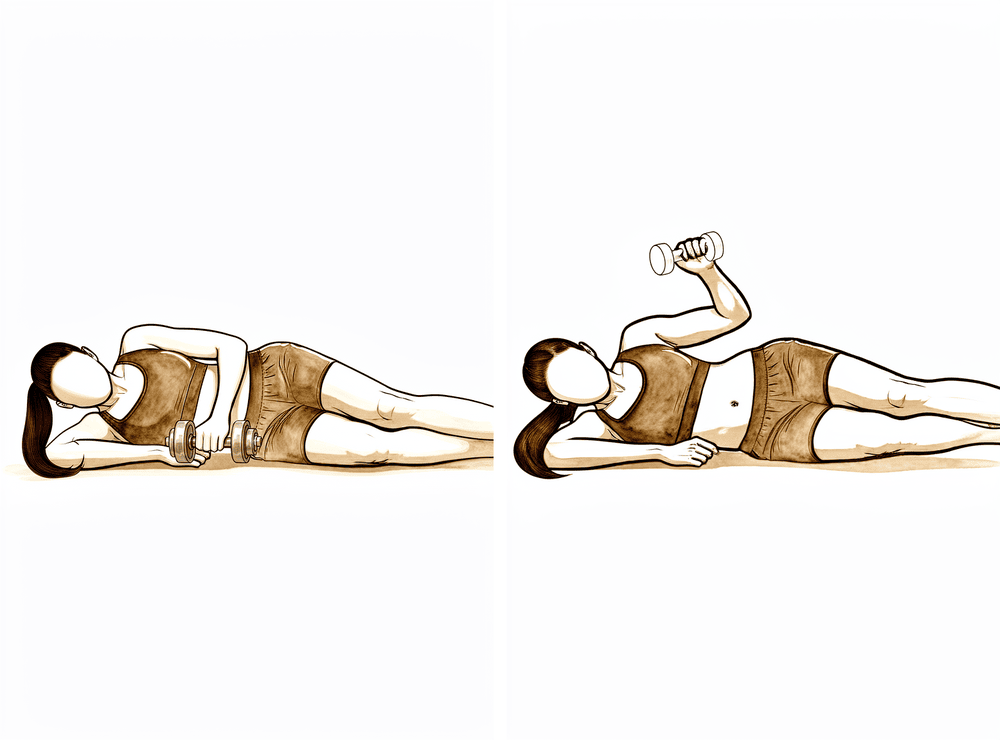
Tư thế nằm nghiêng, xoay ngoài cánh tay có tải trọng
Nằm nghiêng về phía không phẫu thuật, khuỷu tay phía trên gập thành góc vuông và áp sát vào thân mình. Cầm một quả tạ nhẹ, xoay cẳng tay hướng lên trần nhà rồi từ từ hạ xuống. Giữ tải nhẹ và số lần lặp nhiều hơn trong khi sức mạnh chóp xoay đang được phục hồi.
2 đến 3 hiệp, mỗi hiệp 8 đến 12 lần, tải nhẹ
Kieran Hirpara 4.0
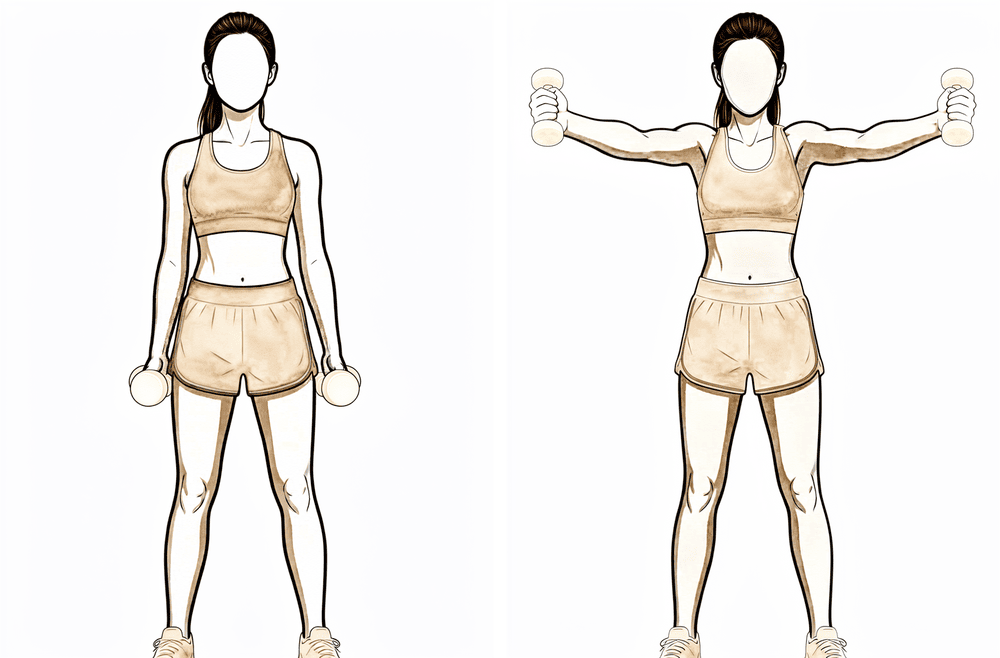
Nâng tay tư thế “lon đầy” (trong mặt phẳng xương bả vai)
Cầm một quả tạ nhẹ, ngón cái hướng lên, nâng cánh tay theo đường chéo ra trước và ra ngoài — không nâng thẳng sang bên — đến khoảng ngang vai, rồi từ từ hạ xuống. Bài tập này tập đồng thời phần trước của vai và chóp xoay. Dùng tạ nhẹ và dừng lại nếu động tác gây đau kéo dài.
2 đến 3 hiệp, mỗi hiệp 8 đến 12 lần, tải nhẹ
Kieran Hirpara 4.0
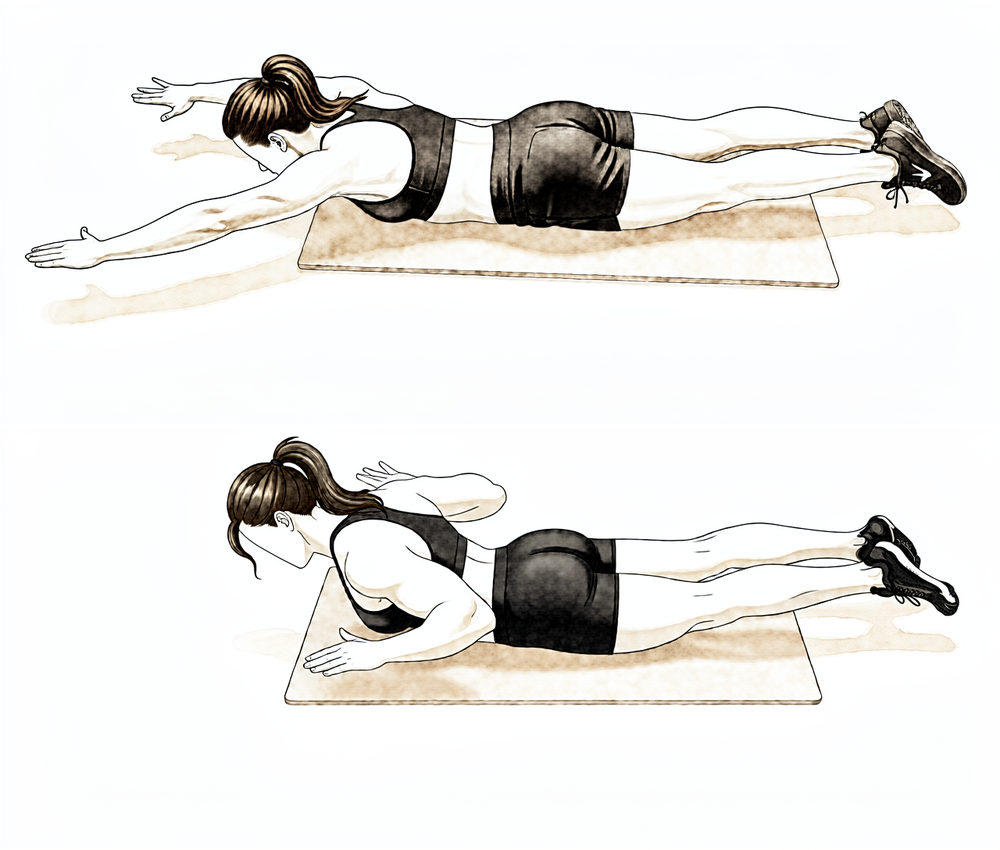
Bài tập kéo ngược khi nằm sấp
Nằm sấp, để cánh tay vừa phẫu thuật thõng xuống sát sàn nhà. Co khuỷu tay lên phía trần nhà, đồng thời siết bả vai lại gần cột sống, sau đó hạ tay xuống từ từ. Ban đầu không nên dùng tạ, và hãy thực hiện động tác một cách chậm rãi, kiểm soát được lực.
Theo hướng dẫn của chuyên viên vật lý trị liệu của bạn.
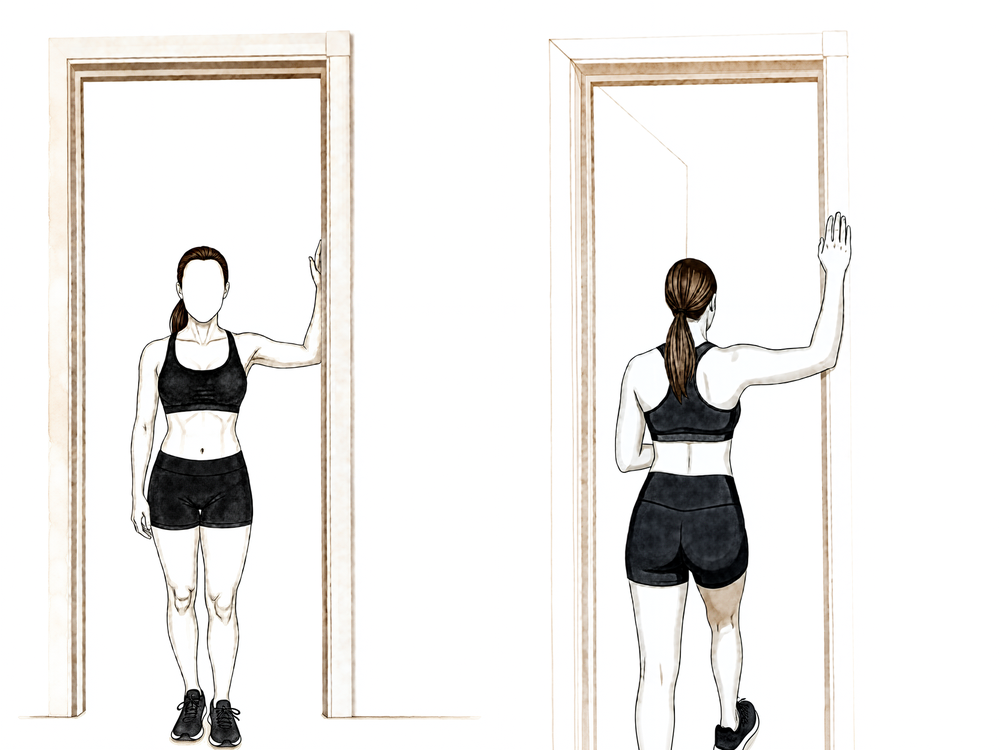
Kieran Hirpara 4.0
Kéo giãn ngực tại khung cửa
Đứng ở khung cửa, đặt cẳng tay lên khung, khuỷu tay ở khoảng ngang vai. Bước một chân qua khung cửa và nhẹ nhàng nghiêng người về phía trước cho đến khi cảm thấy căng giãn ở phía trước ngực, rồi giữ lại. Thực hiện nhẹ nhàng và không bao giờ cố ép.
Giữ khoảng 20–30 giây, theo hướng dẫn của chuyên viên vật lý trị liệu
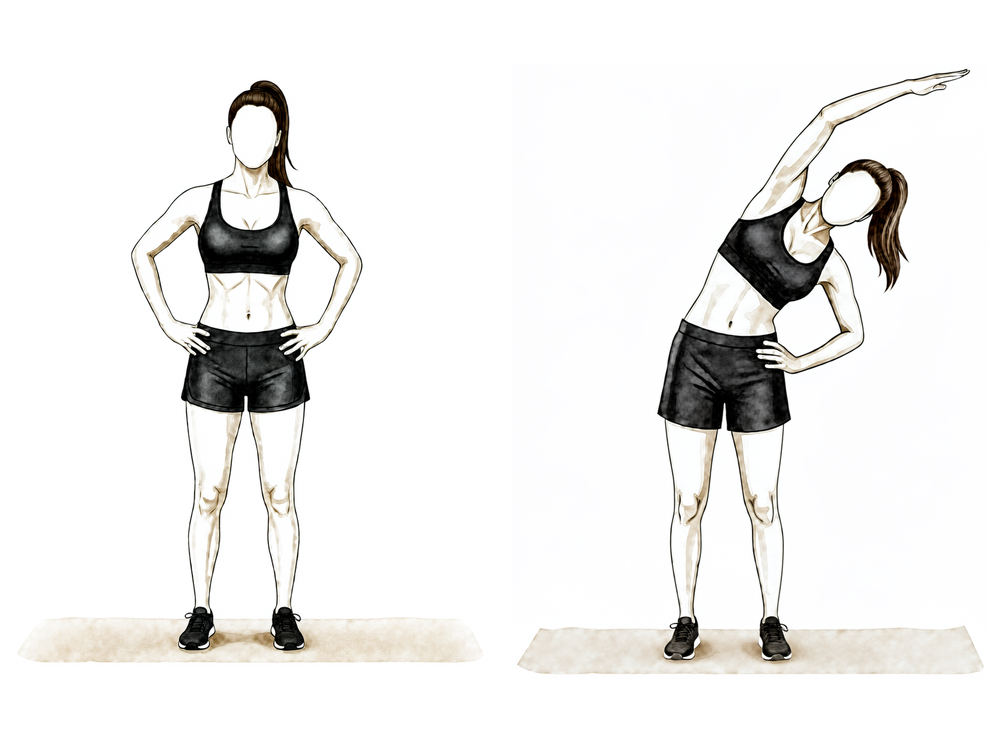
Kieran Hirpara 4.0
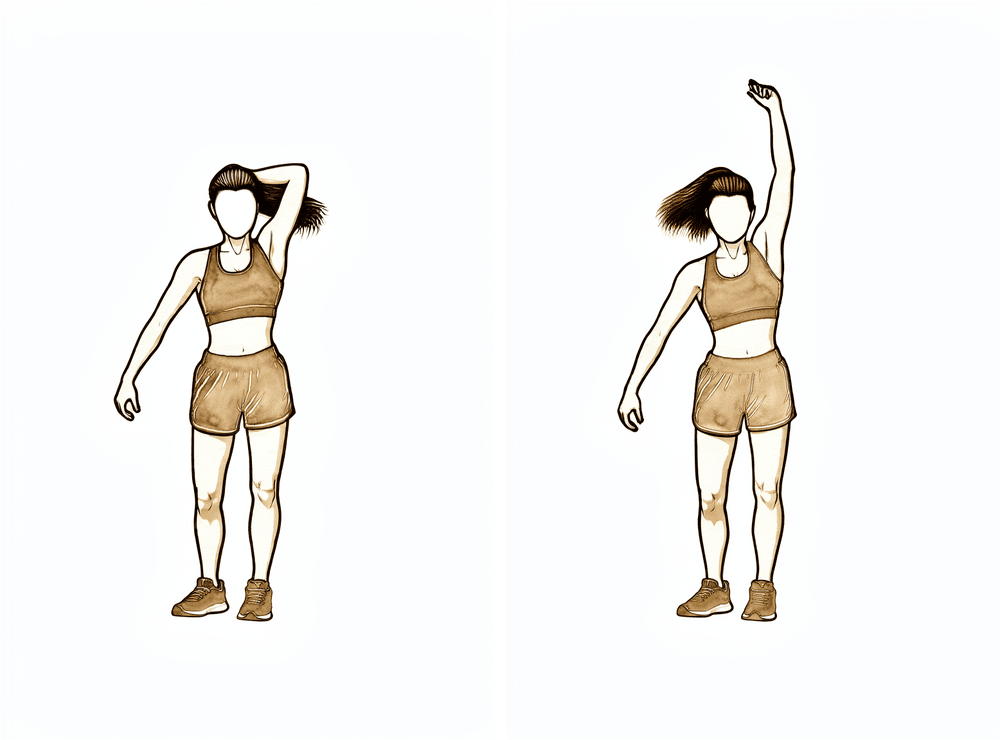
Kéo giãn cơ lưng rộng (bên hông lưng)
Vươn cánh tay vừa phẫu thuật lên qua đầu — dùng tay lành để dẫn nếu cần — và nhẹ nhàng nghiêng người sang bên đối diện cho đến khi cảm thấy căng giãn dọc bên hông lưng, rồi giữ lại. Thực hiện trong giới hạn thoải mái và trong biên độ của bạn.
Giữ khoảng 20–30 giây, theo hướng dẫn của chuyên viên vật lý trị liệu
Khi xương đã liền và tầm vận động chủ động của bạn đang phục hồi, trọng tâm chuyển sang việc xây dựng lại sức mạnh. Các bài tập kháng lực bắt đầu nhẹ nhàng (sử dụng dây thun kháng lực và tạ nhẹ cho nhóm cơ quay, cơ delta và cơ bả vai) và được tăng dần. Các bài kéo giãn tiếp tục được thực hiện song song, hướng tới việc đạt được tầm vận động đầy đủ theo mọi hướng, bao gồm cả việc với tay ra sau lưng. Các hoạt động sinh hoạt hàng ngày bình thường nên phần lớn trở lại như cũ trong giai đoạn này, và các hoạt động giải trí nhẹ nhàng thường được tái khởi động, theo hướng dẫn của nhà vật lý trị liệu của bạn.
Dành cho nhà vật lý trị liệu của bạn:
Mục tiêu
- Đạt được tầm vận động chủ động đầy đủ ở mọi mặt phẳng với cơ học bình thường
- Tái lập dần sức mạnh và sức bền của nhóm cơ quay, cơ delta và cơ bả vai
Quản lý điều trị
- Tiến triển từ bài tập đẳng trương sang sử dụng dây thun kháng lực và sau đó là tạ tự do nhẹ (khoảng 0,5–2 kg) để tăng cường sức mạnh cho nhóm cơ quay, cơ delta và các cơ ổn định bả vai: tải trọng thấp, số lần lặp lại cao (ví dụ: 2–3 hiệp, mỗi hiệp 8–12 lần), các buổi tập kháng lực khoảng 3 lần mỗi tuần để tránh quá tải
- Tăng cường sức mạnh xoay ban đầu với cánh tay ở bên hông, dưới mức chiều cao vai
- Nhấn mạnh vào cơ delta trước và cặp lực lượng giữa cơ thang và cơ răng trước để tạo nền tảng bả vai ổn định
- Chương trình tăng tính linh hoạt cho tầm vận động cuối cùng ở mọi mặt phẳng: kéo giãn bao khớp sau (kéo ngang qua người), xoay trong ra sau lưng, kéo giãn thành ngực trước / cơ ngực nhỏ, kéo giãn qua khung cửa
- Bắt đầu xoay trong ra sau lưng và các kỹ thuật nắn khớp loại III–IV khi tầm vận động cho phép
- Máy đạp xe tay (upper-body ergometer) với lực cản thấp; rèn luyện thể lực aerobic tổng quát
Các biện pháp phòng ngừa
- Việc tăng cường sức mạnh chỉ nằm trong phạm vi thoải mái và không nên gây ra cơn đau kéo dài
- Không nâng vật nặng hơn khoảng 4–5 kg bằng cánh tay đã phẫu thuật trong giai đoạn này
- Tránh chịu tải trọng quá mức qua cánh tay (các bài chống đẩy và tương tự sẽ thực hiện sau)
Tiêu chí để chuyển giai đoạn
- Đạt được tầm vận động chủ động đầy đủ mà không có các chiến lược bù trừ
- Chương trình tăng cường sức mạnh được dung nạp tốt mà không gây bùng phát cơn đau hoặc mất tầm vận động
Giai đoạn IV — Trở lại hoạt động bình thường (từ khoảng 4½–6 tháng)
Giai đoạn cuối cùng là quá trình tăng dần việc quay trở lại với các hoạt động nâng vật nặng, lao động chân tay, làm việc trên cao và thể thao. Công tác tăng cường sức mạnh tiến triển đến mức kháng cự nặng hơn và các bài tập đa khớp, và, nếu phù hợp với công việc hoặc môn thể thao của bạn, đến các bài tập nhanh hơn, mang tính động lực học cao hơn. Hầu hết mọi người đều trở lại các hoạt động thường nhật của mình vào khoảng sáu tháng, mặc dù sức mạnh và sự tự tin thường tiếp tục cải thiện trong vòng lên đến một năm. Đường đích phù thuộc vào những gì bạn cần cánh tay thực hiện, do đó việc quay trở lại lao động chân tay nặng, thể thao tiếp xúc và thể thao trên cao được thống nhất với Bác sĩ Hirpara và nhà vật lý trị liệu của bạn thay vì được xác định bởi lịch trình.
Dành cho nhà vật lý trị liệu của bạn:
Mục tiêu
- Trở lại hoàn toàn với công việc, hoạt động giải trí và thể thao
- Sức mạnh của cánh tay đã phẫu thuật tiến gần đến mức của bên còn lại
Quản lý
- Tăng kháng cự dần dần thông qua dây kháng lực, tạ tự do và các bài tập đa khớp tại phòng gym
- Tiến triển bài chống đẩy (tường → ghế → đầu gối → đầy đủ) và các bài tập ổn định chuỗi kín khi dung nạp được
- Từ khoảng 4½ tháng: tải trọng ly tâm, plyometrics (tập với bóng có trọng lượng), các bài tập cảm giác sâu và ổn định nhịp điệu nếu phù hợp
- Xoay kháng cự ở tư thế nâng 90°, và các chương trình tập đặc thù cho môn thể thao hoặc nghề nghiệp theo khoảng thời gian khi thích hợp
Cẩn trọng
- Tiến triển dựa trên triệu chứng: nếu đau hoặc mất tầm vận động tái phát, hãy giảm nhẹ và khôi phục chuyển động thoải mái trước
Tiêu chuẩn xuất viện
- Sức mạnh của cánh tay đã phẫu thuật đạt ít nhất khoảng 80% so với bên còn lại khi đo lường
- Không đau khi tăng cường sức mạnh dần dần
- Tự chủ với chương trình tập tại nhà để duy trì
Sau giao thức của bạn
Các giai đoạn trên được điều chỉnh từ các giao thức phục hồi chức năng được công bố cho việc cố định gãy xương cánh tay trên: Massachusetts General Brigham Sports Medicine, Twin Cities Orthopedics, Viện Cơ xương khớp UConn, Trung tâm Chỉnh hình NYU Langone và South Bend Orthopaedics, cùng với một đánh giá hệ thống về phục hồi chức năng sau gãy xương cánh tay trên. Các giao thức được công bố cho phẫu thuật này thay đổi nhiều hơn so với hầu hết các phẫu thuật vai, vì tốc độ phù hợp phụ thuộc vào cách thức cố định từng loại gãy xương cụ thể và quá trình lành xương; do đó, sự tiến triển của bạn qua các giai đoạn sẽ do Bác sĩ Hirpara chỉ đạo tại các buổi tái khám và được điều chỉnh bởi nhà vật lý trị liệu của bạn giữa các buổi đó. Trang này hoạt động song song với lời khuyên chung về phục hồi của phòng khám; xem quản lý đau sau phẫu thuật và chăm sóc vết thương. Đối với chính phẫu thuật, xem cố định xương cánh tay trên.
Nếu bạn muốn đọc bằng chứng đằng sau giao thức này (nghiên cứu về vận động sớm so với vận động muộn sau cố định bằng tấm, tranh luận giữa phẫu thuật và nạng, và các biến chứng mà sự tiến triển theo giai đoạn được thiết kế để tránh), một bản tóm tắt bằng chứng được tham chiếu đầy đủ có sẵn dưới dạng PDF cùng với trang này.
Evidence & references
This is the clinical evidence summary written for health professionals. It is technical, and it lists the research this page was built from. You do not need to read it to understand your treatment or to make a decision about it.
Proximal Humerus Fracture Fixation (Locking-Plate ORIF) — Post-operative Rehabilitation: Evidence
Topic scope: Post-operative rehabilitation after open reduction and internal fixation (ORIF) of a proximal humerus fracture with a locking (angular-stable) plate and screws. This page covers the evidence behind the phased rehabilitation program — early protected/passive motion, deferred active and resisted motion, and graded strengthening — and the surgical-outcome facts that shape it. It does not cover the separate pathways of non-operative fracture management, intramedullary nailing, hemiarthroplasty or reverse total shoulder arthroplasty, although the operative-versus-non-operative debate is summarised because it frames who is offered this operation at all.
Defining principle of the rehab here (mobilise early, protect the tuberosities): A locking plate is an angular-stable construct — the screws lock into the plate, so the fixation holds even in osteoporotic bone without relying on bone-to-screw friction. Because that stability is present from day one, this protocol now permits early active (and active-assisted) shoulder elevation in a pain-free range for stable fixation, consistent with the early-active-motion RCT evidence (Loew 2025), rather than holding the shoulder passive-only for six weeks. The element still keyed to biological healing is rotation and rotator-cuff loading: where the tuberosity fragments to which the rotator cuff attaches are part of the fracture, active/resisted rotation and cuff work are held back until those fragments unite, whereas where the tuberosities are uninvolved or solidly fixed the surgeon may clear cuff loading sooner. The brake is therefore biological, not mechanical — the plate is strong immediately — and it is now selective (rotation/cuff), not a blanket movement ban. Progression of cuff loading remains governed by fracture stability and radiographic healing, not the calendar. This places the protocol close to the early-active-movement end of the spectrum while still being more tuberosity-aware than a pure debridement/decompression, and far less tuberosity-dependent than a fracture arthroplasty, where healing of the tuberosities to the prosthesis dictates a slower, stricter cuff-loading timetable.
The operation
A proximal humerus fracture is a break of the upper end of the arm bone, near the shoulder. In ORIF the fragments are realigned (reduced) and held with a pre-contoured locking plate on the outer surface of the bone, fixed with multiple locking screws into the humeral head. Where the tuberosities (the bony knobs carrying the rotator-cuff attachments) are part of the fracture, they are reduced and secured to the plate, often reinforced with heavy sutures through the cuff. The plate provides immediate mechanical stability; the rehabilitation then protects the biological healing of the fracture and the tuberosity fragments.
Evidence by theme
1. Modern locking plates permit early active motion — supported by RCT evidence and adopted here for stable fixation
The historical "restrictive" protocol kept the arm immobilised with no active movement for ~6 weeks, with passive limits of flexion to ~90°, external rotation to ~20° and internal rotation to the belly. The rationale for early motion is to prevent the shoulder stiffening (adhesive capsulitis is a recognised complication of these fractures) while still protecting the bone. Because an angular-stable locking plate is mechanically strong from day one, early active elevation can be permitted for stable fixation; the element kept keyed to biological healing is rotation and rotator-cuff loading, because that is what pulls on the tuberosity fragments.
The more aggressive question — can patients move actively from the start? — has now been tested. A prospective randomised controlled trial (Loew et al., J Orthop, 2025) compared a conventional 4-week sling-immobilisation group against an early functional group with no movement or force restrictions after locking-plate ORIF (both groups avoided heavy lifting and impact for 3 months). At 24 months there was no significant difference in DASH or Constant score: Constant score averaged 81.3 (conventional) vs 78.4 (early functional), with relative Constant score 89.8% of the uninjured side in both groups — i.e. early active motion was non-inferior. Moderate (single RCT). This is consistent with the broader signal that early intensive mobilisation yields similar outcomes to conventional later mobilisation after operative treatment. In line with this evidence, Dr Hirpara's protocol now permits early active elevation in a pain-free range for stable fixation; the literature still has no consensus on the optimal regimen, so the one element kept deliberately cautious and keyed to radiographic healing is active/resisted rotation and rotator-cuff loading, because that is the movement that stresses the healing tuberosity fragments.
2. Post-operative protocols are highly heterogeneous, but converge on short immobilisation and early passive ROM
The best summary of practice is a systematic review of 45 cohorts (40 articles, 3,507 patients, 3,519 fractures) (Budharaju et al., Shoulder Elbow, 2024). Across studies:
- Sling immobilisation averaged 3.1 weeks (most commonly 3 weeks; range 0–6).
- Passive ROM began at ~0.9 weeks on average (most commonly at 2 days).
- Active ROM began at ~2.5 weeks on average (most commonly at 3 weeks).
- Strengthening began at ~5.5 weeks on average (most commonly at 6 weeks).
The authors emphasised substantial variability regardless of management, concluded that this heterogeneity limits cross-study comparison, and noted that early mobilisation may produce superior function — supporting consideration of shorter immobilisation. The synthesis page's "~3 weeks in the sling, then wean" reflects this averaged convention, not a trial-proven optimum. Moderate for the descriptive pattern; weak/consensus for any specific timetable.
3. Progression is governed by fracture stability and healing, not the calendar — because of the tuberosities and biological complications
The locking plate is strong immediately; what limits the rehab is the bone. Two facts anchor the "wait-for-healing" rule:
- Tuberosity / cuff loading. When the tuberosities are part of the fracture, loading the rotator cuff (forced/resisted external rotation and resisted cuff work) too early risks displacing fragments before they unite. This is the explicit reason the early phases keep rotation cautious and defer cuff loading until healing, even though early active elevation in a pain-free range is permitted; where the tuberosities are uninvolved or solidly fixed, the surgeon may clear cuff loading sooner.
- The major complications of locking-plate ORIF are largely biological and mechanical, and several are loading- and reduction-sensitive. A systematic review (Thanasas / Brorson-class series) reports the commonest complications as intra-articular screw perforation (~9–12%), varus collapse (~6.8%), loss of reduction, avascular necrosis of the humeral head (~4.6%, reported range 0–15%), subacromial impingement (~5%), adhesive capsulitis (~4%), nonunion (~1.5%) and deep infection (~1.4%). Screw perforation and avascular necrosis frequently coincide, because a head that collapses or undergoes AVN lets fixed-length locked screws migrate into the joint. Moderate (pooled observational series).
This complication profile is why progression waits on radiographs: premature loading risks tipping a borderline reduction into varus collapse or screw cut-out. Some surgeons even advocate early planned plate removal to avoid secondary screw penetration once the head shows AVN/collapse (Dimitriou et al., J Orthop, 2019) — a salvage strategy, not part of routine rehab, but it illustrates how mechanical and biological failure interact.
4. Who is offered ORIF at all — the operative-versus-non-operative debate (PROFHER and after)
The single most influential trial is PROFHER (Rangan et al., JAMA, 2015; 250 patients, 32 UK centres, displaced fractures involving the surgical neck): surgery showed no important difference in Oxford Shoulder Score versus sling-based non-operative care over 2 years, and was more expensive. The 5-year follow-up (Handoll/Keding et al., Bone Joint J, 2017) confirmed no significant difference in shoulder function or quality of life persisting to 5 years. A smaller RCT in displaced 3-part fractures in the elderly (Fjalestad et al., J Shoulder Elbow Surg, 2012) similarly found no functional advantage to internal fixation over non-operative care in that group, and a systematic review and meta-analysis (Beks et al., J Shoulder Elbow Surg, 2018) found no clear superiority of operative treatment across observational and randomised data combined. Strong (multiple RCTs + SR-MA).
The clinical upshot — and the reason this matters to a rehab page — is that ORIF is selectively indicated, typically in younger patients, in fractures where reduction and stable fixation are achievable and worthwhile, and where the alternative (non-operative care or arthroplasty) is judged less favourable. The decision is individualised; "difficulty in decision-making" for displaced fractures is itself documented as affecting outcomes (Okike et al., J Shoulder Elbow Surg, 2018). Patients should understand that being offered ORIF is a considered judgement, not an automatic consequence of the fracture.
5. Adjacent rehabilitation evidence (non-operative immobilisation duration)
Although it concerns non-operatively treated fractures, a relevant randomised controlled trial (Tanji et al., J Bone Joint Surg Am, 2021) compared 1 versus 3 weeks of immobilisation and supports the broad theme that earlier movement is at least as good as longer immobilisation for many proximal humerus fractures. It does not directly govern the post-ORIF protocol but reinforces the same direction-of-travel away from prolonged slings. Moderate (RCT, non-operative population).
Phased post-operative timeline (consistent with the synthesis page)
| Phase | Window | Sling | Shoulder motion | Strengthening | Governing rule |
|---|---|---|---|---|---|
| I — Protection & early passive motion | Weeks 0–6 | Full-time ~3 weeks, then weaned; off for exercises/hygiene; not in bed | Early active-assisted/active elevation permitted in a pain-free range from the outset (supine-start → upright); passive as needed; pendulums; elbow/wrist/hand active. ER kept to a gentle ~30–40° default; rotation cautious — defer active/resisted cuff work until tuberosities heal (surgeon-guided) | None at the shoulder (deltoid/periscapular isometrics as comfort allows) | Protect fixation + tuberosities; settle pain/swelling |
| II — Regaining active movement | Weeks 6–12 | Discarded by the 6-week review at the latest | Active-assisted → active in all planes (supine-start elevation); submaximal cuff/deltoid isometrics once healing confirmed | Light elbow/scapular work; no resisted cuff work until union (typically not before 8–12 weeks) | Radiographic healing at the ~6-week review gates active motion |
| III — Strengthening | ~Months 3–4½ | Off | Full active ROM in all planes, including behind-the-back | Graded bands → light free weights (~0.5–2 kg) for cuff, deltoid, scapula | Union confirmed; symptom-guided load progression |
| IV — Return to full activity | ~4½–6 months | Off | Full, with dynamic/overhead drills as relevant | Heavier resistance, compound + sport/work-specific | Return-to-task agreed with surgeon/physio, not the calendar |
The phase boundaries are individualised at Dr Hirpara's reviews on the basis of X-ray healing — this is the operative consequence of the "stability- and healing-governed, not calendar-governed" principle.
Key controversies / evidence quality
-
Early active versus delayed (protected) mobilisation after ORIF. A single RCT (Loew 2025) found unrestricted early active motion non-inferior to 4-week immobilisation at 24 months, and the broader literature leans toward shorter immobilisation. The protocol here aligns with that early-active-motion evidence: early active and active-assisted elevation in a pain-free range is permitted for stable fixation, rather than holding the shoulder passive-only for six weeks. Because there is still no consensus and no large confirmatory trial (protocols remain heterogeneous — Budharaju 2024), the protocol keeps one deliberate, evidence-aware caution: active/resisted rotation and cuff loading is keyed to radiographic tuberosity healing rather than released wholesale on day one. Moderate evidence, unsettled.
-
Operative versus non-operative treatment of displaced fractures. PROFHER (2015) and its 5-year follow-up (2017), plus an elderly-3-part RCT (Fjalestad 2012) and a meta-analysis (Beks 2018), found no clear functional benefit of surgery on average — which is why ORIF is selectively, not routinely, offered. The trials enrolled broad/older populations; the subgroup most likely to benefit from fixation (younger patients, good bone, reconstructable head-preserving fractures) is exactly where this operation is concentrated. Strong evidence overall; subgroup benefit remains debated.
-
The post-operative rehab protocol itself is consensus/expert. No high-level RCT defines the optimal phase structure, ROM limits or strengthening onset after ORIF. The timings here are drawn from published surgeon protocols and the systematic-review averages, individualised at review. Weak/consensus.
Evidence-strength flags (summary)
- STRONG (RCT / SR-MA): operative versus non-operative equivalence on average for displaced fractures (PROFHER 2-yr JAMA 2015 + 5-yr Bone Joint J 2017; Fjalestad 2012 RCT; Beks 2018 SR-MA).
- MODERATE (single RCT / pooled series): early active motion non-inferior to immobilisation after ORIF at 24 months (Loew 2025 RCT); 1-vs-3-week immobilisation non-operatively (Tanji 2021 RCT); locking-plate complication profile — screw perforation, varus collapse, AVN, etc. (pooled observational series); descriptive practice pattern of short sling + early passive ROM (Budharaju 2024 SR of 45 cohorts).
- WEAK / CONSENSUS: the specific phased rehabilitation timetable after ORIF (no defining rehab RCT; published surgeon protocols + systematic-review averages; progression individualised by radiographic healing).
Citations
RAG corpus (180,000+ Orthopaedic articles) — real DOIs
- Five-year follow-up results of the PROFHER trial comparing operative and non-operative treatment of adults with a displaced fracture of the proximal humerus. Bone Joint J. 2017. DOI: 10.1302/0301-620x.99b3.bjj-2016-1028
- Operative versus nonoperative treatment of proximal humeral fractures: a systematic review, meta-analysis, and comparison of observational studies and randomized controlled trials. J Shoulder Elbow Surg. 2018. DOI: 10.1016/j.jse.2018.03.009
- Internal fixation versus nonoperative treatment of displaced 3-part proximal humeral fractures in elderly patients: a randomized controlled trial. J Shoulder Elbow Surg. 2012. DOI: 10.1016/j.jse.2010.12.018
- One Versus 3-Week Immobilization Period for Nonoperatively Treated Proximal Humeral Fractures: a randomized controlled trial. J Bone Joint Surg Am. 2021. DOI: 10.2106/jbjs.20.02137
- Contemporary Management of Proximal Humeral Fractures. J Am Acad Orthop Surg. 2024. DOI: 10.5435/jaaos-d-24-01073
- The Use of Precontoured Humeral Locking Plates in the Management of Displaced Proximal Humerus Fracture. J Am Acad Orthop Surg. 2009. DOI: 10.5435/00124635-200909000-00005
- Use of locking plates in the treatment of proximal humerus fractures. J Shoulder Elbow Surg. 2010. DOI: 10.1016/j.jse.2010.01.001
- Functional results and unfavorable events after treatment of proximal humerus fractures using a new locking plate system. BMC Musculoskelet Disord. 2023. DOI: 10.1186/s12891-023-06176-5
- Fracture site augmentation with calcium phosphate cement reduces screw penetration after open reduction–internal fixation of proximal humeral fractures. J Shoulder Elbow Surg. 2012. DOI: 10.1016/j.jse.2011.09.017
- Difficulty in decision making in the treatment of displaced proximal humerus fractures: the effect of uncertainty on surgical outcomes. J Shoulder Elbow Surg. 2018. DOI: 10.1016/j.jse.2017.09.033
Literature (URLs)
- Loew M, et al. Postoperative treatment of proximal humerus fractures with an early active motion protocol: a prospective randomized controlled trial. J Orthop. 2025. https://www.sciencedirect.com/science/article/pii/S1058274625001867 (Constant 81.3 conventional vs 78.4 early-functional at 24 months; early active motion non-inferior)
- Budharaju A, Hones KM, Hao KA, et al. Rehabilitation protocols in proximal humerus fracture management: a systematic review. Shoulder Elbow. 2024;16(4):449–458. https://pmc.ncbi.nlm.nih.gov/articles/PMC11437559/ (45 cohorts; sling 3.1 wk, passive 0.9 wk, active 2.5 wk, strengthening 5.5 wk; early mobilisation may improve function)
- Rangan A, et al. (PROFHER). Surgical vs nonsurgical treatment of adults with displaced fractures of the proximal humerus: the PROFHER randomized clinical trial. JAMA. 2015;313(10):1037–1047. https://pubmed.ncbi.nlm.nih.gov/25756440/ (250 patients; no important difference in Oxford Shoulder Score at 2 years)
- Complications associated with locking plate of proximal humerus fractures (systematic review of complication rates). PMC. https://pmc.ncbi.nlm.nih.gov/articles/PMC5858203/ (screw perforation ~9–12%, varus collapse ~6.8%, AVN ~4.6%)
- Avascular necrosis and posttraumatic arthritis after proximal humerus fracture internal fixation: evaluation and management. PMC. https://pmc.ncbi.nlm.nih.gov/articles/PMC9889581/ (AVN reported range 0–15%)
- Late screw-related complications in locking plating of proximal humerus fractures: a systematic review. Injury. https://www.sciencedirect.com/science/article/abs/pii/S0020138319306989
- Dimitriou D, et al. Early locking plate removal following ORIF of proximal humeral fractures could prevent secondary implant-related complications. J Orthop. 2019;17:106–109. https://pmc.ncbi.nlm.nih.gov/articles/PMC6919395/
Published rehabilitation protocols (patient-guidance — basis for the phase structure)
- Massachusetts General Brigham Sports Medicine. Rehabilitation Protocol for Proximal Humeral Fracture Open Reduction Internal Fixation (ORIF). https://www.massgeneral.org/assets/MGH/pdf/orthopaedics/sports-medicine/physical-therapy/rehabilitation-protocol-for-proximal-humeral-fracture-with-ORIF.pdf
- LaPrade CM. Post-Surgical Physical Therapy Protocol: Proximal Humerus Fracture ORIF. Twin Cities Orthopedics. https://tcomn.com/wp-content/uploads/2024/08/CML_Proximal-Humerus-ORIF-PT_10-2024.pdf
- Coyner KJ. ORIF Proximal Humerus Fractures Protocol. UConn Musculoskeletal Institute. https://www.drcoyner.com/pdf/orif-proximal-humerus-fractures-protocol.pdf
- Jazrawi LM. Rehabilitation Protocol: Proximal Humerus Open Reduction & Internal Fixation (ORIF). NYU Langone Orthopedic Center. https://www.newyorkortho.com/pdf/proximal-humerus-fracture-orif-post-op-instructions-and-rehab.pdf
- South Bend Orthopaedics. ORIF Proximal Humerus Fracture Rehab Protocol. https://www.sbortho.com/wp-content/uploads/2023/09/br-pt-fracture-orif-proximal-humerus.pdf