Patients › Rehabilitation
Phẫu thuật hợp nhất cổ tay một phần
Kế hoạch phục hồi có bảo vệ sau phẫu thuật hợp nhất cổ tay một phần (hợp nhất xương cả với xương trăng, thường kèm theo cắt bỏ xương thuyền) cho cổ tay bị thoái hóa: cổ tay được giữ bất động cho đến khi các xương liền lại vào khoảng sáu đến tám tuần, sau đó dần dần khôi phục một cung vận động cổ tay hữu ích nhưng được chủ ý giảm bớt, cùng với sức mạnh nắm tay.
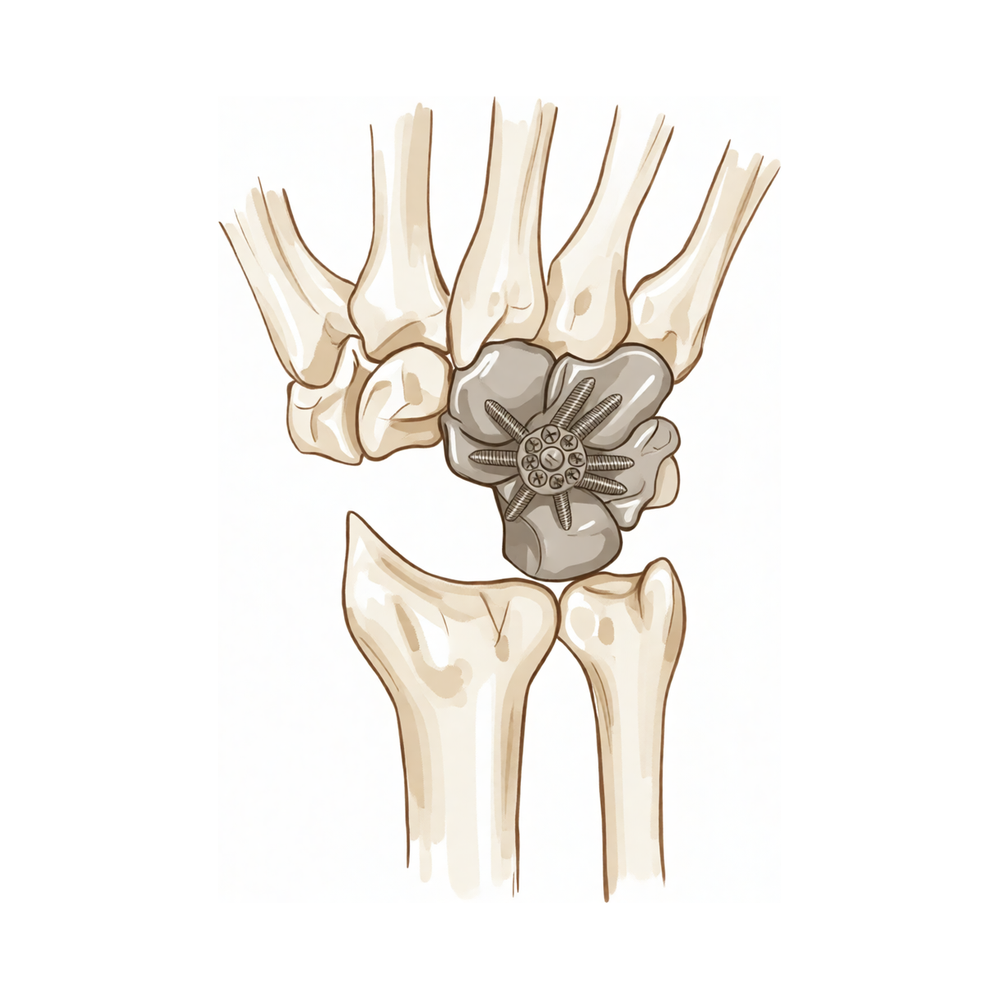
Quy trình này hướng dẫn quá trình hồi phục của bạn sau ca phẫu thuật hợp nhất một phần cổ tay (là ca phẫu thuật loại bỏ xương scaphoid bị hư hỏng và hợp nhất các xương nhỏ ở giữa cổ tay; thường là việc hợp nhất xương capitate với xương lunate trong phương pháp hợp nhất capitolunate) do bác sĩ Kieran Hirpara thực hiện tại Bệnh viện tư nhân Mater Rockhampton. Quy trình bắt đầu với chương trình tập luyện tại nhà, sau đó là quy trình trị liệu được soạn thảo dành riêng cho chuyên viên vật lý trị liệu của bạn: hãy mang theo trang này hoặc bản PDF tương ứng trong lần trị liệu đầu tiên để việc phục hồi diễn ra đồng bộ. Chuyên viên vật lý trị liệu có thể điều chỉnh kế hoạch này tùy theo tiến triển hồi phục của bạn.
Nếu bạn có bất kỳ thắc mắc nào về vết thương sau phẫu thuật, vui lòng liên hệ với phòng khám. Việc chụp ảnh vết thương rồi gửi qua email để được xem xét cũng là cách hữu ích.
Những điều bạn có thể mong đợi
Phẫu thuật hợp nhất một phần cổ tay được thực hiện để điều trị tình trạng cổ tay bị thoái hóa (viêm khớp) do hậu quả của các tổn thương cũ ở xương thuyền: có thể là chấn thương dây chằng thuyền–trăng (cổ tay “SLAC”) hoặc gãy xương thuyền không lành lại (cổ tay “SNAC”). Trong phẫu thuật, xương thuyền bị tổn thương sẽ được loại bỏ, các xương ở vùng giữa cổ tay được hợp nhất lại để chúng không còn cọ xát với nhau nữa. Bác sĩ Hirpara thường thực hiện việc hợp nhất xương trăng với xương cả (hợp nhất cả–trăng); đôi khi còn kết hợp thêm các xương lân cận. Khi cả bốn xương trăng, đầu ngón tay, tam giác và móc tay đều được hợp nhất thì gọi là hợp nhất bốn góc, và nguyên tắc hồi phục cũng tương tự.
Ý tưởng cốt lõi của ca phẫu thuật này là chỉ hợp nhất một phần cổ tay chứ không phải toàn bộ. Khớp giữa xương trăng và xương cẳng tay (xương quay) được cố ý giữ nguyên. Chính khớp này giúp cổ tay vẫn có thể vận động được:
- Việc hợp nhất các bề mặt bị tổn thương giúp giảm đau: đây là mục tiêu chính, và thường đạt được một cách đáng tin cậy.
- Việc giữ lại khớp quay–trăng giúp duy trì khả năng vận động hữu ích. Tuy nhiên, mức độ vận động sẽ bị hạn chế: hầu hết bệnh nhân chỉ còn khoảng một nửa đến hai phần ba phạm vi gập cổ tay so với trước, và sức mạnh nắm tay cũng chỉ đạt khoảng ba phần tư so với bên còn lại. Đây là kết quả bình thường, hoàn toàn có thể dự đoán (không phải biến chứng); đối với những trường hợp cổ tay đau và thoái hóa, đây là sự đánh đổi rất xứng đáng.
Các xương đã được hợp nhất cần thời gian để liền lại chắc chắn, tương tự như quá trình liền xương sau gãy. Trong khoảng sáu tuần đầu tiên, cổ tay sẽ được cố định bằng nẹp để đảm bảo điều này. Trong thời gian đó, các ngón tay, ngón cái và cẳng tay vẫn được vận động tự do, còn cổ tay thì được nghỉ ngơi. Khi bác sĩ phẫu thuật xác nhận qua phim X-quang rằng các xương đã liền lại, bệnh nhân mới dần được phép vận động và tăng cường sức mạnh cho cổ tay một cách từ từ. Việc xác định rõ kỳ vọng ngay từ đầu – một cổ tay thoải mái và vẫn có thể sử dụng được chứ không phải cổ tay vận động hoàn toàn tự do – là yếu tố quan trọng trong quá trình hồi phục.
Các lưu ý và hạn chế
- Hãy giữ cổ tay yên trong nẹp cho đến khi bác sĩ phẫu thuật xác nhận rằng vùng sụn đã liền lại (thường mất khoảng sáu tuần): các xương cần phải liền với nhau trước khi cổ tay được vận động.
- Ngay từ ngày đầu tiên, hãy vận động các ngón tay, ngón cái và cẳng tay; tuy nhiên KHÔNG được cử động cổ tay cho đến khi có sự cho phép.
- KHÔNG nắm chặt, nâng vật nặng, đẩy, kéo hay chịu trọng lượng lên cổ tay cho đến khi xác nhận rằng vùng sụn đã liền chắc: việc này giúp bảo vệ xương đang hồi phục cũng như các tấm kim loại, ốc vít hoặc đinh cố định.
- Cần lưu ý rằng phạm vi vận động cuối cùng sẽ bị hạn chế: đây là kết quả mong muốn khi thực hiện phẫu thuật hợp nhất một phần cổ tay, chứ không phải dấu hiệu của bất kỳ sai sót nào.
- Giữ nẹp và băng gạc sạch sẽ, khô ráo; đồng thời KHÔNG lái xe khi đang đeo nẹp hoặc khi không thể kiểm soát vô lăng một cách an toàn.
Để biết cách chăm sóc vết thương, giảm sưng và quản lý sẹo, vui lòng tham khảo hướng dẫn chăm sóc vết thương của phòng khám.
Các bài tập của bạn
Kieran Hirpara 4.0
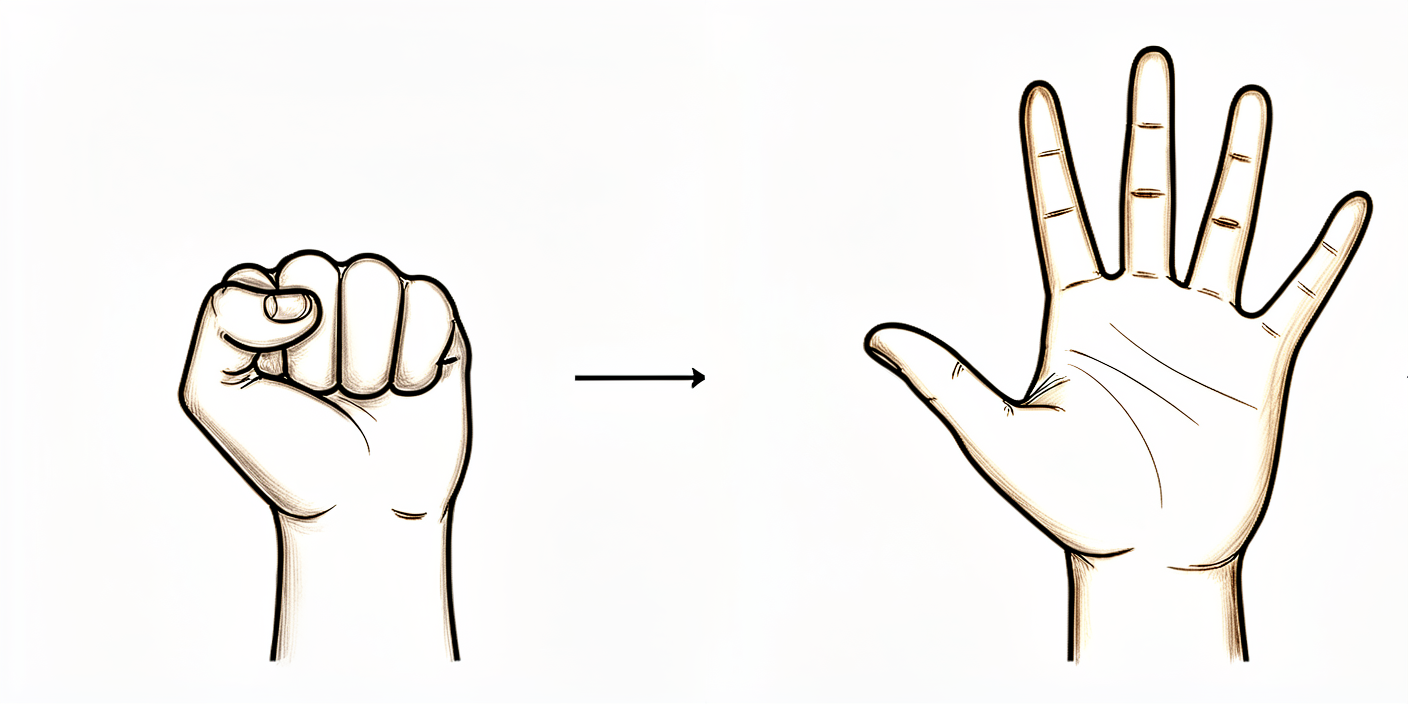
Chuyển động của các ngón tay và ngón cái
Ngay từ ngày phẫu thuật, hãy cử động các ngón tay và ngón cái trong khi cổ tay vẫn được giữ yên trong nẹp hoặc bó bột. Duỗi thẳng hết các ngón tay ra, sau đó nắm thành nắm đấm hoàn chỉnh; tiếp theo hãy chạm ngón cái vào đầu mút của từng ngón tay. Việc này giúp ngăn ngừa tình trạng cứng khớp tay và giúp các gân vẫn di chuyển bình thường trong lúc các xương cổ tay đang liền lại với nhau. Tuyệt đối không cử động cổ tay.
Mỗi động tác 10 lần, nhiều lần mỗi ngày, liên tục mỗi ngày kể từ lúc bắt đầu.
Kieran Hirpara 4.0
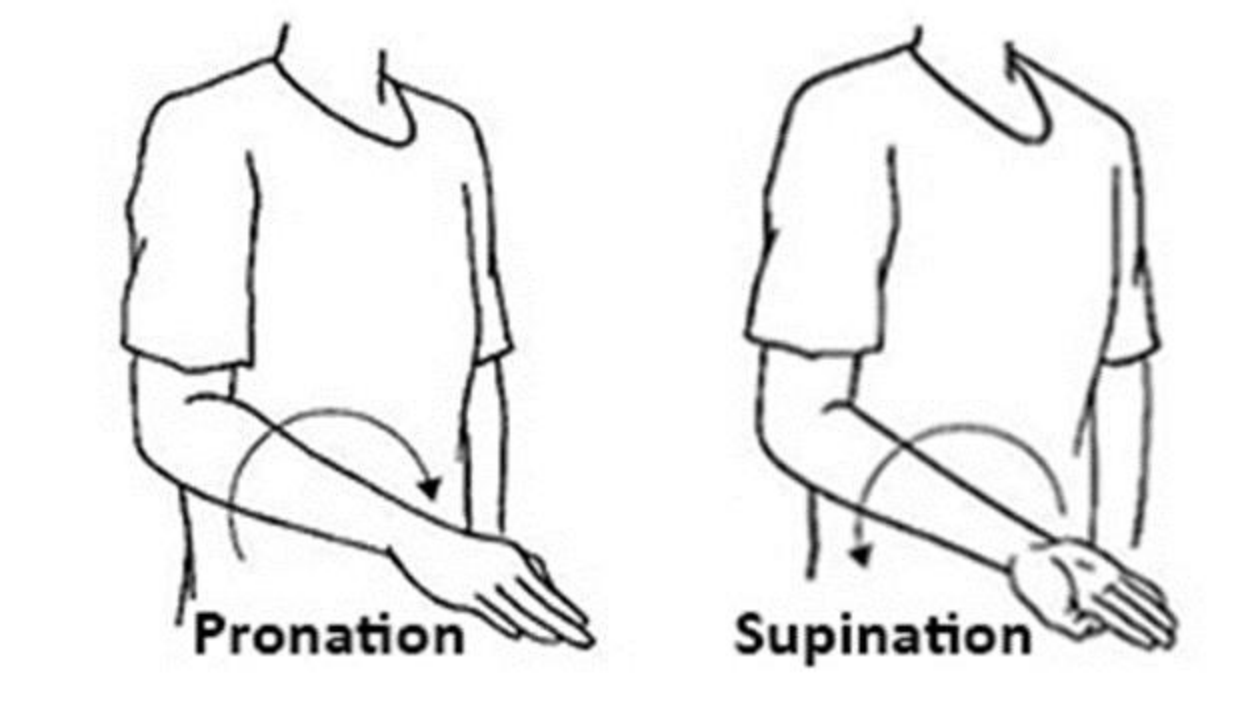
Chuyển động xoay cẳng tay (lòng bàn tay hướng lên / lòng bàn tay hướng xuống)
Khi khuỷu tay gập thành góc vuông và áp sát vào thân mình, hãy nhẹ nhàng xoay lòng bàn tay lên hướng trần nhà rồi lại hướng xuống sàn nhà. Hãy đảm bảo chuyển động này xuất phát từ cẳng tay chứ không phải cổ tay. Việc này giúp cẳng tay luôn mềm dẻo và không ảnh hưởng đến chỗ hợp nhất xương đang lành, vì vậy có thể bắt đầu bài tập này ngay.
10 lần theo mỗi hướng, 2–3 lần mỗi ngày.
Kieran Hirpara 4.0
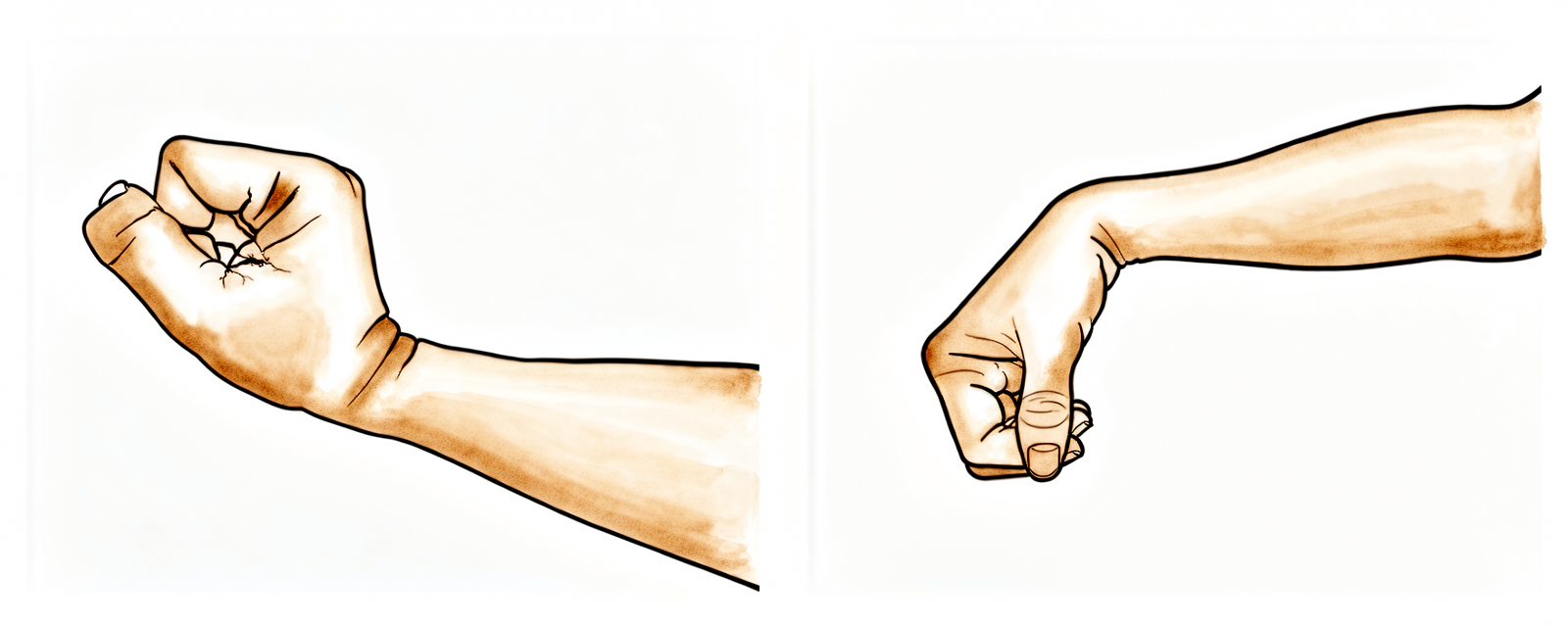
Chuyển động cổ tay (sau khi liền xương)
Một bài tập GIAI ĐOẠN SAU — chỉ nên thực hiện sau khi vùng hợp xương đã lành và bác sĩ phẫu thuật cùng chuyên viên trị liệu tay cho phép vận động cổ tay (thường là sau khoảng sáu đến tám tuần). Hãy nhẹ nhàng gập cổ tay lên (ra sau) và xuống (ra trước); sau đó nghiêng cổ tay về phía ngón cái và về phía ngón út, chỉ vận động đến mức cảm thấy thoải mái. Lưu ý rằng phần cổ tay đã được hợp xương sẽ không thể cử động; bạn đang khôi phục lại chuyển động đến từ khớp được giữ lại, vì vậy phạm vi vận động cuối cùng sẽ nhỏ hơn so với trước đây — điều này là hoàn toàn bình thường.
Thực hiện 10 lần theo mỗi hướng, 2–3 lần mỗi ngày, trong phạm vi mức độ thoải mái (sau khi xương đã liền).
Kieran Hirpara 4.0
Chăm sóc vết sẹo
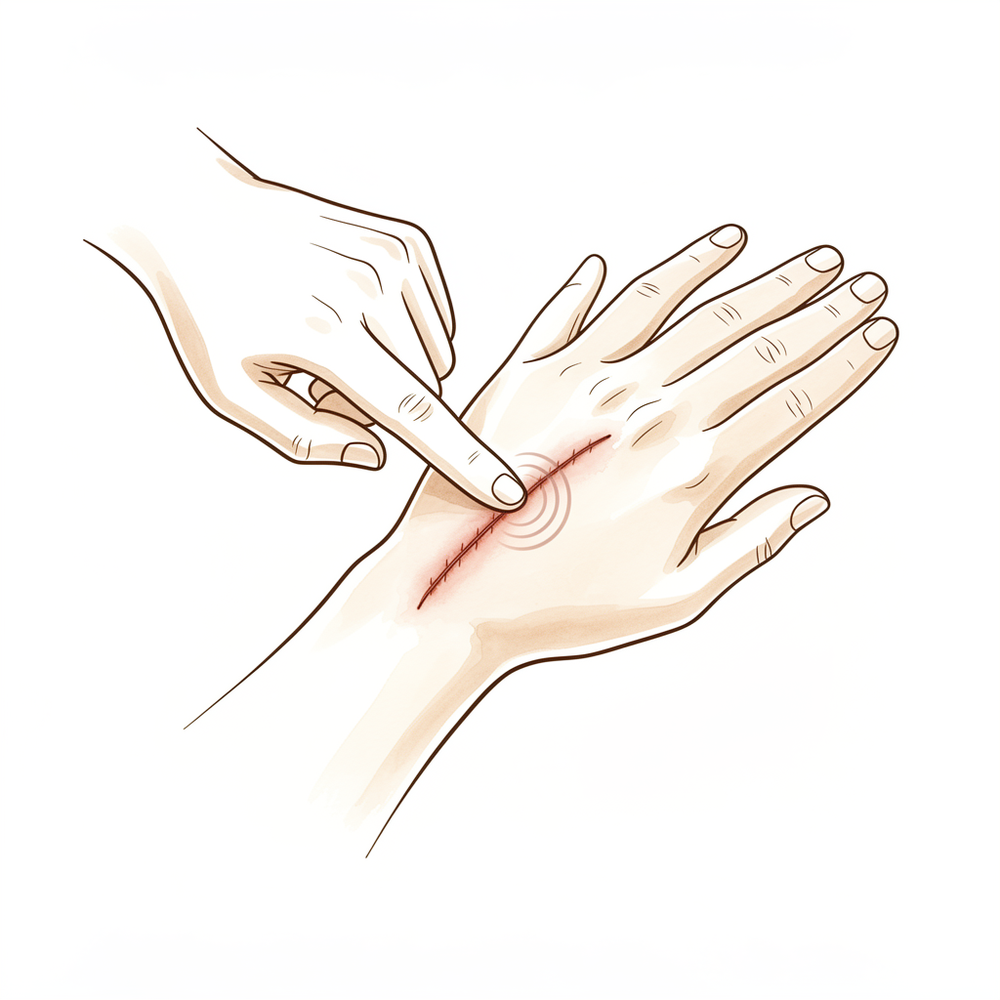
Khi vết thương đã lành hẳn và khô ráo, hãy thoa một chút kem dưỡng ẩm không mùi lên vết sẹo, sau đó dùng ngón tay cái của tay còn lại xoa nhẹ theo các vòng tròn nhỏ trong vài phút. Thao tác này giúp làm mềm vết sẹo và giảm độ nhạy cảm. Chỉ thực hiện khi vết thương đã khép kín và bác sĩ trị liệu xác nhận là an toàn.
2–3 phút, ngày hai lần, sau khi vết thương đã lành.
Kieran Hirpara 4.0
Tăng cường sức mạnh nắm tay
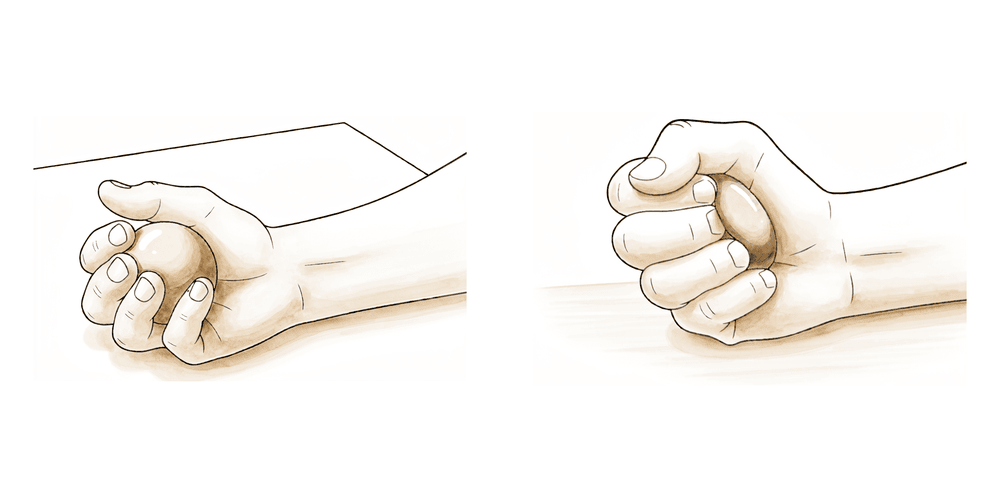
Một bài tập GIAI ĐOẠN SAU — chỉ bắt đầu khi chỗ hợp nhất xương đã vững chắc và đã được cho phép tập tăng cường sức mạnh (thường là từ khoảng tuần thứ mười hai). Bóp một quả bóng mềm hoặc đất nặn trị liệu trong lòng bàn tay, giữ một lúc rồi thả ra. Tăng dần lực bóp trong vài tuần. Việc nắm mạnh, nâng vật nặng và chống đỡ trọng lượng qua cổ tay đều được hoãn lại cho đến khi bác sĩ phẫu thuật xác nhận các xương đã liền hoàn toàn.
10–15 thực hiện động tác bóp, 2–3 lần mỗi ngày, tăng dần theo thời gian (giai đoạn sau).
Đây là những bài tập có trong tờ hướng dẫn dành cho bạn. Chỉ bắt đầu thực hiện chúng khi có sự hướng dẫn của Bác sĩ Hirpara và chuyên viên trị liệu vận động; đồng thời tuân thủ mọi phạm vi chuyển động và giới hạn đã được chỉ định. Những bài tập ban đầu nhằm giúp các ngón tay, ngón cái và cẳng tay vận động mà không ảnh hưởng đến quá trình liền xương; còn cổ tay thì vẫn giữ nguyên trạng thái tĩnh trong nẹp hoặc bó bột. Việc vận động cổ tay và tăng cường sức mạnh nắm tay thuộc các giai đoạn sau và chỉ nên thực hiện khi bác sĩ phẫu thuật xác nhận rằng các xương đã liền lại. Hãy ngừng ngay mọi hoạt động gây ra cơn đau dữ dội ở vùng cổ tay.
Quy trình điều trị lâm sàng của bạn
Phần còn lại của trang này mô tả quy trình phục hồi chức năng theo từng giai đoạn sau khi thực hiện phẫu thuật hợp nhất một phần cổ tay (cắt bỏ xương capitolunate ± xương scaphoid; các nguyên tắc này cũng áp dụng cho phương pháp hợp nhất bốn góc cổ tay). Nội dung này cần được cung cấp cho chuyên viên trị liệu tay của bạn; mỗi giai đoạn đều bắt đầu bằng lời giải thích bằng ngôn ngữ thông thường về những gì đang diễn ra. Khác với trường hợp phục hồi gân, ở đây cấu trúc nối liền là xương; việc tiến triển điều trị phụ thuộc vào kết quả chụp X-quang xác nhận sự hợp nhất xương, chứ không phải theo lịch trình cố định. Cho đến khi bác sĩ phẫu thuật xác nhận đã có sự hợp nhất, cổ tay vẫn phải được cố định; chỉ các ngón tay, ngón cái và cẳng tay mới được vận động. Sau đó mới dần khôi phục biên độ vận động và tải trọng lên cổ tay; mức tối đa có thể đạt được là khoảng 50–65% độ gập–duỗi so với bên đối diện và lực nắm tay khoảng 70–80%.
Trước khi bắt đầu điều trị, hãy kiểm tra bản ghi chép phẫu thuật của bệnh nhân để xác định phương pháp cố định được sử dụng (vòng cố định/dây cố định lưng bàn tay, vít nén không đầu, đinh tán hoặc dây kim loại) cũng như việc có cắt bỏ xương scaphoid hay không. KHÔNG được vận động cổ tay cho đến khi bác sĩ phẫu thuật xác nhận kết quả chụp X-quang cho thấy sự hợp nhất xương (thường mất khoảng 6–8 tuần; thời gian này có thể kéo dài hơn nếu dùng vít hoặc đinh tán). Ngay từ lần khám đầu tiên, hãy giải thích cho bệnh nhân rằng mục tiêu điều trị là giúp cổ tay hoạt động bình thường mà không đau, với biên độ vận động được giới hạn một cách có chủ đích, chứ không phải đạt mức vận động tối đa.
Giai đoạn I — Cố định cổ tay để xương liền lại (từ tuần 0 đến khoảng 6–8)
Quá trình liền xương diễn ra tương tự như khi gãy xương; vì vậy cổ tay phải được giữ yên trong suốt thời gian này. Các ngón tay và cẳng tay vẫn được vận động hoàn toàn nhằm ngăn ngừa cứng khớp và dính gân, nhưng cổ tay thì không được cử động.
Dành cho chuyên viên trị liệu tay:
Giáo dục và các biện pháp phòng ngừa - Cổ tay phải được cố định bằng nẹp hoặc bó bột cho đến khi bác sĩ phẫu thuật xác nhận trên phim X-quang là xương đã liền (thường mất khoảng 6–8 tuần) - Không được thực hiện bất kỳ động tác vận động chủ động hay thụ động nào ở cổ tay trong giai đoạn này - Không được nắm, nâng, đẩy, kéo hay chịu tải trọng bằng cổ tay vừa phẫu thuật - Cần giải thích sớm cho bệnh nhân: phạm vi vận động cuối cùng sẽ giảm đi (khớp radiolunate vẫn được giữ nguyên; khớp giữa các xương cổ tay đã được hợp nhất)
Cách xử trí - Vết mổ: thay băng theo hướng dẫn; dùng băng gạc dày hoặc nẹp trong khoảng 10–14 ngày, sau đó chuyển sang bó bột ngắn hoặc nẹp nhiệt dẻo; theo dõi dấu hiệu nhiễm trùng - Phù nề: nâng tay cao hơn mức tim, thực hiện các động tác co duỗi nhẹ nhàng, chườm đá nếu cần - Vận động: thực hiện đầy đủ các động tác vận động chủ động của ngón tay, ngón cái và các khớp MCP/IP; xoay cẳng tay vào trong/ra ngoài; vận động nhẹ nhàng các khớp vai và khuỷu tay; tuyệt đối không vận động cổ tay
Tiêu chí để chuyển sang giai đoạn tiếp theo - Bác sĩ phẫu thuật xác nhận trên phim X-quang là xương đã liền (không được chuyển giai đoạn chỉ dựa vào thời gian); vết mổ đã lành; tình trạng phù nề được kiểm soát
Giai đoạn II — khôi phục vận động cổ tay (từ thời điểm cốt hóa hoàn toàn, khoảng 6–8 tuần đến 12 tuần)
Khi bác sĩ phẫu thuật xác nhận rằng vùng cốt hóa đã ổn định, bệnh nhân sẽ được tháo nẹp cổ tay và bắt đầu các bài tập vận động nhẹ nhàng. Quá trình hồi phục diễn ra từ từ; bệnh nhân cần hiểu rằng phần cổ tay đã bị cốt hóa sẽ không thể cử động, và biên độ vận động đạt được sẽ nhỏ hơn so với trước đây.
Dành cho chuyên viên trị liệu tay:
Các phép đánh giá - Biên độ vận động chủ động và thụ động của cổ tay (gập/dạng, lệch sang phải/trái); khả năng xoay cẳng tay; mức độ nắm tay ban đầu; tình trạng đau và sưng; đánh giá vết thương/vết sẹo
Giáo dục và các lưu ý cần tránh - Bắt đầu các bài tập vận động cổ tay chủ động hoặc hỗ trợ chủ động trong giới hạn thoải mái; sau đó sử dụng nẹp cổ tay có thể tháo rời để bảo vệ cổ tay giữa các buổi trị liệu - Tiếp tục tránh các động tác nắm chặt mạnh, nâng vật nặng hoặc chịu tải trọng qua cổ tay cho đến khi có chỉ định cho phép tăng cường sức mạnh - Nhấn mạnh rằng biên độ vận động sẽ bị hạn chế (mục tiêu đạt được khoảng 50–65% so với biên độ gập/dạng của cổ tay bên đối diện)
Các biện pháp xử trí - Các bài tập: gập/dạng cổ tay chủ động hoặc hỗ trợ chủ động, lệch sang phải/trái; bắt đầu mát-xa vết sẹo và giảm nhạy cảm sau khi vết thương đã lành hoàn toàn; tiếp tục duy trì biên độ vận động ngón tay/cổ tay và khả năng xoay cẳng tay; xử lý tình trạng phù nề nếu cần
Tiêu chí để chuyển sang giai đoạn tiếp theo - Có thể thực hiện các động tác cổ tay trong phạm vi biên độ hạn chế đã dự kiến một cách thoải mái và kiểm soát tốt; cơn đau giảm dần; đã có sự chấp thuận từ bác sĩ phẫu thuật để bắt đầu tăng cường sức mạnh
Giai đoạn III – Tăng cường sức mạnh và phục hồi chức năng (từ khoảng tuần thứ 12)
Khi vùng sụn đã liền hoàn toàn và phạm vi vận động đã trở lại mức hữu ích, việc tăng cường sức mạnh và nâng dần mức độ tải trọng sẽ được tiến hành trong nhiều tuần liền. Việc trở lại làm việc bằng tay hoặc tham gia các hoạt động thể thao phải dựa trên các tiêu chí cụ thể.
Dành cho chuyên viên trị liệu tay:
Các đánh giá - Độ mạnh lực nắm và lực kẹp so với bên còn lại; phản ứng đau/sưng khi chịu tải; các bài kiểm tra chức năng phù hợp với từng nhiệm vụ và công việc cụ thể
Giáo dục và lưu ý - Bắt đầu tập tăng cường lực nắm và sức mạnh cổ tay một cách có hệ thống (dùng đất nặn, quả bóng, sau đó tăng dần mức độ kháng lực) sau khi được bác sĩ cho phép - Dần dần đưa vào các hoạt động có tải trọng và chịu lực; tăng dần mức độ theo từng tuần thay vì thực hiện cùng lúc - Mục tiêu mong đợi: lực nắm phục hồi gần mức 70–80% so với bên còn lại, đồng thời phạm vi vận động vẫn hữu ích, không gây đau và bị hạn chế ở mức vừa phải
Cách quản lý - Các bài tập: tăng cường lực nắm, sức mạnh cẳng tay và cổ tay; các bài tập mô phỏng chức năng và công việc; tiếp tục chăm sóc vết sẹo và duy trì phạm vi vận động - Cần theo dõi và chuyển bệnh nhân trở lại gặp bác sĩ phẫu thuật nếu xuất hiện đau vùng mu cổ tay khi duỗi ra kéo dài (có thể là tình trạng chèn ép vùng mu cổ tay), nghi ngờ không liền xương, hoặc tiến triển phục hồi bị trì trệ - Có thể cho bệnh nhân xuất viện khi sức mạnh và chức năng đã đáp ứng đủ nhu cầu sinh hoạt và công việc hàng ngày
Tiêu chí để trở lại hoạt động có tải trọng/công việc - Vùng sụn đã liền chắc chắn, không đau trong phạm vi vận động đã phục hồi, lực nắm đủ để thực hiện các nhiệm vụ; các công việc nặng cần chờ đến khoảng 4–6 tháng sau mới bắt đầu và tăng dần mức độ.
Trở lại với công việc và các hoạt động hàng ngày
Bạn có thể bắt đầu sử dụng tay nhẹ nhàng trong các sinh hoạt hàng ngày (ăn uống, viết lách, các hoạt động chăm sóc bản thân) ngay từ đầu, miễn là cảm thấy thoải mái và không gây áp lực hay làm xoắn cổ tay. Vì bạn không được lái xe khi cổ tay còn bó bột hoặc chưa thể kiểm soát vô lăng một cách an toàn, hãy sắp xếp người hỗ trợ đưa đón trong những tuần đầu; việc lái xe sẽ được phép trở lại sau khi tháo bó bột và bạn đã tự tin kiểm soát được chiếc xe, theo xác nhận của bác sĩ trong buổi tái khám.
Các hoạt động cần nắm chặt, nâng vác vật nặng hoặc chịu tải trọng qua cổ tay phải chờ đến khi quá trình liền xương đã ổn định (thường là sau khoảng sáu đến tám tuần), rồi mới dần dần tăng dần mức độ. Những người làm công việc văn phòng hoặc công việc nhẹ thường có thể quay lại làm việc sau khoảng ba tháng; đối với công việc chân tay nặng nhọc thì thường phải mất khoảng bốn đến sáu tháng, và cũng được thực hiện từng bước một. Trong suốt quá trình này, hãy nhớ rằng mục tiêu cuối cùng là có một cổ tay vận động thoải mái, vẫn đủ chức năng dù phạm vi chuyển động bị hạn chế; điều này sẽ được đánh giá dựa trên cảm giác và khả năng vận động của cổ tay, dưới sự hướng dẫn của Bác sĩ Hirpara và chuyên viên trị liệu tay, chứ không chỉ dựa vào lịch trình thời gian.
Sau khi thực hiện theo phác đồ này
Phác đồ này được áp dụng song song với các hướng dẫn phục hồi chung của phòng khám: vui lòng tham khảo mục xử lý cơn đau sau phẫu thuật, chăm sóc vết thương và chăm sóc sẹo. Kế hoạch từng giai đoạn nêu trên dựa trên các hướng dẫn phục hồi đã được công bố sau phẫu thuật hợp nhất một phần cổ tay; quá trình hồi phục của bạn sẽ được Bác sĩ Hirpara và chuyên viên trị liệu tay theo dõi, điều chỉnh tùy theo tiến triển lành thương của cổ tay.
Evidence & references
This is the clinical evidence summary written for health professionals. It is technical, and it lists the research this page was built from. You do not need to read it to understand your treatment or to make a decision about it.
Partial Wrist Fusion — Procedure Outcomes & Post-operative Rehabilitation (Capitolunate / Four-Corner Arthrodesis with Scaphoid Excision)
Topic scope: post-operative rehabilitation after midcarpal partial wrist arthrodesis for scapholunate advanced collapse (SLAC) or scaphoid nonunion advanced collapse (SNAC). The index procedure here is a capitolunate fusion (the capitate fused to the lunate, usually with excision of the worn scaphoid); the closely related four-corner fusion (lunate–capitate– triquetrum–hamate) follows the same rehabilitation principles. This is a bony arthrodesis, so the rehabilitation is a union-gated pathway: the mid-wrist is immobilised until the fusion consolidates, after which a deliberately reduced wrist arc and grip are restored.
Defining principle of the rehab here: a partial wrist fusion is a motion-preserving salvage. The arthritic midcarpal surfaces are fused to abolish pain, while the radiolunate joint is intentionally preserved to retain movement. The construct that needs protecting is healing bone (plate, headless screws, staples or K-wires across the fusion), not a soft-tissue repair — so progression is gated by radiographic union, not a calendar. Counselling the patient that the planned end-point is a pain-free, functional wrist with a reduced arc (~50–65% of normal flexion–extension, ~70–80% grip) is itself part of the treatment: the reduced motion is the intended trade-off, not a failure. The two principal branch points are the fixation method (which sets the immobilisation window and union risk) and whether scaphoid excision was performed (standard in the SLAC/SNAC setting).
A. PROCEDURE OUTCOMES (capitolunate / four-corner fusion for SLAC–SNAC)
Partial wrist fusion is a well-established, durable salvage for the SLAC/SNAC wrist. The dominant debate is which motion-preserving salvage (four-corner / capitolunate fusion vs proximal row carpectomy), not whether to operate; both reliably relieve pain at the cost of some motion.
- Reliable pain relief with a useful but reduced arc. Across series, midcarpal fusion abolishes the painful midcarpal arthritis while preserving radiolunate motion. Typical results are roughly 50–65% of contralateral flexion–extension and ~70–80% of contralateral grip strength, with high rates of pain relief and return to work — the expected, planned trade-off of a partial fusion [Enna Hand Clin 2005; Strauch J Hand Surg Am 2011; Merrell J Hand Surg Am 2008; long-term series J Wrist Surg 2015]. Moderate (cohort/consensus).
- Capitolunate fusion (± scaphoid excision) performs comparably to full four-corner fusion while fusing fewer joints, simplifying the construct. A systematic review of capitolunate arthrodesis and comparative work report comparable motion, grip and union to four-corner fusion, supporting it as a sound index choice [Dunn J Hand Surg Am 2020 (systematic review); lunocapitate series J Hand Surg Eur 2009; J Chin Med Assoc 2017]. Moderate.
- A meta-analysis of two-, three- and four-corner constructs finds the number of fused columns does not materially change motion, grip, union or complications — biomechanically consistent with the radiolunate joint being the motion-determining segment [Hundepool J Hand Surg Am 2025 (SR/meta-analysis); Hernandez-Soria J Hand Surg Am 2016 (capitate-position biomechanics)]. Moderate (SR) + mechanistic.
- Modern fixation is forgiving but union is not guaranteed. Circular dorsal plates, headless compression screws and nitinol staples all achieve consolidation in the great majority, with nonunion and dorsal impingement the characteristic failures to watch for [Merrell J Hand Surg Am 2008 (circular plate); Ahmady J Hand Surg Glob Online 2025 (nitinol staples)]. Moderate.
B. REHABILITATION / THERAPY EVIDENCE
The rehab questions are (1) how long to immobilise, (2) what gates the start of wrist motion, and (3) how to set the patient's expectation of reduced motion. The evidence and published surgeon protocols converge on a union-gated sequence: immobilise the wrist (mobilise the hand and forearm) for ~6–8 weeks, then restore a reduced arc, then strengthen.
- Immobilise until radiographic union, not by the calendar. Because the construct is bony, wrist motion is withheld until the surgeon confirms consolidation — typically 6–8 weeks, longer with some screw/staple fixations. Published institutional protocols use a bulky dressing/splint for ~10–14 days, a short-arm cast to ~4–6 weeks, then a removable splint as motion begins. Moderate (consensus protocols).
- Keep the hand and forearm fully mobile from day one. Immediate active finger, thumb and forearm rotation prevents stiffness and tendon adhesion without disturbing the fusion — the same glide-preserving logic used across hand rehab. Consensus.
- Restore motion gradually after union, against a realistic ceiling. Once united, active and active-assisted wrist ROM is introduced; patients should be counselled that the fused midcarpal segment will not move and the achievable arc is smaller than pre-operatively (the radiolunate joint alone supplies wrist motion). Consensus + mechanistic (capitate-position biomechanics, Hernandez-Soria 2016).
- Strengthen and load only once the fusion is solid. Grip and loaded/weight-bearing work begins after union and is built up gradually; heavy manual demands are deferred to ~4–6 months. Consensus.
Recovery trajectory (expected, evidence-anchored)
| Phase | Window | Restraint | Hand use / therapy focus | Strength / load | Notes |
|---|---|---|---|---|---|
| I — Immobilisation (union) | Week 0 to ~6–8 | Wrist immobilised (cast/splint) | Full active finger, thumb & forearm motion; oedema control, elevation; no wrist motion | None through the wrist | Fusion knits like a fracture; progress is gated by radiographic union, not the calendar |
| II — Restoring wrist motion | From union (~wk 6–8) to 12 | Heavy-load avoidance; removable splint | Begin active/active-assisted wrist flexion/extension & deviation; scar massage once healed | No loaded grip yet | Counsel the reduced-arc expectation (~50–65% of normal flexion–extension) |
| III — Strengthening & return | From ~12 weeks (post-union) | Restrictions lifted progressively | Progressive grip/wrist strengthening; graded job simulation | Grip recovers toward ~70–80% of the other side | Desk work ~3 months; heavy manual ~4–6 months. Watch for dorsal impingement / nonunion |
(Phase windows mirror the precautions in the patient protocol and published surgeon protocols; they are typical guides anchored to union, not trial-derived deadlines.)
C. KEY CONTROVERSIES / EVIDENCE QUALITY
- Capitolunate vs four-corner vs proximal row carpectomy (PRC). All three are accepted motion-preserving salvages for SLAC/SNAC. PRC tends to give a slightly larger arc and avoids fusion-specific complications (nonunion, dorsal impingement, hardware), while fusion may give marginally better grip and is preferred where capitate-head or proximal-capitate cartilage is compromised. Systematic reviews and a meta-analysis find no consistent superiority of one over the other; choice is individualised [Mulford J Hand Surg Eur 2009; J Hand Surg Am 2024 meta-analysis; Strauch J Hand Surg Am 2011]. Moderate (SR/meta-analysis of mostly observational data).
- Capitolunate vs full four-corner construct. Fusing fewer columns (capitolunate) simplifies the construct without clearly compromising motion, grip or union versus four-corner — consistent with the radiolunate joint being the motion-determining segment [Dunn 2020 SR; Hundepool 2025 meta-analysis; Hernandez-Soria 2016]. Moderate.
- When can wrist motion safely start? Union timing varies with fixation, and protocols differ on exact cast duration. The defensible position is surgeon-confirmed radiographic union gates wrist ROM rather than a fixed week number. Weak–moderate (consensus; protocol variation).
- Reduced motion is the plan, not a complication. The preserved radiolunate joint supplies a smaller arc by design; mislabelling the expected ~50–65% range as a poor result drives unnecessary dissatisfaction. Strong mechanistically; cohort-supported.
- Characteristic failures: nonunion and dorsal impingement. Both are recognised, fixation-related complications; persistent dorsal wrist pain on extension or a non-progressing fusion warrants surgical review rather than more therapy [Merrell 2008; Ahmady 2025; long-term series 2015]. Moderate.
D. EVIDENCE STRENGTH FLAGS (summary)
- STRONG (mechanistic / well-supported): the reduced final arc is the planned consequence of preserving the radiolunate joint while fusing the midcarpal segment (capitate-position biomechanics); reliable pain relief from the fusion.
- MODERATE: typical outcome envelope (~50–65% flexion–extension, ~70–80% grip); equivalence of capitolunate and four-corner constructs; no consistent superiority of fusion vs PRC (SR/meta-analysis of largely observational data); modern fixation achieves high union with defined nonunion / dorsal impingement risk.
- WEAK / CONSENSUS: the specific union-gated immobilise → restore-motion → strengthen therapy sequence and exact phase timings (institutional/surgeon protocols, anchored to radiographic union rather than trial-derived).
CITATIONS
RAG corpus (180,000+ Orthopaedic articles)
- Enna M, Hoepfner P, Weiss AC. Scaphoid excision with four-corner fusion. Hand Clin. 2005. DOI: 10.1016/j.hcl.2005.08.012
- Dunn JC, Polmear MM, Scanaliato JP, et al. Capitolunate arthrodesis: a systematic review. J Hand Surg Am. 2020. DOI: 10.1016/j.jhsa.2019.10.007
- Hundepool CA, Duraku LS, Quanjel TJ, et al. Two-, three-, or four-corner arthrodesis for midcarpal osteoarthritis: a systematic review and meta-analysis. J Hand Surg Am. 2025. DOI: 10.1016/j.jhsa.2023.04.018
- Strauch RJ. Scapholunate advanced collapse and scaphoid nonunion advanced collapse arthritis — update on evaluation and treatment. J Hand Surg Am. 2011. DOI: 10.1016/j.jhsa.2011.01.018
- Merrell GA, McDermott EM, Weiss AC. Four-corner arthrodesis using a circular plate and distal radius bone grafting: a consecutive case series. J Hand Surg Am. 2008. DOI: 10.1016/j.jhsa.2008.02.001
- Hernandez-Soria A, Das De S, Model Z, et al. The effect of capitate position on coronal plane wrist motion after simulated 4-corner arthrodesis. J Hand Surg Am. 2016. DOI: 10.1016/j.jhsa.2016.07.101
- Ahmady AA, Zalzaleh M, Riedel BB. Midterm outcomes of four-corner fusion surgery using nitinol staples. J Hand Surg Glob Online. 2025. DOI: 10.1016/j.jhsg.2025.100805
- Mulford JS, Ceulemans LJ, Nam D, Axelrod TS. Proximal row carpectomy vs four corner fusion for scapholunate (SLAC) or scaphoid nonunion advanced collapse (SNAC) wrists: a systematic review of outcomes. J Hand Surg Eur Vol. 2009. DOI: 10.1177/1753193408100954
- Four-corner fusion versus proximal row carpectomy for scapholunate advanced collapse and scaphoid nonunion advanced collapse wrist: a systematic review and meta-analysis. J Hand Surg Am. 2024. DOI: 10.1016/j.jhsa.2024.01.011
- Long-term results of lunocapitate arthrodesis with scaphoid excision for SLAC and SNAC wrists. J Hand Surg Eur Vol. 2009. DOI: 10.1177/1753193409105683
- Lunocapitate fusion with scaphoid excision for the treatment of scaphoid nonunion advanced collapse or scapholunate advanced collapse wrist. J Chin Med Assoc. 2017. DOI: 10.1016/j.jcma.2016.10.001
- The long-term outcome of four-corner fusion. J Wrist Surg. 2015. DOI: 10.1055/s-0035-1549277
Partial wrist fusion rehabilitation literature (protocols & guidance — basis for the union-gated phase structure)
- University of Virginia Department of Orthopaedic Surgery. Wrist Partial Fusion (4-Corner) Rehabilitation Guidelines. https://med.virginia.edu/orthopaedic-surgery/wp-content/uploads/sites/242/2024/09/Wrist-Partial-Fusion-4-corner.pdf
- Oregon Health & Science University (OHSU). Four-Corner Partial Wrist Fusion — Surgery Guide. https://www.ohsu.edu/sites/default/files/2020-12/Four-Corner%20Partial%20Wrist%20Fusion.pdf
- Alaska Orthopedic Specialists. Four-Corner Fusion with Scaphoid Excision — Post-operative Protocol. https://www.akortho.com/wp-content/uploads/Four-Corner-Fusion-with-Scaphoid-Excision-1.pdf
- Twin Cities Orthopedics (Olson). Scaphoid Excision 4-Corner Fusion Post-operative Protocol. https://www.toportho.com/wp-content/uploads/2024/10/olson-_4-Corner-Fusion-Protocol.pdf
- The long-term outcome of four-corner fusion (open-access full text). PMC. https://pmc.ncbi.nlm.nih.gov/articles/PMC4408128/