Patients › Rehabilitation
Ngón tay hình búa (Mallet Finger)
Kế hoạch phục hồi dựa trên nẹp dành cho ngón tay hình búa, giữ khớp đầu ngón tay thẳng hoàn toàn và không gián đoạn trong khoảng sáu đến tám tuần để gân duỗi có thể lành lại, trong khi các khớp ngón tay khác vẫn tiếp tục vận động.
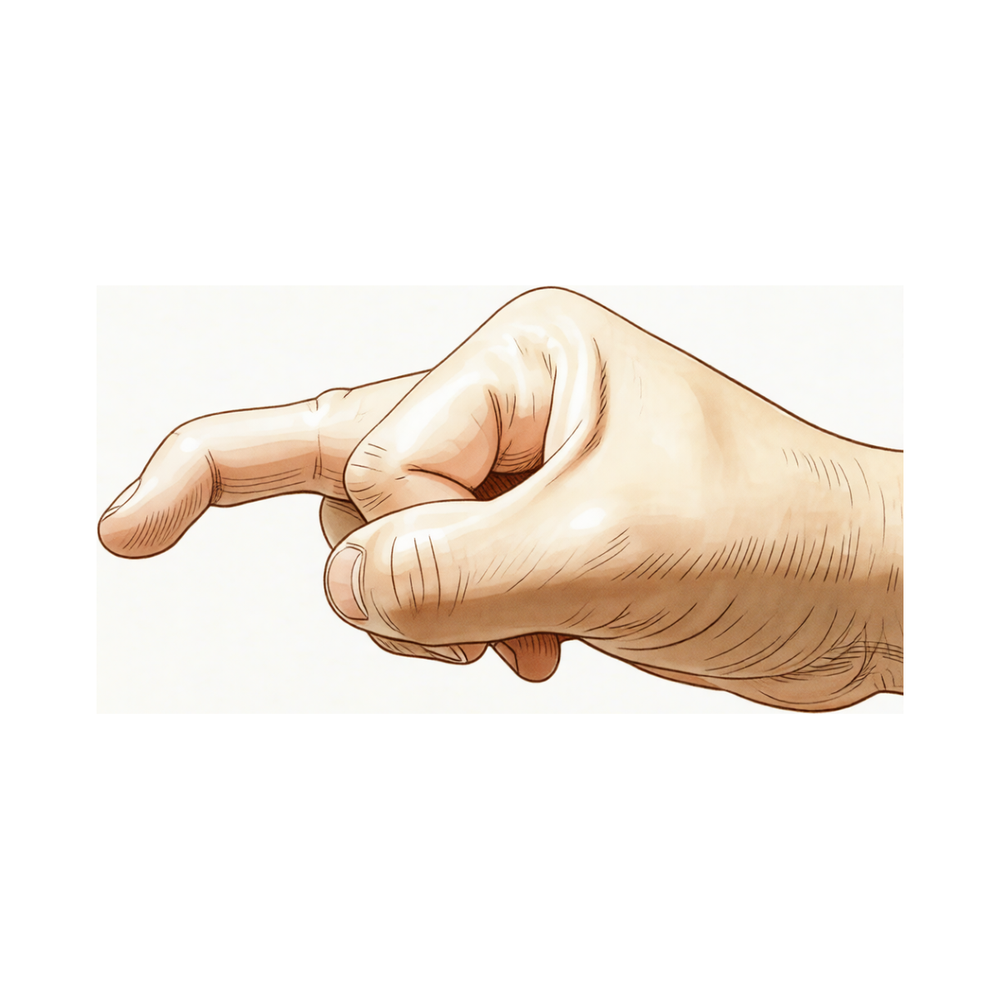
Quy trình này hướng dẫn bạn trong quá trình hồi phục sau chấn thương ngón tay hình búa (mallet finger) (tình trạng đầu ngón tay bị gập rủ xuống do tổn thương gân chịu trách nhiệm duỗi thẳng khớp cuối cùng của ngón tay), dưới sự chăm sóc của Bác sĩ Kieran Hirpara tại Bệnh viện tư nhân Mater Rockhampton. Hầu hết các trường hợp ngón tay hình búa đều được điều trị không cần phẫu thuật, bằng cách sử dụng nẹp giữ đầu ngón tay thẳng trong thời gian lành thương. Quy trình bắt đầu với chương trình tập tại nhà của bạn, sau đó là quy trình lâm sàng chi tiết được viết cho chuyên viên trị liệu tay. Hãy mang theo trang này hoặc bản PDF của nó đến buổi trị liệu đầu tiên để quá trình phục hồi được phối hợp nhất quán. Chuyên viên trị liệu có thể điều chỉnh kế hoạch tùy theo tiến triển hồi phục của bạn.
Nếu bạn có bất kỳ lo lắng nào về ngón tay, vùng da dưới nẹp, hoặc tiến độ hồi phục, hãy liên hệ với phòng khám. Việc chụp ảnh và gửi qua email để được xem xét thường rất hữu ích.
Những điều bạn có thể mong đợi
Ngón tay hình búa xảy ra khi gân duỗi tận (sợi gân mảnh có chức năng duỗi thẳng khớp cuối cùng của ngón tay, tức khớp DIP gần móng tay) bị đứt rời khỏi xương. Tình trạng này thường xuất hiện sau khi đầu ngón tay đang duỗi thẳng bị gập mạnh, ví dụ như khi quả bóng hoặc một cú va đập làm “kẹt” đầu ngón tay. Đôi khi gân kéo theo một mảnh xương nhỏ (gọi là ngón tay hình búa có mảnh xương); đôi khi gân chỉ bị đứt riêng lẻ (gọi là ngón tay hình búa do gân). Dù là trường hợp nào thì kết quả cũng giống nhau: đầu ngón tay rủ xuống và bạn không thể tự duỗi thẳng nó ra, mặc dù phần còn lại của ngón tay vẫn hoạt động bình thường.
Tin vui là chấn thương này lành rất đáng tin cậy chỉ bằng cách đeo nẹp; hầu hết mọi người không cần phải phẫu thuật. Toàn bộ phương pháp điều trị dựa trên một nguyên tắc đơn giản:
- Khớp đầu ngón tay phải được giữ thẳng hoàn toàn, không gián đoạn, trong suốt thời gian gân lành lại. Chiếc nẹp giữ khớp cuối cùng ở tư thế thẳng (hoặc hơi ngửa ra sau một chút) để hai đầu gân bị đứt có thể liền lại với nhau. Nẹp được đeo toàn thời gian (cả ngày lẫn đêm) trong khoảng tám tuần đối với ngón tay hình búa do gân, hoặc khoảng sáu tuần đối với ngón tay hình búa có mảnh xương.
- Trong thời gian này, đầu ngón tay tuyệt đối không được phép gập lại. Nếu đầu ngón tay rủ xuống dù chỉ trong chốc lát (ví dụ như khi thay nẹp hoặc rửa tay), quá trình lành thương bị phá vỡ và thời gian phải tính lại từ đầu. Chính vì vậy, mức độ cẩn thận của bạn trong việc giữ đầu ngón tay thẳng là yếu tố lớn nhất quyết định ngón tay hồi phục tốt đến đâu.
- Các khớp khác của ngón tay được để tự do và tiếp tục vận động. Khớp giữa (PIP) và khớp gốc ngón tay (MCP) không nằm trong nẹp và nên được cử động tự do ngay từ đầu; việc vận động các khớp này không ảnh hưởng đến quá trình lành thương ở đầu ngón tay.
Sau giai đoạn đeo toàn thời gian, nẹp được cai dần (đầu tiên chỉ đeo vào ban đêm và khi thực hiện các hoạt động có nguy cơ, sau đó ngừng hẳn) trong khi bạn từ từ bắt đầu gập đầu ngón tay trở lại. Việc còn lại tình trạng đầu ngón tay hơi rủ xuống vĩnh viễn khoảng năm đến mười độ là bình thường; điều này được dự kiến trước, thường không ảnh hưởng đến chức năng của ngón tay, và hầu hết mọi người đều rất hài lòng với kết quả.
Các lưu ý và hạn chế
- TUYỆT ĐỐI KHÔNG để đầu ngón tay gập lại trong giai đoạn đeo nẹp, dù chỉ một giây khi rửa tay hoặc thay nẹp. Nếu đầu ngón tay rủ xuống, quá trình lành thương sẽ bị đặt lại và thời gian đeo nẹp phải bắt đầu lại.
- Đeo nẹp toàn thời gian (ngày và đêm) trong toàn bộ thời gian do chuyên viên trị liệu chỉ định: khoảng 8 tuần đối với ngón tay hình búa do gân, khoảng 6 tuần đối với ngón tay hình búa có mảnh xương.
- Chỉ tháo nẹp ra để làm sạch và làm khô da, và chỉ khi bạn có thể giữ đầu ngón tay thẳng tuyệt đối trong suốt thời gian đó (đặt ngón tay phẳng trên mặt bàn hoặc dùng tay kia giữ thẳng).
- Giữ cho khớp giữa và khớp gốc ngón tay vận động tự do ngay từ đầu; chỉ có khớp cuối cùng là được giữ yên.
- Kiểm tra da hàng ngày. Hãy báo cho chuyên viên trị liệu tay nếu vùng da phía trên khớp trở nên nhợt nhạt, trắng hoặc đau; có thể nẹp đang giữ đầu ngón tay ngửa ra sau quá mức và cần điều chỉnh lại.
- Không bắt đầu gập đầu ngón tay cho đến khi chuyên viên trị liệu tay bắt đầu giai đoạn cai nẹp.
Về cách chăm sóc vết thương, giảm sưng và chăm sóc da, vui lòng tham khảo hướng dẫn chăm sóc vết thương của phòng khám.
Các bài tập của bạn
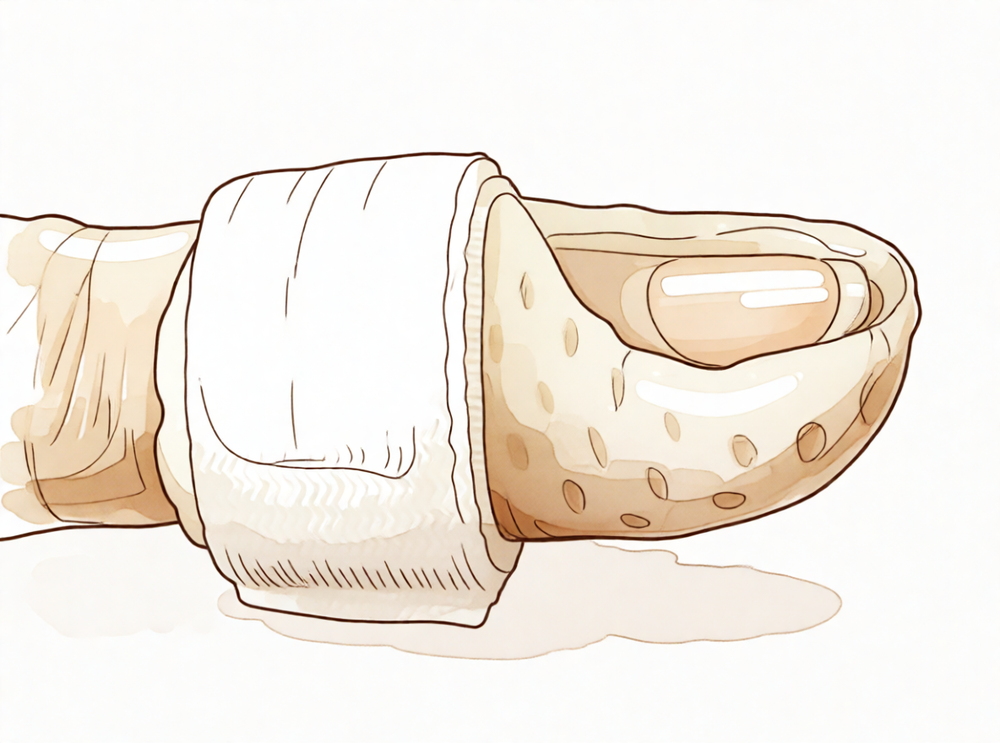
Davplast / Wikimedia Commons, CC BY-SA 4.0
Đeo nẹp duỗi khớp DIP (đầu ngón tay không bao giờ được gập)
Đeo nẹp ở khớp đầu ngón tay VÀO MỌI LÚC — cả ngày lẫn đêm — để khớp cuối cùng (khớp DIP, khớp gần móng nhất) được giữ thẳng hoàn toàn. Đây là phần quan trọng nhất trong điều trị của bạn. Đầu ngón tay KHÔNG BAO GIỜ được phép gập, dù chỉ trong chốc lát: nếu nó rủ xuống vào bất kỳ lúc nào, quá trình lành thương bắt đầu lại từ con số không và thời gian phải tính lại. Giữ nẹp khi tắm rửa, khi ngủ và khi làm việc, và kiểm tra để đảm bảo đầu ngón tay luôn thẳng bên trong nẹp.
Đeo liên tục — ngón tay hình búa do gân khoảng 8 tuần, có mảnh xương khoảng 6 tuần
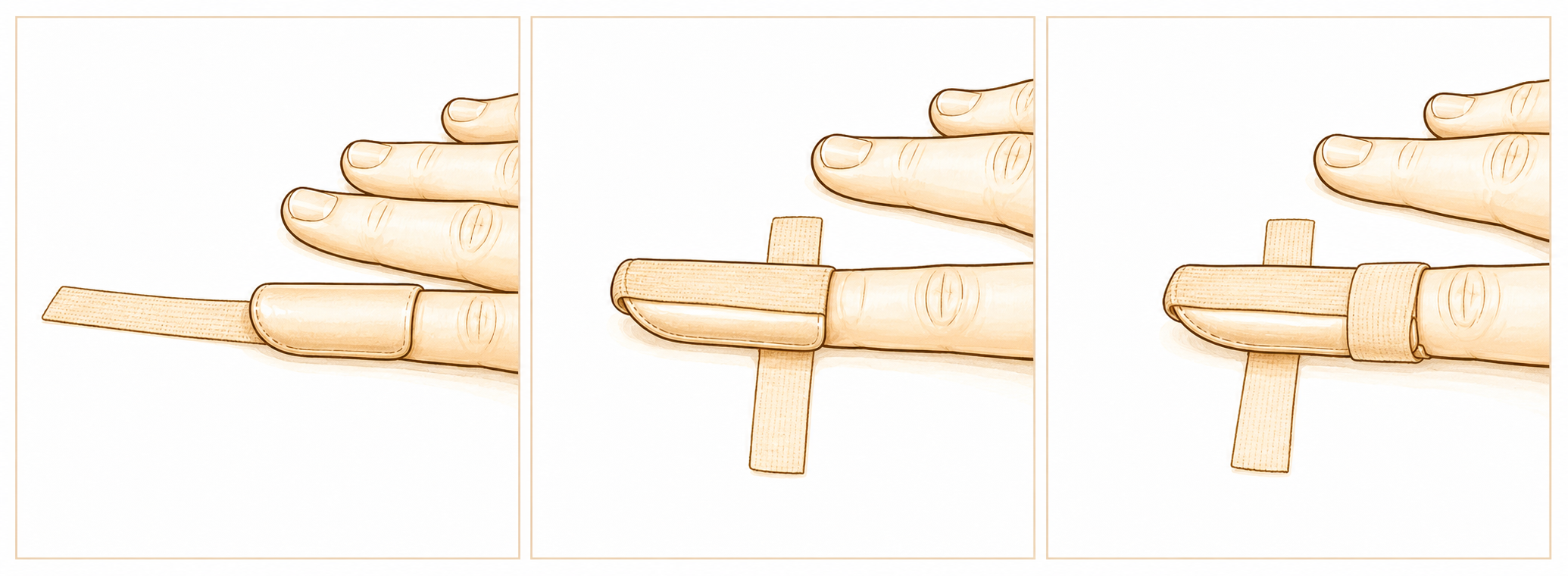
Kieran Hirpara 4.0
Cách thay nẹp một cách an toàn (giữ đầu ngón tay thẳng)
Nẹp chỉ được tháo ra để làm sạch và làm khô da — và chỉ khi bạn có thể giữ đầu ngón tay thẳng tuyệt đối trong suốt thời gian đó. Đặt ngón tay nằm phẳng dọc theo mép bàn để đầu ngón được đỡ và không thể rủ xuống, hoặc dùng tay kia giữ ngón tay thẳng. Trượt nẹp cũ ra, làm sạch và lau khô, rồi trượt nẹp mới vào — tất cả mà không bao giờ để đầu ngón tay gập. Nếu bạn không tự tin làm việc này, hãy để chuyên viên trị liệu tay thực hiện.
Mỗi ngày một lần để chăm sóc da, chỉ khi đầu ngón tay được giữ thẳng hoàn toàn
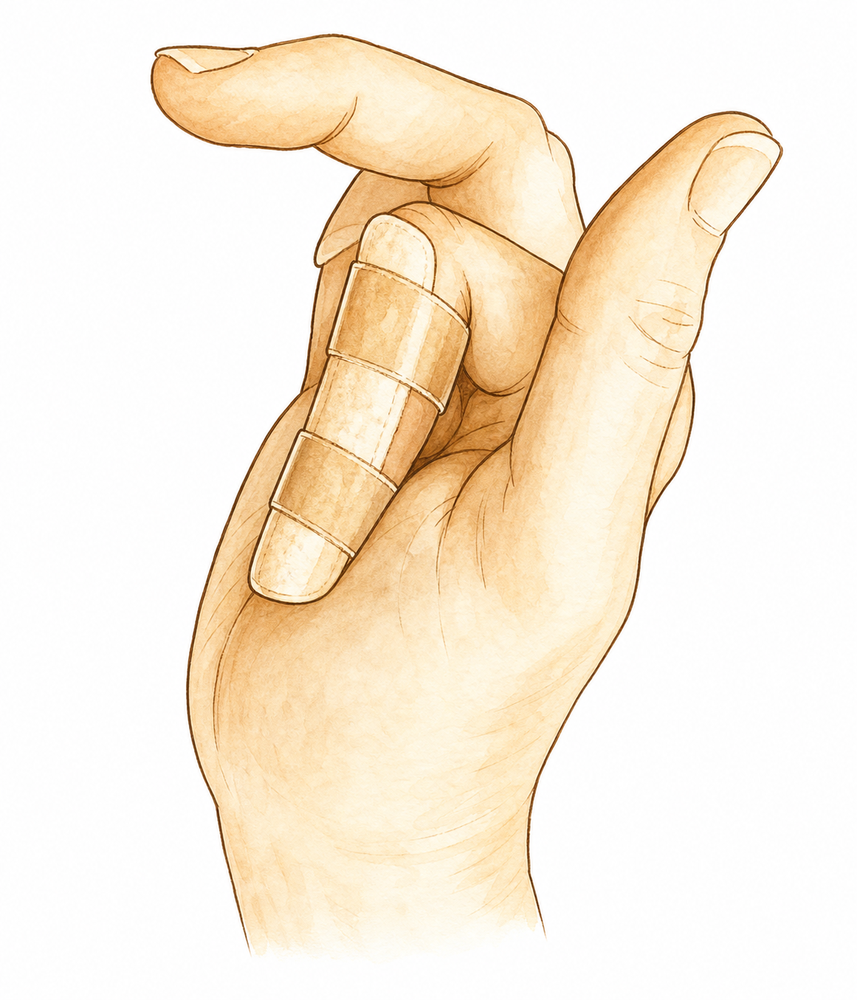
Kieran Hirpara 4.0
Giữ cho khớp giữa và khớp gốc ngón tay vận động (khớp PIP và MCP)
Mặc dù đầu ngón tay được cố định thẳng bằng nẹp, bạn vẫn cần vận động các khớp còn lại của ngón tay để tránh bị cứng khớp. Hãy gập và duỗi thẳng hoàn toàn khớp giữa (khớp PIP) cũng như khớp gốc ngón tay (khớp MCP); những khớp này có thể vận động một cách an toàn mà không ảnh hưởng đến quá trình liền gân ở đầu ngón tay. Hãy nắm tay thành hình nửa nắm đấm rồi mở ra trở lại, luôn giữ đầu ngón tay được nẹp thẳng trong suốt quá trình đó.
10 lần ở mỗi khớp, vài lần mỗi ngày, vẫn đeo nẹp
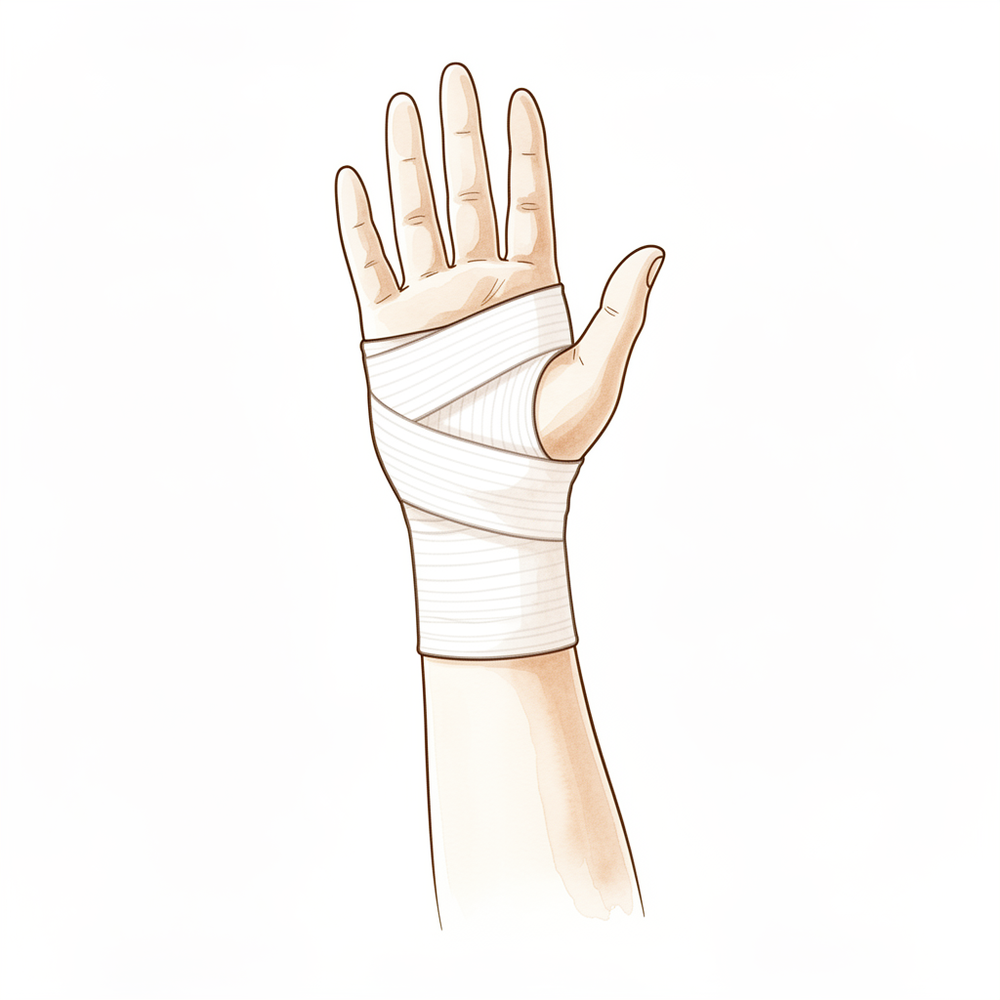
Kieran Hirpara 4.0
Chăm sóc da và giảm sưng dưới nẹp
Mỗi ngày, khi vẫn giữ đầu ngón tay thẳng, hãy kiểm tra da — đặc biệt là vùng phía trên khớp và móng tay. Da hơi hồng là bình thường, nhưng nếu da trông nhợt, trắng hoặc đau ở chỗ nẹp tì vào, có thể nẹp đang giữ đầu ngón tay ngửa ra sau quá mức; hãy báo cho chuyên viên trị liệu tay để điều chỉnh. Giữ ngón tay và nẹp sạch, khô, và nâng cao bàn tay nếu bị sưng.
Kiểm tra hàng ngày; báo lại nếu da nhợt nhạt, đau hoặc bị trầy loét
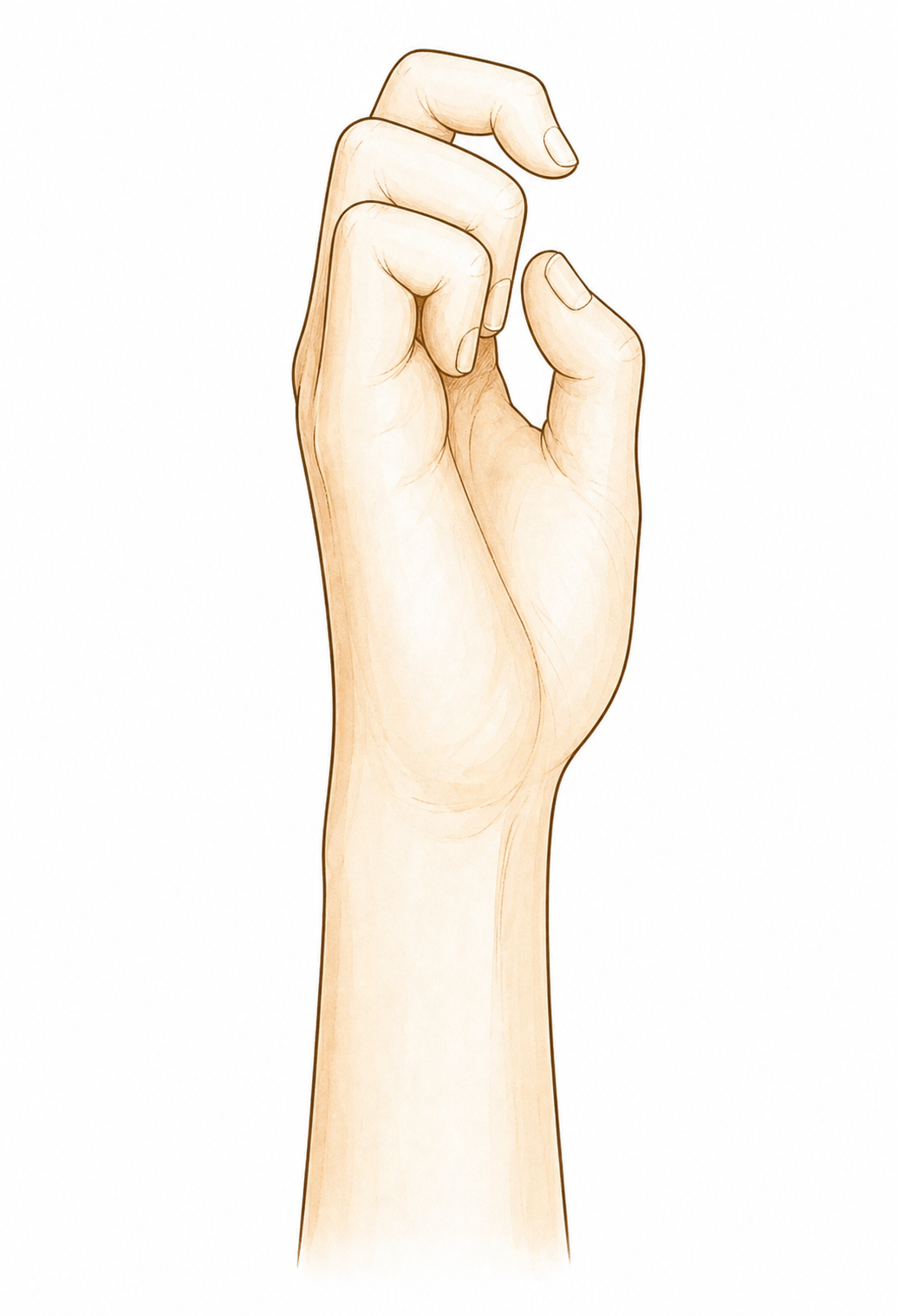
Kieran Hirpara 4.0
Gập đầu ngón tay tăng dần (giai đoạn cai nẹp)
Một bài tập Ở GIAI ĐOẠN SAU — chỉ khi chuyên viên trị liệu tay bắt đầu cai nẹp (thường từ khoảng 6 đến 8 tuần) và đầu ngón tay không rủ xuống, hoặc chỉ rủ ở mức chấp nhận được. Khi ở ngoài nẹp, nhẹ nhàng gập khớp đầu ngón tay một chút ÍT, rồi duỗi thẳng hoàn toàn trở lại, luôn trong giới hạn thoải mái. Không được cố ép. Nếu đầu ngón tay bắt đầu rủ xuống trở lại, hãy quay lại đeo nẹp toàn thời gian và báo cho chuyên viên trị liệu.
Một vài lần gập nhẹ, chỉ theo hướng dẫn trong giai đoạn cai nẹp
Đây là những bài tập có trong tờ hướng dẫn của bạn. “Bài tập” quan trọng nhất chính là đeo nẹp đúng cách và giữ đầu ngón tay thẳng vào mọi lúc; mọi thứ khác đều được xây dựng xung quanh điều đó. Trong giai đoạn đầu, nhiệm vụ của bạn là giữ nẹp trên tay, giữ cho da khỏe mạnh và giữ cho các khớp khác của ngón tay vận động tự do. Các bài tập gập nhẹ đầu ngón tay và duỗi thẳng có chặn khớp thuộc về giai đoạn cai nẹp về sau và không nên bắt đầu cho đến khi chuyên viên trị liệu tay chỉ định cụ thể. Hãy ngừng bất cứ động tác nào khiến đầu ngón tay rủ xuống và quay lại đeo nẹp toàn thời gian.
Quy trình điều trị lâm sàng của bạn
Phần còn lại của trang này là quy trình lâm sàng theo giai đoạn cho việc phục hồi chức năng ngón tay hình búa bằng nẹp. Phần này cần được cung cấp cho chuyên viên trị liệu tay, và mỗi giai đoạn đều mở đầu bằng lời giải thích bằng ngôn ngữ dễ hiểu về những gì đang diễn ra. Quá trình lành thương phụ thuộc vào việc duy trì duỗi khớp DIP không gián đoạn: gân tận (hoặc mảnh xương bị bong) chỉ liền lại nếu khớp DIP không bao giờ được phép gập trong suốt thời gian đeo nẹp, trong khi các khớp PIP và MCP được để tự do, vì vận động của chúng không ảnh hưởng đến quá trình liền gân tận. Sự tuân thủ của bệnh nhân là yếu tố chi phối kết quả điều trị.
Trước khi điều trị, cần xác định ngón tay hình búa là do gân hay có mảnh xương và xem lại hình ảnh chẩn đoán. Sử dụng nẹp duỗi khớp DIP: nẹp Stack, nẹp nhựa nhiệt dẻo, hoặc nẹp alumifoam mặt lòng/mặt lưng; loại nẹp không tạo ra khác biệt đáng kể về kết quả, vì vậy hãy chọn theo độ vừa vặn, khả năng dung nạp của da và khả năng tuân thủ. Giữ khớp DIP ở tư thế duỗi hoàn toàn hoặc hơi quá duỗi, nhưng TRÁNH quá duỗi quá mức (nguy cơ da mặt lưng tái nhợt/loét). Đối với ngón tay hình búa có mảnh xương, nên giữ khớp DIP thẳng/trung tính thay vì quá duỗi để tránh bán trật đốt xa về phía lòng. Khớp PIP luôn được để tự do.
Giai đoạn I — nẹp duỗi toàn thời gian không gián đoạn (tuần 0 đến 6/8)
Khớp đầu ngón tay được giữ thẳng liên tục, cả ngày lẫn đêm, để gân hoặc mảnh xương lành lại. Nẹp chỉ được tháo ra để chăm sóc da, và chỉ khi khớp DIP được giữ duỗi trong suốt thời gian đó; chỉ một lần gập khớp DIP cũng khiến thời gian lành thương phải tính lại từ đầu. Các khớp PIP và MCP vận động tự do.
Dành cho chuyên viên trị liệu tay:
Giáo dục và các lưu ý - Lắp nẹp duỗi khớp DIP (Stack/nhựa nhiệt dẻo/alumifoam), khớp DIP ở tư thế duỗi hoàn toàn hoặc hơi quá duỗi; tránh quá duỗi quá mức (da tái nhợt/loét); có mảnh xương → thẳng/trung tính, không quá duỗi (nguy cơ bán trật) - Đeo liên tục: do gân ~8 tuần, có mảnh xương ~6 tuần; khớp DIP không bao giờ được gập trong khoảng thời gian này - Hướng dẫn kỹ thuật thay nẹp trên mặt phẳng để khớp DIP không bao giờ bị rủ xuống; nếu bệnh nhân không thể giữ được tư thế duỗi, chuyên viên trị liệu sẽ thực hiện việc thay nẹp - Khớp PIP và MCP được để tự do và vận động chủ động từ ngày 1
Xử trí - Da: kiểm tra hàng ngày vùng mặt lưng khớp DIP và nếp móng; điều chỉnh nẹp nếu da tái nhợt/bị tì đè; giữ sạch và khô - Phù nề: nâng cao tay; vận động nhẹ nhàng các khớp phía gần - Bài tập: tầm vận động chủ động đầy đủ của khớp PIP và MCP; không vận động khớp DIP - Có mảnh xương: duy trì theo dõi X-quang trong thời gian đeo nẹp (thẳng trục/bán trật), vì đeo nẹp không kém hơn xuyên kim về mức trễ duỗi nhưng vị trí mảnh xương phải được theo dõi
Tiêu chí để chuyển giai đoạn - Đã hoàn thành giai đoạn đeo toàn thời gian (do gân ~8 tuần / có mảnh xương ~6 tuần) với không có trễ duỗi khớp DIP vượt quá mức chấp nhận được, và da khỏe mạnh
Giai đoạn II — cai nẹp và bắt đầu vận động khớp DIP có kiểm soát (tuần 6/8, sau đó thêm 2 đến 6 tuần)
Khi giai đoạn đeo toàn thời gian đã hoàn thành và không có trễ duỗi, hoặc chỉ có mức chấp nhận được, nẹp được cai dần xuống chỉ đeo ban đêm và khi thực hiện hoạt động có nguy cơ, trong khi bắt đầu gập khớp DIP nhẹ nhàng có kiểm soát. Việc đeo nẹp ban đêm có thể được xem là tùy chọn (một nghiên cứu mức I cho thấy không thiết yếu) và được áp dụng một cách thực tế. Nếu trễ duỗi đáng kể tái phát, bệnh nhân quay lại đeo nẹp duỗi toàn thời gian.
Dành cho chuyên viên trị liệu tay:
Đánh giá - Mức trễ duỗi chủ động khớp DIP (độ) và khả năng gập chủ động; da; mức độ tự tin của bệnh nhân khi đầu ngón tay ở ngoài nẹp
Giáo dục và các lưu ý - Cai xuống đeo nẹp ban đêm + khi hoạt động có nguy cơ cao trong khoảng 2 đến 6 tuần nữa; đeo ban đêm là tùy chọn theo bằng chứng hiện tại - Nếu trễ duỗi >20° tái phát sau giai đoạn đeo nẹp, quay lại đeo nẹp duỗi toàn thời gian trong ~4 đến 6 tuần
Xử trí - Bài tập: bắt đầu gập chủ động khớp DIP nhẹ nhàng, tăng dần (biên độ nhỏ trước) và duỗi chủ động khớp DIP có chặn (cố định khớp PIP, duỗi khớp DIP); tăng dần biên độ gập khi mức trễ duỗi cho phép - Giảm thời gian đeo nẹp ban ngày khi khớp DIP giữ được duỗi chủ động mà không có trễ duỗi, hoặc trễ duỗi chấp nhận được (≤10–20°) - Tiếp tục vận động đầy đủ khớp PIP/MCP; chăm sóc sẹo/da khi cần - Ngón tay hình búa mạn tính hoặc đến khám muộn vẫn đáp ứng với nẹp duỗi; bắt đầu muộn không phải là chống chỉ định
Tiêu chí để chuyển giai đoạn - Khớp DIP giữ được duỗi chủ động với mức trễ duỗi chấp nhận được; đã lấy lại khả năng gập khớp DIP có kiểm soát, không đau; da nguyên vẹn
Giai đoạn III — tăng cường sức mạnh và trở lại hoạt động (từ khoảng tuần 8 đến 12)
Khi gân đã lành và đã lấy lại vận động chủ động, ngón tay được cai hoàn toàn khỏi nẹp và bắt đầu tăng cường sức mạnh theo mức độ cùng với trở lại hoạt động. Một mức trễ duỗi nhỏ vĩnh viễn (trung bình ~8°) là điều được dự kiến và vẫn tương thích với kết quả chức năng rất tốt.
Dành cho chuyên viên trị liệu tay:
Đánh giá - Mức trễ duỗi chủ động khớp DIP và cung gập; sức nắm; mức sẵn sàng chịu tải và chơi thể thao
Giáo dục và các lưu ý - Sử dụng hàng ngày không cần nẹp; đeo nẹp bảo vệ khi chơi thể thao đối kháng trong giai đoạn trở lại - Tư vấn rằng trễ duỗi còn lại ~5–10° là bình thường và không ảnh hưởng đến mức độ hài lòng
Xử trí - Bài tập: tăng cường sức nắm và sức kẹp theo mức độ; tầm vận động toàn bộ ngón tay; tiến triển theo nhiệm vụ cụ thể và theo môn thể thao - Trở lại thể thao/lao động nặng từ ~8 đến 12 tuần dựa trên tiêu chí (nẹp bảo vệ khi chơi thể thao đối kháng) - Cho kết thúc điều trị khi sức mạnh và chức năng đã đủ và mức trễ duỗi ổn định; chuyển lại khám nếu trễ duỗi rõ rệt vẫn còn hoặc tái phát
Trở lại với công việc và các hoạt động
Việc sử dụng nhẹ nhàng bàn tay đang đeo nẹp là ổn ngay từ đầu: nẹp vẫn được giữ nguyên, đầu ngón tay vẫn thẳng, và bạn có thể dùng tay cho các công việc hàng ngày trong giới hạn đó. Bạn không nên lái xe khi đang đeo nẹp đầu ngón tay: việc lái xe phải đợi đến khi nẹp đã được tháo bỏ và bạn có thể nắm vô lăng và điều khiển xe an toàn, như được xác nhận với Bác sĩ Hirpara trong lần tái khám. Việc cầm nắm và tăng cường sức mạnh được tăng dần từ khoảng sáu đến tám tuần, khi nẹp được cai dần. Việc trở lại thể thao và lao động chân tay nặng hơn thường từ khoảng tám đến mười hai tuần, được đánh giá dựa trên việc lấy lại vận động có kiểm soát chứ không chỉ dựa vào lịch, và cần đeo nẹp bảo vệ khi chơi thể thao đối kháng trong giai đoạn trở lại đó. Bạn có thể sẽ còn lại tình trạng đầu ngón tay hơi rủ xuống vĩnh viễn khoảng năm đến mười độ; điều này là bình thường, không ảnh hưởng đến chức năng của bàn tay, và hầu hết mọi người hầu như không để ý đến nó.
Sau khi hoàn thành quy trình
Quy trình này được áp dụng song song với các hướng dẫn phục hồi chung của phòng khám; vui lòng tham khảo kiểm soát đau sau phẫu thuật, chăm sóc vết thương và chăm sóc sẹo. Kế hoạch theo giai đoạn nêu trên phản ánh các hướng dẫn đã được công bố về việc đeo nẹp điều trị ngón tay hình búa, và quá trình hồi phục tiếp theo của bạn được Bác sĩ Hirpara và chuyên viên trị liệu tay hướng dẫn riêng tùy theo tiến triển của đầu ngón tay.
Lưu ý nếu ngón tay hình búa của bạn được cố định bằng phẫu thuật
Hầu hết các trường hợp ngón tay hình búa không bao giờ cần phẫu thuật. Phẫu thuật chỉ được cân nhắc đối với ngón tay hình búa có mảnh xương khi vết gãy liên quan đến một phần lớn bề mặt khớp (hơn khoảng một phần ba) hoặc khi khớp cuối cùng bị trượt khỏi vị trí (bán trật về phía lòng). Khi tiến hành cố định, phương pháp thường dùng là xuyên kim Kirschner chặn duỗi (Ishiguro), đôi khi kèm theo một kim tạm thời xuyên qua khớp đầu ngón tay để giữ khớp thẳng. Kim này thường được giữ khoảng bốn đến sáu tuần và được rút ra vào khoảng tuần thứ năm đến thứ sáu, sau đó bắt đầu vận động chủ động đầu ngón tay và có thể đeo nẹp ban đêm thêm khoảng bốn tuần nữa. Bằng chứng cho thấy đeo nẹp không kém hơn xuyên kim về mức độ rủ đầu ngón tay cuối cùng, vì vậy phẫu thuật chỉ dành cho những tình huống cụ thể nêu trên chứ không được áp dụng thường quy.
Evidence & references
This is the clinical evidence summary written for health professionals. It is technical, and it lists the research this page was built from. You do not need to read it to understand your treatment or to make a decision about it.
Mallet Finger — Injury Outcomes & Splint-Led Rehabilitation (Terminal Extensor Tendon, DIP)
Topic scope: non-operative (and, where indicated, post-fixation) management of a mallet finger — disruption of the terminal extensor tendon at the distal interphalangeal (DIP) joint, either purely tendinous or with an avulsion bony fragment (bony mallet). This is a healing injury, not a reconstruction: the entire treatment is uninterrupted DIP extension splinting that holds the tendon (or fragment) in apposition while it unites, with the PIP and MCP left free.
Defining principle of the rehab here: the terminal extensor tendon heals only if the DIP is held in continuous extension and is never allowed to flex during the splinting period. Any single lapse into DIP flexion separates the healing ends and restarts the healing clock, which is why patient compliance is the dominant outcome driver. The PIP is deliberately kept mobile because proximal-joint motion does not disturb terminal-tendon healing. Splint type (Stack, thermoplastic, volar/dorsal alumifoam) does not materially change the outcome — fit, skin tolerance and compliance matter more than the device. The single branch point is the bony mallet with a large articular fragment or DIP volar subluxation, where surgical fixation is considered; even there, splinting is non-inferior to pinning for the final extensor lag, so operation is reserved rather than routine.
A. INJURY OUTCOMES (tendinous vs bony mallet; splinting vs fixation)
Mallet finger is one of the most reliably treated closed tendon injuries in the hand: the great majority heal well with splinting alone, and the principal debate is over the bony mallet — when, if ever, to fix it.
- Continuous extension splinting is the standard of care and works well for both tendinous and bony mallets, including chronic and delayed presentations, which still respond to splinting weeks after injury [Valdes systematic review LoE 1a; Salazar Botero review; Medscape; StatPearls]. Strong (SR + reviews).
- Splint type makes no meaningful outcome difference. A randomised comparison of splint designs found no superiority of one orthosis over another; the determinant is uninterrupted DIP extension and compliance, not the device [Pike RCT]. Strong (RCT).
- Splinting is non-inferior to extension-block pinning for the final extensor lag. A randomised trial comparing conservative extension splinting with operative extension-block K-wiring for bony mallet found no advantage to pinning in the residual lag, supporting non-operative management as the default even for many bony mallets [Thillemann RCT]. Strong (RCT).
- Surgery is reserved for the large bony fragment or subluxating DIP. Operative fixation is
considered when the fracture involves a large part of the articular surface (often cited as
~30%) or there is volar subluxation of the distal phalanx; common techniques are extension-block (Ishiguro) K-wiring with or without a trans-articular DIP pin. Single-K-wire constructs perform less well in non-compliant settings [Aksan; Salazar Botero; Medscape]. Moderate.
- Stack splints can subluxate a bony mallet. Volar-based Stack-type orthoses holding the DIP in hyperextension can displace a bony-mallet fragment / promote subluxation, which is why a straight/neutral DIP is preferred for bony mallets rather than hyperextension [Kaplan]. Moderate (mechanistic/clinical).
- The underlying mechanism is a terminal tendon avulsion at the distal phalanx. Anatomical and injury studies characterise the lesion as avulsion of the terminal extensor at its distal-phalanx insertion, and a very small amount of tendon lengthening translates into a large extensor lag — roughly 1 mm of lengthening ≈ 25° of lag — which is the biomechanical reason apposition must be maintained so strictly [Tuttle; Yeh; PMC current concepts]. Mechanistic.
B. REHABILITATION / THERAPY EVIDENCE
The central rehab questions are (1) how long and how strictly to splint, (2) whether the PIP should be included, and (3) whether night-time and post-splinting splinting are needed. The evidence supports uninterrupted full-time DIP extension splinting (~6–8 weeks) with the PIP free, followed by a weaning phase, and downgrades routine night-splinting to optional.
- Uninterrupted DIP extension is the active ingredient; the PIP must stay free. Splinting holds the DIP in full extension (or slight hyperextension) continuously; the PIP and MCP are mobilised from the outset because proximal-joint motion does not load the terminal tendon. Full-time wear is about 8 weeks for tendinous and 6 weeks for bony mallets [Valdes SR 1a; Salazar Botero; StatPearls; Physiopedia]. Strong (SR + guideline-level reviews).
- Compliance is the dominant outcome driver. Because any DIP flexion restarts healing, outcome tracks adherence to continuous extension more than any device choice; patient education and a safe flat-surface splint-change technique are central [Valdes SR; Cook BAHT survey of therapist practice]. Strong (mechanism + practice consensus).
- Avoid excessive hyperextension. Holding the DIP in marked hyperextension risks dorsal-skin blanching and pressure ulceration over the joint; slight hyperextension or neutral is sufficient, and bony mallets should be held straight/neutral to avoid fragment subluxation [Azad dorsal splinting outcomes; Kaplan]. Moderate.
- Night-time splinting after the full-time phase is non-essential (optional). A Level-I study found that continued night-splinting after the primary full-time period was not essential to the result, so the ~2–6 week post-splinting night/risky-activity phase is framed as optional and pragmatic rather than mandatory [Valdes SR 1a evidence base]. Moderate (Level I within SR).
- Recurrent lag responds to re-splinting. If an extensor lag (>~20°) recurs after the splinting period, a further ~4–6 weeks of full-time extension splinting is appropriate; chronic/delayed mallets likewise still respond [Salazar Botero; Medscape; StatPearls]. Moderate.
- A small residual extensor lag is the expected, satisfactory result. Most patients are left with a slight permanent lag (mean ~8°, typically 5–10°) that does not impair function or satisfaction; this should be counselled as normal rather than as failure [Salazar Botero; PMC current concepts; Physiopedia]. Moderate–strong (natural history).
Recovery trajectory (expected, evidence-anchored)
| Phase | Window | Restraint | Hand use / therapy focus | Strength / load | Notes |
|---|---|---|---|---|---|
| I — Continuous DIP extension splinting | Week 0–6/8 (bony ~6, tendinous ~8) | DIP held continuously extended; never flex the DIP | Full-time extension orthosis (Stack/thermoplastic/alumifoam); flat-surface splint changes only; PIP + MCP moved freely from day 1; daily dorsal-skin checks | No DIP loading; light splinted hand use | Any DIP flexion resets the clock; bony mallet held straight/neutral + radiographic surveillance |
| II — Weaning & controlled DIP motion | +2–6 weeks after full-time phase | Night / high-risk-activity splinting (night wear optional) | Begin gentle graded active DIP flexion + blocked active DIP extension; reduce day wear once lag ≤10–20° | Light functional load | Lag >20° recurring → re-splint full-time ~4–6 wk; chronic mallets still respond |
| III — Strengthening & return | From ~week 8–12 | None (protective splint for contact sport) | Splint-free use; graded grip/pinch strengthening; full ROM; sport-/work-specific progression | Grip/strength built up; driving once able to grip the wheel safely | Expect ~5–10° permanent lag (mean ~8°) — normal, satisfaction preserved |
(Phase windows mirror the precautions in the patient protocol; they are typical guides, not trial-derived deadlines.)
C. KEY CONTROVERSIES / EVIDENCE QUALITY
- Splint type. Stack vs thermoplastic vs volar/dorsal alumifoam — randomised data show no meaningful outcome difference; the determinant is uninterrupted extension and compliance, not the device [Pike RCT]. Strong evidence of equivalence.
- Splinting vs operative fixation for bony mallet. Randomised data show extension splinting is non-inferior to extension-block pinning for the residual lag; surgery is reserved for the large articular fragment (>~30%) or volar DIP subluxation, not used routinely [Thillemann RCT; Aksan; Salazar Botero]. Strong (RCT) for non-inferiority; moderate for the fixation indications.
- Hyperextension vs neutral. Slight hyperextension aids tendinous apposition but excessive hyperextension risks dorsal-skin ischaemia/ulcer, and in bony mallets can subluxate the fragment — hence straight/neutral for bony mallets [Azad; Kaplan]. Moderate.
- Is night-splinting necessary? A Level-I study found continued night-splinting after the full-time phase non-essential; the post-splinting phase is therefore optional/pragmatic rather than mandatory [Valdes SR 1a]. Moderate.
- Residual lag as expected outcome, not failure. A small permanent lag (mean ~8°) is the norm and is compatible with full function and satisfaction; mislabelling it as failure drives unnecessary intervention [Salazar Botero; PMC current concepts]. Strong natural-history data.
D. EVIDENCE STRENGTH FLAGS (summary)
- STRONG (RCT / SR): uninterrupted DIP extension splinting as standard of care (6–8 wk full-time, tendinous ~8 / bony ~6); splint-type equivalence; PIP-free mobilisation; compliance as the key outcome driver; expected ~5–10° residual lag; splinting non-inferior to pinning for bony mallet (with radiographic surveillance during splinting).
- MODERATE: exact length of the weaning/night-splinting phase (night wear non-essential per a Level-I study); strengthening and return-to-sport/work timing (~8–12 weeks, criterion-based); hyperextension-vs-neutral splint positioning and the bony-mallet subluxation caveat; surgical indications (>~30% articular fragment / volar subluxation) and fixation technique.
- WEAK / CONFIRM: driving — a fingertip splint is not usually a contraindication once the wheel can be gripped safely, but this is confirmed clinically rather than evidence-defined.
CITATIONS
RAG corpus (180,000+ Orthopaedic articles)
- A randomized controlled trial comparing splint designs for mallet finger. J Hand Surg Am. 2010. DOI: 10.1016/j.jhsa.2010.01.005
- Conservative management of mallet finger: a systematic review (Level of Evidence 1a). J Hand Ther. 2015. DOI: 10.1016/j.jht.2015.03.001
- Mallet finger: a survey of British Association of Hand Therapists practice. Hand Therapy. 2016. DOI: 10.1177/1758998316664822
- The mallet finger injury: a review (current concepts in diagnosis and management). Arch Plast Surg. 2016. DOI: 10.5999/aps.2016.43.2.134
- Outcomes of dorsal splinting for mallet finger. Hand (N Y). 2022. DOI: 10.1177/15589447221093674
- Conservative splinting versus extension-block K-wiring for bony mallet finger: a randomized controlled trial. J Hand Surg (Eur Vol). 2020. DOI: 10.1177/1753193420917567
- Tendon avulsion fractures of the distal phalanx (terminal extensor avulsion). Clin Orthop Relat Res. 2006. DOI: 10.1097/01.blo.0000205903.51727.62
- Tendon ruptures in the hand. Hand Clin. 2012. DOI: 10.1016/j.hcl.2012.05.040
- Single K-wire fixation of bony mallet finger in non-compliant patients. Arch Orthop Trauma Surg. 2021. DOI: 10.1007/s00402-021-03793-4
- Subluxation of bony mallet fractures with Stack splint immobilisation. J Hand Surg Am. 2013. DOI: 10.1016/j.jhsa.2013.08.111
Mallet-finger management literature (URLs)
- Medscape — Mallet Finger Treatment & Management. https://emedicine.medscape.com/article/1242305-treatment
- StatPearls — Mallet Finger (NCBI Bookshelf). https://www.ncbi.nlm.nih.gov/books/NBK459373/
- Current concepts in the management of mallet finger (PMC; ~1 mm terminal-tendon lengthening ≈ 25° extensor lag). https://pmc.ncbi.nlm.nih.gov/articles/PMC4022957/
- Physiopedia — Mallet Finger. https://www.physio-pedia.com/Mallet_Finger