Patients › Shoulder
Chứng vai đông cứng
Frozen shoulder (adhesive capsulitis) causes pain and stiffness, progressing through freezing, frozen, and thawing phases.
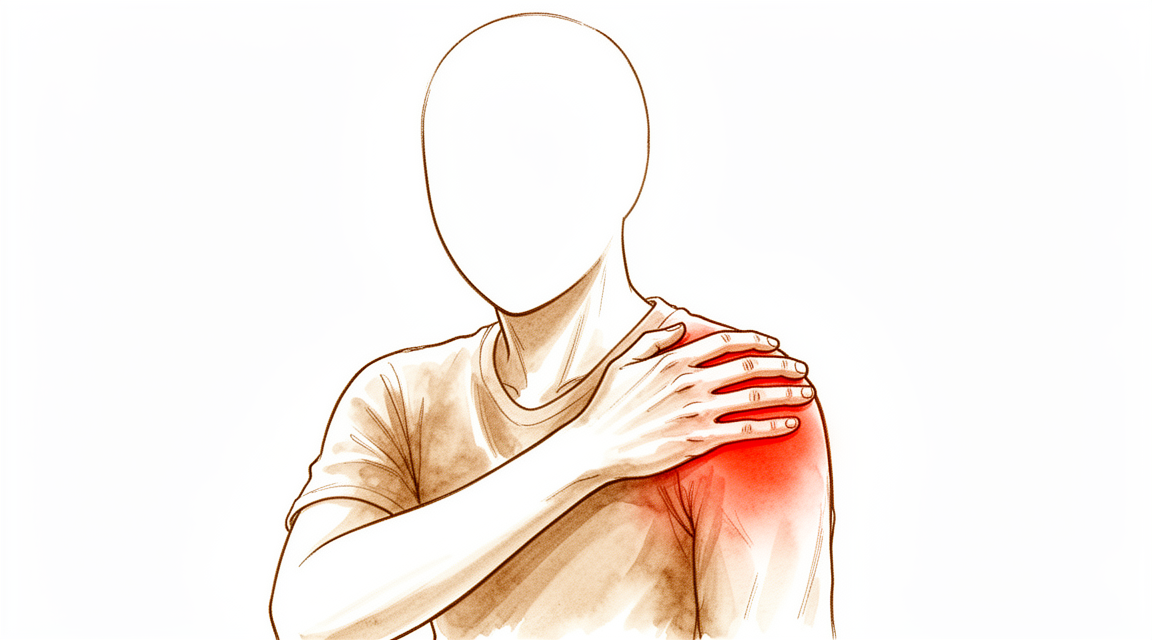
Những cảm giác mà bạn đang trải qua
Chứng vai cứng thường bắt đầu bằng cơn đau âm ỉ, sâu bên trong, dần trở nên tồi tệ hơn trong vài tuần chứ không xuất hiện đột ngột. Đối với hầu hết mọi người, cơn đau là triệu chứng nặng nề nhất lúc đầu, và thường dữ dội nhất vào ban đêm. Việc nằm nghiêng về phía vai bị ảnh hưởng trở nên bất khả thi; giấc ngủ bị gián đoạn là một trong những yếu tố gây mệt mỏi nhất trong suốt quá trình mắc bệnh.
Sau đó, vai bắt đầu bị cứng lại. Bạn cố với tay lấy dây an toàn, với lên kệ cao, hoặc đưa tay vào túi quần, nhưng cánh tay bỗng dừng lại không thể cử động. Điểm khác biệt của chứng vai cứng so với hầu hết các vấn đề về vai là tình trạng cứng khớp không chỉ do bạn cố gắng tránh đau — mà vai thực sự không thể cử động, ngay cả khi có người khác nâng tay bạn lên. Việc mất khả năng xoay tay ra ngoài, ví dụ như khi mở cửa hoặc cho tay vào ống tay áo, là dấu hiệu đặc trưng nhất của bệnh này.
Hầu hết những người mắc bệnh đều ở độ tuổi từ 40 đến 60. Một số nhớ rằng trước đó đã từng bị va chạm nhẹ; nhiều người thì không có bất kỳ nguyên nhân rõ ràng nào. Tình trạng này phổ biến hơn ở những người mắc bệnh tiểu đường hoặc rối loạn tuyến giáp; nếu đã từng bị ở một bên vai, khả năng vai bên kia cũng bị ảnh hưởng sau này là khá cao.
Điều gì đang thực sự xảy ra
Khớp vai của bạn nằm trong một lớp mô chắc gọi là bao khớp. Thông thường, lớp mô này khá lỏng lẻo và có tính đàn hồi; nhờ đó vai mới có thể cử động rộng hơn bất kỳ khớp nào khác trên cơ thể. Trong tình trạng vai bị cứng, bao khớp bị viêm, sau đó dày lên và co lại, khiến không gian bên trong khớp thu hẹp lại. Kích thước không gian này thậm chí có thể giảm xuống còn chưa đến một nửa so với mức bình thường.
Mặc dù trước đây người ta gọi tình trạng này là “viêm bao khớp dính”, thực tế không có gì bị dính vào nhau bên trong khớp cả; cũng không có các mô dạng keo nào hình thành. Chỉ là mô bị co cứng, và đây là một vấn đề hoàn toàn khác. Vì lý do này, một số bác sĩ phẫu thuật cho rằng tình trạng này nên được gọi đơn giản là “co cứng” khớp vai.
Nguyên nhân gây ra tình trạng này vẫn chưa được hiểu rõ hoàn toàn; điều này là sự thật. Có nhiều bằng chứng cho thấy đây không phải là vấn đề chỉ liên quan riêng đến khớp vai. Các nghiên cứu về yếu tố di truyền cho thấy bệnh tiểu đường loại 1 thực sự gây ra tình trạng vai bị cứng chứ không chỉ có mối liên hệ ngẫu nhiên; mối liên hệ này xuất phát từ nồng độ đường trong máu chứ không phải do cân nặng hay lực cơ học tác động. Những thay đổi ở mô trong trường hợp này rất giống với bệnh Dupuytren ở bàn tay; vì vậy cả hai tình trạng này thường xuất hiện cùng lúc ở cùng một người.
Thành thật về thời gian cần thiết để hồi phục
Có lẽ bạn sẽ đọc được rằng chứng vai cứng là tình trạng tự khỏi và sẽ hồi phục hoàn toàn trong khoảng 18 tháng đến 2 năm. Chúng tôi muốn nói thẳng với bạn: lời khẳng định đó có phần quá lạc quan so với những bằng chứng y khoa hiện có.
Quan niệm cho rằng tình trạng này trải qua ba giai đoạn rõ rệt — cứng dần, hoàn toàn cứng, rồi dần mềm ra — bắt nguồn từ một nghiên cứu nhỏ được công bố năm 1975, trong đó các bệnh nhân được đeo nẹp cố định cánh tay trong thời gian lên tới 9 tháng. Điều dễ hiểu là các khớp vai như vậy trở nên cứng rắn, rồi mới dần linh hoạt trở lại khi được vận động trở lại. Tuy nhiên, khi các nhà nghiên cứu tổng hợp và xem xét tất cả các nghiên cứu hiện có, họ không tìm thấy bằng chứng thuyết phục nào cho thấy những khớp vai không được điều trị cũng sẽ tự động trải qua các giai đoạn đó và trở lại trạng thái bình thường. Thực tế, chưa có nghiên cứu nào chứng minh rằng người bệnh có thể phục hồi hoàn toàn phạm vi vận động bình thường mà không cần can thiệp.
Những gì các bằng chứng y khoa cho thấy lại hữu ích hơn nhiều, đó là: phần lớn sự cải thiện sẽ diễn ra trong giai đoạn đầu; sau đó tiến triển sẽ chậm lại và dừng hẳn. Trạng thái ổn định đó có thể kéo dài mãi mãi. Tùy theo từng nghiên cứu, từ một phần ba đến một nửa số người vẫn cảm thấy hơi đau hoặc cứng khớp sau nhiều năm, dù đối với phần lớn họ, triệu chứng này chỉ ở mức nhẹ và không cản trở các hoạt động thường ngày.
Điều đó không có nghĩa là bạn sẽ không hồi phục. Phần lớn mọi người đều cải thiện đáng kể. Tuy nhiên, lời khuyên “chỉ cần chờ đợi, mọi thứ sẽ tự khỏi” không hẳn là lời khuyên trung lập; và có cơ sở hợp lý để điều trị cơn đau một cách chủ động thay vì chỉ chịu đựng nó.
Những gì chúng tôi có thể làm
Tại Bệnh viện tư nhân Mater Rockhampton, bác sĩ Kieran Hirpara sẽ giải thích cho bạn các phương án điều trị dựa trên triệu chứng nào khiến bạn khó chịu nhất — cơn đau hay tình trạng cứng khớp — thay vì cố gắng xếp bạn vào một mức độ bệnh cụ thể nào đó.
Tiêm steroid vào khớp là phương pháp điều trị có cơ sở khoa học vững chắc nhất trong giai đoạn đau đớn. Qua rất nhiều nghiên cứu, đây là phương pháp duy nhất giúp giảm đáng kể cả cơn đau lẫn khả năng vận động mà bệnh nhân có thể cảm nhận được; hiệu quả thường xuất hiện trong vài tuần đầu. Hạn chế của nó là tác dụng này sẽ giảm dần sau khoảng ba tháng. Phương pháp này giúp bạn giảm đau, ngủ ngon hơn và có thể tiếp tục làm việc với vai — nhưng không chữa khỏi tình trạng cứng khớp.
Tập luyện và vật lý trị liệu cũng rất đáng để thực hiện, miễn là bạn có kỳ vọng hợp lý. Một chương trình tập luyện đơn giản tại nhà cũng mang lại hiệu quả đáng kể. Điều có thể khiến bạn ngạc nhiên là mức độ nỗ lực khi tập luyện ít tạo ra khác biệt: một thử nghiệm so sánh giữa việc kéo giãn mạnh đến hết biên độ và các động tác nhẹ nhàng không gây đau chỉ ghi nhận những khác biệt nhỏ, hơi nghiêng về cách tập mạnh hơn ở một số động tác; một nghiên cứu khác lại cho thấy những người tập nhẹ nhàng trong giới hạn chịu đau của mình có kết quả tốt hơn — và đáng mừng là không có bằng chứng nào cho thấy việc tập mạnh hơn sẽ gây tổn hại. Vì vậy, hãy tập luyện trong mức độ mà cơ thể bạn có thể chịu đựng. Việc cố gắng vượt qua cơn đau dữ dội không giúp quá trình hồi phục diễn ra nhanh hơn.
Thủ thuật tiêm dịch để giãn màng bao khớp (Hydrodilatation) là phương pháp phổ biến và ít rủi ro; dịch được tiêm vào để kéo giãn màng bao khớp từ bên trong. Tuy nhiên, các nghiên cứu về phương pháp này lại cho kết quả trái chiều: một phân tích chỉ ghi nhận hiệu quả nhỏ đối với cả cơn đau lẫn khả năng vận động; các phân tích khác nhận thấy phương pháp này giúp cải thiện sớm một số động tác so với chỉ tiêm steroid đơn thuần, nhưng hiệu quả đó không kéo dài. Đây là một lựa chọn hợp lý, nhưng chúng tôi sẽ không quảng bá quá mức.
Thao tác chỉnh trật khớp dưới gây mê là việc di chuyển vai trong phạm vi vận động đầy đủ khi bệnh nhân đang ngủ để kéo giãn màng bao khớp. Trong thử nghiệm lớn nhất so sánh các phương pháp điều trị chính, đây là phương pháp mang lại hiệu quả tổng thể tốt nhất.
Phẫu thuật cắt giãn màng bao khớp qua nội soi là kỹ thuật phẫu thuật cắt bỏ màng bao khớp cứng dưới quan sát trực tiếp, thay vì cố gắng kéo giãn nó đến mức rách. Ưu điểm lớn nhất của phương pháp này là tính bền vững: theo các nghiên cứu, tình trạng cứng khớp tái phát sau phẫu thuật là rất hiếm; ngược lại, sau thao tác chỉnh trật dưới gây mê, một tỷ lệ đáng kể bệnh nhân lại bị cứng khớp trở lại và cần can thiệp lần hai. Trong thử nghiệm lớn tại Anh, nhóm bệnh nhân được phẫu thuật cắt giãn màng bao khớp là nhóm ít cần điều trị bổ sung nhất. Tuy nhiên, vì là phẫu thuật nên rủi ro cao hơn các phương pháp khác và chi phí cũng lớn hơn; bạn có thể cảm thấy đau nhiều hơn trong vài tuần đầu so với người được thao tác chỉnh trật dưới gây mê — nhưng sự chênh lệch này sẽ giảm dần sau khoảng sáu tháng.
Đáng lưu ý là trong thử nghiệm đó, cả ba phương pháp đều cho kết quả tương đương nhau sau một năm. Đây là tin vui, vì nó cho phép bạn lựa chọn phương pháp phù hợp nhất với bản thân, các bệnh lý khác và hoàn cảnh cá nhân, thay vì phải chọn phương pháp “tốt nhất” một cách cứng nhắc.
Thứ tự điều trị mà bác sĩ Hirpara thường áp dụng. Bạn sẽ không bị yêu cầu chịu đựng cơn đau trong một khoảng thời gian cố định trước khi được điều trị. Trên thực tế, ông thường đề nghị tiêm steroid trước, vì với nhiều người, phương pháp này giúp giảm đau đáng kể để họ có thể sinh hoạt bình thường trong lúc khớp dần hồi phục. Nếu tiêm steroid không mang lại hiệu quả như mong muốn, ông sẵn sàng tiến hành phẫu thuật cắt giãn màng bao khớp ngay lập tức — không yêu cầu bạn phải chịu đựng đau đớn suốt chín hoặc mười hai tháng. Xét thấy lời khuyên “bệnh sẽ tự khỏi” thực tế không đáng tin cậy, việc chấp nhận sống chung với cơn đau suốt một năm để chờ xem tình trạng của mình sẽ ra sao là điều không cần thiết.
Những điều có thể xảy ra
Nếu bạn được tiêm thuốc, hãy chuẩn bị tinh thần rằng cơn đau sẽ giảm dần trong vòng một hoặc hai tuần đầu. Hãy tận dụng khoảng thời gian này để vận động vai thường xuyên.
Nếu bạn trải qua thủ thuật chỉnh sửa khớp hoặc giải phóng bao khớp, phần lớn phạm vi vận động mà bạn có thể lấy lại sẽ xuất hiện nhanh chóng — thường là trong vòng bốn đến sáu tuần đầu — và sau khoảng ba tháng thì hầu như không có thay đổi nào thêm nữa. Việc vận động sớm rất quan trọng; vật lý trị liệu thường được bắt đầu trong vòng một hoặc hai ngày sau thủ thuật. Hầu hết mọi người có thể quay lại làm việc văn phòng trong vòng một đến ba tuần.
Nếu bạn mắc bệnh tiểu đường, có thể kỳ vọng quá trình hồi phục sẽ chậm hơn và không hoàn chỉnh bằng mức trung bình; đồng thời cần lưu ý rằng việc tiêm steroid có thể làm thay đổi nồng độ đường huyết trong vài ngày. Hãy cho chúng tôi biết nếu việc kiểm soát đường huyết của bạn gặp khó khăn, vì điều này ảnh hưởng đến các khuyến nghị điều trị của chúng tôi.
Dù bạn chọn phương pháp điều trị nào, quá trình hồi phục thường kéo dài vài tháng chứ không phải vài tuần. Điều hữu ích nhất bạn có thể làm là tiếp tục vận động cánh tay trong mức độ thoải mái và bảo vệ vùng khớp khi ngủ.
Khi nào nên đi khám
Hãy đến gặp bác sĩ đa khoa nếu cơn đau vai khiến bạn tỉnh giấc vào ban đêm hoặc không thuyên giảm sau vài tuần nghỉ ngơi; đồng thời hãy hỏi kỹ về tình trạng vai cứng khớp nếu vai của bạn thực sự khó cử động chứ không chỉ đơn thuần là đau nhức.
Bạn nên sớm nhờ bác sĩ chuyên khoa khám nếu không thể xoay bàn tay ra ngoài, nếu mắc bệnh tiểu đường, nếu cơn đau vai ảnh hưởng đến công việc hoặc việc lái xe, hoặc nếu cơn đau dữ dội đến mức khiến bạn mất ngủ. Việc chần chừ quá lâu trước khi đi khám sẽ chẳng mang lại lợi ích gì cả.
Hãy tìm kiếm sự chăm sóc y tế ngay lập tức nếu vai bị nóng, đỏ và sưng lên; nếu bạn cảm thấy mệt mỏi hoặc sốt kèm theo cơn đau; nếu cánh tay có dấu hiệu yếu đi hoặc tê liệt; hoặc nếu cơn đau xuất hiện sau một cú ngã hoặc chấn thương. Những triệu chứng này cho thấy khả năng cao là không phải vai cứng khớp mà là tình trạng cần được chẩn đoán và điều trị gấp.
Phân tích sâu hơn
Phần này đi sâu hơn một chút so với những gì bạn cần biết để đưa ra quyết định điều trị. Phần này được đưa vào vì chứng vai đông cứng là một trong những tình trạng mà những gì bệnh nhân được thông báo và những gì nghiên cứu thực tế chỉ ra lại có sự chênh lệch; một số người thích hiểu rõ lý lẽ đằng sau thay vì chỉ tin tưởng một cách mù quáng.
Điều gì thực sự đang xảy ra trong khớp
Bao khớp là một lớp mô collagen bao quanh khớp. Trong trường hợp vai cứng, lớp bao này bị viêm rồi dần xơ hóa; các tế bào gọi là tế bào sợi nhân lên và tạo ra nhiều mô collagen mới; một số tế bào này chuyển thành tế bào cơ-sợi, có khả năng co lại một cách chủ động. Đây là điểm khác biệt quan trọng so với quá trình sẹo hóa thông thường: mô không chỉ dày lên mà còn co chặt lại. Thể tích khớp có thể giảm từ mức bình thường là 10–15 mL xuống còn 3–4 mL.
Hiện tượng tương tự cũng xảy ra ở bệnh Dupuytren ở bàn tay; đó là lý do tại sao hai bệnh này thường xuất hiện cùng nhau ở cùng một người. Cũng vì vậy mà một bác sĩ phẫu thuật vai đã cho rằng tình trạng này nên được gọi đơn giản là co rút ở vai thay vì “viêm bao khớp” [1]. Mặc dù vẫn còn cái tên cũ là “viêm bao khớp dính”, các bác sĩ phẫu thuật khi quan sát bên trong khớp lại không tìm thấy bất kỳ mô dính nào cả.
Tại sao mô hình “ba giai đoạn” này không vững chắc như vẻ bề ngoài
Người ta thường viết rằng chứng vai đông cứng trải qua ba giai đoạn: đóng băng, cứng đờ và tan băng. Mô hình này được đề xuất vào năm 1975. Khi các nhà nghiên cứu truy ngược nguồn gốc của nó, họ phát hiện ra rằng tác giả đã nhầm lẫn các tài liệu tham khảo giữa hai bài báo trước đó; quan trọng hơn, các bệnh nhân của ông ta phải đeo nẹp cố định cánh tay trong thời gian lên tới chín tháng. Một khớp vai bị cố định lâu như vậy sẽ trở nên cứng lại, rồi mới dần linh hoạt trở lại khi được vận động. Có lẽ những “giai đoạn” này phản ánh cách điều trị hơn là diễn tiến tự nhiên của bệnh.
Một phân tích có hệ thống được thực hiện nhằm kiểm chứng mô hình này không tìm thấy bằng chứng nào ủng hộ nó; thậm chí kết quả còn trái ngược với dự đoán: phần lớn sự cải thiện diễn ra ngay từ đầu rồi dần chậm lại, chứ không phải là tiến dần đến giai đoạn tan băng ở cuối [2]. Các bác sĩ lâm sàng cũng không thể thống nhất về việc một trường hợp cụ thể thuộc giai đoạn nào; những người đưa ra định nghĩa tiêu chuẩn thậm chí đã thừa nhận rằng “không có dữ liệu nào đủ để xác nhận” mô hình này.
Thống kê về quá trình hồi phục, và lý do tại sao có hai con số khác nhau
Con số thường được trích dẫn là 94% những người hồi phục mà không cần điều trị. Con số này xuất phát từ một nghiên cứu thực tế, nhưng chỉ tính những bệnh nhân không được điều trị và vẫn quay lại tái khám. Phần lớn những người tham gia nghiên cứu ban đầu hoặc chọn điều trị hoặc bỏ cuộc giữa chừng. Nếu tính cả tất cả mọi người, cùng bộ dữ liệu đó sẽ cho ra con số khoảng 26% [2]. “Hồi phục” ở đây được hiểu là khoảng cách góc giữa hai vai nằm trong phạm vi 10 độ; trong một số trường hợp, vai còn lại của bệnh nhân cũng bị cứng khớp.
Nghiên cứu theo dõi dài hạn lớn nhất cho thấy 41% bệnh nhân vẫn còn triệu chứng sau bốn năm trung bình kể từ khi khởi bệnh. Điều quan trọng cần biết là quá trình cải thiện tình trạng bệnh phần lớn dừng lại sau khoảng ba năm, chứ không tiếp diễn vô thời hạn [4].
Đây là một tình trạng ảnh hưởng toàn cơ thể, chứ không chỉ riêng vùng vai
Một nghiên cứu di truyền quy mô lớn đã xác định được năm vùng DNA có liên quan đến chứng vai cứng khớp. Bằng cách sử dụng kỹ thuật có thể phân biệt giữa nguyên nhân thực sự và sự trùng hợp ngẫu nhiên, nghiên cứu này chứng minh rằng bệnh tiểu đường loại 1 thực sự là nguyên nhân gây ra tình trạng này, chứ không chỉ đi kèm với nó. Sau khi đã tính đến yếu tố tiểu đường, mối liên hệ giữa tình trạng thừa cân và chứng vai cứng khớp không còn nữa. Điều này cho thấy lượng đường trong máu mới là yếu tố chủ chốt, chứ không phải tải trọng cơ học [5].
Những gì các bằng chứng về vật lý trị liệu thực sự cho thấy
Đây là phần quan trọng nhất mà bạn nên biết nếu đang nhận hoặc thực hiện vật lý trị liệu. Một phân tích tổng hợp của Cochrane đã tổng hợp 32 nghiên cứu với 1.836 người tham gia [6]. Có ba kết quả nổi bật cần lưu ý.
So với tiêm steroid, vật lý trị liệu thủ công có hiệu quả kém hơn trong giai đoạn đầu. Trong một nghiên cứu so sánh trực tiếp, sau sáu tuần thực hiện các bài vận động thụ động và bài tập có giám sát, mức độ giảm đau và cải thiện chức năng ở nhóm vật lý trị liệu thấp hơn lần lượt 26 điểm và 25 điểm so với nhóm chỉ tiêm một lần vào tuần thứ bảy. Về mức độ cải thiện được người bệnh cảm nhận, tỷ lệ thành công là 46% ở nhóm vật lý trị liệu so với 77% ở nhóm tiêm steroid; tức là cứ bốn người tiêm thì có thêm một người được hưởng lợi so với nhóm vật lý trị liệu. Tuy nhiên, sau sáu đến mười hai tháng, khoảng cách này đã thu hẹp và không còn ý nghĩa nữa.
Mức độ nỗ lực, tần suất thực hiện và kỹ thuật sử dụng dường như ít tạo ra khác biệt về kết quả. Một nghiên cứu trên 100 bệnh nhân so sánh giữa việc vận động mạnh đến hết biên độ với việc vận động nhẹ nhàng, không gây đau: cả hai nhóm đều cải thiện, và kỹ thuật vận động mạnh cho kết quả tốt hơn có ý nghĩa thống kê ở một số động tác (nâng tay sang ngang tại thời điểm ba và mười hai tháng, xoay tay ra ngoài tại thời điểm mười hai tháng), nhưng các tác giả đánh giá những khác biệt này là nhỏ [18]. Một nghiên cứu không ngẫu nhiên trên 77 người lại cho kết quả ngược lại: sau hai năm, 89% những người tập nhẹ nhàng trong giới hạn chịu đau có điểm đánh giá vai bình thường hoặc gần bình thường, so với 63% ở nhóm được kéo giãn cường độ cao [19]. Một nghiên cứu khác trên 120 bệnh nhân thay đổi tần suất vận động đến hết biên độ (hơn hai lần/tuần, mỗi tuần một lần, ít hơn một lần/tuần); kết quả cho thấy sự chênh lệch về góc vận động chỉ dưới tám độ, con số này không có ý nghĩa thống kê. Các so sánh trực tiếp giữa các kỹ thuật như trượt khớp hướng trước so với hướng sau, phương pháp PNF so với bài tập thông thường, sử dụng tạ tay so với vận động không dụng cụ cũng hầu như không cho thấy sự khác biệt đáng kể. Điều đáng mừng là không có bằng chứng nào cho thấy việc vận động đến hết biên độ gây hại.
Khoảng trống lớn nhất về mặt nghiên cứu: chưa có nghiên cứu nào so sánh vật lý trị liệu kết hợp vận động với việc không điều trị gì cả. Vì vậy, dù chúng ta có thể khẳng định vật lý trị liệu không vượt trội rõ rệt so với tiêm steroid, và các chi tiết về cách thực hiện cũng không tạo ra nhiều khác biệt, nhưng vẫn chưa ai chứng minh được mức độ cải thiện nào sẽ đạt được nếu chỉ áp dụng các biện pháp tự nhiên mà không can thiệp gì.
Có hai lưu ý quan trọng. Nghiên cứu chất lượng cao duy nhất trong tổng hợp này xem xét vật lý trị liệu sau khi tiêm dịch vào khớp; kết quả cho thấy nó không cải thiện đáng kể mức độ đau, chức năng hay chất lượng cuộc sống, nhưng giúp tăng tỷ lệ bệnh nhân cảm thấy đã hồi phục; đồng thời góc vận động tăng thêm khoảng 13 độ sau sáu tuần, rồi giảm dần về mức ban đầu sau sáu tháng. Trong một nghiên cứu lớn tại Anh, mặc dù nhóm vật lý trị liệu được mô tả là sử dụng các bài vận động kéo giãn vào vùng khớp cứng, nhưng hồ sơ ghi chép thực tế cho thấy chỉ có 11–27% bệnh nhân được thực hiện vận động kéo giãn dưới sự giám sát. Những biện pháp thực sự mang lại hiệu quả tương đương phẫu thuật sau một năm là giáo dục bệnh nhân, tiêm thuốc, vận động nhẹ có giám sát và chương trình tập luyện tại nhà.
Cần bao lâu mới cảm thấy đỡ hơn, và loại thủ thuật giải phóng có quan trọng không?
Thời gian hồi phục. Sau khi thực hiện thủ thuật giải phóng, thời gian trung bình để bệnh nhân cảm nhận được sự cải thiện thực sự là khoảng một tháng; còn thời gian trung bình để họ cảm thấy “vai mình đã ổn” là khoảng bốn tháng [14]. Thời gian nghỉ việc trung bình là tám tuần, tuy nhiên phạm vi này khá rộng: 25% bệnh nhân đã trở lại làm việc sau bốn tuần, và 75% sau mười ba tuần [15].
Thủ thuật thao tác giúp phục hồi vận động nhanh hơn. Đây là sự đánh đổi cần thiết so với ưu điểm về độ bền vững của thủ thuật giải phóng: thủ thuật thao tác giúp phục hồi biên độ vận động sớm hơn; còn thủ thuật giải phóng chỉ bắt kịp được vào khoảng tháng thứ sáu. Sau thời điểm đó, cả hai phương pháp đều cho kết quả tương đương trên mọi chỉ số tổng hợp. Trong một nghiên cứu nhỏ, chỉ riêng thủ thuật thao tác đã mang lại khả năng xoay ngoài vai tốt nhất [16].
Mức độ cần giải phóng màng khớp là vấn đề đáng cân nhắc; câu trả lời là “ít hơn mức bạn tưởng tượng”. Một phân tích tổng hợp gồm 18 nghiên cứu, 629 bệnh nhân và 811 khớp vai đã so sánh ba kỹ thuật: chỉ giải phóng phía trước và dưới của màng khớp; thêm giải phóng phía sau; hoặc giải phóng toàn bộ màng khớp. Kết luận cho thấy các phương pháp giải phóng ít quy mô hơn lại mang lại kết quả chức năng và mức độ đau tốt hơn; việc thêm giải phóng phía sau giúp cải thiện sớm khả năng xoay trong nhưng hiệu quả này không kéo dài (dù vẫn giúp tăng độ gập vai lâu dài); còn việc giải phóng 360 độ “có thể không mang lại lợi ích gì thêm”. Tỷ lệ biến chứng giữa ba phương pháp này không có sự khác biệt [17]. Hai thử nghiệm ngẫu nhiên về việc mở rộng giải phóng phía sau cũng cho thấy xu hướng tương tự: hồi phục sớm hơn, nhưng đến tháng thứ sáu thì không còn khác biệt. Do đó, phẫu thuật quy mô lớn chưa chắc đã là phương pháp tốt hơn.
Kết hợp cả hai thủ thuật không phải là giải pháp tối ưu. Trong nghiên cứu duy nhất so sánh cả ba phương pháp, việc kết hợp thủ thuật thao tác với giải phóng lại dẫn đến tỷ lệ mất khả năng xoay ngoài cao nhất, lên tới 18%, so với 7% khi chỉ thực hiện thao tác và 2% khi chỉ giải phóng [16].
Kết quả thực tế từ thử nghiệm điều trị lớn nhất
Trong một thử nghiệm tại Vương quốc Anh, hơn 500 người được phân ngẫu nhiên vào các nhóm nhận vật lý trị liệu có cấu trúc kết hợp với tiêm thuốc, can thiệp dưới gây mê hoặc phẫu thuật nội soi. Sau một năm, kết quả ở cả ba nhóm chỉ chênh lệch nhau vài điểm, mức chênh lệch thấp hơn cả mức mà bệnh nhân có thể nhận thấy [7]. Đây thực sự là tin vui: nó cho phép bệnh nhân lựa chọn phương pháp phù hợp với bản thân và hoàn cảnh riêng, thay vì phải chọn phương pháp được cho là tốt hơn hẳn.
Điểm khác biệt giữa ba phương pháp nằm ở tần suất cần điều trị bổ sung sau đó. Trong thử nghiệm này, tỷ lệ bệnh nhân cần điều trị thêm là 4% sau khi thực hiện thủ thuật giải phóng, 7% sau can thiệp dưới gây mê và 15% sau vật lý trị liệu [7]. Về mặt chi phí so với hiệu quả mang lại, phương pháp can thiệp dưới gây mê cho kết quả tốt nhất; phương pháp giải phóng tốn kém nhất và gây ra nhiều biến chứng nghiêm trọng nhất trong thử nghiệm, dù về mặt tuyệt đối thì các biến chứng này vẫn hiếm gặp.
Thao tác nắn chỉnh hay phẫu thuật giải phóng — vấn đề tái phát
Đây là điểm phân biệt rõ rệt giữa hai phương pháp điều trị; cũng vì lý do này mà bác sĩ phẫu thuật có thể khuyên bạn chọn phẫu thuật giải phóng dù kết quả điều trị tổng thể của cả hai phương pháp gần như tương đương.
Thao tác nắn chỉnh là việc kéo giãn bao khớp cho đến khi rách; tuy nhiên vết rách không phải lúc nào cũng xuất hiện ở vị trí mong muốn. Trong nghiên cứu lớn nhất gồm 792 bệnh nhân được theo dõi trong 17 năm, có 17,8% cần thực hiện thao tác nắn chỉnh lần thứ hai; con số này tăng lên thành 37,9% ở những người mắc bệnh đái tháo đường type 1 [9]. Kết quả theo dõi dài hạn nhất (trung bình 13 năm) cho thấy 19,2% bệnh nhân phải nắn chỉnh lại và 31,3% gặp tình trạng tái phát ở một thời điểm nào đó [10]. Tuy nhiên có hai yếu tố làm giảm mức độ nghiêm trọng của vấn đề này: hầu hết các trường hợp tái phát xảy ra trong năm đầu tiên (sau 5 năm, tỷ lệ này giảm xuống dưới 2%); đồng thời việc nắn chỉnh lại cũng mang lại hiệu quả tương đương lần đầu [9][10].
Phẫu thuật giải phóng là việc cắt đứt bao khớp một cách có chủ đích dưới sự quan sát trực tiếp. Tỷ lệ phải phẫu thuật lại thấp hơn đáng kể: trong một nghiên cứu theo dõi trung bình 5 năm, không có ca phẫu thuật lại nào xảy ra ở 32 bệnh nhân; chỉ có duy nhất một trường hợp tái phát ở người không tuân thủ đầy đủ chương trình phục hồi chức năng [11]. Phân tích tổng hợp gồm 8 nghiên cứu với 768 bệnh nhân cho thấy hai phương pháp cho kết quả tương đương về mức độ đau, chức năng vận động và phạm vi chuyển động (phẫu thuật giải phóng có ưu thế nhỏ về giảm đau lâu dài nhưng chưa đạt mức có ý nghĩa lâm sàng), trong khi tỷ lệ biến chứng nghiêm trọng sau phẫu thuật giải phóng cao hơn. Phân tích này ghi nhận tỷ lệ phải tiêm steroid thêm ở nhóm được nắn chỉnh cao hơn, dù không có ý nghĩa thống kê, và cho rằng trong thời gian theo dõi dài hơn, “nhóm được nắn chỉnh có thể gặp nhiều trường hợp tái phát hơn” [8].
Cần lưu ý hai điểm quan trọng. Thứ nhất, các nghiên cứu lớn về tỷ lệ tái phát sau thao tác nắn chỉnh chủ yếu đến từ phòng khám của một bác sĩ duy nhất, nên không thể coi là bằng chứng độc lập xác nhận lẫn nhau. Thứ hai, phẫu thuật giải phóng cũng không thể phục hồi hoàn toàn chức năng khớp: một nghiên cứu cho thấy sau 2–6 năm, điểm đánh giá vai trung bình vẫn chỉ ở mức khoảng 77 trên 100 [12]; trong nhóm bệnh nhân không mắc đái tháo đường, dù hầu hết đều có tiến triển tích cực, vẫn có 11–22% người cảm thấy vai của mình chưa đạt mức hài lòng sau 6 tháng [13].
Tóm lại: về mục tiêu giúp vai vận động dễ dàng và giảm đau, hai phương pháp gần như tương đương nhau; thao tác nắn chỉnh cũng tiết kiệm chi phí hơn. Tuy nhiên về khả năng duy trì kết quả lâu dài, bằng chứng cho thấy phẫu thuật giải phóng có ưu thế hơn. Điểm khác biệt này đặc biệt quan trọng đối với những người mắc bệnh đái tháo đường, trường hợp vai bị cứng khớp nặng, hoặc những người đã từng nắn chỉnh nhưng không đạt hiệu quả.
Tài liệu tham khảo
Advanced reading: the deeper science (optional)
[1] Bunker T. Đã đến lúc cần đặt tên mới cho chứng vai cứng – tình trạng co rút khớp vai. Shoulder Elbow. 2009;1(1):4-9. https://doi.org/10.1111/j.1758-5740.2009.00007.x [2] Wong CK, Levine WN, Deo K, Kesting RS, Mercer EA, Schram GA và cộng sự. Diễn tiến tự nhiên của chứng vai cứng: sự thật hay hư cấu? Một phân tích có hệ thống. Physiotherapy. 2017;103(1):40-7. https://doi.org/10.1016/j.physio.2016.05.009 [3] Vastamäki H, Kettunen J, Vastamäki M. Diễn tiến tự nhiên của chứng vai cứng nguyên phát: nghiên cứu theo dõi từ 2 đến 27 năm. Clin Orthop Relat Res. 2012;470(4):1133-43. https://doi.org/10.1007/s11999-011-2176-4 [4] Hand C, Clipsham K, Rees JL, Carr AJ. Kết quả điều trị lâu dài đối với chứng vai cứng. J Shoulder Elbow Surg. 2008;17(2):231-6. https://doi.org/10.1016/j.jse.2007.05.009 [5] Green HD, Jones A, Evans JP, Wood AR, Beaumont RN, Tyrrell J và cộng sự. Nghiên cứu liên kết gen toàn bộ bộ gen xác định 5 locus liên quan đến chứng vai cứng; tiểu đường được xem là yếu tố nguy cơ gây bệnh. PLoS Genet. 2021;17(6):e1009577. https://doi.org/10.1371/journal.pgen.1009577 [6] Page MJ, Green S, Kramer S, Johnston RV, McBain B, Chau M và cộng sự. Liệu pháp thủ công và bài tập dành cho bệnh viêm màng bao khớp dính (chứng vai cứng). Cochrane Database Syst Rev. 2014;2014(8):CD011275. https://doi.org/10.1002/14651858.CD011275 [7] Brealey S, Northgraves M, Kottam L, Keding A, Corbacho B, Goodchild L và cộng sự. So sánh các phương pháp điều trị phẫu thuật với vật lý trị liệu có cấu trúc sớm tại tuyến y tế thứ cấp cho người lớn mắc chứng vai cứng nguyên phát: Nghiên cứu thử nghiệm ngẫu nhiên ba nhóm UK FROST. Health Technol Assess. 2020;24(71):1-162. https://doi.org/10.3310/hta24710 [8] Zhao Y, Yang T, Feng C, Li L, Pang L, Zhao S. So sánh giữa phẫu thuật giải phóng màng bao khớp nội soi và thao tác dưới gây mê trong điều trị chứng vai cứng khó chữa: phân tích có hệ thống kèm tổng hợp dữ liệu. Orthop Surg. 2024;16(7):1517-29. https://doi.org/10.1111/os.14077 [9] Woods DA, Loganathan K. Tỷ lệ tái phát chứng vai cứng sau thao tác dưới gây mê (MUA). Bone Joint J. 2017;99-B(6):812-7. https://doi.org/10.1302/0301-620X.99B6.BJJ-2016-1133.R1 [10] Fairclough A, Waters C, Davies T, Dacombe P, Woods D. Kết quả lâu dài sau thao tác dưới gây mê ở bệnh nhân mắc chứng vai cứng nguyên phát và thứ phát. Shoulder Elbow. 2023;15(2):173-80. https://doi.org/10.1177/17585732211070007 [11] Ranalletta M, Rossi LA, Zaidenberg EE, Bertona A, Tanoira I, Maignon GD và cộng sự. Kết quả điều trị trung hạn sau phẫu thuật giải phóng màng bao khớp vùng trước dưới nội soi đối với chứng viêm màng bao khớp dính nguyên phát. Arthroscopy. 2017;33(3):503-8. https://doi.org/10.1016/j.arthro.2016.08.024 [12] Mardani-Kivi M, Hashemi-Motlagh K, Darabipour Z. Phẫu thuật giải phóng nội soi trong điều trị viêm màng bao khớp dính ở vai: nghiên cứu hồi cứu với thời gian theo dõi từ 2 đến 6 năm. Clin Shoulder Elb. 2021;24(3):172-7. https://doi.org/10.5397/cise.2021.00311 [13] Pasqualini I, Tanoira I, Hurley ET, Ranalletta M, Rossi LA. Phẫu thuật giải phóng màng bao khớp nội soi mang lại kết quả lâm sàng đáng kể cho bệnh nhân mắc chứng viêm màng bao khớp dính. Arthroscopy. 2024;40(4):1081-8. https://doi.org/10.1016/j.arthro.2023.08.083 [14] Pasqualini I, Rossi LA, Oyem PC, Tanoira I, Ranalletta M. Thời gian cần thiết để đạt được kết quả lâm sàng đáng kể sau phẫu thuật giải phóng màng bao khớp nội soi. Orthop J Sports Med. 2024;12(11):23259671241275653. https://doi.org/10.1177/23259671241275653 [15] Sedlinsch A, Berndt T, Rühmann O, Lerch S. Quá trình hồi phục sau phẫu thuật giải phóng màng bao khớp nội soi trong điều trị chứng vai cứng. J Orthop. 2020;20:374-9. https://doi.org/10.1016/j.jor.2020.06.013 [16] Schoch B, Huttman D, Syed UA và cộng sự. So sánh các phương pháp điều trị phẫu thuật chứng viêm màng bao khớp dính: thao tác dưới gây mê, giải phóng màng bao khớp và kết hợp cả hai. Cureus. 2020;12(7):e9032. https://doi.org/10.7759/cureus.9032 [17] Sivasubramanian H, Chua CXK, Lim SY, Manohara R, Ng ZWD, Prem Kumar V và cộng sự. Phẫu thuật giải phóng màng bao khớp nội soi trong điều trị chứng vai cứng nguyên phát: cần giải phóng bao nhiêu mức độ mới đủ? Orthop Traumatol Surg Res. 2021;107(1):102766. https://doi.org/10.1016/j.otsr.2020.102766 [18] Vermeulen HM, Rozing PM, Obermann WR, le Cessie S, Vliet Vlieland TPM. So sánh kỹ thuật di động khớp cường độ cao và cường độ thấp trong điều trị viêm màng bao khớp dính ở vai: thử nghiệm ngẫu nhiên có đối chứng. Phys Ther. 2006;86(3):355-68. https://pubmed.ncbi.nlm.nih.gov/16506872/ [19] Diercks RL, Stevens M. Làm “tan băng” nhẹ nhàng chứng vai đông cứng: nghiên cứu tiến cứu so sánh phương pháp chờ đợi có giám sát với vật lý trị liệu cường độ cao ở bảy mươi bảy bệnh nhân mắc hội chứng vai cứng, theo dõi trong hai năm. J Shoulder Elbow Surg. 2004;13:499-502. https://doi.org/10.1016/j.jse.2004.03.002
Evidence & references
This is the clinical evidence summary written for health professionals. It is technical, and it lists the research this page was built from. You do not need to read it to understand your treatment or to make a decision about it.
Overview
- Frozen shoulder management guidelines provide evidence-based guidance and identify key areas for future research [2].
- Magnetic resonance imaging findings in frozen shoulder should not replace clinical judgments regarding prognosis and treatment decisions [7].
- Clinicians should monitor frozen shoulder patients with diabetes more closely and offer further treatment if pain or lack of function persist long-term [8].
- Different treatment strategies for frozen shoulder may be appropriate depending on the location [9].
- A strict definition of recalcitrant idiopathic frozen shoulder is needed to prevent unnecessary interventions, as current data should not be interpreted as a plea for surgery in patients with a mean symptom duration of 4 months [10].
- The variety of participants, methods, interventions, and outcomes across trials provides limited new evidence to inform the non-surgical management and treatment of frozen shoulder [14].
- Patients with a poor outcome or recurrent symptoms after manipulation under anaesthetic (MUA) should be offered a further MUA, with an expectation of a good outcome and a low complication rate [17].
- Early surgical intervention might shorten the overall duration of symptoms in frozen shoulder and is not associated with inferior clinical outcomes compared with late surgical intervention [19].
- There is insufficient evidence to reliably recommend a single treatment approach for frozen shoulder [32].
- Further treatment was indicated in 41% of patients who could not tolerate more than 20 mL of injection during hydrodilatation [34].
- Recurrence of frozen shoulder was more common in primary (33%) versus secondary (16%) cases [34].
- Arthroscopic capsular release is a suitable option for refractory primary frozen shoulder syndrome, leading to faster and long-lasting recovery [35].
- Manipulation under anaesthetic (MUA) and arthroscopic capsular release (ACR) are both good treatment options for primary frozen shoulder [70].
- MUA is simpler but carries risks of serious complications, whereas ACR may be safer if performed by experienced surgeons and is convenient for patients with combined rotator cuff tears [70].
Anatomy & Pathophysiology
- Primary (idiopathic) frozen shoulder consists of three phases: pain, stiffness, and thawing [3].
- Secondary frozen shoulders may not exhibit all three phases and may not follow the exact chronology of primary frozen shoulder [3].
- The pain phase of primary frozen shoulder involves a gradual onset of diffuse shoulder pain that is progressive over weeks to months [3].
- Pain in the initial phase is usually worse at night and exacerbated by lying on the affected side [3].
- Reduced arm use due to pain leads to stiffness [3].
- The stiffness phase begins when patients restrict movement to seek pain relief and usually lasts 4 to 12 months [3].
- During the stiffness phase, patients experience difficulty with activities of daily living, such as men accessing back pockets or women fastening brassieres [3].
- A dull ache is present nearly all time during the stiffness phase, especially at night, often accompanied by sharp pain during range of motion at or near new endpoints [3].
- The thawing phase lasts for weeks or months, during which motion increases and pain diminishes [3].
- Without treatment, motion return in the thawing phase is gradual and may never objectively return to normal, although most patients subjectively feel near normal [3].
- Frozen shoulder is characterized by progressive pain and stiffness that usually resolves spontaneously after about 18 months [4].
- Histological features of frozen shoulder are reminiscent of Dupuytren’s disease, with active fibroblastic and myofibroblastic proliferation in the rotator interval, anterior capsule, and coracohumeral ligament [4].
- Conditions particularly associated with frozen shoulder include diabetes, Dupuytren’s disease, hyperlipidaemia, hyperthyroidism, cardiac disease, and hemiplegia [4].
- The etiology of frozen shoulder is still not known and understanding of the pathogenesis is limited [15].
- Frozen shoulder is a poorly understood condition that typically involves substantial pain, movement restriction, and considerable morbidity [12].
- The pathophysiology of frozen shoulder is complex, involving various pathophysiologic mechanisms [62].
- A systematic review summarizes the tissue pathophysiology of primary frozen shoulder [25].
- Primary frozen shoulder is defined by total elevation restricted to 135° or less [20].
- In primary frozen shoulder, motion restriction is localized to the humero-scapular joint [20].
- Primary frozen shoulder excludes cases with post-traumatic conditions, rheumatoid arthritis, osteoarthritis, hemiplegia, or other obvious changes explaining the range of motion decrease [20].
- Secondary frozen shoulder involves decreased range of motion following a traumatic lesion, including soft tissue injury, intra- and juxtaarticular fractures, and other upper limb fractures [20].
- Symptomatic subjects with frozen shoulder demonstrate substantial kinematic deficits during humeral range of motion [44].
- Patients with frozen shoulder present with altered shoulder muscle activity and kinematics [78].
- Pathomechanics of frozen shoulder are characterized by glenohumeral motion limitations, high tension in the anteroinferior glenohumeral capsule, and altered scapular motion [75].
- The scapulohumeral rhythm (SHR) of the affected shoulder is inversely related to the severity of limitation of shoulder range of motion, suggesting a compensatory pattern [80].
- The anatomical structure of passive shoulder restraints has no impact on the difference in passive joint position sense values between external and internal rotation in frozen shoulder [59].
- The thickness of the inferior glenohumeral joint capsule in the 80° scapular plane elevated arm position is a highly reliable and valid method for assessment [79].
- Imaging is an essential tool for evaluation of patients with shoulder pain to understand the extent of injury [37].
- X-rays in frozen shoulder are normal, and their main role is to exclude other causes of pain and stiffness [4].
- Post-traumatic stiffness may persist for some months after severe shoulder injury but is maximal at the start and gradually lessens, unlike the pattern of frozen shoulder [4].
- Disuse stiffness can occur if the arm is nursed overcautiously, such as following a wrist fracture, but lacks the characteristic pain pattern of frozen shoulder [4].
- Complex regional pain syndrome may follow acute trauma or be seen in patients with myocardial infarction or stroke, presenting features similar to frozen shoulder [4].
- Rheumatoid arthritis and osteoarthritis can affect the shoulder and develop bilaterally, with diagnosis usually obvious on X-ray [4].
- Shoulder stiffness is a typical outcome after bone or soft tissue injuries around the shoulder, including contusions, subluxations, dislocations, acromioclavicular joint injuries, clavicle and scapula fractures, and proximal humerus fractures in the elderly [61].
- Repetitive, low-level trauma can cause localized contractures leading to motion loss in specific patterns [61].
- Isolated posterior capsular contracture is the most commonly described localized contracture causing motion loss [61].
- Surgical procedures such as anterior or posterior capsulorrhaphy, inferior capsular shift, and rotator cuff surgery can result in limitation of motion [61].
Classification
- Frozen shoulder is a specific, painful, and debilitating condition affecting patients mainly in middle age [6].
- Most patients clinically diagnosed with primary frozen shoulder had undiagnosed systemic abnormalities and/or intra-articular pathologies [5].
- 18F-FDG PET/CT is clinically relevant in diagnostically challenging cases, such as distinguishing the first phase of frozen shoulder from subacromial impingement [11].
- Health professionals manage frozen shoulders differently for different phases of the condition [16].
- Primary frozen shoulders are defined by total elevation restricted to 135° or less [20].
- In primary frozen shoulder, the restriction of motion is localized to the humero-scapular joint [20].
- Primary frozen shoulder is diagnosed when no findings in case history, clinical examination, or radiological examination explain the decrease in range of motion [20].
- Cases with post-traumatic conditions, rheumatoid arthritis, osteoarthritis, hemiplegia, and other obvious changes are excluded from primary frozen shoulder classification [20].
- Secondary frozen shoulder is characterized by decreased range of motion following a traumatic lesion [20].
- Associated injuries in secondary frozen shoulder include soft tissue injury to the shoulder region, intra- and juxtaarticular fractures, and other fractures of the upper limb [20].
- Frozen shoulder is classified into three consecutive stages according to Reeves [20].
- Stage 1 of frozen shoulder is characterized by pain [20].
- Stage 1 of frozen shoulder has a duration of 10 to 36 weeks [20].
- In Stage 1 of frozen shoulder, there is no difference between men and women, no difference between affected dominant and nondominant shoulders, and no correlation with age [20].
- In the early stages of frozen shoulder, there is a full range of movement under anesthesia [20].
- Classification of frozen shoulder was found to be controversial [38].
- There are lower rates of agreement among Japan Shoulder Society (JSS) members than American Shoulder and Elbow Surgeons (ASES) members for the definition of primary frozen shoulder [43].
- There are lower rates of agreement among JSS members than ASES members for the classification of primary and secondary frozen shoulder [43].
- There are lower rates of agreement among JSS members than ASES members for the divisions of secondary frozen shoulder [43].
- There is disagreement among shoulder specialists regarding terminology for frozen shoulder [57].
Clinical Presentation
- Frozen shoulder is a specific, painful, and debilitating condition that primarily affects patients in middle age [6].
- Frozen shoulder is a common disease that causes significant morbidity [21].
- Frozen shoulder is characterized by severe shoulder pain and functional restriction [24].
- Frozen shoulder has considerable economic impact [28].
- Frozen shoulder typically involves substantial pain, movement restriction, and considerable morbidity [12].
- Frozen shoulder affects approximately 4% of the general population [24].
- Frozen shoulder affects up to 59% of patients with diabetes mellitus [24].
- The disease duration of frozen shoulder varies between 1 and 3 years [24].
- The clinical course of primary (idiopathic) frozen shoulder consists of three phases: pain, stiffness, and thawing [3].
- Primary frozen shoulder is characterized by progressive pain and stiffness which usually resolves spontaneously after about 18 months [4].
- In Phase I (Pain), patients experience a gradual onset of diffuse shoulder pain that is progressive over weeks to months [3].
- The pain in Phase I is usually worse at night and exacerbated by lying on the affected side [3].
- In Phase II (Stiffness), patients restrict movement to seek pain relief, leading to stiffness that usually lasts 4 to 12 months [3].
- During Phase II, patients have difficulty with activities of daily living, such as men reaching back pockets or women fastening brassieres [3].
- In Phase II, a dull ache is present nearly all the time, especially at night, often accompanied by sharp pain during range of motion at or near new endpoints [3].
- In Phase III (Thawing), motion increases and pain diminishes over weeks or months [3].
- Without treatment, motion return in Phase III is gradual and may never objectively return to normal, though patients often subjectively feel near normal [3].
- The natural history of frozen shoulder involves pain that increases in severity, prevents sleeping on the affected side, and subsides after several months [4].
- As pain subsides in frozen shoulder, stiffness becomes more prominent and persists for another 6–12 months if untreated [4].
- Movement is gradually regained in frozen shoulder but may not return to normal [4].
- Patients with frozen shoulder are typically aged 40–60 years [4].
- Patients with frozen shoulder may give a history of trauma, often trivial, followed by pain [4].
- Physical examination of frozen shoulder usually reveals slight muscle wasting and tenderness [4].
- Movements in frozen shoulder are always limited, and the shoulder may be extremely stiff in severe cases [4].
- X-rays in frozen shoulder are normal; their main role is to exclude other causes of pain and stiffness [4].
- Post-traumatic stiffness is characterized by stiffness without much pain that is maximal at the start and gradually lessens, unlike the pattern of frozen shoulder [4].
- Disuse stiffness occurs if the arm is nursed overcautiously and lacks the characteristic pain pattern of frozen shoulder [4].
- Complex regional pain syndrome may follow acute trauma or occur in patients with myocardial infarction or stroke, presenting features similar to frozen shoulder [4].
- Rheumatoid arthritis and osteoarthritis can affect the shoulder bilaterally and are usually obvious on X-ray [4].
- Primary frozen shoulder excludes cases with post-traumatic conditions, rheumatoid arthritis, osteoarthritis, hemiplegia, or other obvious changes in history or examination [20].
- Secondary frozen shoulder involves decreased range of motion following a traumatic lesion, such as soft tissue injury or fractures of the upper limb [20].
- Stage 1 (pain) of frozen shoulder lasts 10 to 36 weeks [20].
- In Stage 1 of frozen shoulder, there is no difference in presentation between men and women, affected dominant and nondominant shoulders, or correlation with age [20].
- Frozen shoulder following COVID-19 vaccination may present with clinical features similar to idiopathic frozen shoulder [39].
- Frozen shoulder can occur after COVID-19 vaccination [41].
- Frozen shoulder is particularly associated with diabetes, Dupuytren’s disease, hyperlipidaemia, hyperthyroidism, cardiac disease, and hemiplegia [4].
- MR findings in frozen shoulder should not replace clinical judgments regarding further prognosis and treatment decisions [7].
- Unusual stiffness and pain in the shoulder of a young female patient suggests a wide range of disease entities, including infection [23].
- Misdiagnosing shoulder tumors as frozen shoulder syndrome is likely to cause a significant delay in making a correct diagnosis [40].
- A detailed clinical history and examination is critical in the assessment of a painful, stiff shoulder to avoid misdiagnosis of conditions like malignant shoulder girdle tumours [1].
Investigations
- A detailed clinical history and examination is critical in the assessment of a painful, stiff shoulder [1].
- The term frozen shoulder should be reserved for a well-defined disorder characterized by progressive pain and stiffness which usually resolves spontaneously after about 18 months [4].
- The histological features of frozen shoulder are reminiscent of Dupuytren’s disease, with active fibroblastic and myofibroblastic proliferation in the rotator interval, anterior capsule and coracohumeral ligament [4].
- Patients may give a history of trauma, often trivial, followed by pain that gradually increases in severity and often prevents sleeping on the affected side [4].
- Pain begins to subside after several months, but stiffness becomes more problematic; untreated stiffness persists for another 6–12 months before movement is gradually regained, which may not return to normal [4].
- Clinical examination usually reveals slight muscle wasting and tenderness, with always limited movements and extreme stiffness in severe cases [4].
- X-rays are normal in frozen shoulder, and their main role is to exclude other causes of pain and stiffness [4].
- Disuse stiffness may occur if the arm is nursed overcautiously, such as following a wrist fracture, and lacks the characteristic pain pattern of frozen shoulder [4].
- Complex regional pain syndrome may follow acute trauma or be seen in patients with myocardial infarction or stroke, and its features can be similar to those of frozen shoulder [4].
- Both rheumatoid arthritis and osteoarthritis can affect the shoulder, with diagnosis usually obvious on X-ray, and rheumatoid arthritis may present with characteristic generalized symptoms and signs [4].
- Unusual stiffness and pain in the shoulder of a young female patient suggests a wide range of disease entities, from simple frozen shoulder to infection [23].
- Routine use of shoulder MRI scans in patients with frozen shoulder but without suspicion of additional pathology may not be indicated [31].
- Imaging is an essential tool for evaluation of patients with shoulder pain, and understanding the extent of an injury with imaging is key to successful management [37].
- Physicians should re-examine frozen shoulder patients with repeated plain radiographs and further imaging, especially MRI, if conservative therapy fails [56].
- MR arthrography reveals characteristic findings in patients with frozen shoulder [58].
- T2 signal hyperintensity and axillary capsule thickening are characteristic of the early stages of frozen shoulder, although MRI alone cannot completely define the disease stage [71].
- The burning sign is an abnormal finding that appears in dynamic MRI of severe frozen shoulder [73].
- Dynamic MRI semiquantitatively demonstrated a reduction in abnormal blood flow and improvement in clinical results after manipulation under cervical nerve root block (MUC) in patients with frozen shoulder [77].
- Clinical improvement in patients with frozen shoulder was associated with a decrease in the coefficient of enhancement (CE) in the glenohumeral synovium following intraarticular injections of hyaluronate [81].
- There may be a causal relationship between hypothyroidism and frozen shoulder [85].
- Patients who underwent image-guided (ultrasound) injections had statistically significant greater improvement in shoulder pain and function at 6 weeks after injection compared to blind injections [86].
- MR imaging of patients with severe frozen shoulder after MUC showed 29 capsule tears, 4 labrum tears, and 15 bone bruises of the humeral head [87].
Treatment
Non-Operative Management
- Treatment for frozen shoulder aims to improve pain and function through a shared decision-making process, utilizing a step-up approach from conservative measures to invasive treatments if symptoms persist [28].
- Health professionals manage frozen shoulders differently depending on the phase of the condition [16].
- There is limited evidence of the effectiveness of different forms of treatment used for frozen shoulder, with many studies carrying a moderate to high risk of bias and omitting details of symptom duration or condition phase [74].
- The variety of participants, methods, interventions, and outcomes across trials provides limited new evidence to inform non-surgical management [14].
- Conservative treatment is effective for the treatment of frozen shoulder regardless of the severity of symptoms [45].
- Intra-articular steroid injection is effective and safe for frozen shoulder, relieving pain, improving functional performance, and increasing range of motion [48].
- Multisite corticosteroid injection therapy is more effective than single intra-articular injection in terms of pain relief, restoration of motion, and functional status for primary frozen shoulder [46].
- Both multisite and single glenohumeral injections of corticosteroid are effective in patients with primary frozen shoulder [49].
- Ultrasound-guided administration of corticosteroid injections into the glenohumeral joint increases the likelihood of successful injection but does not improve clinical outcomes at 12 weeks compared with blind administration [52].
- Ultrasound-guided multisite injection is a nonsurgical treatment technique for frozen shoulder that emphasizes correct injection sites [72].
- Hydrodilatation has emerged as a potential nonsurgical option in the management of frozen shoulder, but its role has yet to be fully clarified [60].
- Management of frozen shoulder stage II to III using hydrodistension and a guided exercise programme by physiotherapists in primary care is an effective non-operative treatment strategy [66].
- Recurrence of frozen shoulder after hydrodilatation was more common in primary (33%) versus secondary (16%) frozen shoulder [34].
- A central nervous system-focused treatment approach is being evaluated in a randomized clinical trial to compare effectiveness against standard medical and physical therapy care [42].
- The comparative effectiveness of low-level laser therapy versus muscle energy technique is being evaluated in a randomized controlled trial to determine the optimal treatment approach for frozen shoulder related to diabetes [47].
Operative and Procedural Management
- Secondary frozen shoulder may be more recalcitrant to conventional conservative treatment [64].
- The study on arthroscopic capsular release timing adds information for shared decision-making but should not be a plea for surgery for patients with a mean duration of symptoms of 4 months; a strict definition of recalcitrant idiopathic frozen shoulder is needed to prevent unnecessary interventions [10].
- The arthroscopic 360° release is an effective and safe treatment modality for severe or recalcitrant frozen shoulder [53].
- A combination of limited capsular release and manipulation under anaesthesia (MUA) for primary frozen shoulder is a safe and effective procedure resulting in marked improvement in pain, function, and range of motion [55].
- The mid-term outcomes of transcatheter arterial micro embolization (TAME) for frozen shoulders resistant to conservative treatments are encouraging and warrant further evaluation [50].
- Manipulation under anesthesia versus physiotherapy treatment in stage two of a frozen shoulder is being evaluated in a randomized controlled trial to provide evidence on the best treatment strategy [51].
- Different treatment strategies for frozen shoulder may be appropriate depending on the location of pathology [9].
Complications
- Frozen shoulder is a painful and debilitating condition [6].
- Frozen shoulder causes significant morbidity [21].
- The natural history of primary frozen shoulder consists of three phases: pain, stiffness, and thawing [3].
- Primary frozen shoulder usually resolves spontaneously after about 18 months [4].
- Without treatment, motion return in primary frozen shoulder is gradual and may never objectively return to normal [3].
- In the long term, 41% of patients with frozen shoulder report some ongoing symptoms [30].
- Postoperative frozen shoulder is a serious complication after shoulder surgery with an incidence of 11% [54].
- Preoperative frozen shoulder negatively affects functional outcomes, including range of motion, at 6 months and 1 year postoperatively following arthroscopic rotator cuff repair [33].
- Preoperative frozen shoulder positively affects rotator cuff healing [33].
- Patients with diabetes should be monitored more closely for frozen shoulder, as they may experience persistent pain or lack of function long-term [8].
- An age between 46 and 60 years is a statistically significant risk factor for developing frozen shoulder after simple arthroscopic shoulder procedures [29].
- A previous history of contralateral frozen shoulder is a statistically significant risk factor for developing frozen shoulder after simple arthroscopic shoulder procedures [29].
- Most patients clinically diagnosed with primary frozen shoulder have undiagnosed systemic abnormalities and/or intra-articular pathologies [5].
- Recurrence of frozen shoulder after manipulation under anaesthetic (MUA) can occur, but late recurrence is uncommon [22].
- Patients with poor outcomes or recurrent symptoms after MUA can be offered a further MUA with an expectation of good outcome and low complication rate [17].
Recovery
- Phase I (Pain) involves a gradual onset of diffuse shoulder pain that is progressive over weeks to months [3].
- Pain in Phase I is usually worse at night and exacerbated by lying on the affected side [3].
- Phase II (Stiffness) usually lasts 4 to 12 months [3].
- During Phase II, patients restrict movement to seek pain relief, leading to difficulty with activities of daily living such as reaching back pockets or fastening brassieres [3].
- Phase II is accompanied by a dull ache present nearly all the time, especially at night, and sharp pain during range of motion at or near new endpoints [3].
- Phase III (Thawing) lasts for weeks or months, during which motion increases and pain diminishes [3].
- Without treatment, motion return in Phase III is gradual in most patients [3].
- Objective motion may never return to normal, although most patients subjectively feel near normal due to compensation or adjustment in activities of daily living [3].
- Frozen shoulder affects approximately 4% of the general population and up to 59% in patients with diabetes mellitus [24].
- In the long term, 59% of patients with frozen shoulder have normal or near normal shoulders [30].
- 94% of patients with spontaneous frozen shoulder recover to normal levels of function and motion without treatment [69].
- Idiopathic frozen shoulder is a self-limiting condition in which symptoms subside and full shoulder movement returns within a maximum of two years from the onset of symptoms [88].
- Long-term outcome after manipulation under anaesthetic (MUA) for frozen shoulder is favourable with late recurrence being uncommon [22].
- Patients with poor outcome or recurrent symptoms after MUA should be offered a further MUA with the expectation of a good outcome and a low complication rate [17].
- Arthroscopic capsular release leads to a faster and long-lasting recovery in patients with refractory primary frozen shoulder syndrome [35].
- The long-term results of arthroscopic capsular release in frozen shoulder were confirmed in 255 patients [36].
- MUA in stage 2 frozen shoulder results in a faster recovery of range of motion and improved functional outcome compared to physiotherapy alone in the short term [68].
- MUA in stage 2 frozen shoulder can be considered safe compared to physiotherapy alone in the short term [68].
- Early surgical intervention might shorten the overall duration of symptoms in frozen shoulder [19].
- Early surgical intervention is not associated with inferior clinical outcomes when compared with late surgical intervention [19].
- Timing has a significant influence on the outcome of manipulation for frozen shoulders [90].
- Diabetes is a poor prognostic factor for the conservative treatment of frozen shoulder [82].
- Male sex is a poor prognostic factor for the conservative treatment of frozen shoulder [82].
- Simultaneous bilateral involvement is a poor prognostic factor for the conservative treatment of frozen shoulder [82].
- Subsequent bilateral involvement is a poor prognostic factor for the conservative treatment of frozen shoulder [82].
- A longer duration of symptoms recorded at the first visit is a poor prognostic factor for the conservative treatment of frozen shoulder [82].
- Preoperative frozen shoulder negatively affected most functional outcomes, including range of motion, at 6 months and 1 year postoperatively after arthroscopic rotator cuff repair [33].
- Preoperative frozen shoulder positively affected rotator cuff healing after arthroscopic rotator cuff repair [33].
Key Evidence
- [L4] A detailed clinical history and examination is critical in the assessment of a painful, stiff shoulder. [1] (10.1186/1477-7800-2-2)
- [L1] This updated guideline provides evidence-based guidance for managing frozen shoulder and identifies key areas for future research. [2] (10.1177/17585732251335955)
- [L4] Most patients clinically diagnosed with primary frozen shoulder had undiagnosed systemic abnormalities and/or intra-articular pathologies. [5] (10.5397/cise.2018.21.2.82)
- [Paper] Frozen shoulder is a specific, painful and debilitating condition effecting patients mainly in middle age. [6] (10.1016/j.maturitas.2014.02.009)
- [L4] MR findings in frozen shoulder should not replace clinical judgments regarding further prognosis and treatment decisions. [7] (10.1007/s00167-015-3887-y)
- [L2] If high-quality studies can confirm the findings of this review, then clinicians should monitor frozen shoulder patients with diabetes more closely and offer further treatment if pain or lack of function persist long-term. [8] (10.1016/j.arrct.2021.100141)
- [L5] Different treatment strategies for frozen shoulder may be appropriate, depending on the location. [9] (10.1016/j.jse.2018.03.010)
- [L5] The study adds information for shared decision-making but should not be a plea for surgery for patients with a mean duration of symptoms of 4 months; a strict definition of recalcitrant idiopathic frozen shoulder is needed to prevent unnecessary interventions. [10] (10.1177/2325967120903710)
- [L2] This is clinically relevant in diagnostically challenging cases, for instance in the first phase of frozen shoulder, which can be difficult to distinguish from subacromial impingement. [11] (10.1007/s00167-020-05937-2)
- [L5] Frozen shoulder is a poorly understood condition that typically involves substantial pain, movement restriction, and considerable morbidity. [12] (10.1016/j.math.2014.07.006)
- [L1] The variety of participants included/excluded in trials and the variety of methods, interventions and outcomes used across the trials provided limited new evidence to inform the non-surgical management and treatment of people with frozen shoulder. [14] (10.2340/16501977-2578)
- [L4] The etiology of frozen shoulder is still not known and our understanding of the pathogenesis is limited. [15] (10.3109/03009749009096786)
- [L4] Health professionals manage frozen shoulders differently for different phases of the condition. [16] (10.1111/j.1758-5740.2010.00073.x)
- [L4] Patients with a poor outcome or recurrent symptoms of a frozen shoulder after a MUA should be offered a further MUA with the expectation of a good outcome and a low complication rate. [17] (10.1302/0301-620x.99b6.bjj-2016-1133.r1)
- [L3] Early surgical intervention might shorten the overall duration of symptoms in frozen shoulder and is not associated with inferior clinical outcomes when compared with late surgical intervention. [19] (10.1016/j.jse.2020.07.023)
- [L4] Frozen shoulder is a common disease which causes significant morbidity. [21] (10.5312/wjo.v6.i2.263)
- [L3] Long-term outcome after MUA for frozen shoulder is favourable with late recurrence being uncommon. [22] (10.1177/17585732211070007)
- [L5] Unusual stiffness and pain in the shoulder of a young female patients suggests a wide range of disease entities, from simple frozen shoulder to (albeit rarely) infection. [23] (10.1016/j.radcr.2020.08.006)
- [L1] This systematic review presents a summary of what is currently known about the tissue pathophysiology of primary frozen shoulder. [25] (10.1186/s12891-016-1190-9)
- [L4] Frozen shoulder is a painful and debilitating condition with considerable economic impact; treatment aims to improve pain and function through a shared decision-making process, with a step-up approach from conservative measures to invasive treatments if symptoms persist. [28] (10.1177/1758573215601779)
- [L3] An age of between 46 and 60 years and a previous history of contralateral frozen shoulder were statistically significant risk factors. [29] (10.1302/0301-620x.97b7.35387)
- [L3] In the long term, 59% of patients had normal or near normal shoulders and 41% reported some ongoing symptoms. [30] (10.1016/j.jse.2007.05.009)
- [L4] Therefore, routine use of shoulder MRI scans in patients with FS but without suspicion of an additional pathology may not be indicated. [31] (10.1016/j.jseint.2022.05.009)
- [L1] There is insufficient evidence to reliably recommend a treatment approach for frozen shoulder. [32] (10.1136/bmj.i4162)
- [L3] Preoperative frozen shoulder positively affected rotator cuff healing but negatively affected most functional outcomes, including ROM, at 6 months and 1 year postoperatively. [33] (10.1177/2325967120934449)
- [L4] Further treatment was indicated in 41% of patients who could not tolerate more than 20 mL of injection, and recurrence was more common in primary (33%) versus secondary (16%) frozen shoulder. [34] (10.1177/17585732221124914)
- [Paper] In patients with refractory primary frozen shoulder syndrome, arthroscopic capsular release emerges as a suitable option that leads to a faster and long-lasting recovery. [35] (10.1016/j.eats.2015.06.004)
- [L4] The long-term results of arthroscopic capsular release in frozen shoulder were confirmed in 255 patients. [36] (10.1186/s13018-018-0758-5)
- [L4] Imaging is an essential tool for evaluation of patients with shoulder pain; understanding the extent of an injury with imaging is key to successful management. [37] (10.1016/j.csm.2013.03.009)
- [L4] However, classification of frozen shoulder was found to be controversial. [38] (10.4055/cios.2020.12.1.60)
- [L4] Frozen shoulder following COVID-19 vaccination may present with clinical features similar to those of idiopathic frozen shoulder. [39] (10.1016/j.xrrt.2023.09.013)
- [L2] Misdiagnosing shoulder tumors as frozen shoulder syndrome is likely to cause a significant delay in making a correct diagnosis. [40] (10.1016/j.jse.2009.05.010)
- [L4] Frozen shoulder can occur after COVID-19 vaccination, and musculoskeletal specialists should be aware of this diagnosis to identify and treat such patients early. [41] (10.1016/j.jseint.2022.02.013)
- [Paper] The trial aims to compare the effectiveness of a CNS-directed treatment program versus standard medical and physical therapy care on outcomes in participants with frozen shoulder. [42] (10.1186/s13063-019-3585-z)
- [L4] The survey shows lower rates of agreement among the JSS members than the ASES members for the definition of primary frozen shoulder, the classification of primary and secondary frozen shoulder, and the divisions of secondary frozen shoulder. [43] (10.1016/j.jos.2018.12.012)
- [L4] Symptomatic subjects demonstrated substantial kinematic deficits during humeral range of motion. [44] (10.1016/s0003-9993(03)00359-9)
- [L3] Conservative treatment is effective for the treatment of frozen shoulder. [45] (10.1016/j.asmr.2025.101149)
- [Commentary] Multisite corticosteroid injection therapy is more effective in terms of pain relief, restoration of motion, and functional status than single intra-articular injection for the treatment of primary frozen shoulder. [46] (10.1016/j.arthro.2021.02.028)
- [L2] The findings of the study may provide evidence on the efficacy of these interventions and most likely, the optimal treatment approach for frozen shoulder related to diabetes, which may guide clinical practice. [47] (10.1186/s13018-024-04735-7)
- [L1] Intra-articular steroid injection is effective and safe for frozen shoulder, relieving pain, improving functional performance, and increasing range of motion. [48] (10.1177/0363546516669944)
- [L1] Both treatments were effective in patients with primary frozen shoulder. [49] (10.1016/j.arthro.2021.01.069)
- [Abstract] The mid-term outcomes of TAME for frozen shoulders that were resistant to conservative treatments are encouraging and warrant further evaluation. [50] (10.1016/j.jse.2016.11.031)
- [L2] Successful completion of this trial will provide evidence on the best treatment strategy for patients with a stage two frozen shoulder. [51] (10.1186/s12891-017-1763-2)
- [L1] In patients with frozen shoulder, US-guided administration of corticosteroid injections into the glenohumeral joint increased the likelihood of successful injection but did not improve clinical outcomes at 12 weeks compared with blind administration. [52] (10.2106/jbjs.21.01007)
- [L4] The arthroscopic 360° release is an effective and safe treatment modality for severe or recalcitrant frozen shoulder. [53] (10.1016/j.jseint.2024.07.006)
- [L2] Postoperative frozen shoulder is a serious complication after shoulder surgery, with an incidence of 11%. [54] (10.1007/s00402-016-2589-3)
- [L4] A combination of limited capsular release and MUA for the treatment of primary frozen shoulder is a safe and effective procedure resulting in marked improvement in pain, function and range of motion. [55] (10.1177/1758573215578590)
- [L4] Physicians should re-examine frozen shoulder patients with repeated plain radiographs and further imaging, especially MRI, if conservative therapy fails. [56] (10.1016/j.jse.2011.07.026)
- [L4] This survey summarized the trend in prevalent practices regarding frozen shoulder among shoulder specialists and senior shoulder surgeons of SESI, revealing strong consensus on imaging and nonoperative management but disagreement on terminology and specific surgical complications. [57] (10.1177/23259671221118834)
- [L4] MR arthrography reveals characteristic findings in patients with frozen shoulder. [58] (10.1148/radiol.2332031219)
- [L3] The anatomical structure of passive shoulder restraints has no impact on the difference in passive joint position sense values between external and internal rotation. [59] (10.1186/s12891-016-0971-5)
- [L5] Hydrodilatation has emerged as a potential nonsurgical option in the management of frozen shoulder, but its role has yet to be fully clarified. [60] (10.1302/2058-5241.2.160061)
- [L5] This scoping review outlines the complexity of the pathophysiology of frozen shoulder and provides a comprehensive overview of pathophysiologic mechanisms. [62] (10.1186/s40634-020-00307-w)
- [L4] Secondary frozen shoulder may be more recalcitrant to conventional conservative treatment. [64] (10.1016/j.jor.2015.01.030)
- [L4] This service evaluation demonstrates that management of frozen shoulder stage II to III, as conducted by physiotherapists in a primary care setting utilizing hydrodistension and a guided exercise programme, represents an effective non-operative treatment strategy. [66] (10.1177/1758573217701063)
- [L1] MUA in stage 2 frozen shoulder can be considered safe and results in a faster recovery of range of motion and improved functional outcome compared to physiotherapy alone in the short term. [68] (10.1016/j.jseint.2023.11.004)
- [L4] We found 94% of patients with spontaneous frozen shoulder recovered to normal levels of function and motion without treatment. [69] (10.1007/s11999-011-2176-4)
- [L5] MUA and ACR are good treatment options for primary frozen shoulder; MUA is simpler but carries risks of serious complications, while ACR may be safer if performed by experienced surgeons and is convenient for patients with combined rotator cuff tears. [70] (10.5397/cise.2020.00311)
- [L5] T2 signal hyperintensity and axillary capsule thickening are characteristic of the early stages of frozen shoulder, although MRI alone cannot completely define the disease stage. [71] (10.1016/j.xrrt.2024.05.002)
- [L5] This technique is presented for the nonsurgical treatment of frozen shoulder, emphasizing correct injection sites. [72] (10.1016/j.eats.2022.06.020)
- [L4] The burning sign is an abnormal finding that appears in dynamic MRI of severe frozen shoulder. [73] (10.1016/j.jse.2016.06.003)
- [L2] There is limited evidence of the effectiveness of different forms of treatment used for frozen shoulder, with many studies evaluating treatment effects carrying a moderate to high risk of bias and omitting details of the duration of symptoms or the phase of the condition. [74] (10.1111/j.1758-5740.2010.00067.x)
- [L5] Pathomechanics of the frozen shoulder characterised by glenohumeral motion limitations should be considered complicated, as confirmed by high tension in the anteroinferior glenohumeral capsule and altered scapular motion. [75] (10.1016/j.jseint.2025.04.003)
- [L4] Dynamic MRI semiquantitatively demonstrated a reduction in abnormal blood flow and improvement in clinical results after MUC in patients with frozen shoulder. [77] (10.1016/j.jseint.2021.12.007)
- [L4] Patients with frozen shoulder presented with altered shoulder muscle activity and kinematics, and one-session of heat and manual muscle release showed beneficial effects on shoulder muscle performance, kinematics, mobility, and pain. [78] (10.1186/s12891-017-1867-8)
- [L3] The thickness of the inferior glenohumeral joint capsule in the 80° scapular plane elevated arm position was shown to be a highly reliable and valid method. [79] (10.1016/j.jseint.2024.06.004)
- [L4] SHR of the affected shoulder is inversely related to severity of limitation of shoulder range of motion, which suggests a compensatory pattern. [80] (10.1016/j.jbiomech.2007.09.004)
- [L4] Clinical improvement in patients with frozen shoulder was associated with a decrease in the coefficient of enhancement (CE) in the glenohumeral synovium. [81] (10.1007/s00776-004-0766-7)
- [L2] Diabetes, male sex, simultaneous bilateral involvement, subsequent bilateral involvement, and a longer duration of symptoms recorded at the first visit were identified as poor prognostic factors for the conservative treatment of frozen shoulder. [82] (10.1016/j.jos.2019.03.011)
- [L2] Our MR analysis suggests that there may be a causal relationship between hypothyroidism and frozen shoulder. [85] (10.1186/s12891-024-07826-y)
- [L1] Patients who underwent image-guided (ultrasound) injections had statistically significant greater improvement in shoulder pain and function at 6 weeks after injection compared to blind injections. [86] (10.1186/1471-2474-12-137)
- [L4] MR imaging of patients with severe frozen shoulder after MUC showed 29 capsule tears, 4 labrum tears, and 15 bone bruises of the humeral head. [87] (10.1016/j.jse.2015.06.019)
- [L4] In the great majority of patients idiopathic frozen shoulder is a self-limiting condition, in which symptoms subside and full shoulder movement returns within a maximum of two years from the onset of symptoms. [88] (10.2106/00004623-197860040-00030)
- [L4] In the great majority of patients idiopathic frozen shoulder is a self-limiting condition, in which symptoms subside and full shoulder movement returns within a maximum of two years from the onset of symptoms. [89] (10.2106/00004623-197860040-00029)
- [L4] Timing has a significant influence on the outcome of manipulation for frozen shoulders. [90] (10.1016/j.jos.2020.11.002)
References
[1] Lessons learnt from the painful shoulder; a case series of malignant shoulder girdle tumours misdiagnosed as frozen shoulder. International Seminars in Surgical Oncology. 2005. DOI: 10.1186/1477-7800-2-2
[2] British Elbow and Shoulder Society patient care pathway: Frozen shoulder. Shoulder & Elbow. 2025. DOI: 10.1177/17585732251335955
[3] Campbell S Operative Orthopaedics 4 Volume Set. ANTERIOR CRUCIATE LIGAMENT RECONSTRUCTION WITH BONE-PATELLAR TENDON-BONE GRAFT > PRIMARY FROZEN SHOULDER.
[4] Apley And Solomon S Concise System Of Orthopaedics And Trauma. ADHESIVE CAPSULITIS (FROZEN SHOULDER).
[5] Is the Frozen Shoulder Classification a Reliable Assessment?. Clinics in Shoulder and Elbow. 2018. DOI: 10.5397/cise.2018.21.2.82
[6] Frozen shoulder – A stiff problem that requires a flexible approach. Maturitas. 2014. DOI: 10.1016/j.maturitas.2014.02.009
[7] Correlations of magnetic resonance imaging findings with clinical symptom severity and prognosis of frozen shoulder. Knee Surgery, Sports Traumatology, Arthroscopy. 2015. DOI: 10.1007/s00167-015-3887-y
[8] Diabetes as a Prognostic Factor in Frozen Shoulder: A Systematic Review. Archives of Rehabilitation Research and Clinical Translation. 2021. DOI: 10.1016/j.arrct.2021.100141
[9] Comparative proteome analysis of the capsule from patients with frozen shoulder. Journal of Shoulder and Elbow Surgery. 2018. DOI: 10.1016/j.jse.2018.03.010
[10] What Is the Right Timing for Arthroscopic Capsular Release of a Frozen Shoulder? Letter to the Editor. Orthopaedic Journal of Sports Medicine. 2020. DOI: 10.1177/2325967120903710
[11] The role of 18F‐FDG PET/CT in the diagnosis of frozen shoulder. Knee Surgery, Sports Traumatology, Arthroscopy. 2020. DOI: 10.1007/s00167-020-05937-2
[12] Frozen shoulder contracture syndrome – Aetiology, diagnosis and management. Manual Therapy. 2015. DOI: 10.1016/j.math.2014.07.006
[14] Clinical effectiveness of non-surgical interventions for primary frozen shoulder: A systematic review. Journal of Rehabilitation Medicine. 2019. DOI: 10.2340/16501977-2578
[15] Frozen Shoulder: Current Concepts. Scandinavian Journal of Rheumatology. 1990. DOI: 10.3109/03009749009096786
[16] Managing Idiopathic Frozen Shoulder: A Survey of Health Professionals' Current Practice and Research Priorities. Shoulder & Elbow. 2010. DOI: 10.1111/j.1758-5740.2010.00073.x
[17] Recurrence of frozen shoulder after manipulation under anaesthetic (MUA). The Bone & Joint Journal. 2017. DOI: 10.1302/0301-620x.99b6.bjj-2016-1133.r1
[19] Does the timing of surgical intervention impact the clinical outcomes and overall duration of symptoms in frozen shoulder?. Journal of Shoulder and Elbow Surgery. 2021. DOI: 10.1016/j.jse.2020.07.023
[20] Classifications And Scores Of The Shoulder. Classifications of frozen shoulder.
[21] Frozen shoulder: A systematic review of therapeutic options. World Journal of Orthopedics. 2015. DOI: 10.5312/wjo.v6.i2.263
[22] Long-Term Outcomes Following Manipulation Under Anaesthetic for Patients with Primary and Secondary Frozen Shoulder. Shoulder & Elbow. 2021. DOI: 10.1177/17585732211070007
[23] Subscapularis pyomyositis presenting as shoulder stiffness mistaken as frozen shoulder in young female: a case report. Radiology Case Reports. 2020. DOI: 10.1016/j.radcr.2020.08.006
[24] Frozen Shoulder. 2024.
[25] The pathophysiology associated with primary (idiopathic) frozen shoulder: A systematic review. BMC Musculoskeletal Disorders. 2016. DOI: 10.1186/s12891-016-1190-9
[28] Frozen Shoulder. Shoulder & Elbow. 2015. DOI: 10.1177/1758573215601779
[29] Frozen shoulder after simple arthroscopic shoulder procedures. The Bone & Joint Journal. 2015. DOI: 10.1302/0301-620x.97b7.35387
[30] Long-term outcome of frozen shoulder. Journal of Shoulder and Elbow Surgery. 2008. DOI: 10.1016/j.jse.2007.05.009
[31] Is routine magnetic resonance imaging necessary in patients with clinically diagnosed frozen shoulder? Utility of magnetic resonance imaging in frozen shoulder. JSES International. 2022. DOI: 10.1016/j.jseint.2022.05.009
[32] What is the most effective treatment for frozen shoulder?. BMJ. 2016. DOI: 10.1136/bmj.i4162
[33] Effect of Preoperative Frozen Shoulder on Clinical Outcomes After Arthroscopic Rotator Cuff Repair. Orthopaedic Journal of Sports Medicine. 2020. DOI: 10.1177/2325967120934449
[34] Recurrence of the frozen shoulder after hydrodilatation, what is the true incidence?. Shoulder & Elbow. 2022. DOI: 10.1177/17585732221124914
[35] Primary Frozen Shoulder Syndrome: Arthroscopic Capsular Release. Arthroscopy Techniques. 2015. DOI: 10.1016/j.eats.2015.06.004
[36] Clinical outcome of arthroscopic capsular release for frozen shoulder: essential technical points in 255 patients. Journal of Orthopaedic Surgery and Research. 2018. DOI: 10.1186/s13018-018-0758-5
[37] Imaging of the Shoulder with Arthroscopic Correlation. Clinics in Sports Medicine. 2013. DOI: 10.1016/j.csm.2013.03.009
[38] Definition, Diagnosis, Treatment, and Prognosis of Frozen Shoulder: A Consensus Survey of Shoulder Specialists. Clinics in Orthopedic Surgery. 2020. DOI: 10.4055/cios.2020.12.1.60
[39] Frozen shoulder after COVID-19 vaccination versus idiopathic frozen shoulder: similar clinical features and functional improvement at 1-year follow-up. JSES Reviews, Reports, and Techniques. 2024. DOI: 10.1016/j.xrrt.2023.09.013
[40] Tumors masked as frozen shoulders: A retrospective analysis. Journal of Shoulder and Elbow Surgery. 2010. DOI: 10.1016/j.jse.2009.05.010
[41] Frozen shoulder after COVID-19 vaccination. JSES International. 2022. DOI: 10.1016/j.jseint.2022.02.013
[42] A central nervous system-focused treatment approach for people with frozen shoulder: protocol for a randomized clinical trial. Trials. 2019. DOI: 10.1186/s13063-019-3585-z
[43] Representative survey of frozen shoulder questionnaire responses from the Japan Shoulder Society: What are the appropriate diagnostic terms for primary idiopathic frozen shoulder, stiff shoulder or frozen shoulder?. Journal of Orthopaedic Science. 2019. DOI: 10.1016/j.jos.2018.12.012
[44] Shoulder kinematics in subjects with frozen shoulder11No commercial party having a direct financial interest in the results of the research supporting this article has or will confer a benefit upon the author(s) or upon any organization with which the author(s) is/are associated.. Archives of Physical Medicine and Rehabilitation. 2003. DOI: 10.1016/s0003-9993(03)00359-9
[45] Conservative Treatment for Frozen Shoulder Is Effective Regardless of the Severity of Symptoms. Arthroscopy, Sports Medicine, and Rehabilitation. 2025. DOI: 10.1016/j.asmr.2025.101149
[46] Editorial Commentary: Corticosteroid Injections and Physical Therapy Are Effective First-Line Treatments for Frozen Shoulder. Arthroscopy: The Journal of Arthroscopic & Related Surgery. 2021. DOI: 10.1016/j.arthro.2021.02.028
[47] Comparative effectiveness of low-level laser therapy versus muscle energy technique among diabetic patients with frozen shoulder: a study protocol for a parallel group randomised controlled trial. Journal of Orthopaedic Surgery and Research. 2024. DOI: 10.1186/s13018-024-04735-7
[48] Intra-articular Steroid Injection for Frozen Shoulder: A Systematic Review and Meta-analysis of Randomized Controlled Trials With Trial Sequential Analysis. The American Journal of Sports Medicine. 2016. DOI: 10.1177/0363546516669944
[49] A Multisite Injection Is More Effective Than a Single Glenohumeral Injection of Corticosteroid in the Treatment of Primary Frozen Shoulder: A Randomized Controlled Trial. Arthroscopy: The Journal of Arthroscopic & Related Surgery. 2021. DOI: 10.1016/j.arthro.2021.01.069
[50] Mid-term outcomes of prospective clinical trial of transcatheter arterial micro embolization (TAME) for resistant frozen shoulder. Journal of Shoulder and Elbow Surgery. 2017. DOI: 10.1016/j.jse.2016.11.031
[51] Manipulation under anesthesia versus physiotherapy treatment in stage two of a frozen shoulder: a study protocol for a randomized controlled trial. BMC Musculoskeletal Disorders. 2017. DOI: 10.1186/s12891-017-1763-2
[52] In Frozen Shoulder, US-Guided Versus Blind Administration of Intra-Articular Corticosteroid Injections Increased Accuracy of Injections but Did Not Improve Clinical Outcomes at 12 Weeks. Journal of Bone and Joint Surgery. 2021. DOI: 10.2106/jbjs.21.01007
[53] The clinical course and outcomes following arthroscopic frozen shoulder 360° release. JSES International. 2024. DOI: 10.1016/j.jseint.2024.07.006
[54] Incidence and prognostic factors for postoperative frozen shoulder after shoulder surgery: a prospective cohort study. Archives of Orthopaedic and Trauma Surgery. 2017. DOI: 10.1007/s00402-016-2589-3
[55] Limited capsular release and controlled manipulation under anaesthesia for the treatment of frozen shoulder. Shoulder & Elbow. 2015. DOI: 10.1177/1758573215578590
[56] Glenohumeral joint tuberculosis that mimics frozen shoulder: a retrospective analysis. Journal of Shoulder and Elbow Surgery. 2012. DOI: 10.1016/j.jse.2011.07.026
[57] Trends in Practice Among Shoulder Specialists in the Management of Frozen Shoulder: A Consensus Survey. Orthopaedic Journal of Sports Medicine. 2022. DOI: 10.1177/23259671221118834
[58] Frozen Shoulder: MR Arthrographic Findings. Radiology. 2004. DOI: 10.1148/radiol.2332031219
[59] Shoulder proprioception – lessons we learned from idiopathic frozen shoulder. BMC Musculoskeletal Disorders. 2016. DOI: 10.1186/s12891-016-0971-5
[60] Indications for hydrodilatation for frozen shoulder. EFORT Open Reviews. 2017. DOI: 10.1302/2058-5241.2.160061
[61] Rockwood And Matsen S The Shoulder. Arthroscopic Management of Prearthritic and Arthritic Conditions of the Shoulder and the Postarthroplasty Shoulder > Secondary Frozen Shoulder.
[62] The puzzling pathophysiology of frozen shoulders – a scoping review. Journal of Experimental Orthopaedics. 2020. DOI: 10.1186/s40634-020-00307-w
[64] The management of secondary frozen shoulder after anterior shoulder dislocation – The results of manipulation under anaesthesia and injection. Journal of Orthopaedics. 2016. DOI: 10.1016/j.jor.2015.01.030
[66] The effectiveness of ultrasound guided hydrodistension and physiotherapy in the treatment of frozen shoulder/adhesive capsulitis in primary care: a single centre service evaluation. Shoulder & Elbow. 2017. DOI: 10.1177/1758573217701063
[68] Improved range of motion after manipulation under anesthesia versus physiotherapy for stage two frozen shoulder: a randomized controlled trial. JSES International. 2024. DOI: 10.1016/j.jseint.2023.11.004
[69] The Natural History of Idiopathic Frozen Shoulder: A 2- to 27-year Followup Study. Clinical Orthopaedics & Related Research. 2012. DOI: 10.1007/s11999-011-2176-4
[70] Arthroscopic capsular release versus manipulation under anesthesia for primary frozen shoulder. Clinics in Shoulder and Elbow. 2020. DOI: 10.5397/cise.2020.00311
[71] Can magnetic resonance imaging distinguish clinical stages of frozen shoulder? A state-of-the-art review. JSES Reviews, Reports, and Techniques. 2024. DOI: 10.1016/j.xrrt.2024.05.002
[72] Ultrasound Guıded Multisıte Injectıon Technıque in the Treatment of Frozen Shoulder. Arthroscopy Techniques. 2022. DOI: 10.1016/j.eats.2022.06.020
[73] Characteristics of dynamic magnetic resonance imaging of idiopathic severe frozen shoulder. Journal of Shoulder and Elbow Surgery. 2017. DOI: 10.1016/j.jse.2016.06.003
[74] An Overview of Factors Relevant to Undertaking Research and Reviews on the Effectiveness of Treatment for Frozen Shoulder. Shoulder & Elbow. 2010. DOI: 10.1111/j.1758-5740.2010.00067.x
[75] Pathomechanics of glenohumeral capsule and scapula in idiopathic frozen shoulder: a study using a three-dimensional finite element model. JSES International. 2025. DOI: 10.1016/j.jseint.2025.04.003
[77] Reduction of abnormal blood flow in frozen shoulder after shoulder manipulation under ultrasound-guided cervical nerve root block: semiquantitative analysis using dynamic magnetic resonance imaging. JSES International. 2022. DOI: 10.1016/j.jseint.2021.12.007
[78] The immediate effect of muscle release intervention on muscle activity and shoulder kinematics in patients with frozen shoulder: a cross-sectional, exploratory study. BMC Musculoskeletal Disorders. 2017. DOI: 10.1186/s12891-017-1867-8
[79] Inferior glenohumeral joint capsule thickness in frozen shoulder via ultrasonography. JSES International. 2024. DOI: 10.1016/j.jseint.2024.06.004
[80] Three-dimensional scapular kinematics and scapulohumeral rhythm in patients with glenohumeral osteoarthritis or frozen shoulder. Journal of Biomechanics. 2008. DOI: 10.1016/j.jbiomech.2007.09.004
[81] Synovial response to intraarticular injections of hyaluronate in frozen shoulder: a quantitative assessment with dynamic magnetic resonance imaging. Journal of Orthopaedic Science. 2004. DOI: 10.1007/s00776-004-0766-7
[82] Is frozen shoulder completely resolved at 2 years after the onset of disease?. Journal of Orthopaedic Science. 2020. DOI: 10.1016/j.jos.2019.03.011
[85] Causal associations of hypothyroidism with frozen shoulder: a two-sample bidirectional Mendelian randomization study. BMC Musculoskeletal Disorders. 2024. DOI: 10.1186/s12891-024-07826-y
[86] Image-guided versus blind corticosteroid injections in adults with shoulder pain: A systematic review. BMC Musculoskeletal Disorders. 2011. DOI: 10.1186/1471-2474-12-137
[87] Magnetic resonance imaging and short-term clinical results of severe frozen shoulder treated with manipulation under ultrasound-guided cervical nerve root block. Journal of Shoulder and Elbow Surgery. 2016. DOI: 10.1016/j.jse.2015.06.019
[88] Brief Note The Natural History of 'Idiopathic' Frozen Shoulder. The Journal of Bone & Joint Surgery. 1978. DOI: 10.2106/00004623-197860040-00030
[89] The natural history of 'idiopathic' frozen shoulder.. The Journal of Bone & Joint Surgery. 1978. DOI: 10.2106/00004623-197860040-00029
[90] Does the timing of shoulder manipulation under ultrasound-guided cervical nerve root block for frozen shoulder affect the clinical outcome?. Journal of Orthopaedic Science. 2022. DOI: 10.1016/j.jos.2020.11.002