Patients › General-Health
Tiêm cortisone và corticosteroid
What cortisone injections do, when they help, how long the effect lasts, and the risks of repeated injections for shoulder, elbow, wrist and hand conditions.
Định nghĩa
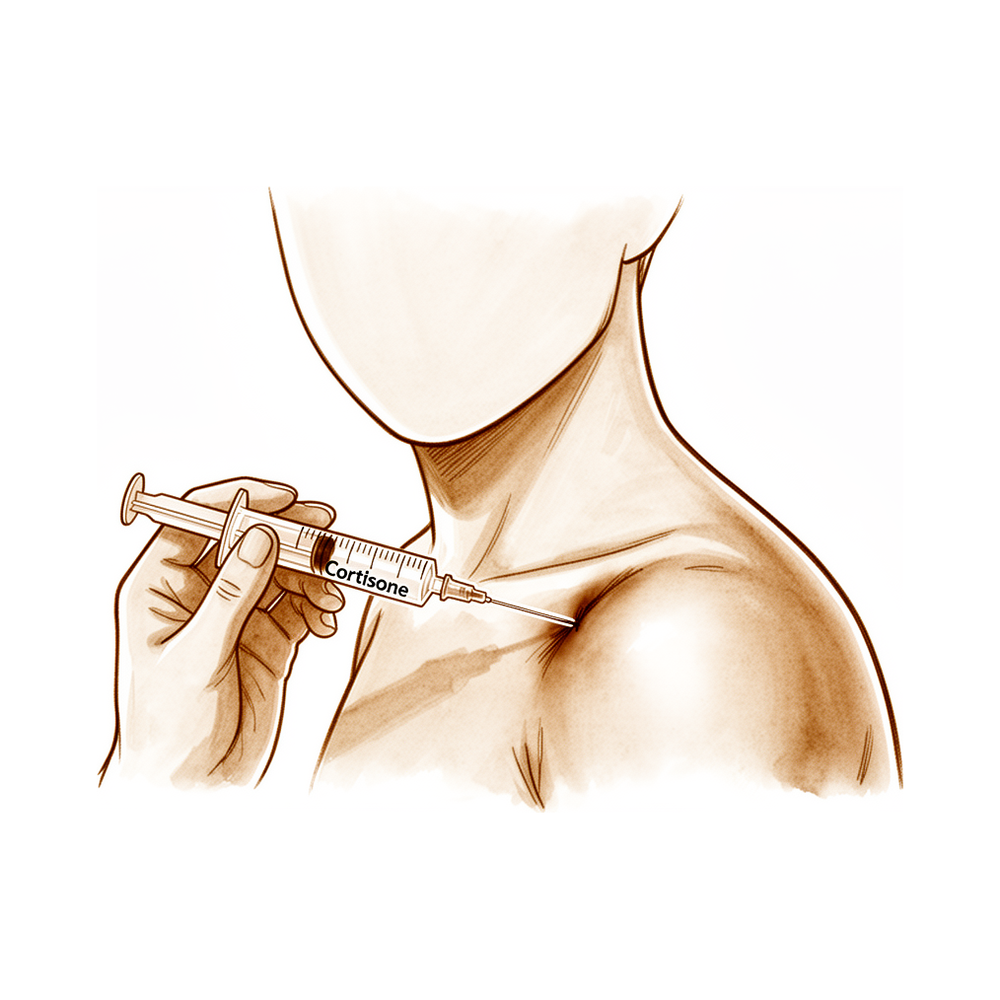
Tiêm cortisone là việc tiêm một loại thuốc chống viêm mạnh, gọi là corticosteroid, vào khớp hoặc gân đang bị đau. Thuốc giúp giảm sưng và làm dịu cơn đau tại một vị trí. Đây không phải là thuốc giảm đau dạng uống. Thuốc phát huy tác dụng tại chính nơi được tiêm vào.
Bác sĩ có thể đề nghị phương pháp điều trị này cho một số vấn đề ở bàn tay, cổ tay, khuỷu tay và vai. Các vấn đề này bao gồm ngón tay cò súng (ngón tay bị vướng hoặc kẹt lại), hội chứng ống cổ tay (dây thần kinh ở cổ tay bị chèn ép), viêm lồi cầu ngoài xương cánh tay (khuỷu tay quần vợt), thoái hóa khớp gốc ngón tay cái, viêm dính bao khớp vai (đông cứng khớp vai) và một số trường hợp u nang hoạt dịch. Phương pháp này cũng có thể được dùng sau một số ca phẫu thuật vai, mặc dù thường không tiêm trong tháng đầu tiên sau phẫu thuật [1].
Mũi tiêm không giải quyết được nguyên nhân gốc rễ của vấn đề. Nó giúp giảm triệu chứng trong thời gian cơ thể bạn tự lành, hoặc trong khi bạn tập các bài tập hay đeo nẹp. Ví dụ, với hội chứng ống cổ tay, mũi tiêm có thể làm dịu triệu chứng trong một thời gian, nhưng phần lớn mọi người cuối cùng vẫn cần phẫu thuật để kiểm soát lâu dài [2]. Với khuỷu tay quần vợt, tác dụng giảm đau ngắn hạn có thể mất dần, và vấn đề thường tái phát sau đó [3]. Bác sĩ sẽ trao đổi với bạn về việc liệu mũi tiêm có phù hợp với tình trạng của bạn hay không, hoặc liệu một lựa chọn khác như tập luyện, đeo nẹp hay phẫu thuật có hợp lý hơn để thực hiện trước.
Phương pháp này có hiệu quả không?
Câu trả lời thẳng thắn là: còn tùy vào bệnh lý được điều trị.
Đối với một số vấn đề, tiêm thuốc có hiệu quả tốt. Với viêm dính bao khớp vai, tiêm steroid vào khớp giúp giảm đau, cải thiện chức năng của vai và tăng tầm vận động [4]. Với bệnh de Quervain (tình trạng sưng các gân ở gốc ngón tay cái), cơn đau và kết quả lâm sàng cải thiện đáng kể sau khi tiêm [5]. Với thoái hóa khớp gốc ngón tay cái, steroid là một lựa chọn thuận lợi vì dễ thực hiện và hiệu quả tốt [6], mặc dù lợi ích có thể chỉ mang tính ngắn hạn [7].
Đối với những vấn đề khác, bức tranh chưa thống nhất hơn. Với khuỷu tay quần vợt, tiêm steroid có thể giúp giảm đau ngắn hạn, nhưng tác dụng đó thường bị đảo ngược sau sáu tuần, và vấn đề thường xuyên tái phát [3]. Nghiên cứu cho thấy không nên dùng steroid cho phần lớn những người có triệu chứng khuỷu tay quần vợt dưới 12 tháng [8]. Với hội chứng ống cổ tay, tiêm thuốc giúp giảm triệu chứng an toàn và hiệu quả trong một thời gian, nhưng phần lớn mọi người cuối cùng vẫn cần phẫu thuật để kiểm soát lâu dài [2].
Có một số kết quả bạn nên biết trước khi chọn phương pháp điều trị này. Với ngón tay cò súng, một loại steroid (betamethasone) mất tác dụng sớm hơn một loại khác (triamcinolone) [9]. Với phẫu thuật khâu chóp xoay, không có dấu hiệu rõ ràng nào cho thấy tiêm steroid làm tăng nguy cơ chỗ khâu bị rách lại hoặc nguy cơ nhiễm trùng [10]. Một mũi tiêm duy nhất trước phẫu thuật chóp xoay, được thực hiện trong vòng 1 năm trước ca mổ, không làm thay đổi tỷ lệ thất bại, kết quả do bệnh nhân tự đánh giá, tầm vận động hay sức cơ [11].
Bằng chứng chưa hoàn hảo. Một số kết quả này đến từ các thử nghiệm hoặc tổng quan nhỏ, và một vài bệnh lý có rất ít nghiên cứu để tham khảo. Bác sĩ sẽ cân nhắc bằng chứng cho bệnh lý cụ thể của bạn và trao đổi với bạn về việc liệu mũi tiêm có khả năng giúp ích cho bạn hay không, hoặc liệu một lựa chọn khác có hợp lý hơn để thực hiện trước.
Những rủi ro là gì?
Phần lớn mọi người chỉ nhận thấy những tác dụng ngắn hạn tại vị trí tiêm. Bản thân mũi tiêm có thể gây đau, và việc pha thêm thuốc gây tê (lidocaine) vào steroid làm thay đổi mức độ đau bạn cảm thấy trong và ngay sau khi tiêm [12]. Sự khác biệt đó có thể không quan trọng lắm về lâu dài, nhưng bạn nên hỏi về điều này trước khi tiêm.
Steroid cũng có thể ảnh hưởng đến mô tại nơi được tiêm vào. Với khuỷu tay quần vợt, nghiên cứu liên hệ việc tiêm steroid với tình trạng lắng đọng canxi trong mô mềm, và đây nhiều khả năng là một biến chứng của chính mũi tiêm [13]. Ở một số người được điều trị khuỷu tay quần vợt, một mũi tiêm steroid duy nhất đã dẫn đến kết quả lâu dài kém hơn và vấn đề tái phát nhiều hơn sau 1 năm [14].
Thuốc có thể tác động ra ngoài vị trí được tiêm. Nếu bạn bị đái tháo đường type 2 và không dùng insulin, tiêm steroid vào vai có thể làm tăng đường huyết của bạn trong một thời gian ngắn [15]. Nếu bạn bị đái tháo đường và đang điều trị bệnh de Quervain, một mũi tiêm duy nhất ít có khả năng hiệu quả với bạn hơn so với người không bị đái tháo đường, mặc dù các mũi tiêm tiếp theo dường như không bị giảm tác dụng [16].
Một số rủi ro mà bạn có thể lo lắng đã được nghiên cứu và không được ghi nhận. Sau phẫu thuật khâu chóp xoay, các nghiên cứu không tìm thấy bằng chứng rõ ràng rằng tiêm steroid làm tăng nguy cơ chỗ khâu bị rách lại hoặc nguy cơ nhiễm trùng [10]. Tiêm steroid trước phẫu thuật giải phóng ống cổ tay không liên quan đến tỷ lệ nhiễm trùng sâu cao hơn sau đó [17]. Tiêm nhắc lại cho hội chứng ống cổ tay được ghi nhận là an toàn, và không làm cho ca phẫu thuật sau đó rủi ro hơn [18].
Tần suất tiêm cũng quan trọng. Với ngón tay cò súng, một nghiên cứu không thấy biến chứng nào khi tiêm 4 mg triamcinolone cách nhau ít nhất 1 tháng [19]. Với bệnh de Quervain, một mũi tiêm nhắm vào một khoang gân có thể giảm liều steroid sử dụng, điều này có thể giúp giảm biến chứng [20].
Liệu phương pháp này có phù hợp với bạn không?
Mũi tiêm có thể phù hợp với bạn nếu cơn đau xuất phát từ một vị trí rõ ràng, chẳng hạn như ngón tay cò súng, thoái hóa khớp gốc ngón tay cái hoặc viêm dính bao khớp vai. Với thoái hóa khớp gốc ngón tay cái (viêm khớp do hao mòn ở gốc ngón tay cái), nghiên cứu ủng hộ tiêm steroid vì dễ thực hiện và hiệu quả tốt [6]. Nếu bạn bị hội chứng ống cổ tay và các mũi tiêm trước không duy trì được tác dụng lâu, tiêm nhắc lại đã được ghi nhận là an toàn, và không làm cho ca phẫu thuật sau đó rủi ro hơn [18].
Mũi tiêm có thể không phù hợp với bạn nếu triệu chứng khuỷu tay quần vợt của bạn kéo dài dưới 12 tháng. Nghiên cứu cho thấy không nên dùng steroid cho phần lớn những người trong trường hợp này [8]. Đối với khuỷu tay quần vợt nói chung, huyết tương giàu tiểu cầu (một phương pháp điều trị được làm từ máu của chính bạn) cho kết quả tốt hơn tiêm steroid ở thời điểm 6 tháng, trong khi steroid hiệu quả hơn trong tháng đầu tiên [21].
Đây là lựa chọn bạn đưa ra cùng với bác sĩ. Bác sĩ sẽ xem xét bệnh lý, triệu chứng của bạn và những gì bạn đã thử. Hãy hỏi mũi tiêm nhằm đạt được điều gì, tác dụng giảm đau có thể kéo dài bao lâu, và liệu tập luyện, đeo nẹp hay phẫu thuật có phù hợp hơn với bạn không. Phần rủi ro ở trên trình bày chi tiết về các tác dụng phụ, vì vậy hãy đọc phần đó trước khi quyết định.
Tóm lại
Tiêm cortisone có thể đáng cân nhắc đối với một vấn đề rõ ràng tại một vị trí, chẳng hạn như viêm dính bao khớp vai, bệnh de Quervain hoặc thoái hóa khớp gốc ngón tay cái. Hãy kỳ vọng rằng tác dụng giảm đau có thể là thật nhưng thường chỉ ngắn hạn, và cần biết rằng đối với một số bệnh lý, như khuỷu tay quần vợt hoặc hội chứng ống cổ tay, các phương pháp điều trị khác hoặc phẫu thuật có thể mang lại lợi ích tốt hơn về lâu dài. Lưu ý quan trọng nhất: mũi tiêm làm dịu triệu chứng, chứ không giải quyết được nguyên nhân gốc rễ của vấn đề.
Tài liệu tham khảo
[1] Corticosteroid Injections After Rotator Cuff Repair Improve Function, Reduce Pain, and Are Safe: A Systematic Review. Arthroscopy, Sports Medicine, and Rehabilitation. 2021. DOI: 10.1016/j.asmr.2021.10.010
[2] Corticosteroid Injection for Carpal Tunnel Syndrome. The Journal of Hand Surgery. 2008. DOI: 10.1016/j.jhsa.2008.06.023
[3] Mobilisation with movement and exercise, corticosteroid injection, or wait and see for tennis elbow: randomised trial. BMJ. 2006. DOI: 10.1136/bmj.38961.584653.ae
[4] Intra-articular Steroid Injection for Frozen Shoulder: A Systematic Review and Meta-analysis of Randomized Controlled Trials With Trial Sequential Analysis. The American Journal of Sports Medicine. 2016. DOI: 10.1177/0363546516669944
[5] Prospective randomized comparison of ultrasonography-guided and blind corticosteroid injection for de Quervain's disease. Orthopaedics & Traumatology: Surgery & Research. 2020. DOI: 10.1016/j.otsr.2019.11.015
[6] Efficacy of Intra-Articular Corticosteroid Injection for Nonsurgical Management of Trapeziometacarpal Osteoarthritis: A Systematic Review and Meta-Analysis of Randomized Controlled Trials. The Journal of Hand Surgery. 2024. DOI: 10.1016/j.jhsa.2024.02.001
[7] Intra-Articular Corticosteroid Injections to Manage Trapeziometacarpal Osteoarthritis—a Systematic Review. HAND. 2015. DOI: 10.1007/s11552-015-9778-3
[8] Stop injecting corticosteroid into patients with tennis elbow, they are much more likely to get better by themselves!. Journal of Science and Medicine in Sport. 2010. DOI: 10.1016/j.jsams.2009.09.009
[9] The Effect of Corticosteroid Type on Failure Following Primary Trigger Finger Injection. The Journal of Hand Surgery. 2026. DOI: 10.1016/j.jhsa.2026.03.011
[10] Do Corticosteroid Injections Before or After Primary Rotator Cuff Repair Influence the Incidence of Adverse Events? A Subjective Synthesis. Arthroscopy. 2020. DOI: 10.1016/j.arthro.2020.01.039
[11] Timing of corticosteroid injection within 1 year prior to rotator cuff repair was not associated with increased risk of repair failure. JSES International. 2026. DOI: 10.1016/j.jseint.2026.101632
[12] Corticosteroid Injection With and Without Local Anesthetic for the Treatment of Trigger Finger: A Randomized Clinical Trial. The Journal of Hand Surgery. 2025. DOI: 10.1016/j.jhsa.2024.05.016
[13] Association of steroid injection with soft-tissue calcification in lateral epicondylitis. Journal of Shoulder and Elbow Surgery. 2019. DOI: 10.1016/j.jse.2018.10.009
[14] Effect of Corticosteroid Injection, Physiotherapy, or Both on Clinical Outcomes in Patients With Unilateral Lateral Epicondylalgia. JAMA. 2013. DOI: 10.1001/jama.2013.129
[15] The effect of steroid injection into the shoulder on glycemia in patients with type 2 diabetes. JSES International. 2022. DOI: 10.1016/j.jseint.2022.05.016
[16] Effectiveness of Corticosteroid Injections in Diabetic Patients With De Quervain Tenosynovitis. The Journal of Hand Surgery. 2022. DOI: 10.1016/j.jhsa.2022.02.018
[17] Ipsilateral Preoperative Corticosteroid Injection and Timing Not Associated With Postoperative Deep Infection After Carpal Tunnel Release. Journal of the American Academy of Orthopaedic Surgeons. 2025. DOI: 10.5435/jaaos-d-25-00317
[18] The safety and cost of repeated corticosteroid injections for carpal tunnel syndrome. Journal of Hand Surgery (European Volume). 2025. DOI: 10.1177/17531934251396629
[19] Safety and Efficacy of Low-Dose Triamcinolone Injection without Injection Frequency Limitation for Trigger Finger. Journal of Hand Surgery Global Online. 2025. DOI: 10.1016/j.jhsg.2025.01.005
[20] Is a Steroid Injection in Both Compartments More Effective than an Injection in the Extensor Pollicis Brevis Subcompartment Alone in Patients with de Quervain Disease? A Randomized, Controlled Trial. Clinical Orthopaedics & Related Research. 2021. DOI: 10.1097/corr.0000000000002018
[21] Corticosteroid injections for the treatment of lateral epicondylitis are superior to platelet-rich plasma at 1 month but platelet-rich plasma is more effective at 6 months: an updated systematic review and meta-analysis of level 1 and 2 studies. Journal of Shoulder and Elbow Surgery. 2023. DOI: 10.1016/j.jse.2023.04.018
Evidence & references
This is the clinical evidence summary written for health professionals. It is technical, and it lists the research this page was built from. You do not need to read it to understand your treatment or to make a decision about it.
Overview
Efficacy by Condition
- Corticosteroid injections are effective in 57% of patients with trigger finger [10].
- Corticosteroid injections provide benefit by relieving pain and improving functional outcome scores in rotator cuff repair patients [3].
- Corticosteroids are a favorable option for the management of trapeziometacarpal osteoarthritis given their affordability, ease of administration, and efficacy [11].
- When corticosteroid injection is used to treat adhesive capsulitis, both intra-articular and subacromial injection sites can be selected [15].
Steroid Type and Dosing
- Betamethasone injections resulted in a significantly shorter time to failure than triamcinolone injections for primary trigger finger [1].
- Triamcinolone is supported as a more viable corticosteroid option for shoulder injection compared to methylprednisolone [4].
- An injection targeting the extensor pollicis brevis subcompartment alone in de Quervain disease can reduce the dose of steroids used, potentially decreasing complications [8].
- No complications were observed for 4 mg triamcinolone injections for trigger finger when administered at intervals of at least 1 month [12].
Safety and Timing
- Corticosteroid injections should be administered only after the first postoperative month following rotator cuff repair to minimize the potential risk for adverse events [2].
- An interval of at least three months is recommended between corticosteroid injection and shoulder arthroplasty [19].
- There were no conclusive data to suggest an increased risk of retear or infection with corticosteroid injection use based on a subjective synthesis of ranges [5].
Contraindications
- Corticosteroid injections should not be used to treat most patients with tennis elbow with symptom duration of less than 12 months [6].
How It Works
Efficacy and Outcomes by Condition
- Local corticosteroid injection provides greater clinical improvement in symptoms 1 month after injection compared with placebo for carpal tunnel syndrome [13].
- Local corticosteroid injection provides significantly greater improvement than oral corticosteroid for up to 3 months for carpal tunnel syndrome [13].
- Local corticosteroid injection does not significantly improve outcomes compared with anti-inflammatory treatment, splinting, or laser treatment beyond 8 weeks for carpal tunnel syndrome [13].
- Corticosteroid injections provide benefit by relieving pain and improving functional outcome scores after rotator cuff repair [3].
- The significant short term benefits of corticosteroid injection for tennis elbow are reversed after six weeks, with high recurrence rates [9].
- Combining a corticosteroid injection with exercise is not superior to exercise or no exercise for plantar fasciopathy [7].
Steroid Type and Dosing
- An injection targeting the extensor pollicis brevis subcompartment alone can reduce the dose of steroids used in de Quervain disease [8].
Safety and Complications
- No complications were observed for 4 mg triamcinolone injections when administered at intervals of at least 1 month for trigger finger [12].
- Local corticosteroid injection to the shoulder can create a significant, short-term increase in systemic glucose levels in patients with type 2 diabetes not treated with insulin [20].
- Serial saline solution injections are a promising, cost-effective, and low-risk treatment option for subcutaneous lipoatrophy and skin depigmentation following cortisone injection in the elbow [17].
Timing and Surgical Context
- Corticosteroid injections should be administered only after the first postoperative month to minimize the potential risk for adverse events following rotator cuff repair [2].
- Preoperative corticosteroid injection at all studied timepoints was not associated with an increased risk of postoperative deep infection after carpal tunnel release [16].
Contraindications and Cautions
- Corticosteroid injection for tennis elbow should be used with caution due to high recurrence rates after six weeks [9].
What the Evidence Shows
Trigger Finger
- Betamethasone injections resulted in a significantly shorter time to failure than triamcinolone injections [1].
- There is a statistically significant difference in pain during and shortly after injection when using a steroid with lidocaine versus steroid alone, but that difference may not be clinically relevant [27].
Lateral Epicondylitis (Tennis Elbow)
- The significant short term benefits of corticosteroid injection are paradoxically reversed after six weeks, with high recurrence rates, implying that this treatment should be used with caution in the management of tennis elbow [9].
- A single, blinded injection of corticosteroid medication was associated with poorer long-term outcomes and higher recurrence rates 1 year after receiving an injection in patients with unilateral lateral epicondylalgia [22].
- Corticosteroid injections for the treatment of lateral epicondylitis are superior to platelet-rich plasma at 1 month [18].
- Platelet-rich plasma is more effective than corticosteroid injections at 6 months for the treatment of lateral epicondylitis [18].
- Platelet-rich plasma is superior to corticosteroid injections at 3 months for the treatment of lateral epicondylitis [18].
Rotator Cuff
- Corticosteroid injections provide benefit by relieving pain and improving functional outcome scores in rotator cuff disease [3].
- There were no conclusive data to suggest an increased risk of retear or infection with corticosteroid injection use based on a subjective synthesis of ranges regarding rotator cuff repair [5].
- Timing of a single preoperative corticosteroid injection within 1 year of rotator cuff repair did not significantly affect failure rates, patient-reported outcomes, range of motion, or strength [26].
- Corticosteroids have better efficacy in short term for rotator cuff disease treatment compared to platelet-rich plasma [23].
- Platelet-rich plasma is more beneficial for longterm recovery in rotator cuff disease treatment compared to corticosteroids [23].
Shoulder (General)
- Intra-articular steroid injection is effective and safe for frozen shoulder, relieving pain, improving functional performance, and increasing range of motion [25].
Carpal Tunnel Syndrome
- Local corticosteroid injection provides greater clinical improvement in symptoms 1 month after injection compared with placebo [13].
- Corticosteroid injection is safe and effective for the temporary relief of carpal tunnel syndrome symptoms [24].
- Most patients with carpal tunnel syndrome will eventually require surgery for long-term control of their symptoms despite corticosteroid injection [24].
Thumb Carpometacarpal Joint
- Corticosteroids are a favorable option when considering the choice of intra-articular injection for the management of trapeziometacarpal osteoarthritis given their affordability, ease of administration, and efficacy [11].
- There is lack of robust evidence to support use of image guidance to improve accuracy and clinical effectiveness of steroid injection for thumb carpometacarpal joint osteoarthritis [14].
Plantar Fasciopathy
- Combining a corticosteroid injection with exercise is not superior to exercise or no exercise for patients with plantar fasciopathy [7].
Practical Considerations
Steroid Selection and Dosing
- An injection targeting the extensor pollicis brevis subcompartment alone in de Quervain disease can reduce the dose of steroids used, potentially decreasing complications related to steroid injections [8].
Timing and Frequency
- Corticosteroid injections after rotator cuff repair should be administered only after the first postoperative month to minimize the potential risk for adverse events [2].
Efficacy and Outcomes
- Corticosteroid injections provide benefit by relieving pain and improving functional outcome scores following rotator cuff repair [3].
- Combining a corticosteroid injection with exercise for plantar fasciopathy is not superior to exercise or no exercise [7].
- Corticosteroids are a favorable option for intra-articular injection in the management of trapeziometacarpal osteoarthritis given their affordability, ease of administration, and efficacy [11].
- Platelet-rich plasma has no advantage over steroid injections within the first month of treatment for lateral epicondylitis, but it is superior to steroids at both 3 and 6 months [18].
Safety and Complications
- There were no conclusive data to suggest an increased risk of retear or infection with corticosteroid injection use before or after primary rotator cuff repair based on a subjective synthesis of ranges [5].
- Corticosteroid and hyaluronic acid injections remain a safe treatment option regarding the risk of severe adverse events requiring hospitalization [21].
Imaging Guidance
- There is a lack of robust evidence to support the use of image guidance to improve accuracy and clinical effectiveness of steroid injection for thumb carpometacarpal joint osteoarthritis [14].
Key Evidence
- [L3] Betamethasone injections resulted in a significantly shorter time to failure than triamcinolone injections. [1] (10.1016/j.jhsa.2026.03.011)
- [L1] Corticosteroid injections should be administered only after the first postoperative month to minimize the potential risk for adverse events. [2] (10.1016/j.asmr.2021.10.010)
- [L4] Corticosteroid injections provide benefit by relieving pain and improving functional outcome scores. [3] (10.1016/j.arthro.2020.04.044)
- [L2] This study supports TA as a more viable corticosteroid option for shoulder injection. [4] (10.1016/j.jse.2023.05.023)
- [L3] There were no conclusive data to suggest an increased risk of retear or infection with corticosteroid injection use based on a subjective synthesis of ranges. [5] (10.1016/j.arthro.2020.01.039)
- [Paper] Corticosteroid injections should not be used to treat most patients with tennis elbow with symptom duration of less than 12 months. [6] (10.1016/j.jsams.2009.09.009)
- [L1] The results indicate that combining a corticosteroid injection with exercise is not superior to exercise or no exercise. [7] (10.1136/bjsports-2023-106948)
- [L1] An injection targeting the EPB subcompartment alone can reduce the dose of steroids used, perhaps thereby decreasing complications related to steroid injections. [8] (10.1097/corr.0000000000002018)
- [L1] The significant short term benefits of corticosteroid injection are paradoxically reversed after six weeks, with high recurrence rates, implying that this treatment should be used with caution in the management of tennis elbow. [9] (10.1136/bmj.38961.584653.ae)
- [L1] Corticosteroid injections are effective in 57% of patients with trigger finger. [10] (10.5435/00124635-200703000-00006)
- [L1] Given the affordability, ease of administration, and efficacy associated with corticosteroids, they are a favorable option when considering the choice of intra-articular injection for the management of TMC OA. [11] (10.1016/j.jhsa.2024.02.001)
- [L4] No complications were observed for 4 mg triamcinolone injections when administered at intervals of at least 1 month. [12] (10.1016/j.jhsg.2025.01.005)
- [L1] Local corticosteroid injection provides greater clinical improvement in symptoms 1 month after injection compared with placebo and significantly greater improvement than oral corticosteroid for up to 3 months, but does not significantly improve outcomes compared with anti-inflammatory treatment, splinting, or laser treatment beyond 8 weeks. [13] (10.1177/1753193413490848)
- [L4] However, there is lack of robust evidence to support use of image guidance to improve accuracy and clinical effectiveness of steroid injection for thumb CMCJ and warrants further research. [14] (10.1177/17589983261430876)
- [L1] When corticosteroid injection is used to treat adhesive capsulitis, both injection sites can be selected. [15] (10.1155/2019/1274790)
- [L3] Preoperative corticosteroid injection at all studied timepoints was not associated with an increased risk of postoperative deep infection, a divergence from existing literature. [16] (10.5435/jaaos-d-25-00317)
- [L4] Serial saline solution injections are a promising, cost-effective, and low-risk treatment option for subcutaneous lipoatrophy and skin depigmentation following cortisone injection in the elbow. [17] (10.1016/j.jseint.2020.08.009)
- [L1] PRP has no advantage over steroid injections within the first month of treatment, but it is superior to steroids at both 3 and 6 months. [18] (10.1016/j.jse.2023.04.018)
- [L1] Thus, an interval of at least three months is recommended between injection and arthroplasty. [19] (10.1177/17585732241261659)
- [L2] Local corticosteroid injection to the shoulder can create a significant, short-term increase in systemic glucose levels in patients with type 2 diabetes not treated with insulin. [20] (10.1016/j.jseint.2022.05.016)
- [L2] Corticosteroid and hyaluronic acid injections remain a safe treatment option regarding the risk of severe adverse events requiring hospitalization. [21] (10.1186/s12891-026-09752-7)
- [L1] A single, blinded injection of corticosteroid medication was associated with poorer long-term outcomes and higher recurrence rates 1 year after receiving an injection in patients with unilateral lateral epicondylalgia. [22] (10.1001/jama.2013.129)
- [L1] Current analysis showed that corticosteroids have better efficacy in short term, whereas PRP is more beneficial for longterm recovery. [23] (10.1016/j.jse.2023.01.037)
- [L5] Corticosteroid injection is safe and effective for the temporary relief of carpal tunnel syndrome symptoms, but most patients will eventually require surgery for long-term control of their symptoms. [24] (10.1016/j.jhsa.2008.06.023)
- [L1] Intra-articular steroid injection is effective and safe for frozen shoulder, relieving pain, improving functional performance, and increasing range of motion. [25] (10.1177/0363546516669944)
- [L2] Timing of a single preoperative corticosteroid injection within 1 year of rotator cuff repair did not significantly affect failure rates, patient-reported outcomes, range of motion, or strength, suggesting that one injection before repair does not strongly influence outcomes. [26] (10.1016/j.jseint.2026.101632)
- [L2] There is a statistically significant difference in pain during and shortly after injection when using a steroid with lidocaine versus steroid alone, but that difference may not be clinically relevant. [27] (10.1016/j.jhsa.2024.05.016)
References
[1] The Effect of Corticosteroid Type on Failure Following Primary Trigger Finger Injection. The Journal of Hand Surgery. 2026. DOI: 10.1016/j.jhsa.2026.03.011
[2] Corticosteroid Injections After Rotator Cuff Repair Improve Function, Reduce Pain, and Are Safe: A Systematic Review. Arthroscopy, Sports Medicine, and Rehabilitation. 2021. DOI: 10.1016/j.asmr.2021.10.010
[3] Corticosteroid Injections May Increase Retear and Revision Rates of Rotator Cuff Repair: A Systematic Review. Arthroscopy. 2020. DOI: 10.1016/j.arthro.2020.04.044
[4] Comparison of triamcinolone and methylprednisolone efficacy and steroid flare reaction rates after shoulder corticosteroid injection: a prospective interrupted time series study. Journal of Shoulder and Elbow Surgery. 2023. DOI: 10.1016/j.jse.2023.05.023
[5] Do Corticosteroid Injections Before or After Primary Rotator Cuff Repair Influence the Incidence of Adverse Events? A Subjective Synthesis. Arthroscopy. 2020. DOI: 10.1016/j.arthro.2020.01.039
[6] Stop injecting corticosteroid into patients with tennis elbow, they are much more likely to get better by themselves!. Journal of Science and Medicine in Sport. 2010. DOI: 10.1016/j.jsams.2009.09.009
[7] Does a corticosteroid injection plus exercise or exercise alone add to the effect of patient advice and a heel cup for patients with plantar fasciopathy? A randomised clinical trial. British Journal of Sports Medicine. 2023. DOI: 10.1136/bjsports-2023-106948
[8] Is a Steroid Injection in Both Compartments More Effective than an Injection in the Extensor Pollicis Brevis Subcompartment Alone in Patients with de Quervain Disease? A Randomized, Controlled Trial. Clinical Orthopaedics & Related Research. 2021. DOI: 10.1097/corr.0000000000002018
[9] Mobilisation with movement and exercise, corticosteroid injection, or wait and see for tennis elbow: randomised trial. BMJ. 2006. DOI: 10.1136/bmj.38961.584653.ae
[10] Corticosteroid Injections in the Treatment of Trigger Finger: A Level I and II Systematic Review. Journal of the American Academy of Orthopaedic Surgeons. 2007. DOI: 10.5435/00124635-200703000-00006
[11] Efficacy of Intra-Articular Corticosteroid Injection for Nonsurgical Management of Trapeziometacarpal Osteoarthritis: A Systematic Review and Meta-Analysis of Randomized Controlled Trials. The Journal of Hand Surgery. 2024. DOI: 10.1016/j.jhsa.2024.02.001
[12] Safety and Efficacy of Low-Dose Triamcinolone Injection without Injection Frequency Limitation for Trigger Finger. Journal of Hand Surgery Global Online. 2025. DOI: 10.1016/j.jhsg.2025.01.005
[13] Cochrane corner: local corticosteroid injection for carpal tunnel syndrome. Journal of Hand Surgery (European Volume). 2013. DOI: 10.1177/1753193413490848
[14] Guided steroid injection for thumb carpometacarpal joint (CMCJ) osteoarthritis: A scoping review. Hand Therapy. 2026. DOI: 10.1177/17589983261430876
[15] Intra-Articular versus Subacromial Corticosteroid Injection for the Treatment of Adhesive Capsulitis: A Meta-Analysis and Systematic Review. BioMed Research International. 2019. DOI: 10.1155/2019/1274790
[16] Ipsilateral Preoperative Corticosteroid Injection and Timing Not Associated With Postoperative Deep Infection After Carpal Tunnel Release. Journal of the American Academy of Orthopaedic Surgeons. 2025. DOI: 10.5435/jaaos-d-25-00317
[17] Serial saline solution injections for the treatment of lipoatrophy and depigmentation after corticosteroid injection for medial epicondylitis. JSES International. 2020. DOI: 10.1016/j.jseint.2020.08.009
[18] Corticosteroid injections for the treatment of lateral epicondylitis are superior to platelet-rich plasma at 1 month but platelet-rich plasma is more effective at 6 months: an updated systematic review and meta-analysis of level 1 and 2 studies. Journal of Shoulder and Elbow Surgery. 2023. DOI: 10.1016/j.jse.2023.04.018
[19] The safety of corticosteroid injection prior to shoulder arthroplasty: A systematic review. Shoulder & Elbow. 2024. DOI: 10.1177/17585732241261659
[20] The effect of steroid injection into the shoulder on glycemia in patients with type 2 diabetes. JSES International. 2022. DOI: 10.1016/j.jseint.2022.05.016
[21] Safety of intra-articular corticosteroid and hyaluronic acid injections: a 14-year population-based cohort study of 404,797 patients. BMC Musculoskeletal Disorders. 2026. DOI: 10.1186/s12891-026-09752-7
[22] Effect of Corticosteroid Injection, Physiotherapy, or Both on Clinical Outcomes in Patients With Unilateral Lateral Epicondylalgia. JAMA. 2013. DOI: 10.1001/jama.2013.129
[23] Comparison of the effects of platelet-rich plasma and corticosteroid injection in rotator cuff disease treatment: a systematic review and meta-analysis. Journal of Shoulder and Elbow Surgery. 2023. DOI: 10.1016/j.jse.2023.01.037
[24] Corticosteroid Injection for Carpal Tunnel Syndrome. The Journal of Hand Surgery. 2008. DOI: 10.1016/j.jhsa.2008.06.023
[25] Intra-articular Steroid Injection for Frozen Shoulder: A Systematic Review and Meta-analysis of Randomized Controlled Trials With Trial Sequential Analysis. The American Journal of Sports Medicine. 2016. DOI: 10.1177/0363546516669944
[26] Timing of corticosteroid injection within 1 year prior to rotator cuff repair was not associated with increased risk of repair failure. JSES International. 2026. DOI: 10.1016/j.jseint.2026.101632
[27] Corticosteroid Injection With and Without Local Anesthetic for the Treatment of Trigger Finger: A Randomized Clinical Trial. The Journal of Hand Surgery. 2025. DOI: 10.1016/j.jhsa.2024.05.016