Patients › Rehabilitation
Phẫu thuật hợp nhất khớp PIP
Đây là kế hoạch phục hồi được bảo vệ dành cho trường hợp sau khi thực hiện phẫu thuật hợp nhất khớp giữa của ngón tay (arthrodesis): dùng nẹp để giữ khớp vừa được hợp nhất ở trạng thái cố định, đồng thời cho phép tất cả các khớp còn lại vận động ngay từ ngày đầu tiên; sau đó mới khôi phục lại khả năng nắm và kẹp khi xương đã liền hoàn toàn.
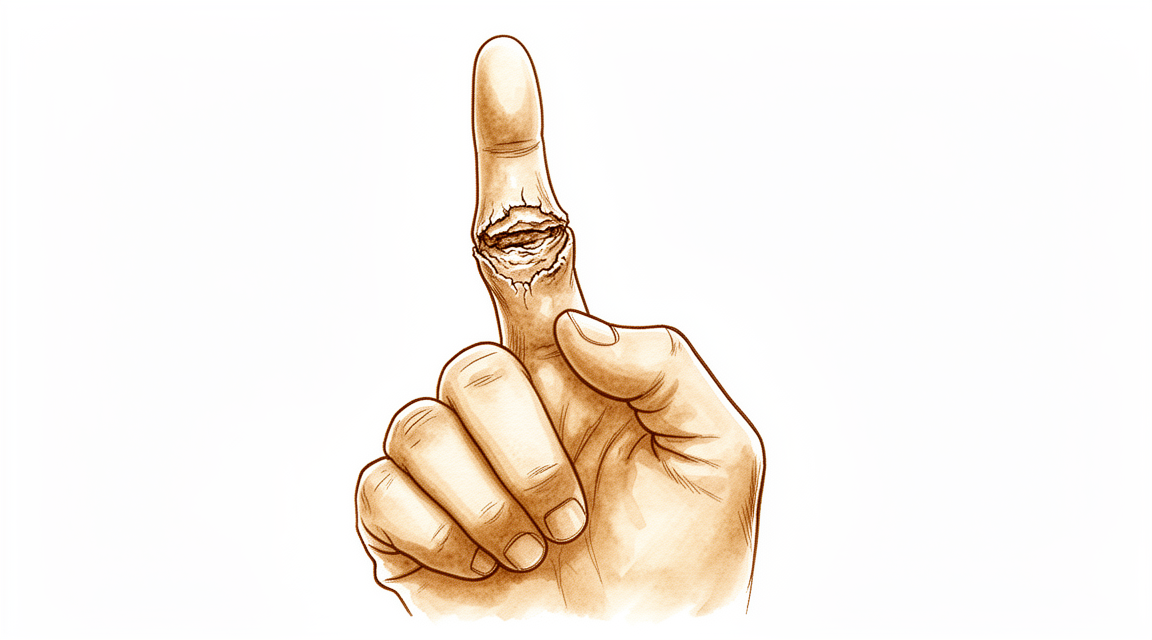
Quy trình này hướng dẫn quá trình hồi phục của bạn sau khi thực hiện thủ thuật hợp nhất khớp PIP (khớp giữa của ngón tay) cùng bác sĩ Kieran Hirpara tại Bệnh viện tư nhân Mater Rockhampton. Quy trình bắt đầu với chương trình tập luyện tại nhà, tiếp theo là quy trình điều trị chi tiết được soạn thảo dành riêng cho chuyên viên trị liệu tay: hãy mang theo trang này hoặc bản PDF tương ứng trong lần trị liệu đầu tiên để việc phục hồi của bạn được thực hiện một cách nhất quán. Chuyên viên trị liệu tay có thể điều chỉnh kế hoạch này tùy theo tiến độ hồi phục của bạn.
Nếu bạn có bất kỳ thắc mắc nào về vết thương sau phẫu thuật, hãy liên hệ với phòng khám. Việc chụp ảnh vết thương rồi gửi qua email để được đánh giá cũng là một cách hữu ích.
Những điều bạn có thể mong đợi
Phẫu thuật hợp nhất khớp PIP là thủ thuật giúp cố định khớp giữa ngón tay bị hao mòn hoặc không ổn định, khiến nó không còn di chuyển được nữa. Khớp sau khi hợp nhất sẽ được đặt ở tư thế hơi cong một cách có chức năng, chứ không thẳng đơ: mức độ cong này vừa phải ở ngón trỏ và ngón giữa (khoảng 15–20 độ) và tăng dần về phía ngón út (khoảng 25–40 độ ở ngón áp út và ngón út), phù hợp với dáng cong tự nhiên của các ngón tay khi bạn nắm lại. Khớp đã hợp nhất sẽ được giữ vững bằng một dụng cụ nhỏ (dây kim loại tạo lực căng, ốc vít không đầu, các thanh kim loại K-wire hoặc tấm kim loại nhỏ), giúp duy trì góc này cho đến khi xương liền lại hoàn toàn.
Thủ thuật này thường được chỉ định cho ngón trỏ và ngón giữa, nơi việc có một khớp ổn định để bóp chặt quan trọng hơn là khả năng vận động của khớp giữa. Mục đích của phẫu thuật là làm cho khớp PIP trở nên cứng; vì vậy khác với các ca phẫu thuật sửa chữa gân hay dây chằng, quá trình hồi phục không nhằm mục đích khôi phục lại vận động ở khớp này, mà là bảo vệ vùng hợp nhất cho đến khi xương liền, đồng thời đảm bảo các khớp khác trên bàn tay vẫn vận động tự do.
Kế hoạch hồi phục gồm bốn yếu tố chính:
- Bảo vệ vùng hợp nhất cho đến khi xương liền. Thông thường quá trình liền xương mất khoảng sáu tuần; đôi khi có thể kéo dài tới chín đến mười hai tuần. Trong thời gian này, khớp đã hợp nhất sẽ được cố định bằng nẹp.
- Giữ cho các khớp còn lại vận động ngay từ ngày đầu: khớp đầu ngón tay, khớp gối ngón tay, các ngón tay lân cận, ngón cái và cổ tay; điều này giúp gân không bị dính lại và các bộ phận khác của bàn tay không bị cứng.
- Kiểm soát tình trạng sưng và vết sẹo trong những tuần đầu sau phẫu thuật.
- Khôi phục lại khả năng nắm và bóp chặt sau khi khớp đã liền. Tuyệt đối không hút thuốc: việc hút thuốc được chứng minh là làm chậm quá trình liền xương và cản trở sự hợp nhất của khớp.
Các biện pháp phòng ngừa và hạn chế
- Tuyệt đối không gắng sức, nắm chặt hay bóp mạnh ngón tay vừa phẫu thuật cho đến khi khớp đã liền xương (thường mất khoảng sáu tuần, đôi khi lâu hơn): việc gắng sức trước khi xương liền có thể khiến quá trình liền xương thất bại.
- Giữ khớp vừa được cố định hoàn toàn yên tĩnh trong nẹp theo hướng dẫn; không được cố gắng “thử nghiệm” hay uốn cong khớp đó.
- Vận động tất cả các khớp còn lại ngay từ những ngày đầu: khớp đầu ngón tay, khớp đốt ngón tay, các ngón tay khác, ngón cái và cổ tay.
- Giữ nẹp sạch sẽ và khô ráo, đeo đúng theo hướng dẫn, đồng thời chăm sóc vết thương và các vị trí gắn đinh.
- Không được lái xe nếu chưa thể kiểm soát vô lăng một cách an toàn; thường là phải đợi tháo nẹp vào khoảng tuần thứ tư đến thứ sáu.
- Tuyệt đối không hút thuốc: thuốc lá làm chậm quá trình liền xương.
Để biết cách chăm sóc vết thương, giảm sưng và xử lý sẹo, vui lòng tham khảo hướng dẫn chăm sóc vết thương của phòng khám.
Các bài tập của bạn
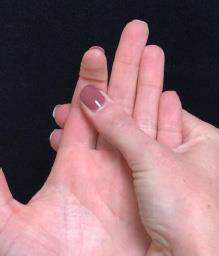
Kieran Hirpara 4.0
Chuyển động khớp đốt xa của ngón tay đã được phẫu thuật
Sau khi nhận được sự cho phép từ chuyên viên trị liệu tay, hãy nhẹ nhàng gập và duỗi khớp ngón tay cuối cùng (khớp ở đầu ngón) của ngón tay vừa được phẫu thuật. Dùng tay còn lại giữ chắc phần giữa ngón tay sao cho chỉ có đầu ngón là di chuyển. Khớp vừa được nối liền phải hoàn toàn đứng yên; chỉ có đầu ngón được phép gập. Việc vận động khớp này giúp ngăn ngừa tình trạng gân bị dính lại trong quá trình chữa lành sau phẫu thuật.
10 lần, 3 lần mỗi ngày, chỉ ở khớp đầu ngón tay.
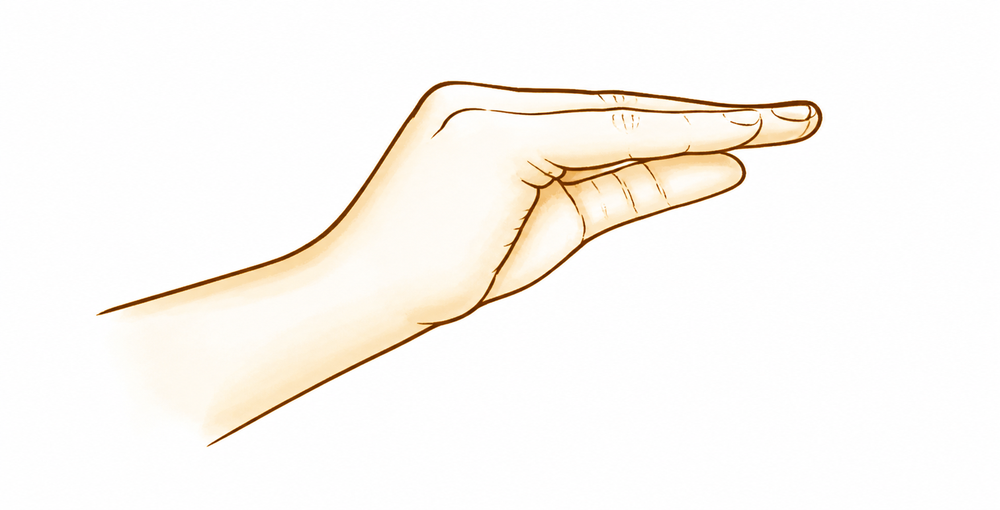
Kieran Hirpara 4.0
Chuyển động khớp ngón tay ở ngón đã được phẫu thuật
Hãy nhẹ nhàng gập và duỗi khớp ngón tay lớn (chỗ nối giữa ngón tay và bàn tay) của ngón tay vừa được phẫu thuật. Khớp giữa đã được nối liền sẽ giữ nguyên vị trí trong suốt quá trình này; chỉ có khớp ngón tay là di chuyển. Việc này giúp khớp ngón tay vẫn mềm dẻo và ngăn ngừa tình trạng ngón tay bị cứng lại trong lúc quá trình nối khớp đang diễn ra.
10 lần, 3 lần mỗi ngày, chỉ vận dụng cho khớp ngón tay.
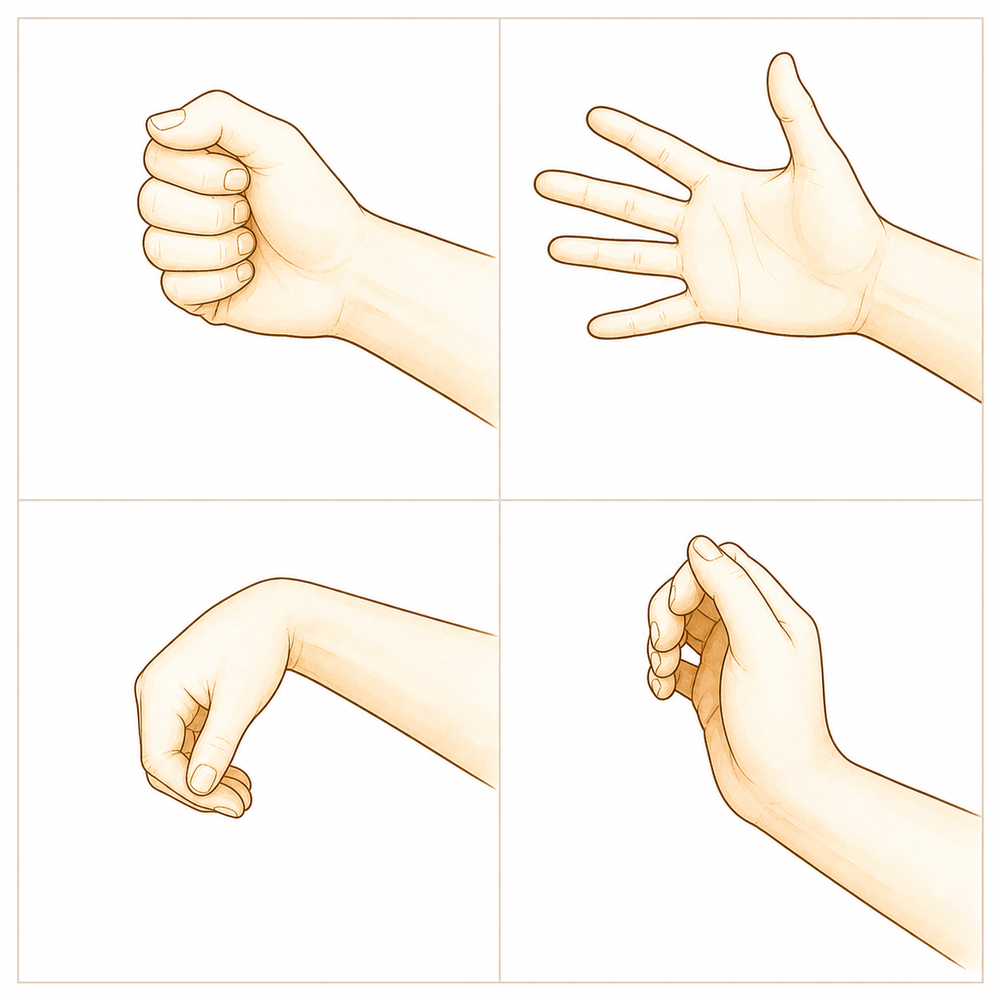
Kieran Hirpara 4.0
Hãy cử động tất cả các ngón tay còn lại, ngón cái và cổ tay của bạn.
Ngay từ những ngày đầu, hãy cố gắng vận động tự do mọi khớp không được phẫu thuật: nắm chặt tay thành nắm đấm rồi mở ra, di chuyển ngón tay cái theo mọi hướng, đồng thời gập, duỗi và xoay cổ tay. Đây là việc quan trọng nhất mà bạn có thể làm để giữ cho bàn tay linh hoạt và ngăn ngừa tình trạng cứng khớp, trong lúc vẫn bảo vệ được khớp vừa được nối lại.
Mỗi động tác 10 lần, nhiều lần trong ngày.
Kieran Hirpara 4.0
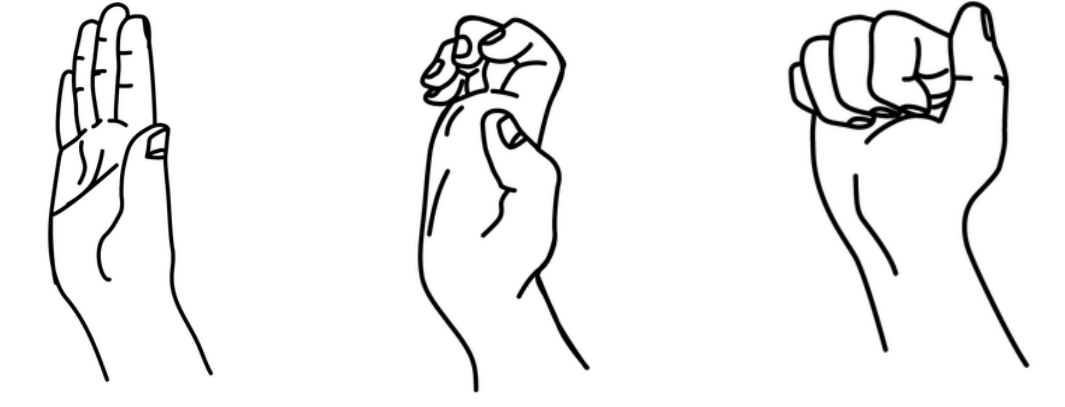
Các động tác trượt gân (nắm thành móc, nắm thành nắm đấm, duỗi thẳng)
Hãy di chuyển tay một cách chậm rãi theo ba hình dạng để giúp các gân vận động trơn tru: hình móc (gập đầu ngón tay và khớp giữa, giữ các khớp ngón thẳng), nắm thành nắm đấm hoàn chỉnh, rồi duỗi thẳng tay ra. Thực hiện động tác này bằng các ngón tay chưa được phẫu thuật; còn ngón tay đã phẫu thuật thì chỉ được di chuyển đến mức các khớp còn tự do (chưa bị cố định) cho phép. Việc này giúp các gân vận động dễ dàng và ngăn chúng bị dính lại gần vùng phẫu thuật.
5 lần cho mỗi hình dạng, ngày 3 lần.
Kieran Hirpara 4.0
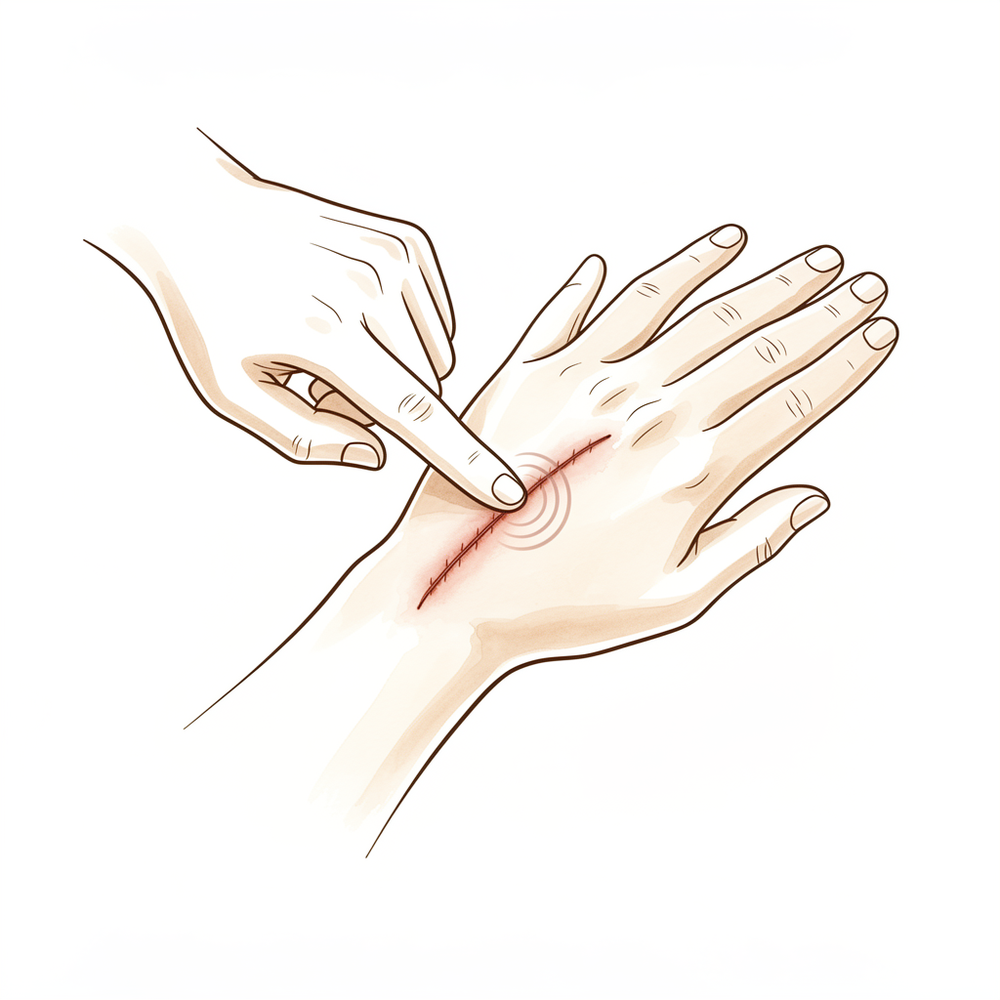
Xoa bóp vết sẹo
Khi vết thương đã lành hẳn và chuyên viên trị liệu tay đã kiểm tra xong, hãy thoa một chút kem dưỡng ẩm lên vết sẹo bằng những vòng tròn nhỏ và chắc tay trong vài phút. Việc này giúp làm mềm vết sẹo, giảm cảm giác đau nhức và ngăn vết sẹo dính vào các mô bên dưới. Chỉ thực hiện bước này khi da đã lành hoàn toàn.
2–3 phút, 2–3 lần mỗi ngày (sau khi vết thương đã lành).
Kieran Hirpara 4.0
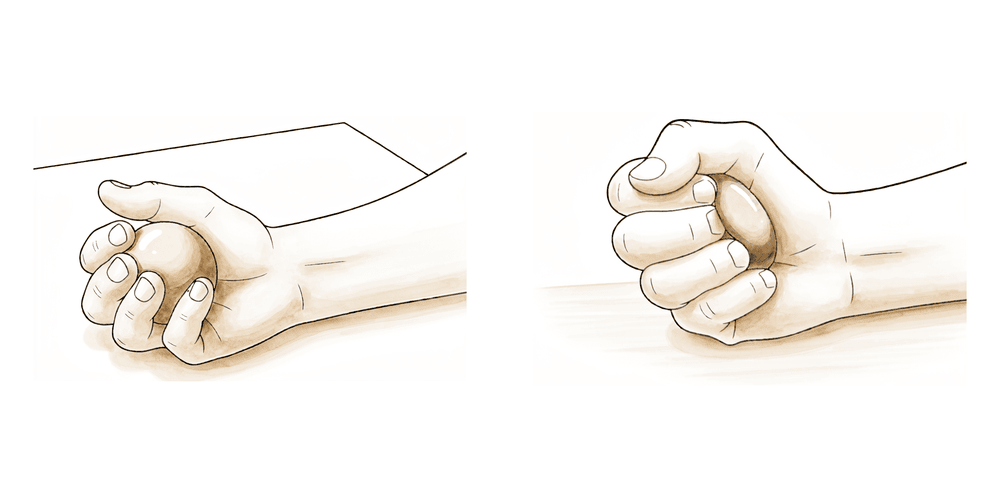
Tăng cường sức mạnh cho động tác kẹp và nắm tay (sau khi xương đã liền)
Một bài tập dành cho giai đoạn sau — chỉ thực hiện khi chỗ hợp nhất xương đã liền và chuyên viên trị liệu tay bắt đầu hướng dẫn bạn tập tăng cường sức mạnh (thường là sau khoảng sáu tuần). Hãy nắm chặt một quả bóng mềm hoặc đất nặn để rèn luyện khả năng nắm, đồng thời dùng ngón tay cái và ngón tay đã được phẫu thuật để kẹp một vật nhỏ nhằm phát triển khả năng kẹp ngang — chính là động tác mà ca phẫu thuật hợp nhất khớp nhằm làm cho vững chắc. Hãy tăng dần mức độ tập luyện. Tuyệt đối không thực hiện bất kỳ động tác nắm hay kẹp có sức cản nào trước khi được phép — điều này sẽ gây áp lực lên chỗ hợp nhất trước khi xương kịp liền lại.
10 lần, 2–3 lần mỗi ngày, theo hướng dẫn (chỉ áp dụng sau khi xương đã liền).
Đây là những bài tập có trong tờ hướng dẫn của bạn. Hãy thực hiện chúng chỉ khi được bác sĩ Hirpara và chuyên viên trị liệu chỉ dẫn, đồng thời tuân thủ mọi giới hạn đã được đặt ra. Các bài tập ban đầu nhằm giúp các khớp đầu ngón tay, khớp ngón tay, các ngón tay còn lại, ngón cái và cổ tay được vận động mà không làm di chuyển hay gây áp lực lên chính khớp đã được nối liền, vốn vẫn giữ nguyên trạng thái trong nẹp. Việc mát-xa vết sẹo chỉ bắt đầu sau khi vết thương đã lành. Các bài tập tăng cường sức mạnh cho khả năng kẹp và nắm tay thuộc giai đoạn sau; bạn không nên thực hiện chúng cho đến khi khớp đã nối liền hoàn toàn và được bác sĩ cho phép. Hãy ngừng ngay bất kỳ bài tập nào gây ra cơn đau dữ dội tại vùng khớp đã được nối liền.
Quy trình điều trị lâm sàng của bạn
Phần còn lại của trang này mô tả quy trình điều trị phục hồi chức năng sau phẫu thuật cố định khớp PIP. Phần này cần được cung cấp cho chuyên viên trị liệu tay; mỗi giai đoạn đều bắt đầu bằng lời giải thích bằng ngôn ngữ đơn giản về những gì đang diễn ra. Khớp vừa được cố định cần được bảo vệ khỏi mọi lực tác động cho đến khi liền xương (thường mất khoảng 6 tuần, tối đa là 9–12 tuần). Nguyên tắc chủ đạo là “bảo vệ khớp đã cố định, vận động tất cả các khớp còn lại”: các khớp DIP, MCP, các ngón tay lân cận, ngón tay cái và cổ tay đều cần được vận động ngay từ ngày đầu để ngăn ngừa dính gân và cứng khớp; đồng thời cần kiểm soát phù nề và sẹo sớm; chỉ sau khi khớp đã liền xương mới bắt đầu khôi phục khả năng nắm và kẹp.
Trước khi điều trị, hãy xem kỹ báo cáo phẫu thuật và tiền sử bệnh của bệnh nhân; đồng thời trao đổi với bác sĩ phẫu thuật về phương pháp cố định được sử dụng (dây căng, vít nội tủy không đầu, các đinh K hay tấm cố định), góc cố định mong muốn, cũng như việc các đinh K có được chôn sâu trong xương hay cần được rút ra. Bác sĩ Hirpara thường cố định khớp PIP ở tư thế gập có tính chức năng, làm tăng độ lệch về phía trụ của bàn tay (ngón trỏ/ngón giữa khoảng 15–20°, ngón áp út/ngón út khoảng 25–40°); điều này đặc biệt áp dụng cho ngón trỏ và ngón giữa, nơi sự ổn định khi kẹp bằng ngón cái quan trọng hơn khả năng vận động của khớp PIP. Khớp đã cố định sẽ được giữ cố định bằng nẹp cho đến khi chụp X-quang cho thấy đã liền xương; hiện tại bằng chứng khoa học còn hạn chế (chủ yếu là các nghiên cứu ca lâm sàng cấp độ 4 và sự đồng thuận của các chuyên gia), vì vậy thời gian điều trị cần được điều chỉnh tùy từng bệnh nhân chứ không dựa trên các ngưỡng cố định.
Giai đoạn I — bảo vệ và giảm sưng (tuần 0 đến tuần 2)
Trong hai tuần đầu, mục tiêu là bảo vệ vùng vừa được ghép xương và giảm sưng cũng như chăm sóc vết thương; đồng thời các khớp khác trên bàn tay bắt đầu vận động ngay lập tức.
Dành cho chuyên viên trị liệu tay:
Cố định - Đeo nẹp hoặc bó bột mặt lòng ngón tay bao phủ các khớp MCP và PIP, nhưng để khớp DIP tự do - Giữ khớp PIP vừa ghép ở trạng thái cố định; nâng cao tay để giảm phù nề
Giáo dục và các lưu ý cần tránh - Không được nắm chặt, kẹp vật hay chịu lực qua ngón tay vừa phẫu thuật - Giữ nẹp sạch sẽ và khô ráo; bảo vệ vết thương cũng như các vị trí gắn đinh nếu có sử dụng đinh K
Chăm sóc - Vết thương: thay băng theo hướng dẫn; theo dõi dấu hiệu nhiễm trùng và các vị trí gắn đinh nếu dùng đinh K - Phù nề: nâng cao tay, vận động nhẹ nhàng các khớp còn tự do, chườm đá nếu cần - Vận động: từ ngày đầu tiên, thực hiện các động tác chủ động cho tất cả các khớp chưa được ghép: các ngón tay lân cận (duỗi thẳng hoặc nắm tay), ngón cái, cổ tay; bắt đầu vận động chủ động khớp DIP của ngón tay vừa phẫu thuật trong vài ngày; thực hiện các bài tập trượt gân cho các ngón tay kế cận; không được vận động hay chịu lực lên khớp PIP vừa ghép
Tiêu chí để chuyển sang giai đoạn tiếp theo - Vết thương ổn định; phù nề đã được kiểm soát; sẵn sàng đeo nẹp chỉnh hình chuyên dụng vào khoảng tuần 2.
Giai đoạn II — nẹp nhiệt dẻo được chế tạo riêng và vận động chủ động các khớp lân cận (từ tuần thứ 2 đến tuần thứ 6)
Kể từ khoảng tuần thứ hai, nẹp nhiệt dẻo được chế tạo riêng sẽ hỗ trợ khớp vừa được nối lại, đồng thời cho phép các khớp lân cận vận động chủ động. Các khớp DIP và MCP của ngón tay vừa phẫu thuật được vận động bên ngoài nẹp; khớp PIP vừa được nối vẫn được bảo vệ. Chưa được thực hiện các động tác nắm chặt, kẹp hay chịu tải trọng.
Dành cho chuyên viên trị liệu vật lý trị liệu tay:
Đánh giá - Đánh giá biên độ vận động các khớp lân cận, tình trạng phù nề, vết thương và sẹo; xác nhận độ ổn định của vết nối dựa trên lâm sàng và theo chỉ định của bác sĩ phẫu thuật.
Cách thức cố định - Chuyển sang sử dụng nẹp nhiệt dẻo được chế tạo riêng nhằm hỗ trợ khớp PIP vừa được nối, đồng thời để các khớp lân cận được tự do vận động; tiếp tục đeo nẹp bảo vệ liên tục trong khoảng 6 tuần.
Giáo dục và lưu ý phòng ngừa - Không được nắm chặt, kẹp hay chịu tải trọng bằng ngón tay vừa phẫu thuật cho đến khi vết nối ổn định. - Chỉ được tháo nẹp ra để thực hiện các bài tập vận động.
Quản lý điều trị - Các bài tập: vận động chủ động các khớp DIP và MCP của ngón tay vừa phẫu thuật bên ngoài nẹp (bắt đầu vận động khớp DIP trong vài ngày đầu, sau đó thêm khớp MCP); thực hiện các động tác trượt gân ở các ngón tay lân cận; tiếp tục vận động ngón tay cái, cổ tay và các ngón tay khác; bắt đầu xử lý sẹo và phù nề sau khi vết thương đã lành. - Tuyệt đối không thực hiện các động tác nắm chặt, kẹp hay chịu tải trọng.
Tiêu chí để chuyển sang giai đoạn tiếp theo - Sự ổn định của vết nối trên phim X-quang (thường vào khoảng tuần thứ 6, có thể chậm hơn tới 9–12); chỉ được phép chịu tải trọng khi khớp vừa được nối đã ổn định cả về mặt lâm sàng lẫn trên phim chụp X-quang.
Giai đoạn III — giảm dần việc sử dụng nẹp và bắt đầu vận động nhẹ (khoảng từ tuần thứ 6, khi xương đã liền)
Khi quá trình liền xương đã hoàn tất (thường là khoảng 6 tuần), việc sử dụng nẹp sẽ được giảm dần; đồng thời bắt đầu cho phép vận động nhẹ. Các động tác nắm, kẹp và chụm ngón tay cũng được luyện tập dần dần. Nếu có sử dụng các thanh kim loại K-wire, chúng thường được tháo ra vào khoảng tuần thứ 6.
Dành cho chuyên viên trị liệu tay:
Đánh giá - Xác nhận tình trạng liền xương qua phim X-quang cùng bác sĩ phẫu thuật; đo sức mạnh nắm/kẹp so với tay còn lại; đo biên độ vận động các khớp còn hoạt động; kiểm tra vết sẹo
Giáo dục và lưu ý - Giảm dần việc sử dụng nẹp sau khi đã xác nhận xương liền; tháo thanh kim loại K-wire vào khoảng tuần thứ 6 nếu có sử dụng - Tăng dần mức độ vận động: bắt đầu với các hoạt động nhẹ, sau đó mới tăng dần độ khó của các động tác kẹp/nắm
Quản lý - Bài tập: bắt đầu với các hoạt động nhẹ → dần chuyển sang các động tác kẹp, chụm ngón và nắm tay; bắt đầu luyện tập tăng cường sức mạnh nắm/kẹp (dùng bóng cao su, vật liệu mềm) và tăng dần mức độ; tiếp tục chăm sóc vết sẹo - Ngừng sử dụng nẹp sau khi phim X-quang xác nhận xương đã liền
Tiêu chí để chuyển sang giai đoạn tiếp theo - Xương đã liền hoàn toàn, chịu được các hoạt động nhẹ mà không đau; không còn cần dùng nẹp; sẵn sàng cho việc tăng cường sức mạnh dần dần
Giai đoạn IV — Tăng cường sức mạnh và hồi phục dần (từ khoảng 8–12 tuần)
Khi khớp đã liền vững và có thể sử dụng nhẹ nhàng trở lại, người bệnh bắt đầu tăng dần cường độ tập luyện và tải trọng, đồng thời dần quay trở lại các hoạt động thể thao, lao động nặng hoặc công việc đòi hỏi sức lực. Kết quả cuối cùng sẽ ổn định sau khoảng chín đến mười hai tháng.
Dành cho chuyên viên trị liệu tay:
Đánh giá - Độ mạnh nắm tay và kẹp ngón tay so với bên còn lại; thực hiện các bài kiểm tra chức năng và các bài kiểm tra đặc thù liên quan đến công việc hoặc thể thao nếu cần thiết
Giáo dục và lưu ý - Tăng dần cường độ tập luyện chống kháng lực; khớp đã được nối liền vẫn sẽ cứng vĩnh viễn; nên tập trung tăng cường sức mạnh cho khả năng nắm tay và kẹp ngón tay
Quản lý điều trị - Bài tập: tăng cường sức mạnh và tải trọng dần dần cho khả năng nắm tay và kẹp ngón tay; từ từ quay trở lại các hoạt động thể thao, lao động nặng và công việc đòi hỏi sức lực - Có thể cho xuất viện khi sức mạnh đã đạt mức đủ để thực hiện các hoạt động và gần tương đương với bên lành; nếu tiến triển chậm lại, cần chuyển bệnh nhân trở lại gặp bác sĩ điều trị
Tiêu chí cho phép trở lại sinh hoạt - Khớp đã liền vững, không đau khi chịu tải; có đủ sức mạnh nắm tay/kẹp ngón tay để thực hiện các hoạt động, dựa trên đánh giá lâm sàng chứ không phải thời gian; kết quả cuối cùng sẽ ổn định sau 9–12 tháng
Trở lại với công việc và các hoạt động hàng ngày
Từ đầu, bạn có thể sử dụng bàn tay một cách nhẹ nhàng trong các hoạt động thường ngày, miễn là cảm thấy thoải mái; hạn chế duy nhất là không được nắm chặt, kẹp hay tạo lực lên ngón tay vừa phẫu thuật cho đến khi khớp liền hoàn toàn. Vì bạn không thể lái xe nếu không kiểm soát được vô lăng một cách an toàn, hãy sắp xếp người hỗ trợ vận chuyển trong những tuần đầu; thông thường bạn có thể lái xe trở lại sau khoảng bốn đến sáu tuần, khi đã tháo nẹp và có thể điều khiển xe một cách an toàn.
Sau khi khớp liền (khoảng sáu tuần), bạn có thể bắt đầu sử dụng bàn tay nhẹ nhàng và nắm tay một cách từ từ. Việc nâng vật, nắm chặt và kẹp sẽ được tăng dần từ khoảng tám tuần, còn các hoạt động mạnh hoặc thể thao thì có thể thực hiện từ khoảng mười hai tuần. Quá trình ổn định của khớp vẫn tiếp diễn trong nhiều tháng nữa; vì vậy kết quả cuối cùng ổn định hoàn toàn sẽ đạt được sau khoảng chín đến mười hai tháng. Những mốc thời gian này là hướng dẫn dựa trên sự đồng thuận của các chuyên gia tại một cơ sở y tế (có tính chất tham khảo chung và cá nhân hóa, không phải các ngưỡng cụ thể); tiến độ hồi phục của bạn sẽ được Bác sĩ Hirpara cùng chuyên viên trị liệu tay đánh giá dựa trên tình trạng liền khớp, chứ không chỉ dựa vào thời gian.
Sau khi thực hiện theo phác đồ
Phác đồ này được áp dụng song song với các hướng dẫn phục hồi chung của phòng khám; vui lòng tham khảo thêm mục xử lý cơn đau sau phẫu thuật, chăm sóc vết thương và chăm sóc sẹo. Kế hoạch từng giai đoạn nêu trên dựa trên các hướng dẫn đã được công bố về phục hồi sau phẫu thuật cố định khớp ngón tay PIP; quá trình hồi phục của bạn sẽ được Bác sĩ Hirpara và chuyên viên trị liệu tay theo dõi, điều chỉnh tùy theo tiến triển lành vết thương của ngón tay.
Evidence & references
This is the clinical evidence summary written for health professionals. It is technical, and it lists the research this page was built from. You do not need to read it to understand your treatment or to make a decision about it.
PIP Joint Fusion — Procedure Outcomes & Post-operative Rehabilitation (Proximal Interphalangeal Arthrodesis)
Topic scope: post-operative rehabilitation after arthrodesis (fusion) of the proximal interphalangeal (PIP) joint of a finger — a worn, painful or unstable PIP joint is fused solid in a functional flexed position. This is a fusion, not a reconstruction or a motion- preserving procedure: the PIP is deliberately made stiff to trade motion for a stable, pain-free, load-bearing digit. The rehab is therefore not about regaining PIP motion but about protecting the construct until bony union while keeping every other joint of the hand moving, then restoring grip and pinch.
Defining principle of the rehab here: PIP arthrodesis eliminates motion at one joint by design to gain stability for pinch and grip. The fused joint is set in a functional flexed position that increases ulnar-ward across the hand (index/middle ≈ 15–20°, ring/little ≈ 25–40°, following the digital cascade) and held by internal fixation (tension-band wire, headless intramedullary screw, K-wires, or plate) until union. Because nothing here needs to move to heal — it needs to unite — the single governing rule is "protect the fused joint, mobilise everything else." DIP, MCP, adjacent digits, thumb and wrist move from day one to prevent tendon adhesion and stiffness; oedema and scar are managed early; grip and pinch are restored only after radiographic union (~6 weeks, up to 9–12). The branch point is the indication — primary degenerative/post-traumatic fusion versus salvage of a failed PIP arthroplasty, where union is slower and the construct more demanding.
A. PROCEDURE OUTCOMES (PIP arthrodesis)
PIP arthrodesis is a reliable, well-established salvage and reconstructive operation, but its evidence base is uniformly low-level — predominantly retrospective level-4 case series and expert opinion, with no randomised controlled trials. Outcomes are reported as union, complication and reoperation rates rather than from comparative trials.
- The evidence base is low-level and consensus-driven. A systematic review of PIP arthrodesis found the literature is overwhelmingly level-4 (~94%) with no RCTs; conclusions on fixation choice and outcomes rest on case series and expert consensus [EFORT Open Rev 2021, DOI 10.1530/eor-21-0102]. Low (level-4 SR, no RCTs).
- Fixation holds the angle to union; nonunion and reoperation are the principal concerns. Series reporting nonunion and reoperation identify patient factors (including smoking and comorbidity) as drivers of failure, underscoring that the rehab job is to protect the construct until the bone joins [HAND 2020, DOI 10.1177/1558944720939196]. Low–moderate (case series).
- The fusion angle is chosen for function, especially pinch. A biomechanical/kinematic study of index PIP fusion (simulated 30–50°) shows the set angle is a functional trade-off: fusing the index/middle PIP stabilises lateral (key) pinch at the cost of PIP motion, which is why these digits are common fusion sites [J Hand Surg Am 2011, DOI 10.1016/j.jhsa.2011.09.010]. Mechanistic / cadaveric.
- Arthrodesis is a dependable salvage for failed PIP arthroplasty, but union is slow. A series of arthrodesis for failed PIP joint replacement reported a mean time to union of 5.8 months, illustrating that salvage fusions unite more slowly than primary fusions and need correspondingly extended protection [J Hand Surg Am 2011, DOI 10.1016/j.jhsa.2010.10.030]. Low (case series).
- The biomechanics of digital loss/fusion frame the functional cost. Reviews of the biomechanics of digital amputation and fusion describe how eliminating an IP joint redistributes grip and pinch mechanics — the rationale for accepting a stiff joint when it buys stability [Hand Clin 2016, DOI 10.1016/j.hcl.2016.07.003]. Mechanistic / narrative.
B. REHABILITATION / THERAPY EVIDENCE
There are no trials of rehab regimens after PIP arthrodesis; the programme is built on sound surgical principle and expert consensus. The two evidence-anchored levers are the union timeline (which sets when load may be applied) and the modifiable risk factor of smoking (which delays union).
- Protect-until-union, mobilise-everything-else is the consensus regimen. The fused PIP is splinted continuously until radiographic union (~6 weeks, up to 9–12); from day one the DIP, MCP, adjacent digits, thumb and wrist are actively moved to prevent tendon adhesion and global hand stiffness. This is stable across sources (surgeon protocols, hand-therapy guidance and patient-education material) even though it is not trial-tested [Melbourne Arm Clinic protocol; OrthOracle PIPJ arthrodesis; OrthoInfo finger IP fusion]. Consensus / expert.
- Smoking is an evidence-supported delayed-union risk. A study of hand and wrist arthrodesis found smoking delays union, making smoking cessation the one rehab-adjacent intervention with direct supporting evidence in this setting [J Hand Surg Am 2022, DOI 10.1016/j.jhsa.2022.05.016]. Moderate (cohort, modifiable risk factor).
- Union timing governs progression — and is slower in salvage fusions. Primary fusions are typically protected to ~6 weeks; salvage of failed arthroplasty unites far more slowly (mean 5.8 months), so loading must be union-led rather than calendar-led [J Hand Surg Am 2011, DOI 10.1016/j.jhsa.2010.10.030]. Low (case series).
- The set fusion angle is the functional anchor of the rehab goal. Because the index/middle PIP is fused at ~15–20° (and ring/little at ~25–40°) specifically to stabilise lateral pinch, the Phase III–IV strengthening rightly targets pinch and grip rather than any attempt at PIP motion [J Hand Surg Am 2011, DOI 10.1016/j.jhsa.2011.09.010]. Mechanistic.
Recovery trajectory (expected, evidence-anchored)
| Phase | Window | Restraint | Hand use / therapy focus | Strength / load | Notes |
|---|---|---|---|---|---|
| I — Protect & settle | Week 0–2 | Volar finger splint/cast spanning MCP + PIP, DIP left free | Elevation, wound/pin-site care, oedema control; active DIP within days + full motion of all non-fused joints (adjacent digits, thumb, wrist) | No grip / pinch / loading | Fused PIP kept still; everything else mobilised from day one |
| II — Custom splint & free-joint motion | Week 2–6 | Custom thermoplastic splint supporting the fused PIP, freeing adjacent joints; continuous splinting to ~6 wk | Active DIP + MCP of operated finger out of splint; tendon glides of adjacent digits; scar/oedema once healed | No resisted grip / pinch / loading | Union typically at ~6 wk (up to 9–12); load only after radiographic union |
| III — Wean splint & light use | From ~6 wk (united) | Splint weaned/cut down after union; K-wire out ~6 wk if used | Progress light use → pinch, opposition, gripping; begin grip/pinch strengthening | Graded grip/pinch, build gradually | Restraints lifted only once union confirmed |
| IV — Strengthen & return | ~8–12 wk+ | Restrictions lifted | Progressive strengthening/loading; return to sport/heavy/manual work | Build load progressively; target lateral pinch | Final settled result 9–12 months |
(Phase windows mirror the precautions in the patient protocol; they are expert-consensus, single-clinic guides — typical and individualised, not graded or trial-derived thresholds. Return milestones: driving ~6 wk, light use/gentle grip ~6 wk after union, lifting/gripping/pinch ~8 wk, full activity/sport ~12 wk, final result 9–12 months.)
C. KEY CONTROVERSIES / EVIDENCE QUALITY
- Whole topic is low-level evidence. PIP arthrodesis rests on level-4 case series and expert consensus with no RCTs (~94% level-4 in systematic review). All outcome and timing figures should be read as typical guides, not trial-validated thresholds [EFORT 2021]. Low.
- Fixation choice is unsettled. Tension-band wire, headless intramedullary screw, K-wires and plate all achieve union; comparative data are weak and selection is largely surgeon preference and bone/soft-tissue quality [EFORT 2021; HAND 2020]. Low.
- Fusion angle is a functional trade-off, not a fixed number. The ~15–20° (index/middle) to ~25–40° (ring/little) cascade is consensus-stable but individualised to the digit and the demands of pinch [J Hand Surg Am 2011 kinematics]. Mechanistic / consensus.
- Union timing is variable and indication-dependent. Primary fusions ~6 weeks; salvage of failed arthroplasty far slower (mean 5.8 months). Loading must be union-led [J Hand Surg Am 2011 salvage series]. Low.
- Smoking and patient factors drive nonunion/reoperation. Smoking is an evidence-supported delayed-union risk and a modifiable target [J Hand Surg Am 2022; HAND 2020]. Moderate (for the smoking association).
D. EVIDENCE STRENGTH FLAGS (summary)
- STRONG (RCT / SR): none — there are no RCTs in PIP arthrodesis; the best synthesis is a level-4 systematic review (~94% level-4 studies).
- MODERATE: smoking as a delayed-union risk after hand/wrist arthrodesis; patient factors driving nonunion/reoperation; cadaveric/kinematic basis for the functional fusion angle and pinch rationale.
- WEAK / CONSENSUS: the protect-until-union, mobilise-everything-else rehab regimen (mechanistically sound, not trial-tested); the specific fusion angles (consensus-stable); exact timelines (single-clinic, expert-consensus guides — typical, not graded thresholds); fixation choice (surgeon preference).
CITATIONS
RAG corpus (180,000+ Orthopaedic articles)
- Proximal interphalangeal joint arthrodesis: a systematic review (predominantly level-4 evidence; no RCTs). EFORT Open Rev. 2021. DOI: 10.1530/eor-21-0102
- Nonunion and reoperation after proximal interphalangeal joint arthrodesis: patient factors and outcomes. HAND. 2020. DOI: 10.1177/1558944720939196
- Index finger proximal interphalangeal joint arthrodesis and pinch kinematics (simulated 30–50° fusion). J Hand Surg Am. 2011. DOI: 10.1016/j.jhsa.2011.09.010
- Arthrodesis as salvage for failed proximal interphalangeal joint arthroplasty (mean time to union 5.8 months). J Hand Surg Am. 2011. DOI: 10.1016/j.jhsa.2010.10.030
- Smoking delays union after hand and wrist arthrodesis. J Hand Surg Am. 2022. DOI: 10.1016/j.jhsa.2022.05.016
- Biomechanics of digital loss and fusion. Hand Clin. 2016. DOI: 10.1016/j.hcl.2016.07.003
PIP arthrodesis rehabilitation & procedure literature (URLs)
- Melbourne Arm Clinic. PIP / DIP arthrodesis rehabilitation protocol. https://melbournearmclinic.com.au/orthopaedic-rehabilitation/shoulder-rehabilitation/pip-dip-arthrodesis-protocol/
- OrthOracle. Proximal interphalangeal joint (PIPJ) arthrodesis in the hand using the Apex system (Extremity Medical). https://www.orthoracle.com/library/proximal-interphalangeal-joint-pipj-arthrodesis-in-the-hand-using-the-apex-system-extremity-medical/
- EFORT Open Reviews. Proximal interphalangeal joint review (PMC). https://pmc.ncbi.nlm.nih.gov/articles/PMC6598614/
- American Academy of Orthopaedic Surgeons (OrthoInfo). Finger (interphalangeal) joint fusion. https://orthoinfo.aaos.org/en/treatment/finger-ip-joint-fusion/