Patients › Rehabilitation
Viêm gân có lắng đọng canxi
Recovery after arthroscopic excision of a calcific deposit, from early movement to full activity.
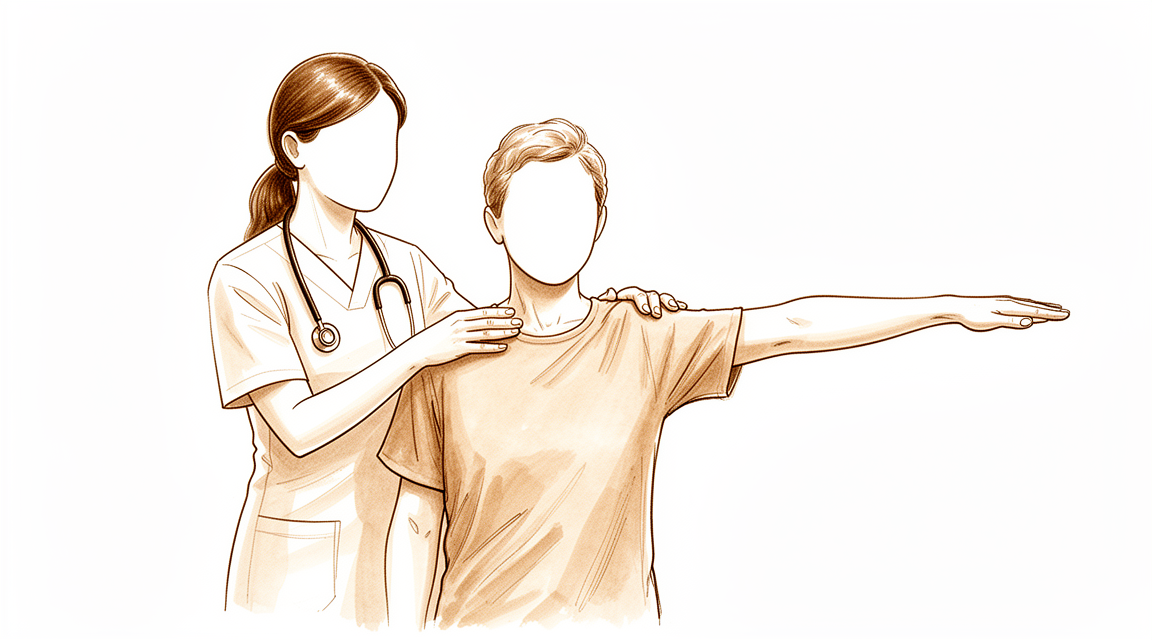
Quy trình này mô tả các bước phục hồi chức năng sau phẫu thuật nội soi cắt bỏ khối vôi hóa do bác sĩ Kieran Hirpara thực hiện tại Bệnh viện tư nhân Mater Rockhampton: đây là phương pháp phẫu thuật xâm lấn tối thiểu nhằm loại bỏ khối vôi hóa khỏi gân cơ chóp xoay; đôi khi phẫu thuật còn kết hợp với thủ thuật giải phóng dưới mỏm vai để tạo thêm không gian cho gân. Hãy mang theo trang này hoặc bản PDF tương ứng trong lần trị liệu vật lý đầu tiên để quá trình phục hồi được phối hợp chặt chẽ. Quá trình phục hồi sẽ được chuyên viên vật lý trị liệu điều chỉnh tùy theo tiến triển của vai bạn qua các giai đoạn dưới đây.
Nếu bạn có bất kỳ thắc mắc nào về vết mổ sau phẫu thuật, hãy liên hệ với phòng khám. Việc chụp ảnh vết mổ và gửi qua email để được đánh giá cũng rất hữu ích.
Trong trường hợp vết tách dọc ở gân đã được khâu lại (việc lấy bỏ khối vôi hóa thường để lại một vết tách dọc ở gân, và vết này thường được khâu kín bằng vài mũi khâu), quá trình hồi phục sẽ chậm hơn một chút so với chỉ cắt bỏ khối vôi hóa đơn thuần, nhưng nhanh hơn so với phẫu thuật khâu sửa chữa gân cơ chóp xoay thông thường: đai treo vai được đeo trong ba đến bốn tuần, việc vận động bắt đầu bằng các bài tập có hỗ trợ và chuyển sang vận động chủ động hoàn toàn từ khoảng tuần thứ tư, các bài tập tăng cường sức mạnh bắt đầu vào khoảng tuần thứ mười đến mười hai, và thường có thể trở lại phòng gym, chơi thể thao và làm công việc nặng sau bốn đến sáu tháng. Bác sĩ Hirpara sẽ thông báo cho bạn sau phẫu thuật xem trường hợp của bạn có thuộc diện này hay không.
Những điều bạn có thể mong đợi
Cả hai phương pháp điều trị đều cho phép bắt đầu vận động vai sớm. Ngay cả khi vết tách dọc ở gân đã được khâu lại, đó chỉ là một thao tác khâu sửa chữa nhẹ, không cần được bảo vệ trong nhiều tháng; mục tiêu của việc điều trị là loại bỏ nguyên nhân gây đau, còn mục tiêu của phục hồi chức năng là làm dịu tình trạng viêm sau điều trị, duy trì sự vận động của vai để tránh cứng khớp, rồi sau đó tái xây dựng sức mạnh cơ bắp.
- Sau khi thực hiện cắt bỏ nội soi: Bạn sẽ được cung cấp đai treo vai chỉ nhằm mục đích tạo cảm giác thoải mái. Đai này chỉ được đeo trong thời gian ngắn, thường là vài ngày và hiếm khi vượt quá hai tuần; bạn nên tháo đai ra càng nhiều càng tốt. Bạn không cần phải đeo đai khi ngủ. Thời gian hồi phục để có thể vận động hoàn toàn, không hạn chế thường mất khoảng ba tháng.
- Nếu vết tách dọc ở gân đã được khâu lại: Đai treo vai sẽ được đeo trong ba đến bốn tuần. Trước tiên là các bài tập vận động có hỗ trợ, sau đó là vận động chủ động hoàn toàn từ khoảng tuần thứ tư, và tăng cường sức mạnh từ khoảng tuần thứ mười đến mười hai. Thời gian hồi phục để có thể vận động hoàn toàn thường mất khoảng bốn đến sáu tháng.
Sau bất kỳ ca phẫu thuật vai nào, bạn không được lái xe trong ít nhất sáu tuần, ngay cả khi đã tháo đai treo vai; bác sĩ phẫu thuật sẽ cho phép bạn lái xe, thường là vào lần tái khám ở tuần thứ sáu.
Dù áp dụng phương pháp điều trị nào, vai của bạn cũng cần thời gian để hồi phục hoàn toàn. Các triệu chứng khó chịu thường thuyên giảm dần theo từng giai đoạn chứ không biến mất ngay lập tức; sau phẫu thuật, có thể mất vài tháng (đôi khi lên tới chín tháng) để các triệu chứng trước khi điều trị biến mất hoàn toàn. Việc cải thiện dần dần, chứ không phải giảm đau tức thì, mới là diễn biến bình thường.
Đây là ca phẫu thuật nội soi qua nhiều vết rạch nhỏ. Khối vôi hóa nằm trong gân cơ chóp xoay sẽ được loại bỏ; đồng thời thường tiến hành thủ thuật giải phóng chèn ép dưới mỏm vai nhằm tạo thêm không gian cho gân. Băng gạc dùng sau phẫu thuật có khả năng chống thấm nước — bạn có thể tắm dưới vòi sen ngay từ ngày đầu — và sẽ được giữ nguyên cho đến khi vết thương được kiểm tra trong lần tái khám đầu tiên, khoảng một tuần đến mười ngày sau phẫu thuật.
Giai đoạn I — Vận động sớm (tuần 0–2)
Kieran Hirpara 4.0
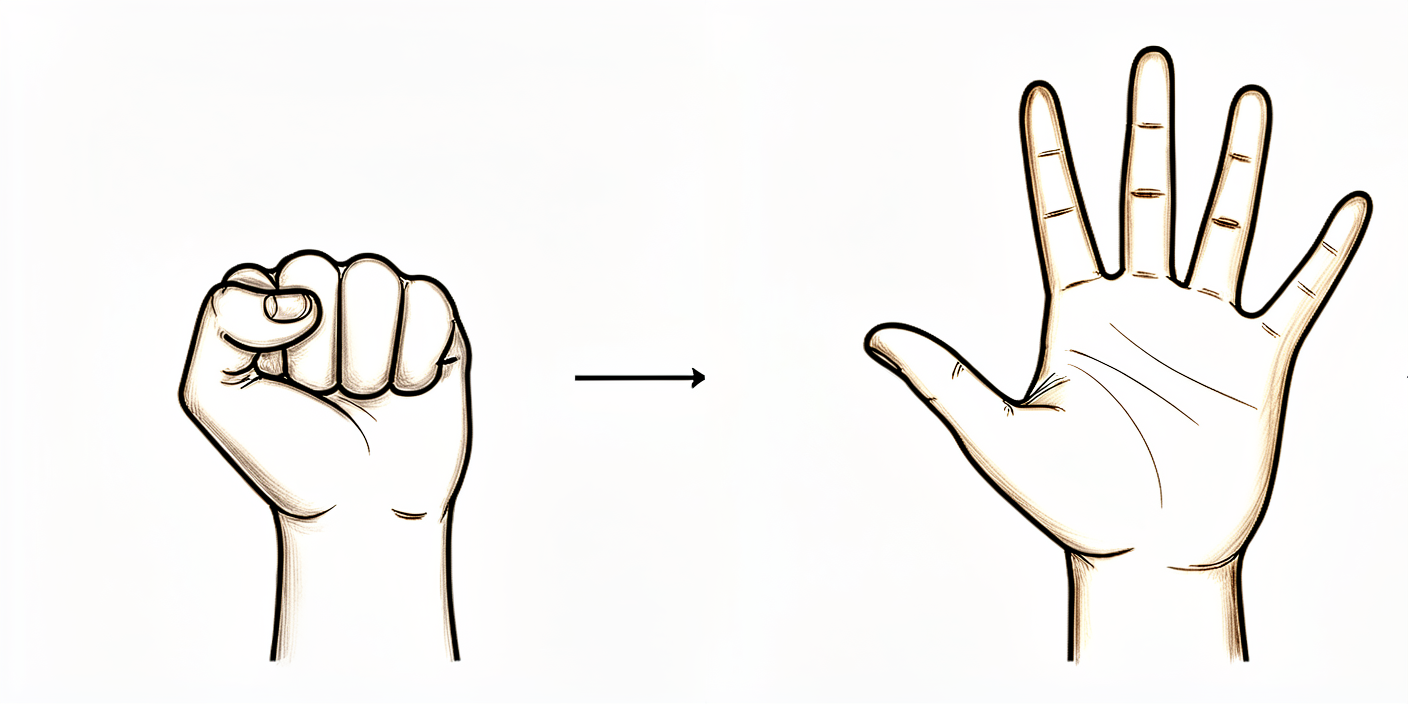
Mở và nắm tay
Hãy liên tục cử động tay và các ngón tay bằng cách mở ra, khép lại, hoặc nắm chặt một quả bóng mềm. Hãy thực hiện ngay từ bây giờ để giúp tay và cánh tay vẫn hoạt động trong lúc vai đang hồi phục.
10 lần, mỗi ngày ba lần.
Kieran Hirpara 4.0
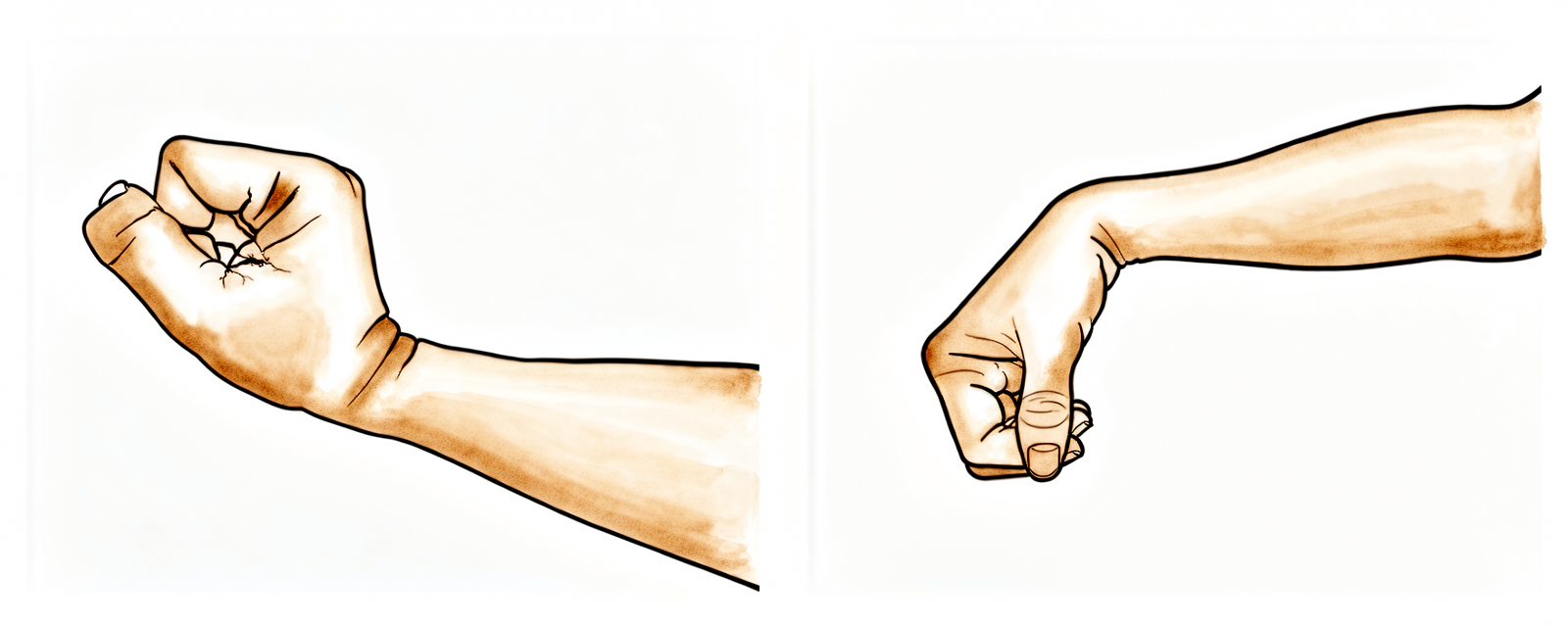
Chuyển động cổ tay
Hãy cử động cổ tay bằng cách gập về phía trước, phía sau và sang hai bên. Thực hiện động tác này khi cánh tay đã được tháo ra khỏi đai treo tay.
10 lần, mỗi ngày ba lần.
Kieran Hirpara 4.0
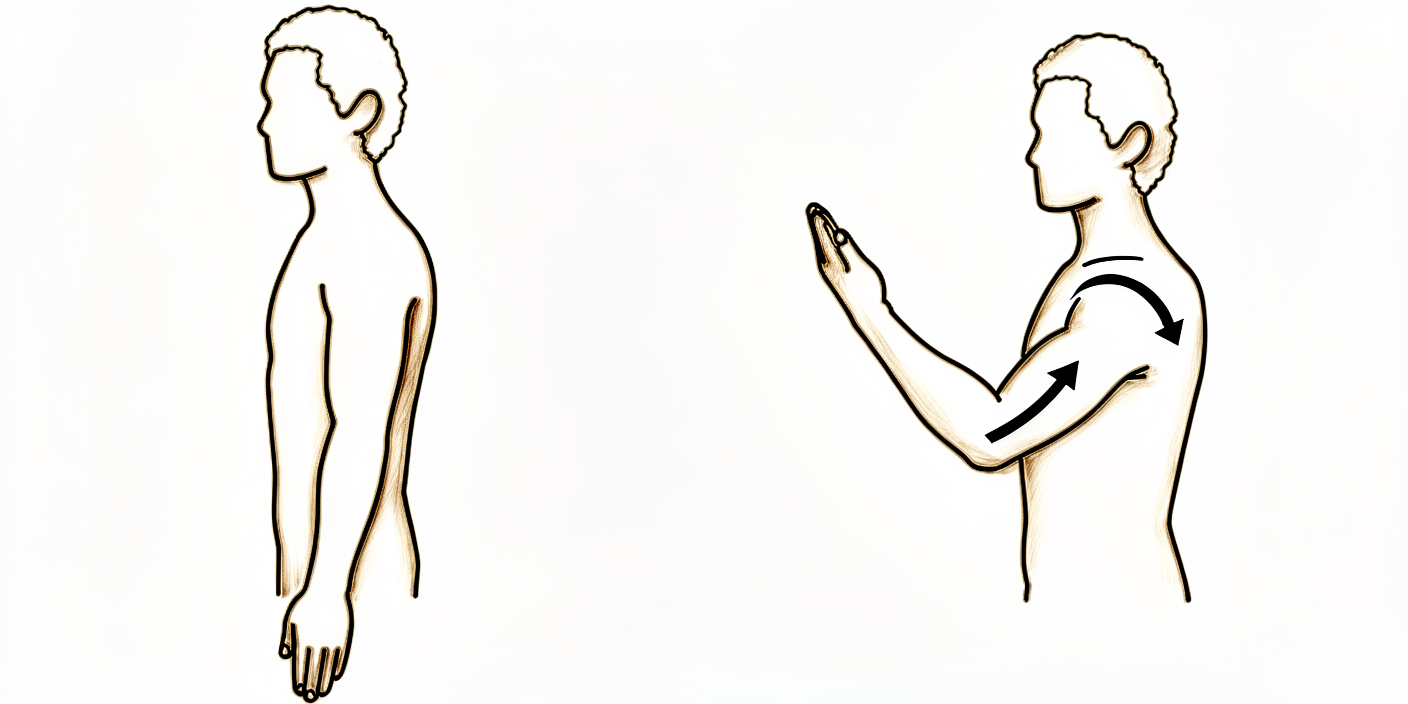
Cử động gập khuỷu tay
Khi cánh tay đặt dọc theo thân, hãy gập khuỷu tay đến mức thoải mái nhất, sau đó duỗi thẳng hoàn toàn. Chỉ có khuỷu tay là di chuyển; hãy giữ vai thả lỏng.
10 lần, mỗi ngày ba lần.
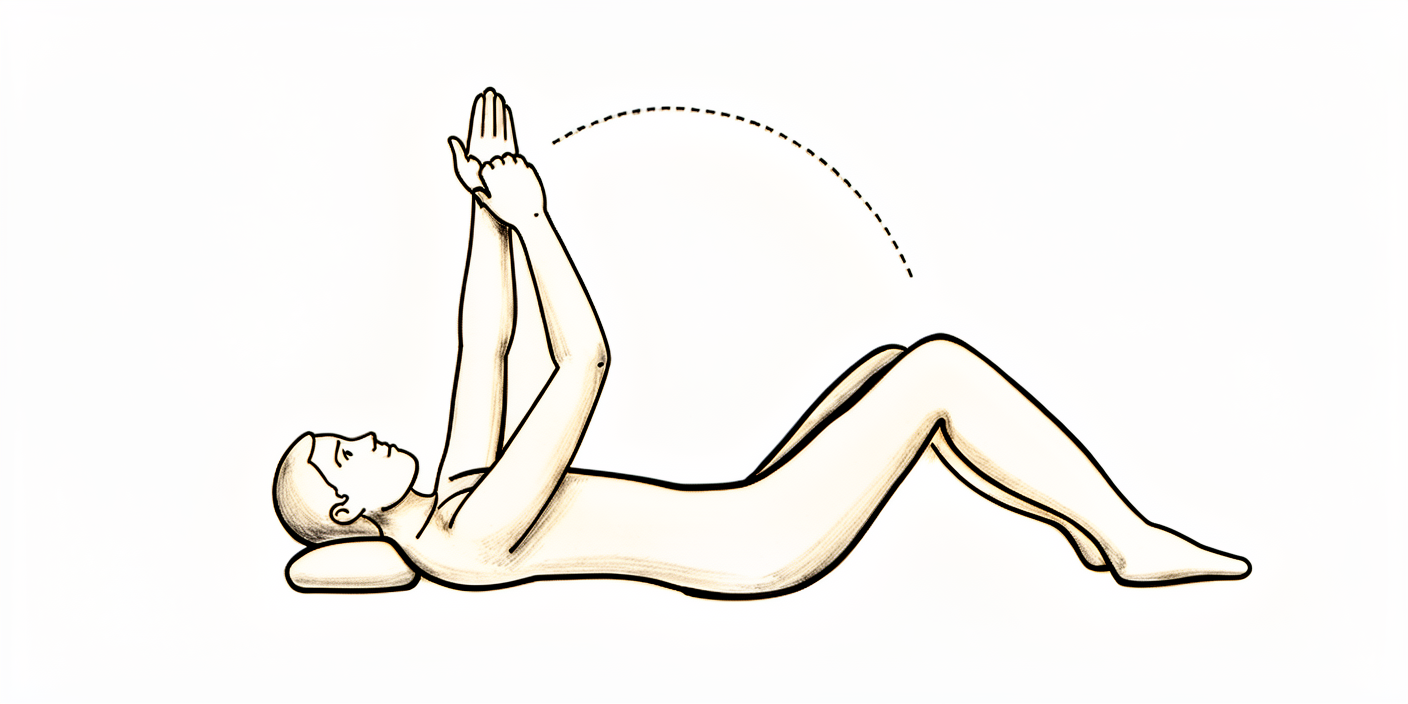
Kieran Hirpara 4.0
Bài tập kéo giãn vùng trên đầu có hỗ trợ (nằm ngửa)
Nằm ngửa, dùng cánh tay lành để nhẹ nhàng nâng cánh tay vừa được phẫu thuật lên cao hơn mức vai; sau đó từ từ hạ cánh tay xuống dưới sự hỗ trợ của cánh tay lành. Ban đầu bạn sẽ cảm thấy hơi khó chịu — điều này là bình thường — và đây là bài tập quan trọng nhất để ngăn ngừa tình trạng vai bị cứng.
10 lần lặp lại, ba lần mỗi ngày.
Sau phẫu thuật, bạn sẽ tỉnh dậy với cánh tay được đeo nẹp treo; tuy nhiên nẹp này chỉ nhằm mục đích giảm đau và tăng sự thoải mái. Hãy cố gắng hạn chế sử dụng nẹp hết mức có thể; hầu hết bệnh nhân sẽ không cần dùng nẹp nữa trong vòng vài ngày. Ngay từ đầu, bạn có thể sử dụng cánh tay một cách tự do ở mức độ thấp hơn vai. Việc nâng cánh tay lên cao hơn vai cũng được phép và an toàn, dù lúc đầu sẽ gây cảm giác khó chịu; hãy dùng cánh tay lành để hỗ trợ nâng cánh tay vừa phẫu thuật lên cao vài lần mỗi ngày nhằm kéo giãn nhẹ, giúp khớp vai không bị cứng. Trong những tuần đầu, tránh mang vác bất cứ thứ gì nặng hơn khoảng hai kilogram bằng cánh tay vừa phẫu thuật, vì điều này sẽ gây đau đớn. Hãy bắt đầu các bài tập càng sớm càng tốt, mỗi bài tập thực hiện mười lần, ba lần mỗi ngày. Nên dùng thuốc giảm đau trước khi tập và chườm đá để giảm đau. Không được lái xe; việc lái xe chỉ được phép sau khi bác sĩ phẫu thuật cho phép, thường là vào lần tái khám tuần thứ sáu.
Dành cho chuyên viên vật lý trị liệu:
Mục tiêu
- Kiểm soát cơn đau và sưng sau phẫu thuật
- Phục hồi sớm biên độ vận động: ưu tiên ngăn ngừa tình trạng cứng khớp – vốn hay gặp ở những bệnh nhân bị viêm gân có lắng đọng canxi
- Sử dụng cánh tay bình thường ở mức độ thấp hơn vai
Cách xử lý
- Nẹp treo chỉ dùng để tăng sự thoải mái; hãy dỡ nẹp ra càng sớm càng tốt, thường là trong vòng vài ngày
- Cho phép sử dụng cánh tay một cách tự do ở mức độ thấp hơn vai ngay từ ngày đầu
- Cho phép nâng cánh tay lên cao hơn vai nếu bệnh nhân chịu đựng được
- Thực hiện các động tác nâng cánh tay lên cao hơn vai bằng cách hỗ trợ cả chủ động lẫn thụ động vài lần mỗi ngày (dùng cánh tay lành hỗ trợ) để ngăn ngừa cứng khớp
- Chương trình tập luyện tại nhà: mỗi bài tập thực hiện mười lần, ba lần mỗi ngày
- Dùng thuốc giảm đau trước khi tập; chườm đá để giảm đau khi cần thiết
Lưu ý phòng ngừa
- Không được mang vác hay nâng vật nặng hơn khoảng hai kilogram bằng cánh tay vừa phẫu thuật
- Không được lái xe trong sáu tuần (quy định này áp dụng cho mọi ca phẫu thuật vai)
Tiêu chí để chuyển sang giai đoạn tiếp theo
- Vết mổ ổn định khi kiểm tra lần đầu sau phẫu thuật
- Đã tháo nẹp treo và có thể sử dụng cánh tay thoải mái ở mức độ thấp hơn vai
Giai đoạn II — Phục hồi phạm vi vận động (tuần 2–8)
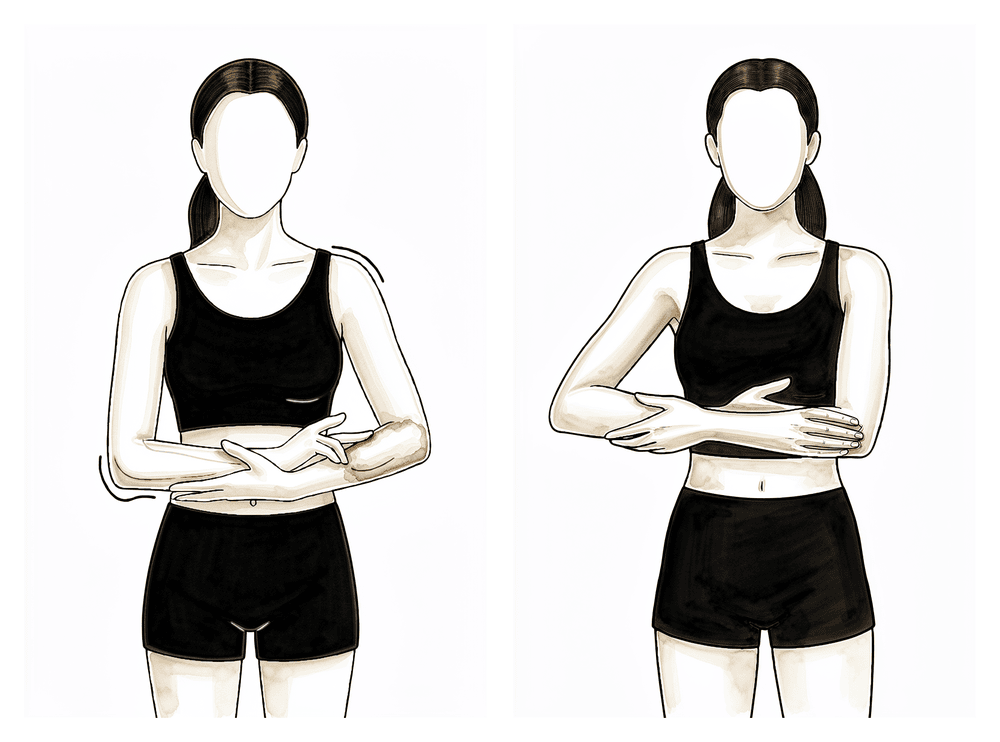
Kieran Hirpara 4.0
Dạng tay (đưa tay sang bên) có hỗ trợ
Dùng cánh tay còn lại ôm lấy cẳng tay vừa được phẫu thuật, sau đó nâng cả hai cánh tay sang bên, để cánh tay lành thực hiện phần lớn công việc; tiếp theo hạ xuống một cách từ từ và có kiểm soát. Hãy tăng dần biên độ vận động khi cảm thấy thoải mái — việc kéo giãn đến mức hơi khó chịu là được; tuy nhiên không nên kéo giãn quá mức gây đau đớn dữ dội.
Theo hướng dẫn của chuyên viên vật lý trị liệu của bạn.
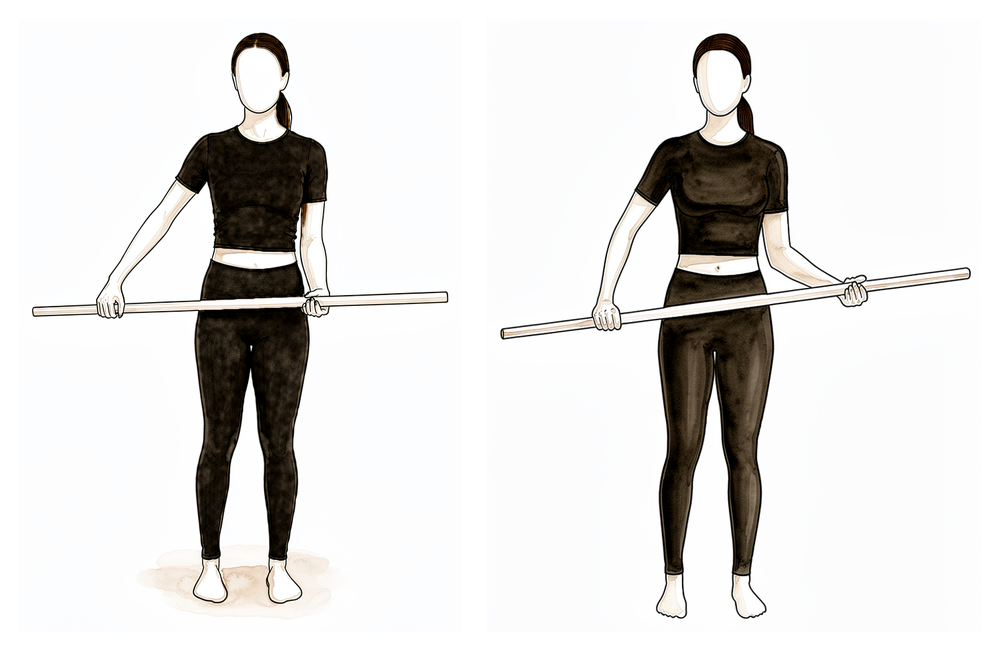
Kieran Hirpara 4.0
Hỗ trợ xoay ngoài cánh tay bằng cách dùng cây gậy
Nằm ngửa, khuỷu tay áp sát vào thân mình và gập thành góc vuông. Cầm một thanh gỗ bằng cả hai tay, dùng cánh tay lành để xoay bàn tay vừa được phẫu thuật ra ngoài, đồng thời xoay vai theo. Việc khôi phục chuyển động xoay ra ngoài này là một trong những mục tiêu của giai đoạn điều trị này; vì vậy hãy tiếp tục thực hiện nhẹ nhàng và dần tăng dần độ xoay mỗi tuần.
10 lần, mỗi ngày ba lần.
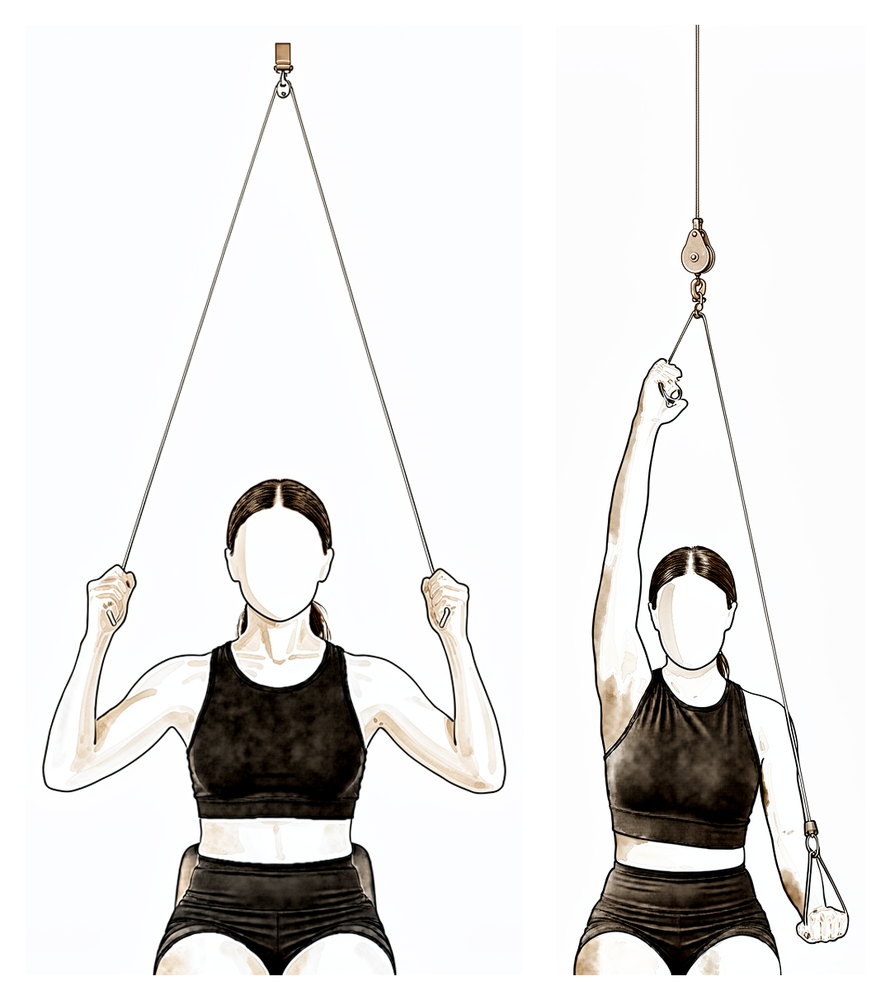
Kieran Hirpara 4.0
Ròng rọc treo cửa
Ngồi dưới hệ thống ròng rọc gắn trên cửa, hai tay cầm vào các tay cầm. Dùng cánh tay lành để kéo xuống, nhằm nâng cánh tay vừa được phẫu thuật lên cao hết mức có thể một cách thoải mái; sau đó hạ xuống từ từ. Thực hiện động tác này để tạo ra sự giãn cơ nhẹ nhàng, không gây đau đớn dữ dội.
10 lần, mỗi ngày từ ba đến bốn lần.
Kieran Hirpara 4.0
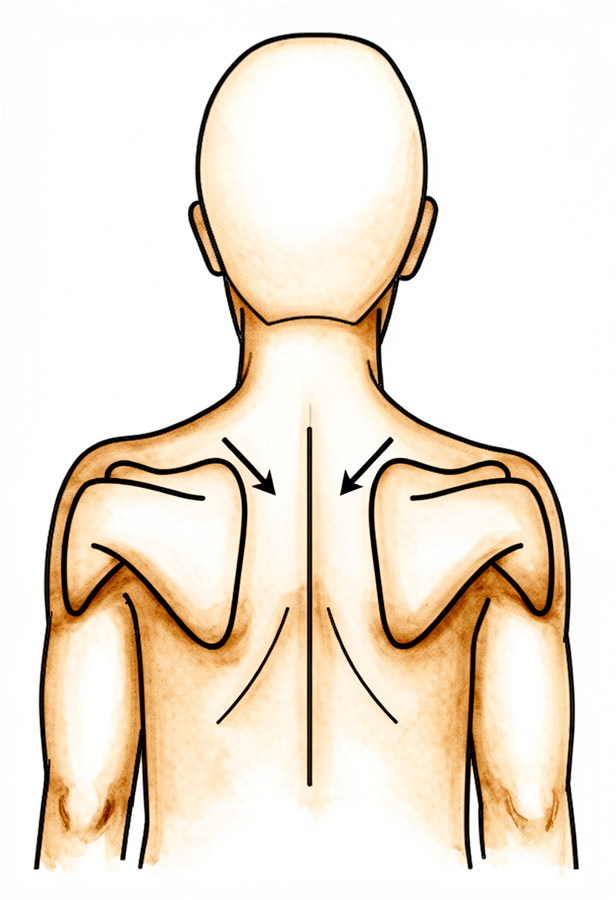
Cách đặt xương bả vai
Ngồi thẳng hoặc đứng thẳng, nhẹ nhàng kéo hai bả vai lại gần nhau và hướng xuống dưới, tránh xa hai tai. Giữ nguyên tư thế này vài giây rồi thả lỏng. Hãy thực hiện động tác này cùng với các bài tập giãn cơ để giúp các bả vai vận động trơn tru khi phạm vi chuyển động của chúng dần hồi phục.
Theo hướng dẫn của chuyên viên vật lý trị liệu của bạn.
Khoảng hai đến ba tuần sau, bạn sẽ được bác sĩ khám lại tại phòng khám để kiểm tra vết thương và phạm vi vận động thụ động của chi. Mục tiêu của giai đoạn này là phục hồi phạm vi vận động: bạn cần tiếp tục các bài tập kéo giãn nâng tay lên phía trước và thêm các động tác vươn tay sang hai bên, dưới sự hướng dẫn của chuyên viên vật lý trị liệu. Mục tiêu chung là đến tuần thứ sáu, bạn có thể chủ động nâng tay lên ngang ngực; đồng thời phạm vi vận động thụ động (nâng lên phía trước, sang hai bên và xoay chi) cũng trở lại bình thường. Từ tuần thứ sáu, bạn có thể lái xe trở lại sau khi được bác sĩ phẫu thuật cho phép và đảm bảo khả năng phanh khẩn cấp an toàn.
Dành cho chuyên viên vật lý trị liệu:
Mục tiêu
- Đến tuần thứ sáu, có thể chủ động gập tay và vươn tay sang hai bên lên mức ngang ngực
- Đến tuần thứ sáu, phạm vi vận động thụ động về gập, vươn sang hai bên và xoay ngoài trở lại bình thường
- Bệnh nhân có thể tự thực hiện các hoạt động sinh hoạt hàng ngày một cách độc lập
Cách xử lý
- Tiếp tục tăng dần mức độ vận động thụ động và vận động chủ động có hỗ trợ; bắt đầu và tăng dần các bài tập vươn tay sang hai bên
- Khi cảm thấy thoải mái, dần dần tăng phạm vi vận động chủ động trên mọi mặt phẳng
- Tiếp tục các bài tập điều chỉnh vị trí xương bả vai và cải thiện tư thế
- Tiếp tục cho bệnh nhân dùng thuốc giảm đau trước mỗi buổi trị liệu; có thể dùng nhiệt hoặc đá lạnh quanh vùng cần kéo giãn tùy sở thích
Lưu ý phòng ngừa
- Trong thời gian phục hồi phạm vi vận động, chỉ nên nâng các vật nhẹ; mức độ tăng dần phải dựa trên mức độ đau của bệnh nhân
- Việc kéo giãn đến mức cảm thấy hơi khó chịu là chấp nhận được; tuyệt đối không kéo giãn quá mức gây đau dữ dội
Tiêu chí để chuyển sang giai đoạn tiếp theo
- Phạm vi vận động thụ động đã trở lại mức bình thường hoặc gần như bình thường
- Bệnh nhân có thể chủ động nâng tay lên ngang ngực hoặc cao hơn, đồng thời mức độ đau đã giảm đáng kể
Giai đoạn III — Tăng cường sức mạnh và trở lại các hoạt động bình thường (tuần 8–16)
Kieran Hirpara 4.0
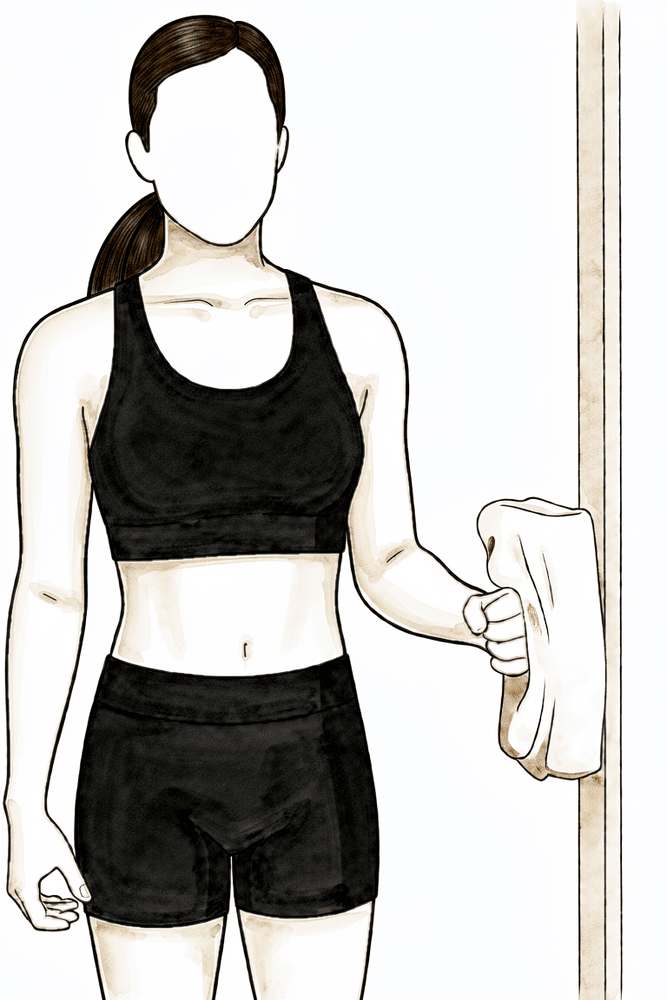
Xoay ngoài đẳng trường
Đứng thẳng, khuỷu tay áp sát vào thân mình và gập thành góc vuông, mu bàn tay áp vào tường hoặc khung cửa. Nhẹ nhàng ấn ra ngoài vào tường mà không để cánh tay di chuyển, giữ vài giây rồi thả lỏng. Bài tập này giúp tăng cường chóp xoay mà không cần cử động — đây là bước khởi đầu của giai đoạn tăng cường sức mạnh từ khoảng tuần thứ tám (từ tuần thứ mười đến mười hai nếu chỗ tách gân đã được khâu lại).
Giữ nguyên tư thế vài giây, lặp lại nhiều lần; theo hướng dẫn của chuyên viên vật lý trị liệu.
Kieran Hirpara 4.0
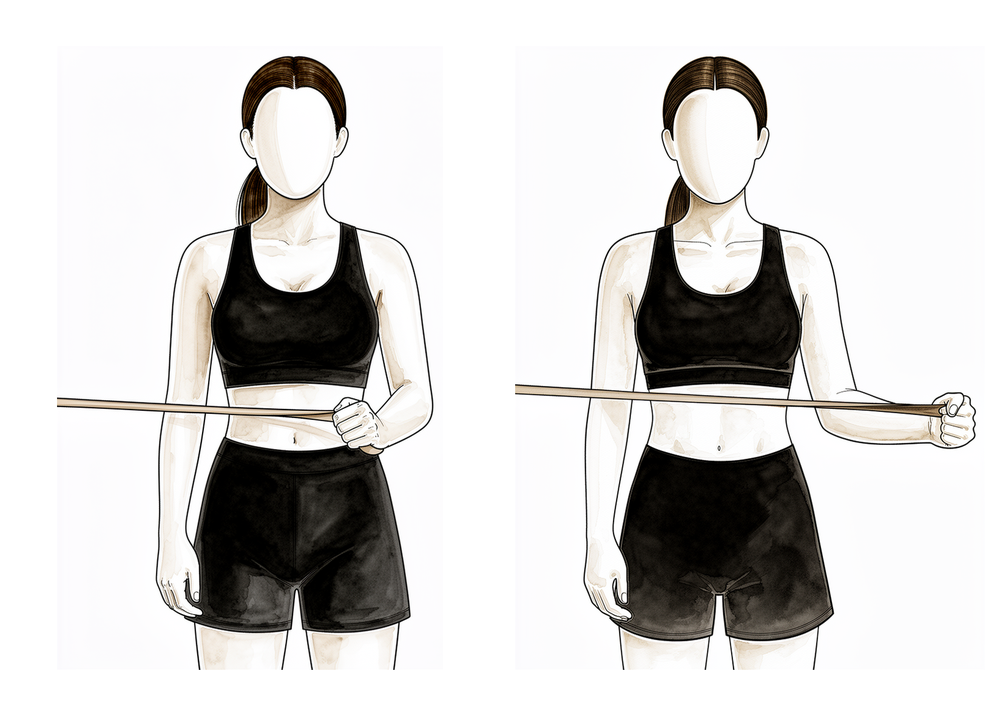
Xoay ngoài với dây thun
Đứng thẳng, khuỷu tay áp sát vào hông và gập thành góc vuông; cầm một dây cao su có điểm móc cố định ở độ cao vòng eo. Giữ nguyên khuỷu tay ở vị trí cạnh hông, xoay cẳng tay ra ngoài chống lại sức căng của dây cao su, sau đó từ từ quay trở lại vị trí ban đầu. Đây là bước tiến tiếp theo sau bài tập đẳng trường khi sức mạnh của bạn tăng lên.
2 đến 3 hiệp, mỗi hiệp 10 đến 15 lần, sử dụng lực cản thấp.
Kieran Hirpara 4.0
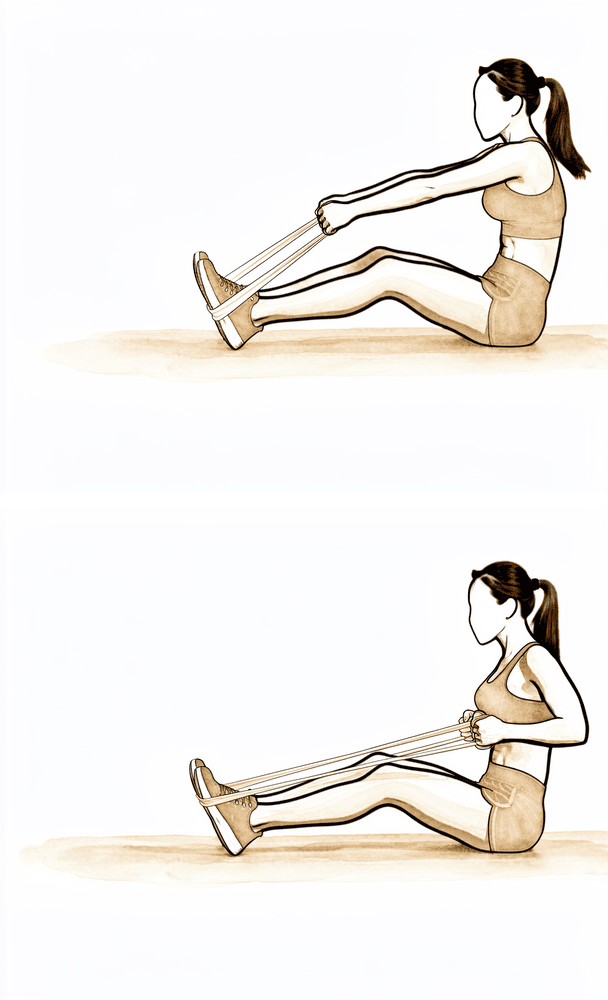
Tập kéo dây thấp
Giữ sợi dây đàn hồi ở phía trước người, ngang thắt lưng. Giữ cánh tay gần như thẳng, kéo cánh tay ra sau và xuống phía hông, đồng thời siết xương bả vai xuống dưới và về phía sau; sau đó từ từ đưa tay về vị trí ban đầu. Bài tập này giúp tăng cường các cơ bả vai có chức năng hỗ trợ cơ vùng vai.
2 đến 3 hiệp, mỗi hiệp gồm 10 đến 15 lần
Kieran Hirpara 4.0
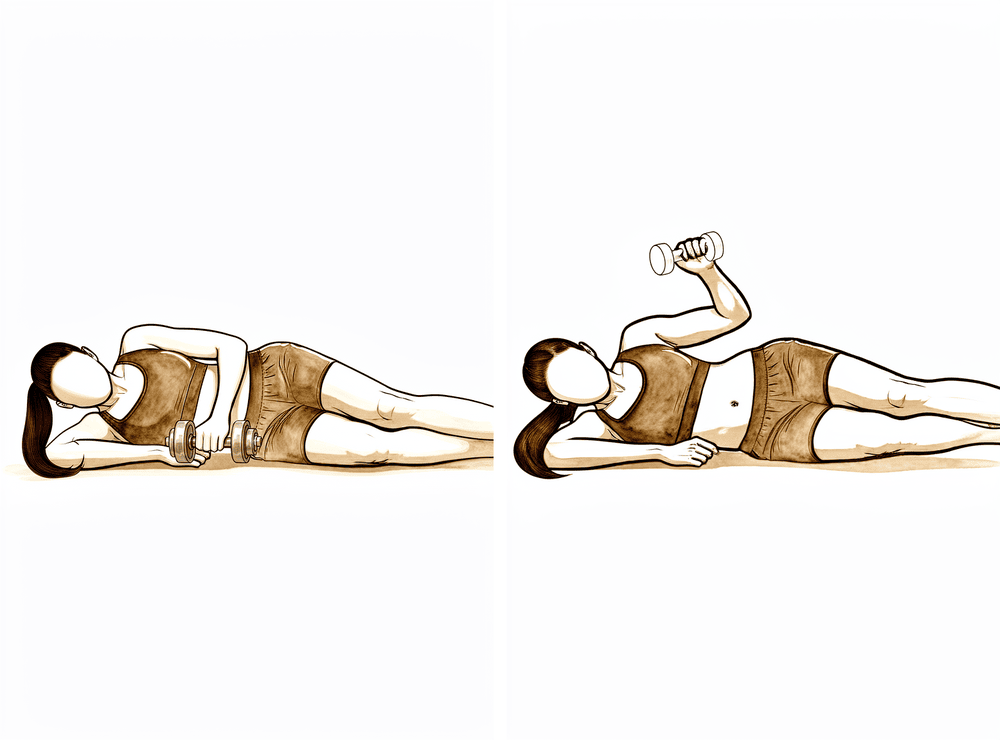
Tư thế nằm nghiêng, xoay ngoài cánh tay có tải trọng
Nằm nghiêng về phía không phẫu thuật, khuỷu tay bên trên gập thành góc vuông và áp sát vào thân mình. Cầm một quả tạ nhẹ, xoay cẳng tay hướng lên phía trần nhà, sau đó từ từ hạ xuống. Đây là một phần của giai đoạn tăng cường sức mạnh chóp xoay từ khoảng tuần thứ tám (từ tuần thứ mười đến mười hai nếu chỗ tách gân đã được khâu lại) — hãy tiếp tục các bài tập vận động song song với bài tập này.
Tải trọng thấp, số lần lặp lại nhiều hơn
Thông thường, bạn sẽ được tái khám vào khoảng tuần thứ tám. Khi biên độ vận động đã phục hồi, quá trình phục hồi chức năng sẽ tập trung vào việc tăng cường sức mạnh cho cơ vùng vai, thường dưới sự giám sát của chuyên viên vật lý trị liệu, đồng thời cho phép bạn sử dụng cánh tay một cách tự do ở mức cao hơn so với độ cao của vai. Mục tiêu là đạt được khả năng nâng tay lên phía trước và sang ngang một cách chủ động hoàn toàn vào khoảng tuần thứ mười hai. Việc hồi phục sau khi chỉ loại bỏ các mô dư thừa thường mất khoảng ba tháng; sau đó sẽ không còn bất kỳ hạn chế nào. Nếu cần phải phẫu thuật sửa chữa cơ vùng vai, thời gian hồi phục sẽ lâu hơn (khoảng năm tháng) và phải tuân theo quy trình phục hồi dành riêng cho ca phẫu thuật này. Bạn không cần lo lắng nếu vẫn còn cảm giác đau nhức sau thời điểm đó: sau ca phẫu thuật này, có thể mất tới chín tháng để các triệu chứng trước phẫu thuật biến mất hoàn toàn, nhưng xu hướng vẫn là tiến triển tích cực.
Dành cho chuyên viên vật lý trị liệu:
Mục tiêu
- Đạt được khả năng gập và nâng tay lên phía trước một cách chủ động hoàn toàn vào khoảng tuần thứ mười hai
- Phục hồi dần dần sức mạnh và sức bền của cơ vùng vai và xương bả vai
- Trở lại các hoạt động bình thường mà không có hạn chế vào khoảng ba tháng sau phẫu thuật
Cách thức thực hiện
- Từ tuần thứ tám (từ tuần thứ mười đến mười hai nếu chỗ tách gân đã được khâu lại), bắt đầu tăng cường sức mạnh cho cơ vùng vai: bắt đầu từ các bài tập isometrics, sau đó chuyển sang sử dụng dây thun và tạ nhẹ; áp dụng tải trọng thấp nhưng số lần lặp lại nhiều
- Dần dần cho phép bệnh nhân sử dụng cánh tay ở mức cao hơn so với độ cao của vai
- Từ tuần thứ mười hai đến mười sáu, tăng dần các bài tập tải trọng phù hợp với mục đích tập luyện tại phòng gym, công việc và thể thao
Lưu ý phòng ngừa
- Việc tăng cường sức mạnh không được làm giảm biên độ vận động; cần tiếp tục thực hiện các bài tập duy trì tính linh hoạt
- Tăng dần các bài tập tải trọng nặng và các động tác nâng tay lên cao; nếu xuất hiện cơn đau tăng lên, cần giảm mức độ tập luyện lại một bước
Tiêu chí để tiến triển
- Đạt được biên độ vận động chủ động hoàn toàn, sức mạnh cơ phục hồi và các triệu chứng tiếp tục thuyên giảm
- Có thể ngừng theo dõi định kỳ khi bệnh nhân tiến triển tốt; thường là từ tuần thứ tám đến mười sáu sau phẫu thuật
Sau khi thực hiện theo phác đồ
Các giai đoạn nêu trên được điều chỉnh từ các hướng dẫn chăm sóc bệnh nhân và phác đồ phục hồi chức năng đã được công bố dành cho thủ thuật này: phác đồ phục hồi chức năng sau phẫu thuật cắt bỏ các mảng vôi hóa của London Shoulder Partnership, hướng dẫn dành cho bệnh nhân từ ShoulderDoc (Vương quốc Anh) về phẫu thuật điều trị viêm gân có mảng vôi hóa, cùng hướng dẫn của Tiến sĩ Kevin Ko về phương pháp cắt bỏ nội soi. Các khoảng thời gian trong tuần chỉ mang tính chất tham khảo chứ không cố định; quá trình phục hồi của bạn sẽ được điều chỉnh riêng biệt bởi chuyên viên vật lý trị liệu, phối hợp cùng phòng khám, tùy theo tiến triển hồi phục của vai bạn. Trang này bổ trợ cho các lời khuyên phục hồi chung từ phòng khám: vui lòng tham khảo mục kiểm soát cơn đau sau phẫu thuật và chăm sóc vết thương. Để hiểu rõ hơn về bệnh lý này cũng như cơ chế tác động của các phương pháp điều trị, hãy xem mục viêm gân có mảng vôi hóa. Các bằng chứng khoa học hỗ trợ phác đồ này (về diễn tiến tự nhiên của bệnh, phương pháp nạo vôi hóa, và các nghiên cứu về phẫu thuật cắt bỏ) được tóm tắt trong mục “Bằng chứng khoa học”; bạn có thể tải tập tin PDF tương ứng từ đầu trang này.
Evidence & references
This is the clinical evidence summary written for health professionals. It is technical, and it lists the research this page was built from. You do not need to read it to understand your treatment or to make a decision about it.
Calcific Tendinitis of the Rotator Cuff — Staged Management & Post-operative Rehabilitation (Arthroscopic Excision)
Topic scope: (A) the natural history and stepped non-operative management of rotator-cuff calcific tendinitis (rest/analgesia → barbotage ± subacromial steroid → ESWT), and (B) post-operative rehabilitation after arthroscopic excision of the calcific deposit (± subacromial decompression; the cuff-repair pathway defers to the rotator-cuff-repair protocol).
Defining principle of the surgical rehab here: arthroscopic excision removes the source of pain and does not, by itself, create a construct that needs months of protection — provided the rotator cuff is left intact. So (like a debridement/decompression, and unlike a cuff repair) the rehab is an early-movement pathway: short sling for comfort only, unrestricted use below shoulder height from day one, assisted elevation to prevent stiffness, strengthening from ~8 weeks. The single branch point is whether removing the deposit left a tendon defect that needed repair — if so, the recovery converts to the slower, protected rotator-cuff-repair pathway.
A. NATURAL HISTORY & NON-OPERATIVE MANAGEMENT
Natural history (self-limiting in most)
Rotator-cuff calcific tendinitis is self-limiting in the majority: after a variable quiescent period the deposit enters a resorptive phase (peripheral vascularisation + phagocytosis), and spontaneous resorption occurs in roughly two-thirds of cases within 1–2 years [Uhthoff & Loehr; Chianca 2018 review]. This underpins a non-operative-first approach and explains why post-operative residual calcium that "dissolves spontaneously" does not harm the outcome.
Stepped non-operative interventions
- Analgesia / activity modification / physiotherapy — first line; many settle as the deposit resorbs. Consensus.
- Ultrasound-guided barbotage (needling + lavage), usually + subacromial corticosteroid — the best-supported interventional option. A systematic review of 908 patients and subsequent meta-analyses favour barbotage for medium-term pain/function; barbotage + subacromial steroid improves Constant–Murley score and reduces deposit size vs steroid alone. Notably, clinical improvement is NOT dependent on how much calcium is aspirated — perforating the deposit to trigger resorption is the active mechanism. Moderate–strong (SR/RCT).
- Extracorporeal shock-wave therapy (ESWT) — reduces deposit size and pain; broadly comparable to barbotage in several comparisons. Moderate (RCT).
B. POST-OPERATIVE REHABILITATION (arthroscopic excision ± subacromial decompression)
Surgery is reserved for deposits recalcitrant to adequate non-operative care. The operation locates and removes the deposit from within the cuff tendon, often with a subacromial decompression for room. Key surgical-outcome facts that shape the rehab:
- Preserving cuff integrity while removing as much deposit as possible gives good-to-excellent results in ~90% and avoids iatrogenic tendon defects [arthroscopic excision series].
- Complete vs near-complete removal gives equivalent outcomes — residual calcium resorbs spontaneously afterwards; the surgeon need not chase every fleck at the cost of the tendon.
- Arthroscopic decompression WITHOUT cuff repair is a validated strategy with good outcomes where the residual defect is not repaired [Bone & Joint 2023].
- Symptom settling is gradual — significant pain relief and ROM gains are the norm, but the pre-operative symptoms can take up to ~9 months to fade fully; recovery to unrestricted activity after excision alone is ~3 months.
Phased post-op timeline (no cuff repair)
| Phase | Window | Sling | ROM / use | Strengthening | Notes |
|---|---|---|---|---|---|
| I — Early movement | Week 0–2 | Comfort only, days (rarely > 2 wk), off ASAP | Unrestricted use below shoulder height from day 1; assisted elevation above shoulder height several × daily to prevent stiffness | — | Settle post-op flare; calcific patients are stiffness-prone → motion is the priority. ≤ ~2 kg, no driving while in sling |
| II — Regaining range | Week 2–8 | Off | Progress active elevation; restore full passive + active ROM | Begin gentle as pain allows | Most regain comfortable range through this window |
| III — Strengthening / return | Week 8–16 | Off | Full active elevation goal by ~12 wk | Cuff + scapular strengthening from ~8 wk, isometric → band/light weight; advance work/sport loading wk 12–16 | Full unrestricted activity ~3 months; discharge ~8–16 wk |
Branch point — if a rotator cuff repair was required: recovery converts to the protected rotator-cuff-repair pathway (sling ~6 wk, ROM restrictions, strengthening deferred), typically ~5 months total. The surgeon confirms post-operatively which pathway applies.
C. KEY CONTROVERSIES / EVIDENCE QUALITY
- Surgery is a last resort — given high spontaneous-resorption rates and effective barbotage/ESWT, excision is reserved for genuinely recalcitrant cases. Strong rationale.
- How much to remove / whether to repair the defect. Equivalent outcomes for complete vs partial removal, and viable decompression-without-repair, mean the surgeon balances deposit clearance against tendon integrity intra-operatively — which in turn decides the rehab pathway. Moderate.
- The post-op rehab protocol itself is consensus/expert, drawn from surgeon patient-guidance protocols rather than a rehab RCT — phase timings are typical, not trial-derived.
D. EVIDENCE STRENGTH FLAGS (summary)
- MODERATE–STRONG (SR / RCT): barbotage ± steroid for non-operative calcific tendinitis (908-patient SR; barbotage + steroid > steroid alone); ESWT efficacy.
- MODERATE (cohorts): arthroscopic excision outcomes (~90% good-excellent; equivalence of complete vs partial removal; decompression without repair, Bone & Joint 2023); spontaneous resorption ~2/3 within 1–2 years.
- WEAK / CONSENSUS: the post-operative rehabilitation protocol (surgeon patient-guidance documents; no defining rehab RCT).
CITATIONS
RAG corpus (180,000+ Orthopaedic articles) — adjacent rotator-cuff evidence
- Predictors of failure of non-operative treatment of chronic symptomatic rotator-cuff disease (2013 Neer Award). J Shoulder Elbow Surg. 2016. DOI: 10.1016/j.jse.2016.04.030
- Arthroscopic rotator cuff repair: scientific rationale, surgical technique, early clinical results. J Shoulder Elbow Surg. 2010. DOI: 10.1016/j.jse.2009.12.012
- Early versus delayed rehabilitation after arthroscopic rotator cuff repair. Knee Surg Sports Traumatol Arthrosc. 2024. DOI: 10.1002/ksa.12129
- Speed of recovery after arthroscopic rotator cuff repair. J Shoulder Elbow Surg. 2017. DOI: 10.1016/j.jse.2016.11.002
- (The corpus is thin on calcific-tendinitis-specific rehab; the evidence base below is the calcific literature + published surgeon protocols.)
Calcific tendinitis literature (URLs)
- Ultrasound-guided barbotage for calcific tendonitis of the shoulder: a systematic review including 908 patients (DARE). https://www.ncbi.nlm.nih.gov/books/NBK241935/
- Determining the efficacy of barbotage for pain relief in calcific tendinitis. JSES Int / ScienceDirect. 2024. https://pmc.ncbi.nlm.nih.gov/articles/PMC11401591/
- Needling and lavage in rotator-cuff calcific tendinitis: ultrasound-guided technique. PMC. 2024. https://pmc.ncbi.nlm.nih.gov/articles/PMC10805427/
- Calcific tendinitis of the rotator cuff: a review (natural history, phases, resorption). PMC. https://pmc.ncbi.nlm.nih.gov/articles/PMC3749672/
- Recovery pattern after arthroscopic treatment for calcific tendinitis of the shoulder. Orthop Traumatol Surg Res. 2020. https://www.sciencedirect.com/science/article/pii/S1877056820301043
- Arthroscopic decompression of calcific tendinitis without cuff repair. Bone Joint J. 2023. https://boneandjoint.org.uk/Article/10.1302/0301-620X.105B6.BJJ-2022-1137.R1
- Arthroscopic treatment of calcific tendonitis (preserve cuff, ~90% good-excellent; residuals resorb). PMC. https://pmc.ncbi.nlm.nih.gov/articles/PMC4044535/
Published rehab protocols (patient-guidance — basis for the phase structure)
- The London Shoulder Partnership — Calcific Deposit Excision Rehabilitation. http://thelondonshoulderpartnership.co.uk/shoulder/shoulder-rehabilitation/calcific-deposit-excision-rehabilitation/
- Ko K. Arthroscopic Excision of Calcific Tendonitis — What Can I Expect? (OPA Orthopedics). https://www.kevinkomd.com/pdf/calcific-tendonitis.pdf
- Funk L. Surgery for Calcific Tendinitis. ShoulderDoc. https://shoulderdoc.co.uk/pages/surgery-for-calcific-tendinitis