Patients › Rehabilitation
Cố định xương thuyền
Đây là kế hoạch phục hồi được thiết kế riêng sau khi phẫu thuật cố định gãy xương thuyền bằng vít nén không đầu được đặt sâu trong xương. Kế hoạch này giúp cổ tay dần phục hồi khả năng vận động ngay từ sớm dưới sự bảo vệ của chiếc vít, trong lúc xương đang trong quá trình liền lại một cách chậm rãi. Sau đó, người bệnh sẽ dần luyện tập để tăng cường sức mạnh nắm và sức bền. Việc vận động có tải trọng hoặc tham gia các môn thể thao tiếp xúc chỉ được thực hiện khi đã xác nhận chắc chắn rằng xương đã liền hoàn toàn.
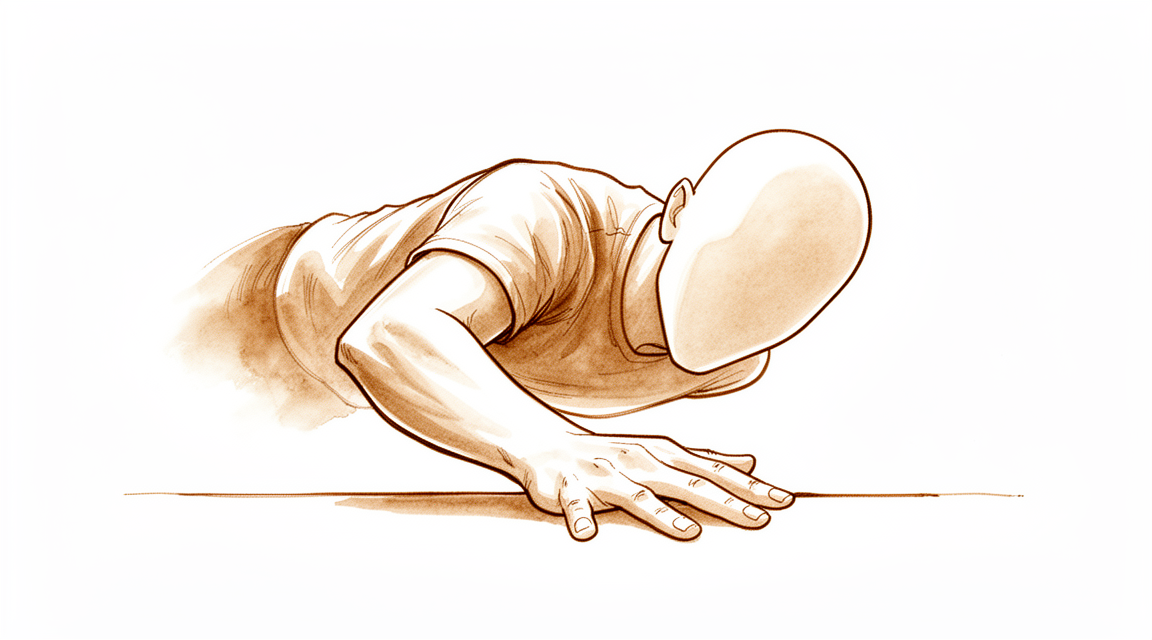
Quy trình này hướng dẫn quá trình hồi phục của bạn sau khi phẫu thuật cố định gãy xương thuyền (tức là gãy ở xương có hình dạng giống chiếc thuyền nhỏ nằm sâu trong cổ tay; các mảnh xương được nối lại bằng vít nén không đầu được đặt bên trong). Ca phẫu thuật do Bác sĩ Kieran Hirpara thực hiện tại Bệnh viện tư nhân Mater Rockhampton. Quy trình bắt đầu với chương trình tập luyện tại nhà, sau đó là các hướng dẫn điều trị chi tiết dành cho chuyên viên trị liệu tay của bạn. Vui lòng mang theo trang này hoặc bản PDF tương ứng trong lần trị liệu đầu tiên để việc phục hồi diễn ra một cách đồng bộ. Chuyên viên trị liệu tay có thể điều chỉnh kế hoạch tùy theo tình trạng gãy xương, phương pháp cố định cũng như tiến độ hồi phục của bạn.
Nếu bạn có bất kỳ thắc mắc nào về vết thương sau phẫu thuật, hãy liên hệ với phòng khám. Việc chụp ảnh vết thương rồi gửi qua email để được đánh giá cũng là một cách hữu ích.
Những điều bạn có thể mong đợi
Xương thuyền là một xương nhỏ nằm ở phần dưới cổ tay, có chức năng nối hai hàng xương cổ tay lại với nhau. Xương này có hệ thống mạch máu rất mong manh và dễ tổn thương, chạy ngược từ một đầu sang đầu kia; vì vậy vết gãy xương thuyền lành lại rất chậm, và nếu không được điều trị kịp thời có thể không liền lại (gọi là tình trạng không liền xương). Việc cố định xương thuyền được thực hiện bằng một chiếc vít nén không đầu, được đặt hoàn toàn bên trong xương; bạn sẽ không cảm nhận được chiếc vít này cũng như không cần phải tháo nó ra. Chiếc vít này giúp ép hai mảnh xương lại gần nhau, vừa thúc đẩy quá trình lành vết thương, vừa cho phép cổ tay bắt đầu vận động sớm hơn so với trường hợp chỉ bó bột. Nếu vết gãy đã xảy ra từ lâu hoặc chưa liền, bác sĩ có thể ghép thêm một mảnh xương ghép nhỏ (thường lấy từ xương cẳng tay gần đó) để hỗ trợ quá trình lành vết thương; điều này có thể khiến kế hoạch phục hồi ban đầu cần được điều chỉnh một cách thận trọng hơn.
Ý tưởng cốt lõi trong quá trình hồi phục này là chiếc vít giữ hai mảnh xương cố định, trong khi xương dần dần liền lại. Do xương thuyền lành rất chậm, các mốc thời gian trong kế hoạch phục hồi được xác định dựa trên mức độ lành vết thương chứ không chỉ dựa vào thời gian. Thông thường, bác sĩ phẫu thuật sẽ xác nhận rằng vết gãy đã liền (“liền xương”) bằng phim X-quang, và đôi khi là chụp CT, trước khi cho phép bạn tăng dần mức độ vận động và tham gia các hoạt động thể thao. Tốc độ hồi phục phụ thuộc vào loại và vị trí vết gãy (những vết gãy gần phần đầu xương – “đầu gần” – nơi lành chậm hơn, hoặc những trường hợp đã từng không liền xương sẽ cần được theo dõi kỹ hơn); đồng thời còn phụ thuộc vào độ vững chắc của vết cố định.
Các hoạt động vận động được mở rộng dần theo từng giai đoạn: ngay sau phẫu thuật bạn có thể cử động ngón tay và ngón cái; sau đó, khi chuyên viên vật lý trị liệu cho phép, bạn mới được thực hiện các động tác nhẹ nhàng cho cổ tay; tiếp theo mới là các bài tập nắm chặt và tăng cường sức mạnh, chỉ sau khi xương đã liền hoàn toàn; cuối cùng mới là việc trở lại các môn thể thao có tải trọng hoặc tiếp xúc. Vì quá trình hồi phục của xương vẫn tiếp diễn trong nhiều tháng, việc tăng dần mức độ vận động và tham gia thể thao cũng được thực hiện từ từ chứ không phải ngay lập tức.
Những lưu ý và hạn chế
- Hãy đeo nẹp hoặc bó bột theo chỉ dẫn và giữ cho chúng khô ráo. Bác sĩ Hirpara cùng chuyên viên trị liệu tay sẽ hướng dẫn bạn khi nào có thể tháo ra để tập luyện và khi nào có thể không cần đeo nữa.
- KHÔNG được nắm chặt, nâng, mang vác hay đẩy bằng cổ tay cho đến khi bác sĩ xác nhận rằng vết gãy đã liền; việc siết chặt hay chịu lực sẽ gây căng thẳng cho xương thuyền và chiếc vít trong lúc xương vẫn đang hồi phục.
- Tránh cố gắng uốn cổ tay ngược lại hết mức (duỗi thẳng) và tránh các chuyển động quá mức ở giai đoạn đầu; hãy từ từ mở rộng biên độ chuyển động, đừng cố đạt đến giới hạn tối đa.
- KHÔNG được trở lại các môn thể thao có tiếp xúc, va chạm hoặc phải chịu lực (cũng như các bài tập tại phòng gym, hít đất, môn chơi dùng vợt hoặc gậy) cho đến khi bác sĩ phẫu thuật xác nhận xương đã liền và cho phép; thường thì phải mất vài tháng chứ không phải vài tuần.
- Ngay từ đầu hãy vận động các ngón tay, ngón cái, khuỷu tay và vai để tránh cứng khớp; có thể sử dụng tay để thực hiện những công việc nhẹ nhàng hàng ngày miễn là không cần nắm chặt, nâng vật nặng hay uốn cổ tay quá mức.
- Nếu phương pháp cố định vết gãy còn sử dụng cả ghép xương để điều trị tình trạng không liền xương, hãy tuân theo lộ trình chăm sóc thận trọng hơn; hãy làm theo kế hoạch cụ thể mà bác sĩ phẫu thuật và chuyên viên trị liệu tay đưa ra cho bạn.
Về cách chăm sóc vết thương, giảm sưng và xử lý sẹo, vui lòng tham khảo hướng dẫn chăm sóc vết thương của phòng khám.
Các bài tập của bạn
Kieran Hirpara 4.0
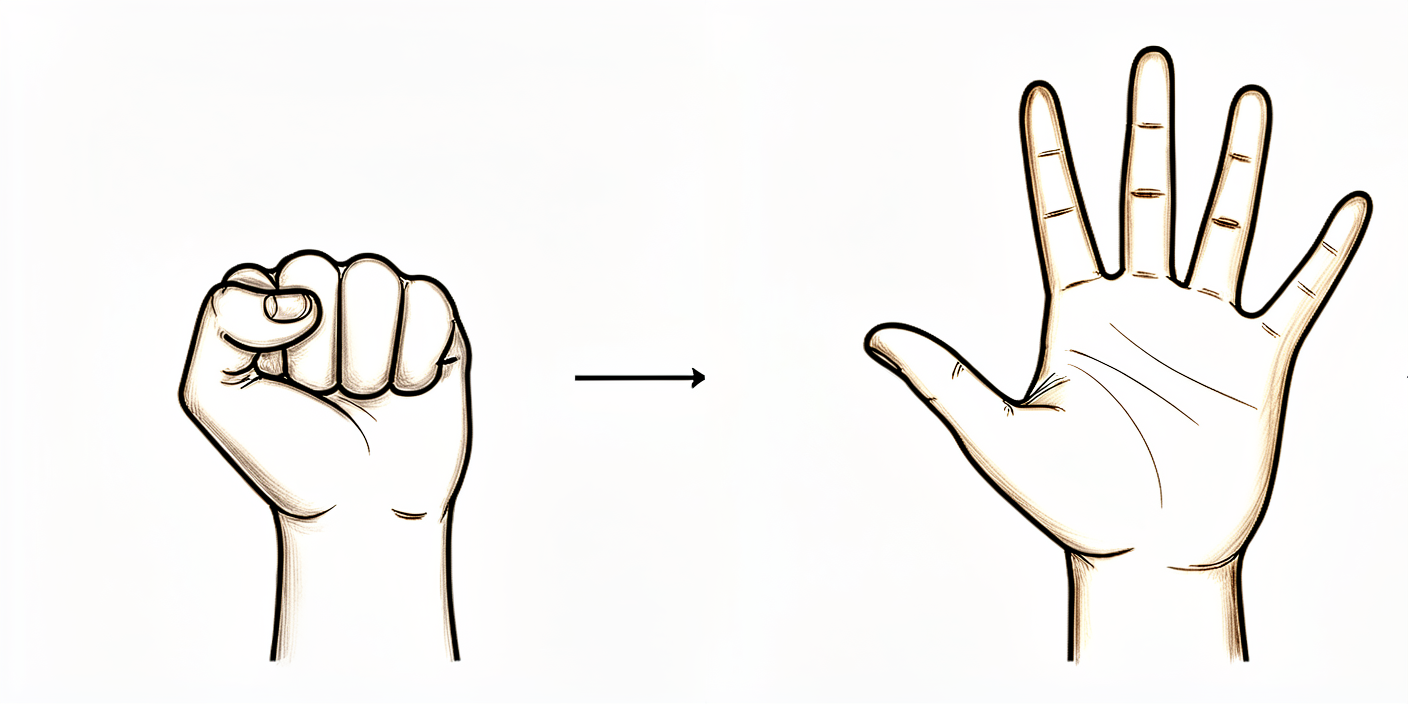
Chuyển động của các ngón tay và ngón cái
Ngay từ những ngày đầu, hãy cử động các ngón tay và ngón cái thường xuyên để tránh tình trạng cứng khớp. Hãy nắm tay lại một cách nhẹ nhàng, sau đó duỗi thẳng các ngón tay ra; tiếp theo chạm ngón cái vào đầu mỗi ngón tay lần lượt. Trong lúc thực hiện động tác này, hãy giữ cổ tay yên trong nẹp hoặc bó bột. Việc này hoàn toàn an toàn ngay từ đầu — nó giúp bàn tay vẫn mềm dẻo mà không ảnh hưởng đến quá trình liền xương thuyền.
Mỗi động tác 10 lần, nhiều lần mỗi ngày, bắt đầu từ ngày đầu tiên.
Kieran Hirpara 4.0
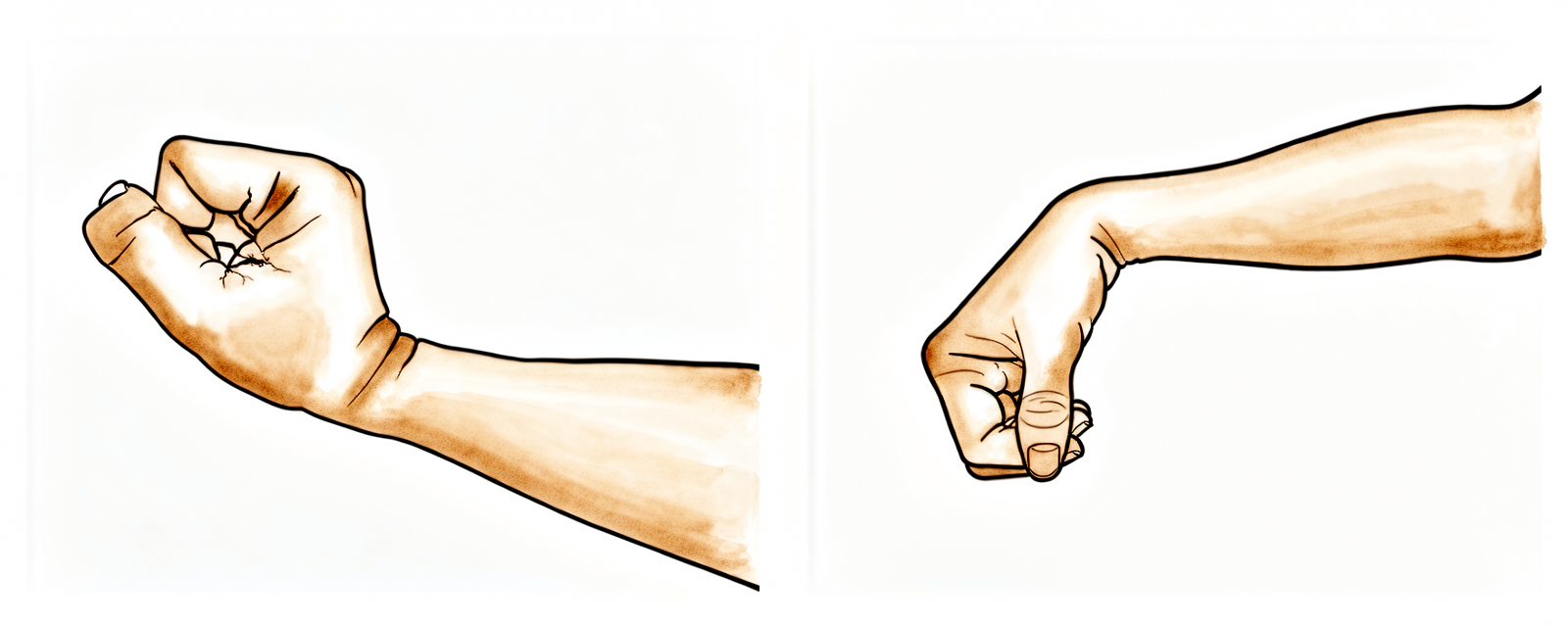
Chuyển động cổ tay (khi được phép)
Khi chuyên viên trị liệu vận động cho tay cho phép — thường là chỉ vài tuần sau phẫu thuật, tùy thuộc vào mức độ gãy xương và phương pháp cố định — bạn hãy bắt đầu vận động cổ tay một cách nhẹ nhàng: gập cổ tay lên xuống, sau đó nghiêng sang hai bên; thực hiện từ từ và trong phạm vi mà bạn cảm thấy thoải mái, không đau. Tuyệt đối không cố gắng vận động quá mức và không cố gắng gập cổ tay ngược hẳn ra phía sau (duỗi thẳng) sớm. Chuyên viên trị liệu sẽ hướng dẫn bạn thời điểm bắt đầu và mức độ vận động phù hợp.
10 lần theo mỗi hướng, 2-3 lần mỗi ngày, chỉ thực hiện sau khi được phê duyệt.
Kieran Hirpara 4.0
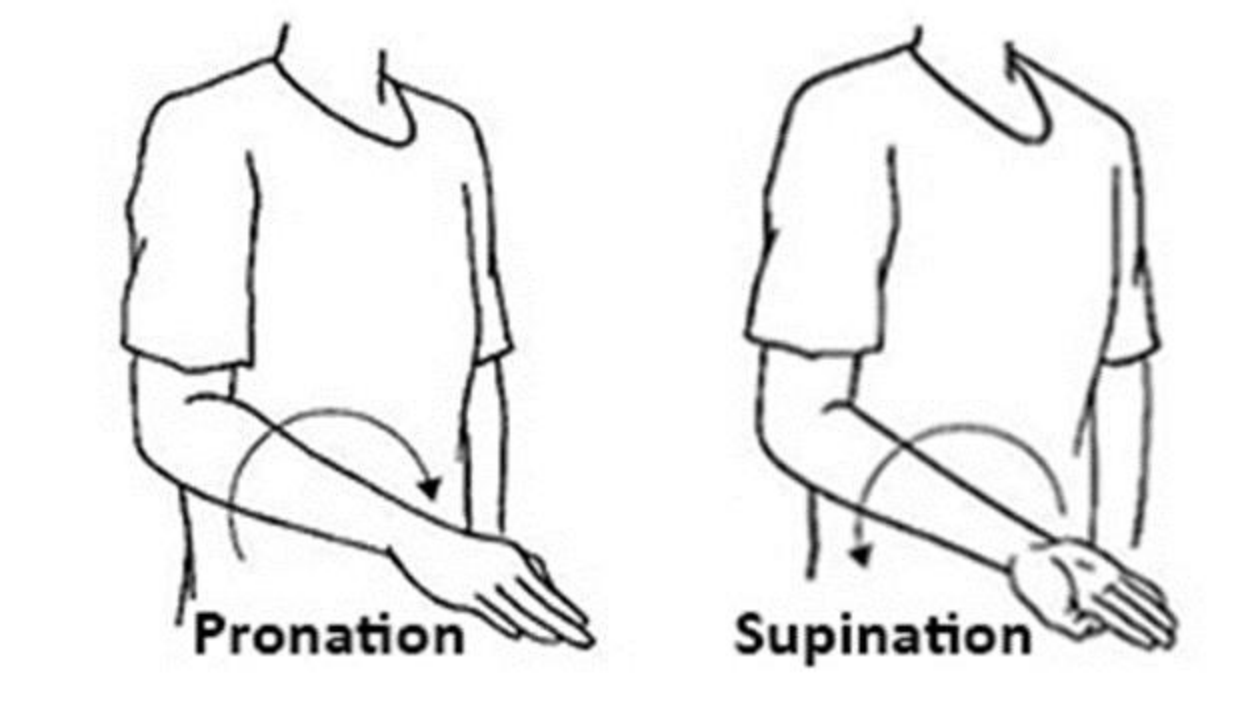
Chuyển động xoay cẳng tay (lòng bàn tay hướng lên / lòng bàn tay hướng xuống)
Hãy giữ khuỷu tay sát thân mình và gập thành góc vuông, sau đó nhẹ nhàng hướng lòng bàn tay lên trần nhà rồi hướng xuống sàn nhà. Thực hiện động tác một cách chậm rãi và nhẹ nhàng. Cách này giúp cẳng tay giữ được độ mềm dẻo mà không gây áp lực lên xương thuyền; vì vậy thường có thể bắt đầu thực hiện sớm — hãy tuân theo hướng dẫn của chuyên viên trị liệu tay.
10 lần theo mỗi hướng, 2-3 lần mỗi ngày.
Kieran Hirpara 4.0
Chăm sóc vết sẹo
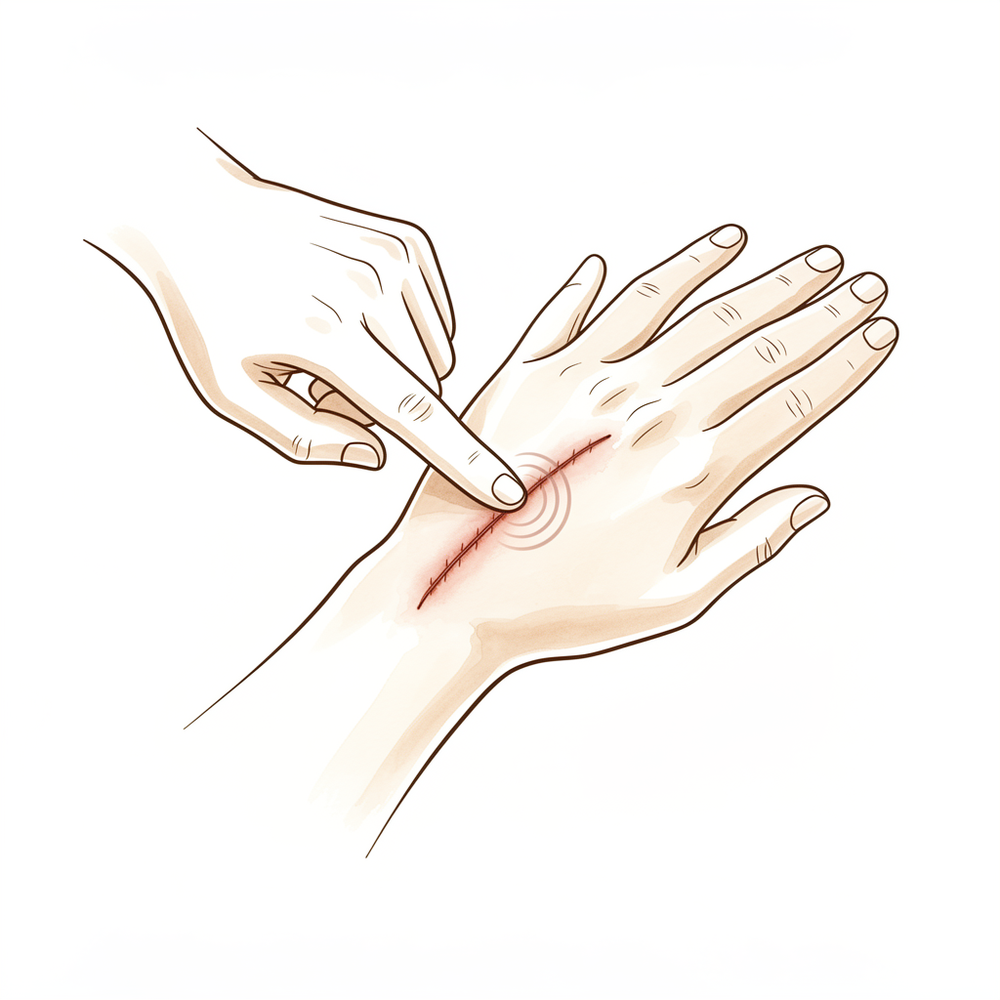
Khi vết thương đã lành hoàn toàn và không còn vảy, hãy massage vùng sẹo trong một hoặc hai phút bằng một chút kem dưỡng ẩm không mùi, thực hiện theo các vòng tròn nhỏ và chắc tay. Việc này giúp sẹo mềm hơn và ít nhạy cảm hơn. Nếu ốc vít được đặt vào cơ thể qua một đường rạch nhỏ, vết sẹo sẽ rất nhỏ; tuy nhiên việc chăm sóc tương tự vẫn rất hữu ích.
1-2 phút, ngày hai lần, sau khi vết thương đã lành.
Kieran Hirpara 4.0
Tăng cường sức mạnh nắm tay (sau khi xương liền lại)
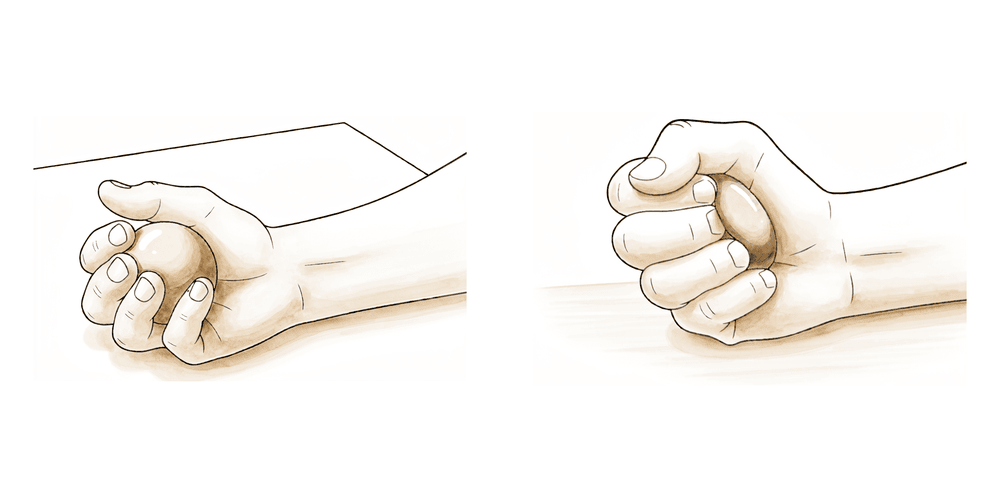
Đây là bài tập cho GIAI ĐOẠN SAU — chỉ thực hiện sau khi vết gãy đã liền và chuyên viên trị liệu tay bắt đầu các bài tập tăng cường sức mạnh (thường không sớm hơn khoảng 8–12 tuần, và phải được xác nhận qua chẩn đoán hình ảnh). Hãy bóp một quả bóng mềm hoặc đất nặn trị liệu, giữ trong chốc lát rồi thả ra. Tăng dần cường độ theo thời gian. Việc nắm mạnh được hoãn lại cho đến khi xương đã liền chắc, vì bóp mạnh sẽ gây tải lên xương thuyền và chiếc vít, trong khi xương thuyền liền rất chậm.
Theo hướng dẫn của chuyên viên trị liệu tay của bạn (chỉ áp dụng sau khi đã xác nhận xương liền hoàn toàn).
Đây là những bài tập có trong tờ hướng dẫn của bạn. Hãy thực hiện chúng chỉ khi được bác sĩ Hirpara và chuyên viên trị liệu hướng dẫn, đồng thời tuân thủ mọi phạm vi chuyển động và hạn chế mà bạn đã được chỉ định. Những bài tập ban đầu nhằm giúp các ngón tay, ngón cái và cẳng tay chuyển động mà không ảnh hưởng đến quá trình liền xương thuyền; các động tác vận động cổ tay nhẹ nhàng chỉ được thực hiện khi chuyên viên trị liệu cho phép. Việc tăng cường sức mạnh nắm tay thuộc giai đoạn sau và không nên bắt đầu cho đến khi được xác nhận rằng xương đã liền lại. Hãy dừng ngay mọi bài tập gây ra cơn đau dữ dội ở cổ tay và thông báo cho chuyên viên trị liệu biết.
Quy trình điều trị lâm sàng của bạn
Phần còn lại của trang này mô tả quy trình phục hồi chức năng theo từng giai đoạn sau khi cố định xương thuyền bằng vít nén không đầu. Phần này cần được cung cấp cho chuyên viên trị liệu tay của bệnh nhân; mỗi giai đoạn đều bắt đầu bằng lời giải thích bằng ngôn ngữ thông thường về những gì đang diễn ra. Xương thuyền lành lại rất chậm do nguồn cung cấp máu ngược dòng không ổn định; vì vậy việc tiến triển điều trị phụ thuộc vào mức độ liền xương, cũng như vào phương pháp cố định và tình trạng gãy xương: việc cố định chắc chắn bằng vít đối với các trường hợp gãy vùng eo cấp tính cho phép bệnh nhân vận động cổ tay một cách có kiểm soát sớm hơn; ngược lại, các trường hợp gãy ở cực gần, không liền xương hoặc đã ghép xương thì cần áp dụng phương pháp điều trị thận trọng hơn.
Trước khi điều trị, cần xem xét báo cáo phẫu thuật và tiền sử bệnh lý của bệnh nhân; đồng thời trao đổi với bác sĩ phẫu thuật về kiểu gãy xương (vùng eo hay cực gần), liệu đó là gãy cấp tính hay không liền xương, có sử dụng ghép xương hay không, mức độ ổn định của vết cố định, cũng như thời điểm dự kiến chụp hình ảnh để xác nhận tình trạng liền xương. Chuyên viên trị liệu tay sẽ thực hiện theo kế hoạch phù hợp với từng trường hợp gãy và phương pháp cố định. Các mốc thời gian dưới đây chỉ mang tính hướng dẫn chung đối với các trường hợp gãy vùng eo cấp tính đã được cố định bằng vít; đối với các trường hợp gãy ở cực gần, không liền xương hoặc đã ghép xương thì cần tiến triển điều trị thận trọng hơn.
Giai đoạn I – Bảo vệ vận động sớm (tuần 0 đến tuần 2)
Trong vài tuần đầu, cần bảo vệ vết thương và các dụng cụ cố định trong khi vẫn duy trì khả năng vận động của bàn tay. Cổ tay được cố định bằng nẹp hoặc bó bột ngắn; các ngón tay, ngón cái và cẳng tay có thể vận động tự do ngay từ ngày đầu. Vết thương thường được kiểm tra vào khoảng tuần thứ hai, khi các liệu pháp trị liệu chính thức bắt đầu.
Dành cho chuyên viên trị liệu tay:
Giáo dục và các biện pháp phòng ngừa - Cố định cổ tay bằng nẹp hoặc bó bột theo chỉ dẫn của bác sĩ phẫu thuật; giữ khô ráo; chỉ tháo ra khi được phép - Thực hiện các động tác vận động chủ động đầy đủ ngay lập tức đối với các ngón tay, ngón cái, khuỷu tay và vai nhằm ngăn ngừa cứng khớp - Không được nắm chặt, nâng vật nặng, chịu tải trọng hay đẩy bằng cổ tay - Tránh các động tác gập duỗi cổ tay quá mức hoặc ở biên độ tối đa
Quản lý - Vết thương: thay băng theo chỉ dẫn; theo dõi dấu hiệu nhiễm trùng; kiểm tra vết thương vào khoảng tuần thứ hai - Phù nề: nâng cao chi, dùng bơm tay nhẹ nhàng, chườm đá nếu cần - Các bài tập: gập duỗi ngón tay/ngón cái chủ động; vận động ngón cái đối diện; xoay cẳng tay nhẹ nhàng; vận động khuỷu tay và vai
Tiêu chí để chuyển sang giai đoạn tiếp theo - Vết thương đã lành hoặc đang lành; cơn đau giảm dần; có sự cho phép của bác sĩ phẫu thuật để bắt đầu vận động cổ tay
Giai đoạn II – Vận động cổ tay có sự bảo vệ (từ tuần thứ 2 đến tuần thứ 8, sau khi xương đã liền)
Khoảng từ tuần thứ hai (đối với các trường hợp gãy cổ tay cấp tính đã được cố định vững chắc bằng vít), người bệnh bắt đầu thực hiện các động tác vận động cổ tay một cách nhẹ nhàng trong phạm vi thoải mái, không gây đau, dưới sự bảo vệ của vít cố định. Phạm vi vận động sẽ được mở rộng dần; tuy nhiên vẫn cần tránh các động tác duỗi cổ tay đến hết biên độ cũng như việc chịu tải. Đối với các trường hợp cố định bằng vít tại vùng cực gần, các ca không liền xương hoặc đã ghép xương, việc vận động sẽ được hạn chế lâu hơn và chỉ bắt đầu theo chỉ dẫn của bác sĩ phẫu thuật.
Dành cho chuyên viên trị liệu tay:
Đánh giá - Đánh giá biên độ vận động chủ động của cổ tay, mức độ đau, sưng nề; kiểm tra vết thương/vết sẹo; trao đổi với bác sĩ phẫu thuật về kết quả chẩn đoán hình ảnh và tình trạng liền xương.
Giáo dục và lưu ý - Bắt đầu thực hiện các động tác gập-duỗi cổ tay và di chuyển sang trái-phải một cách nhẹ nhàng trong phạm vi không gây đau; từ từ mở rộng phạm vi vận động. - Tránh duỗi cổ tay đến hết biên độ hoặc gắng sức duỗi cũng như tránh chịu tải. - Không tập tăng cường sức mạnh nắm tay, không chịu tải trọng, không thực hiện các động tác chống lực cho đến khi xác nhận xương đã liền hoàn toàn. - Tiếp tục duy trì biên độ vận động của các ngón tay và cẳng tay; bắt đầu chăm sóc vết sẹo sau khi vết thương đã lành.
Quản lý điều trị - Bài tập: thực hiện các động tác vận động cổ tay chủ động hoặc hỗ trợ chủ động trong phạm vi thoải mái; tiếp tục các bài tập vận động ngón tay, ngón cái và cẳng tay; quản lý tình trạng phù nề và chăm sóc vết sẹo. - Trong giai đoạn đầu, nếu có chỉ định, hãy sử dụng nẹp giữa các lần tập; việc giảm dần mức độ cố định phải tuân theo hướng dẫn của bác sĩ phẫu thuật.
Tiêu chí để chuyển sang giai đoạn tiếp theo - Xương đã liền hoàn toàn được xác nhận qua chẩn đoán hình ảnh (thường là CT) theo chỉ định của bác sĩ phẫu thuật; cổ tay có thể vận động một cách thoải mái, kiểm soát được và ít đau. Phải đáp ứng đầy đủ các tiêu chí này trước khi bắt đầu các bài tập tăng cường sức mạnh.
Giai đoạn III – Tăng cường sức mạnh và trở lại hoạt động (sau khi xác nhận xương đã liền)
Khi bác sĩ phẫu thuật xác nhận rằng vết gãy đã liền (thông thường mất khoảng 8–12 tuần đối với các gãy cổ tay cấp tính; thời gian này dài hơn đối với các gãy ở cực gần và các trường hợp không liền xương), việc tăng cường sức mạnh mới bắt đầu và được thực hiện từ từ: trước tiên là các bài tập nắm tay và dùng đất nặn, sau đó là các bài tập tăng sức mạnh cổ tay và cẳng tay có sức cản; tiếp theo là các bài tập có tải trọng và phù hợp với môn thể thao cụ thể. Việc trở lại các môn thể thao có tiếp xúc, va chạm hoặc chịu tải trọng được quyết định dựa trên các tiêu chí y tế và tình trạng liền xương; thông thường phải sau khoảng ba đến bốn tháng, và đối với các ca gãy có nguy cơ cao thì thời gian còn lâu hơn nữa.
Dành cho chuyên viên trị liệu tay:
Đánh giá - Độ mạnh khi nắm tay và kẹp ngón tay so với bên lành; biên độ vận động cổ tay; phản ứng đau/sưng khi chịu tải; các bài kiểm tra chức năng và phù hợp với môn thể thao/công việc nếu cần
Giáo dục và lưu ý - Chỉ bắt đầu các bài tập tăng cường sức mạnh nắm tay và dùng đất nặn sau khi bác sĩ phẫu thuật xác nhận xương đã liền; tăng dần mức tải trọng - Tiếp tục thêm các bài tập tăng cường sức mạnh cổ tay và cẳng tay có sức cản; sau đó là các bài tập có tải trọng và dạng vòng khép kín - Việc trở lại các môn thể thao có tiếp xúc/va chạm/chịu tải trọng phải dựa trên tiêu chí y tế và tình trạng liền xương; thường không sớm hơn khoảng 3-4 tháng, và còn lâu hơn đối với các gãy ở cực gần hoặc không liền xương; đối với vận động viên, có thể sử dụng nẹp bảo vệ hoặc bó bột dưới chỉ định của bác sĩ phẫu thuật để trở lại tập luyện sớm hơn dưới sự giám sát
Quản lý điều trị - Các bài tập: từ nắm tay/dùng đất nặn dần dần chuyển sang các bài tập tăng sức mạnh cổ tay/cẳng tay có sức cản (dùng dây kháng lực → tạ nhẹ) → các bài tập có tải trọng và phù hợp với môn thể thao; tiếp tục thực hiện các bài tập phục hồi vận động còn lại - Có thể cho xuất viện khi sức mạnh cơ gần như cân đối và chức năng vận động đã hồi phục đáng kể - Chuyển bệnh nhân trở lại gặp bác sĩ phẫu thuật nếu tiến triển chậm, đau kéo dài hoặc nghi ngờ tình trạng liền xương (cần cân nhắc các trường hợp liền xương chậm, không liền xương hoặc hoại tử vô mạch)
Tiêu chí trở lại tập luyện thể thao - Xương đã liền xương theo xác nhận của bác sĩ phẫu thuật; biên độ vận động cổ tay hoàn toàn không đau; sức mạnh nắm tay gần như cân đối; có khả năng chịu tải trọng và kiểm soát vận động trong môn thể thao mà không gây đau
Trở lại với công việc và các hoạt động hàng ngày
Việc sử dụng tay nhẹ nhàng trong các sinh hoạt thường ngày (ăn uống, viết lách, mặc quần áo, các hoạt động chăm sóc bản thân) được khuyến khích ngay từ đầu, miễn là không gây khó chịu, và không bao gồm các động tác nắm chặt, nâng vật nặng hay gắng sức vùng cổ tay. Công việc văn phòng và các công việc nhẹ, không đòi hỏi vận động tay mạnh thường có thể thực hiện sớm, đôi khi ngay trong tuần đầu hoặc tuần thứ hai với những điều chỉnh phù hợp; còn các công việc nặng đòi hỏi vận động cổ tay thì phải đợi cho đến khi xương liền lại rồi mới dần dần tăng dần mức độ.
Vì bạn cần phải kiểm soát xe một cách an toàn, không được lái xe khi đang đeo nẹp hoặc bó bột khiến việc điều khiển vô lăng trở nên khó khăn, hoặc khi cổ tay chưa đủ khả năng để lái xe và nắm tay lái một cách an toàn. Việc lái xe chỉ được phép trở lại sau khi đã tháo nẹp/bó bột và bạn có thể kiểm soát xe một cách tự tin, an toàn, theo xác nhận của bác sĩ tại buổi tái khám. Trong những tuần đầu, hãy sắp xếp người hỗ trợ đưa đón.
Các hoạt động gây áp lực lên cổ tay (nắm chặt, nâng vật nặng, đẩy, ấn, kéo) phải đợi đến khi bác sĩ phẫu thuật xác nhận xương đã liền lại rồi mới dần dần tăng dần mức độ. Việc trở lại các môn thể thao có va chạm, tiếp xúc và chịu lực phụ thuộc hoàn toàn vào mức độ liền xương, thường không được phép trước khoảng 3–4 tháng; đối với các trường hợp gãy vùng cực gần xương hoặc không liền xương thì thời gian này còn lâu hơn nữa. Việc trở lại tập luyện dựa trên việc xương đã liền, khả năng vận động không còn đau đớn, cùng sức mạnh nắm tay đầy đủ và cân đối – những yếu tố này sẽ do bác sĩ Hirpara và chuyên viên trị liệu tay đánh giá, chứ không chỉ dựa vào thời gian theo lịch trình.
Sau khi thực hiện theo phác đồ này
Phác đồ này được áp dụng song song với các hướng dẫn phục hồi chung của phòng khám: vui lòng tham khảo mục xử lý cơn đau sau phẫu thuật, chăm sóc vết thương và chăm sóc sẹo. Kế hoạch từng giai đoạn nêu trên dựa trên các hướng dẫn phục hồi đã được công bố sau khi cố định xương thuyền; quá trình hồi phục của bạn sẽ được Bác sĩ Hirpara và chuyên viên trị liệu tay theo dõi, điều chỉnh riêng cho từng trường hợp tùy thuộc vào loại gãy xương, phương pháp cố định cũng như tiến triển lành vết thương ở cổ tay.
Evidence & references
This is the clinical evidence summary written for health professionals. It is technical, and it lists the research this page was built from. You do not need to read it to understand your treatment or to make a decision about it.
Scaphoid Fixation — Fracture Fixation Outcomes & Post-operative Rehabilitation (Headless Compression Screw ± Bone Graft)
Topic scope: post-operative rehabilitation after internal fixation of a scaphoid fracture with a buried headless compression screw — percutaneous or open, for an acute fracture or for a nonunion (the latter usually with bone graft, e.g. distal-radius cancellous or vascularised graft). This is a fixation of a slow-healing bone, not a soft-tissue repair: rehabilitation is paced by bone union rather than by tendon/ligament healing windows, and the central tension is between the early-motion advantage that rigid screw fixation buys and the scaphoid's biological tendency to heal slowly and, when neglected, to fail to unite.
Defining principle of the rehab here: the scaphoid has a tenuous retrograde blood supply (it fills from distal to proximal), so it heals slowly and the proximal pole is at risk of delayed union, nonunion and avascular necrosis. A headless compression screw compresses and stabilises the fracture, which is what permits earlier protected wrist motion than a cast alone and earlier return to work/sport in suitable fractures. But the construct does not change the bone's biology: grip, loading and contact sport remain union-gated — held back until the surgeon confirms healing, commonly on CT. Progression is therefore fixation- and fracture-dependent: a stable, screw-fixed acute waist fracture mobilises early; a proximal-pole fracture, a nonunion, or a bone-grafted case is treated more cautiously. The hand therapist follows the plan for the specific fracture and fixation.
A. FIXATION OUTCOMES (acute fixation, and nonunion fixation with graft)
Headless compression screw fixation is a reliable operation with high union rates; the principal debates are who should be fixed acutely (vs cast) and how aggressively to mobilise, not whether the screw works.
- Headless compression screws give high union rates and earlier mobilisation. Internal fixation of scaphoid fractures with headless compression screws achieves high union in both non-displaced and displaced fractures, with the added benefits of earlier mobilisation and earlier return to work and sport compared with cast treatment [Fowler & Ilyas, Hand Clin 2010; Fowler & Hughes, Clin Sports Med 2015]. Moderate (narrative/technique reviews + cohort).
- Percutaneous screw fixation unites faster than cast for acute waist fractures. A randomised trial of 60 acute scaphoid-waist fractures found percutaneous Acutrak screw fixation reached union significantly faster than cast immobilisation (~9.2 vs ~13.9 weeks), with a trend to fewer nonunions [Bond et al., J Bone Joint Surg Br 2008]. Moderate–strong (RCT, single-centre).
- But surgery vs cast for minimally displaced waist fractures gives equivalent long-term function at the cost of more complications. The pragmatic multicentre SWIFFT RCT (bicortical, ≤2 mm displaced waist fractures) found no meaningful difference in wrist function between early surgical fixation and cast immobilisation (with fixation reserved for the cast fractures that failed to unite), while surgery carried more complications. Systematic reviews/meta-analyses concur: surgery favours union but raises complication risk, with ROM, grip and arthritis rates not significantly different [Dias et al., SWIFFT, Lancet 2020; Alshryda et al., The Surgeon 2012; Modi et al., Injury 2009; Rhemrev et al., Injury 2009]. Strong (RCT + SRs).
- Nonunion fixation with bone graft restores union in most cases but heals slower. Scaphoid nonunions treated with screw fixation and bone grafting (non-vascularised distal-radius, vascularised distal-radius, or two-screw constructs) achieve union in the large majority, with proximal-pole and avascular cases the hardest. Acute fixation unites ~100% vs chronic/nonunion ~87% in pooled experience [Garcia et al., J Hand Surg Am 2014; Ribak et al., Int Orthop 2009; Kim et al., Orthop Traumatol Surg Res 2018; Wu et al., Bone Joint J 2022; Simonian & Trumble, JAAOS 1994]. Moderate (cohort/SR).
- The elite/competitive athlete is a distinct decision. Early screw fixation is often favoured in athletes to compress the fracture, shorten immobilisation and enable earlier (often splinted) return to play, accepting the surgical risk for the time advantage [Belsky et al., Hand Clin 2012; Fowler & Hughes, Clin Sports Med 2015]. Moderate (expert/cohort).
B. REHABILITATION / THERAPY EVIDENCE
The rehab questions are (1) how soon to mobilise the wrist after rigid fixation, (2) when to permit loading/grip, and (3) when to confirm union and clear sport. The evidence supports early protected motion under the screw but keeps strengthening and sport union-gated, with proximal-pole/nonunion cases handled more conservatively.
- Rigid screw fixation permits earlier protected wrist motion than cast-alone. The mechanical rationale is that compression across the fracture confers stability, allowing the wrist to begin gentle motion while the bone unites; reported acute-fixation pathways start gentle mobilisation early with a ~2-week wound/therapy review and ~6-week radiographic check [Fowler & Ilyas, Hand Clin 2010; Fowler & Hughes, Clin Sports Med 2015]. Moderate (technique/expert).
- Union is the gate for loading — and it is slow and imaging-confirmed. Reported time to union ranges ~7–16 weeks depending on healing criteria, fracture site and population (athletes vs general), and CT is frequently used to confirm union before clearing loading and sport because plain films overestimate healing [Ecker, Hand Clin 2017 (scaphoid union); Fowler & Hughes, Clin Sports Med 2015]. Moderate.
- Proximal-pole fractures, nonunions and grafted cases progress more slowly. The proximal pole's poor vascularity means later union and a more cautious return; arthroscopic and open grafting series for nonunion report union but over longer timeframes [Wu et al., Bone Joint J 2022; Shih et al., J Orthop Surg Res 2023; Garcia et al., J Hand Surg Am 2014]. Moderate (cohort).
- Percutaneous/antegrade technique is a safe route that supports the early-motion pathway. The percutaneous antegrade approach minimises soft-tissue insult and supports the earlier-mobilisation rationale in suitable fractures [Weinberg et al., Injury 2009]. Moderate (cohort).
Recovery trajectory (expected, evidence-anchored)
| Phase | Window | Restraint | Hand use / therapy focus | Strength / load | Notes |
|---|---|---|---|---|---|
| I — Protected early motion | Week 0–2 | Wrist splint/short cast; no wrist loading | Immediate active finger/thumb/elbow/shoulder ROM; oedema control; wound review ~2 wk | None through the wrist | Hand kept supple; scaphoid undisturbed |
| II — Protected wrist mobilisation | Week 2–8 (union-gated) | No grip/loading; avoid end-range/forced extension | Gentle active wrist flexion-extension and deviation in pain-free range; gradual progression; forearm rotation; scar massage once healed | No resisted/grip work | For stable, screw-fixed acute waist fractures. Proximal-pole/nonunion/grafted: immobilise longer, mobilise later |
| III — Strengthening & return | After confirmed union (commonly ~8–12 wk acute waist; later for proximal pole/nonunion) | Restrictions lifted on union | Grip/putty → progressive resisted wrist/forearm → loaded & sport-specific | Graded to symmetrical grip | Contact/load sport union-gated, typically not before ~3–4 months, later for high-risk fractures; CT often confirms union |
(Phase windows are typical guides for a stable screw-fixed acute waist fracture, not trial-derived deadlines; proximal-pole, nonunion and bone-grafted fixations are paced more conservatively by the surgeon and hand therapist.)
C. KEY CONTROVERSIES / EVIDENCE QUALITY
- Screw fixation vs cast for the acute minimally displaced waist fracture. Fixation unites faster (Bond RCT: ~9 vs ~14 weeks) and returns athletes/workers sooner, but SWIFFT and meta-analyses show equivalent long-term wrist function with more complications from surgery for minimally displaced waist fractures. The defensible position is selective fixation (displacement, proximal pole, high-demand athlete/worker, patient preference) rather than routine surgery for every undisplaced waist fracture [Dias SWIFFT Lancet 2020; Bond JBJS Br 2008; Alshryda Surgeon 2012; Modi/Rhemrev Injury 2009]. Strong evidence of functional equivalence; moderate on the complication trade-off.
- Early motion vs continued immobilisation after fixation. Rigid compression is the rationale for earlier protected wrist motion than cast-alone, and reported pathways mobilise early — but there is no high-certainty trial defining the optimal mobilisation schedule, so timing is surgeon/ therapist protocol and fracture-dependent. Weak–moderate (mechanism strong, scheduling consensus).
- When is it united — and what confirms it. Time to union is wide (~7–16 weeks) and plain radiographs overestimate healing; CT is commonly used to confirm union before clearing loading and sport, which is the true gate for progression [Ecker Hand Clin 2017]. Moderate.
- Return-to-sport timing. Union-gated and fracture-dependent; competitive athletes may return earlier in a protective splint/cast at surgeon discretion, accepting risk, whereas proximal-pole and nonunion cases return later. Reported real-world return is typically months, not weeks [Belsky Hand Clin 2012; Fowler & Hughes Clin Sports Med 2015]. Moderate (expert/cohort).
- Nonunion and proximal-pole biology. The retrograde blood supply drives delayed union, nonunion and AVN risk; grafting (cancellous, corticocancellous, or vascularised) addresses biology but lengthens the timeline. Persistent pain or doubtful union warrants reassessment rather than more loading [Garcia JHS Am 2014; Ribak Int Orthop 2009; Kim OTSR 2018; Wu BJJ 2022; Simonian & Trumble JAAOS 1994]. Moderate.
D. EVIDENCE STRENGTH FLAGS (summary)
- STRONG (RCT / SR): equivalent long-term wrist function from surgery vs cast for minimally displaced acute waist fractures, with more complications from surgery (SWIFFT + meta-analyses); faster union with percutaneous screw fixation than cast (Bond RCT, ~9 vs ~14 weeks).
- MODERATE: high union rates and earlier mobilisation/return with headless compression screws; nonunion union rates with screw + bone graft (acute ~100% vs chronic ~87%); wide ~7–16-week union window and CT confirmation of union; athlete-specific early/splinted return.
- WEAK / CONSENSUS: the specific early protected-motion, union-gated phase schedule (mechanistically rationalised by rigid compression; exact timings are surgeon/hand-therapist protocol and fracture-dependent, not trial-derived); precise return-to-sport months.
CITATIONS
RAG corpus (180,000+ Orthopaedic articles)
- Fowler JR, Ilyas AM. Headless compression screw fixation of scaphoid fractures. Hand Clin. 2010. PMID: 20670800. DOI: 10.1016/j.hcl.2010.04.005
- Fowler JR, Hughes TB. Scaphoid fractures. Clin Sports Med. 2015. PMID: 25455395. DOI: 10.1016/j.csm.2014.09.011
- Belsky MR, Leibman MI, Ruchelsman DE. Scaphoid fracture in the elite athlete. Hand Clin. 2012. PMID: 22883862. DOI: 10.1016/j.hcl.2012.05.005
- Ecker J. Scaphoid union. Hand Clin. 2017. PMID: 28991580. DOI: 10.1016/j.hcl.2017.07.001
- Bond CD, Shin AY, McBride MT, Dao KD. Percutaneous screw fixation versus conservative treatment for fractures of the waist of the scaphoid: a prospective randomised study. J Bone Joint Surg Br. 2008. PMID: 18160502. DOI: 10.1302/0301-620X.90B1.19767
- Alshryda S, Shah A, Odak S, et al. Acute fractures of the scaphoid bone: systematic review and meta-analysis. The Surgeon. 2012. PMID: 22595773. DOI: 10.1016/j.surge.2012.03.004
- Modi CS, Nancoo T, Powers D, et al. Operative versus nonoperative treatment of acute undisplaced and minimally displaced scaphoid waist fractures — a systematic review. Injury. 2009. PMID: 19195652. DOI: 10.1016/j.injury.2008.07.030
- Rhemrev SJ, van Leerdam RH, Ootes D, et al. Non-operative treatment of non-displaced scaphoid fractures may be preferred. Injury. 2009. PMID: 19324359. DOI: 10.1016/j.injury.2008.10.028
- Weinberg AM, Pichler W, Grechenig S, et al. The percutaneous antegrade scaphoid fracture fixation — a safe method? Injury. 2009. PMID: 19380132. DOI: 10.1016/j.injury.2008.12.016
- Garcia RM, Leversedge FJ, Aldridge JM, et al. Scaphoid nonunions treated with 2 headless compression screws and bone grafting. J Hand Surg Am. 2014;39(7). PMID: 24793227. DOI: 10.1016/j.jhsa.2014.02.030
- Ribak S, Medina CEG, Mattar R, et al. Treatment of scaphoid nonunion with vascularised and nonvascularised dorsal bone grafting from the distal radius. Int Orthop. 2009. PMID: 19730861. DOI: 10.1007/s00264-009-0862-6
- Kim J, Yoon J, Baek H. Corticocancellous bone graft vs cancellous bone graft for the management of unstable scaphoid nonunion. Orthop Traumatol Surg Res. 2018. PMID: 29258960. DOI: 10.1016/j.otsr.2017.11.011
- Wu F, Zhang Y, Liu B. Arthroscopic bone graft and fixation for proximal scaphoid nonunions. Bone Joint J. 2022. PMID: 35909374. DOI: 10.1302/0301-620X.104B8.BJJ-2022-0198.R1
- Shih Y, Wu C, Shih J. Arthroscopic treatment of stable nonunion, unstable nonunion, or nonunion of the scaphoid with early degenerative radioscaphoid arthritis. J Orthop Surg Res. 2023. PMID: 36804865. DOI: 10.1186/s13018-023-03609-8
- Simonian PT, Trumble TE. Scaphoid nonunion. J Am Acad Orthop Surg. 1994. PMID: 10709008. DOI: 10.5435/00124635-199407000-00001
Scaphoid fixation / rehabilitation literature (URLs)
- Dias JJ, Brealey SD, Fairhurst C, et al. Surgery versus cast immobilisation for adults with a bicortical fracture of the scaphoid waist (SWIFFT): a pragmatic, multicentre, open-label, randomised superiority trial. Lancet. 2020. DOI: 10.1016/S0140-6736(20)30931-4. https://doi.org/10.1016/S0140-6736(20)30931-4
- SWIFFT protocol — Scaphoid Waist Internal Fixation for Fractures Trial. PMC. https://www.ncbi.nlm.nih.gov/pmc/articles/PMC4893284/
- Bond CD, Shin AY, McBride MT, Dao KD. Percutaneous screw fixation versus conservative treatment for fractures of the waist of the scaphoid. J Bone Joint Surg Br. 2008. PubMed. https://pubmed.ncbi.nlm.nih.gov/18160502/
- The headless compression screw — technical challenges in scaphoid fracture fixation. PMC. https://pmc.ncbi.nlm.nih.gov/articles/PMC4796528/
- Arthroscopic-assisted screw fixation of scaphoid waist fractures vs conservative treatment — randomised trial, minimum 4-year follow-up. PubMed. https://pubmed.ncbi.nlm.nih.gov/25913660/
- Non-operative treatment versus percutaneous fixation for minimally displaced scaphoid waist fractures in high-demand young manual workers. PMC. https://pmc.ncbi.nlm.nih.gov/articles/PMC4244556/