Patients › Rehabilitation
Phẫu thuật thay khớp vai ngược
Phase-by-phase rehabilitation protocol after reverse shoulder replacement, including dislocation precautions and the early exercise program.
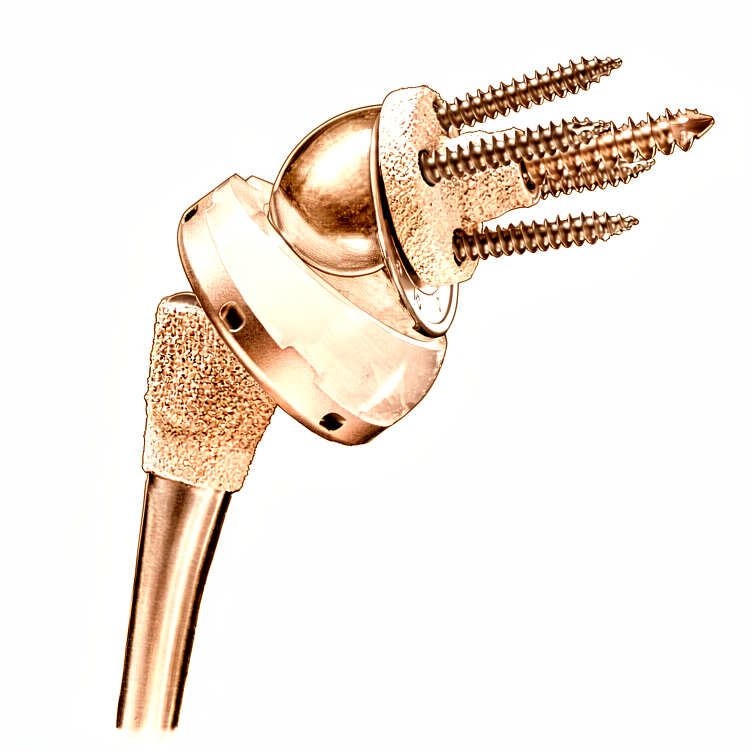
Giao thức này hướng dẫn quá trình hồi phục của bạn sau phẫu thuật thay khớp vai ngược lại do Bác sĩ Kieran Hirpara thực hiện tại Bệnh viện tư nhân Mater Rockhampton. Mỗi giai đoạn dưới đây bắt đầu bằng lời giải thích bằng ngôn ngữ dễ hiểu về những gì đang diễn ra và những điều quan trọng cần lưu ý; tiếp theo là giao thức chi tiết dành riêng cho chuyên viên vật lý trị liệu của bạn: hãy mang trang này hoặc bản PDF tương ứng đến buổi trị liệu đầu tiên để quá trình phục hồi được thực hiện một cách đồng bộ. Chuyên viên vật lý trị liệu có thể điều chỉnh kế hoạch tùy theo tiến độ hồi phục của bạn.
Nếu bạn có bất kỳ thắc mắc nào về vết thương sau phẫu thuật, vui lòng liên hệ với phòng khám. Việc chụp ảnh vết thương rồi gửi qua email để được đánh giá cũng là một cách hữu ích.
Những điều bạn có thể mong đợi
Sau khi tỉnh dậy, cánh tay của bạn sẽ bị tê; cảm giác thường sẽ trở lại trong vòng 6 đến 12 giờ. Trong những trường hợp hiếm gặp, tình trạng tê hoặc yếu cơ có thể kéo dài 2 đến 3 ngày.
Khi tỉnh dậy sau phẫu thuật, cánh tay của bạn sẽ được đeo nẹp cố định, và có một miếng đệm lớn phủ lên vai. Miếng đệm này sẽ được tháo ra trước khi bạn xuất viện. Bên dưới là lớp băng vô nước che phủ một dải keo phẫu thuật; bạn có thể để nguyên lớp băng này trong 2 tuần. Các mũi khâu của bạn là loại tự tiêu nên không cần cắt bỏ; tuy nhiên, ở hai đầu vết thương có thể còn sót lại một vài sợi chỉ, và bạn có thể cắt chúng ngang với bề mặt da sau 2 tuần. Bạn sẽ được hẹn lịch để gặp y tá của chúng tôi kiểm tra vết thương vào tuần thứ 1–2 sau phẫu thuật. Nếu không thể tham dự buổi kiểm tra này, bạn có thể tự tháo băng ra sau 2 tuần.
Thời gian ước tính để trở lại các hoạt động thường ngày:
- Lái xe: 6 tuần
- Bơi lội: bơi ếch: 8 tuần; bơi tự do: 12 tuần
- Chơi golf: 4–6 tháng
- Nâng vật nặng: có thể bắt đầu nâng vật nhẹ sau 6 tuần; tránh nâng vật nặng trong 6 tháng
- Làm việc: công việc văn phòng: 6 tuần; công việc chân tay: tuân theo chỉ dẫn của bác sĩ phẫu thuật
Cách đeo đai treo tay
Đai treo tay giúp nâng đỡ vai, mang lại sự thoải mái trong giai đoạn đầu khi các cơn đau còn chưa thuyên giảm. Đai này có tác dụng hỗ trợ trọng lượng của cánh tay; không phải để giữ vững các vết khâu phẫu thuật. Các quy tắc sử dụng rất đơn giản:
- Đeo đai khoảng 2 tuần để cảm thấy thoải mái và được hỗ trợ; sau đó dần dần tháo ra khi ở ngoài trời. Việc đeo đai trong thời gian ngắn vào ban đêm cũng được chấp nhận nếu giúp bạn dễ ngủ hơn, nhưng điều này không bắt buộc.
- Tháo đai ra khi tắm và khi thực hiện các bài tập vật lý trị liệu, sau khi đã được hướng dẫn cụ thể.
- Khi nghỉ ngơi tại nhà, bạn có thể tháo đai ra bất cứ lúc nào cảm thấy thoải mái; hãy đặt cánh tay lên gối hoặc gối ôm khi ngồi.
- Nếu vai bị sưng hoặc đau, hãy chườm đá, đặc biệt là sau khi tập luyện.
Ban đầu, chuyên viên vật lý trị liệu sẽ hỗ trợ bạn đeo đai và dạy cách tự sử dụng trước khi bạn về nhà. Việc đeo đai đúng cách rất quan trọng; nếu đai quá lỏng sẽ không hỗ trợ được cơ thể:
- Khi đeo đai, hãy đảm bảo khuỷu tay nằm đúng vào góc đai và được nâng đỡ vững chắc.
- Phần cuối đai sau khi đeo đúng cách sẽ nằm vừa vặn ở khớp ngón út. Nếu tay bạn thò ra ngoài đai quá nhiều, đai sẽ không đảm bảo được chức năng hỗ trợ.
- Đai có hai dải dán Velcro: một dải quấn quanh cổ và một dải quấn quanh eo.
- Sau khi điều chỉnh vị trí khuỷu tay và cẳng tay, dùng tay còn lại để luồn dải trên qua phía trước cổ và gắn vào móc trên đai.
- Tiếp tục dùng cách tương tự để gắn dải dưới quanh eo, rồi cố định qua móc dưới của đai.
Trong thời gian đeo đai, hãy luôn chú ý đến tư thế cơ thể; tránh để vai rũ xuống. Để có tư thế đúng, hãy cố gắng giữ cho tai, vai và hông nằm thẳng hàng; điều này rất quan trọng với sức khỏe cột sống và giúp ngăn ngừa tình trạng cứng khớp vai. Bạn có thể đặt một chiếc khăn cuộn lại ở vùng thắt lưng khi ngồi để nhắc nhở bản thân về tư thế này.
Những ngày đầu tiên tại bệnh viện
Trước khi xuất viện, các chuyên viên vật lý trị liệu tại bệnh viện sẽ hướng dẫn bạn thực hiện một loạt các bài tập đơn giản như được mô tả dưới đây. Bạn nên hiểu rõ ba thuật ngữ mà họ sẽ sử dụng: Chuyển động chủ động là những động tác bạn tự thực hiện mà không cần sự hỗ trợ nào. Chuyển động chủ động có hỗ trợ là việc dùng tay còn lại (hoặc một vật dụng như gậy chống) để giúp cánh tay di chuyển. Chuyển động thụ động là khi cánh tay hoàn toàn thả lỏng trong khi tay còn lại (hoặc người khác) thực hiện động tác. Ngay từ đầu, bạn có thể bắt đầu vận động vai với sự hỗ trợ từ tay còn lại; khi cảm thấy thoải mái, hãy từ từ thực hiện các động tác bằng sức mình – việc nằm ngửa thường dễ dàng hơn vì trọng lực sẽ hỗ trợ bạn. Hãy lắng nghe cảm giác của cơ thể và tiến triển theo mức độ phù hợp.
Một vài lưu ý thực tế trong những ngày đầu:
- Hãy dùng đai treo tay để cảm thấy thoải mái hơn. Việc đeo đai trong vài phút vào ban đêm cũng không sao nếu điều đó giúp bạn ngủ ngon hơn; tuy nhiên việc này là tùy chọn.
- Nếu cần, hãy chườm đá để giảm đau.
- Khi đeo đai treo tay, hãy thả lỏng vai và để đai gánh hết trọng lượng của cánh tay.
- Hãy uống thuốc giảm đau trước khi tập luyện và trước các buổi trị liệu vật lý.
- Bạn được phép tháo đai treo tay ra khi tập luyện hoặc tắm rửa.
- Hãy đeo đai treo tay để hỗ trợ và tạo cảm giác thoải mái trong khoảng 2 tuần; sau đó dần dần ngừng sử dụng vào ban ngày.
- Trừ khi bạn đã tự sắp xếp dịch vụ vật lý trị liệu riêng, một lịch hẹn đã được đặt cho bạn và được ghi rõ trong hồ sơ xuất viện.
- Nếu gặp bất kỳ vấn đề nào, hãy liên hệ với văn phòng hoặc thông báo cho chuyên viên vật lý trị liệu của bạn.
Đây là những bài tập mà các chuyên viên vật lý trị liệu tại bệnh viện sẽ hướng dẫn bạn thực hiện; sau đó bạn sẽ tiếp tục luyện tập tại nhà theo chỉ dẫn của họ.
Các bài tập tại bệnh viện của bạn
Kieran Hirpara 4.0
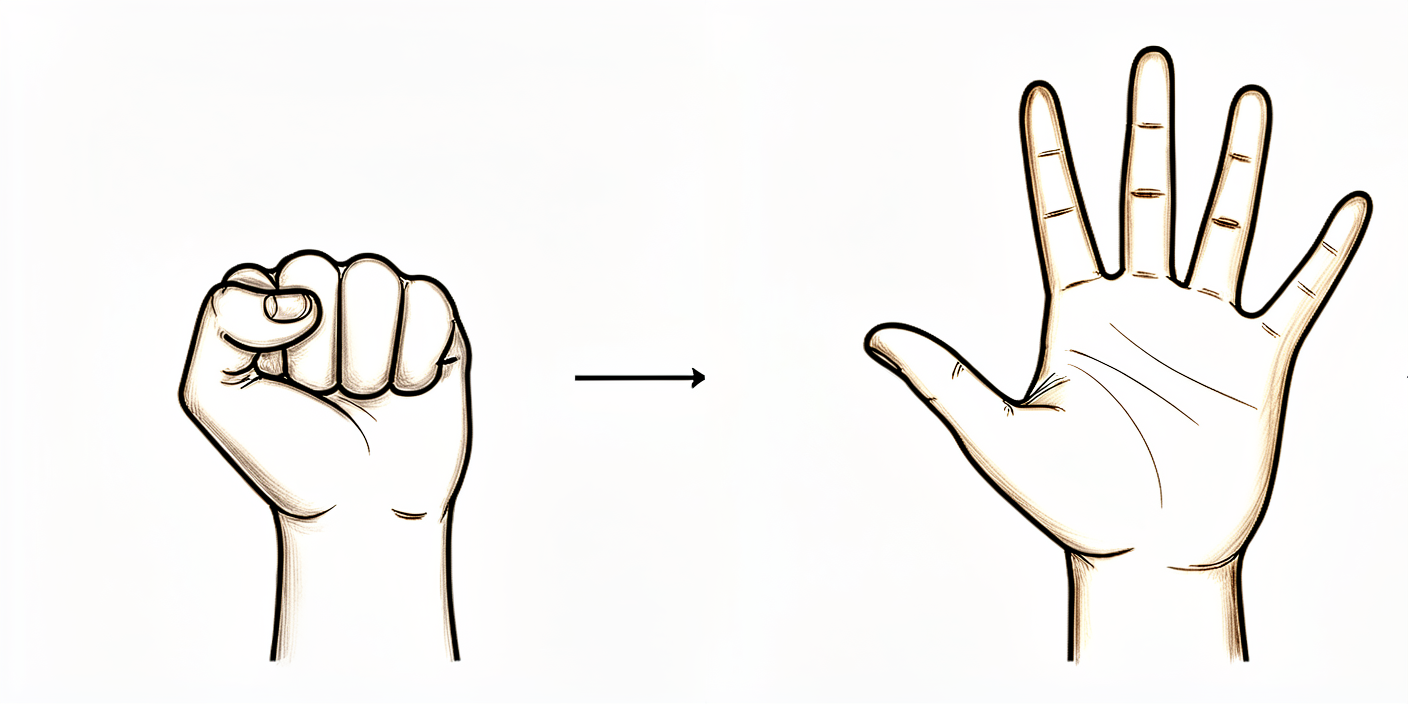
Mở và nắm tay
Hãy cử động tay và các ngón tay bằng cách mở ra, khép lại, hoặc nắm chặt một quả bóng mềm.
10 lần, 3 lần mỗi ngày
Kieran Hirpara 4.0
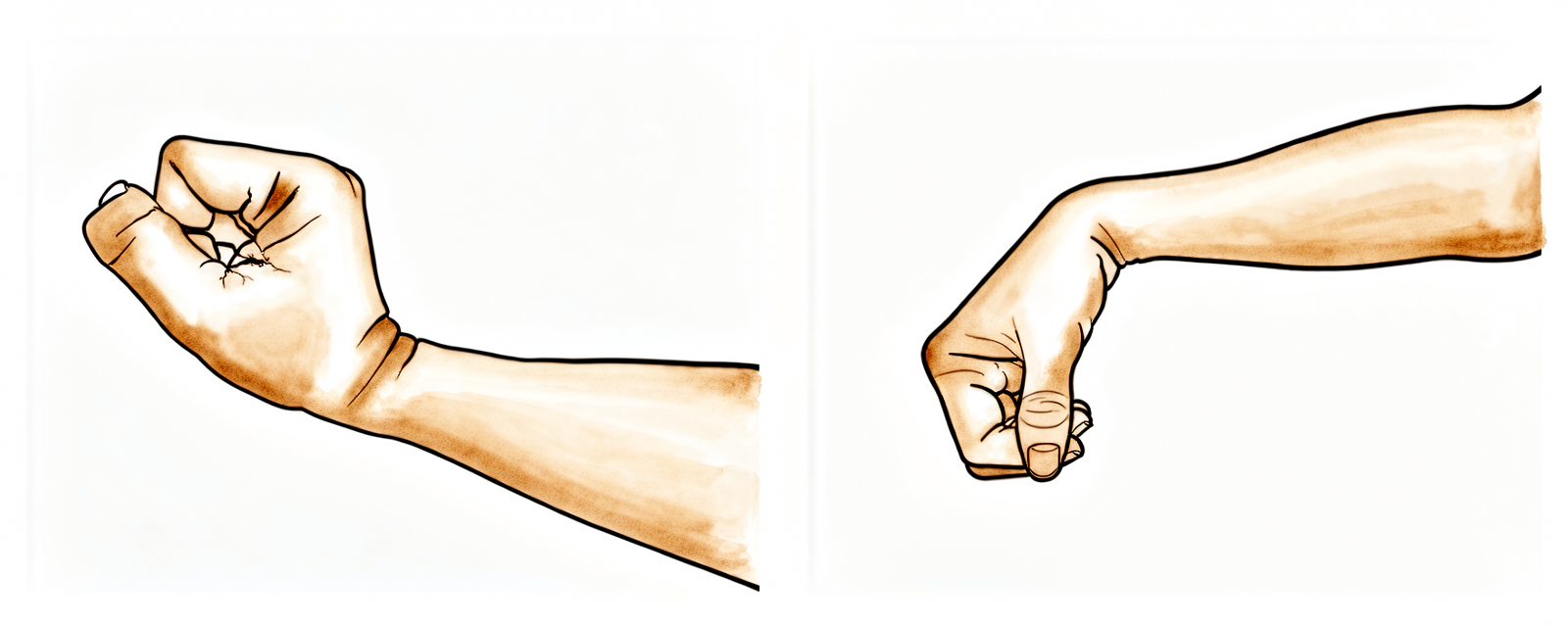
Chuyển động cổ tay
Hãy cử động cổ tay bằng cách gập nó ra trước, ra sau và sang hai bên.
10 lần, 3 lần mỗi ngày
Kieran Hirpara 4.0
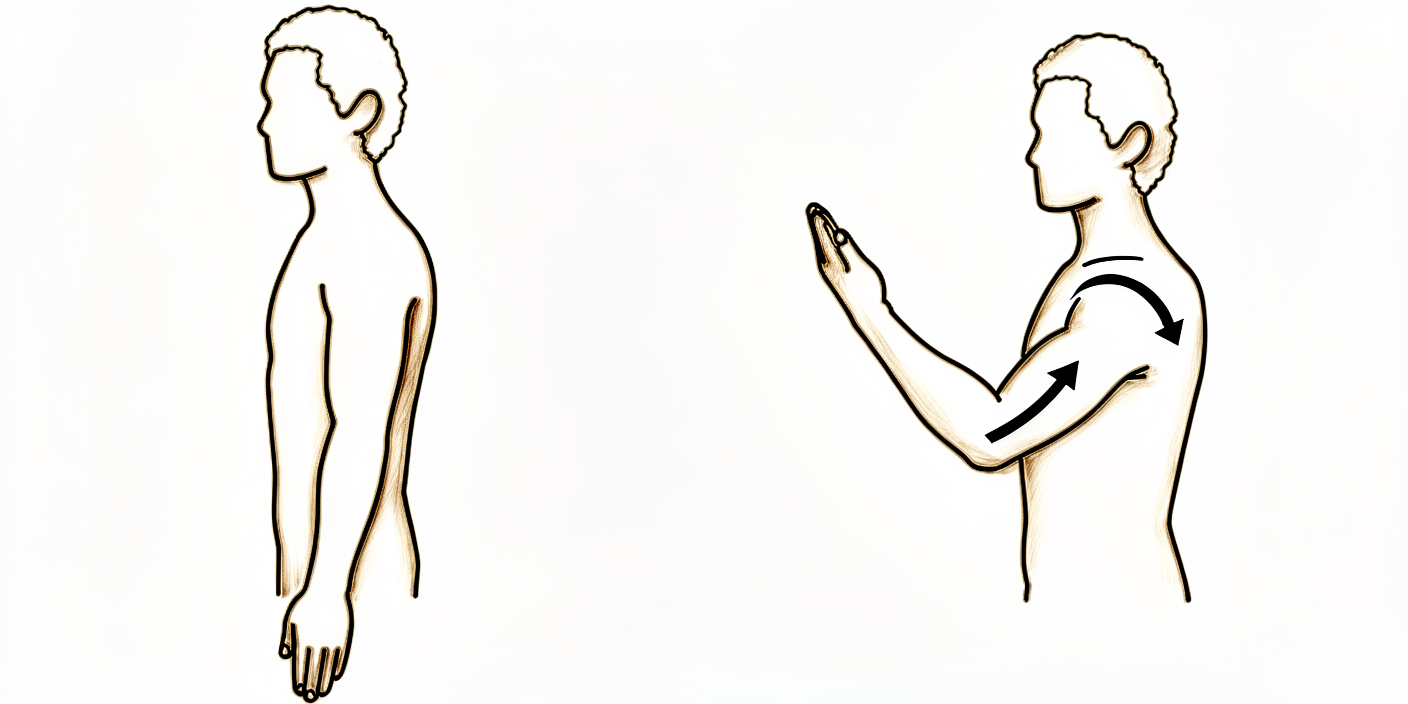
Khớp khuỷu tay
Hãy gập và duỗi khuỷu tay của bạn.
10 lần, 3 lần mỗi ngày
Kieran Hirpara 4.0
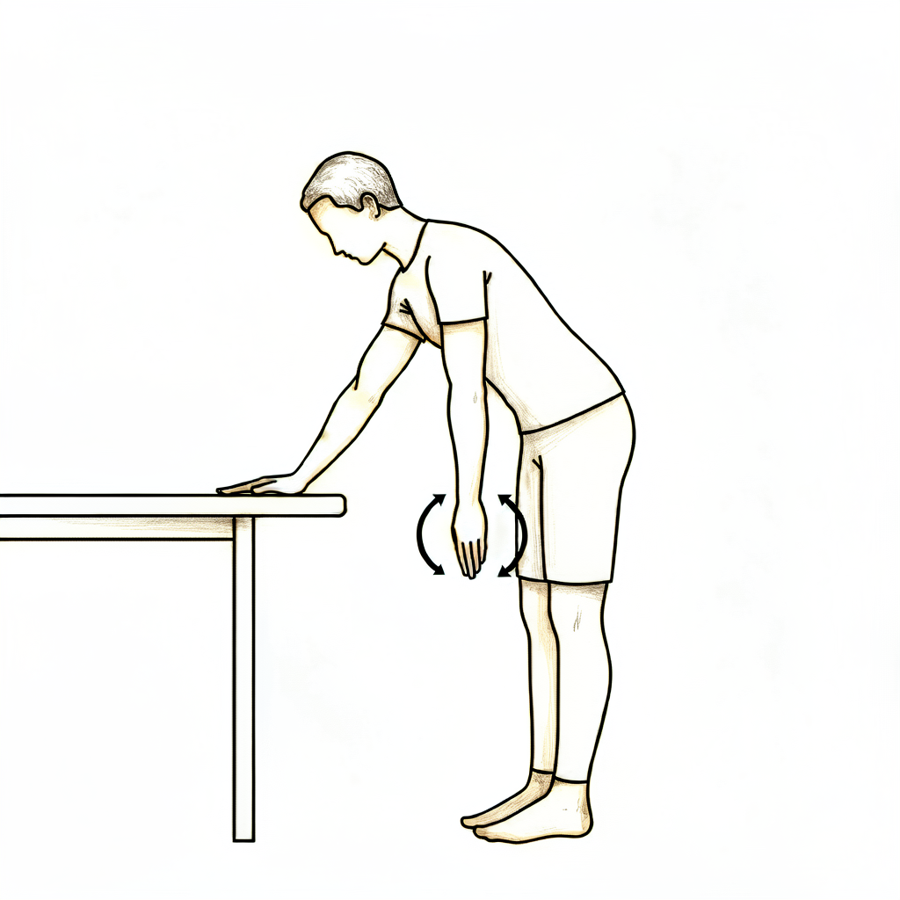
Con lắc
Đây là bài tập thụ động. Hãy cúi người về phía trước và để cánh tay thả lỏng. Dùng cơ thể để nhẹ nhàng di chuyển cánh tay theo chiều kim đồng hồ hoặc ngược chiều kim đồng hồ, đồng thời di chuyển về phía trước, phía sau và sang hai bên.
Khoảng 30 giây cho mỗi hướng, 3 lần mỗi ngày.
Kieran Hirpara 4.0
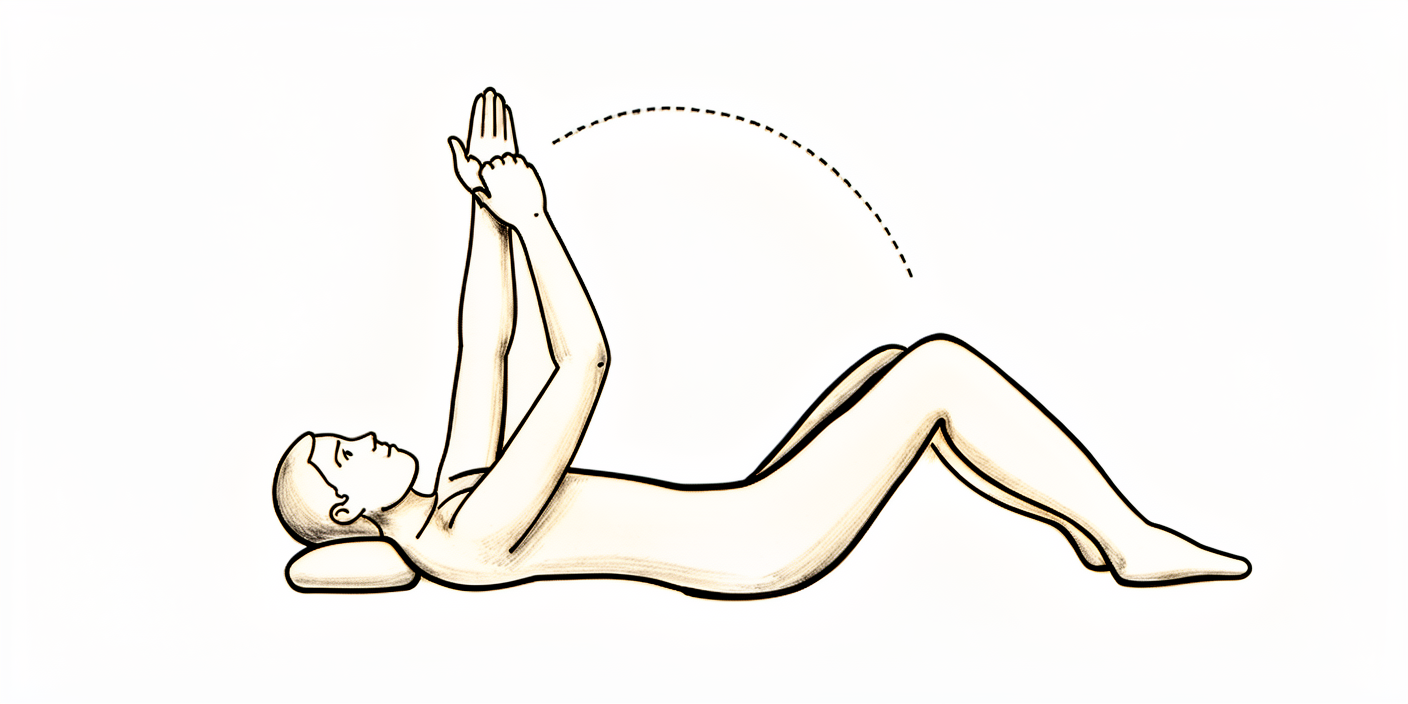
Gập cánh tay về phía trước
Ngồi trên ghế và hơi cúi người về phía trước; dùng tay còn lại ôm lấy cánh tay vừa được phẫu thuật rồi nhẹ nhàng nâng cánh tay lên phía trước. Sau đó, dùng tay không bị phẫu thuật để hỗ trợ hạ cánh tay xuống. Nếu thích, bạn cũng có thể nằm ngửa trên giường và dùng tay kia để nâng cánh tay lên.
10 lần, 3 lần mỗi ngày
Kieran Hirpara 4.0
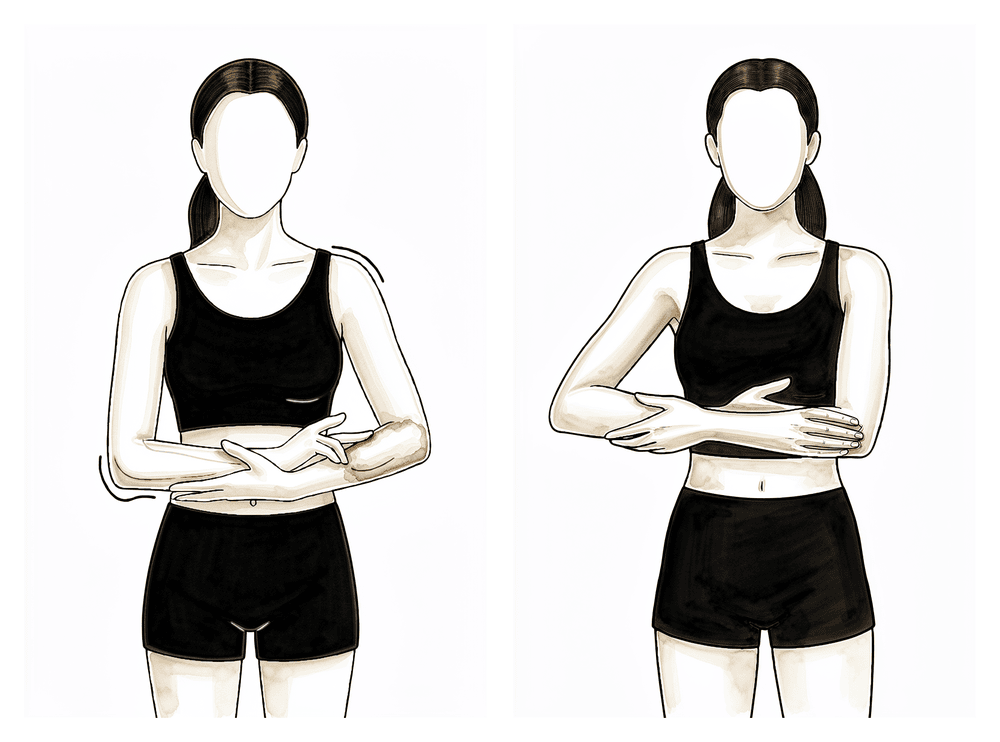
Dạng tay (đưa tay sang ngang)
Ngồi trên ghế và nghiêng người về phía trước, ôm lấy cánh tay rồi nhẹ nhàng đưa nó sang bên (giống như cách ru một em bé vậy).
10 lần, 3 lần mỗi ngày.
Kieran Hirpara 4.0
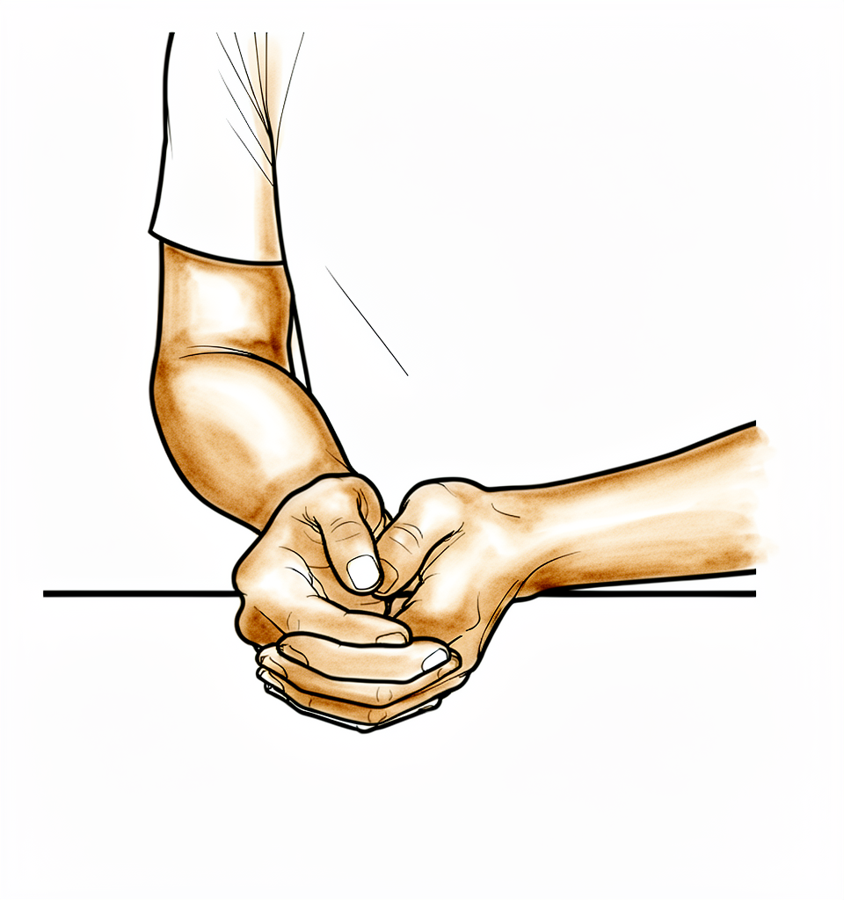
Xoay ngoài
Ngồi trên ghế, chỉ cần di chuyển cánh tay từ vị trí mà nó nằm trong đai treo sang vị trí duỗi thẳng ra phía trước. Đừng di chuyển cánh tay ra ngoài quá mức.
Nhẹ nhàng, 10 lần, 3 lần mỗi ngày.
Kieran Hirpara 4.0
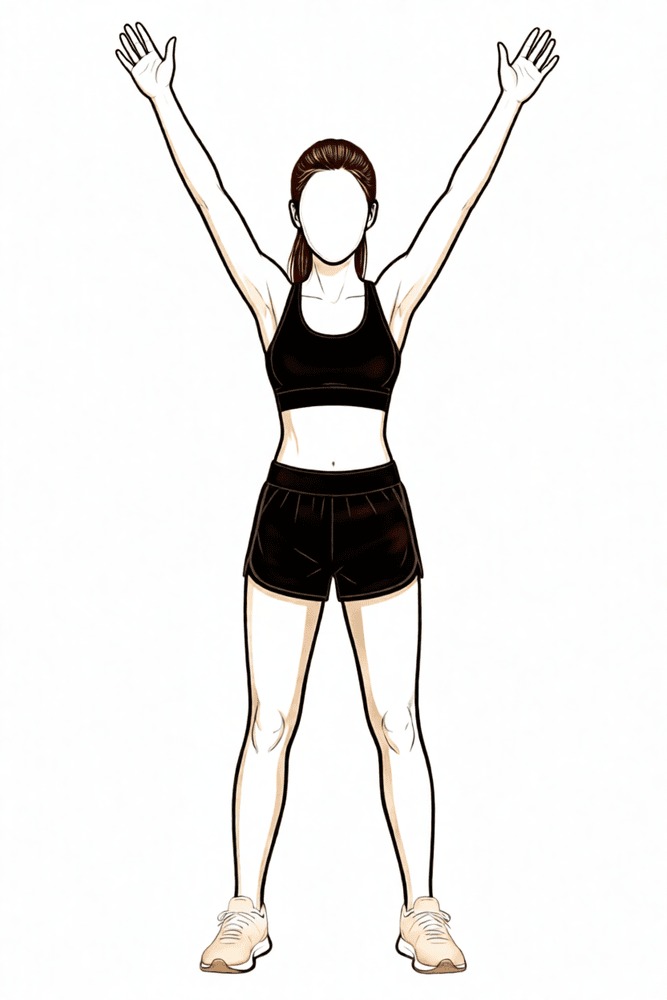
Siết giữ cơ thang dưới
Hãy siết hai xương bả vai xuống dưới và khép lại gần nhau.
Giữ nguyên trong 5 giây, thực hiện 5 lần; lặp lại 3 lần mỗi ngày.
Kieran Hirpara 4.0
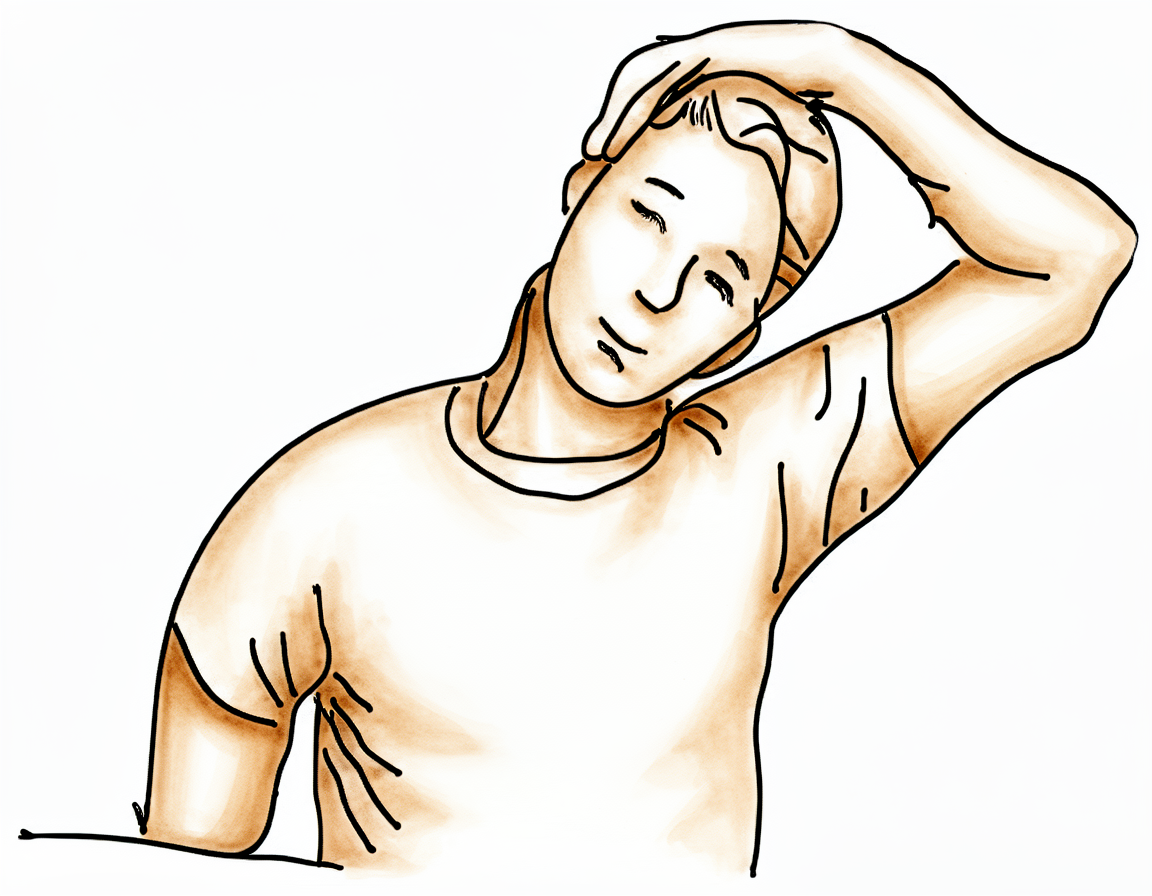
Kéo giãn cơ thang trên
Hãy dùng cánh tay chưa được phẫu thuật để đưa tai về phía vai, hướng ra xa phía cánh tay đã được phẫu thuật.
Giữ nguyên trong 10 giây, thực hiện 3 lần; lặp lại 3 lần mỗi ngày.
Kieran Hirpara 4.0
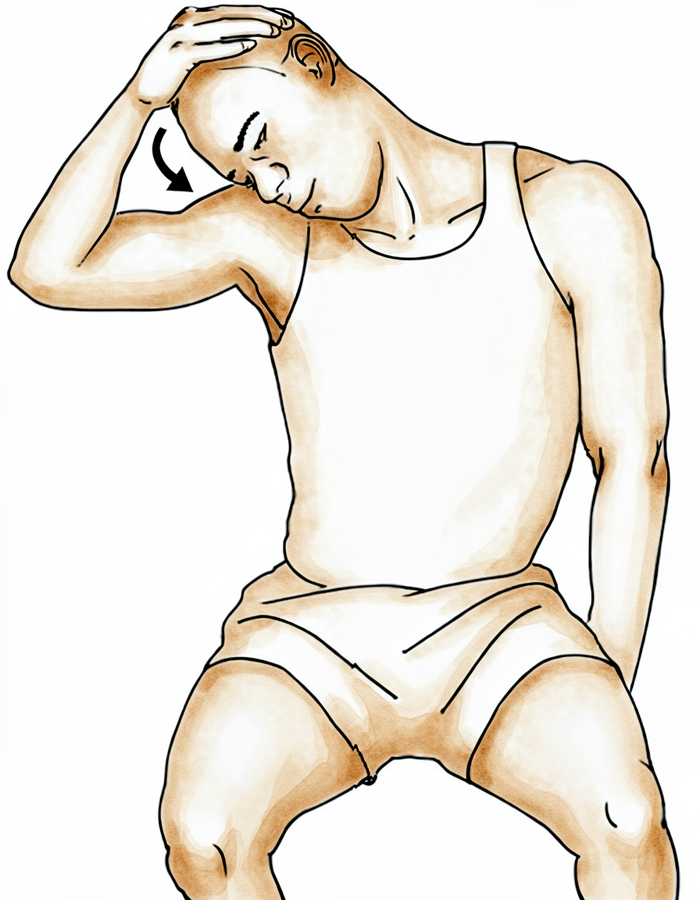
Bài tập kéo giãn cơ nâng xương bả vai
Hãy dùng cánh tay chưa được phẫu thuật để đưa mũi lại gần vùng núm vú hoặc nách của mình.
Giữ nguyên trong 10 giây, thực hiện 3 lần; lặp lại 3 lần mỗi ngày.
Giai đoạn I — Bảo vệ khớp (Tuần 0–3)
Kieran Hirpara 4.0
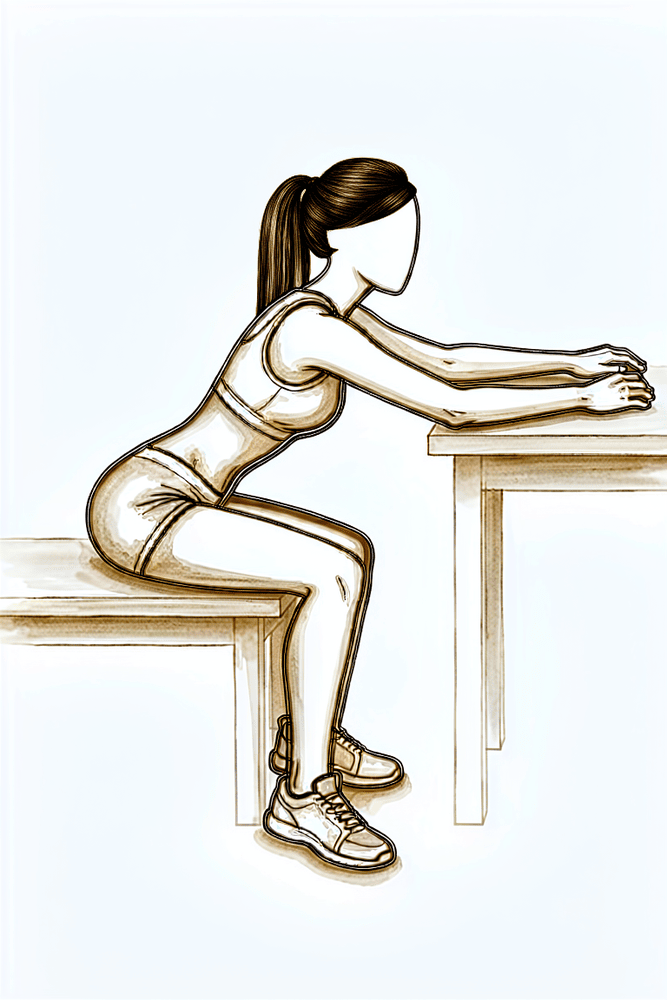
Trượt tay trên mặt bàn khi ngồi
Ngồi xuống bàn sao cho cẳng tay tựa lên mặt bàn. Từ từ nghiêng người về phía trước, để bàn tay trượt dọc theo mặt bàn; lúc này vai sẽ tự động gập về phía trước mà không cần dùng sức cơ vai. Sau đó trượt tay trở lại vị trí ban đầu. Hãy thực hiện chuyển động một cách thả lỏng và thoải mái; vai vẫn giữ trạng thái thụ động trong suốt quá trình.
Theo hướng dẫn của chuyên viên vật lý trị liệu của bạn.
Ba tuần đầu tiên là thời gian để khớp vai mới ổn định và dần phục hồi khả năng vận động. Bạn sử dụng đai treo để tăng cảm giác thoải mái, chườm đá và dùng băng ép để giảm sưng, đồng thời vẫn vận động khuỷu tay, cổ tay và bàn tay. Ngay từ đầu, bạn cũng nên thực hiện các động tác vận động nhẹ nhàng cho vai, với sự hỗ trợ của tay còn lại; nếu cảm thấy thoải mái, có thể tự thực hiện động tác này, thường dễ dàng nhất khi nằm ngửa để trọng lực hỗ trợ. Hãy dựa vào cảm giác thoải mái của bản thân làm tiêu chuẩn và không nên gắng sức. Những quy tắc quan trọng nhất là bảo vệ khớp vai khỏi bị trật khớp: không được vươn tay ra phía sau lưng hay xoay cánh tay vào trong; không nâng bất kỳ vật gì; không dùng tay để nâng đỡ cơ thể. Khi nằm ngửa, hãy đặt một chiếc gối nhỏ hoặc cuộn khăn dưới khuỷu tay để tránh tình trạng vai bị kéo quá mức ra phía sau.
Dành cho chuyên viên vật lý trị liệu:
Mục tiêu
- Đảm bảo sự ổn định của các thành phần khớp (tránh tư thế gây trật khớp)
- Giảm sưng và hạn chế cơn đau
- Duy trì biên độ vận động (ROM) của khuỷu tay, bàn tay và cổ tay
- Khởi động sớm các động tác vận động chủ động có hỗ trợ và tự chủ cho vai, trong giới hạn cảm giác thoải mái
- Hạn chế tình trạng cơ bị ức chế chức năng
- Giáo dục bệnh nhân về chăm sóc khớp vai
Đai treo
- Giữ vai ở tư thế xoay trung tính
- Dùng để tăng cảm giác thoải mái và hỗ trợ khớp; có thể dùng ngắn hạn vào ban đêm; dần ngưng sử dụng vào ban ngày từ khoảng tuần thứ 2
Các biện pháp chăm sóc
- Kiểm soát sưng: chườm đá, băng ép
- Biên độ vận động/mobility:
- PROM: xoay ngoài vai (ER) trên mặt phẳng xương bả vai đến mức chịu đựng; gập vai/scaption ≤ 120 độ; giơ tay sang ngang (ABD) ≤ 90 độ; thực hiện các động tác trượt trên mặt phẳng ngang khi ngồi; các động tác đung đưa vai; trượt tay trên mặt phẳng ngang khi ngồi
- AAROM: ngay từ đầu: thực hiện động tác gập vai có hỗ trợ (bắt đầu khi nằm ngửa để trọng lực hỗ trợ), trong giới hạn PROM đã nêu trên
- AROM: ngay từ đầu: thực hiện các động tác vận động chủ động nhẹ nhàng cho vai tùy theo mức độ chịu đựng; đồng thời vận động khuỷu tay, bàn tay và cổ tay
Lưu ý phòng ngừa
- Không thực hiện các động tác PROM/AROM khi vai xoay vào trong (IR)
- Không vươn tay ra phía sau lưng, đặc biệt là ở tư thế xoay vào trong
- Tránh tư thế gập vai + kéo tay vào trong + xoay vào trong (tư thế gây trật khớp)
- Không nâng bất kỳ vật gì
- Không dùng tay để nâng đỡ trọng lượng cơ thể
- Khi nằm ngửa, đặt gối nhỏ hoặc cuộn khăn dưới khuỷu tay để tránh tình trạng vai bị kéo quá mức ra phía sau
Tiêu chí để chuyển sang giai đoạn tiếp theo
- Biên độ vận động PROM, AAROM và AROM của vai tăng dần trong giới hạn cảm giác thoải mái
- Không còn động tác PROM nào khi vai xoay vào trong (IR)
- Mức độ đau < 4/10
- Không có biến chứng nào xảy ra trong Giai đoạn I
Giai đoạn II — Trung cấp (Tuần 4–6)
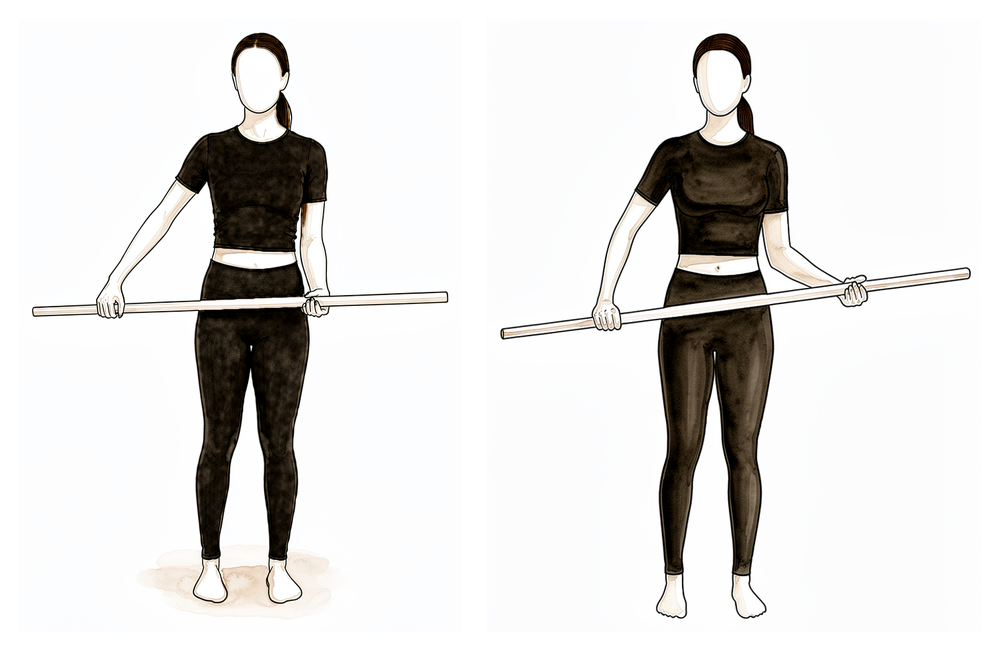
Kieran Hirpara 4.0
Kéo giãn xoay ngoài với gậy
Nằm ngửa, khuỷu tay đặt sát bên thân và gập 90 độ. Cầm một chiếc gậy hoặc cây gỗ bằng cả hai tay, dùng tay không phẫu thuật để nhẹ nhàng đẩy bàn tay vừa phẫu thuật ra ngoài, sao cho vẫn cảm thấy thoải mái. Tuyệt đối không được gắng sức thực hiện động tác này.
Theo hướng dẫn của chuyên viên vật lý trị liệu của bạn.
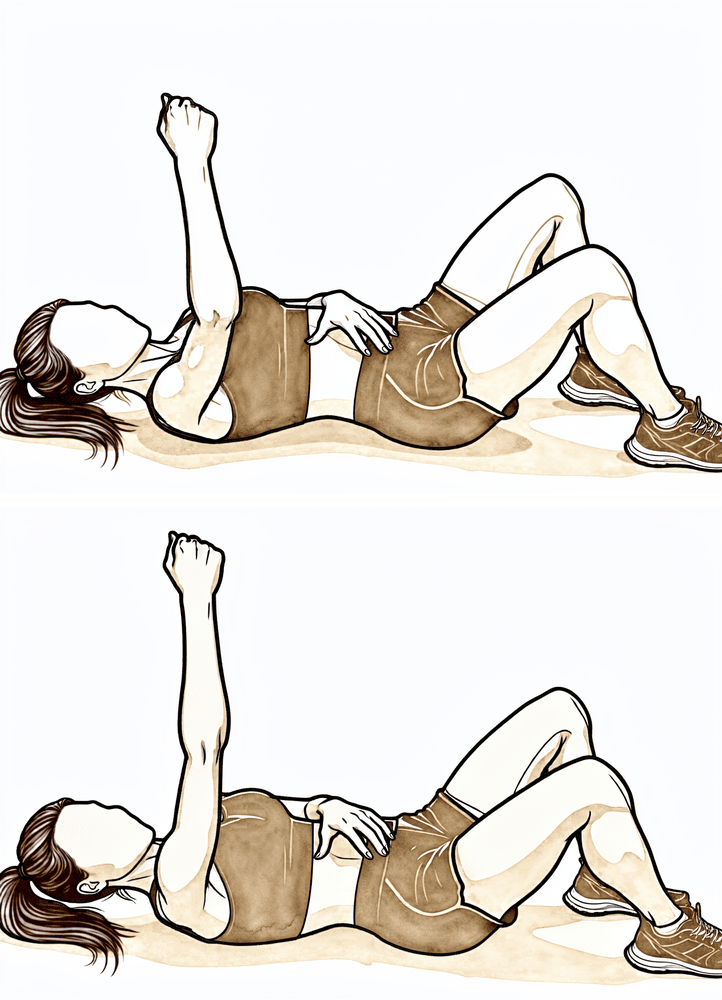
Kieran Hirpara 4.0
Đấm tay lên khi nằm ngửa
Nằm ngửa, giữ cánh tay vừa phẫu thuật thẳng lên phía trần nhà. Giữ khuỷu tay thẳng, đẩy tay lên cao hơn một chút sao cho xương bả vai rời khỏi mặt giường; sau đó hạ tay xuống từ từ và có kiểm soát.
Theo hướng dẫn của chuyên viên vật lý trị liệu của bạn.
Vào giai đoạn này, vùng vai tiếp tục phát triển dựa trên các chuyển động đã bắt đầu ngay sau phẫu thuật. Biên độ vận động của vai tiếp tục tăng dần; các bài tập kích hoạt và tăng cường sức mạnh cho các cơ quanh xương bả vai cũng như cơ deltoid bắt đầu được thực hiện vào khoảng tuần thứ 4. Đến thời điểm này, bạn nên tháo đai nẹp vai ra vào ban ngày; chỉ nên đeo lại đai nẹp vào ban đêm nếu cảm thấy thoải mái hơn. Các quy tắc bảo vệ vẫn cần tuân thủ: không nâng vật gì nặng hơn một cốc cà phê, không vươn tay ra phía sau lưng, không dùng tay để đẩy, và luôn đặt gối nhỏ hoặc khăn cuộn dưới khuỷu tay khi nằm ngửa.
Dành cho chuyên viên vật lý trị liệu:
Mục tiêu
- Tiếp tục bảo vệ sự ổn định của các thành phần khớp vai (tránh tư thế gây trật khớp)
- Giảm sưng và hạn chế đau
- Tăng dần biên độ vận động chủ động của vai
- Tiến hành các bài tập vận động chủ động và hỗ trợ cho vai
- Bắt đầu các bài tập kích hoạt và tăng cường sức mạnh cho các cơ quanh xương bả vai (khoảng tuần thứ 4)
- Bắt đầu các bài tập kích hoạt và tăng cường sức mạnh cho cơ deltoid (khoảng tuần thứ 4; tránh vận động mở rộng vai khi tập cho phần cơ deltoid sau)
- Giáo dục bệnh nhân về các quy tắc chăm sóc và tập luyện
Đai nẹp vai
- Ngừng sử dụng vào ban ngày (dần dần ngưng dùng từ tuần thứ 2)
- Có thể đeo lại vào ban đêm nếu cảm thấy thoải mái hơn
Các biện pháp xử lý
- Tiếp tục áp dụng các biện pháp điều trị ở Giai đoạn I
- Vận động/biên độ vận động:
- Vận động hỗ trợ chủ động: gập vai hỗ trợ, gập vai dùng gậy, kéo giãn cơ ngoài xoay bằng gậy, dùng khăn để ép vào vai, nâng vai khi ngồi dùng gậy
- Vận động chủ động: gập vai khi nằm ngửa, động tác chào hỏi, đấm tay khi nằm ngửa
- Tăng cường sức mạnh:
- Các cơ quanh xương bả vai: kéo xương bả vai về phía sau, kéo xương bả vai khi đứng, kéo xương bả vai có hỗ trợ, bài tập kéo ngang ở mức độ nhẹ, di chuyển xương bả vai xuống dưới
- Cơ deltoid: các bài tập co cứng cơ trên mặt phẳng xương bả vai
Những điều cần lưu ý
- Không vươn tay ra phía sau lưng, đặc biệt là khi xoay trong
- Tránh tư thế kết hợp mở rộng + khép + xoay trong vai (tư thế gây trật khớp) cho đến khoảng tuần thứ 6
- Không nâng vật gì nặng hơn một cốc cà phê
- Không dùng tay để chịu đỡ trọng lượng cơ thể
- Luôn đặt gối nhỏ hoặc khăn cuộn dưới khuỷu tay khi nằm ngửa để tránh tình trạng vai bị mở rộng quá mức
Tiêu chí để chuyển sang giai đoạn tiếp theo
- Biên độ vận động chủ động, vận động hỗ trợ chủ động của vai tăng dần
- Biên độ vận động vào tư thế xoay trong đạt mức 0 độ
- Có thể cảm nhận được sự co cơ ở các nhóm cơ quanh xương bả vai
- Mức độ đau dưới 4/10
- Không có biến chứng nào xảy ra trong Giai đoạn II
Giai đoạn III — Tiếp nối (Tuần 7–8)
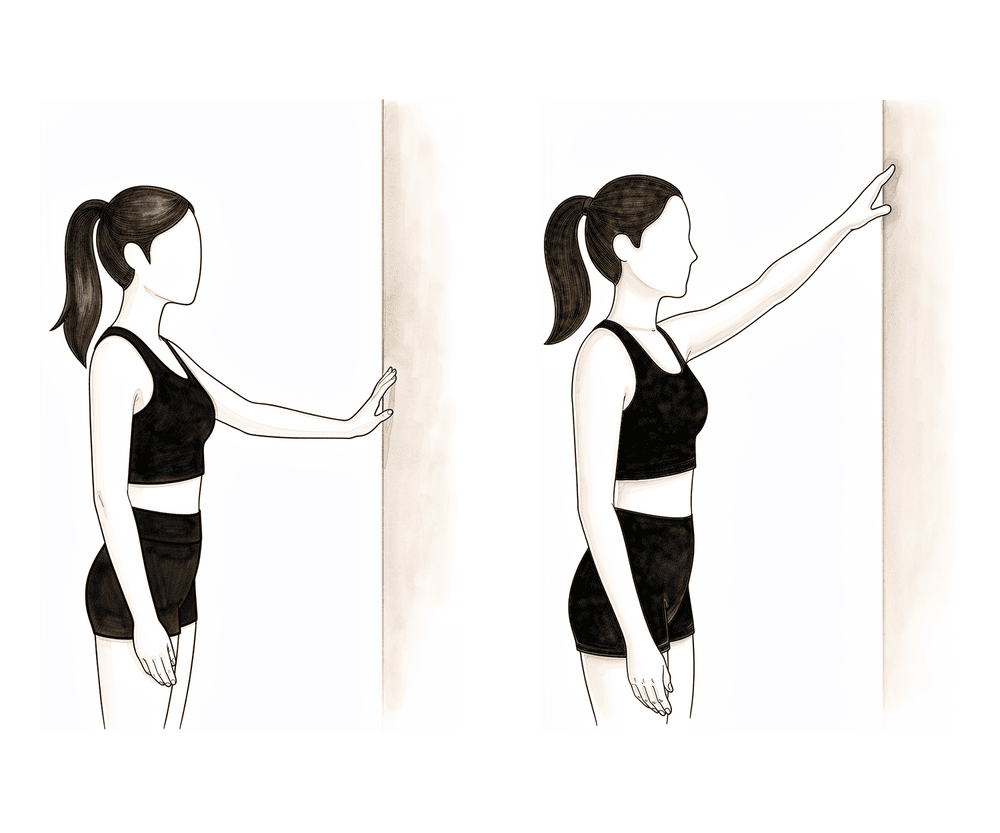
Kieran Hirpara 4.0
Leo tường
Đứng đối diện tường, dùng các ngón tay của tay vừa phẫu thuật để di chuyển lên trên tường càng cao càng tốt theo mức độ thoải mái; để bức tường hỗ trợ cánh tay di chuyển lên trên. Sau đó, từ từ hạ các ngón tay xuống dưới một cách có kiểm soát — tuyệt đối không để cánh tay rơi tự do.
Theo hướng dẫn của chuyên viên vật lý trị liệu của bạn.
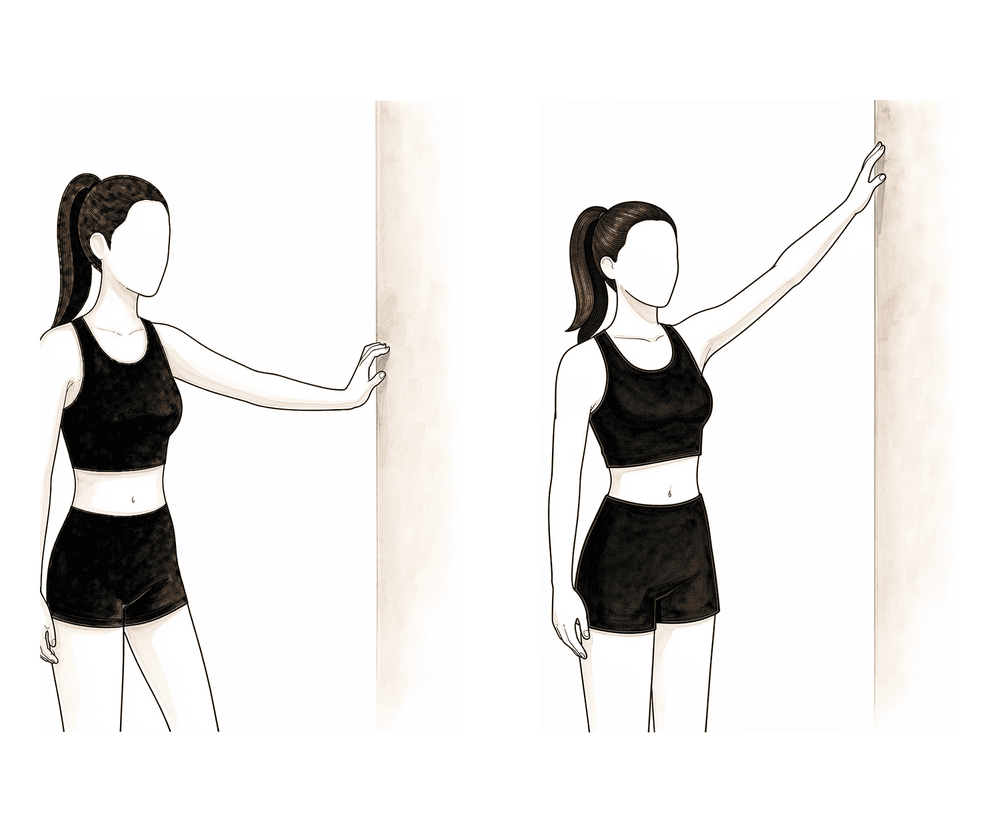
Kieran Hirpara 4.0
Di chuyển dọc theo tường sang phía bên
Đứng hướng ngang về phía tường, đặt đầu ngón tay lên bề mặt tường. Dùng các ngón tay di chuyển dần lên phía trên dọc theo tường sang bên hông, đồng thời nâng cánh tay lên mức thoải mái nhất; sau đó từ từ hạ cánh tay xuống một cách có kiểm soát. Bức tường sẽ giúp hỗ trợ cánh tay trong quá trình phục hồi khả năng vận động sang bên hông.
Theo hướng dẫn của chuyên viên vật lý trị liệu của bạn.
Đến thời điểm này, bạn đã không còn phải dùng nẹp cổ tay nữa. Các chuyển động được thực hiện theo mọi hướng; trong đó có động tác xoay trong nhẹ nhàng đầu tiên (xoay cánh tay vào trong). Các bài tập tăng cường cơ delta và cơ vùng vai cũng được tăng cường, cùng với những bài tập kiểm soát vận động (phối hợp cơ) đầu tiên. Những hạn chế còn lại là: không được nâng vật nặng hơn một chiếc cốc cà phê; không được vươn tay ra phía sau lưng quá mức túi quần; không được dùng tay để chịu trọng lượng cơ thể; tránh kéo căng cánh tay ra phía sau lưng.
Dành cho chuyên viên vật lý trị liệu:
Mục tiêu
- Giảm thiểu cơn đau
- Tăng dần biên độ chuyển động chủ động của vai; bắt đầu thực hiện các bài tập xoay trong ở mặt phẳng vai
- Tăng dần biên độ chuyển động chủ động có hỗ trợ của vai
- Tăng dần biên độ chuyển động chủ động hoàn toàn của vai
- Tăng cường sức mạnh cơ delta
- Tăng cường sức mạnh các cơ vùng vai
- Bắt đầu các bài tập kiểm soát vận động
- Giáo dục bệnh nhân
Nẹp cổ tay
- Ngừng sử dụng
Cách xử lý
- Tiếp tục thực hiện các biện pháp can thiệp ở Giai đoạn I và II
- Phạm vi chuyển động/độ linh hoạt:
- Chuyển động chủ động có hỗ trợ: đầy đủ ở mọi mặt phẳng; từ từ thực hiện động tác xoay trong ở mặt phẳng vai, góc tối đa ≤ 50 độ
- Chuyển động chủ động có hỗ trợ: trượt trên bàn nghiêng, leo tường, dùng ròng rọc, nâng vai khi ngồi dùng gậy kèm hạ xuống chủ động
- Chuyển động chủ động hoàn toàn: nâng vai khi ngồi, gập vai khi ngồi, nâng vai khi nằm ngửa chịu lực căng từ dây thun đến góc 90 độ
- Tăng cường sức mạnh:
- Các cơ vùng vai: kéo sợi dây trên quả bóng vật lý trị liệu, các bài tập đấm cơ serratus
- Cơ delta: nâng vai khi ngồi dùng gậy, nâng vai khi ngồi dùng gậy kèm hạ xuống chủ động, lăn quả bóng dọc tường
- Kiểm soát vận động:
- Thực hiện động tác xoay trong/ngoài ở mặt phẳng nâng vai và gập vai 90–125 độ (duy trì ổn định nhịp nhàng) khi nằm ngửa
- Kéo giãn:
- Kéo cánh tay ngang sang bên khi nằm nghiêng, kéo cơ tam đầu và cơ lưng rộng
Lưu ý phòng ngừa
- Không được vươn tay ra phía sau lưng quá mức túi quần
- Không được nâng vật nặng hơn một chiếc cốc cà phê
- Không được dùng tay để chịu trọng lượng cơ thể
- Tránh tình trạng vai bị duỗi quá mức
Tiêu chí để chuyển sang giai đoạn tiếp theo
- Các mục tiêu về biên độ chuyển động (biên độ chủ động có hỗ trợ và chủ động hoàn toàn được xác định riêng cho từng bệnh nhân, dựa trên các phép đo sau phẫu thuật):
- Góc nâng vai ≤ 140 độ
- Góc xoay ngoài ở tư thế trung tính ≤ 30 độ
- Góc xoay trong ở mặt phẳng vai hoặc phía sau túi quần ≤ 50 độ
- Không xuất hiện các kiểu vận động thay thế khi thực hiện chuyển động chủ động hoàn toàn của vai
- Mức độ đau < 4/10
Giai đoạn IV — Giai đoạn chuyển tiếp (Tuần 9–11)
Giai đoạn này đóng vai trò là bước đệm để trở lại việc sử dụng cánh tay một cách bình thường. Các chuyển động thụ động lúc này đã đạt phạm vi đầy đủ ở mọi mặt phẳng; trọng tâm chuyển sang việc tăng cường sức mạnh cho cơ delta và các cơ vùng xương bả vai, xây dựng sự ổn định và phối hợp vận động, đồng thời dần phục hồi sức mạnh và sức bền, hướng tới việc trở lại các hoạt động chức năng bình thường. Điều kiêng kỵ duy nhất là không được nâng các vật nặng (trọng lượng trên 5 kg).
Dành cho chuyên viên vật lý trị liệu:
Mục tiêu
- Duy trì phạm vi chuyển động không gây đau
- Tiếp tục tăng cường sức mạnh các cơ vùng xương bả vai
- Tiếp tục tăng cường sức mạnh cơ delta
- Tiếp tục thực hiện các bài tập kiểm soát vận động
- Cải thiện khả năng ổn định vùng vai khi vận động
- Dần phục hồi sức mạnh và sức bền cho vai
- Trở lại các hoạt động chức năng bình thường
Cách thức thực hiện
- Tiếp tục áp dụng các biện pháp điều trị ở Giai đoạn II–III
- Phạm vi chuyển động / tính linh hoạt:
- Chuyển động thụ động: đạt phạm vi đầy đủ ở mọi mặt phẳng
- Tăng cường sức mạnh:
- Các cơ vùng xương bả vai: các bài tập duỗi vai bằng dây kháng lực, kéo dây ngồi, chèo thuyền, các bài tập mô phỏng cắt cỏ, bài tập tam giác, bài tập chỉ tay
- Cơ delta: dần tăng mức độ kháng lực trong các bài tập dành cho cơ này
- Kiểm soát vận động:
- Các bài tập xoay trong/xoay ngoài vai và gập vai ở mức 90–125 độ (tập trung vào sự ổn định nhịp nhàng)
- Các bài tập giữ nguyên tư thế ở tư thế bốn chân, kết hợp giữ cân bằng trên tường
- Các bài tập mô phỏng ném bóng
- Kỹ thuật kích thích thần kinh cơ cảm giác (PNF): các bài nâng theo hướng chéo D1, D2
Lưu ý phòng ngừa
- Không được nâng các vật nặng (trọng lượng > 5 kg)
Tiêu chí để chuyển sang giai đoạn tiếp theo
- Thực hiện thành thạo tất cả các bài tập, thể hiện cơ chế vận động của xương bả vai đối xứng
- Mức độ đau < 2/10
Giai đoạn V — Tăng cường sức mạnh nâng cao (Tuần 12–16)
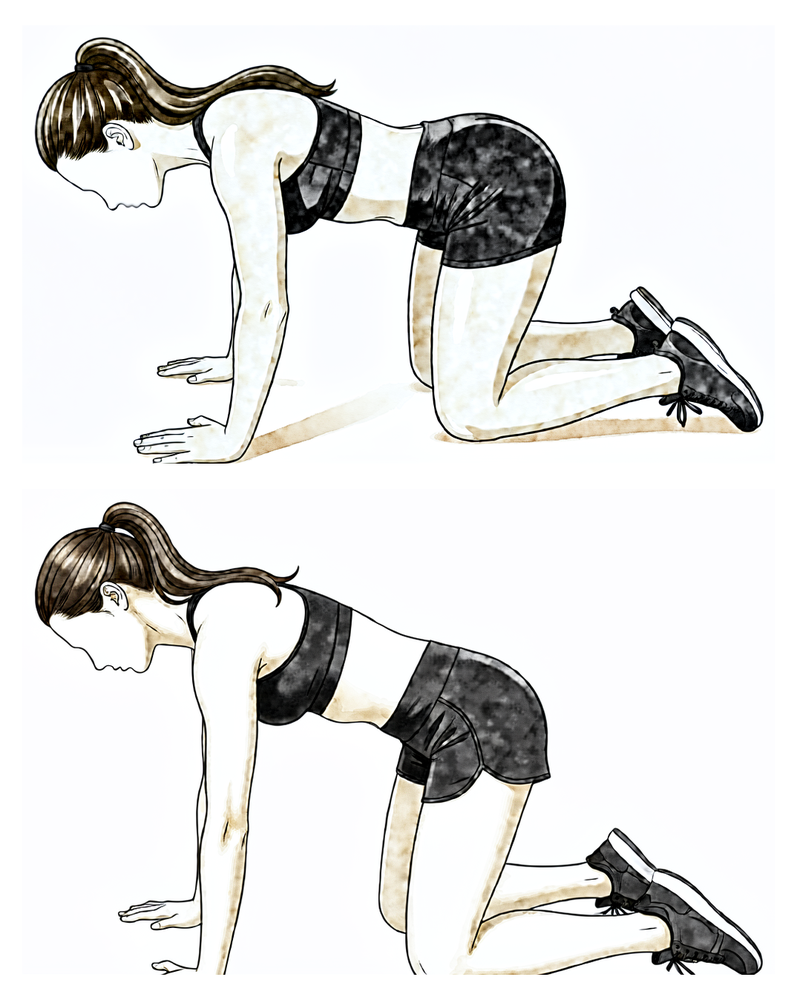
Kieran Hirpara 4.0
Chống đẩy cộng (push-up plus) trên đầu gối
Từ tư thế hít đất trên đầu gối, hai tay đặt dưới vai; giữ khuỷu tay thẳng và đẩy vùng lưng trên hướng lên trần nhà, để hai bả vai tách rời ra, sau đó hạ người xuống một cách từ từ và kiểm soát được chuyển động.
Theo hướng dẫn của chuyên viên vật lý trị liệu của bạn.
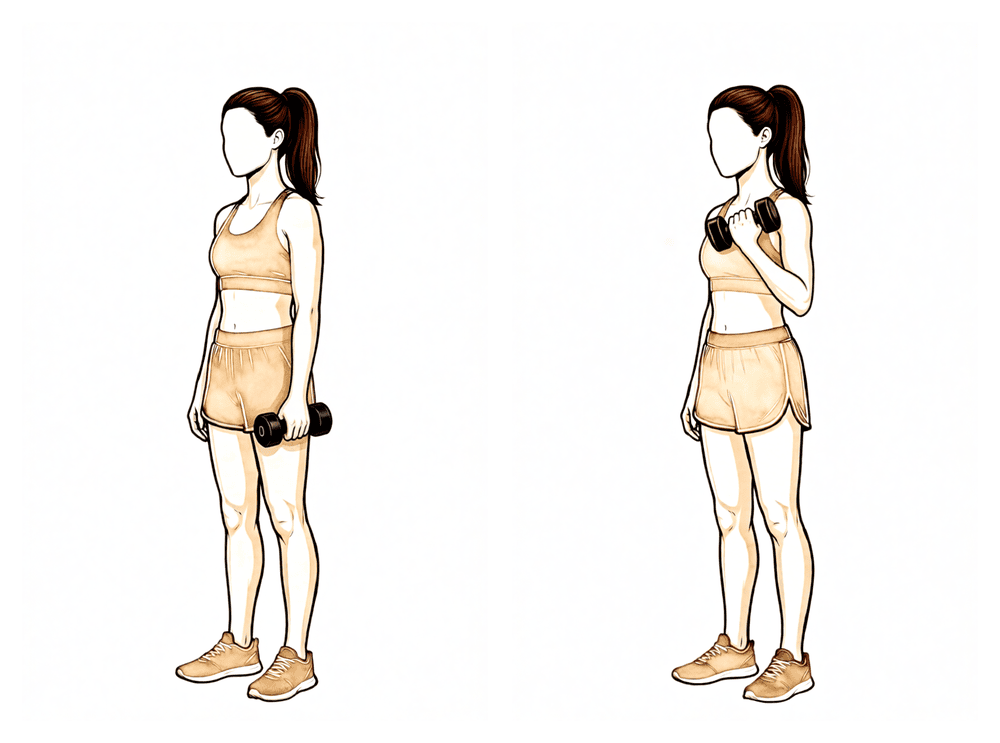
Kieran Hirpara 4.0
Gập khuỷu tay với tạ
Giữ một vật nặng nhẹ trong lòng bàn tay hướng lên trên, cánh tay đặt sát thân, sau đó gập khuỷu tay để đưa tay về phía vai rồi hạ tay xuống một cách từ từ và có kiểm soát. Hãy đảm bảo rằng vật nặng vẫn ở mức nhẹ; việc nâng các vật nặng hơn 7 kg vẫn chưa được phép thực hiện trong giai đoạn này.
Theo hướng dẫn của chuyên viên vật lý trị liệu của bạn.
Giai đoạn cuối cùng này nhằm chuẩn bị cho vai hoạt động bình thường trong đời sống hàng ngày: giúp vận động không gây đau và xây dựng sức mạnh, độ bền để sử dụng cánh tay một cách tự tin. Nếu bạn vừa trải qua phẫu thuật sửa chữa cơ vùng quay cùng lúc với phẫu thuật thay khớp, việc tăng cường sức mạnh cho cơ vùng quay sẽ bắt đầu ngay từ giai đoạn này. Khả năng nâng vật nặng sẽ được cải thiện, nhưng các vật nặng trên 7 kg vẫn chưa được phép nâng. Giai đoạn này và toàn bộ quy trình phục hồi chỉ kết thúc khi bác sĩ phẫu thuật xác nhận bạn đã hoàn thành mọi mục tiêu đề ra.
Dành cho chuyên viên vật lý trị liệu:
Mục tiêu
- Duy trì phạm vi vận động không gây đau
- Bắt đầu tăng cường sức mạnh cho cơ vùng quay nếu có phẫu thuật sửa chữa đi kèm
- Cải thiện sức mạnh và độ bền của vai
- Nâng cao khả năng vận dụng chi trên trong sinh hoạt
Cách thực hiện
- Tiếp tục áp dụng các bài tập thuộc Giai đoạn II–IV
- Tăng cường sức mạnh:
- Vùng quanh xương bả vai: hít đất kiểu “push-up plus” trên đầu gối, bài tập hình chữ “W”, kéo dây kháng lực theo hình chữ “W”, duỗi vai nằm sấp, bài tập ôm động, kéo dây kháng lực để thực hiện động tác ôm, đấm thẳng về phía trước với dây kháng lực, đấm thẳng về phía trước, các bài tập hình chữ “T” và “Y”, bài tập hình chữ “T”
- Cơ delta: tiếp tục tăng dần mức độ kháng lực khi thực hiện động tác gập và nâng tay ở các tư thế sinh hoạt
- Khớp khuỷu: gập tay với tạ đơn, kéo dây kháng lực để gập tay, bài tập cho cơ tam đầu
- Cơ vùng quay: các bài tập co cứng cơ xoay trong/ngoài, xoay ngoài khi nằm nghiêng, xoay ngoài đứng lên với dây kháng lực, xoay trong đứng lên với dây kháng lực, các động tác xoay trong/ngoài, dần chuyển từ tư thế nằm nghiêng sang tư thế đứng để thực hiện động tác tách hai chi
- Kiểm soát vận động:
- Các bài tập PNF với dây kháng lực, nâng tay theo kiểu chéo D1 có kháng lực, nâng chéo lên, hạ chéo xuống, trượt tay dọc tường có sử dụng dây kháng lực
Lưu ý phòng ngừa
- Không được nâng các vật nặng trên 7 kg
Tiêu chí để chuyển sang giai đoạn tiếp theo
- Đã nhận được sự chấp thuận từ bác sĩ phẫu thuật và hoàn thành mọi mục tiêu đề ra
- Vẫn duy trì được phạm vi vận động chủ động và thụ động mà không gây đau
- Thực hiện đúng các bài tập với cơ chế vận động của xương bả vai đối xứng
- Kết quả đo lường theo thang QuickDASH và ASES cho thấy tiến triển tích cực
Sau khi thực hiện theo quy trình này
Quy trình này được áp dụng song song với các hướng dẫn phục hồi chung của phòng khám: vui lòng tham khảo mục xử lý cơn đau sau phẫu thuật và chăm sóc vết thương. Đối với chính ca phẫu thuật, hãy xem mục thay khớp vai ngược chiều.
Các bằng chứng lâm sàng làm cơ sở cho quy trình này (các thử nghiệm phục hồi chức năng đã được công bố, lý do đưa ra quy định về việc sử dụng đai cổ tay và các hạn chế vận động, cùng các tài liệu nghiên cứu tham khảo) đều được trình bày trong bản tóm tắt bằng chứng đi kèm (có sẵn dưới dạng tệp PDF để tải về).
Evidence & references
This is the clinical evidence summary written for health professionals. It is technical, and it lists the research this page was built from. You do not need to read it to understand your treatment or to make a decision about it.
Reverse Shoulder Arthroplasty (Cuff-Tear Arthropathy / Arthritis) — Post-operative Rehabilitation Evidence
Topic scope: Post-operative rehabilitation after elective reverse total shoulder arthroplasty (RSA / rTSA) for rotator-cuff-tear arthropathy, glenohumeral arthritis with an irreparable cuff, or a massive irreparable cuff tear — not the acute proximal-humerus-fracture indication, where tuberosity healing imposes its own restrictions. The evidence base for the operation (when RSA is indicated, implant survivorship, complication profile) is extensive; the evidence base for the rehabilitation protocol is smaller but, unusually for shoulder surgery, now includes several randomised trials directly comparing immobilisation strategies.
Defining principle of this rehab: RSA rehabilitation is comparatively permissive and is increasingly run on an accelerated footing. Two features of the reconstructed joint explain why. First, the deltoid — not the rotator cuff — drives elevation after RSA; the design medialises and lowers the centre of rotation so the deltoid can elevate an arm that has no functioning cuff. Second, there is usually no subscapularis repair to protect (and many surgeons deliberately leave it unrepaired with a lateralised implant), so the external-rotation restriction that dominates anatomic-TSA rehab is far less central here. The principal early caution is therefore not tissue healing but component stability: a reverse prosthesis can dislocate, and the at-risk position is the combination of extension + adduction + internal rotation (the hand-behind-the-back / tucking-in-a-shirt movement). Early rehab accordingly protects against that position while otherwise encouraging motion. The sling is largely for comfort, support and dislocation-avoidance, and the published trial evidence shows that shortening or even omitting it does not increase the dislocation or complication rate.
Surgeon's protocol note: Dr Hirpara's protocol on this page is run on an accelerated footing, directly aligned with the randomised and cohort evidence below: a short ~2-week comfort sling (weaned off during the day; optional brief night use), active-assisted and active shoulder motion from the start (within defined limits, beginning supine/gravity-assisted), and deltoid + periscapular strengthening from ~week 4. The main early constraint is component stability, so the extension + adduction + internal-rotation (hand-behind-back) dislocation position is avoided for the first ~6 weeks while motion is otherwise encouraged. Elevation after RSA is deltoid-driven, which is why strengthening is deltoid- and periscapular-focused. Follow the protocol your surgeon has set.
The operation, in brief
In a reverse replacement the normal anatomy is inverted: a ball (glenosphere) is fixed to the shoulder blade and a cup is fixed to the top of the arm bone. This moves the joint's pivot point down and in, which lengthens and tensions the deltoid and lets that muscle lift the arm even when the rotator cuff is gone — the situation in cuff-tear arthropathy. Because the implant, not the patient's own cuff, provides stability and power, the rehabilitation logic differs fundamentally from a cuff repair (where a healing tendon must be protected) and from an anatomic replacement (where a repaired subscapularis must be protected).
Evidence by theme
1. Early / accelerated motion is safe — multiple randomised trials
This is the best-supported part of RSA rehabilitation, and it is unusually strong for a shoulder rehab question because it rests on randomised controlled trials, not just consensus:
- Hagen et al. (2020), single-blind RCT, 107 shoulders — randomised to immediate physical therapy (passive + active ROM from the start) versus 6-week delayed therapy. No difference in final ROM, patient-reported outcomes, or dislocation/complication rate (early 7.1% vs delayed 9.1%). [RAG corpus — 10.1016/j.jse.2020.11.017]
- Edwards / "two rehabilitation approaches" RCT, 61 patients (63 shoulders) — early active (submaximal isometric deltoid work from week 2) versus delayed active rehab, both with a 6-week sling. Pain and overall function were equivalent at 3, 6 and 12 months, but the early-active group had significantly better active forward flexion at 3 months (p = 0.019) — i.e. earlier functional gain without added risk. [Literature — PMC8512973]
- Lee et al. (2021), 357 shoulders — randomised to no immobilisation / early motion, 3-week sling, or 6-week sling. No difference in patient-reported outcomes, satisfaction, pain or ROM; the immediate-motion group had the lowest overall complication rate (reported as ~4% vs ~24.6% in the 6-week cohort in the pooled systematic-review re-analysis). [via Sachinis 2024 SR]
A systematic review (Sachinis et al., 2024; 3 controlled trials, ~527 shoulders) concluded that accelerated rehabilitation is safe and yields equivalent 12-month outcomes, while cautioning that protocols should still be individualised by bone quality, age, diagnosis and surgical complexity rather than applied uniformly. [Literature — PMC11034463]
Evidence: MODERATE–STRONG (several RCTs + SR), though individual trials are modest in size.
2. Sling duration can be shortened without added risk
- A large retrospective cohort (960 patients) compared 2-week vs 6-week sling immobilisation after RSA and found no difference in complication rate (12.0% vs 15.0%, p = 0.21), dislocation rate (p = 0.79), acromial stress fracture, loosening or infection; final flexion and ER were equivalent. The authors concluded shorter immobilisation does not incur additional risk. [Literature — PMC10638591]
- Published institutional protocols (e.g. Massachusetts General Brigham) have themselves moved from a 6-week to a 4-week sling standard, attributing the change to improved implant design. [Published protocol — MGH Sports Medicine]
Evidence: MODERATE (one large cohort + protocol trend; the question is now whether 6 weeks is necessary, not whether it is safe).
3. The deltoid drives recovery — and formal active PT may add little
Because elevation depends on deltoid recruitment (with documented compensatory recruitment of upper trapezius, latissimus and posterior deltoid), strengthening is deltoid- and periscapular-focused rather than cuff-focused. Notably, a multicentre RCT found that a formal active physical-therapy programme did not improve outcomes over a home/self-directed programme after RSA — many patients recover well with a structured home programme and physiotherapist supervision rather than intensive hands-on active therapy. [RAG corpus — 10.1016/j.jse.2022.12.011] This supports a pragmatic, education-and-home-exercise model.
Evidence: MODERATE (RCT).
4. Dislocation: low but real, and the early protective position is specific
Dislocation is the relevant early stability complication (as opposed to the tissue-healing concern of a cuff repair). Corpus series on dislocation following RSA identify the at-risk position as adduction + internal rotation + extension, and identify subscapularis insufficiency and implant/soft-tissue tensioning as contributors to instability. [RAG corpus — 10.1016/j.jse.2016.12.073; 10.1016/j.jse.2008.12.013] This is precisely why early protocols — accelerated or conservative — restrict reaching behind the back and forced internal rotation while otherwise allowing supported elevation. The role of routine subscapularis repair in preventing dislocation is debated and interacts with glenosphere lateralisation (a lateralised design appears less reliant on subscapularis repair for stability). [RAG corpus — 10.5435/jaaos-d-16-00781]
Evidence: MODERATE (cohort/registry); the precaution itself is universal consensus.
5. Contrast with anatomic TSA rehabilitation
The American Society of Shoulder and Elbow Therapists (ASSET) consensus on anatomic TSA rehab centres on protecting the subscapularis repair — limiting passive external rotation and active internal rotation for ~6 weeks. [RAG corpus — 10.1016/j.jse.2020.05.019] After RSA that specific constraint is usually absent or much reduced (no cuff repair to protect; subscapularis often not repaired), which is the structural reason RSA rehab is more permissive in external rotation while being more attentive to the dislocation-position combination.
Phased post-operative timeline
This table reflects Dr Hirpara's protocol on this page (the accelerated, ~2-week-sling approach). The right-hand column notes the published evidence that the protocol is grounded in.
| Phase | Window | Sling | Shoulder motion | Strengthening | Accelerated-evidence basis |
|---|---|---|---|---|---|
| I — Protection | Week 0–3 | Comfort/support; wean off during the day from ~2 weeks; optional brief night use | Active-assisted and active as tolerated from the start (begin supine/gravity-assisted; ER in scapular plane to tolerance; flexion/scaption ≤120°; abduction ≤90°); no IR, no reaching behind back, avoid the dislocation position; elbow/wrist/hand active | — | RCTs show early active/AAROM from the start carries no added dislocation/complication risk (Hagen 2020; Edwards) |
| II — Intermediate | Week 4–6 | Off during the day; optional brief night use | Progress AAROM and AROM | Periscapular + deltoid activation and strengthening initiated (~week 4) | Early active deltoid work gives earlier functional gain without added risk (Edwards) |
| III — Intermediate cont. | Week 7–8 | Discontinued | Progress AROM all planes; first gentle passive IR in scapular plane (≤50°) | Deltoid + periscapular progressed; motor control | Cohort data: 2-week sling non-inferior to 6 weeks (no extra dislocations) |
| IV — Transitional | Week 9–11 | — | Full passive ROM all planes | Resisted deltoid/periscapular; dynamic stability; PNF; no lifting >5 kg | — |
| V — Advanced strengthening | Week 12–16 | — | Maintain pain-free full ROM | Add rotator-cuff strengthening if a cuff repair was done; functional loading; no lifting >7 kg | Resisted IR / eccentric / closed-chain typically from ~12 weeks |
Return-to-activity anchors (from this protocol): driving ~6 weeks; light lifting from 6 weeks but no heavy lifting for ~6 months; swimming (breaststroke) 8 weeks / freestyle 12 weeks; golf ~3 months; sedentary work 6 weeks, manual work surgeon-guided. Published sport-return data after RSA are encouraging for low-impact activity (≈60–86% return; swimming ~84%, golf/fitness ~77%) but caution against high-impact and contact sport given prosthesis-loading and revision concerns. [Literature — PMC10043097]
Key controversies / evidence quality
-
Accelerated vs conservative rehab — and where this protocol sits. The randomised evidence shows early motion and shorter (or no) immobilisation are safe and may give earlier functional gain, with equivalent 12-month outcomes. Dr Hirpara's ~2-week comfort sling, active-assisted/active motion from the start, strengthening from ~week 4 protocol aligns with this accelerated evidence. The systematic review still endorses individualisation (bone quality, fixation, intra-operative stability, soft-tissue tensioning, any concomitant cuff repair), so the surgeon may dial the plan back for a borderline-stable construct, softer bone, or a concomitant repair. The prescribed plan is the one to follow.
-
Immobilisation duration. Trial and large-cohort data show 2–4 weeks is non-inferior to 6 weeks for dislocation and complications, which is why this protocol uses a short ~2-week comfort sling. Longer 6-week protocols persist elsewhere out of surgeon preference and construct-specific factors, with the low absolute dislocation rate making the question hard to power definitively.
-
Precautions. The extension + adduction + internal rotation (hand-behind-back) restriction is near-universal consensus early on; the disagreement is about how long, and how much external-rotation freedom to allow (more than anatomic TSA, but bounded by soft-tissue tension).
-
Subscapularis repair. Whether to repair it — and whether repair reduces dislocation — interacts with glenosphere lateralisation and remains debated; this in turn influences how restrictive early rehab needs to be.
-
Active physiotherapy intensity. At least one RCT found formal active PT did not beat a structured home programme, supporting an education-led, home-exercise model with physiotherapist oversight rather than intensive hands-on therapy.
Evidence-strength flags (summary)
- MODERATE–STRONG (RCT / SR): accelerated/early-motion rehab is safe with equivalent 12-month outcomes (Hagen 2020 RCT; Edwards RCT; Lee 2021; Sachinis 2024 SR); formal active PT not superior to home programme (multicentre RCT).
- MODERATE (large cohort): 2-week sling non-inferior to 6-week sling for dislocation/complications (960-patient cohort); deltoid-driven recovery biomechanics.
- CONSENSUS / WEAK: the dislocation-position precaution (universal but not trial-quantified for duration); the specific phase timings of this protocol (drawn from published institutional protocols + surgeon preference, not a head-to-head rehab RCT); subscapularis-repair effect on instability (conflicting cohort data).
Citations
RAG corpus (180,000+ Orthopaedic articles) — real DOIs returned by search
- Hagen MS, et al. Accelerated rehabilitation following reverse total shoulder arthroplasty. J Shoulder Elbow Surg / Semin Arthroplasty. 2021. DOI: 10.1016/j.jse.2020.11.017
- Active physical therapy does not improve outcomes after reverse total shoulder arthroplasty: a multi-center, randomized clinical trial. J Shoulder Elbow Surg. 2023. DOI: 10.1016/j.jse.2022.12.011
- Kennedy J, et al. The American Society of Shoulder and Elbow Therapists' consensus statement on rehabilitation for anatomic total shoulder arthroplasty. J Shoulder Elbow Surg. 2020. DOI: 10.1016/j.jse.2020.05.019
- Dislocation following reverse total shoulder arthroplasty. J Shoulder Elbow Surg. 2017. DOI: 10.1016/j.jse.2016.12.073
- Edwards TB, et al. Subscapularis insufficiency and the risk of shoulder dislocation after reverse shoulder arthroplasty. J Shoulder Elbow Surg. 2009. DOI: 10.1016/j.jse.2008.12.013
- Clinical Outcomes After Reverse Shoulder Arthroplasty With and Without Subscapularis Repair: The Importance of Considering Glenosphere Lateralization. J Am Acad Orthop Surg. 2018. DOI: 10.5435/jaaos-d-16-00781
Literature (URLs)
- Sachinis NP, et al. Can we accelerate rehabilitation following reverse shoulder arthroplasty? A systematic review. Shoulder Elbow. 2024. https://pmc.ncbi.nlm.nih.gov/articles/PMC11034463/
- A randomised trial comparing two rehabilitation approaches following reverse total shoulder arthroplasty (early active vs delayed active). 2021. https://pmc.ncbi.nlm.nih.gov/articles/PMC8512973/
- No difference in complications between two-week vs. six-week duration of sling immobilization after reverse total shoulder arthroplasty (960-patient cohort). 2023. https://www.ncbi.nlm.nih.gov/pmc/articles/PMC10638591/
- Optimizing Outcomes After Reverse Total Shoulder Arthroplasty: Rehabilitation, Expected Outcomes, and Maximizing Return to Activities. 2023. https://pmc.ncbi.nlm.nih.gov/articles/PMC10043097/
- Kim Y-T, et al. Four weeks of immobilisation after reverse shoulder arthroplasty yields outcomes comparable to six weeks. Clin Shoulder Elb. 2024. https://www.ncbi.nlm.nih.gov/pmc/articles/PMC11546419/
Published rehabilitation protocols (basis for the phase structure)
- Massachusetts General Brigham Sports Medicine. Rehabilitation Protocol for Reverse Shoulder Arthroplasty. Revised December 2018. https://www.massgeneral.org/assets/mgh/pdf/orthopaedics/sports-medicine/physical-therapy/rehabilitation-protocol-for-reverse-shoulder-arthroplasty.pdf
- Brigham and Women's Hospital. Reverse Total Shoulder Arthroplasty Protocol. https://www.brighamandwomens.org/assets/BWH/patients-and-families/pdfs/shoulder--reverse-total-shoulder-arthroplasty-protocol.pdf