Patients › Rehabilitation
Thủ thuật hợp nhất cổ tay
Kế hoạch hồi phục sau phẫu thuật hợp nhất khớp cổ tay toàn phần (arthrodesis): phần khớp cổ tay bị tổn thương sẽ được gắn chặt lại bằng một tấm nẹp ở mặt lưng, khiến nó không thể cử động nữa. Ngay từ đầu, các ngón tay, ngón cái và khả năng xoay cẳng tay vẫn được vận động bình thường; sau khi xương đã liền lại, người bệnh sẽ dần luyện tập để phục hồi khả năng nắm chặt.
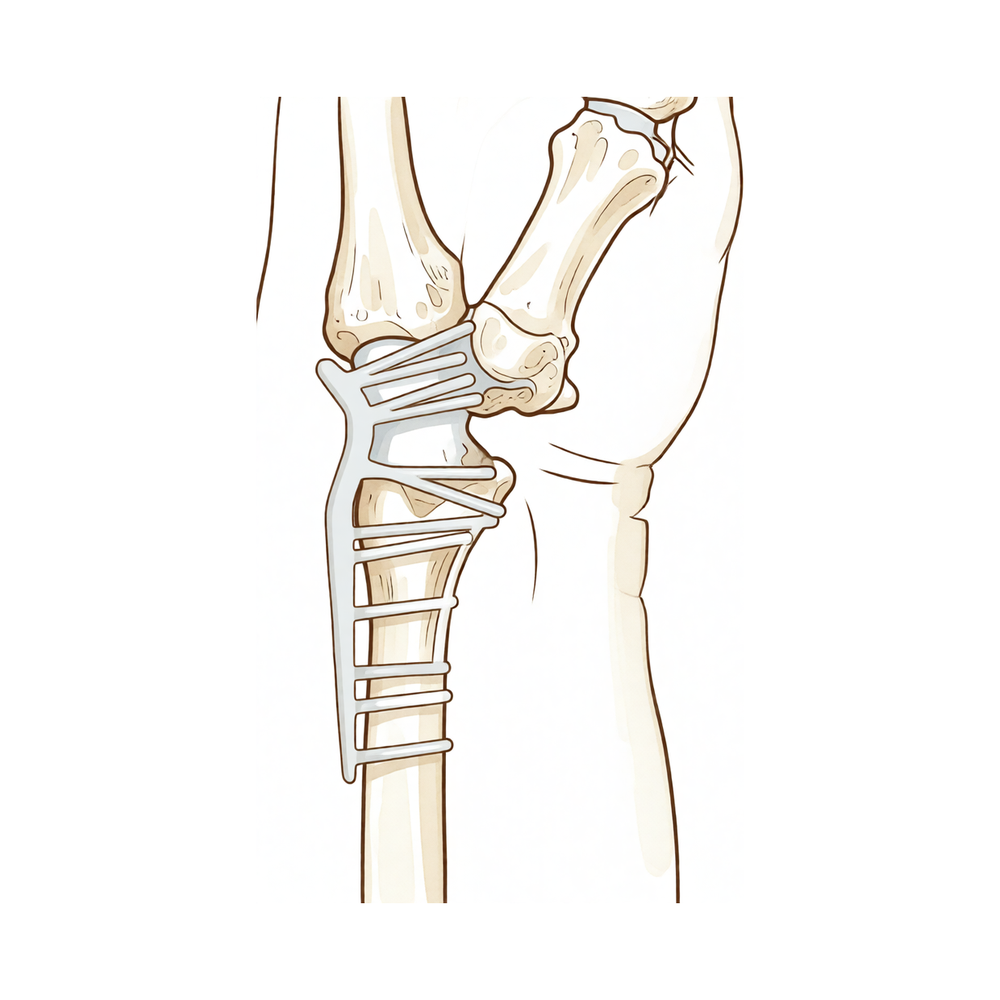
Quy trình này hướng dẫn quá trình hồi phục của bạn sau ca phẫu thuật hợp nhất khớp cổ tay toàn phần (còn gọi là arthrodesis cổ tay – thủ thuật nối cố định các xương cổ tay lại với nhau để chúng không còn cử động được nữa) do bác sĩ Kieran Hirpara thực hiện tại Bệnh viện tư nhân Mater Rockhampton. Quy trình bắt đầu với chương trình tập luyện tại nhà, tiếp theo là quy trình điều trị lâm sàng được soạn thảo dành riêng cho chuyên viên trị liệu tay: hãy mang theo trang này hoặc bản PDF tương ứng đến buổi trị liệu đầu tiên để việc phục hồi của bạn được thực hiện một cách nhất quán. Chuyên viên trị liệu có thể điều chỉnh kế hoạch này tùy theo tiến độ hồi phục của bạn.
Nếu bạn có bất kỳ thắc mắc nào về vết thương sau phẫu thuật, hãy liên hệ với phòng khám. Việc chụp ảnh vết thương rồi gửi qua email để được đánh giá cũng là một cách hữu ích.
Những điều có thể mong đợi
Phẫu thuật hợp nhất khớp cổ tay toàn bộ được thực hiện trong trường hợp khớp cổ tay bị hư hỏng nghiêm trọng ở tất cả các khớp (viêm khớp giai đoạn cuối, hay còn gọi là viêm khớp “toàn bộ khớp cổ tay”) và gây đau đớn khi vận động. Thay vì cố gắng duy trì sự vận động của khớp đã bị hư hỏng, ca phẫu thuật này cố ý ngăn chặn mọi chuyển động: xương cẳng tay (xương quay) được nối với các xương bàn tay (xương ngón tay) bằng một tấm kim loại đặt ở mặt sau cổ tay, giúp cố định cổ tay ở tư thế hơi ngửa ra sau (hơi duỗi ra) – tư thế tối ưu cho việc nắm vật. Trong những tuần tiếp theo, các xương sẽ dần liền lại thành một khối vững chắc.
Điểm mấu chốt trong quá trình hồi phục này trái ngược với hầu hết các ca phẫu thuật khác: mục đích của ca phẫu thuật là khiến cổ tay ngừng vận động; điều đó là yếu tố chữa bệnh, chứ không phải biến chứng. Do đó, mục tiêu không phải là khôi phục lại khả năng vận động của cổ tay, và cũng không có bài tập nào nhằm gập hay duỗi cổ tay. Thay vào đó, toàn bộ quá trình phục hồi nhằm bảo vệ hai thành phần mà ca phẫu thuật này không ảnh hưởng đến và lại có vai trò cực kỳ quan trọng đối với chức năng bàn tay:
- Các ngón tay và ngón cái phải luôn giữ được khả năng vận động đầy đủ. Tình trạng cứng khớp ngón tay là nguyên nhân chính khiến kết quả phẫu thuật hợp nhất cổ tay không đạt hiệu quả; vì vậy việc vận động ngón tay và ngón cái được khuyến khích ngay từ ngày đầu tiên.
- Khả năng xoay cẳng tay (xoay lòng bàn tay lên trên hoặc xuống dưới) phải được duy trì. Ca phẫu thuật này không tác động đến chuyển động này; hơn nữa, khả năng xoay cẳng tay sẽ đảm nhận phần lớn chức năng mà trước đây cổ tay phải thực hiện (như xoay chìa khóa, vặn vít hay nắm tay nắm cửa), nên cần được duy trì linh hoạt ngay từ đầu.
Nhờ tấm kim loại ở mặt sau cổ tay giúp cố định xương vững chắc, bệnh nhân sẽ phải đeo nẹp khoảng sáu tuần cho đến khi các xương liền lại; trong thời gian này, việc vận động ngón tay và cẳng tay vẫn được khuyến khích chứ không bị hạn chế. Khi bác sĩ phẫu thuật xác nhận rằng các xương đã liền hoàn toàn, bệnh nhân sẽ bắt đầu tập luyện tăng cường sức mạnh nắm. Nhiều người sau khi phẫu thuật hợp nhất cổ tay vẫn có thể sinh hoạt bình thường; hơn nữa, vì việc nắm vật không còn gây đau đớn nữa, sức mạnh nắm thường được cải thiện so với trước khi phẫu thuật.
Các biện pháp phòng ngừa và hạn chế
- KHÔNG cố gắng cử động cổ tay: cổ tay đã được cố định chắc chắn do mục đích phẫu thuật. Không có bài tập uốn cổ tay nào, cả hiện tại lẫn sau này.
- Hãy vận động các ngón tay, ngón cái và cẳng tay một cách tự do ngay từ ngày đầu tiên: đây là điều quan trọng nhất bạn có thể làm cho bàn tay của mình.
- Hãy đeo nẹp hoặc băng gạc theo hướng dẫn nhằm đảm bảo sự thoải mái và bảo vệ vùng điều trị cho đến khi xương liền lại; giữ nẹp/băng gạc sạch sẽ và khô ráo.
- KHÔNG gắng sức nâng vật nặng hay nắm chặt vật gì; tránh nâng những vật nặng hơn một chiếc cốc nhẹ cho đến khi vùng cấy ghép liền hoàn toàn và bác sĩ cho phép (thường là sau 6–8 tuần). Việc gắng sức quá mức trước khi xương liền có thể khiến tấm kim loại hoặc vùng cấy ghép bị hỏng.
- KHÔNG lái xe khi đang đeo nẹp hoặc chưa thể kiểm soát xe một cách an toàn; việc lái xe chỉ được phép trở lại sau khi tháo nẹp và bạn đã có thể điều khiển vô lăng một cách bình thường, theo xác nhận của bác sĩ tại buổi tái khám.
Về cách chăm sóc vết thương, giảm sưng và quản lý sẹo, vui lòng tham khảo hướng dẫn chăm sóc vết thương của phòng khám.
Các bài tập của bạn
Kieran Hirpara 4.0
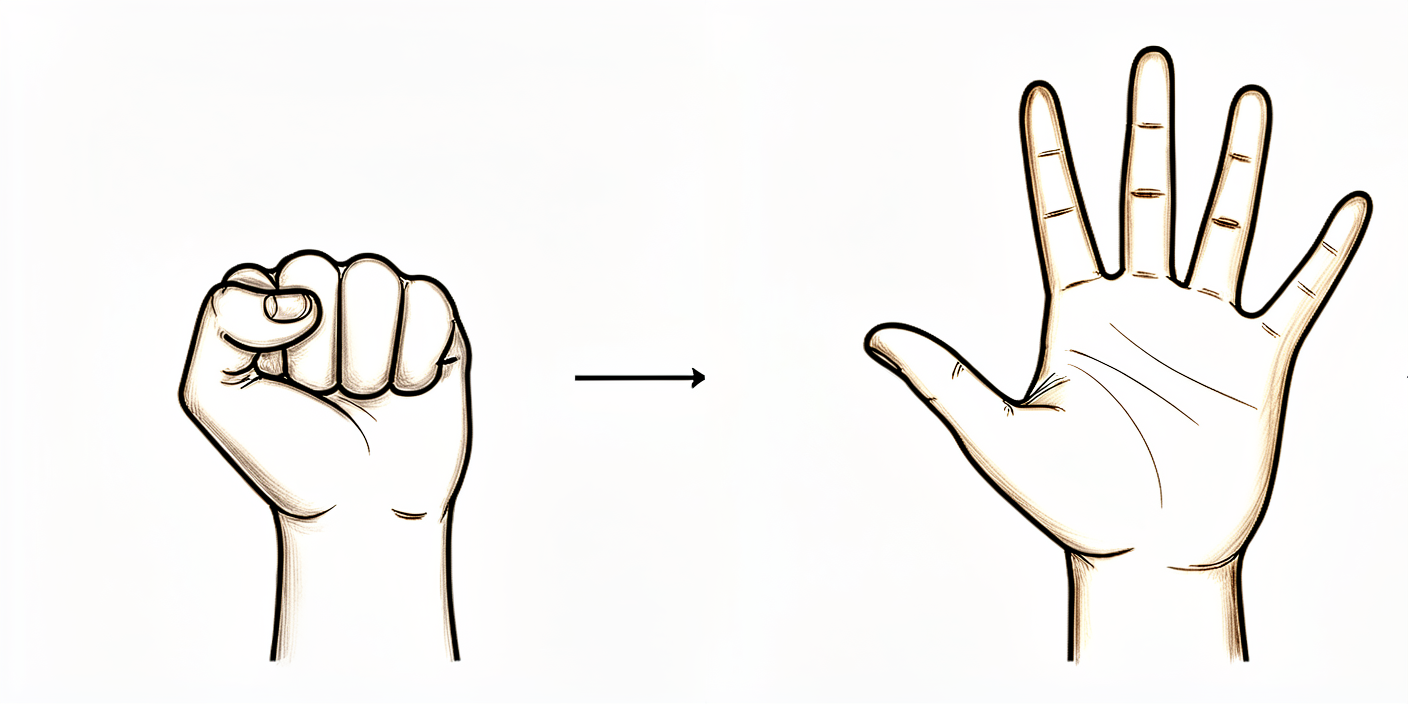
Chuyển động của các ngón tay và ngón cái
Ngay từ những ngày đầu, hãy cố gắng vận động các ngón tay và ngón cái một cách đầy đủ. Nắm tay thành nắm đấm hoàn chỉnh, sau đó mở tay ra rộng và duỗi thẳng các ngón tay; tiếp theo hãy chạm ngón cái vào đầu mỗi ngón tay lần lượt. Cổ tay không được di chuyển — điều này là bình thường và đúng như mong đợi — nhưng các ngón tay và ngón cái phải luôn thả lỏng và di chuyển tự do; bởi tình trạng cứng khớp ở vùng này mới là yếu tố chính gây hạn chế chức năng của bàn tay sau khi phẫu thuật hợp nhất cổ tay.
Mỗi động tác 10 lần, nhiều lần mỗi ngày, bắt đầu từ ngày đầu tiên.
Kieran Hirpara 4.0
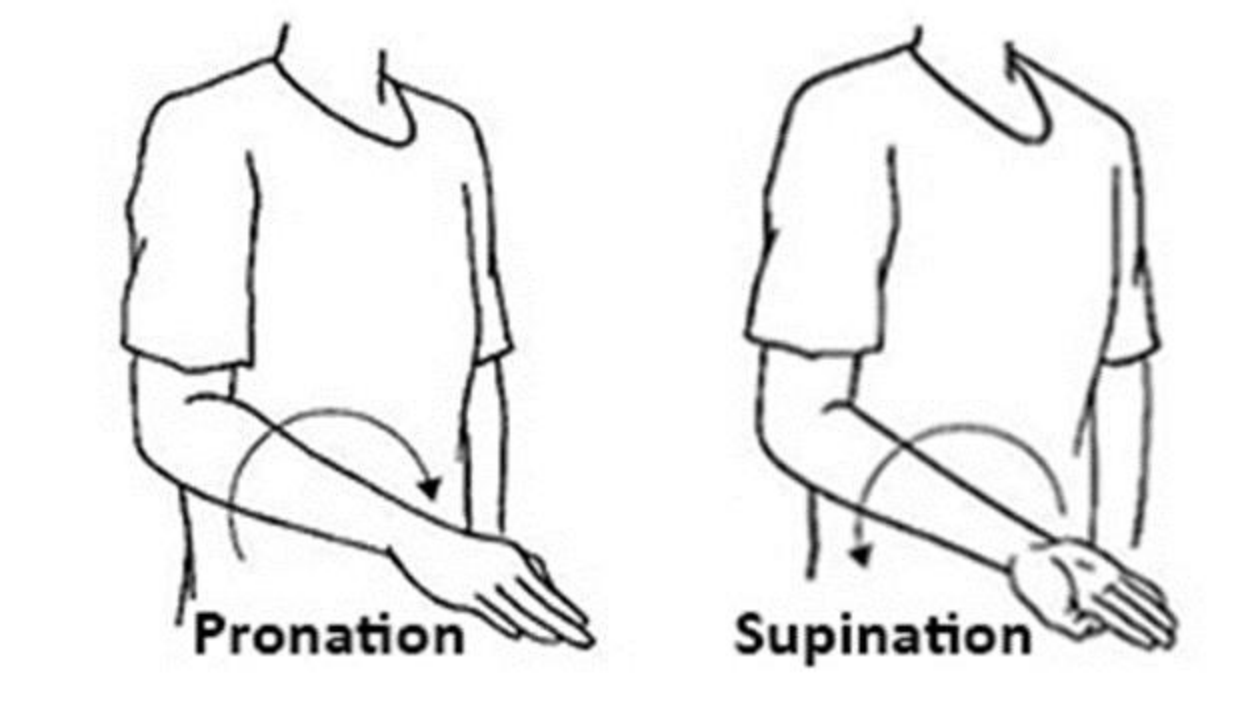
Chuyển động xoay cẳng tay (lòng bàn tay hướng lên / lòng bàn tay hướng xuống)
Khi khuỷu tay áp sát vào thân mình và gập thành góc vuông, hãy nhẹ nhàng xoay lòng bàn tay hướng lên trần nhà rồi lại hướng xuống sàn nhà. Quá trình hợp nhất các khớp không ảnh hưởng đến các chuyển động xoay này, vì vậy chúng vẫn được giữ tự do; việc duy trì độ linh hoạt cho các chuyển động này là rất quan trọng, bởi việc xoay cẳng tay giúp thực hiện nhiều chức năng mà trước đây cổ tay phải đảm nhiệm (như xoay chìa khóa, nắm tay cửa, vặn vòi nước).
10 lần theo mỗi hướng, 2–3 lần mỗi ngày.
Kieran Hirpara 4.0
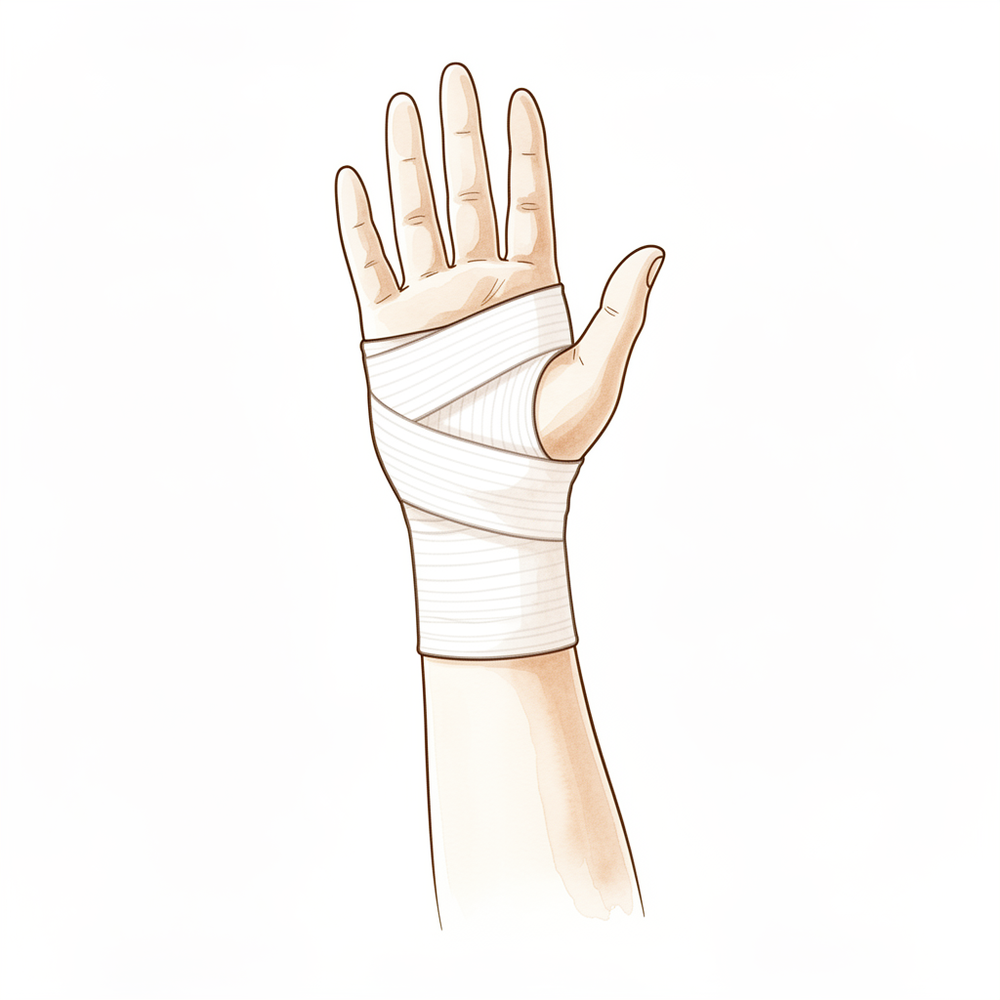
Kiểm soát sưng nề
Trong vài tuần đầu tiên, hãy để tay nằm cao hơn mức tim bằng cách kê gối mỗi khi ngồi hoặc nằm xuống; đồng thời nhẹ nhàng co duỗi các ngón tay. Việc này giúp giảm sưng – hiện tượng thường gặp sau phẫu thuật tay; ít sưng hơn sẽ giúp các ngón tay cử động dễ dàng hơn và vết thương mau lành hơn.
Kê cao tay mỗi khi nghỉ ngơi; co duỗi các ngón tay 10 lần, mỗi giờ trong lúc thức.
Kieran Hirpara 4.0
Chăm sóc vết sẹo
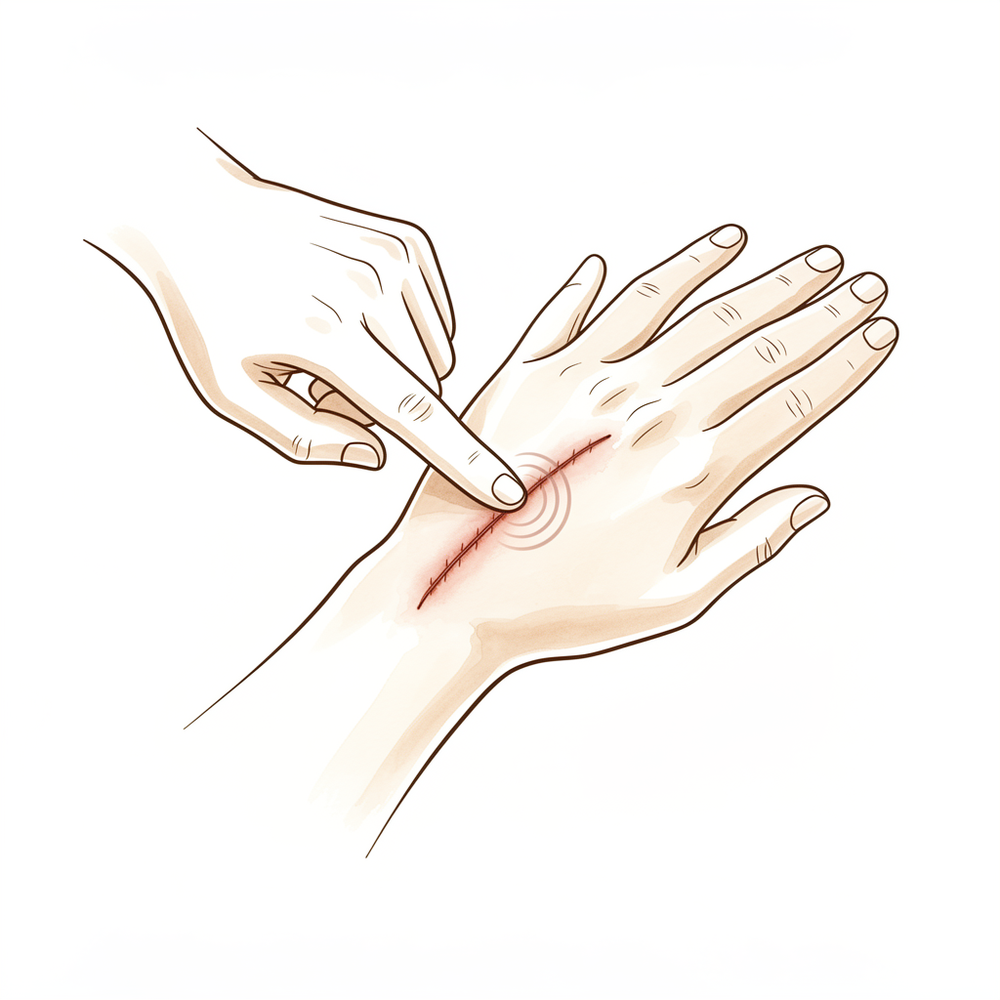
Khi vết thương đã lành hẳn và không còn vảy, hãy dùng một chút kem dưỡng ẩm để massage vùng sẹo ở mặt sau cổ tay theo những vòng tròn nhỏ nhưng chắc chắn. Việc này giúp sẹo mềm mại và ngăn không cho nó dính vào tấm kim loại cũng như các gân bên dưới. Chuyên viên trị liệu tay sẽ bắt đầu thực hiện thao tác này vào thời điểm thích hợp.
Vài phút, 2–3 lần mỗi ngày, sau khi vết thương đã lành.
Kieran Hirpara 4.0
Tăng cường sức mạnh nắm tay sau khi xương liền lại
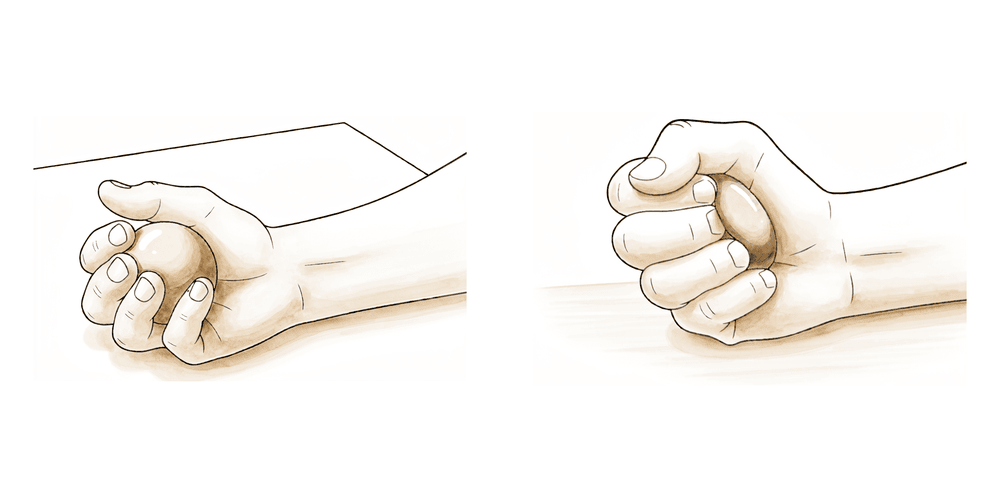
Đây là bài tập cho GIAI ĐOẠN SAU — chỉ thực hiện sau khi khối hợp nhất xương đã liền (thường là khoảng sáu đến tám tuần) và khi bác sĩ cho phép. Hãy nắm chặt một quả bóng mềm hoặc hỗn hợp nhựa trị liệu trong lòng bàn tay, giữ nguyên rồi thả ra. Cổ tay đã được hợp nhất tạo cho bàn tay một nền tảng vững chắc, không đau để thực hiện các động tác nắm; vì vậy sức mạnh nắm tay thường sẽ tăng dần trong những tháng tiếp theo. Hãy tăng dần mức độ tập luyện.
Bóp 10–15 lần, 2–3 lần mỗi ngày, sau khi xương đã liền và được cho phép.
Đây là những bài tập có trong tờ hướng dẫn của bạn. Hãy thực hiện chúng chỉ khi được bác sĩ Hirpara và chuyên viên trị liệu chỉ dẫn. Các bài tập ban đầu đều nhằm bảo vệ những vùng không bị ảnh hưởng bởi quá trình hợp nhất xương (động tác gập duỗi ngón tay và ngón cái, xoay cẳng tay, cũng như kiểm soát tình trạng sưng phù); không bài tập nào tác động lên cổ tay – vùng này vẫn giữ nguyên độ ổn định. Việc tăng cường sức mạnh nắm tay thuộc giai đoạn sau và chỉ nên bắt đầu khi quá trình hợp nhất xương đã hoàn tất và bạn đã được cho phép cụ thể. Hãy ngừng ngay bất kỳ bài tập nào gây ra cơn đau dữ dội ở mặt sau cổ tay.
Quy trình điều trị lâm sàng của bạn
Phần còn lại của trang này là quy trình điều trị lâm sàng từng bước dành cho việc phục hồi chức năng sau phẫu thuật cố định khớp cổ tay toàn phần. Phần này cần được cung cấp cho chuyên viên trị liệu tay của bạn; mỗi giai đoạn đều bắt đầu bằng lời giải thích bằng tiếng Việt đơn giản về những gì sẽ diễn ra. Không có mục tiêu cụ thể nào về biên độ vận động của cổ tay: các khớp cổ tay (và thường là khớp carpometacarpal thứ ba) đã được cố định bằng tấm kim loại đặt ở mặt sau cổ tay. Quy trình này nhằm mục đích duy trì biên độ vận động của các ngón tay, khả năng xoay cẳng tay và kiểm soát phù nề trong thời gian chờ khớp liền, sau đó mới tập trung vào việc tăng cường sức nắm trên cấu trúc đã ổn định.
Trước khi bắt đầu điều trị, hãy kiểm tra báo cáo phẫu thuật và tiền sử bệnh của bệnh nhân; đồng thời trao đổi với bác sĩ phẫu thuật về cấu trúc cố định (tấm cố định khớp cổ tay mặt sau; việc có bao gồm hay không khớp CMC thứ ba), vị trí cổ tay sau khi cố định, loại mảnh ghép xương được sử dụng và tình trạng liền khớp. Bác sĩ Hirpara thường cố định cổ tay ở tư thế hơi duỗi ra phía sau bằng tấm kim loại mặt sau; do cấu trúc cố định rất vững chắc nên chỉ cần dùng nẹp hoặc băng gạc nhẹ để giảm đau thay vì bó bột cứng trong thời gian dài; việc vận động các ngón tay và cẳng tay sớm là ưu tiên hàng đầu.
Giai đoạn I — bảo vệ cấu trúc nối, duy trì vận động cho các khớp không bị nối (tuần 0 đến tuần 6)
Trong sáu tuần đầu, mục tiêu là bảo vệ vùng nối đang lành lại trong khi vẫn duy trì vận động hoàn toàn cho những khớp không bị nối. Người bệnh sẽ đeo nẹp mềm hoặc băng gạc để tăng cảm giác thoải mái. Không được vận động cổ tay (vì cấu trúc nối được thiết kế để cứng vững); mọi nỗ lực đều tập trung vào các ngón tay, ngón cái, cẳng tay và việc kiểm soát phù nề.
Dành cho chuyên viên trị liệu tay:
Giáo dục và các lưu ý cần tránh - Đeo nẹp/băng gạc nhằm tăng sự thoải mái và bảo vệ cho vùng nối cho đến khi có dấu hiệu lành vết thương và hình ảnh X-quang cho thấy cấu trúc nối ổn định; không cần bó bột cứng trong thời gian dài do hệ thống nẹp kim loại đã giữ vững vị trí - Không vận động cổ tay: cấu trúc nối cổ tay đã được nối liền; không đặt mục tiêu về phạm vi vận động nào - Không nắm chặt hay nâng vật nặng; chỉ được thực hiện các động tác nắm nhẹ; cho đến khi có bằng chứng về sự lành nối - Cần chú ý đến tình trạng cứng khớp ngón tay: đây là yếu tố nguy hiểm nhất ảnh hưởng đến kết quả sau phẫu thuật nối cổ tay
Cách xử trí - Vết mổ: thay băng theo hướng dẫn; cắt chỉ và kiểm tra lại bằng nẹp/X-quang vào khoảng 10–14 ngày; theo dõi dấu hiệu nhiễm trùng - Phù nề: nâng tay cao hơn mức tim, thực hiện các động tác bóp nhẹ các ngón tay, chườm đá nếu cần - Vận động: thực hiện đầy đủ các động tác vận động chủ động các ngón tay và ngón cái (từ nắm thành nắm đấm đến duỗi thẳng hoàn toàn, động tác đối kháng của ngón cái) ngay từ ngày đầu; vận động chủ động xoay cẳng tay; vận động chủ động khớp vai và khuỷu tay; không vận động cổ tay, không nắm chặt có sức cản
Tiêu chí để chuyển sang giai đoạn tiếp theo - Vết mổ đã lành; phạm vi vận động các ngón tay vẫn đầy đủ hoặc gần như đầy đủ; hình ảnh X-quang cho thấy dấu hiệu sơ khởi của sự lành nối vào khoảng tuần thứ sáu
Giai đoạn II — xác nhận tình trạng liền xương, bắt đầu luyện tập nắm chặt (tuần thứ 6 đến 12)
Khoảng từ tuần thứ 6 trở đi, tình trạng liền xương thường đã hiện rõ trên phim X-quang. Khi bác sĩ phẫu thuật xác nhận điều này, nẹp sẽ được tháo ra và bệnh nhân bắt đầu luyện tập tăng cường sức mạnh nắm tay. Các bài tập vận động cẳng tay và các ngón tay vẫn tiếp tục được thực hiện; cổ tay vẫn được giữ nguyên trạng thái cố định và không chịu tải cho đến khi tình trạng liền xương được xác nhận.
Dành cho chuyên viên trị liệu tay:
Các đánh giá cần thực hiện - Xác nhận tình trạng liền xương với bác sĩ phẫu thuật điều trị trước khi bắt đầu luyện tập; đo biên độ vận động các ngón tay; đo phạm vi xoay cẳng tay; đánh giá mức độ nắm tay ban đầu; kiểm tra vết thương và sẹo
Giáo dục và các lưu ý cần chú ý - Chỉ bắt đầu luyện tập nắm tay và các hoạt động nhẹ sau khi bác sĩ phẫu thuật xác nhận tình trạng liền xương (thường là sau 6–8 tuần) - Các dụng cụ cố định nằm dưới da phía mu cổ tay; cần chú ý xem có hiện tượng lồi ra hay gây kích ứng không và báo cáo ngay nếu có - Tiếp tục ưu tiên duy trì biên độ vận động tối đa của các ngón tay
Các biện pháp xử trí - Các bài tập: tiến hành luyện tập tăng cường sức mạnh nắm tay một cách dần dần (từ ném bóng mềm → đất sét nặn → các dụng cụ hỗ trợ nắm tay có độ khó tăng dần) sau khi đã xác nhận tình trạng liền xương; bắt đầu chăm sóc sẹo sau khi vết thương lành hẳn; tiếp tục các bài tập xoay cẳng tay và vận động các ngón tay; cho phép sử dụng tay vào các hoạt động chức năng nhẹ - Giải thích rằng việc xoay cẳng tay hiện nay sẽ thay thế cho chuyển động cổ tay bị mất trong các hoạt động hàng ngày (như mở khóa, gõ bàn phím, vặn nắp chai)
Các tiêu chí để chuyển sang giai đoạn tiếp theo - Tình trạng liền xương đã được xác nhận; có thể nắm tay nhẹ mà không đau; biên độ vận động các ngón tay hoàn toàn bình thường; sẹo đã mềm và di động được
Giai đoạn III — Tăng cường sức mạnh và trở lại với các hoạt động nặng (tuần thứ 12 trở đi)
Khi vùng khớp đã liền vững, không còn bất kỳ hạn chế vận động nào cần tuân thủ để bảo vệ khớp nữa; bàn tay có thể chịu tải theo mức độ chịu đựng và dần tăng dần mức tải. Sức mạnh nắm tay và sức mạnh tổng thể của bàn tay tiếp tục cải thiện trong nhiều tháng, thường đạt mức tốt hơn cả trước khi phẫu thuật vì lúc này việc nắm tay không còn gây đau nữa.
Dành cho chuyên viên trị liệu tay:
Các phương pháp đánh giá - Đo sức mạnh nắm tay so với bên còn lại; kiểm tra chức năng và khả năng thực hiện các công việc/các hoạt động cụ thể; đánh giá mức độ chịu đựng của các dụng cụ cố định
Giáo dục và lưu ý cần tránh - Sau khi khớp đã liền vững thì không còn hạn chế vận động; có thể tăng dần mức tải theo khả năng chịu đựng - Các hoạt động nặng hoặc đòi hỏi sức mạnh cơ thể cần được tăng dần; sức mạnh bàn tay tiếp tục cải thiện cho đến khoảng 12 tháng sau phẫu thuật
Cách quản lý - Các bài tập: tăng dần sức mạnh nắm tay và cơ cẳng tay bằng cách chống lại lực cản; từ từ trở lại với các hoạt động chức năng và công việc; tiếp tục thực hiện các bài tập nhằm cải thiện độ linh hoạt của các ngón tay nếu còn hạn chế - Có thể cho bệnh nhân xuất viện khi sức mạnh nắm tay đã khôi phục và tiếp tục cải thiện, đồng thời bệnh nhân có thể tự thực hiện các hoạt động hàng ngày; nếu xuất hiện tình trạng cứng khớp ngón tay, kích ứng dai dẳng do dụng cụ cố định hoặc kết quả điều trị không như mong đợi thì cần chuyển bệnh nhân trở lại gặp bác sĩ điều trị
Tiêu chí để trở lại với các hoạt động nặng - Khớp đã liền vững; sức mạnh nắm tay cải thiện và có thể thực hiện được các hoạt động cụ thể mà không đau
Trở lại với công việc và các hoạt động hàng ngày
Bạn nên bắt đầu sử dụng tay nhẹ nhàng trong các hoạt động thường ngày (ăn uống, viết lách, các công việc chăm sóc bản thân) ngay từ đầu, miễn là cảm thấy thoải mái; tuy nhiên không nên nắm chặt hay nâng vật nặng hơn một chiếc cốc nhẹ cho đến khi vùng khớp đã liền lại. Vì bạn không được lái xe khi đang đeo nẹp hoặc chưa kiểm soát được tay lái một cách an toàn, hãy sắp xếp người hỗ trợ vận chuyển trong những tuần đầu; việc lái xe sẽ được phép trở lại sau khi tháo nẹp và bạn đã có thể điều khiển xe một cách vững chắc, theo xác nhận của bác sĩ tại buổi tái khám.
Các hoạt động đòi hỏi nắm chặt, nâng vật nặng hoặc kéo mạnh chỉ được thực hiện sau khi vùng khớp đã liền hoàn toàn (thường là khoảng 6–8 tuần) và được sự cho phép của bác sĩ; lúc đó mới dần dần tăng dần mức độ vận động. Hầu hết mọi người có thể quay lại làm việc văn phòng hoặc các công việc nhẹ sau khoảng 3 tháng; những công việc nặng hơn hoặc đòi hỏi sức mạnh cơ thể sẽ được thực hiện sau đó, dựa trên sự đánh giá của bác sĩ Hirpara và chuyên viên trị liệu tay, chứ không chỉ dựa vào thời gian. Sức mạnh cơ bắp sẽ tiếp tục cải thiện trong vòng một năm; vì cổ tay bị tổn thương không còn gây đau đớn nữa, nhiều người có thể nắm chặt mạnh hơn và sử dụng tay một cách tự do hơn so với trước khi phẫu thuật.
Sau khi thực hiện theo phác đồ này
Phác đồ này được áp dụng song song với các hướng dẫn phục hồi chung của phòng khám: vui lòng tham khảo mục xử lý cơn đau sau phẫu thuật, chăm sóc vết thương và chăm sóc sẹo. Kế hoạch từng giai đoạn nêu trên dựa trên các kết quả nghiên cứu đã công bố cùng hướng dẫn phục hồi sau phẫu thuật cố định khớp cổ tay; quá trình hồi phục của bạn sẽ được Bác sĩ Hirpara và chuyên viên trị liệu tay theo dõi, điều chỉnh riêng sao cho phù hợp với tiến triển của vùng cấy ghép và bàn tay bạn.
Evidence & references
This is the clinical evidence summary written for health professionals. It is technical, and it lists the research this page was built from. You do not need to read it to understand your treatment or to make a decision about it.
Total Wrist Arthrodesis — Procedure Outcomes & Post-operative Rehabilitation (Radiocarpal Fusion, Dorsal Plate)
Topic scope: post-operative rehabilitation after total wrist arthrodesis — permanent surgical fusion of the radiocarpal (and usually the third carpometacarpal) joints with a dorsal arthrodesis plate, for end-stage pancarpal (panarticular) arthritis of the wrist. This is a salvage reconstruction that deliberately abolishes wrist motion, not a motion-preserving operation, so the rehabilitation has no wrist-ROM goal. It is built around preserving the joints the fusion leaves free — the fingers, thumb and forearm rotation — and controlling oedema while the fusion unites, then progressive grip loading once united.
Defining principle of the rehab here: total wrist fusion trades motion for a stable, pain-free wrist. The whole wrist is set solid (radius → metacarpals) in slight extension; loss of wrist movement is the intended endpoint, not a deficit to be rehabilitated. Modern dorsal locking-plate fixation is rigid enough that prolonged casting is unnecessary — so the deliberate priorities are early digital and forearm-rotation motion (digital stiffness is the principal threat to a good result) and swelling control, with grip strengthening deferred until radiographic union (typically 6–8 weeks). The single branch point is union status: loading is gated on the surgeon confirming the fusion has consolidated, after which there are no motion restrictions to protect.
A. PROCEDURE OUTCOMES (total wrist arthrodesis, dorsal plate)
Total wrist arthrodesis is a reliable, durable salvage for the painful, arthritic wrist that has failed non-operative care: the great majority of patients obtain lasting pain relief and a stable hand, accepting the loss of wrist motion in exchange.
- High union rates and durable pain relief. Plate arthrodesis is a well-established, reproducible operation; published series and the JAAOS review of indications and outcomes report reliable fusion, good pain relief and high patient satisfaction, with most patients willing to undergo it again [Wei & Feldon, JAAOS 2017; Shah et al., J Hand Surg Am 2022 — technique/modifications]. Moderate–strong (review + technique series).
- Grip strength is preserved or improves. Because gripping is no longer painful and the wrist is a stable platform, grip strength after fusion is typically equal to or better than the painful pre-operative wrist. A 2026 systematic review and meta-analysis of long-term grip strength after total wrist fusion (comparing inclusion vs sparing of the third CMC joint) confirms maintained long-term grip with comparable complication profiles between the two constructs [Lawson-Smith et al., J Hand Surg Glob Online 2026]. Moderate (SR/meta-analysis).
- Function is good for daily tasks; forearm rotation compensates for lost wrist motion. Patients adapt well because forearm pronation/supination (unaffected by the fusion) substitutes for much of the lost wrist arc in activities such as turning keys, taps and handles. Carpometacarpal-joint– sparing plate designs aim to retain a small amount of motion and reduce distal hardware issues [Briotti et al., HAND 2022 — Medartis CMC-sparing plate]. Moderate (cohort).
- Complications are defined and manageable. Principal complications are nonunion, hardware prominence/irritation requiring plate removal (the dorsal plate is subcutaneous), wound issues, and adjacent-segment problems (distal radioulnar joint / digital stiffness). These are recognised, generally treatable, and informed-consent staples rather than common catastrophes [Wei & Feldon, JAAOS 2017; Kalb & Prommersberger, Oper Orthop Traumatol 2009 — AO plate technique]. Moderate.
B. REHABILITATION / THERAPY EVIDENCE
The rehab questions after total wrist fusion are different from a motion-preserving operation: there is no wrist arc to recover. The evidence and consensus instead converge on early mobilisation of the unfused joints, oedema control, and union-gated grip loading, exploiting the stability of modern plate fixation.
- Stable plate fixation permits early digital and forearm motion. Rigid dorsal locking-plate constructs are robust enough that prolonged rigid immobilisation is unnecessary; a light splint or dressing for comfort, with immediate finger, thumb and forearm-rotation motion, is the intended default [Shah et al., J Hand Surg Am 2022; Kalb & Prommersberger, Oper Orthop Traumatol 2009]. Moderate (technique consensus).
- Preserving digital range is the priority — stiffness is the main avoidable failure. Because the hand's function after fusion depends entirely on the joints left mobile, full active finger and thumb range from day one, plus preserved forearm rotation, is the core therapeutic aim. This is a mechanistic/consensus position rather than one from comparative rehab trials. Weak–moderate (mechanism strong, dedicated rehab RCTs absent).
- Grip strengthening is deferred to union, then progressed freely. Loaded grip is withheld until the surgeon confirms radiographic union (commonly 6–8 weeks), after which there are no motion restrictions and strengthening is progressed as tolerated; grip continues to improve for several months. Consensus / protocol-based.
- Hand therapy targets the free joints, not the wrist. Published patient-guidance protocols and surgical references describe early referral to a hand therapist for finger and forearm mobility and later putty-based grip strengthening — there is no wrist-ROM component by design [AAOS OrthoInfo — Wrist Fusion; institutional post-op protocols]. Consensus (patient-guidance).
Recovery trajectory (expected, evidence-anchored)
| Phase | Window | Restraint | Hand use / therapy focus | Strength / load | Notes |
|---|---|---|---|---|---|
| I — Protect construct, mobilise free joints | Week 0–6 | Light splint/dressing for comfort; no wrist motion (fused) | Elevate; immediate full finger + thumb AROM; forearm pronation/supination; elbow/shoulder ROM; oedema control | Light functional use only; no loaded grip / lifting > a light cup | Sutures + splint/X-ray review ~10–14 days. Digital stiffness is the chief threat |
| II — Confirm union, begin grip loading | Week 6–12 | Loading gated on surgeon-confirmed union (≈6–8 wk) | Splint discarded at union; progressive grip (ball → putty → grippers); scar massage once healed; continue forearm + digital ROM | Grip introduced light → graded after union | Forearm rotation substitutes for lost wrist motion. Watch dorsal hardware prominence |
| III — Strengthening & return to load | Week 12 → 12 months | None once united | Progressive resisted grip/forearm strengthening; work-/task-specific loading | Full load as tolerated; heavy/manual built up gradually | Office/light work ~3 months; strength improves up to ~12 months, often exceeding pre-op (pain-free grip) |
(Phase windows mirror the precautions and recovery structure in the patient protocol; they are typical guides anchored to union, not trial-derived deadlines.)
C. KEY CONTROVERSIES / EVIDENCE QUALITY
- Fusion vs total wrist arthroplasty. The central modern controversy. Systematic review of total wrist arthroplasty versus arthrodesis (originally in rheumatoid disease) found insufficient evidence to declare either superior, with arthroplasty preserving some motion at the cost of higher revision/implant-related complications, and fusion offering durability at the cost of motion [Cavaliere & Chung, Plast Reconstr Surg 2008]. A cost-utility analysis found arthrodesis and arthroplasty both reasonable, with trade-offs in motion, complications and cost [Cavaliere & Chung, J Hand Surg Am 2010]. The "where are we now" synthesis frames the choice as patient-specific (demand, bilateral disease, expectations) rather than a settled winner [Jump, Trail & Talwalkar, J Hand Surg Eur 2025]. Moderate; genuine equipoise.
- Arthrodesis as salvage for failed arthroplasty. Total wrist fusion reliably salvages a failed total wrist arthroplasty, though such salvage fusions behave somewhat differently (bone loss, grafting) from primary arthrodesis [Zijlker et al., J Hand Surg Eur 2021]. Moderate.
- Include or spare the third CMC joint. Constructs differ in whether the plate crosses the third carpometacarpal joint. Long-term grip and complication outcomes are broadly comparable between inclusion and sparing, with CMC-sparing designs aiming to reduce distal hardware issues and retain a trace of motion [Lawson-Smith et al., J Hand Surg Glob Online 2026; Briotti et al., HAND 2022]. Moderate.
- Hardware prominence and removal. The subcutaneous dorsal plate is a recognised source of irritation and a common reason for elective hardware removal once the fusion is solid — expected, not a failure of the operation [Wei & Feldon, JAAOS 2017]. Moderate.
- Special populations. In spastic/neurological wrists (e.g. cerebral palsy), fusion changes hand function in nuanced ways — improving positioning but with task-specific trade-offs — underlining that the goal is a useful stable position, not motion [Hargreaves, Warwick & Tonkin, J Hand Surg Br 2000]. Moderate (specialised cohort).
D. EVIDENCE STRENGTH FLAGS (summary)
- STRONG (SR / meta-analysis): preserved-to-improved long-term grip strength after total wrist fusion; comparable outcomes between CMC-inclusion and CMC-sparing constructs [Lawson-Smith et al. 2026].
- MODERATE: reliable union, durable pain relief and high satisfaction with plate arthrodesis [Wei & Feldon 2017; Shah et al. 2022]; genuine equipoise between fusion and arthroplasty with motion-vs-durability/complication trade-offs [Cavaliere & Chung 2008, 2010; Jump et al. 2025]; fusion as salvage for failed arthroplasty [Zijlker et al. 2021]; defined complication set (nonunion, hardware removal, DRUJ/digital adjacent issues).
- WEAK / CONSENSUS: the specific early digital/forearm-motion, union-gated grip rehabilitation programme (mechanistically rationalised — stiffness avoidance — with no dedicated rehab RCTs); exact phase timings (typical, anchored to union rather than trial-derived); stable-fixation early-motion default from technique consensus [Shah et al. 2022; Kalb & Prommersberger 2009].
CITATIONS
RAG corpus (180,000+ Orthopaedic articles)
- Total Wrist Arthrodesis: Indications and Clinical Outcomes. J Am Acad Orthop Surg. 2017. DOI: 10.5435/jaaos-d-15-00424
- Radiocarpal Fusion: Indications, Technique, and Modifications. J Hand Surg Am. 2022. DOI: 10.1016/j.jhsa.2022.04.002
- Long-term Grip Strength and Complications After Total Wrist Fusion With and Without Inclusion of the Third Carpometacarpal Joint: A Systematic Review and Meta-analysis. J Hand Surg Glob Online. 2026. DOI: 10.1016/j.jhsg.2026.101022
- Wrist Arthrodesis Using the Medartis Carpometacarpal Joint Sparing Plate. HAND. 2022. DOI: 10.1177/15589447221141474
- A Systematic Review of Total Wrist Arthroplasty Compared with Total Wrist Arthrodesis for Rheumatoid Arthritis. Plast Reconstr Surg. 2008. DOI: 10.1097/prs.0b013e318180ece3
- A Cost-Utility Analysis of Nonsurgical Management, Total Wrist Arthroplasty, and Total Wrist Arthrodesis in Rheumatoid Arthritis. J Hand Surg Am. 2010. DOI: 10.1016/j.jhsa.2009.12.013
- Arthrodesis or arthroplasty, complete or partial: where are we at in the 21st century? J Hand Surg Eur Vol. 2025. DOI: 10.1177/17531934241296758
- Comparative outcomes of total wrist arthrodesis for salvage of failed total wrist arthroplasty and primary wrist arthrodesis. J Hand Surg Eur Vol. 2021. DOI: 10.1177/17531934211057389
- Die vollständige Versteifung des Handgelenks mit der AO-Handgelenk-Arthrodesenplatte (Complete wrist arthrodesis with the AO wrist arthrodesis plate). Oper Orthop Traumatol. 2009. DOI: 10.1007/s00064-009-1905-2
- Changes in Hand Function Following Wrist Arthrodesis in Cerebral Palsy. J Hand Surg Br. 2000. DOI: 10.1054/jhsb.2000.0366
Wrist-fusion rehabilitation / patient-guidance literature (URLs)
- American Academy of Orthopaedic Surgeons — Wrist Fusion (Wrist Arthrodesis), OrthoInfo (recovery timeline; fusion heals ~8–12 weeks; the fused wrist no longer moves; therapy for joints not fused). https://orthoinfo.aaos.org/en/treatment/wrist-fusion-wrist-arthrodesis/
- Wrist Arthrodesis Technique — postoperative care and approach considerations. Medscape eMedicine. https://emedicine.medscape.com/article/1241236-technique
- Total Wrist Arthrodesis (Wrist Fusion) — procedure and rehabilitation overview. Resurgens Orthopaedics. https://www.resurgens.com/hand-wrist/procedures/wrist-fusion-total-wrist-arthrodesis
- Full Wrist Fusion — Post-Operative Rehabilitation Protocol (institutional hand-therapy protocol; early digital/forearm motion, union-gated grip strengthening). Alaska Orthopedic. https://www.akortho.com/wp-content/uploads/Full-Wrist-Fusion.pdf