Patients › Rehabilitation
Thay khớp ngón tay PIP
Một phác đồ hồi phục được bảo vệ dành cho trường hợp thay thế silicone vào khớp giữa ngón tay bị mòn (khớp PIP); tốc độ bắt đầu vận động phụ thuộc vào việc bác sĩ phẫu thuật tiếp cận từ phía trước (mặt lòng bàn tay) hay phía sau ngón tay.
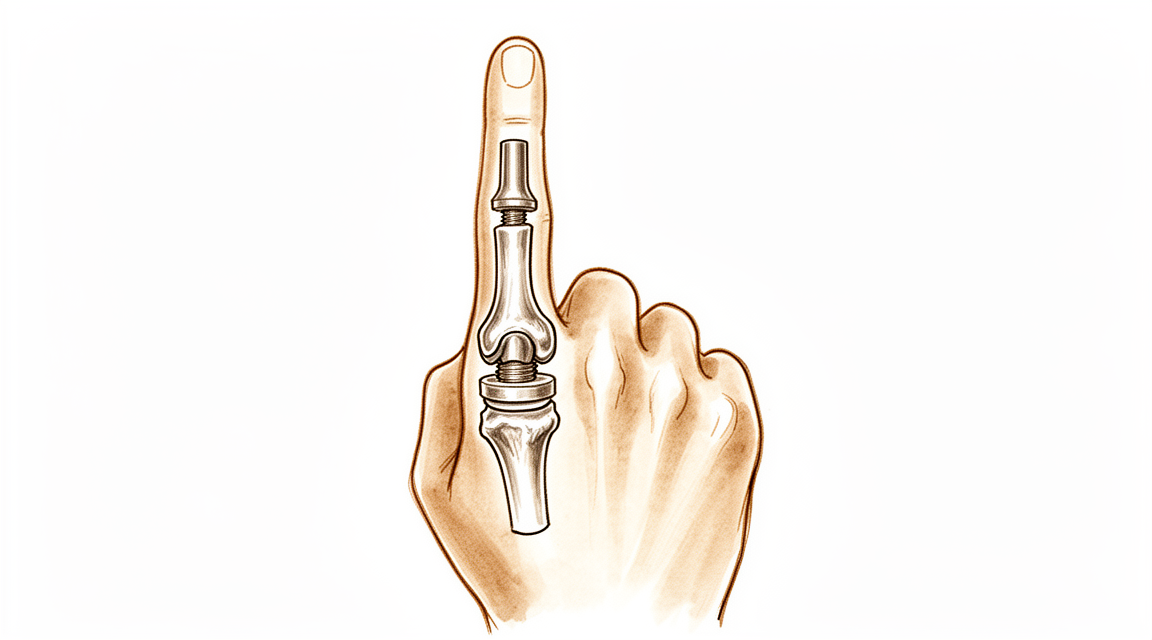
Quy trình này hướng dẫn quá trình hồi phục của bạn sau khi thay thế khớp giữa ngón tay bị hư hỏng (khớp liên đốt gần – PIP, tức khớp giữa ngón tay) bằng một miếng đệm silicon linh hoạt; ca phẫu thuật do bác sĩ Kieran Hirpara thực hiện tại Bệnh viện tư nhân Mater Rockhampton. Quy trình bắt đầu với chương trình tập luyện tại nhà, sau đó là các bước điều trị lâm sàng được thiết kế riêng cho chuyên viên trị liệu tay của bạn. Vui lòng mang theo trang này hoặc bản PDF tương ứng đến buổi trị liệu đầu tiên để quá trình phục hồi được thực hiện một cách nhất quán. Chuyên viên trị liệu có thể điều chỉnh kế hoạch tùy theo tiến triển hồi phục của bạn.
Nếu bạn có bất kỳ thắc mắc nào về vết thương sau phẫu thuật, hãy liên hệ với phòng khám. Việc chụp ảnh vết thương rồi gửi qua email để được đánh giá cũng rất hữu ích.
Những điều bạn có thể mong đợi
Khớp giữa của ngón tay bạn đã bị tổn thương do viêm khớp, gây đau đớn và cứng khớp. Trong ca phẫu thuật này, các bề mặt khớp bị hư hỏng sẽ được loại bỏ và một miếng đệm silicone mềm dẻo (loại implant kiểu Swanson) sẽ được đặt vào giữa hai xương. Miếng đệm này không phải là khớp nối cơ học cứng nhắc; nó có tính đàn hồi, giúp giữ hai xương cách xa nhau, cho phép ngón tay uốn cong, đồng thời giúp mô sẹo của bạn hình thành một lớp vỏ hỗ trợ mới quanh miếng đệm. Lợi ích chính và đáng tin cậy nhất là giảm đau. Bạn cũng có thể mong đợi khả năng uốn cong ngón tay trong phạm vi vừa phải (thường khoảng 40 đến 60 độ) chứ không phải là phạm vi chuyển động hoàn toàn bình thường. Hầu hết mọi người đều rất hài lòng vì cơn đau biến mất và ngón tay trở nên dễ sử dụng hơn.
Yếu tố quan trọng nhất trong quá trình hồi phục là phương pháp tiếp cận phẫu thuật mà bác sĩ đã sử dụng, vì điều này quyết định thời điểm bạn có thể vận động ngón tay:
- Tiếp cận từ phía trước (phía lòng bàn tay – phương pháp volar): gân duỗi nằm ở mặt sau ngón tay vẫn được giữ nguyên vẹn. Vì không có bộ phận nào ở mặt sau cần hồi phục, bạn thường có thể bắt đầu vận động ngón tay trong vài ngày sau phẫu thuật.
- Tiếp cận từ phía sau (phương pháp dorsal): gân duỗi (gân trung tâm) phải được cắt hoặc nâng lên để tiếp cận khớp, sau đó mới được khâu lại. Vết khâu này cần được bảo vệ trong thời gian đầu, vì vậy ngón tay sẽ được cố định thẳng bằng nẹp, và việc uốn cong chỉ được thực hiện dần dần dưới sự hướng dẫn của chuyên viên trị liệu tay.
Chuyên viên trị liệu tay sẽ tuân theo kế hoạch phục hồi tương ứng với phương pháp phẫu thuật của bạn. Bác sĩ Hirpara sẽ thông báo cho họ biết phương pháp nào đã được áp dụng; các hướng dẫn thời gian dưới đây cũng được điều chỉnh tùy theo đó. Dù sử dụng phương pháp nào, khớp mới tạo ra vẫn là một khớp nối: nó thích uốn cong và duỗi thẳng theo một đường thẳng, nhưng không chịu được lực đẩy hoặc xoắn sang hai bên. Việc bảo vệ khớp khỏi các lực tác động ngang là yếu tố then chốt giúp khớp ổn định về lâu dài.
Các lưu ý và hạn chế
- Chỉ di chuyển ngón tay theo đường thẳng (gập và duỗi ra); tránh mọi lực tác động sang bên hoặc xoay tròn lên ngón tay vừa phẫu thuật. Khớp mới tạo thành có cấu trúc như bản lề; lực tác động phụ có thể làm lỏng hoặc biến dạng khớp này.
- Đeo nẹp đúng theo hướng dẫn, đồng thời sử dụng phương pháp buddy strapping khi vận động để giữ cho ngón tay di chuyển thẳng hướng.
- Nếu ca phẫu thuật được thực hiện ở mặt sau ngón tay, KHÔNG cố gắng duỗi thẳng ngón tay vượt quá mức giới hạn được chỉ định ban đầu: gân duỗi đang trong quá trình hồi phục.
- KHÔNG nắm chặt, kẹp mạnh, hay thực hiện các công việc nặng, đòi hỏi lực xoay tròn cho đến khi chuyên viên trị liệu chỉ định được phép tăng cường sức mạnh (thông thường là sau khoảng sáu tuần).
- Ngay từ đầu, hãy vận động các khớp ngón tay còn lại, cổ tay và vai; đồng thời sử dụng tay để thực hiện các công việc sinh hoạt nhẹ nhàng trong phạm vi thoải mái.
Để quản lý vết thương, tình trạng sưng và sẹo, vui lòng tham khảo hướng dẫn chăm sóc vết thương của phòng khám.
Các bài tập của bạn
Kieran Hirpara 4.0
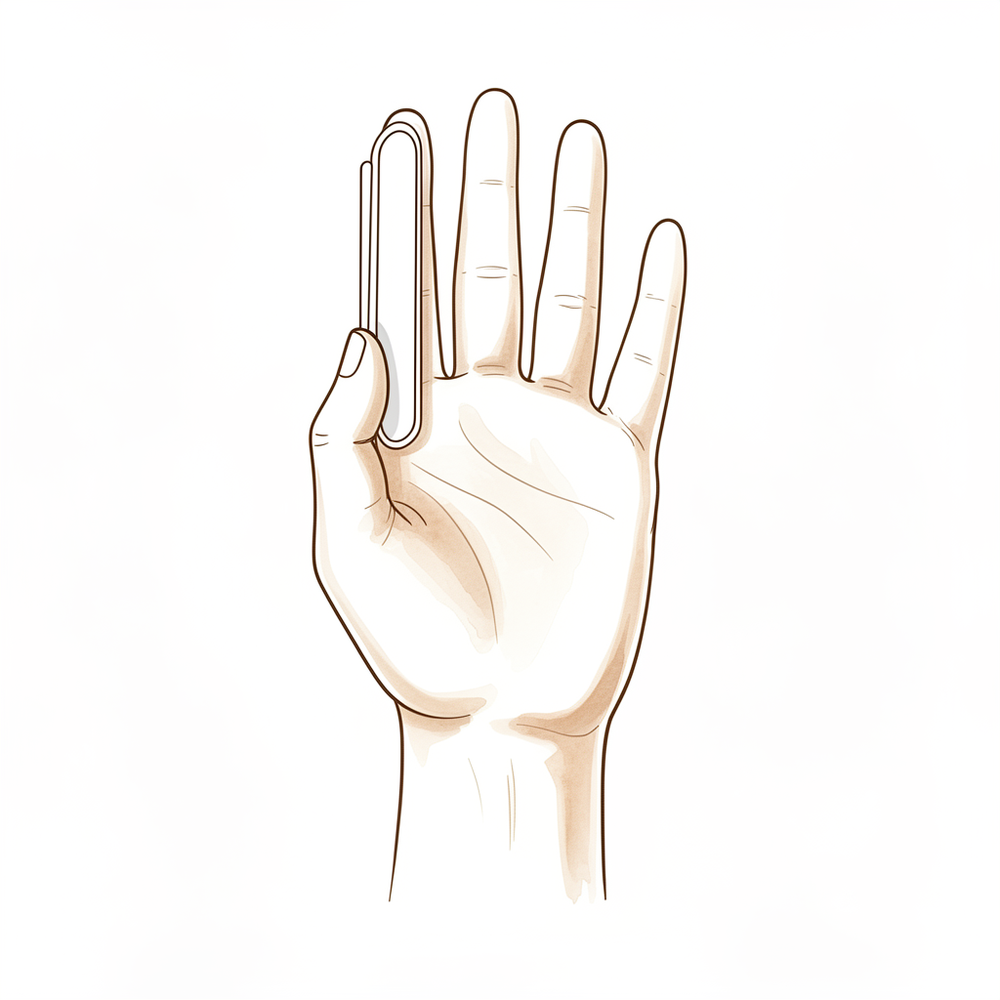
Gập chủ động có bảo vệ (khớp PIP)
Dùng các ngón tay còn lại cùng nẹp để giữ vững phần còn lại của bàn tay, sau đó nhẹ nhàng gập và duỗi khớp giữa của ngón tay vừa được phẫu thuật trong phạm vi mà chuyên viên trị liệu vận động đã chỉ định. Hãy thực hiện động tác một cách chậm rãi và thẳng hàng: gập và duỗi ngón tay theo một đường thẳng, tránh để ngón tay bị lệch sang một bên. Việc này giúp khớp mới luôn được vận động, tránh tình trạng cứng khớp.
10 lần, vài lần mỗi ngày, trong phạm vi đã đặt.
Kieran Hirpara 4.0
Cử động duỗi thẳng (duỗi ra)
Hãy nhẹ nhàng duỗi thẳng ngón tay vừa được phẫu thuật ra hết mức có thể, sau đó thả lỏng. Nếu ca phẫu thuật được thực hiện ở mặt sau ngón tay, đây là động tác cần được hạn chế thực hiện trong giai đoạn đầu — chuyên viên trị liệu tay sẽ hướng dẫn cụ thể mức độ và thời điểm thực hiện, vì gân dùng để duỗi thẳng ngón tay cần thời gian để lành lại. Tuyệt đối không được cố gắng ép ngón tay duỗi thẳng.
10 lần, vài lần mỗi ngày, theo hướng dẫn.
Kieran Hirpara 4.0
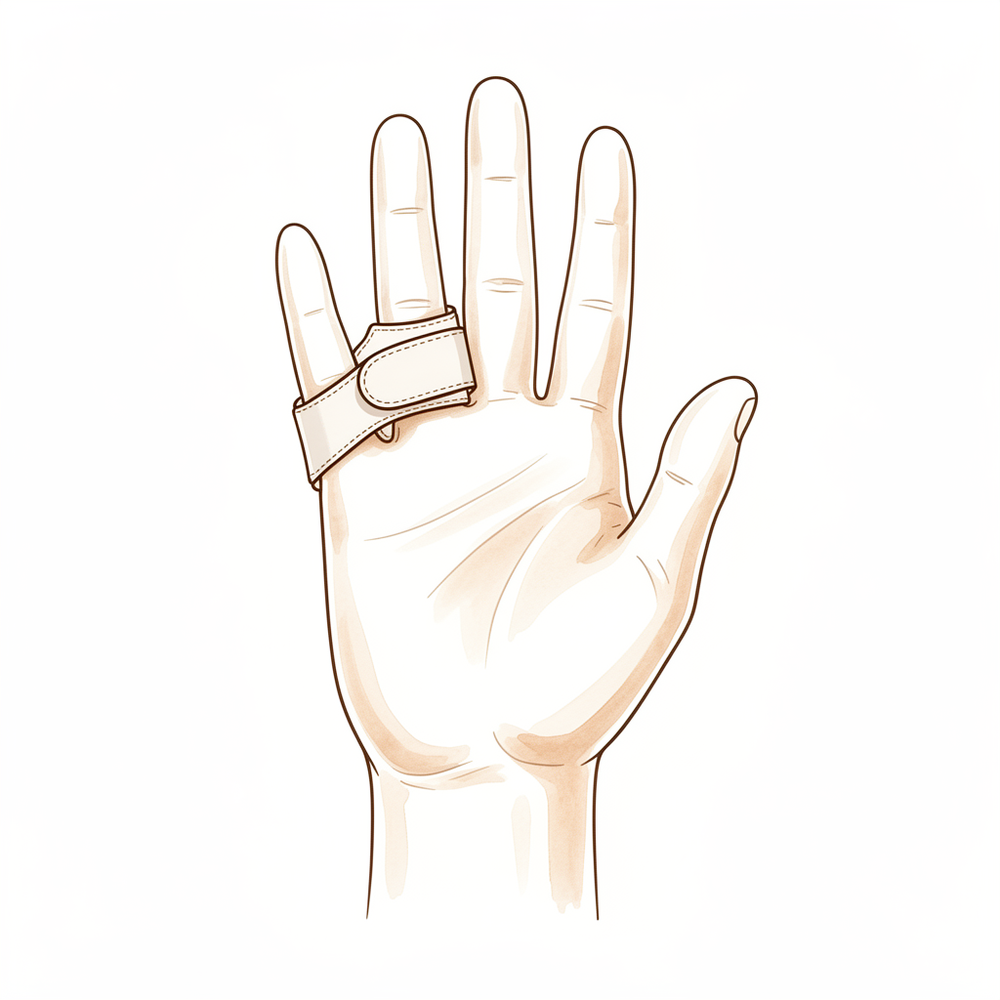
Phương pháp cố định bằng dây đai Buddy
Dùng băng dính để gắn nhẹ ngón tay vừa được phẫu thuật vào ngón tay bên cạnh (ở phía trên và dưới khớp giữa, không dán trực tiếp lên khớp). Ngón tay lân cận sẽ đóng vai trò như nẹp, giúp ngón tay của bạn gập và duỗi theo một đường thẳng, đồng thời ngăn không cho nó nghiêng sang một bên đè lên khớp mới. Hãy đeo băng dính này khi vận động theo hướng dẫn.
Sử dụng trong các hoạt động nhẹ, theo hướng dẫn của chuyên viên trị liệu tay của bạn.
Kieran Hirpara 4.0
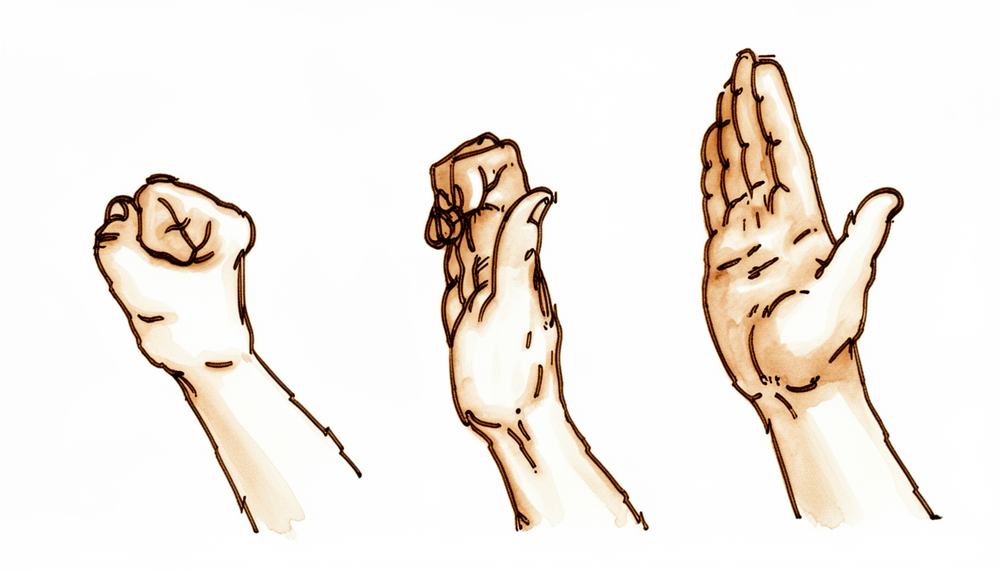
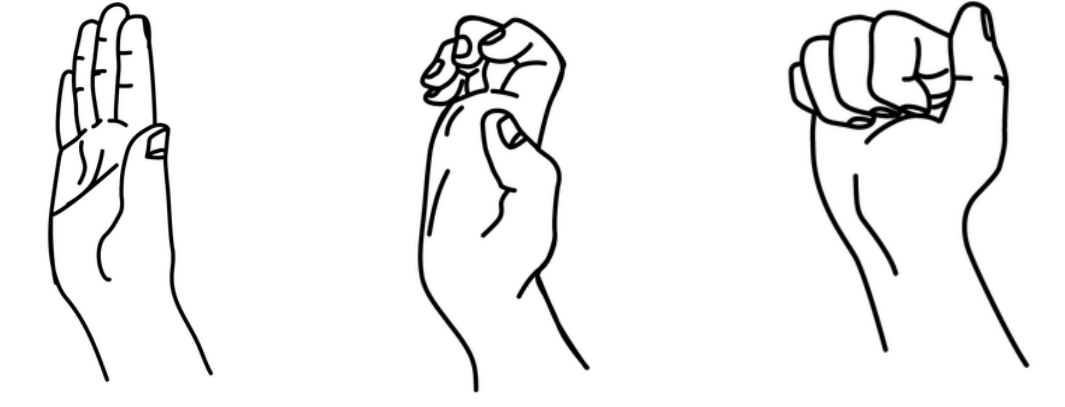
Các động tác trượt của gân
Hãy di chuyển tay theo ba dạng hình: đầu tiên duỗi thẳng các ngón tay (bàn tay phẳng), sau đó chỉ gập hai khớp cuối của ngón tay thành hình móc, tiếp theo co ngón tay thành nắm đấm nhẹ, rồi lại duỗi thẳng ra. Việc này giúp các gân trượt dễ dàng, tránh bị dính lại trong quá trình ngón tay lành lại. Hãy tuân thủ mọi giới hạn độ gập mà bác sĩ đã đặt ra cho bạn.
5–10 lần trong mỗi chuỗi, nhiều lần mỗi ngày.
Kieran Hirpara 4.0
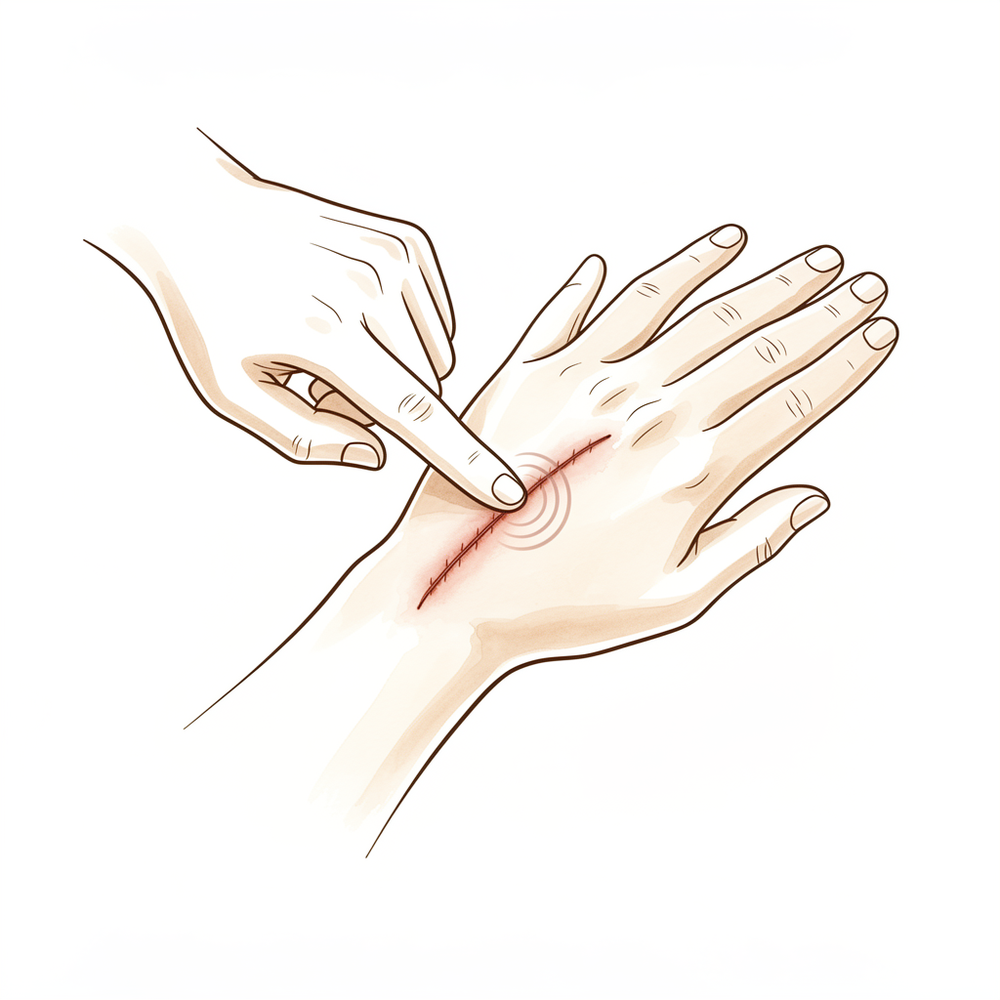
Xoa bóp vết sẹo
Khi vết thương đã lành hoàn toàn, hãy massage vết sẹo bằng một chút kem dưỡng da, thực hiện các động tác tròn nhỏ và đều trong vài phút. Việc này giúp vết sẹo mềm mại và ngăn không cho nó dính vào gân và khớp phía dưới. Chỉ bắt đầu thực hiện sau khi chuyên viên trị liệu tay xác nhận rằng vết thương đã lành.
Chỉ vài phút thôi, 2–3 lần mỗi ngày, sau khi vết thương đã lành.
Kieran Hirpara 4.0
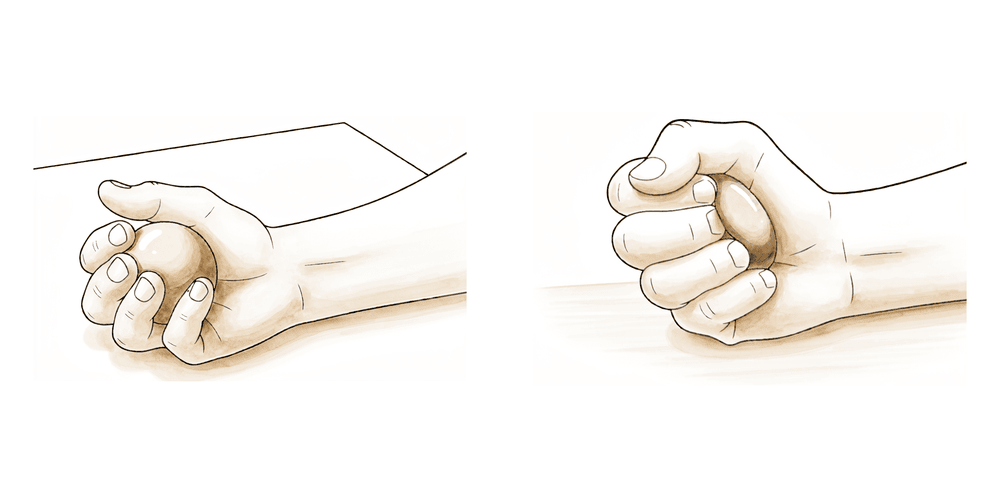
Tăng cường sức mạnh nắm tay
Một bài tập GIAI ĐOẠN SAU — chỉ thực hiện khi chuyên viên trị liệu tay cho phép tập tăng cường sức mạnh (thường là từ khoảng tuần thứ sáu). Nhẹ nhàng bóp một quả bóng mềm hoặc đất nặn, tăng dần mức độ một cách từ từ. Tránh kẹp mạnh hoặc bất kỳ động tác vặn xoắn nào tạo lực theo chiều ngang lên khớp mới cho đến khi bạn được thông báo là an toàn.
Theo hướng dẫn của chuyên viên trị liệu tay của bạn (chỉ áp dụng ở giai đoạn sau).
Đây là những bài tập có trong tờ hướng dẫn của bạn. Hãy thực hiện chúng chỉ khi có hướng dẫn từ Bác sĩ Hirpara và chuyên viên trị liệu vận động, đồng thời tuân thủ mọi phạm vi chuyển động và hạn chế mà bạn đã được chỉ định. Những bài tập ban đầu nhằm giúp ngón tay di chuyển theo đường thẳng mà không chịu áp lực sang bên: uốn cong có kiểm soát, duỗi thẳng nhẹ nhàng, dùng băng cố định hai ngón tay lại với nhau và các động tác trượt gân. Nếu bạn vừa trải qua phẫu thuật ở mặt sau ngón tay, hãy đặc biệt bảo vệ bài tập duỗi thẳng chủ động trong giai đoạn đầu và thực hiện dần dần. Việc tăng cường sức mạnh nắm tay thuộc giai đoạn sau; bạn không nên bắt đầu bài tập này cho đến khi được bác sĩ cho phép. Hãy ngừng ngay bất kỳ bài tập nào gây đau dữ dội hoặc khiến ngón tay cảm thấy mất ổn định.
Quy trình điều trị lâm sàng của bạn
Phần còn lại của trang này mô tả quy trình phục hồi chức năng theo từng giai đoạn sau phẫu thuật thay khớp PIP bằng chất liệu silicone. Phần này cần được cung cấp cho chuyên viên trị liệu tay; mỗi giai đoạn đều bắt đầu bằng lời giải thích bằng ngôn ngữ thông thường về những gì đang diễn ra. Quy trình điều trị phụ thuộc vào phương pháp phẫu thuật, và đây là điểm phân nhánh quan trọng: phương pháp tiếp cận mặt lòng bàn tay giúp cơ chế duỗi tay không bị tổn thương, cho phép vận động chủ động sớm trong vài ngày; còn phương pháp tiếp cận mặt lưng bàn tay sẽ làm đứt hoặc chia tách gân duỗi trung tâm, vì vậy cần bảo vệ quá trình lành thương bằng các nẹp giữ duỗi và thực hiện các bài tập gập khớp một cách từ từ. Trong suốt quá trình phục hồi, miếng cấy ghép silicone đóng vai trò là vật đệm linh hoạt; độ ổn định lâu dài của nó phụ thuộc vào màng bao quanh miếng cấy ghép; do đó cần tránh các lực tác động theo hướng ngang (phía bên) và chỉ cho phép vận động trong phạm vi quỹ đạo sagittal thuần túy.
Trước khi bắt đầu điều trị, hãy xác nhận lại với bác sĩ phẫu thuật về phương pháp tiếp cận (mặt lòng hay mặt lưng bàn tay), tình trạng nguyên vẹn hoặc đã được sửa chữa của gân duỗi trung tâm và các dây chằng bên cạnh, cũng như phạm vi vận động được xác định trong ca mổ. Bác sĩ Hirpara sẽ chỉ định phương pháp phẫu thuật cụ thể; hãy chọn lộ trình phù hợp: phương pháp mặt lòng bàn tay (cho phép vận động sớm) hoặc phương pháp mặt lưng bàn tay (ưu tiên bảo vệ cơ chế duỗi). Mục tiêu chức năng mong muốn là đạt được phạm vi vận động không đau khoảng 40–60 độ, chứ không phải là vận động hết biên độ.
Giai đoạn I — bảo vệ mô mềm và khởi động vận động (tuần 0 đến tuần 3)
Trong những tuần đầu, mục tiêu là bảo vệ các mô mềm đồng thời ngăn ngừa tình trạng cứng khớp; nhịp độ vận động hoàn toàn phụ thuộc vào phương pháp phẫu thuật đã áp dụng. Bộ cấy ghép vẫn ổn định khi vận động gập-duỗi, nhưng dễ bị ảnh hưởng bởi lực tác động bên ngoài; vì vậy mọi chuyển động đều phải diễn ra trong mặt phẳng sagittal, đồng thời ngón tay cần được hỗ trợ bằng băng cố định và nẹp.
Dành cho chuyên viên trị liệu tay:
Giáo dục và các biện pháp phòng ngừa - Xác định phương pháp phẫu thuật và tuân theo lộ trình tương ứng: - Phương pháp tiếp cận mặt lòng bàn tay: cơ chế duỗi ngón vẫn nguyên vẹn → bắt đầu vận động chủ động khớp PIP/DIP vào ngày 3–5. Sử dụng nẹp chặn duỗi mặt lòng bàn tay cho phép gập ngón trong góc hạn chế (thông thường khoảng 30° ban đầu), sau đó tăng dần. - Phương pháp tiếp cận mặt sau bàn tay (khi có vết rách/sửa chữa gân duỗi trung tâm): cần bảo vệ khả năng duỗi ngón. Khớp PIP phải được cố định gần như ở tư thế duỗi hoàn toàn suốt thời gian; chỉ được phép thực hiện vận động gập chủ động trong góc hạn chế dưới sự giám sát, tôn trọng vị trí vết khâu gân duỗi trung tâm. (Có thể áp dụng phương pháp vận động tương đối hoặc nẹp duỗi động theo ý kiến bác sĩ phẫu thuật.) - Tuyệt đối tránh mọi lực tác động theo mặt phẳng coronal (phía bên/trục quay từ trụ đến trụ cẳng tay) lên khớp vừa phẫu thuật: dùng băng cố định nối với ngón tay kế cận để hướng dẫn chuyển động chỉ theo mặt phẳng sagittal. - Không được nắm, kẹp vật hay thực hiện các động tác chịu lực/tải trọng.
Quản lý điều trị - Vết mổ: thay băng theo hướng dẫn; theo dõi dấu hiệu nhiễm trùng. - Phù nề: nâng cao chi, massage nhẹ theo hướng ngược dòng, băng ép nhẹ. - Vận động: thực hiện các động tác gập-duỗi chủ động khớp PIP/DIP trong phạm vi góc đã xác định; thực hiện các bài tập trượt gân; vận động chủ động các khớp không bị ảnh hưởng (khớp DIP, MCP, cổ tay, ngón cái); bắt đầu dùng băng cố định khi thực hiện các hoạt động. - Đeo nẹp suốt thời gian giữa các buổi tập vận động.
Tiêu chí để chuyển sang giai đoạn tiếp theo - Vết mổ lành tốt; không xuất hiện tình trạng duỗi ngón không đầy đủ (đối với phương pháp phẫu thuật mặt sau); có thể thực hiện vận động trong phạm vi góc cho phép một cách dễ dàng và kiểm soát tốt.
Giai đoạn II — mở rộng phạm vi vận động (tuần 3 đến tuần 6)
Phạm vi gập ngón tay được mở rộng dần; đối với các ngón được phẫu thuật qua đường tiếp cận lưng bàn tay, việc hạn chế vận động duỗi cũng được nới lỏng dần khi dây chằng trung tâm dần ổn định. Mục tiêu của giai đoạn này là tận dụng tối đa phạm vi vận động hữu ích (khoảng 40–60°) trước khi các mô sẹo hình thành và cố định phạm vi vận động.
Dành cho chuyên viên trị liệu tay:
Các đánh giá cần thực hiện - Phạm vi gập duỗi khớp ngón tay thứ hai; tình trạng chậm duỗi (đối với phương pháp tiếp cận lưng bàn tay); độ ổn định của khớp theo mặt phẳng trán; mức độ đau và phù nề; đánh giá vết thương và mô sẹo
Hướng dẫn và lưu ý - Dần tăng dần phạm vi gập ngón tay cho đến khi đạt mục tiêu vận động (khoảng 40–60°) - Vùng lòng bàn tay: tăng dần mức độ gập chủ động tùy theo khả năng chịu đựng; nếu khả năng duỗi đã hoàn toàn ổn định thì có thể thêm các động tác gập thụ động nhẹ nhàng - Vùng lưng bàn tay: giảm dần việc sử dụng nẹp hỗ trợ duỗi theo tiến trình lành của dây chằng trung tâm (thông thường giảm dần hỗ trợ ban ngày trong vòng 4–6 tuần); cần đề phòng tình trạng chậm duỗi: không nên cố gắng tăng phạm vi gập bằng mọi giá mà làm ảnh hưởng đến khả năng duỗi chủ động - Tiếp tục tránh tuyệt đối các lực tác động sang bên hoặc xoắn vặn; chưa được tập luyện tăng cường sức mạnh chống lại lực cản
Các biện pháp can thiệp - Các bài tập: gập duỗi khớp ngón tay thứ hai chủ động và hỗ trợ; các bài tập nhằm tập trung vào vận động riêng lẻ của khớp này; tiếp tục thực hiện các động tác trượt gân và dùng băng cố định; bắt đầu xoa bóp mô sẹo sau khi vết thương đã lành - Đảm bảo các khớp lân cận vẫn vận động được đầy đủ
Tiêu chí để chuyển sang giai đoạn tiếp theo - Vết thương đã lành; khớp ổn định trên mặt phẳng trán; đã đạt được phạm vi vận động không đau và có tính thực dụng; tình trạng chậm duỗi ở mức tối thiểu (đối với phương pháp tiếp cận lưng bàn tay)
Giai đoạn III — Tăng cường sức mạnh và phục hồi chức năng (từ tuần thứ 6 đến tuần thứ 12 và sau đó)
Khi vận động đã được khôi phục và các mô mềm ổn định (khoảng tuần thứ 6), việc tăng cường sức mạnh sẽ bắt đầu và được nâng dần theo thời gian. Các bài tập tăng cường sức mạnh cần tập trung vào các chuyển động theo trục thẳng (nắm chặt và tác động lực thẳng hàng), đồng thời vẫn phải hạn chế các lực tác động ngang hoặc xoắn lên implant trong thời gian dài.
Dành cho chuyên viên trị liệu tay:
Đánh giá - So sánh khả năng nắm chặt và kẹp giữa hai bên tay; phạm vi chuyển động của khớp ngón tay; độ ổn định theo mặt phẳng trán; các bài kiểm tra chức năng và phù hợp với từng nhiệm vụ cụ thể
Giáo dục và lưu ý - Bắt đầu các bài tập tăng cường sức mạnh nắm tay nhẹ nhàng từ khoảng tuần thứ 6, dần dần tăng mức độ - Tiến hành các bài tập kẹp nhẹ một cách thận trọng; tiếp tục tránh các lực tác động mạnh theo hướng ngang hoặc xoắn lên khớp vừa phẫu thuật trong thời gian dài (để đảm bảo tuổi thọ của implant) - Đặt kỳ vọng thực tế: mục tiêu chính là giảm đau một cách bền vững; phạm vi chuyển động cuối cùng sẽ khá hạn chế (khoảng 40–60 độ) và gần như đã ổn định sau khoảng 3 tháng
Quản lý điều trị - Các bài tập: tăng dần cường độ nắm tay, sử dụng đất sét trị liệu; áp dụng các bài tập chức năng phù hợp với công việc; tiếp tục duy trì các bài tập cải thiện độ linh hoạt và xử lý vùng sẹo - Có thể cho bệnh nhân xuất viện khi khớp ngón tay đã ổn định, không đau, có phạm vi chuyển động hữu ích và đáp ứng được các nhu cầu sinh hoạt, lao động hàng ngày - Chuyển bệnh nhân trở lại bác sĩ điều trị nếu tiến triển chậm lại, khớp trở nên không ổn định hoặc có dấu hiệu hỏng implant
Tiêu chí xuất viện / trở lại sinh hoạt - Khớp ngón tay ổn định, không đau, có phạm vi chuyển động hữu ích; khả năng nắm chặt đủ mạnh; có thể thực hiện các hoạt động sinh hoạt và công việc hàng ngày một cách bình thường
Trở lại với công việc và các hoạt động hàng ngày
Bạn nên bắt đầu sử dụng bàn tay một cách nhẹ nhàng trong các sinh hoạt hàng ngày (ăn uống, viết lách, các hoạt động chăm sóc bản thân) ngay từ đầu, miễn là cảm thấy thoải mái; tuy nhiên phải đảm bảo cử động diễn ra theo đường thẳng và tránh các lực tác động sang hai bên hoặc lực xoắn lên ngón tay vừa được phẫu thuật. Việc lái xe thường có thể thực hiện được khi bạn đã có thể nắm vô lăng một cách dễ dàng, điều khiển xe an toàn, không còn phải đeo nẹp hạn chế vận động, và cũng không còn dùng các loại thuốc giảm đau mạnh nữa; thông thường là sau khoảng hai tuần, và điều này cần được xác nhận tại buổi tái khám.
Các hoạt động đòi hỏi lực nắm mạnh hơn và các công việc nặng sẽ được bắt đầu vào khoảng sáu tuần sau phẫu thuật, rồi dần dần tăng dần mức độ. Những công việc đòi hỏi sức mạnh cơ bắp lớn hoặc phải xoay vặn ngón tay là những thứ cuối cùng mới được thực hiện; việc này phụ thuộc vào việc ngón tay đã trở nên ổn định, có lực nắm đủ mạnh và bạn cảm thấy thoải mái hay chưa; quyết định này do Bác sĩ Hirpara và chuyên viên trị liệu tay đưa ra, chứ không chỉ dựa vào thời gian đã trôi qua. Hãy nhớ rằng mục đích lâu dài của ca phẫu thuật này là mang lại sự giảm đau đáng tin cậy và giúp ngón tay có phạm vi chuyển động hữu ích khoảng 40 đến 60 độ; đồng thời cần tránh các lực tác động sang hai bên khớp trong thời gian dài để bảo vệ bộ phận cấy ghép.
Sau khi thực hiện theo phác đồ
Phác đồ này được áp dụng song song với các hướng dẫn phục hồi chung của phòng khám; vui lòng tham khảo mục xử lý cơn đau sau phẫu thuật, chăm sóc vết thương và chăm sóc sẹo. Kế hoạch từng giai đoạn nêu trên dựa trên các hướng dẫn phục hồi đã được công bố sau phẫu thuật thay khớp PIP bằng silicone. Quá trình hồi phục của bạn sẽ được Bác sĩ Hirpara và chuyên viên trị liệu tay theo dõi, điều chỉnh tùy theo phương pháp phẫu thuật được áp dụng cũng như tiến triển của ngón tay bạn.
Evidence & references
This is the clinical evidence summary written for health professionals. It is technical, and it lists the research this page was built from. You do not need to read it to understand your treatment or to make a decision about it.
Silicone PIP Joint Replacement — Procedure Outcomes & Post-operative Rehabilitation (Swanson-type Arthroplasty for PIP Osteoarthritis)
Topic scope: post-operative rehabilitation after silicone (Swanson-type) proximal interphalangeal (PIP) joint arthroplasty for primary osteoarthritis. The worn joint surfaces are excised and a flexible silicone spacer is implanted; this is an interposition / encapsulation arthroplasty, not a rigidly-fixed mechanical hinge. The implant works as a flexible spacer around which a peri-implant fibrous capsule forms to provide stability. The dominant, reliable benefit is pain relief; the functional gain is a modest active arc (~40–60°), not restoration of normal range.
Defining principle of the rehab here: the rehabilitation pathway is dictated by the surgical approach, because the rate-limiting tissue is the extensor mechanism, not the implant. A volar (palmar) approach leaves the central slip and extensor mechanism intact → it permits immediate / early active motion (within 3–5 days). A dorsal approach must split or reflect the central slip to reach the joint → the extensor repair must be protected first with extension orthotics and a graded, short-arc flexion programme. Across both pathways the silicone spacer is stable in the sagittal (flexion–extension) plane but vulnerable in the coronal plane, so the programme deliberately avoids lateral / torsional load and tracks the joint in a pure sagittal arc (buddy strapping). Therapy aims to bank the useful arc before scar maturation fixes it while protecting extension and the implant — it is not an immobilise-to-heal construct in the volar case.
A. PROCEDURE OUTCOMES (silicone PIP arthroplasty for osteoarthritis)
Silicone PIP arthroplasty is a reliable pain-relieving operation with predictable but modest motion; the principal debates are over surgical approach and implant choice (silicone vs surface-replacement/pyrocarbon), not whether arthroplasty relieves pain.
- Pain relief is high and durable; motion gains are modest. A long-term series of Swanson silicone PIP arthroplasty for osteoarthritis (mean ~10-year follow-up) reported excellent pain relief (mean VAS ~0.4) with essentially unchanged arc (≈55° pre-op → ≈50° post-op) and high patient satisfaction — patients would have the surgery again despite limited motion gain [Bales, Wall & Stern, J Hand Surg Am 2014]. Moderate (level-IV long-term cohort).
- The volar approach can improve the active arc. A volar-approach silicone PIP series reported the active arc improving from ~33° to ~72°, with good function and satisfaction, by preserving the extensor mechanism and enabling early motion [Proubasta et al., J Hand Surg Am 2014]. Moderate–weak (level-IV).
- Radiographic implant deformation/fracture is common but poorly correlated with symptoms. In the long-term Swanson series most implants deformed and many fractured radiographically, yet clinical revision was uncommon (survivorship ~90% at ~10 years) and there was no correlation between radiographs and satisfaction [Bales, Wall & Stern 2014]. Strong natural-history signal within a cohort.
- Silicone vs surface-replacement and pyrocarbon implants give broadly comparable clinical results; no implant is clearly superior. Systematic review across implants/approaches found comparable outcomes with implant-/approach-specific complication profiles [Yamamoto et al., Plast Reconstr Surg 2017; Carlson Strother, Moran & Rizzo, JAAOS 2023]. Moderate (SR + narrative review).
- Pyrocarbon and resurfacing implants carry their own failure modes (subsidence, squeaking, intra-operative periprosthetic fracture, instability), informing implant choice rather than rehab [Watts et al., J Hand Surg Am 2012; Wagner et al. medium-term 2018 & intra-op fractures 2015; Branam et al. resurfacing-vs-silicone 2007]. Moderate.
B. REHABILITATION / THERAPY EVIDENCE
The central rehab questions are (1) how soon to move and (2) how to splint, and the answer to both is set by the surgical approach and the extensor mechanism. The evidence base is low-level (expert consensus / single-cohort therapy series) — there are no RCTs comparing PIP arthroplasty rehab pathways.
- Approach dictates the timeline (the core principle). Surgical reviews establish that a volar approach preserves the central slip and permits immediate active and passive motion, while a dorsal approach requires post-operative protection of the split/repaired central slip before flexion is advanced [Renfree, Bone Joint J 2022 (surgical approaches); Herren, Hand Clin 2017; Yamamoto et al. 2017]. Moderate (surgical evidence) — strong mechanistic basis.
- A structured 12-week, splint-based therapy programme is the consensus framework (dorsal pathway). Feldscher's hand-therapy protocol for PIP (pyrocarbon, central-slip-splitting dorsal approach) uses a volar static finger orthosis allowing a limited short-arc PIP/DIP active arc that is increased over the rehab course, with a hand-based resting splint (MCP flexed, PIP/DIP near 0°) for full-time use except during template-splint exercise [Feldscher, J Hand Ther 2010]. Weak (expert-consensus protocol).
- A defined controlled-motion program exists and reports good arcs. A controlled-motion rehabilitation program for PIP arthroplasty reported favourable range-of-motion outcomes, supporting graded controlled motion over rigid immobilisation [Ramanathan, Koludrovich & Evans, J Hand Ther 2021]. Weak (cohort / programme description).
- Static and dynamic extension splinting give similar results. A comparison of static vs dynamic splinting after PIP pyrocarbon arthroplasty found comparable outcomes, favouring static splinting for simplicity and patient convenience [Jennings & Livingstone / static-vs-dynamic cohort, J Hand Ther 2011]. Weak–moderate (comparative cohort).
- Coronal-plane protection is the durable, lifelong caveat. Collateral integrity and avoidance of lateral stress underpin long-term implant stability; collateral compromise drives instability/deviation [Carlo et al., collateral reconstruction, J Hand Surg Am 2016; Carlson Strother et al. 2023]. Consensus / mechanistic.
Recovery trajectory (expected, evidence-anchored)
| Phase | Window | Restraint (by approach) | Hand-therapy focus | Strength / load | Notes |
|---|---|---|---|---|---|
| I — Protect & initiate motion | Week 0–3 | Volar: active motion at 3–5 days, short flexion arc (~30°) in template/extension-block splint. Dorsal: PIP splinted near extension full-time; supervised short-arc flexion only | Protected sagittal PIP/DIP motion; tendon glides; buddy strapping; uninvolved-joint motion; no lateral/torsional load | None (no grip/pinch) | Implant stable in flexion–extension, vulnerable coronally |
| II — Advance motion | Week 3–6 | Progressively increase flexion arc toward ~40–60°. Dorsal: wean extension splint as central slip consolidates (≈wk 4–6); guard against extensor lag | Graded active/AAROM flexion–extension; blocking; scar massage once healed; continue buddy strapping | Still no resisted strengthening | Bank the useful arc before scar maturation fixes it |
| III — Strengthen & return | Week 6–12+ | Lifting/grip restrictions progressively lifted; lateral/twisting load avoided indefinitely | Light grip → cautious pinch; functional & work-specific loading | Grip from ~6 wk, graded | Pain relief is the durable gain; final arc (~40–60°) largely set by ~3 months |
(Phase windows mirror the precautions in the patient protocol; they are typical guides — not trial-derived deadlines — and the volar vs dorsal split is the dominant variable.)
C. KEY CONTROVERSIES / EVIDENCE QUALITY
- Volar vs dorsal approach (the rehab-defining question). The volar approach spares the extensor mechanism and permits early active motion (and a better reported arc), at the cost of being more technically demanding; the dorsal approach is more familiar but mandates extensor protection and a slower, splint-led flexion programme. Choice is surgeon-dependent and drives the entire rehab pathway. Moderate surgical evidence; no head-to-head rehab RCT.
- Implant choice (silicone vs surface-replacement vs pyrocarbon). No implant is clearly superior on clinical outcomes; silicone is durable for pain relief with high radiographic deformation/fracture that poorly predicts symptoms, while pyrocarbon/resurfacing trade different complication profiles (subsidence, instability, intra-operative fracture). Moderate (SR + cohorts).
- Static vs dynamic splinting (dorsal pathway). Comparable outcomes; static splinting is favoured for simplicity and convenience. Weak–moderate.
- Motion gain is modest and that is expected, not failure. Patients reliably lose pain but gain little arc (especially via dorsal/silicone); mislabelling the modest arc as a poor result misframes a successful pain-relieving operation. Counsel the ~40–60° expectation up front. Strong natural-history signal.
- Lifelong coronal-stress avoidance. Long-term stability depends on the peri-implant capsule and collaterals; forceful lateral/twisting load risks deviation, instability and implant failure. Consensus.
D. EVIDENCE STRENGTH FLAGS (summary)
- STRONG (mechanistic / natural-history): the surgical-approach principle (volar preserves extensor mechanism → early motion; dorsal splits central slip → protect extension first); the modest-arc / reliable-pain-relief outcome pattern; radiographic implant deformation poorly predicting symptoms.
- MODERATE: procedure outcomes are level-IV case series (long-term Swanson silicone series; volar approach series); implant-comparison systematic review/narrative review; surgical-approach reviews.
- WEAK / EXPERT CONSENSUS: the specific rehabilitation regimen — short-arc controlled motion, 12-week splint-based programme, static-vs-dynamic splinting equivalence, exact phase timings. These are low-level, expert-consensus / single-cohort therapy descriptions, not trial-derived; individualise to the operative approach and tissue quality.
CITATIONS
RAG corpus (180,000+ Orthopaedic articles)
- Bales JG, Wall LB, Stern PJ. Long-term results of Swanson silicone arthroplasty for proximal interphalangeal joint osteoarthritis. J Hand Surg Am. 2014. DOI: 10.1016/j.jhsa.2013.11.008
- Proubasta IR, Lamas CG, Natera L, et al. Silicone proximal interphalangeal joint arthroplasty for primary osteoarthritis using a volar approach. J Hand Surg Am. 2014;39(6). DOI: 10.1016/j.jhsa.2014.03.033
- Weistra K, Kan HJ, van Alebeek VAHJ, et al. Proximal interphalangeal joint arthroplasty using a silicone implant: a comparison between Integra and NeuFlex in 72 cases. HAND. 2022. DOI: 10.1177/15589447221122829
- Branam BR, Tuttle HG, Stern PJ, et al. Resurfacing arthroplasty versus silicone arthroplasty for proximal interphalangeal joint osteoarthritis. J Hand Surg Am. 2007. DOI: 10.1016/j.jhsa.2007.04.006
- Yamamoto M, Malay S, Fujihara Y, et al. A systematic review of different implants and approaches for proximal interphalangeal joint arthroplasty. Plast Reconstr Surg. 2017. DOI: 10.1097/prs.0000000000003260
- Renfree KJ. Surgical approaches for proximal interphalangeal joint arthroplasty. Bone Joint J. 2022;104-B(12). DOI: 10.1302/0301-620x.104b12.bjj-2022-0946
- Herren DB. Current European practice in the treatment of proximal interphalangeal joint arthritis. Hand Clin. 2017. DOI: 10.1016/j.hcl.2017.04.002
- Carlson Strother CR, Moran SL, Rizzo M. Small joint arthroplasty of the hand: an update on indications, outcomes, and complications. J Am Acad Orthop Surg. 2023;31(15). DOI: 10.5435/jaaos-d-23-00034
- Feldscher SB. Postoperative management for PIP joint pyrocarbon arthroplasty. J Hand Ther. 2010. DOI: 10.1016/j.jht.2009.10.011
- Ramanathan D, Koludrovich J, Evans P. A new controlled motion program for rehabilitation of the proximal interphalangeal joint arthroplasty. J Hand Ther. 2021. DOI: 10.1016/j.jht.2019.04.003
- Watts AC, Hearnden AJ, Trail IA, et al. Pyrocarbon proximal interphalangeal joint arthroplasty: minimum two-year follow-up. J Hand Surg Am. 2012. DOI: 10.1016/j.jhsa.2012.02.012
- Wagner ER, Weston JT, Houdek MT, et al. Medium-term outcomes with pyrocarbon proximal interphalangeal arthroplasty: a study of 170 consecutive arthroplasties. J Hand Surg Am. 2018. DOI: 10.1016/j.jhsa.2018.06.020
- Wagner ER, Van Demark R, Kor DJ, et al. Intraoperative periprosthetic fractures in proximal interphalangeal joint arthroplasty. J Hand Surg Am. 2015. DOI: 10.1016/j.jhsa.2015.06.101
- McGuire DT, White CD, Carter SL, et al. Pyrocarbon proximal interphalangeal joint arthroplasty: outcomes of a cohort study. J Hand Surg Eur Vol. 2011;37(6). DOI: 10.1177/1753193411434053
- Carlo J, Dell PC, Matthias R, et al. Collateral ligament reconstruction of the proximal interphalangeal joint. J Hand Surg Am. 2016;41(1). DOI: 10.1016/j.jhsa.2015.10.007
- Aversano FJ, Calfee RP. Salvaging a failed proximal interphalangeal joint implant. Hand Clin. 2018. DOI: 10.1016/j.hcl.2017.12.011
PIP arthroplasty rehabilitation literature (URLs)
- Feldscher SB. Postoperative management for PIP joint pyrocarbon arthroplasty. J Hand Ther. 2010. https://pubmed.ncbi.nlm.nih.gov/20036511/
- Ramanathan D, Koludrovich J, Evans P. A new controlled motion program for rehabilitation of the proximal interphalangeal joint arthroplasty. J Hand Ther. 2021. https://pubmed.ncbi.nlm.nih.gov/31481342/
- Static versus dynamic splinting for proximal interphalangeal joint pyrocarbon implant arthroplasty: a comparison of current and historical cohorts. J Hand Ther. 2011. https://pmc.ncbi.nlm.nih.gov/articles/PMC3143198/
- Proubasta IR, et al. Silicone proximal interphalangeal joint arthroplasty for primary osteoarthritis using a volar approach. J Hand Surg Am. 2014. https://pubmed.ncbi.nlm.nih.gov/24799141/
- Bales JG, Wall LB, Stern PJ. Long-term results of Swanson silicone arthroplasty for PIP joint osteoarthritis. J Hand Surg Am. 2014. https://pubmed.ncbi.nlm.nih.gov/24559624/
- The dorsal approach to silicone implant arthroplasty of the proximal interphalangeal joint. J Hand Surg Am. 2007. https://www.sciencedirect.com/science/article/abs/pii/S0363502307004662
- Proximal interphalangeal joint arthroplasty using a silicone implant: a comparison between Integra and NeuFlex. HAND. 2022. https://pmc.ncbi.nlm.nih.gov/articles/PMC10953532/