Patients › Rehabilitation
Giải phóng khớp khuỷu bị cứng (gỡ dính khớp – arthrolysis)
Một kế hoạch phục hồi vận động sớm và tích cực sau phẫu thuật nhằm giải phóng khớp khuỷu bị cứng: bác sĩ phẫu thuật lấy lại khả năng gập và duỗi thẳng khớp ngay trên bàn mổ, và toàn bộ nhiệm vụ của phục hồi chức năng là giữ được biên độ đó, bắt đầu từ ngày đầu tiên, không đeo đai treo tay và không có giai đoạn bảo vệ.
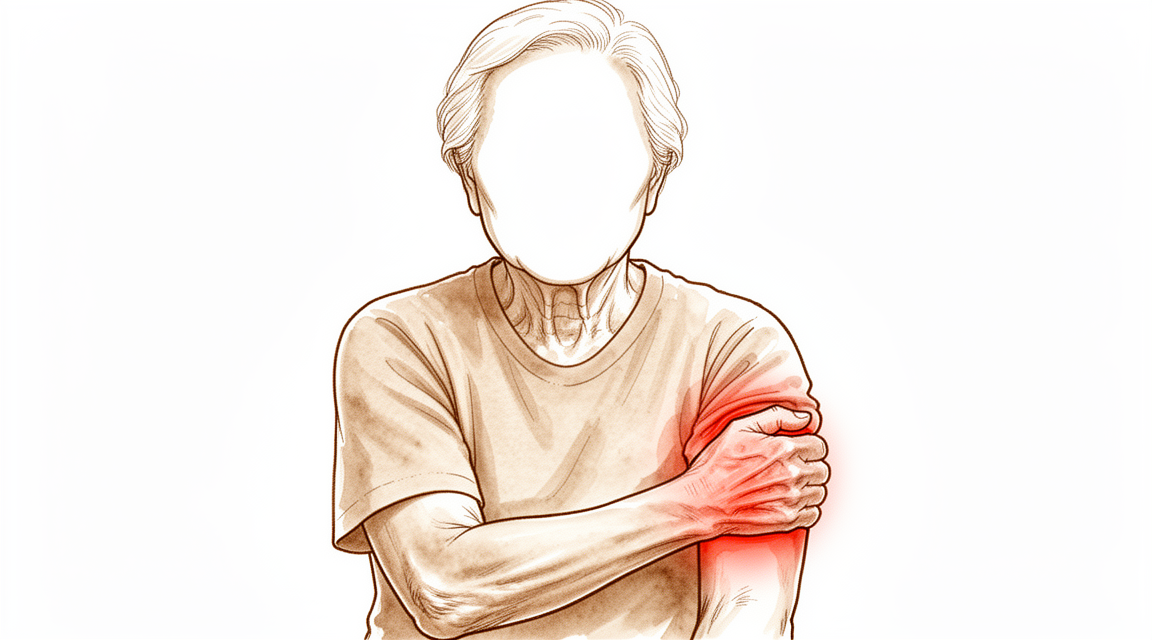
Quy trình này hướng dẫn quá trình hồi phục của bạn sau ca phẫu thuật nhằm làm giảm tình trạng cứng khớp khuỷu tay (còn gọi là thủ thuật giải phóng khớp, hay arthrolysis) do bác sĩ Kieran Hirpara thực hiện tại Bệnh viện tư nhân Mater Rockhampton. Quy trình bắt đầu với chương trình tập luyện tại nhà, tiếp theo là quy trình điều trị chi tiết được soạn thảo dành riêng cho chuyên viên vật lý trị liệu hoặc chuyên gia trị liệu tay của bạn; hãy mang theo trang này hoặc bản PDF tương ứng trong lần trị liệu đầu tiên để quá trình phục hồi được thực hiện một cách nhất quán. Chuyên viên trị liệu có thể điều chỉnh kế hoạch tùy theo tiến triển hồi phục của bạn.
Nếu bạn có bất kỳ thắc mắc nào về vết thương sau phẫu thuật, hãy liên hệ với phòng khám. Việc chụp ảnh vết thương rồi gửi qua email để được đánh giá cũng là một cách hữu ích.
Những điều bạn có thể mong đợi
Tình trạng khuỷu tay cứng sau chấn thương hoặc phẫu thuật xảy ra do lớp bao quanh khớp (bao khớp) dày lên và co rút; đôi khi còn có sự hình thành thêm xương, khiến khuỷu tay không thể gập và duỗi ra hết biên độ vận động. Trong ca phẫu thuật giải phóng, có thể thực hiện qua phương pháp nội soi hoặc mổ mở, bác sĩ phẫu thuật sẽ cắt bỏ lớp bao khớp co rút này (cùng bất kỳ mảnh xương thừa hay mô sẹo mắc kẹt nào) để khuỷu tay có thể vận động tự do trở lại ngay trên bàn mổ.
Điều quan trọng nhất cần hiểu là quá trình hồi phục này hoàn toàn ngược lại so với các ca phẫu thuật sửa chữa. Không có chỗ nào được khâu lại hay sửa chữa cần thời gian nghỉ ngơi nhiều tuần để lành thương. Thay vào đó, bác sĩ phẫu thuật sẽ tạo ra gần như toàn bộ biên độ vận động ngay trong lúc mổ; nhiệm vụ chính của quá trình phục hồi chức năng là duy trì biên độ vận động đó, vì bản chất tự nhiên của khuỷu tay sau phẫu thuật là dễ bị cứng lại. Đó là lý do không cần đeo đai treo tay và không có giai đoạn bảo vệ nào cả: bạn bắt đầu vận động khuỷu tay ngay từ ngày đầu tiên, và phải vận động mạnh mẽ, thường xuyên. Kẻ thù ở đây là hiện tượng tái cứng khớp, chứ không phải mô bị bục.
Về cách chăm sóc vết thương, giảm sưng và quản lý sẹo, vui lòng tham khảo hướng dẫn chăm sóc vết thương của phòng khám. Sưng và đau là hai yếu tố chính cản trở vận động trong những ngày đầu; vì vậy việc kiểm soát chúng bằng cách nâng cao chi, chườm đá và dùng thuốc giảm đau là yếu tố quan trọng để duy trì biên độ vận động.
Phần lớn sự cải thiện diễn ra trong khoảng từ 6 tuần đến 3 tháng; thông thường khuỷu tay sẽ đạt được biên độ vận động tốt nhất, ổn định nhất vào khoảng 4 tháng sau phẫu thuật. Để duy trì và thậm chí tăng thêm biên độ vận động, bạn cần sử dụng nẹp vào ban đêm và những lúc nghỉ ngơi, và tiếp tục thực hiện trong ít nhất 3 tháng.
Những lưu ý và hạn chế
- Cần bắt đầu vận động khuỷu tay ngay từ ngày đầu tiên, và tiếp tục vận động mỗi lần một ít nhưng thường xuyên trong suốt cả ngày: đây là yếu tố then chốt cho quá trình hồi phục của bạn.
- Cần nhẹ nhàng ấn vào cuối mỗi động tác kéo giãn; khác với các ca phẫu thuật sửa chữa, ở đây không có cấu trúc nào cần bảo vệ, vì vậy mục tiêu là đạt được biên độ vận động tối đa.
- Cần kiểm soát tình trạng sưng và đau bằng cách nâng cao tay, chườm đá và dùng thuốc giảm đau theo chỉ định: chính những yếu tố này mới hạn chế khả năng vận động của bạn, chứ không phải ca phẫu thuật.
- Cần dùng các thuốc chống viêm (chẳng hạn indomethacin) đúng theo chỉ dẫn nếu bác sĩ Hirpara đã kê đơn nhằm ngăn ngừa sự hình thành xương thừa.
- Cần đeo nẹp ban đêm/lúc nghỉ ngơi đúng như hướng dẫn, ít nhất trong 3 tháng, để duy trì và phát triển biên độ vận động đã đạt được.
- Không nên để khuỷu tay nghỉ ngơi hoặc “giữ yên” để nó dần ổn định: làm như vậy sẽ khiến tình trạng cứng khớp quay trở lại.
- Không cần lo lắng nếu cảm thấy tê hoặc có cảm giác kiến bò ở ngón út và ngón áp út; dây thần kinh ở mặt trong khuỷu tay (dây thần kinh trụ) có thể trở nên nhạy cảm hơn khi khả năng gập khuỷu tay được cải thiện; vì vậy hãy báo ngay cho bác sĩ Hirpara hoặc chuyên viên trị liệu để được đánh giá lại.
Các bài tập của bạn
Kieran Hirpara 4.0
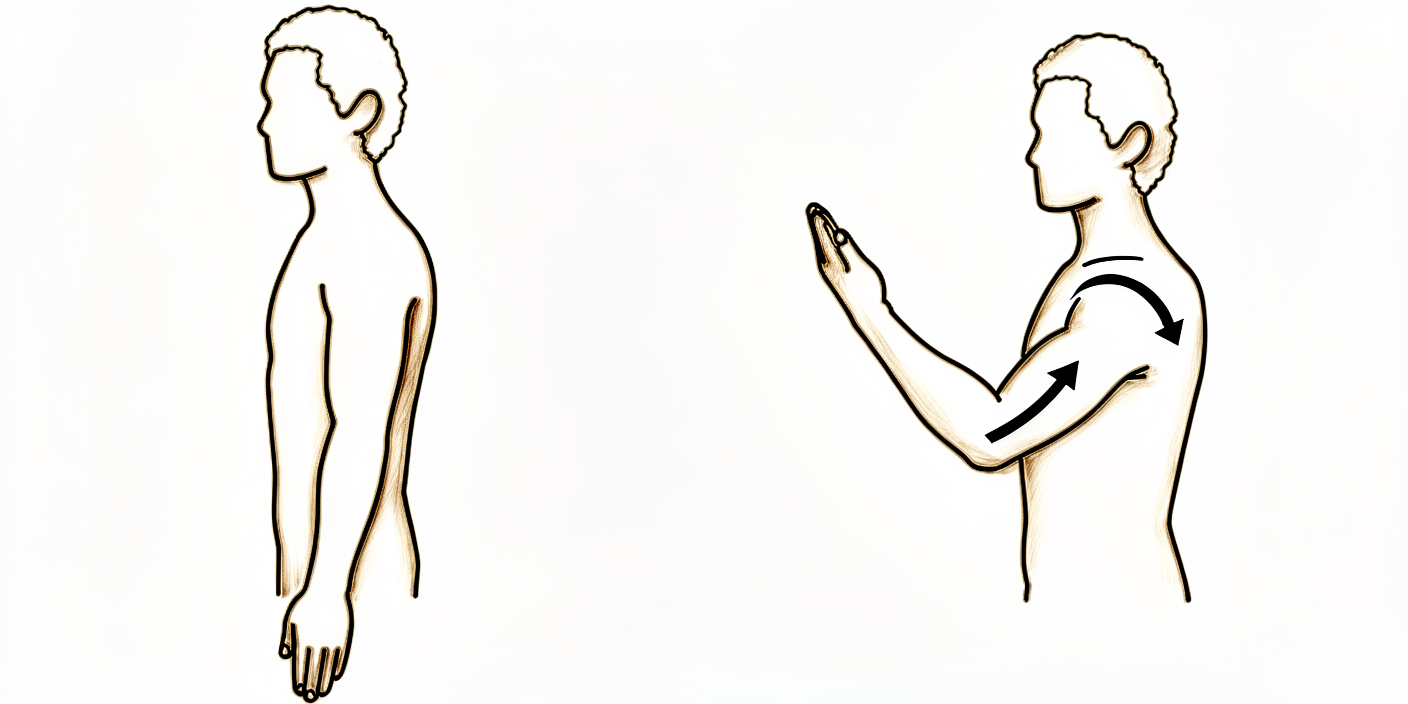
Gập duỗi khuỷu tay chủ động (gập và duỗi thẳng)
Dùng chính cơ bắp của bạn, gập khuỷu tay lên hết mức có thể về phía vai, sau đó duỗi thẳng ra hết mức có thể. Nhẹ nhàng ấn vào cuối mỗi chiều chuyển động và cố gắng đạt được biên độ mà bác sĩ phẫu thuật đã đạt được trong ca mổ của bạn. Đây là bài tập quan trọng nhất — khuỷu tay rất nhanh cứng lại, vì vậy hãy tập mỗi lần một ít nhưng thường xuyên trong ngày.
10–15 lần theo mỗi hướng, cứ mỗi 1–2 giờ trong lúc còn thức.
Kieran Hirpara 4.0
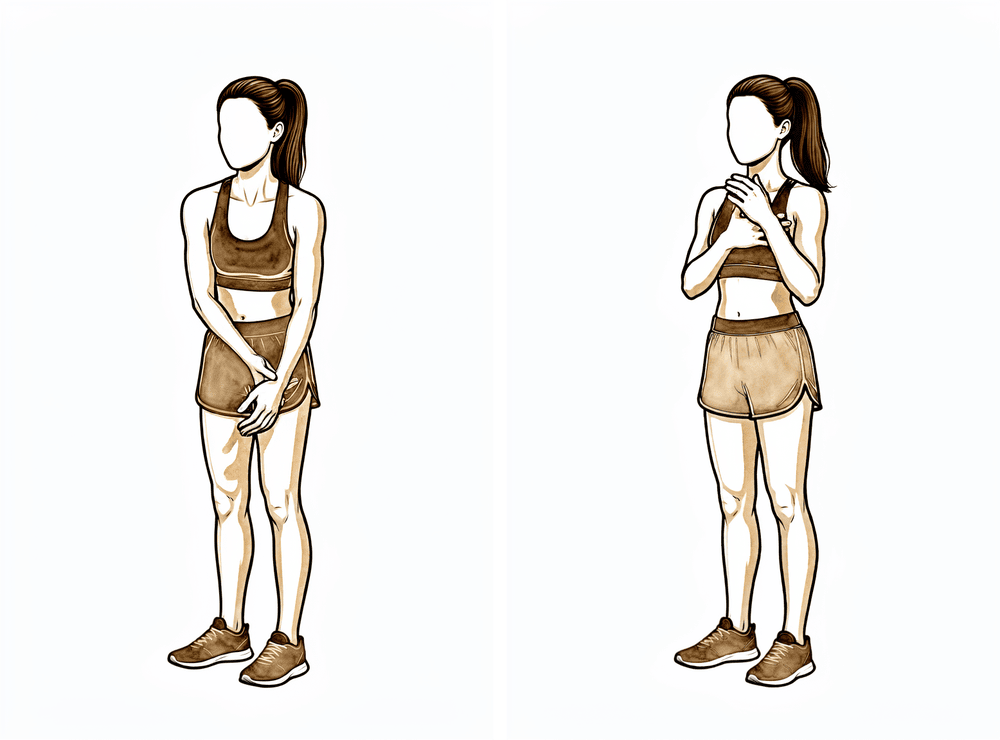
Gập khuỷu tay có hỗ trợ (thụ động)
Để cánh tay vừa mổ thả lỏng hoàn toàn, dùng tay kia nhẹ nhàng ấn khuỷu tay gập sâu hơn mức nó tự gập được, giữ ở điểm cuối nơi bạn cảm thấy căng rõ. Không có cấu trúc sửa chữa nào cần bảo vệ, nên bạn được khuyến khích ấn nhẹ vào động tác kéo giãn — giữ nguyên, hít thở, và để khuỷu tay dần gập thêm một chút. Dừng lại trước khi thấy đau nhói.
Giữ mỗi động tác giãn cơ trong 20–30 giây, thực hiện 3–5 lần; làm như vậy nhiều lần mỗi ngày.
Kieran Hirpara 4.0
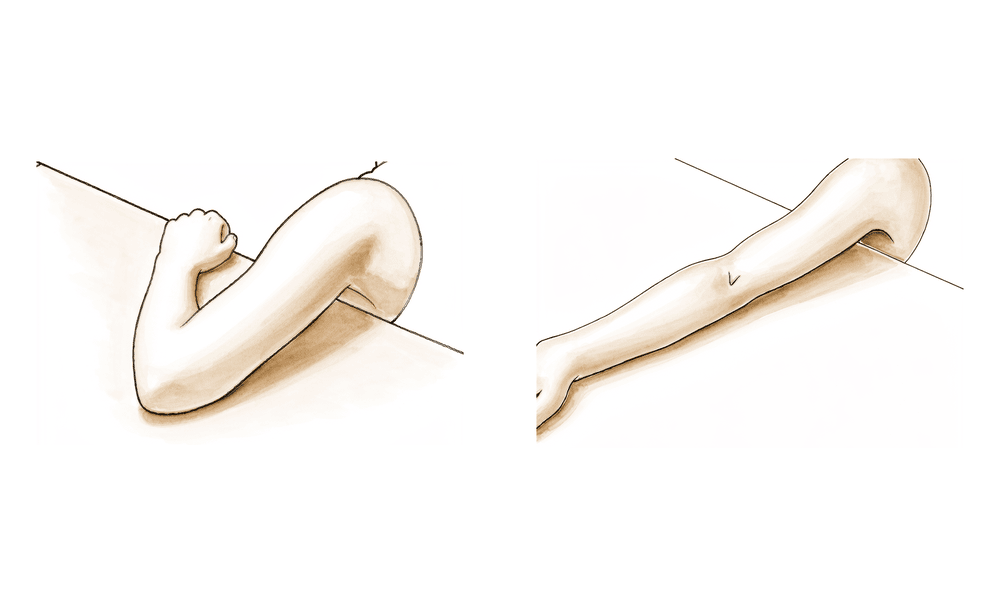
Duỗi khuỷu tay chủ động (duỗi thẳng)
Tập để khuỷu tay thẳng nhất có thể — duỗi thẳng là chuyển động hay bị mất nhất, vì vậy cần được chú trọng thêm. Đặt mặt sau cánh tay trên lên một bề mặt chắc, để trọng lực, rồi sự hỗ trợ nhẹ nhàng của tay kia, từ từ đưa khuỷu tay về phía thẳng hoàn toàn. Giữ ở điểm cuối của động tác kéo giãn.
Giữ trong 20–30 giây, thực hiện 5 lần, nhiều lần mỗi ngày.
Kieran Hirpara 4.0
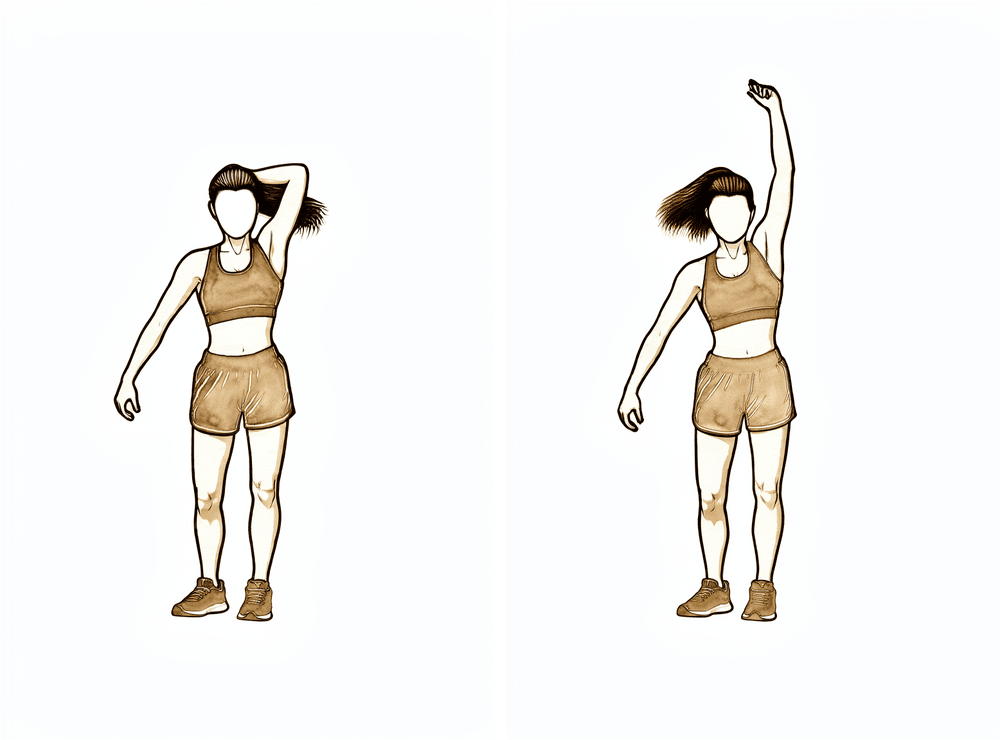
Kéo giãn cơ tam đầu qua đầu (duỗi thẳng cuối biên độ)
Giơ cánh tay vừa mổ lên trên đầu và dùng tay kia nhẹ nhàng đẩy khuỷu tay về phía thẳng hoàn toàn, kéo giãn mặt sau cánh tay trên. Đây là động tác kéo giãn mạnh ở cuối biên độ duỗi — giữ yên thay vì nhún.
Giữ trong 20–30 giây, 3–5 lần; thực hiện vài lần mỗi ngày.
Kieran Hirpara 4.0
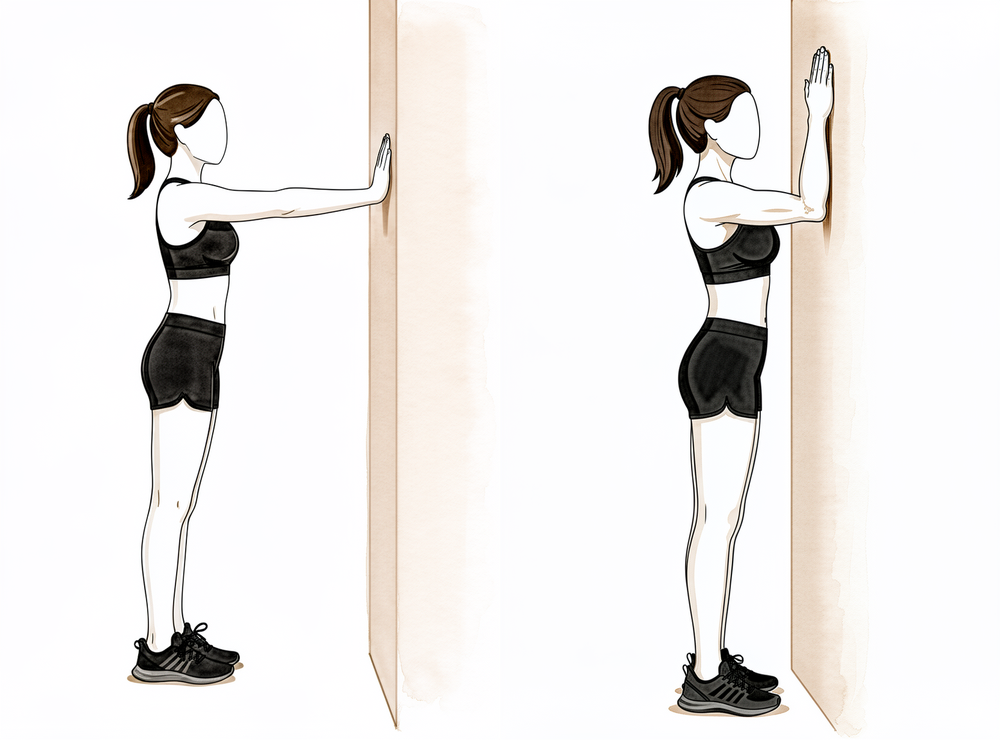
Bò ngón tay lên tường để gập (gập cuối biên độ)
Quay mặt vào tường và cho các ngón tay “bò” dần lên tường, để khuỷu tay gập sâu hơn khi bàn tay lên cao. Tiếp tục cho đến khi cảm thấy căng rõ sâu trong khuỷu tay, giữ lại, rồi đưa lên cao thêm một chút. Bài tập này giúp lấy lại phần cuối của động tác gập.
Giữ nguyên 20–30 giây ở vị trí cao nhất, thực hiện 5 lần, vài lần mỗi ngày.
Kieran Hirpara 4.0
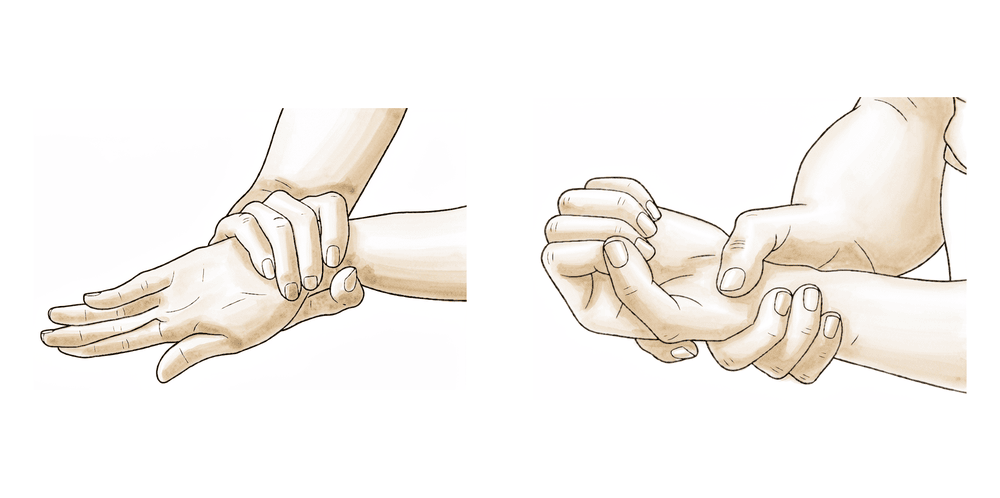
Chuyển động xoay cẳng tay (lòng bàn tay hướng lên / lòng bàn tay hướng xuống)
Áp khuỷu tay sát bên người và gập khoảng 90°, xoay lòng bàn tay ngửa lên trần nhà, rồi úp xuống sàn nhà, xoay hết mức có thể theo mỗi chiều. Phẫu thuật giải phóng thường giải phóng cả động tác xoay lẫn động tác gập, vì vậy hãy giữ cho động tác này vận động đầy đủ song song với các bài tập gập và duỗi. Bạn có thể dùng tay kia nhẹ nhàng ấn thêm một chút ở cuối mỗi chiều.
10–15 lần theo mỗi hướng, vài lần mỗi ngày.
Kieran Hirpara 4.0
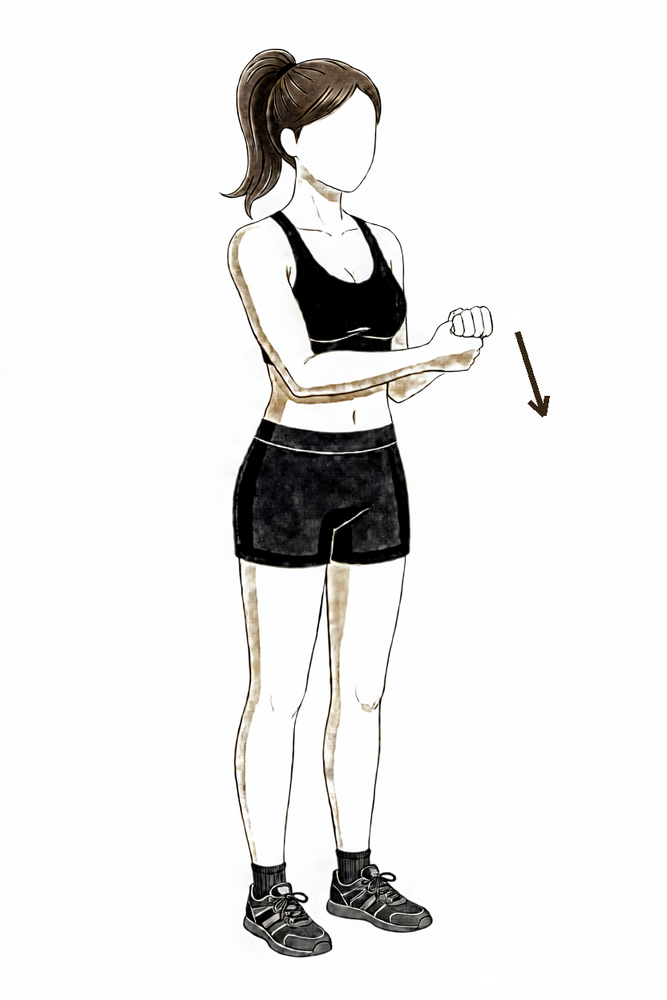
Gồng cơ tam đầu (giữ nhẹ)
Đây là bài tập kích hoạt sớm. Hãy giữ cánh tay ở tư thế được hỗ trợ, sau đó nhẹ nhàng co cơ ở mặt sau cánh tay (cơ tam đầu) như thể muốn duỗi thẳng khuỷu tay; việc này sẽ giúp duy trì và củng cố độ duỗi thẳng vừa đạt được. Hãy thực hiện một cách nhẹ nhàng và tuân theo hướng dẫn của chuyên viên vật lý trị liệu.
Giữ trong khoảng 5 giây, thực hiện 5–10 lần theo hướng dẫn.
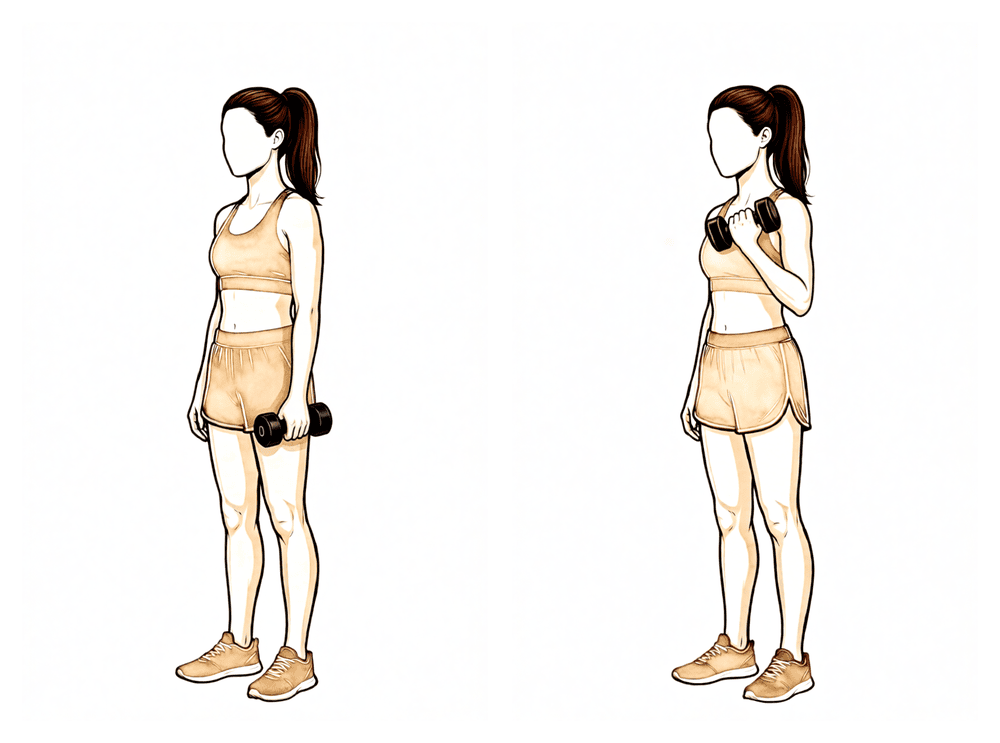
Kieran Hirpara 4.0
Gập khuỷu với tạ (tăng cường sức mạnh giai đoạn sau)
Bài tập GIAI ĐOẠN SAU — chỉ bắt đầu tăng cường sức mạnh khi chuyển động của bạn đã ổn định, thường từ khoảng tuần thứ 6. Ngửa lòng bàn tay lên, nâng một quả tạ nhẹ về phía vai, rồi hạ xuống từ từ có kiểm soát. Tăng dần mức tạ theo hướng dẫn của chuyên viên vật lý trị liệu.
Theo hướng dẫn của chuyên viên vật lý trị liệu (khoảng từ tuần thứ 6 trở đi).
Đây là những bài tập trong tài liệu hướng dẫn nhằm khôi phục và duy trì khả năng vận động của khuỷu tay và cẳng tay. Hãy thực hiện theo hướng dẫn của Bác sĩ Hirpara và chuyên viên trị liệu; trong phác đồ này, bạn nên bắt đầu ngay lập tức. Các bài tập cần được thực hiện một cách chắc chắn và thường xuyên, bởi phạm vi vận động mà bạn duy trì được chính là phạm vi mà bạn sẽ sử dụng hàng ngày thông qua những bài tập này.
Quy trình điều trị lâm sàng của bạn
Phần còn lại của trang này là quy trình điều trị phục hồi chức năng sau khi tiến hành thủ thuật giải phóng khớp (arthrolysis) đối với khớp khuỷu tay bị cứng. Phần này cần được cung cấp cho chuyên viên vật lý trị liệu hoặc chuyên gia trị liệu tay của bạn. Mỗi giai đoạn dưới đây đều bắt đầu bằng lời giải thích bằng tiếng Việt đơn giản về những gì đang diễn ra. Nguyên tắc quan trọng nhất là bác sĩ phẫu thuật tạo ra được cung vận động gần như đầy đủ ngay trên bàn mổ; nhiệm vụ của quá trình phục hồi chức năng là không để mất cung vận động đó. Không có phương tiện cố định nào cần bảo vệ nên cũng không có giai đoạn bảo vệ: yếu tố hạn chế tốc độ phục hồi là việc kiểm soát cơn đau và phù nề, chứ không phải quá trình lành mô.
Ngày 0 đến ngày 2 sau phẫu thuật
Trong hai ngày đầu sau phẫu thuật, khuỷu tay được giữ yên trong thời gian ngắn, cánh tay được nâng cao, và tình trạng sưng phù được kiểm soát bằng đá lạnh cùng biện pháp nén. Thông thường, khuỷu tay được giữ ở tư thế duỗi thẳng hoàn toàn vì đây là chuyển động dễ bị mất nhất sau phẫu thuật và cần được ưu tiên phục hồi. Nếu có nguy cơ hình thành xương thừa (ví dụ: sau khi cắt bỏ phần xương thừa hoặc sau chấn thương nặng), Bác sĩ Hirpara có thể chỉ định thuốc chống viêm ngay lúc này nhằm ngăn ngừa tình trạng này.
Dành cho chuyên viên vật lý trị liệu:
Trước khi điều trị, hãy kiểm tra các hình ảnh chẩn đoán, báo cáo phẫu thuật và tiền sử bệnh (PMHx) của bệnh nhân; đồng thời trao đổi với bác sĩ phẫu thuật về cung vận động đã đạt được trong lúc mổ, các thủ thuật liên quan đến dây thần kinh trụ, cũng như việc đã bắt đầu dùng thuốc phòng ngừa hình thành xương thừa hay chưa.
Tư thế và tình trạng phù nề
- Giữ khuỷu tay ở tư thế duỗi thẳng hoàn toàn trong thời gian ngắn bằng nẹp có đệm; nâng cao cánh tay; sử dụng liệu pháp lạnh và nén để giảm phù nề
- Ống dẫn lưu thường được rút ra vào ngày thứ nhất sau phẫu thuật
Phòng ngừa hình thành xương thừa (nếu cần thiết)
- Indomethacin (ví dụ: 25 mg, uống 3 lần/ngày, hoặc 75–100 mg/ngày) dùng trong vòng 3–6 tuần khi có chỉ định, đặc biệt sau khi cắt bỏ xương thừa hoặc chấn thương năng lượng cao; ± xạ trị liều đơn quanh thời điểm phẫu thuật ở một số trường hợp nguy cơ cao được chọn lọc (theo quyết định của bác sĩ phẫu thuật).
Ngày thứ 1 trở đi — thực hiện các bài tập vận động mạnh mẽ ngay lập tức
Đây là nội dung cốt lõi của phác đồ điều trị. Nẹp sẽ được tháo ra vào ngày đầu tiên sau phẫu thuật và các động tác vận động mạnh, thường xuyên sẽ được thực hiện: gập, duỗi, xoay cẳng tay chủ động có hỗ trợ và thụ động; mục tiêu là khôi phục lại toàn bộ biên độ vận động mà bác sĩ phẫu thuật đã đạt được trong lúc mổ. Không có giới hạn nào về biên độ vận động; mục tiêu cuối cùng là đạt được toàn bộ biên độ đã xác định trong quá trình phẫu thuật.
Dành cho chuyên viên vật lý trị liệu:
Giới hạn biên độ vận động
- Không có. Cần khôi phục toàn bộ biên độ vận động đã đạt được trong lúc mổ. Tháo nẹp vào ngày đầu sau phẫu thuật.
Các bài tập
- Các bài tập vận động chủ động có hỗ trợ và thụ động ở các hướng gập, duỗi, sấp và ngửa cẳng tay; ưu tiên kéo giãn theo hướng bị cứng nhất (thường là hướng duỗi).
- Máy CPM (Continuous Passive Motion) – tùy chọn: Nếu sử dụng, hãy bắt đầu tại bệnh viện vào ngày 1–2 sau mổ với toàn bộ biên độ hiện có (thường được nêu là 0–145°, kèm gối đệm đặt phía sau khuỷu tay) và tiếp tục sử dụng tại nhà đến khoảng 4 tuần, bổ sung cho vật lý trị liệu. Máy CPM chỉ đóng vai trò hỗ trợ; chưa có bằng chứng cho thấy hiệu quả vượt trội hơn so với vật lý trị liệu có giám sát; việc sử dụng do bác sĩ phẫu thuật quyết định.
- Tần suất thực hiện: Vật lý trị liệu có giám sát mỗi ngày trong tuần đầu sau phẫu thuật; sau đó thực hiện 2–3 lần/tuần trong khoảng 6 tuần.
Tiêu chí để chuyển sang giai đoạn tiếp theo
- Biên độ vận động vẫn duy trì ở mức đã đạt được trong lúc mổ; phù nề và cơn đau được kiểm soát tốt.
Tuần 2 đến tuần 6 — giữ nguyên biên độ vận động và bắt đầu chương trình nẹp
Các chuyển động vẫn được thực hiện mạnh mẽ. Để duy trì và mở rộng biên độ vận động, chương trình nẹp được bổ sung vào ban đêm và những lúc nghỉ ngơi: đó là việc kéo giãn nhẹ nhàng trong thời gian dài ở mức biên độ tối đa, xen kẽ giữa các động tác gập và duỗi.
Dành cho chuyên viên vật lý trị liệu:
Các bài tập và chương trình nẹp
- Tiếp tục các bài tập vận động mạnh mẽ: chủ động / chủ động có hỗ trợ / thụ động.
- Áp dụng phương pháp nẹp tĩnh tiến triển (hoặc nẹp động / nẹp tĩnh nối tiếp / nẹp khóa vặn turnbuckle) nhằm kéo giãn nhẹ nhàng ở mức biên độ tối đa trong thời gian dài: chương trình này được thực hiện vào ban đêm hoặc lúc nghỉ ngơi, xen kẽ giữa các động tác gập và duỗi. Phương pháp nẹp tĩnh tiến triển (loại không đàn hồi, cho phép bệnh nhân tự điều chỉnh mức lực kéo) là phương pháp ưu tiên để điều trị tình trạng co rút khớp khuỷu tay.
- Quản lý tình trạng phù nề và sẹo.
Tiêu chí để chuyển sang giai đoạn tiếp theo
- Biên độ vận động vẫn được duy trì hoặc tăng lên; sẵn sàng chịu tải vào khoảng tuần thứ 6.
Tuần thứ 6 đến tuần thứ 12 — Tăng cường sức mạnh và tiếp tục đeo nẹp
Khi khả năng vận động đã ổn định, thường vào khoảng tuần thứ 6, việc tăng cường sức mạnh bắt đầu thông qua các bài tập chống lực dần dần tùy theo khả năng chịu đựng của bệnh nhân. Chương trình đeo nẹp vẫn được tiếp tục.
Dành cho chuyên viên vật lý trị liệu:
Các bài tập và việc đeo nẹp
- Bắt đầu các bài tập tăng cường sức mạnh chống lực dần dần khi khả năng vận động đã ổn định (thông thường là khoảng tuần thứ 6)
- Tiếp tục đeo nẹp ít nhất khoảng 3 tháng sau phẫu thuật để đạt được biên độ vận động tối ưu.
Khoảng 16 tuần — giai đoạn ổn định
Các nghiên cứu đã chỉ ra rằng các bệnh nhân đạt được phạm vi chuyển động tối đa trung bình sau khoảng 16 tuần, trong đó phần lớn sự hồi phục diễn ra trong khoảng từ 6 tuần đến 3 tháng. Đây là điều cần được thông báo cho bệnh nhân trước khi phẫu thuật. Những cải thiện về phạm vi gập/duỗi và khả năng xoay thường được duy trì lâu dài (theo dõi khoảng 15 tháng ở các nhóm bệnh nhân lớn).
Dành cho chuyên viên vật lý trị liệu:
- Phạm vi chuyển động tối đa đạt được trung bình sau khoảng 16 tuần; cần giải thích rằng không có ngưỡng phạm vi chuyển động nào trước phẫu thuật có thể dự đoán chính xác tiến trình hồi phục; áp dụng mốc thời gian khoảng 16 tuần này cho tất cả các bệnh nhân.
Quay trở lại công việc và hoạt động
Vì không có phương tiện cố định nào cần bảo vệ, việc trở lại với các hoạt động thường ngày sẽ được điều chỉnh dựa trên mức độ thoải mái, tình trạng sưng nề và phạm vi vận động hiện có của bạn, thay vì phải chờ đợi cho vùng điều trị lành lại. Bạn được khuyến khích dùng cánh tay nhẹ nhàng cho các công việc hàng ngày ngay từ đầu; thực tế, việc vận động khuỷu tay bình thường trong suốt ngày cũng là một phần của quá trình điều trị.
Việc tăng cường sức mạnh cơ bắp và thực hiện các hoạt động nặng hơn sẽ bắt đầu vào khoảng tuần thứ 6, khi phạm vi vận động đã ổn định; sau đó sẽ tăng dần tùy theo khả năng phục hồi sức mạnh và phạm vi vận động của bạn. Hầu hết mọi người đều đạt được phạm vi vận động và chức năng ổn định vào khoảng 4 tháng sau phẫu thuật; những tiến triển này thường được duy trì lâu dài. Việc quay trở lại lái xe, làm việc và tham gia các môn thể thao phụ thuộc vào việc bạn đã lấy lại đủ khả năng vận động, sức mạnh và sự kiểm soát cần thiết cho từng hoạt động cụ thể; hãy trao đổi với Bác sĩ Hirpara và chuyên viên trị liệu về thời điểm thích hợp cho trường hợp của bạn, vì điều này phụ thuộc vào công việc và mức độ phẫu thuật mà bạn đã trải qua. Điều quan trọng nhất là bạn phải duy trì đều đặn các bài tập vận động và đeo nẹp vào ban đêm/trong lúc nghỉ ngơi; đó là yếu tố then chốt giúp bảo vệ phạm vi vận động mà bạn đã nỗ lực lấy lại.
Sau khi thực hiện theo phác đồ
Phác đồ này được áp dụng song song với các hướng dẫn phục hồi chung của phòng khám: vui lòng tham khảo mục xử lý cơn đau sau phẫu thuật và chăm sóc vết thương. Đối với trường hợp tương tự ở vai, khi bao khớp của vai bị cứng được giải phóng, hãy xem mục giải phóng bao khớp. Kế hoạch từng giai đoạn nêu trên phù hợp với các bằng chứng khoa học đã được công bố về việc phục hồi sau khi giải phóng co rút khuỷu tay; quá trình hồi phục của bạn sẽ được điều chỉnh riêng biệt bởi chuyên viên vật lý trị liệu hoặc chuyên gia trị liệu tay dựa trên tiến triển của khuỷu tay.
Evidence & references
This is the clinical evidence summary written for health professionals. It is technical, and it lists the research this page was built from. You do not need to read it to understand your treatment or to make a decision about it.
Stiff Elbow — Arthrolysis / Capsular Release (Open or Arthroscopic) — Rehabilitation Evidence
Topic scope: rehabilitation after surgical release of the post-traumatic / post-surgical stiff elbow — open or arthroscopic arthrolysis, anterior + posterior capsulectomy, ± heterotopic ossification (HO) excision, ± ulnar nerve decompression. The focus here is the post-operative rehabilitation philosophy and timeline, not the indications for or technique of the release itself.
Defining principle: the surgeon establishes a near-full arc of motion on the operating table; rehabilitation's single job is to not lose it. There is no fixation to protect, so — unlike a fracture fixation or a tendon repair — there is no protection phase. Motion starts essentially Day 1 (or even in-hospital CPM from Day 1–2), pushed firmly and often. Pain and oedema control are the rate-limiters, not tissue healing. This is the opposite philosophy to olecranon ORIF or a distal biceps repair. Dr Hirpara's stance: no sling and no immobilisation phase; immediate aggressive active-assisted and passive ROM from POD1; static-progressive (or dynamic) night/rest splinting continued for at least 3 months; HO prophylaxis where indicated; and a frank pre-operative conversation that the elbow reaches its plateau at a mean of ~16 weeks.
Consensus phased timeline (week windows)
| Phase | Window | Immobilisation / "ceiling" | Movement & adjuncts | Strengthening | Criteria to progress |
|---|---|---|---|---|---|
| Immediate | Day 0–2 | Brief splint in full extension; arm elevated, cryotherapy/compression | HO prophylaxis decision made now (see below); drains out POD1 | — | Splint off POD1 |
| Immediate aggressive ROM (core) | Day 1 onward | No ROM ceiling — recover the full intra-operative arc | Active-assisted + passive flexion / extension / pronation / supination; bias toward tightest direction (usually extension). Optional CPM 0–145° with bolster, in-hospital POD1–2, home to ~4 wk. Daily PT first week → 2–3×/wk for ~6 wk | — | On-table arc maintained; oedema/pain controlled |
| Hold the arc + splinting | Weeks 2–6 | None | Continue aggressive A/AAROM/PROM. Add static-progressive (or dynamic / serial-static / turnbuckle) splinting — low-load prolonged end-range stretch, night/rest, alternating flexion/extension | — | Arc maintained or exceeded; ready for loading ~wk 6 |
| Strengthening + continued splinting | Weeks 6–12 | None | Continue splinting | Progressive resistive strengthening once motion stable (~wk 6); continue splinting ≥3 months | Stable, strengthening motion |
| Plateau | ~16 weeks (≈4 months) | None | — | Maintain gains; long-term hold | Maximum arc reached; most recovery occurred 6 wk–3 mo |
Evidence summary by theme
Immediate aggressive motion — the agreed principle (Strong consensus)
Large, consistent retrospective case series and review articles agree that the elbow re-stiffens without immediate motion, and that rehabilitation exists to hold the intra-operative arc. Motion begins POD1; the splint (when used) is removed POD1 and active-assisted + passive ROM is started in all planes, biased toward the tightest direction (usually extension). This is strong consensus across the literature.
Which specific rehab protocol is best (Moderate — genuine equipoise)
The best specific rehab protocol is genuinely unknown. No completed RCT shows superiority of CPM vs PT vs delayed PT — the SET-Study (Stiff Elbow Trial) was designed precisely because this question is unresolved, with three real-world arms (in-hospital CPM + early PT / in-hospital early PT / outpatient PT from POD7–10). CPM is cited in protocols (home use to ~4 weeks) and one arthroscopic- release series reports very good 3-year outcomes with a 4-week CPM rail plus PT, but CPM has never been shown superior to supervised PT alone. So: strong consensus on aggressive early motion; weak/equipoise evidence on which adjunct.
Splinting modality (Moderate — no clear winner)
Static-progressive, dynamic, serial-static and turnbuckle splinting all deliver low-load prolonged end-range stretch. The Lindenhovius RCT found no difference between dynamic orthoses and static-progressive splinting (similar DASH). Static-progressive (inelastic, patient-adjusted incremental torque) is the favoured modality for elbow flexion contractures. Reviews recommend the splinting program run for at least ~3 months post-operatively for optimal final ROM. Bracing alone can rival surgery for non-osseous stiffness with far lower neurovascular risk.
HO prophylaxis (Consensus — extrapolated evidence)
Indomethacin (commonly 25 mg TID, or 75–100 mg/day, for 3–6 weeks) ± single-dose perioperative radiotherapy is widely used after release, especially with HO excision or high-energy trauma. Most HO-prophylaxis RCT evidence is extrapolated from acetabular/hip surgery, not elbow-specific. Recurrent HO / arthrofibrosis responds to repeat excision + release.
Recovery trajectory and plateau (Moderate — cohort data)
Published series report patients reach their maximum arc of motion at a mean of ~16 weeks, with most recovery occurring between 6 weeks and 3 months, and maintained gains at ~15-month follow-up in large cohorts. Growth-mixture modelling found no pre-operative ROM threshold or factor reliably predicted the recovery trajectory — so all patients are counselled on the same ~16-week timeline pre-operatively.
Ulnar nerve (Consensus)
As flexion improves post-release, the ulnar nerve sees increased stress — there should be a low threshold for review, and for concomitant ulnar nerve decompression/transposition at the time of surgery. Tobacco use predicts poorer outcomes and higher complication rates after open arthrolysis.
Evidence strength flags (summary)
- STRONG (consensus across case series/reviews): immediate aggressive active-assisted + passive motion from POD1 to hold the intra-operative arc — no protection phase.
- MODERATE (RCT/cohort, equipoise): which adjunct is best — CPM vs PT vs delayed PT (SET-Study, no completed superiority data); splinting modality (Lindenhovius RCT: no difference dynamic vs static-progressive); ~16-week plateau and maintained gains (growth-mixture-modelling and large open-release cohorts).
- CONSENSUS / EXTRAPOLATED: HO prophylaxis (indomethacin ± single-dose RT; most evidence extrapolated from acetabular/hip surgery); ≥3-month splinting program duration.
Overall topic flag: MODERATE — strong consensus on the principle (aggressive early motion + adjunct splinting + HO prophylaxis), weak/equipoise evidence on the specific adjunct.
CITATIONS
RAG corpus (180,000+ Orthopaedic articles)
- Sun Z, Wang W, Fan C. Tobacco use predicts poorer clinical outcomes and higher post-operative complication rates after open elbow arthrolysis. Arch Orthop Trauma Surg. 2019.
- Open elbow release for post-traumatic stiffness — growth-mixture-modelling cohort: maximum arc of motion at a mean of ~16 weeks, most recovery between 6 weeks and 3 months.
- 103-patient open capsular release series — significant, maintained flexion/extension and supination/pronation arc gains at a mean of 15 months.
- Papatheodorou LK, Sotereanos DG (University of Pittsburgh) — elbow contracture release techniques review.
- Lindenhovius et al. RCT — no difference between dynamic orthoses and static-progressive splinting (cited within a retrieved review).
- Retrieved technique text: indomethacin 25 mg TID for ~6 weeks for HO prophylaxis; CPM continued at home up to 4 weeks, full range 0–145° with a bolster behind the elbow.
- Northwestern series — HO excision + contracture release: ROM gains and complications.
- Arthroscopic release + 4-week CPM rail series — very good ROM, function and quality of life at a mean of 3 years.
Published protocols / reviews (URLs)
- Papadopoulos et al. Elbow contracture release. Annals of Joint (PT from POD1; flexion bias the first 2 weeks then full ROM over 2–3 months; dynamic / static-progressive splinting ≥3 months; CPM optional). https://aoj.amegroups.org/article/view/6083/html
- SET-Study (Stiff Elbow Trial) protocol — CPM vs PT vs delayed PT RCT; documents that the best rehab protocol is unknown. https://www.ncbi.nlm.nih.gov/pmc/articles/PMC5700741/
- Analysis of Long-Term Outcomes Following Surgical Contracture Release of the Elbow — immediate splint in full extension, splint off POD1, AAROM started POD1, OT/PT-guided self-directed program, no CPM. https://www.ncbi.nlm.nih.gov/pmc/articles/PMC8152451/