Patients › Rehabilitation
Cắt bỏ đầu xa xương đòn
Rehabilitation after isolated arthroscopic distal clavicle excision; combined cases follow the rotator cuff repair protocol.
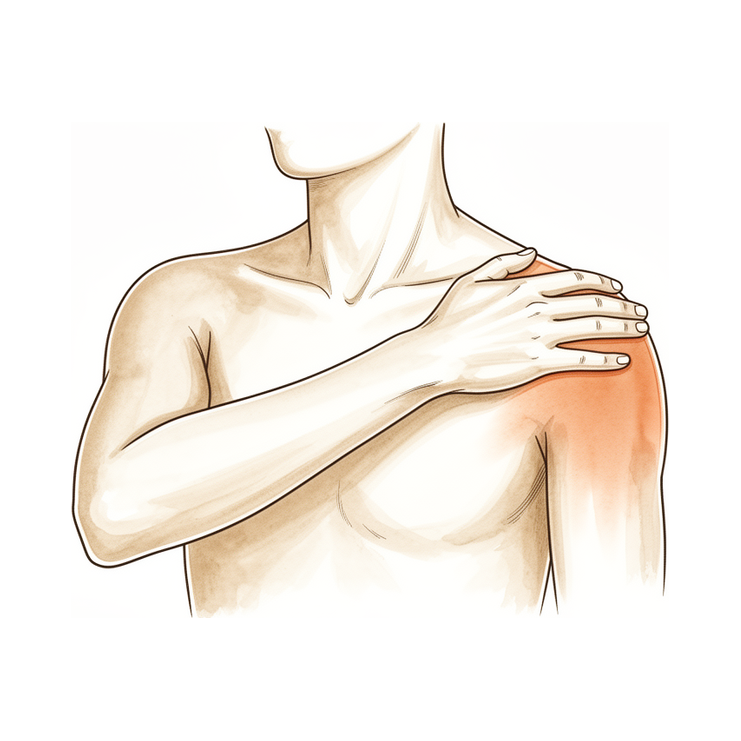
Quy trình này sẽ hướng dẫn quá trình hồi phục của bạn sau ca phẫu thuật cắt bỏ đầu xa xương đòn nội soi (còn gọi là cắt bỏ khớp AC hoặc thủ thuật Mumford) do bác sĩ Kieran Hirpara thực hiện tại Bệnh viện tư nhân Mater Rockhampton. Mỗi giai đoạn trong quy trình đều bắt đầu bằng lời giải thích bằng ngôn ngữ dễ hiểu về những điều quan trọng cần lưu ý, tiếp theo là quy trình chi tiết dành cho chuyên viên vật lý trị liệu; hãy mang trang này hoặc bản PDF tương ứng đến buổi trị liệu đầu tiên để quá trình phục hồi được thực hiện một cách nhất quán. Chuyên viên vật lý trị liệu sẽ điều chỉnh tiến độ các giai đoạn dựa trên mức độ hồi phục của vai bạn, chứ không căn cứ vào lịch trình cố định.
Quy trình này chỉ áp dụng cho trường hợp chỉ thực hiện cắt bỏ đầu xa xương đòn. Nếu ca phẫu thuật của bạn còn bao gồm cả việc sửa chữa cơ chóp xoay, vui lòng tham khảo Quy trình phục hồi sau sửa chữa cơ chóp xoay vì các gân vừa được phẫu thuật cần thời gian hồi phục lâu hơn. (Thông thường, việc cắt bỏ đầu xa xương đòn còn được thực hiện kết hợp với thủ thuật giải phóng dưới mỏm cùng; quy trình dưới đây vẫn được áp dụng trong trường hợp đó.)
Nếu bạn có bất kỳ thắc mắc nào về vết mổ sau phẫu thuật, hãy liên hệ với phòng khám. Việc chụp ảnh vết mổ rồi gửi qua email để các bác sĩ xem xét thường rất hữu ích.
Những điều bạn có thể mong đợi
Phẫu thuật cắt bỏ đầu ngoại vi xương đòn là việc loại bỏ vài milimét xương ở đầu xương đòn; nhờ đó các bề mặt khớp AC (khớp nhỏ nằm phía trên vai) không còn cọ xát vào nhau nữa. Vì không có cấu trúc nào cần được bảo vệ trong quá trình hồi phục, quá trình phục hồi chức năng diễn ra khá nhanh: đai treo cánh tay chỉ nhằm mục đích giảm đau; hầu hết bệnh nhân có thể tháo đai ra trong vòng một hoặc hai tuần đầu, việc vận động có thể bắt đầu ngay lập tức; các phác đồ điều trị đã được công bố đều khuyến nghị vận động sớm thay vì nghỉ ngơi.
Có hai yếu tố đặc thù liên quan đến ca phẫu thuật này và ảnh hưởng đến quy trình phục hồi:
- Các động tác vươn tay qua thân người là những động tác hồi phục chậm nhất. Các chuyển động vươn tay ngang thân (đưa tay về phía đối diện) gây áp lực lên vùng vừa được cắt bỏ xương; vì vậy chúng thường là những động tác cuối cùng mà bệnh nhân cảm thấy thoải mái khi thực hiện. Ban đầu, các động tác này được cố ý tránh; sau đó mới dần dần đưa trở lại.
- Các bài tập yêu cầu lực ép mạnh mới được thực hiện sau cùng. Các bài tập tạo áp lực lớn lên khớp AC (như nâng tạ trên ghế, hít đất) chỉ được khuyến nghị thực hiện sau cùng, thường là sau ba đến bốn tháng. Hầu hết các hoạt động khác đều có thể trở lại sớm hơn nhiều.
Tóm tắt quá trình phục hồi:
- Giai đoạn I — Phục hồi sớm và vận động — tuần 0–2
- Giai đoạn II — Phục hồi dần dần phạm vi vận động — tuần 2–6
- Giai đoạn III — Tăng cường sức mạnh và trở lại các hoạt động — tuần 6–12
- Giai đoạn IV — Trở lại mọi hoạt động bình thường — từ tuần 12 trở đi
Hầu hết bệnh nhân có thể sử dụng cánh tay để thực hiện các công việc nhẹ nhàng trong vài tuần đầu; đến khoảng tuần thứ tư đến thứ sáu thì có thể trở lại hầu hết các hoạt động thường ngày; sau tám đến mười hai tuần thì có thể tham gia các môn thể thao và làm việc nặng. Đối với các vận động viên tham gia các môn thể thao đòi hỏi vận động vùng vai liên tục (ném bóng, bơi lội, tennis), thời gian hồi phục thường kéo dài hơn, vào khoảng hai đến bốn tháng.
Giai đoạn I — Phục hồi sớm và vận động (Tuần 0–2)
Kieran Hirpara 4.0
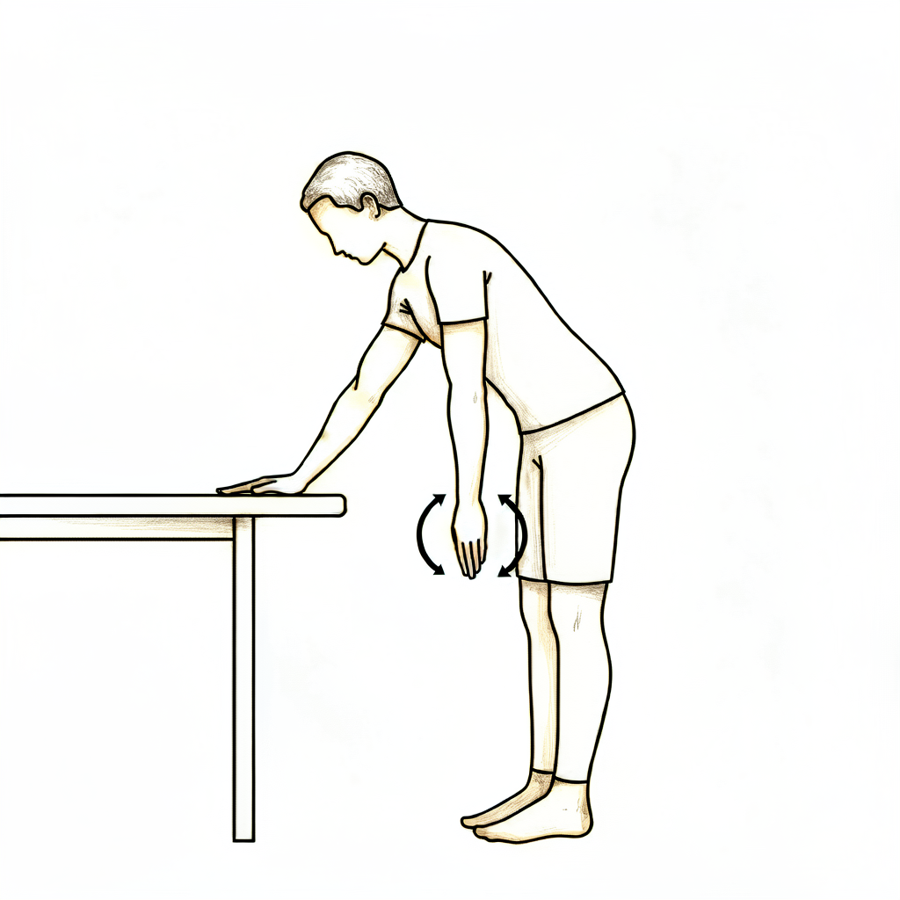
Bài tập đu đưa
Cúi người về phía trước, để cánh tay vừa được phẫu thuật buông thõng ra xa khỏi cơ thể. Hãy để cánh tay vẽ những vòng tròn nhỏ một cách thư giãn; chuyển động này xuất phát từ cơ thể chứ không phải từ các cơ vai. Bắt đầu thực hiện từ ngày đầu tiên và chỉ thực hiện trong mức độ thoải mái.
Chương trình tập luyện tại nhà 3–5 lần mỗi ngày
Kieran Hirpara 4.0
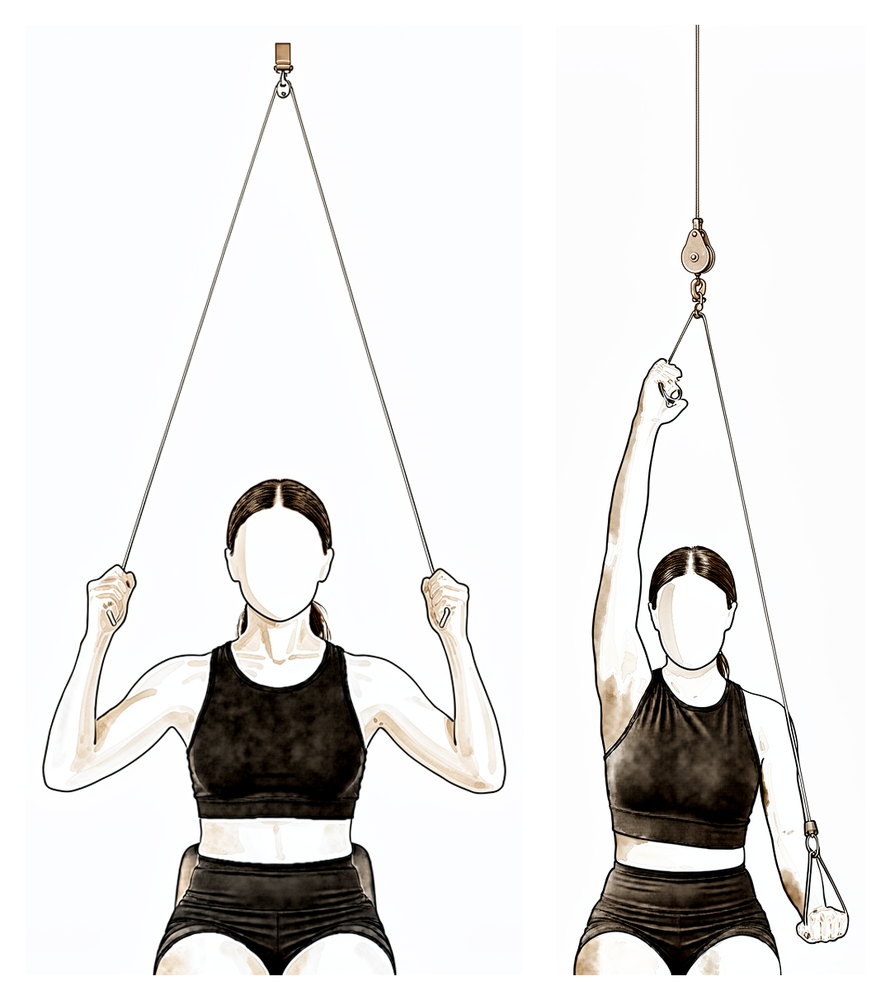
Nâng tay có hỗ trợ bằng ròng rọc
Ngồi dưới hệ thống ròng rọc gắn trên cửa, cầm một tay cầm ở mỗi tay. Dùng cánh tay lành để kéo xuống nhằm nâng cánh tay vừa được phẫu thuật lên phía trên; lúc đó cánh tay này sẽ thả lỏng. Sau đó hạ cánh tay xuống một cách từ từ và kiểm soát được. Thực hiện bài tập trong mức độ thoải mái và tăng dần độ cao nếu có thể chịu đựng được.
Chương trình tập luyện tại nhà 3–5 lần mỗi ngày
Kieran Hirpara 4.0
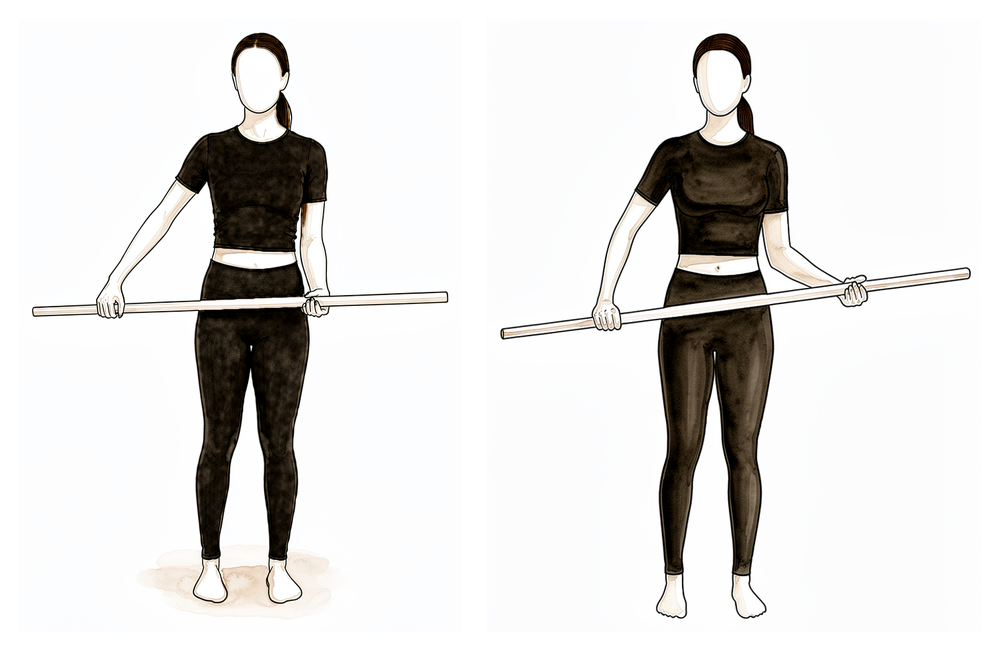
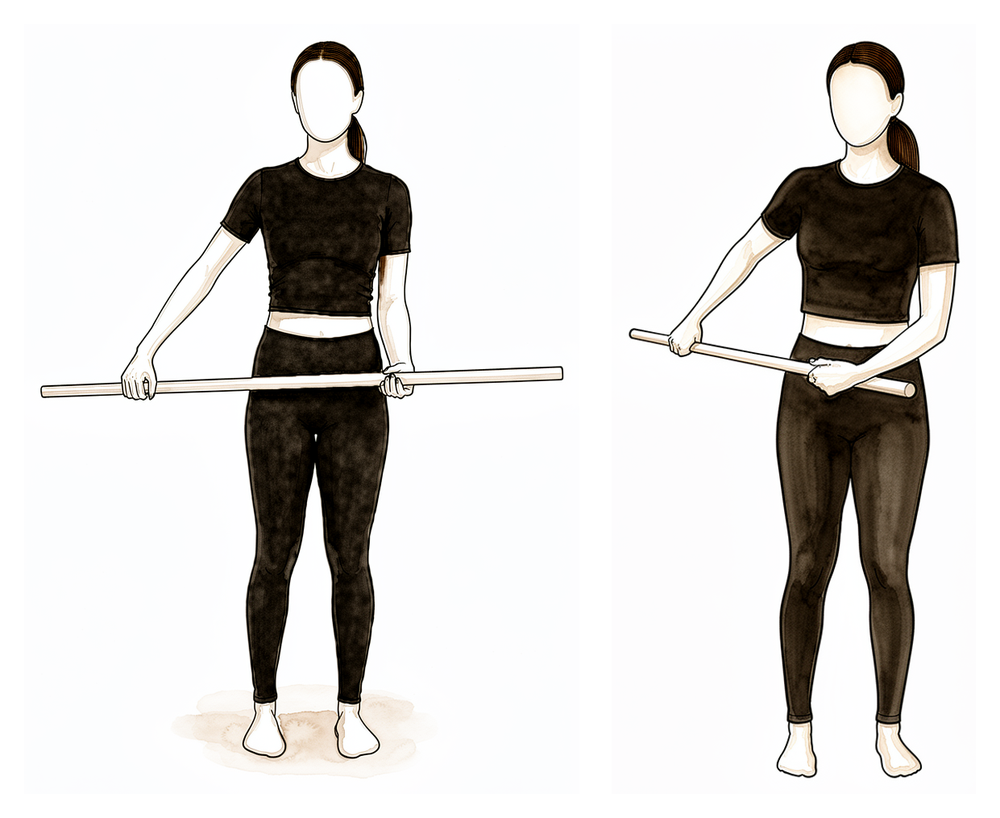
Xoay ngoài có hỗ trợ bằng gậy
Nằm ngửa, cầm một cây gậy hoặc chiếc gậy chống bằng cả hai tay; khuỷu tay gập thành góc vuông và sát vào hai bên thân. Dùng cánh tay lành để nhẹ nhàng đẩy cẳng tay vừa được phẫu thuật ra ngoài, xa khỏi cơ thể, rồi đưa trở lại vị trí cũ. Cánh tay vừa phẫu thuật vẫn giữ nguyên trạng thái thả lỏng và để cây gậy đảm nhiệm toàn bộ công việc.
Chương trình tập luyện tại nhà 3–5 lần mỗi ngày
Kieran Hirpara 4.0
Xoay trong phía sau lưng
Cầm một cây gậy hoặc que phía sau lưng, đặt tay vừa phẫu thuật xuống thấp và tay lành ở phía trên. Dùng tay lành để nhẹ nhàng kéo tay vừa phẫu thuật lên phía sau, rồi hạ xuống. Hãy vận động trong phạm vi thoải mái — chuyển động theo hướng này sẽ dần trở lại bình thường.
Chương trình tập luyện tại nhà 3–5 lần mỗi ngày
Kieran Hirpara 4.0
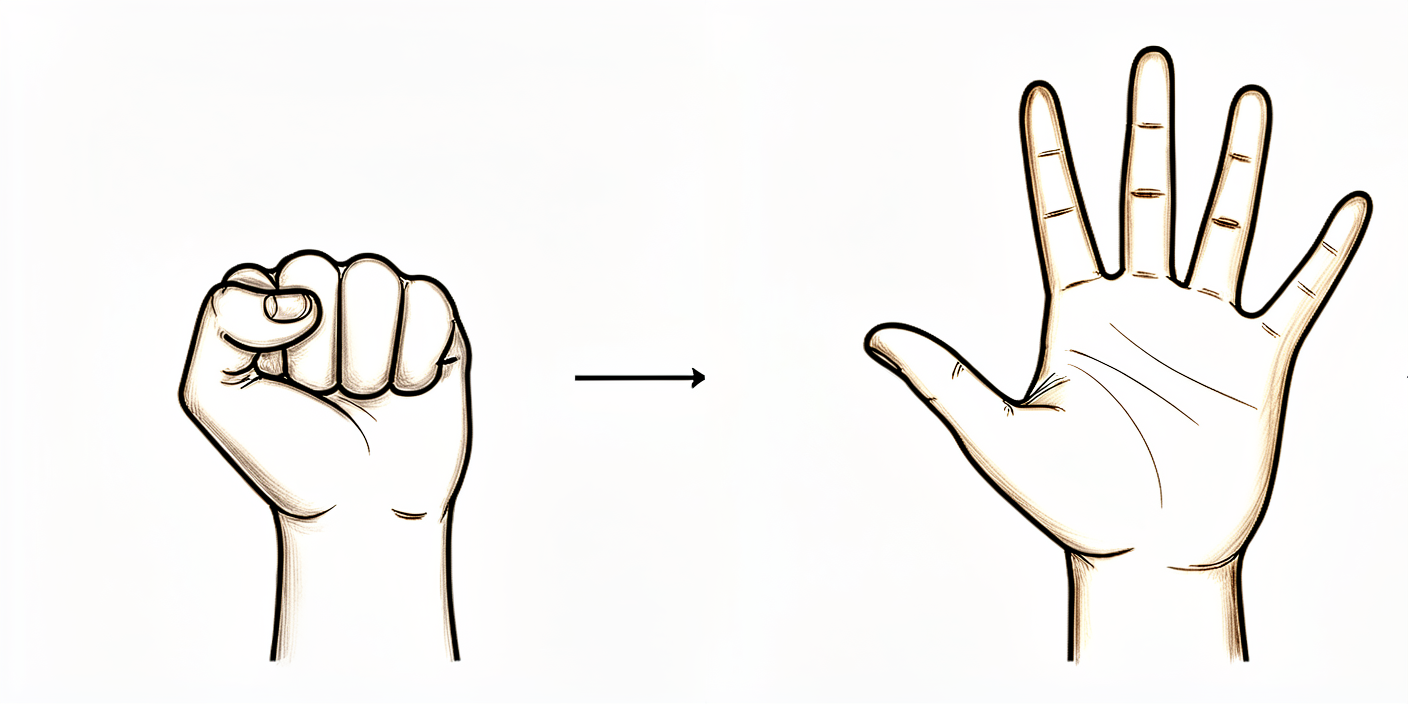
Tăng cường sức mạnh nắm tay
Nắm chặt tay thành nắm đấm, sau đó duỗi các ngón tay ra thẳng. Bạn có thể dùng một quả bóng mềm hoặc chiếc tất cuộn tròn để nắm và tập sức nắm. Hãy cố gắng vận động khuỷu tay, cổ tay và bàn tay ngay từ ngày đầu tiên.
Theo hướng dẫn của chuyên viên vật lý trị liệu của bạn.
Kieran Hirpara 4.0
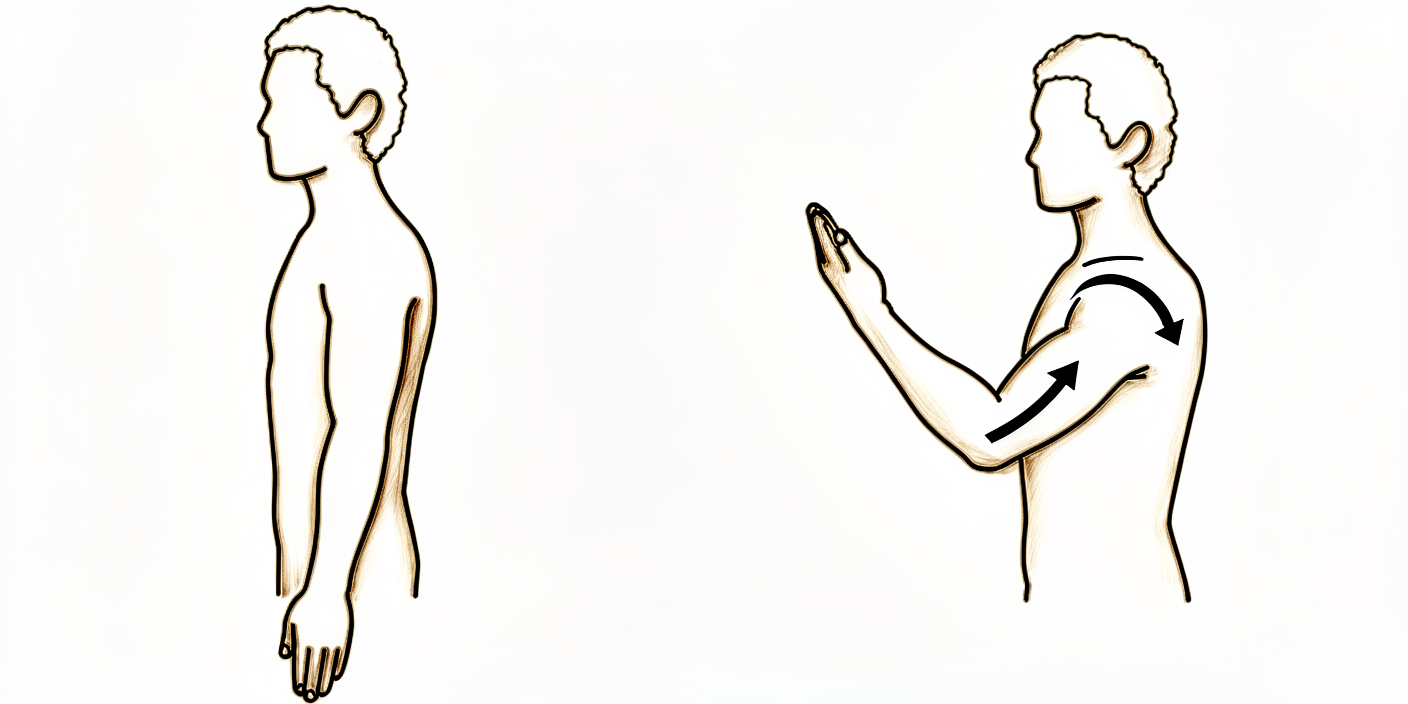
Cử động gập khuỷu tay
Khi cánh tay đặt sát bên thân, hãy gập khuỷu tay đến mức thoải mái nhất rồi duỗi thẳng hoàn toàn. Chỉ có khuỷu tay là di chuyển; hãy giữ vai thả lỏng. Ngay từ ngày đầu tiên, hãy vận động khuỷu tay, cẳng tay, cổ tay và bàn tay thường xuyên.
Theo hướng dẫn của chuyên viên vật lý trị liệu của bạn.
Kieran Hirpara 4.0
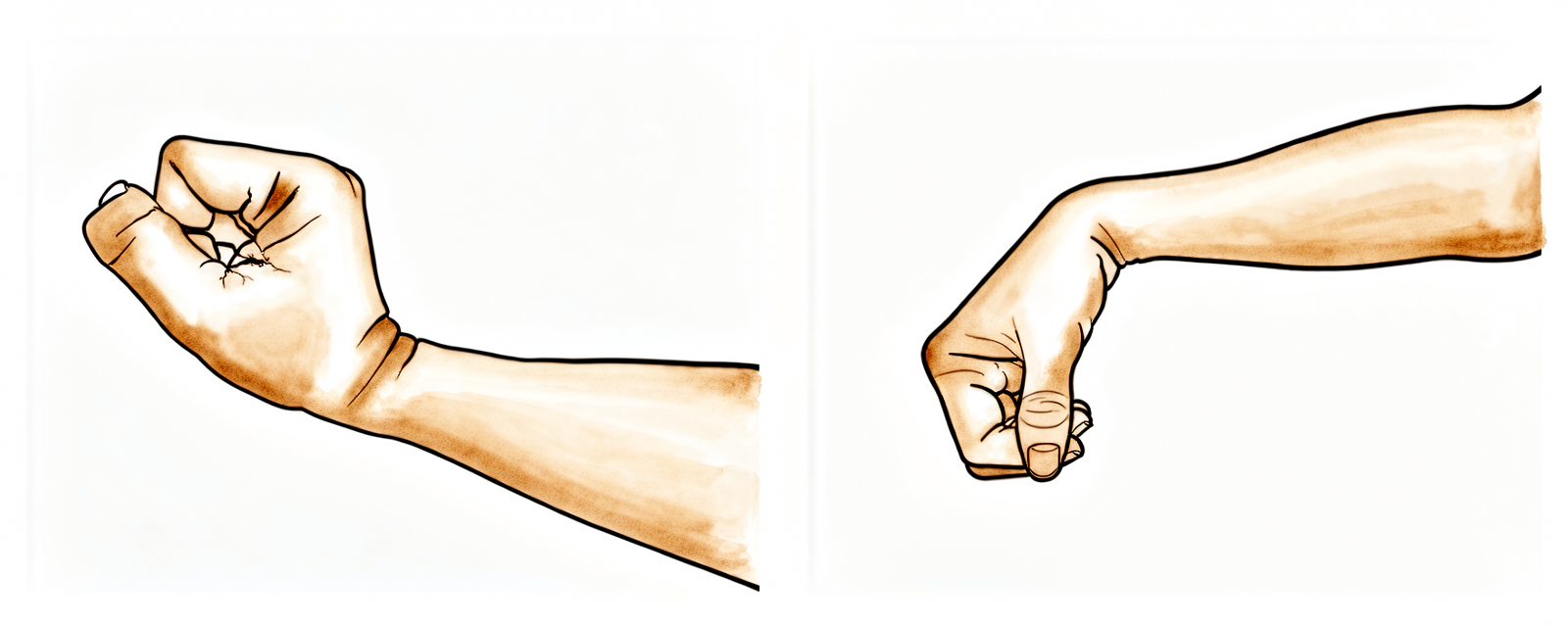
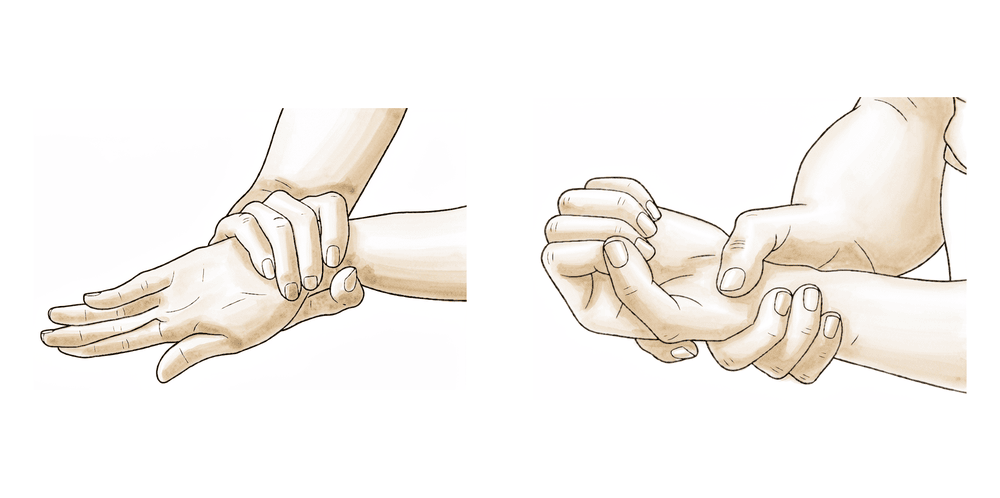
Chuyển động cổ tay
Hãy cử động cổ tay bằng cách gập về phía trước, phía sau và sang hai bên, khi tay được tháo khỏi đai treo. Việc vận động toàn bộ cánh tay ngay từ ngày đầu tiên sẽ giúp vai ổn định trở lại.
Theo hướng dẫn của chuyên viên vật lý trị liệu của bạn.
Kieran Hirpara 4.0
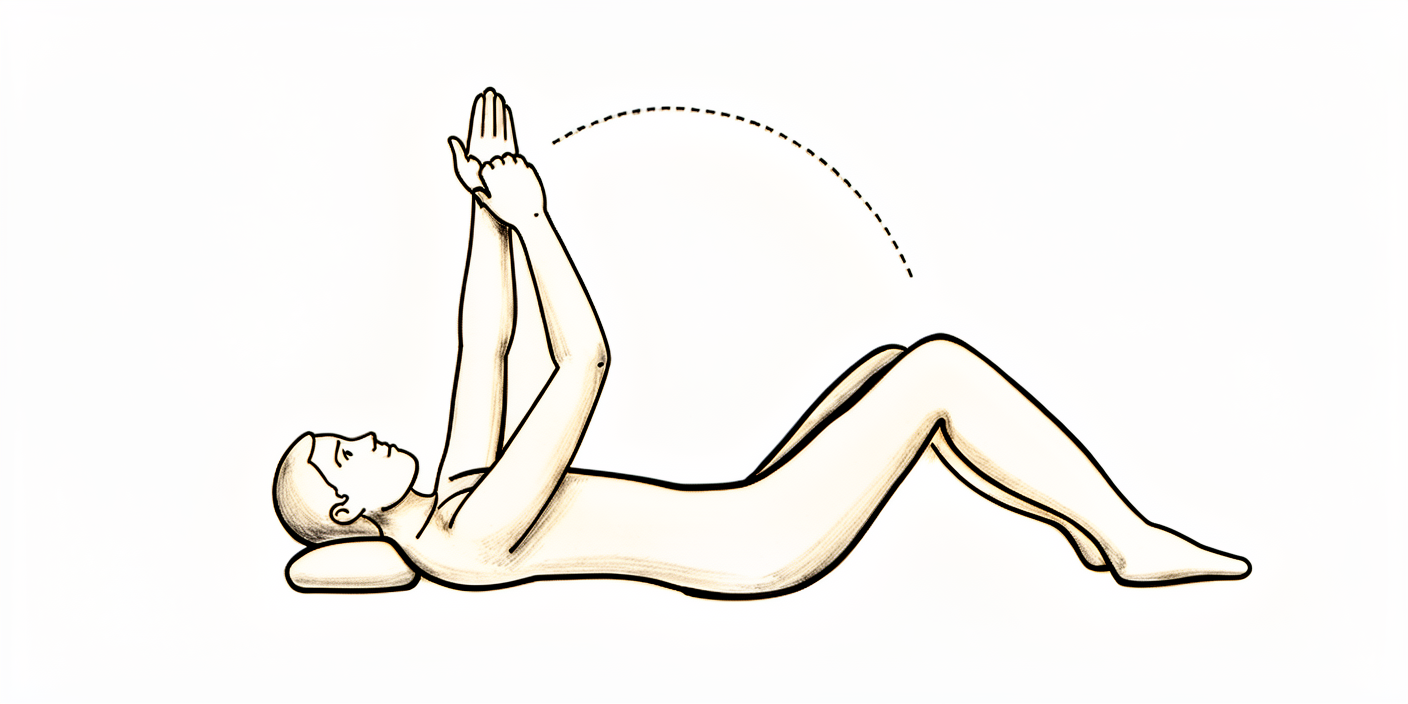
Chuyển động xoay cẳng tay
Với khuỷu tay áp sát vào thân mình và gập thành góc vuông, hãy hướng lòng bàn tay lên trần nhà rồi hướng xuống sàn nhà. Ngay từ ngày đầu tiên, hãy giữ cho cẳng tay chuyển động trong khi vai vẫn giữ nguyên vị trí.
Theo hướng dẫn của chuyên viên vật lý trị liệu của bạn.
Kieran Hirpara 4.0
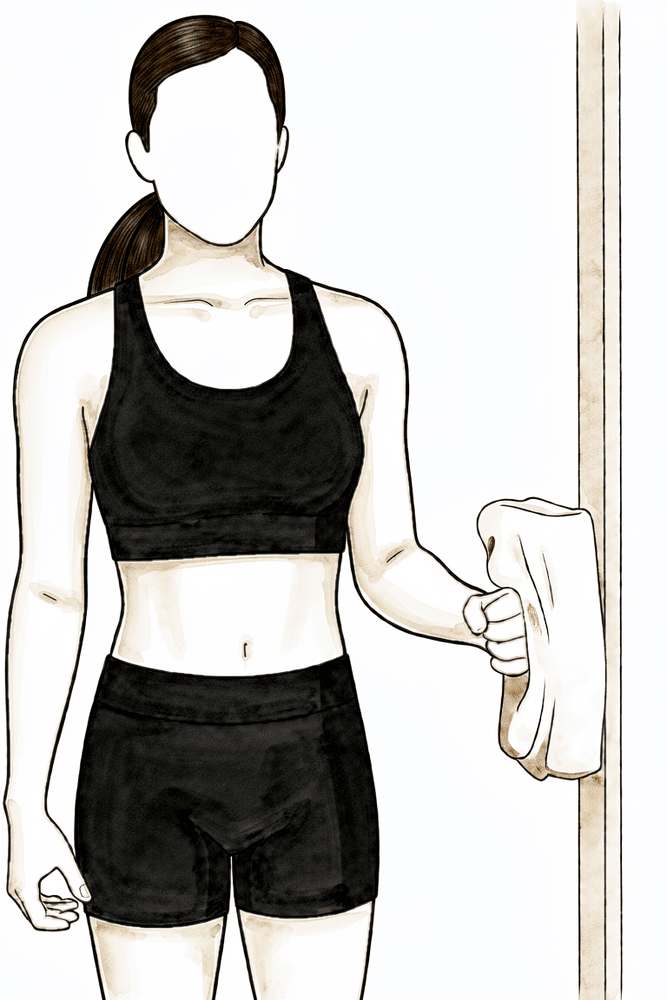
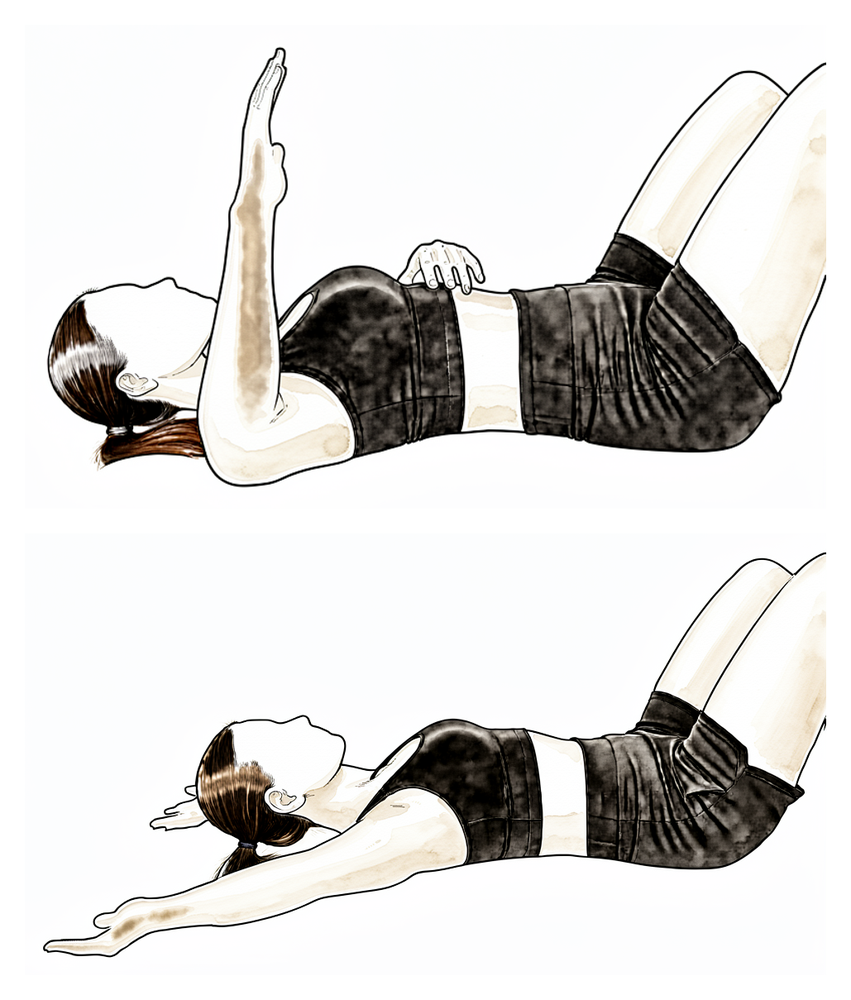
Hỗ trợ nâng tay lên phía trước (khi nằm)
Nằm ngửa, dùng cánh tay lành để nhẹ nhàng nâng cánh tay vừa được phẫu thuật lên phía trên đầu nhằm kéo giãn; sau đó hạ cánh tay xuống dưới sự hỗ trợ của cánh tay lành. Việc nằm xuống giúp trọng lực hỗ trợ và các cơ vai được thư giãn. Hãy thực hiện động tác trong mức độ thoải mái của bản thân.
Chương trình tập luyện tại nhà 3–5 lần mỗi ngày
Kieran Hirpara 4.0
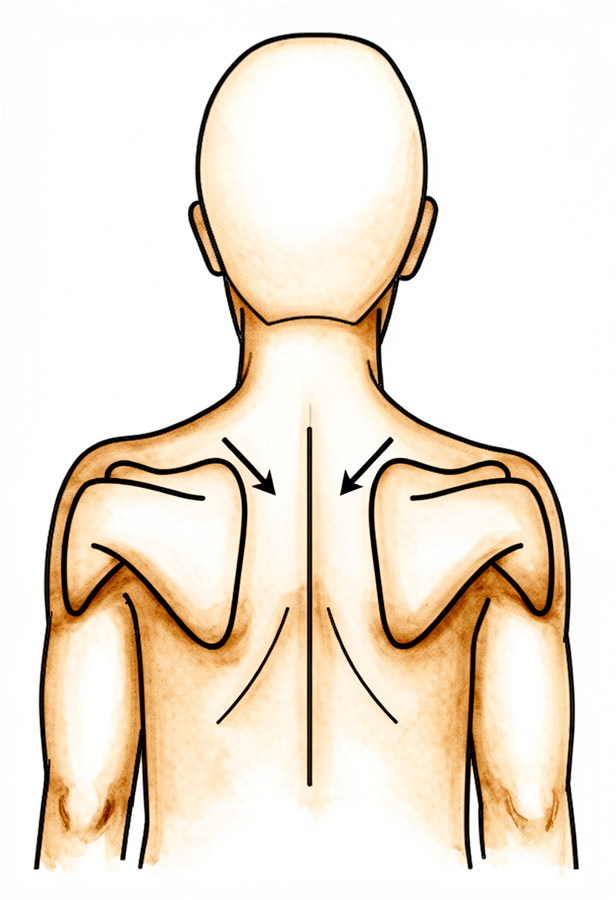
Xoay ngoài đẳng tích
Đứng thẳng, khuỷu tay áp sát vào hông và gập thành góc vuông; mu bàn tay chạm vào tường hoặc khung cửa. Nhẹ nhàng đẩy tay ra phía ngoài mà không để cánh tay di chuyển, giữ nguyên tư thế vài giây rồi thả lỏng. Đây chỉ là bài tập co cơ đẳng tích nhẹ nhàng — không được có bất kỳ chuyển động nào và không gắng sức. Hãy thực hiện trong giới hạn thoải mái.
Theo hướng dẫn của chuyên viên vật lý trị liệu của bạn.
Kieran Hirpara 4.0
Kích hoạt xương bả vai
Dù ngồi hay đứng thẳng, hãy nhẹ nhàng kéo hai bả vai lại gần nhau và hạ xuống, tránh xa hai tai. Giữ nguyên tư thế này vài giây rồi thả lỏng. Việc duy trì nhịp điệu vận động của bả vai ngay từ đầu sẽ giúp các bài tập tiếp theo đạt hiệu quả tốt hơn.
Theo hướng dẫn của chuyên viên vật lý trị liệu của bạn.
Hai tuần đầu tiên là thời gian kiểm soát cơn đau và sưng, đồng thời giúp vai bắt đầu vận động trở lại. Hãy chườm đá thường xuyên: thông thường nên chườm 3–4 lần mỗi ngày trong tuần đầu hoặc tuần thứ hai sau phẫu thuật. Dây đeo vai chỉ dùng để tăng cảm giác thoải mái: hãy đeo bao nhiêu tùy thích, thậm chí có thể tháo ra thường xuyên; ngừng sử dụng ngay khi bạn cảm thấy không cần thiết nữa. Nhiều người thấy dây đeo hữu ích nhất khi ra ngoài, giúp tránh việc người khác vô tình va chạm vào cánh tay. Sau bất kỳ ca phẫu thuật vai nào, bạn không được lái xe trong ít nhất 6 tuần, ngay cả khi đã tháo dây đeo; bác sĩ phẫu thuật sẽ cho phép bạn lái xe sau lần tái khám ở tuần thứ 6.
Hãy bắt đầu vận động ngay lập tức: khuỷu tay, cổ tay và bàn tay cần được vận động từ ngày đầu tiên. Thực hiện các bài tập đung đưa nhẹ nhàng kiểu “pendulum” cùng các động tác vận động vai có sự hỗ trợ (dùng tay còn lại, cây gậy hoặc ròng rọc để nâng và xoay cánh tay vừa phẫu thuật ra ngoài). Uống thuốc giảm đau trước khi tập luyện và trước mỗi buổi trị liệu vật lý. Động tác duy nhất cần tránh lúc này là vươn tay qua ngực về phía vai đối diện.
Dành cho chuyên viên trị liệu vật lý:
Mục tiêu
- Kiểm soát cơn đau và sưng
- Phục hồi dần biên độ vận động: đến cuối giai đoạn này, vai cần đạt được khoảng 140° gập về phía trước và 40° xoay ra ngoài
- Bệnh nhân có thể tự thực hiện chương trình tập luyện tại nhà một cách độc lập
Cách quản lý
- Dây đeo vai chỉ dùng để tăng cảm giác thoải mái: dần dần giảm sử dụng và ngừng hẳn trong vòng 1–2 tuần đầu, tùy theo mức độ thoải mái của bệnh nhân
- Chườm lạnh 3–4 lần mỗi ngày, đặc biệt sau khi tập luyện
- Ngay lập tức thực hiện các động tác vận động chủ động ở cổ, khuỷu tay, cẳng tay, cổ tay và bàn tay
- Thực hiện các bài tập đung đưa kiểu “pendulum” từ ngày đầu tiên
- Vận động vai thụ động hoặc có hỗ trợ tùy theo khả năng chịu đựng: gập về phía trước, xoay ra ngoài và xoay vào trong phía sau lưng, bằng cách dùng ròng rọc, cây gậy hoặc tư thế nằm ngửa để tận dụng trọng lực
- Rèn luyện cơ bắp vùng vai và vận động quanh xương bả vai; chú ý duy trì nhịp điệu vận động giữa xương bả vai và xương cánh tay ngay từ đầu
- Tăng cường sức mạnh nắm tay; thực hiện các bài tập co cứng cơ vai nhẹ nhàng khi cơn đau cho phép
- Uống thuốc giảm đau trước khi tập luyện và trị liệu vật lý
- Thực hiện chương trình tập luyện tại nhà 3–5 lần mỗi ngày
Những điều cần tránh
- Không thực hiện động tác đưa tay ngang qua ngực (vận động nội liếm)
- Không tập các bài vận động vai có sức cản, chỉ được thực hiện các bài co cứng cơ nhẹ nhàng
- Không nâng các vật nặng hơn những đồ dùng thông thường; không chịu tải trọng lên cánh tay (ví dụ: đẩy người dậy khỏi ghế hoặc giường)
- Không lái xe trong 6 tuần (quy định này áp dụng cho mọi ca phẫu thuật vai)
Tiêu chí để chuyển sang giai đoạn tiếp theo
- Đã ngừng sử dụng dây đeo vai và cơn đau giảm dần
- Có thể nâng vai có sự hỗ trợ đến mức khoảng 140° và xoay ra ngoài khoảng 40° một cách thoải mái
Giai đoạn II — Phục hồi biên độ vận động (Tuần 2–6)
Kieran Hirpara 4.0
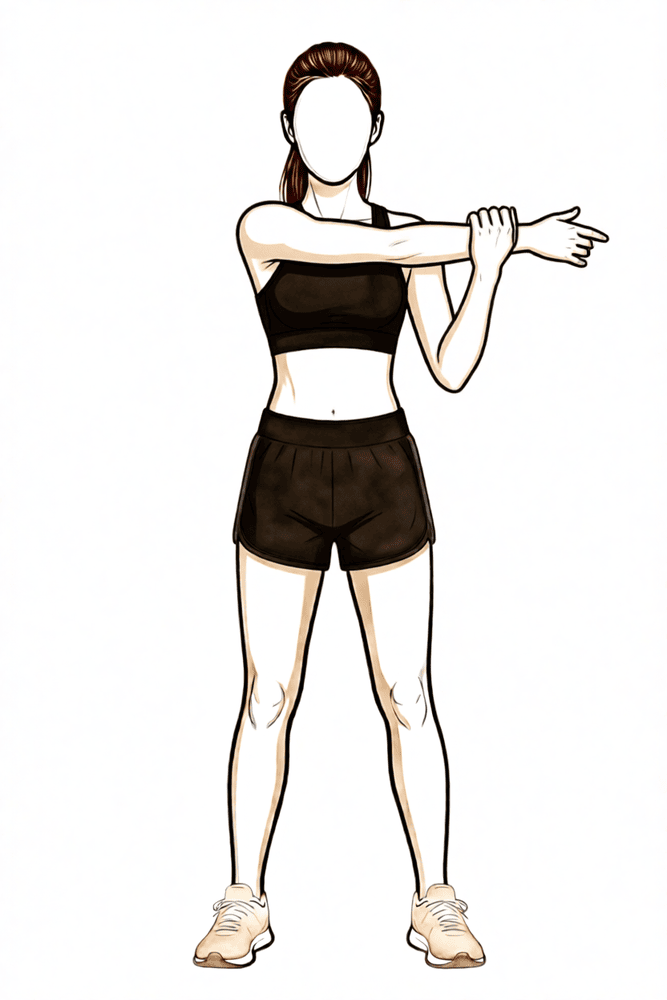
Bài tập kéo giãn chéo cơ thể
Hãy đưa cánh tay vừa được phẫu thuật qua ngực, rồi dùng tay còn lại đặt lên phía trên khuỷu tay để nhẹ nhàng kéo nó sang phía bên kia. Hãy thực hiện động tác này từ từ, căn cứ vào các triệu chứng biểu hiện — sau ca phẫu thuật này, việc cảm thấy hơi tức nhói ở cuối vòng động tác là hiện tượng thường gặp và sẽ dần hết theo thời gian.
Theo hướng dẫn của chuyên viên vật lý trị liệu của bạn.
Kieran Hirpara 4.0
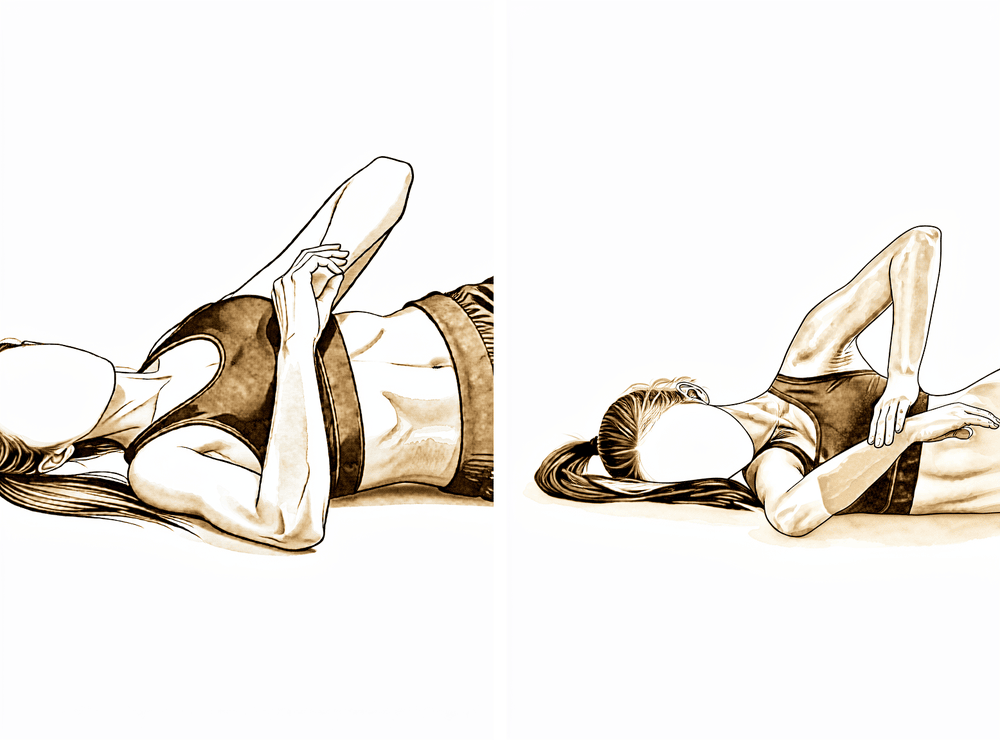
Kéo giãn tư thế ngủ nghiêng (sleeper stretch)
Nằm nghiêng về phía bên đã phẫu thuật, duỗi tay ra phía trước và gập khuỷu tay thành góc vuông. Dùng tay lành nhẹ nhàng ấn cẳng tay xuống giường cho đến khi cảm thấy căng ở phía sau vai; sau đó thả tay ra. Động tác kéo căng nhẹ về phía sau này giúp phục hồi khả năng vươn tay ra phía sau lưng. Hãy kéo căng đến mức cảm thấy hơi khó chịu nhưng không gây đau nhói.
Theo hướng dẫn của chuyên viên vật lý trị liệu của bạn.
Kieran Hirpara 4.0
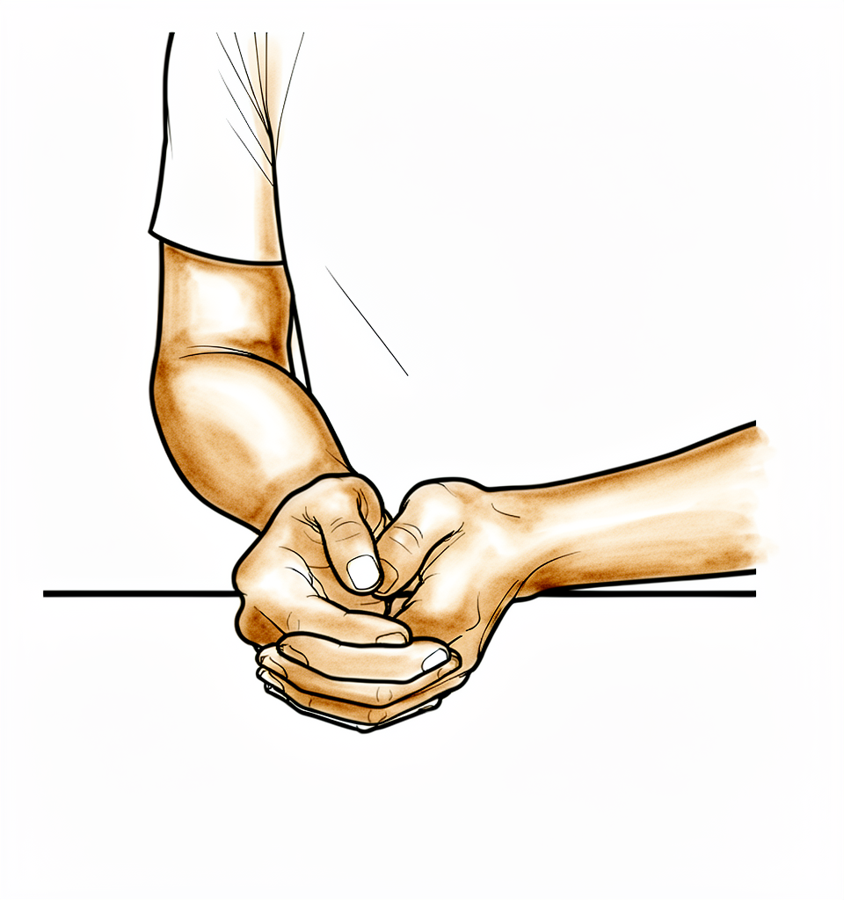
Xoay ngoài cánh tay với dây kháng lực
Đứng thẳng, khuỷu tay áp sát vào hông và gập thành góc vuông; cầm một dây thun được cố định ở một phía. Giữ nguyên khuỷu tay sát hông, xoay cẳng tay ra ngoài chống lại lực căng của dây thun rồi từ từ quay trở lại vị trí ban đầu. Bắt đầu tập khi chuyển động của bạn gần đạt đến mức tối đa; thực hiện nhiều lần với lực căng nhẹ.
Thực hiện nhiều lần lặp lại với tải trọng thấp; theo hướng dẫn của chuyên viên vật lý trị liệu.
Kieran Hirpara 4.0
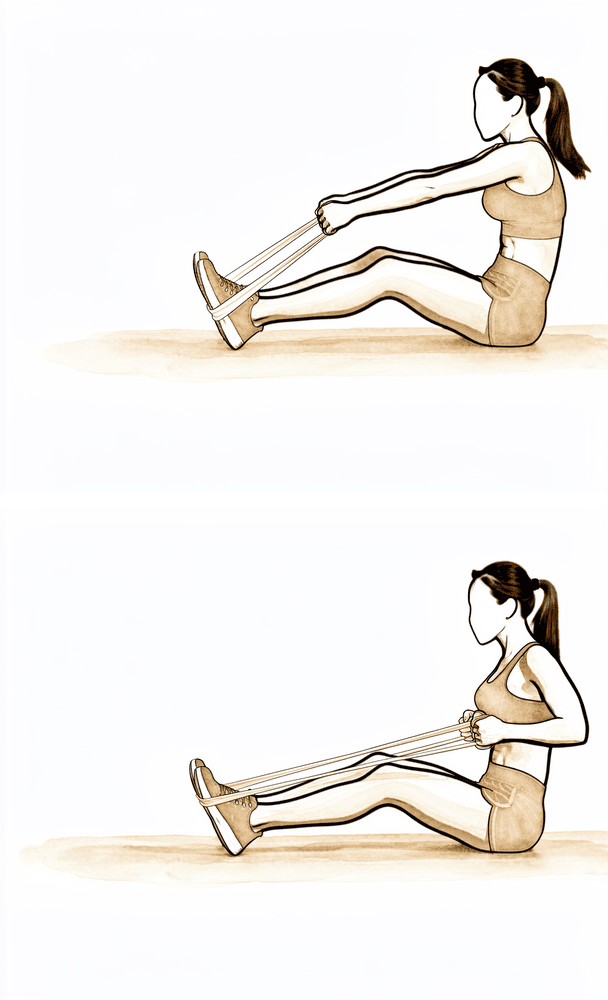
Tập kéo dây ở mức thấp
Giữ sợi dây đàn hồi ở phía trước người, ngang tầm eo. Giữ cánh tay gần như thẳng, kéo nó ra sau và xuống phía hông, đồng thời siết chặt cơ bả vai về phía sau và dưới; sau đó từ từ đưa tay về vị trí ban đầu. Bài tập này giúp tăng cường các cơ bả vai, giúp ổn định khớp vai khi sức mạnh của bạn dần hồi phục.
Thực hiện nhiều lần lặp lại với tải trọng thấp; theo hướng dẫn của chuyên viên vật lý trị liệu.
Kieran Hirpara 4.0
Xoay ngoài ở tư thế nằm với góc 90 độ/90 độ
Nằm ngửa, dang tay sang ngang ở độ cao ngang vai và gập khuỷu tay thành góc vuông, đặt tay lên gối để nâng đỡ. Từ từ xoay cẳng tay ra sau về phía đầu hết mức mà bạn cảm thấy thoải mái, sau đó đưa tay trở lại một cách có kiểm soát. Động tác này giúp khôi phục khả năng xoay của cánh tay ở tư thế giơ cao.
10 lần, theo hướng dẫn của chuyên viên vật lý trị liệu của bạn.
Kieran Hirpara 4.0
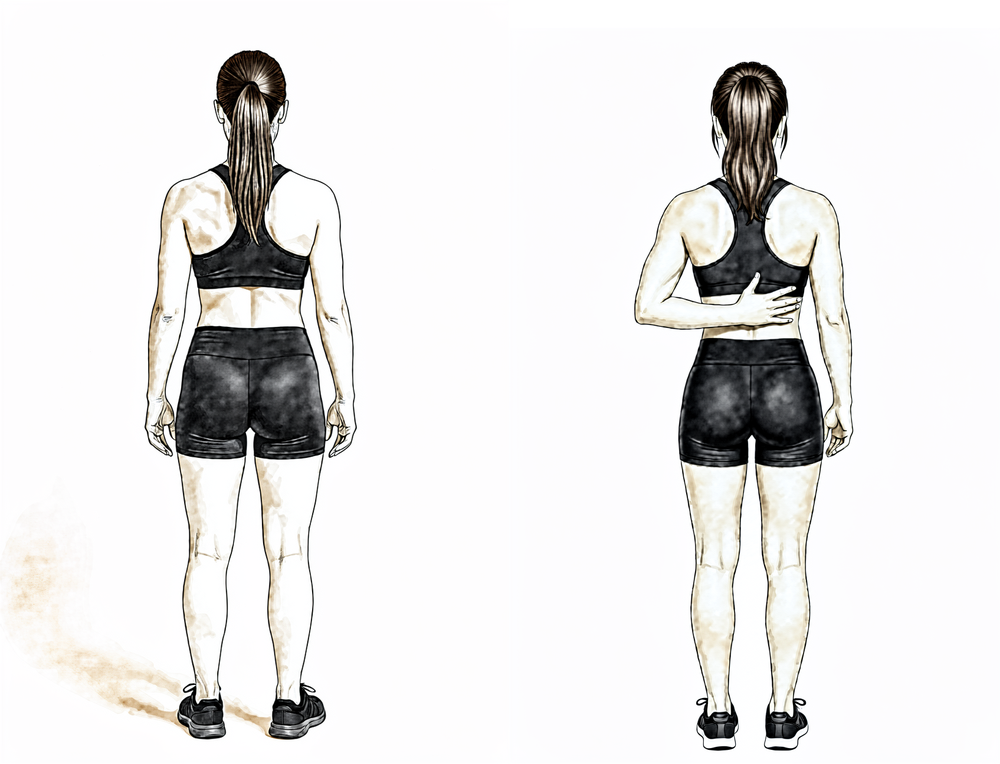
Khả năng với tay ra phía sau lưng
Khi đứng, hãy đặt mu bàn tay vừa được phẫu thuật áp vào vùng thắt lưng, sau đó dùng sức cơ của mình để nhẹ nhàng di chuyển tay lên dọc theo cột sống đến mức cảm thấy thoải mái, rồi hạ tay xuống. Chỉ vận động trong phạm vi thoải mái và tuyệt đối không gắng sức.
Theo hướng dẫn của chuyên viên vật lý trị liệu của bạn.
Sau khi tháo nẹp, giai đoạn này tập trung vào việc giúp vai vận động đầy đủ theo mọi hướng: ban đầu là các chuyển động có hỗ trợ, sau đó là các chuyển động do chính cơ thể thực hiện. Khi biên độ vận động đã gần đạt mức bình thường, người bệnh bắt đầu tập tăng cường sức mạnh cho cơ vùng cơ chóp xoay và các cơ vùng xương bả vai bằng dây thun và tạ nhẹ. Có thể sử dụng cánh tay bình thường cho các hoạt động hàng ngày, nhưng chỉ nên nâng vật nặng vừa phải (không quá 5 kg) và tránh các động tác gây áp lực mạnh lên cánh tay. Việc vươn tay sang phía đối diện cơ thể cũng được thực hiện dần dần trong giai đoạn này; cảm giác hơi đau nhói ở cuối vòng vận động là hiện tượng thường gặp và sẽ giảm dần theo thời gian. Nhiều người thấy việc chườm nóng trước khi tập và chườm lạnh sau khi tập rất hữu ích; các bài tập nhẹ cho vùng thân dưới như đi bộ, đạp xe hoặc chạy bộ thường được khởi động lại từ khoảng tuần thứ tư.
Dành cho chuyên viên vật lý trị liệu:
Mục tiêu
- Đạt được biên độ vận động chủ động đầy đủ hoặc gần đầy đủ theo mọi mặt phẳng vào cuối giai đoạn
- Khôi phục lại động học bình thường giữa xương bả vai và xương cánh tay
- Bắt đầu tập tăng cường sức mạnh cho cơ vùng cơ chóp xoay và các cơ quanh xương bả vai khi biên độ vận động đã gần đạt mức tối đa
Cách thức thực hiện
- Tăng dần mức độ vận động từ thụ động và có hỗ trợ sang vận động chủ động theo mọi mặt phẳng: gập tay và nâng tay theo mặt phẳng xương bả vai đến mức tối đa; xoay ngoài cánh tay ở tư thế thả lỏng và khi tay giơ ngang 90° tùy mức chịu đựng; xoay trong cánh tay ra phía sau lưng kết hợp với các bài kéo giãn nhẹ màng bao khớp vai
- Dần dần khôi phục lại biên độ vận động gập tay sang phía đối diện cơ thể, căn cứ vào triệu chứng của bệnh nhân
- Thực hiện các kỹ thuật trị liệu thủ công và vận động khớp vai khi cần thiết
- Khi biên độ vận động chủ động gần đạt mức tối đa, chuyển từ các bài tập co cứng cơ sang tập tăng cường sức mạnh cho cơ vùng cơ chóp xoay và các cơ ổn định xương bả vai bằng dây thun: thực hiện nhiều lần với tải trọng thấp
- Có thể chườm nóng trước và chườm lạnh sau buổi tập tùy sở thích; dùng thuốc giảm đau trước khi tập
- Từ từ trở lại các hoạt động sinh hoạt hàng ngày; bắt đầu các bài tập nhẹ cho vùng thân dưới (đi bộ, đạp xe, chạy bộ) từ khoảng tuần thứ 4
Lưu ý phòng ngừa
- Chỉ nên nâng vật nặng vừa phải: khoảng 5 kg hoặc ít hơn ở phía cánh tay vừa phẫu thuật
- Tránh các động tác gập tay ngang cơ thể ở biên độ tối đa hoặc các tư thế dễ gây chèn ép khớp vai
- Không thực hiện các bài tập ép lực: đẩy tạ trên ghế, hít đất, chống đẩy
- Tạm hoãn các bài kéo giãn kết hợp giữa giơ tay ngang và xoay ngoài (tư thế 90/90) nếu khớp vai còn cảm thấy nhạy cảm
Tiêu chí để chuyển sang giai đoạn tiếp theo
- Đạt được biên độ vận động chủ động đầy đủ hoặc gần đầy đủ mà không gây đau đáng kể
- Có thể thực hiện các bài tập tăng cường sức mạnh bằng dây thun mà không gây đau tái phát
Giai đoạn III — Tăng cường sức mạnh và trở lại các hoạt động bình thường (Tuần 6–12)
Kieran Hirpara 4.0
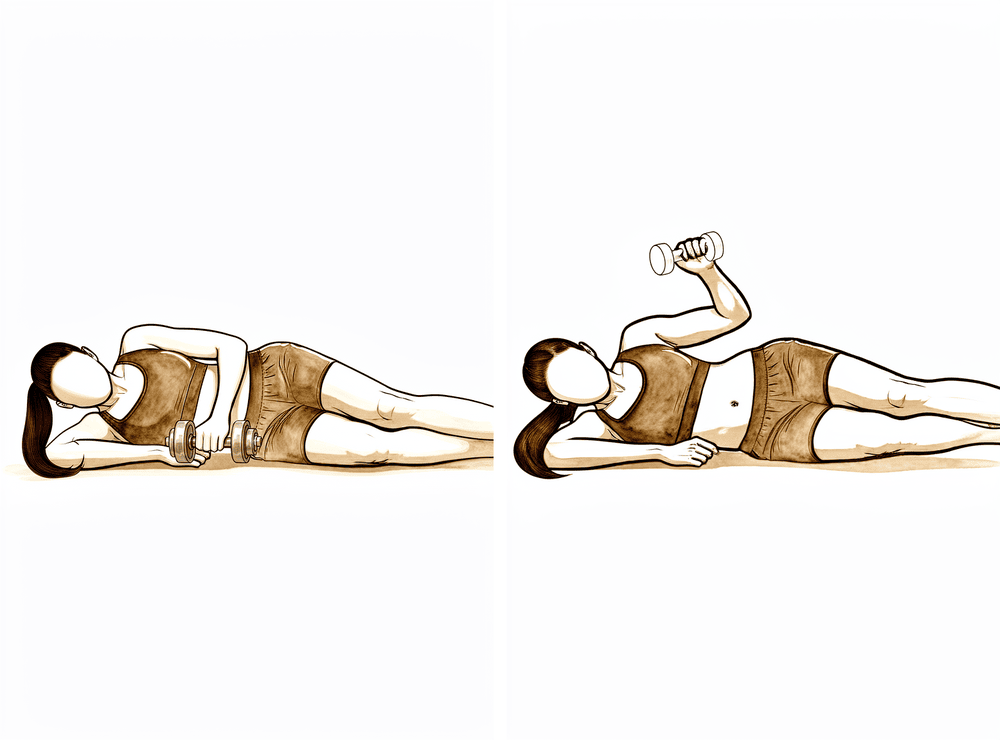
Tư thế nằm nghiêng, xoay ngoài cánh tay có tải trọng
Nằm nghiêng về phía không phẫu thuật, khuỷu tay phía trên gập thành góc vuông và áp sát vào thân mình. Cầm một vật nặng nhẹ, xoay cẳng tay hướng lên trần nhà rồi từ từ hạ xuống. Bài tập này nâng cấp việc tăng cường sức mạnh chóp xoay từ dây kháng lực sang tạ tay.
2–3 bộ, mỗi bộ gồm 8–15 lần lặp lại; cường độ tải thấp
Kieran Hirpara 4.0
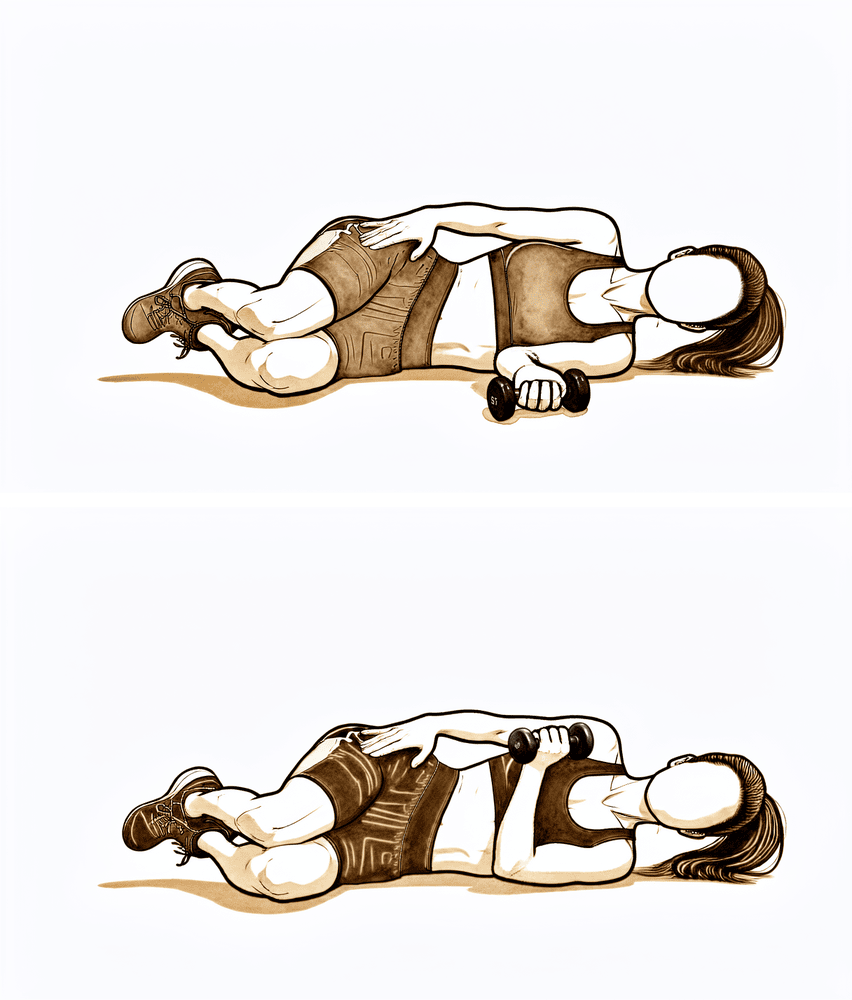
Nằm nghiêng, xoay trong cánh tay có tải trọng
Nằm nghiêng về phía được phẫu thuật, khuỷu tay gập thành góc vuông và áp sát vào thân mình. Cầm một vật nặng nhẹ, nâng cẳng tay lên phía thân mình rồi hạ xuống từ từ. Bài tập này giúp cân bằng việc tăng cường sức mạnh chóp xoay với các bài tập xoay ngoài.
2–3 bộ, mỗi bộ gồm 8–15 lần lặp lại; cường độ tải thấp
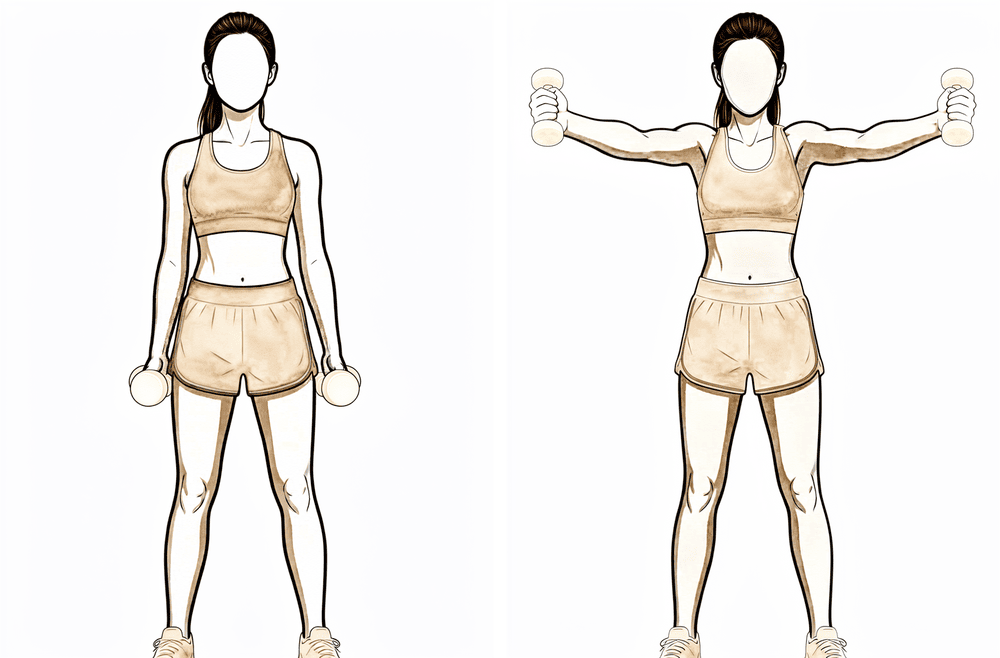
Kieran Hirpara 4.0
Động tác nâng cánh tay kiểu full-can
Đứng thẳng, cầm một vật nặng nhẹ ở mỗi tay; hai tay hơi đưa ra phía trước tạo thành góc khoảng 30 độ, ngón cái hướng lên trên. Nâng hai tay lên ngang vai rồi hạ xuống từ từ. Bài tập này tăng cường sức mạnh đồng thời cho cơ delta và chóp xoay trong phạm vi chuyển động tầm giữa thoải mái.
2–3 set, mỗi set gồm 8–15 lần lặp lại; cường độ tải thấp
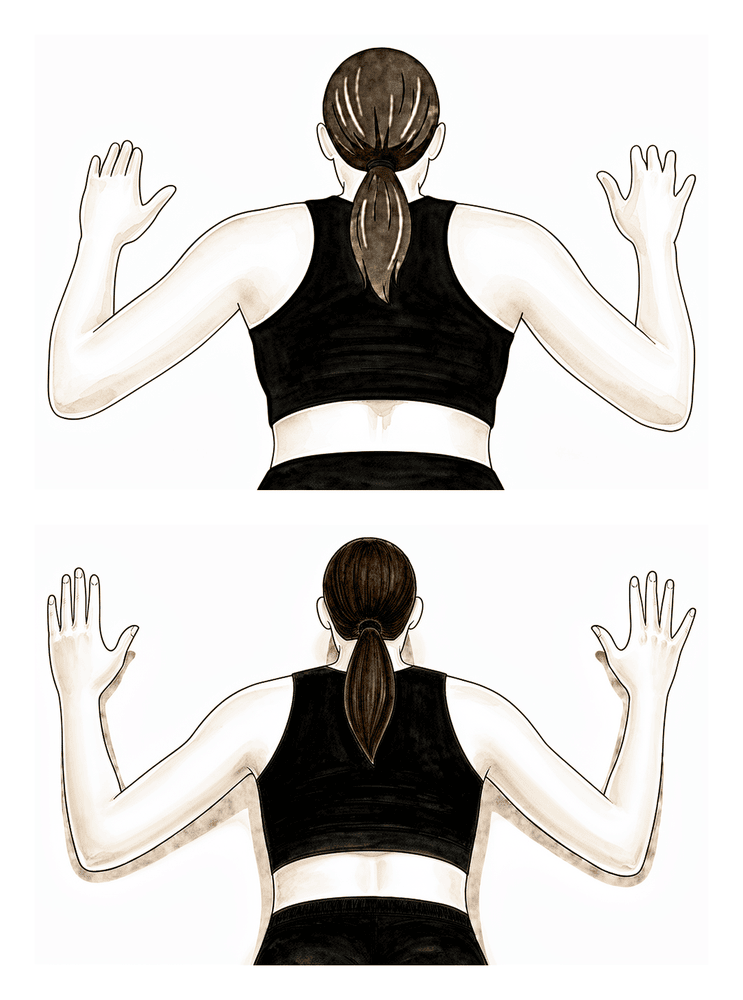
Kieran Hirpara 4.0
Nâng tay hình chữ W khi nằm sấp
Nằm sấp, hai tay đặt dọc theo thân người. Kéo khuỷu tay ra sau và hướng xuống phía hông sao cho tạo thành hình chữ W; đồng thời siết chặt hai bả vai lại với nhau, sau đó hạ tay xuống từ từ. Bài tập này giúp tăng cường sức mạnh cho các cơ dưới bả vai, vốn có vai trò quan trọng trong việc duy trì cơ chế vận động đúng đắn của vai.
2–3 set, mỗi set gồm 8–15 lần lặp lại
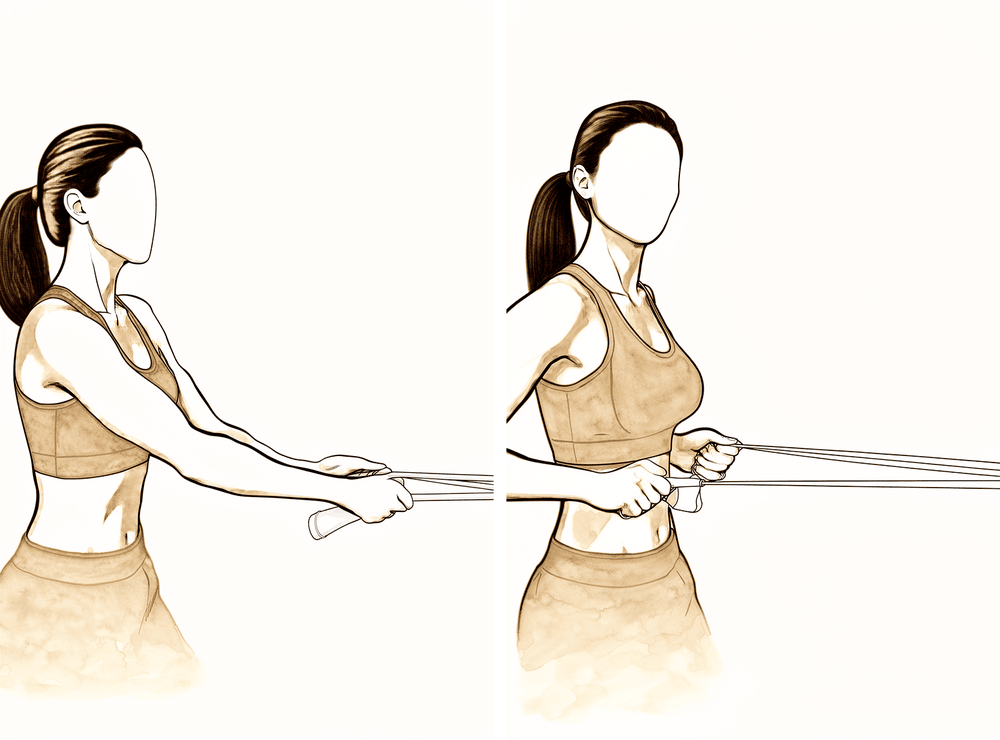
Kieran Hirpara 4.0
Kéo chèo tư thế đứng
Hãy cầm một dây kháng lực hoặc vật nặng nhẹ trước mặt, sau đó kéo về phía cơ thể; đồng thời đưa khuỷu tay ra phía sau và siết chặt các cơ vùng bả vai. Tiếp theo, hãy từ từ trở về vị trí ban đầu. Bài tập này giúp tăng cường sức mạnh cho vùng giữa lưng và các cơ vùng bả vai – những cơ có vai trò hỗ trợ khớp vai khi bạn bắt đầu trở lại các hoạt động thường ngày.
2–3 set, mỗi set gồm 8–15 lần lặp lại
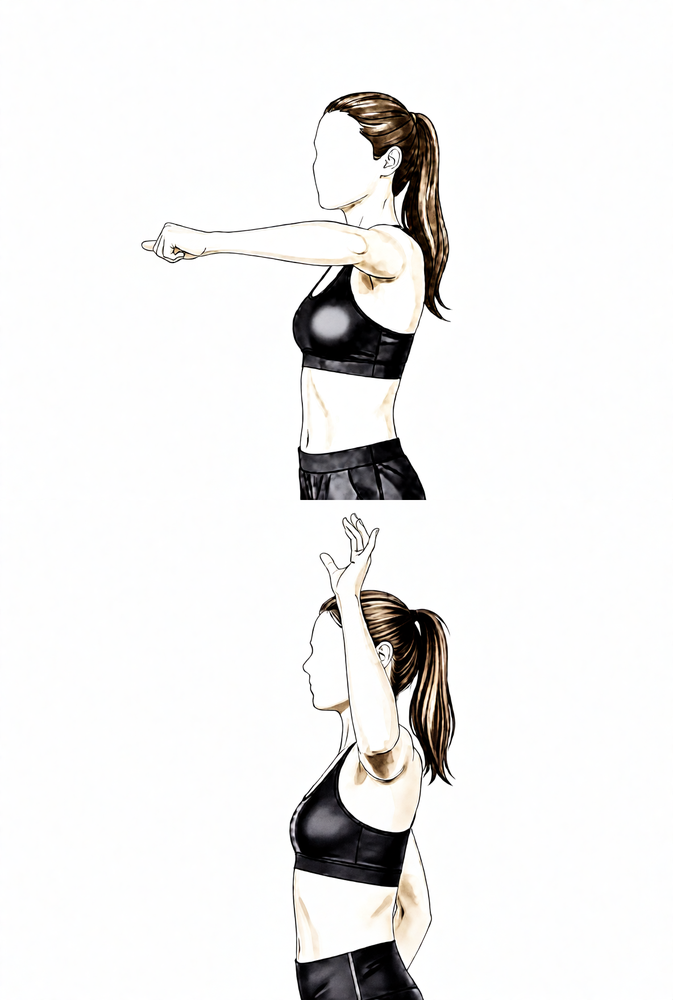
Kieran Hirpara 4.0
Xoay ngoài khi cánh tay được giơ lên.
Hãy giữ tay ra ngang ngang vai, khuỷu tay gập 90°, sau đó xoay cẳng tay lên trên và ra phía sau, rồi từ từ đưa trở lại vị trí ban đầu một cách có kiểm soát. Hãy thực hiện chuyển động một cách mượt mà và trong phạm vi thoải mái. Bài tập này giúp rèn luyện khả năng xoay ngoài của cẳng tay khi tay đang giơ lên.
Theo hướng dẫn của chuyên viên vật lý trị liệu: thực hiện một cách nhẹ nhàng và có kiểm soát.
Khi vận động được phục hồi hoàn toàn, mục tiêu tiếp theo là xây dựng lại sức mạnh và giúp bạn trở lại với các hoạt động thường ngày. Các bài tập chống lực sẽ được nâng dần từ việc dùng dây kháng lực sang sử dụng tạ tay, nhằm rèn luyện cơ vùng cơ chóp xoay, cơ delta và các cơ vùng xương bả vai. Các bài tập cũng ngày càng mang tính chức năng hơn: tập tại phòng gym, bơi lội, chương trình ném bóng có mức độ dành cho các vận động viên ném bóng; đồng thời người bệnh sẽ dần trở lại công việc và các hoạt động thể thao. Hầu hết mọi người đều có thể trở lại chơi thể thao và làm các công việc nặng hơn trong giai đoạn này, khoảng từ tuần thứ tám đến mười hai, dựa trên mức độ thoải mái và sức mạnh thực tế chứ không phải theo thời gian cố định. Các bài tập nén gây áp lực lớn lên khớp AC (như hít đất, chống đẩy, tập ngực trên ghế) sẽ được đưa vào sau cùng, với cường độ thấp và biên độ vận động hạn chế.
Dành cho chuyên viên vật lý trị liệu:
Mục tiêu
- Phục hồi sức mạnh, sức bền và khả năng điều phối thần kinh-cơ của vùng vai
- Trở lại dần dần các công việc, hoạt động giải trí và các bài tập đặc thù cho từng môn thể thao
Phương pháp điều trị
- Tăng dần cường độ chống lực cho cơ vùng cơ chóp xoay, cơ delta và các cơ ổn định xương bả vai: từ dây kháng lực sang tạ tay nhẹ; thường thực hiện 2–3 hiệp, mỗi hiệp 8–15 lần lặp lại
- Bổ sung các bài tập co giãn chậm, bài tập vận động với chân chịu lực, và về cuối giai đoạn có thể thêm các bài tập nổ lực phù hợp với môn thể thao của bệnh nhân
- Tập luyện mang tính chức năng và đặc thù cho từng môn thể thao: bơi lội, chương trình ném bóng có mức độ dành cho vận động viên ném bóng, các bài tập thể thao dưới sự giám sát chặt chẽ
- Trở lại dần dần các công việc và hoạt động thể thao, dựa trên các tiêu chí đã đặt ra
Lưu ý phòng ngừa
- Các bài tập nén gây áp lực lên khớp AC (hít đất, chống đẩy, tập ngực trên ghế) phải được thực hiện sau cùng: bắt đầu với cường độ thấp, biên độ vận động hạn chế; tránh để khuỷu tay hạ thấp hoặc vượt quá đường thẳng của cơ thể
- Việc tăng cường độ vẫn phải dựa trên triệu chứng: nếu khớp AC vẫn còn nhạy cảm, cần giảm nhẹ mức tải thay vì cố gắng vượt qua cơn đau
Tiêu chí để chuyển sang giai đoạn tiếp theo
- Vận động khớp vai đầy đủ, không đau và không hạn chế
- Không có cảm giác đau hay nhạy cảm tại vùng phẫu thuật khi chịu lực
- Sức mạnh cơ vùng vai đạt mức tương đương với bên lành sau khi kiểm tra
Giai đoạn IV — Trở lại các hoạt động bình thường (từ tuần thứ 12 trở đi)
Kieran Hirpara 4.0
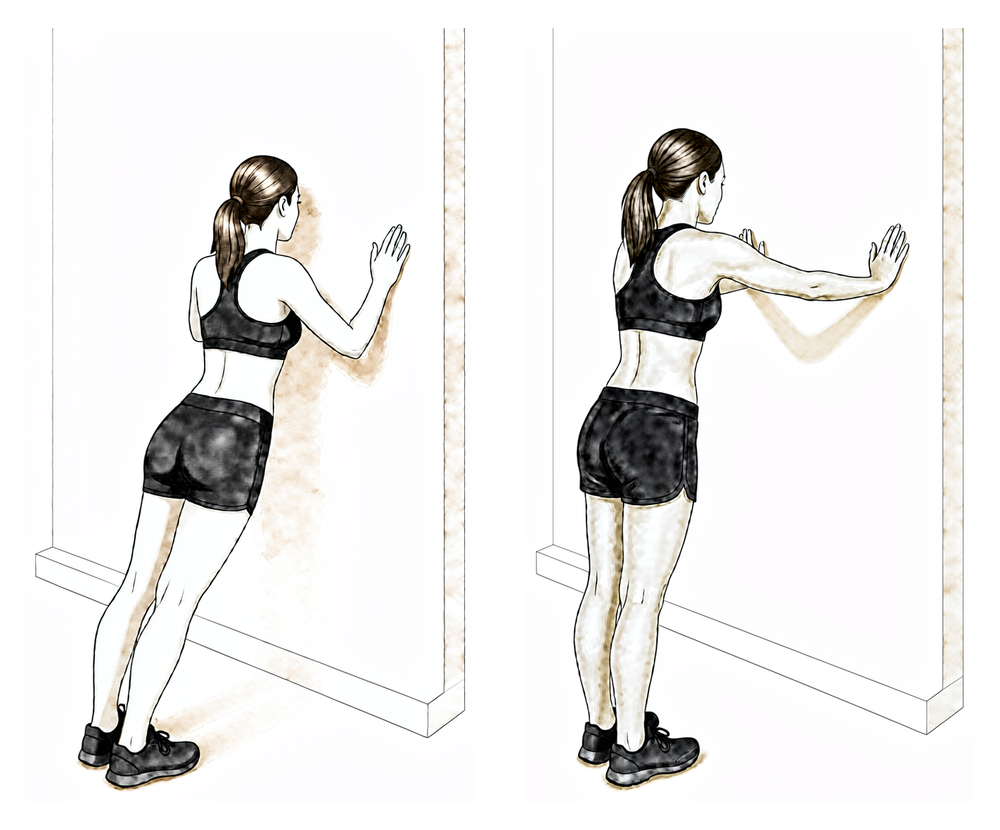
Hít đất nâng cao
Đây là một phần của quá trình trở lại từng bước với các động tác đẩy, vì vậy bài tập này được thực hiện sau cùng. Bắt đầu bằng cách chống đẩy vào tường hoặc từ tư thế quỳ gối với biên độ nông, giữ không để khuỷu tay đi ra sau đường thẳng của cơ thể. Ở đỉnh mỗi lần chống đẩy, hãy đẩy thêm một chút để cong phần lưng trên, rồi hạ người xuống một cách có kiểm soát. Chỉ tăng độ sâu và tải trọng khi khớp AC vẫn thoải mái — nếu cảm giác đau nhức ở vùng này quay trở lại, hãy giảm mức độ tập.
Theo hướng dẫn của chuyên viên vật lý trị liệu của bạn.
Giai đoạn cuối cùng là việc trở lại các hoạt động mà không còn bất kỳ hạn chế nào. Trong đời sống hàng ngày và hầu hết các môn thể thao, bệnh nhân thường đã có thể trở lại hoạt động bình thường trước thời điểm này; điều còn lại chỉ là các hoạt động đòi hỏi cường độ vận động cao nhất. Sức mạnh khi thực hiện các động tác đẩy tại phòng tập được phục hồi dần dần; việc đạt lại mức hiệu suất tập tạ như trước phẫu thuật có thể mất khoảng bốn tháng. Đối với các vận động viên tham gia các môn thể thao đòi hỏi vận động vùng vai liên tục, quá trình phục hồi sẽ diễn ra trong khoảng từ hai đến bốn tháng sau phẫu thuật. Việc trở lại hoàn toàn các hoạt động thể thao và công việc nặng nhọc sẽ được xác nhận tại buổi tái khám, dựa trên khả năng vận động đầy đủ, khả năng chịu tải tốt và kết quả khám lâm sàng ổn định.
Dành cho chuyên viên vật lý trị liệu:
Mục tiêu
- Trở lại công việc, phòng tập và các môn thể thao mà không còn hạn chế nào
- Duy trì sức mạnh và cơ chế vận động của vùng vai trong thời gian dài
Cách quản lý
- Tăng dần cường độ các bài tập tại phòng tập và các bài tập thể thao phù hợp với khả năng chịu đựng của bệnh nhân; đặc biệt là các bài tập đẩy nặng, đồng thời chú trọng kỹ thuật để hạn chế áp lực lên khớp vai (đảm bảo độ sâu động tác vừa phải, khuỷu tay không vượt quá đường thẳng cơ thể)
- Tiến hành các bài tập ném và các bài tập vận động vùng vai tương ứng với từng môn thể thao cụ thể
Lưu ý phòng ngừa
- Việc tăng dần cường độ tập luyện phải dựa trên các triệu chứng lâm sàng: nếu xuất hiện tình trạng đau tái phát vùng khớp vai sau khi thực hiện một động tác nào đó, cần điều chỉnh mức tải hoặc kỹ thuật trước khi tiếp tục tăng cường độ tập luyện.
Sau khi thực hiện phác đồ điều trị
Các giai đoạn phục hồi được nêu trên được điều chỉnh từ các phác đồ phục hồi chức năng đã được công bố dành cho phẫu thuật cắt bỏ đầu ngoài xương đòn (Bộ Phẫu thuật Chỉnh hình, Đại học Y Saint Louis; Trung tâm Y học Thể thao, Đại học Utah; Bệnh viện Phẫu thuật Thể thao New York; Viện Chỉnh hình Palm Beach; OrthoVirginia và Specialty Physicians of Illinois). Các khoảng thời gian được nêu là mức trung bình chứ không phải cố định. Quá trình phục hồi của bạn sẽ được điều chỉnh riêng biệt bởi chuyên viên vật lý trị liệu, dưới sự phối hợp với phòng khám, tùy theo tiến triển hồi phục của vai bạn. Trang này bổ sung cho các hướng dẫn phục hồi chung từ phòng khám; vui lòng tham khảo mục xử lý cơn đau sau phẫu thuật và chăm sóc vết thương. Để biết thêm thông tin về ca phẫu thuật, xem mục cắt bỏ đầu ngoài xương đòn.
Các bằng chứng lâm sàng liên quan đến ca phẫu thuật này cùng phác đồ phục hồi (bao gồm so sánh giữa phương pháp mổ mở và nội soi, mức độ cắt bỏ xương và lý do cần thiết, cũng như các phác đồ đã được công bố mà trang này dựa vào) đều được tóm tắt kèm đầy đủ tài liệu tham khảo trong mục “Bằng chứng lâm sàng”. Tài liệu này có sẵn dưới dạng tệp PDF ở đầu trang.
Evidence & references
This is the clinical evidence summary written for health professionals. It is technical, and it lists the research this page was built from. You do not need to read it to understand your treatment or to make a decision about it.
Distal Clavicle Excision (Mumford) — Surgical Rationale & Post-operative Rehabilitation
Topic scope: the evidence underpinning distal clavicle excision (DCE) — also called distal clavicle resection, AC joint excision, or the Mumford procedure — for the two main indications (acromioclavicular [AC] joint osteoarthritis and distal clavicular osteolysis, the "weightlifter's shoulder"), and the post-operative rehabilitation that follows. Covers open vs arthroscopic technique, direct vs indirect (bursal) approach, how much bone to resect, the iatrogenic-instability risk of over-resection, and the (consensus-based) phased rehab timeline.
Defining principle of the rehab here: DCE removes a few millimetres of worn bone from the end of the collarbone and repairs nothing that needs months of protection — provided the AC ligaments and superior/posterior capsule are preserved. So (like a debridement or subacromial decompression, and unlike a cuff repair, labral repair or AC-joint stabilisation) this is an early-motion pathway: a short sling for comfort only, movement from day one, strengthening as range returns. The single important caveat runs the other way: if the surgeon resects too much bone, or the stabilising AC ligaments/capsule are violated, the joint can become iatrogenically unstable — which is why technique (resection amount, ligament preservation) matters more here than the rehab calendar. The two operation-specific quirks the rehab respects are that cross-body (horizontal adduction) movement compresses the resected area and is the slowest to settle, and heavy pressing (bench press, dips, push-ups) loads the AC joint hardest and returns last.
A. THE OPERATION & ITS INDICATIONS
DCE removes the worn or eroded outer end of the clavicle so the acromion and clavicle no longer grind at the AC joint. Two indications dominate:
- AC joint osteoarthritis — degenerative wear, often with a history of prior AC injury or simply age-related change. Surgery follows failed non-operative care (activity modification, analgesia, AC joint corticosteroid injection).
- Distal clavicular osteolysis ("weightlifter's shoulder") — atraumatic, repetitive-microtrauma resorption of the distal clavicle seen in weightlifters and overhead athletes. Activity modification and rehabilitation are first-line; injection or surgery is reserved for refractory cases or athletes unwilling to stop loading [StatPearls 2023; Charron 1998].
DCE is frequently combined with subacromial decompression (for room/co-existing impingement) and the rehab is unchanged by that addition. If a rotator cuff repair is also performed, the slower protected cuff-repair pathway takes over.
B. EVIDENCE BY THEME
1. Open vs arthroscopic — equivalent long-term outcome, faster arthroscopic recovery
A randomised, prospective trial (Robertson et al., corpus, DOI 10.1016/j.jse.2006.10.006) and a systematic review (Pensak et al., Arthroscopy 2010) found similar long-term functional outcomes for open and arthroscopic DCE, with both arthroscopic techniques exceeding 90% good/excellent results. Across measures there was a trend toward earlier or better outcomes after arthroscopic treatment — less post-operative pain and a quicker return to daily activities — without a difference in the final result [Robertson RCT; Pensak SR 2010]. A second comparative cohort reached the same conclusion (corpus, DOI 10.1177/0363546511419633). Moderate (RCT + SR + cohort).
2. Direct vs indirect (bursal) arthroscopic approach — direct is faster
Among arthroscopic techniques, the direct (superior, top-down) approach permits a quicker return to athletic activity than the indirect/bursal approach, with equivalent long-term results — one comparison reporting a mean return to sport of ~21 days (direct) vs ~42 days (indirect) [Pensak SR 2010; arthroscopic-approach comparison]. Moderate.
3. How much bone to resect — and why over-resection is dangerous
This is the central technical controversy and the reason DCE rehab cannot be reduced to a calendar:
- The stabilising superior and posterior AC ligament/capsule runs from the anterior acromion to the posterior distal clavicle, and the coracoclavicular (trapezoid) ligament inserts on the clavicle undersurface roughly 22–25 mm from the tip [Renfree; capsule/ligament-insertion cadaveric study, corpus DOI 10.1016/j.arthro.2009.04.072; clavicular-strut cadaveric study, corpus DOI 10.1016/j.jse.2013.01.004].
- Anatomic work suggests as little as ~2.3–2.6 mm of resection can begin to violate the superior AC ligament [Renfree, via PMC6930955]; biomechanical models show AC joint anteroposterior translation increases after either open or arthroscopic excision, and stability falls as the resection lengthens [Blazar; resection-length biomechanical model, corpus DOI 10.1016/j.arthro.2007.07.004; DCE-vs-symmetric-resection biomechanics, corpus DOI 10.1177/0363546512469873].
- The practical consensus is to resect enough to abolish bony contact but no more — commonly quoted as ~5 mm (sufficient to clear contact in cadaveric models) up to ~8 mm, and not beyond ~8 mm, preserving the posterior/superior capsule and AC ligaments [PMC6930955; StatPearls 2023; resection-length biomechanics, corpus DOI 10.1016/j.arthro.2007.07.004].
- Over-resection or capsular violation can produce iatrogenic AC instability — a recognised (though uncommon) cause of persistent pain after DCE that may itself require ligament reconstruction [iatrogenic-instability case, PMC6930955; Painful Conditions of the AC Joint, corpus DOI 10.5435/00124635-199905000-00004].
Moderate (cadaveric/biomechanical + anatomic + expert consensus); exact safe threshold is debated.
4. Outcomes & return to activity
DCE is a reliable, high-satisfaction operation for the right indication — arthroscopic series report >90% good/excellent results [Robertson RCT; Pensak SR 2010]. For osteolysis in weightlifters, an arthroscopic-resection series reported return to sport at a mean of ~3 days and to the preoperative weight-training program at ~9 days, remaining asymptomatic and able to progress load beyond pre-operative levels at ~19-month follow-up [Charron, Am J Sports Med 1998, PMID 9548111]. Across the literature, most everyday activity returns within weeks and heavy pressing/overhead sport over ~3–4 months, consistent with the published rehab protocols. Moderate (cohort). A noted exception: worse ("poor") results cluster in patients with pre-existing post-traumatic AC instability or Workers'-Compensation claims [Pensak SR 2010] — DCE alone does not fix an unstable joint.
C. PHASED POST-OPERATIVE TIMELINE (isolated DCE ± subacromial decompression)
Week ranges are typical, not fixed — progression is criteria-based, guided by the physiotherapist.
| Phase | Window | Sling | ROM / use | Strengthening | Operation-specific notes |
|---|---|---|---|---|---|
| I — Early recovery & movement | Week 0–2 | Comfort only; weaned/discarded within 1–2 weeks | Elbow/wrist/hand + pendulums from day 1; passive + active-assisted shoulder elevation/ER/behind-the-back IR; scapular setting | Grip; gentle isometrics as pain allows | Avoid cross-body (horizontal) adduction — it compresses the resected area. No driving in the sling; no weight-bearing through the arm |
| II — Restoring range | Week 2–6 | Off | Progress assisted → active ROM to full in all planes; reintroduce cross-body adduction gradually (end-range pinching is common, settles) | Begin cuff + scapular band work once active range near full; lifting ≤ ~5 kg | Light lower-body conditioning (walk/bike/jog) from ~wk 4 |
| III — Strengthening & return | Week 6–12 | Off | Full functional ROM | Bands → dumbbells; functional + sport-specific; most return to sport/heavier work ~8–12 wk | Reintroduce AC-loading presses (bench/dips/push-ups) last — light, shallow depth, elbows not behind the body line |
| IV — Return to full activity | Week 12+ | Off | Full | Progressive heavy pressing; return to previous bench performance can take ~4 months; overhead athletes progressed over ~2–4 months | Symptom-guided — recurrent AC ache with a lift = adjust load/technique before progressing |
The phased structure is drawn from published surgeon/physiotherapy protocols (Saint Louis University; University of Utah Sports Medicine; Sports Surgery New York; Palm Beach Orthopaedic Institute; OrthoVirginia; Specialty Physicians of Illinois — see Citations). These are consensus/expert documents; no rehab RCT defines the optimal post-DCE regimen.
D. KEY CONTROVERSIES / EVIDENCE QUALITY
- How much bone to resect is the real debate, not the rehab. Too little leaves residual bony contact; too much risks iatrogenic instability. The safe window (~5–8 mm, capsule preserved) is supported by cadaveric/biomechanical and anatomic work, not by an RCT — exact thresholds vary by source. Moderate, technique-dependent.
- Open vs arthroscopic, direct vs indirect. Long-term outcomes converge; arthroscopic (and specifically the direct approach) recovers faster. Moderate (RCT + SR).
- Patient selection matters more than approach. Pre-existing AC instability and Workers'-Compensation status predict poorer results — DCE treats a worn/eroded joint, not an unstable one. Moderate.
- The rehab protocol itself is consensus. Phase timings come from surgeon patient-guidance protocols, not a rehab trial. Weak/consensus.
E. EVIDENCE STRENGTH FLAGS (summary)
- MODERATE (RCT / SR): open vs arthroscopic equivalence with faster arthroscopic recovery (Robertson RCT; Pensak SR 2010, >90% good/excellent); direct > indirect for return speed.
- MODERATE (cadaveric / biomechanical / anatomic): resection-length vs stability relationship and the iatrogenic-instability mechanism (resection-length model, corpus DOI 10.1016/j.arthro.2007.07.004; DCE-vs-symmetric biomechanics, corpus DOI 10.1177/0363546512469873; capsule/ligament insertions, corpus DOI 10.1016/j.arthro.2009.04.072).
- MODERATE (cohort): osteolysis-in-weightlifters return-to-sport (Charron 1998); high overall satisfaction; poorer results with pre-existing instability / WorkCover.
- WEAK / CONSENSUS: the post-operative rehabilitation protocol (surgeon patient-guidance documents; no defining rehab RCT); the exact "safe" resection threshold.
CITATIONS
RAG corpus (180,000+ Orthopaedic articles)
- Robertson WJ, et al. Arthroscopic versus open distal clavicle excision: comparative results at six months and one year from a randomized, prospective clinical trial. J Shoulder Elbow Surg. 2007. DOI: 10.1016/j.jse.2006.10.006
- Arthroscopic versus open distal clavicle excision (comparative cohort). Am J Sports Med. 2011. DOI: 10.1177/0363546511419633
- The biomechanical stability of distal clavicle excision versus symmetric acromioclavicular joint resection. Am J Sports Med. 2013. DOI: 10.1177/0363546512469873
- Arthroscopic distal clavicle resection: a biomechanical analysis of resection length and joint compliance in a cadaveric model. Arthroscopy. 2007. DOI: 10.1016/j.arthro.2007.07.004
- Analysis of the capsule and ligament insertions about the acromioclavicular joint: a cadaveric study. Arthroscopy. 2009. DOI: 10.1016/j.arthro.2009.04.072
- Acromioclavicular joint ligamentous system contributing to clavicular strut function: a cadaveric study. J Shoulder Elbow Surg. 2013. DOI: 10.1016/j.jse.2013.01.004
- Painful conditions of the acromioclavicular joint. J Am Acad Orthop Surg (JAAOS). 1999. DOI: 10.5435/00124635-199905000-00004
Literature (URLs)
- Pensak M, et al. Open versus arthroscopic distal clavicle resection (systematic review; >90% good/excellent, direct > indirect return). Arthroscopy. 2010. PMID 20434670. https://pubmed.ncbi.nlm.nih.gov/20434670/
- Charron KM, et al. Arthroscopic distal clavicle resection for isolated atraumatic osteolysis in weight lifters (return to sport ~3 d, training ~9 d). Am J Sports Med. 1998. PMID 9548111. https://pubmed.ncbi.nlm.nih.gov/9548111/
- Distal clavicular osteolysis (cause, activity-modification first line, ~8 mm resection preserving AC ligaments). StatPearls. 2023. https://www.ncbi.nlm.nih.gov/books/NBK582148/
- Distal clavicular augmentation with AC and CC ligament reconstruction in iatrogenic AC instability (~5 mm safe-resection guidance; Renfree ~2.3–2.6 mm violates superior AC ligament; trapezoid 22–25 mm from tip; Blazar AP-translation increase). PMC6930955. https://pmc.ncbi.nlm.nih.gov/articles/PMC6930955/
- A sports medicine clinician's guide to the diagnosis and management of distal clavicular osteolysis. PubMed. https://pubmed.ncbi.nlm.nih.gov/37294199/
- Distal clavicular osteolysis (review). Physiopedia. https://www.physio-pedia.com/Distal_Clavicular_Osteolysis
Published rehab protocols (patient-guidance — basis for the phase structure)
- Saint Louis University Dept of Orthopaedic Surgery. Subacromial Decompression / Distal Clavicle Excision Rehab Protocol. https://www.slu.edu/medicine/orthopaedic-surgery/sports-medicine/-pdf/shoulder-subacromial-decompression-and-distal-clavicle-excision.pdf
- Burks RT. Distal Clavicle Resection/Mumford Post-Op Protocol. University of Utah Sports Medicine. https://www.robertburksmd.med.utah.edu/pdfs/distal-clavicle-resection-mumford-protocol.pdf
- Sports Surgery New York. Arthroscopic Subacromial Decompression / Distal Clavicle Excision Rehab Protocol. https://www.sportssurgerynewyork.com/pdf/arthroscopic-subacromial-decompression-distal-clavicle-excision-rehab-protocol.pdf
- Hill B. Rehabilitation Protocol: Distal Clavicle Excision. Palm Beach Orthopaedic Institute. https://www.pboi.com/pdf/hill-pt-distal-clavicle-excision.pdf
- Eastwood D. Distal Clavicle Resection Therapy Protocol. OrthoVirginia. https://www.orthovirginia.com/wp-content/uploads/2022/09/Eastwood-distal-clavicle-resection-PT-protocol.pdf
- Mahylis JM. Distal Clavicle Excision Rehabilitation Protocol. Specialty Physicians of Illinois. https://jaredmahylismd.com/pdfs/distal-clavicle-excision-rehabilitation-protocol.pdf