Patients › Rehabilitation
Liệu pháp hợp nhất khớp DIP
Đây là kế hoạch phục hồi có bảo vệ sau phẫu thuật hợp nhất khớp (arthrodesis) ở khớp nhỏ đầu ngón tay nằm gần móng nhất. Đầu ngón tay được cố định bằng nẹp trong khi mọi khớp khác vẫn được vận động và tình trạng sưng nề được kiểm soát; sau đó, khi xương đã liền, sức kẹp và sức nắm sẽ được xây dựng lại dần dần.
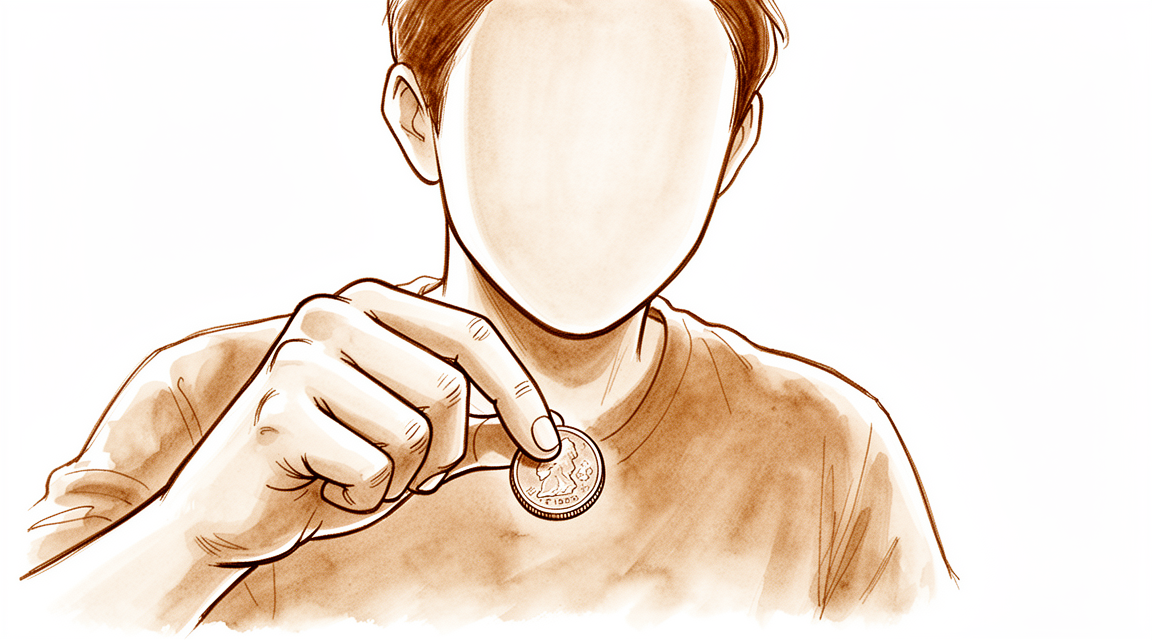
Giao thức này hướng dẫn quá trình hồi phục của bạn sau ca kết hợp khớp DIP (phẫu thuật nối khớp) – thủ thuật nối vĩnh viễn khớp nhỏ nằm ở đầu ngón tay, gần móng tay – do bác sĩ Kieran Hirpara thực hiện tại Bệnh viện tư nhân Mater Rockhampton. Giao thức bắt đầu với chương trình tập luyện tại nhà; tiếp theo là quy trình điều trị chi tiết được soạn thảo dành riêng cho chuyên viên trị liệu tay của bạn: hãy mang theo trang này hoặc bản PDF tương ứng trong lần trị liệu đầu tiên để việc phục hồi được thực hiện một cách nhất quán. Chuyên viên trị liệu có thể điều chỉnh kế hoạch tùy theo tiến triển hồi phục của bạn.
Nếu bạn có bất kỳ thắc mắc nào về vết thương sau phẫu thuật, vui lòng liên hệ với phòng khám. Việc chụp ảnh vết thương rồi gửi qua email để được đánh giá cũng là một cách hữu ích.
Những điều bạn có thể mong đợi
Phẫu thuật hợp nhất khớp DIP được thực hiện khi khớp nhỏ nằm gần móng tay bị hư hỏng và gây đau đớn, thường là do viêm khớp (các khối xương gọi là các nốt Heberden), hoặc để loại bỏ những nang dịch gây phiền toái cùng với gai xương nằm phía dưới. Thay vì cố gắng duy trì chuyển động cho khớp bị tổn thương và đau đớn, phẫu thuật này hợp nhất khớp lại ở một tư thế hơi cong, vẫn đảm bảo chức năng (khoảng 35°). Theo thiết kế, khớp này sẽ không bao giờ cử động nữa, đổi lại cơn đau sẽ biến mất và đầu ngón tay trở nên vững chắc, đủ mạnh để thực hiện các động tác kẹp. Phương pháp cố định thường là một ốc vít nhỏ không đầu được chôn sâu trong xương (không cần tháo ra sau này), hoặc đôi khi là kim Kirschner được rút ra sau khoảng sáu tuần. Nếu nang dịch đã được loại bỏ, bạn cũng cần chăm sóc vùng da hoặc nếp gấp móng tay trong quá trình lành thương.
Quá trình phục hồi chức năng của bạn dựa trên một nguyên tắc đơn giản: bảo vệ vùng khớp đã hợp nhất cho đến khi xương liền lại, nhưng vẫn vận động các khớp còn lại. Thông thường, xương sẽ liền lại sau khoảng sáu đến tám tuần, và hình ảnh trên phim X-quang cũng cho thấy kết quả tương tự sau khoảng mười tuần. Trong thời gian đó:
- Đầu ngón tay đã hợp nhất được bó bột và bảo vệ nhằm tránh làm ảnh hưởng đến quá trình liền xương.
- Các khớp khác vẫn được vận động: khớp giữa ngón tay, khớp ngón tay cái, cổ tay và tất cả các ngón tay còn lại, nhằm ngăn ngừa tình trạng cứng khớp ở bàn tay.
- Sưng nề được kiểm soát và vết sẹo được chăm sóc để ngón tay luôn thoải mái và linh hoạt.
- Khi xương đã liền hoàn toàn, các kỹ năng kẹp và nắm tay sẽ được phục hồi dần dần, chứ không phải ngay lập tức.
Những lưu ý và hạn chế
- Hãy đeo nẹp đầu ngón tay theo hướng dẫn. Ban đầu, bạn phải đeo nẹp liên tục; sau đó chỉ đeo khi vận động. Nẹp giúp giữ khớp đã được hợp nhất ở trạng thái tĩnh, nhưng vẫn cho phép khớp giữa của ngón tay (khớp PIP) di chuyển tự do.
- Tuyệt đối không nắm chặt, bóp mạnh hay nâng vật nặng bằng ngón tay vừa phẫu thuật cho đến khi khớp đã hợp nhất và bác sĩ cho phép; trong sáu tuần đầu, chỉ nên nâng tối đa khoảng 1 kg (≈2 lb).
- Hãy vận động tất cả các khớp còn lại ngay từ đầu: khớp giữa và khớp ngón tay, ngón cái, cổ tay cùng các ngón tay khác.
- Giữ băng gạc khô ráo và nâng cao tay trong những ngày đầu (10–14 ngày) để giảm sưng; đồng thời chăm sóc vùng màng móng hoặc vị trí có nang nhầy nếu bạn đã phẫu thuật cắt bỏ nang này.
- Nếu bạn có kim K-wire, hãy bảo vệ nó và giữ vùng xung quanh sạch sẽ cho đến khi được tháo ra vào khoảng sáu tuần; đối với ốc vít được đặt sâu dưới da thì không cần tháo.
- Không được lái xe cho đến khi bạn tháo bỏ nẹp cồng kềnh và có thể nắm chặt, điều khiển vô lăng một cách an toàn; thông thường là sau khoảng sáu tuần, tùy theo chỉ định của bác sĩ phẫu thuật.
Để biết cách chăm sóc vết thương, giảm sưng và ngăn ngừa sẹo, vui lòng tham khảo hướng dẫn chăm sóc vết thương của phòng khám.
Các bài tập của bạn
Kieran Hirpara 4.0
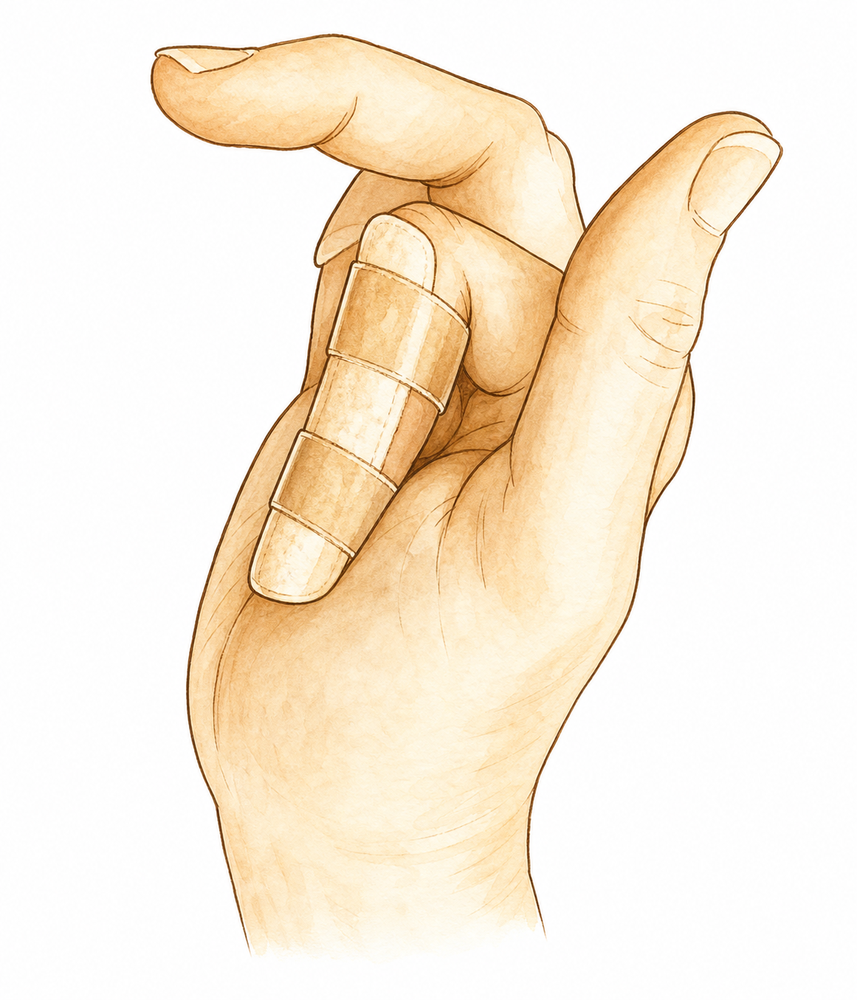
Chuyển động của các khớp PIP và MCP (những khớp nằm hai bên vùng được nối xương)
Khi đã đeo nẹp DIP (loại nẹp chỉ giữ cố định khớp đầu ngón tay), hãy gập và duỗi thẳng khớp giữa ngón tay cũng như khớp gốc ngón tay; đồng thời nắm tay nhẹ nhàng rồi mở ra hoàn toàn. Phần đầu ngón tay đã được cố định thì không được di chuyển, nhưng hai khớp nằm hai bên phải vẫn được giữ linh hoạt để ngón tay không bị cứng lại. Hãy thực hiện các động tác một cách trơn tru và trong giới hạn thoải mái.
10 lần, 3–4 lần mỗi ngày.
Kieran Hirpara 4.0
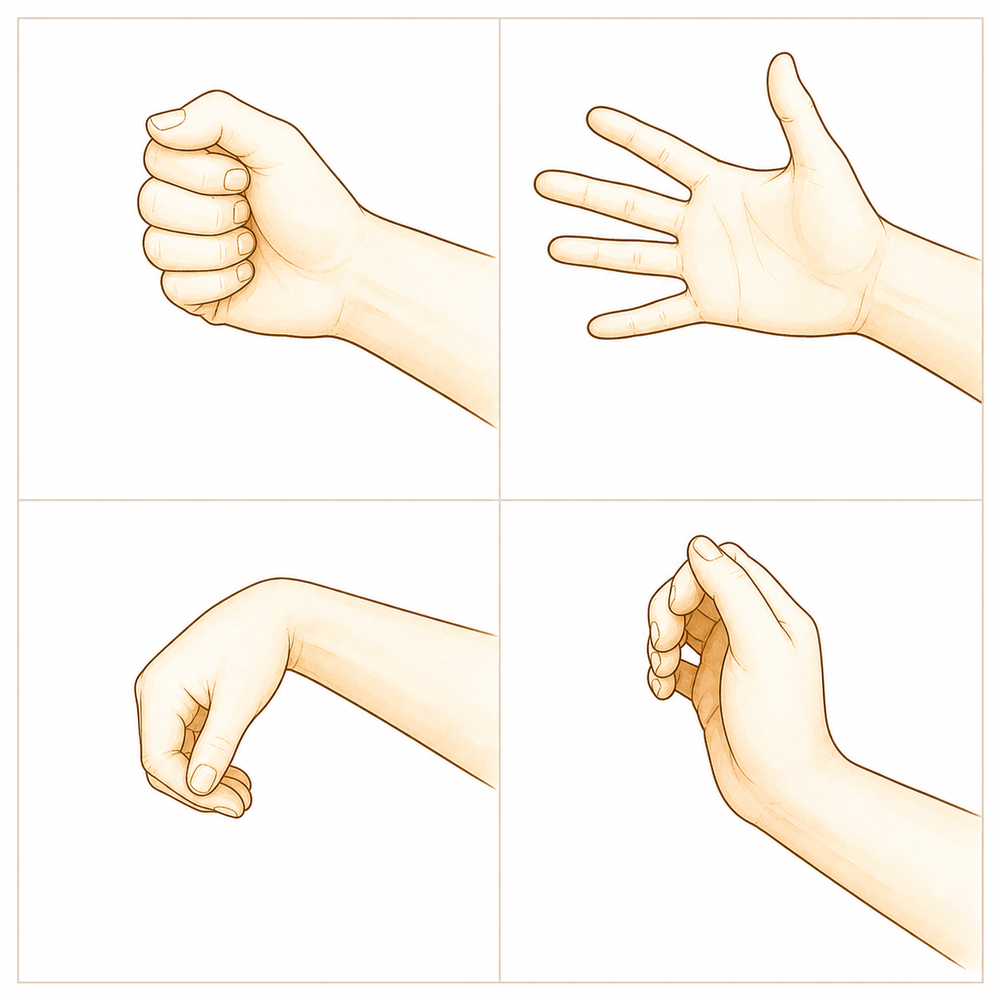
Hãy cử động tất cả các ngón tay còn lại, ngón cái và cổ tay của bạn.
Tất cả các ngón tay chưa được phẫu thuật đều cần vận động tự do ngay từ ngày đầu: nắm tay thành nắm đấm hoàn chỉnh rồi mở ra, chạm ngón cái vào từng đầu ngón tay còn lại, và nhẹ nhàng gập duỗi cổ tay lên xuống. Chỉ có đầu ngón tay đã được nối liền mới bị hạn chế vận động; phần còn lại của bàn tay nên vận động bình thường trong mức độ thoải mái để tránh bị cứng khớp hoặc yếu đi.
Mỗi động tác 10 lần, vài lần mỗi ngày
Kieran Hirpara 4.0
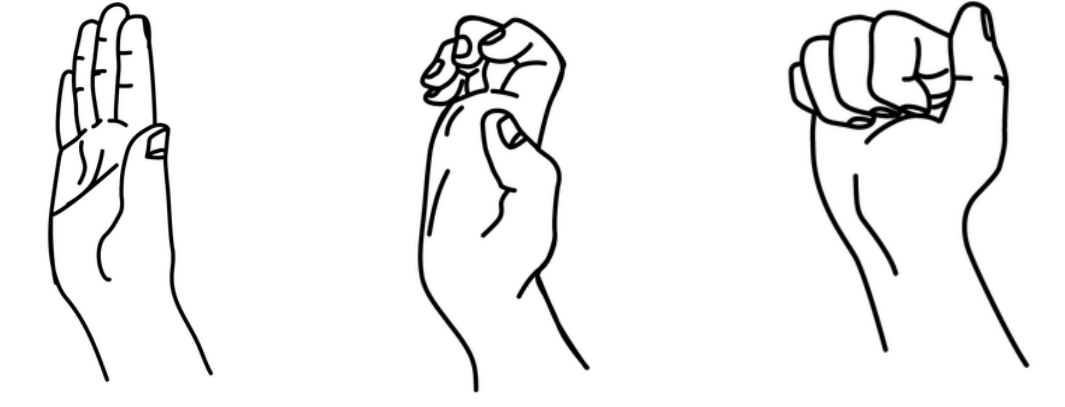
Các động tác trượt gân (nắm hình móc, nắm thành nắm đấm, duỗi thẳng)
Hãy di chuyển các ngón tay qua ba tư thế: tư thế móc (gập đầu ngón và khớp giữa, giữ các khớp ngón thẳng), tư thế nắm thành nắm đấm, rồi tư thế duỗi thẳng — dừng lại một chút ở mỗi tư thế. Việc này giúp các gân di chuyển trơn tru qua vùng đang hồi phục, tránh tình trạng bị dính lại. Hãy đảm bảo đầu ngón tay được bó nẹp vẫn cảm thấy thoải mái; các chuyển động này chỉ nhằm giúp phần còn lại của ngón tay vận động dễ dàng.
5–10 mỗi dạng, ngày 3 lần.
Kieran Hirpara 4.0
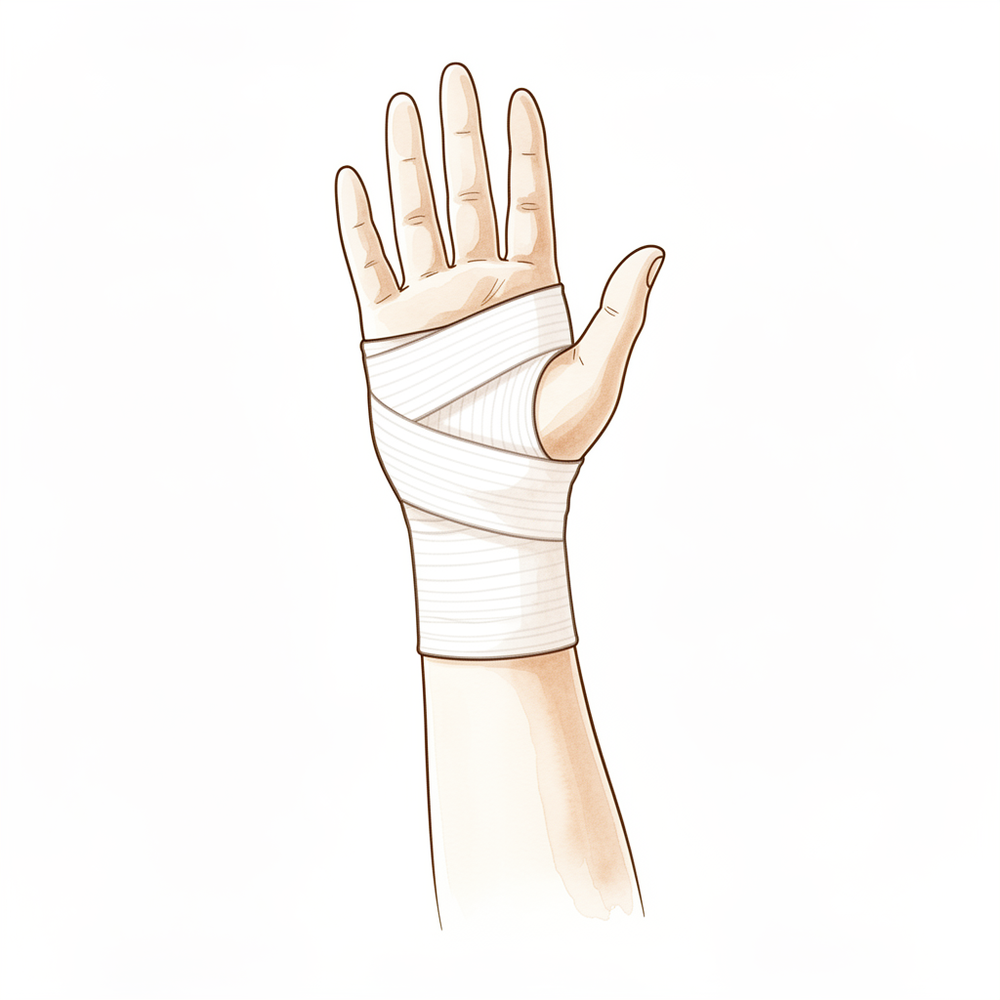
Kiểm soát sưng (nâng cao tay và băng ép)
Trong vài tuần đầu tiên, hãy giữ tay cao hơn mức tim càng nhiều càng tốt — có thể kê tay lên gối hoặc gối ôm. Khi vết thương đã ổn định, việc đeo bao ép nhẹ hoặc băng tự dính (Coban) quanh ngón tay sẽ giúp giảm sưng. Việc giảm sưng sẽ giúp bàn tay vận động dễ dàng và linh hoạt hơn.
Nâng cao vùng bị tổn thương nhiều lần trong ngày; dùng băng ép theo hướng dẫn của chuyên viên trị liệu tay.
Kieran Hirpara 4.0
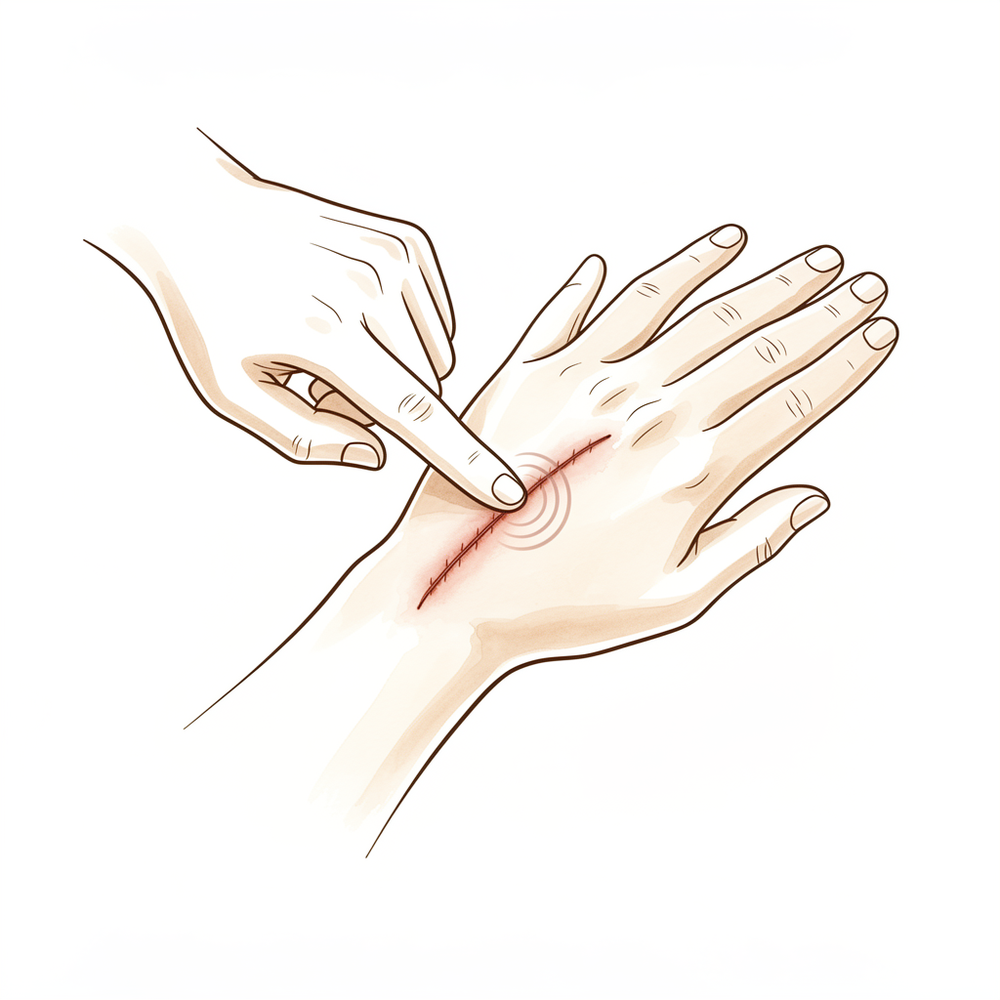
Xoa bóp vết sẹo
Khi vết thương đã lành hẳn và chuyên viên trị liệu tay cho phép, hãy thoa một lượng nhỏ kem dưỡng ẩm lên vết sẹo bằng cách xoay tròn nhẹ nhàng, chắc chắn trong khoảng một đến hai phút. Nếu bạn đã phẫu thuật cắt bỏ u nhầy, chuyên viên trị liệu cũng sẽ hướng dẫn cách chăm sóc nếp gấp móng và vùng da xung quanh. Việc này giúp vết sẹo mềm mại hơn và ít nhạy cảm hơn.
1–2 phút, 2–3 lần mỗi ngày, sau khi vết thương đã lành.
Kieran Hirpara 4.0
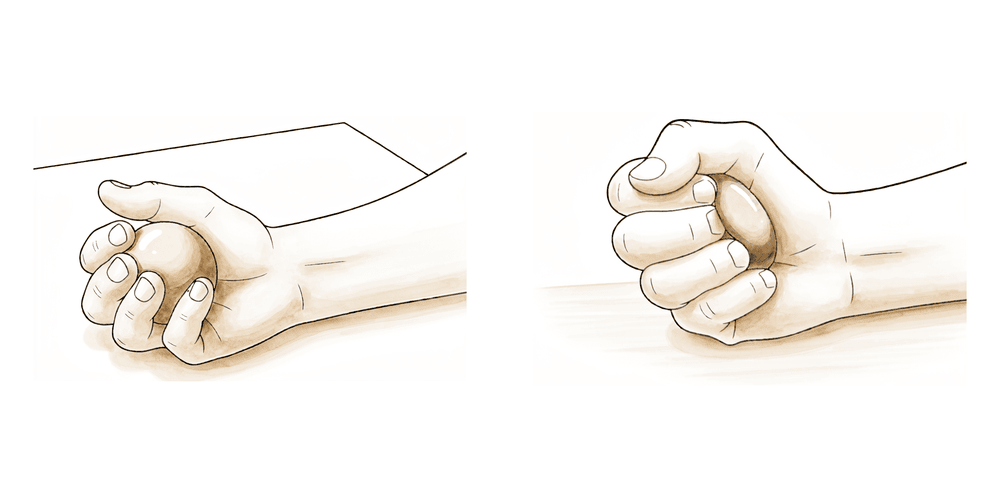
Tăng cường sức mạnh nắm và kẹp (sau khi xương đã liền)
Một bài tập dành cho giai đoạn sau — chỉ thực hiện khi hình ảnh X-quang cho thấy xương đã liền lại và chuyên viên trị liệu tay bắt đầu hướng dẫn bạn (thông thường là sau khoảng 6–8 tuần). Ban đầu, hãy nhẹ nhàng nén hỗn hợp cao su trị liệu và thực hiện các động tác kẹp nhẹ giữa ngón cái và đầu ngón tay; sau đó dần dần tăng cường độ trong những tuần tiếp theo. Tuyệt đối không dùng lực mạnh để nắm hay kẹp mạnh cho đến khi được phép — việc gây áp lực lên đầu ngón tay quá sớm có thể làm ảnh hưởng đến quá trình liền xương.
Theo hướng dẫn của chuyên viên trị liệu tay, hãy tiến hành từng bước một (bắt đầu từ khoảng 6–8 tuần).
Đây là những bài tập có trong tờ hướng dẫn của bạn. Hãy thực hiện chúng chỉ khi được hướng dẫn bởi Bác sĩ Hirpara và chuyên viên trị liệu vận động, đồng thời tuân thủ mọi giới hạn đã được đặt ra. Các bài tập ban đầu nhằm giúp các bộ phận còn lại của bàn tay vận động tự do mà không làm ảnh hưởng đến đầu ngón tay đã được nối liền: vận động các khớp nằm hai bên vùng nối, các ngón tay còn lại, ngón cái và cổ tay; các động tác trượt gân; cũng như kiểm soát tình trạng sưng nề. Việc tăng cường sức mạnh nắm và kẹp chỉ được thực hiện ở giai đoạn sau; bạn không nên bắt đầu các bài tập này cho đến khi hình ảnh X-quang cho thấy vùng nối đã liền hoàn toàn và bạn nhận được sự cho phép cụ thể từ bác sĩ. Hãy ngừng ngay mọi bài tập gây ra cơn đau dữ dội ở đầu ngón tay.
Quy trình điều trị lâm sàng của bạn
Phần còn lại của trang này mô tả quy trình phục hồi chức năng theo từng giai đoạn sau phẫu thuật cố định khớp đốt ngón tay xa (DIP). Phần này cần được cung cấp cho chuyên viên trị liệu tay; mỗi giai đoạn đều bắt đầu bằng lời giải thích bằng ngôn ngữ thông thường về những gì đang diễn ra. Nguyên tắc cốt lõi là bảo vệ vùng khớp vừa được cố định cho đến khi xương liền lại, đồng thời duy trì vận động hoàn toàn ở các khớp khác: khớp DIP được cố định bằng nẹp P2–P3 để giữ yên, trong khi khớp PIP vẫn được tự do vận động; phù nề và sẹo cũng được kiểm soát; việc tăng dần lực nắm và lực kẹp chỉ được thực hiện sau khi khớp đã liền.
Trước khi bắt đầu điều trị, cần xem kỹ báo cáo phẫu thuật và tiền sử bệnh của bệnh nhân; đồng thời trao đổi với bác sĩ phẫu thuật về phương pháp cố định (vít nén không đầu, được đặt sâu trong xương và không cần tháo ra, so với kim Kirschner – đã được tháo ra sau khoảng 6 tuần), vị trí cố định khớp (hơi gập, tối đa khoảng 35°), cũng như việc có tiến hành cắt bỏ nang nhầy cùng vùng da và nếp gấp móng hay không. Thông thường, khớp sẽ liền lâm sàng vào khoảng 6–8 tuần, còn việc liền xương trên phim X-quang thường diễn ra sau 10 tuần; lộ trình phục hồi chức năng dưới đây là kết luận chung từ các chuyên gia và phải tuân theo chỉ định của bác sĩ phẫu thuật cũng như kết quả chụp X-quang xác nhận sự liền xương trước khi tháo nẹp và bắt đầu tăng dần lực vận động.
Giai đoạn 1 — Bảo vệ và giảm sưng (tuần 0 đến tuần 2)
Hai tuần đầu tiên có mục đích bảo vệ vùng khớp vừa được cố định, giảm sưng và giúp vết thương lành lại; đồng thời duy trì vận động cho các khớp không bị ảnh hưởng để tránh tình trạng cứng khớp.
Dành cho chuyên viên trị liệu tay:
Giáo dục và các biện pháp phòng ngừa - Băng gạc hoặc nẹp phẫu thuật dày, cần nâng cao tay trong 10–14 ngày đầu; giữ cho băng gạc luôn khô ráo - Bảo vệ vùng khớp vừa được cố định; không chịu tải lên đầu ngón tay vừa phẫu thuật - Nếu còn kim Kirschner, cần bảo vệ vùng kim; kiểm tra vết thương sau khi cắt bỏ nang hoặc vết thương ở nếp gấp móng tay nếu có
Cách xử lý - Vết thương: thay băng gạc theo hướng dẫn; theo dõi dấu hiệu nhiễm trùng - Phù nề: nâng cao tay, thực hiện các động tác bơm máu nhẹ nhàng, chườm đá nếu cần - Vận động: thực hiện các động tác AROM cho tất cả các khớp không bị ảnh hưởng: khớp PIP và MCP của ngón tay vừa phẫu thuật, ngón cái, cổ tay và các ngón tay còn lại; bắt đầu các bài tập trượt gân khi cảm thấy thoải mái
Tiêu chí để chuyển sang giai đoạn tiếp theo - Vết thương đã ổn định; phù nề được kiểm soát; có thể chuyển sang sử dụng nẹp tháo rời chuyên dụng chặn khớp DIP sau khoảng hai tuần.
Giai đoạn 2 — Nẹp cố định khớp DIP kết hợp vận động (từ tuần thứ 2 đến tuần thứ 6)
Khoảng từ tuần thứ hai, băng gạc dày sẽ được thay thế bằng nẹp cố định khớp DIP có thể tháo rời được thiết kế riêng (loại nẹp Stax/mallet, bao phủ vùng P2–P3) nhằm cố định chỉ khớp đầu ngón tay mà vẫn để khớp PIP tự do. Nẹp này phải được đeo liên tục trong suốt giai đoạn này. Các vận động chủ động ở các vùng còn lại đều được khuyến khích; tình trạng sưng nề và sẹo cũng được kiểm soát; đầu ngón tay luôn được giữ trong trạng thái không chịu tải.
Dành cho chuyên viên trị liệu tay:
Giáo dục và các lưu ý cần tránh - Nẹp cố định khớp DIP có thể tháo rời được thiết kế riêng (vùng P2–P3, khớp PIP tự do) phải được đeo liên tục trong suốt giai đoạn này - Không được nắm chặt hay kẹp vật; mức tải trọng tối đa cho phép khoảng 2 pound (≈1 kg)
Cách quản lý - Các bài tập: vận động chủ động khớp PIP, MCP, ngón cái và cổ tay, cùng các vận động của các ngón tay còn lại; thực hiện các động tác trượt gân (nắm hình móc, nắm thành nắm đấm, duỗi thẳng) - Sưng nề: tiếp tục nâng cao chi và áp dụng băng ép (băng Coban hoặc ống băng ép mỏng) tùy theo khả năng chịu đựng của bệnh nhân - Sẹo: bắt đầu xoa bóp vùng sẹo sau khi vết thương đã lành hoàn toàn; chăm sóc vùng nếp gấp móng tay nơi đã cắt bỏ u nhầy
Tiêu chí để chuyển sang giai đoạn tiếp theo - Khớp PIP/MCP vẫn giữ được khả năng vận động; tình trạng sưng nề được kiểm soát; vết thương đã lành; quá trình liền xương bắt đầu xuất hiện vào khoảng tuần thứ sáu (chỉ được giảm dần thời gian đeo nẹp khi có kết quả chụp X-quang xác nhận đã liền xương)
Giai đoạn 3 — giảm dần việc sử dụng nẹp và bắt đầu các bài tập tăng cường sức mạnh nhẹ nhàng (tuần thứ 6 đến 8)
Khi hình ảnh X-quang cho thấy xương đã liền hoàn toàn (thực tế mất khoảng 6–8 tuần), việc sử dụng nẹp sẽ được giảm dần (chỉ đeo khi vận động hoặc cần bảo vệ); nếu có sử dụng dây kim loại K, thì dây này sẽ được tháo ra vào khoảng tuần thứ 6. Lúc này bắt đầu các bài tập tăng cường sức mạnh cho khả năng kẹp và nắm tay một cách nhẹ nhàng.
Dành cho chuyên viên trị liệu tay:
Giáo dục và các lưu ý cần chú ý - Giảm dần việc sử dụng nẹp DIP sau khi xác nhận xương đã liền: tiếp tục đeo nẹp chỉ khi cần bảo vệ hoặc vận động; tháo dây kim loại K vào khoảng tuần thứ 6 - Tăng dần mức lực tác động; mức tải trọng tối đa có thể chịu đựng là khoảng 5 pound (≈2 kg), bắt đầu từ tuần thứ 8
Cách xử lý - Các bài tập: bắt đầu các bài tập tăng cường sức mạnh nắm và kẹp nhẹ nhàng: sử dụng đất nặn trị liệu, các bài tập kẹp và nắm tay nhẹ; tiếp tục vận động toàn bộ các khớp còn lại; duy trì các biện pháp chăm sóc vết sẹo - Đánh giá lại tình trạng sưng phù còn sót lại hoặc độ cứng khớp PIP/MCP và có biện pháp xử lý nếu cần
Tiêu chí để chuyển sang giai đoạn tiếp theo - Hình ảnh X-quang xác nhận xương đã liền hoàn toàn; đầu ngón tay không còn cảm giác đau; có thể chịu được các lực tác động nhẹ mà không gây đau tại vùng liền xương
Giai đoạn 4 — Tăng cường sức mạnh dần dần và cho xuất viện (tuần thứ 8 đến 12)
Khi vùng sụn đã liền hoàn toàn, việc tăng cường sức mạnh sẽ được tiến hành nhằm phục hồi chức năng bình thường của bàn tay; các hạn chế vận động sẽ được dỡ bỏ vào khoảng tuần thứ 12.
Dành cho chuyên viên trị liệu tay:
Giáo dục và các biện pháp phòng ngừa - Tăng cường sức mạnh nắm và kẹp dần dần; mức giới hạn chức năng khoảng 10 pound (≈4,5 kg) vào khoảng tuần thứ 10 - Không còn hạn chế vận động từ tuần thứ 12 trở đi, tùy theo đánh giá của bác sĩ phẫu thuật
Cách quản lý - Các bài tập: tăng dần mức độ sức đề kháng trong các động tác nắm và kẹp (từ đất nặn → dụng cụ nắm → các bài tập mô phỏng hoạt động thực tế); nhằm phục hồi hoàn toàn khả năng vận động của bàn tay - Cân nhắc cho xuất viện khi ngón tay đã liền xương, không còn đau, chức năng và sức mạnh bàn tay gần như trở lại bình thường - Hãy chuyển bệnh nhân trở lại gặp bác sĩ phẫu thuật điều trị nếu xuất hiện đau tại vùng sụn vừa phẫu thuật, có dấu hiệu lo ngại về sự liền xương, hoặc kết quả vận động không như mong đợi
Tiêu chí để cho xuất viện - Vùng sụn đã liền xương, không còn đau; tất cả các khớp chưa phẫu thuật đều có thể vận động tự do; khả năng kẹp và nắm đã được phục hồi hoàn toàn
Trở lại với công việc và các hoạt động thường ngày
Bạn có thể bắt đầu sử dụng các ngón tay còn lại và toàn bộ bàn tay một cách nhẹ nhàng trong sinh hoạt hàng ngày, miễn là cảm thấy thoải mái; chỉ có đầu ngón tay đã được nối lại là cần hạn chế sử dụng. Việc lái xe thường có thể bắt đầu trở lại vào khoảng sáu tuần sau phẫu thuật, khi bạn đã tháo bỏ nẹp cứng và có thể nắm tay, điều khiển vô lăng một cách an toàn; quyết định này do Bác sĩ Hirpara đưa ra trong buổi tái khám, vì vậy hãy chuẩn bị sẵn phương tiện di chuyển hỗ trợ trong những tuần đầu. Các động tác nắm nhẹ và kẹp nhẹ thường bắt đầu vào khoảng sáu tuần và dần tăng dần từ tuần thứ tám trở đi, khi xương đã liền lại. Việc sử dụng bàn tay cho các hoạt động nặng nhọc hoặc thể thao thường có thể thực hiện được vào khoảng mười hai tuần sau phẫu thuật. Những mốc thời gian này chỉ mang tính hướng dẫn dựa trên sự đồng thuận của các chuyên gia chứ không phải là thời hạn cố định: quyết định của bác sĩ phẫu thuật và kết quả chụp X-quang (xác nhận xương đã liền) mới là yếu tố quyết định.
Sau khi thực hiện theo phác đồ
Phác đồ này được áp dụng song song với các hướng dẫn phục hồi chung của phòng khám; bạn cũng nên tham khảo thêm các mục kiểm soát cơn đau sau phẫu thuật, chăm sóc vết thương và chăm sóc sẹo. Kế hoạch từng giai đoạn nêu trên dựa trên các hướng dẫn phục hồi đã được công bố sau phẫu thuật cố định khớp ngón tay, và quá trình hồi phục của bạn sẽ được Bác sĩ Hirpara cùng chuyên viên trị liệu tay theo dõi và điều chỉnh tùy theo tiến triển lành vết thương của ngón tay.
Evidence & references
This is the clinical evidence summary written for health professionals. It is technical, and it lists the research this page was built from. You do not need to read it to understand your treatment or to make a decision about it.
DIP Joint Fusion — Procedure Outcomes & Post-operative Rehabilitation (Distal Interphalangeal Arthrodesis)
Topic scope: post-operative rehabilitation after arthrodesis (fusion) of the distal interphalangeal (DIP) joint — most often for end-stage osteoarthritis (Heberden's nodes), or to excise a mucous cyst together with its underlying osteophyte. This is a fusion, not a reconstruction: the joint is deliberately and permanently abolished and set in a slightly flexed, functional position, so the rehabilitation is a protect-to-union pathway built around oedema control, scar/nail-fold management, and preservation of motion at every adjacent joint, followed by progressive reloading — not restoration of DIP motion.
Defining principle of the rehab here: a DIP arthrodesis is meant to stop moving. The single therapeutic goal is to deliver a solid, pain-free, well-aligned bony union while keeping the rest of the hand fully mobile. The fingertip is immobilised in a P2–P3 (Stax/mallet-type) orthosis that blocks the DIP but leaves the PIP free; the deliberate restraints are protection of the fixation and avoidance of pinch/grip loading until union. The principal branch points are the fixation method (buried headless compression screw — no removal — versus K-wire, removed at ~6 weeks) and whether a mucous cyst with skin/nail-fold excision was performed, which adds soft-tissue/scar care. Union, not the calendar, gates splint weaning and loading.
A. PROCEDURE OUTCOMES (fusion union, position, fixation)
DIP arthrodesis is a reliable pain-relieving operation; the principal technical debates are over fixation method and fusion position, not whether to fuse a painful, end-stage joint.
- High union rates with headless compression screw fixation. A series of 64 joints fused with a Herbert-type headless compression screw reported reliable bony union with a low complication profile, supporting the buried-screw construct that requires no later removal [Hand 2010, DOI: 10.1007/s11552-010-9295-3]. Moderate (observational case series).
- Radiographic union averages around ten weeks. A review of DIP arthrodesis techniques reports a mean time to radiographic fusion of approximately 10 weeks, with reported union rates such as ~85% in the Brutus cohort, underlining that clinical comfort precedes full radiographic consolidation [J Hand Surg Am 2013, DOI: 10.1016/j.jhsa.2013.06.010]. Moderate (review of case series).
- Fusion position is a consensus, not a controversy. Technique descriptions place the DIP in slight flexion in a functional position for pinch; dorsal-plate and screw techniques are described with attention to setting and holding this position during fixation [J Hand Surg Am 2018, DOI: 10.1016/j.jhsa.2018.03.049]. Mechanistic / consensus.
- Screw fit depends on bony dimensions. Anatomical sizing work shows the headless screw must be matched to the medullary dimensions of the distal phalanx, informing implant selection and reducing fixation-related complications [Hand 2014, DOI: 10.1007/s11552-014-9679-x]. Mechanistic.
- Fixation choice carries differing complication patterns. Comparative data on K-wire versus headless (Herbert) screw fixation describe differences in infection and hardware-related events, relevant to the protective pin care needed when a K-wire is used and removed at ~6 weeks [J Hand Surg Am 2013, DOI: 10.1016/j.jhsa.2013.01.017]. Moderate (comparative series).
- Acute arthrodesis is an established option in trauma. Primary IP-joint arthrodesis for acute injury is a recognised technique, supporting fusion as a durable solution beyond degenerative disease [J Hand Surg / Thieme 2017, DOI: 10.1055/s-0037-1608691]. Moderate (case series).
B. REHABILITATION / THERAPY EVIDENCE
There are no randomised trials of rehabilitation after DIP arthrodesis. The rehab pathway is built from surgical-outcome timing data (union ~6–8 weeks clinical, ~10 weeks radiographic) plus published hand-therapy protocols and standard hand-therapy practice. The therapeutic logic is to immobilise only the fused joint, keep every other joint moving, control swelling and scar, and reload pinch/grip only after union.
- Immobilise the DIP, free the PIP. Published finger-fusion therapy protocols use a custom removable DIP-blocking (Stax/mallet-type) orthosis spanning P2–P3 that holds the fingertip joint while leaving the PIP free for active motion — continual early wear, weaning to activity-only after X-ray union [TCO; Hand Wisconsin; Alaska Ortho; Melbourne Arm Clinic protocols, URLs below]. Weak (consensus / published protocols).
- Preserve motion at all uninvolved joints from day one. Active motion of the PIP, MCP, thumb, wrist and all other digits, plus tendon glides, is standard hand-therapy practice to prevent stiffness while the DIP consolidates [published protocols, URLs below]. Consensus / standard practice.
- Oedema and scar control are routine adjuncts. Elevation and compression for swelling, and scar massage once healed (with nail-fold care after mucous-cyst excision), follow standard hand-therapy practice rather than trial evidence. Consensus / standard practice.
- Loading is gated by union, not by date. Protocols withhold power grasp/pinch until the fusion is radiographically united, then progress strengthening gradually — reflecting the ~10-week mean radiographic union from the outcome literature [J Hand Surg Am 2013, DOI: 10.1016/j.jhsa.2013.06.010]. Weak–moderate (timing anchored to outcome series; rehab schedule consensus).
Recovery trajectory (expected, evidence-anchored)
| Phase | Window | Restraint | Hand use / therapy focus | Strength / load | Notes |
|---|---|---|---|---|---|
| 1 — Protect & settle | Week 0–2 | Bulky dressing/splint; DIP unloaded | Elevation; AROM of all uninvolved joints (PIP, MCP, thumb, wrist, other digits); begin tendon glides | None to the fingertip | Keep dressing dry; review pin/cyst-excision wound |
| 2 — DIP-blocking splint with activity | Week 2–6 | Custom P2–P3 DIP-block, PIP free, worn continually | Active PIP/MCP/thumb/wrist + all-other-digit motion; tendon glides; oedema (Coban/sleeve); scar massage once healed | No power grasp/pinch; ~2 lb (≈1 kg) limit | Clinical union emerging ~6 wk |
| 3 — Wean splint & gentle strengthening | Week 6–8 | Splint weaned once united on X-ray; K-wire out ~6 wk | Begin gentle grip/pinch (putty, light pinch/grip); continue full motion elsewhere; continue scar care | ~5 lb (≈2 kg) from 8 wk | Buried screw needs no removal |
| 4 — Progressive strengthening & discharge | Week 8–12 | Restrictions lifting | Progressive grip/pinch strengthening; restore full hand use | ~10 lb (≈4.5 kg) at 10 wk; no restriction ~12 wk | Discharge when fusion solid + pain-free |
(Phase windows mirror the precautions and recovery-curve structure in the patient protocol; clinical union ~6–8 weeks and radiographic union ~10 weeks are anchored to the outcome series, while the exact phase timings are low-level expert consensus, not trial-derived deadlines, and are subject to surgeon discretion and X-ray confirmation of union.)
C. KEY CONTROVERSIES / EVIDENCE QUALITY
- Fixation method. Buried headless compression screw (no removal) versus K-wire (removed ~6 weeks) — both achieve union; the comparative literature describes differing infection and hardware-event profiles, and the choice drives whether pin-site protection is needed in rehab [DOI: 10.1007/s11552-010-9295-3; DOI: 10.1016/j.jhsa.2013.01.017]. Moderate.
- Fusion position. Slight flexion (up to ~35°) in a functional pinch position is a settled consensus across technique descriptions, not a live controversy [DOI: 10.1016/j.jhsa.2018.03.049]. Consensus.
- Union timing. Clinical comfort (~6–8 weeks) precedes radiographic union (~10 weeks mean), so splint weaning and loading should follow the X-ray rather than the calendar [DOI: 10.1016/j.jhsa.2013.06.010]. Moderate.
- Rehabilitation schedule. No RCTs exist for DIP-fusion rehab; phase timings are derived from published therapy protocols and standard hand-therapy practice anchored to surgical union data. Low-level expert consensus.
- Mucous-cyst cases. Excision of a mucous cyst with its osteophyte adds skin/nail-fold and scar care to the standard fusion rehab; this is a soft-tissue management addition rather than a change to the bony-union pathway. Consensus / standard practice.
D. EVIDENCE STRENGTH FLAGS (summary)
- MODERATE (observational case series / reviews): reliable bony union with headless compression screw fixation; mean radiographic union ~10 weeks (~85% union, Brutus); differing complication profiles by fixation method; acute IP arthrodesis as an established trauma option.
- CONSENSUS / MECHANISTIC: slight-flexion functional fusion position; screw sizing to phalangeal dimensions; immobilise-the-DIP / free-the-PIP splinting principle.
- WEAK / LOW-LEVEL CONSENSUS: the specific phased rehabilitation schedule (no RCTs; derived from published therapy protocols + standard hand-therapy practice, anchored to union timing); exact phase timings and load limits (typical guides, not trial-derived); oedema/scar adjuncts (standard practice).
CITATIONS
RAG corpus (180,000+ Orthopaedic articles)
- Distal interphalangeal joint arthrodesis using a dorsal plate: technique and fusion position. J Hand Surg Am. 2018. DOI: 10.1016/j.jhsa.2018.03.049
- Distal interphalangeal joint arthrodesis with the Herbert headless compression screw: union and complications in 64 joints. Hand (N Y). 2010. DOI: 10.1007/s11552-010-9295-3
- Distal interphalangeal joint arthrodesis: review of techniques and outcomes (mean ~10-week radiographic fusion; Brutus ~85% union). J Hand Surg Am. 2013. DOI: 10.1016/j.jhsa.2013.06.010
- K-wire versus Herbert screw fixation for distal interphalangeal joint arthrodesis: infection and hardware events. J Hand Surg Am. 2013. DOI: 10.1016/j.jhsa.2013.01.017
- Anatomical sizing of headless compression screws for distal phalangeal fixation. Hand (N Y). 2014. DOI: 10.1007/s11552-014-9679-x
- Acute interphalangeal joint arthrodesis in trauma. J Hand Surg / Thieme. 2017. DOI: 10.1055/s-0037-1608691
DIP-fusion rehabilitation literature (URLs)
- Twin Cities Orthopedics — Distal Interphalangeal (DIP) Joint Fusion post-op protocol. https://www.tcomn.com/wp-content/uploads/2016/06/Distal-Interphalangeal-DIP-Joint-Fusion.pdf
- Hand Wisconsin — Finger-joint fusion therapy protocol. https://handwisconsin.com/wp-content/uploads/2016/09/fusion-finger-joint-therapy-protocol.pdf
- Alaska Orthopaedics — Arthrodesis (DIP / PIP or MCP) joint fusion protocol. https://www.akortho.com/wp-content/uploads/Arthrodesis-DIP-PIP-or-MCP-Joint-Fusion.pdf
- Melbourne Arm Clinic — PIP / DIP arthrodesis rehabilitation protocol. https://melbournearmclinic.com.au/orthopaedic-rehabilitation/shoulder-rehabilitation/pip-dip-arthrodesis-protocol/