Patients › Rehabilitation
Sửa chữa gân gấp
Kế hoạch phục hồi vận động chủ động sớm sau phẫu thuật nối gân gấp ngón tay: sử dụng nẹp ngắn kiểu Manchester để vận động nhẹ nhàng và an toàn cho gân đang hồi phục ngay từ tuần đầu tiên, đồng thời bảo vệ vết nối trong suốt sáu tuần.
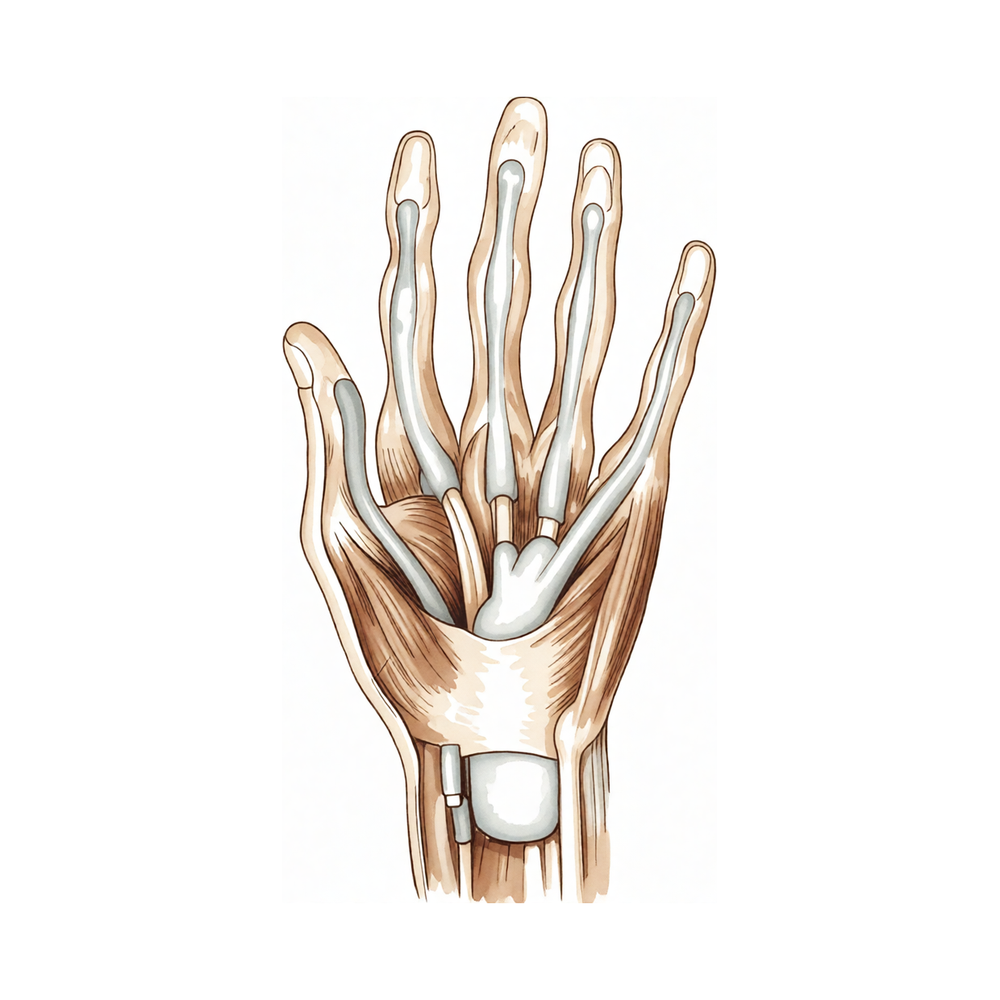
Quy trình này hướng dẫn quá trình hồi phục của bạn sau khi được bác sĩ Kieran Hirpara tại Bệnh viện tư nhân Mater Rockhampton phẫu thuật nối lại gân duỗi ở ngón tay (đây là sợi gân chạy dọc mặt lòng bàn tay, giúp ngón tay gập lại về phía lòng bàn tay). Quy trình bắt đầu với chương trình tập luyện tại nhà; tiếp theo là quy trình điều trị lâm sàng được soạn thảo dành riêng cho chuyên viên trị liệu tay của bạn: hãy mang theo trang này hoặc bản PDF tương ứng trong lần trị liệu đầu tiên để việc phục hồi diễn ra một cách đồng bộ. Chuyên viên trị liệu tay có thể điều chỉnh kế hoạch này tùy theo tiến độ hồi phục của bạn.
Nếu bạn có bất kỳ thắc mắc nào về vết thương sau phẫu thuật, hãy liên hệ với phòng khám. Việc chụp ảnh vết thương rồi gửi qua email để được đánh giá cũng rất hữu ích.
Những điều bạn có thể mong đợi
Phẫu thuật khâu gân duỗi nhằm nối lại các đầu gân bị đứt để ngón tay có thể cử động được trở lại. Vết khâu sau phẫu thuật đủ chắc để cho phép vận động nhẹ ngay lập tức; tuy nhiên, trong vài tuần đầu, gân vẫn còn yếu vì chưa liền hoàn toàn. Do đó, kế hoạch điều trị được thiết kế nhằm giúp gân vận động vừa đủ để không bị dính, mà không gây áp lực quá mức khiến các mũi khâu bị đứt.
Để thực hiện điều này, tay bạn sẽ được đặt vào một nẹp nhẹ đặc biệt gọi là nẹp ngắn Manchester. Khác với các loại nẹp cũ nặng nề, loại nẹp này có chiều dài ngắn, chỉ kéo dài đến vùng nếp gấp cổ tay nên cổ tay vẫn được tự do cử động. Nẹp này cho phép cổ tay di chuyển về phía trước và phía sau tới khoảng 45 độ; đồng thời một bộ phận nhỏ trong nẹp sẽ ngăn các khớp ngón tay không duỗi thẳng quá 30 độ, trong khi các khớp ngón vẫn có thể cử động bình thường. Bạn phải đeo nẹp suốt 24 giờ trong sáu tuần, chỉ tháo ra khi được hướng dẫn để tập luyện hoặc rửa tay.
Điểm đặc biệt là cách sử dụng cổ tay trong quá trình vận động. Khi bạn gập cổ tay về phía trước, ngón tay gần như tự động duỗi thẳng ra (hiện tượng này gọi là hiệu ứng tenodesis); nhờ đó bạn có thể mở ngón tay ra mà không cần dùng sức cơ. Ngược lại, khi gập cổ tay về phía sau, việc uốn cong ngón tay một cách nhẹ nhàng sẽ dễ dàng và an toàn hơn. Cách vận động này giúp gân luôn trơn tru, đồng thời ngăn ngừa tình trạng ngón tay bị cong cứng – vấn đề thường gặp nhất sau phẫu thuật khâu gân.
Các bài tập ban đầu (bắt đầu từ ngày 4–5) rất nhẹ nhàng và có tính định hướng: trước tiên là uốn cong ngón tay một cách thụ động, sau đó là động tác uốn cong nhẹ kiểu “móc” bắt đầu từ đầu ngón tay, rồi duỗi thẳng ngón tay khi cổ tay vẫn gập. Trong sáu tuần đầu, bạn không được nắm chặt hay cố gắng vận động quá mức. Sau sáu tuần, nẹp sẽ được tháo ra và bắt đầu tập luyện tăng cường sức mạnh; hầu hết bệnh nhân sẽ phục hồi hoàn toàn khả năng sử dụng tay vào khoảng 10–12 tuần sau phẫu thuật.
Các lưu ý và hạn chế
- Hãy đeo nẹp ngắn Manchester liên tục suốt 6 tuần: chỉ tháo ra khi thực hiện các bài tập hoặc vệ sinh theo hướng dẫn.
- Trong 6 tuần đầu, KHÔNG nắm tay chặt, KHÔNG nắm, nhấc, kéo hay mang vác bất cứ thứ gì bằng tay vừa phẫu thuật: việc chịu tải nặng có thể làm đứt lại chỗ khâu nối.
- KHÔNG cố gắng duỗi thẳng hay gập ngón tay một cách mạnh mẽ; mọi chuyển động cần thực hiện nhẹ nhàng, trong phạm vi mà bác sĩ đã hướng dẫn.
- Bạn có thể sử dụng tay để thực hiện những công việc nhẹ nhàng, an toàn ngoại trừ ngón tay bị thương, miễn là không có lực kéo hay gây căng cho ngón tay đó.
- Nếu nghe thấy tiếng “cạch” hoặc cảm giác ngón tay bất ngờ mềm ra, không thể gập lại được, có thể là gân đã bị đứt: hãy liên hệ phòng khám ngay lập tức nếu điều này xảy ra.
- KHÔNG lái xe khi đang đeo nẹp; việc lái xe chỉ được phép sau khi tháo nẹp (khoảng 6 tuần), khi khả năng nắm chặt và kiểm soát tay đã đủ tốt và bạn đã được bác sĩ cho phép.
Để quản lý vết thương, tình trạng sưng và sẹo, vui lòng tham khảo hướng dẫn chăm sóc vết thương của phòng khám.
Các bài tập của bạn
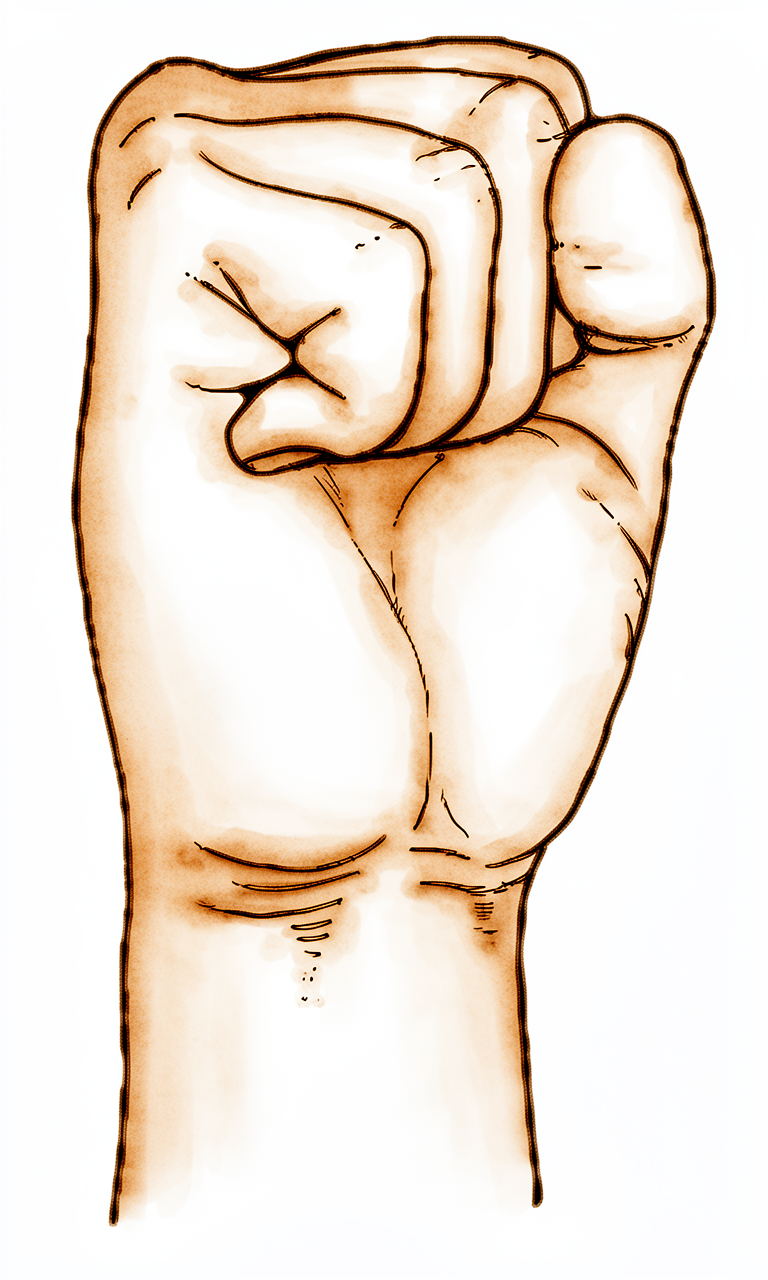
Kéo giãn nắm tay thụ động (gập các khớp liên đốt)
Hãy dùng tay còn lại để nhẹ nhàng gập ngón tay vừa được phẫu thuật sao cho tạo thành nắm tay hoàn chỉnh, gập hết các khớp ngón tay — đồng thời giữ cho ngón tay hoàn toàn thả lỏng để tay kia thực hiện toàn bộ động tác. Bước này cần được thực hiện ĐẦU TIÊN trong mỗi buổi tập nhằm giúp các khớp ngón tay mềm dẻo và sẵn sàng cho các chuyển động. Việc này không gây lực kéo lên vùng vừa được phẫu thuật vì các cơ của bạn vẫn ở trạng thái thả lỏng. Hãy thực hiện từ từ và dừng lại ngay khi cảm thấy hơi đau.
10 lần, vào đầu mỗi buổi trị liệu; thực hiện nhiều buổi mỗi ngày.
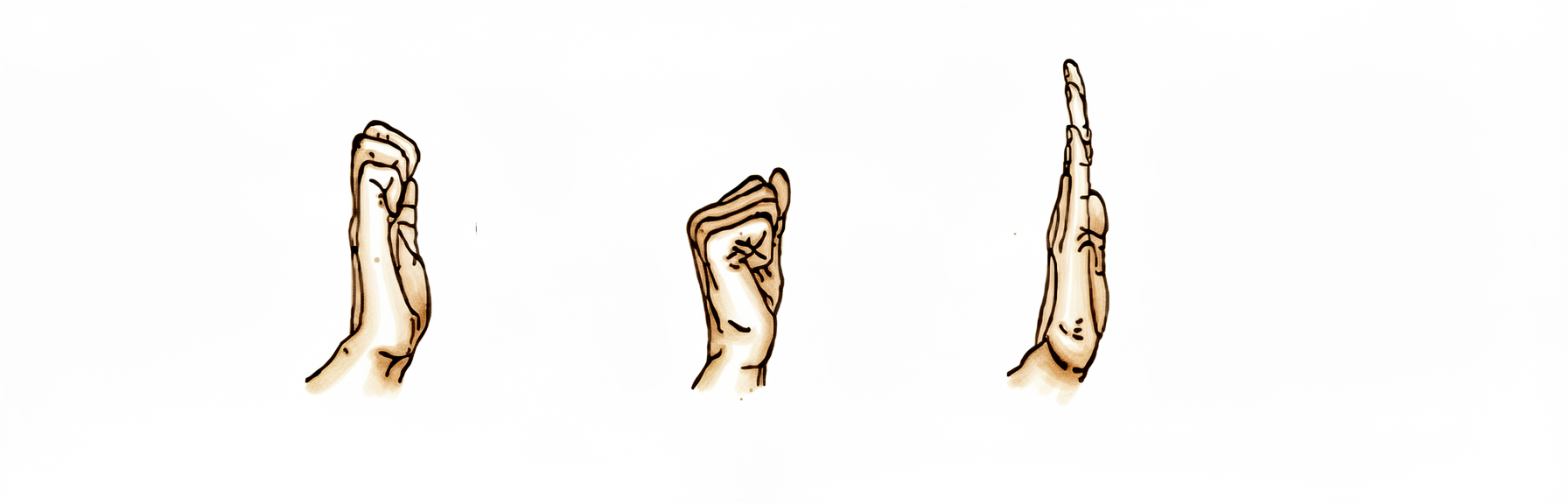
Nắm tay hình móc chủ động bắt đầu từ khớp DIP
Khi cổ tay ngửa ra sau (duỗi), dù đang đeo nẹp hay không, hãy gập đầu ngón tay xuống trước để tạo thành hình “móc” — gập khớp đầu ngón và khớp giữa trong khi giữ khớp gốc ngón (khớp đốt bàn ngón) thẳng. Giữ nhẹ nhàng rồi thả ra. Bắt đầu động tác gập từ đầu ngón tay giúp gân đang lành trượt đúng theo cách cần thiết. Chỉ dùng lực nhẹ — không bao giờ ép và không bao giờ nắm tay mạnh, chặt.
10 lần, thực hiện nhiều buổi mỗi ngày theo hướng dẫn.
Kieran Hirpara 4.0
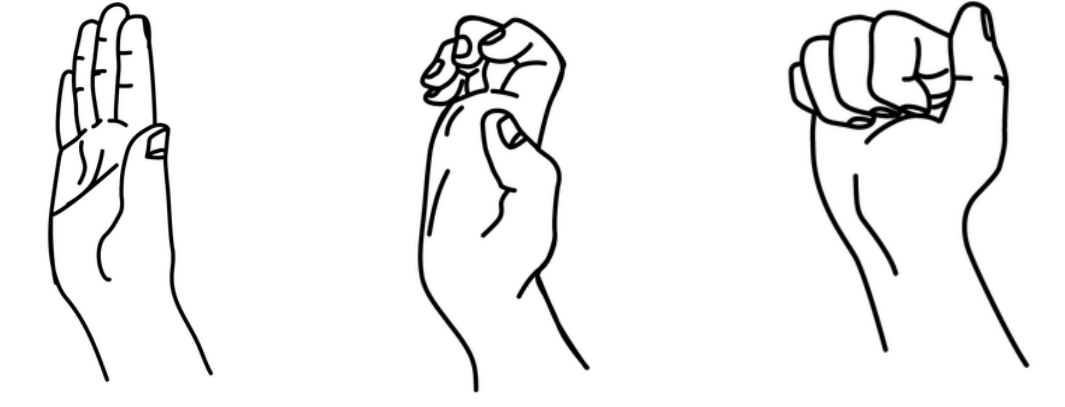
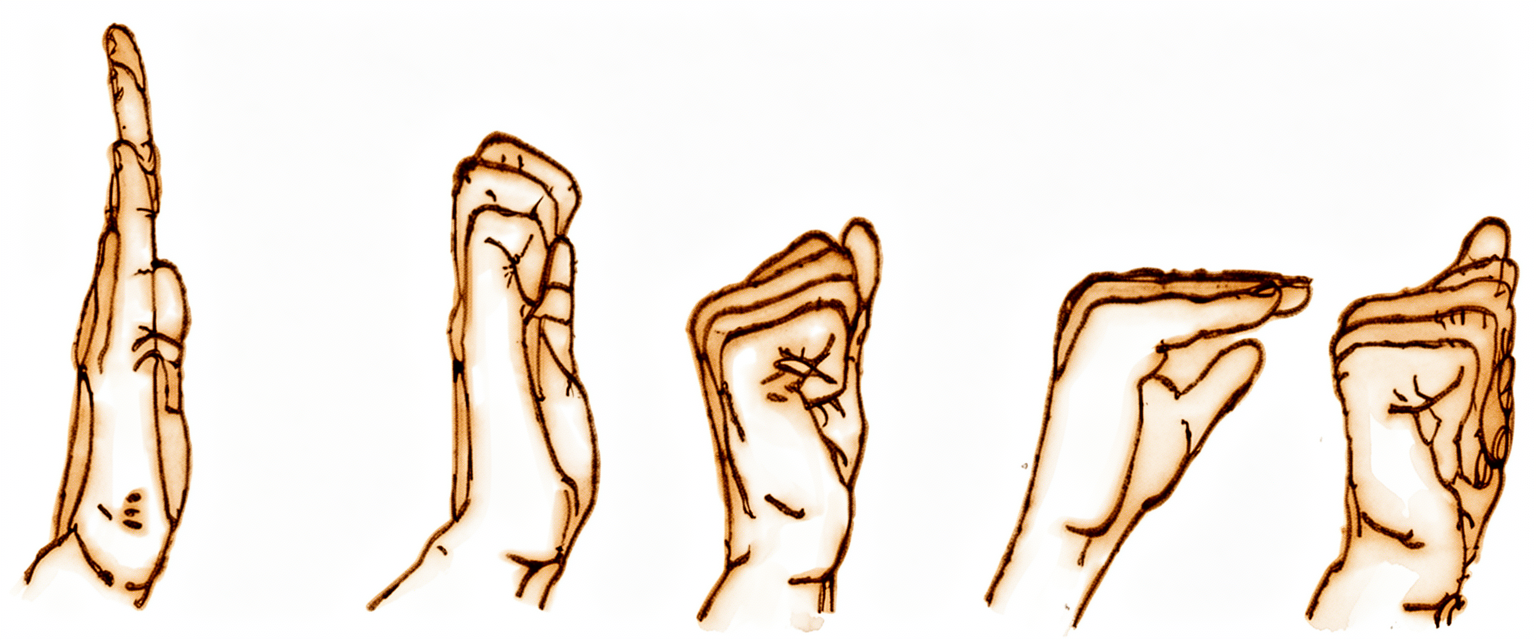
Trượt gân (từ nắm hình móc đến duỗi thẳng đến nắm tay hoàn toàn)
Thực hiện từng động tác trượt gân một cách nhẹ nhàng: duỗi thẳng các ngón tay, sau đó nắm thành nắm đấm hình móc (cuộn đầu ngón tay vào trong), rồi nắm thành nắm đấm đầy đủ một cách nhẹ nhàng, cuối cùng lại duỗi thẳng ngón tay ra. Việc này giúp cả hai gân gập trượt trơn tru qua nhau và qua các mô xung quanh, tránh tình trạng chúng bị dính lại với nhau. Mọi tư thế đều phải thực hiện một cách nhẹ nhàng, thoải mái; đây là các động tác trượt gân chứ không phải bài tập tăng cường sức mạnh, vì vậy không nên gây ra cảm giác căng thẳng hay mệt mỏi.
Mỗi tư thế 5 lần, nhiều buổi mỗi ngày theo hướng dẫn
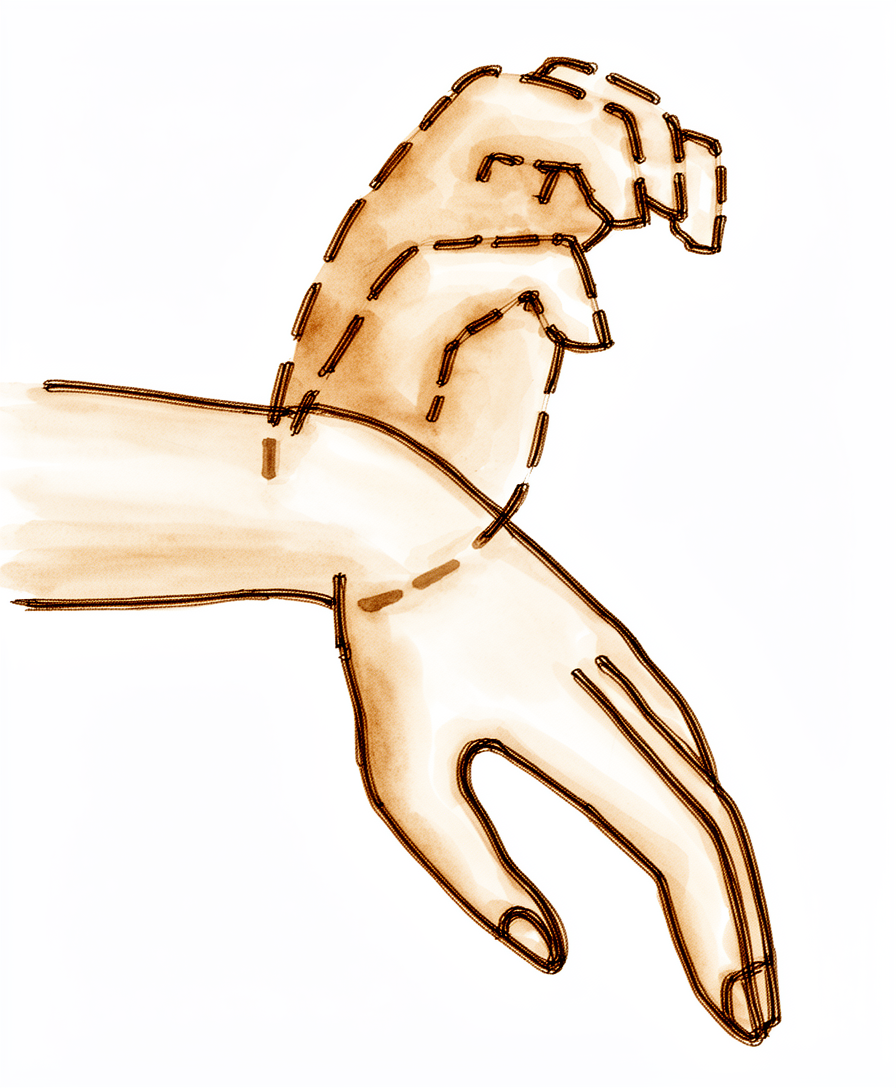
Duỗi thẳng ngón tay khi cổ tay gập (hiện tượng cộng hưởng vận động)
Hãy để cổ tay của bạn gập về phía trước, sau đó chủ động duỗi thẳng ngón tay ra. Việc gập cổ tay theo cách này sẽ giúp ngón tay dễ dàng duỗi thẳng mà không cần dùng lực quá mức. Đây là động tác then chốt giúp ngăn ngừa tình trạng ngón tay bị cong vĩnh viễn — hãy thực hiện nó một cách đều đặn. Chỉ duỗi thẳng ngón tay đến mức cảm thấy thoải mái với sự hỗ trợ của cổ tay; tuyệt đối không dùng lực để ép ngón tay duỗi thẳng.
10 lần, thực hiện nhiều buổi mỗi ngày theo hướng dẫn.
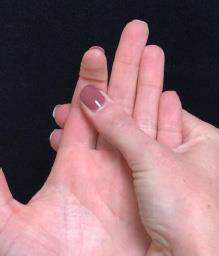
Đặt giữ vị trí
Hãy dùng tay còn lại để nhẹ nhàng nắm ngón tay vừa được phẫu thuật thành nắm tay hờ, sau đó buông ra và giữ nguyên tư thế đó bằng sức cơ cực kỳ nhẹ – chỉ đủ để ngón tay vẫn giữ nguyên vị trí. Cách này giúp gân vừa được vá liền hoạt động trở lại một cách an toàn, vì việc gập ngón tay đã do tay kia đảm nhiệm; cơ của bạn chỉ cần giữ chứ không cần kéo. Hãy duy trì lực tác động ở mức tối thiểu; hãy thả lỏng hoàn toàn giữa các lần lặp lại.
Giữ nguyên vài giây, 5–10 lần, chỉ thực hiện theo hướng dẫn của chuyên viên trị liệu tay.
Kieran Hirpara 4.0
Bài tập chặn khớp (giai đoạn sau, nếu gân bị dính)
Bài tập GIAI ĐOẠN SAU — chỉ thực hiện khi gân bị dính và chuyên viên trị liệu tay chỉ định. Giữ vững ngón tay bằng cách giữ xương nằm ngay dưới khớp mà bạn muốn vận động, sau đó chủ động gập riêng khớp đó (ví dụ: giữ yên phần giữa ngón tay và chỉ gập đầu ngón). Cách này tập trung chuyển động trượt tại một khớp duy nhất để giải phóng gân đã bị dính. Không tự ý bắt đầu bài tập chặn khớp — bài tập này đòi hỏi nhiều hơn và chỉ được thêm vào khi chuyên viên trị liệu đánh giá là an toàn.
Theo hướng dẫn của chuyên viên trị liệu tay của bạn (chỉ áp dụng ở giai đoạn sau, nếu cần).
Đây là những bài tập có trong tờ hướng dẫn của bạn. Chỉ thực hiện chúng khi có hướng dẫn từ Bác sĩ Hirpara và chuyên viên trị liệu tay; đồng thời tuân thủ mọi phạm vi chuyển động và giới hạn đã được chỉ định. Mỗi buổi tập đều tuân theo trình tự an toàn như sau: đầu tiên hãy khéo léo gập ngón tay một cách thụ động, sau đó thực hiện các động tác gập ngón tay kiểu “móc” và trượt gân một cách chủ động, rồi duỗi thẳng ngón tay khi cổ tay vẫn ở tư thế gập để tránh tình trạng ngón tay bị cứng lại ở dạng gập. Tất cả các động tác đều phải thực hiện một cách nhẹ nhàng: đây là các động tác trượt gân, không phải để tăng cường sức mạnh. Các kỹ thuật đặt ngón tay giữ nguyên vị trí hoặc chặn ngón tay chỉ nên áp dụng ở các giai đoạn sau và chỉ khi chuyên viên trị liệu tay hướng dẫn. Ngừng ngay mọi động tác gây đau dữ dội tại vùng vừa được phẫu thuật; tuyệt đối không nắm tay chặt cho đến khi được bác sĩ cho phép.
Quy trình điều trị lâm sàng của bạn
Phần còn lại của trang này mô tả quy trình điều trị phục hồi chức năng sau khi phẫu thuật nối gân duỗi ngón tay, sử dụng nẹp ngắn kiểu Manchester cùng phương pháp vận động chủ động sớm (EAM). Phần này cần được cung cấp cho chuyên viên trị liệu tay của bạn; mỗi giai đoạn đều bắt đầu bằng lời giải thích bằng tiếng Việt đơn giản về những gì đang diễn ra. Trong những tuần đầu sau phẫu thuật, vết nối gân còn yếu nhất và chịu tác động từ động tác gập ngón tay chủ động và có sức cản (tạo thành nắm tay chặt); vì vậy quy trình này nhằm ngăn ngừa tình trạng gập ngón quá mức, đồng thời khuyến khích sự di chuyển của gân và động tác duỗi khớp ngón tay để phòng ngừa biến chứng co rút ngón – vốn là biến chứng phổ biến và gây phiền toái nhất.
Trước khi bắt đầu điều trị, cần xem kỹ báo cáo phẫu thuật và tiền sử bệnh của bệnh nhân; đồng thời trao đổi với bác sĩ phẫu thuật về vị trí tổn thương, cách khâu nối gân, độ vững chắc của vết nối, việc có cần mở rộng các cấu trúc pulley hay không, và việc có phẫu thuật sửa chữa dây thần kinh ngón tay đi kèm hay không. Các ca phẫu thuật nối gân duỗi do Tiến sĩ Hirpara thực hiện đều sử dụng nẹp lưng ngắn kiểu Manchester (kết thúc ngay tại nếp gấp cổ tay), cho phép gập và duỗi cổ tay tối đa đến 45°; các khớp bàn ngón tay được giữ ở tư thế gập 30° còn các khớp ngón tay thì được tự do vận động. Bệnh nhân phải đeo nẹp này suốt 6 tuần. Chỉ khi xuất hiện tình trạng co rút khớp ngón tay, mới cần sử dụng thêm nẹp duỗi đêm.
Giai đoạn I – Vận động chủ động sớm khi sử dụng nẹp ngắn kiểu Manchester (từ tuần 0 đến tuần 6)
Trong sáu tuần đầu, mục tiêu là bảo vệ vết khâu nối gân đồng thời duy trì khả năng trượt của gân và ngăn ngừa ngón tay bị cứng lại thành tình trạng co rút gập. Trong thời gian này, bàn tay phải đeo liên tục nẹp ngắn kiểu Manchester: cổ tay gập hết mức, duỗi ra tới 45°, khớp bàn ngón tay (MCP) bị hạn chế ở góc 30°, các khớp ngón tay tự do. Việc vận động chủ động bắt đầu vào khoảng ngày 4–5. Mỗi buổi tập tuân theo trình tự cố định: trước tiên là vận động thụ động khớp ngón tay, sau đó là vận động chủ động tạo hình nắm tay cong với khớp ngón tay xa (DIP) là điểm khởi đầu, khi cổ tay duỗi thẳng; tiếp theo là vận động chủ động duỗi ngón tay khi cổ tay gập (đây là động tác phối hợp nhằm chống lại tình trạng co rút). Không được ép ngón tay tới hết biên độ vận động cũng như không được thực hiện các động tác gập ngón tay có sức cản.
Dành cho chuyên viên trị liệu tay:
Giáo dục và các lưu ý cần tránh - Đeo liên tục nẹp ngắn kiểu Manchester: cổ tay gập hết mức, duỗi ra tới 45°, khớp MCP bị hạn chế ở góc 30°, các khớp ngón tay tự do; chỉ tháo nẹp khi thực hiện bài tập hoặc vệ sinh - Bắt đầu vận động chủ động vào ngày 4–5 - Không được ép ngón tay tới hết biên độ vận động và không được thực hiện các động tác gập ngón tay có sức cản; không được nắm, nâng hay kéo vật gì - Có thể sử dụng nhẹ nhàng bàn tay “an toàn”, ngoại trừ ngón tay bị thương - Chỉ dùng nẹp duỗi ban đêm nếu bắt đầu xuất hiện tình trạng co rút gập khớp ngón tay
Cách quản lý - Vết thương: thay băng theo hướng dẫn; theo dõi dấu hiệu nhiễm trùng - Phù nề: nâng cao tay, thực hiện các động tác kiểm soát phù nề nhẹ nhàng ở các ngón tay; đề phòng nguy cơ hình thành mô sẹo dính - Trình tự bài tập trong mỗi buổi: (1) trước tiên thực hiện vận động thụ động hết mức khớp ngón tay; (2) vận động chủ động tạo hình nắm tay cong, bắt đầu từ khớp DIP khi cổ tay duỗi thẳng tới 45°; (3) vận động chủ động duỗi ngón tay khi cổ tay gập (đây là động tác phối hợp/ dựa trên cơ chế tenodesis, nhằm chống lại tình trạng co rút); theo hướng dẫn có thể thêm động tác giữ nguyên tư thế nắm tay nhẹ - Đánh giá tiến triển trị liệu hàng tuần trong suốt giai đoạn này
Tiêu chí để chuyển sang giai đoạn tiếp theo - Vết thương đã lành; vết khâu nối gân vẫn nguyên vẹn sau sáu tuần; khả năng trượt của gân được duy trì; không có tình trạng co rút gập khớp ngón tay đáng kể
Giai đoạn II — tháo nẹp, xử lý mô mềm và sẹo (tuần thứ 6)
Sau 6 tuần, nẹp sẽ được tháo ra. Mục tiêu lúc này là khôi phục đầy đủ phạm vi vận động chủ động và thụ động, giảm bớt tình trạng căng cứng sớm, đồng thời chăm sóc vết sẹo. Việc tăng cường sức mạnh cơ bắp vẫn chưa được bắt đầu; nẹp duỗi thẳng dùng vào ban đêm chỉ được sử dụng nếu vẫn còn dị dạng gập ngón do hậu quả của phẫu thuật.
Dành cho chuyên viên trị liệu tay:
Các đánh giá cần thực hiện - Độ vận động chủ động và thụ động tại các khớp MCP/PIP/DIP; có hiện diện tình trạng co rút gập ngón ở khớp IP hay không; chất lượng trượt của gân (kiểm tra xem có dính gân hay không); đánh giá vết sẹo và vết thương
Giáo dục và lưu ý - Nẹp đã được tháo sau 6 tuần (chỉ dùng nẹp duỗi thẳng vào ban đêm nếu vẫn còn dị dạng gập ngón IP) - Có thể bắt đầu sử dụng tay cho các hoạt động nhẹ; tuy nhiên vẫn chưa được nắm chặt hay chịu tải trọng
Các biện pháp xử lý - Kéo giãn mô mềm nhằm khôi phục đầy đủ khả năng gập và duỗi ngón tay; bắt đầu chăm sóc vết sẹo sau khi vết thương đã lành - Tiếp tục các bài tập trượt gân; áp dụng kỹ thuật chặn gân nếu có dính gân gây hạn chế chuyển động - Tăng dần mức độ sử dụng tay cho các hoạt động nhẹ
Tiêu chí để chuyển sang giai đoạn tiếp theo - Vết thương và sẹo đã ổn định; phạm vi vận động thụ động gần như đầy đủ; khả năng trượt gân vẫn được duy trì; sẵn sàng cho việc tăng cường sức mạnh cơ bắp một cách có kiểm soát
Giai đoạn III – Tăng cường sức mạnh và trở lại sinh hoạt bình thường (tuần thứ 6 đến 12)
Khi vết khâu đã ổn định hơn, việc kéo giãn có kiểm soát và tăng cường sức mạnh dần dần được thực hiện nhằm giúp chi có thể sử dụng một cách tự do. Việc trở lại các hoạt động sinh hoạt bình thường được dự kiến vào khoảng tuần thứ 10 đến 12, tùy theo các tiêu chí lâm sàng.
Dành cho chuyên viên trị liệu tay:
Đánh giá - Phạm vi vận động tổng thể và bất kỳ tình trạng co rút còn sót lại; sức mạnh nắm tay và kẹp ngón tay so với bên đối diện; phản ứng của vết khâu đối với các lực kéo giãn có kiểm soát
Giáo dục và lưu ý - Bắt đầu việc kéo giãn có kiểm soát và tăng cường sức mạnh dần dần từ khoảng tuần thứ 6; tăng dần mức độ lực tác động - Tránh việc nắm tay mạnh đột ngột hoặc chịu lực cản lớn cho đến khi sức mạnh đã phục hồi
Xử trí - Tăng cường sức mạnh nắm tay và kẹp ngón tay một cách có hệ thống (từ việc sử dụng đất sét trị liệu đến các mức lực cản khác nhau); tiếp tục kéo giãn nếu còn tình trạng căng cứng; tiếp tục chăm sóc vùng sẹo nếu cần thiết - Tiến tới việc trở lại các hoạt động bình thường, không hạn chế vào tuần thứ 10–12 - Có thể cho bệnh nhân xuất viện khi phạm vi vận động và sức mạnh đã đạt mức chức năng, đồng thời bệnh nhân có thể trở lại sinh hoạt bình thường; nếu quá trình hồi phục bị chậm lại hoặc tình trạng co rút vẫn còn, cần chuyển bệnh nhân trở lại gặp bác sĩ phẫu thuật điều trị
Tiêu chí để trở lại các hoạt động bình thường - Phạm vi vận động đạt mức chức năng; sức mạnh nắm tay và kẹp ngón tay gần như tương đương bên đối diện; có thể sử dụng chi mà không đau và không bị hạn chế – thường là vào khoảng tuần thứ 10–12
Trở lại với công việc và các hoạt động thường ngày
Bạn có thể sử dụng bàn tay một cách nhẹ nhàng và an toàn (trừ ngón tay bị chấn thương) ngay từ đầu trong thời gian đeo nẹp, miễn là không có lực nào làm căng hay gây áp lực lên vùng vừa được phẫu thuật. Trong những tuần đầu, hãy chuẩn bị sẵn sự hỗ trợ vì trong sáu tuần đầu tiên, bạn không được nắm, nâng hay mang vác vật gì bằng tay vừa phẫu thuật. Khoảng sáu tuần sau, nẹp sẽ được tháo ra và lúc đó bạn có thể bắt đầu các bài tập tăng cường sức mạnh nhẹ nhàng.
Vì bạn không được lái xe khi đang đeo nẹp ở mặt mu bàn tay, hãy sắp xếp phương tiện di chuyển cho sáu tuần đầu. Việc lái xe sẽ được phép trở lại sau khi tháo nẹp (khoảng sáu tuần), khi khả năng nắm tay và kiểm soát ngón tay của bạn đã đủ tốt, và sau khi được bác sĩ cho phép trong buổi tái khám. Việc trở lại hoàn toàn các hoạt động bình thường, kể cả việc nắm chặt hay thực hiện các công việc nặng, thường diễn ra vào khoảng tuần thứ mười đến mười hai; quá trình này diễn ra từ từ và được bác sĩ Hirpara cùng chuyên viên trị liệu tay đánh giá dựa trên mức độ vận động và sức mạnh của ngón tay, chứ không chỉ dựa vào thời gian.
Sau khi thực hiện theo phác đồ
Phác đồ này được áp dụng song song với các hướng dẫn phục hồi chung của phòng khám; xin tham khảo thêm các mục kiểm soát cơn đau sau phẫu thuật, chăm sóc vết thương và chăm sóc sẹo. Kế hoạch từng giai đoạn nêu trên dựa trên các hướng dẫn phục hồi sớm bằng vận động đã được công bố sau khi phẫu thuật nối gân duỗi; quá trình hồi phục của bạn sẽ được Bác sĩ Hirpara và chuyên viên trị liệu tay theo dõi, điều chỉnh tùy theo tiến triển của ngón tay.
Evidence & references
This is the clinical evidence summary written for health professionals. It is technical, and it lists the research this page was built from. You do not need to read it to understand your treatment or to make a decision about it.
Flexor Tendon Repair — Procedure Outcomes & Post-operative Rehabilitation (Manchester Short-Splint Early Active Motion)
Topic scope: post-operative rehabilitation after primary surgical repair of a flexor tendon in the finger (especially zone II) with a robust multi-strand core repair, mobilised on an early-active-motion (EAM) regimen using the Manchester short splint. This is a repair of a divided structure that is at its weakest in the first weeks, so — unlike a decompression — the rehab is a carefully graded protected-but-moving pathway: enough controlled tendon excursion to prevent adhesion and flexion contracture, without the forceful flexion that ruptures the construct.
Defining principle of the rehab here: a repaired flexor tendon must glide to heal well but must not be loaded hard while it is weak. The two competing failures are rupture (from forceful or resisted flexion) and adhesion / PIP flexion contracture (from too little controlled motion). The Manchester short splint resolves this tension by leaving the wrist free: holding the wrist in 45° of extension minimises the work of flexion (Savage) so a gentle active hook fist glides the tendon at low tension, while permitting wrist flexion harnesses the extensor tenodesis effect to drive active IP extension — the single most effective lever against the PIP flexion contracture that is the characteristic nuisance complication of zone II repair. The deliberate sequence each session (passive IP flexion → active hook fist from the DIP, wrist extended → active IP extension, wrist flexed) is what makes the regimen safe and anti-contracture.
A. PROCEDURE / REPAIR OUTCOMES (early active motion vs passive mobilisation)
Flexor tendon repair is technically demanding and historically complication-prone (rupture and adhesion). Modern multi-strand core repairs combined with early active motion have shifted outcomes decisively toward better motion, with the central trade-off being a small rupture risk against markedly better range and function.
- Early active motion gives better finger motion than passive mobilisation, at a small rupture cost. A systematic review of controlled mobilisation after zone II repair found EAM regimens produced better total active motion than passive (Kleinert/Duran) protocols, with a modest increase in rupture (~5% vs ~4%) [Starr 2013]. The contemporary consensus favours active regimens with robust repairs. Moderate–strong (SR).
- The Manchester short splint specifically improves IP extension without increasing rupture. A clinical audit comparing the Manchester short splint (MSS) with a traditional full-length dorsal splint in uncomplicated zone II repairs found less PIP extension deficit (median 15° vs 28° at 6 weeks, p=0.003; 6° vs 18° at 12 weeks), a greater DIP flexion arc (59° vs 30°), and more excellent/good Strickland grades with the MSS. Rupture was not significantly different (2/45, 4.4% MSS vs 3/76, 3.9% traditional) [Peck 2014]. The headline advantage is the reduction in PIP flexion contracture. Moderate (single-centre non-randomised audit, Level III–IV).
- Forearm-based (wrist-blocking) splints constrain the very motion that prevents contracture. A comparison of splint designs found the Manchester short splint allowed greater PIP extension than forearm-based splints [Newington 2021], consistent with the mechanistic rationale that freeing the wrist enables the synergistic IP-extension move. Moderate.
- Mechanistic basis. Positioning the wrist in ~45° extension minimises the work of flexion required for active digital flexion, lowering the tension on the repair during the active hook fist [Savage 1988]; allowing wrist flexion recruits the extensor tenodesis effect to achieve full active IP extension at low cost — the anti-contracture engine of the regimen. Mechanistic.
B. REHABILITATION / THERAPY EVIDENCE
The rehab questions are (1) active vs passive early mobilisation, (2) splint design, and (3) how to structure the session to prevent both rupture and contracture. The evidence supports a robust repair mobilised with early active motion, a short wrist-free splint, and a fixed safe exercise sequence delivered through formal hand therapy.
- Early active motion is the modern default for robust repairs. Active regimens (partial-range combined passive/active, place-and-hold, true active flexion) outperform passive-only protocols on motion and are now standard where the core repair is strong enough to tolerate active glide [Tang 2021; Starr 2013]. Moderate–strong.
- A defined, low-tension active sequence is what makes EAM safe. Therapy guidance emphasises passive flexion first (preconditioning the joints), place-and-hold / active hook fist to glide the tendon at minimal tension, and synergistic wrist-flexion finger-extension to recover IP extension — the explicit structure of the Manchester regimen [Neiduski & Powell 2019; Saint John protocol]. Moderate (consensus + protocol cohorts).
- Splint design materially changes the contracture outcome. Shorter, wrist-free splinting that permits the synergistic extension move yields greater PIP extension than traditional or forearm-based dorsal splints [Peck 2014; Newington 2021]. Moderate.
- All flexor repairs are routed through formal hand therapy. The regimen is exercise-order- and tension-sensitive and is delivered with weekly hand-therapy review through the six-week splinted phase; it is not a self-directed pathway. Consensus / standard of care.
Recovery trajectory (expected, evidence-anchored)
| Phase | Window | Restraint | Hand use / therapy focus | Strength / load | Notes |
|---|---|---|---|---|---|
| I — Early active motion (in MSS) | Week 0–6 | Manchester short splint full-time (full wrist flexion, extension to 45°, MCP block 30°, IPs free) | Start day 4–5; each session: passive IP flexion → active hook fist from the DIP (wrist extended) → active IP extension (wrist flexed); place-and-hold as guided; weekly therapy | No resisted flexion, no gripping/lifting; light safe use excluding the injured finger | EAM drives glide + anti-contracture; rupture risk highest now |
| II — Splint off, soft-tissue / scar | Week 6 | Splint discontinued (night extension gutter only for residual IP flexion deformity) | Restore full passive/active ROM; scar management; tendon glides; blocking if adhesions | Still no resisted loading | PIP flexion contracture is the complication to chase down here |
| III — Strengthen / return | Week 6–12 | Restrictions progressively lifted | Graded stretching; progressive grip/pinch strengthening (putty → resistance) | Build grip/pinch gradually | Return to full / unrestricted activity 10–12 weeks, criterion-based |
(Phase windows mirror the precautions in the patient protocol; they are typical guides, not trial-derived deadlines.)
C. KEY CONTROVERSIES / EVIDENCE QUALITY
- Active vs passive early mobilisation. EAM gives better motion than passive Kleinert/Duran regimens at a small rupture-rate cost (~5% vs ~4%); it is the contemporary default for strong core repairs [Starr 2013; Tang 2021]. Moderate–strong.
- Manchester short splint vs traditional dorsal splint. The MSS audit shows clearly better IP extension and DIP flexion arc with no significant increase in rupture, but it is a single-centre, non-randomised audit (Level III–IV) — the authors themselves call for an RCT. The improvement is consistent with the mechanism (wrist-free synergistic extension), which raises confidence above the study design alone. Moderate; RCT recommended.
- The PIP flexion contracture is the outcome that discriminates protocols. Rupture rates are broadly similar across modern regimens; what separates them is residual PIP extension loss, and that is where the short, wrist-free splint and the synergistic-extension move earn their place [Peck 2014; Newington 2021]. Moderate.
- Repair strength gates the regimen. EAM is only safe with a robust multi-strand core repair; the protocol assumes that and is surgeon-confirmed per case (zone, suture configuration, pulley venting, concurrent nerve repair). Consensus.
D. EVIDENCE STRENGTH FLAGS (summary)
- MODERATE–STRONG (SR): early active motion produces better finger motion than passive mobilisation after zone II repair, at a small rupture-rate increase (~5% vs ~4%) [Starr 2013]; modern partial-range active regimens are the contemporary standard [Tang 2021].
- MODERATE: the Manchester short splint reduces PIP extension deficit (15° vs 28° at 6 wk, p=0.003) and improves DIP flexion arc without significantly increasing rupture (4.4% vs 3.9%) [Peck 2014]; greater PIP extension than forearm-based splints [Newington 2021]; defined low-tension exercise sequence [Neiduski & Powell 2019; Saint John].
- MECHANISTIC / CONSENSUS: wrist 45° extension minimises work of flexion [Savage 1988]; wrist flexion harnesses the extensor tenodesis effect for active IP extension (anti-contracture); exact phase timings are typical guides, not trial-derived; single-centre non-randomised MSS evidence — an RCT is recommended.
CITATIONS
RAG corpus (180,000+ Orthopaedic articles)
- Peck FH, et al. A comparative study of two methods of controlled mobilization of flexor tendon repairs in zone 2 (the Manchester short splint). Hand Ther. 2014. DOI: 10.1177/1758998314533306
- Starr HM, et al. Flexor tendon repair rehabilitation protocols: a systematic review. J Hand Surg Am. 2013. DOI: 10.1016/j.jhsa.2013.06.025
- Neiduski RL, Powell RK. Flexor tendon rehabilitation in the 21st century: a systematic review. J Hand Ther. 2019. DOI: 10.1016/j.jht.2018.06.001
- Tang JB. Rehabilitation after flexor tendon repair and others: a safe and efficient update. J Hand Surg Eur Vol. 2021. DOI: 10.1177/17531934211037112
- Tang JB, et al. (IFSSH flexor tendon committee report). J Hand Surg Eur Vol. 2014. DOI: 10.1177/1753193413500768
- Newington L, et al. Splinting after flexor tendon repair: comparison of the Manchester short splint with forearm-based splinting on PIP joint extension. Hand Ther. 2021. DOI: 10.1177/17589983211017584
Flexor tendon rehabilitation literature (URLs)
- Saint John flexor tendon protocol — early active motion regimen for zone II repair (protocol description and outcomes). PMC. https://www.ncbi.nlm.nih.gov/pmc/articles/PMC5142498/
- Savage R. The influence of wrist position on the minimum force required for active movement of the interphalangeal joints. J Hand Surg Br. 1988 (mechanistic basis: wrist extension minimises the work of flexion). https://doi.org/10.1016/0266-7681(88)90258-2