Patients › Rehabilitation
Thay thế đầu xương quay
Kế hoạch phục hồi có bảo vệ sau khi thay đầu xương quay ở khuỷu tay bằng bộ phận cấy ghép kim loại, tập trung vào vận động sớm có bảo vệ của khuỷu tay và cẳng tay để ngăn ngừa cứng khớp; cẳng tay được giữ ở tư thế bảo vệ các dây chằng đã được sửa chữa, và khuỷu tay được nghỉ trong một đai treo tay đơn giản cho thoải mái.
Quy trình này hướng dẫn quá trình hồi phục của bạn sau ca thay thế đầu xương quay ở khuỷu tay (trong đó phần đầu xương quay bị gãy vỡ sẽ được thay thế bằng một mảnh ghép kim loại nhỏ) do bác sĩ Kieran Hirpara thực hiện tại Bệnh viện tư nhân Mater Rockhampton. Quy trình bắt đầu với chương trình tập luyện tại nhà, sau đó là quy trình điều trị lâm sàng được thiết kế riêng cho chuyên viên trị liệu tay của bạn; hãy mang theo trang này hoặc bản PDF tương ứng đến buổi trị liệu đầu tiên để quá trình phục hồi được thực hiện một cách đồng bộ. Chuyên viên trị liệu có thể điều chỉnh kế hoạch tập luyện tùy theo tiến triển hồi phục của bạn và mức độ tổn thương đã được khắc phục trong ca phẫu thuật.
Nếu bạn có bất kỳ thắc mắc nào về vết thương sau phẫu thuật, hãy liên hệ với phòng khám. Việc chụp ảnh vết thương rồi gửi qua email để được đánh giá cũng là một cách hữu ích.
Những điều bạn có thể mong đợi
Đầu xương quay là phần tròn ở đầu trên của một trong hai xương cẳng tay, nơi tiếp giáp với khớp khuỷu. Khi đầu xương này bị gãy thành quá nhiều mảnh không thể nối lại được, người ta sẽ thay thế bằng một chất liệu kim loại nhân tạo nhỏ để khôi phục lại sự ổn định của khớp khuỷu cũng như trục quay mượt mà của cẳng tay. Thủ thuật này thường được thực hiện trong quá trình điều trị các chấn thương phức tạp hơn, chẳng hạn như tình trạng gãy-xuất khớp còn gọi là “bộ ba kinh hoàng”, khi mà đầu xương quay, một mảnh xương khuỷu và các dây chằng ở bên khớp khuỷu đều bị tổn thương cùng lúc.
Vì chất liệu nhân tạo này giúp khớp khuỷu ổn định trở lại, mục tiêu chính trong quá trình phục hồi chức năng là vận động sớm nhưng có kiểm soát để tránh tình trạng cứng khớp; khớp khuỷu rất dễ bị cứng sau những chấn thương kiểu này, và cách tốt nhất để ngăn ngừa điều đó là vận động sớm. Trong thời gian nghỉ giữa các buổi tập, khớp khuỷu của bạn sẽ được đặt vào một dây đeo đơn giản để giảm đau (không phải nẹp có khớp nối); dây đeo này sẽ được tháo ra khi bạn tập luyện hoặc vệ sinh cơ thể.
Có hai yếu tố quyết định mức độ và tốc độ vận động của bạn:
- Các dây chằng vừa được phục hồi cần được bảo vệ. Nếu dây chằng bên ngoài khớp khuỷu (dây chằng bên) đã được sửa chữa, cẳng tay sẽ được giữ ở tư thế lòng bàn tay hướng xuống dưới (tư thế xoay trong) trong giai đoạn đầu; nếu dây chằng bên trong (dây chằng giữa) bị tổn thương, cẳng tay sẽ được giữ ở tư thế lòng bàn tay hướng lên trên (tư thế xoay ngoài); nếu cả hai dây chằng đều bị tổn thương thì giữ ở tư thế trung tính. Chuyên viên vật lý trị liệu sẽ hướng dẫn bạn cách thực hiện phù hợp.
- Khớp khuỷu cần được bảo vệ khỏi lực tác động sang bên (lực varus) và, trong giai đoạn đầu, khỏi việc duỗi thẳng hoàn toàn nếu khớp khuỷu trước đó không ổn định. Đó là lý do tại sao các mức độ vận động được mở rộng dần dần thay vì cùng lúc.
Các hoạt động vận động sẽ được tăng dần theo thời gian; việc tăng cường sức mạnh cơ thường bắt đầu từ khoảng tuần thứ 6, và bạn có thể trở lại sinh hoạt bình thường sau khoảng 3 tháng. Chất liệu nhân tạo cùng quá trình lành vết thương vẫn tiếp tục ổn định trong nhiều tháng nữa; vì vậy việc tăng tải trọng lên khớp cũng phải được thực hiện từ từ.
Các lưu ý và hạn chế
- Hãy đeo dây đeo đơn giản này để cảm thấy thoải mái theo hướng dẫn; đây không phải là nẹp có khớp gối, và có thể tháo ra khi tập luyện hoặc tắm rửa.
- Trong giai đoạn tập luyện ban đầu, hãy giữ cẳng tay ở tư thế mà chuyên viên trị liệu chỉ định (lòng bàn tay hướng xuống nếu dây chằng bên ngoài vừa được vá lại, lòng bàn tay hướng lên nếu dây chằng bên trong vừa được vá, hoặc giữ nguyên tư thế trung tính nếu cả hai dây chằng đều được vá), điều này giúp bảo vệ vết vá.
- KHÔNG tạo áp lực sang bên (kiểu vẹo vào trong) lên khuỷu tay; tránh tựa người lên khuỷu tay hoặc để cánh tay treo lơ lửng mà không có sự hỗ trợ trong giai đoạn đầu.
- Nếu được thông báo rằng khuỷu tay còn chưa ổn định, KHÔNG cố gắng duỗi thẳng hoàn toàn sớm; chỉ duỗi thẳng trong phạm vi cho phép.
- KHÔNG nâng, đẩy, kéo hay chịu tải trọng bằng cánh tay vừa phẫu thuật cho đến khi được phép (thường là khoảng sáu tuần); trong giai đoạn đầu, chỉ sử dụng tay một cách nhẹ nhàng.
- Ngay từ đầu, hãy vận động vai, cổ tay và các ngón tay; KHÔNG lái xe khi cánh tay vẫn đeo dây đeo hoặc chưa thể điều khiển vô lăng một cách an toàn.
Về cách chăm sóc vết thương, giảm sưng và xử lý sẹo, vui lòng tham khảo hướng dẫn chăm sóc vết thương của phòng khám.
Các bài tập của bạn
Kieran Hirpara 4.0
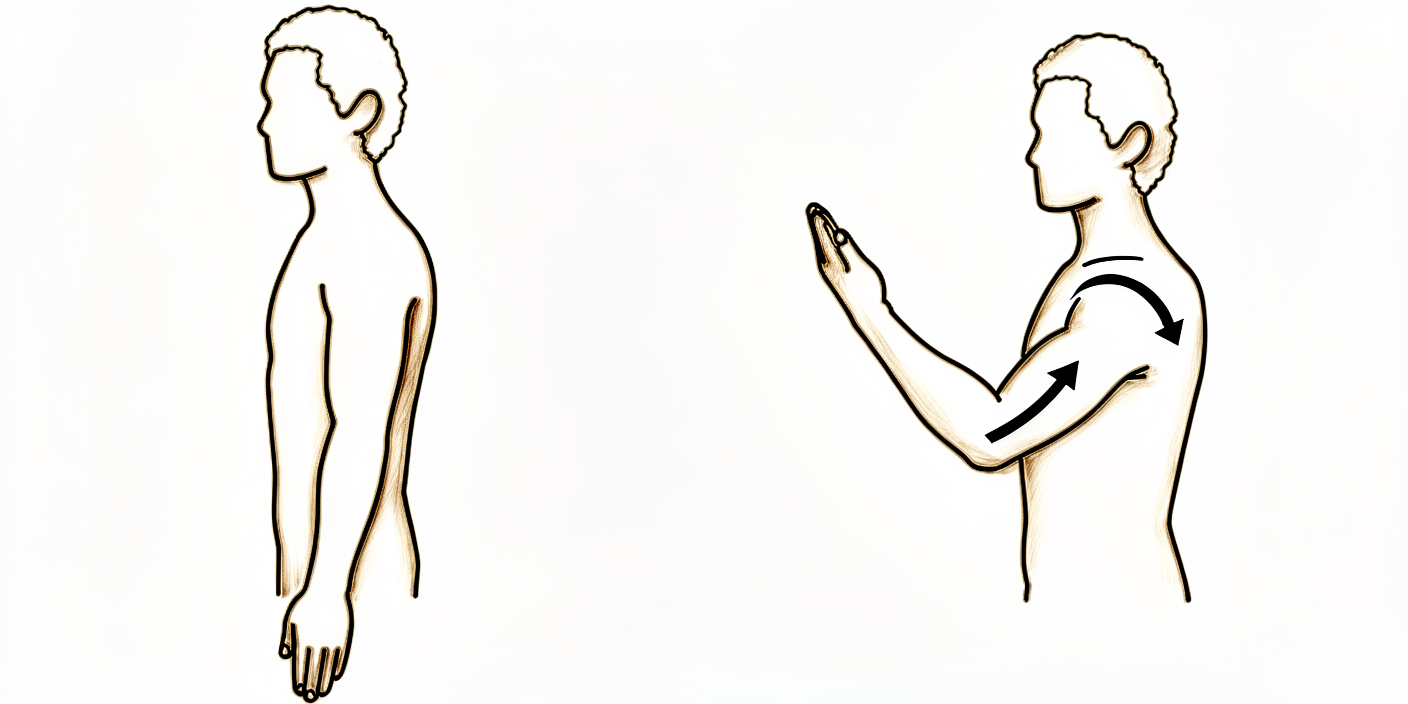
Cử động gập và duỗi khuỷu tay (chủ động có trợ giúp)
Khi đã bỏ đai treo tay ra, hãy nhẹ nhàng gập và duỗi khuỷu tay đã phẫu thuật trong phạm vi mà bác sĩ đã chỉ định; dùng tay còn lại để hỗ trợ dẫn hướng sao cho cánh tay không phải vận động quá sức. Việc vận động sớm là điều quan trọng nhất ở giai đoạn này — bộ cấy ghép kim loại đã giúp khuỷu tay ổn định trở lại nên việc vận động là an toàn; đồng thời vận động sớm sẽ giúp khuỷu tay không bị cứng lại. Hãy tuân thủ mọi hạn chế về mức độ duỗi thẳng nếu bác sĩ đã đặt ra.
10 lần, 3–4 lần mỗi ngày, trong phạm vi cho phép của bạn.
Kieran Hirpara 4.0
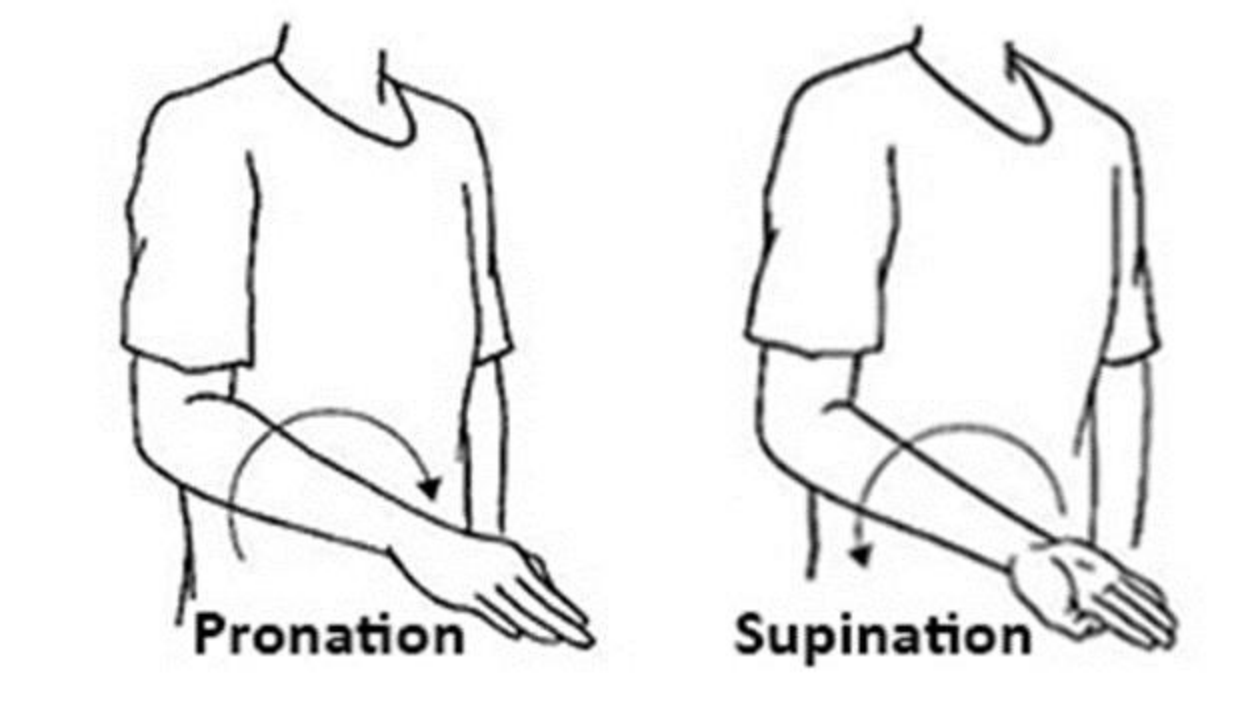
Chuyển động xoay cẳng tay (lòng bàn tay hướng lên / lòng bàn tay hướng xuống)
Khi khuỷu tay gập thành góc vuông và áp sát vào thân mình, hãy nhẹ nhàng xoay lòng bàn tay hướng lên trần nhà rồi lại hướng xuống sàn nhà. Giữ nguyên vị trí khuỷu tay và chỉ để cẳng tay xoay. Ban đầu, bạn có thể được yêu cầu ưu tiên xoay theo một hướng nhất định (lòng bàn tay hướng xuống hoặc hướng lên) nhằm bảo vệ dây chằng vừa được sửa chữa; hãy làm theo hướng dẫn của chuyên viên trị liệu. Việc này giúp cẳng tay giữ được độ linh hoạt – xoay cẳng tay là một trong những cử động bị cứng sớm nhất sau chấn thương này.
10 lần theo mỗi hướng được phép, 3–4 lần mỗi ngày.
Kieran Hirpara 4.0
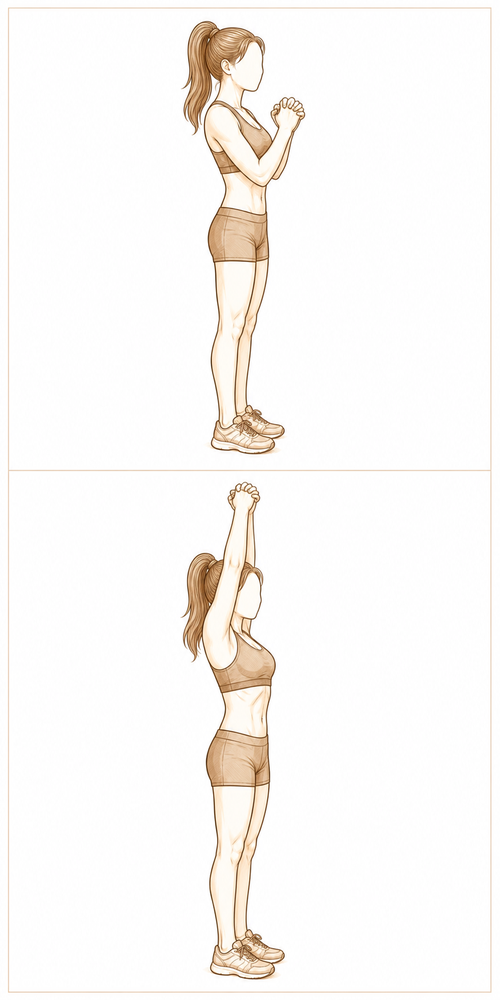
Chuyển động của vai và tay
Ngay từ ngày đầu, hãy cố gắng vận động vai, cổ tay và các ngón tay một cách tự do để chúng không bị cứng lại trong lúc khuỷu tay đang hồi phục. Hãy nắm tay chặt rồi duỗi các ngón tay ra, xoay cổ tay và nhẹ nhàng vận động vai. Bạn có thể sử dụng tay để thực hiện những công việc thường ngày nhẹ nhàng, miễn là cảm thấy thoải mái. Những hoạt động này hoàn toàn không gây áp lực lên vùng khuỷu tay đang được phục hồi.
Mỗi động tác 10 lần, nhiều lần trong ngày.
Kieran Hirpara 4.0
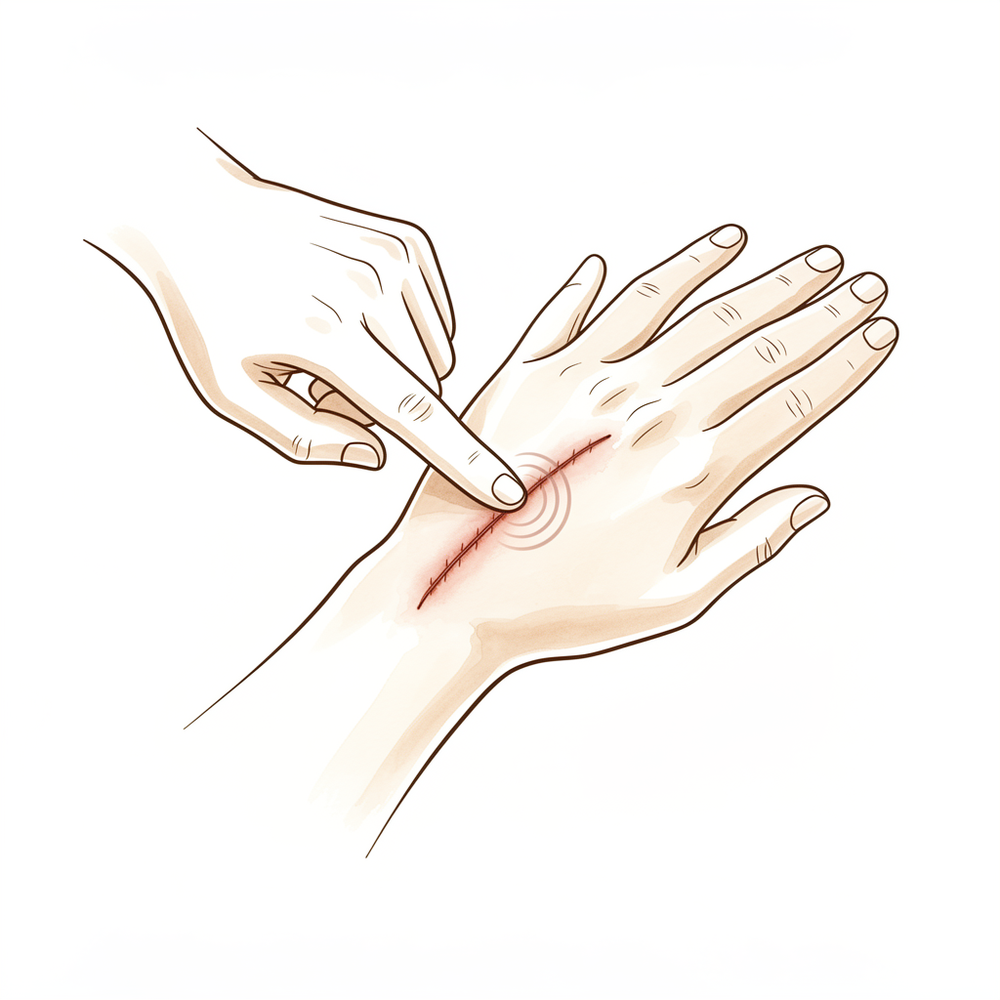
Chăm sóc vết sẹo
Khi vết thương đã lành hẳn và được bác sĩ phẫu thuật hoặc chuyên viên trị liệu cho phép, hãy thoa một chút kem dưỡng ẩm lên vết sẹo rồi massage theo những vòng tròn nhỏ trong vài phút. Việc này giúp vết sẹo mềm mại và ít nhạy cảm hơn. Chỉ được thực hiện sau khi vết thương đã khép kín hoàn toàn.
Vài phút, 2–3 lần mỗi ngày, sau khi vết thương đã lành.
Kieran Hirpara 4.0
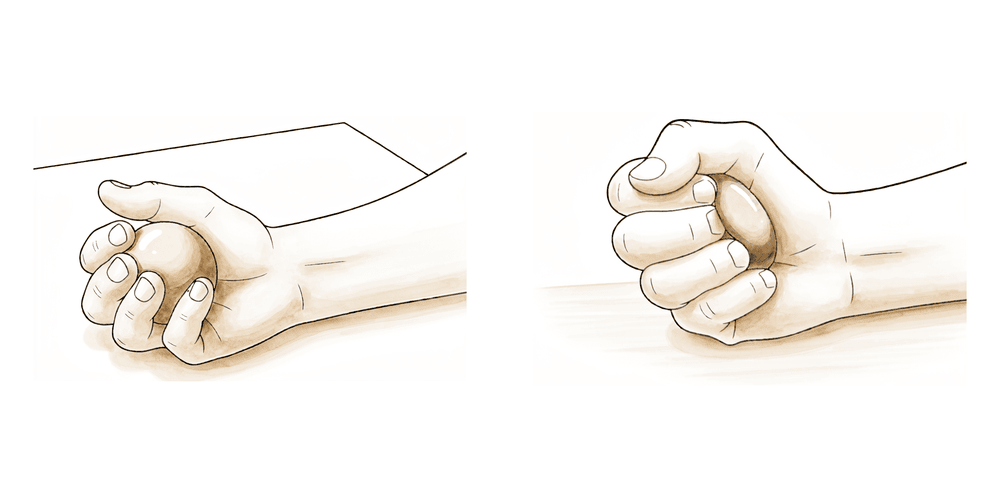
Tăng cường sức mạnh từ tuần thứ 6
Đây là bài tập cho GIAI ĐOẠN SAU — chỉ nên thực hiện sau khi đã được cho phép, thường là từ khoảng sáu tuần sau phẫu thuật. Hãy bắt đầu các bài tập tăng cường sức mạnh cho khuỷu tay, cẳng tay và khả năng nắm — ví dụ như siết nhẹ một quả bóng mềm, sau đó là các động tác gập và duỗi tay có sức cản nhẹ — rồi dần dần tăng mức độ tập luyện trong những tuần tiếp theo. Đừng vội tăng tải trọng quá mức; khuỷu tay vẫn cần thời gian để ổn định trong nhiều tháng nữa.
Theo hướng dẫn của chuyên viên trị liệu tay (chỉ từ khoảng 6 tuần trở đi).
Đây là những bài tập có trong tờ hướng dẫn của bạn. Chỉ thực hiện chúng khi có sự hướng dẫn của Bác sĩ Hirpara và chuyên viên trị liệu vận động; đồng thời tuân thủ mọi phạm vi chuyển động cũng như tư thế cẳng tay mà bạn được chỉ định. Các bài tập ban đầu nhằm giúp khuỷu tay và cẳng tay vận động để tránh cứng khớp mà không gây áp lực lên vùng vừa được phẫu thuật: gập và duỗi khuỷu tay có hỗ trợ, xoay cẳng tay nhẹ nhàng theo hướng được cho phép, đồng thời giữ cho vai và bàn tay được thả lỏng. Các bài tập tăng cường sức mạnh và chăm sóc vết sẹo thuộc giai đoạn sau; bạn không nên thực hiện chúng cho đến khi được bác sĩ cho phép cụ thể. Ngừng ngay bất kỳ bài tập nào gây đau dữ dội hoặc cảm giác như khuỷu tay sắp bị “trượt” ra khỏi vị trí bình thường.
Quy trình điều trị lâm sàng của bạn
Phần còn lại của trang này mô tả quy trình phục hồi chức năng theo từng giai đoạn sau khi thay khớp đầu xương quay (phẫu thuật thay khớp đầu xương quay), thường được thực hiện đối với các trường hợp gãy đầu xương quay vỡ vụn không thể phục hồi, đặc biệt là trong các ca gãy khớp kèm trật khớp nghiêm trọng. Phần này cần được cung cấp cho chuyên viên trị liệu tay; mỗi giai đoạn đều bắt đầu bằng lời giải thích bằng ngôn ngữ đơn giản về những gì đang diễn ra. Vật liệu cấy ghép giúp khôi phục lại khớp quay-cánh tay ổn định và cân đối; do đó nguyên tắc chủ đạo là vận động sớm nhưng có kiểm soát nhằm ngăn ngừa tình trạng cứng khớp vốn thường gặp ở các khớp khuỷu tay này. Phạm vi vận động và mức độ xoay cẳng tay phụ thuộc vào mức độ lành thương của các dây chằng bên và mảnh xương mỏm khuỷu đã được phục hồi.
Trước khi bắt đầu điều trị, hãy kiểm tra báo cáo phẫu thuật của bệnh nhân cùng kết quả đánh giá độ ổn định sau khi gây mê, đồng thời trao đổi với bác sĩ phẫu thuật về: những dây chằng bên và mảnh xương mỏm khuỷu nào đã được phục hồi, phạm vi vận động ổn định được xác định trong lúc mổ, cũng như mức độ xoay cẳng tay được cho phép. Bác sĩ Hirpara thường dùng đai treo đơn giản để giúp bệnh nhân cảm thấy thoải mái (không dùng nẹp có khớp nối), và ưu tiên phương pháp vận động sớm, tích cực khi mà tình trạng ổn định cho phép. Quy tắc về vị trí cẳng tay: Nếu phục hồi dây chằng bên ngoài → vận động/ nghỉ ngơi ở tư thế xoay lòng bàn tay xuống; nếu phục hồi dây chằng bên trong → ở tư thế xoay lòng bàn tay lên; cả hai dây chằng đều được phục hồi → giữ ở vị trí trung tính. Cần tránh các lực gây biến dạng khớp khuỷu sang phía trong; đối với những ca khớp khuỷu không ổn định, không nên vận động đến mức duỗi thẳng hoàn toàn sớm.*
Giai đoạn I — vận động có kiểm soát sớm (tuần 0 đến tuần 2)
Hai tuần đầu tiên là giai đoạn bắt đầu các chuyển động có kiểm soát một cách nhẹ nhàng ngay khi vết thương đã ổn định (thường là trong tuần đầu tiên) nhằm ngăn ngừa tình trạng cứng khớp. Cánh tay được đặt trong chiếc đai treo đơn giản để tạo cảm giác thoải mái; chiếc đai này sẽ được tháo ra khi thực hiện các bài tập hoặc vệ sinh. Khớp khuỷu tay di chuyển trong phạm vi an toàn, trong khi cẳng tay vẫn giữ ở tư thế bảo vệ tương ứng với loại dây chằng vừa được phục hồi.
Dành cho chuyên viên trị liệu vận động:
Giáo dục và các lưu ý cần tránh - Cố định cánh tay bằng chiếc đai treo đơn giản để tạo cảm giác thoải mái (không dùng nẹp có khớp); tháo đai ra khi tập luyện hoặc rửa tay - Bắt đầu các bài tập gập–duỗi khuỷu tay dưới sự hỗ trợ hoặc tự chủ trong phạm vi an toàn đã được xác định trong phẫu thuật; tránh gập khuỷu tay hết mức nếu khớp khuỷu tay trước đó không ổn định - Tư thế xoay cẳng tay bảo vệ: xoay lòng bàn tay xuống nếu sửa chữa dây chằng LCL; xoay lòng bàn tay lên nếu sửa chữa dây chằng MCL; giữ ở vị trí trung tính nếu cả hai dây chằng đều được phục hồi - Tuyệt đối không tạo lực ép vào phía trong khớp; thực hiện các bài tập trên cao khi nằm ngửa nếu khớp khuỷu tay không ổn định nhằm triệt tiêu lực ép này và tận dụng trọng lực để giữ khớp ổn định - Không chịu tải trọng hay dùng lực đẩy bằng cánh tay vừa phẫu thuật
Quản lý sau phẫu thuật - Vết thương: thay băng theo hướng dẫn; xác nhận vết thương đã ổn định trước khi bắt đầu các bài tập - Phù nề: nâng cao chi, dùng bơm tay nhẹ nhàng, chườm đá nếu cần - Các bài tập: thực hiện các động tác gập–duỗi khuỷu tay dưới sự hỗ trợ hoặc tự chủ trong phạm vi an toàn; xoay cẳng tay theo hướng bảo vệ khi khuỷu tay gập 90°; thực hiện đầy đủ các động tác vận động chủ động của vai, cổ tay, bàn tay và các bài tập nắm chặt
Tiêu chí để chuyển sang giai đoạn tiếp theo - Vết thương đã ổn định; có thể thực hiện các chuyển động có kiểm soát một cách thoải mái trong phạm vi bảo vệ đã định
Giai đoạn II — mở rộng phạm vi vận động và khả năng xoay cẳng tay (từ tuần thứ 2 đến tuần thứ 6)
Từ khoảng tuần thứ 2 đến tuần thứ 6, phạm vi vận động được mở rộng dần cho đến khi đạt mức duỗi thẳng hoàn toàn; khả năng xoay cẳng tay cũng được cải thiện theo cả hai hướng, với mục tiêu đạt được khả năng xoay lòng bàn tay lên/xuống hoàn toàn vào khoảng tuần thứ 8. Việc tăng cường sức mạnh và chịu tải vẫn chưa được thực hiện.
Dành cho chuyên viên trị liệu tay:
Đánh giá - Đánh giá khả năng gập/duỗi khuỷu tay và xoay cẳng tay chủ động và thụ động; mức độ đau và sưng; kiểm tra vết thương/vết sẹo; các triệu chứng liên quan đến độ ổn định khớp
Giáo dục và lưu ý - Tiến hành mở rộng phạm vi vận động để đạt mức duỗi thẳng hoàn toàn khi độ ổn định cho phép (dần dần loại bỏ các hạn chế về vận động ở giai đoạn đầu) - Tiếp tục mở rộng khả năng xoay cẳng tay theo cả hai hướng cho đến mức tối đa, đồng thời vẫn cần chú ý đến tình trạng dây chằng vừa được phục hồi trong giai đoạn này - Tiếp tục tránh các lực gây biến dạng khớp về phía trong và mọi tác động chịu tải lên cánh tay
Xử trí - Bài tập: mở rộng phạm vi gập/duỗi khuỷu tay đến mức tối đa; dần dần tăng cường khả năng xoay lòng bàn tay lên/xuống cho đến khi đạt phạm vi vận động tối đa (mục tiêu vào khoảng tuần thứ 8); bắt đầu chăm sóc vết sẹo sau khi vết thương đã lành; tiếp tục duy trì các bài tập vận động vai, cổ tay và tay - Chương trình vận động nằm ngửa vẫn rất hữu ích trong trường hợp còn lo ngại về độ ổn định của khớp
Tiêu chí để chuyển sang giai đoạn tiếp theo - Phạm vi vận động gần như đạt mức tối đa mà không gây đau; không có triệu chứng mất ổn định khớp; mức độ đau ≤3/10
Giai đoạn III — Tăng cường sức mạnh và trở lại sinh hoạt bình thường (từ tuần thứ 6 đến tuần thứ 12 và sau đó)
Khi khả năng vận động đã được phục hồi và các vết khâu được xác nhận là ổn định (thường là khoảng 6 tuần), việc tăng cường sức mạnh mới bắt đầu và được thực hiện từ từ (trước tiên là sức mạnh nắm tay, sau đó là các bài tập cẳng tay và khuỷu tay có sức cản), tiếp tục trong những tuần tiếp theo. Việc trở lại các hoạt động nặng hơn phải dựa trên các tiêu chí y tế, thường là sau khoảng 3 tháng.
Dành cho chuyên viên trị liệu tay của bạn:
Đánh giá - Sức mạnh khuỷu tay và cẳng tay so với bên còn lại; phản ứng đau/sưng khi thực hiện các bài tập; các bài kiểm tra chức năng và phù hợp với công việc/thể thao nếu cần
Giáo dục và lưu ý phòng ngừa - Bắt đầu các bài tập tăng cường sức mạnh có sức cản nhẹ (từ việc nắm tay → các bài tập gập duỗi khuỷu tay và xoay cẳng tay có sức cản) từ khoảng tuần thứ 6; tăng dần mức độ khó - Tiếp tục thực hiện các bài tập phù hợp với chức năng và công việc khi cơ thể chịu đựng được; tránh các hoạt động nặng hoặc gây chấn động đột ngột trong giai đoạn đầu
Quản lý - Các bài tập: tăng cường sức mạnh khuỷu tay/cẳng tay có sức cản dần dần (từ dây kháng lực → tạ nhẹ); tăng cường sức mạnh nắm tay; thực hiện các bài tập chức năng có mức độ; tiếp tục các bài tập duy trì khả năng vận động còn lại - Theo dõi và báo cáo ngay nếu có dấu hiệu đau kéo dài hoặc tăng nặng, các triệu chứng cơ học bất thường hoặc mất khả năng vận động (có thể do khớp nhân tạo bị lỏng lẻo hoặc đầu xương khuỷu tay bị mòn); cần chuyển bệnh nhân trở lại bác sĩ điều trị nếu tiến triển chậm hoặc kết quả điều trị không như mong đợi - Có thể cho bệnh nhân xuất viện khi khả năng vận động đã đạt mức chức năng và sức mạnh gần như cân đối giữa hai bên
Tiêu chí trở lại sinh hoạt bình thường - Khả năng vận động không đau và gần như bình thường; sức mạnh gần như cân đối giữa hai bên; khuỷu tay ổn định và vững chắc khi chịu tải
Trở lại với công việc và các hoạt động thường ngày
Bạn nên bắt đầu sử dụng tay một cách nhẹ nhàng trong các hoạt động hàng ngày (ăn uống, viết lách, chăm sóc bản thân) ngay từ đầu, miễn là cảm thấy thoải mái và các hoạt động này không yêu cầu phải đẩy, nâng vật nặng hay chịu áp lực lên khuỷu tay. Vì bạn không được lái xe khi tay vẫn đeo nẹp hoặc chưa thể kiểm soát vô lăng một cách an toàn, hãy sắp xếp người hỗ trợ đưa đón trong những tuần đầu; việc lái xe sẽ được phép trở lại sau khi tháo nẹp và bạn đã có thể điều khiển xe một cách ổn định, theo xác nhận của bác sĩ trong lần tái khám.
Việc tập luyện tăng cường sức mạnh thường bắt đầu từ khoảng tuần thứ sáu và được nâng dần theo thời gian. Việc quay lại các công việc nặng nhọc, hoạt động nâng vác hay chơi thể thao thường diễn ra vào khoảng ba tháng sau phẫu thuật; điều này phụ thuộc vào việc bạn đã phục hồi hoàn toàn khả năng vận động không đau, có sức mạnh cân đối ở hai bên và khuỷu tay ổn định hay chưa. Các tiêu chí này sẽ do Bác sĩ Hirpara cùng chuyên viên trị liệu tay quyết định, chứ không chỉ dựa vào thời gian. Các công việc chân tay nặng nhọc và môn thể thao tiếp xúc cũng tuân theo nguyên tắc tiến triển dựa trên các tiêu chí tương tự.
Sau khi thực hiện theo phác đồ
Phác đồ này được áp dụng song song với các hướng dẫn phục hồi chung của phòng khám; vui lòng tham khảo mục xử lý cơn đau sau phẫu thuật, chăm sóc vết thương và chăm sóc sẹo. Kế hoạch từng giai đoạn nêu trên dựa trên các hướng dẫn phục hồi đã được công bố sau phẫu thuật thay khớp đầu xương quay và phục hồi các tổn thương thuộc “bộ ba nghiêm trọng”; quá trình hồi phục của bạn sẽ được Bác sĩ Hirpara cùng chuyên viên trị liệu tay theo dõi và điều chỉnh tùy theo tiến triển của khuỷu tay cũng như mức độ tổn thương đã được phẫu thuật sửa chữa.
Evidence & references
This is the clinical evidence summary written for health professionals. It is technical, and it lists the research this page was built from. You do not need to read it to understand your treatment or to make a decision about it.
Radial Head Replacement — Procedure Outcomes & Post-operative Rehabilitation (Radial Head Arthroplasty for Unreconstructable Fracture / Terrible Triad)
Topic scope: post-operative rehabilitation after radial head arthroplasty (RHA) — replacement of an unreconstructable comminuted radial head with a metallic implant — performed either in isolation or, more commonly, as one component of reconstructing a fracture-dislocation (the "terrible triad": radial head + coronoid + lateral collateral ligament ± medial collateral ligament). The radial head is a key secondary stabiliser of the elbow against valgus and axial (posterolateral rotatory) load, so the implant exists to restore a stable, congruent radiocapitellar articulation and forearm axis — not merely to fill a defect.
Defining principle of the rehab here: the implant restores stability, so the dominant clinical enemy is stiffness, to which these elbows are strongly predisposed. The rehab is therefore an early protected-motion pathway — start moving within days to a week — explicitly gated by the integrity of the collateral-ligament and coronoid repairs done at the same operation. The two deliberate restraints are (1) the forearm rotation position that offloads the repaired ligament (pronation protects a repaired LCL; supination protects a repaired MCL; neutral mid-range when both), and (2) avoidance of varus stress and, where the elbow was unstable, early terminal extension. A simple sling is worn for comfort — not a hinged brace. The single biggest branch point is how much residual instability was demonstrated on examination under anaesthesia, which determines how fast the arc and forearm rotation are released.
A. PROCEDURE OUTCOMES (radial head arthroplasty; repair-vs-replace context)
Metallic RHA is a reliable reconstruction for the unreconstructable radial head, and — critically for rehab — it restores enough stability to permit early motion even in the setting of associated dislocation, provided the ligaments and coronoid are addressed.
- RHA restores elbow stability and kinematics when the native head is unreconstructable, but ligament repair is required to fully restore stability. Cadaveric work shows radial head excision alters kinematics and stability, arthroplasty restores them in the ligament-intact elbow, and in the ligament-disrupted elbow arthroplasty plus LCL repair is needed to correct varus–valgus laxity [Beingessner et al., J Bone Joint Surg Am 2004, DOI 10.2106/00004623-200408000-00018]. Strong (mechanistic/biomechanical).
- RHA gives functional, durable ROM in unstable elbow injuries equivalent to stable injuries. A 15-year single-surgeon series (68 patients) found patients with unstable radial head fractures plus dislocation achieved flexion and rotational arcs similar to stable injuries, with no difference in complication rate or implant survivorship — though supination loss was ~10° greater in the unstable group [Lott et al., J Shoulder Elbow Surg 2018, DOI 10.1016/j.jse.2017.10.011]. Moderate (Level II cohort).
- Long-term monopolar implant survival is good, with stiffness/sizing the main failure modes. A 15-year follow-up of the Acumed anatomical (press-fit, monopolar) implant for Mason III–IV fractures confirms durable function and survival, with the principal complications being joint stiffness, malpositioning and improper sizing [Tarallo et al., J Shoulder Elbow Surg 2026, DOI 10.1016/j.jse.2025.05.038]. Moderate (long-term cohort).
- Implant failure/revision risk is real, especially with associated instability. In a young active (military) cohort, RHA carried higher implant-failure rates than ORIF (20% vs 2.9%), and dislocation, coronoid fracture and concomitant ligament repair each predicted complications — underscoring that the injury complex, not just the implant, drives outcome [Kusnezov et al., HAND 2017, DOI 10.1177/1558944717715136]. Moderate.
- Terrible-triad reconstruction aims explicitly to restore stability sufficient for early motion. Comprehensive reviews frame the entire surgical sequence (LCL repair, radial head fix/replace, ± coronoid, ± MCL/fixator) as a means to permit early ROM and pre-empt stiffness, posttraumatic arthrosis and instability [Fahs et al., J Am Acad Orthop Surg 2024, DOI 10.5435/jaaos-d-24-00310]. Moderate–strong (narrative review).
B. REHABILITATION / THERAPY EVIDENCE
The rehab evidence base is built on biomechanics + surgical-series protocols rather than RCTs: there is strong agreement on early protected motion and on forearm-position-based ligament protection, but the exact arc and timing are individualised to intra-operative stability.
- Early motion is the consensus priority to prevent stiffness. Across operative series and textbook protocols, formal active and active-assisted ROM is begun within the first week once wound stability is confirmed, with splinting between sessions usually discontinued by 2–3 weeks and strengthening from ~6 weeks [Monica & Mudgal, Hand Clin 2010, DOI 10.1016/j.hcl.2010.04.008; Duckworth et al., Clin Orthop Relat Res 2014, DOI 10.1007/s11999-014-3516-y]. Moderate (consensus/series).
- Motion is gated by stability, with varus stress avoided at all times. Where instability is a concern, an overhead (supine) rehabilitation protocol begun ~10–14 days post-op achieves early motion while gravity coapts the joint and neutralises varus; "a stiff stable elbow is preferred over a loose incongruous one" [Rockwood and Green's Fractures in Adults, 2019]. Moderate (textbook consensus).
- Forearm rotation is positioned to protect the repaired ligament. Published RHA protocols position and exercise the forearm in pronation when the LCL was repaired, supination when the MCL was repaired, and neutral mid-range when both were repaired, progressing to full rotation as the repair consolidates [single-centre RHA protocol & narrative review, ResearchGate 2018; UVA / Christ Hospital RHA PT protocols — see URLs]. Weak–moderate (protocol consensus).
- A coronoid fracture treated without fixation does not preclude early motion in selected triads. Where the LCL and radial head are addressed and intra-operative fluoroscopic stability is confirmed, type I–II coronoid fractures can be left unfixed and still rehabilitated with early motion to good ROM and DASH scores [Papatheodorou et al., Clin Orthop Relat Res 2014, DOI 10.1007/s11999-014-3471-7]. Moderate (Level IV series).
- Restoring radiocapitellar contact (by replacement) is what permits the early-motion pathway in the unstable elbow; conservative or excision pathways are reserved for stable patterns and depend on the same early-mobilisation principle [Charalambous et al., J Shoulder Elbow Surg 2011, DOI 10.1016/j.jse.2011.02.013]. Moderate.
Recovery trajectory (expected, evidence-anchored)
| Phase | Window | Restraint | Therapy focus | Strength / load | Notes |
|---|---|---|---|---|---|
| I — Early protected motion | Week 0–2 (often start <1 wk) | Simple sling for comfort (no hinged brace); stable-arc only; forearm in ligament-protective rotation; no varus stress | Active/active-assisted elbow flexion–extension within the intra-operative stable arc; forearm pro/sup in the protected direction; full shoulder/wrist/hand ROM; supine overhead programme if unstable | None | Wound stability confirmed before motion; "stiff-stable > loose-incongruous" |
| II — Arc & rotation progression | Week 2–6 | Release extension block / forearm rotation gradually as stability allows | Progress elbow arc to full extension; open forearm rotation both directions; scar management once healed | None | Aim full pronation/supination by ~8 weeks; supination is the slowest to recover (~10° residual loss common) |
| III — Strengthening & return | Week 6–12+ | Restrictions lifted as repairs consolidate | Grip → resisted elbow/forearm strengthening; graded functional and work-specific loading | Begin ~6 wk, build gradually | Return to heavier work/sport criterion-based ~3 months; watch for overstuffing/loosening/capitellar wear |
(Phase windows mirror the precautions in the patient protocol; they are typical, stability-gated guides, not trial-derived deadlines.)
C. KEY CONTROVERSIES / EVIDENCE QUALITY
- Repair (ORIF) vs replace (RHA) the radial head. For reconstructable heads, ORIF is generally preferred and no prosthesis equals the native head biomechanically; for unreconstructable comminution (Mason III–IV) or in the unstable/dislocated elbow, RHA is the more reliable option because fixation constructs fail under the higher stresses [Kusnezov et al. 2017; Charalambous et al. 2011; Leigh & Ball, J Shoulder Elbow Surg 2012, DOI 10.1016/j.jse.2012.03.005]. Moderate; selection-dependent.
- Terrible-triad early motion vs protected immobilisation. Modern practice favours restoring enough stability (LCL ± radial head ± coronoid ± MCL/fixator) to permit early motion and avoid stiffness; the supine/overhead protocol exists precisely to reconcile early motion with residual instability. The trade-off ("stiff-stable preferred over loose-incongruous") is consensus, not RCT-settled [Rockwood and Green 2019; Fahs et al. 2024]. Moderate (consensus).
- Monopolar vs bipolar implants. Both are used; bipolar designs were intended to self-align and tolerate sizing imperfection, while monopolar anatomical implants show good long-term survival. No clear superiority is established, and overstuffing/sizing error harms either design more than the bearing type does [Tarallo et al. 2026; Doornberg et al., J Bone Joint Surg 2007, DOI 10.2106/jbjs.e.01340]. Weak (no head-to-head superiority).
- Implant-related complications. Overstuffing the radiocapitellar joint, malsizing and stem loosening cause capitellar erosion/osteopenia, pain and stiffness; capitellar erosion is reported from metal-on-cartilage articulation, and accurate head height/diameter is the key technical guard [Van Riet et al., J Bone Joint Surg 2004, DOI 10.2106/00004623-200405000-00028; Monica & Mudgal 2010]. Rehab cannot fix a malsized implant — persistent loading pain/stiffness warrants surgical review. Moderate.
- Supination is the laggard. Across series, forearm supination is the motion most likely to remain mildly deficient (≈10° loss), partly from scarring and partly from MCL-protective early positioning; patients should be counselled accordingly [Lott et al. 2018]. Moderate natural-history.
D. EVIDENCE STRENGTH FLAGS (summary)
- STRONG (biomechanical / mechanistic): RHA restores elbow stability and kinematics only in concert with collateral-ligament repair (varus–valgus laxity corrected by RHA + LCL repair, not RHA alone).
- MODERATE: functional ROM after RHA in unstable injuries equivalent to stable injuries with good implant survivorship (Level II–IV cohorts); long-term monopolar implant survival with stiffness/sizing as main failure modes; early-motion-to-prevent-stiffness as the governing rehab principle; supine/overhead protocol for the unstable elbow; supination as the slowest-recovering arc.
- WEAK / CONSENSUS: the specific forearm-position-by-repaired-ligament rehab rule (pronation for LCL, supination for MCL, neutral for both) and the exact phase timings (protocol-derived, stability-gated, not RCT-validated); monopolar-vs-bipolar bearing choice (no proven superiority).
CITATIONS
RAG corpus (180,000+ Orthopaedic articles)
- The Effect of Radial Head Excision and Arthroplasty on Elbow Kinematics and Stability. J Bone Joint Surg Am. 2004. DOI: 10.2106/00004623-200408000-00018
- Radial Head Arthroplasty. Hand Clin. 2010. DOI: 10.1016/j.hcl.2010.04.008
- Results after radial head arthroplasty in unstable fractures. J Shoulder Elbow Surg. 2018. DOI: 10.1016/j.jse.2017.10.011
- Long-term survival of Acumed anatomical radial head implant for Mason type III-IV fractures: a 15-year follow-up. J Shoulder Elbow Surg. 2026. DOI: 10.1016/j.jse.2025.05.038
- Operative Management of Unstable Radial Head Fractures in a Young Active Population. HAND. 2017. DOI: 10.1177/1558944717715136
- Management of Elbow Terrible Triad Injuries: A Comprehensive Review and Update. J Am Acad Orthop Surg. 2024. DOI: 10.5435/jaaos-d-24-00310
- Terrible Triad Injuries of the Elbow: Does the Coronoid Always Need to Be Fixed? Clin Orthop Relat Res. 2014. DOI: 10.1007/s11999-014-3471-7
- Radial Head Replacement for Acute Complex Fractures: What Are the Rate and Risk Factors for Revision or Removal? Clin Orthop Relat Res. 2014. DOI: 10.1007/s11999-014-3516-y
- Radial head reconstruction versus replacement in the treatment of terrible triad injuries of the elbow. J Shoulder Elbow Surg. 2012. DOI: 10.1016/j.jse.2012.03.005
- Comminuted radial head fractures: aspects of current management. J Shoulder Elbow Surg. 2011. DOI: 10.1016/j.jse.2011.02.013
- Radial Head Arthroplasty with a Modular Metal Spacer to Treat Acute Traumatic Elbow Instability. J Bone Joint Surg Am. 2007. DOI: 10.2106/jbjs.e.01340
- Capitellar Erosion Caused by a Metal Radial Head Prosthesis. J Bone Joint Surg Am. 2004. DOI: 10.2106/00004623-200405000-00028
- Comparative study of radial head resection and prosthetic replacement in surgical release of stiff elbows. Int Orthop. 2014. DOI: 10.1007/s00264-014-2594-5
- Rockwood and Green's Fractures in Adults (terrible-triad surgical pitfalls; overhead/early-motion protocol; "stiff-stable preferred"). Wolters Kluwer, 2019.
Radial head replacement rehabilitation literature (URLs)
- Rehabilitation protocol after radial head arthroplasty — a single-centre experience and narrative review of the literature. ResearchGate (2018). https://www.researchgate.net/publication/326168570
- University of Virginia, Department of Orthopaedic Surgery — Radial Head Replacement Rehabilitation Guidelines (forearm-position-by-ligament; arc progression). https://med.virginia.edu/orthopaedic-surgery/wp-content/uploads/sites/242/2024/09/Radial-head-replacement.pdf
- The Christ Hospital — Radial Head Replacement Physical Therapy Protocol (Rao). https://www.thechristhospital.com/landingpages/Documents/Rao%20PT%20Protocols/Operative/Elbow/Rao%20Radial%20Head%20Replacement%20r1.pdf
- Cheshire Arm Clinic — Physiotherapy Protocol for Radial Head Replacement. https://cheshirearmclinic.co.uk/wp-content/uploads/2021/09/Radial-Head-Replacement.pdf
- Denver Shoulder — Rehabilitation Protocol: Radial Head Replacement. https://www.denvershouldersurgeon.com/pdf/radial-head-replacement-protocol.pdf