Patients › Rehabilitation
Sửa chữa gân tam đầu cánh tay phần xa
Kế hoạch hồi phục được bảo vệ sau khi phẫu thuật sửa chữa gân tam đầu cánh tay ở khuỷu tay: giữ cánh tay trong dây đeo đơn giản ở góc 90 độ để nghỉ ngơi và cho phép vận động tự do; sau đó tiến hành các bài tập duỗi thẳng chủ động; cuối cùng là tăng cường sức mạnh một cách từ từ và cẩn trọng.
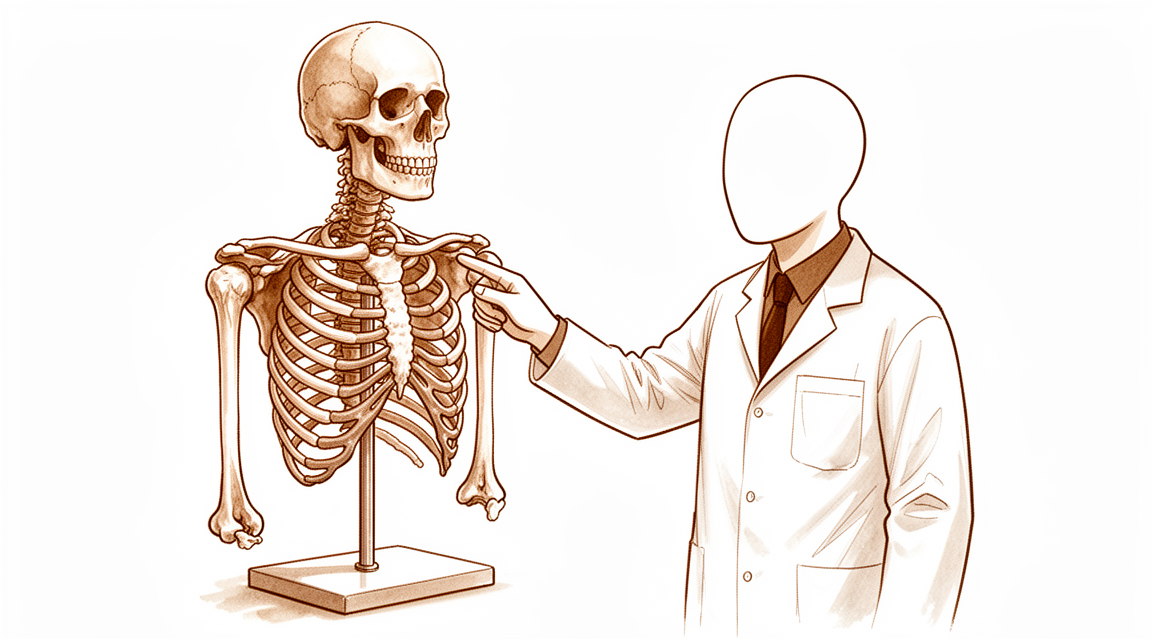
Giao thức này hướng dẫn quá trình hồi phục của bạn sau khi phẫu thuật sửa chữa gân tam đầu cánh tay xa (gân nối cơ tam đầu – cơ có chức năng duỗi khuỷu tay – với mấu khuỷu tay), dưới sự chăm sóc của bác sĩ Kieran Hirpara tại Bệnh viện tư nhân Mater Rockhampton. Giao thức bắt đầu với chương trình tập luyện tại nhà, tiếp theo là quy trình điều trị chi tiết được soạn thảo dành riêng cho chuyên viên vật lý trị liệu hoặc chuyên viên trị liệu tay của bạn; hãy mang theo trang này hoặc bản PDF tương ứng trong lần trị liệu đầu tiên để quá trình phục hồi được thực hiện một cách nhất quán. Chuyên viên trị liệu có thể điều chỉnh kế hoạch này tùy theo tiến triển hồi phục của bạn.
Nếu bạn có bất kỳ thắc mắc nào về vết thương sau phẫu thuật, hãy liên hệ với phòng khám. Việc chụp ảnh vết thương rồi gửi qua email để được đánh giá cũng là một cách hữu ích.
Những điều bạn có thể mong đợi
Phẫu thuật khâu nối gân cơ tam đầu ở vùng xa sẽ gắn lại sợi gân bị rách vào xương tại vùng khuỷu tay (mấu khuỷu – olecranon). Khi phẫu thuật kết thúc, bác sĩ Hirpara sẽ kiểm tra xem vết khâu có an toàn và nguyên vẹn không bằng cách gập khuỷu tay thành góc vuông (90°). Vì vậy, khuỷu tay của bạn sẽ được đặt trong một dây đeo đơn giản ở góc khoảng 90°, là tư thế tiêu chuẩn và thoải mái. Không sử dụng nẹp có khớp nối; khuỷu tay cũng không được giữ ở tư thế gần thẳng. Bạn có thể tháo dây đeo ra khi tập luyện và khi vệ sinh.
Gân sẽ chịu lực theo hai cách; kế hoạch phục hồi ban đầu được xây dựng nhằm bảo vệ gân khỏi cả hai dạng tải lực này:
- Việc gập khuỷu tay sẽ làm căng gân vừa được khâu. Do đó, trong khoảng sáu tuần đầu tiên, mức độ gập khuỷu tay chỉ được giới hạn ở 90° (góc vuông). Ngược lại, việc duỗi thẳng khuỷu tay giúp giảm căng gân; vì vậy bạn có thể duỗi thẳng hoàn toàn mà không gặp vấn đề gì, miễn là cảm thấy thoải mái.
- Việc duỗi thẳng khuỷu tay chủ động sẽ khiến cơ tam đầu hoạt động, từ đó kéo lên vết khâu. Vì vậy, trong khoảng sáu tuần đầu, bạn không nên duỗi thẳng khuỷu tay bằng sức mạnh cơ thể; các chuyển động theo hướng này chỉ nên thực hiện một cách nhẹ nhàng và có hỗ trợ, chứ không phải do cơ tam đầu tự thực hiện.
Sau đó, các chuyển động sẽ được mở rộng dần theo từng giai đoạn: mức độ gập khuỷu tay tăng dần từ khoảng tuần thứ sáu; việc duỗi thẳng chủ động cũng được phép thực hiện từ khoảng tuần thứ sáu; các bài tập tăng cường sức mạnh có tải lực sẽ bắt đầu từ khoảng tuần thứ mười hai. Vết khâu vẫn tiếp tục ổn định trong nhiều tháng nữa; vì vậy việc tăng dần mức tải lực và trở lại tập luyện thể thao cũng được thực hiện từ từ chứ không diễn ra ngay lập tức.
Các lưu ý và hạn chế
- Trong khoảng sáu tuần đầu tiên, KHÔNG gập khuỷu tay quá góc vuông (90°), vì việc gập tay sẽ làm căng giãn và gây tổn thương vùng vừa được phẫu thuật. Việc duỗi thẳng tay hoàn toàn là được và nên làm.
- Trong khoảng sáu tuần đầu tiên, KHÔNG cố gắng duỗi thẳng khuỷu tay bằng sức mạnh cơ bắp; hãy để người khác giúp duỗi thẳng tay một cách nhẹ nhàng, chứ không dùng cơ tam đầu để thực hiện.
- Trong khoảng mười hai tuần đầu, KHÔNG thực hiện bất kỳ động tác duỗi thẳng có sức cản hay các động tác đẩy/nén bằng cánh tay: không tập động tác kéo cơ tam đầu, không tập bench press hay overhead press, và không dùng cánh tay vừa phẫu thuật để đẩy người dậy khỏi ghế hoặc giường.
- Hãy đeo dây đeo cánh tay ở góc 90° theo hướng dẫn (không phải nẹp cố định, không giữ tay thẳng), và KHÔNG lái xe khi đang đeo dây đeo hoặc khi cánh tay chưa đủ khả năng kiểm soát vô lăng một cách an toàn.
- Ngay từ đầu, hãy vận động bàn tay, cổ tay và vai; có thể sử dụng tay để thực hiện các công việc nhẹ nhàng hàng ngày miễn là cảm thấy thoải mái, với điều kiện không phải thực hiện các động tác đẩy, nâng vật nặng hoặc gập khuỷu tay quá mức.
Để biết cách chăm sóc vết thương, giảm sưng và quản lý sẹo, vui lòng tham khảo hướng dẫn chăm sóc vết thương của phòng khám.
Các bài tập của bạn
Kieran Hirpara 4.0
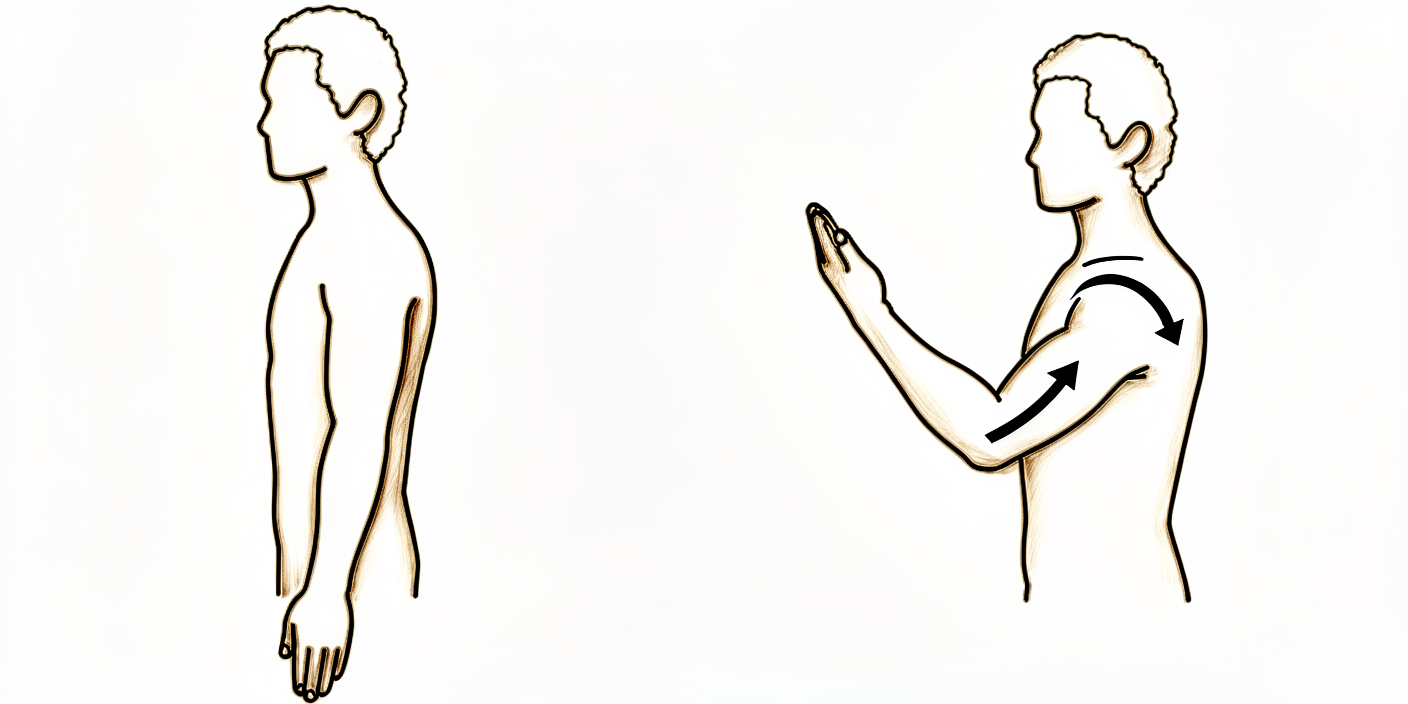
Chuyển động khuỷu tay được bảo vệ (phạm vi chuyển động 0–90°)
Khi tháo dây đeo ra, hãy nhẹ nhàng vận động khuỷu tay trong phạm vi an toàn: bạn có thể duỗi thẳng khuỷu tay hoàn toàn (động tác duỗi được tự do, trong mức thoải mái), nhưng tuyệt đối KHÔNG được gập khuỷu tay quá góc vuông (90°) — khoảng bằng mức gập khi cầm điện thoại áp lên tai. Hãy vận động từ từ và chỉ trong phạm vi đó. Gập khuỷu tay quá 90° sẽ kéo căng gân đang lành, vì vậy động tác này bị hạn chế trong khoảng sáu tuần đầu.
10 lần, 2–3 lần mỗi ngày, trong phạm vi góc 0–90 độ.
Kieran Hirpara 4.0
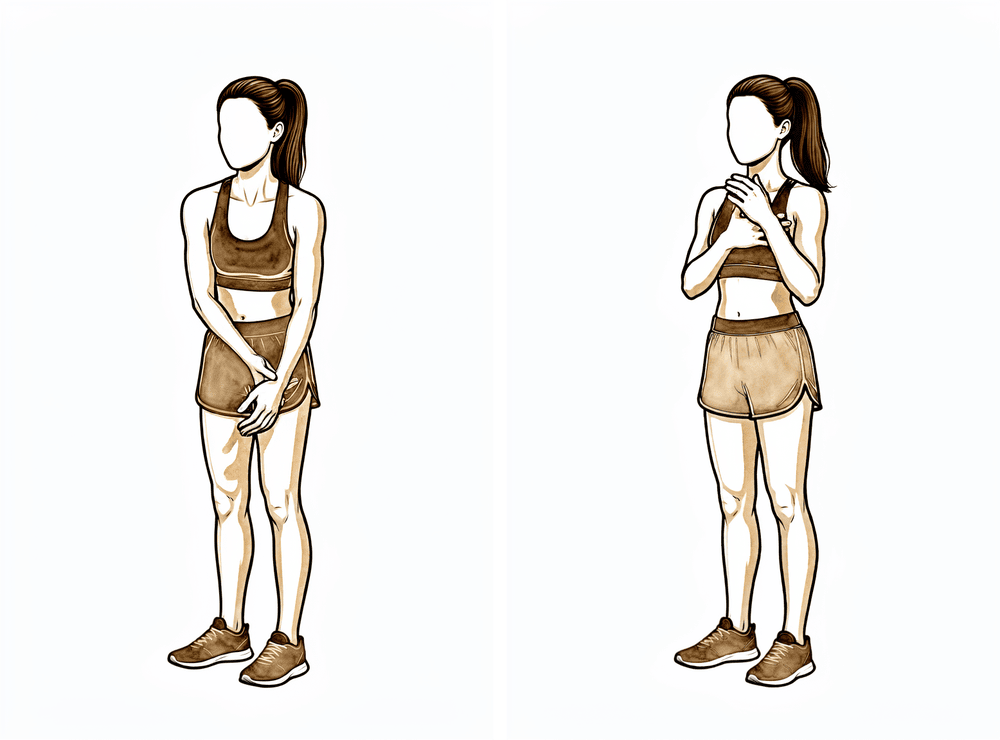
Vận động gập khuỷu tay có hỗ trợ (thụ động)
Hãy dùng tay còn lại để nhẹ nhàng gập khuỷu tay vừa phẫu thuật lên phía vai, đồng thời giữ cơ tam đầu hoàn toàn thả lỏng — bạn không kéo bằng cánh tay vừa phẫu thuật. Dừng lại ở giới hạn đã được đặt ra (ban đầu khoảng 90°). Cách này giúp khuỷu tay vẫn mềm dẻo mà không bắt cơ tam đầu phải hoạt động.
10 lần, 2–3 lần mỗi ngày, chỉ dùng đến mức giới hạn đã đặt.
Kieran Hirpara 4.0
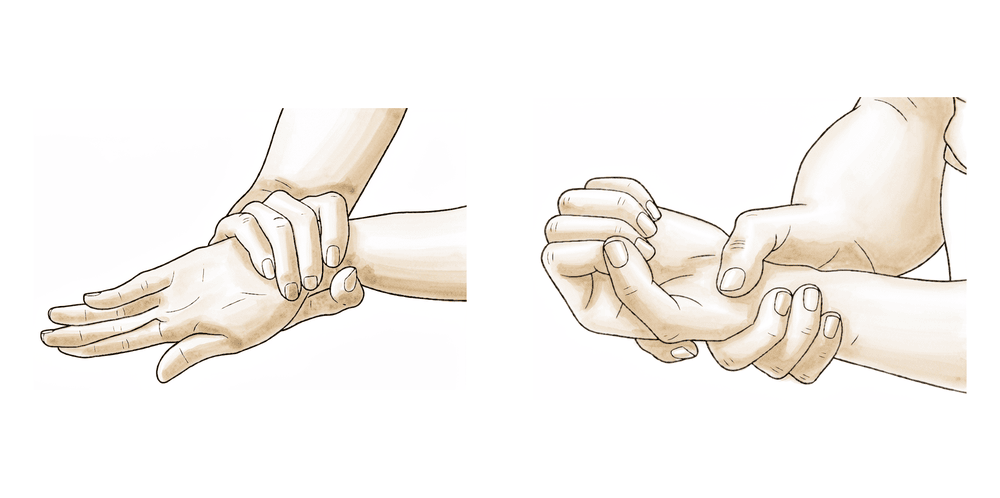
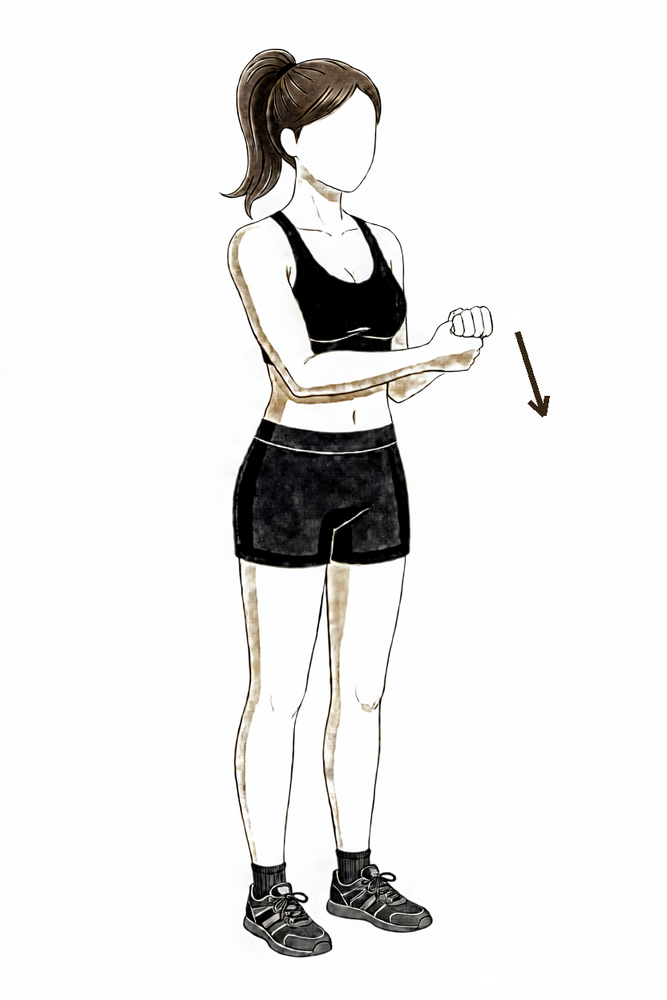
Chuyển động xoay cẳng tay (lòng bàn tay hướng lên / lòng bàn tay hướng xuống)
Khi khuỷu tay được giữ sát thân và gập ở mức thoải mái, hãy nhẹ nhàng xoay lòng bàn tay hướng lên trần nhà rồi lại hướng xuống sàn nhà. Thực hiện động tác một cách chậm rãi và nhẹ nhàng. Việc này giúp cẳng tay luôn mềm dẻo và không gây áp lực lên vùng vừa được phẫu thuật sửa chữa cơ tam đầu, vì vậy có thể bắt đầu thực hiện sớm.
10 lần theo mỗi hướng, 2–3 lần mỗi ngày.
Kieran Hirpara 4.0
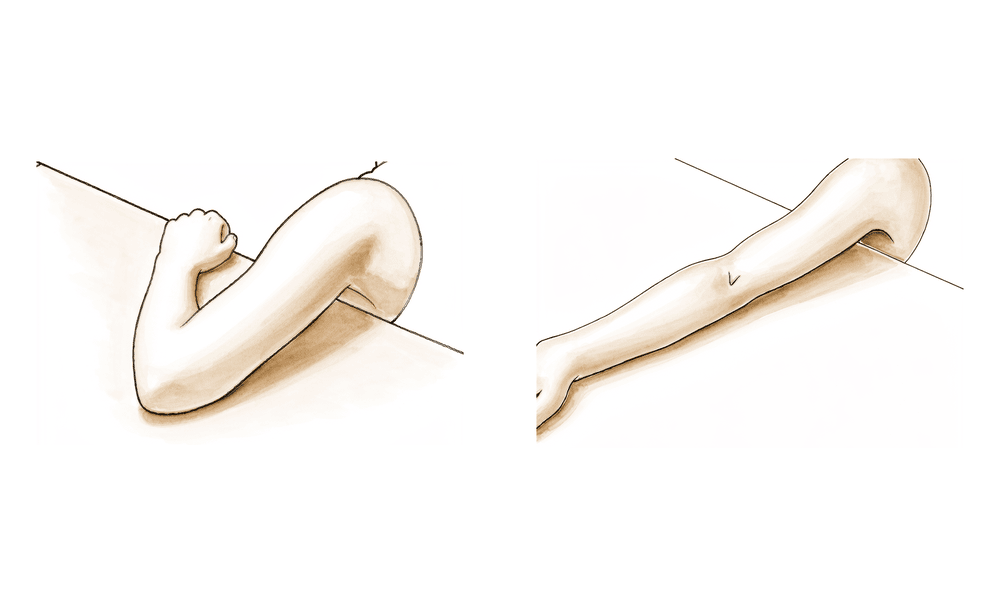
Co cơ tam đầu tại chỗ (nhẹ nhàng, không cử động)
Bài tập GIAI ĐOẠN SAU — chỉ thực hiện khi chuyên viên vật lý trị liệu cho bắt đầu (thường từ khoảng tuần thứ 8). Khi khuỷu tay được đỡ, hãy nhẹ nhàng co cơ ở MẶT SAU cánh tay trên (cơ tam đầu) như thể muốn duỗi thẳng khuỷu tay, nhưng KHÔNG để khuỷu tay thực sự cử động — chỉ ấn nhẹ, giữ, rồi thả lỏng. Không thực hiện bài tập này trong sáu tuần đầu.
Giữ nguyên trong khoảng 5 giây, thực hiện 5–10 lần theo hướng dẫn (ở giai đoạn sau).
Kieran Hirpara 4.0
Duỗi khuỷu tay chủ động (không có lực cản)
Bài tập GIAI ĐOẠN SAU — bắt đầu từ khoảng tuần thứ 6, khi đã được cho phép. Nhẹ nhàng tự duỗi thẳng khuỷu tay bằng sức của chính nó, KHÔNG cầm vật nặng trong tay; sau đó dùng tay kia hỗ trợ hạ khuỷu tay xuống (để cơ tam đầu chưa phải kiểm soát pha hạ xuống). Cần đảm bảo không đau. KHÔNG duỗi chủ động trong sáu tuần đầu.
10 lần, theo hướng dẫn (từ khoảng tuần thứ 6, không có sức cản)
Kieran Hirpara 4.0
Co cơ tam đầu chống lại lực giữ nhẹ (duỗi đẳng tích)
Bài tập GIAI ĐOẠN SAU — từ khoảng tuần thứ 8, theo hướng dẫn. Nhẹ nhàng ấn cẳng tay vào tay kia hoặc một bề mặt cố định như thể muốn duỗi thẳng khuỷu tay, chỉ tăng lực đến mức nhẹ và thoải mái, giữ nguyên mà không để khuỷu tay cử động. Bài tập này giúp đánh thức cơ tam đầu trước khi được phép tập có lực cản.
Giữ nguyên trong khoảng 5 giây, thực hiện 5–10 lần theo hướng dẫn (ở giai đoạn sau).
Kieran Hirpara 4.0
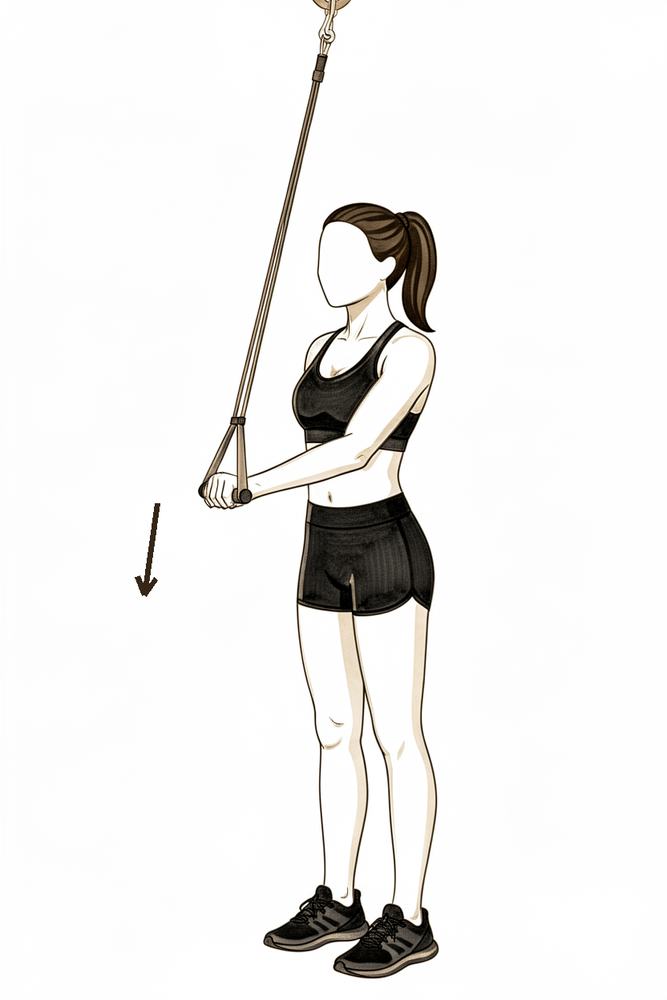
Duỗi khuỷu tay có lực cản bằng dây thun (giai đoạn tăng cường sức mạnh muộn)
Bài tập này nên thực hiện muộn — chỉ nên bắt đầu sau khi các hoạt động chịu lực đã được cho phép, thường là khoảng 12 tuần sau phẫu thuật. Duỗi thẳng khuỷu tay chống lại sợi dây kháng lực nhẹ, sau đó từ từ hạ khuỷu tay xuống. Trong vài tuần tiếp theo, hãy tăng dần mức độ kháng lực. Bài tập này giúp tạo tải trọng lên gân vừa được phục hồi; vì vậy đây là bài tập cuối cùng nên thực hiện. Tuyệt đối không vội vàng, và hãy ngừng ngay nếu cảm thấy đau.
Theo hướng dẫn của chuyên viên vật lý trị liệu (chỉ áp dụng từ khoảng tuần thứ 12 trở đi).
Đây là những bài tập có trong tờ hướng dẫn dành cho bạn. Hãy thực hiện chúng chỉ khi có sự hướng dẫn từ Bác sĩ Hirpara và chuyên viên vật lý trị liệu, đồng thời tuân thủ mọi phạm vi và giới hạn đã được đề ra. Các bài tập ban đầu nhằm giúp khuỷu tay và cẳng tay chuyển động mà không gây áp lực hay kéo giãn vùng vừa được phẫu thuật: các động tác nhẹ nhàng trong phạm vi góc an toàn là 0–90 độ, việc gập khuỷu tay có hỗ trợ, và xoay cẳng tay. Các bài tập dành cho cơ tam đầu, việc duỗi thẳng khuỷu tay chủ động và các bài tập dùng dây kháng lực thuộc giai đoạn sau; bạn không nên thực hiện chúng cho đến khi được bác sĩ cho phép cụ thể. Hãy ngừng ngay mọi hoạt động gây ra cơn đau dữ dội ở phía sau khuỷu tay.
Quy trình điều trị lâm sàng của bạn
Phần còn lại của trang này là quy trình điều trị phục hồi chức năng sau khi phẫu thuật vá gân tam đầu cánh tay. Phần này cần được cung cấp cho chuyên viên vật lý trị liệu hoặc chuyên gia trị liệu tay; mỗi giai đoạn đều bắt đầu bằng lời giải thích bằng tiếng Việt đơn giản về những gì đang diễn ra. Việc vá gân được thực hiện thông qua động tác gập khuỷu tay (kéo giãn gân) và động tác duỗi cánh tay chủ động hoặc có lực cản (khiến cơ tam đầu co lại lên vết vá); vì vậy quy trình điều trị nhằm bảo vệ cả hai yếu tố này trong lúc khôi phục dần biên độ vận động, sau đó mới tiến hành duỗi cánh tay chủ động rồi tăng cường sức mạnh cơ bằng lực cản.
Trước khi bắt đầu điều trị, hãy xem kỹ báo cáo phẫu thuật và tiền sử bệnh của bệnh nhân; đồng thời trao đổi với bác sĩ phẫu thuật về phương pháp cố định vết vá (các đường hầm xuyên xương hay móc khâu nội soi), chất lượng mô và phạm vi vận động được phép. Vết vá do bác sĩ Hirpara thực hiện đã được kiểm tra trong lúc mổ và xác nhận an toàn ở góc gập 90°; bệnh nhân được đeo đai treo đơn giản ở góc 90° (không dùng nẹp có khớp, không giữ cánh tay ở tư thế duỗi thẳng); phạm vi vận động được bảo vệ là 0–90°; bệnh nhân có thể duỗi cánh tay thoải mái tùy ý nhưng góc gập chỉ được giới hạn ở mức 90°.
Giai đoạn I — Giữ vùng khớp cẳng tay trong phạm vi an toàn ở góc 90° (tuần 0 đến 6)
Trong sáu tuần đầu, mục tiêu là bảo vệ vùng vừa được phẫu thuật đồng thời ngăn ngừa tình trạng cứng khớp khuỷu tay. Cánh tay được đặt trong máng treo đơn giản ở góc 90°, chỉ tháo ra khi thực hiện các bài tập hoặc vệ sinh. Khớp khuỷu tay chỉ được phép di chuyển trong phạm vi 0–90° được quy định; có thể duỗi thẳng hoàn toàn để cảm thấy thoải mái nhưng không được gập quá góc vuông, và tuyệt đối không được vận dụng lực cơ tam đầu để vận động.
Dành cho chuyên viên vật lý trị liệu:
Giáo dục và các lưu ý cần tránh - Cố định cánh tay bằng máng treo đơn giản ở góc 90° (không dùng nẹp có bản lề; không giữ cánh tay ở tư thế duỗi thẳng); tháo máng khi thực hiện các bài tập hoặc rửa tay - Phạm vi vận động được phép chỉ là 0–90°: có thể duỗi thẳng hoàn toàn tùy theo mức độ thoải mái; gập khuỷu tay không vượt quá 90° - Tuyệt đối không được duỗi khuỷu tay chủ động hoặc chống lại lực cản (việc co cơ tam đầu chủ động sẽ gây áp lực lên vùng vừa phẫu thuật) - Không dùng cánh tay vừa mổ để chịu tải trọng hay đẩy; chỉ được sử dụng nhẹ nhàng, không tải trọng trong phạm vi cảm thấy thoải mái - Cần thực hiện các động tác vận động khớp vai một cách nhẹ nhàng ngay từ đầu (để bảo vệ phần cơ dài đi qua khớp vai)
Cách quản lý - Vết mổ: thay băng theo hướng dẫn; theo dõi dấu hiệu nhiễm trùng - Phù nề: nâng cao cánh tay, thực hiện các động tác bơm máu nhẹ nhàng cho tay, chườm đá nếu cần - Các bài tập: thực hiện các động tác vận động chủ động/ thụ động của khớp khuỷu tay trong phạm vi 0–90° (duỗi thẳng tùy mức độ thoải mái, gập không quá 90°); vận động khớp cổ tay, ngón tay và các cơ nắm tay một cách chủ động; thực hiện các động tác vận động nhẹ nhàng cho khớp vai; xoay cẳng tay nhẹ nhàng; tuyệt đối không được duỗi khuỷu tay chủ động
Tiêu chí để chuyển sang giai đoạn tiếp theo - Vết mổ đã lành; sau khoảng sáu tuần có thể vận động trong phạm vi 0–90° một cách thoải mái và có kiểm soát
Giai đoạn II — tăng dần góc gập và bắt đầu vận động duỗi chủ động (từ tuần thứ 6 đến tuần thứ 12)
Khoảng từ tuần thứ 6, giới hạn gập khớp được nới lỏng; bệnh nhân có thể gập tay vượt quá 90° và tiến dần tới mức tối đa. Vận động duỗi chủ động được thực hiện mà không có lực cản, đồng thời cơ tam đầu được kích hoạt trở lại một cách nhẹ nhàng thông qua các bài tập co cơ tĩnh. Các hoạt động duỗi có lực cản và chịu tải vẫn chưa được phép.
Dành cho chuyên viên vật lý trị liệu:
Đánh giá - Phạm vi vận động chủ động và thụ động (gập khớp hiện đã vượt quá 90°, duỗi khớp); mức độ đau và sưng; kiểm tra vết thương/vết sẹo
Giáo dục và lưu ý - Tăng dần góc gập vượt quá 90° và tiến tới mức tối đa một cách từ từ, bắt đầu từ khoảng tuần thứ 6 - Không thực hiện vận động duỗi có lực cản và không chịu tải lên cánh tay cho đến tuần thứ 12
Phương pháp điều trị - Các bài tập: từ tuần 6–8 bắt đầu vận động duỗi chủ động mà không có lực cản, trong phạm vi không gây đau (dùng tay còn lại hỗ trợ giai đoạn hạ tay/duỗi chậm); từ tuần thứ 8 thực hiện các bài tập co cơ tĩnh nhẹ cho cơ tam đầu; tiếp tục duy trì vận động đầy đủ các góc và xoay cẳng tay; bắt đầu chăm sóc vết sẹo sau khi vết thương đã lành
Tiêu chí để chuyển sang giai đoạn tiếp theo - Phạm vi vận động đầy đủ và không gây đau; duỗi khớp chủ động hoàn toàn với khả năng kiểm soát tốt; mức độ đau ≤3/10
Giai đoạn III — Tăng cường sức mạnh và trở lại sinh hoạt bình thường (từ tuần thứ 12 đến 16 và sau đó)
Khi khả năng vận động đã hồi phục và việc tập luyện có sức đề kháng được cho phép (khoảng tuần thứ 12), việc tăng cường sức mạnh sẽ bắt đầu và được nâng dần mức độ: tập luyện cơ tam đầu với lực cản (từ giai đoạn co cơ rồi đến giai đoạn giãn cơ), sau đó là các bài tập chịu tải với mô hình vòng khép kín, rồi đến các động tác ép cơ trong phạm vi hạn chế. Việc trở lại tập luyện thể thao phải dựa trên các tiêu chí cụ thể; sớm nhất là khoảng 5–6 tháng sau chấn thương.
Dành cho chuyên viên vật lý trị liệu:
Đánh giá - Đánh giá sức mạnh cơ tam đầu so với bên đối diện; phản ứng đau/sưng khi thực hiện các bài tập; thực hiện các bài kiểm tra chức năng và các bài kiểm tra phù hợp với môn thể thao hoặc công việc cụ thể
Giáo dục và lưu ý - Bắt đầu tập luyện tăng cường sức mạnh cơ tam đầu có sức đề kháng (từ giai đoạn co cơ rồi đến giai đoạn giãn cơ) từ khoảng tuần thứ 12; tăng dần mức tải trọng - Thực hiện các bài tập chịu tải với mô hình vòng khép kín từ khoảng tuần thứ 12 (bắt đầu với tải trọng nhẹ và phạm vi chuyển động hạn chế); các bài tập ép cơ với phạm vi hạn chế (như hít đất) từ khoảng tuần thứ 14
Quản lý điều trị - Các bài tập: tăng dần mức độ kháng lực khi duỗi khuỷu tay (từ dây kháng lực sang tạ nhẹ); thực hiện các bài tập chịu tải theo mô hình vòng khép kín có mức độ tăng dần; các động tác ép cơ trong phạm vi hạn chế; tiếp tục các bài tập duy trì độ linh hoạt còn lại - Có thể cho bệnh nhân xuất viện khi sức mạnh cơ đã gần như cân đối và chức năng vận động đã hồi phục đáng kể - Cân nhắc chuyển bệnh nhân trở lại gặp bác sĩ điều trị nếu tiến triển hồi phục bị chậm hoặc kết quả điều trị không như mong đợi
Tiêu chí trở lại tập luyện thể thao - Sức mạnh cơ tam đầu đạt mức 5/5; khả năng kiểm soát chuyển động với tốc độ cao và phù hợp với môn thể thao mà không gây đau
Quay trở lại công việc và các hoạt động thường ngày
Bạn nên bắt đầu sử dụng tay trong các hoạt động nhẹ nhàng hàng ngày (ăn uống, viết lách và các công việc chăm sóc bản thân) ngay từ đầu, miễn là cảm thấy thoải mái và các hoạt động này không yêu cầu phải đẩy, nâng vật nặng hay gập khuỷu tay quá mức cho phép. Vì bạn không được lái xe khi tay vẫn đeo nẹp hoặc chưa thể kiểm soát vô lăng một cách an toàn, hãy sắp xếp người hỗ trợ đưa đón trong những tuần đầu; việc lái xe sẽ được phép trở lại khi bạn đã tháo nẹp và có khả năng điều khiển xe, theo xác nhận của bác sĩ trong buổi tái khám.
Các hoạt động đòi hỏi sức mạnh cơ bắp và chịu tải trọng (đẩy, nhấn, nâng, kéo) chỉ được thực hiện sau khoảng 12 tuần, và cần được tăng dần theo thời gian. Việc quay trở lại tập thể thao sớm nhất là sau 5–6 tháng, và phải dựa trên điều kiện là bạn đã phục hồi hoàn toàn khả năng vận động không còn đau đớn cùng sức mạnh cơ tam đầu cân đối, được đánh giá bởi bác sĩ Hirpara và chuyên viên vật lý trị liệu, chứ không chỉ dựa vào thời gian. Các công việc chân tay nặng nhọc cũng tuân theo nguyên tắc tiến triển tương tự.
Sau khi thực hiện theo phác đồ này
Phác đồ này được áp dụng song song với các hướng dẫn phục hồi tổng quát của phòng khám: vui lòng tham khảo mục xử lý cơn đau sau phẫu thuật, chăm sóc vết thương và trở lại tập luyện thể thao. Kế hoạch từng giai đoạn nêu trên dựa trên các hướng dẫn phục hồi đã được công bố sau khi phẫu thuật sửa chữa gân tam đầu cánh tay; quá trình hồi phục của bạn sẽ được Bác sĩ Hirpara và chuyên viên vật lý trị liệu theo dõi và điều chỉnh tùy theo tiến triển của khớp khuỷu tay.
Evidence & references
This is the clinical evidence summary written for health professionals. It is technical, and it lists the research this page was built from. You do not need to read it to understand your treatment or to make a decision about it.
Distal Triceps Tendon Repair — Post-operative Rehabilitation (Evidence Brief)
Topic scope: post-operative rehabilitation after surgical reattachment of the avulsed distal triceps tendon to the olecranon (transosseous bone tunnels or suture-anchor footprint repair; best performed within ~3 weeks of injury). The extension mechanism is loaded by elbow flexion (passive stretch of the repair) and by active/resisted extension (triceps contraction), so the rehab cadence is built around protecting both, then restoring motion, then active extension, then resisted strength.
Defining principle: the repair is loaded in flexion and by triceps contraction, so early rehab limits flexion and blocks active/resisted extension while motion is restored, then releases active extension (~6 wk) and resisted extension (~12 wk) in steps, with return to sport at ~5–6 months. Dr Hirpara's stance: the repair is checked intra-operatively to be safe at 90° of flexion, so the elbow is rested in a simple sling at 90° (a standard, comfortable position — no hinged brace, and NOT held near extension) with a protected 0–90° arc (extension free to comfort, flexion capped at 90°) for ~6 weeks. This is deliberately less restrictive on early flexion than the published near-extension / 20°-flexion-lock guidelines, while keeping the key loading rules identical (no active extension to 6 wk, no resisted extension to 12 wk).
Evidence base and corpus note
No RCT and no large prospective cohort defines the rehab cadence for distal triceps repair. The phased timeline rests on a published institutional clinical-care guideline (Ohio State Sports Medicine, 2021), which itself cites the core review literature, corroborated by several surgeon and physiotherapy phased protocols. The local RAG corpus is thin on triceps-specific phased rehab (rotator-cuff and biceps content dominates), but it does contain the key biomechanical repair-strength papers, which inform how early and how aggressively one can mobilise. The week-by-week timeline is therefore carried by the published clinical-care guideline, with the corpus supplying the repair-strength evidence that justifies the cadence.
Key principles and controversies
- Early motion vs prolonged immobilisation. Classic teaching favours protective immobilisation (splint 2–6 wk, flexion-limited brace) because the triceps insertion is loaded in flexion. A counter-trend pushes accelerated early ROM where fixation is strong — a cadaveric study comparing dynamic-tape with standard suture fixation under an intense early-rehab protocol found the novel construct biomechanically superior, i.e. fixation strength is the rate-limiter for how early one can mobilise.
- Suture-anchor vs transosseous (bone-tunnel) repair strength. Carpenter et al. (JSES 2018) found no difference in tendon displacement between transosseous cruciate tunnels and suture-anchor repair when the number of sutures is equalised; the technique by Sarokhan & Leung (Arthrosc Tech 2019) cites Clark et al. (2014) finding anatomic (knotless) footprint repair superior to transosseous cruciate repair. Stronger anatomic footprint fixation is the lever that justifies earlier/more aggressive flexion and earlier resisted extension.
- Flexion-limit progression. No consensus on the exact ramp — the OSU guideline locks at 20° then advances ~15°/5 days; others use ~10°/week or an open 0–60° arc. All converge on full passive flexion by ~6 weeks, with active extension deferred to ~6 weeks and resisted extension to ~12 weeks. KH's variant keeps the elbow at 90° in a simple sling with a free 0–90° arc — less restrictive on early flexion, same loading deferrals.
- Strength athletes / high demand. Retrospective series in strength athletes report satisfactory return to sport but underline that resisted extension and pressing loads are the highest-risk re-rupture activities, supporting the firm 12-week resisted-extension / pressing block.
Phased timeline
| Phase | Window | Sling / ROM ceiling | Exercises | Criteria to progress |
|---|---|---|---|---|
| I — Protected motion | Weeks 0–6 | Simple sling at 90° (no hinged brace, not near extension), off for exercises. Protected arc 0–90°: extension free to comfort, flexion capped at 90°. No active extension. | AAROM/PROM elbow within 0–90°; wrist/hand/grip AROM; gentle shoulder ROM; forearm rotation | Wound healed; comfortable, controlled 0–90° arc at ~6 wk |
| II — Advance flexion + active extension | Weeks 6–12 | Release flexion cap; progress flexion past 90° toward full. No resisted extension / weight-bearing. | Wk 6–8 active concentric extension no resistance (assist eccentric with other arm); wk 8 light submaximal triceps isometrics | Full painless ROM; full active extension with good control; pain ≤3/10 |
| III — Strengthening & return | Weeks 12–16+ | Resisted triceps strengthening (concentric → eccentric) from ~12 wk; CKC weight-bearing from ~12 wk (light, small range); limited-range pressing ~wk 14 | Progressive resisted extension; graded loading; sport-/work-specific progression | 5/5 triceps strength; pain-free high-velocity / sport-specific control |
| Return to sport | ~5–6 months | Criterion-based, at the earliest | — | Full pain-free ROM + symmetrical triceps strength |
Evidence strength flags
- MODERATE (protocol cadence): the phased timeline (no active extension to ~6 wk, resisted extension to ~12 wk, return to sport ~5–6 mo) — anchored to the OSU Sports Medicine clinical-care guideline and corroborating surgeon/PT protocols. No defining rehab RCT.
- MODERATE (repair-strength biomechanics): suture-anchor vs transosseous equivalence with equalised sutures (Carpenter 2018); anatomic footprint superiority (Clark, via Sarokhan & Leung); insertional footprint anatomy (Whitaker 2022) — these justify the mobilisation cadence.
- LOW–MODERATE (KH's 90°-sling / flexion-capped-at-90° variant): biomechanically sound (flexion is the repair-tensioning motion; intra-op tensioning at 90° defines the safe arc) and less restrictive on early flexion than published near-extension guidance, while preserving the key extension-loading deferrals. Consensus / expert rather than trial-derived; corpus gap — no RCT or large cohort defines this exact variant.
CITATIONS
RAG corpus (180,000+ Orthopaedic articles)
- Keener JD, Sethi PM. Distal triceps tendon injuries. Hand Clin. 2015;31(4):641–650. DOI: 10.1016/j.hcl.2015.06.012
- Carpenter SR, Stroh DA, Melvani R, et al. Distal triceps transosseous cruciate versus suture anchor repair using equal constructs: a biomechanical comparison. J Shoulder Elbow Surg. 2018;27(11):2052–2056. DOI: 10.1016/j.jse.2018.07.005
- Sarokhan AK, Leung NL. Acute triceps tendon repair: a technique utilizing 3 curved tunnels and proximal knots. Arthrosc Tech. 2019;8(11):e1325–e1330. DOI: 10.1016/j.eats.2019.07.001
- Ng T, Rush LN, Savoie FH. Arthroscopic distal triceps repair. Arthrosc Tech. 2016;5(6):e1107–e1112. DOI: 10.1016/j.eats.2016.06.011
- Whitaker JJ, Hartke J, Hawayek BJ, et al. Histologic evaluation of the triceps brachii tendon insertion: implications for triceps-sparing surgery. J Hand Surg Am. 2022. DOI: 10.1016/j.jhsa.2022.03.020
Published rehabilitation protocols & literature (URLs)
- Ohio State University Sports Medicine. Distal Triceps Repair — Clinical Care Guideline (G. Hock PT DPT OCS; rev. M. Salsbery PT DPT SCS; Dec 2021). https://medicine.osu.edu/-/media/files/medicine/departments/sports-medicine/medical-professionals/shoulder-and-elbow/distaltricepsrepair.pdf (NB: its near-extension / 20°-flexion-lock immobilisation differs from Dr Hirpara's 90°-sling approach; the loading deferrals are shared.)
- Cadaveric study of dynamic-tape vs standard suture fixation in distal triceps repair under an intense early-rehab protocol. PMC. https://www.ncbi.nlm.nih.gov/pmc/articles/PMC12423150/
- Distal triceps tendon repair in strength athletes — satisfactory return to sport (22 cases). PMC. https://www.ncbi.nlm.nih.gov/pmc/articles/PMC11355401/
Note on corpus gap: the RAG corpus lacks a dedicated distal-triceps phased rehab article; the week-by-week timeline is carried by the OSU clinical-care guideline (and corroborating surgeon protocols), with the corpus papers supplying the repair-strength evidence that justifies the cadence. Flagged accordingly.