Patients › Hand
Phẫu thuật giải phóng ngón tay cò súng
Trigger finger release — understanding the condition, conservative treatments, and surgical options for a stuck or clicking finger.
Lý do phẫu thuật này được đề xuất
Bác sĩ Kieran Hirpara, bác sĩ phẫu thuật chi trên tại Bệnh viện tư nhân Mater Rockhampton, sẽ bắt đầu bằng các phương pháp ít xâm lấn nhất phù hợp với tình trạng của bạn. Thông thường, bệnh nhân được bác sĩ đa khoa giới thiệu đến phòng khám chúng tôi; nếu vật lý trị liệu viên khuyên bạn nên gặp chúng tôi, bạn vẫn cần có giấy giới thiệu từ bác sĩ đa khoa để được hưởng mức hoàn trả từ Medicare. Trong buổi khám, chúng tôi sẽ hỏi bệnh sử, khám tay bạn và chỉ định chụp hình ảnh nếu cần thiết. Nhờ đó, chúng tôi xác định được nguyên nhân khiến ngón tay hoặc ngón cái của bạn bị vướng, bị kẹt.
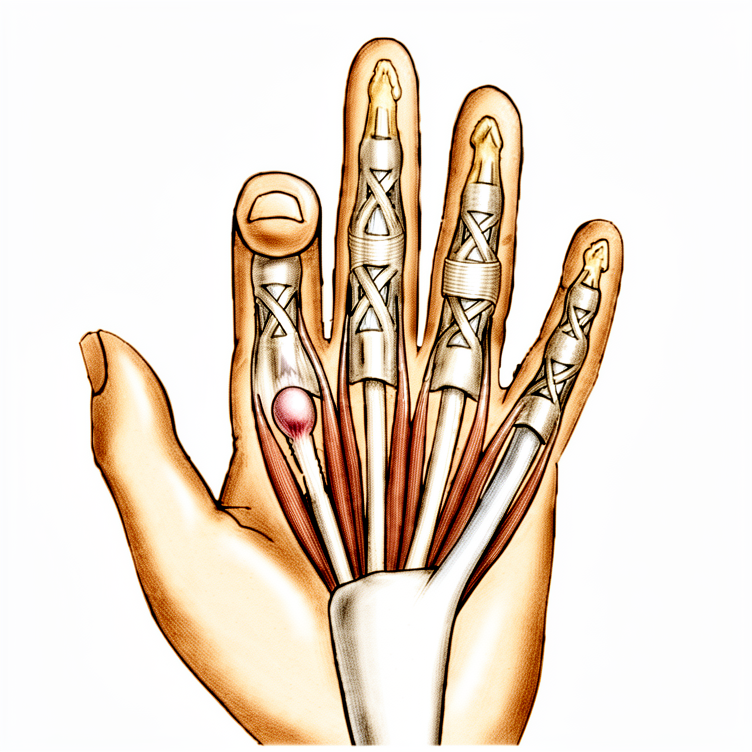
Chứng ngón tay bị kẹt xảy ra khi gân ở ngón tay hoặc ngón cái bị vướng khi di chuyển qua một đường hầm hẹp ở lòng bàn tay. Thông thường, chúng tôi sẽ áp dụng các biện pháp điều trị không phẫu thuật trước. Các biện pháp này có thể là đeo nẹp, vật lý trị liệu hoặc tiêm steroid (loại thuốc được tiêm gần gân nhằm giảm viêm). Chúng tôi mới cân nhắc phẫu thuật khi các phương pháp trên không mang lại hiệu quả đáng kể, hoặc khi ngón tay bị cong cứng và không thể duỗi thẳng ra được nữa.
Phẫu thuật này chỉ là một thủ thuật cắt mở: chúng tôi thực hiện một vết rạch duy nhất tại vùng cần điều trị, sau đó mở rộng phần đường hầm bị hẹp để gân có thể di chuyển tự do. Khoảng 97% bệnh nhân sau phẫu thuật hoàn toàn hết tình trạng ngón tay bị kẹt. Mục tiêu của ca phẫu thuật là giúp ngón tay hoặc ngón cái vận động trơn tru, không còn bị vướng, bị kẹt hay gây đau đớn.
Trước khi phẫu thuật
Hầu hết mọi người không cần chuẩn bị nhiều. Bạn sẽ được hướng dẫn không ăn uống trong vòng bảy giờ trước khi phẫu thuật. Chúng tôi yêu cầu thời gian bảy giờ thay vì sáu giờ để có thể sắp xếp ca phẫu thuật sớm hơn nếu lịch mổ được hoàn thành trước thời hạn. Bác sĩ phẫu thuật sẽ chỉ định những loại thuốc cần ngưng dùng và thời điểm ngưng; bạn nên mang theo danh sách viết tay tất cả các loại thuốc mình đang sử dụng. Hãy sắp xếp người đưa đón về nhà sau phẫu thuật, và mặc quần áo rộng rãi, thoải mái vào ngày phẫu thuật. Đôi khi chúng tôi yêu cầu chụp X-quang, MRI hoặc siêu âm trước đó để hỗ trợ lên kế hoạch phẫu thuật. Nếu bạn mắc các bệnh lý khác, có thể cần làm xét nghiệm máu hoặc khám lại với bác sĩ gây mê (bác sĩ chuyên về gây mê), nhưng hầu hết mọi người không cần làm những điều này.
Vào ngày phẫu thuật
Bạn đến khu vực tiếp nhận bệnh nhân phẫu thuật của bệnh viện, nơi bạn sẽ được làm thủ tục nhập viện và chuẩn bị cho ca mổ. Bạn sẽ gặp bác sĩ gây mê – người chịu trách nhiệm thực hiện gây mê. Ca phẫu thuật này có thể được thực hiện dưới gây tê tại chỗ (tiêm thuốc gây tê chỉ ở vùng cần mổ, trong khi bạn vẫn tỉnh táo) hoặc gây mê toàn thân (bạn sẽ ngủ hoàn toàn). Hầu hết mọi người chọn phương pháp gây tê tại chỗ vì thời gian hồi phục nhanh hơn và bạn có thể về nhà ngay sau đó. Nếu bạn muốn ngủ trong suốt ca mổ, đó cũng là lựa chọn hợp lý; hãy thảo luận với bác sĩ phẫu thuật và bác sĩ gây mê về điều này.
Sau đó, bạn sẽ được đưa vào phòng mổ để thực hiện ca phẫu thuật. Sau khi mổ, bạn tỉnh dậy tại khu vực hồi sức, nơi các điều dưỡng sẽ theo dõi tình trạng sức khỏe của bạn cho đến khi thuốc mê hết tác dụng. Khi tình trạng sức khỏe ổn định, tùy vào loại phẫu thuật và mức độ hồi phục mà bạn sẽ được chuyển về phòng bệnh hoặc về nhà. Hầu hết những người trải qua ca phẫu thuật này đều về nhà trong ngày. Hãy đưa người lái xe mà bạn đã sắp xếp từ trước đến và tuân theo mọi hướng dẫn của các điều dưỡng liên quan đến bàn tay của bạn trước khi rời viện.
Quy trình phẫu thuật
Phẫu thuật này được gọi là thủ thuật giải phóng ngón tay cò. Bác sĩ phẫu thuật sẽ thực hiện một đường rạch duy nhất tại vùng cần phẫu thuật, thường dài khoảng 2 cm. Qua đường rạch này, bác sĩ tiếp cận phần hẹp trong ống dẫn tận cùng ở lòng bàn tay mà gân di chuyển qua. Sau đó, dải mô bị chặt chẽ này được cắt mở từ từ, mỗi lần khoảng 1 cm, cho đến khi gân có thể di chuyển tự do. Cuối cùng, bác sĩ sẽ kiểm tra xem ngón tay hoặc ngón cái có thể gập và duỗi ra một cách trơn tru, không bị vướng hay không.
Trong trường hợp ngón tay cò ở ngón cái, chỉ cần giải phóng một dải mô bị chặt chẽ. Còn với các ngón tay khác, có thể cần giải phóng thêm một dải mô nữa ở gần đó. Bác sĩ phẫu thuật sẽ làm việc hết sức cẩn thận để bảo vệ các dây thần kinh lân cận và không làm tổn thương các dải mô nâng đỡ sâu hơn trong ngón tay, vì chúng đóng vai trò quan trọng trong việc giúp gân hoạt động bình thường.
Sau khi hoàn tất thủ thuật, vết mổ sẽ được khâu lại bằng chỉ khâu. Một băng ép (băng gạc chặt) sẽ được đặt lên vùng tay. Bạn cần giữ băng này trong khoảng 10 ngày, sau đó chỉ khâu sẽ được cắt bỏ vào ngày thứ 10 đến 14. Bạn nên bắt đầu sử dụng ngón tay hoặc ngón cái một cách bình thường ngay sau đó.
Nếu bạn mắc bệnh viêm khớp dạng thấp (một tình trạng gây viêm khớp), phương pháp điều trị có thể hơi khác. Trong trường hợp này, bác sĩ phẫu thuật có thể cắt bỏ một mảnh nhỏ của gân thay vì giải phóng dải mô bị chặt chẽ, vì việc giải phóng dải mô có thể khiến ngón tay bị lệch sang một bên theo thời gian. Bác sĩ sẽ giải thích rõ kế hoạch điều trị dành riêng cho tay bạn trước khi bạn đồng ý thực hiện phẫu thuật.
Sau phẫu thuật
Bạn sẽ tỉnh dậy tại khu vực hồi sức, nơi các y tá theo dõi tình trạng của bạn cho đến khi thuốc gây mê hết tác dụng. Đây là ca phẫu thuật ngoại trú nên bạn sẽ về nhà ngay trong ngày. Tay bạn sẽ được băng ép chặt; bạn có thể cử động ngón tay hoặc ngón cái ngay lập tức. Cảm giác đau nhức trong một hoặc hai ngày đầu là điều bình thường; các loại thuốc giảm đau thông thường mua tại hiệu thuốc hoặc theo chỉ định của bác sĩ thường là đủ. Hãy nhờ ai đó ở bên cạnh bạn trong 24 giờ đầu. Chúng tôi để băng bó trên tay khoảng 10 ngày; vui lòng không tháo băng ra trước thời hạn đó trừ khi có chỉ định của chúng tôi. Chúng tôi sẽ thay hoặc gỡ băng khi khám lại cho bạn. Hầu hết mọi người có thể lái xe trở lại trong vòng một đến hai tuần, khi vết thương đã ổn định và họ có thể nắm tay, xoay vô lăng mà không cần bảo vệ tay nữa.
Quá trình hồi phục
Hầu hết mọi người đều ngạc nhiên về tốc độ mà bàn tay hồi phục. Trong vài ngày đầu, vùng xung quanh vết mổ sẽ hơi đau và sưng nhẹ. Việc sử dụng các loại thuốc giảm đau thông thường do dược sĩ hoặc bác sĩ kê đơn thường là đủ để giúp bạn cảm thấy dễ chịu; đồng thời việc kê tay lên gối khi ngồi hoặc nghỉ ngơi cũng giúp giảm sưng. Cảm giác đau nhức quanh vết sẹo có thể kéo dài lâu hơn so với các vùng khác, nhưng sẽ dần thuyên giảm khi vết thương lành dần.
Bạn có thể cử động ngón tay hoặc ngón cái ngay sau phẫu thuật, và việc sử dụng tay vào các hoạt động hàng ngày cũng được khuyến khích ngay từ đầu. Bạn không cần đeo nẹp hay bó bột nào cả; chỉ cần băng gạc, vốn sẽ được giữ lại khoảng 10 ngày. Khi bạn quay lại tái khám, chúng tôi sẽ thay hoặc tháo băng gạc và cắt chỉ khâu. Các bài tập trị liệu cho bàn tay sau phẫu thuật sẽ do Ruby Doolan tại Extend Rehabilitation hướng dẫn. Ruby sẽ hướng dẫn bạn thực hiện những bài tập đơn giản nhằm giúp ngón tay uốn cong và duỗi thẳng một cách trơn tru; nếu cần thiết, cô ấy cũng có thể chế tạo nẹp hỗ trợ cho tay bạn.
Bạn có thể thực hiện hầu hết các hoạt động trong nhà ngay khi cảm thấy đủ khả năng: ăn uống, mặc quần áo, gõ bàn phím và các công việc nhẹ nhàng. Tuy nhiên, hãy tránh các động tác nắm chặt mạnh, nâng vật nặng cũng như tiếp xúc với môi trường bẩn hoặc ẩm ướt cho đến khi vết thương lành hẳn. Khi bạn đã có thể nắm tay và xoay vô lăng mà không cần bảo vệ tay nữa, việc lái xe thường là điều khả thi; vui lòng tham khảo trang thông tin về việc lái xe sau phẫu thuật chi trên.
Quá trình hồi phục có thể khác nhau tùy từng người; lộ trình phục hồi của bạn có thể không giống người khác. Bác sĩ phẫu thuật và chuyên viên trị liệu sẽ đồng hành cùng bạn trong suốt quá trình này.
Những biến chứng có thể xảy ra
Hầu hết bệnh nhân đều hồi phục tốt, nhưng đôi khi vẫn có thể gặp phải các vấn đề. Bác sĩ phẫu thuật và đội ngũ y tế sẽ theo dõi sát sao để phát hiện sớm bất kỳ bất thường nào.
Các vấn đề thường gặp nhất là những triệu chứng nhẹ quanh vết mổ hoặc tình trạng ngón tay hơi cứng trong một thời gian. Bạn có thể cảm thấy đau âm ỉ, sưng nhẹ, hoặc ngón tay không gập duỗi được dễ dàng như mong đợi trong những tuần đầu sau phẫu thuật. Nếu các triệu chứng này không thuyên giảm, hãy trao đổi với bác sĩ trong lần tái khám tiếp theo.
Nhiễm trùng là tình trạng hiếm gặp nhưng bạn cũng nên lưu ý. Hãy quan sát vết mổ xem có hiện tượng đỏ lan rộng ra ngoài vết cắt, đau tăng dần, vùng da nóng lên hoặc có dịch tiết không. Nhiễm trùng nặng có thể gây đau nhức dữ dội, không giảm khi dùng thuốc giảm đau thông thường, và bạn có thể cảm thấy mệt mỏi, không khỏe. Nếu nhận thấy bất kỳ dấu hiệu nào như vậy, hãy gọi ngay cho phòng khám thay vì chờ đến lịch hẹn tiếp theo.
Đôi khi dây thần kinh gần vùng phẫu thuật bị kích thích, gây cảm giác tê, ngứa ran hoặc kiến bò ở một phần ngón tay hoặc ngón cái. Ban đầu, tình trạng tê nhẹ quanh mép vết mổ là điều bình thường; tuy nhiên nếu cảm giác tê kéo dài hoặc lan rộng, hãy nói với bác sĩ trong lần tái khám.
Ở một số ít trường hợp, tình trạng ngón tay bị kẹt vẫn có thể tái phát. Nếu hiện tượng này quay trở lại sau khi đã cải thiện, hãy thông báo cho chúng tôi trong lần theo dõi sau.
Một số người gặp phải tình trạng ngón tay cứng, không thể duỗi thẳng hoặc gập hết được dù tình trạng kẹt ngón đã hết. Các bài tập vật lý trị liệu do Ruby hướng dẫn sẽ giúp ngăn ngừa tình trạng này; vì vậy hãy tiếp tục thực hiện đều đặn. Nếu thấy ngón tay ngày càng cứng thay vì mềm ra, hãy báo ngay cho chuyên viên trị liệu hoặc bác sĩ phẫu thuật.
Nếu ngón tay của bạn bị kẹt trong thời gian dài trước khi phẫu thuật, khớp giữa ngón tay có thể vẫn còn đau âm ỉ ngay cả sau khi đã được giải phóng. Tình trạng này thường cải thiện dần theo thời gian chứ không hết ngay lập tức.
Cuối cùng, phẫu thuật điều trị ngón tay kẹt có nguy cơ nhỏ dẫn đến bệnh Dupuytren – tình trạng các sợi mô cứng hình thành trong lòng bàn tay khiến ngón tay bị cong lại. Nếu sau này bạn nhận thấy vùng lòng bàn tay bị dày lên hoặc có các cục cứng, hãy đi khám ngay.
Bảng các biến chứng dưới đây liệt kê tỷ lệ xảy ra của từng tình trạng nếu bạn muốn biết chi tiết.
Khi nào nên gọi cho chúng tôi
Hãy gọi ngay cho phòng khám nếu bạn bị sốt, hoặc nếu tình trạng đỏ da, nóng vùng da hoặc dịch tiết quanh vết thương ngày càng nặng hơn. Hãy gọi chúng tôi nếu cơn đau đột nhiên trở nên dữ dội, hoặc nếu cảm giác tê, ngứa ran lan rộng ra mà không thuyên giảm. Hãy đến phòng cấp cứu nếu bạn bị sưng hoặc đau vùng bắp chân, hoặc khó thở; những triệu chứng này có thể là dấu hiệu của huyết khối. Hãy đến phòng cấp cứu nếu bạn hoàn toàn không thể cử động ngón tay hay ngón cái, hoặc nếu bàn tay trở nên lạnh hoặc tái nhợt.
Nơi để tìm đọc thêm thông tin về bệnh lý
Trang này chỉ đề cập đến phương pháp phẫu thuật. Các thông tin chi tiết về bệnh lý được điều trị, bao gồm cả những bằng chứng cho thấy khi nào phẫu thuật có ích và khi nào không, đều được trình bày kỹ lưỡng hơn trên trang Ngón tay cò.
Evidence & references
This is the clinical evidence summary written for health professionals. It is technical, and it lists the research this page was built from. You do not need to read it to understand your treatment or to make a decision about it.
Overview
Operative Technique
- Local anesthetic infiltration in the palm proximal to the incision site is preferred for trigger finger release [5].
- A pneumatic arm tourniquet may be helpful, although a high forearm Esmarch wrap usually is sufficient [5].
- For middle, ring, and small trigger finger releases, a transverse incision about 2 cm long is made several millimeters distal to the distal palmar crease [5].
- For index trigger finger releases, a transverse incision about 2 cm long is made several millimeters distal to the proximal palmar crease [5].
- Trigger thumb releases can be performed through incisions either distal or proximal to the metacarpophalangeal joint flexion crease [5].
- Alternative incisions for fingers can be made obliquely or longitudinally between the metacarpophalangeal and distal palmar creases [5].
- Alternative incisions for the thumb can be made obliquely across the thumb metacarpophalangeal flexion crease [5].
- The digital nerves on the thumb are more palmar and closer to the flexor sheath than might be anticipated [5].
- The thumb radial digital nerve is especially vulnerable during trigger thumb release [5].
- Subcutaneous tissues are spread away from the underlying annular pulley system to ensure digital nerves are safely protected [5].
- Trigger thumbs require release of only the A1 pulley [5].
- Trigger digits require division of the A1 and A0, or proximal palmar pulley [5].
- Pulley division is usually accomplished with an initial opening of the pulley with a No. 15 knife blade and a pair of tenotomy scissors [5].
- For trigger thumb release, cutting too far distally should be avoided to prevent disrupting the oblique pulley [5].
- The sheath is incised from proximal to distal, approximately 1 cm, and reassessed for triggering [5].
- Persistent triggering after initial release implies that either the A1 and palmar pulleys are incompletely released or an alternate site of triggering is present [5].
- When the distal A1 pulley edge is released, the divided pulley leaves are parallel rather than ending in a V-shaped pattern [5].
- The distinction between the A1 and A2 pulleys may not be apparent during surgery [5].
- Other fingers can be found to trigger at the same surgical setting and can be managed at the same time [5].
Postoperative Care
- The compression dressing is removed after 48 hours [5].
- Sutures are removed at 10 to 14 days [5].
- Normal use of the finger or thumb is encouraged postoperatively [5].
Anatomy & Pathophysiology
Demographics & Epidemiology
- Trigger finger occurs in 2% to 3% of the general population [9].
- Women are more commonly affected than men [9].
- Women older than 50 years of age are the primary demographic for trigger finger [1, 2].
- Middle and ring finger involvement is most common in adults [1, 2].
- The digits are affected in the following order of decreasing prevalence: thumb, ring, long, little, and index [9].
- Stenosing tenosynovitis is more common in diabetic patients than in nondiabetic patients [4].
- Trigger finger is more common in patients with diabetes mellitus, with a 10% to 20% lifetime incidence [9].
Comorbidities & Etiology
- Trigger finger is associated with diabetes and inflammatory arthropathy [1, 2].
- Trigger finger is seen in patients with hypothyroidism, sarcoidosis, rheumatoid arthritis, and septic tenosynovitis [9].
- The etiology of trigger finger is possibly associated with repetitive grasping activities [1, 2].
- Gout can present as trigger finger due to monosodium urate precipitation eliciting a fulminant inflammatory reaction in the tenosynovium [9].
- Calcific tendinitis can result in triggering due to calcium salt deposition in the tenosynovium [9].
- Pseudogout can cause triggering via calcium pyrophosphate dihydrate crystal deposition [9].
- Amyloidosis, characterized by beta-2-microglobulin deposition, can cause trigger finger in patients with renal failure undergoing dialysis [9].
- Trigger finger is considered an early indication of Dupuytren’s disease by some authors [12].
- The incidence of concurrent trigger finger and Dupuytren’s disease is higher in the middle and ring fingers than expected by statistical coincidence [11].
Histology & Pathology
- Histology of the affected pulley demonstrates fibrocartilaginous metaplasia of the pulley and/or FDS tendon [1, 2].
- Pathologic examination of affected pulleys demonstrates a proliferation of chondrocytes and increased type III collagen [9].
- The flexor digitorum profundus tendon often demonstrates a pathologic nodule, while the flexor digitorum superficialis is often unaffected [9].
- A nodule or fusiform swelling of the flexor tendon just distal to the first annular pulley may be palpable [7].
- The tendon nodule is usually located just proximal to the anulus at the metacarpophalangeal joint level [7].
- In rheumatoid patients, a nodule distal to the metacarpophalangeal joint level may cause triggering [7].
- A volar retinacular ganglion cyst between the A1 and A2 pulleys may be present [9].
- In congenital trigger digits, the pathologic anatomy includes narrowing and thickening of the sheath with occasional formation of a ganglion cyst [10].
- An intratendinous nodule proximal to the first annular pulley, often referred to as Notta’s nodule, may be present in congenital trigger digits [10].
Clinical Presentation
- Patients present with pain and tenderness in the palm at the proximal edge of the digital A1 pulley [4].
- Patients frequently note catching or triggering of the affected finger or thumb after forceful flexion [4].
- In more severe cases, the opposite hand must be used to force the finger or thumb passively into extension [4].
- In the most severe cases, the finger becomes locked in a flexed position [4].
- Triggering is often more pronounced in the morning than later in the day [4].
- A common complaint is referred pain at the dorsal MCP/PIP area [1, 2].
- Patients frequently state that the problem is in the proximal interphalangeal joint with trigger finger or trigger thumb [7].
- Concomitant trigger finger and carpal tunnel syndrome occurs in 40% to 60% of patients [1, 2].
- Local tenderness may be present but is not a prominent complaint [7].
- Pressure accentuates the apparent snapping or triggering of the more distal joints [7].
Anatomical Variations & Specific Structures
- Newer evidence has found a fourth pulley (variable annular pulley) in 75% of patients with thumb trigger finger, which may contribute to stenosis [1, 2].
- The radial digital nerve is at risk of iatrogenic injury during thumb trigger finger release due to its superficial location [1, 2].
- On the thumb, digital nerves are more palmar and closer to the flexor sheath than might be anticipated [5].
- The thumb radial digital nerve is especially vulnerable during surgical release [5].
- Trigger thumbs require release of only the A1 pulley, whereas trigger digits require division of the A1 and A0 (or proximal palmar) pulley [5].
- The distinction between the A1 and A2 pulleys may not be apparent during surgery; however, when the distal A1 pulley edge is released, the divided pulley leaves are parallel rather than ending in a V-shaped pattern [5].
- The fibers of the A2 pulley must be spared to preserve effective digital flexion [4].
- In patients with rheumatoid arthritis, the entire annular pulley system should be preserved to prevent further ulnar drift of the fingers [4].
Classification
- Green Classification Grade I is defined as pain and tenderness at the A1 pulley [1, 2, 9].
- Green Classification Grade II is defined as catching of the finger [1, 2] or mechanical catching of the digit without locking [9].
- Green Classification Grade III is defined as locking of the finger that is passively correctable [1, 2] or mechanical locking of the digit which is passively correctable [9].
- Green Classification Grade IV is defined as a fixed, locked finger [1, 2, 9].
Classification
- The Green classification of trigger finger consists of four grades [1].
- Grade I is defined as pain and tenderness at the A1 pulley [1].
- Grade II is defined as catching of the finger [1].
- Grade III is defined as locking of the finger that is passively correctable [1].
- Grade IV is defined as a fixed, locked finger [1].
Clinical Presentation
Demographics and Epidemiology
- Trigger finger is most common in women older than 50 years of age [1, 2].
- Trigger finger is more common in patients with systemic diseases such as diabetes mellitus, hypothyroidism, sarcoidosis, rheumatoid arthritis, and septic tenosynovitis [9].
- Diabetes mellitus has a 10% to 20% lifetime incidence of trigger finger [9].
- When multiple digits are involved, the possibility of diabetes should be considered [4].
Etiology and Pathology
- Trigger finger is possibly associated with repetitive grasping activities [1, 2].
- Histology of the affected pulleys demonstrates fibrocartilaginous metaplasia of the pulley and/or FDS tendon [1, 2].
- Pathologic examination of the affected pulleys demonstrates a proliferation of chondrocytes and increased type III collagen [9].
- The flexor digitorus profundus tendon often demonstrates a pathologic nodule, while the flexor digitorus superficialis is often unaffected [9].
- A fourth pulley (variable annular pulley) is found in 75% of patients with thumb trigger finger, which may contribute to stenosis [1, 2].
Symptoms and Signs
- Patients present with pain and tenderness in the distal palm [1, 2].
- Pain and tenderness are located at the proximal edge of the digital A1 pulley [4].
- Symptoms progress to mechanical catching or locking of the finger [1, 2].
- In severe cases, the opposite hand must be used to force the finger or thumb passively into extension [4].
- Patients may note a lump or knot in the palm [7].
- The lump may be a thickened area in the first annular pulley or a nodule/fusiform swelling of the flexor tendon just distal to it [7].
- The tendon nodule can be palpated by the examiner’s fingertip and moves with the tendon [7].
- The tendon nodule is usually just proximal to the anulus at the metacarpophalangeal joint level [7].
- In rheumatoid patients, a nodule distal to the MCP joint level may cause triggering [7].
- Patients frequently state that the problem is in the proximal interphalangeal joint [7].
- Concomitant trigger finger and carpal tunnel syndrome occur in 40% to 60% of patients [1, 2].
Physical Examination Findings
- Tenderness to palpation of the flexor tendon at the level of the A1 pulley is a physical examination finding [9].
- Palpable triggering or pain with flexion and extension of the finger is a physical examination finding [9].
- Nodularity of the flexor tendon just proximal to the A1 pulley is a physical examination finding [9].
- Presence of a volar retinacular ganglion cyst between the A1 and A2 pulleys is a physical examination finding [9].
- Presence of a fixed flexion deformity of the proximal interphalangeal (PIP) joint is a physical examination finding [9].
Classification
- Green classification Grade II is defined as catching of the finger [1, 2].
- Green classification Grade II is defined as mechanical catching of the digit without locking [9].
- Green classification Grade III is defined as locking of the finger that is passively correctable [1, 2].
- Green classification Grade III is defined as mechanical locking of the digit which is passively correctable [9].
Differential Diagnosis Considerations
- Intraarticular disorders such as loose bodies, degenerative joint disease, and fractures can cause symptoms similar to trigger finger [7].
- Common extensor tendon subluxation can cause symptoms similar to trigger finger [7].
- Gout can mimic infectious tenosynovitis with marked pain, erythema, swelling, and warmth [9].
- Calcific tendinitis can resemble an infection and result in triggering [9].
- Pseudogout can present with calcium pyrophosphate dihydrate crystal deposition localized to the triangular fibrocartilage or within the carpal tunnel [9].
- Amyloidosis can present with beta-2-microglobulin deposition along flexor tendons, most commonly in patients with renal failure undergoing dialysis [9].
Investigations
Clinical Presentation and History
- Trigger finger is characterized by pain and tenderness in the palm at the proximal edge of the digital A1 pulley [4].
- Pain and tenderness in the distal palm progress to mechanical catching or locking, and may become fixed [1].
- A common complaint is referred pain at the dorsal MCP or PIP area [1].
Physical Examination Findings
- Physical examination may reveal tenderness to palpation of the flexor tendon at the level of the A1 pulley [9].
- Nodularity of the flexor tendon just proximal to the A1 pulley may be present on examination [9].
- A volar retinacular ganglion cyst between the A1 and A2 pulleys may be present on examination [9].
- A fixed flexion deformity of the proximal interphalangeal (PIP) joint may be present on examination [9].
Classification
Associated Conditions and Demographics
- The lifetime incidence of trigger finger in patients with diabetes mellitus is 10% to 20% [9].
- Calcific tendinitis can result in triggering and is affected five times more frequently in males than females [9].
- Pseudogout involves calcium pyrophosphate dihydrate crystal deposition often localized to the triangular fibrocartilage or within the carpal tunnel [9].
- Amyloidosis is characterized by the deposition of beta-2-microglobulin in thick, plaque-like accumulations along the flexor tendons [9].
Imaging and Histology
- MR imaging findings of trigger thumb have been described [3].
Treatment
Nonoperative
- Corticosteroid injection into the flexor tendon sheath is curative in about 60% of patients initially [1].
- Diabetic patients are generally less responsive to corticosteroid injection [1].
- There is no difference between soluble and insoluble corticosteroid preparations for trigger finger injection [1].
- In a study of 292 corticosteroid injections, repeat injections provided symptomatic relief for a year or more in 50% of patients [7].
- Corticosteroid injections may elevate serum glucose levels for 5 days or more in patients with diabetes mellitus [7].
- Patients with unstable diabetes may be better treated without corticosteroid injection [7].
- Preoperative hypoglycemia increases infection risk after trigger finger injection and release [7].
- Immediate surgical release in the clinic was identified as the most cost-effective treatment strategy for trigger finger in diabetic patients [7].
- Nonoperative methods for trigger digits include stretching, night splinting, and combinations of heat and ice [7].
Operative
- Surgical release of the A1 pulley is curative in digits refractory to steroid injection [4].
- Surgical release reliably relieves the problem for most patients, with approximately 97% of patients having complete resolution after operative treatment [7].
- Persistence of triggering is more common than recurrence after surgical release [7].
- Trigger release should be performed with a local block so that the cessation of triggering can be evaluated intraoperatively [7].
- Adjacent finger triggering may become obvious only after a given finger is released and can be managed at the same surgical setting [7].
- In patients with rheumatoid arthritis, the preference is to excise a slip of the FDS tendon rather than to release the A1 pulley to prevent exacerbation of ulnar drift at the MCP joint [1].
- The fibers of the A2 pulley must be spared during surgical release to preserve effective digital flexion [4].
- Minor complications of surgical release include wound dehiscence, scar tenderness, and decreased range of motion [1].
- Incomplete pulley release and damage to the flexor tendons and digital nerves remain concerns, especially in the index finger and thumb with limited exposure techniques [7].
- Percutaneous release of the A1 pulley may be accomplished with a needle on the middle and ring fingers, especially if they actively lock [4].
- The safety and effectiveness of percutaneous trigger finger release using a needle or a push knife have literature support [7].
- For percutaneous release, an 18- or 19-gauge needle may suffice [8].
- During percutaneous release, the bevel of the needle should be oriented longitudinally parallel to the flexor tendons [8].
- Injection of corticosteroid is optional during percutaneous trigger finger release [8].
- Postoperative compression dressing for open trigger finger release is removed after 48 hours [5].
- Sutures for open trigger finger release are removed at 10 to 14 days [5].
- Normal use of the finger or thumb is encouraged after open trigger finger release [5].
- Active hand and finger use with stretching exercises is encouraged after percutaneous trigger finger release [8].
Complications
Operative
- Digital nerves on the thumb are more palmar and closer to the flexor sheath than might be anticipated, making the thumb radial digital nerve especially vulnerable [5].
- Minor complications of trigger finger release are relatively high and include wound dehiscence, scar tenderness, and decreased range of motion [1].
- Incomplete pulley release remains a concern with limited exposure techniques [7].
- Damage to flexor tendons remains a concern with limited exposure techniques, especially in the index finger and thumb [7].
- Damage to digital nerves remains a concern with limited exposure techniques, especially in the index finger and thumb [7].
- Patients may experience triggering after operative release because of catching of the tendon on the palmar aponeurosis transverse fibers [7].
- Triggering caused by catching on palmar aponeurosis transverse fibers usually resolves with time [7].
- A partially lacerated flexor tendon at the metacarpophalangeal joint level may heal with a nodule sufficiently large to cause triggering [7].
- Persistence of triggering is more common than recurrence after operative treatment [7].
- Preoperative hypoglycemia increases infection risk after trigger finger release [3].
- Preoperative hypoglycemia increases infection risk after trigger finger injection [3].
- In patients with rheumatoid arthritis, release of the A1 pulley carries a chance of exacerbating ulnar drift at the MCP joint [1].
Non-Operative
- Corticosteroid injections may elevate serum glucose levels for 5 days or more [7].
References
[1] Miller S Review Of Orthopaedics. SECTION 16 PATELLAR TRACKING IN TOTAL KNEE ARTHROPLASTY > 2. Flexor tendon injury > 3. Stenosing tenosynovitis (trigger finger).
[2] Miller S Review Of Orthopaedics. 2. Flexor tendon injury > 3. Stenosing tenosynovitis (trigger finger).
[3] Campbell S Operative Orthopaedics 4 Volume Set. EXCISION OF NECROTIC MUSCLES COMBINED WITH NEUROLYSIS OF MEDIAN AND ULNAR NERVES FOR SEVERE CONTRACTURE > REFERENCES > TRIGGER THUMB AND TRIGGER FINGER.
[4] A Lange Medical Book Current Diagnosis Treatment In Orthopedics Fifth Edition. 9Hand Surgery > 2. Flexor Tenosynovitis (Trigger Finger and Trigger Thumb).
[5] Campbell S Operative Orthopaedics 4 Volume Set. EXCISION OF NECROTIC MUSCLES COMBINED WITH NEUROLYSIS OF MEDIAN AND ULNAR NERVES FOR SEVERE CONTRACTURE > TRIGGER FINGER AND THUMB > SURGICAL RELEASE OF TRIGGER FINGER.
[7] Campbell S Operative Orthopaedics 4 Volume Set. EXCISION OF NECROTIC MUSCLES COMBINED WITH NEUROLYSIS OF MEDIAN AND ULNAR NERVES FOR SEVERE CONTRACTURE > TRIGGER FINGER AND THUMB.
[8] Campbell S Operative Orthopaedics 4 Volume Set. EXCISION OF NECROTIC MUSCLES COMBINED WITH NEUROLYSIS OF MEDIAN AND ULNAR NERVES FOR SEVERE CONTRACTURE > PERCUTANEOUS RELEASE OF TRIGGER FINGER.
[9] Aaos Comprehensive Orthopaedic Review 3. Tendinopathy of the Hand and Wrist* > II. Trigger Finger.
[10] Campbell S Operative Orthopaedics 4 Volume Set. MULTIPLE Z-PLASTY RELEASE OF A CONGENITAL RING > TRIGGER FINGERS.
[11] Dupuytren S Disease And Related Hyperproliferative Disorders. 31. The Influence of Dupuytren’s Disease on Trigger Fingers and Vice Versa > 31.5 Discussion.
[12] Dupuytren S Disease And Related Hyperproliferative Disorders. 31. The Influence of Dupuytren’s Disease on Trigger Fingers and Vice Versa > 31.5 Discussion > 31.5.1 Why Is DD Concurring with TF?.