Patients › Rehabilitation
Phẫu thuật khâu chóp xoay
Staged rehabilitation protocol after rotator cuff repair at Mater Private Hospital Rockhampton, with the early exercise program.
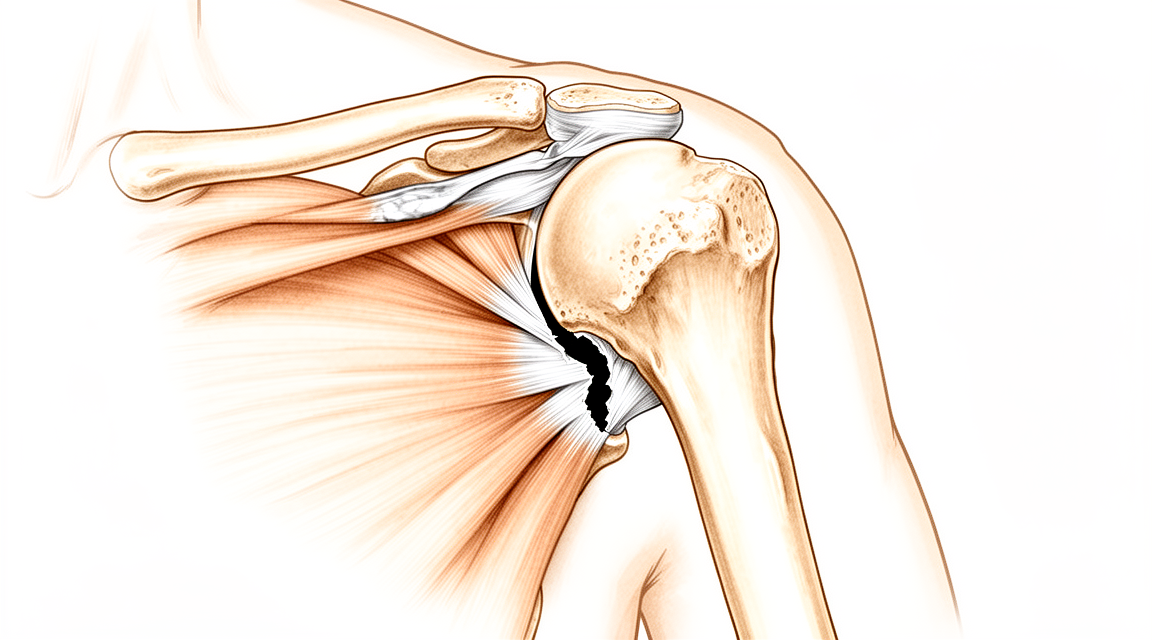
Quy trình này hướng dẫn quá trình hồi phục của bạn sau ca phẫu thuật khâu chóp xoay do Bác sĩ Kieran Hirpara thực hiện tại Bệnh viện tư nhân Mater Rockhampton. Quy trình kết hợp phần giải thích bằng ngôn ngữ dễ hiểu về từng giai đoạn với một chương trình tập luyện có cấu trúc mà bạn có thể chia sẻ với chuyên viên vật lý trị liệu; hãy mang theo trang này hoặc bản PDF của trang đến buổi hẹn đầu tiên để quá trình phục hồi chức năng được phối hợp đồng bộ. Chuyên viên vật lý trị liệu có thể điều chỉnh kế hoạch tùy theo tiến triển hồi phục của bạn.
Nếu bạn có bất kỳ lo ngại nào về vết mổ sau phẫu thuật, hãy liên hệ với phòng khám. Việc chụp ảnh vết mổ rồi gửi qua email để được xem xét thường rất hữu ích.
Những điều có thể mong đợi
Phẫu thuật khâu chóp xoay gắn lại phần gân bị rách vào xương, và chính sự gắn lại mang tính sinh học đó là điều mà toàn bộ chương trình này bảo vệ. Chỗ khâu vẫn còn mềm ở thời điểm sáu tuần và tiếp tục trưởng thành trong nhiều tháng: trong các nghiên cứu về quá trình lành, chỗ khâu chỉ đạt khoảng một phần tư sức bền bình thường ở sáu tuần, khoảng một nửa ở mười hai tuần, và chưa đạt gần mức sức bền đầy đủ cho đến ít nhất sáu tháng. Đó là lý do vận động và tải trọng được bổ sung trở lại theo từng giai đoạn thay vì tất cả cùng một lúc.
Bạn có thể muốn tập mạnh sớm, nhưng bằng chứng khá trấn an. Đối với các vết rách nhỏ và vừa thường gặp, bất kỳ tầm vận động tăng thêm nào có được nhờ vận động sớm cũng chỉ là tạm thời, và đến một năm thì không có sự khác biệt giữa bắt đầu sớm và bắt đầu muộn hơn một chút. Sự kiên nhẫn trong những tuần đầu không khiến bạn thiệt gì về lâu dài, và nó bảo vệ chỗ khâu khi chỗ khâu còn yếu nhất. Cũng có bằng chứng tốt cho thấy bắt đầu trị liệu tích cực ngay trong tuần đầu tiên gây hại nhiều hơn lợi, vì vậy những tuần đầu được chủ ý giữ ở mức nhẹ nhàng.
Điều hữu ích nhất bạn có thể làm cho vai của mình là bảo vệ chỗ khâu ngay từ đầu. Hầu hết các trường hợp rách lại xảy ra trong ba đến sáu tháng đầu, và những bệnh nhân không tuân thủ các hạn chế giai đoạn đầu có nguy cơ rách lại cao hơn nhiều. Tuân thủ quy trình quan trọng hơn bất kỳ bài tập nào.
Phẫu thuật khâu chóp xoay thường được kết hợp với các thủ thuật khác trong cùng một ca mổ: phổ biến nhất là giải ép dưới mỏm cùng vai, cắt bỏ đầu ngoài xương đòn, cố định gân nhị đầu (biceps tenodesis) hoặc giải phóng thần kinh trên vai. Khi đó, quy trình này chi phối toàn bộ quá trình hồi phục: gân được khâu là phần lành chậm nhất, và tiến độ của nó quyết định nhịp độ chung.
Tiến độ hồi phục của bạn phụ thuộc vào kích thước vết rách đã được khâu. Đây là yếu tố lớn nhất quyết định nhịp độ, vì vết rách lớn hơn lành chậm hơn và dễ rách lại hơn. Bác sĩ Hirpara sẽ cho bạn biết chỗ khâu của bạn thuộc nhóm nào, và trang này chia chương trình thành hai lộ trình được ghi rõ bên dưới:
- Rách nhỏ / vừa: một hoặc hai gân, chất lượng mô tốt.
- Rách lớn / rất lớn: vết rách lớn hơn, hai gân trở lên, hoặc chất lượng mô kém hơn. Các bước giống nhau, nhưng mỗi bước được giữ lâu hơn và tiến triển thận trọng hơn: vận động có bảo vệ được duy trì lâu hơn, vận động chủ động quay lại muộn hơn, và việc tập tăng cường sức mạnh được hoãn lại.
Ca phẫu thuật
Phẫu thuật khâu chóp xoay của bạn được thực hiện qua nội soi (qua các vết rạch nhỏ), hoặc đôi khi qua một đường mổ mở nhỏ. Gân bị rách được gắn lại vào vị trí bám của nó trên xương ở phần trên của xương cánh tay, và nhiệm vụ của phục hồi chức năng là bảo vệ chỗ gắn lại đó trong khi nó lành, sau đó dần dần xây dựng lại đầy đủ vận động, sức mạnh và chức năng.
Đeo đai treo tay
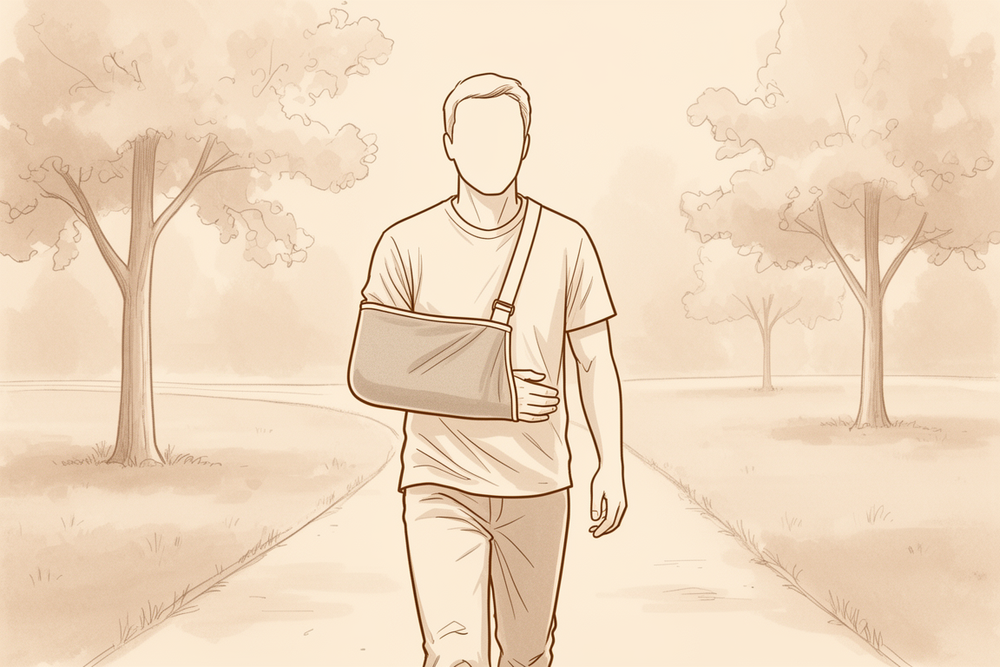
Bạn sẽ đeo một đai treo tay đơn giản, không phải loại đai có gối dạng tay. Không có sự khác biệt đã được chứng minh về kết quả giữa hai loại, và đai đơn giản dễ sử dụng hơn nhiều. Bác sĩ Hirpara dùng đai đơn giản cho mọi ca khâu chóp xoay, kể cả vết rách lớn và rất lớn.
- Đeo đai trong 6 tuần để nâng đỡ vào ban ngày, đặc biệt khi bạn ra khỏi nhà hoặc ở gần người khác.
- Bạn không ngủ với đai. Đai chỉ dùng để nâng đỡ vào ban ngày; khi ngủ hãy tháo đai ra, đặt cánh tay thoải mái và được đỡ trên một chiếc gối.
- Tháo đai khi tắm và khi tập các bài tập (sau khi đã được hướng dẫn cách làm). Mỗi khi tháo đai, hãy giữ cánh tay thả lỏng và để sát bên thân.
- Chườm đá nếu vai bị sưng hoặc đau, đặc biệt là sau khi tập.
- Để giảm đau, hãy uống paracetamol đều đặn kèm một thuốc chống viêm (như ibuprofen) trừ khi bạn được dặn khác, như được trình bày trong kiểm soát đau sau phẫu thuật. Uống một liều trước khi tập sẽ có ích.
Hãy chú ý tư thế khi đang đeo đai: giữ tai, vai và hông thẳng hàng và tránh ngồi gù. Tư thế tốt bảo vệ lưng của bạn và giúp vai không bị cứng.
Những lưu ý quan trọng — KHÔNG được
- KHÔNG tự chủ động cử động vai bằng sức của chính vai cho đến khoảng 6 tuần (chỗ khâu chỉ đạt khoảng 20% sức bền bình thường ở 4 tuần).
- KHÔNG nâng, đẩy, kéo hoặc chống đỡ trọng lượng qua bàn tay hoặc cánh tay trong 6 tuần.
- KHÔNG xoay cánh tay ra ngoài vượt quá tư thế hướng thẳng ra trước (tư thế trung tính) trong giai đoạn sớm.
- Nếu gân chóp xoay phía trước (gân cơ dưới vai) đã được khâu: giữ động tác xoay ngoài chủ động trong phạm vi khoảng 30° trong 12 tuần đầu, và không chủ động xoay cánh tay vào trong (chống lại lực cản) trong thời gian đó; điều này bảo vệ chỗ khâu phía trước. Bác sĩ phẫu thuật sẽ cho bạn biết điều này có áp dụng với bạn hay không.
- KHÔNG thực hiện động tác nâng tay kiểu "empty-can" (ngón cái hướng xuống). Không bao giờ.
- KHÔNG với tay ra sau lưng trong giai đoạn sớm, và tránh mọi cú giật hoặc đẩy đột ngột.
- KHÔNG lái xe trong thời gian vẫn phải đeo đai (6 tuần).
Rách nhỏ / vừa
Đây là lộ trình dành cho vết rách một hoặc hai gân với chất lượng mô tốt. Khi một giai đoạn ghi số tuần, đó là mốc thời gian của bạn.
Rách nhỏ–vừa — Giai đoạn I: Bảo vệ (tuần 0–6)
Kieran Hirpara 4.0
Tuần hoàn và hít thở sâu
Để giảm nguy cơ biến chứng sau phẫu thuật, hãy cố gắng đi bộ ít nhất 30 phút mỗi ngày (không nhất thiết đi liền một lần), và hít thở sâu 4–6 lần mỗi giờ.
Suốt cả ngày
Kieran Hirpara 4.0
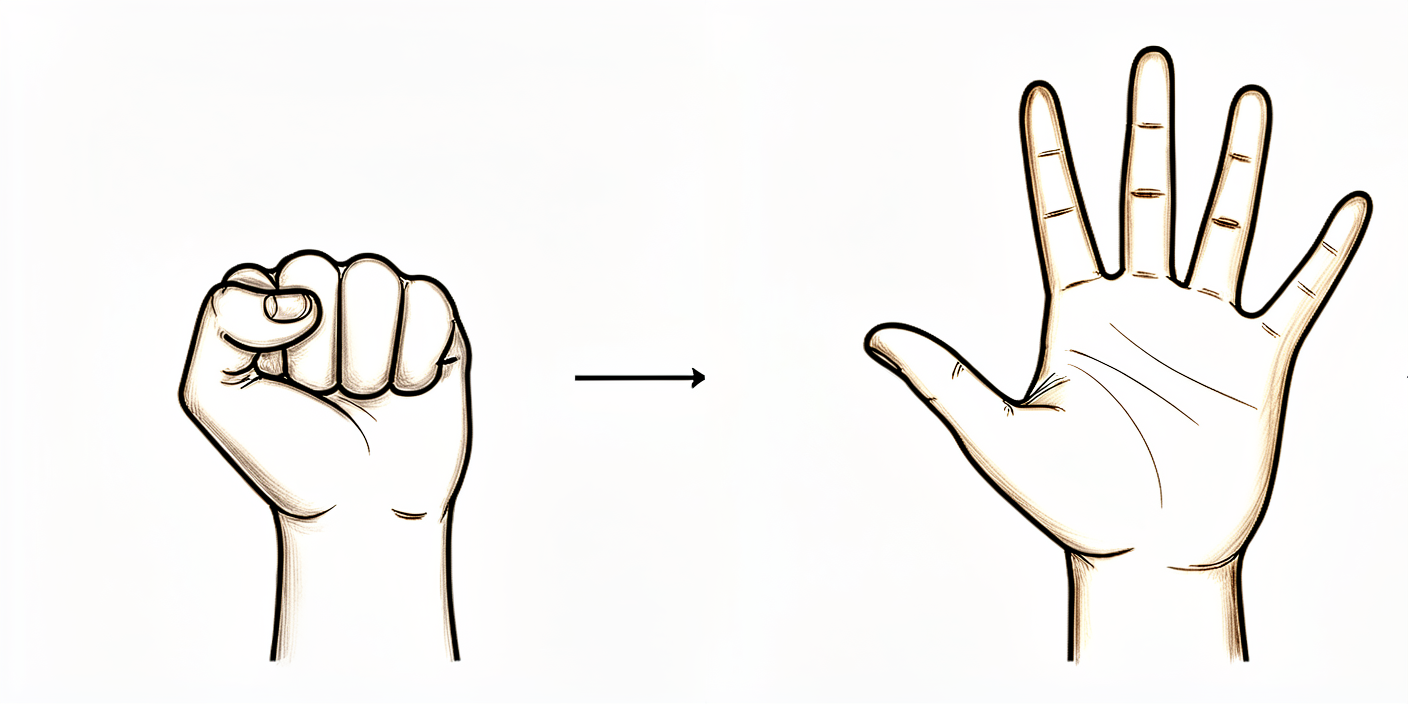
Nắm và mở bàn tay
Nắm chặt bàn tay lại, rồi mở ra hoàn toàn. Việc này giúp bàn tay tiếp tục cử động và giúp ngăn ngừa cứng và sưng.
10 lần mỗi giờ
Kieran Hirpara 4.0
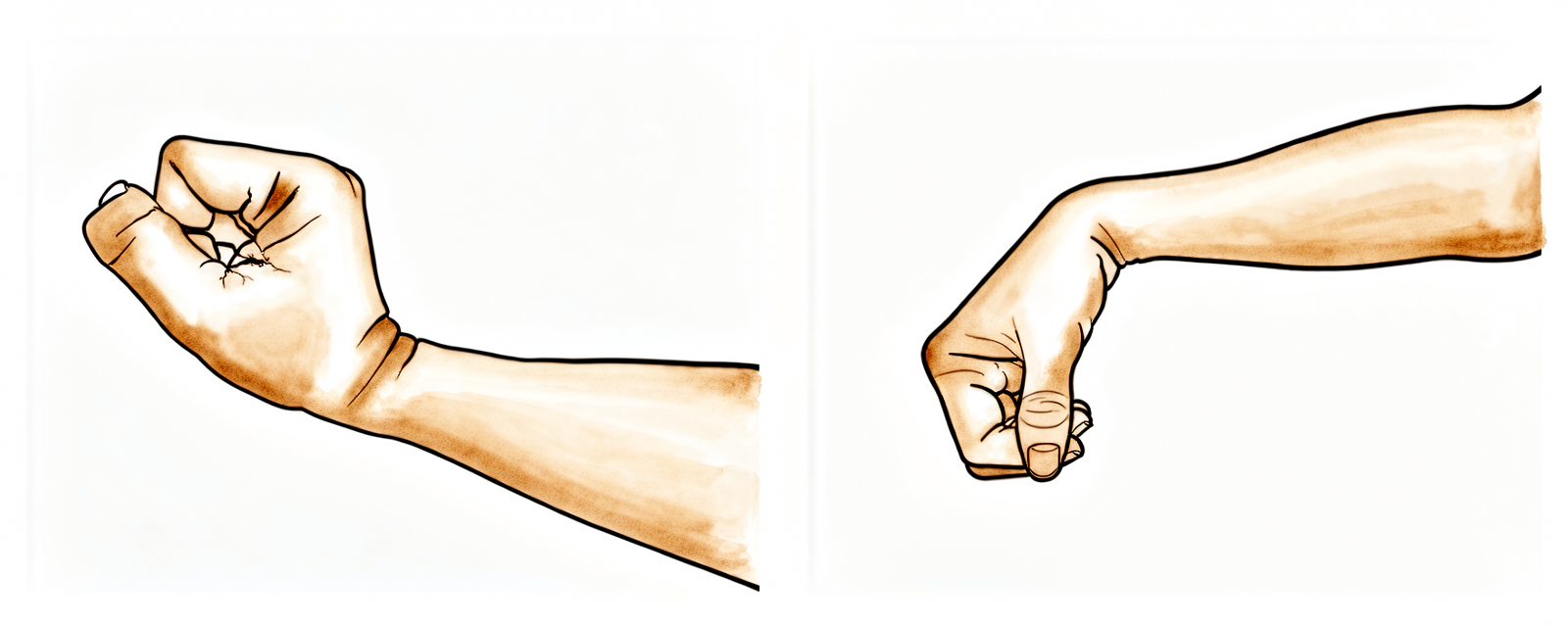
Gập duỗi cổ tay chủ động
Nhẹ nhàng gập cổ tay về phía trước, rồi ra sau, đến mức bạn thấy thoải mái.
10–15 lần mỗi giờ
Kieran Hirpara 4.0
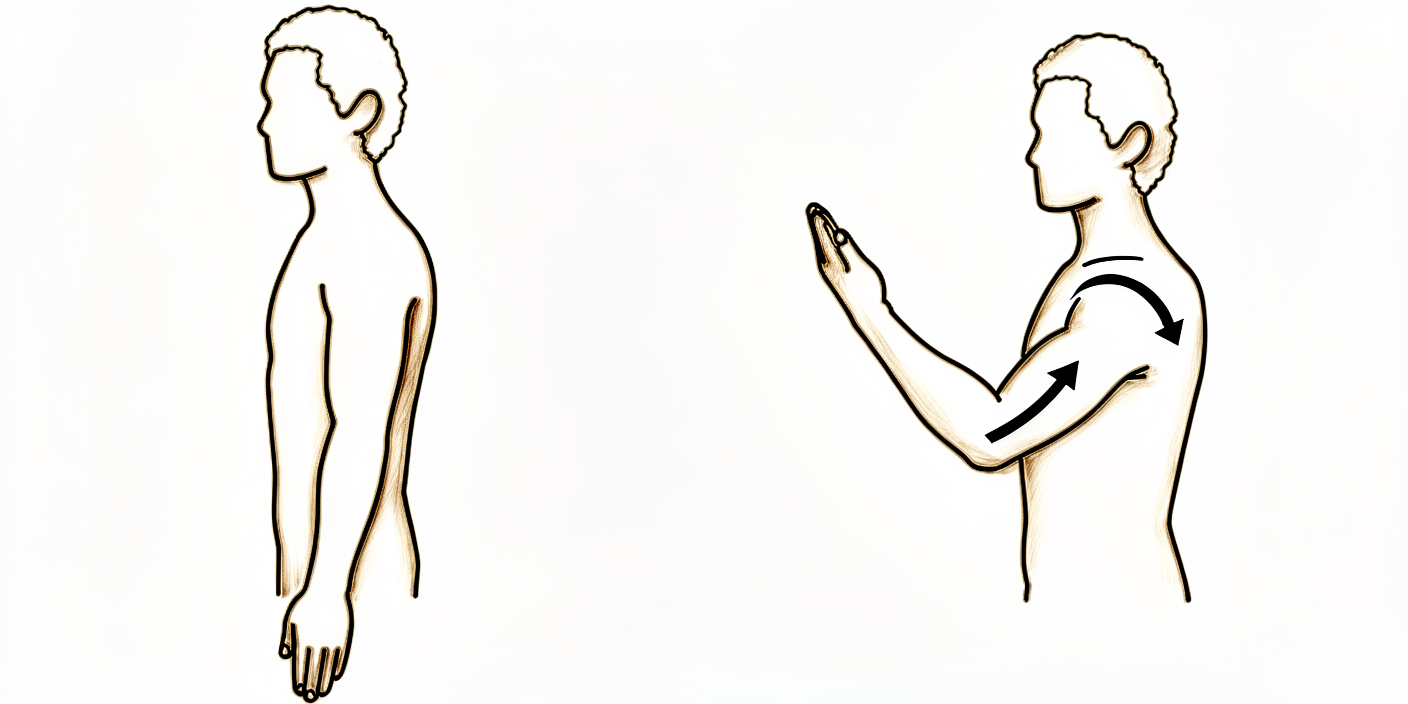
Gập duỗi khuỷu tay chủ động
Với lòng bàn tay hướng lên, nhẹ nhàng gập khuỷu tay hết mức có thể, rồi duỗi thẳng cánh tay trở lại. Giữ cánh tay trên áp sát bên thân.
10–15 lần, 2–3 lần mỗi ngày
Kieran Hirpara 4.0
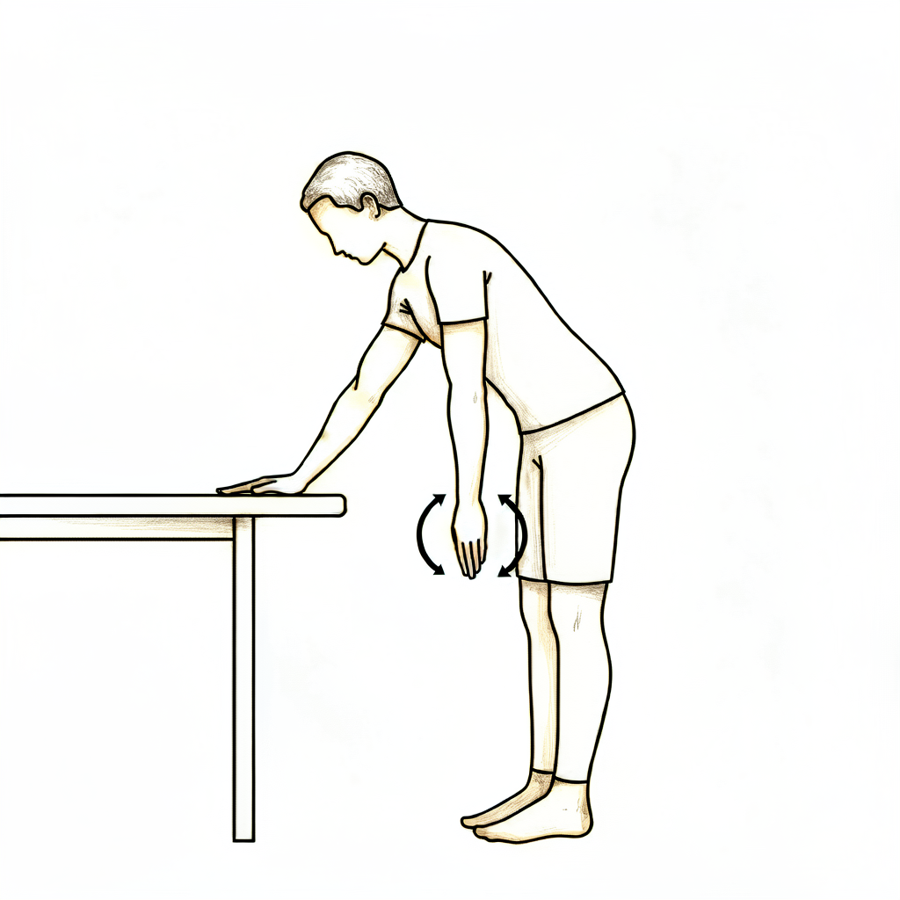
Đung đưa tay kiểu quả lắc
Cúi người về phía trước và để cánh tay đã phẫu thuật buông thõng xuống, hoàn toàn thả lỏng. Tạo các vòng tròn nhỏ — theo chiều kim đồng hồ, rồi theo chiều ngược lại — bằng cách đung đưa thân người, KHÔNG dùng cơ vai. Cũng đung đưa nhẹ cánh tay ra trước/ra sau và sang hai bên. Giữ vòng tròn nhỏ (dưới khoảng 20 cm). Cánh tay đã phẫu thuật luôn thả lỏng trong suốt bài tập — bạn không nâng nó lên.
10 lần theo mỗi hướng, 2–3 lần mỗi ngày
Kieran Hirpara 4.0
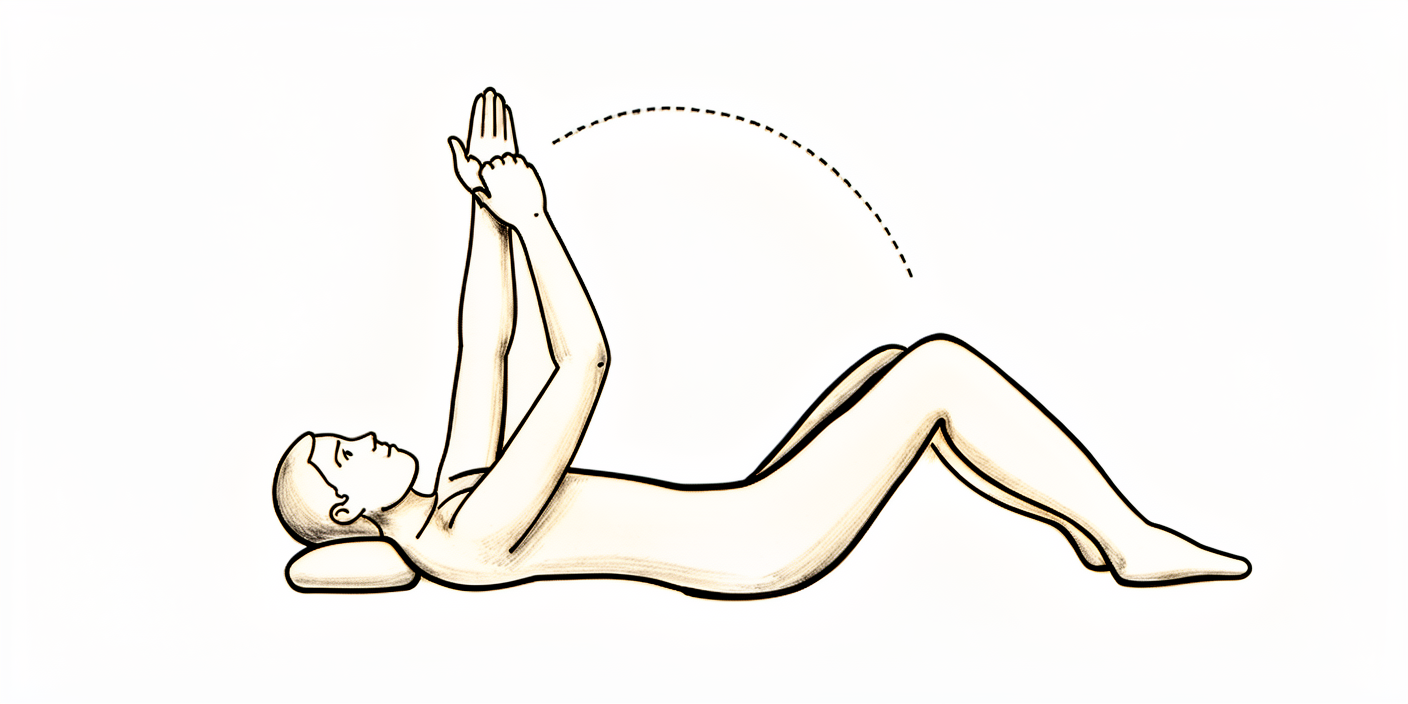
Nâng tay ra trước có trợ giúp ở tư thế nằm
Nằm ngửa. Đặt bàn tay lành dưới khuỷu tay của cánh tay đã phẫu thuật và dùng nó nâng cánh tay đã phẫu thuật lên về phía trần nhà — vai đã phẫu thuật giữ thả lỏng trong khi bàn tay lành làm thay mọi việc. KHÔNG nâng quá ngang vai (khoảng 90°) trong giai đoạn này. Hạ từ từ về vị trí ban đầu.
10 lần, 2–3 lần mỗi ngày
Kieran Hirpara 4.0
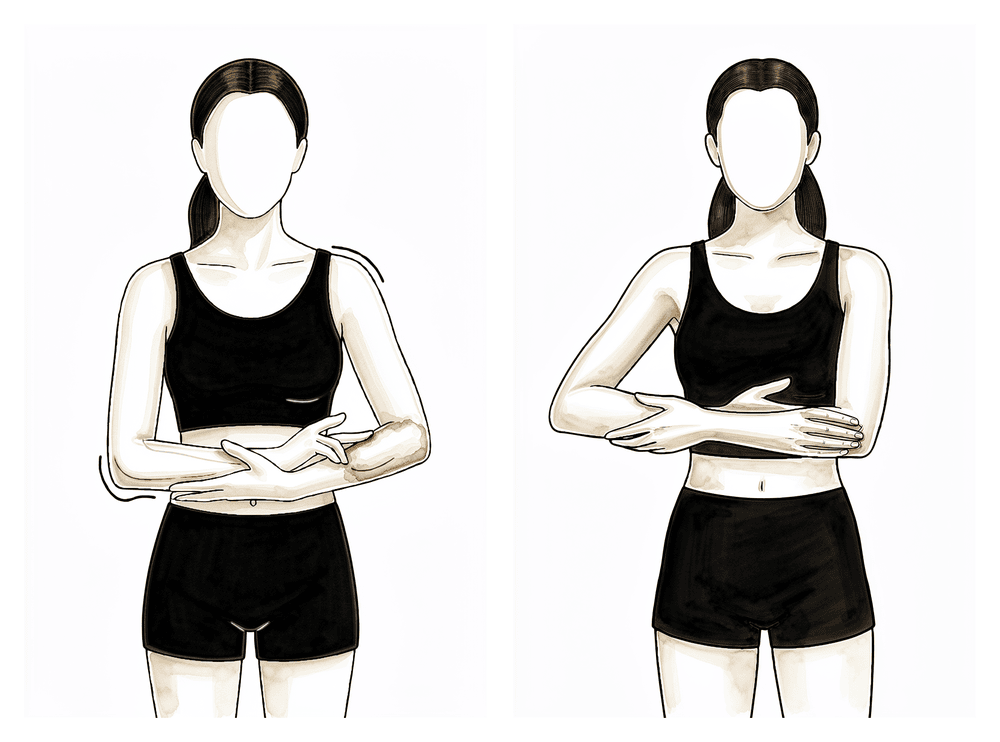
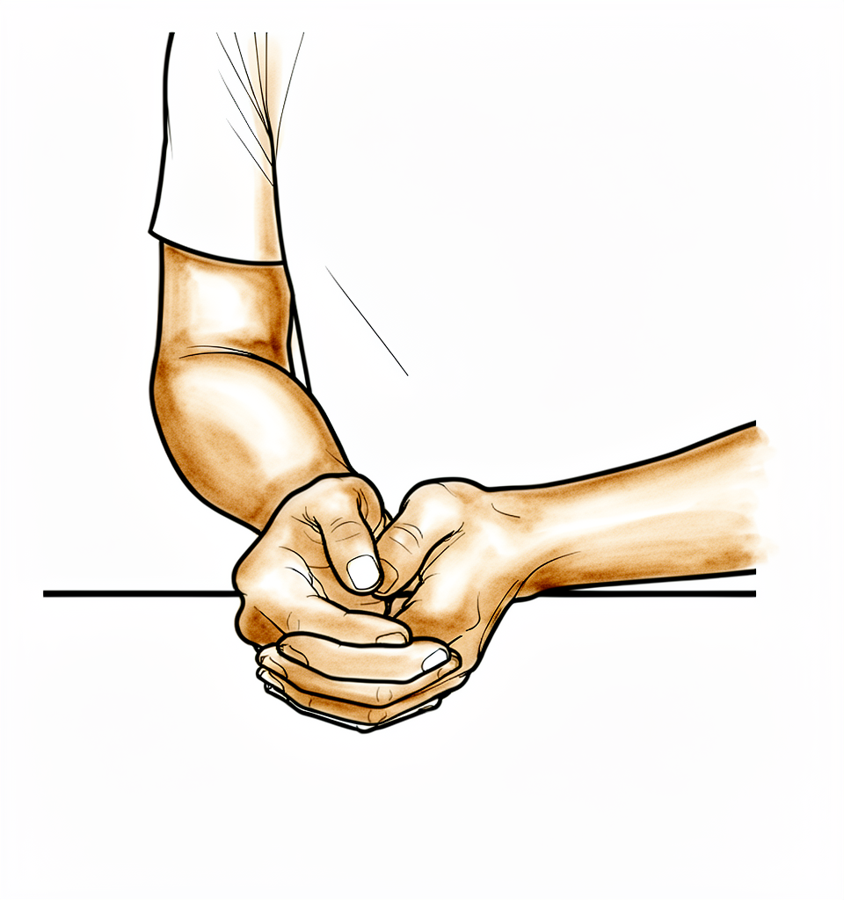
Ôm đỡ cánh tay đưa sang bên
Ngồi và hơi cúi người về phía trước, dùng cánh tay lành ôm đỡ cánh tay đã phẫu thuật và giúp đưa nó sang bên — giống như đang ru em bé. Vai đã phẫu thuật giữ thả lỏng; cánh tay lành thực hiện chuyển động.
10 lần, 2–3 lần mỗi ngày
Kieran Hirpara 4.0
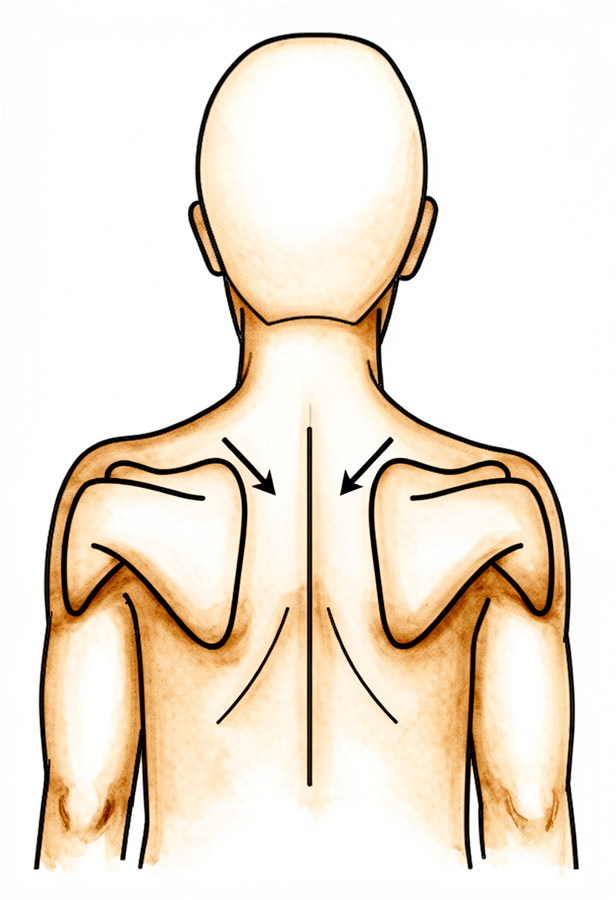
Xoay ngoài có trợ giúp đến tư thế trung tính
Ngồi hoặc đứng, giữ khuỷu tay áp sát bên thân và bắt đầu với bàn tay đặt trên bụng. Nhẹ nhàng xoay cẳng tay ra ngoài chỉ đến tư thế hướng thẳng ra trước (trung tính) — không xa hơn. KHÔNG xoay quá tư thế trung tính. Từ từ đưa trở lại.
10 lần, 2–3 lần mỗi ngày
Kieran Hirpara 4.0
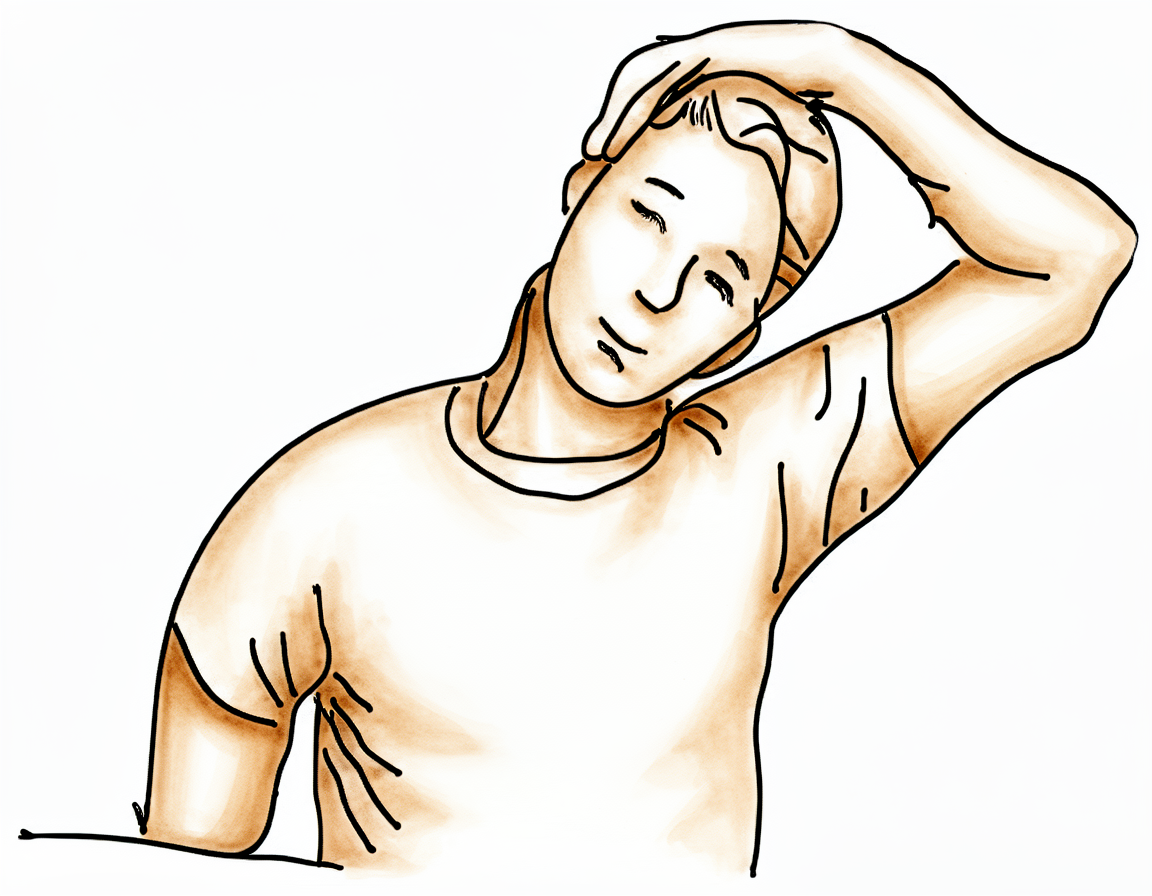
Cố định xương bả vai
Nhẹ nhàng siết hai xương bả vai xuống dưới và khép vào nhau, giữ, rồi thả lỏng. Đây là bài kích hoạt cơ nhẹ — cánh tay của bạn không di chuyển.
Giữ 5 giây, 5 lần, 2–3 lần mỗi ngày
Kieran Hirpara 4.0
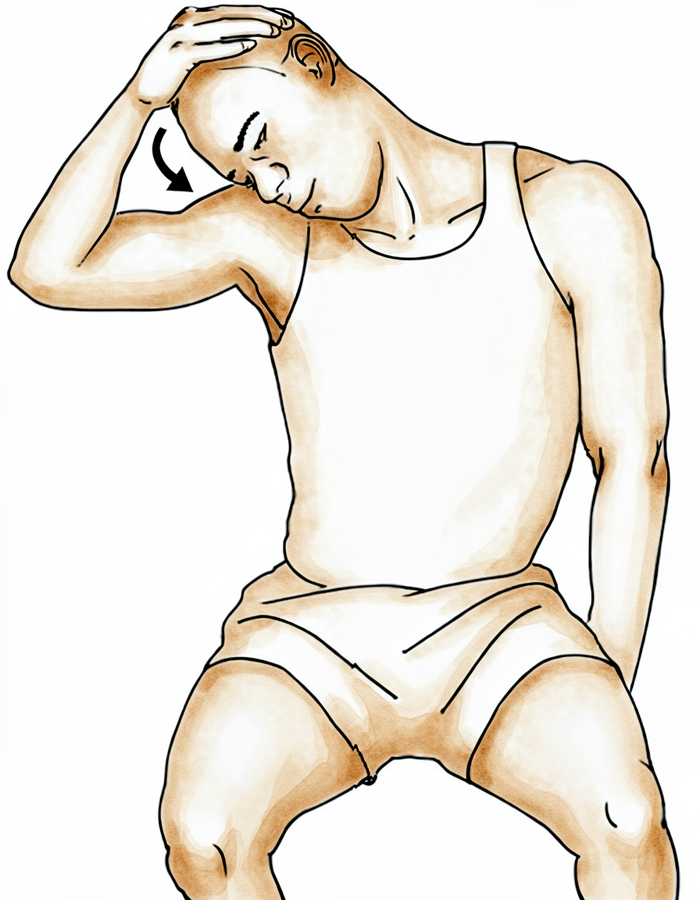
Kéo giãn cổ sang bên
Dùng cánh tay lành nhẹ nhàng đưa tai về phía vai lành, ra xa bên đã phẫu thuật, cho đến khi bạn cảm thấy căng giãn dễ chịu ở cổ.
Giữ 10 giây, 3 lần, 2–3 lần mỗi ngày
Kieran Hirpara 4.0
Kéo giãn cổ về phía nách
Dùng cánh tay lành nhẹ nhàng đưa mũi xuống về phía nách, ra xa bên đã phẫu thuật, cho đến khi bạn cảm thấy căng giãn dễ chịu.
Giữ 10 giây, 3 lần, 2–3 lần mỗi ngày
Sáu tuần đầu tiên tập trung vào một điều duy nhất: bảo vệ chỗ khâu trong khi gân bắt đầu lành vào xương. Bạn đeo đai đơn giản để nâng đỡ vào ban ngày, tháo đai khi ngủ, kiểm soát sưng bằng chườm đá, và tập các bài nhẹ nhàng giúp bàn tay, cổ tay, khuỷu tay và cổ tiếp tục vận động mà không đặt tải lên gân đã khâu. Chuyên viên vật lý trị liệu (hoặc chính bạn, với sự trợ giúp của cánh tay lành) nhẹ nhàng cử động vai cho bạn; bạn giữ hoàn toàn thả lỏng.
- Đai: đai đơn giản để nâng đỡ vào ban ngày; KHÔNG đeo đai khi ngủ; tháo đai khi tập và khi vệ sinh cá nhân.
- Vận động được phép: chỉ vận động có trợ giúp và vận động thụ động; không có động tác nào bằng sức của chính vai. Cánh tay lành hoặc một cây gậy làm thay việc đó. Tăng dần động tác nâng tay ra trước có trợ giúp lên khoảng 90° (nửa đường lên) trong giai đoạn sớm, và xoay ngoài có trợ giúp chỉ đến tư thế hướng thẳng ra trước (trung tính).
- Bài tập: đung đưa tay kiểu quả lắc; nâng tay ra trước có trợ giúp ở tư thế nằm; ôm đỡ cánh tay đưa sang bên; xoay ngoài có trợ giúp đến tư thế trung tính; cử động nhẹ nhàng bàn tay, cổ tay và khuỷu tay; các bài tập xương bả vai và cổ.
Sẵn sàng chuyển sang giai đoạn tiếp theo khi: cơn đau đang giảm dần và được kiểm soát bằng thuốc giảm đau thông thường (khoảng 3/10 hoặc thấp hơn); nâng tay ra trước có trợ giúp đạt khoảng 90° một cách thoải mái; xoay ngoài có trợ giúp đạt tư thế trung tính một cách thoải mái; vết mổ đã lành mà không có dấu hiệu bất thường; và không có dấu hiệu chỗ khâu bị quá tải.
Rách nhỏ–vừa — Giai đoạn II: Phục hồi vận động (tuần 6–12)
Kieran Hirpara 4.0
Nâng tay ra trước có trợ giúp ở tư thế nằm
Nằm ngửa, cầm một cây gậy bằng cả hai tay và dùng cánh tay lành nâng cánh tay đã phẫu thuật ra trước và lên trên — vai đã phẫu thuật giữ thả lỏng. Tăng dần đến khoảng 120° (khoảng hai phần ba đường lên) trong giai đoạn này, trong phạm vi chuyên viên vật lý trị liệu đặt ra. Cử động nhịp nhàng, không bao giờ gượng ép, và hạ xuống có kiểm soát.
10 lần, 2–3 lần mỗi ngày
Kieran Hirpara 4.0
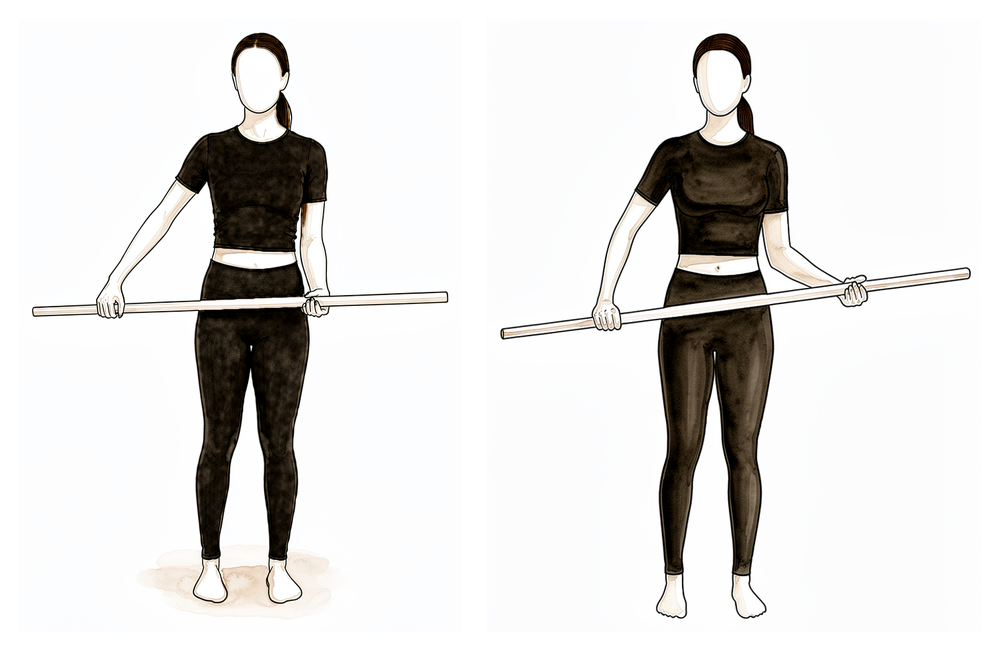
Xoay ngoài có trợ giúp bằng gậy
Nằm ngửa, khuỷu tay áp sát bên thân và gập 90°, cầm một cây gậy bằng cả hai tay và dùng cánh tay lành nhẹ nhàng đẩy bàn tay bên đã phẫu thuật ra ngoài. Giữ trong phạm vi chuyên viên vật lý trị liệu đặt ra và không bao giờ gượng ép.
10 lần, 2–3 lần mỗi ngày
Kieran Hirpara 4.0
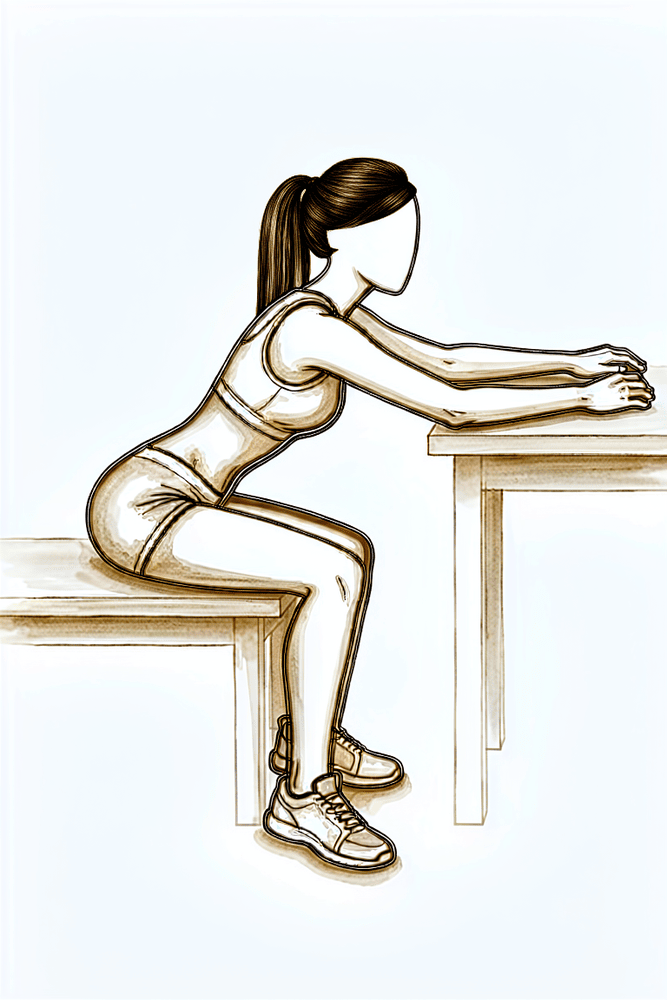
Trượt tay trên bàn khi ngồi
Từ khoảng tuần 6, ngồi tại bàn với bàn tay bên đã phẫu thuật đặt trên một chiếc khăn. Trượt bàn tay ra trước dọc theo mặt bàn để cánh tay vươn ra trước và lên trên, để mặt bàn đỡ trọng lượng, rồi trượt trở lại. Có thể tập động tác tương tự sang bên theo chỉ dẫn của chuyên viên vật lý trị liệu.
10 lần, 2–3 lần mỗi ngày
Kieran Hirpara 4.0
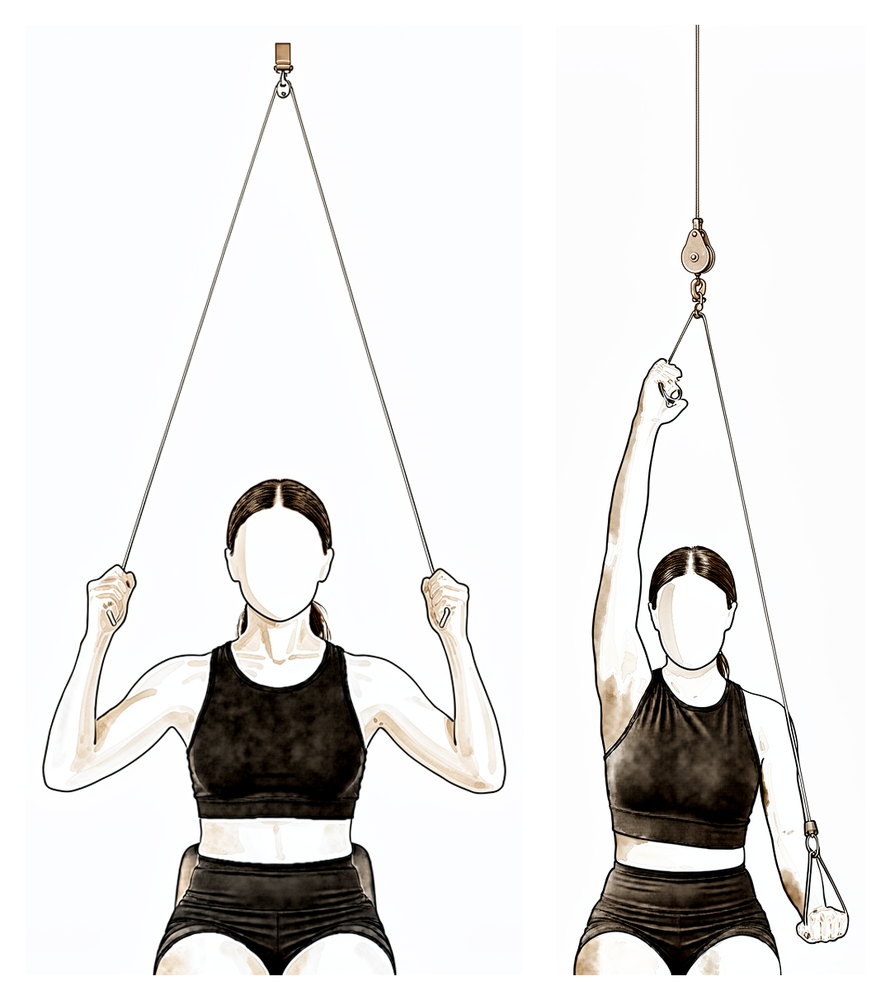
Ròng rọc treo trên cửa
Từ khoảng tuần 6, ngồi dưới ròng rọc treo trên cửa, mỗi tay cầm một tay nắm. Kéo xuống bằng cánh tay lành để nâng cánh tay đã phẫu thuật lên, giữ cánh tay đã phẫu thuật thả lỏng, rồi hạ xuống từ từ.
Theo hướng dẫn của chuyên viên vật lý trị liệu
Kieran Hirpara 4.0
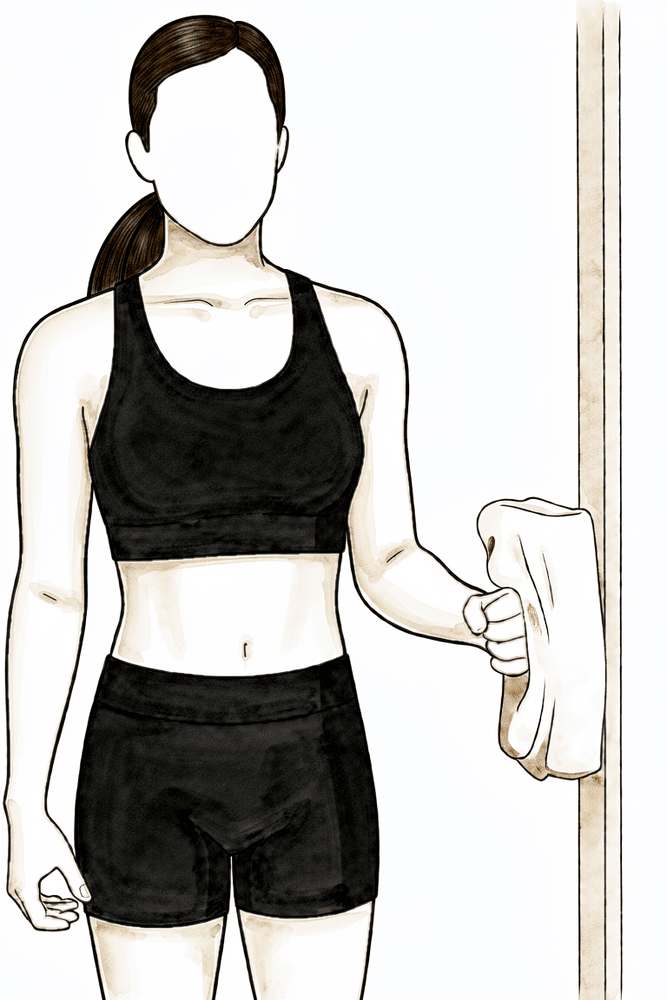
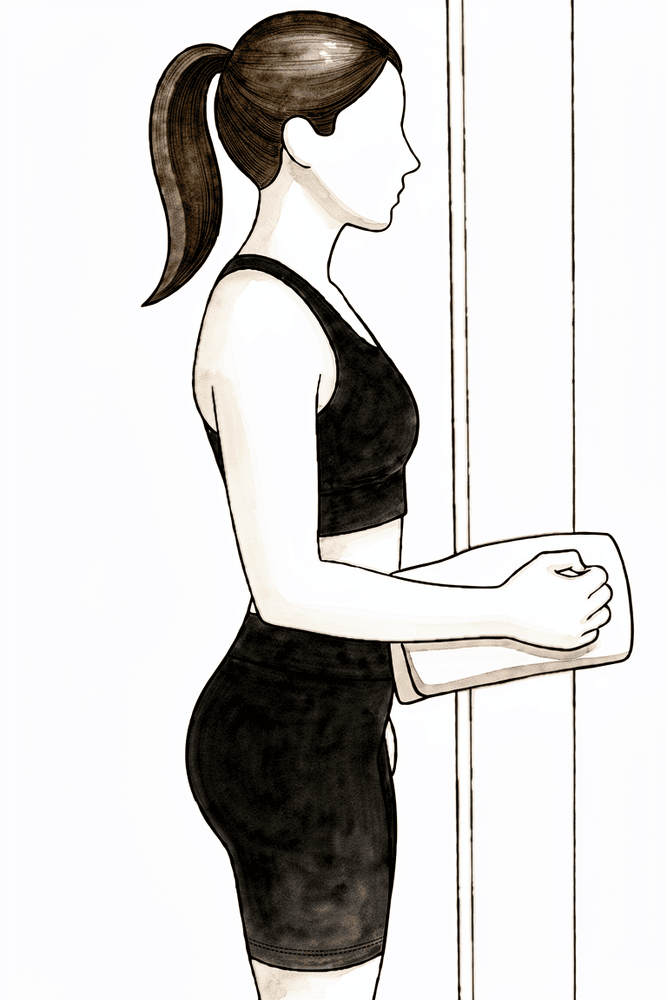
Xoay ngoài đẳng trường
Từ khoảng tuần 8, nếu chuyên viên vật lý trị liệu đồng ý. Đứng với khuỷu tay áp sát bên thân và gập 90°, mu bàn tay ở gần tường hoặc khung cửa. Nhẹ nhàng ấn mu bàn tay ra ngoài vào bề mặt đó MÀ KHÔNG để cánh tay di chuyển — lực nhẹ, khoảng một phần tư sức của bạn, không đau. Giữ, rồi thả lỏng.
Giữ ~5 giây, nhẹ nhàng (~25% sức), theo hướng dẫn của chuyên viên vật lý trị liệu
Kieran Hirpara 4.0
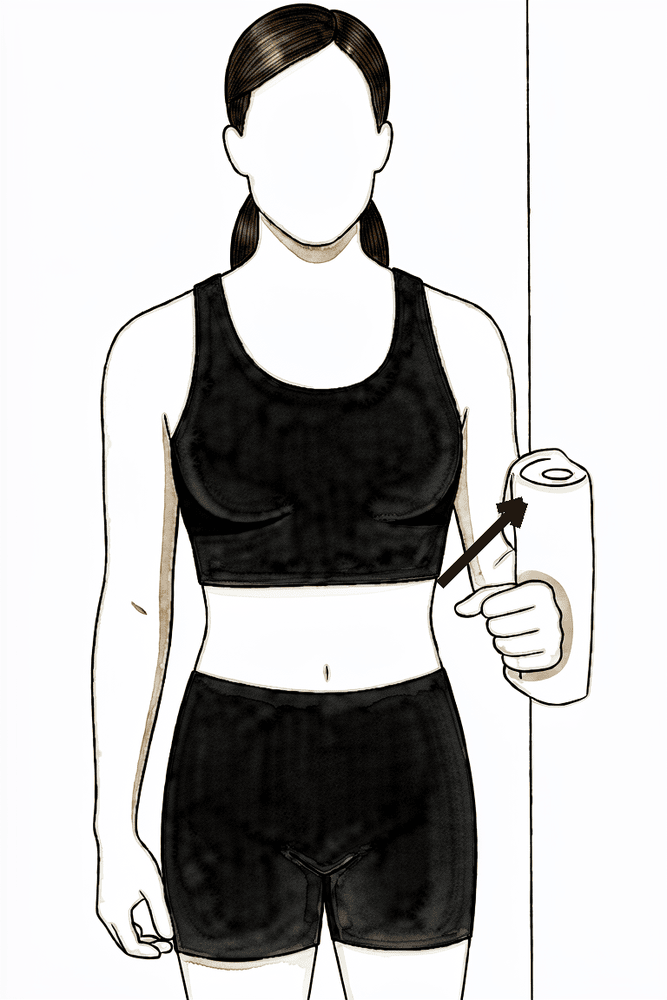
Xoay trong đẳng trường
Từ khoảng tuần 8, nếu chuyên viên vật lý trị liệu đồng ý — nhưng KHÔNG trước tuần 12 nếu gân chóp xoay phía trước (gân cơ dưới vai) đã được khâu. Đứng với khuỷu tay áp sát bên thân, lòng bàn tay áp vào tường. Nhẹ nhàng ấn lòng bàn tay vào trong MÀ KHÔNG để cánh tay di chuyển — khoảng một phần tư sức, không đau. Giữ, rồi thả lỏng.
Giữ ~5 giây, nhẹ nhàng (~25% sức), theo hướng dẫn của chuyên viên vật lý trị liệu
Kieran Hirpara 4.0
Dạng tay đẳng trường
Từ khoảng tuần 8, nếu chuyên viên vật lý trị liệu đồng ý. Đứng nghiêng với mặt ngoài cánh tay trên ở gần tường, khuỷu tay sát bên thân. Nhẹ nhàng ấn cánh tay ra ngoài vào tường MÀ KHÔNG để nó di chuyển — khoảng một phần tư sức, không đau. Giữ, rồi thả lỏng.
Giữ ~5 giây, nhẹ nhàng (~25% sức), theo hướng dẫn của chuyên viên vật lý trị liệu
Kieran Hirpara 4.0
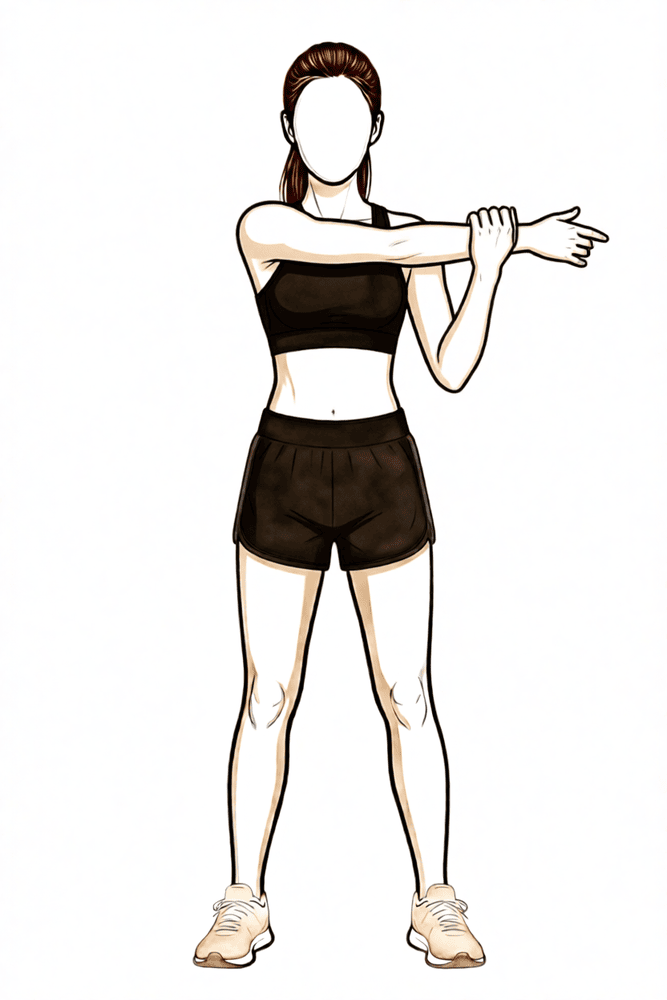
Kéo giãn bắt chéo trước ngực
Chỉ vào cuối giai đoạn này (sau tuần 9). Dùng bàn tay lành nhẹ nhàng kéo cánh tay đã phẫu thuật bắt chéo qua ngực cho đến khi bạn cảm thấy căng giãn dễ chịu ở mặt sau vai. Giữ ở mức nhẹ nhàng — không gượng ép.
Giữ 10–20 giây, vài lần, theo hướng dẫn của chuyên viên vật lý trị liệu
Chỗ khâu đang lành nhưng vẫn còn yếu, chỉ đạt khoảng 20–30% sức bền bình thường ở sáu tuần. Vì vậy giai đoạn này phục hồi vận động, không phải sức mạnh. Lúc này đã tháo đai. Bạn tiến từ vận động có trợ giúp sang cử động cánh tay bằng sức của chính mình, bắt đầu ở các tư thế dễ (nằm, hoặc trượt tay trên mặt bàn để loại bỏ tác động của trọng lực) và tiến dần đến tư thế đứng thẳng. Các bài kích hoạt cơ nhẹ (đẳng trường – isometric) được thêm vào cuối giai đoạn.
- Đai: cai dần (phần lớn đã cai từ tuần 4–6).
- Vận động được phép: vận động có trợ giúp đầy đủ, tiến dần đến vận động bằng sức của chính mình từ khoảng tuần 6. Tăng dần nâng tay ra trước có trợ giúp/chủ động lên khoảng 120° và cao hơn.
- Bài tập: nâng tay ra trước có trợ giúp ở tư thế nằm; xoay ngoài có trợ giúp bằng gậy; trượt tay trên bàn khi ngồi; ròng rọc treo trên cửa; bài tập đẳng trường nhẹ (ấn và giữ) cho xoay ngoài, xoay trong và dạng tay từ khoảng tuần 8; kéo giãn bắt chéo trước ngực vào cuối giai đoạn (sau tuần 9).
Sẵn sàng chuyển sang giai đoạn tiếp theo khi: bạn có thể tự nâng tay ra trước bằng sức của chính mình đến ít nhất 115–120° với khả năng kiểm soát tốt (không nhún vai hay nhấc lệch xương bả vai); vận động có trợ giúp/thụ động đã đầy đủ hoặc gần đầy đủ và không đau; chịu được các bài đẳng trường nhẹ mà không bị đau bùng lên sau đó; và mức đau không quá khoảng 2/10 trước khi bắt đầu các bài tập có kháng lực.
Rách nhỏ–vừa — Giai đoạn III: Tăng cường sức mạnh (tuần 12–16)
Kieran Hirpara 4.0
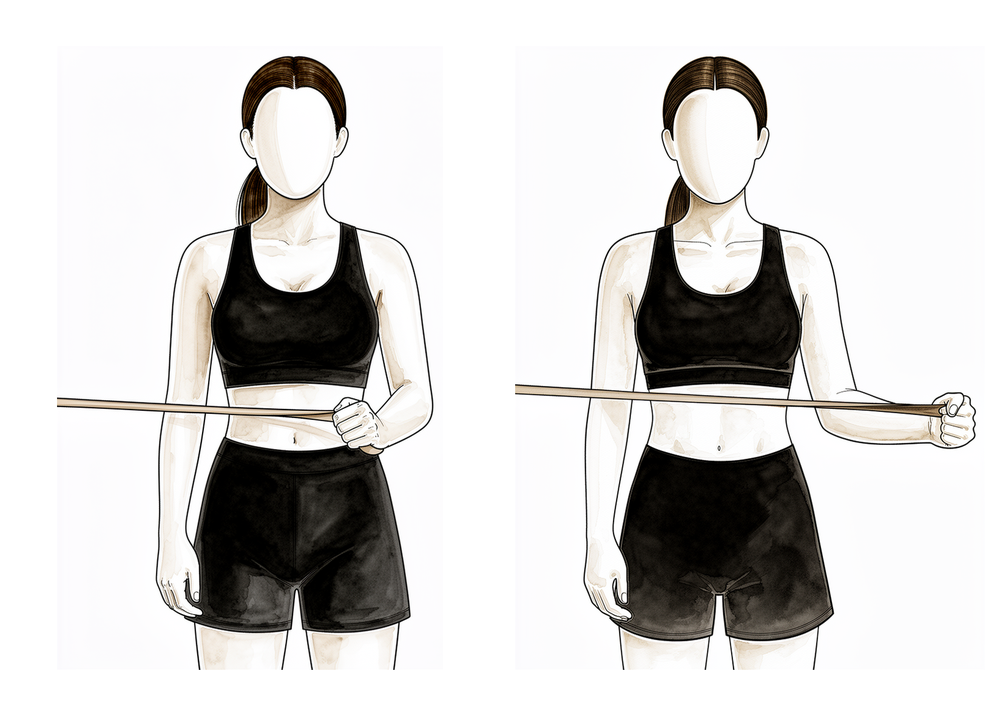
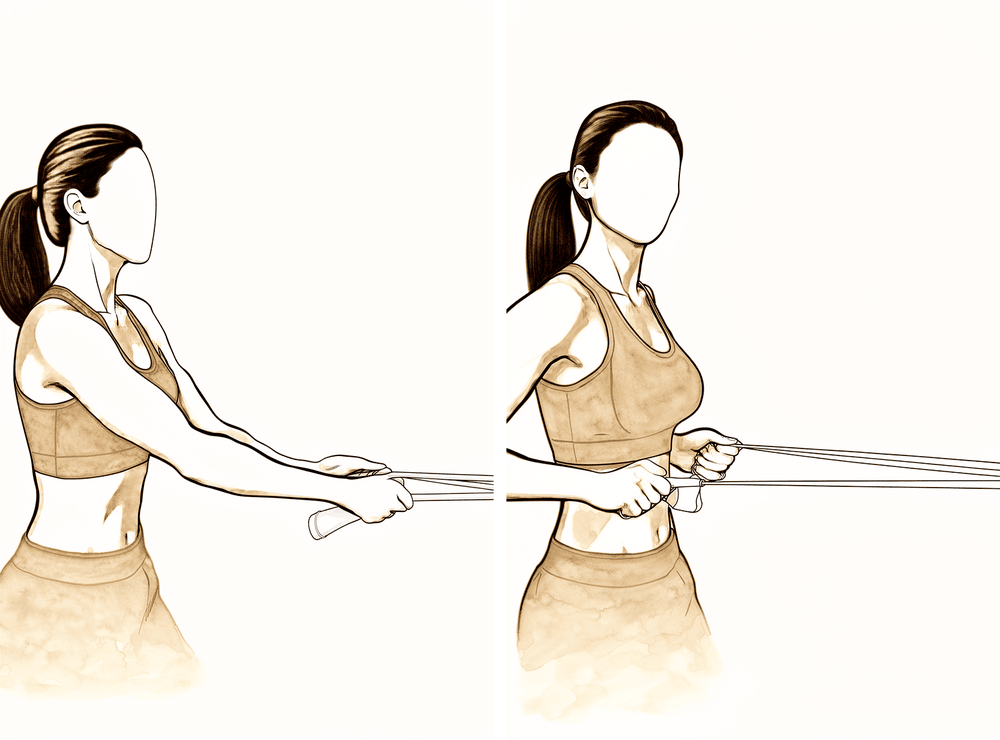
Xoay ngoài ngang tầm vai (dây kháng lực)
Từ khoảng tuần 12, khi các cử động đưa tay qua đầu đã thoải mái. Với cánh tay dạng sang bên lên ngang vai và khuỷu tay gập 90°, xoay cẳng tay lên trên chống lại một dây kháng lực nhẹ, rồi trở về có kiểm soát. Dùng dây kháng lực nhẹ và nhiều lần lặp lại, không dùng lực cản nặng.
Theo hướng dẫn của chuyên viên vật lý trị liệu
Kieran Hirpara 4.0
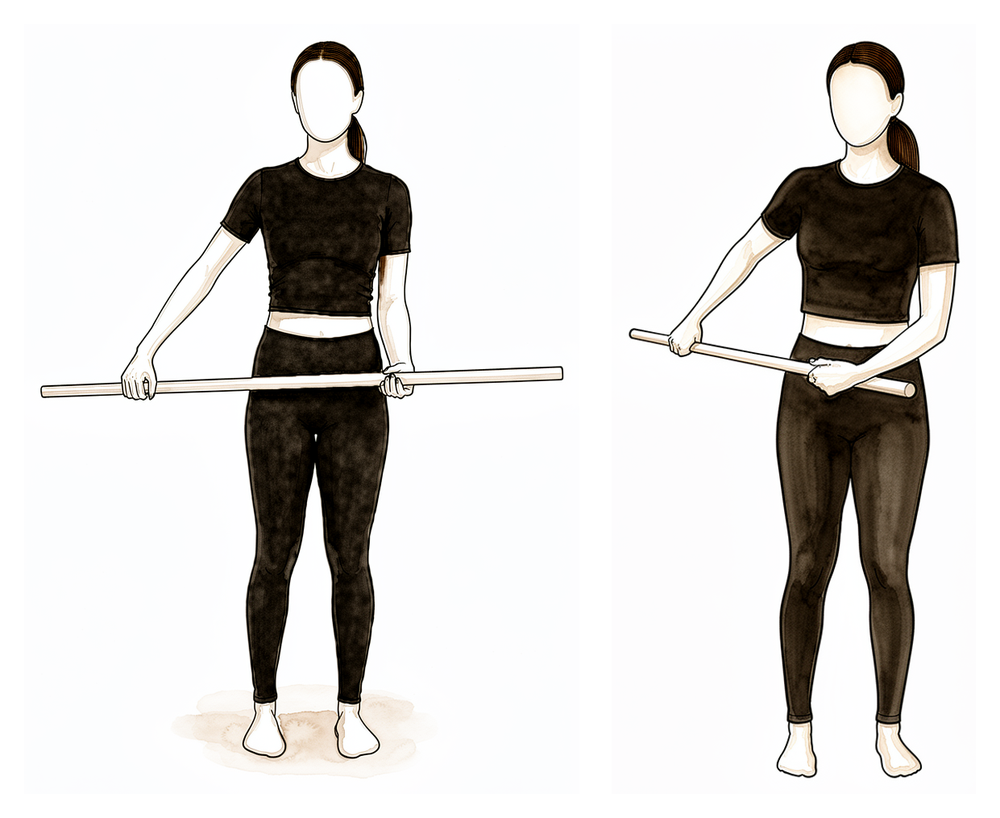
Xoay trong bằng gậy
Từ khoảng tuần 12 (muộn hơn nếu gân chóp xoay phía trước đã được khâu). Cầm một cây gậy sau lưng và dùng bàn tay lành nhẹ nhàng kéo bàn tay bên đã phẫu thuật lên dọc lưng, rồi hạ xuống có kiểm soát. Giữ ở mức thoải mái và trong giới hạn của chuyên viên vật lý trị liệu.
Theo hướng dẫn của chuyên viên vật lý trị liệu
Kieran Hirpara 4.0
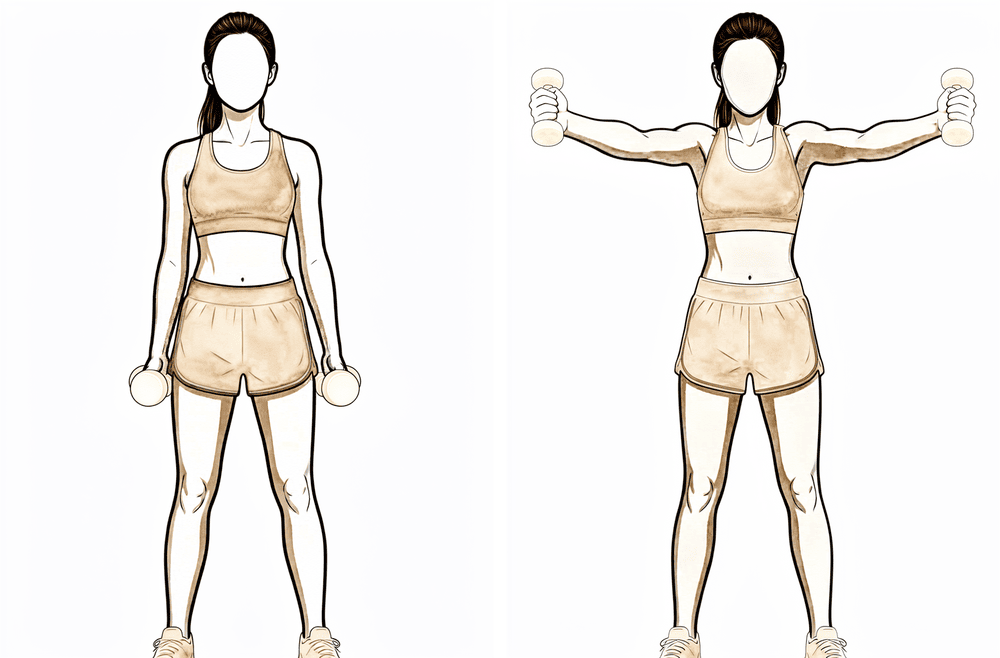
Nâng tay kiểu full-can
Từ khoảng tuần 12, khi nâng tay ra trước đã thoải mái. Nâng cánh tay ra trước và hơi sang bên với NGÓN CÁI HƯỚNG LÊN — tư thế "full can" (lon đầy) — rồi hạ xuống có kiểm soát. KHÔNG BAO GIỜ nâng tay với ngón cái hướng xuống ("empty can").
Theo hướng dẫn của chuyên viên vật lý trị liệu
Kieran Hirpara 4.0
Kéo thấp (cố định xương bả vai)
Từ khoảng tuần 12. Với bàn tay đặt trên một bề mặt cố định bên cạnh, ấn xuống và ra sau để kéo xương bả vai xuống dưới và vào trong, giữ một lúc ngắn. Động tác này giúp xương bả vai vững (chuyên viên vật lý trị liệu có thể gọi là "trượt xuống dưới" – inferior glide).
Theo hướng dẫn của chuyên viên vật lý trị liệu
Kieran Hirpara 4.0
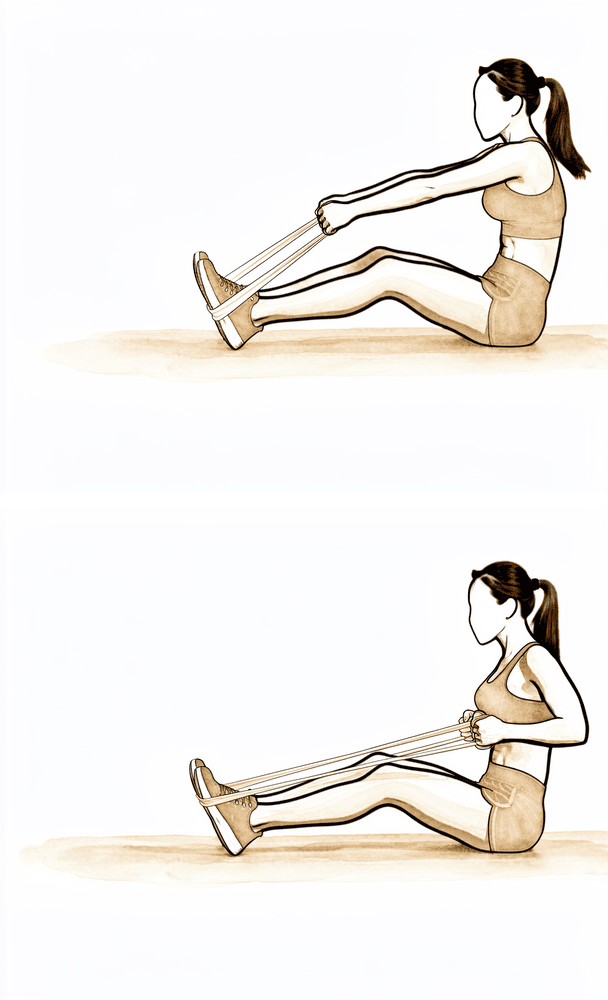
Kéo dây kháng lực
Từ khoảng tuần 12. Với dây kháng lực được cố định ở phía trước, kéo các tay nắm về phía bạn, đưa khuỷu tay ra sau và siết hai xương bả vai lại với nhau, rồi trở về có kiểm soát. Dây nhẹ, nhiều lần lặp lại; dừng lại nếu vai bị đau.
Theo hướng dẫn của chuyên viên vật lý trị liệu
Kieran Hirpara 4.0
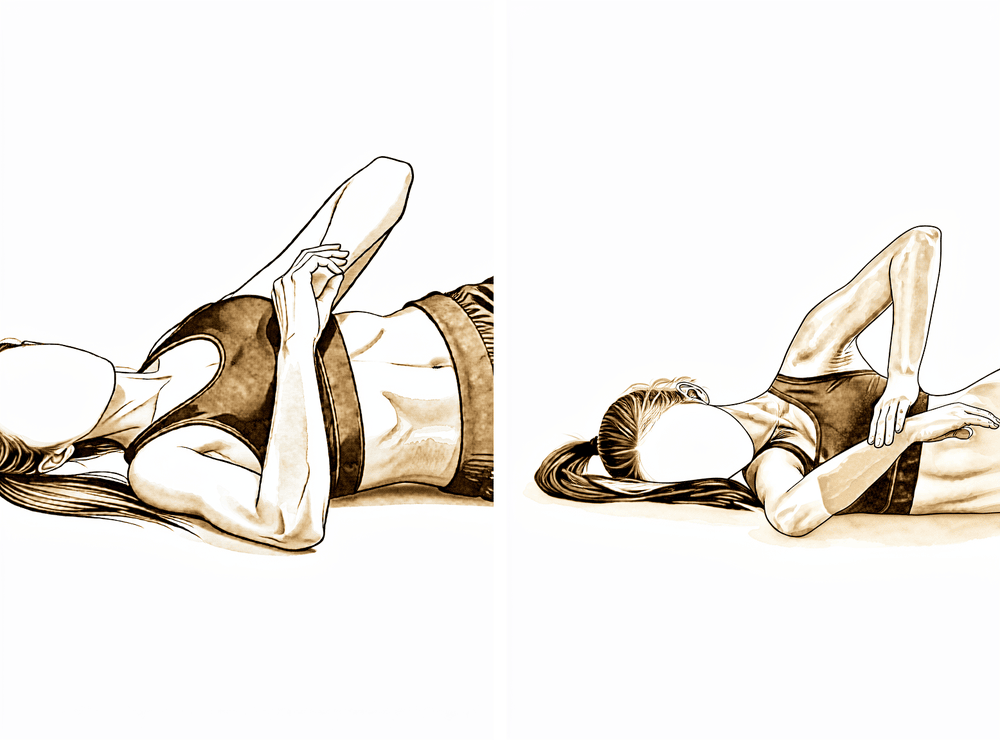
Kéo giãn kiểu sleeper stretch
Từ khoảng tuần 12, nếu chuyên viên vật lý trị liệu chỉ định. Nằm nghiêng về bên đã phẫu thuật với cánh tay đưa ra trước và khuỷu tay gập. Dùng bàn tay phía trên nhẹ nhàng ấn cẳng tay xuống về phía giường cho đến khi bạn cảm thấy căng giãn dễ chịu ở mặt sau vai. Chỉ nhẹ nhàng — không gượng ép.
Giữ 10–20 giây, vài lần, theo hướng dẫn của chuyên viên vật lý trị liệu
Kieran Hirpara 4.0
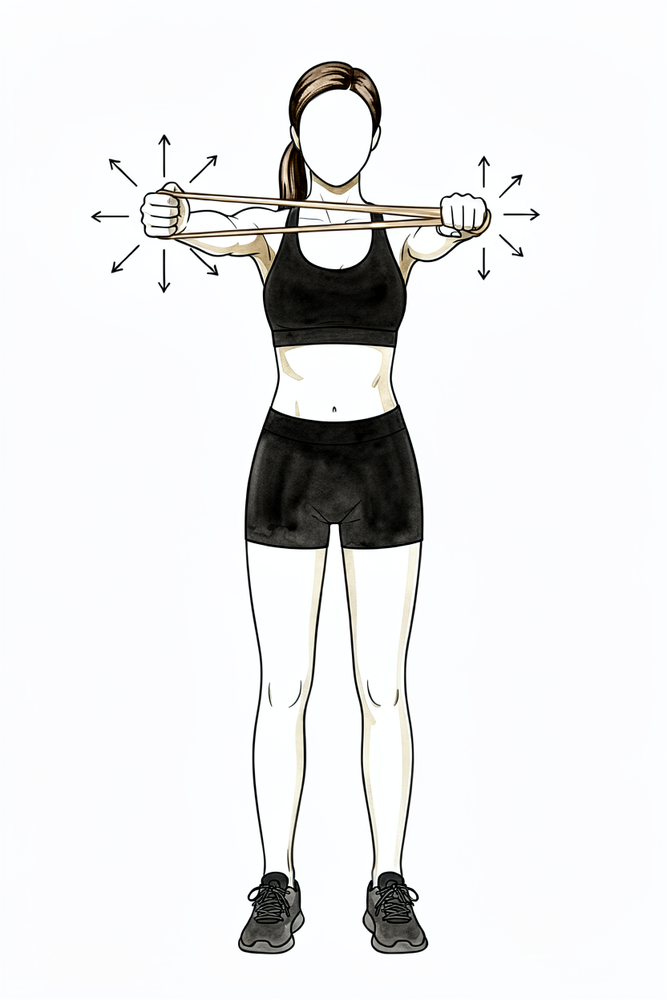
Ổn định nhịp nhàng
Với cánh tay được đỡ ở phía trước ngang khoảng tầm vai, hãy nhờ chuyên viên vật lý trị liệu (hoặc bàn tay lành của bạn) đẩy nhẹ, nhỏ từ nhiều hướng khác nhau trong khi bạn giữ cánh tay yên và vững — không để cánh tay di chuyển. Bài tập này huấn luyện các cơ ổn định vai phản ứng. Giữ mọi lực ở mức nhẹ nhàng.
Theo hướng dẫn của chuyên viên vật lý trị liệu
Đây là giai đoạn chỗ khâu trưởng thành nhanh nhất, và trọng tâm chuyển từ lấy lại vận động sang xây dựng lại sức mạnh, sức bền và khả năng kiểm soát. Các bài tập kháng lực với dây kháng lực nhẹ và tạ nhẹ bắt đầu từ khoảng tuần 12: nhiều lần lặp lại, tải trọng thấp. Nguyên tắc vàng là mỗi lần một mặt phẳng: bạn chỉ tập tăng sức mạnh theo một hướng khi đã có vận động gần đầy đủ và thoải mái theo hướng đó. Luôn nâng tay với ngón cái hướng lên, không bao giờ để ngón cái hướng xuống.
- Đai: không dùng; dự kiến vận động đầy đủ.
- Bài tập: xoay ngoài với dây kháng lực ở ngang tầm vai; xoay trong bằng gậy; nâng tay kiểu "full-can"; kéo thấp (cố định xương bả vai); kéo dây kháng lực; kéo giãn kiểu "sleeper stretch". Chuyên viên vật lý trị liệu cũng có thể thêm ổn định nhịp nhàng (các bài giữ vững nhẹ nhàng, trong đó họ đẩy nhẹ vào cánh tay bạn và bạn chống lại) để tái huấn luyện khả năng kiểm soát; đây là bài tập thực hiện trực tiếp bằng tay, không có hình minh họa.
Sẵn sàng chuyển sang giai đoạn tiếp theo khi: bạn có vận động đầy đủ, không đau bằng sức của chính mình với khả năng kiểm soát xương bả vai đều đặn; không đau hay sưng sau các buổi tập tăng sức mạnh; nâng tay có kháng lực trong mặt phẳng xương bả vai một cách thoải mái; và sức mạnh xoay đang tiến dần đến mức của bên kia (khoảng 80% khi kiểm tra nhẹ; việc kiểm tra sức mạnh đầy đủ được để đến muộn hơn nhiều).
Rách nhỏ–vừa — Giai đoạn IV: Trở lại thể thao và công việc (tuần 16–24)
Kieran Hirpara 4.0
Nâng tay kiểu full-can với tạ nhẹ
Nâng tay kiểu full-can như trước, nay với một quả tạ nhẹ, tăng tải dần dần. Giữ NGÓN CÁI HƯỚNG LÊN. Dừng lại nếu vai bị đau hoặc sưng sau đó.
Theo hướng dẫn của chuyên viên vật lý trị liệu
Giai đoạn này là cầu nối để trở lại một bờ vai hoạt động đầy đủ, sau đó là trở lại từng bước với thể thao và công việc nặng hơn. Bạn duy trì tầm vận động đã đạt được và xây dựng sức mạnh, sức bật và sức bền để sử dụng vai một cách tự tin: với tay, mang vác, làm việc trên cao. Việc trở lại được thực hiện theo từng bước, không đột ngột; với thể thao, một chương trình tập ngắt quãng tăng dần khối lượng và cường độ từng bước là con đường an toàn nhất để quay lại.
- Đai: không dùng.
- Bài tập: nâng tay kiểu "full-can" với tạ nhẹ, tăng trọng lượng dần dần; rèn luyện thể lực đặc thù cho môn thể thao và công việc, tăng tải tiến triển, và các bài tốc độ cao có kiểm soát (plyometric) vào cuối giai đoạn khi phù hợp.
Sẵn sàng trở lại khi: sức mạnh xoay của bạn đạt ít nhất 85–90% so với bên kia; bạn có vận động đầy đủ, không đau, không sưng phản ứng khi chịu tải nặng hơn; và bạn vượt qua các bài kiểm tra đặc thù cho môn thể thao hoặc công việc của mình. Việc trở lại thể thao hoặc công việc nặng thường vào khoảng 4–6 tháng, dựa trên việc đáp ứng các tiêu chí này và sự cho phép của Bác sĩ Hirpara và chuyên viên vật lý trị liệu, chứ không chỉ dựa vào lịch.
Rách lớn / rất lớn
Đây là lộ trình dành cho vết rách lớn hơn (hai gân trở lên, hoặc chất lượng mô kém hơn). Các giai đoạn giống nhau, nhưng mỗi giai đoạn được giữ lâu hơn và tiến triển thận trọng hơn để tạo thuận lợi cho quá trình lành. Một số bác sĩ phẫu thuật chủ ý hoãn việc trị liệu chính thức ở nhóm này; hãy làm theo chỉ dẫn cụ thể mà Bác sĩ Hirpara đưa ra cho bạn. Đai vẫn là đai treo tay đơn giản, không có gối dạng tay, kể cả với vết rách lớn hoặc rất lớn.
Rách lớn–rất lớn — Giai đoạn I: Bảo vệ (tuần 0–6)
Kieran Hirpara 4.0
Đung đưa tay kiểu quả lắc
Cúi người về phía trước và để cánh tay đã phẫu thuật buông thõng xuống, hoàn toàn thả lỏng. Tạo các vòng tròn nhỏ bằng cách đung đưa thân người, KHÔNG dùng cơ vai. Cánh tay đã phẫu thuật luôn thả lỏng trong suốt bài tập.
10 lần theo mỗi hướng, 2–3 lần mỗi ngày
Kieran Hirpara 4.0
Nắm và mở bàn tay
Nắm chặt bàn tay lại, rồi mở ra hoàn toàn. Giúp bàn tay tiếp tục cử động và giảm sưng.
10 lần mỗi giờ
Kieran Hirpara 4.0
Gập duỗi cổ tay chủ động
Nhẹ nhàng gập cổ tay về phía trước, rồi ra sau, đến mức bạn thấy thoải mái.
10–15 lần mỗi giờ
Kieran Hirpara 4.0
Gập duỗi khuỷu tay chủ động
Với lòng bàn tay hướng lên, nhẹ nhàng gập khuỷu tay, rồi duỗi thẳng, giữ cánh tay trên áp sát bên thân.
10–15 lần, 2–3 lần mỗi ngày
Kieran Hirpara 4.0
Cố định xương bả vai
Nhẹ nhàng siết hai xương bả vai xuống dưới và khép vào nhau, giữ, rồi thả lỏng. Cánh tay của bạn không di chuyển.
Giữ 5 giây, 5 lần, 2–3 lần mỗi ngày
Như lộ trình rách nhỏ/vừa, nhưng vận động được bảo vệ nghiêm ngặt và tiến triển chậm hơn. Chuyên viên vật lý trị liệu hoặc cánh tay lành của bạn cử động vai cho bạn; bạn giữ thả lỏng. Ở nhóm này, trị liệu chính thức đôi khi được hoãn lại để tạo thuận lợi cho quá trình lành.
- Đai: đai đơn giản để nâng đỡ vào ban ngày; KHÔNG đeo đai khi ngủ; tháo đai khi tập và khi vệ sinh cá nhân.
- Vận động được phép: chỉ vận động thụ động có bảo vệ, trong giới hạn do Bác sĩ Hirpara đặt ra; nhìn chung tầm vận động ít hơn so với lộ trình rách nhỏ/vừa.
- Bài tập: đung đưa tay kiểu quả lắc; vận động có trợ giúp nhẹ nhàng, có bảo vệ theo chỉ dẫn; cử động bàn tay, cổ tay và khuỷu tay; cố định xương bả vai.
Sẵn sàng chuyển sang giai đoạn tiếp theo khi: cơn đau được kiểm soát; không có dấu hiệu chỗ khâu bị quá tải; và Bác sĩ Hirpara cho phép bạn tiến lên (nhóm này được cá thể hóa; không tự tiến lên chỉ dựa vào lịch).
Rách lớn–rất lớn — Giai đoạn II: Phục hồi vận động (tuần 6–12)
Đai được tháo vào khoảng tuần 6, nhưng vận động chủ động bằng sức của chính mình được đưa trở lại muộn hơn và theo từng cá nhân hơn so với lộ trình rách nhỏ/vừa, để bảo vệ chỗ khâu lâu hơn. Các bài tập chóp xoay có kháng lực được chủ ý hoãn lại.
- Đai: cai dần vào khoảng tuần 6.
- Vận động được phép: vận động có trợ giúp tiến dần đến vận động bằng sức của chính mình muộn hơn so với lộ trình rách nhỏ/vừa; thời điểm chính xác do chuyên viên vật lý trị liệu quyết định dựa trên mức độ lành của bạn.
- Bài tập: các bài giống Giai đoạn II của lộ trình rách nhỏ/vừa (nâng tay ra trước có trợ giúp, xoay ngoài có trợ giúp bằng gậy, trượt tay trên bàn, ròng rọc treo trên cửa), nhưng tiến triển chậm hơn; các bài tập chóp xoay có kháng lực được hoãn lại.
Sẵn sàng chuyển sang giai đoạn tiếp theo khi: vận động bằng sức của chính mình đang cải thiện đều đặn; vận động có trợ giúp/thụ động đã đầy đủ; bạn kiểm soát xương bả vai tốt; và đội ngũ điều trị hài lòng rằng chỗ khâu đang lành đủ tốt để bắt đầu chịu tải.
Rách lớn–rất lớn — Giai đoạn III: Tăng cường sức mạnh (từ khoảng tuần 16)
Kieran Hirpara 4.0
Ổn định nhịp nhàng
Với cánh tay được đỡ ở phía trước ngang khoảng tầm vai, hãy nhờ chuyên viên vật lý trị liệu (hoặc bàn tay lành của bạn) đẩy nhẹ, nhỏ từ nhiều hướng khác nhau trong khi bạn giữ cánh tay yên và vững — không để cánh tay di chuyển. Bài tập này huấn luyện các cơ ổn định vai phản ứng. Giữ mọi lực ở mức nhẹ nhàng.
Theo hướng dẫn của chuyên viên vật lý trị liệu
Việc tăng cường sức mạnh được hoãn đến khoảng tuần 16 thay vì tuần 12, vì chỗ khâu lớn hơn cần thời gian lâu hơn để trưởng thành. Từ đó, tiến trình giống giai đoạn tăng sức mạnh của lộ trình rách nhỏ/vừa: dây kháng lực và tạ nhẹ, nhiều lần lặp lại, tải trọng thấp, mỗi lần một mặt phẳng, luôn để ngón cái hướng lên.
- Đai: không dùng; dự kiến vận động đầy đủ.
- Bài tập: như giai đoạn tăng sức mạnh của lộ trình rách nhỏ/vừa (xoay ngoài với dây kháng lực, xoay trong bằng gậy, nâng tay kiểu "full-can", kéo thấp, kéo dây kháng lực, kéo giãn kiểu "sleeper stretch"), bắt đầu muộn hơn và tăng dần. Có thể thêm ổn định nhịp nhàng (các bài giữ vững thực hiện trực tiếp bằng tay) khi khả năng kiểm soát cải thiện.
Sẵn sàng chuyển sang giai đoạn tiếp theo khi: bạn có vận động đầy đủ, không đau bằng sức của chính mình; không đau hay sưng sau khi tập tăng sức mạnh; và sức mạnh của bạn đang tăng đều so với bên kia.
Rách lớn–rất lớn — Giai đoạn IV: Trở lại thể thao và công việc (từ 6 tháng trở đi)
Việc trở lại thể thao và công việc nặng diễn ra muộn hơn đối với vết rách lớn và rất lớn, thường là sáu tháng hoặc hơn, và thường lâu hơn nữa, với quá trình quay lại chậm hơn, và ít người lấy lại được mức độ trước đây hơn. Việc tăng dần theo cùng cách tiếp cận từng bước, dựa trên tiêu chí như lộ trình rách nhỏ/vừa.
- Đai: không dùng.
- Bài tập: tăng tải tiến triển và rèn luyện thể lực đặc thù cho thể thao hoặc công việc, được tăng dần.
Sẵn sàng trở lại khi: cả Bác sĩ Hirpara và chuyên viên vật lý trị liệu đều cho phép; sức mạnh xoay của bạn đạt ít nhất 85% so với bên kia; và bạn có vận động và sức bền đầy đủ, không đau, không sưng phản ứng khi chịu tải. Hãy dự kiến sáu tháng hoặc hơn (thường lâu hơn) và đưa ra quyết định dựa trên việc đáp ứng các tiêu chí này, không phải dựa vào lịch.
Trở lại thể thao và công việc
Với mọi ca khâu, việc trở lại dựa trên tiêu chí (không đau, với tầm vận động, sức mạnh và sức bền đầy đủ) và được cả Bác sĩ Hirpara lẫn chuyên viên vật lý trị liệu chấp thuận, chứ không chỉ quyết định dựa vào lịch.
- Rách nhỏ / vừa: công việc ít vận động (văn phòng) trong vòng vài tuần; tập tăng sức mạnh nặng hơn từ tuần 12–16; trở lại thể thao hoặc công việc nặng từ khoảng 4–6 tháng.
- Rách lớn / rất lớn: 6 tháng hoặc hơn, thường lâu hơn, với quá trình tăng dần chậm hơn và thận trọng hơn.
Với các môn thể thao có động tác đưa tay qua đầu và ném, hãy hoàn thành một chương trình tập ngắt quãng tăng dần trước khi thi đấu không hạn chế. Việc kiểm tra sức mạnh đầy đủ (tối đa) được hoãn đến 9–12 tháng sau phẫu thuật.
Các bài tập giai đoạn đầu
Đây là các bài tập nhẹ nhàng cho giai đoạn đầu (giai đoạn bảo vệ), bắt đầu tại khoa nội trú và tiếp tục tại nhà, được thực hiện với cánh tay đã phẫu thuật tháo khỏi đai và các cơ vai thả lỏng. Hãy bắt đầu theo hướng dẫn của chuyên viên vật lý trị liệu, và dừng mọi động tác gây đau nhói ở vai. Các bài tập này được liệt kê trong Giai đoạn I của từng lộ trình ở trên.
Sau quy trình của bạn
Quy trình này được sử dụng cùng với các lời khuyên hồi phục chung của phòng khám; xem kiểm soát đau sau phẫu thuật và chăm sóc vết mổ. Về bản thân ca phẫu thuật, xem phẫu thuật khâu chóp xoay.
Evidence & references
This is the clinical evidence summary written for health professionals. It is technical, and it lists the research this page was built from. You do not need to read it to understand your treatment or to make a decision about it.
Rotator Cuff Repair — Best-Evidence Rehabilitation Protocol
Scope: arthroscopic (and mini-open) rotator cuff repair (RCR). Two evidence sources combined: (1) local RAG corpus of 180,000+ Orthopaedic articles (citations below carry the journal/year), and (2) authoritative published institutional rehabilitation protocols (URLs below).
Each claim is flagged [STRONG] (RCT / meta-analysis / systematic review) or [CONSENSUS] (institutional protocol, narrative review, expert opinion) where relevant.
1. Consensus phased timeline (small/medium, "standard" 1–2 tendon repair)
Synthesised primarily from the Brigham & Women's Hospital (BWH) Arthroscopic RCR protocol and the BWH Standard of Care, cross-checked against the published institutional consensus. [CONSENSUS] for the exact week windows; [STRONG] that no specific week-by-week schedule is proven superior across all sizes (see controversies — Baumgarten 2009 Level I/II review; Chan 2014 meta-analysis).
| Phase | Weeks | Sling | ROM allowed | Active ROM | Strengthening | Precautions |
|---|---|---|---|---|---|---|
| I — Passive motion / protective ("healing") | 0–6 | Sling + small abduction cushion worn at all times, including sleep; remove only for exercise/icing/hygiene. Weaned wks 4–6. | PROM/AAROM only. Pendulums. Supine passive forward elevation to ~90–100°; passive ER (arm near side) to ~30°. Progress toward 120–140° FE / 30–60° ER by end of phase. | None. No active shoulder motion (tendon ~20% of normal strength at 4 wks). Active elbow/wrist/hand OK (curls only if biceps not involved). | Submaximal scapular + cuff setting; manual scapular work only. No resisted shoulder. | No active abduction/elevation; no pushing off with the arm for 6 wks. |
| II — Active-assisted -> active ROM | 6–12 | Discontinued (weaned wks 4–6). | Full PROM/AAROM to tolerance; supine->seated AAROM with cane/towel. | AAROM starts ~6 wks; AROM starts ~6–8 wks (gravity-eliminated -> upright). Goal >115° active FE before Phase III. | Begin light isotonic for deltoid, non-repaired cuff, scapula at ~10–12 wks (small tears); delayed to 16 wks for large/massive. | Avoid empty-can raises ever; no straight-arm lateral raises; light waist-level use only early. |
| III — Strengthening | 12–16 | None. | Should have full ROM with good stability. | Full active use for ADLs; return to full work + modified recreation. | Progressive cuff/scapular/deltoid strengthening; endurance/power. | <=5 lb lifting; no sudden jerk/push; thumb-up (full-can) raises only. |
| IV — Return to sport/work prep | 16–24 | None. | Maintain full ROM. | Sport/work-specific conditioning, plyometrics, progressive weight program. | Advanced/sport-specific strengthening. | <=10 lb until cleared; no painful progressions. |
| Return to sport / heavy work | >=4–6 months (often 6 mo; up to 12 mo for full recovery) | — | — | — | — | Surgeon + therapist clearance; pain-free, adequate ROM + endurance. |
Tendon-healing biology underpinning the schedule (BWH protocol): repair strength ~20% of normal at 4 wks, ~40% at 8 wks, ~60% at 12 wks, ~70% at 16 wks, ~80% at 32 wks — the rationale for no active motion before 6 wks and no strengthening before 12 wks. [CONSENSUS] (institutional, biologically grounded).
2. Small/medium vs large/massive tears (the key size distinction)
[STRONG] Tear size is the dominant modifier of healing/retear risk: weighted mean retear ~26.6% overall (Chamberlain/Namdari/Keener, What's New in Shoulder & Elbow Surgery, JBJS 2015), rising to ">90% in massive tears" (Hsu, Horneff, Gee, Immobilization After Rotator Cuff Repair, Orthop Clin North Am 2016). Retear correlates with larger tear size, advanced age, fatty infiltration.
| Variable | Small / medium (<3 cm, 1–2 tendons, good tissue) | Large / massive (>3–5 cm, >=2 tendons, poor tissue) |
|---|---|---|
| Sling/immobilizer duration | 4–6 wks | 6 wks (commonly), abduction pillow; some delay PT to 6 wks to protect healing |
| PT start | within first 6 wks | may be delayed up to 6 wks to promote healing (BWH hybrid protocol) |
| Active ROM start | ~6–8 wks | later, individualised; protect repair longer |
| Strengthening start | ~10–12 wks | delayed to ~16 wks |
| Return to sport/heavy work | 4–6 months | >=6 months, frequently longer; lower/slower return |
[STRONG] Review of online RCR protocols (Coda et al., Arthrosc Sports Med Rehabil 2020): for large/massive tears, sling/immobilizer use ranged 4–10 wks, with the plurality (~55%) at 6 wks. [STRONG] Substantial between-protocol variability exists (Galetta et al., J Shoulder Elbow Surg 2021, ACGME-program protocol survey; Coda 2020) — i.e., no single validated schedule; size-stratification is consensus-driven.
Return-to-work pooled data: [STRONG] Haunschild et al. (Am J Sports Med 2021) systematic review/meta-analysis quantifies return-to-work after primary RCR (timeline varies with job demand; heavy-labor return slower).
3. KEY CONTROVERSY — Early vs Delayed (immobilization) passive motion after arthroscopic RCR
This is the central evidence debate. Two competing concerns: early PROM reduces post-op stiffness; delayed/immobilization may protect tendon-to-bone healing (reduce retear), especially in larger tears.
Evidence FOR early passive motion (less stiffness, no proven healing penalty in small/medium)
- [STRONG] Keener et al. RCT — early vs delayed passive motion after arthroscopic repair of full-thickness tears, 114 patients, small-to-medium tears (cited in Braman/Neviaser/Parsons, What's New in Shoulder and Elbow Surgery, JBJS 2014): the landmark RCT in this debate; early motion improved early ROM without a clear healing penalty in this size class.
- [STRONG] Mazzocca et al. RCT (Arthroscopy 2017): no difference between delayed and early motion in WORC scores, clinical outcomes, or structural failure at 6 months; both protocols equivalent on patient-reported outcomes.
- [STRONG] Saltzman et al. (J Shoulder Elbow Surg 2017) — systematic review of overlapping meta-analyses: early-motion protocols may give superior early ROM; differences trend toward equivalence by ~1 year.
- [STRONG] Li et al. meta-analysis (Medicine 2018): early passive motion (EPM) gives superior ROM recovery, with the caveat below.
Evidence FOR delayed motion / immobilization (protect healing, lower retear in larger tears)
- [STRONG] Chan et al. meta-analysis (J Shoulder Elbow Surg 2014): documents the shift toward delaying motion over healing concerns; early motion improves ROM but raises healing-integrity questions.
- [STRONG] Li et al. meta-analysis (Medicine 2018): EPM "may adversely affect shoulder function" and "might result in lower rates of tendon healing in large-sized tears" — i.e., the early-motion benefit is size-dependent and may cost healing in big tears.
- [STRONG] Gallagher et al. systematic review (Phys Sportsmed 2015): early aggressive rehab may compromise repair integrity; conclusions size/quality dependent.
- [STRONG] Stillson et al. (J Am Acad Orthop Surg 2022, large Medicare cohort): strong association between starting PT within 1 week post-op and increased revision/revision-surgery rates — the largest study to date on rehab timing; cautions against very early aggressive therapy.
- Supporting basic-science: delayed early passive motion was harmless to cuff healing in animal models (rabbit model cited in Thigpen/Shaffer/Kissenberth, Clin Sports Med 2015, "Knowing the Speed Limit").
Current consensus
[STRONG/CONSENSUS] The meta-analytic bottom line (Mazzocca 2017 RCT; Saltzman 2017; Chan 2014): for small-to-medium tears, early and delayed PROM converge by ~6–12 months — timing is largely surgeon preference and does not change final outcome, so either is defensible. For large/massive tears (and poor tissue), the balance tips toward a delayed / protected approach to favor healing and lower retear (Li 2018; Hsu 2016), and very early (<1 wk) aggressive PT should be avoided (Stillson 2022). This is exactly the size-stratified pattern the BWH protocol encodes (delay PT/strengthening for large/massive). Note Cochrane-level certainty remains low — no protocol is proven superior on patient-important outcomes (Baumgarten 2009 Level I/II review found insufficient evidence for a single optimal protocol).
4. Practice shift to flag
- Historical default = early passive motion (minimize stiffness). Over the last decade the field moved toward delaying/protecting motion in larger tears on healing grounds (Chan 2014; Li 2018), then partially back toward equipoise for small/medium tears as RCTs/meta-analyses showed equivalent final outcomes (Mazzocca 2017; Saltzman 2017).
- Newest signal: avoid ultra-early (<1 week) PT regardless — associated with higher revision rates (Stillson 2022, Medicare cohort). Net current practice = size-stratified: standard 6-wk sling + passive-only phase, active ROM ~6–8 wks, strengthening ~12 wks for small/medium and ~16 wks for large/massive, RTS 4–6+ months.
CITATIONS
RAG corpus articles (title / journal / year)
- Keener et al. — early vs delayed passive motion after arthroscopic full-thickness RCR (small–medium, n=114). Cited in Braman J, Neviaser A, Parsons B. What's New in Shoulder and Elbow Surgery. J Bone Joint Surg. 2014;96(20). [STRONG — RCT]
- Mazzocca AD, Arciero RA, Shea KP, et al. The Effect of Early Range of Motion on Quality of Life, Clinical Outcome, and Repair Integrity After Arthroscopic Rotator Cuff Repair. Arthroscopy. 2017;33(6). [STRONG — RCT]
- Chan K, MacDermid JC, Hoppe DJ, et al. Delayed versus early motion after arthroscopic rotator cuff repair: a meta-analysis. J Shoulder Elbow Surg. 2014. [STRONG — meta-analysis]
- Saltzman BM, Zuke WA, Go B, et al. Does early motion lead to a higher failure rate or better outcomes after arthroscopic rotator cuff repair? A systematic review of overlapping meta-analyses. J Shoulder Elbow Surg. 2017;26(9):1681-1691. [STRONG]
- Li S, Sun H, Luo X, et al. The clinical effect of rehabilitation following arthroscopic rotator cuff repair (meta-analysis). Medicine. 2018. [STRONG — meta-analysis]
- Gallagher BP, Bishop ME, Tjoumakaris FP, et al. Early versus delayed rehabilitation following arthroscopic rotator cuff repair: A systematic review. Phys Sportsmed. 2015. [STRONG]
- Stillson QA, Sun JQ, Maninang M, et al. Effect of Physical Therapy and Rehabilitation Timing on Rotator Cuff Repair Revisions and Capsulitis. J Am Acad Orthop Surg. 2022 (large Medicare cohort). [STRONG]
- Baumgarten KM, Vidal AF, Wright RW. Rotator Cuff Repair Rehabilitation: A Level I and II Systematic Review. Sports Health. 2009 (insufficient evidence for a single optimal protocol). [STRONG]
- Parsons BO, Gruson KI, Chen DD, et al. Does slower rehabilitation after arthroscopic rotator cuff repair lead to long-term stiffness? J Shoulder Elbow Surg. 2010;19(7):1034-1039. [moderate]
- Thigpen CA, Shaffer MA, Kissenberth MJ. Knowing the Speed Limit. Clin Sports Med. 2015. [CONSENSUS/review]
- Chamberlain AM, Namdari S, Keener JD. What's New in Shoulder and Elbow Surgery? J Bone Joint Surg. 2015;97(20) (retear ~26.6%; predictors). [STRONG — pooled]
- Hsu JE, Horneff JG, Gee AO. Immobilization After Rotator Cuff Repair. Orthop Clin North Am. 2016 (retear up to >90% massive). [CONSENSUS/review]
- Coda RG, Cheema SG, Hermanns CA, et al. A Review of Online Rehabilitation Protocols Designated for Rotator Cuff Repairs. Arthrosc Sports Med Rehabil. 2020;2(3) (sling 4–10 wks; ~55% at 6 wks for large/massive). [STRONG — protocol systematic review]
- Galetta MD, Keller RE, Sabbag OD, et al. Rehabilitation variability after rotator cuff repair. J Shoulder Elbow Surg. 2021;30(6) (ACGME program protocol variability). [STRONG]
- Haunschild ED, Gilat R, Lavoie-Gagne O, et al. Return to Work After Primary Rotator Cuff Repair: A Systematic Review and Meta-analysis. Am J Sports Med. 2021. [STRONG]
Published institutional protocols (URLs)
- Brigham & Women's Hospital — Arthroscopic Rotator Cuff Repair Protocol (hybrid patient/therapist; full phased timeline, tear-size stratification): https://www.brighamandwomens.org/assets/BWH/patients-and-families/rehabilitation-services/pdfs/shoulder-arthroscopic-rct-repair-protocol-hybrid-patient-therapist.pdf
- Brigham & Women's Hospital — Standard of Care: Arthroscopic repair of a rotator cuff tear (small/medium/large-massive protocol families; literature review): https://www.brighamandwomens.org/assets/BWH/patients-and-families/rehabilitation-services/pdfs/shoulder-rotator-cuff-repair-arthroscopic.pdf
Overall evidence grade: the biology-based phase structure is [CONSENSUS] (well-aligned across institutions). The early-vs-delayed motion question is supported by multiple [STRONG] RCTs and meta-analyses, which converge on equivalence for small/medium tears and a protect-healing tilt for large/massive — but Cochrane-level certainty for any single optimal schedule remains LOW.