Patients › Rehabilitation
Cắt bỏ u nang bao gân gập
Một kế hoạch phục hồi nhanh chóng, dựa trên các chuyển động cơ thể sau khi cắt bỏ u nang bao gân gập ngón (u nang màng bao gan tay) ở gốc ngón tay; kế hoạch này giúp bảo vệ vết thương nhỏ ở lòng bàn tay, cho phép bạn bắt đầu vận động ngón tay nhẹ nhàng trong vài ngày đầu, sau đó mới tiến hành chăm sóc sẹo và luyện tập nắm tay khi vết thương đã lành.
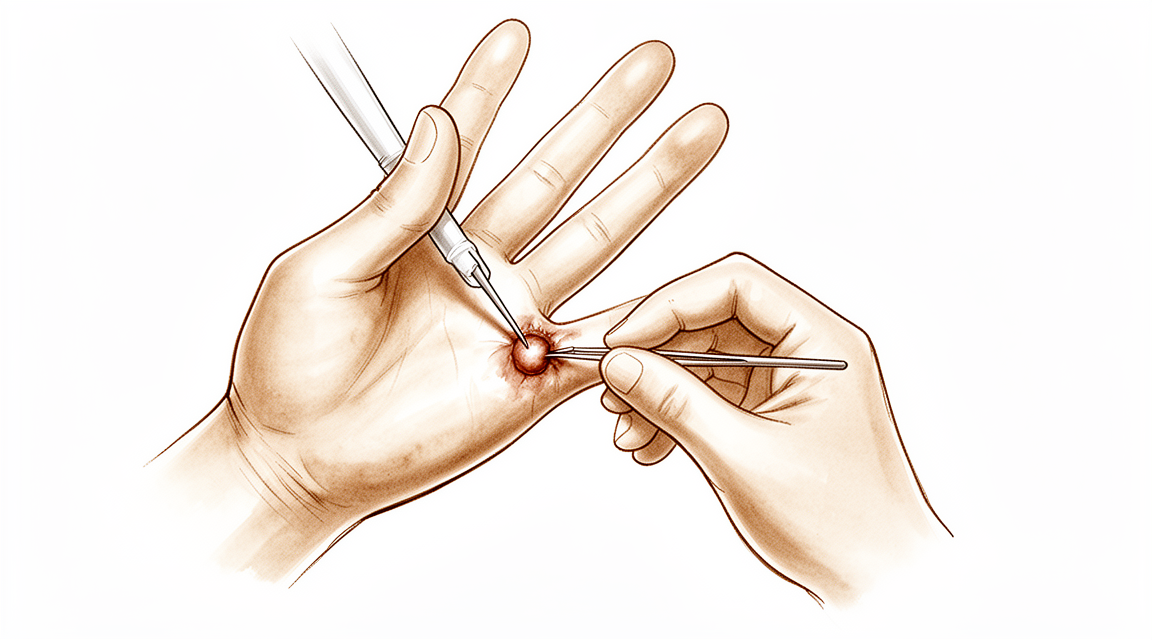
Quy trình này hướng dẫn quá trình hồi phục của bạn sau ca phẫu thuật nhỏ nhằm loại bỏ u nang bao gân gập ngón tay, tức là một khối u cứng nằm ở gốc ngón tay, phía lòng bàn tay, do bác sĩ Kieran Hirpara thực hiện tại Bệnh viện tư nhân Mater Rockhampton. Quy trình bắt đầu bằng chương trình tập luyện tại nhà, tiếp theo là quy trình điều trị chi tiết được soạn thảo dành riêng cho chuyên viên trị liệu tay của bạn; hãy mang theo trang này hoặc bản PDF tương ứng đến buổi trị liệu đầu tiên để quá trình phục hồi được thực hiện một cách nhất quán. Chuyên viên trị liệu tay có thể điều chỉnh kế hoạch này tùy theo tiến triển hồi phục của bạn.
Nếu bạn có bất kỳ thắc mắc nào về vết thương sau phẫu thuật, hãy liên hệ với phòng khám. Việc chụp ảnh vết thương rồi gửi qua email để được đánh giá cũng là một cách hữu ích.
Những điều bạn có thể trải qua
U nang màng bao gân gập (còn gọi là u nang vùng mặt lòng bàn tay) là một khối u nhỏ, cứng và thường gây đau, chỉ rộng vài milimét. Khối u này phát triển từ màng bao mà các gân gập đi qua, ngay tại gốc ngón tay ở mặt lòng bàn tay (thường nằm trên dải mô cứng gọi là pulley A1, tại nếp gấp nơi ngón tay nối với lòng bàn tay). Khối u dính chặt vào màng bao gân và không di chuyển khi bạn gập ngón tay. Đây là khối u hoàn toàn lành tính (không phải ung thư), và là một trong những loại u nang phổ biến nhất ở vùng tay và cổ tay.
Ca phẫu thuật là một thủ thuật cắt bỏ nhỏ, thực hiện trong ngày. Qua một đường mổ hình chữ chi ngắn ở lòng bàn tay, bác sĩ Hirpara sẽ cắt bỏ u nang cùng một mảnh nhỏ của màng bao gân nơi nó phát triển. Hai dây thần kinh và mạch máu nhỏ chạy dọc hai bên ngón tay cũng được bảo vệ cẩn thận. Màng bao gân không được khâu lại: việc để màng mở ra là có chủ đích và không làm yếu ngón tay. Sau đó, vết da được khâu lại bằng chỉ.
Vì không có cấu trúc nào bên trong ngón tay cần được bảo vệ trong quá trình hồi phục, thời gian hồi phục rất nhanh – chỉ mất vài tuần chứ không phải vài tháng. Quy trình chăm sóc rất đơn giản: bảo vệ vết thương nhỏ ở lòng bàn tay, kiểm soát tình trạng sưng, và bắt đầu vận động ngón tay nhẹ nhàng trong vài ngày đầu để ngón tay không bị cứng và các gân không dính vào vết sẹo đang lành. Khi vết thương đã lành, việc massage vùng sẹo và giảm nhạy cảm sẽ giúp phục hồi chức năng; sức nắm tay cũng dần được khôi phục. Việc cảm thấy hơi tê hoặc đau nhức quanh vết thương là hiện tượng thường gặp trong giai đoạn đầu khi các dây thần kinh nhỏ ở da đang hồi phục; tình trạng này thường giảm dần trong vài tuần tiếp theo.
Các lưu ý và hạn chế
- Giữ cho vết thương sạch sẽ và khô ráo cho đến khi lành hẳn và cắt chỉ xong (thường là vào ngày 10–14). Không cần băng gạc cứng hay nẹp; chỉ cần băng mềm là đủ.
- Cần bắt đầu các động tác vận động ngón tay nhẹ nhàng trong vài ngày đầu (gập, duỗi và di chuyển gân) để tránh cứng khớp và dính gân.
- Cần giữ tay ở vị trí cao hơn so với tim và sử dụng tay để thực hiện các công việc nhẹ nhàng hàng ngày trong mức độ thoải mái.
- Không được nắm chặt, nâng vật nặng hay bóp mạnh cho đến khi vết thương ổn định (khoảng hai đến ba tuần).
- Không được xoa bóp vết sẹo hay ngâm tay vào nước cho đến khi vết thương hoàn toàn lành.
- Không được lái xe khi việc băng bó khiến bạn không thể nắm vô lăng an toàn; điều này thường kéo dài khoảng một tuần đầu.
Để biết thêm thông tin về chăm sóc vết thương, giảm sưng và quản lý sẹo, vui lòng tham khảo hướng dẫn chăm sóc vết thương của phòng khám.
Các bài tập của bạn
Kieran Hirpara 4.0
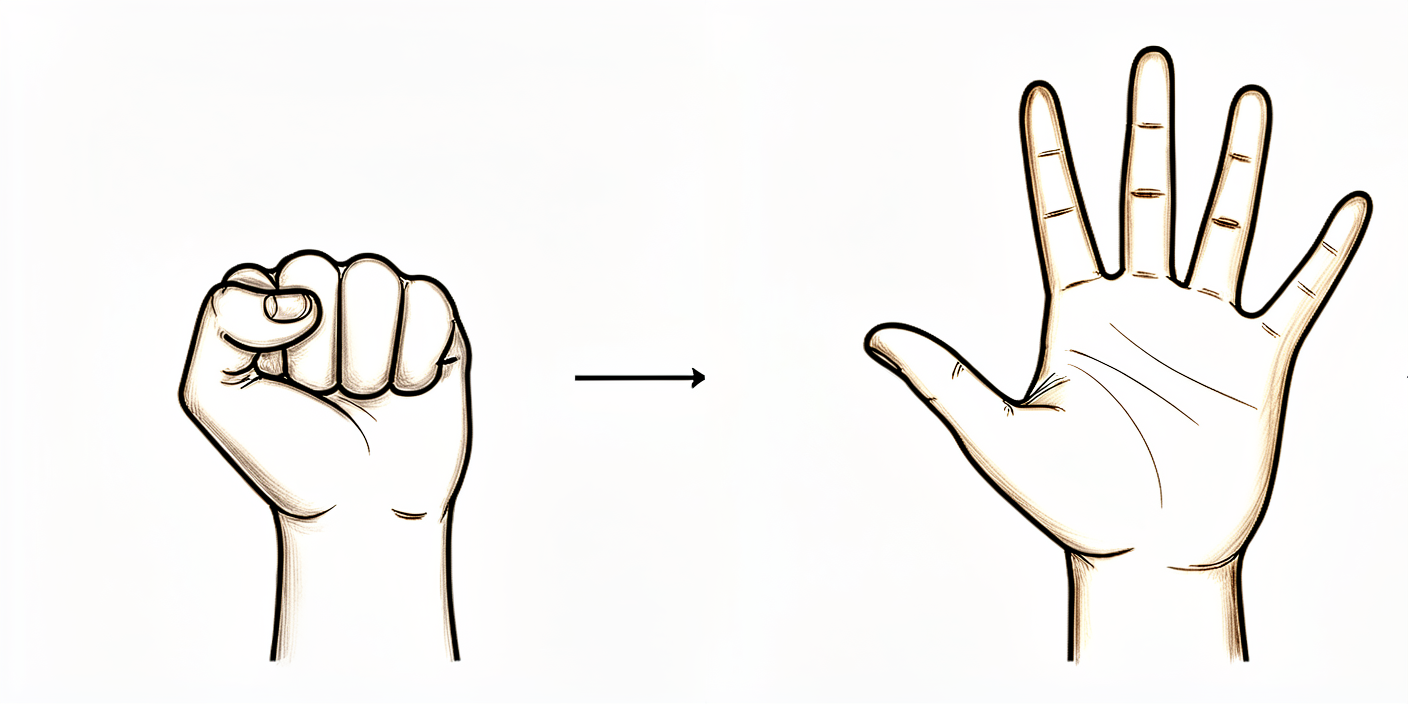
Cử động ngón tay (nắm tay nhẹ rồi duỗi thẳng ra)
Trong vài ngày đầu sau phẫu thuật, hãy nhẹ nhàng nắm tay thành nắm đấm mềm rồi từ từ duỗi thẳng các ngón tay ra, chỉ thực hiện đến mức cảm thấy thoải mái. Việc vận động sớm giúp ngăn ngừa tình trạng cứng khớp và tránh hiện tượng gân dính vào vết thương đang lành. Đừng cố gắng ép ngón tay vận động; hãy dựa vào lớp băng gạc và mức độ khó chịu nhẹ để điều chỉnh độ vận động.
10 lần, 3–4 lần mỗi ngày, thực hiện trong mức độ thoải mái.
Kieran Hirpara 4.0
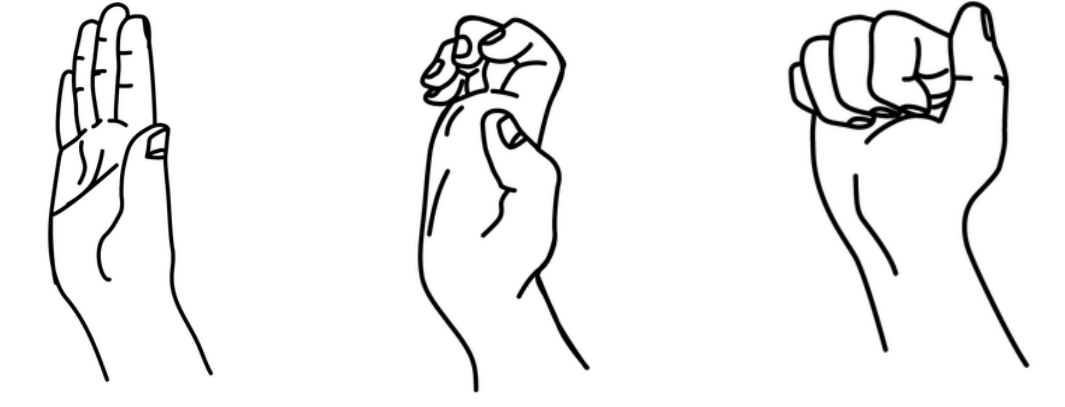
Các động tác trượt gân (nắm hình móc, nắm thành nắm đấm, duỗi thẳng)
Hãy di chuyển các ngón tay qua ba tư thế: tư thế móc (gập đầu ngón và các khớp giữa nhưng giữ các khớp gốc ngón thẳng, giống như móng vuốt), tư thế nắm tay hoàn toàn, rồi tư thế bàn tay duỗi thẳng. Các tư thế này giúp các gân gấp trượt qua vùng phẫu thuật, nhờ đó chúng tiếp tục trượt tự do thay vì bị dính lại. Hãy thực hiện từng động tác một cách nhẹ nhàng và không gây đau.
Mỗi tư thế 5 lần, 3–4 lần mỗi ngày
Kieran Hirpara 4.0
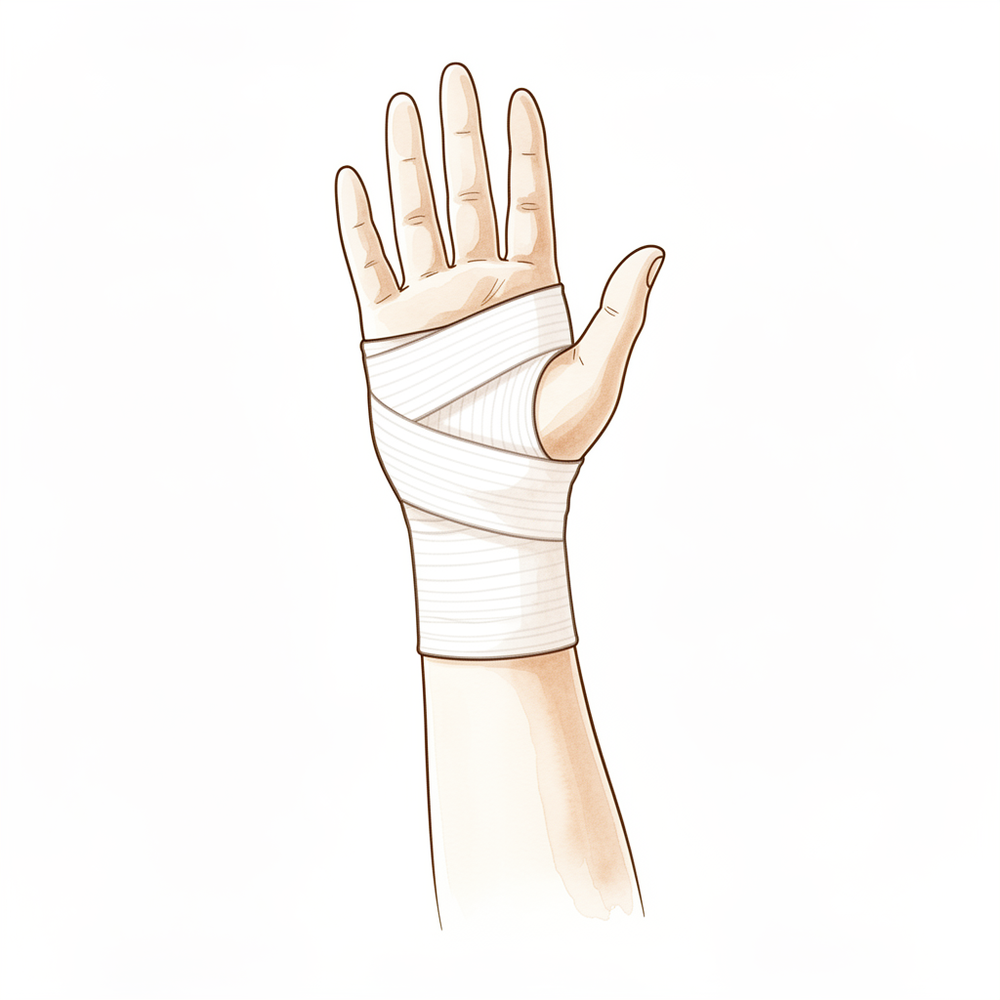
Kiểm soát sưng nề
Trong tuần đầu tiên, hãy giữ tay cao hơn mức tim càng nhiều càng tốt; đồng thời nhẹ nhàng co duỗi các ngón tay để giúp giảm sưng. Việc giảm sưng sẽ giúp các ngón tay hoạt động dễ dàng hơn, thoải mái hơn và quá trình hồi phục diễn ra thuận lợi hơn. Việc xuất hiện một chút sưng quanh lòng bàn tay ở giai đoạn đầu là hiện tượng bình thường.
Nâng cao chi lên nhiều lần trong ngày; thực hiện các động tác bơm ngón tay nhẹ nhàng mỗi giờ một lần khi còn tỉnh táo.
Kieran Hirpara 4.0
Xoa bóp sẹo và giảm nhạy cảm vùng sẹo
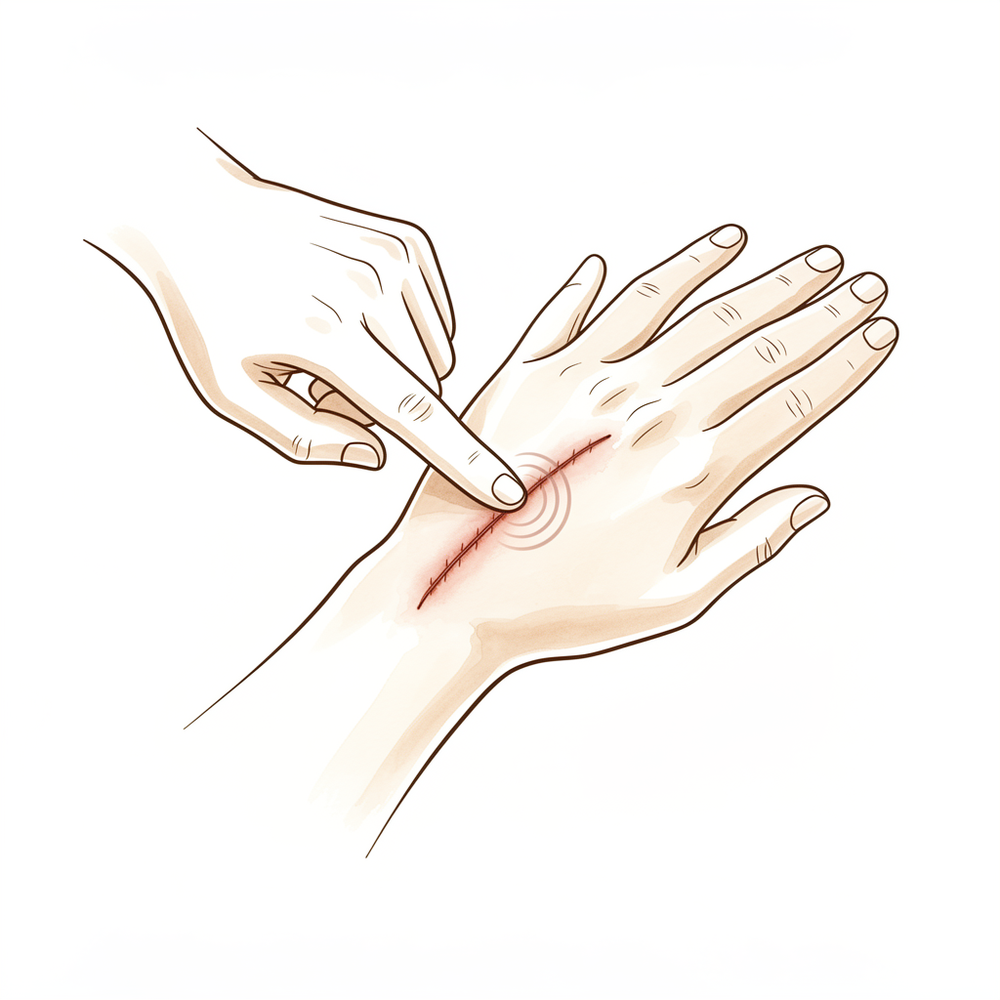
Khi vết thương đã lành hẳn và các chỉ khâu được tháo ra (thường là sau khoảng hai tuần), hãy thoa một chút kem dưỡng ẩm lên vết sẹo và xoa nhẹ theo những vòng tròn nhỏ, chắc tay trong vài phút; sau đó dùng các vật liệu có kết cấu khác nhau để vuốt nhẹ lên vùng đó (trước tiên là vải mềm, rồi đến khăn tắm). Việc này giúp làm mềm vết sẹo và giảm bớt cảm giác đau nhức, tê rần vốn thường xuất hiện trong giai đoạn đầu khi các dây thần kinh nhỏ dưới da đang hồi phục. Tuyệt đối không được massage lên vết thương còn hở hoặc chưa lành.
Chỉ vài phút thôi, 2–3 lần mỗi ngày; thực hiện sau khi vết thương đã lành hoàn toàn.
Kieran Hirpara 4.0
Tăng cường sức mạnh nắm tay
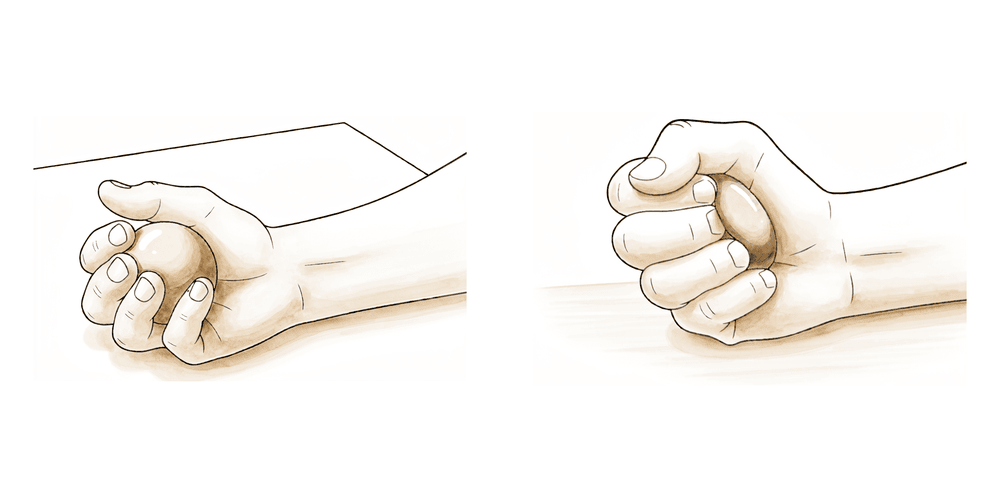
Bài tập GIAI ĐOẠN SAU — bắt đầu từ khoảng hai đến ba tuần, khi vết thương đã ổn định và chuyên viên trị liệu tay đồng ý. Hãy nhẹ nhàng bóp một quả bóng mềm hoặc đất nặn trị liệu, giữ trong vài giây rồi thả lỏng, tăng dần lực bóp. Bài tập này giúp phục hồi sức nắm để sẵn sàng sử dụng tay hoàn toàn. Hãy ngừng tập nếu cảm thấy đau nhói ở vùng vết thương.
10–15 lần bóp, 2–3 lần mỗi ngày (từ khoảng tuần thứ 2–3)
Đây là những bài tập có trong tờ hướng dẫn của bạn. Hãy thực hiện chúng chỉ khi được bác sĩ Hirpara và chuyên viên trị liệu chỉ dẫn, đồng thời tuân thủ mọi giới hạn đã được đặt ra. Những bài tập ban đầu (nắm tay nhẹ rồi duỗi thẳng, các động tác trượt gân và kiểm soát tình trạng sưng) giúp các ngón tay vẫn cử động được và các gân vẫn di chuyển trong những ngày đầu sau phẫu thuật; đây là yếu tố quan trọng nhất để quá trình hồi phục diễn ra suôn sẻ. Việc xoa bóp vết sẹo và giảm nhạy cảm với kích thích chỉ bắt đầu sau khi vết thương đã lành hoàn toàn; còn việc tăng cường sức mạnh nắm tay thì thuộc giai đoạn sau (khoảng từ hai đến ba tuần sau phẫu thuật). Hãy ngừng ngay bất kỳ bài tập nào gây ra cơn đau dữ dội tại vùng vết thương.
Quy trình điều trị lâm sàng của bạn
Phần còn lại của trang này là quy trình điều trị phục hồi chức năng từng bước sau khi cắt bỏ u nang bao gân duỗi (u nang vùng màng bao gân lòng bàn tay). Phần này cần được cung cấp cho chuyên viên trị liệu tay của bạn; mỗi giai đoạn đều bắt đầu bằng lời giải thích bằng ngôn ngữ đơn giản về những gì đang diễn ra. Đây là thủ thuật cắt bỏ, không phải phẫu thuật vá lại: bao gân vẫn được để mở và không có cấu trúc nào được dùng để bảo vệ. Chương trình điều trị này là phương pháp vận động sớm, tập trung vào việc bảo vệ vết mổ, kiểm soát phù nề, giúp gân trượt dễ dàng để ngăn ngừa dính, đồng thời chăm sóc vết sẹo và giảm nhạy cảm, chứ không phải việc cố định chi cứng nhắc.
Trước khi bắt đầu điều trị, hãy kiểm tra báo cáo phẫu thuật và tiền sử bệnh lý; đồng thời trao đổi với bác sĩ phẫu thuật về ngón tay bị ảnh hưởng, mức độ cắt bỏ bao gân cũng như tình trạng các bó thần kinh và mạch máu ở ngón tay. Thủ thuật cắt bỏ do bác sĩ Hirpara thực hiện là dùng đường rạch Bruner (dạng zig-zag) ở mặt lòng bàn tay, tại vùng bao gân A1 và phần gần ngón tay; u nang được lấy ra cùng một phần màng bao gân; bao gân không được vá lại và không có biện pháp cố định nào ngoài việc băng gạc mềm. Hiện tượng tê ngón tay do ảnh hưởng thần kinh là hiện tượng thường gặp và sẽ tự hết.
Giai đoạn I – Bảo vệ vết thương và vận động sớm (tuần 0 đến khoảng tuần 1)
Trong tuần đầu tiên, mục tiêu là bảo vệ vết thương nhỏ ở lòng bàn tay và giúp ngón tay vận động sớm để tránh tình trạng cứng khớp hoặc hình thành dính màng gân. Bàn tay được băng bó bằng băng mềm dày, không dùng nẹp, giữ ở tư thế cao hơn mức tim, đồng thời bắt đầu các động tác vận động ngón tay nhẹ nhàng trong vòng vài ngày.
Dành cho chuyên viên trị liệu tay:
Giáo dục và các lưu ý cần chú ý - Chỉ dùng băng mềm dày, không dùng nẹp; giữ vết thương sạch và khô cho đến khi cắt chỉ (~ngày 10–14) - Tránh để vết thương chịu áp lực lớn; chỉ được sử dụng bàn tay nhẹ nhàng, không chịu tải trong mức độ thoải mái - Cần giải thích rằng hiện tượng tê hoặc tăng cảm giác ở các ngón tay quanh vết thương là tình trạng thường gặp và sẽ tự hết
Cách xử trí - Vết thương: băng bó theo hướng dẫn; theo dõi dấu hiệu nhiễm trùng - Phù nề: nâng bàn tay cao hơn mức tim, thực hiện các động tác bơm máu nhẹ ở ngón tay, chườm đá nếu cần - Vận động: bắt đầu các động tác vận động chủ động nhẹ nhàng của ngón tay (AROM) (nắm tay nhẹ và duỗi thẳng ngón tay) cùng các bài tập trượt gân (nắm tay kiểu móc, nắm tay hoàn toàn, duỗi thẳng); vận động chủ động các ngón tay không bị tổn thương, ngón cái và cổ tay; sử dụng bàn tay nhẹ nhàng cho các hoạt động sinh hoạt
Tiêu chí để chuyển sang giai đoạn tiếp theo - Vết thương ổn định, không nhiễm trùng; có thể thực hiện các động tác vận động chủ động nhẹ nhàng mà không gây đau; sẵn sàng chuyển sang các bài tập vận động chủ động và thụ động nhẹ nhàng khi vết thương cho phép
Giai đoạn II — Phục hồi vận động toàn diện, kiểm soát phù nề và chăm sóc sẹo (tuần thứ 1 đến 3)
Khoảng từ tuần thứ nhất, bệnh nhân bắt đầu thực hiện các động tác vận động chủ động và thụ động một cách nhẹ nhàng đến mức tối đa (nắm tay hết cỡ và duỗi thẳng ngón tay). Khi vết thương đã lành hoàn toàn và cắt chỉ xong, bắt đầu thực hiện massage sẹo và các biện pháp giảm nhạy cảm vùng sẹo. Việc kiểm soát phù nề vẫn tiếp tục được duy trì.
Dành cho chuyên viên trị liệu tay:
Đánh giá - Biên độ vận động chủ động và thụ động của các ngón tay (mục tiêu là nắm tay hết cỡ và duỗi thẳng ngón tay); tình trạng vết thương/sẹo; mức độ sưng phù; độ nhạy cảm của dây thần kinh vùng ngón tay
Giáo dục và lưu ý - Tiến hành các động tác vận động chủ động và thụ động một cách nhẹ nhàng đến mức tối đa khi bệnh nhân cảm thấy thoải mái - Chỉ bắt đầu massage sẹo và các biện pháp giảm nhạy cảm vùng sẹo sau khi vết thương đã lành hoàn toàn - Tránh các động tác nắm chặt mạnh hoặc bóp mạnh cho đến khi vết thương ổn định
Các biện pháp can thiệp - Bài tập: nắm tay hết cỡ và duỗi thẳng ngón tay; tiếp tục các bài tập trượt gân; kéo giãn nhẹ nhàng những vùng còn cứng lại - Sẹo: massage sẹo kết hợp với các biện pháp giảm nhạy cảm vùng sẹo sau khi vết thương lành; kiểm soát phù nề nếu cần thiết
Tiêu chí để chuyển sang giai đoạn tiếp theo - Vận động chủ động không còn đau; vết thương đã lành; sẹo ổn định; sẵn sàng tăng cường tải trọng lên vùng điều trị
Giai đoạn III – Tăng cường sức mạnh và hồi phục (tuần thứ 3 đến 6)
Khi vết thương đã lành và khả năng vận động trở lại bình thường (khoảng 3 tuần), việc tăng cường sức mạnh cho các động tác nắm và kẹp sẽ bắt đầu và được nâng dần để đạt mức sử dụng hoàn toàn không hạn chế. Hầu hết bệnh nhân có thể trở lại các hoạt động bình thường vào khoảng tuần thứ 4 đến 6; sau đó sẽ có buổi tái khám định kỳ vào khoảng 2 tháng sau phẫu thuật.
Dành cho chuyên viên trị liệu tay:
Đánh giá - So sánh khả năng nắm và kẹp giữa hai bên tay; mức độ đau hoặc nhạy cảm còn lại ở vùng sẹo; các yêu cầu chức năng hoặc nhiệm vụ cụ thể cần thực hiện
Hướng dẫn và lưu ý - Bắt đầu tăng cường sức mạnh cho các động tác nắm và kẹp từ khoảng tuần thứ 2–3 sau khi vết thương ổn định; tăng dần mức độ vận động - Tiếp tục thực hiện cho đến khi bệnh nhân có thể sử dụng tay một cách hoàn toàn không hạn chế tùy theo mức độ thoải mái và sức mạnh đã đạt được
Quản lý điều trị - Các bài tập: nắm chặt bột nặn hoặc quả bóng mềm, tăng cường sức mạnh cho động tác kẹp, tăng dần mức độ vận động có tính chức năng; tiếp tục các bài tập giảm nhạy cảm và phục hồi vùng sẹo nếu cần - Cho xuất viện khi khả năng vận động đã hoàn toàn bình thường, việc nắm và kẹp trở nên thoải mái và gần như đối xứng giữa hai bên tay; buổi tái khám định kỳ vào khoảng 2 tháng sau phẫu thuật - Chuyển bệnh nhân trở lại bác sĩ điều trị nếu tiến triển hồi phục bị chững lại, vùng sẹo vẫn còn rất nhạy cảm, hoặc có dấu hiệu lo ngại về khả năng tái phát
Tiêu chí để trở lại sinh hoạt bình thường - Khả năng vận động không còn đau đớn; việc nắm và kẹp trở nên thoải mái; vết sẹo đã ổn định; có thể đáp ứng được các yêu cầu công việc và hoạt động hàng ngày
Trở lại với công việc và các hoạt động hàng ngày
Bạn nên bắt đầu sử dụng tay nhẹ nhàng trong các hoạt động thường ngày (ăn uống, viết lách, các công việc chăm sóc bản thân) ngay từ đầu, miễn là cảm thấy thoải mái và không phải dùng lực mạnh để nắm chặt hay kẹp mạnh qua vùng vết thương. Hầu hết mọi người đều có thể thực hiện các công việc hàng ngày trong vòng vài ngày. Việc lái xe thường có thể được tiếp tục sau khoảng một tuần, khi bạn đã có thể nắm tay và điều khiển vô lăng một cách dễ dàng, đồng thời không còn bị hạn chế bởi băng gạc; điều này cần được xác nhận bởi bác sĩ Hirpara trong lần tái khám.
Các bài tập nắm tay và tăng cường sức mạnh bắt đầu từ khoảng hai đến ba tuần sau phẫu thuật, khi vết thương đã ổn định, và được tăng dần theo thời gian. Thông thường, bạn sẽ có thể thực hiện mọi hoạt động một cách tự do vào khoảng tuần thứ tư đến tuần thứ sáu. Công việc văn phòng thường có thể tiếp tục sau vài ngày đến một tuần; còn các công việc chân tay nặng nhọc cũng tuân theo tiến trình tương tự khi khả năng nắm tay của bạn dần hồi phục. Lịch tái khám thường được sắp xếp vào khoảng hai tháng sau phẫu thuật.
Sau khi thực hiện theo phác đồ này
Phác đồ này được áp dụng song song với các hướng dẫn phục hồi chung của phòng khám: vui lòng tham khảo mục xử lý cơn đau sau phẫu thuật, chăm sóc vết thương và chăm sóc sẹo. Vì u nang này nằm ở gốc ngón tay, ngay phía trên gân chắn A1, nên quá trình hồi phục có nhiều điểm tương đồng với các ca phẫu thuật nhỏ khác ở vùng gốc ngón tay như phẫu thuật giải phóng ngón tay cò. Kế hoạch từng giai đoạn nêu trên dựa trên các hướng dẫn đã được công bố về việc phục hồi sau khi cắt bỏ u nang; quá trình hồi phục của bạn sẽ được Bác sĩ Hirpara và chuyên viên trị liệu tay theo dõi, điều chỉnh riêng cho từng trường hợp tùy theo tiến triển của ngón tay.
Evidence & references
This is the clinical evidence summary written for health professionals. It is technical, and it lists the research this page was built from. You do not need to read it to understand your treatment or to make a decision about it.
Flexor Sheath Ganglion Excision — Lesion, Procedure Outcomes & Post-operative Rehabilitation (Volar Retinacular Cyst)
Topic scope: post-operative rehabilitation after surgical excision of a flexor tendon sheath ganglion (volar retinacular cyst / "seed" ganglion) at the base of a finger — a small, firm, often tender cyst arising from the flexor sheath, commonly over the A1 pulley at the metacarpophalangeal crease of the middle or ring finger. This is an excision, not a reconstruction: the cyst is removed with a small cuff of sheath, the sheath is not repaired, and there is no construct to protect — so the rehab is a brief early-motion pathway built around wound protection, oedema control, tendon gliding and scar/desensitisation work rather than months of protected healing.
Defining principle of the rehab here: a flexor sheath ganglion is a benign cyst tethered to the tendon sheath; excising it (with a cuff of sheath) removes the lesion without creating anything that needs to heal under protection. The sheath is meant to be left open — partial sheath excision does not weaken the digit or cause bowstringing at this level — so immediate, unrestricted light use and early gentle finger motion are the default. The therapy programme exists to keep the flexor tendons gliding through the healing palm wound so they do not adhere, to settle the transient digital-nerve hypersensitivity that commonly follows dissection between the neurovascular bundles, and to mature the scar — not to immobilise. The single branch point is wound healing: scar massage and grip loading wait until the wound is healed and sutures are out.
A. PROCEDURE OUTCOMES (excision of flexor sheath ganglion)
Excision of a flexor sheath ganglion is a small, reliable day-case hand operation: the great majority of patients are rendered symptom-free with a low recurrence rate, and the principal trade-off is the common but self-limiting transient digital-nerve paraesthesia from dissecting the cyst out from between the digital neurovascular bundles.
- Flexor sheath (volar retinacular) ganglions are a well-defined, common entity. They account for roughly 5–16% of ganglions of the hand and wrist, presenting as a small (typically 3–8 mm), firm, often tender nodule fixed to the flexor sheath at the digit base — classically over the A1/A2 pulley region — that does not move with the tendon [JAAOS 2022; JAAOS 1999; Hand Clin 2004]. Well-established (lesion nature).
- Surgical excision gives reliable symptom relief with low recurrence. Level-IV case series of flexor sheath / volar retinacular ganglion excision report durable resolution and low recurrence after complete excision of the cyst with a cuff of sheath; recurrence is the main long-term concern and is uncommon when the lesion and its sheath origin are fully removed [Hand 2007; J Hand Surg series; PMC surgical series]. Moderate (level-IV case series).
- Transient digital-nerve paraesthesia is the principal complication. Because the cyst sits immediately deep to, and is dissected free from, the digital nerves, temporary numbness or tingling in the finger is the commonest reported post-operative event; it is typically self-limiting and settles over weeks. True nerve injury is rare with careful protection of both bundles [Hand 2007; volar retinacular series; Medscape]. Moderate (case series + expert review).
- Partial excision of the sheath is biomechanically tolerated. Removing the cyst with a small cuff of the flexor sheath at the A1 level does not produce clinically significant bowstringing or weakness, which is the anatomical basis for not repairing the sheath and for an early-motion rehab without protected immobilisation [Hand Clin 2004 (palmar digital ganglia / A1–A2 origin)]. Mechanistic.
B. REHABILITATION / THERAPY EVIDENCE
There are no randomised rehab trials specific to flexor sheath ganglion excision; the post-operative programme is low-level / expert-consensus, but it is strikingly consistent across hand-therapy and surgical sources: dressing only (no splint), early gentle finger motion within days, tendon gliding to prevent adhesion, scar massage and desensitisation once healed, and return to full use by ~4–6 weeks.
- Dressing-only, no routine splinting. Aftercare guidance for ganglion (including flexor sheath) excision describes a soft dressing with no immobilisation, with the patient encouraged to move the finger early — there is no construct to protect, so splinting is not required and would risk stiffness [MSA aftercare; Medscape]. Weak / consensus.
- Early active finger motion and tendon gliding prevent stiffness and adhesion. Starting gentle active fist/extension and tendon glides within the first few days keeps the flexor tendons gliding through the palm wound so they do not adhere to the healing scar — the same adhesion-prevention rationale that underpins early-motion hand rehab generally. The benefit is mechanistic / consensus rather than trial-proven for this lesion [hand-therapy aftercare sources]. Weak (mechanism sound).
- Scar massage and desensitisation, started once healed, settle the wound and digital-nerve hypersensitivity. Palm scars at the digit base are prone to tenderness, and the transient digital-nerve paraesthesia from the dissection responds to graded desensitisation; both begin only after the wound is fully healed and sutures are out (~day 10–14) [MSA aftercare; Medscape]. Weak / consensus.
- Grip loading and full return are early. Because nothing is repaired, gripping and strengthening begin once the wound has settled (~2–3 weeks) and full unrestricted use is typically reached by ~4–6 weeks, with routine follow-up around two months — consistent across aftercare sources [MSA aftercare; PMC series; Medscape]. Weak / consensus.
Recovery trajectory (expected, evidence-anchored)
| Phase | Window | Restraint | Hand use / therapy focus | Strength / load | Notes |
|---|---|---|---|---|---|
| I — Wound protection & early motion | Week 0–1 | Soft dressing, no splint | Elevate above heart; gentle active fist + full extension and tendon glides within a few days; protect wound; light functional use | Light unloaded use only | Transient digital-nerve tingling is expected, not a complication |
| II — Full motion, oedema & scar work | Week ~1–3 | Heavy-grip avoidance | Progress to full active + gentle passive motion (full fist, full extension); scar massage + desensitisation once wound healed; oedema control | No forceful gripping/pinching until wound settled | Sutures out ~day 10–14; scar work only after full healing |
| III — Strengthening & return | Week ~3–6 | Restrictions lifted | Progress grip/pinch loading; task-specific use | Grip/pinch strengthening from ~2–3 wk; full unrestricted use by ~4–6 wk | Routine follow-up ~2 months; driving ~1 wk once gripping the wheel comfortably (surgeon discretion) |
(Phase windows mirror the precautions and return milestones in the patient protocol; they are typical guides, not trial-derived deadlines.)
C. KEY CONTROVERSIES / EVIDENCE QUALITY
- Lesion nature is well-established. The flexor sheath / volar retinacular ganglion is a recognised, characterised entity (firm, sheath-tethered, A1-pulley region, 5–16% of hand/wrist ganglions); its diagnosis and origin are not in dispute. Strong (descriptive).
- Excision outcomes are good but evidenced at level IV. Low recurrence and reliable symptom relief come from case series, not controlled trials — adequate for a small benign lesion, but the evidence tier is modest. Moderate (level-IV).
- Transient digital-nerve paraesthesia vs true nerve injury. Temporary tingling is common and self-limiting; framing it for patients up front avoids alarm, while careful intra-operative protection of both neurovascular bundles keeps true injury rare. Moderate.
- The rehab protocol is consensus, not trial-derived. No RCTs govern post-excision therapy; the dressing-only, early-motion, scar-care, ~4–6-week-return pathway is consistent across sources but rests on expert consensus and the general principles of early-motion hand rehab. Weak / consensus.
- Recurrence is the main long-term failure mode and is uncommon after complete excision of the cyst with its sheath origin; a residual or recurrent lump warrants reassessment rather than prolonged therapy. Moderate.
D. EVIDENCE STRENGTH FLAGS (summary)
- WELL-ESTABLISHED (descriptive): the nature, location and prevalence (5–16% of hand/wrist ganglions) of flexor sheath / volar retinacular ganglions.
- MODERATE (level-IV case series): reliable symptom relief and low recurrence after excision; transient digital-nerve paraesthesia as the principal, self-limiting complication; recurrence as the main long-term failure mode.
- WEAK / CONSENSUS: the dressing-only, early-motion, scar-care rehab programme and its phase timings (consistent across aftercare sources, mechanistically rationalised, but not trial-derived); ~4–6-week full return and ~1-week driving (surgeon discretion).
CITATIONS
RAG corpus (180,000+ Orthopaedic articles)
- Ganglions of the hand and wrist. J Am Acad Orthop Surg. 2022. DOI: 10.5435/jaaos-d-22-00105
- Ganglions of the hand and wrist. J Am Acad Orthop Surg. 1999. DOI: 10.5435/00124635-199907000-00003
- Surgical excision of flexor sheath ganglions of the hand: results and outcomes. Hand (N Y). 2007. DOI: 10.1007/s11552-007-9028-4
- Volar retinacular ganglions of the hand: a clinical series. J Hand Surg Am. 2011. DOI: 10.1016/j.jhsa.2011.05.013
- Palmar digital ganglia and the A1–A2 sheath origin. Hand Clin. 2004. DOI: 10.1016/j.hcl.2004.03.015
Flexor sheath ganglion / rehabilitation literature (URLs)
- Surgical excision of flexor sheath ganglions — case series (full text). PMC. https://pmc.ncbi.nlm.nih.gov/articles/PMC2527143/
- Volar retinacular ganglions of the hand. Journal of Hand Surgery (American). https://www.jhandsurg.org/article/S0363-5023(11)00627-7/abstract
- Ganglion cyst excision — post-operative aftercare (dressing-only, early motion, scar care, ~4–6 week return). Mississippi Sports & Arthritis (MSA) Hand Center. https://msapc.com/hand-center/aftercare/ganglion-cyst-excision/
- Ganglion treatment (surgical excision, recurrence and transient digital-nerve paraesthesia). Medscape. https://emedicine.medscape.com/article/1243525-treatment