Patients › Rehabilitation
Phẫu thuật cắt bỏ u nang cổ tay
Kế hoạch phục hồi vận động sớm sau khi cắt bỏ u nang cổ tay ở mặt lưng hoặc mặt gan tay: hạn chế tối đa việc cố định cổ tay, sau đó cho phép cổ tay vận động nhanh chóng theo mọi hướng nhằm ngăn ngừa tình trạng cứng khớp – vấn đề phổ biến nhất sau ca phẫu thuật này.
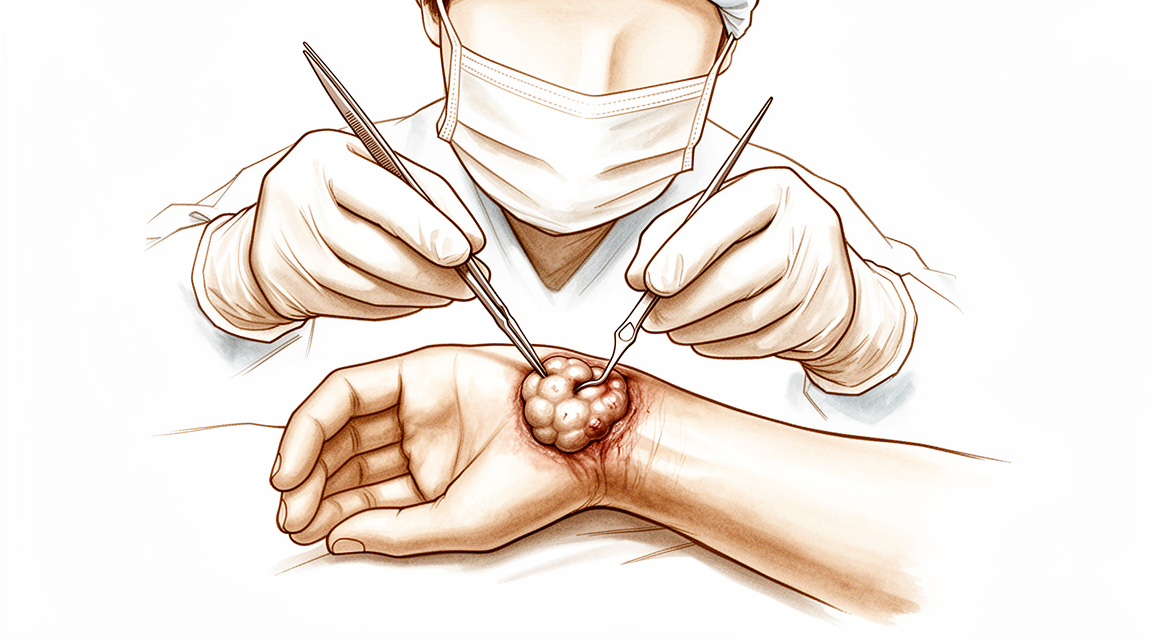
Quy trình này hướng dẫn quá trình hồi phục của bạn sau khi phẫu thuật cắt bỏ u nang cổ tay, tức là khối u chứa đầy dịch phát sinh từ khớp cổ tay, dưới sự chăm sóc của bác sĩ Kieran Hirpara tại Bệnh viện tư nhân Mater Rockhampton. Quy trình bắt đầu với chương trình tập luyện tại nhà, tiếp theo là quy trình điều trị chi tiết được soạn thảo dành riêng cho chuyên viên trị liệu tay của bạn; hãy mang theo trang này hoặc bản PDF tương ứng trong lần trị liệu đầu tiên để quá trình phục hồi được thực hiện một cách nhất quán. Chuyên viên trị liệu có thể điều chỉnh kế hoạch tùy theo tiến triển hồi phục của bạn.
Nếu bạn có bất kỳ thắc mắc nào về vết thương sau phẫu thuật, vui lòng liên hệ với phòng khám. Việc chụp ảnh vết thương rồi gửi qua email để được đánh giá cũng là một cách hữu ích.
Những điều bạn có thể mong đợi
U nang cổ tay là một khối giống quả bóng, chứa đầy dịch, được nối với màng bao khớp cổ tay bằng một cuống nhỏ. Hầu hết các u nang này xuất hiện ở mặt sau cổ tay (gọi là u nang lưng); một số khác xuất hiện ở mặt trước, phía ngón tay cái (gọi là u nang lòng bàn tay). Trong quá trình phẫu thuật, bác sĩ Hirpara sẽ cắt bỏ hoàn toàn khối u cùng với cuống của nó, cho tới tận màng bao khớp cổ tay; việc giữ lại cuống là nguyên nhân chính khiến u nang có thể tái phát. Ca phẫu thuật có thể được thực hiện theo phương pháp mở (thông qua một vết rạch nhỏ) hoặc bằng kỹ thuật nội soi.
Vì không có cấu trúc nào như gân hay dây chằng bị sửa chữa hay tái tạo (chỉ có khối u nang được loại bỏ), nên không cần phải bảo vệ gì trong nhiều tuần. Do đó, chương trình phục hồi chức năng được thiết kế theo nguyên tắc vận động sớm, nhằm giúp cổ tay hoạt động ngay lập tức:
- Cứng khớp là vấn đề phổ biến nhất sau ca phẫu thuật này, nhiều hơn cả khả năng u nang tái phát. Nếu cổ tay bị nghỉ ngơi quá lâu sau khi cắt bỏ u nang, khả năng vận động sẽ bị suy giảm.
- Vì vậy, việc cố định cổ tay được hạn chế tối đa: chỉ dùng băng gạc mềm, đôi khi kèm nẹp cổ tay nhẹ để tăng cảm giác thoải mái; thời gian sử dụng chỉ vài ngày đến một hoặc hai tuần. Sau đó, bạn sẽ bắt đầu vận động cổ tay theo mọi hướng ngay lập tức.
Các ngón tay – vốn không bị phẫu thuật – có thể cử động bình thường ngay từ ngày đầu. Khả năng vận động của cổ tay sẽ dần được phục hồi khi vết thương lành lại; sau đó sức mạnh nắm và khả năng chịu tải cũng được tăng dần. Hầu hết mọi người có thể trở lại các hoạt động thường ngày sau khoảng bốn đến sáu tuần.
Những lưu ý và hạn chế
- Ngay từ ngày đầu tiên, hãy cử động ngón tay, ngón cái và khuỷu tay một cách đầy đủ; chỉ có cổ tay là cần được vận động một cách từ từ.
- Chỉ đeo băng gạc mềm hoặc nẹp hỗ trợ trong thời gian được chỉ định (thông thường là vài ngày đến một hoặc hai tuần). Các dụng cụ này chỉ nhằm mang lại sự thoải mái chứ không phải để giữ cổ tay yên trong thời gian dài; mục tiêu chính vẫn là vận động sớm, chứ không phải nghỉ ngơi.
- KHÔNG để vết thương ngâm nước hoặc làm ướt băng gạc cho đến khi được thông báo rằng vết thương đã lành; hãy giữ vết thương sạch và khô ráo.
- Trong vài tuần đầu, hạn chế các động tác nắm chặt, nâng vật nặng hoặc chịu tải trọng qua cổ tay; hãy tăng dần mức độ vận động thay vì thực hiện ngay một lúc.
- Nếu bạn bị nang dịch ở mặt trước cổ tay, khối nang này có thể nằm gần động mạch quay (động mạch mà bạn có thể cảm nhận được mạch đập ở mặt trước cổ tay); hãy thông báo ngay cho phòng khám nếu nhận thấy bàn tay bị sưng bất thường, lạnh hoặc thay đổi màu sắc.
- KHÔNG lái xe cho đến khi bạn có thể điều khiển vô lăng một cách thoải mái và đã tháo hết nẹp, theo xác nhận của bác sĩ tại lần tái khám.
Để biết thêm về cách chăm sóc vết thương, giảm sưng và ngăn ngừa sẹo, vui lòng tham khảo hướng dẫn chăm sóc vết thương của phòng khám.
Các bài tập của bạn
Kieran Hirpara 4.0
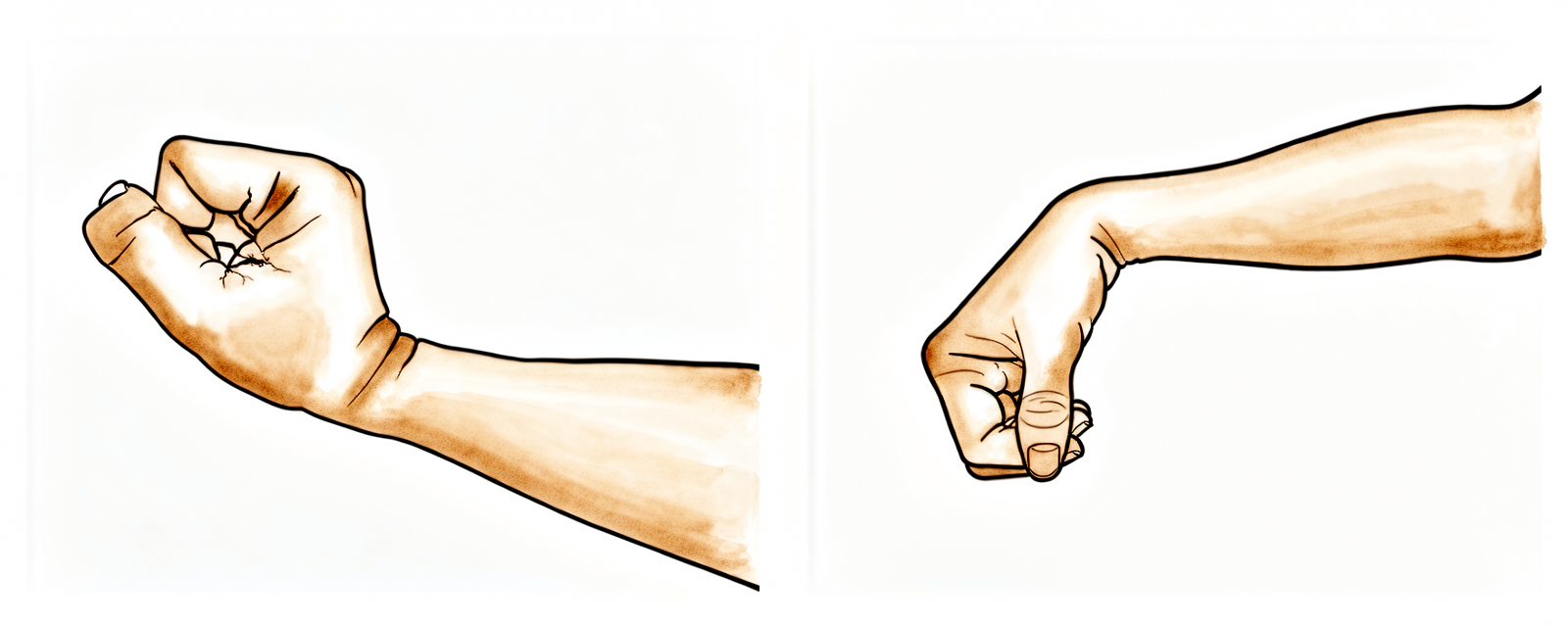
Chuyển động cổ tay (theo mọi hướng)
Hãy nhẹ nhàng di chuyển cổ tay theo mọi hướng — gập ra sau (lên trên), gập về phía trước (xuống dưới) và nghiêng sang hai bên — di chuyển đến mức độ thoải mái nhất cho bạn. Đây là bài tập sớm quan trọng nhất, vì cổ tay có xu hướng cứng lại sau ca phẫu thuật; việc vận động sớm sẽ giúp cổ tay vẫn mềm dẻo. Hãy thực hiện từ từ và chỉ vận động trong phạm vi thoải mái; không nên gây đau đớn dữ dội.
10 lần theo mỗi hướng, 4-5 lần mỗi ngày, bắt đầu từ vài ngày đầu tiên.
Kieran Hirpara 4.0
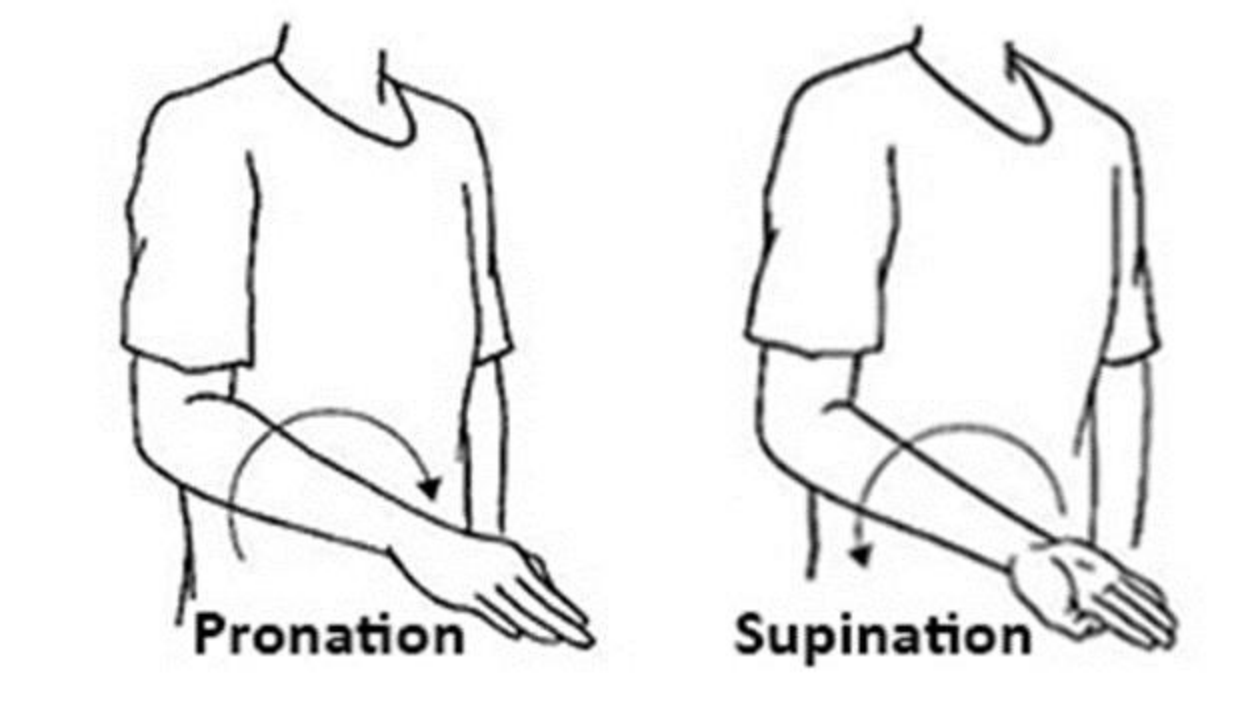
Chuyển động xoay cẳng tay (lòng bàn tay hướng lên / lòng bàn tay hướng xuống)
Hãy kéo khuỷu tay sát vào thân mình và gập thành góc vuông. Từ từ xoay lòng bàn tay hướng lên trần nhà, sau đó hướng xuống sàn nhà. Giữ nguyên khuỷu tay không di chuyển để chuyển động chỉ xuất phát từ cẳng tay. Cách này giúp cẳng tay và cổ tay có thể xoay tự do trong lúc vết thương đang lành lại.
10 lần theo mỗi hướng, 3-4 lần mỗi ngày.
Kieran Hirpara 4.0
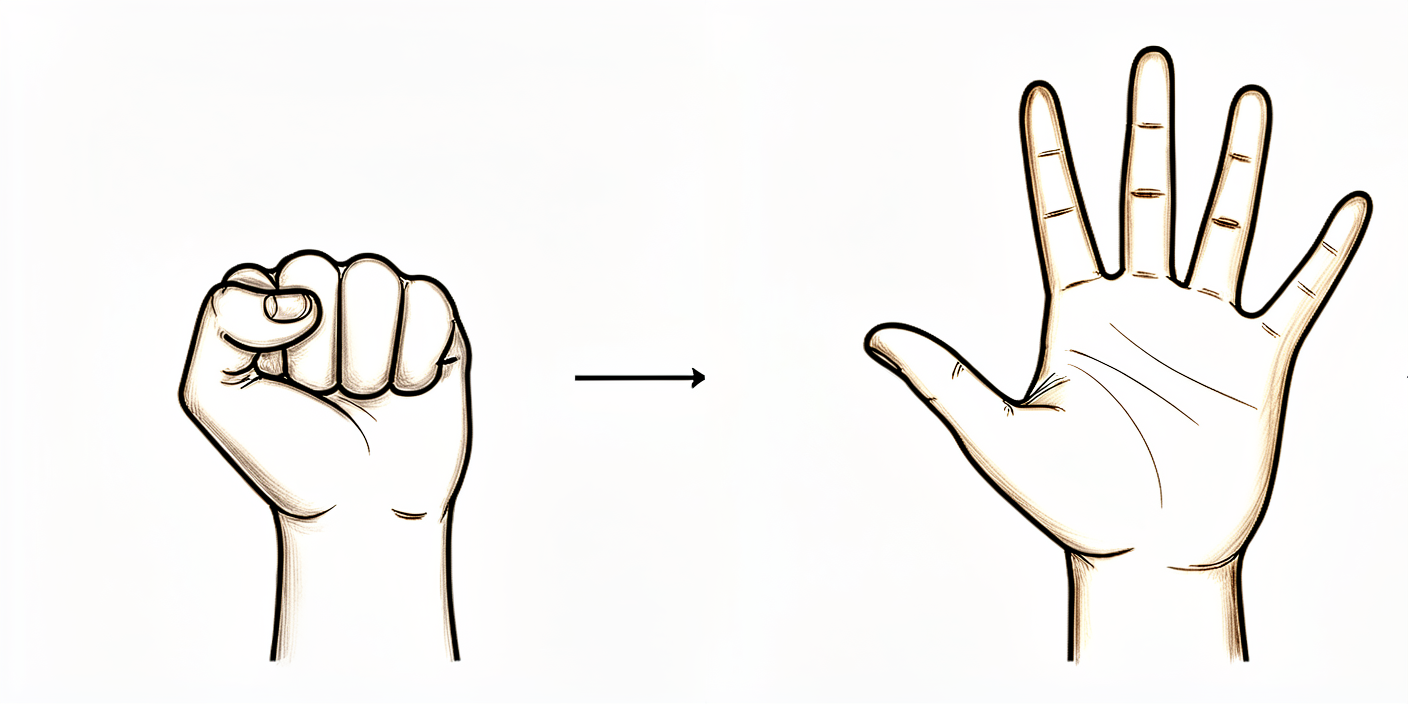
Chuyển động của ngón tay
Hãy nắm tay lại thật chậm sao cho đầu ngón tay cong vào trong lòng bàn tay; sau đó mở tay ra và duỗi thẳng các ngón tay hoàn toàn. Các ngón tay không được phẫu thuật, vì vậy hãy để chúng cử động tự do ngay từ ngày đầu tiên — việc này giúp ngăn ngừa tình trạng cứng khớp và hỗ trợ việc giảm sưng.
10 lần, vài lần mỗi ngày, ngay từ ngày đầu tiên.
Kieran Hirpara 4.0
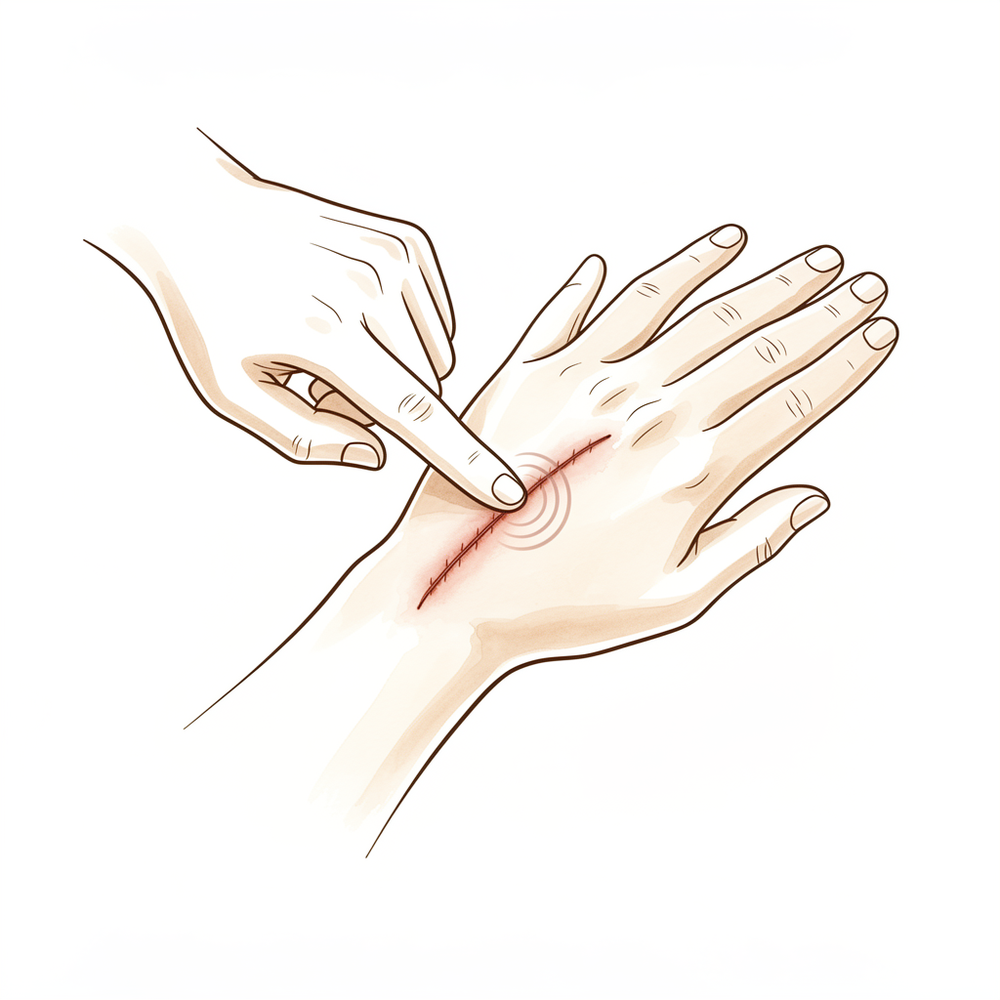
Xoa bóp vết sẹo
Khi vết thương đã lành hoàn toàn và không còn băng gạc nữa (thường là sau khoảng hai tuần), hãy dùng đầu ngón tay thoa một chút kem dưỡng ẩm lên vết sẹo, thực hiện các động tác xoay tròn nhỏ và chắc chắn trong vài phút. Việc này giúp vết sẹo mềm mại và linh hoạt hơn, đồng thời ngăn không cho nó dính vào các mô bên dưới; nếu không sẽ có thể hạn chế chuyển động của cổ tay. Tuyệt đối không thực hiện thao tác này trên vết thương chưa lành hoặc đang tiết dịch.
Chỉ vài phút mỗi lần, ngày hai lần, sau khi vết thương đã lành hoàn toàn.
Kieran Hirpara 4.0
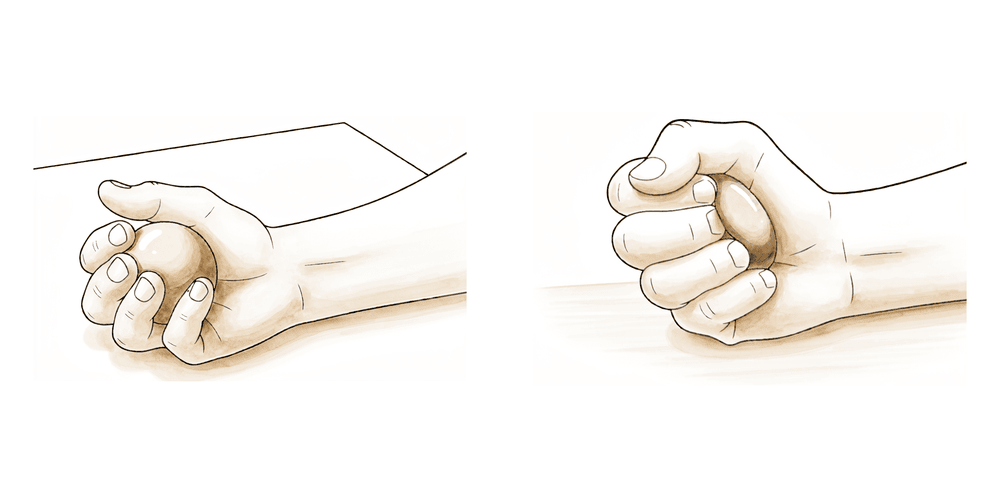
Tăng cường sức mạnh nắm tay
Bài tập này thường được thực hiện khoảng ba đến bốn tuần sau phẫu thuật, khi vết thương đã lành và việc vận động trở nên dễ dàng hơn. Hãy nắm chặt một quả bóng mềm hoặc khối đất nặn trị liệu trong lòng bàn tay, giữ nguyên vài giây rồi thả lỏng. Dần dần tăng độ khó của bài tập. Việc này giúp phục hồi sức mạnh nắm tay – vốn thường suy giảm trong vài tuần đầu sau phẫu thuật.
10-15 thực hiện động tác bóp, 2-3 lần mỗi ngày, bắt đầu từ khoảng 3-4 tuần.
Đây là những bài tập có trong tờ hướng dẫn của bạn. Hãy thực hiện chúng theo hướng dẫn của Bác sĩ Hirpara và chuyên viên trị liệu vận động. Những bài tập ban đầu (vận động cổ tay theo mọi hướng, xoay cẳng tay và vận động các ngón tay) là nền tảng quan trọng cho quá trình hồi phục; bạn nên bắt đầu ngay trong vài ngày đầu, vì việc vận động cổ tay sớm giúp ngăn ngừa tình trạng cứng khớp thường gặp sau ca phẫu thuật này. Việc mát-xa vết sẹo chỉ được thực hiện khi vết thương đã lành hoàn toàn; các bài tập tăng cường sức mạnh nắm tay sẽ được thêm vào sau đó, khi bạn cảm thấy thoải mái hơn. Không bài tập nào nên gây đau đớn dữ dội; nếu có, hãy giảm mức độ thực hiện lại.
Quy trình điều trị lâm sàng của bạn
Phần còn lại của trang này là quy trình điều trị phục hồi chức năng sau khi cắt bỏ u nang cổ tay. Phần này cần được cung cấp cho chuyên viên trị liệu tay của bạn; mỗi giai đoạn đều bắt đầu bằng lời giải thích bằng tiếng Việt đơn giản về những gì sẽ diễn ra. Đây là một ca cắt bỏ, chứ không phải phẫu thuật sửa chữa: không có cấu trúc nào cần được bảo vệ; vì vậy nguyên tắc chủ đạo là hạn chế tối thiểu việc cố định cổ tay, sau đó thực hiện các động tác vận động chủ động sớm ở mọi mặt phẳng nhằm ngăn ngừa tình trạng cứng khớp sau phẫu thuật, vốn là biến chứng phổ biến nhất sau thủ thuật này.
Trước khi điều trị, hãy kiểm tra báo cáo phẫu thuật và tiền sử bệnh của bệnh nhân; đồng thời trao đổi với bác sĩ phẫu thuật về vị trí u nang (mặt lưng hay mặt gan tay), phương pháp phẫu thuật (mở hay nội soi), tình trạng nguyên vẹn của màng bao khớp mặt lưng/gan tay, cũng như bất kỳ phát hiện bất thường nào đi kèm. Bác sĩ Hirpara sẽ cắt bỏ u nang cùng cuống của nó cho đến tận màng bao khớp. Đối với các u nang ở mặt gan tay, cần lưu ý khoảng cách đến động mạch quay. Không có vùng khớp nào cần được bảo vệ đặc biệt, cũng không có cấu trúc nào cần giảm tải lực tác động; hạn chế duy nhất là việc tránh các động tác nắm chặt hoặc chịu tải nặng trong một khoảng thời gian ngắn cho đến khi mô mềm ổn định.
Giai đoạn I — hạn chế tối thiểu việc cố định và vận động sớm (từ ngày 0 đến khoảng ngày 14)
Giai đoạn này nhằm bảo vệ vết thương đồng thời khuyến khích cổ tay vận động sớm. Việc cố định chỉ được thực hiện trong thời gian ngắn (băng gạc mềm; nếu cần thiết mới dùng nẹp cổ tay nhẹ để tăng sự thoải mái), và cổ tay bắt đầu vận động chủ động theo mọi hướng ngay trong vài ngày đầu. Các bằng chứng từ các nghiên cứu hệ thống cho thấy việc cố định trong vòng 2 tuần hoặc ít hơn, thậm chí không cố định gì cả, cũng không ảnh hưởng đáng kể đến kết quả điều trị; ngược lại, việc nghỉ ngơi quá lâu có thể dẫn đến cứng khớp.
Dành cho chuyên viên trị liệu tay:
Giáo dục và các lưu ý cần tránh - Băng gạc mềm; có thể dùng nẹp cổ tay nhẹ để tăng sự thoải mái nếu cần; dần dần loại bỏ nẹp trong vài ngày chứ không phải vài tuần - Không cố định cổ tay quá lâu: thời gian dùng nẹp không được vượt quá ≤2 tuần (thông thường chỉ vài ngày) - Giữ vết thương sạch và khô cho đến khi lành hẳn; phục hồi toàn bộ biên độ vận động của các ngón tay, ngón cái và khuỷu tay ngay từ ngày đầu - Đối với các ca phẫu thuật vùng lòng bàn tay: cần chú ý đến động mạch quay; báo cáo ngay nếu có bất kỳ dấu hiệu bất thường về mạch máu
Cách quản lý - Vết thương: dùng băng gạc phẫu thuật theo hướng dẫn; theo dõi dấu hiệu nhiễm trùng - Phù nề: nâng cao chi, dùng bơm tay nhẹ nhàng, chườm đá nếu cần - Các bài tập: vận động chủ động cổ tay theo mọi mặt phẳng (gập/duỗi, lệch sang phải/trái) trong phạm vi thoải mái, bắt đầu ngay từ vài ngày đầu; vận động chủ động/lệch chủ động cẳng tay xoay trong/xoay ngoài; phục hồi toàn bộ biên độ vận động ngón tay và ngón cái; vận động nhẹ nhàng vai
Tiêu chí để chuyển sang giai đoạn tiếp theo - Vết thương đã lành; phù nề giảm dần; biên độ vận động cổ tay được cải thiện và không gây đau; nẹp (nếu từng dùng) đã được tháo bỏ vào khoảng ngày thứ 14
Giai đoạn II — Phục hồi vận động hoàn toàn và chăm sóc sẹo (khoảng tuần thứ 2 đến 4)
Từ khoảng tuần thứ hai, băng gạc được tháo ra và vết thương đã lành. Mục tiêu lúc này là khôi phục khả năng vận động cổ tay một cách đầy đủ và đối xứng trước khi tình trạng cứng khớp xảy ra, đồng thời bắt đầu chăm sóc sẹo để sẹo vẫn giữ được độ linh hoạt và không gây cản trở vận động cổ tay.
Dành cho chuyên viên trị liệu tay:
Đánh giá - Phạm vi vận động cổ tay chủ động và thụ động (so sánh với bên kia); khả năng xoay cẳng tay; tình trạng phù nề; đánh giá vết thương và sẹo
Giáo dục và lưu ý - Phấn đấu đạt được phạm vi vận động cổ tay đầy đủ ở mọi mặt phẳng; xử lý ngay bất kỳ sự suy giảm vận động nào bằng các bài tập chủ động và thụ động nhẹ nhàng - Bắt đầu chăm sóc sẹo ngay khi vết thương đã lành hoàn toàn (xoa bóp, dùng silicone hoặc kem dưỡng ẩm, giảm nhạy cảm nếu cần) - Khuyến khích sử dụng tay cho các hoạt động chức năng nhẹ; tránh các động tác nắm chặt hoặc chịu tải nặng
Các bài tập - Tiếp tục thực hiện các bài tập nhằm đạt phạm vi vận động cổ tay chủ động và thụ động đầy đủ; duy trì các bài tập xoay cẳng tay; bắt đầu xoa bóp và giảm nhạy cảm vùng sẹo; vào cuối giai đoạn này, có thể thêm các bài tập dùng đất sét mềm hoặc nắm chặt nhẹ nếu bệnh nhân cảm thấy thoải mái
Tiêu chí để chuyển sang giai đoạn tiếp theo - Phạm vi vận động cổ tay đầy đủ hoặc gần như đầy đủ, không còn đau; sẹo đã lành và vẫn giữ được độ linh hoạt; sẵn sàng cho việc tăng dần mức độ vận động và chịu tải
Giai đoạn III — Tăng cường sức mạnh và trở lại hoạt động (từ tuần thứ 4–6 trở đi)
Khi khả năng vận động đã được phục hồi, người bệnh sẽ dần dần luyện tập lại sức mạnh nắm và khả năng chịu tải. Đối với hầu hết bệnh nhân, các hoạt động thông thường có thể được thực hiện trở lại sau khoảng 4–6 tuần; các hoạt động đòi hỏi sức mạnh cơ thể lớn hơn sẽ được thực hiện theo lộ trình dựa trên các tiêu chí nhất định.
Dành cho chuyên viên trị liệu tay:
Đánh giá - Đánh giá sức mạnh nắm và kẹp so với bên đối diện; biên độ vận động cổ tay; phản ứng của cơ thể với các mức tải trọng tăng dần; các bài kiểm tra chức năng phù hợp với công việc cụ thể
Giáo dục và lưu ý phòng ngừa - Tiếp tục luyện tập tăng cường sức mạnh nắm và cổ tay (dùng đất nặn trị liệu, quả bóng, các dụng cụ tạo sức cản) khi cảm thấy thoải mái - Dần dần đưa lại các hoạt động nâng vật nặng và chịu tải qua cổ tay; việc trở lại hoạt động hoàn toàn phải dựa trên triệu chứng cơ thể chứ không phải theo thời gian
Quản lý điều trị - Các bài tập: tăng cường sức mạnh nắm/kẹp và cổ tay theo mức độ tiến triển; thực hiện các bài tập chịu tải và các hoạt động mô phỏng công việc cụ thể; tiếp tục các bài tập phục hồi biên độ vận động và chăm sóc vết sẹo nếu còn - Có thể cho bệnh nhân xuất viện khi biên độ vận động cổ tay đã phục hồi hoàn toàn, sức mạnh gần như cân đối giữa hai bên và chức năng tay đã trở lại bình thường - Cần giới thiệu bệnh nhân quay lại gặp bác sĩ điều trị nếu cổ tay vẫn cứng khó vận động hoặc xuất hiện tình trạng sưng tái phát
Tiêu chí để trở lại hoạt động bình thường - Biên độ vận động cổ tay hoàn toàn không còn đau; sức mạnh nắm gần như cân đối giữa hai tay; bệnh nhân cảm thấy thoải mái khi thực hiện các hoạt động và công việc cụ thể
Trở lại với công việc và các hoạt động thường ngày
Bạn nên bắt đầu sử dụng tay một cách nhẹ nhàng trong các hoạt động hàng ngày (ăn uống, viết lách, các công việc chăm sóc bản thân) ngay từ đầu, miễn là cảm thấy thoải mái; các ngón tay của bạn cũng nên hoạt động bình thường ngay từ ngày đầu tiên. Việc thực hiện các công việc văn phòng hoặc các nhiệm vụ nhẹ nhàng thường có thể được thực hiện trong vòng vài ngày đến một tuần, đặc biệt nếu tay thuận của bạn không bị hạn chế; còn những công việc đòi hỏi lực nắm mạnh, phải nâng vác vật nặng hoặc vận động cổ tay lặp đi lặp lại thì cần thời gian phục hồi lâu hơn và phải được thực hiện dần dần trong vài tuần đầu. Các nghiên cứu đã công bố cho thấy thời gian nghỉ việc sau phẫu thuật cắt u nang chỉ khoảng hai tuần; tuy nhiên thời gian này còn phụ thuộc vào bên tay được phẫu thuật và tính chất công việc của bạn.
Vì bạn cần phải điều khiển vô lăng một cách dễ dàng và không còn phải đeo nẹp, hãy sắp xếp người hỗ trợ để di chuyển trong những ngày đầu; việc lái xe sẽ được phép trở lại khi bạn cảm thấy thoải mái và an toàn, theo đánh giá của bác sĩ trong lần tái khám. Hầu hết mọi người đều có thể trở lại các hoạt động bình thường sau khoảng bốn đến sáu tuần; các công việc chân tay nặng nhọc và các môn thể thao chỉ được thực hiện dần dần khi khả năng vận động và lực nắm tay đã hồi phục, dựa trên tình trạng cổ tay chứ không chỉ dựa vào thời gian.
Sau khi thực hiện theo phác đồ này
Phác đồ này được áp dụng song song với các hướng dẫn phục hồi chung của phòng khám: vui lòng tham khảo mục xử lý cơn đau sau phẫu thuật, chăm sóc vết thương và chăm sóc sẹo. Kế hoạch từng giai đoạn nêu trên dựa trên các hướng dẫn đã được công bố sau khi cắt bỏ u nang cổ tay; mục tiêu chính là vận động sớm để tránh tình trạng cứng khớp. Quá trình hồi phục của bạn sẽ được Bác sĩ Hirpara và chuyên viên trị liệu tay theo dõi, điều chỉnh tùy theo tiến triển của khớp cổ tay.
Evidence & references
This is the clinical evidence summary written for health professionals. It is technical, and it lists the research this page was built from. You do not need to read it to understand your treatment or to make a decision about it.
Wrist Ganglion Excision — Procedure Outcomes & Post-operative Rehabilitation (Dorsal / Volar, Open or Arthroscopic)
Topic scope: post-operative rehabilitation after surgical excision of a wrist ganglion — removal of the cyst together with its capsular stalk down to the wrist joint, performed open or arthroscopically, for a dorsal (scapholunate-origin) or volar (radiocarpal/scaphotrapezial) ganglion. This is an excision, not a reconstruction: nothing is repaired or tightened, so the rehab is an early-motion pathway built around minimal immobilisation, prompt wrist movement in all planes, and scar care — not months of protected healing.
Defining principle of the rehab here: ganglion excision removes a cyst and its stalk; it does not create a construct that needs protecting. The most frequent adverse outcome is therefore not failure of any repair but wrist stiffness / loss of motion, which prolonged immobilisation makes worse. So the deliberate stance is minimal immobilisation (soft dressing ± brief comfort splint, ≤2 weeks) followed by early active wrist motion in every plane, with the only restraint a short window of heavy-grip/load avoidance while the soft tissues settle. The principal branch points are (1) dorsal vs volar (volar ganglia sit adjacent to the radial artery and carry a higher neurovascular-complication profile) and (2) open vs arthroscopic access (similar recurrence; arthroscopic may have a gentler early course). Importantly, the recurrence and outcome literature is far better developed than the rehabilitation literature, which is largely expert-consensus and low-level.
A. PROCEDURE OUTCOMES (open vs arthroscopic; dorsal vs volar)
Ganglion excision is a reliable, low-morbidity operation. The principal outcome debate is over recurrence and over access (open vs arthroscopic), not over whether excision works.
- Excision markedly out-performs aspiration for durable cure. Pooled across treatments, mean recurrence is roughly 6% arthroscopic, ~20–21% open, ~59% aspiration; surgical excision confers a large reduction in recurrence versus aspiration. Reported open-excision recurrence is wide (0–31%), the lowest classic series (Angelides & Wallace) reporting <1% with meticulous stalk excision [Zoller 2023 JAAOS review; Gant 2011 review]. Moderate (reviews of heterogeneous series).
- Removing the stalk down to the capsule is the key technical determinant of recurrence. Leaving the capsular stalk behind is the main reason a ganglion recurs; stalk resection is repeatedly advocated as the critical step [Gant 2011; Rizzo 2004]. Mechanistic / consensus.
- Open and arthroscopic excision give similar recurrence. A retrospective comparison and a systematic review found no significant difference once low-quality/high-bias studies are excluded (pooled ~8% arthroscopic vs ~10% open); a prospective randomised dorsal-ganglion trial (Kang) reported 11% vs 9%. Arthroscopic access may offer a cosmetic/early-recovery edge but is not proven superior for recurrence [Konigsberg 2023 HAND; Crawford 2018 SR; Gant 2011 citing Kang]. Moderate (SR + retrospective + one RCT).
- Wrist stiffness is the most common complication after carpal ganglion excision, ahead of recurrence; other risks are infection, scar problems, neurovascular injury and (rarely) injury to the scapholunate ligament [Gant 2011]. Moderate (review).
- Volar ganglia carry a distinct neurovascular risk. They are adherent to / immediately adjacent to the radial artery; radial-artery injury during volar excision is described as "quite common," and an MRI-based study identifies anatomical position as a risk factor for operation-related complications after arthroscopic volar ganglionectomy [Rocchi 2008; Oh 2025 BMC; operative-technique texts]. Moderate (cohort + anatomical).
B. REHABILITATION / THERAPY EVIDENCE
The central rehab questions are (1) should the wrist be immobilised afterwards, and (2) does a particular therapy regimen change the outcome. The best available evidence — a systematic review of post-excision immobilisation — answers that brief or no immobilisation is appropriate, with early motion the means of preventing the dominant complication (stiffness). There is no high-level trial evidence for any specific exercise protocol; rehab content is consensus.
- Limited or no immobilisation does not worsen outcome — and protects against stiffness. A systematic review and surgeon survey of dorsal ganglion excision found practice split roughly evenly between rigid splinting and soft dressings; immobilisation durations ranged from 48 hours to 2 weeks (open) and 5 days to 3 weeks (arthroscopic). The explicit conclusion: "limited immobilization of 2 weeks or less or no immobilization after surgery does not meaningfully affect patient outcome." Prolonged rigid immobilisation is the avoidable driver of stiffness (one 2-week bulky-dressing series reported 11.5% with ≥20° ROM loss, versus normal ROM in 100% of a short-immobilisation series) [Wong 2023 HAND SR]. Moderate (systematic review of low-level studies).
- Early active wrist motion in all planes is the core of the programme. Because there is no repair to protect and stiffness is the commonest problem, the consensus is to move the wrist early through flexion/extension and radial/ulnar deviation, with full finger and forearm motion from day one. The adhesion/stiffness-prevention rationale is mechanistic and consensus rather than trial-proven. Weak–moderate (mechanism strong, outcome data absent).
- Recovery is usually quick and time off work short. Series report on the order of ~2 weeks off work after open wrist ganglion excision (longer for volar than dorsal, and longer than aspiration), with most patients back to ordinary activity by ~4–6 weeks [Suen 2013 citing Dias 2007]. Moderate (cohort).
- Recurrent ganglia are re-excisable with good function, and physical therapy is routinely recommended in re-excision series — underlining that therapy here is supportive (motion + scar), not a construct-protecting protocol [re-excision outcome series]. Low (small series).
Recovery trajectory (expected, evidence-anchored)
| Phase | Window | Restraint | Hand use / therapy focus | Strength / load | Notes |
|---|---|---|---|---|---|
| I — Minimal immobilisation & early motion | Days 0–~14 | Soft dressing ± comfort splint only (≤2 wk) | Full finger/thumb/elbow ROM from day 1; active wrist ROM in all planes within the first few days; forearm rotation; elevation for oedema | Light functional use only | Brief or no immobilisation does not worsen outcome; prolonged rest → stiffness |
| II — Restore full motion & scar care | Week ~2–4 | None routine (splint weaned) | Drive to full wrist ROM; scar massage once wound healed; desensitisation | Light grip/putty toward end | Stiffness is the complication to pre-empt; address early ROM loss promptly |
| III — Strengthening & return | Week ~4–6+ | Restrictions lifted | Progress grip/pinch + wrist strengthening; task-specific loading | Graded grip and load to symmetry | Most back to ordinary activity ~4–6 wk; manual/volar cases a little longer |
(Phase windows mirror the precautions in the patient protocol; they are typical guides, not trial-derived deadlines.)
C. KEY CONTROVERSIES / EVIDENCE QUALITY
- To splint or not. Practice is genuinely split, but the systematic-review evidence is that limited (≤2 weeks) or no immobilisation does not change outcome — and that prolonged rigid immobilisation is the avoidable cause of stiffness. This page's brief-immobilisation, early-motion default reflects that finding. Moderate (SR of low-level data).
- Open vs arthroscopic. Similar recurrence once bias is accounted for; arthroscopic may give a cosmetic/early-recovery edge. Choice is largely surgeon/patient preference. Moderate.
- What drives recurrence. Incomplete stalk excision, not rehab, is the main recurrence determinant; no mobilisation regimen has been shown to affect recurrence. Consensus / mechanistic.
- Stiffness is the real enemy, not the cyst coming back. Wrist stiffness is the commonest complication; framing recovery around early motion (rather than protective rest) is the evidence-aligned stance. Moderate.
- Volar ganglia are different. Radial-artery proximity raises the neurovascular-complication profile of volar excision; this is an operative/anatomical caution rather than a rehab variable, but it shapes early monitoring. Moderate.
- Rehab evidence is thin. Recurrence and procedure outcomes are well studied; the specific exercise programme is expert-consensus with no controlled trials. The defensible position is a simple early-motion + scar home programme with selective hand therapy. Weak / consensus.
D. EVIDENCE STRENGTH FLAGS (summary)
- STRONG (RCT / SR): none specific to rehab. (Procedure-side: superiority of excision over aspiration for recurrence is robust across reviews.)
- MODERATE: systematic-review evidence that ≤2-week or no immobilisation does not worsen outcome (Wong 2023); similar recurrence open vs arthroscopic (Crawford SR, Konigsberg, Kang RCT); stiffness as the commonest complication; volar radial-artery risk; short time off work.
- WEAK / CONSENSUS: the specific early-motion, all-plane wrist ROM + scar therapy programme (mechanistically rationalised — stiffness prevention — with no controlled outcome trials); exact phase timings (typical, not trial-derived).
CITATIONS
RAG corpus (180,000+ Orthopaedic articles)
- Gant J, Ruff M, Janz BA. Wrist ganglions. J Hand Surg Am. 2011;36(3):510–512. DOI: 10.1016/j.jhsa.2010.11.048
- Zoller SD, Benner NR, Iannuzzi NP. Ganglions in the Hand and Wrist: Advances in 2 Decades. J Am Acad Orthop Surg. 2023;31(2). DOI: 10.5435/JAAOS-D-22-00105
- Rizzo M, Berger RA, Steinmann SP, et al. Arthroscopic resection in the management of dorsal wrist ganglions: results with a minimum 2-year follow-up period. J Hand Surg Am. 2004;29(1):59–62. DOI: 10.1016/j.jhsa.2003.10.018
- Konigsberg MW, Tedesco LJ, Mueller JD, et al. Recurrence Rates of Dorsal Wrist Ganglion Cysts After Arthroscopic Versus Open Surgical Excision: A Retrospective Comparison. Hand (N Y). 2023;18(1). DOI: 10.1177/15589447211003184
- Crawford C, Keswani A, Lovy AJ, et al. Arthroscopic versus open excision of dorsal ganglion cysts: a systematic review. J Hand Surg Eur Vol. 2018;43(6). DOI: 10.1177/1753193417734428
- Mathoulin C, Gras M. Arthroscopic Management of Dorsal and Volar Wrist Ganglion. Hand Clin. 2017;33(4). DOI: 10.1016/j.hcl.2017.07.012
- Oh W, Kim H, Kim D, et al. Anatomical location of volar wrist ganglion in preoperative MRI is a risk factor for operation-related complications after arthroscopic ganglionectomy. BMC Musculoskelet Disord. 2025;26(1). DOI: 10.1186/s12891-025-08766-x
- Gray J, Zuhlke T, Eizember S, et al. Dry Arthroscopic Excision of Dorsal Wrist Ganglion. Arthrosc Tech. 2017;6(2). DOI: 10.1016/j.eats.2016.09.018
Wrist ganglion excision & post-operative care literature (URLs)
- Wong CR, Karpinski M, Hatchell AC, et al. Immobilization of the Wrist After Dorsal Wrist Ganglion Excision: A Systematic Review and Survey of Current Practice. Hand (N Y). 2023;18(2):254–263. DOI: 10.1177/15589447211014631. https://pmc.ncbi.nlm.nih.gov/articles/PMC10035098/
- Suen M, Fung B, Lung CP. Treatment of Ganglion Cysts. ISRN Orthop. 2013;2013:940615. DOI: 10.1155/2013/940615. https://pmc.ncbi.nlm.nih.gov/articles/PMC4045351/
- Rocchi L, Canal A, Fanfani F, et al. Articular ganglia of the volar aspect of the wrist: arthroscopic resection compared with open excision — a prospective randomised study. Scand J Plast Reconstr Surg Hand Surg. 2008;42(5):253–259. DOI: 10.1080/02844310802210897. https://pubmed.ncbi.nlm.nih.gov/18791910/
- Ganglions — Treatment & Management (recurrence by treatment modality; surgical technique). Medscape Reference. https://emedicine.medscape.com/article/1243525-treatment