Patients › Rehabilitation
Nội soi khớp cổ tay
Kế hoạch hồi phục sau phẫu thuật cổ tay lỗ khóa (nội soi), trong đó tốc độ hồi phục phụ thuộc vào những gì đã được thực hiện bên trong khớp: thủ thuật làm sạch (cắt lọc mô, cắt bỏ màng hoạt dịch, cắt bỏ nang hạch hoặc dọn dẹp TFCC vùng trung tâm) cho phép vận động sớm và trở lại sinh hoạt nhanh, trong khi khâu sửa TFCC cần bảo vệ động tác xoay cẳng tay bằng nẹp hoặc bó bột trong khoảng bốn đến sáu tuần trước khi phục hồi lại vận động và sức mạnh.
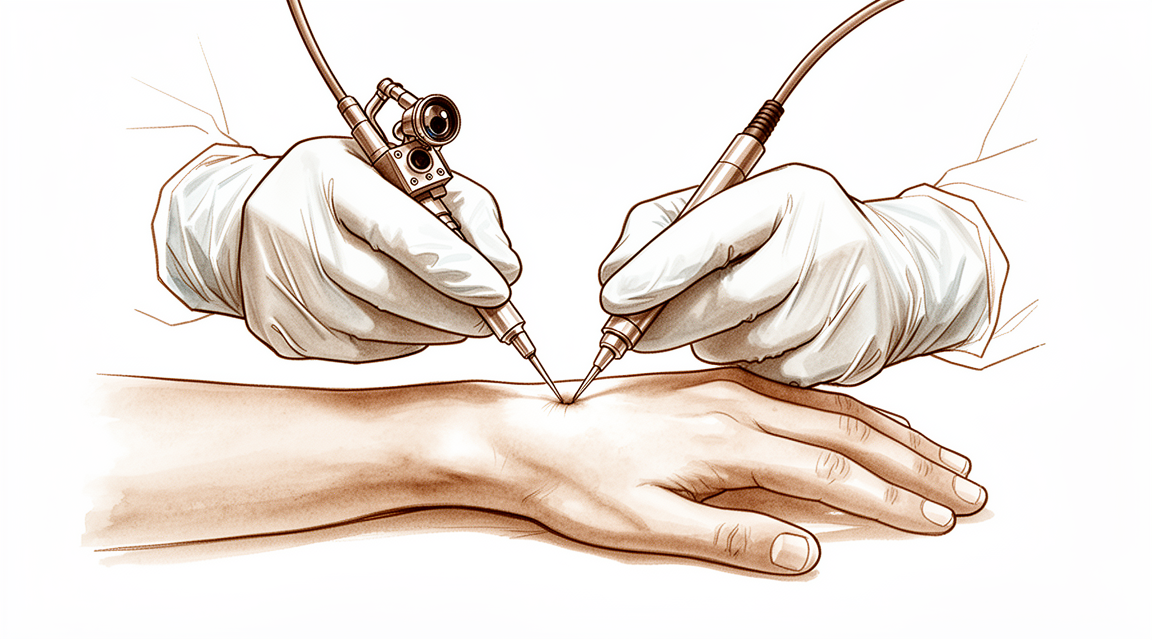
Quy trình này sẽ hướng dẫn quá trình hồi phục của bạn sau phẫu thuật nội soi cổ tay do Bác sĩ Kieran Hirpara thực hiện tại Bệnh viện tư nhân Mater Rockhampton. Phẫu thuật nội soi cổ tay được tiến hành qua vài vết rạch rất nhỏ (gọi là các “cổng phẫu thuật”) ở mặt sau cổ tay, nhờ đó vết thương trên da lành nhanh chóng; tuy nhiên tốc độ hồi phục của bạn còn phụ thuộc vào những thao tác đã được thực hiện bên trong khớp. Quy trình bắt đầu với chương trình tập luyện tại nhà, sau đó là quy trình điều trị lâm sàng có cấu trúc được viết cho chuyên viên trị liệu tay của bạn. Hãy mang theo trang này hoặc bản PDF tương ứng đến buổi trị liệu đầu tiên để việc phục hồi được thực hiện một cách nhất quán, đồng thời chuyên viên trị liệu có thể áp dụng phác đồ phù hợp với ca phẫu thuật của bạn. Chuyên viên trị liệu có thể điều chỉnh phác đồ này tùy theo tiến triển hồi phục của bạn.
Nếu bạn có bất kỳ thắc mắc nào về vết thương sau phẫu thuật, hãy liên hệ với phòng khám. Việc chụp ảnh vết thương rồi gửi qua email để được đánh giá cũng là một cách hữu ích.
Những điều bạn có thể mong đợi
Nội soi cổ tay là kỹ thuật mà bác sĩ phẫu thuật làm việc bên trong cổ tay thông qua những lỗ nhỏ, sử dụng camera siêu nhỏ và các dụng cụ mảnh. Do các vết mổ rất nhỏ nên da và mô mềm lành lại nhanh; tuy nhiên tốc độ hồi phục bên trong cổ tay mới là yếu tố quyết định. Có hai lộ trình hồi phục hoàn toàn khác nhau:
-
Các ca làm sạch (cắt lọc mô, cắt màng hoạt dịch, cắt bỏ nang hạch mu cổ tay hoặc dọn dẹp vùng trung tâm của TFCC). Trong các ca này, không có cấu trúc nào cần được khâu lại để bảo vệ; mô bị tổn thương hoặc viêm chỉ đơn giản được cắt tỉa hoặc loại bỏ. Vì vậy thời gian cố định cổ tay rất ngắn (thường chỉ cần băng gạc mềm hoặc nẹp ngắn cho dễ chịu). Bạn có thể vận động cổ tay ngay trong vài ngày sau phẫu thuật và trở lại hầu hết các hoạt động trong vài tuần. Vùng trung tâm của TFCC (vùng đệm nằm phía ngón út của cổ tay) không có nguồn cung cấp máu nên không thể lành lại nếu được khâu; do đó khi bị rách ở vùng này, bác sĩ chỉ cắt bỏ phần tổn thương – cách xử lý này cũng được xem là một ca “làm sạch”.
-
Các ca sửa chữa TFCC (khâu đính lại vết rách ở vùng ngoại vi hoặc vùng hõm (fovea)). Rìa ngoài của TFCC vẫn có nguồn cung cấp máu và có khả năng lành lại; vì vậy khi bị rách ở vùng này, bác sĩ sẽ tiến hành sửa chữa và cần phải bảo vệ vết khâu. Yếu tố gây áp lực lớn nhất lên vết khâu TFCC đang hồi phục là việc xoay cẳng tay (xoay lòng bàn tay lên trên hoặc xuống dưới). Do đó, cổ tay và cẳng tay sẽ được cố định bằng nẹp hoặc bó bột kiểu Muenster (bó từ trên khuỷu tay xuống) trong khoảng bốn đến sáu tuần; cách này cho phép khuỷu tay cử động nhưng ngăn không cho cẳng tay xoay, tránh làm ảnh hưởng đến vết khâu. Sau đó, bạn sẽ dần dần luyện tập vận động và tăng cường sức mạnh theo từng giai đoạn; thời gian hồi phục hoàn toàn thường mất khoảng ba tháng hoặc lâu hơn.
Trong cả hai lộ trình hồi phục, các ngón tay luôn được vận động ngay từ đầu (vì không bị phẫu thuật), tình trạng sưng phù được kiểm soát và các vết sẹo nhỏ do lỗ nội soi cũng được chăm sóc cẩn thận. Chuyên viên trị liệu tay sẽ tuân theo kế hoạch phù hợp với loại phẫu thuật mà bạn đã trải qua; nếu chưa rõ mình thuộc lộ trình nào, hãy hỏi bác sĩ Hirpara hoặc xem lại hồ sơ phẫu thuật của mình.
Các lưu ý và hạn chế
- Hãy vận động các ngón tay ngay từ đầu: nắm tay thành nắm đấm rồi duỗi thẳng ra hoàn toàn, thực hiện vài lần mỗi ngày. Việc này luôn được khuyến khích và giúp ngăn ngừa cứng khớp cũng như sưng phù.
- Tuân thủ đúng kế hoạch điều trị đã đề ra. Sau khi thực hiện thủ thuật làm sạch, bạn có thể bắt đầu vận động cổ tay nhẹ nhàng trong vài ngày. Sau khi phẫu thuật sửa chữa TFCC, cổ tay và cẳng tay cần được bảo vệ bằng nẹp hoặc bó bột; bạn KHÔNG được xoay cẳng tay (đưa lòng bàn tay hướng lên hoặc hướng xuống) cho đến khi chuyên viên trị liệu tay cho phép (khoảng bốn đến sáu tuần).
- Sau khi phẫu thuật sửa chữa TFCC, KHÔNG được cố ép hoặc đặt tải lên động tác xoay cẳng tay, và KHÔNG được nắm chặt hay nâng vật nặng cho đến khi được cho phép; việc xoay và chịu tải chính là những yếu tố gây áp lực lên vết khâu phẫu thuật.
- Giữ các vết mổ dạng lỗ nhỏ sạch sẽ và khô ráo cho đến khi lành hẳn; KHÔNG ngâm hay chà xát chúng. Chăm sóc các vết sẹo nhỏ sau khi chúng đã lành.
- KHÔNG lái xe khi cổ tay vẫn đang được nẹp, bó bột hoặc chưa thể kiểm soát vô lăng một cách an toàn; hãy sắp xếp người hỗ trợ đưa đón trong những tuần đầu.
- Có thể sử dụng tay để thực hiện các công việc thường ngày nhẹ nhàng, miễn là những hoạt động đó không bao gồm các chuyển động hoặc lực tác động mà bạn đã được dặn phải tránh.
Để biết thêm về cách chăm sóc vết thương, giảm sưng và xử lý sẹo, vui lòng tham khảo hướng dẫn chăm sóc vết thương của phòng khám.
Các bài tập của bạn
Kieran Hirpara 4.0
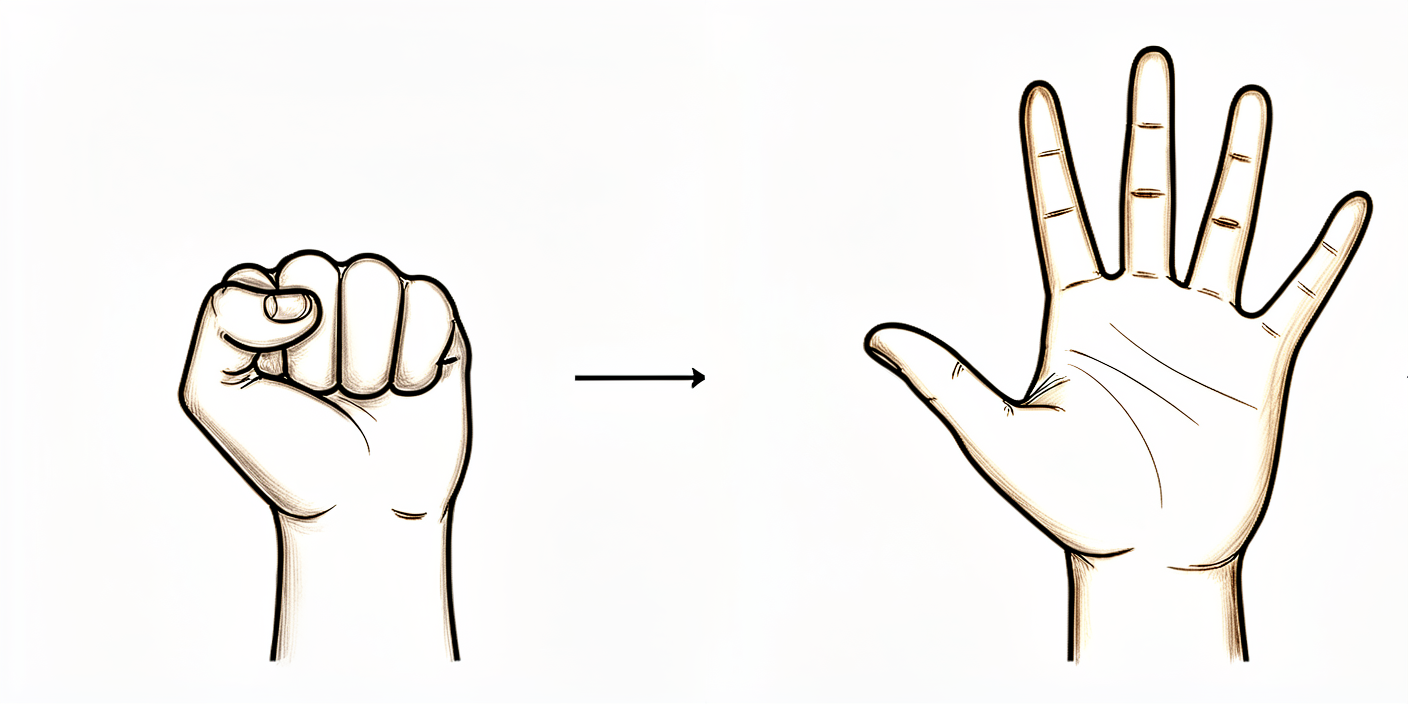
Chuyển động ngón tay (giai đoạn sớm)
Ngay từ ngày đầu tiên hoặc ngày thứ hai, hãy từ từ nắm tay thành nắm đấm hoàn chỉnh rồi duỗi thẳng các ngón tay ra hết mức. Các ngón tay không nằm trong phần được sửa chữa, vì vậy việc vận động chúng được khuyến khích ngay từ đầu — điều này giúp kiểm soát sưng nề và ngăn bàn tay bị cứng. Hãy thực hiện động tác này ngay cả khi cổ tay đang được nghỉ trong nẹp hoặc bó bột.
10 lần, vài lần mỗi ngày, ngay từ đầu
Kieran Hirpara 4.0
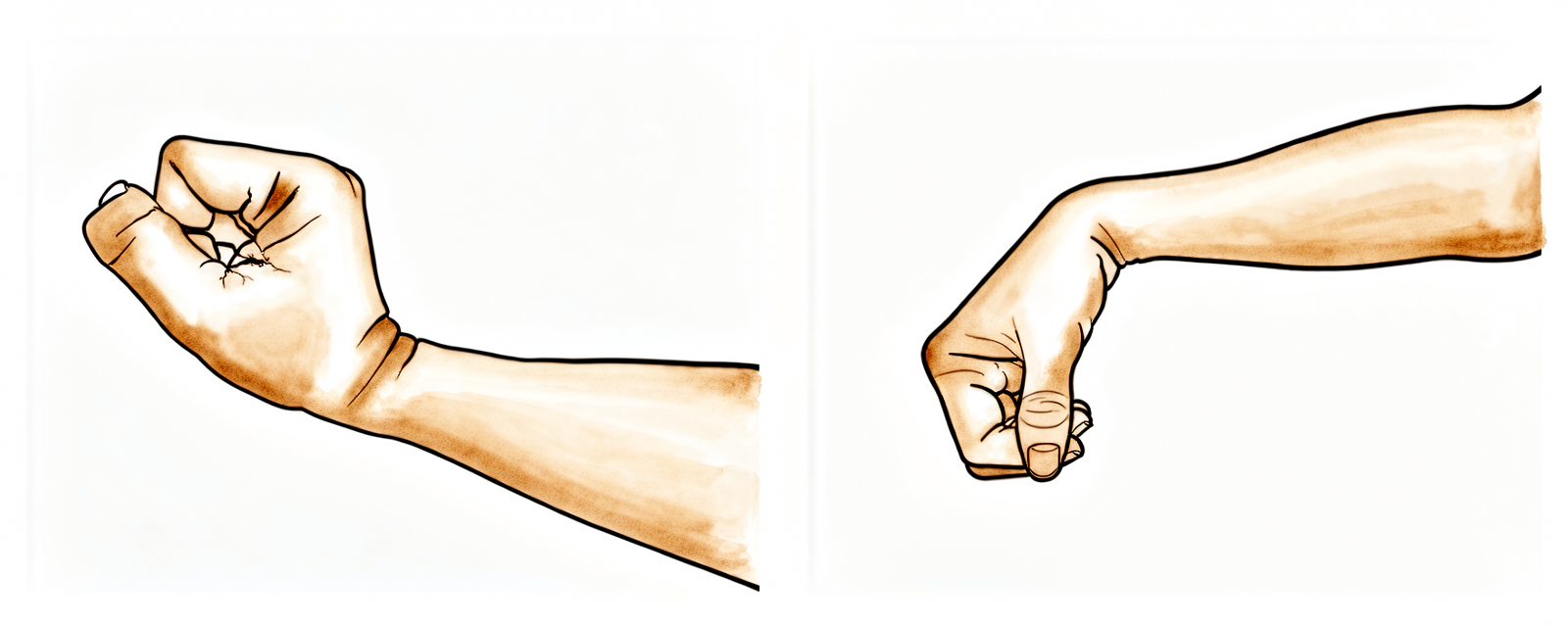
Vận động cổ tay (theo kế hoạch của bạn)
Nếu bạn được làm thủ thuật làm sạch (cắt lọc mô, cắt bỏ màng hoạt dịch hoặc cắt bỏ nang hạch), việc gập cổ tay nhẹ nhàng lên xuống — và sang hai bên — thường bắt đầu trong vài ngày, ngay khi bạn cảm thấy dễ chịu. Nếu bạn được khâu sửa TFCC, cổ tay sẽ được nghỉ trong nẹp hoặc bó bột trước, và việc vận động cổ tay chỉ bắt đầu sau đó, khi chuyên viên trị liệu tay cho bắt đầu. Luôn giữ trong phạm vi vận động bạn đã được chỉ định.
10 lần mỗi hướng, 2–3 lần mỗi ngày, sau khi đã bắt đầu
Kieran Hirpara 4.0
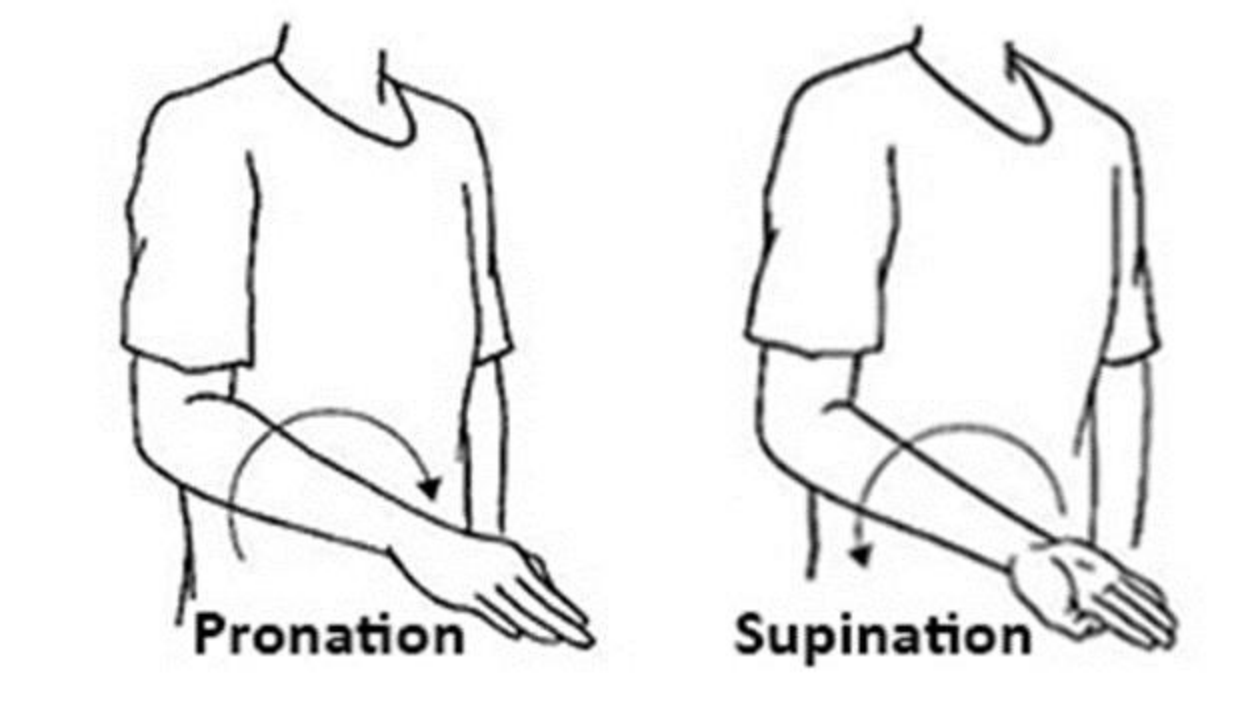
Xoay cẳng tay — lòng bàn tay hướng lên / hướng xuống (theo kế hoạch của bạn)
Giữ khuỷu tay sát bên người, nhẹ nhàng xoay lòng bàn tay hướng lên trần nhà, rồi úp xuống hướng sàn nhà. Sau thủ thuật làm sạch, động tác này thường có thể bắt đầu sớm. Sau khi khâu sửa TFCC, đây là động tác CUỐI CÙNG được cho phép — việc xoay cẳng tay gây áp lực lên vết khâu sửa, vì vậy động tác này được hạn chế bằng nẹp hoặc bó bột trong khoảng bốn đến sáu tuần rồi mới được đưa trở lại dần dần. Chỉ thực hiện động tác này khi chuyên viên trị liệu tay đã cho phép.
10 lần mỗi hướng, 2–3 lần mỗi ngày, sau khi được cho phép
Kieran Hirpara 4.0
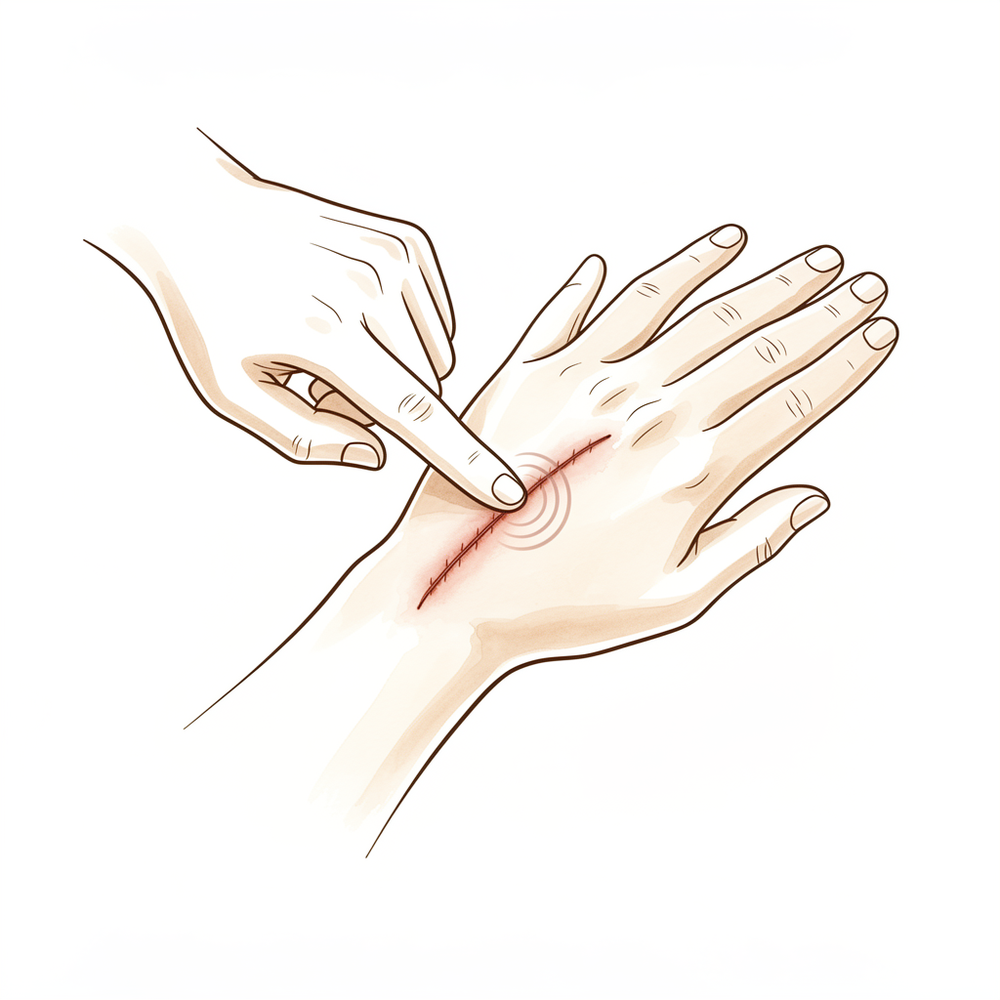
Chăm sóc sẹo và lỗ nội soi
Khi các vết thương lỗ nội soi nhỏ đã lành hẳn và khô ráo, hãy dùng đầu ngón tay xoa từng vết sẹo nhỏ theo các vòng tròn nhỏ với kem dưỡng ẩm thông thường. Các lỗ nội soi tuy rất nhỏ nhưng có thể có cảm giác căng hoặc nhạy cảm — xoa bóp nhẹ nhàng và vỗ nhẹ (giảm nhạy cảm) giúp da mềm mại và làm dịu cảm giác đau khi chạm.
Vài phút, 2–3 lần mỗi ngày, sau khi vết thương đã lành
Kieran Hirpara 4.0
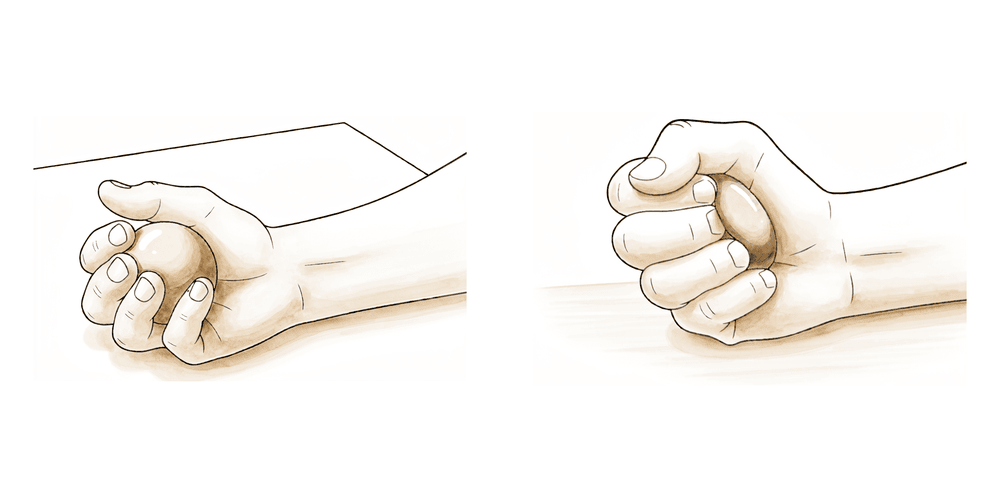
Tăng cường sức nắm (giai đoạn sau)
Một bài tập ở GIAI ĐOẠN SAU — chỉ thực hiện khi chuyên viên trị liệu tay cho bắt đầu. Bóp một quả bóng mềm hoặc đất nặn trị liệu, giữ trong giây lát rồi thả lỏng. Sau thủ thuật làm sạch, việc nắm nhẹ thường bắt đầu trong vòng vài tuần; sau khi khâu sửa TFCC, việc tăng cường sức mạnh phải chờ đến khoảng tám tuần, khi vận động đã trở lại. Tăng dần mức độ gắng sức và ngừng lại nếu thấy đau nhói.
10–15 lần bóp, 2–3 lần mỗi ngày, khi đã được cho phép
Đây là những bài tập trong tài liệu hướng dẫn dành cho bạn. Hãy thực hiện chúng chỉ khi có sự hướng dẫn của Bác sĩ Hirpara và chuyên viên trị liệu tay, đồng thời tuân thủ mọi phạm vi chuyển động và hạn chế đã được đặt ra. Vận động ngón tay và kiểm soát tình trạng sưng là những bài tập cần thực hiện ngay từ đầu đối với tất cả mọi người. Vận động cổ tay, xoay cẳng tay và nắm tay phụ thuộc vào thủ thuật đã thực hiện: có thể bắt đầu sớm sau ca phẫu thuật dọn dẹp, nhưng phải hạn chế sau ca phẫu thuật sửa chữa TFCC (đặc biệt là việc xoay cẳng tay, vốn là động tác cuối cùng được cho phép). Việc chăm sóc vết sẹo và các vết mổ chỉ được thực hiện khi các vết thương nhỏ đã lành hẳn. Hãy ngừng ngay mọi bài tập gây đau nhói.
Quy trình điều trị lâm sàng của bạn
Phần còn lại của trang này là quy trình điều trị phục hồi chức năng sau phẫu thuật nội soi cổ tay. Phần này cần được cung cấp cho chuyên viên trị liệu tay; mỗi giai đoạn đều bắt đầu bằng lời giải thích bằng tiếng Việt đơn giản về những gì sẽ diễn ra. Quy trình điều trị phụ thuộc vào loại thủ thuật đã thực hiện. Các thủ thuật dọn dẹp nhằm mục đích chẩn đoán hoặc điều trị (cắt lọc mô, cắt bỏ màng hoạt dịch, cắt bỏ nang hạch mu cổ tay, cắt lọc sụn hoặc dây chằng thuyền-nguyệt, cắt lọc TFCC vùng trung tâm) sẽ thuộc lộ trình vận động sớm. Việc khâu sửa TFCC ở vùng ngoại vi hoặc vùng fovea sẽ thuộc lộ trình hạn chế xoay cẳng tay, vì các động tác xoay cẳng tay gây áp lực lên vết khâu sửa. Hãy luôn kiểm tra lại hồ sơ phẫu thuật và hỏi ý kiến bác sĩ phẫu thuật để xác định lộ trình điều trị phù hợp.
Trước khi bắt đầu điều trị, hãy xem kỹ báo cáo phẫu thuật và tiền sử bệnh của bệnh nhân; đồng thời trao đổi với bác sĩ phẫu thuật về loại thủ thuật đã thực hiện (chỉ cắt lọc mô/cắt bỏ màng hoạt dịch/cắt bỏ nang hạch/cắt lọc TFCC vùng trung tâm so với khâu sửa TFCC ở vùng ngoại vi/fovea), tình trạng bất ổn định khớp DRUJ nếu có, và loại nẹp cố định được chỉ định. Hai lộ trình dưới đây khác nhau chủ yếu ở thời gian cần hạn chế các động tác xoay cẳng tay.
Phương pháp A — Dọn dẹp mô (cắt lọc mô / cắt bỏ màng hoạt dịch / cắt bỏ nang hạch / cắt lọc TFCC vùng trung tâm): vận động sớm
Phương pháp dọn dẹp mô nhằm loại bỏ hoặc cắt tỉa mô mà không tạo ra cấu trúc nào cần được bảo vệ; mục tiêu là khôi phục khả năng vận động sớm và ngăn ngừa tình trạng cứng khớp. Việc cố định khớp chỉ diễn ra trong thời gian ngắn và chỉ nhằm mục đích tạo sự dễ chịu.
Giai đoạn I — vận động sớm (tuần 0 đến tuần 2)
Trong khoảng hai tuần đầu, tình trạng sưng và đau sẽ giảm dần, trong khi việc vận động bắt đầu gần như ngay lập tức.
Dành cho chuyên viên trị liệu tay:
Giáo dục và các biện pháp phòng ngừa - Việc cố định chỉ là băng gạc mềm hoặc nẹp ngắn nhằm mang lại cảm giác thoải mái; thường tối đa khoảng 2 tuần; không cần hạn chế xoay đối với các ca chỉ cắt lọc TFCC vùng trung tâm/cắt bỏ màng hoạt dịch/cắt bỏ nang hạch đơn thuần - Các ngón tay, ngón cái và (nếu cảm thấy thoải mái) cổ tay có thể vận động ngay từ ngày đầu - Giữ các vết mổ sạch sẽ và khô ráo cho đến khi lành hẳn
Cách xử trí - Phù nề: nâng cao chi, thực hiện các động tác co duỗi ngón tay nhẹ nhàng, chườm đá khi cần thiết - Tập luyện: vận động chủ động toàn bộ biên độ các ngón tay và ngón cái ngay từ đầu; gập/duỗi cổ tay chủ động và nghiêng quay/nghiêng trụ khi cảm thấy thoải mái trong những ngày đầu; sấp/ngửa cẳng tay nhẹ nhàng khi cảm thấy thoải mái - Vết thương: thay băng vết mổ theo hướng dẫn; theo dõi xem có dấu hiệu nhiễm trùng hay không
Tiêu chí để chuyển sang giai đoạn tiếp theo - Các vết mổ đã lành; tình trạng sưng giảm dần; có thể thực hiện các động tác vận động sớm một cách thoải mái
Giai đoạn II — khôi phục vận động và bắt đầu tăng cường sức mạnh (tuần 2 đến tuần 6)
Biên độ vận động được đưa về bình thường, và các bài tập tăng cường sức mạnh nhẹ được bổ sung khi biên độ vận động đã thoải mái.
Dành cho chuyên viên trị liệu tay:
Đánh giá - Đánh giá biên độ vận động chủ động và thụ động của cổ tay, khả năng xoay cẳng tay; sức nắm tay; mức độ đau và sưng; kiểm tra vết sẹo/cổng phẫu thuật
Xử trí - Bài tập: tiến tới việc thực hiện đầy đủ các động tác vận động của cổ tay và cẳng tay; bắt đầu các bài tập tăng cường sức mạnh nhẹ bằng nắm tay và đất nặn từ khoảng tuần thứ 2; tiến hành giảm nhạy cảm và massage vết sẹo/cổng phẫu thuật sau khi vết thương đã lành - Dần dần tăng cường việc sử dụng tay trong các hoạt động chức năng khi người bệnh cảm thấy thoải mái
Tiêu chí để chuyển sang giai đoạn tiếp theo - Biên độ vận động gần như đầy đủ và không còn đau; tình trạng sưng đã ổn định; sức nắm tay dần được cải thiện
Giai đoạn III – Tăng cường sức mạnh và trở lại sinh hoạt bình thường (từ tuần thứ 6 trở đi)
Sức mạnh cơ bắp và khả năng chịu tải khi thực hiện các hoạt động dần được phục hồi; hầu hết bệnh nhân có thể trở lại sinh hoạt bình thường trong vài tuần. Cần lưu ý rằng thủ thuật dọn dẹp giúp giảm triệu chứng một cách đáng tin cậy, nhưng không đảm bảo hiệu quả đối với những trường hợp đau ở vùng cạnh xương trụ có tính chất lan tỏa hoặc khó điều trị; vì vậy cần đặt kỳ vọng phù hợp trong các trường hợp đau không khu trú rõ ràng.
Dành cho chuyên viên trị liệu tay:
Cách xử trí - Các bài tập: tăng cường sức mạnh nắm tay, cẳng tay và cổ tay theo mức độ; áp dụng các bài tập phù hợp với từng nhiệm vụ và công việc cụ thể - Thời gian trở lại các hoạt động nhẹ/phổ biến thường mất khoảng 2–6 tuần; đối với các hoạt động nặng hơn liên quan đến lao động hoặc thể thao thì cần căn cứ vào khả năng chịu tải và các tiêu chí đã đặt ra - Cân nhắc kết thúc trị liệu khi sức mạnh cơ bắp đã gần cân xứng hai bên và chức năng đã được phục hồi
Phương pháp B — Khâu sửa TFCC ngoại vi/vùng hõm (fovea): bảo vệ động tác xoay
Thủ thuật khâu đính lại phần rìa ngoài (có mạch máu nuôi) của TFCC. Do việc xoay cẳng tay gây áp lực lên vết khâu, bệnh nhân cần được cố định cẳng tay bằng nẹp hoặc bó bột kiểu Muenster (bó bột qua khuỷu tay; cho phép gập duỗi khuỷu tay nhưng ngăn không cho cẳng tay xoay vào trong/ra ngoài) trong khoảng bốn đến sáu tuần. Sau đó, các hoạt động vận động và sức mạnh cơ thể mới được dần dần khôi phục.
Giai đoạn I — Cố định có bảo vệ (từ tuần 0 đến tuần 6)
Trong giai đoạn này, vùng được phẫu thuật được bảo vệ khỏi các lực gây xoay, trong khi các ngón tay vẫn có thể cử động tự do. Các phương pháp điều trị có thể khác nhau, nhưng cách phổ biến nhất là cố định cẳng tay ở tư thế trung tính đến hơi ngửa trong khoảng sáu tuần; khi cần kiểm soát chuyển động xoay một cách chặt chẽ, người ta sử dụng nẹp hoặc bó bột vùng trên khuỷu tay (loại Muenster).
Dành cho chuyên viên trị liệu tay:
Giáo dục và các lưu ý cần chú ý - Cố định cẳng tay nhằm bảo vệ khỏi chuyển động xoay: sử dụng nẹp hoặc bó bột Muenster/vùng trên khuỷu tay (để khuỷu tay tự do, ngăn không cho cẳng tay xoay), đặt cẳng tay ở tư thế trung tính đến hơi ngửa, trong thời gian khoảng 4–6 tuần (thông thường là 6 tuần) - Không sấp/ngửa cẳng tay chủ động hay thụ động trong giai đoạn này - Các ngón tay và ngón cái có thể vận động tự do ngay từ ngày đầu; thực hiện các bài tập vận động vai một cách nhẹ nhàng - Giữ các vết mổ sạch sẽ và khô ráo; theo dõi dấu hiệu nhiễm trùng
Cách quản lý - Phù nề: nâng cao chi, thực hiện các động tác bóp ngón tay, chườm đá nếu cần - Bài tập: vận động chủ động các ngón tay/ngón cái; nếu bó bột Muenster cho phép thì có thể thực hiện riêng lẻ các động tác gập/duỗi khuỷu tay; không chịu tải lên cổ tay hoặc cẳng tay dưới dạng chuyển động xoay - Vết thương/sẹo: chăm sóc vết mổ; bắt đầu các bài tập trị liệu sẹo sau khi vết thương đã lành
Tiêu chí để chuyển sang giai đoạn tiếp theo - Đã trôi qua khoảng 4–6 tuần; vùng phẫu thuật vẫn được bảo vệ; các vết mổ đã lành; các ngón tay vẫn mềm mại, dễ cử động
Giai đoạn II — vận động có kiểm soát (tuần 6 đến tuần 8)
Bó bột/cố định được tháo ra và các chuyển động được khôi phục lại; việc xoay cẳng tay được thực hiện cuối cùng và một cách từ từ, vì đây là chuyển động đã gây áp lực lên vết khâu sửa.
Dành cho chuyên viên trị liệu tay:
Đánh giá - Biên độ vận động cổ tay và cẳng tay; mức độ đau và sưng; đánh giá vết sẹo
Xử trí - Các bài tập: bắt đầu gập/duỗi cổ tay chủ động và nghiêng quay/nghiêng trụ; dần dần khôi phục lại các động tác xoay cẳng tay vào trong/ra ngoài khi bệnh nhân cảm thấy thoải mái, tăng dần biên độ xoay trong những tuần tiếp theo thay vì cố gắng ép buộc - Tiếp tục các biện pháp giảm nhạy cảm vùng sẹo và các vết mổ
Tiêu chí để chuyển sang giai đoạn tiếp theo - Biên độ vận động cổ tay và cẳng tay được cải thiện mà không gây đau; mức độ đau giảm dần
Giai đoạn III – Tăng cường sức mạnh và hồi phục (từ tuần thứ 8 đến 12 trở đi)
Việc tăng cường sức mạnh bắt đầu khi khoảng 70–100% chuyển động cổ tay và cẳng tay đã được phục hồi; sau đó mức độ tải trọng và khả năng thực hiện các hoạt động dần được nâng dần.
Dành cho chuyên viên trị liệu tay:
Đánh giá - Độ mạnh của lực nắm và cơ vùng cẳng tay so với bên đối diện; phản ứng đau/sưng khi chịu tải; các bài kiểm tra chức năng cũng như các hoạt động đặc thù trong công việc hoặc thể thao
Xử trí - Bài tập: Bắt đầu tập tăng cường sức mạnh cho cơ vùng nắm, cẳng tay và cổ tay từ khoảng tuần thứ 8, sau khi đã phục hồi được 70–100% phạm vi chuyển động; sau đó tăng dần mức độ tải trọng và các bài tập mô phỏng các hoạt động cụ thể - Việc trở lại tập luyện thể thao hoặc làm việc nặng dựa trên các tiêu chí nhất định; thường là vào khoảng ba tháng (phạm vi dao động khoảng 3–4+ tháng tùy theo mức độ yêu cầu công việc) - Cân nhắc kết thúc trị liệu khi sức mạnh cơ đã gần tương đương bên lành và chức năng vận động đã phục hồi; nếu tiến triển hồi phục bị chững lại hoặc tình trạng mất ổn định khớp DRUJ tái phát thì cần chuyển bệnh nhân trở lại gặp bác sĩ điều trị.
Trở lại với công việc và các hoạt động hàng ngày
Bạn nên bắt đầu sử dụng tay nhẹ nhàng trong các hoạt động thường ngày (ăn uống, viết lách, các công việc chăm sóc bản thân) ngay từ đầu, miễn là vẫn nằm trong giới hạn bạn đã được chỉ định. Bạn có thể lái xe trở lại khi đã tháo bỏ nẹp hoặc bó bột và có thể điều khiển vô lăng một cách an toàn, theo xác nhận của bác sĩ tại buổi tái khám; trong những tuần đầu, hãy sắp xếp người hỗ trợ đưa đón.
Tốc độ hồi phục phụ thuộc vào loại phẫu thuật đã thực hiện. Sau thủ thuật làm sạch (cắt lọc mô, cắt bỏ màng hoạt dịch, cắt bỏ nang hạch hoặc dọn dẹp TFCC vùng trung tâm), hầu hết bệnh nhân có thể trở lại các hoạt động nhẹ bình thường trong vòng hai đến sáu tuần; các hoạt động nặng hơn có thể dần được thực hiện khi cảm thấy thoải mái. Sau phẫu thuật sửa chữa TFCC, việc xoay cẳng tay cần được hạn chế khoảng bốn đến sáu tuần; việc tăng cường sức mạnh cơ bắp bắt đầu từ khoảng tám tuần. Việc trở lại tập thể thao hoặc các công việc nặng về thể chất thường diễn ra sau khoảng ba tháng, dựa trên việc phục hồi vận động và sức mạnh đầy đủ, cân xứng hai bên, chứ không chỉ dựa vào thời gian; quyết định này sẽ do bác sĩ Hirpara và chuyên viên trị liệu tay cùng đưa ra.
Sau khi thực hiện theo phác đồ này
Phác đồ này được sử dụng kết hợp với các hướng dẫn phục hồi chung của phòng khám: vui lòng tham khảo mục xử lý cơn đau sau phẫu thuật, chăm sóc vết thương và chăm sóc sẹo. Nếu ca phẫu thuật của bạn liên quan đến khớp quay-trụ xa hoặc bạn không chắc nên áp dụng phác đồ nào, thì phác đồ cắt bỏ một nửa khớp quay-trụ xa (DRUJ) là một phác đồ liên quan. Kế hoạch từng giai đoạn nêu trên dựa trên các hướng dẫn phục hồi đã được công bố sau phẫu thuật nội soi cổ tay và phẫu thuật TFCC; quá trình hồi phục của bạn sẽ được Bác sĩ Hirpara cùng chuyên viên trị liệu tay theo dõi và điều chỉnh tùy theo tiến triển của cổ tay.
Evidence & references
This is the clinical evidence summary written for health professionals. It is technical, and it lists the research this page was built from. You do not need to read it to understand your treatment or to make a decision about it.
Wrist Arthroscopy — Procedure Outcomes & Post-operative Rehabilitation (Diagnostic / Therapeutic Keyhole Wrist Surgery)
Topic scope: post-operative rehabilitation after arthroscopic wrist surgery through small dorsal portals — covering debridement (central TFCC, chondral, scapholunate), synovectomy, dorsal ganglion excision, and peripheral/foveal TFCC repair. The defining feature of this topic is that a single operative approach (keyhole access) covers procedures with opposite rehabilitation needs: a clean-up creates nothing to protect and follows an early-motion pathway, whereas a repair creates a construct loaded by forearm rotation and must be protected. The rehabilitation pathway is therefore gated by what was done, not by the fact that arthroscopy was used.
Defining principle of the rehab here: wrist arthroscopy is a route, not a single operation. Where tissue is only removed (debridement of an avascular central TFCC tear, synovectomy, a dorsal ganglion, a chondral or scapholunate tidy-up), nothing has been reconstructed — immobilisation is brief and for comfort, wrist motion begins within days, and return is measured in weeks. Where the vascularised peripheral or foveal TFCC is repaired, the dominant stress on the construct is forearm rotation (pronation/supination), so the forearm is protected — typically a splint or Muenster (above-elbow) cast that frees the elbow but blocks rotation — for about 4–6 weeks, after which motion and then strength are graded back over roughly three months. The single branch point a therapist must establish from the operation note is debridement-class vs repair-class, and within repair, how long rotation is to be protected. The rehabilitation evidence itself is low-level and heterogeneous — protocols rest on biology, surgeon preference and expert/therapist consensus more than on trials.
A. PROCEDURE OUTCOMES (debridement / synovectomy / ganglion vs TFCC repair)
Wrist arthroscopy is both the diagnostic gold standard and the therapeutic workhorse for intra-articular ulnar-sided wrist pathology. The principal outcome split is between clean-up procedures and repair.
- Wrist arthroscopy is a versatile, low-morbidity platform. Through small dorsal portals it permits direct inspection and treatment of TFCC tears, chondral lesions, synovitis and ganglia, with the keyhole approach giving fast soft-tissue healing and small scars [Gupta, Bozentka, Osterman — JAAOS 2001, DOI 10.5435/00124635-200105000-00006]. Narrative/mechanistic.
- Arthroscopic debridement of central (Palmer 1A) TFCC tears relieves symptoms in well-selected, focal cases. The central disc is avascular and cannot heal if sutured, so trimming is the rational treatment; classic and long-term series report good symptom relief and durable function in suitable patients [Osterman — Arthroscopy 1990, DOI 10.1016/0749-8063(90)90012-3; Soreide et al., 19-year follow-up — HAND 2017, DOI 10.1177/1558944717708029]. Moderate–weak (case series, long follow-up).
- Debridement is unreliable for diffuse, non-focal ulnar-sided wrist pain. Where pain is recalcitrant and not clearly localised to a focal central tear, simple arthroscopic debridement has little useful value on the clinical course — a caution against over-attributing diffuse ulnar wrist pain to a debridable lesion [Nishizuka et al. — Bone Joint J 2013, DOI 10.1302/0301-620x.95b12.31918]. Moderate (prospective cohort).
- Peripheral/foveal TFCC repair restores DRUJ stability and gives good outcomes when the rim is repairable. All-arthroscopic and arthroscopic-assisted repair techniques (e.g. FasT-Fix, all-inside suture) report reliable pain relief, return of grip and high return-to-activity rates in vascularised peripheral tears, especially with DRUJ instability [Yao, Dantuluri, Osterman — Arthroscopy 2007, DOI 10.1016/j.arthro.2007.02.010; Yao — Hand Clin 2011, DOI 10.1016/j.hcl.2011.05.004]. Moderate–weak (technique series).
- Procedure choice is driven by tear location and DRUJ stability. Central tears → debridement; peripheral/foveal tears, particularly with DRUJ instability → repair. In ulnar-positive wrists, peripheral repair may be combined with or weighed against ulnar shortening osteotomy [Papapetropoulos et al. — J Hand Surg Am 2010, DOI 10.1016/j.jhsa.2010.06.015]. Moderate.
- Arthroscopic dorsal ganglion excision gives recurrence rates comparable to (or, in some series, better than) open excision, with the keyhole advantage of faster recovery and smaller scars. Arthroscopic resection reliably removes the cyst and addresses the stalk at its capsular origin [Nishikawa et al. — J Hand Surg Br 2001, DOI 10.1054/jhsb.2001.0620; Luchetti et al. — J Hand Surg Br 2000, DOI 10.1054/jhsb.1999.0290; Konigsberg et al. — HAND 2021, DOI 10.1177/15589447211003184; Suen, Fung, Lung — ISRN Orthop 2013, DOI 10.1155/2013/940615]. Moderate–weak (retrospective comparison + series).
B. REHABILITATION / THERAPY EVIDENCE
The central rehab question is how long, and against what, to protect the wrist — and the answer is set entirely by the procedure. The evidence base for the rehabilitation (as opposed to the surgery) is low-level and markedly heterogeneous, with no level-1 protocol and wide variation in immobilisation and progression timings; recommendations are best regarded as biologically-rationalised, consensus-driven guides rather than trial-proven schedules.
- Clean-up procedures follow an early-motion pathway. After debridement, synovectomy or ganglion excision there is no construct to protect: immobilisation is a soft dressing or short splint for comfort (≈2 weeks at most), wrist motion begins within days, and light grip strengthening is added at around 2 weeks. Return to most activity is measured in weeks (≈2–6) [How-we-treat reviews and technique series; consistent across sources]. Weak–moderate (consensus + series).
- TFCC repair protects forearm rotation, not just the wrist. Because pronation/supination is the dominant load on a peripheral/foveal repair, the forearm is immobilised — commonly a splint or Muenster/above-elbow cast that frees the elbow but blocks rotation — for about 4–6 weeks (six is the most commonly reported figure), in neutral to slight supination [scoping review of arthroscopic peripheral TFCC repair rehabilitation, PMC12274733; Australian hand-therapist survey of foveal-repair rehabilitation, J Hand Ther 2024]. Weak–moderate (scoping review + survey of practice).
- Forearm rotation is re-introduced last and graded. After the protected phase, wrist flexion/extension and deviation are restored first, with pronation/supination re-introduced gradually because it is the motion that stressed the repair. Strengthening typically begins once 70–100% of wrist and forearm ROM is regained (around 8 weeks) [scoping review PMC12274733]. Weak (consensus from heterogeneous protocols).
- Rehabilitation protocols are heterogeneous and lack consensus. Across studies, complete immobilisation ranged 1–8 weeks (forearm most commonly 6), ROM commencement and strengthening start varied widely (strengthening 3–12 weeks), and authors explicitly call for level-1 evidence. The practical implication is to follow the operating surgeon's prescription for the specific repair rather than a fixed universal schedule [scoping review PMC12274733; Australian hand-therapist survey]. Weak (the evidence's own conclusion).
Recovery trajectory (expected, evidence-anchored)
| Phase | Window | Restraint | Hand use / therapy focus | Strength / load | Notes |
|---|---|---|---|---|---|
| Clean-up I — early motion | Week 0–2 | Soft dressing / short splint for comfort | Fingers move day 1; early wrist flexion/extension, deviation and gentle forearm rotation within days; portal care | Light functional use | No construct to protect; rotation not restricted for central debridement/synovectomy/ganglion |
| Clean-up II–III — restore & return | Week 2–6+ | Restrictions lifted | Full wrist/forearm ROM; scar/portal desensitisation once healed | Light grip/putty from ~2 wk, graded loading thereafter | Return to most activity 2–6 wk; debridement unreliable for diffuse (non-focal) ulnar pain |
| Repair I — protected immobilisation | Week 0–6 | Forearm rotation blocked (splint / Muenster cast, neutral–slight supination) | Full finger/thumb ROM day 1; elbow flexion/extension if Muenster permits; no pronation/supination | None to the repair | ~4–6 wk (commonly 6); rotation is the dominant repair load |
| Repair II — graded motion | Week 6–8 | Rotation re-introduced gradually | Active wrist flexion/extension & deviation; forearm rotation re-introduced last and built up | Light, no resisted load yet | Restore motion before strength |
| Repair III — strengthen & return | Week 8–12+ | Load progressed by criteria | Grip/forearm strengthening once 70–100% ROM regained; task-specific loading | Strengthening from ~8 wk; graded resisted load | Return to sport/heavy work ~3 months (range ~3–4+); grip ~85% of opposite side, ~87% return to pre-injury activity |
(Phase windows mirror the precautions and recovery structure in the patient protocol; they are typical, consensus-derived guides — not trial-derived deadlines, and the surgeon's prescription overrides them.)
C. KEY CONTROVERSIES / EVIDENCE QUALITY
- Debridement vs repair is decided by tear location and DRUJ stability, not access. Central (avascular) tears are trimmed; peripheral/foveal (vascularised) tears, especially with DRUJ instability, are repaired. The same keyhole approach therefore launches opposite rehab pathways — the therapist must establish which from the operation note. Strong biological rationale, moderate clinical evidence.
- Debridement is not a panacea for ulnar wrist pain. It relieves focal central-tear symptoms but has little value for diffuse, recalcitrant ulnar-sided pain — a key expectation-setting point [Nishizuka 2013]. Moderate.
- How long to protect forearm rotation after repair is unsettled. Reported immobilisation ranges 1–8 weeks (forearm most commonly 6); there is no level-1 consensus, and practice (including Australian hand-therapist practice) varies. The defensible position is to protect rotation ~4–6 weeks and follow the operating surgeon. Weak (heterogeneous).
- Arthroscopic vs open ganglion excision. Recurrence is broadly comparable, with arthroscopy offering faster recovery and smaller scars; the evidence is retrospective rather than randomised [Konigsberg 2021; Nishikawa 2001; Luchetti 2000]. Moderate–weak.
- The rehabilitation evidence base is the weak link, not the surgery. Outcome studies of the operations outnumber and outrank the rehabilitation studies; rehab timings are biologically and consensus-driven, and the literature itself calls for level-1 trials [scoping review PMC12274733]. Weak.
D. EVIDENCE STRENGTH FLAGS (summary)
- MODERATE: versatility and low morbidity of wrist arthroscopy as a diagnostic/therapeutic platform; symptom relief from debridement of focal central TFCC tears (with long-term series); limited value of debridement for diffuse ulnar wrist pain; comparable recurrence of arthroscopic vs open dorsal ganglion excision; good outcomes of peripheral/foveal TFCC repair when the rim is repairable.
- WEAK / CONSENSUS: the specific rehabilitation schedules — clean-up early-motion (~2-wk comfort splint, motion within days, return 2–6 wk) and repair protected-rotation (splint/Muenster ~4–6 wk, ROM then strength from ~8 wk, return ~3 months). Immobilisation duration and progression timings are heterogeneous across the literature with no level-1 consensus; figures are typical guides, and the operating surgeon's prescription governs.
- EXPECTATION-SETTING (natural history): grip recovers to ≈85% of the opposite side and ≈87% of patients return to pre-injury activity after TFCC repair; debridement of diffuse (non-focal) ulnar wrist pain may not relieve symptoms.
CITATIONS
RAG corpus (180,000+ Orthopaedic articles)
- Wrist arthroscopy: principles and clinical applications. J Am Acad Orthop Surg. 2001. DOI: 10.5435/00124635-200105000-00006
- Arthroscopic debridement of triangular fibrocartilage complex tears. Arthroscopy. 1990. DOI: 10.1016/0749-8063(90)90012-3
- Arthroscopic-assisted resection of triangular fibrocartilage complex lesions: a 19-year follow-up. HAND. 2017. DOI: 10.1177/1558944717708029
- Simple debridement has little useful value on the clinical course of recalcitrant ulnar wrist pain. Bone Joint J. 2013. DOI: 10.1302/0301-620x.95b12.31918
- A novel technique of all-inside arthroscopic triangular fibrocartilage complex repair. Arthroscopy. 2007. DOI: 10.1016/j.arthro.2007.02.010
- All-arthroscopic repair of peripheral triangular fibrocartilage complex tears using FasT-Fix. Hand Clin. 2011. DOI: 10.1016/j.hcl.2011.05.004
- Management of peripheral triangular fibrocartilage complex tears in the ulnar positive patient: arthroscopic repair versus ulnar shortening osteotomy. J Hand Surg Am. 2010. DOI: 10.1016/j.jhsa.2010.06.015
- Arthroscopic diagnosis and treatment of dorsal wrist ganglion. J Hand Surg Br. 2001. DOI: 10.1054/jhsb.2001.0620
- Arthroscopic resection of dorsal wrist ganglia and treatment of recurrences. J Hand Surg Br. 2000. DOI: 10.1054/jhsb.1999.0290
- Recurrence rates of dorsal wrist ganglion cysts after arthroscopic versus open surgical excision: a retrospective comparison. HAND. 2021. DOI: 10.1177/15589447211003184
- Treatment of ganglion cysts. ISRN Orthop. 2013. DOI: 10.1155/2013/940615
Wrist arthroscopy / TFCC rehabilitation literature (URLs)
- Clinical and functional outcomes of rehabilitation strategies following arthroscopic repair of chronic isolated peripheral TFCC tears: a scoping review. J Orthop. 2025. PMC. https://pmc.ncbi.nlm.nih.gov/articles/PMC12274733/
- Current rehabilitation recommendations following primary triangular fibrocartilage complex foveal repair surgery: a survey of Australian hand therapists. J Hand Ther. 2024. https://www.jhandtherapy.org/article/S0894-1130(23)00117-5/fulltext
- TFCC injuries: how we treat? J Clin Orthop Trauma / PMC. 2020. https://pmc.ncbi.nlm.nih.gov/articles/PMC7384326/
- Review and update on the management of triangular fibrocartilage complex injuries in professional athletes. World J Orthop. 2024. https://www.wjgnet.com/2218-5836/full/v15/i2/110.htm
- Arthroscopic-assisted repair of the triangular fibrocartilage complex. J Hand Surg Glob Online. 2024. https://www.jhsgo.org/article/S2589-5141(24)00066-5/fulltext