Skip to content

Patients › Elbow

Phẫu thuật giải phóng khuỷu tay quần vợt

Tennis elbow release surgery — for persistent pain despite physiotherapy and other conservative treatments.
Updated Sep 2026
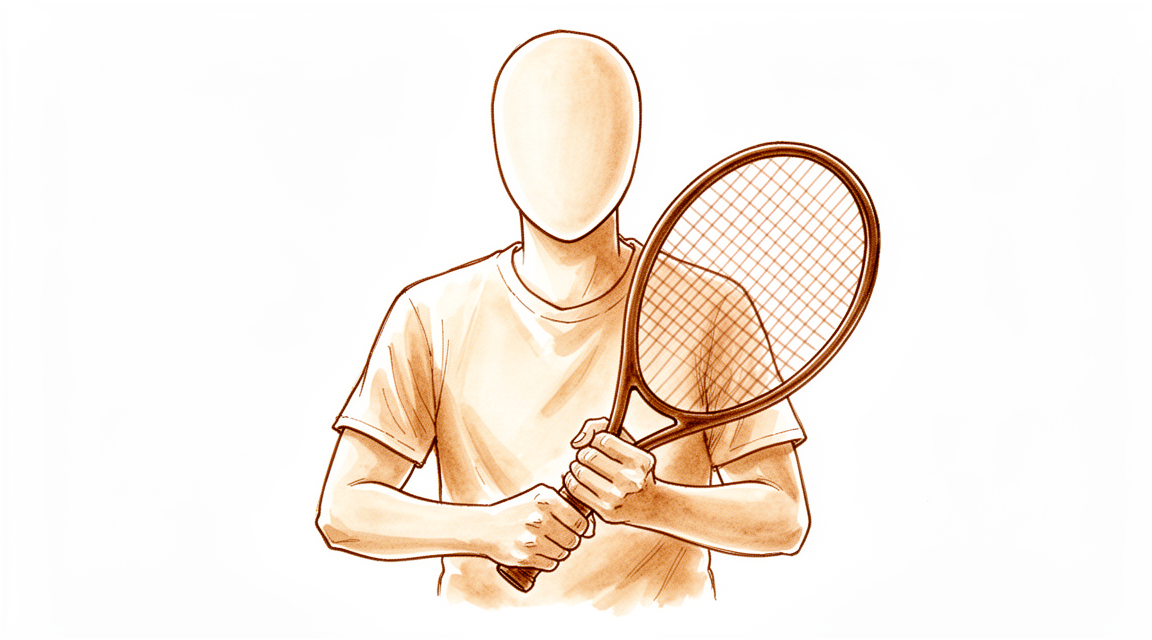
Một bức vẽ tay mô tả hình ảnh một người không có mặt đang cầm vợt tennis.
Khuỷu tay quần vợt: gân duỗi bị thoái hóa tại chỗ bám vào mỏm trên lồi cầu ngoài (chỗ xương lồi ở phía ngoài khuỷu tay). Phẫu thuật giải phóng loại bỏ phần mô gân bị tổn thương. Kieran Hirpara 4.0

Trang này được dịch bằng máy và chưa được bác sĩ kiểm tra. Bản tiếng Anh là bản chính thức.

Lý do phẫu thuật này được đề xuất

Bác sĩ Kieran Hirpara, bác sĩ phẫu thuật chi trên tại Bệnh viện tư nhân Mater Rockhampton, sẽ bắt đầu bằng các phương pháp ít xâm lấn nhất phù hợp với tình trạng của bạn. Chứng viêm gân khuỷu tay tennis là tình trạng gân ở mặt ngoài khuỷu tay bị tổn thương do hao mòn. Hầu hết mọi người đều cải thiện mà không cần phẫu thuật; khoảng 90% những người không điều trị vẫn hết triệu chứng sau 1 năm, và các triệu chứng thường thuyên giảm trong vòng 12–18 tháng. Vì vậy, chúng tôi thường thử các biện pháp điều trị không phẫu thuật trước: thay đổi hoạt động sinh hoạt, vật lý trị liệu hoặc trị liệu tay, đeo nẹp, và tiêm thuốc. Phẫu thuật chỉ được cân nhắc khi những phương pháp này chưa mang lại hiệu quả đáng kể.

Thông thường, bệnh nhân được bác sĩ đa khoa giới thiệu đến phòng khám chúng tôi; nếu nhà trị liệu vật lý khuyên bạn đến gặp chúng tôi, bạn vẫn cần có giấy giới thiệu từ bác sĩ đa khoa để được hưởng mức hoàn trả từ Medicare. Tại phòng khám, chúng tôi sẽ hỏi bệnh sử, khám khuỷu tay và chỉ định chụp hình ảnh nếu cần thiết. Phẫu thuật giải phóng gân khuỷu tay tennis là thủ thuật tách phần gân bị tổn thương ra khỏi xương ở mặt ngoài khuỷu tay. Đối với tỷ lệ nhỏ những người không đáp ứng với điều trị không phẫu thuật, phương pháp này mang lại tỷ lệ hài lòng gần 90%. Mục tiêu của ca phẫu thuật là giảm đau và phục hồi chức năng cánh tay cho bạn. Chúng tôi sẽ cùng bạn thảo luận về vấn đề này để đưa ra quyết định chung.

Trước khi phẫu thuật

Trước khi phẫu thuật, bạn cần nhịn ăn và uống trong vòng bảy giờ. Chúng tôi yêu cầu thời gian bảy giờ thay vì sáu giờ để có thể sắp xếp ca phẫu thuật sớm hơn nếu lịch mổ được hoàn thành trước thời hạn. Bác sĩ phẫu thuật sẽ hướng dẫn bạn loại thuốc nào cần ngừng dùng và vào thời điểm nào. Hãy mang theo danh sách tất cả các loại thuốc bạn đang sử dụng, bao gồm cả viên uống, thuốc nhỏ mắt và kem bôi. Hãy nhờ ai đó đưa bạn về nhà sau phẫu thuật vì bạn sẽ không thể tự lái xe được. Hãy mặc quần áo rộng rãi, thoải mái và dễ cởi ra. Các phương pháp chẩn đoán hình ảnh như chụp X-quang, MRI hoặc siêu âm có thể được sử dụng để lên kế hoạch phẫu thuật. Nếu bạn mắc các bệnh lý khác, có thể bạn sẽ cần làm xét nghiệm máu hoặc gặp gỡ bác sĩ gây mê để đánh giá tình trạng sức khỏe.

Vào ngày phẫu thuật

Bạn sẽ đến khoa tiếp nhận bệnh nhân phẫu thuật của bệnh viện, nơi bạn sẽ được làm thủ tục nhập viện và chuẩn bị cho ca mổ. Bạn sẽ gặp bác sĩ gây mê, người sẽ trao đổi với bạn về tình trạng sức khỏe và các loại thuốc bạn đang dùng. Ca phẫu thuật này được thực hiện dưới gây mê toàn thân; bạn sẽ hoàn toàn ngủ say trong suốt quá trình mổ. Một số bệnh nhân có thể được tiêm thuốc gây tê vùng để giảm đau sau phẫu thuật; quyết định này sẽ do bác sĩ gây mê đưa ra vào ngày mổ, dựa trên tình trạng cụ thể của từng người. Sau đó, bạn sẽ được đưa vào phòng mổ để tiến hành ca phẫu thuật.

Khi ca mổ kết thúc, bạn sẽ tỉnh dậy tại khu vực hồi sức. Các điều dưỡng sẽ theo dõi tình trạng của bạn cho đến khi tác dụng của thuốc mê hết. Khi sức khỏe ổn định, bạn sẽ được chuyển đến khu nội trú hoặc xuất viện về nhà, tùy thuộc vào loại phẫu thuật và mức độ hồi phục. Rất nhiều bệnh nhân có thể về nhà ngay trong ngày. Trước khi ra về, chúng tôi sẽ hướng dẫn bạn cách chăm sóc khuỷu tay và những điều cần lưu ý trong những ngày tiếp theo.

Quy trình phẫu thuật

Bác sĩ phẫu thuật sẽ thực hiện thủ thuật giải phóng gân khuỷu tay vận động viên quần vợt bằng cách rạch một đường duy nhất ở mặt ngoài khuỷu tay, ngay trên chỗ gồ lên của xương mà bạn có thể sờ thấy. Phần gân bị tổn thương sẽ được tách ra khỏi xương. Việc này giúp giải phóng gân khỏi chỗ bám, nơi gây ra cơn đau. Phần mô gân bị mòn, sờn rách ở chỗ khởi nguồn của gân sẽ được loại bỏ, và bề mặt xương phía dưới cũng được làm nhẵn.

Sau đó, vết mổ được khâu lại bằng chỉ khâu. Trước khi bạn rời khỏi phòng mổ, vết thương sẽ được băng lại bằng gạc.

Thủ thuật này được thực hiện qua một đường rạch duy nhất thay vì nhiều vết rạch nhỏ kiểu nội soi. Bác sĩ phẫu thuật có thể tiếp cận trực tiếp với gân và xương, nhờ đó vùng bị tổn thương có thể được quan sát và điều trị một cách đầy đủ.

Sau khi phẫu thuật

Bạn sẽ tỉnh dậy tại khu vực hồi sức với các y tá ở gần bên cạnh trong lúc thuốc gây mê dần hết tác dụng. Vết mổ ở khuỷu tay sẽ được băng gạc mềm che phủ, giữ cố định bằng băng quấn. Bạn có thể cảm thấy hơi đau ở phía ngoài khuỷu tay; hãy báo cho các y tá biết vì họ có thể cho bạn thuốc để giảm đau. Ngay sau khi tỉnh dậy, bạn có thể cử động nhẹ; hầu hết mọi người đều có thể đi vệ sinh với sự hỗ trợ vào cùng ngày. Trong 24 giờ đầu sau khi về nhà, cần có người ở bên cạnh bạn. Thông thường đây là ca phẫu thuật ngoại trú, nên bạn có thể về nhà ngay trong ngày; tuy nhiên thỉnh thoảng bệnh nhân cũng phải ở lại qua đêm. Chúng tôi để băng gạc trên vết mổ khoảng 10 ngày; vui lòng đừng tháo nó ra trước thời hạn đó trừ khi chúng tôi yêu cầu. Chúng tôi sẽ thay hoặc gỡ băng gạc khi khám lại cho bạn.

Quá trình hồi phục

Trong vài ngày đầu, khuỷu tay của bạn sẽ cảm thấy đau và có thể hơi sưng ở phía ngoài. Tình trạng này sẽ dần ổn định. Việc giữ tay ở tư thế cao hơn mức tim khi nghỉ ngơi có thể giúp giảm sưng; các loại thuốc giảm đau thông thường cũng giúp làm dịu cơn khó chịu. Băng gạc vẫn được giữ nguyên cho đến khi chúng tôi khám lại cho bạn, vì vậy bạn vẫn có thể tắm như bình thường mà không chạm vào vết thương.

Gần như ngay lập tức sau phẫu thuật, bạn có thể sử dụng cánh tay để thực hiện các công việc nhẹ nhàng tại nhà. Bạn có thể tự mặc quần áo, ăn uống và di chuyển bình thường. Tuy nhiên, hãy tránh nâng vật nặng, dùng cánh tay đó để đứng dậy khỏi ghế, cũng như mọi hoạt động gây căng thẳng cho phía ngoài khuỷu tay. Sau phẫu thuật, bạn sẽ được Ruby Doolan tại trung tâm Extend Rehabilitation hướng dẫn các bài tập trị liệu. Ruby sẽ chỉ dẫn các bài tập phù hợp và làm nẹp nếu cần thiết. Những bài tập này giúp cổ tay và khuỷu tay vận động linh hoạt, đồng thời dần phục hồi sức mạnh nắm tay của bạn.

Ban đầu, việc ngủ có thể hơi khó khăn. Nhiều người thấy thoải mái hơn khi kê gối dưới hoặc bên cạnh cánh tay.

Khi tình trạng sưng giảm bớt và các chuyển động trở nên dễ dàng hơn, bạn sẽ nhận thấy sức nắm tay mình dần hồi phục. Khi có thể nắm và siết tay mà không còn đau đớn, các hoạt động thường ngày sẽ trở lại bình thường. Sau khi tháo nẹp và có thể nắm chắc tay lái cũng như phản ứng nhanh, bạn thường có thể lái xe trở lại. Chúng tôi có cung cấp thêm thông tin chi tiết tại Việc lái xe sau phẫu thuật chi trên. Việc quay lại làm việc phụ thuộc vào tính chất công việc; chúng tôi sẽ cùng bạn thảo luận kỹ về vấn đề này.

Mỗi người có tốc độ hồi phục riêng. Lộ trình phục hồi của bạn có thể khác đi, và bác sĩ phẫu thuật cùng chuyên viên trị liệu sẽ hỗ trợ bạn trong suốt quá trình đó.

Những biến chứng có thể xảy ra

Hầu hết bệnh nhân đều hồi phục tốt, nhưng đôi khi vẫn có thể gặp phải các vấn đề. Bác sĩ phẫu thuật và đội ngũ y tế sẽ theo dõi sát sao để phát hiện sớm bất kỳ dấu hiệu bất thường nào.

Đôi khi cơ thể hình thành những mảng xương mới ở những vị trí không nên có, bên trong hoặc quanh khớp khuỷu tay. Tình trạng này gọi là hiện tượng tạo xương dị vị. Bạn có thể cảm thấy khớp cứng lại, có tiếng kêu lạo xạo khi gập hoặc duỗi tay, hoặc cảm giác rằng khớp khuỷu không còn linh hoạt như trước. Nếu thấy vận động bị hạn chế hoặc khớp cứng, sưng, hãy báo lại cho bác sĩ trong lần khám tiếp theo.

Một số người sau phẫu thuật không thể gập hoặc duỗi khuỷu tay hết biên độ vận động. Bạn có thể nhận thấy điều này khi với tay lấy đồ trên kệ cao hoặc xoay tay nắm cửa. Việc vận động nhẹ nhàng, đều đặn theo hướng dẫn của chuyên viên trị liệu sẽ rất hữu ích. Nếu tình trạng cứng khớp không cải thiện, hãy nói với bác sĩ để được đánh giá kỹ hơn.

Ở một vài trường hợp, phẫu thuật không giúp giảm đau như mong đợi. Bên ngoài khớp khuỷu vẫn đau âm ỉ, hoặc cơn đau tái phát sau một thời gian giảm. Nếu gặp phải tình huống này, chúng tôi sẽ đánh giá lại tình trạng khớp và cùng bạn thảo luận về các phương án điều trị, có thể bao gồm cả phẫu thuật tiếp theo. Hãy thông báo ngay nếu cơn đau không thuyên giảm như dự kiến.

Việc tiêm nhiều lần vào cùng một khớp khuỷu trước phẫu thuật làm tăng nguy cơ phải thực hiện phẫu thuật thêm sau này. Nếu bạn đã từng tiêm điều trị vấn đề này ở nơi khác, hãy cho chúng tôi biết để có kế hoạch chăm sóc phù hợp.

Nếu nhận thấy vùng da quanh vết mổ bị đỏ lan rộng, có dịch rỉ ra, sốt, hoặc cơn đau ngày càng tăng thay vì giảm dần, hãy liên hệ ngay với phòng khám. Những dấu hiệu này cần được xử lý kịp thời.

Bảng các biến chứng dưới đây liệt kê tỷ lệ xảy ra điển hình nếu bạn muốn biết thông tin cụ thể.

Khi nào nên gọi cho chúng tôi

Hãy gọi ngay cho chúng tôi nếu bạn bị sốt, vùng da quanh vết thương bị đỏ lan rộng, có dịch rỉ ra từ vết thương, hoặc cơn đau ngày càng tăng thay vì giảm dần. Hãy đến phòng cấp cứu nếu bạn bị đau dữ dội đột ngột, vùng bắp chân sưng phù hoặc khó thở; hoặc nếu bạn mất cảm giác ở tay hoặc không thể cử động cánh tay. Những dấu hiệu này cần được đánh giá ngay lập tức. Nếu bạn cảm thấy có điều gì không ổn mà chưa chắc chắn, hãy gọi cho phòng khám. Chúng tôi luôn mong nhận được thông tin từ bạn sớm nhất có thể.

Nơi để tìm đọc thêm thông tin về bệnh lý

Trang này chỉ đề cập đến phương pháp phẫu thuật. Các thông tin chi tiết về bệnh lý được điều trị, bao gồm cả bằng chứng cho thấy khi nào phẫu thuật mang lại hiệu quả và khi nào thì không, đều được trình bày kỹ lưỡng hơn trên trang Chứng viêm khuỷu tay do vận động.


Evidence & references

This is the clinical evidence summary written for health professionals. It is technical, and it lists the research this page was built from. You do not need to read it to understand your treatment or to make a decision about it.

Anatomy & Pathophysiology

  • The pathologic tissue in tennis elbow involves the extensor carpi radialis brevis tendon [1].
  • The origin of the extensor carpi radialis brevis is located on the lateral epicondyle [1].
  • The lateral epicondylar ridge is an anatomical structure associated with the lateral epicondyle [1].

Investigations

History and Physical Examination

  • History should include the duration of the elbow contracture, initial injury, previous surgical procedures, trials of splinting/therapy/injections, complications of surgery, and the patient’s work/life demands and goals [3].
  • Physical examination should assess the function of the upper extremity (shoulder, wrist, and hand) [3].
  • The soft tissue surrounding the elbow should be examined for previous skin incisions/grafts, eschar, or infection [3].
  • Active and passive flexion, extension, supination, and pronation should be evaluated using a goniometer for accurate measurement [3].
  • The contralateral elbow should be examined for comparison during range of motion assessment [3].
  • If the elbow has less than 90° to 100° of flexion, the posterior bundle of the medial collateral ligament (MCL) is contracted and must be released to restore flexion [3].
  • Pain should be assessed during the mid arc or at the terminal ends of motion [3].
  • Mid arc range of motion pain is more common with intrinsic disease and may not improve with contracture release alone [3].
  • The ulnar nerve is of utmost importance due to its anatomic proximity to the elbow [3].
  • The posterior bundle of the MCL forms the floor of the cubital tunnel along the course of the ulnar nerve [3].
  • Electromyography/nerve conduction velocity studies should be performed if any question about neurologic dysfunction exists [3].
  • An assessment for ulnar nerve subluxation should be performed [3].
  • Subluxation of the ulnar nerve is a relative contraindication for an arthroscopic procedure secondary to possible iatrogenic nerve injury [3].
  • If there is a history of prior surgical procedures, verify if the ulnar nerve has been transposed [3].
  • The physical exam is directed by history and the location of the patient's pain in the anterior, posterior, medial, or lateral aspect of the elbow [5].

Imaging

  • Radiographs should always be obtained for elbow evaluation [3].
  • Standard radiographic views include AP, lateral, and oblique views [3].
  • Serial radiography is used as follow-up when heterotopic ossification is present [3].
  • Primary bony landmarks on radiographs include the ulnohumeral joint, coronoid process, radial head, capitellum, radiocapitellar joint, olecranon tip, coronoid/olecranon fossae, and trochlear ridge [3].
  • CT is helpful when assessing for malunion architecture and the location and pattern of osteophytes and/or loose bodies [3].
  • Three-dimensional CT is used to check for heterotopic ossification [3].
  • CT is not necessary when the stiffness is entirely soft-tissue related [3].
  • CT is beneficial if any joint incongruity or abnormal bony anatomy is present [3].
  • MRI can be used to evaluate ligaments and tendons, but it is rarely indicated for elbow stiffness [3].
  • Plain radiographs remain the hallmark and the best screening test for elbow evaluation [5].
  • CT with two-dimensional reconstruction and three-dimensional surface rendering best visualizes posteromedial olecranon osteophytes and loose bodies in valgus extension overload syndrome [6].
  • MRI may be most helpful in evaluating associated injuries including partial or complete tears of the MCL in valgus extension overload syndrome [6].
  • Radiographic evaluations are essential when diagnosing an osteochondritis dissecans (OCD) lesion of the elbow [7].
  • Important aspects of OCD lesions may be better seen with MRI [7].
  • Standard AP and lateral radiographs typically show osteophyte formation at the coronoid process, coronoid fossa, radial fossa, radial head, olecranon tip, and olecranon fossa in elbow osteoarthritis [8].
  • In elbow osteoarthritis, joint spaces at the ulnohumeral joint usually are preserved, and those at the radiocapitellar joint are mildly narrowed [8].
  • Radiographs typically underestimate the number of loose bodies present in elbow osteoarthritis [8].
  • CT may be useful for surgical planning in elbow osteoarthritis by allowing a detailed assessment of osteophytes and the presence of loose bodies [8].

Treatment

Operative Technique

  • The patient is placed prone on the operating table with two rolled towels longitudinally under the thorax [1].
  • All bony prominences are padded well [1].
  • The affected extremity is positioned with the ipsilateral shoulder abducted to 90 degrees and supported by a precut foam holder [1].
  • The joint is distended with 20 to 30 mL of saline through an 18-gauge needle introduced through the direct lateral portal [1].
  • The proximal medial or superomedial portal is located approximately 2 cm proximal to the medial epicondyle and 1 cm anterior to the intermuscular septum [1].
  • The trocar and sheath are introduced anterior to the intermuscular septum while maintaining contact with the anterior aspect of the humerus [1].
  • The trocar is directed toward the radial head [1].
  • A 2.7-mm, 30-degree arthroscope is inserted into the joint to perform the diagnostic portion of the procedure [1].
  • The superolateral portal is established with an 18-gauge needle through the lesion after pathologic tissue is identified [1].
  • A full-radius resector is used to excise the capsule to identify the undersurface of the extensor carpi radialis brevis tendon [1].
  • The origin of the extensor carpi radialis brevis is viewed [1].
  • The capsule and pathologic tendinous attachment of the extensor carpi radialis brevis are debrided using a curet and motorized shaver [1].
  • The lateral epicondyle is decorticated [1].
  • Decortication of the lateral epicondyle and lateral epicondylar ridge can be performed with an arthroscopic burr, handheld instruments, or electrocautery [1].
  • A 30-degree arthroscope is adequate to view around the corner for most of the procedure [1].
  • A 70-degree arthroscope may be required in rare instances [1].

References

[1] Campbell S Operative Orthopaedics 4 Volume Set. ARTHROSCOPIC REPAIR OF POSTERIOR HUMERAL AVULSION OF THE GLENOHUMERAL LIGAMENT > ARTHROSCOPIC TENNIS ELBOW RELEASE.

[3] Aaos Comprehensive Orthopaedic Review 3. Elbow Stiffness* > IV. Evaluation.

[5] Orthopaedic Knowledge Update 13 Ebook Without Multimedia. Anatomy, Biomechanics, Physical Examination, and Imaging of the Elbow > Summary and Conclusions.

[6] Aaos Comprehensive Orthopaedic Review 3. Elbow Injuries in the Athlete* > III. Valgus Extension Overload Syndrome and Posterior Impingement.

[7] Orthopaedic Knowledge Update. Osteochondritis Dissecans of the Knee and Elbow* > Summary.

[8] Aaos Comprehensive Orthopaedic Review 3. Arthritis and Arthroplasty of the Elbow > I. Osteoarthritis.

Creative Commons BY-NC 4.0

CC Creative Commons licence
BY Attribution — you must credit the source
NC NonCommercial — not for commercial use

Attribution-NonCommercial 4.0 International


Creative Commons Corporation ("Creative Commons") is not a law firm and does not provide legal services or legal advice. Distribution of Creative Commons public licenses does not create a lawyer-client or other relationship. Creative Commons makes its licenses and related information available on an "as-is" basis. Creative Commons gives no warranties regarding its licenses, any material licensed under their terms and conditions, or any related information. Creative Commons disclaims all liability for damages resulting from their use to the fullest extent possible.

Using Creative Commons Public Licenses

Creative Commons public licenses provide a standard set of terms and conditions that creators and other rights holders may use to share original works of authorship and other material subject to copyright and certain other rights specified in the public license below. The following considerations are for informational purposes only, are not exhaustive, and do not form part of our licenses.

Considerations for licensors: Our public licenses are intended for use by those authorized to give the public permission to use material in ways otherwise restricted by copyright and certain other rights. Our licenses are irrevocable. Licensors should read and understand the terms and conditions of the license they choose before applying it. Licensors should also secure all rights necessary before applying our licenses so that the public can reuse the material as expected. Licensors should clearly mark any material not subject to the license. This includes other CC- licensed material, or material used under an exception or limitation to copyright. More considerations for licensors: wiki.creativecommons.org/Considerations_for_licensors

Considerations for the public: By using one of our public licenses, a licensor grants the public permission to use the licensed material under specified terms and conditions. If the licensor's permission is not necessary for any reason--for example, because of any applicable exception or limitation to copyright--then that use is not regulated by the license. Our licenses grant only permissions under copyright and certain other rights that a licensor has authority to grant. Use of the licensed material may still be restricted for other reasons, including because others have copyright or other rights in the material. A licensor may make special requests, such as asking that all changes be marked or described. Although not required by our licenses, you are encouraged to respect those requests where reasonable. More considerations for the public: wiki.creativecommons.org/Considerations_for_licensees


Creative Commons Attribution-NonCommercial 4.0 International Public License

By exercising the Licensed Rights (defined below), You accept and agree to be bound by the terms and conditions of this Creative Commons Attribution-NonCommercial 4.0 International Public License ("Public License"). To the extent this Public License may be interpreted as a contract, You are granted the Licensed Rights in consideration of Your acceptance of these terms and conditions, and the Licensor grants You such rights in consideration of benefits the Licensor receives from making the Licensed Material available under these terms and conditions.

Section 1 -- Definitions.

a. Adapted Material means material subject to Copyright and Similar Rights that is derived from or based upon the Licensed Material and in which the Licensed Material is translated, altered, arranged, transformed, or otherwise modified in a manner requiring permission under the Copyright and Similar Rights held by the Licensor. For purposes of this Public License, where the Licensed Material is a musical work, performance, or sound recording, Adapted Material is always produced where the Licensed Material is synched in timed relation with a moving image.

b. Adapter's License means the license You apply to Your Copyright and Similar Rights in Your contributions to Adapted Material in accordance with the terms and conditions of this Public License.

c. Copyright and Similar Rights means copyright and/or similar rights closely related to copyright including, without limitation, performance, broadcast, sound recording, and Sui Generis Database Rights, without regard to how the rights are labeled or categorized. For purposes of this Public License, the rights specified in Section 2(b)(1)-(2) are not Copyright and Similar Rights.

d. Effective Technological Measures means those measures that, in the absence of proper authority, may not be circumvented under laws fulfilling obligations under Article 11 of the WIPO Copyright Treaty adopted on December 20, 1996, and/or similar international agreements.

e. Exceptions and Limitations means fair use, fair dealing, and/or any other exception or limitation to Copyright and Similar Rights that applies to Your use of the Licensed Material.

f. Licensed Material means the artistic or literary work, database, or other material to which the Licensor applied this Public License.

g. Licensed Rights means the rights granted to You subject to the terms and conditions of this Public License, which are limited to all Copyright and Similar Rights that apply to Your use of the Licensed Material and that the Licensor has authority to license.

h. Licensor means the individual(s) or entity(ies) granting rights under this Public License.

i. NonCommercial means not primarily intended for or directed towards commercial advantage or monetary compensation. For purposes of this Public License, the exchange of the Licensed Material for other material subject to Copyright and Similar Rights by digital file-sharing or similar means is NonCommercial provided there is no payment of monetary compensation in connection with the exchange.

j. Share means to provide material to the public by any means or process that requires permission under the Licensed Rights, such as reproduction, public display, public performance, distribution, dissemination, communication, or importation, and to make material available to the public including in ways that members of the public may access the material from a place and at a time individually chosen by them.

k. Sui Generis Database Rights means rights other than copyright resulting from Directive 96/9/EC of the European Parliament and of the Council of 11 March 1996 on the legal protection of databases, as amended and/or succeeded, as well as other essentially equivalent rights anywhere in the world.

l. You means the individual or entity exercising the Licensed Rights under this Public License. Your has a corresponding meaning.

Section 2 -- Scope.

a. License grant.

1. Subject to the terms and conditions of this Public License, the Licensor hereby grants You a worldwide, royalty-free, non-sublicensable, non-exclusive, irrevocable license to exercise the Licensed Rights in the Licensed Material to:

a. reproduce and Share the Licensed Material, in whole or in part, for NonCommercial purposes only; and

b. produce, reproduce, and Share Adapted Material for NonCommercial purposes only.

2. Exceptions and Limitations. For the avoidance of doubt, where Exceptions and Limitations apply to Your use, this Public License does not apply, and You do not need to comply with its terms and conditions.

3. Term. The term of this Public License is specified in Section 6(a).

4. Media and formats; technical modifications allowed. The Licensor authorizes You to exercise the Licensed Rights in all media and formats whether now known or hereafter created, and to make technical modifications necessary to do so. The Licensor waives and/or agrees not to assert any right or authority to forbid You from making technical modifications necessary to exercise the Licensed Rights, including technical modifications necessary to circumvent Effective Technological Measures. For purposes of this Public License, simply making modifications authorized by this Section 2(a) (4) never produces Adapted Material.

5. Downstream recipients.

a. Offer from the Licensor -- Licensed Material. Every recipient of the Licensed Material automatically receives an offer from the Licensor to exercise the Licensed Rights under the terms and conditions of this Public License.

b. No downstream restrictions. You may not offer or impose any additional or different terms or conditions on, or apply any Effective Technological Measures to, the Licensed Material if doing so restricts exercise of the Licensed Rights by any recipient of the Licensed Material.

6. No endorsement. Nothing in this Public License constitutes or may be construed as permission to assert or imply that You are, or that Your use of the Licensed Material is, connected with, or sponsored, endorsed, or granted official status by, the Licensor or others designated to receive attribution as provided in Section 3(a)(1)(A)(i).

b. Other rights.

1. Moral rights, such as the right of integrity, are not licensed under this Public License, nor are publicity, privacy, and/or other similar personality rights; however, to the extent possible, the Licensor waives and/or agrees not to assert any such rights held by the Licensor to the limited extent necessary to allow You to exercise the Licensed Rights, but not otherwise.

2. Patent and trademark rights are not licensed under this Public License.

3. To the extent possible, the Licensor waives any right to collect royalties from You for the exercise of the Licensed Rights, whether directly or through a collecting society under any voluntary or waivable statutory or compulsory licensing scheme. In all other cases the Licensor expressly reserves any right to collect such royalties, including when the Licensed Material is used other than for NonCommercial purposes.

Section 3 -- License Conditions.

Your exercise of the Licensed Rights is expressly made subject to the following conditions.

a. Attribution.

1. If You Share the Licensed Material (including in modified form), You must:

a. retain the following if it is supplied by the Licensor with the Licensed Material:

i. identification of the creator(s) of the Licensed Material and any others designated to receive attribution, in any reasonable manner requested by the Licensor (including by pseudonym if designated);

ii. a copyright notice;

iii. a notice that refers to this Public License;

iv. a notice that refers to the disclaimer of warranties;

v. a URI or hyperlink to the Licensed Material to the extent reasonably practicable;

b. indicate if You modified the Licensed Material and retain an indication of any previous modifications; and

c. indicate the Licensed Material is licensed under this Public License, and include the text of, or the URI or hyperlink to, this Public License.

2. You may satisfy the conditions in Section 3(a)(1) in any reasonable manner based on the medium, means, and context in which You Share the Licensed Material. For example, it may be reasonable to satisfy the conditions by providing a URI or hyperlink to a resource that includes the required information.

3. If requested by the Licensor, You must remove any of the information required by Section 3(a)(1)(A) to the extent reasonably practicable.

4. If You Share Adapted Material You produce, the Adapter's License You apply must not prevent recipients of the Adapted Material from complying with this Public License.

Section 4 -- Sui Generis Database Rights.

Where the Licensed Rights include Sui Generis Database Rights that apply to Your use of the Licensed Material:

a. for the avoidance of doubt, Section 2(a)(1) grants You the right to extract, reuse, reproduce, and Share all or a substantial portion of the contents of the database for NonCommercial purposes only;

b. if You include all or a substantial portion of the database contents in a database in which You have Sui Generis Database Rights, then the database in which You have Sui Generis Database Rights (but not its individual contents) is Adapted Material; and

c. You must comply with the conditions in Section 3(a) if You Share all or a substantial portion of the contents of the database.

For the avoidance of doubt, this Section 4 supplements and does not replace Your obligations under this Public License where the Licensed Rights include other Copyright and Similar Rights.

Section 5 -- Disclaimer of Warranties and Limitation of Liability.

a. UNLESS OTHERWISE SEPARATELY UNDERTAKEN BY THE LICENSOR, TO THE EXTENT POSSIBLE, THE LICENSOR OFFERS THE LICENSED MATERIAL AS-IS AND AS-AVAILABLE, AND MAKES NO REPRESENTATIONS OR WARRANTIES OF ANY KIND CONCERNING THE LICENSED MATERIAL, WHETHER EXPRESS, IMPLIED, STATUTORY, OR OTHER. THIS INCLUDES, WITHOUT LIMITATION, WARRANTIES OF TITLE, MERCHANTABILITY, FITNESS FOR A PARTICULAR PURPOSE, NON-INFRINGEMENT, ABSENCE OF LATENT OR OTHER DEFECTS, ACCURACY, OR THE PRESENCE OR ABSENCE OF ERRORS, WHETHER OR NOT KNOWN OR DISCOVERABLE. WHERE DISCLAIMERS OF WARRANTIES ARE NOT ALLOWED IN FULL OR IN PART, THIS DISCLAIMER MAY NOT APPLY TO YOU.

b. TO THE EXTENT POSSIBLE, IN NO EVENT WILL THE LICENSOR BE LIABLE TO YOU ON ANY LEGAL THEORY (INCLUDING, WITHOUT LIMITATION, NEGLIGENCE) OR OTHERWISE FOR ANY DIRECT, SPECIAL, INDIRECT, INCIDENTAL, CONSEQUENTIAL, PUNITIVE, EXEMPLARY, OR OTHER LOSSES, COSTS, EXPENSES, OR DAMAGES ARISING OUT OF THIS PUBLIC LICENSE OR USE OF THE LICENSED MATERIAL, EVEN IF THE LICENSOR HAS BEEN ADVISED OF THE POSSIBILITY OF SUCH LOSSES, COSTS, EXPENSES, OR DAMAGES. WHERE A LIMITATION OF LIABILITY IS NOT ALLOWED IN FULL OR IN PART, THIS LIMITATION MAY NOT APPLY TO YOU.

c. The disclaimer of warranties and limitation of liability provided above shall be interpreted in a manner that, to the extent possible, most closely approximates an absolute disclaimer and waiver of all liability.

Section 6 -- Term and Termination.

a. This Public License applies for the term of the Copyright and Similar Rights licensed here. However, if You fail to comply with this Public License, then Your rights under this Public License terminate automatically.

b. Where Your right to use the Licensed Material has terminated under Section 6(a), it reinstates:

1. automatically as of the date the violation is cured, provided it is cured within 30 days of Your discovery of the violation; or

2. upon express reinstatement by the Licensor.

For the avoidance of doubt, this Section 6(b) does not affect any right the Licensor may have to seek remedies for Your violations of this Public License.

c. For the avoidance of doubt, the Licensor may also offer the Licensed Material under separate terms or conditions or stop distributing the Licensed Material at any time; however, doing so will not terminate this Public License.

d. Sections 1, 5, 6, 7, and 8 survive termination of this Public License.

Section 7 -- Other Terms and Conditions.

a. The Licensor shall not be bound by any additional or different terms or conditions communicated by You unless expressly agreed.

b. Any arrangements, understandings, or agreements regarding the Licensed Material not stated herein are separate from and independent of the terms and conditions of this Public License.

Section 8 -- Interpretation.

a. For the avoidance of doubt, this Public License does not, and shall not be interpreted to, reduce, limit, restrict, or impose conditions on any use of the Licensed Material that could lawfully be made without permission under this Public License.

b. To the extent possible, if any provision of this Public License is deemed unenforceable, it shall be automatically reformed to the minimum extent necessary to make it enforceable. If the provision cannot be reformed, it shall be severed from this Public License without affecting the enforceability of the remaining terms and conditions.

c. No term or condition of this Public License will be waived and no failure to comply consented to unless expressly agreed to by the Licensor.

d. Nothing in this Public License constitutes or may be interpreted as a limitation upon, or waiver of, any privileges and immunities that apply to the Licensor or You, including from the legal processes of any jurisdiction or authority.


Creative Commons is not a party to its public licenses. Notwithstanding, Creative Commons may elect to apply one of its public licenses to material it publishes and in those instances will be considered the “Licensor.” The text of the Creative Commons public licenses is dedicated to the public domain under the CC0 Public Domain Dedication. Except for the limited purpose of indicating that material is shared under a Creative Commons public license or as otherwise permitted by the Creative Commons policies published at creativecommons.org/policies, Creative Commons does not authorize the use of the trademark "Creative Commons" or any other trademark or logo of Creative Commons without its prior written consent including, without limitation, in connection with any unauthorized modifications to any of its public licenses or any other arrangements, understandings, or agreements concerning use of licensed material. For the avoidance of doubt, this paragraph does not form part of the public licenses.

Creative Commons may be contacted at creativecommons.org.