Patients › Rehabilitation
Thay khớp gốc ngón cái (Touch)
Kế hoạch phục hồi theo từng giai đoạn sau phẫu thuật thay khớp toàn phần kiểu “dual-mobility” cho khớp gốc ngón cái bị viêm khớp (bộ cấy ghép Touch): ban đầu bảo vệ khớp mới bằng nẹp ngón cái, sau đó khôi phục khả năng đối chiếu và vận động, rồi tăng cường sức mạnh kẹp và nắm.
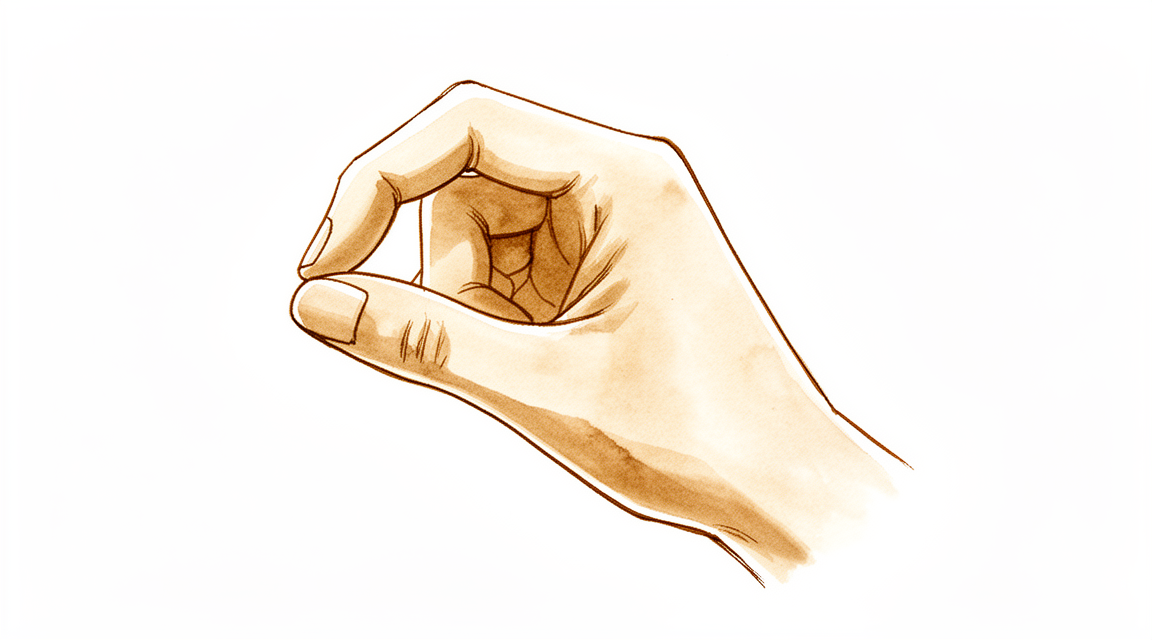
Quy trình này hướng dẫn quá trình hồi phục của bạn sau khi thực hiện phẫu thuật thay khớp gốc ngón tay cái (phương pháp thay khớp toàn phần có hai mức độ di động, sử dụng thiết bị cấy ghép Touch) do viêm khớp gốc ngón tay cái; ca phẫu thuật được thực hiện bởi bác sĩ Kieran Hirpara tại Bệnh viện tư nhân Mater Rockhampton. Quy trình bắt đầu với chương trình tập luyện tại nhà, tiếp theo là quy trình điều trị lâm sàng được soạn thảo dành riêng cho chuyên viên trị liệu tay của bạn; hãy mang theo trang này hoặc bản PDF tương ứng trong buổi trị liệu đầu tiên để quá trình phục hồi được phối hợp một cách hiệu quả. Chuyên viên trị liệu tay có thể điều chỉnh kế hoạch tập luyện tùy theo tiến triển hồi phục của bạn. Toàn bộ quá trình hồi phục của bạn đều được giám sát thông qua các buổi trị liệu tay chuyên nghiệp.
Nếu bạn có bất kỳ thắc mắc nào về vết mổ sau phẫu thuật, vui lòng liên hệ với phòng khám. Việc chụp ảnh vết mổ rồi gửi qua email để được đánh giá cũng là một cách hữu ích.
Những điều bạn có thể mong đợi
Khớp ở gốc ngón tay cái (khớp gian xương bàn tay – CMC) là nơi ngón tay cái nối với cổ tay; đây là vị trí rất hay bị viêm khớp. Trong ca phẫu thuật này, các bề mặt khớp bị hư hỏng sẽ được loại bỏ và thay thế bằng một khớp nhân tạo nhỏ: đó là chất liệu cấy ghép có khả năng di chuyển hai chiều, gồm một viên bi và hốc nhỏ kèm theo bề mặt di chuyển phụ, giúp khớp vừa ổn định vừa vận động trơn tru. Xương móc tay vẫn được giữ lại, chiều dài ngón tay cái cũng không thay đổi; vì vậy thời gian hồi phục thường nhanh hơn so với phương pháp cắt bỏ xương móc tay (phương pháp cũ, trong đó xương bị loại bỏ và phải chờ mô sẹo hình thành trong nhiều tháng).
Chất liệu cấy ghép được đặt đúng vị trí sẽ rất ổn định và có thể chịu tải ngay lập tức; vì vậy ngón tay cái chỉ cần được bảo vệ trong thời gian ngắn thay vì phải cố định trong nhiều tuần. Kế hoạch điều trị là để các mô mềm ổn định, sau đó nhanh chóng giúp ngón tay cái có thể đưa vào vị trí đối diện (chạm vào các ngón tay khác) và vận động trở lại, rồi mới tập tăng cường sức mạnh.
Quá trình hồi phục gồm ba giai đoạn:
- Giai đoạn 1: Bảo vệ khớp (khoảng 2–3 tuần đầu). Trong tuần đầu tiên, vết mổ được băng bó bằng lớp băng mềm dày; sau đó dùng nẹp ngón tay cái để giúp khớp mới nghỉ ngơi trong lúc vết thương và các mô mềm hồi phục. Bạn vẫn có thể cử động các ngón tay, cổ tay và phần còn lại của bàn tay.
- Giai đoạn 2: Vận động (từ khoảng 2–3 đến 6 tuần). Sau khi tháo nẹp ban ngày, bạn bắt đầu thực hiện các động tác vận động nhẹ nhàng (đưa ngón tay cái đối diện các ngón khác, nâng ngón tay cái lên, mở rộng khoảng cách giữa các ngón và xoay tròn), đồng thời sử dụng bàn tay để thực hiện các công việc sinh hoạt nhẹ nhàng.
- Giai đoạn 3: Tăng cường sức mạnh (từ tuần thứ 6 trở đi). Khi chất liệu cấy ghép đã bám chắc vào xương, bạn bắt đầu tập tăng cường sức mạnh cho các động tác kẹp và nắm tay, dần dần nâng mức độ tập luyện. Sức mạnh của ngón tay cái sẽ tiếp tục cải thiện trong 6 đến 12 tháng tiếp theo.
Điều cần lưu ý ngay từ đầu là khớp mới có thể trật khớp nếu bị ép vào tư thế quá mức trước khi các mô xung quanh lành lại. Tình trạng này ít xảy ra; kế hoạch điều trị ban đầu chỉ đơn giản là hạn chế việc ép ngón tay cái vào các tư thế mạnh trong giai đoạn đầu hồi phục.
Các lưu ý và hạn chế
- Đeo nẹp ngón tay cái theo hướng dẫn (đeo nẹp ban ngày trong 2–3 tuần đầu, sau đó đeo nẹp ban đêm cho đến tuần thứ 6), và tiếp tục đeo nẹp để bảo vệ ngón tay cái cho đến khi chuyên viên trị liệu chỉ định khác.
- KHÔNG cố gắng đưa ngón tay cái vào các tư thế quá mức; trong những tuần đầu, hãy tránh các động tác nắm chặt đột ngột hoặc không tự nhiên; khớp mới có thể bị trật nếu bị vận động quá mức trước khi ổn định. Chỉ thực hiện các chuyển động trong phạm vi thoải mái.
- KHÔNG thực hiện các động tác nắm chặt mạnh, xoắn vặn (mở nắp lọ, chìa khóa, vòi nước) hay nâng vật nặng cho đến khoảng 6 tuần; việc tăng cường sức mạnh chỉ bắt đầu khi chuyên viên trị liệu chỉ định.
- Ngay từ đầu, hãy cử động các ngón tay, cổ tay và toàn bộ bàn tay; đồng thời giữ tay ở vị trí cao để giảm sưng trong những ngày đầu.
- KHÔNG lái xe cho đến khoảng 4–6 tuần, khi bạn đã tháo nẹp và có thể nắm vô lăng một cách thoải mái, không đau đớn.
Để biết cách chăm sóc vết thương, giảm sưng và xử lý sẹo, vui lòng tham khảo hướng dẫn chăm sóc vết thương của phòng khám.
Các bài tập của bạn
Kieran Hirpara 4.0
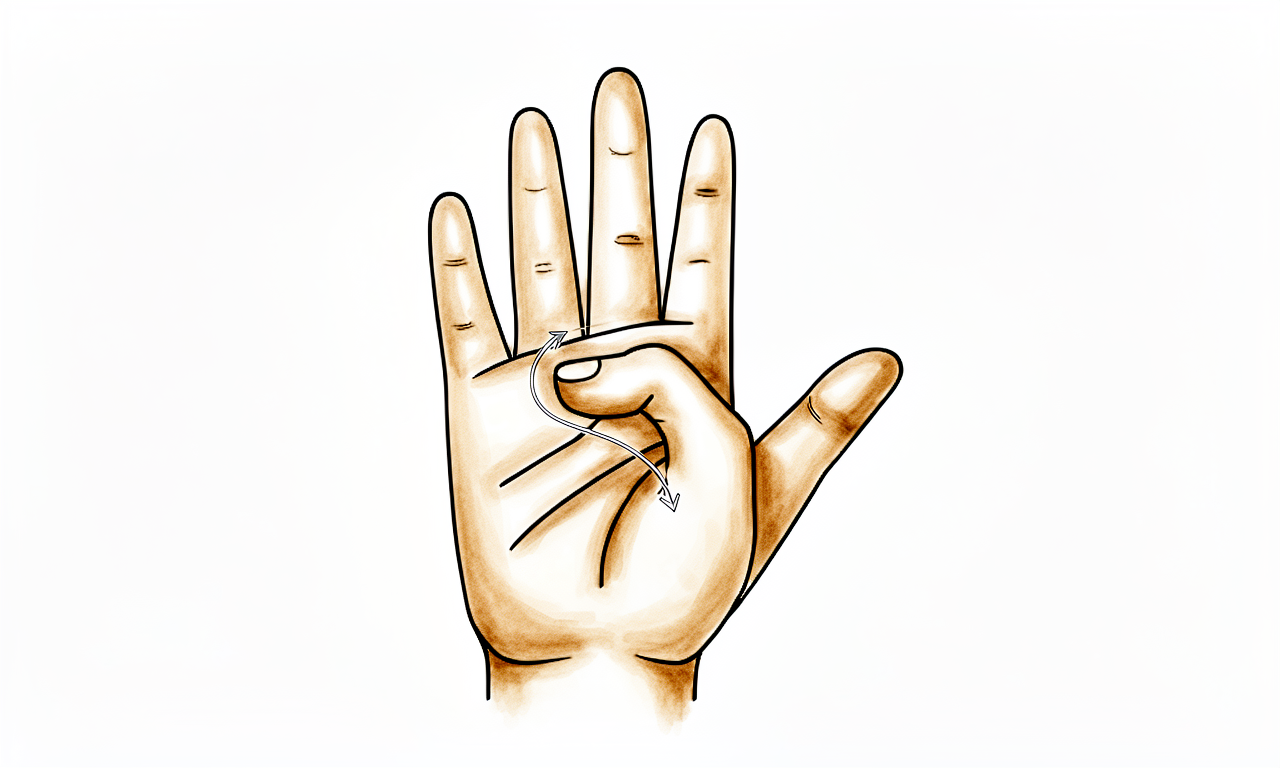
Chức năng đối khớp của ngón cái (thang đo Kapandji)
Từ từ chạm đầu ngón tay cái vào cạnh ngón trỏ, sau đó lần lượt chạm vào đầu từng ngón tay còn lại; tiếp tục di chuyển ngón tay cái xuống phía gốc ngón út — như thể bạn đang “leo thang” thêm một chút khi cơ thể đã dần thư giãn. Chỉ thực hiện các động tác trong phạm vi mà bạn cảm thấy thoải mái. Đây là động tác thiết yếu cần luyện tập sau khi phẫu thuật thay khớp gốc ngón tay cái; bạn nên bắt đầu thực hiện một cách nhẹ nhàng sau khi tháo nẹp hàng ngày (khoảng hai đến ba tuần sau phẫu thuật).
Thực hiện theo trình tự 5–10 lần, 2–3 lần mỗi ngày, trong phạm vi mức độ chịu đựng thoải mái.
Kieran Hirpara 4.0
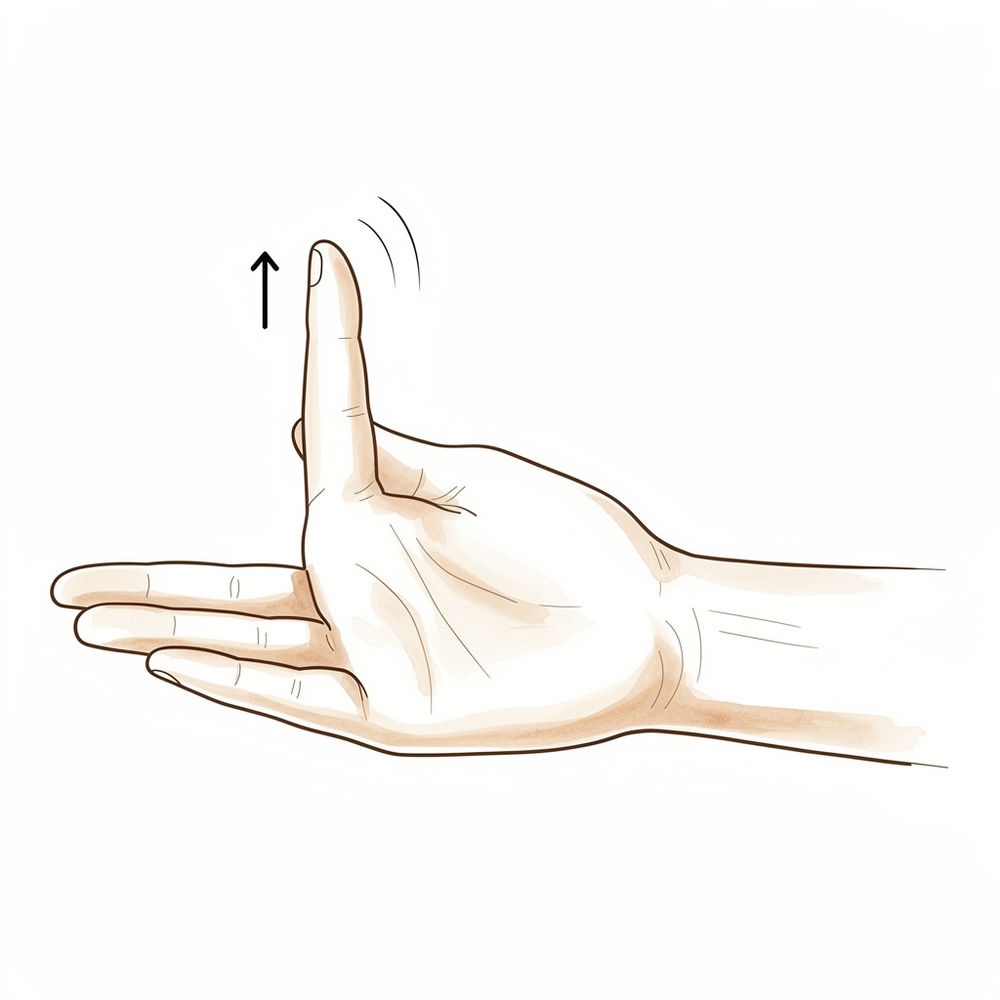
Chuyển động tách ngón cái ra khỏi lòng bàn tay (nâng ngón cái lên khỏi lòng bàn tay)
Hãy đặt tay xuống phẳng, lòng bàn tay hướng lên trên. Giữ ngón cái thẳng, từ từ nâng ngón cái lên khỏi lòng bàn tay hướng về phía trần nhà, như thể bạn đang mở tay ra để cầm một chiếc lon — sau đó hạ ngón cái trở lại vị trí ban đầu. Động tác này giúp mở rộng khoảng trống giữa các ngón tay và khôi phục phạm vi vận động của ngón cái. Hãy thực hiện một cách nhẹ nhàng, không gắng sức; trong những tuần đầu, đừng cố đẩy ngón cái đến hết biên độ vận động.
10 lần, 2–3 lần mỗi ngày, thực hiện trong mức độ thoải mái.
Kieran Hirpara 4.0
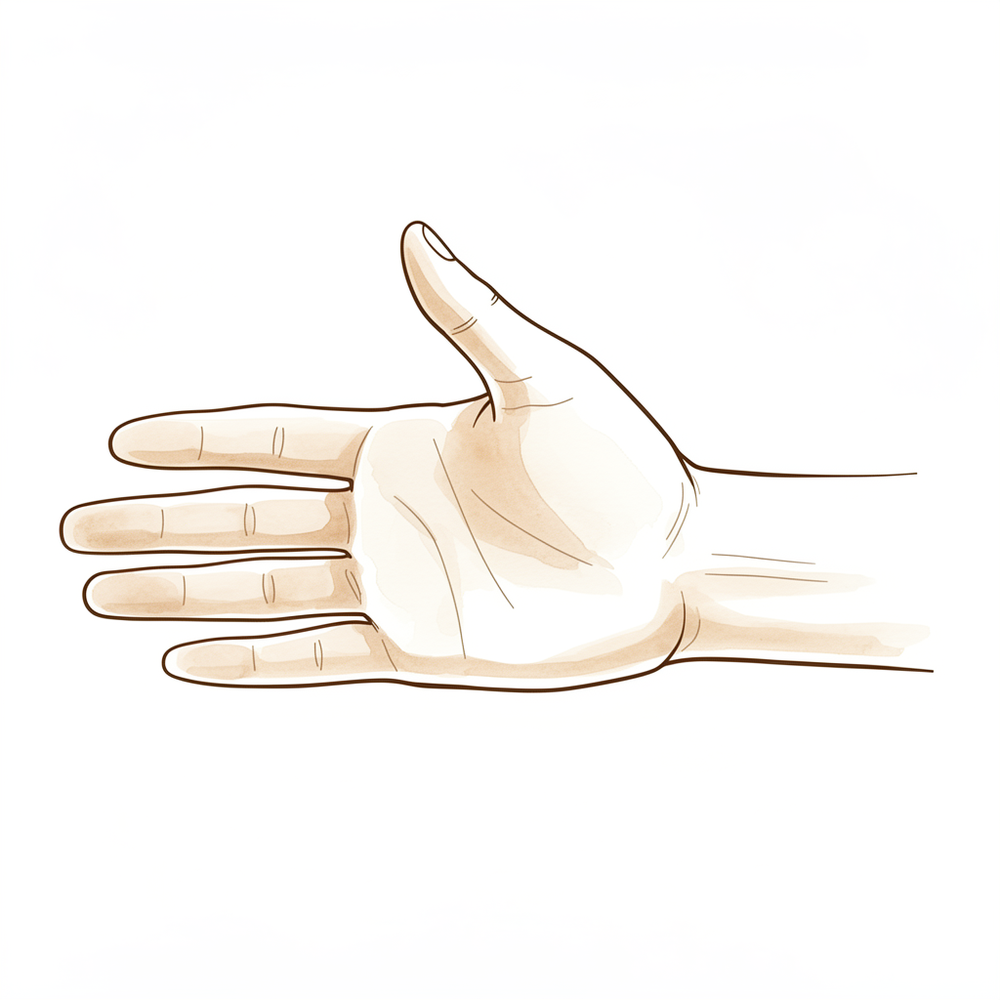
Chuyển động ngón cái ra ngoài theo hướng xương quay (ngón cái hướng sang bên)
Hãy đặt tay xuống phẳng, lòng bàn tay hướng xuống dưới. Dùng ngón tay cái để di chuyển sang bên cạnh, ra xa ngón trỏ, sao cho nó vẫn nằm trong cùng một mặt phẳng với lòng bàn tay — tạo thành hình chữ ‘L’ — sau đó đưa ngón tay cái trở lại vị trí ban đầu. Thao tác này giúp khôi phục khả năng vươn rộng sang bên của ngón tay cái. Hãy thực hiện từ từ và dừng lại ngay khi cảm thấy hơi căng cơ.
10 lần, 2–3 lần mỗi ngày, thực hiện trong mức độ thoải mái.
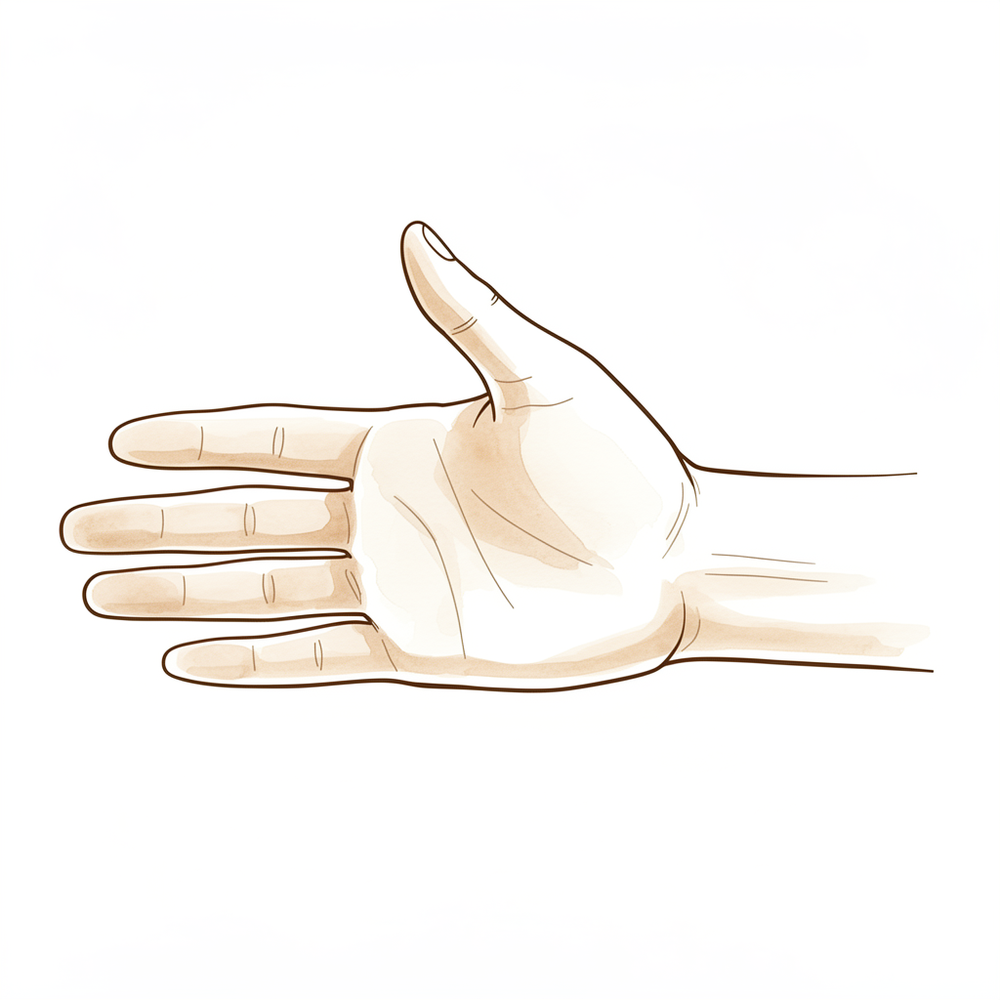
Kieran Hirpara 4.0
Kéo giãn kẽ ngón cái
Hãy mở khoảng cách giữa ngón tay cái và ngón trỏ ra hết mức mà bạn cảm thấy thoải mái, đồng thời cảm nhận sự giãn ra nhẹ nhàng ở vùng da giữa hai ngón. Bạn có thể đặt tay lên bàn rồi từ từ mở ngón cái ra, hoặc ôm lấy một vật có hình tròn. Giữ nguyên tư thế này trong chốc lát rồi thả lỏng tay. Việc này giúp ngăn không cho vùng da giữa các ngón bị co cứng trong quá trình hồi phục — hãy thực hiện một cách nhẹ nhàng, tuyệt đối không dùng lực quá mức.
Giữ trong khoảng 5 giây, 5–10 lần, 2–3 lần mỗi ngày.
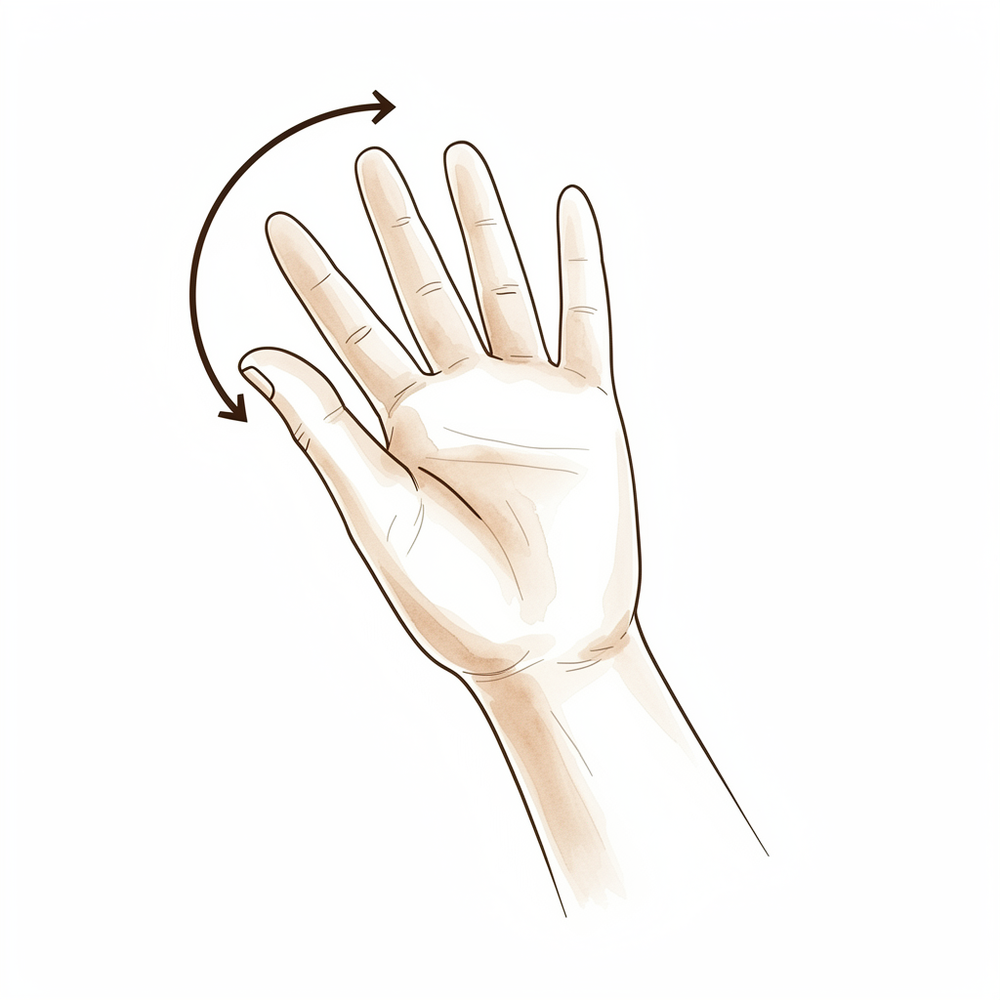
Kieran Hirpara 4.0
Chuyển động vòng quanh của ngón cái
Khi bàn tay ở trạng thái thả lỏng, hãy vẽ những vòng tròn chậm rãi và mượt mà bằng ngón tay cái, di chuyển ngón tay một cách nhẹ nhàng qua toàn bộ phạm vi chuyển động theo cả hai hướng — giống như đang khuấy một nồi nhỏ vậy. Hãy giữ các chuyển động này nhẹ nhàng và nằm trong giới hạn thoải mái. Động tác này giúp khôi phục lại chuyển động lăn tròn của khớp mới; bạn nên bắt đầu thực hiện sau khi đã tháo nẹp dùng ban ngày.
5–10 vòng xoay theo mỗi hướng, 2–3 lần mỗi ngày.
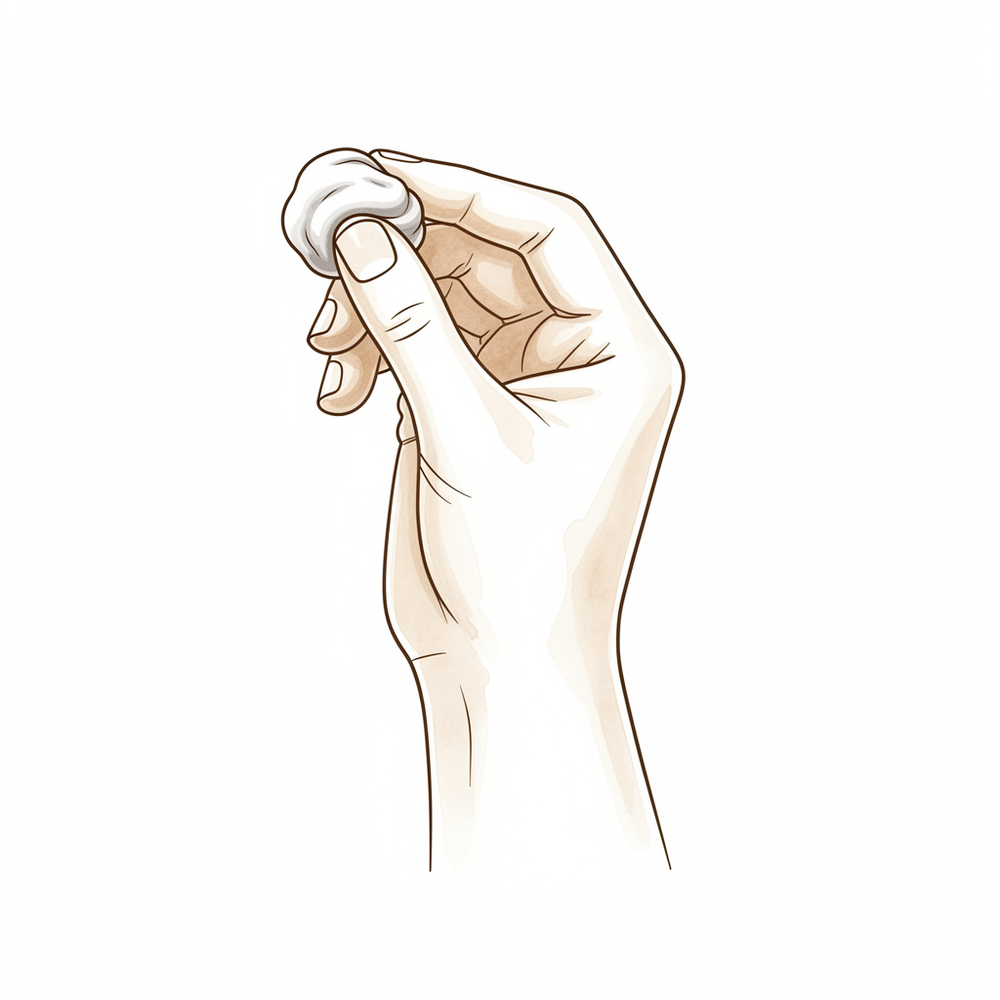
Kieran Hirpara 4.0
Kẹp đất nặn / kẹp kiểu chìa khóa (từ tuần thứ 6)
Đây là bài tập cho GIAI ĐOẠN SAU — chỉ thực hiện từ khoảng sáu tuần sau phẫu thuật, khi chuyên viên trị liệu tay bắt đầu các bài tập tăng cường sức mạnh. Hãy kẹp một mẩu đất nặn trị liệu giữa ngón tay cái và cạnh ngón trỏ (kiểu kẹp “chìa khóa”), và ấn đầu ngón tay cái vào các đầu ngón tay (kiểu kẹp “đầu ngón”), tăng dần lực trong những tuần và tháng tiếp theo. Tuyệt đối không kẹp mạnh hoặc nắm chặt trước sáu tuần — khớp mới cần thời gian đó để ổn định và gắn chặt vào xương.
Theo hướng dẫn của chuyên viên trị liệu tay (từ khoảng tuần thứ 6), tăng dần từng bước
Đây là những bài tập được nêu trong tờ hướng dẫn của bạn. Chỉ thực hiện chúng khi có sự hướng dẫn của Bác sĩ Hirpara và chuyên viên trị liệu vận động; đồng thời phải tuân thủ mọi phạm vi chuyển động và giới hạn đã được chỉ định. Những bài tập ban đầu (động tác đối kháng, nâng ngón cái lên, chuyển động sang bên, kéo giãn vùng kẽ ngón và các vòng tròn nhẹ) giúp phục hồi khả năng vận động của ngón cái mà không gây áp lực lên khớp mới; bạn có thể bắt đầu thực hiện những bài này sau khi tháo nẹp dùng ban ngày. Bài tập nắn bột nặn và kẹp chìa khóa là bài tập tăng cường sức mạnh thực hiện về sau; bạn không nên bắt đầu cho đến khoảng 6 tuần sau, khi chuyên viên trị liệu vận động hướng dẫn bạn làm. Trong những tuần đầu, hãy thực hiện mọi động tác một cách nhẹ nhàng và không gắng sức; ngừng ngay mọi hoạt động gây đau dữ dội ở vùng gốc ngón cái.
Quy trình điều trị lâm sàng của bạn
Phần còn lại của trang này mô tả quy trình phục hồi chức năng theo từng giai đoạn sau phẫu thuật thay khớp ngón tay cái kiểu Dual-Mobility. Phần này cần được cung cấp cho chuyên viên trị liệu tay của bạn; mỗi giai đoạn đều bắt đầu bằng lời giải thích bằng ngôn ngữ đơn giản về những gì đang diễn ra. Khác với phương pháp cắt bỏ xương móc, loại implant này có độ ổn định cao và có khả năng chịu tải ngay lập tức; vì vậy việc cố định khớp là tối thiểu và khả năng vận động chủ động được phục hồi sớm. Tuy nhiên, nguy cơ sớm liên quan đến loại implant này là trật khớp nếu bệnh nhân cố gắng vận động vượt quá phạm vi cho phép; do đó trong những tuần đầu cần hạn chế các động tác vượt giới hạn, sau đó mới tiến hành các bài tập tăng cường sức mạnh khi implant đã bám chắc vào xương.
Trước khi bắt đầu điều trị, hãy kiểm tra báo cáo phẫu thuật và tiền sử bệnh của bệnh nhân; đồng thời trao đổi với bác sĩ phẫu thuật về mức độ ổn định của implant cũng như các vấn đề phát sinh trong ca mổ. Theo phác đồ của bác sĩ Hirpara, bệnh nhân sẽ được băng bó bằng lớp gạc dày mềm trong 7–10 ngày, sau đó đeo nẹp cổ tay và ngón tay cái vào ban ngày trong 2–3 tuần; tiếp tục đeo nẹp vào ban đêm cho đến tuần thứ 6 (cổ tay giữ nguyên tư thế trung tính, ngón tay cái hơi hướng về phía lòng bàn tay, các khớp ngón vẫn có thể cử động tự do). Xương móc vẫn được giữ nguyên và chiều dài ngón tay cái không bị thay đổi.
Giai đoạn I — bảo vệ khớp (tuần 0 đến khoảng 2–3)
Vài tuần đầu là thời gian để các mô mềm ổn định và bảo vệ khớp mới hình thành. Ngón tay cái được băng bó bằng lớp băng mềm dày, sau đó đeo nẹp cố định ngón tay cái vào ban ngày; trong khi các ngón tay còn lại, cổ tay và phần còn lại của bàn tay vẫn được vận động tự do. Không được thực hiện các động tác dùng lực với ngón tay cái, cũng không được đặt ngón tay cái vào các tư thế căng thẳng hay quá mức (nguy cơ trật khớp sớm là rủi ro đặc thù đối với loại implant này).
Dành cho chuyên viên trị liệu tay:
Giáo dục và các biện pháp phòng ngừa - Cố định vùng gốc ngón tay cái: băng mềm dày 7–10 ngày → đeo nẹp cố định ngón tay cái vào ban ngày trong khoảng ~2–3 tuần (cổ tay giữ nguyên vị trí trung tính, ngón tay cái hơi hướng ra phía lòng bàn tay, khớp IP vẫn được tự do vận động) - Tránh đặt ngón tay cái vào các tư thế căng thẳng hay quá mức cũng như các động tác nắm chặt đột ngột: trật khớp là rủi ro sớm đặc trưng đối với loại implant này - Không được thực hiện các động tác dùng lực với ngón tay cái (không được kẹp, nắm, xoay hay nâng vật gì) - Giữ cho implant không chịu tải trọng; chỉ được vận động nhẹ nhàng mà không tạo áp lực lên khớp
Quản lý sau phẫu thuật - Vết mổ: thay băng theo hướng dẫn; theo dõi dấu hiệu nhiễm trùng - Phù nề: nâng cao tay, dùng bơm tay nhẹ nhàng, chườm đá khi cần - Vận động: thực hiện các động tác vận động chủ động tại khớp IP của ngón tay cái, các ngón tay còn lại và cổ tay; duy trì khả năng vận động toàn bộ bàn tay; chưa được thực hiện các động tác vận động tại khớp CMC hoặc các động tác đối kháng, cũng không được tạo tải trọng lên khớp
Tiêu chí để chuyển sang giai đoạn tiếp theo - Vết mổ đã ổn định; bệnh nhân cảm thấy thoải mái; có thể tháo nẹp ban ngày sau khoảng 2–3 tuần để bắt đầu vận động chủ động
Giai đoạn II — vận động chủ động khi đeo nẹp đêm (từ tuần ~2–3 đến tuần thứ 6)
Khoảng từ tuần thứ hai đến tuần thứ ba, nẹp ban ngày được tháo ra và bệnh nhân bắt đầu thực hiện các động tác vận động ngón cái một cách nhẹ nhàng: động tác đối kháng (theo tiến trình Kapandji), vận động tách ngón cái về phía lòng bàn tay và phía ngoài, các chuyển động tròn nhẹ và kéo giãn vùng kẽ ngón. Việc đeo nẹp đêm vẫn tiếp tục cho đến tuần thứ sáu. Bệnh nhân nên vận động tay nhẹ nhàng trong sinh hoạt hàng ngày; tuy nhiên vẫn phải tránh các động tác nắm chặt hay kẹp mạnh.
Dành cho chuyên viên trị liệu tay:
Các chỉ số đánh giá - Khả năng vận động đối kháng của ngón cái (theo thang điểm Kapandji), mức độ tách ngón cái về phía lòng bàn tay và phía ngoài, độ rộng vùng kẽ ngón; mức độ đau và sưng; tình trạng vết thương và sẹo
Giáo dục và lưu ý - Đã tháo nẹp ban ngày; vẫn tiếp tục đeo nẹp ĐÊM cho đến tuần thứ 6 - Chỉ thực hiện các động tác vận động ngón cái không có sức cản; tuyệt đối không nắm chặt hay kẹp mạnh trước tuần thứ 6 - Chỉ vận động trong giới hạn thoải mái; tránh cố gắng kéo giãn ngón cái đến mức tối đa
Các biện pháp xử trí - Các bài tập: vận động đối kháng ngón cái không có sức cản (theo tiến trình Kapandji), tách ngón cái về phía lòng bàn tay và phía ngoài, chuyển động tròn nhẹ, kéo giãn vùng kẽ ngón; sử dụng tay nhẹ nhàng trong các hoạt động sinh hoạt hàng ngày; bắt đầu xoa bóp vùng sẹo sau khi vết thương đã lành
Tiêu chí để chuyển sang giai đoạn tiếp theo - Khả năng vận động đối kháng của ngón cái đã phục hồi tốt; vết thương đã lành; không còn đau khi vận động không có sức cản vào khoảng tuần thứ 6
Giai đoạn III — Tải trọng và tăng cường sức mạnh (từ tuần thứ 6 trở đi)
Khoảng tuần thứ 6, implant đã được tích hợp vào xương và có thể chịu tải trọng. Các bài tập tăng cường sức mạnh cho động tác kẹp và nắm tay bắt đầu được thực hiện (kẹp bằng bột nặn, kẹp bằng đầu ngón tay, tăng cường sức mạnh các cơ đối kháng), và được nâng dần mức độ khó. Sức mạnh cơ bắp tiếp tục phát triển trong 6 đến 12 tháng tiếp theo.
Dành cho chuyên viên trị liệu tay:
Đánh giá - Đánh giá sức mạnh kẹp bằng đầu ngón tay, sức nắm tay so với bên còn lại; khả năng vận động đối kháng; phản ứng đau/sưng khi chịu tải; thực hiện các bài kiểm tra chức năng và chuyên biệt theo yêu cầu
Giáo dục và lưu ý - Bắt đầu tăng cường sức mạnh kẹp và nắm tay một cách từ từ từ tuần thứ 6; nâng mức tải trọng dần dần - Cần biết rằng sức mạnh cơ bắp sẽ phát triển trong vòng 6–12 tháng; hãy khuyên bệnh nhân kiên nhẫn khi tăng dần mức tải trọng
Quản lý điều trị - Các bài tập: kẹp bằng bột nặn, kẹp bằng đầu ngón tay, tăng cường sức mạnh các cơ đối kháng, tăng dần mức độ kháng lực; tăng cường sức mạnh nắm tay; tiếp tục các bài tập duy trì khả năng vận động và chăm sóc vết sẹo - Có thể cho bệnh nhân xuất viện khi sức mạnh cơ bắp đã đạt mức chức năng và khả năng vận động được phục hồi phù hợp - Nếu tiến triển phục hồi bị chững lại hoặc kết quả không như mong đợi, cần chuyển bệnh nhân trở lại gặp bác sĩ điều trị
Tiêu chí xuất viện - Khả năng kẹp và nắm tay gần như cân đối giữa hai bên; có thể sử dụng tay trong sinh hoạt và công việc mà không đau
Trở lại với công việc và các hoạt động hàng ngày
Bạn nên bắt đầu sử dụng tay một cách nhẹ nhàng trong các sinh hoạt hàng ngày (ăn uống, viết lách, các hoạt động chăm sóc bản thân) ngay từ sớm, miễn là không gây áp lực lên ngón tay cái hay phải dùng lực mạnh để nắm, kẹp. Vì bạn không được lái xe cho đến khi tháo nẹp và có thể nắm vô lăng một cách thoải mái, hãy sắp xếp người hỗ trợ vận chuyển trong những tuần đầu sau phẫu thuật. Thông thường, bạn có thể lái xe trở lại sau khoảng 4–6 tuần, khi đã có thể nắm vô lăng mà không cảm thấy đau, theo xác nhận của bác sĩ Hirpara.
Các công việc văn phòng và công việc nhẹ thường có thể thực hiện sau 2–4 tuần; còn các công việc nặng hoặc đòi hỏi sức mạnh thì phải chờ đến khoảng 6 tuần rồi mới bắt đầu dần dần, vì phải đến thời điểm này mới cho phép thực hiện các động tác nắm, kẹp mạnh. Sức mạnh của ngón tay cái sẽ tiếp tục cải thiện trong vòng 6–12 tháng; vì vậy các công việc nặng hơn chỉ nên được thực hiện dần dần, chứ không nên bắt đầu ngay cả đột ngột. Việc quyết định thời điểm phù hợp cần dựa trên phản ứng của ngón tay cái, dưới sự đánh giá của bác sĩ Hirpara và chuyên viên trị liệu tay, chứ không chỉ dựa vào thời gian trôi qua.
Sau khi thực hiện theo phác đồ
Phác đồ này được áp dụng song song với các hướng dẫn phục hồi chung của phòng khám; vui lòng tham khảo mục xử lý cơn đau sau phẫu thuật, chăm sóc vết thương và chăm sóc sẹo. Kế hoạch từng giai đoạn nêu trên dựa trên các hướng dẫn phục hồi đã được công bố sau phẫu thuật thay khớp gốc ngón tay cái kiểu dual-mobility; quá trình hồi phục của bạn sẽ được Tiến sĩ Hirpara và chuyên viên trị liệu tay theo dõi, điều chỉnh riêng cho từng trường hợp tùy theo tiến triển của ngón tay cái.
Evidence & references
This is the clinical evidence summary written for health professionals. It is technical, and it lists the research this page was built from. You do not need to read it to understand your treatment or to make a decision about it.
Thumb Base Joint Replacement (Touch) — Procedure Outcomes & Post-operative Rehabilitation (Dual-mobility TMC/CMC Total Joint Arthroplasty)
Topic scope: post-operative rehabilitation after a dual-mobility total joint replacement of the trapeziometacarpal (thumb base / CMC) joint for advanced thumb base osteoarthritis — the Touch implant. Unlike trapeziectomy, the trapezium is retained and thumb length preserved, and a correctly seated dual-mobility implant is immediately stable and load-sharing. The rehab is therefore a minimal-immobilisation, early-motion pathway: protect briefly against the implant-specific early dislocation risk, restore opposition within the first month, then load.
Defining principle of the rehab here: a trapeziectomy relies on a scar/haematoma "spacer" forming where the bone was removed, which takes roughly 12 months to mature — so rehab is slow by necessity. A dual-mobility thumb base replacement instead provides an immediately stable, load-sharing artificial joint, so immobilisation can be minimal, opposition is restored within the first month, and recovery is faster than trapeziectomy. The dual-mobility cup specifically reduces the early dislocation risk that drove longer immobilisation with older single-mobility implants. The one deliberate early restraint is therefore avoidance of forced/extreme thumb positions (the implant-specific dislocation risk) for the first few weeks, after which loaded pinch/grip strengthening begins. This is a newer implant: the evidence base is short-to-mid-term and low-to-moderate level, and rehab regimens are under-reported and not standardised.
A. PROCEDURE OUTCOMES (dual-mobility Touch TMC arthroplasty)
Dual-mobility total joint replacement of the thumb base is a comparatively new alternative to trapeziectomy for advanced trapeziometacarpal osteoarthritis. Early- to mid-term series report high implant survival and good restoration of pinch and function, with the principal trade-off being a higher complication/revision profile than the well-established trapeziectomy — though the dual-mobility design improves on the dislocation rate of earlier single-mobility implants.
- High short-to-mid-term implant survival and good function. A Touch-specific series reported 96% implant survival at 2 years with high key-pinch strength; the main adverse events were soft-tissue complications (de Quervain-type tenosynovitis, trigger digit) rather than implant failure [Herren 2023]. A 150-patient dual-mobility cohort similarly reports early normalisation of function. Moderate (case series / retrospective cohort).
- Faster recovery than trapeziectomy because the joint is immediately stable. Because the implant is load-sharing from the outset, the thumb is only briefly immobilised, patients return to near-normal activity early, and formal therapy may not always be required — contrasting with the ~12-month maturation of a trapeziectomy spacer [Duerinckx & Verstreken 2022]. Moderate (narrative review / cohort).
- Opposition and pinch/grip recover well. Using the MOOVIS dual-mobility implant, the Kapandji opposition score improved from 7 to 10 with improved pinch and grip [Dreant 2018]. Moderate (cohort).
- The dual-mobility design reduces dislocation. The extra articulation lowers the early dislocation risk that limited older single-mobility prostheses, supporting earlier mobilisation [Tchurukdichian 2019; Martins 2020]. Moderate (cohort / mechanistic).
- Lower reoperation than ball-and-socket designs; persistent revision risk overall. A network meta-analysis found dual-mobility implants had lower reoperation than ball-and-socket designs, with TOUCH reoperation around 1.0% [Burnett 2026 NMA]. Reported outcomes continue to evolve in ongoing reviews [Tosti & Duerinckx 2026]. Moderate (NMA of mostly observational data).
- Registry-level work-absence benchmark. Swedish registry data give a sense of real-world recovery: sick leave of roughly 94 days for men and 109 days for women — a benchmark to set realistic return-to-work expectations rather than a target. Moderate (registry).
B. REHABILITATION / THERAPY EVIDENCE
The central rehab questions are (1) how long to immobilise, and (2) when to start motion and loading. Because the implant is immediately stable, the modern answer is minimal immobilisation with early active opposition — but the literature is explicit that there is no consensus and wide variation between centres, and that rehab protocols are under-reported.
- Minimal immobilisation is justified by immediate stability. A correctly seated dual-mobility implant is stable and load-sharing, so prolonged casting is unnecessary; the thumb is briefly protected, then mobilised early, with opposition typically back within the first month [Duerinckx & Verstreken 2022]. Moderate (review).
- No standardised regimen — wide variation in immobilisation and motion timing. A dedicated review of immobilisation and rehabilitation after thumb-base arthroplasty found reported immobilisation ranging from 2 to 12 weeks and active range-of-motion commencing anywhere from 1 to 6 weeks, with no consensus across studies [Barrett 2022]. This is the key caveat for any protocol: the timings are a defensible, surgeon-confirmed plan, not a trial-derived standard. Moderate (systematic review of heterogeneous protocols).
- Early opposition recovery is achievable and is the functional priority. Improvement of the Kapandji opposition score (7→10) demonstrates that active opposition is the early rehab target and is realistically attainable in the first weeks-to-months [Dreant 2018]. Moderate (cohort).
- The early restraint is dislocation avoidance, not protected healing. The dual-mobility design reduces but does not abolish early dislocation; the practical implication is to avoid forced/extreme thumb positions in the first weeks rather than to immobilise for prolonged periods [Tchurukdichian 2019; Martins 2020]. Moderate / mechanistic.
Recovery trajectory (expected, evidence-anchored)
| Phase | Window | Restraint | Hand use / therapy focus | Strength / load | Notes |
|---|---|---|---|---|---|
| I — Protect | Week 0 to ~2–3 | Soft bulky dressing 7–10 d → thumb spica DAY splint | Keep IP/MCP/digits/wrist moving; oedema control; avoid forced/extreme thumb positions | No resisted thumb work | Early dislocation is the implant-specific risk; minimal immobilisation because the implant is immediately stable |
| II — Active motion | Week ~2–3 to 6 | NIGHT splint to 6 wk | Out of day splint; active unresisted opposition (Kapandji), palmar + radial abduction, gentle circumduction, web-space work; light everyday use; scar massage once healed | Still no heavy grip/pinch | Opposition typically restored within the first month; faster than trapeziectomy |
| III — Load / strengthen | Week 6+ | Restrictions lifted | Progress pinch/grip-specific loading and task use | Pinch + grip strengthening from 6 wk (putty, key/tip pinch); full weight-bearing ~6 wk | Strength matures over 6–12 months; return to heavy/manual work staged across this window |
(Phase windows reflect KH-confirmed parameters and are consistent with the wide ranges reported in the literature; they are typical guides, not trial-derived deadlines — see Barrett 2022.)
C. KEY CONTROVERSIES / EVIDENCE QUALITY
- Replacement vs trapeziectomy. Dual-mobility replacement restores the joint and gives a faster functional return (immediate stability, opposition back within a month) versus the ~12-month maturation of a trapeziectomy spacer, but at the cost of a higher complication and revision rate and a shorter evidence track record. Trapeziectomy remains the well-established, lower-risk benchmark. Moderate; trade-off, not a clear winner.
- How long to immobilise / when to start motion. No consensus — reported immobilisation spans 2–12 weeks and AROM start 1–6 weeks [Barrett 2022]. This page's day-splint-2–3-weeks → night-splint-to-6-weeks → strengthen-from-6-weeks plan is a defensible, surgeon-confirmed regimen within that reported range, not a proven standard. Weak–moderate.
- Dislocation risk. The dual-mobility cup reduces the early dislocation that limited older single-mobility implants, but the risk is not zero in the first weeks — hence the early forced/extreme-position restraint [Tchurukdichian 2019; Martins 2020]. Moderate / mechanistic.
- Complication profile. Soft-tissue complications (de Quervain-type tenosynovitis, trigger digit) are the commonest early issues rather than implant failure [Herren 2023]; reoperation is low for dual-mobility (TOUCH ~1.0%) and lower than ball-and-socket designs [Burnett 2026 NMA]. Moderate.
- Maturity of the evidence. This is a newer implant: outcomes are short-to-mid-term, evidence is low-to-moderate level (case series, retrospective cohorts, registry and NMA of mostly observational data), and rehabilitation is under-reported and not standardised. Tone should be appropriately cautious. Evidence base still maturing.
D. EVIDENCE STRENGTH FLAGS (summary)
- MODERATE (cohort / registry / NMA of observational data): high short-to-mid-term implant survival (96% at 2 yr, Touch) with good key-pinch; Kapandji opposition 7→10; dual-mobility lower reoperation than ball-and-socket (TOUCH ~1.0%); registry sick-leave benchmark (~94 d men / 109 d women); faster functional return than trapeziectomy.
- MODERATE (systematic review of heterogeneous protocols): no consensus on rehab — immobilisation 2–12 weeks, AROM start 1–6 weeks (Barrett 2022).
- WEAK / CONSENSUS: the specific immobilisation-then-early-opposition-then-strengthen phase timings (surgeon-confirmed, within the reported range; not trial-derived); the dislocation-avoidance rationale (mechanistic).
- CAVEAT: newer implant — short-to-mid-term, low-to-moderate-level evidence; higher complication/revision rates than trapeziectomy persist; rehab under-reported.
CITATIONS
RAG corpus (180,000+ Orthopaedic articles)
- Duerinckx J, Verstreken F. Dual mobility prosthesis for trapeziometacarpal joint arthritis. EFORT Open Rev. 2022. DOI: 10.1530/eor-22-0027
- Herren DB, et al. Trapeziometacarpal joint replacement with the Touch prosthesis: two-year results. J Hand Surg (Eur Vol). 2023. DOI: 10.1177/17531934231179581
- Dreant N, et al. Trapeziometacarpal arthroplasty with the dual-mobility MOOVIS prosthesis. Hand (NY). 2018. DOI: 10.1177/1558944718797341
- Tchurukdichian A, et al. Dual-mobility implant reduces the dislocation risk in trapeziometacarpal arthroplasty. Hand (NY). 2019. DOI: 10.1177/1558944719855690
- Martins A, et al. Dual-mobility trapeziometacarpal prosthesis. J Hand Surg (Eur Vol). 2020. DOI: 10.1177/1753193420901435
- Barrett H, et al. Immobilization and rehabilitation after trapeziometacarpal joint arthroplasty: a review. J Hand Surg Glob Online. 2022. DOI: 10.1016/j.jhsg.2022.05.011
- Tosti R, Duerinckx J. Trapeziometacarpal total joint arthroplasty: current concepts. J Hand Surg Am. 2026. DOI: 10.1016/j.jhsa.2026.01.003
- Burnett K, et al. Implant designs for trapeziometacarpal arthroplasty: a network meta-analysis of reoperation. J Hand Surg Am. 2026. DOI: 10.1016/j.jhsa.2025.12.011
Thumb base arthroplasty literature (URLs)
- Herren DB, et al. TOUCH trapeziometacarpal prosthesis — two-year results. PMC. https://pmc.ncbi.nlm.nih.gov/articles/PMC12098211/
- Dual-mobility trapeziometacarpal arthroplasty — 150-patient cohort. PMC. https://pmc.ncbi.nlm.nih.gov/articles/PMC12662895/
- TOUCH prosthesis case series. PMC. https://pmc.ncbi.nlm.nih.gov/articles/PMC8470025/
- KeriMedical — TOUCH thumb base prosthesis patient information. https://www.kerimedical.com/en/patients/